Call or Text 727-513-9780
  • Shopping Cart Shopping Cart
    0Shopping Cart
Pure Tested Peptides | America's most trusted Peptides for sale online
  • Peptides for sale
    • Oral Peptides for sale
      • Peptide Capsules for sale
      • BPC 157 Capsules 1000mcg
      • SLU-PP-332 Capsules | 1000 mcg
      • 5-Amino-1MQ 50mg Capsules
      • Tesofensine 500mcg
    • All Peptides for sale
    • Peptide Sprays
      • BPC 157 Nasal Spray Kit
      • BPC-157 TB500 Nasal Spray Kit
      • Semax Nasal Spray 10mg
      • Selank – Nasal Spray Kit – 10mg
      • Epithalon 50MG Nasal Spray Kit
      • Ipamorelin 10mg Nasal Spray
      • Klow Nasal Spray (BPC-157 + TB-500 + GHK-Cu + KPV) | 80mg
      • Hulk Nasal Spray Tesa / Ipa Blend 6/3 MG
      • Klow Nasal Spray
      • NAD + 500 mg Nasal Spray
      • PT-141 Nasal Spray Kit
    • GHRH Peptides
      • Ipa Peptides
      • CJC-1295 Peptides
        • CJC-1295 with DAC 5 mg
        • CJC-1295 without DAC 5 mg
        • CJC-1295 Ipa 10mg
      • Tesa Peptides
        • Tesa Peptide
        • Tesa 20 mg
    • GHK-Cu Peptides
      • All GHK-Cu Peptides
      • GHK-Cu 100mg
      • KLOW Peptide Blend – Buy KLOW blend online
    • BPC Peptides
      • All BPC Peptides
      • BPC-157
      • BPC-157 TB-500
      • BPC 157 capsules 1000mcg
    • SLU-PP-332 Peptides
      • All SLU-PP-332 Peptides
      • SLU-PP-332 5mg
    • GLP3 Peptides
      • GLP3-R
      • GLP3-R CAG 10mg
      • GLP3-R 20mg
    • PT-141 Peptides
      • PT-141 Peptides for sale
      • PT-141 10mg
      • PT-141 Nasal Spray
    • CAG Peptides
      • Lipo-C Peptide Blend
      • CAG 5mg
      • CAG 10mg
    • MOTS-C Peptides
      • MOTS-C Peptides for sale
      • MOTS-c peptide
      • MOTS-c 10mg *6 pack*
    • 5 Amino 1MQ Peptides
      • 5 Amino 1MQ Peptides for sale
      • 5-Amino-1MQ 50mg Capsules
      • 5-Amino-1MQ 5mg
    • Epithalon Peptides
      • Epithalon Peptides for sale
      • Epithalon 10mg
      • Epithalon 50mg
  • Shop
    • GLPs
      • 5-Amino-1MQ 50mg Capsules
      • 5-Amino-1MQ 5mg
      • GLP3-Reta
      • L-Carnitine 500mg/ml
      • Tesofensine 500mcg
      • SLU-PP-332 5mg
      • MOTS-c 10mg *6 pack*
    • Epithalon & BPC Peptides
      • Epithalon 10mg
      • Epithalon 50mg
      • BPC-157
      • BPC 157 capsules 1000mcg
      • BPC-157 TB-500
      • BPC-157 TB500 Nasal Spray Kit
      • BPC 157 Nasal Spray Kit
    • BPC TB-500 & NAD+ Peptides
      • NAD+ 500 mg
      • KLOW Peptide Blend – Buy KLOW blend online
      • GLOW Peptide Blend
      • TB 500 5mg
      • BPC 157 capsules 1000mcg – Supplement
      • BPC 157 Nasal Spray Kit
      • BPC-157
      • BPC-157 TB500 Nasal Spray Kit
      • BPC-157 TB-500
      • BPC 157 capsules 1000mcg
    • LL-37 Peptide
      • LL-37 10 mg
    • MOTS-C & Selank
      • MOTS-c peptide
      • Selank 10mg
    • GHK Peptides
      • GHK-Cu 100mg
      • GLOW Peptide Blend
      • KLOW Peptide Blend – Buy KLOW blend online
  • COAs
  • Wholesale
    • Wholesale Peptides for sale
  • PTP FAQ
  • Affiliates
    • Selank Peptide: Advanced Pharmacological Mechanisms Underlying Its Anxiolytic and Nootropic Effects in Research
      • 5-Amino-1MQ Peptide: Detailed Mechanisms of NNMT Inhibition and Its Impact on Cellular Metabolism Research
        • MOTS-C Peptide: Unraveling Its Role in Mitochondrial Dynamics and Energy Metabolism Research
          • Epithalon Peptide and Telomerase Regulation: Investigating Its Impact on Cellular Senescence and Lifespan Research Models
            • GLP2-T vs GLP2 Tirz Peptide: Understanding the Naming, Mechanistic Nuances, and Research Implications for Gut Health
      • Peptides and Polypeptides in Modern Pharmacology: What Research on Metoprolol, Prednisone, and Amlodipine Reveals
        • Polypeptide Peptides vs NSAIDs: What Naproxen and Diclofenac Teach Tissue-Repair Researchers About BPC‑157 and TB‑500
          • Peptides and Polypeptides in Endocrine Pharmacology: How GLP-1, GLP-2, and GLP-3 Retatrutide Differ From Classic Drugs Like Prednisone and Amlodipine
          • 5‑Amino‑1MQ Peptide and NNMT Inhibition: How It Compares With Statins Like Atorvastatin in Adipose and Lipid Metabolism Research
      • Enclomiphene, Estrogen Receptor Signaling, and Luteinizing Phase Biology: What Hormone Researchers Should Measure
        • Mesenchymal Stem Cells, BPC‑157, and GHK‑Cu: How Tissue Repair Peptides Compare With Classic NSAIDs Like Naproxen in Injury Models
          • Peptide Calculator Use Cases Beyond Growth Hormone: Working Through GLP‑3 Retatrutide, MOTS‑c, and BPC‑157 Research Dosing
        • Polypeptide Peptides in Endocrine and Metabolic Pharmacology: Lessons From Amlodipine, Prednisone, and Metoprolol
        • Peptides Calculator for Advanced Blends: Worked Examples for Tesamorelin, CJC‑1295, and Ipamorelin Stacks
          • Peptides and Polypeptides in Human Physiology: How Molecular Size Shapes Research Applications
            • Selank Peptide: Advanced Pharmacological Mechanisms Underlying Its Anxiolytic and Nootropic Effects in Research
          • 5-Amino-1MQ Peptide: Detailed Mechanisms of NNMT Inhibition and Its Impact on Cellular Metabolism Research
            • MOTS-C Peptide: Unraveling Its Role in Mitochondrial Dynamics and Energy Metabolism Research
              • Epithalon Peptide and Telomerase Regulation: Investigating Its Impact on Cellular Senescence and Lifespan Research Models
                • GLP2-T vs GLP2 Tirz Peptide: Understanding the Naming, Mechanistic Nuances, and Research Implications for Gut Health
                  • Peptides and Polypeptides in Endocrine Pharmacology: How GLP-1, GLP-2, and GLP-3 Retatrutide Differ From Classic Drugs Like Prednisone and Amlodipine
                    • Polypeptide Peptides vs NSAIDs: What Naproxen and Diclofenac Teach Tissue-Repair Researchers About BPC‑157 and TB‑500
                      • Peptides and Polypeptides in Modern Pharmacology: What Research on Metoprolol, Prednisone, and Amlodipine Reveals
                        • 5‑Amino‑1MQ Peptide and NNMT Inhibition: How It Compares With Statins Like Atorvastatin in Adipose and Lipid Metabolism Research
                        • Enclomiphene, Estrogen Receptor Signaling, and Luteinizing Phase Biology: What Hormone Researchers Should Measure
                        • Mesenchymal Stem Cells, BPC‑157, and GHK‑Cu: How Tissue Repair Peptides Compare With Classic NSAIDs Like Naproxen in Injury Models
                        • Peptide Calculator Use Cases Beyond Growth Hormone: Working Through GLP‑3 Retatrutide, MOTS‑c, and BPC‑157 Research Dosing
                        • Polypeptide Peptides in Endocrine and Metabolic Pharmacology: Lessons From Amlodipine, Prednisone, and Metoprolol
                        • Peptides Calculator for Advanced Blends: Worked Examples for Tesamorelin, CJC‑1295, and Ipamorelin Stacks
                        • Peptides and Polypeptides in Human Physiology: How Molecular Size Shapes Research Applications
                        • Selank Peptide: Advanced Pharmacological Mechanisms Underlying Its Anxiolytic and Nootropic Effects in Research
                        • MOTS-C Peptide: Unraveling Its Role in Mitochondrial Dynamics and Energy Metabolism Research
                        • Peptides and Polypeptides in Modern Pharmacology: What Research on Metoprolol, Prednisone, and Amlodipine Reveals
                        • Peptides and Polypeptides in Endocrine Pharmacology: How GLP-1, GLP-2, and GLP-3 Retatrutide Differ From Classic Drugs Like Prednisone and Amlodipine
                        • 5-Amino-1MQ Peptide: Detailed Mechanisms of NNMT Inhibition and Its Impact on Cellular Metabolism Research
                        • Mesenchymal Stem Cells, BPC‑157, and GHK‑Cu: How Tissue Repair Peptides Compare With Classic NSAIDs Like Naproxen in Injury Models
                        • Peptide Calculator Use Cases Beyond Growth Hormone: Working Through GLP‑3 Retatrutide, MOTS‑c, and BPC‑157 Research Dosing
                        • GLP2-T vs GLP2 Tirz Peptide: Understanding the Naming, Mechanistic Nuances, and Research Implications for Gut Health
                        • Polypeptide Peptides in Endocrine and Metabolic Pharmacology: Lessons From Amlodipine, Prednisone, and Metoprolol
                        • Polypeptide Peptides vs NSAIDs: What Naproxen and Diclofenac Teach Tissue-Repair Researchers About BPC‑157 and TB‑500
                        • Peptides and Polypeptides in Human Physiology: How Molecular Size Shapes Research Applications
                        • Peptides Calculator for Advanced Blends: Worked Examples for Tesamorelin, CJC‑1295, and Ipamorelin Stacks
                        • 5‑Amino‑1MQ Peptide and NNMT Inhibition: How It Compares With Statins Like Atorvastatin in Adipose and Lipid Metabolism Research
                        • Enclomiphene, Estrogen Receptor Signaling, and Luteinizing Phase Biology: What Hormone Researchers Should Measure
                        • Epithalon Peptide and Telomerase Regulation: Investigating Its Impact on Cellular Senescence and Lifespan Research Models
                        • Best research protocol Klow blend
                        • best time to take BPC-157
                        • best time to take DSIP (Delta Sleep Inducing Peptide)
                        • best time to take CJC-1295
                        • best time to take AOD-9604
                        • best time to take Follistatin 344
                        • best time to take Ipamorelin
                        • best time to take MK-677 (Ibutamoren)
                        • best time to take Ligandrol (LGD-4033) — research compound
                        • best time to take Ostarine (MK-2866) — research compound
                        • best time to take GHK-CU
                        • best time to take TB-500
                        • best time to take MOTS-c
                        • best time to take Semax
                        • best time to take RAD-140 (Testolone) — research compound
                        • best time to take Thymosin Alpha-1
                        • best time to take PEG-MGF
                        • Biolife Plasma, Octapharma Plasma, and Research Peptides: How Plasma Donation Labs Differ From Peptide Suppliers
                        • best time to take YK-11 — research compound
                        • best time to take PT-141 (Bremelanotide)
                        • Best research protocol Klow blend
  • Contact
    • Contact Customer Service
    • Text Customer Support
  • About US
  • Shop all peptides
  • Affiliate Program
    • Affiliate Signup
  • Login / Register Login / Register Page Link Login / Register Page Link
  • Click to open the search input field Click to open the search input field Search
  • Menu Menu

Tag Archive for: metabolic peptides

Tesofensine Peptide Research: Mechanism, Appetite Suppression, and Neuropeptide Y Pathways

Tesofensine Peptide Research: Mechanism, Appetite Suppression, and Neuropeptide Y Pathways

July 24, 2026/0 Comments/in Uncategorized/by

Obesity affects more than one billion people worldwide, yet fewer than five approved pharmacological treatments exist that produce sustained, clinically meaningful weight loss. That gap has driven researchers toward compounds like tesofensine, a triple monoamine reuptake inhibitor that first appeared in neurodegenerative disease trials before its dramatic weight-loss effects redirected scientific attention entirely. Tesofensine peptide research, mechanism, appetite suppression, and neuropeptide Y pathways have since become central themes in metabolic science, making this compound one of the more closely watched molecules in preclinical and clinical obesity research.

Professional () hero image with (≤42 chars): 'Tesofensine Peptide Research' in crisp white centered on a deep navy

Key Takeaways

  • Tesofensine blocks the reuptake of dopamine, norepinephrine, and serotonin simultaneously, elevating extracellular levels of all three neurotransmitters.
  • Originally developed for Alzheimer's and Parkinson's diseases, its significant weight-loss side effects redirected research toward obesity treatment.
  • Phase 2 clinical trials demonstrated approximately 10% body weight reduction, though cardiovascular side effects remain a barrier to approval.
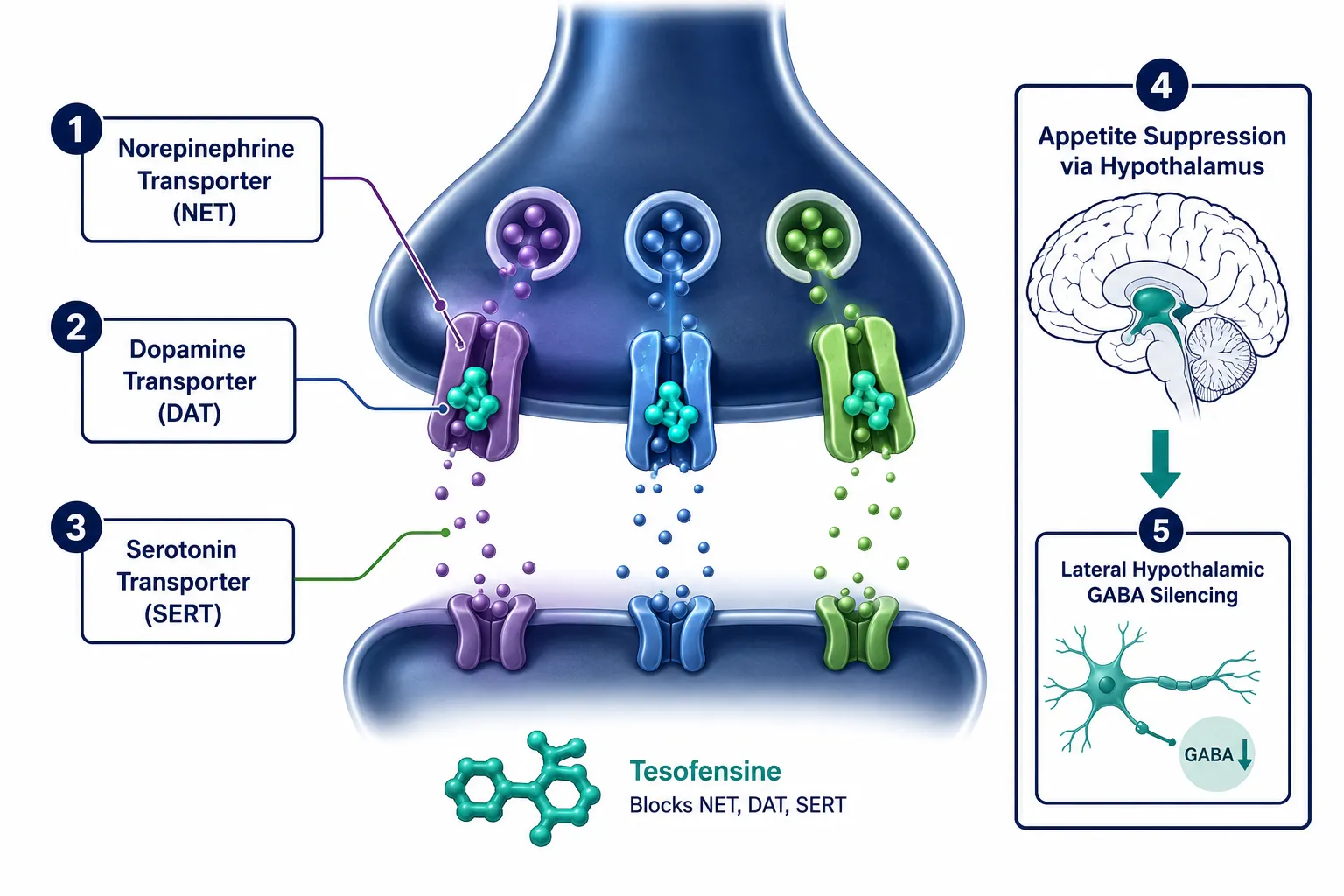
  • Appetite suppression appears to involve GABAergic neuron silencing in the lateral hypothalamus and indirect adrenoceptor and dopamine receptor stimulation.
  • As of 2026, tesofensine has not received regulatory approval for obesity treatment, and research continues to refine its safety profile.

Understanding the Mechanism Behind Tesofensine Peptide Research

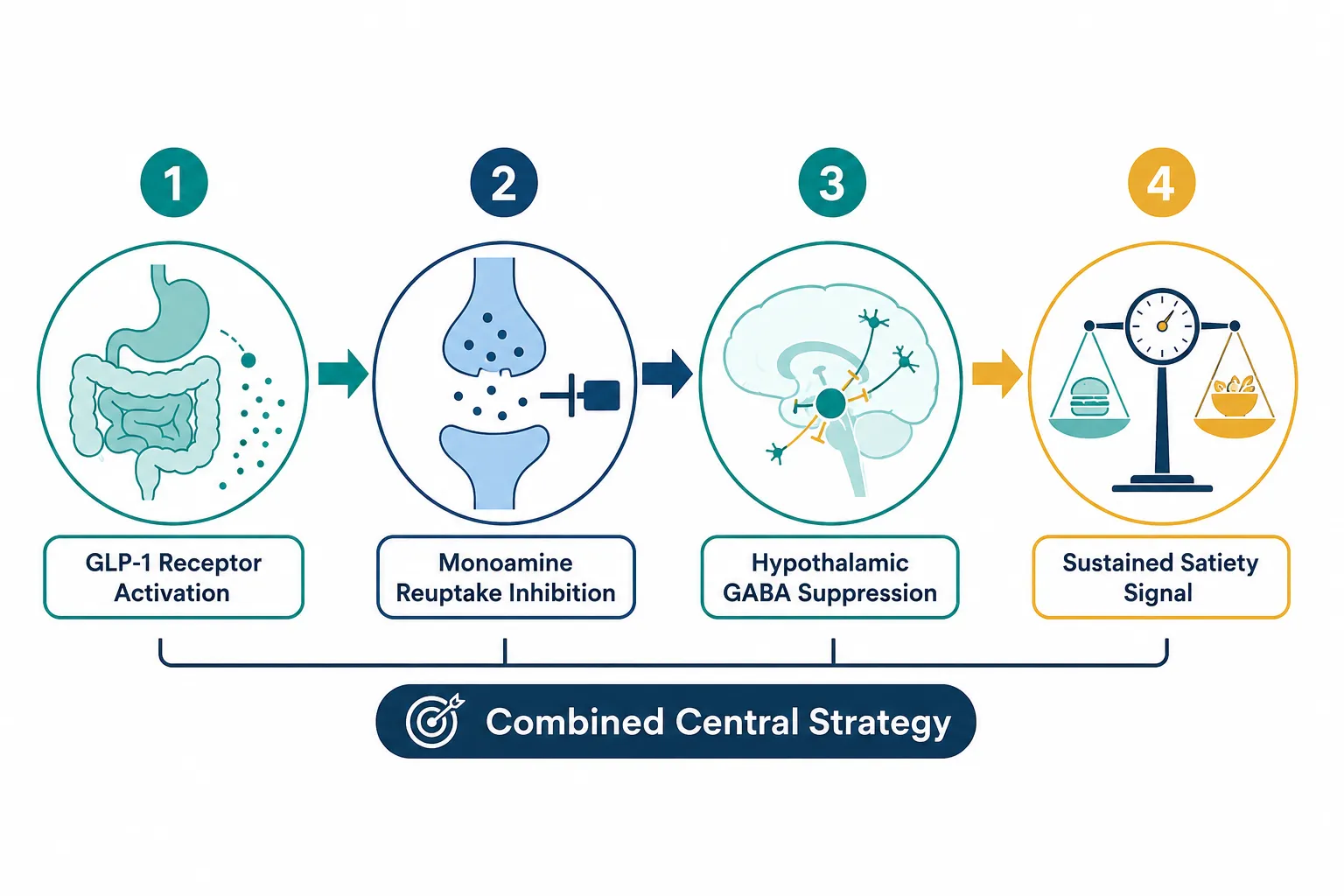
Tesofensine operates as a triple monoamine reuptake inhibitor (TMRI). Its primary action is blocking presynaptic transporters responsible for clearing dopamine, norepinephrine, and serotonin from the synaptic cleft. By preventing reuptake, tesofensine raises extracellular concentrations of all three neurotransmitters simultaneously, a broader mechanism than compounds that target only one or two pathways.

This multi-target approach distinguishes tesofensine from older single-mechanism agents. The elevated monoamine activity produces downstream effects across several brain regions involved in energy balance, reward processing, and satiety signaling.

Key neurotransmitter roles in tesofensine's mechanism:

Neurotransmitter Primary Role in Energy Balance
Dopamine Reward signaling, motivation to eat
Norepinephrine Sympathetic activation, thermogenesis
Serotonin Satiety, mood, food intake regulation

Research in diet-induced obese (DIO) rat models showed that tesofensine reverses abnormally low forebrain dopamine levels, a deficit commonly observed in obesity. Restoring dopamine tone appears to reduce the reward-driven motivation to overeat, contributing meaningfully to caloric restriction without direct appetite suppression alone.

For researchers exploring how metabolic peptides interact with neurotransmitter systems, understanding compounds like tesa and its metabolic effects offers useful comparative context for how different mechanisms produce body composition changes.

Appetite Suppression Pathways: What the Research Shows

Appetite Suppression Pathways: What the Research Shows

Tesofensine peptide research on mechanism, appetite suppression, and neuropeptide Y pathways reveals that hunger reduction is not a single-step process. Multiple neural circuits are engaged.

Lateral Hypothalamus and GABAergic Neurons

Recent research points to a compelling mechanism: tesofensine may silence GABAergic (inhibitory) neurons in the lateral hypothalamus (LH). The lateral hypothalamus is classically known as a hunger-promoting region. When GABAergic neurons in this area are suppressed, the net effect is reduced drive to seek and consume food.

"Silencing inhibitory neurons in a hunger-promoting brain region creates a functional brake on appetite, a mechanism distinct from simple satiety signaling."

This finding suggests tesofensine's appetite effects go beyond monoamine elevation and involve direct modulation of hypothalamic circuitry.

Adrenoceptor and Dopamine Receptor Involvement

Studies in DIO rats demonstrated that tesofensine suppresses appetite through indirect stimulation of alpha-1 adrenoceptors and dopamine D1 receptors. These receptor pathways are not directly activated by tesofensine itself, rather, elevated norepinephrine and dopamine levels produced by reuptake inhibition create the downstream receptor stimulation.

This indirect mechanism has important implications for researchers studying metabolic modulation compounds and how receptor selectivity shapes both efficacy and side effect profiles.

Phase 2 Clinical Trial Findings

In a Phase 2 clinical trial, tesofensine produced approximately 10% body weight reduction in participants, a result that significantly outperformed placebo and compared favorably to other approved anti-obesity agents at the time. However, dose-dependent increases in heart rate and blood pressure emerged as consistent findings, raising cardiovascular safety concerns that have since slowed regulatory progress.

Neuropeptide Y Pathways and Tesofensine: Current Research Landscape

Neuropeptide Y Pathways and Tesofensine: Current Research Landscape

Neuropeptide Y Pathways and Tesofensine: Current Research Landscape

Neuropeptide Y (NPY) is one of the most potent appetite-stimulating peptides in the central nervous system. It is produced primarily in the arcuate nucleus of the hypothalamus and acts on multiple receptor subtypes (Y1 through Y5) to promote food intake, reduce energy expenditure, and regulate fat storage.

The intersection of tesofensine peptide research on mechanism, appetite suppression, and neuropeptide Y pathways is an area of active scientific interest, though not without important caveats.

What current research suggests:

  • Elevated dopamine and norepinephrine levels from tesofensine's reuptake inhibition may indirectly modulate NPY neuronal activity, since monoaminergic neurons interact with NPY-expressing cells in the hypothalamus.
  • Norepinephrine, in particular, has well-established inhibitory effects on NPY release via alpha-2 adrenoceptor signaling in the arcuate nucleus.
  • However, direct, conclusive evidence that tesofensine specifically targets NPY receptor subtypes has not been established in published literature as of 2026.

This distinction matters for researchers. Tesofensine likely influences NPY pathways as a secondary consequence of monoamine elevation rather than as a primary pharmacological target. Understanding this distinction helps frame tesofensine within the broader landscape of appetite-regulating compounds.

Researchers interested in complementary metabolic peptide mechanisms may also find value in reviewing MOTS-c mitochondrial research themes and SLU-PP-332 metabolic research for comparative mechanistic insights.

Regulatory and Safety Status in 2026

As of 2026, tesofensine has not received regulatory approval for obesity treatment from the FDA or EMA. The cardiovascular concerns, primarily elevated heart rate and blood pressure at therapeutic doses, remain the primary obstacle. Ongoing research is exploring whether lower doses combined with adjunct therapies might preserve efficacy while reducing cardiovascular burden.

For researchers building a broader understanding of peptide-based metabolic research, the ultimate guide to peptide therapy provides foundational context, while tesofensine product research information offers compound-specific details.

Conclusion

Tesofensine represents a scientifically compelling case study in how unexpected clinical findings, in this case, significant weight loss during neurodegenerative disease trials, can redirect an entire research program. Its triple monoamine reuptake inhibition mechanism, combined with evidence of lateral hypothalamic GABAergic neuron silencing and indirect NPY pathway modulation, makes it a multifaceted compound for researchers studying metabolic health.

Actionable next steps for researchers in 2026:

  • Review published Phase 2 trial data to understand the dose-response relationship between tesofensine and cardiovascular outcomes.
  • Examine preclinical DIO rat studies for detailed mechanistic data on adrenoceptor and dopamine D1 receptor involvement.
  • Explore how tesofensine's monoaminergic effects may interact with NPY-expressing arcuate nucleus neurons in future study designs.
  • Consider comparative analysis with GLP-1 pathway compounds to contextualize tesofensine's mechanism within the broader anti-obesity pharmacology landscape.
  • Monitor regulatory developments, as ongoing safety refinement research may shift tesofensine's clinical status.

The science surrounding tesofensine continues to evolve. For researchers committed to understanding novel compounds in metabolic health and weight management, it remains a high-value subject worthy of rigorous investigation.

https://www.puretestedpeptides.com/wp-content/uploads/2026/07/tesofensine-peptide-research-mechanism-appetite-suppression-and-neuropeptide-y-p.webp 672 1008 https://www.puretestedpeptides.com/wp-content/uploads/2026/01/buy-peptides-online.jpg 2026-07-24 13:04:522026-07-24 13:04:52Tesofensine Peptide Research: Mechanism, Appetite Suppression, and Neuropeptide Y Pathways

Tag Archive for: metabolic peptides

Retatrutide (GLP-3) Research Guide: Mechanism, Phase 2 Data, and Why Triple Agonism Differs From GLP-1 Drugs

Retatrutide (GLP-3) Research Guide: Mechanism, Phase 2 Data, and Why Triple Agonism Differs From GLP-1 Drugs

July 14, 2026/0 Comments/by Pure Tested

Participants in a landmark phase 2 trial lost up to 24% of their body weight in 48 weeks, a number that stopped the obesity research community in its tracks. That molecule was retatrutide, and understanding why it performs so differently from existing GLP-1 drugs starts with one critical distinction: it does not work on a single receptor. This Retatrutide (GLP-3) Research Guide: Mechanism, Phase 2 Data, and Why Triple Agonism Differs From GLP-1 Drugs breaks down the science, the published data, and what separates this compound from the current generation of weight-loss medications.

Key Takeaways

  • Retatrutide is a true triple agonist, activating GLP-1, GIP, and glucagon receptors simultaneously, not just GLP-1.
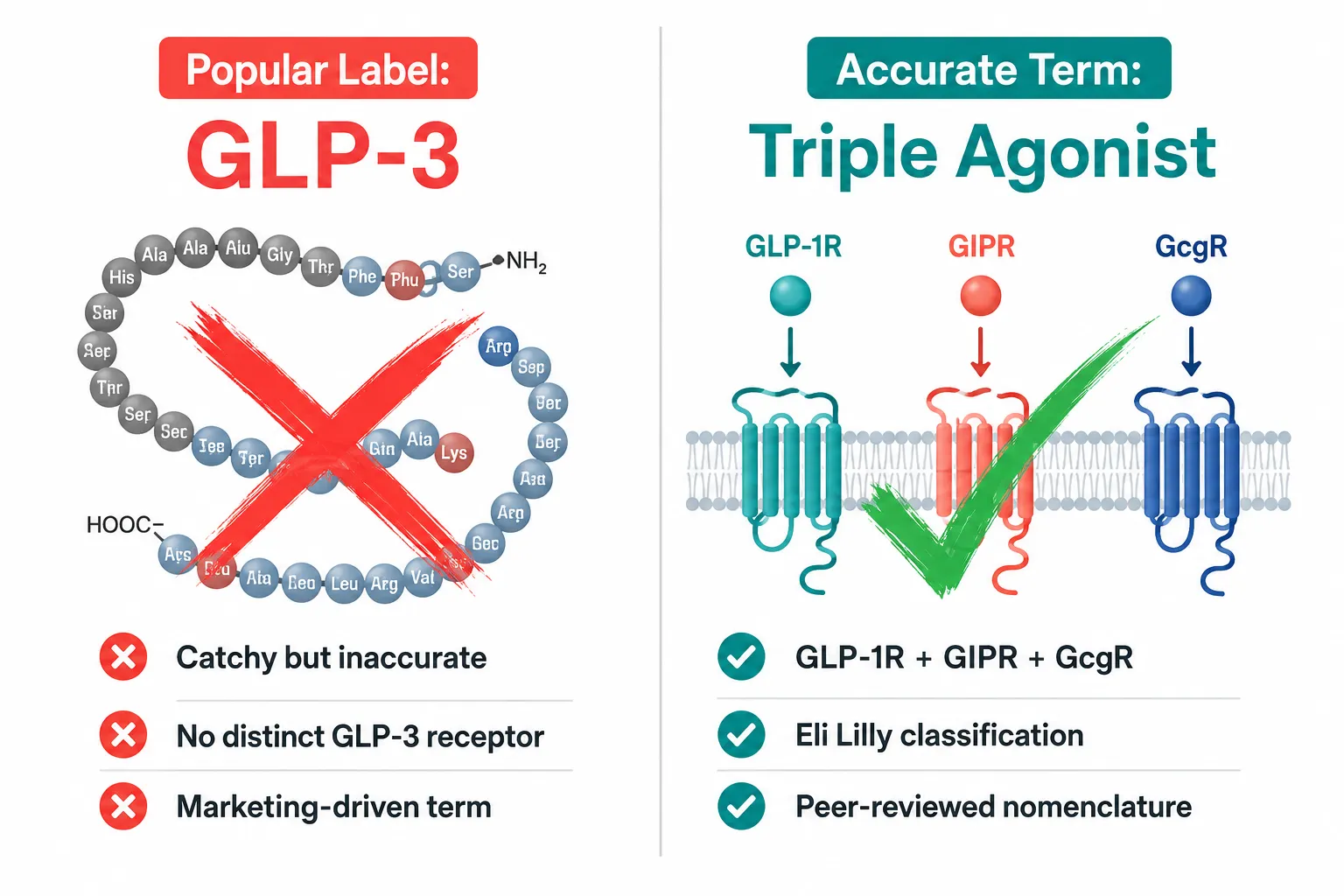
  • The informal label "GLP-3" is a popular shorthand, not an official pharmacological classification.
  • Phase 2 data showed up to 24% mean weight loss at 48 weeks, exceeding results seen with single or dual agonists.
  • Triple agonism targets fat metabolism through three distinct biological pathways at once.
  • Retatrutide remains an investigational compound; it is not approved for clinical use as of 2026.

Key Takeaways

Understanding the Mechanism: Why "GLP-3" Is a Misnomer

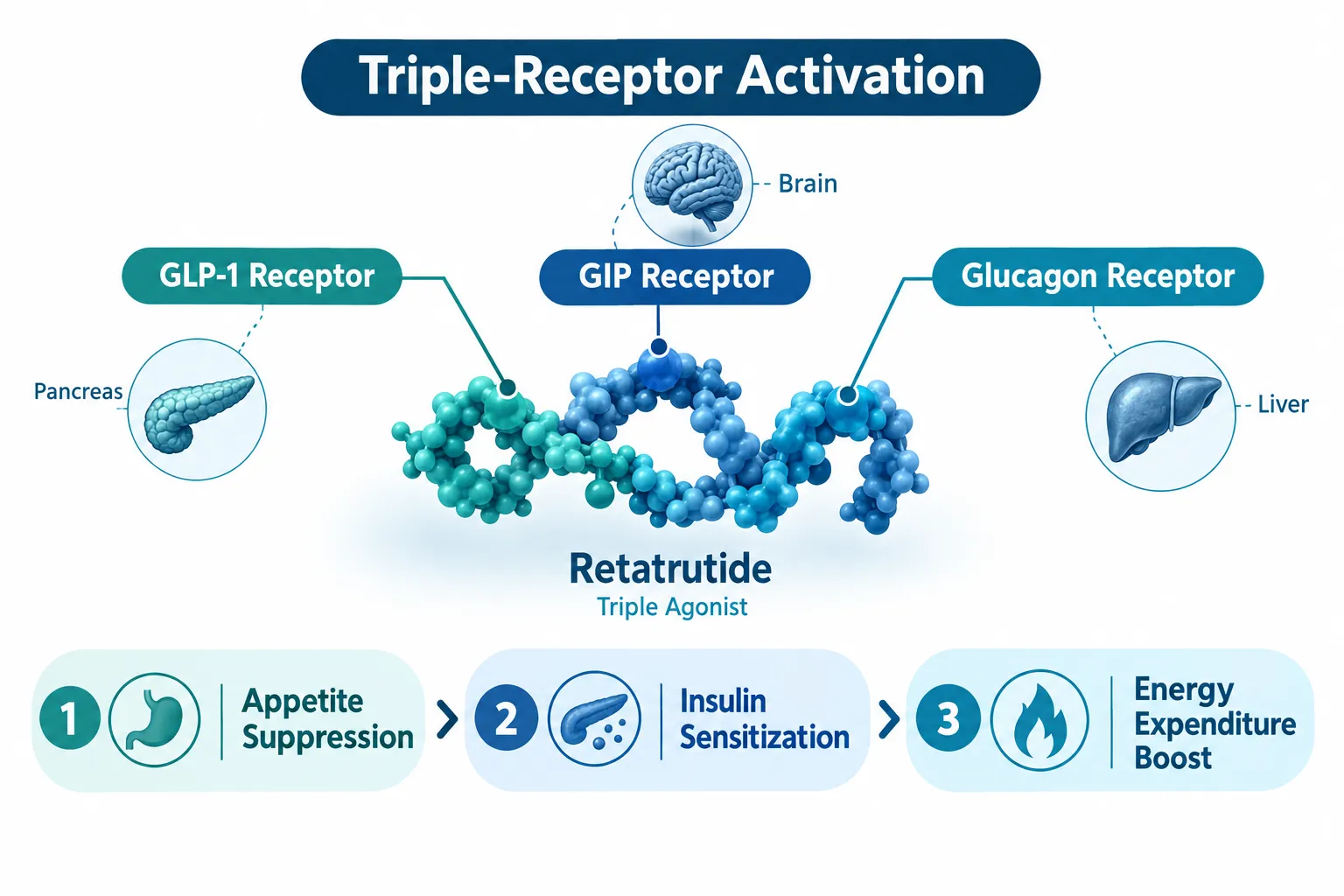
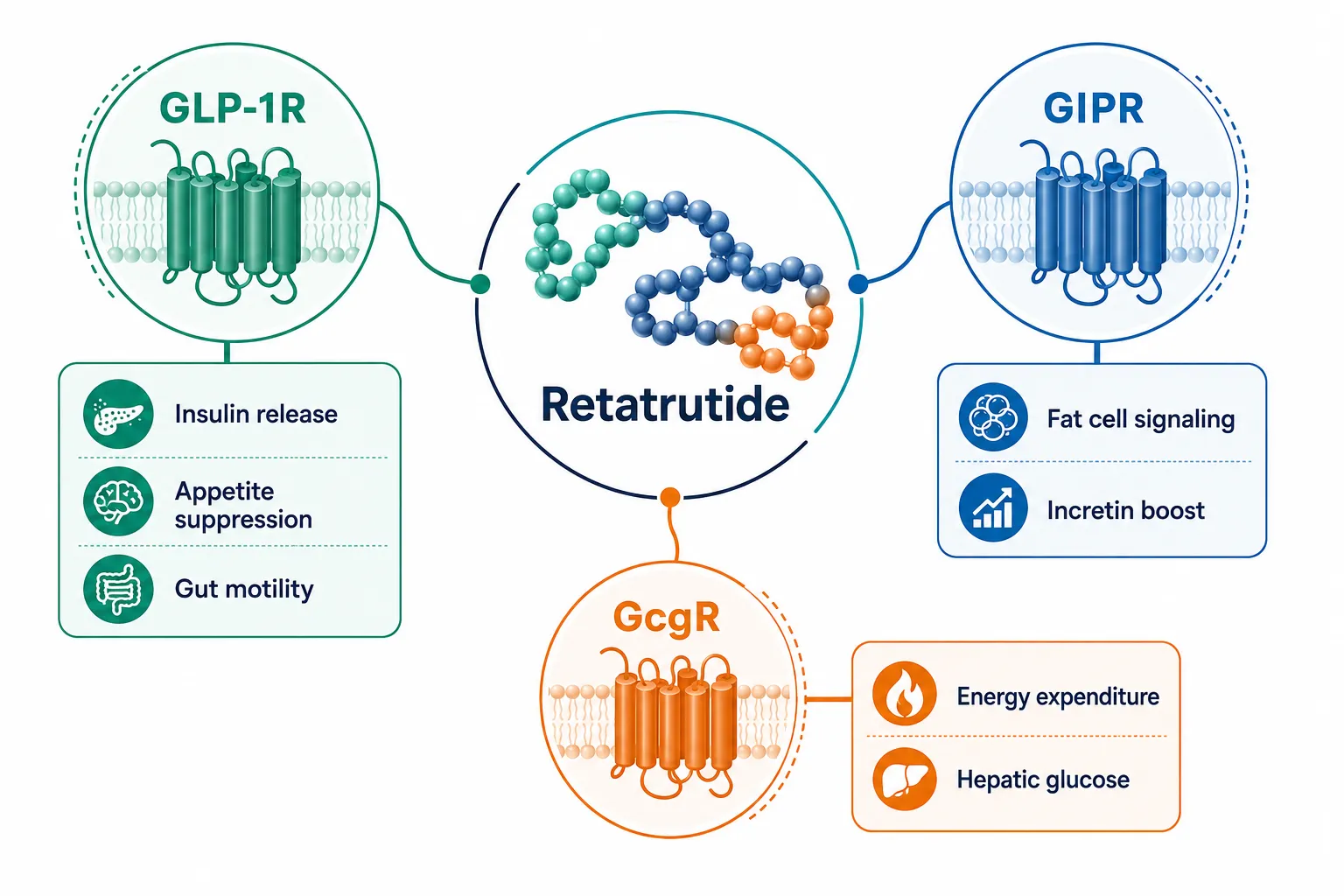
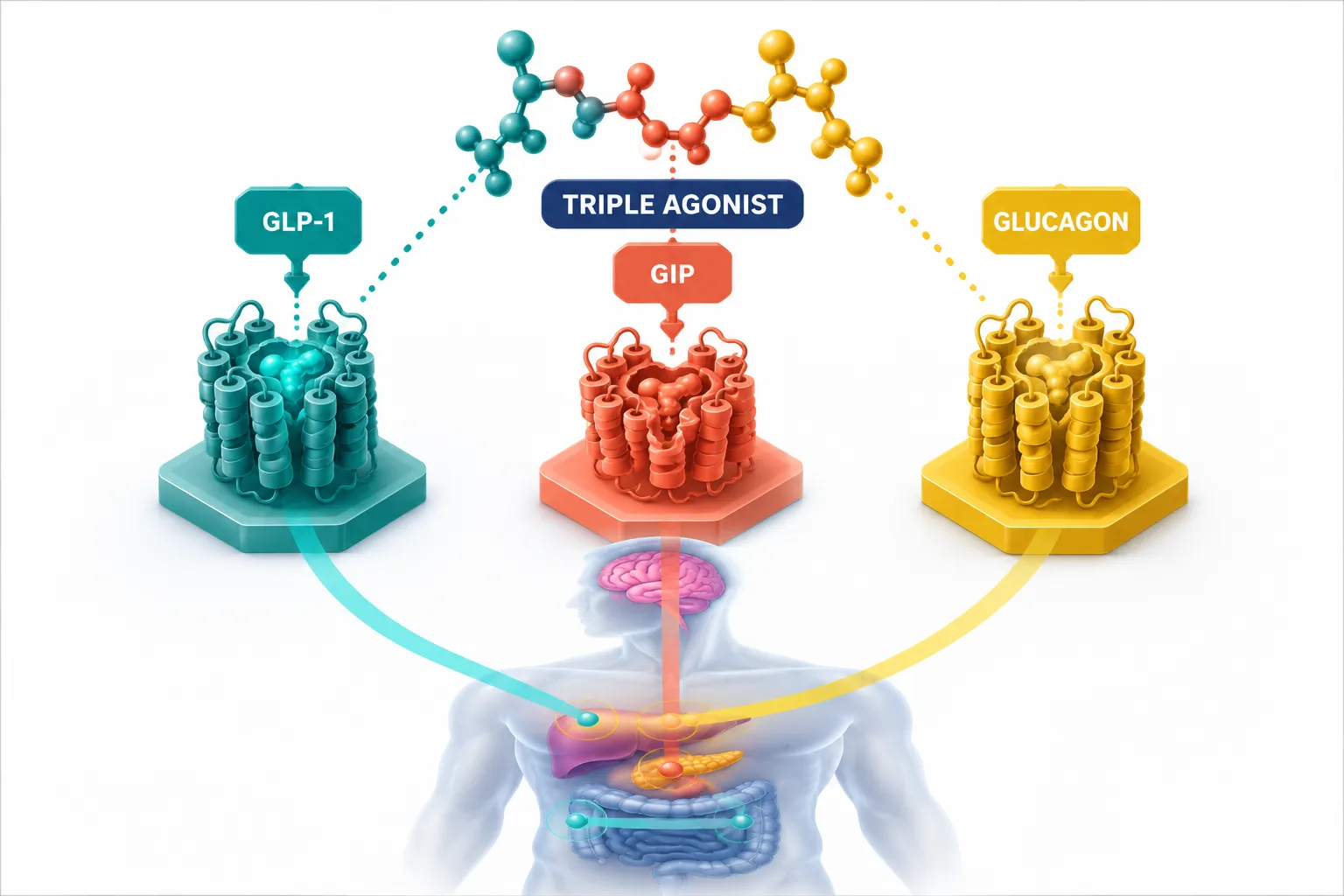
The term "GLP-3" has spread rapidly in research forums and peptide communities, but it is technically inaccurate. Retatrutide is not a third type of glucagon-like peptide. It is a single synthetic peptide molecule engineered to bind and activate three separate hormone receptors:

Receptor Primary Role
GLP-1 (glucagon-like peptide-1) Appetite suppression, insulin release
GIP (glucose-dependent insulinotropic polypeptide) Insulin amplification, fat storage regulation
Glucagon receptor Energy expenditure, fat oxidation

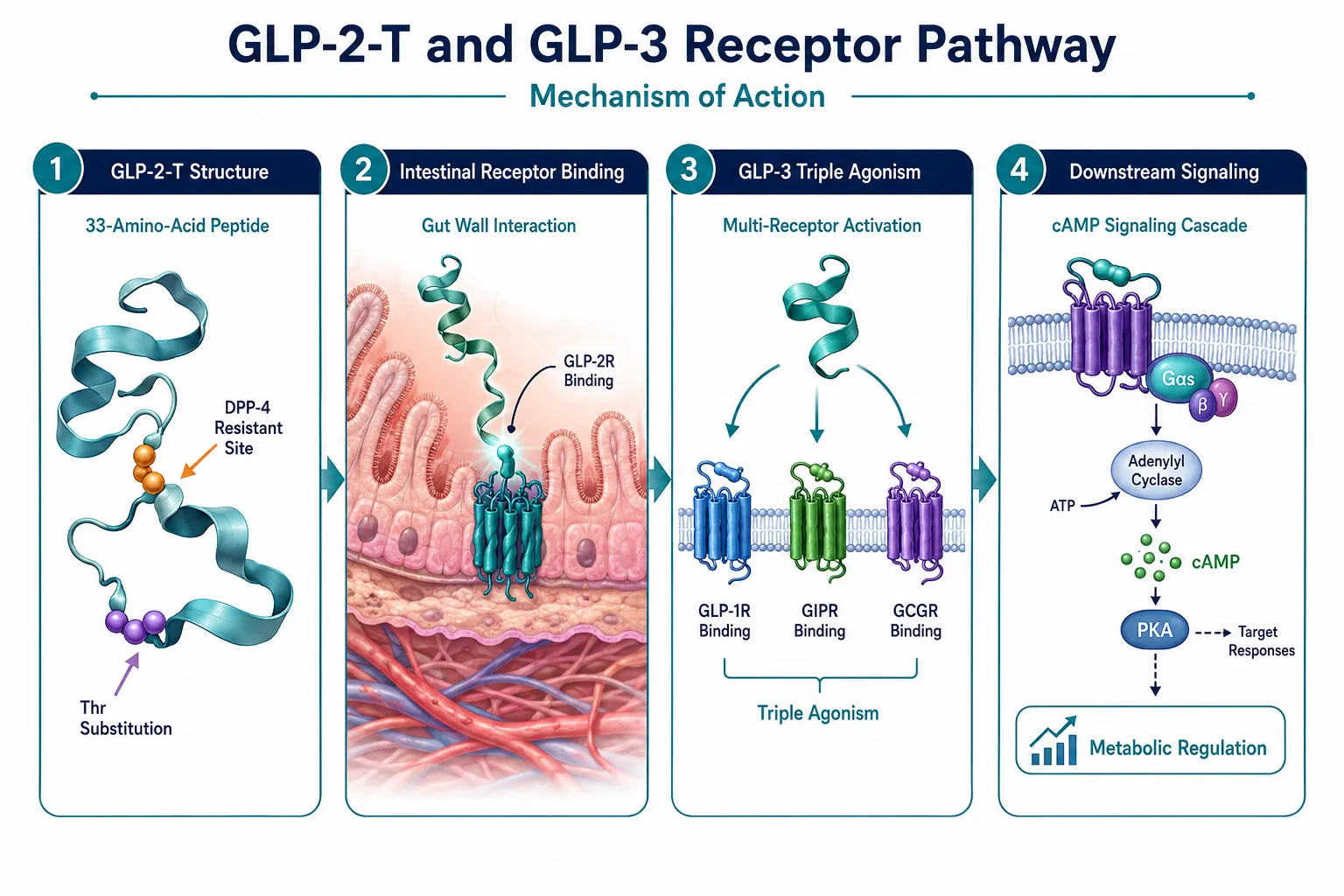
This simultaneous activation is what researchers mean by "triple agonism." Each receptor pathway contributes something different. GLP-1 receptor activation reduces appetite and slows gastric emptying. GIP receptor activation enhances the insulin response and may improve the tolerability of GLP-1 stimulation. Glucagon receptor activation increases energy expenditure by stimulating fat breakdown in the liver and peripheral tissues.

No currently approved GLP-1 drug activates all three pathways. Semaglutide is a GLP-1 mono-agonist. Tirzepatide is a dual GIP/GLP-1 agonist. Retatrutide adds the glucagon receptor layer on top of both, creating a fundamentally different metabolic profile.

Researchers exploring broader longevity peptide research will recognize that multi-receptor strategies are becoming a recurring theme across metabolic and regenerative science.


Understanding the Mechanism: Why "GLP-3" Is a Misnomer

Phase 2 Data: What the Published Obesity Trial Actually Showed

The phase 2 randomized controlled trial published results that drew immediate attention. Key findings included:

  • Up to 24% mean body weight reduction at 48 weeks in the highest-dose group
  • Dose-dependent weight loss across multiple retatrutide arms
  • Reductions in waist circumference, fasting glucose, and triglycerides
  • Tolerability profile broadly consistent with GLP-1 class effects (nausea, vomiting at higher doses)

"The magnitude of weight loss observed with retatrutide at 48 weeks exceeded what had been reported in phase 2 trials for any prior single or dual incretin-based therapy."

These results placed retatrutide ahead of tirzepatide's phase 2 benchmarks and significantly above semaglutide's phase 2 data. The glucagon receptor component is widely credited for the additional fat-burning effect, since glucagon directly stimulates hepatic fat oxidation and thermogenesis, mechanisms that GLP-1 and GIP alone do not fully engage.

For researchers studying compounds with overlapping metabolic effects, the IPA muscle and fat research themes page offers relevant context on how secretagogue-class peptides interact with body composition.


Phase 2 Data: What the Published Obesity Trial Actually Showed

Why Triple Agonism Differs From GLP-1 Drugs

This section of the Retatrutide (GLP-3) Research Guide addresses the question researchers ask most: what does the extra glucagon receptor activity actually add?

Three key differences stand out:

  1. Energy expenditure: GLP-1 drugs primarily reduce caloric intake. Retatrutide also increases calories burned through glucagon-driven thermogenesis.
  2. Fat oxidation: Glucagon receptor activation directly promotes fat breakdown in liver tissue, a pathway absent in semaglutide and only partially engaged by tirzepatide.
  3. Potential lean mass preservation: Early data suggest the GIP component may help preserve lean body mass during rapid weight loss, though phase 3 trials will clarify this.

The practical implication is that retatrutide may produce greater total fat loss relative to lean mass loss compared with GLP-1 mono-agonists, a distinction that matters significantly in clinical and research contexts.

Researchers interested in related metabolic peptide science may find value in reviewing the AOD-9604 research overview and the 5-Amino-1MQ research page, both of which touch on fat metabolism pathways. Those exploring growth hormone secretagogue interactions can also consult the ipamorelin vs tesa comparison for context on how receptor selectivity shapes metabolic outcomes.


Conclusion

The Retatrutide (GLP-3) Research Guide: Mechanism, Phase 2 Data, and Why Triple Agonism Differs From GLP-1 Drugs points to one clear conclusion: retatrutide is not simply a stronger GLP-1 drug. It is a mechanistically distinct compound that engages three separate receptor systems to produce weight loss through appetite suppression, insulin regulation, and direct fat oxidation simultaneously.

Actionable next steps for researchers in 2026:

  • Review the full published phase 2 trial data to understand dose-response relationships before drawing conclusions about efficacy.
  • Track phase 3 trial enrollment and interim readouts, as these will determine whether the 24% weight loss benchmark holds at scale.
  • Contextualize retatrutide within the broader landscape of metabolic peptides by exploring related longevity and metabolic research resources.
  • Verify purity and sourcing standards for any research-grade peptide material, always request a certificate of analysis from suppliers.

Retatrutide represents a genuine step-change in incretin pharmacology. The science behind triple agonism is compelling, and the phase 2 data are among the strongest ever reported for an obesity intervention at this stage of development.

https://www.puretestedpeptides.com/wp-content/uploads/2026/07/retatrutide-glp-3-research-guide-mechanism-phase-2-data-and-why-triple-agonism-d.png 672 1008 Pure Tested https://www.puretestedpeptides.com/wp-content/uploads/2026/01/buy-peptides-online.jpg Pure Tested2026-07-14 13:07:082026-07-20 15:00:09Retatrutide (GLP-3) Research Guide: Mechanism, Phase 2 Data, and Why Triple Agonism Differs From GLP-1 Drugs
GLP3 Peptide vs. Retatrutide: Understanding the Nomenclature and Research Implications

GLP3 Peptide vs. Retatrutide: Understanding the Nomenclature and Research Implications

July 12, 2026/0 Comments/by Pure Tested

Researchers searching for "GLP3 peptide" in 2026 are often looking for the same compound, yet the terminology they use can lead them to entirely different bodies of literature, products, and regulatory contexts. The conversation around GLP3 Peptide vs. Retatrutide: Understanding the Nomenclature and Research Implications matters because imprecise language in peptide science does not just cause confusion; it can distort research intent, misalign sourcing decisions, and obscure a compound's actual clinical standing.

Editorial () showing a conceptual split-screen illustration: left half features the text label 'GLP-3 Descriptor' in over an

Key Takeaways

  • "GLP-3" is an informal, community-driven descriptor, not an official scientific classification for retatrutide.
  • Retatrutide is a specific triple agonist targeting GLP-1, GIP, and glucagon receptors, developed by Eli Lilly.
  • Phase 3 trials show up to 28.7% mean body weight reduction over approximately 68 weeks.
  • As of 2026, retatrutide has not received FDA approval and carries no official brand name.
  • Understanding this nomenclature gap is critical for accurate research, sourcing, and clinical interpretation.

What "GLP-3" Actually Means, and What It Does Not

The label "GLP-3" did not originate in a peer-reviewed journal or a regulatory filing. It emerged organically in biohacking communities and research forums as shorthand for retatrutide's triple-receptor mechanism, activating glucagon-like peptide-1 (GLP-1), glucose-dependent insulinotropic polypeptide (GIP), and glucagon receptors simultaneously.

This is a meaningful distinction. GLP-1 and GLP-2 are actual endogenous peptides with defined biological roles. There is no naturally occurring "GLP-3" in human physiology. When researchers or enthusiasts use the term, they are borrowing the naming convention to signal a step beyond dual agonists like tirzepatide, not describing a distinct peptide family.

"GLP-3" functions as a category label born from search behavior, not from biochemistry.

For anyone exploring the newest GLP-1 triple agonist research, recognizing this distinction prevents conflating informal community terminology with peer-reviewed compound classifications. Related resources on GLP-3 and Retatrutide provide further context on how this terminology has evolved in the research space.


Retatrutide: The Compound Behind the Label

Retatrutide is a once-weekly subcutaneous injection developed by Eli Lilly. Its mechanism is what drives the "GLP-3" nickname, by activating three metabolic receptors at once, it amplifies both appetite suppression and energy expenditure beyond what single or dual agonists can achieve.

Clinical trial results have been striking:

  • Phase 2 trials demonstrated a mean body weight reduction of 24.2% at 48 weeks using a 12 mg dose.
  • Phase 3 data from the TRIUMPH program reported up to 28.7% weight loss over approximately 68 weeks.
  • These figures surpass outcomes associated with semaglutide (Ozempic/Wegovy) and tirzepatide (Mounjaro/Zepbound).

Common side effects observed in trials include:

  • Nausea
  • Diarrhea
  • Vomiting
  • Constipation

Discontinuation rates at higher doses ranged from roughly 12-18%, compared to approximately 4% for placebo, a consideration for any research protocol design.

As of 2026, retatrutide remains in Phase 3 trials and has not been approved by the FDA. Eli Lilly is expected to pursue approval pending successful trial completion, possibly by the end of 2026. It currently carries no official brand name.

For researchers interested in how metabolic peptides interact with broader longevity pathways, the longevity peptide research overview offers relevant context. Those examining synergistic mechanisms may also find value in reviewing cagrilintide synergy with GLP-1 as a comparative framework.

Retatrutide: The Compound Behind the Label


Why the Nomenclature Gap Has Real Research Implications

Understanding GLP3 Peptide vs. Retatrutide: Understanding the Nomenclature and Research Implications is not purely academic. The terminology used when sourcing, citing, or designing studies around this compound has downstream consequences.

Three key implications stand out:

  1. Search intent misalignment, Researchers querying "GLP-3 peptide" may encounter products or literature that conflate the informal term with unrelated compounds, creating sourcing errors.
  2. Regulatory blind spots, Because retatrutide has no approved brand name yet, informal labels like "GLP-3" or "Reta" circulate in research communities without the traceability that official nomenclature provides.
  3. Comparative analysis errors, Treating "GLP-3" as equivalent to "triple agonist" as a class, rather than as a nickname for one specific molecule, can skew meta-analyses or literature reviews.

Researchers working with metabolic peptides should cross-reference compound identifiers carefully. Resources covering NAD research and where to buy peptides online illustrate how sourcing decisions intersect with nomenclature clarity in the broader peptide research space.

For those tracking the full pipeline of investigational metabolic compounds, reviewing tesofensine peptide research and MOTS-c mitochondrial research themes provides useful comparative framing for how novel compounds acquire informal labels before formal approval.

Why the Nomenclature Gap Has Real Research Implications


Conclusion

The debate around GLP3 Peptide vs. Retatrutide: Understanding the Nomenclature and Research Implications ultimately comes down to precision. Retatrutide is a well-defined, clinically investigated compound with Phase 3 data supporting extraordinary weight loss outcomes. "GLP-3" is a useful shorthand, but only when both parties in a research conversation understand it as informal nomenclature, not a recognized scientific category.

Actionable next steps for researchers and practitioners:

  • Always use "retatrutide" as the primary identifier in formal documentation, protocols, and sourcing requests.
  • Treat "GLP-3" and "Reta" as search and community terms, helpful for discovery, unreliable for precision.
  • Monitor the TRIUMPH Phase 3 program and FDA submission timelines, as approval could reshape how the compound is officially labeled and referenced.
  • Cross-reference any sourced material against verified compound identifiers to avoid conflation with unrelated peptides.

Clarity in nomenclature is not a minor detail, in peptide research, it is the foundation of reproducible, credible science.

https://www.puretestedpeptides.com/wp-content/uploads/2026/07/glp3-peptide-vs-retatrutide-understanding-the-nomenclature-and-research-implicat.png 1024 1536 Pure Tested https://www.puretestedpeptides.com/wp-content/uploads/2026/01/buy-peptides-online.jpg Pure Tested2026-07-12 13:02:542026-07-20 15:00:16GLP3 Peptide vs. Retatrutide: Understanding the Nomenclature and Research Implications
GLP-3 Retatrutide Mechanism of Action Explained: Triple Agonism, Appetite Signaling, and Energy Expenditure

GLP-3 Retatrutide Mechanism of Action Explained: Triple Agonism, Appetite Signaling, and Energy Expenditure

July 9, 2026/0 Comments/by Pure Tested

Forty-five percent of participants in a landmark 2026 obesity trial lost more than 30% of their body weight from a single weekly injection, a result previously reserved for bariatric surgery. That compound is retatrutide, and its extraordinary performance comes down to a precise molecular strategy: simultaneous activation of three metabolic receptors. Understanding the GLP-3 Retatrutide mechanism of action explained through triple agonism, appetite signaling, and energy expenditure is essential for researchers, clinicians, and anyone tracking the frontier of metabolic science.

Key Takeaways

  • Retatrutide activates GLP-1, GIP, and glucagon receptors simultaneously, producing effects no single or dual agonist can replicate.
  • Glucagon receptor activation is the distinguishing feature that drives enhanced energy expenditure and fat oxidation beyond appetite suppression alone.
  • In the TRIUMPH-1 trial, participants on 12 mg lost an average of 70.3 lbs (28.3% of body weight) over 80 weeks.
  • The peptide's fatty acid side chain enables albumin binding, supporting a convenient once-weekly dosing schedule.
  • Beyond weight loss, retatrutide shows clinically meaningful improvements in type 2 diabetes, sleep apnea, and osteoarthritis pain.

The Structural Foundation Behind Triple Agonism

The Structural Foundation Behind Triple Agonism

Retatrutide is a 39-amino acid peptide engineered with a fatty acid side chain. That side chain binds to albumin in the bloodstream, extending the compound's half-life to approximately six days. The practical result is once-weekly dosing, a significant advantage for sustained research protocols and patient adherence.

What sets retatrutide apart structurally is its receptor potency profile:

Receptor EC50 (nM) Primary Effect
GIP Receptor (GIPR) 0.0643 Insulin secretion, fat metabolism
GLP-1 Receptor (GLP-1R) 0.775 Appetite suppression, glucose control
Glucagon Receptor (GcgR) 5.79 Energy expenditure, fat oxidation

The compound shows the highest potency at the GIP receptor, followed by GLP-1, then glucagon. This gradient is intentional. GIP and GLP-1 agonism work synergistically on insulin release and satiety, while glucagon agonism, typically avoided in metabolic drugs due to hyperglycemia risk, is carefully balanced to drive thermogenesis without destabilizing blood glucose.

Researchers exploring related metabolic peptide pathways can find additional context in the metabolic modulation research lines overview, which covers complementary compounds under active investigation.


How Appetite Signaling and Energy Expenditure Work Together

How Appetite Signaling and Energy Expenditure Work Together

The GLP-3 Retatrutide mechanism of action explained through appetite signaling begins in the hypothalamus. GLP-1 receptor activation slows gastric emptying and signals satiety centers in the brain, reducing caloric intake. GIP receptor activation amplifies insulin secretion in a glucose-dependent manner, lowering postprandial glucose spikes while also modulating fat storage in adipose tissue.

The glucagon component is where retatrutide diverges from its predecessors.

"The addition of glucagon receptor activation may play a key role in enhancing weight loss beyond what GLP-1 and GIP agonism achieve alone."

Glucagon receptor activation increases hepatic glucose output under fasting conditions, but more critically for obesity research, it stimulates thermogenesis in brown adipose tissue and promotes fatty acid oxidation. This creates a dual-pathway effect: the body consumes fewer calories through appetite suppression while simultaneously burning more through elevated energy expenditure.

This mechanism contrasts with earlier GLP-1 generation drugs. For a deeper look at how incretin-based therapies have evolved, the generations of GLP-1 differences resource provides useful comparative context.

Researchers studying overlapping metabolic pathways may also find value in reviewing 5-Amino-1MQ, a NNMT inhibitor that targets fat cell metabolism through a distinct but complementary mechanism.


Clinical Evidence: What the Data Shows in 2026

Clinical Evidence: What the Data Shows in 2026

The TRIUMPH-1 Phase 3 trial delivered the most compelling data yet. Participants receiving 12 mg of retatrutide lost an average of 70.3 lbs (28.3% of body weight) over 80 weeks. Among those with a baseline BMI of 35 or higher who continued into a study extension, average weight loss reached 85.0 lbs (30.3%) at 104 weeks.

Even the lower 4 mg dose produced meaningful results: an average of 47.2 lbs (19.0%) lost over 80 weeks, with a favorable discontinuation profile compared to placebo.

The TRANSCEND-T2D-1 trial, reported in March 2026, showed retatrutide achieving A1C reductions of up to 2.0% and weight loss of up to 36.6 lbs (16.8%) at 40 weeks in adults with type 2 diabetes. Up to 46% of participants reached normal A1C levels.

Beyond metabolic markers, retatrutide reduced knee osteoarthritis pain by up to 73.1% and decreased obstructive sleep apnea severity by up to 60.6 events per hour, outcomes that reflect the systemic reach of triple receptor agonism.

Common side effects include nausea, vomiting, and dysesthesia. Some participants discontinued due to rapid weight loss, underscoring the importance of careful monitoring.

Eli Lilly is conducting additional late-stage trials with potential FDA approval sought by end of 2026.

For researchers working with GLP-based compounds, the GLP-3 for sale: triple agonist research planning and catalog navigation page offers practical sourcing and protocol guidance. Those seeking specific product details can also review the GLP-3 Retatrutide research catalog entry directly.

Researchers interested in how growth hormone-related peptides interact with metabolic outcomes may also find the Tesamorelin body composition research themes page a useful adjacent resource.


Conclusion

Retatrutide's triple agonism, targeting GLP-1, GIP, and glucagon receptors with precision-tuned potency, represents a genuine leap in metabolic research. The mechanism is not simply additive; the glucagon component introduces an energy expenditure dimension that earlier incretin therapies could not access. Combined with appetite suppression and improved insulin dynamics, this produces weight loss outcomes that rival surgical intervention.

Actionable next steps for researchers:

  • Review the receptor potency profile carefully when designing dosing protocols; GIP receptor sensitivity is highest and may drive early responses.
  • Monitor for nausea and dysesthesia, particularly during dose escalation phases.
  • Consider how triple agonism data intersects with other metabolic modulators in your research stack.
  • Consult the Retatrutide GLP-3 research overview for updated sourcing, purity standards, and protocol references before initiating any study.

The science behind retatrutide is still unfolding, but the 2026 clinical data makes one thing clear: three receptors, activated together, can accomplish what none could achieve alone.

https://www.puretestedpeptides.com/wp-content/uploads/2026/07/GLP-3-Retatrutide-Mechanism-of-Action-Explained-Triple-Agonism-Appetite-Signaling-and-Energy-Expenditure.png 1024 1536 Pure Tested https://www.puretestedpeptides.com/wp-content/uploads/2026/01/buy-peptides-online.jpg Pure Tested2026-07-09 13:04:382026-07-20 15:00:36GLP-3 Retatrutide Mechanism of Action Explained: Triple Agonism, Appetite Signaling, and Energy Expenditure
Neuroactive Research Peptides as Adjuncts to GLP‑1/GLP‑3: Selank, Semax, and Epithalon in Neuro‑Metabolic Study Designs

Neuroactive Research Peptides as Adjuncts to GLP‑1/GLP‑3: Selank, Semax, and Epithalon in Neuro‑Metabolic Study Designs

July 7, 2026/0 Comments/by Pure Tested

Fewer than 15% of subjects in GLP-1-based metabolic research protocols complete long-term study phases without reporting anxiety, sleep disruption, or cognitive fatigue, variables that rarely appear in primary endpoints but quietly shape adherence data. That gap is driving renewed interest in neuroactive research peptides as adjuncts to GLP-1/GLP-3: Selank, Semax, and Epithalon in neuro-metabolic study designs represent three candidates that researchers are increasingly pairing with incretin-based frameworks to address exactly these secondary endpoints.

Close-up laboratory flat-lay image showing three distinct peptide vials labeled Selank, Semax, and Epithalon arranged on a

Key Takeaways

  • Selank, Semax, and Epithalon each target distinct neurological pathways, anxiety modulation, BDNF upregulation, and circadian/telomere regulation respectively, that may complement GLP-1 and GLP-3 metabolic protocols.
  • GLP-1 receptor agonists combined with additional peptides have demonstrated up to a 32% reduction in food intake in research settings, suggesting multi-peptide synergy is a viable study design strategy.
  • Both Semax and Selank are approved for medical use in Russia but lack large-scale Western randomized controlled trials, limiting regulatory standing outside that jurisdiction.
  • Epithalon's influence on sleep architecture and pineal function positions it as a hypothesized adjunct for circadian-metabolic alignment in longer study windows.
  • All three peptides are classified as research compounds and are subject to WADA prohibitions; researchers must account for regulatory context in study design.

Mechanisms: How Selank, Semax, and Epithalon Map to Neuro-Metabolic Pathways

Understanding why these compounds attract attention in metabolic research begins with their individual mechanisms.

Semax is a synthetic heptapeptide derived from adrenocorticotropic hormone (ACTH). Its most studied action is the upregulation of Brain-Derived Neurotrophic Factor (BDNF) in the hippocampus and cortex. BDNF elevation activates TrkB receptors, supporting neuronal survival, synaptic plasticity, and cognitive function. In metabolic research contexts, BDNF is not merely a cognitive marker, it also plays a documented role in energy homeostasis and hypothalamic appetite regulation, making Semax a biologically plausible adjunct in neuro-metabolic designs.

Selank, also a heptapeptide but derived from the immunomodulatory peptide tuftsin, operates through a different set of mechanisms. It modulates monoamine metabolism, increases GABA release, and regulates serotonin-related gene expression. The result is anxiolytic and nootropic activity without the sedation or dependence risk associated with classical anxiolytics. Researchers studying Selank peptide benefits note its potential relevance to stress-driven eating behavior and cortisol-mediated metabolic disruption, endpoints that are rarely isolated in standard GLP-1 trials but are mechanistically significant.

Epithalon (also spelled Epitalon) is a tetrapeptide synthesized from epithalamin, a pineal gland extract. Its primary research interest centers on telomerase activation, circadian rhythm normalization, and melatonin secretion support. Disrupted sleep architecture is strongly associated with impaired insulin sensitivity and elevated ghrelin, which means Epithalon's circadian-regulatory properties carry direct metabolic relevance. Researchers exploring Epithalon peptides for sale in research contexts often frame it within longevity and metabolic aging study designs.

"The intersection of neurological stability and metabolic regulation is not incidental, it is mechanistic. Anxiety, sleep quality, and cognitive load each modulate the hormonal environment that GLP-1 therapies are designed to influence."


GLP-1/GLP-3 Synergy and the Case for Multi-Peptide Study Designs

GLP-1 receptor agonists have reshaped metabolic research, but their scope is expanding. Combined infusion studies using GLP-1 alongside oxyntomodulin and peptide YY have recorded a 32% reduction in food intake among obese research subjects, evidence that multi-peptide protocols can produce outcomes beyond what single-agent designs achieve.

GLP-3, a lesser-studied incretin fragment, is gaining attention for its potential role in gut-brain signaling and neuroinflammation modulation. When researchers consider NAD research and GLP-3 online resources, the emerging picture is one of overlapping neuroendocrine pathways where incretin biology and neuropeptide biology converge.

The rationale for pairing Selank, Semax, or Epithalon with GLP-1/GLP-3 frameworks rests on several hypothesized interaction points:

Peptide Primary Research Target Hypothesized GLP-1/GLP-3 Adjunct Role
Semax BDNF upregulation, neuroprotection Hypothalamic appetite axis support, cognitive adherence
Selank Anxiolysis, serotonin/GABA modulation Stress-eating attenuation, cortisol normalization
Epithalon Circadian regulation, telomerase activation Sleep-metabolic alignment, insulin sensitivity support

GLP-1 infusions have also been shown to augment muscle protein synthesis in older adults, addressing anabolic resistance, a finding that becomes more relevant when paired with Epithalon's anti-aging and cellular repair research themes. For researchers interested in related metabolic peptide frameworks, AOD9604 metabolic research and 5-Amino-1MQ research data offer additional mechanistic context for multi-pathway designs.


Study Design Considerations, Safety Profiles, and Regulatory Context

Designing a neuro-metabolic study that incorporates neuroactive research peptides as adjuncts to GLP-1/GLP-3, Selank, Semax, and Epithalon in neuro-metabolic study designs specifically, requires careful attention to both safety data and regulatory standing.

Safety profiles for Semax and Selank are generally favorable in existing literature. Semax is well-tolerated, with rare adverse events limited to mild nasal irritation and transient agitation. Selank is considered non-sedative and non-addictive, with uncommon side effects including mild daytime drowsiness or dry mouth. Epithalon has a strong preclinical safety record, though long-term human data remains limited.

Critically, neither Semax nor Selank has undergone large-scale randomized controlled trials in Western research settings. Both are approved for medical use in Russia, Semax for stroke recovery and neurological disease, Selank for mild anxiety, but neither holds FDA or EMA approval. Researchers should also note that WADA classifies both Semax and Selank as prohibited substances due to their neuroenhancement potential.

For researchers building multi-peptide protocols, resources on neuroendocrine and innate immunity research themes and PT-141 neural-metabolic research themes provide useful comparative frameworks for designing endpoints that capture both neurological and metabolic variables.

Key study design checkpoints include:

  • Baseline neurological assessments for anxiety, sleep quality, and cognitive function before GLP-1/GLP-3 protocol initiation
  • Defined adjunct dosing windows that avoid confounding primary incretin endpoints
  • Secondary endpoint tracking for cortisol, BDNF, melatonin, and inflammatory markers
  • Institutional review and ethics compliance given the unapproved status of all three peptides in most Western jurisdictions

Conclusion

The convergence of neuroactive research peptides as adjuncts to GLP-1/GLP-3, Selank, Semax, and Epithalon in neuro-metabolic study designs, reflects a broader shift in how researchers are framing metabolic science. Rather than treating anxiety, cognition, and sleep as confounding variables, forward-looking study designs are beginning to treat them as mechanistically relevant endpoints in their own right.

Actionable next steps for researchers in 2026:

  1. Review existing GLP-1 protocol data for unreported neurological secondary variables that Selank or Semax could address in follow-up designs.
  2. Incorporate Epithalon into longer study windows where circadian-metabolic alignment is a measurable outcome.
  3. Consult institutional review boards early regarding the regulatory status of all three peptides before protocol submission.
  4. Explore multi-peptide synergy literature, including cagrilintide synergy with GLP-1 and GLOW blend longevity research themes, to build a comparative evidence base.

The evidence base remains early-stage, but the mechanistic logic is sound. Rigorous trial design, not speculation, will determine whether these peptides earn a formal role in neuro-metabolic research protocols.

https://www.puretestedpeptides.com/wp-content/uploads/2026/07/Neuroactive-Research-Peptides-as-Adjuncts-to-GLP‑1GLP‑3-Selank-Semax-and-Epithalon-in-Neuro‑Metabolic-Study-Designs.png 1024 1536 Pure Tested https://www.puretestedpeptides.com/wp-content/uploads/2026/01/buy-peptides-online.jpg Pure Tested2026-07-07 13:16:152026-07-20 15:00:50Neuroactive Research Peptides as Adjuncts to GLP‑1/GLP‑3: Selank, Semax, and Epithalon in Neuro‑Metabolic Study Designs

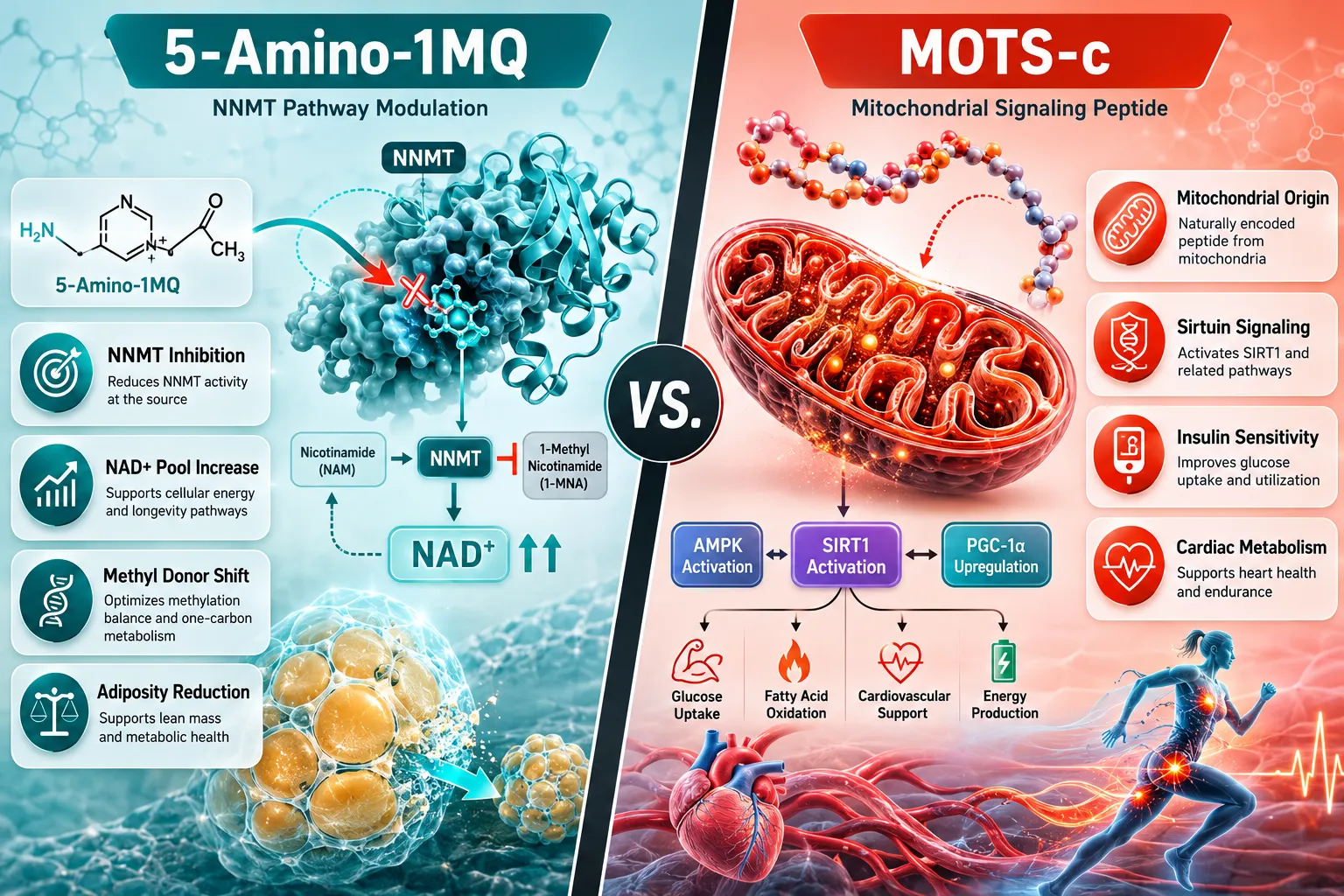
Mitochondria, MOTS‑c, and 5‑Amino‑1MQ: How Polypeptide Peptides Rewire Cellular Energy Metabolism

July 7, 2026/0 Comments/by Pure Tested

Circulating levels of MOTS-c, a peptide encoded directly inside mitochondrial DNA, drop measurably as humans age, tracking closely with the rise of insulin resistance and metabolic dysfunction. That single fact reframes a long-standing assumption: that mitochondria are passive energy factories. The emerging science of Mitochondria, MOTS-c, and 5-Amino-1MQ: How Polypeptide Peptides Rewire Cellular Energy Metabolism reveals these organelles as active hormonal broadcasters, capable of dispatching peptide signals that reshape how every cell burns fuel.

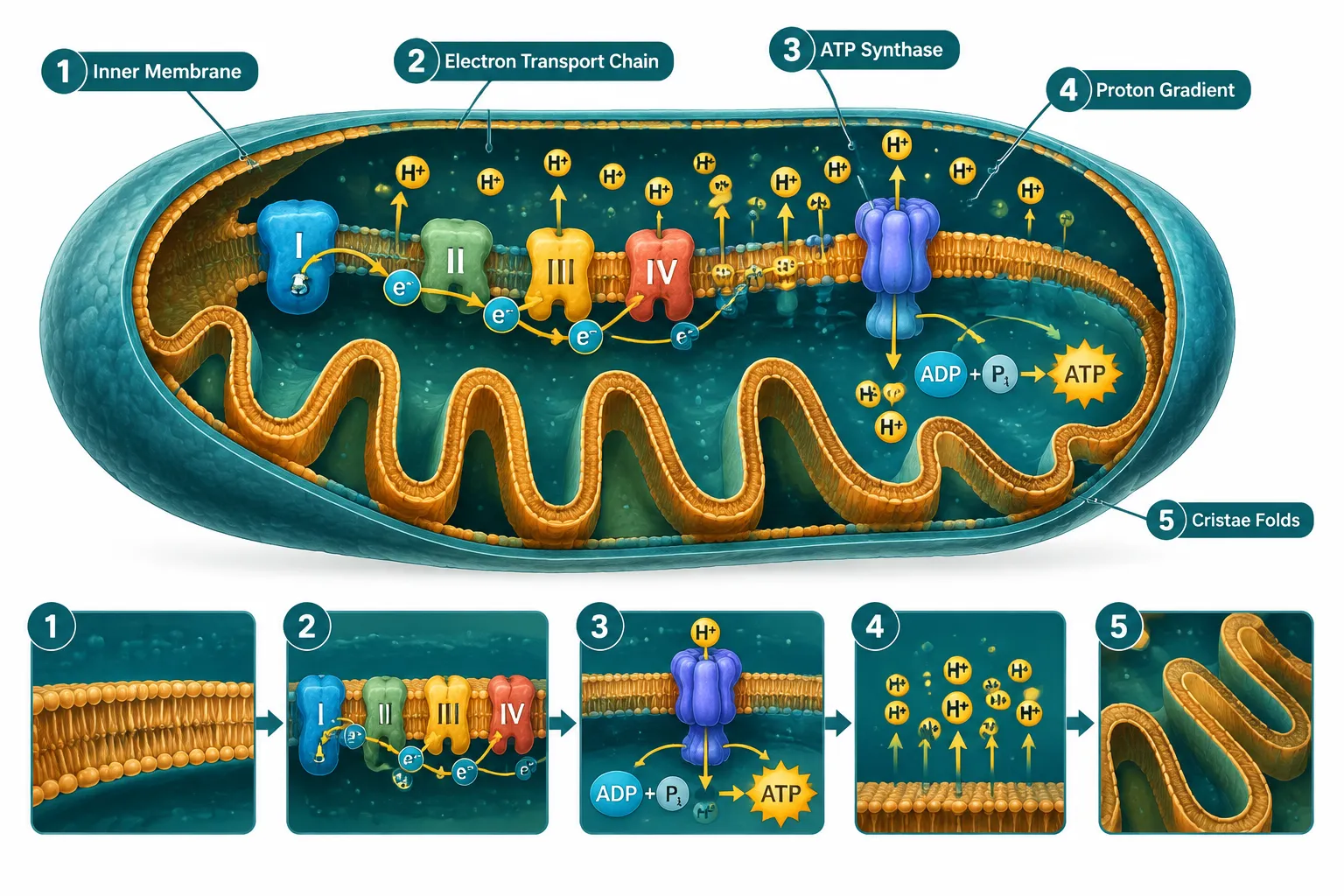
Detailed () scientific illustration showing a cross-section of a mitochondrion with labeled cristae and inner membrane, with

Key Takeaways

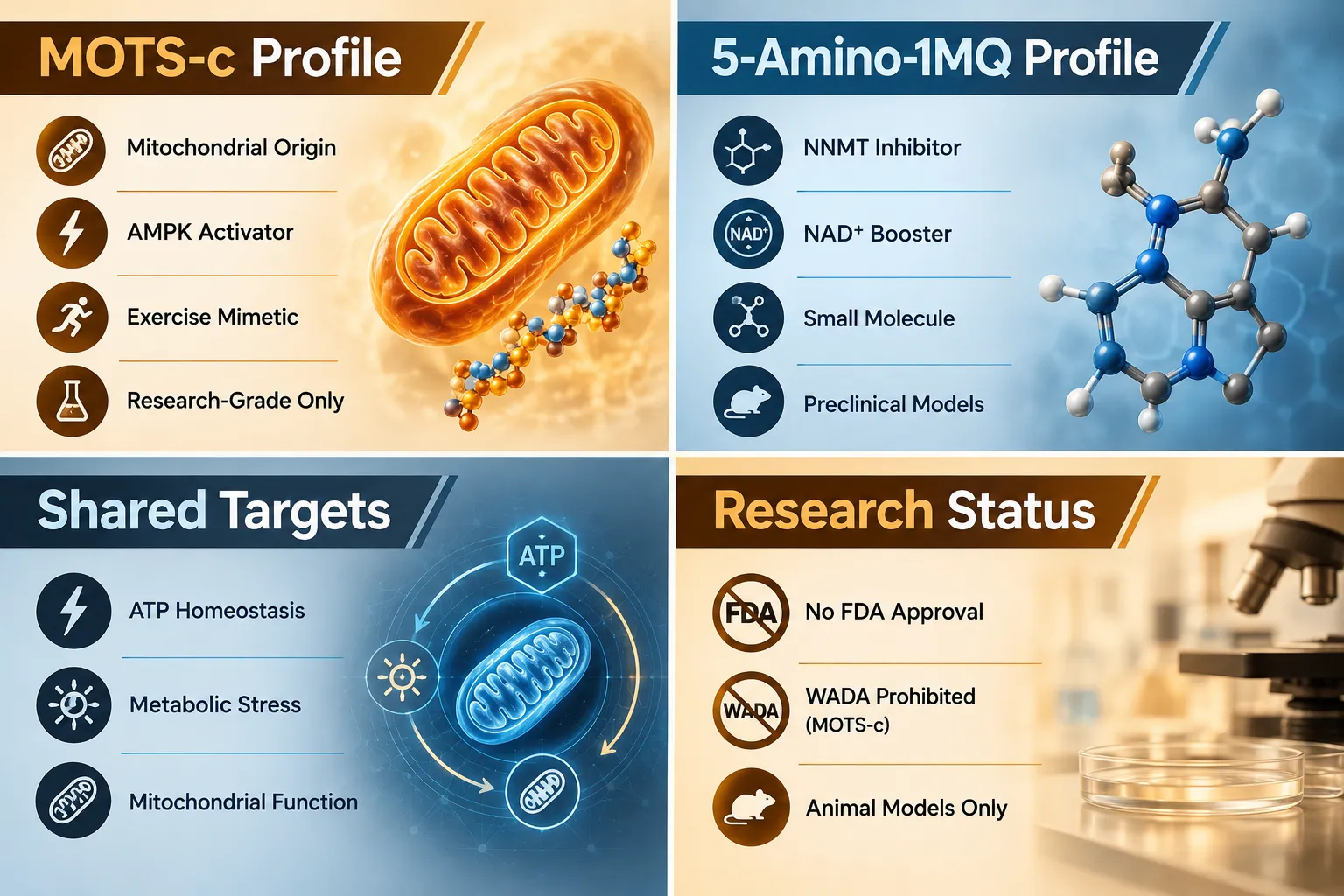
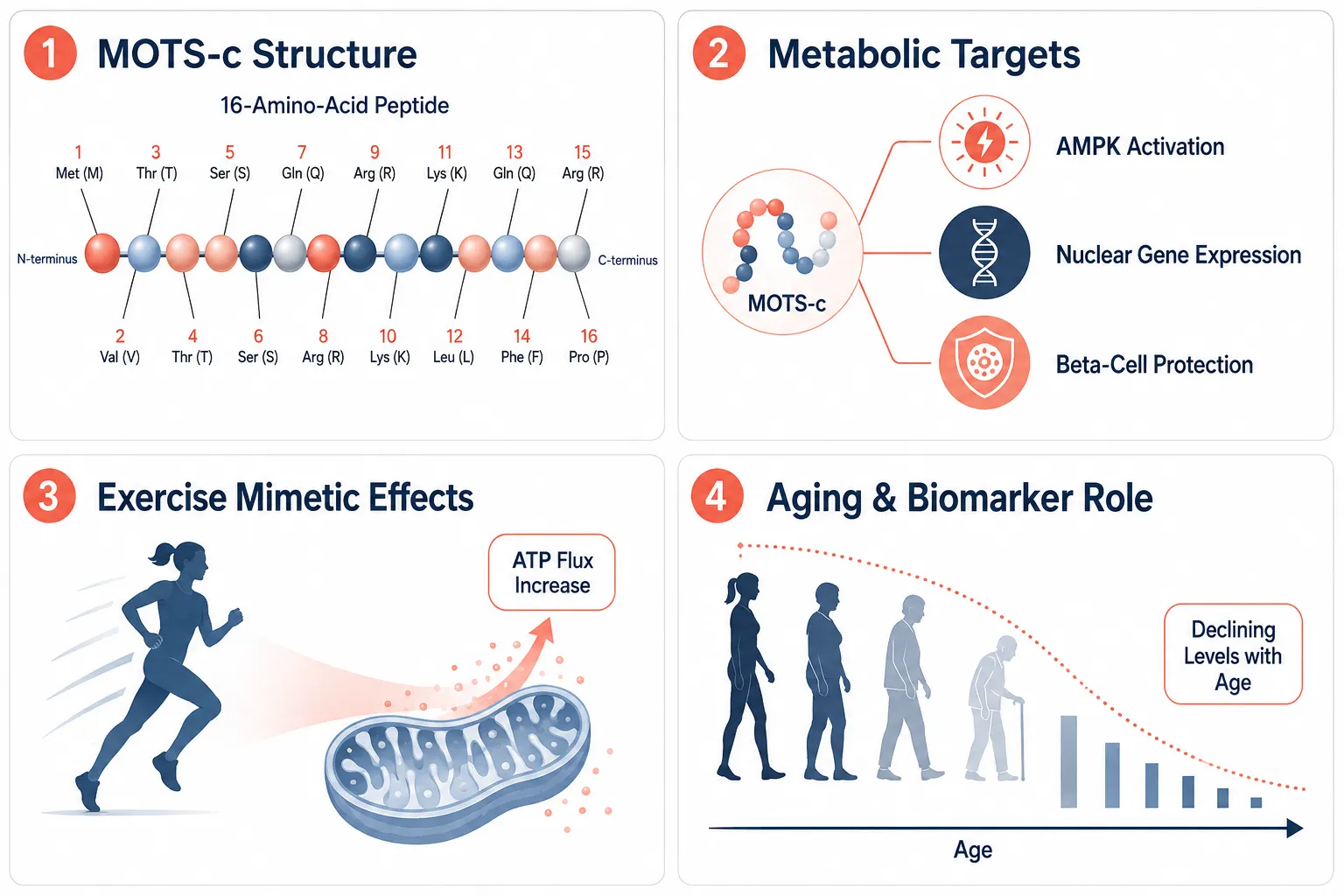
  • MOTS-c is a 16-amino acid mitochondria-derived peptide that activates AMPK, improving glucose uptake and insulin sensitivity.
  • 5-Amino-1MQ is a small-molecule inhibitor targeting NNMT, an enzyme overexpressed in obese adipose tissue, shifting fat cells toward energy expenditure.
  • Both compounds target distinct metabolic pathways, making combined research protocols a logical area of investigation.
  • MOTS-c behaves as a mitokine, released by muscle during exercise and capable of traveling to distant tissues and even the cell nucleus.
  • Unlike classic metabolic drugs, these agents interface directly with mitochondrial and epigenetic signaling rather than simply blocking a receptor.

What Is MOTS-c and How Does It Interact with Mitochondrial Signaling

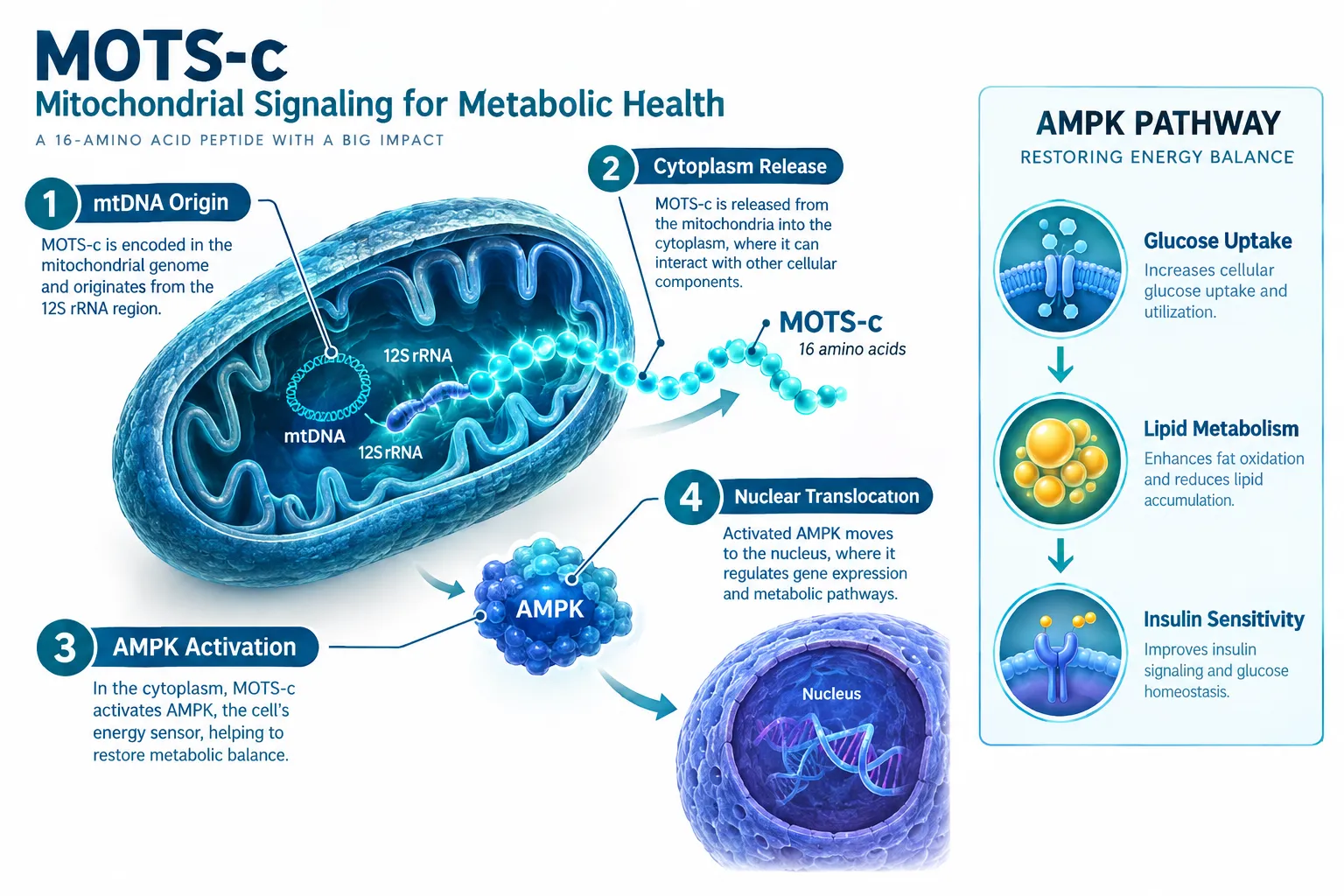
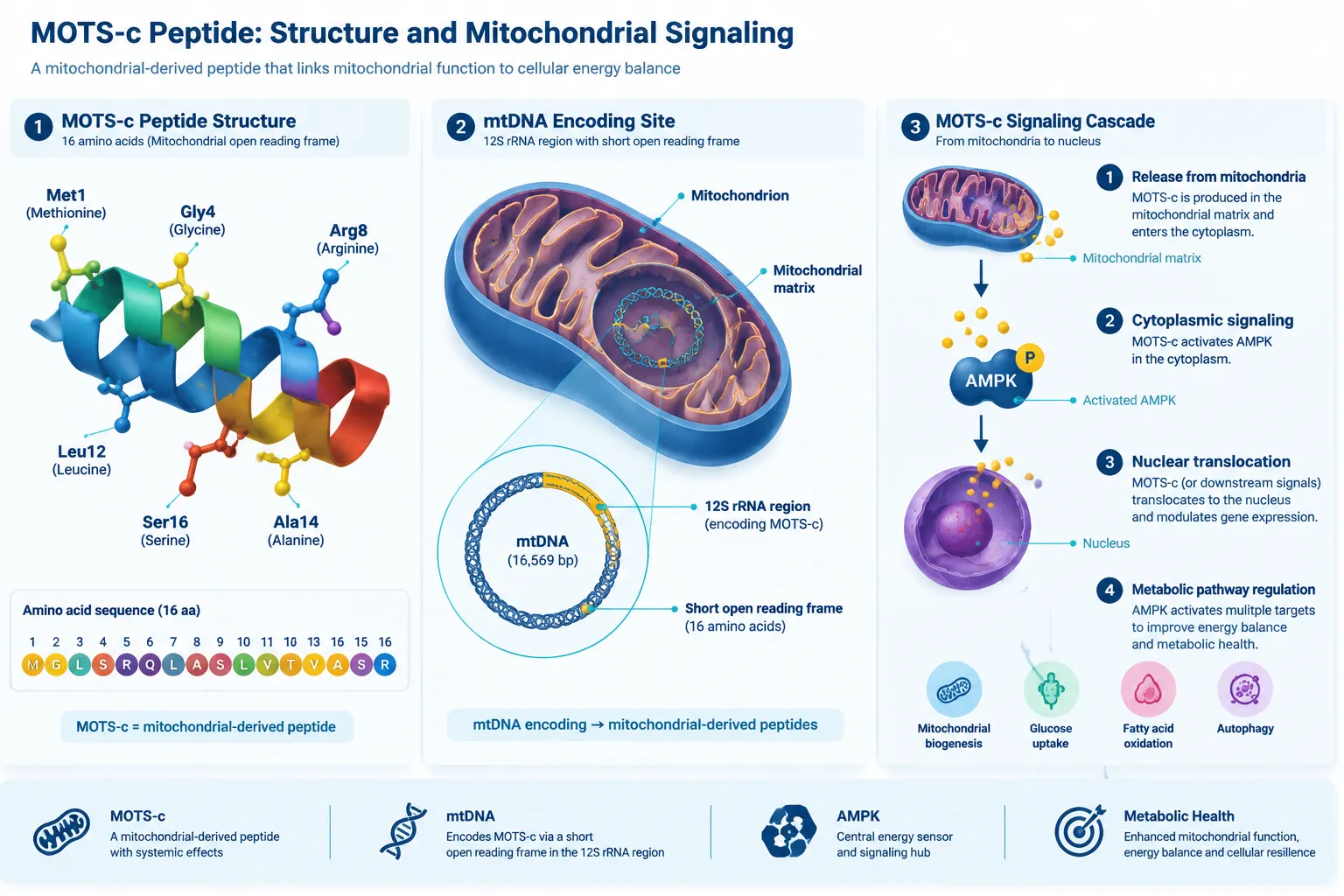
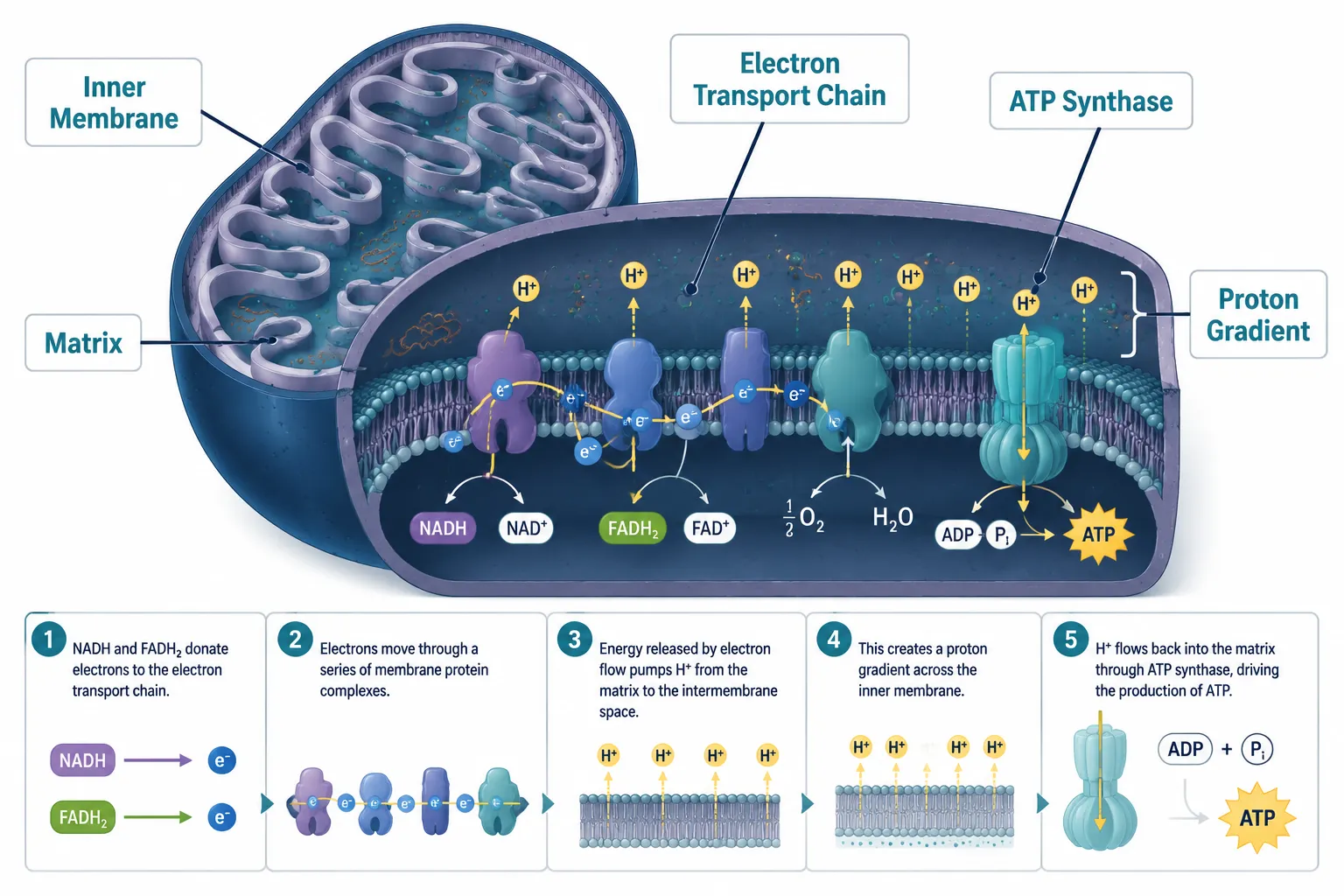
MOTS-c is a 16-amino acid peptide translated from a short open reading frame within mitochondrial DNA, an unusual origin that sets it apart from nuclear-encoded proteins. Its discovery confirmed that mitochondria are not merely ATP generators; they produce bioactive signals that govern whole-body metabolism.

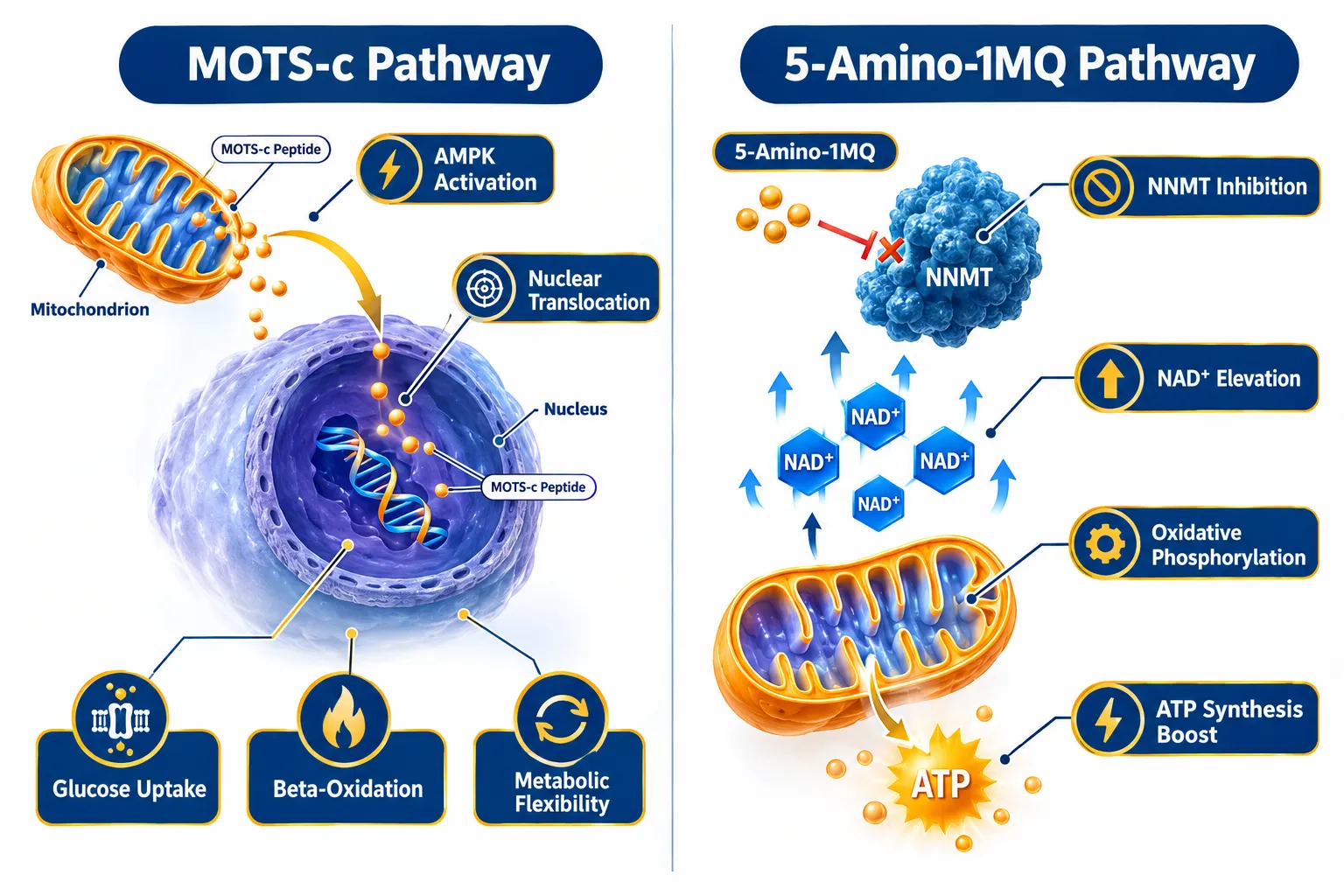
The mechanism is precise. MOTS-c inhibits the folate-methionine cycle inside cells, which causes a buildup of AICAR, a naturally occurring AMPK activator. When AMPK switches on, cells increase glucose uptake, suppress fat synthesis, and shift toward oxidative metabolism. The result is improved insulin sensitivity and more efficient energy use across muscle, liver, and adipose tissue.

What makes MOTS-c especially compelling is its behavior under stress. During metabolic challenge, MOTS-c translocates to the nucleus, where it directly regulates adaptive stress-response genes. This retrograde signaling, from mitochondria back to the genome, represents a layer of metabolic control that classic small-molecule drugs do not replicate.

MOTS-c also qualifies as a mitokine: skeletal muscle releases it during exercise, after which it circulates to distant tissues and mimics aspects of exercise-induced metabolic benefit. Research in animal models shows that MOTS-c treatment significantly improves physical performance across young, middle-aged, and older subjects, suggesting a role in combating age-dependent decline.

For researchers exploring mitochondria-targeted compounds, the SS-31 mitochondrial research overview provides useful context on how different peptides approach mitochondrial membrane stabilization and energy efficiency.

MOTS-c at a glance:

Parameter Detail
Origin Mitochondrial DNA
Length 16 amino acids
Primary target AMPK via AICAR accumulation
Half-life Approximately 2 hours
Research dosage 5-10 mg subcutaneously, 2-3x weekly

5-Amino-1MQ: NNMT Inhibition and the Adipose Tissue Connection

5-Amino-1MQ: NNMT Inhibition and the Adipose Tissue Connection

Where MOTS-c acts through mitochondrial peptide signaling, 5-Amino-1MQ operates through a fundamentally different mechanism, making the two compounds complementary rather than redundant.

5-Amino-1MQ is a small-molecule inhibitor of nicotinamide N-methyltransferase (NNMT), an enzyme that is significantly overexpressed in the white adipose tissue of obese individuals. NNMT consumes methyl groups that would otherwise support NAD+ biosynthesis and healthy epigenetic regulation. By blocking NNMT, 5-Amino-1MQ frees up those methyl groups, shifts fat cell metabolism toward energy expenditure, and may reduce adipose tissue accumulation.

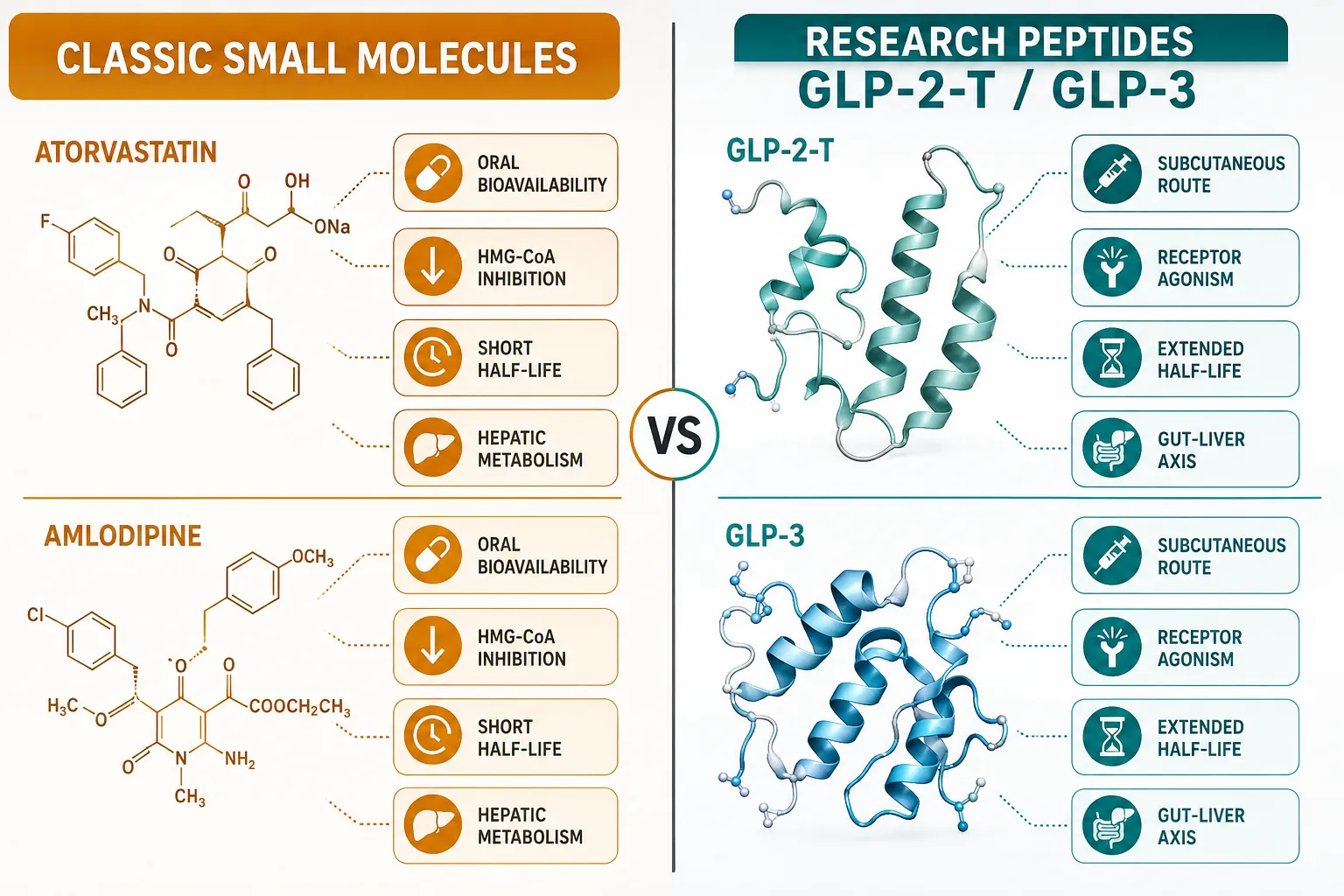
This is a meaningful distinction from classic metabolic drugs such as metformin or GLP-1 receptor agonists. Those agents primarily target receptor-level signaling or hepatic glucose output. 5-Amino-1MQ intervenes at the epigenetic and NAD+ metabolic level within the fat cell itself.

Researchers interested in NAD+ pathway modulation may also find value in reviewing the scientific evidence on NAD+ supplementation as a complementary framework.

Pharmacokinetic data for 5-Amino-1MQ suggest a half-life of roughly 12-16 hours, with research dosages typically ranging from 50-100 mg orally once or twice daily. Its oral bioavailability makes it logistically distinct from injectable peptides like MOTS-c.


Combining MOTS-c and 5-Amino-1MQ: Dual-Pathway Metabolic Research

The logic behind studying MOTS-c and 5-Amino-1MQ together rests on pathway complementarity. MOTS-c targets AMPK activation and mitochondrial stress signaling; 5-Amino-1MQ targets NNMT-driven epigenetic dysfunction in adipose tissue. Neither pathway fully overlaps, which is why combining them represents a rational research strategy for metabolic optimization.

"The shift from single-target metabolic drugs to multi-pathway peptide protocols reflects a broader understanding that energy dysregulation is never caused by one broken switch."

This dual approach also contrasts sharply with older pharmacological models. Classic drugs like statins or insulin sensitizers work downstream of the problem. MOTS-c and 5-Amino-1MQ work closer to the source, at the organelle and epigenome level, which is why researchers describe them as rewiring rather than merely adjusting cellular energy metabolism.

For broader context on how peptide combinations are being explored in research settings, the synergy of LL-37 and MOTS-c research overview offers a useful parallel example of multi-peptide protocol design.

Researchers working with mitochondria-targeted peptides may also consider reviewing SS-31 (elamipretide) research, which targets cardiolipin on the inner mitochondrial membrane, a third distinct mechanism that complements both MOTS-c and 5-Amino-1MQ approaches.

Additional resources on mitochondria-adjacent peptide research include:

  • SS-31 peptide research considerations
  • LL-37 versus SS-31 peptide benefit comparison

Key differences between MOTS-c, 5-Amino-1MQ, and classic metabolic drugs:

Feature MOTS-c 5-Amino-1MQ Classic Drug (e.g., Metformin)
Origin Mitochondrial peptide Synthetic small molecule Synthetic small molecule
Primary target AMPK / nucleus NNMT / adipose epigenome Hepatic glucose output
Route Subcutaneous Oral Oral
Metabolic layer Organelle signaling Epigenetic / NAD+ Receptor / enzyme

Conclusion

The science of Mitochondria, MOTS-c, and 5-Amino-1MQ: How Polypeptide Peptides Rewire Cellular Energy Metabolism represents a genuine shift in how researchers think about metabolic disease. Rather than patching downstream symptoms, these compounds address upstream dysfunction at the mitochondrial and epigenetic level.

Actionable next steps for researchers in 2026:

  1. Review the primary literature on MOTS-c's AMPK activation pathway and its nuclear translocation behavior under metabolic stress.
  2. Examine NNMT expression data in adipose tissue models before designing 5-Amino-1MQ protocols.
  3. Consider how mitochondria-targeted peptides like SS-31 might complement MOTS-c in multi-pathway research designs.
  4. Source research-grade compounds from verified, tested suppliers to ensure purity and traceability.
  5. Track both metabolic and physical performance markers across study timelines, given MOTS-c's documented effects on exercise capacity.

The mitochondrion is no longer just a powerhouse. It is a signaling organ, and the peptides it produces may be among the most important metabolic research targets of this decade.

https://www.puretestedpeptides.com/wp-content/uploads/2026/01/buy-peptides-online.jpg 0 0 Pure Tested https://www.puretestedpeptides.com/wp-content/uploads/2026/01/buy-peptides-online.jpg Pure Tested2026-07-07 13:15:532026-07-20 15:00:51Mitochondria, MOTS‑c, and 5‑Amino‑1MQ: How Polypeptide Peptides Rewire Cellular Energy Metabolism
Triple‑agonist design and receptor structural biology behind GLP‑1/GIP/glucagon peptides like retatrutide

Triple‑agonist design and receptor structural biology behind GLP‑1/GIP/glucagon peptides like retatrutide

July 4, 2026/0 Comments/by Pure Tested

Retatrutide achieved a mean body weight reduction of over 24% in a 48-week Phase 2 trial, a figure that surpassed every single- and dual-agonist result recorded up to that point. That number is not a coincidence. It is a direct consequence of deliberate molecular engineering, and the triple-agonist design and receptor structural biology behind GLP-1/GIP/glucagon peptides like retatrutide is now one of the most intensively studied areas in metabolic medicine.

Key Takeaways

  • Retatrutide simultaneously activates three gut-hormone receptors: GLP-1R, GIPR, and glucagon receptor (GCGR).
  • High-resolution cryo-EM structural data reveal how a single peptide backbone can engage all three receptor binding pockets.
  • The GLP-1 backbone serves as the scaffold, with GIP and glucagon pharmacophore elements grafted at specific residue positions.
  • Fatty acid conjugation extends plasma half-life, enabling once-weekly dosing without sacrificing receptor selectivity.
  • Understanding this structural framework is essential for interpreting next-generation incretin-mimetic research.

Key Takeaways

How Three Receptors Are Activated by One Molecule

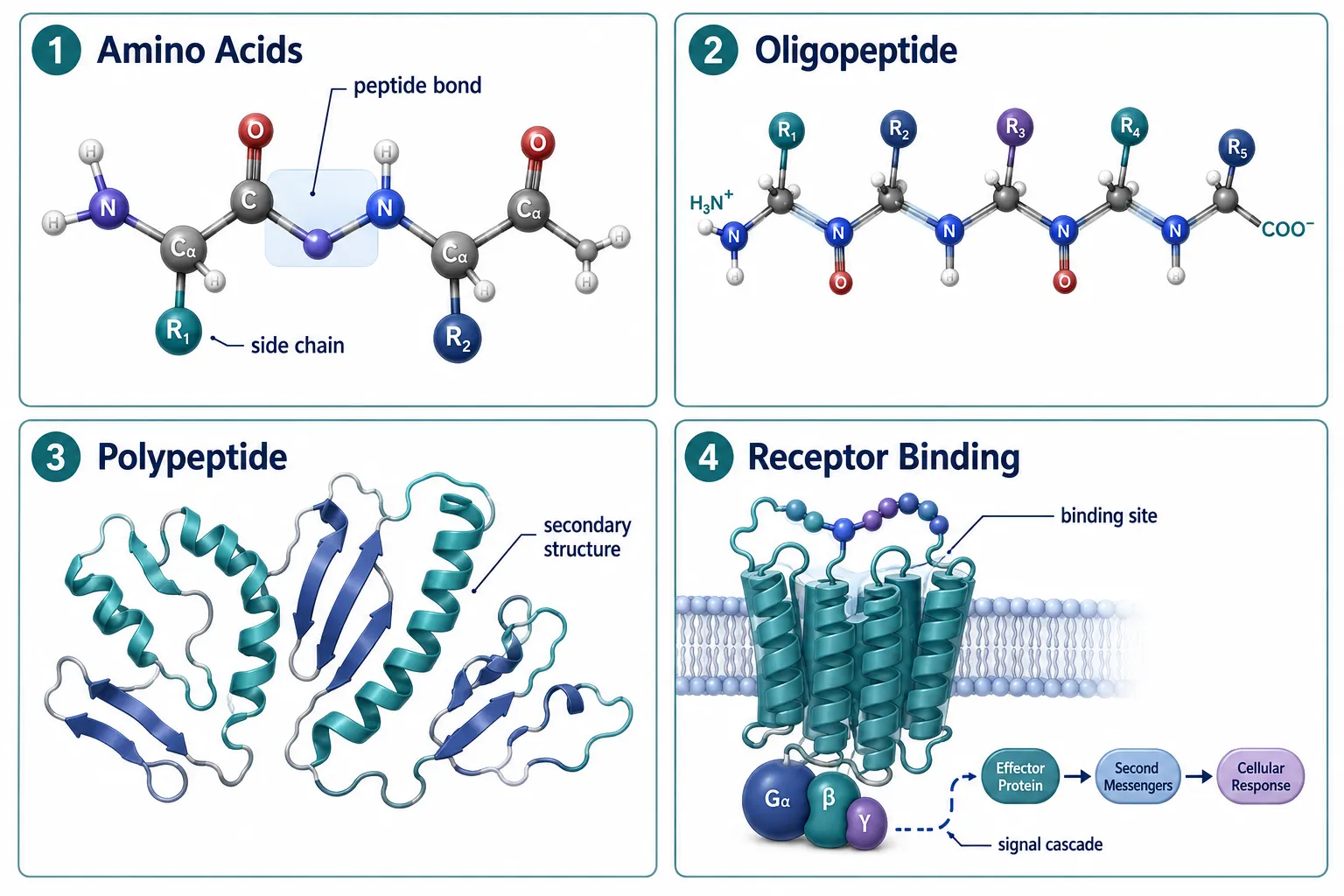
All three target receptors, GLP-1R, GIPR, and GCGR, belong to the class B1 family of G-protein coupled receptors (GPCRs). Each has a large extracellular domain that captures the peptide's N-terminus and a transmembrane bundle that transduces the signal intracellularly. What makes the triple-agonist design and receptor structural biology behind GLP-1/GIP/glucagon peptides like retatrutide so remarkable is that these three receptors share enough structural homology to be addressed by a single engineered peptide, yet differ enough that achieving balanced potency across all three requires precise residue-level tuning.

Cryo-electron microscopy data published in 2024 resolved retatrutide-receptor complexes at near-atomic resolution. The structures confirmed that the peptide adopts an alpha-helical conformation upon receptor engagement. The N-terminal region drives glucagon receptor activation, the mid-helix segment is critical for GIP receptor binding, and the C-terminal portion anchors GLP-1 receptor engagement. Each pharmacophore region overlaps partially, meaning a single amino acid substitution can shift the balance of potency across all three targets simultaneously.

For a broader look at how GLP-1 receptor agonism has evolved across generations, the GLP-1 generations overview provides useful context on how single-receptor agents gave way to more complex multi-target designs.


Rational Poly-Agonist Engineering: Building the Retatrutide Scaffold

Rational Poly-Agonist Engineering: Building the Retatrutide Scaffold

The design strategy starts with the native GLP-1 peptide as the structural backbone. This choice is deliberate. GLP-1R agonism is well-validated for glycemic control and appetite suppression, and the GLP-1 helix provides a stable scaffold onto which additional pharmacophore elements can be introduced.

Key engineering steps include:

Modification Purpose
N-terminal glucagon pharmacophore grafting Activates GCGR to increase energy expenditure and hepatic glucose output
Mid-helix GIP motif insertion Engages GIPR for enhanced insulin secretion and adipose tissue effects
C18 fatty acid chain conjugation Extends half-life via albumin binding; enables once-weekly dosing
Aib (alpha-aminoisobutyric acid) substitutions Resists dipeptidyl peptidase-4 (DPP-4) enzymatic cleavage

The glucagon receptor component is particularly significant. Glucagon alone raises blood glucose, a seemingly counterproductive effect in metabolic disease. However, when glucagon receptor activation is balanced against strong GLP-1R and GIPR agonism, the net result is increased thermogenesis and fat oxidation without net hyperglycemia. This balance is the central challenge of poly-agonist design.

Researchers interested in dual-receptor agonism as a stepping stone to this triple-target approach will find the GLP-1T research breakdown on dual receptor agonism a valuable reference.

"Balanced tri-receptor engagement is not about maximal activation at each target, it is about calibrating the ratio of potencies to produce a synergistic metabolic outcome."

The GLP-3 triple agonist overview explores how related molecules in this class are being characterized for research purposes in 2026.


Metabolic Consequences of Simultaneous Tri-Receptor Activation

Metabolic Consequences of Simultaneous Tri-Receptor Activation

The triple-agonist design and receptor structural biology behind GLP-1/GIP/glucagon peptides like retatrutide produces a layered metabolic effect that no single-receptor agent can replicate.

GLP-1R activation contributes:

  • Slowed gastric emptying
  • Reduced appetite via hypothalamic signaling
  • Glucose-dependent insulin secretion

GIPR activation adds:

  • Enhanced postprandial insulin response
  • Possible direct adipocyte effects reducing lipid accumulation
  • Complementary appetite modulation

GCGR activation provides:

  • Increased hepatic glucose production (offset by GLP-1R effects)
  • Elevated energy expenditure through brown adipose tissue thermogenesis
  • Enhanced lipolysis in white adipose tissue

This convergence explains the superior weight loss data. Researchers studying metabolic modulation pathways can explore additional mechanistic context through the metabolic modulation research lines resource.

The structural data also have formulation implications. Because the fatty acid chain binds albumin reversibly, the peptide circulates in a depot-like state, releasing gradually. This pharmacokinetic profile is a direct product of the structural biology, not an afterthought. For those interested in how delivery systems shape peptide therapeutics broadly, the innovative peptide delivery systems overview covers relevant advances.

Researchers examining related metabolic peptides may also find the MOTS-c metabolic flexibility research themes relevant, as mitochondrial and incretin pathways intersect in energy homeostasis models.


Conclusion

The triple-agonist design and receptor structural biology behind GLP-1/GIP/glucagon peptides like retatrutide represents a landmark convergence of structural biology, medicinal chemistry, and metabolic physiology. High-resolution cryo-EM data have moved this field from empirical screening toward genuinely rational drug design, where each amino acid substitution is chosen with a specific receptor interaction in mind.

Actionable next steps for researchers and clinicians:

  1. Review published cryo-EM structural data on retatrutide-receptor complexes to understand residue-level binding determinants.
  2. Track ongoing Phase 3 trial data for retatrutide to assess whether preclinical structural predictions translate to clinical outcomes.
  3. Explore the generations of GLP-1 receptor agonists to contextualize where triple agonism fits in the therapeutic timeline.
  4. Consider how poly-agonist design principles may inform research into other multi-target peptide systems beyond metabolic disease.

The structural biology is no longer a black box. That clarity is accelerating the next wave of incretin-mimetic innovation.

https://www.puretestedpeptides.com/wp-content/uploads/2026/07/Triple‑agonist-design-and-receptor-structural-biology-behind-GLP‑1GIPglucagon-peptides-like-retatrutide.png 1024 1536 Pure Tested https://www.puretestedpeptides.com/wp-content/uploads/2026/01/buy-peptides-online.jpg Pure Tested2026-07-04 13:03:572026-07-20 15:01:09Triple‑agonist design and receptor structural biology behind GLP‑1/GIP/glucagon peptides like retatrutide
Retatrutide vs GLP3 Peptide: How to Interpret the Naming Difference in Research Context

Retatrutide vs GLP3 Peptide: How to Interpret the Naming Difference in Research Context

July 1, 2026/0 Comments/by Pure Tested

Researchers and informed readers searching metabolic peptide literature in 2026 frequently encounter two terms side by side — "retatrutide" and "GLP-3 peptide" — and assume they are comparing two separate compounds. They are not. Understanding this naming gap is essential for reading clinical data accurately and avoiding confusion when evaluating research outcomes.

This article on Retatrutide vs GLP3 Peptide: How to Interpret the Naming Difference in Research Context explains where the informal label came from, what the science actually says, and how to navigate terminology when reviewing preclinical or clinical literature.

Key Takeaways

  • "GLP-3 peptide" is an informal shorthand, not an official scientific or regulatory term.
  • Retatrutide is the INN (International Nonproprietary Name) for a triple receptor agonist targeting GLP-1R, GIPR, and GcgR.
  • The "GLP-3" label emerged from a logical but unofficial progression: GLP-1 agonist, then dual GLP-1/GIP agonist, then "triple" or "GLP-3."
  • Phase 3 TRIUMPH-4 trial data showed up to 28.7% body weight reduction at 68 weeks with a 12 mg dose.
  • In formal research contexts, always use "retatrutide" or "triple receptor agonist" to ensure accurate source retrieval.

Where the "GLP-3" Label Comes From

Where the "GLP-3" Label Comes From

The naming logic follows a simple pattern that the research community informally adopted. GLP-1 receptor agonists — such as semaglutide — target a single receptor. Dual agonists like tirzepatide activate both the GLP-1 receptor and the GIP receptor. When retatrutide arrived as a compound activating three receptors simultaneously — GLP-1R, GIPR, and the glucagon receptor (GcgR) — some writers and online communities began calling it a "GLP-3" to signal that it goes one step further than a dual agonist.

This is a shorthand label, not a pharmacological classification. No regulatory body, no peer-reviewed journal, and no drug developer has officially designated retatrutide as a "GLP-3 receptor agonist." The glucagon receptor is not a third GLP receptor in any biological sense. GLP-1 and GLP-2 are the two glucagon-like peptides identified in the literature, and neither is the same as the glucagon receptor that retatrutide activates.

Term Type Official?
Retatrutide INN / clinical name Yes
Triple receptor agonist Mechanistic descriptor Yes
GLP-3 peptide Community shorthand No
GLP-1/GIP/GcgR agonist Pharmacological label Yes

For those already familiar with the broader landscape of incretin-based compounds, the GLP-1 incretin research themes article provides useful background on how these receptor classes differ.


What Retatrutide Actually Does in Research

What Retatrutide Actually Does in Research

Retatrutide works by co-activating three distinct receptor pathways that each influence energy balance, appetite signaling, and glucose metabolism. The GLP-1 receptor component slows gastric emptying and reduces appetite. The GIP receptor component modulates insulin secretion and fat storage. The glucagon receptor component increases energy expenditure and promotes fat oxidation.

This triple mechanism is why Phase 2 trial data reported up to 24.2% body weight loss at 48 weeks with a 12 mg dose — a figure that exceeded what single or dual agonists had achieved at comparable timepoints. Phase 3 TRIUMPH-4 trial data extended that finding further, showing up to 28.7% body weight loss at 68 weeks with the same 12 mg dose.

"Triple agonism is not simply additive — the glucagon receptor component introduces an energy expenditure pathway that single and dual agonists do not access."

For researchers comparing incretin-based mechanisms, the dual receptor agonism research breakdown and the generations of GLP-1 differences articles offer relevant context. Researchers interested in complementary metabolic compounds may also find value in reviewing cagrilintide synergy with GLP-1 as a related area of investigation.


How to Interpret the Naming Difference in Research Context

How to Interpret the Naming Difference in Research Context

When evaluating Retatrutide vs GLP3 Peptide: How to Interpret the Naming Difference in Research Context, the practical rule is straightforward: use "retatrutide" for database searches on PubMed, ClinicalTrials.gov, or any regulatory archive. Searching "GLP-3 peptide" will return inconsistent results and may surface unrelated compounds or speculative content.

The informal "GLP-3" label is most common in:

  • Fitness and biohacking communities
  • Non-peer-reviewed blog content
  • Social media discussions comparing weight-loss peptides

It is rarely, if ever, used in:

  • Clinical trial registrations
  • Peer-reviewed pharmacology journals
  • FDA or EMA regulatory filings

Researchers studying adjacent compounds — such as tesofensine peptide overview or TESA body composition research themes — will notice the same pattern: informal community labels often diverge from official nomenclature. Maintaining terminological precision protects the integrity of literature reviews and prevents citation errors.


Conclusion

The core answer to Retatrutide vs GLP3 Peptide: How to Interpret the Naming Difference in Research Context is that no meaningful distinction exists between the two terms — they refer to the same compound, but one name is scientifically valid and one is not. Retatrutide is the correct, searchable, regulatory-recognized name for the triple GLP-1R/GIPR/GcgR agonist under active Phase 3 investigation.

Actionable next steps for researchers and informed readers:

  • Use "retatrutide" exclusively when searching clinical databases or citing literature.
  • Treat "GLP-3 peptide" as a community shorthand that signals triple agonism, not a distinct compound class.
  • Cross-reference mechanism descriptions against the three receptor targets (GLP-1R, GIPR, GcgR) to verify you are reading about the correct compound.
  • Follow TRIUMPH-4 and related Phase 3 trial updates for the most current efficacy and safety data.

Precision in terminology is not pedantic — it is the foundation of reliable research interpretation.

https://www.puretestedpeptides.com/wp-content/uploads/2026/07/Retatrutide-vs-GLP3-Peptide-How-to-Interpret-the-Naming-Difference-in-Research-Context.png 1024 1536 Pure Tested https://www.puretestedpeptides.com/wp-content/uploads/2026/01/buy-peptides-online.jpg Pure Tested2026-07-01 13:04:142026-07-20 15:01:17Retatrutide vs GLP3 Peptide: How to Interpret the Naming Difference in Research Context
GLP-3, GLP-1, and GLP-2 Explained: A Researcher’s Guide to the Peptide Family

GLP-3, GLP-1, and GLP-2 Explained: A Researcher’s Guide to the Peptide Family

June 28, 2026/0 Comments/by Pure Tested

The term "GLP-3" now appears in clinical trial press releases, investor calls, and research databases — yet no such peptide exists in standard biochemistry textbooks. That naming gap reveals something important: the glucagon-like peptide family is evolving faster than its own vocabulary. This guide to GLP-3, GLP-1, and GLP-2 explained as a peptide family cuts through the marketing language to focus on mechanism, receptor biology, and what the evidence actually shows.

Key Takeaways

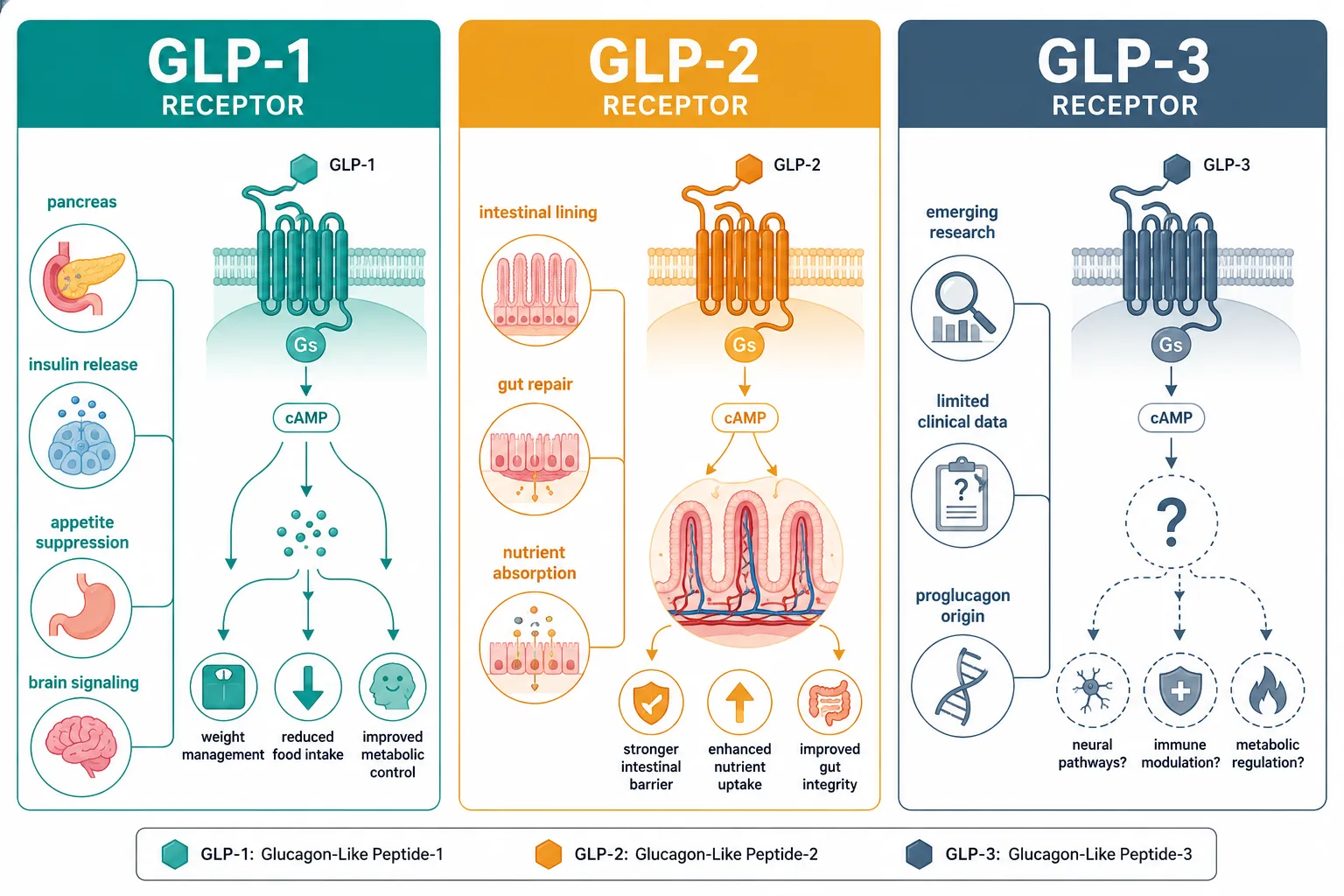
  • GLP-1 and GLP-2 are both derived from the same precursor protein, proglucagon, through tissue-specific processing.
  • GLP-1 targets the GLP-1 receptor to regulate insulin secretion and appetite; GLP-2 targets a separate receptor to support intestinal growth and repair.
  • "GLP-3" is an informal nickname for retatrutide, a triple agonist hitting GLP-1, GIP, and glucagon receptors — not a distinct endogenous peptide.
  • Multiple next-generation agents in 2026 are blurring receptor boundaries, making precise terminology more important than ever.
  • Researchers should distinguish receptor pharmacology from peptide taxonomy to avoid conflating mechanism with marketing.

GLP-1, GLP-2, and GLP-3 peptide family molecular overview

The Proglucagon Origin: Where GLP-1 and GLP-2 Begin

Understanding GLP-3, GLP-1, and GLP-2 explained as a peptide family starts with a single precursor: proglucagon. This 160-amino-acid protein is encoded by the GCG gene and processed differently depending on the tissue.

Tissue-specific cleavage produces distinct peptides:

Tissue Primary Products
Pancreatic alpha cells Glucagon, glicentin-related peptide
Intestinal L-cells GLP-1, GLP-2, oxyntomodulin
Brain neurons GLP-1, glicentin

This differential processing is controlled by prohormone convertases — PC2 in the pancreas and PC1/3 in the gut and brain. The result is that GLP-1 and GLP-2 are co-secreted from intestinal L-cells in a roughly 1:1 molar ratio following nutrient ingestion.

GLP-1 (glucagon-like peptide-1) is a 30-amino-acid incretin hormone. It binds the GLP-1 receptor (GLP-1R), a class B G-protein-coupled receptor expressed in pancreatic beta cells, the vagus nerve, the hypothalamus, and the heart. Activation drives glucose-dependent insulin secretion, suppresses glucagon, slows gastric emptying, and reduces appetite. Its plasma half-life is under two minutes due to rapid degradation by DPP-4 enzyme.

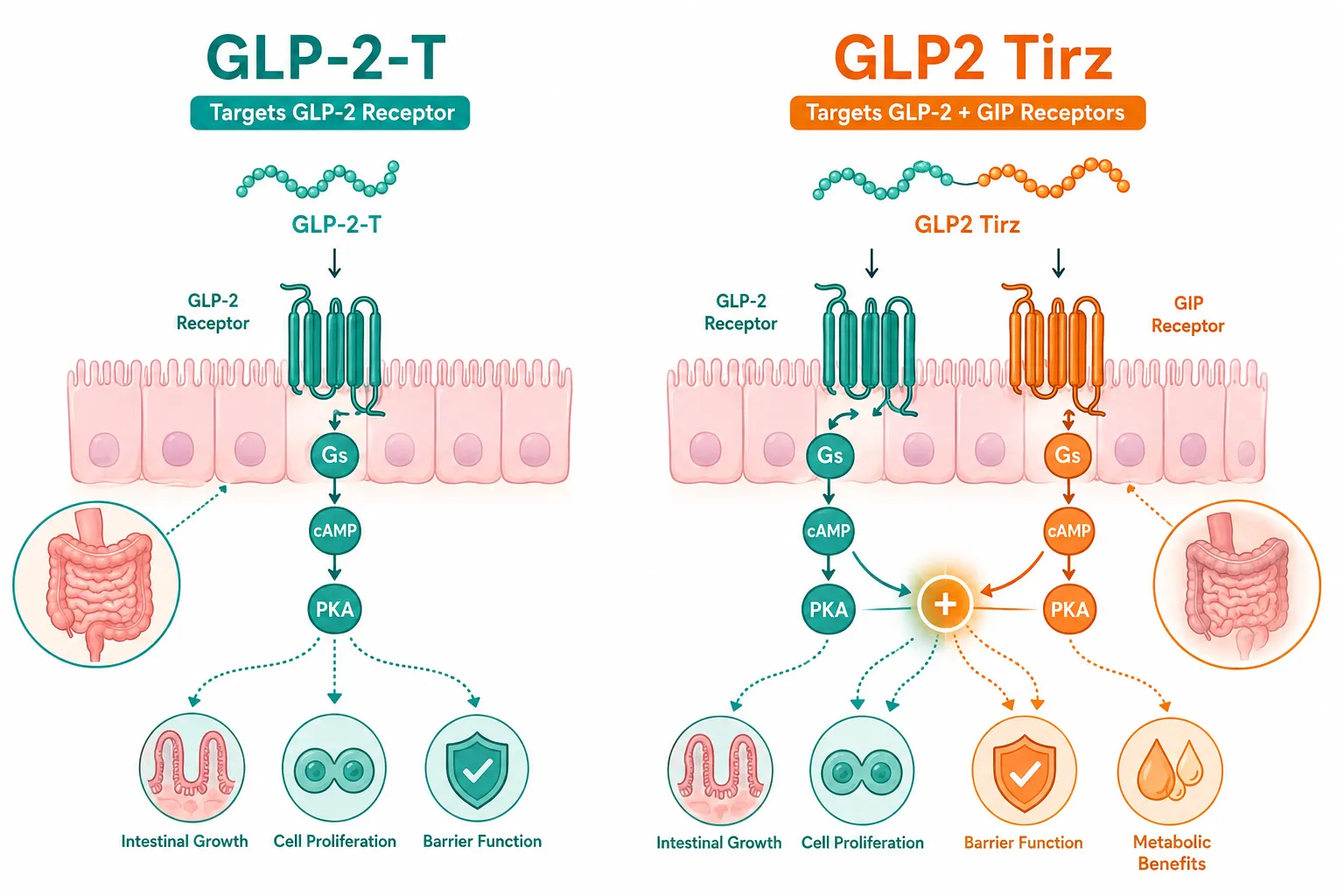
GLP-2 (glucagon-like peptide-2) is a 33-amino-acid peptide that binds its own distinct receptor, GLP-2R, expressed primarily in intestinal enteroendocrine cells, submucosal neurons, and the hypothalamus. Its core functions center on intestinal epithelial growth, barrier integrity, and nutrient absorption — not glucose regulation. Teduglutide (Gattex/Revestive), a GLP-2 analog, is the only approved agent in this class and generates over $800 million annually. As of 2026, at least six novel GLP-2 analog programs are in active clinical development targeting short bowel syndrome, Crohn's disease, and gut barrier dysfunction. Researchers exploring GLP-1 incretin research themes will find the GLP-2 pathway a compelling parallel.

"GLP-1 and GLP-2 are not interchangeable — they share a precursor but act on entirely different receptor systems with non-overlapping physiological roles."


What "GLP-3" Actually Means: Receptor Taxonomy vs. Peptide Naming

Researcher comparing GLP peptide vials and clinical trial data

The phrase "GLP-3" does not describe a third endogenous glucagon-like peptide. It is an informal shorthand for retatrutide, a synthetic triple agonist developed by Eli Lilly that simultaneously targets three receptors: GLP-1R, GIP receptor (GIPR), and glucagon receptor (GCGR). The "3" refers to the number of receptor targets, not a peptide sequence.

This distinction matters enormously for researchers. Calling retatrutide "GLP-3" is pharmacologically imprecise. The correct terminology is triple receptor agonist or GLP-1/GIP/glucagon tri-agonist. Retatrutide is not FDA-approved as of 2026 and remains available only through clinical trials. Phase 3 data have shown up to 28.7% weight loss, with approval anticipated no earlier than 2027. For more on this compound's research profile, see the dedicated retatrutide and GLP-3 research overview.

Why does the naming confusion persist?

  • Dual agonists like tirzepatide (GLP-1/GIP) were informally called "GLP-2" by some media outlets before that term was corrected.
  • The pharmaceutical pipeline moves faster than regulatory taxonomy.
  • Marketing teams favor simple numerical progressions.

Researchers should also note the generational differences across GLP-1 drug classes to contextualize where triple agonists sit in the therapeutic timeline.


The 2026 Pipeline: Next-Generation Agents Across the GLP Family

Next-generation GLP peptide pipeline timeline and weight-loss data chart

The peptide family landscape in 2026 is defined by receptor combination strategies rather than single-target approaches. Key agents include:

Orforglipron (Foundayo) — Eli Lilly
A once-daily oral GLP-1 receptor agonist. In the ACHIEVE-3 trial, the 17.2 mg dose produced 57.1% greater relative A1C reduction and 73.6% greater relative weight loss compared to oral semaglutide 14 mg. Lilly plans FDA submission by end of Q2 2026.

PF-08653944 — Pfizer
An ultra-long-acting injectable GLP-1 RA achieving 12.3% mean placebo-adjusted weight loss at 28 weeks in the VESPER-3 Phase 2b study, with weight loss continuing after transitioning from weekly to monthly dosing. Ten Phase 3 trials are anticipated in 2026.

Amycretin — Novo Nordisk
A single molecule activating both amylin and GLP-1 receptors, showing 22% weight loss in 36 weeks in Phase 1b/2a trials. Both oral and injectable formulations advance to Phase 3 in 2026.

Survodutide — Boehringer Ingelheim
A dual glucagon/GLP-1 agonist showing 18.7% weight loss at 46 weeks in Phase 2, with 62% of MASH patients achieving disease resolution. Phase 3 trials span 14 countries.

Researchers interested in the broader metabolic peptide landscape can explore metabolic modulation research lines and GIP receptor biology for mechanistic context. Those studying adjacent metabolic compounds may also find value in reviewing AOD9604 metabolic research and SLU-PP-332 metabolic research as comparative reference points.


Conclusion

The GLP peptide family is one of the most productive areas in current biomedical research, but imprecise language creates real confusion. GLP-1 and GLP-2 are endogenous peptides with distinct receptors and non-overlapping functions — both derived from proglucagon but acting on entirely separate physiological systems. "GLP-3" is not a peptide; it is a colloquial label for a triple-receptor agonist strategy.

Actionable next steps for researchers:

  • Anchor all literature searches to receptor nomenclature (GLP-1R, GLP-2R, GIPR, GCGR) rather than informal drug nicknames.
  • Track the orforglipron and retatrutide Phase 3 readouts expected in 2026-2027 as benchmark data for receptor combination strategies.
  • Distinguish between endogenous peptide biology and synthetic analog pharmacology when designing assay protocols.
  • Review the GLP-1 peptide product research library for current research-grade compound availability.

Precise taxonomy is not pedantry — it is the foundation of reproducible science.

https://www.puretestedpeptides.com/wp-content/uploads/2026/06/GLP-3-GLP-1-and-GLP-2-Explained-A-Researchers-Guide-to-the-Peptide-Family.png 1024 1536 Pure Tested https://www.puretestedpeptides.com/wp-content/uploads/2026/01/buy-peptides-online.jpg Pure Tested2026-06-28 13:27:522026-07-20 15:01:58GLP-3, GLP-1, and GLP-2 Explained: A Researcher’s Guide to the Peptide Family
GLP-3, GLP-1, and GLP-2 Explained: A Researcher’s Guide to the Peptide Family

GLP-3, GLP-1, and GLP-2 Explained: A Researcher’s Guide to the Peptide Family

June 28, 2026/0 Comments/by Pure Tested

The term "GLP-3" now appears in clinical trial press releases, investor calls, and research databases — yet no such peptide exists in standard biochemistry textbooks. That naming gap reveals something important: the glucagon-like peptide family is evolving faster than its own vocabulary. This guide to GLP-3, GLP-1, and GLP-2 explained as a peptide family cuts through the marketing language to focus on mechanism, receptor biology, and what the evidence actually shows.

Key Takeaways

  • GLP-1 and GLP-2 are both derived from the same precursor protein, proglucagon, through tissue-specific processing.
  • GLP-1 targets the GLP-1 receptor to regulate insulin secretion and appetite; GLP-2 targets a separate receptor to support intestinal growth and repair.
  • "GLP-3" is an informal nickname for retatrutide, a triple agonist hitting GLP-1, GIP, and glucagon receptors — not a distinct endogenous peptide.
  • Multiple next-generation agents in 2026 are blurring receptor boundaries, making precise terminology more important than ever.
  • Researchers should distinguish receptor pharmacology from peptide taxonomy to avoid conflating mechanism with marketing.

GLP-1, GLP-2, and GLP-3 peptide family molecular overview

The Proglucagon Origin: Where GLP-1 and GLP-2 Begin

Understanding GLP-3, GLP-1, and GLP-2 explained as a peptide family starts with a single precursor: proglucagon. This 160-amino-acid protein is encoded by the GCG gene and processed differently depending on the tissue.

Tissue-specific cleavage produces distinct peptides:

Tissue Primary Products
Pancreatic alpha cells Glucagon, glicentin-related peptide
Intestinal L-cells GLP-1, GLP-2, oxyntomodulin
Brain neurons GLP-1, glicentin

This differential processing is controlled by prohormone convertases — PC2 in the pancreas and PC1/3 in the gut and brain. The result is that GLP-1 and GLP-2 are co-secreted from intestinal L-cells in a roughly 1:1 molar ratio following nutrient ingestion.

GLP-1 (glucagon-like peptide-1) is a 30-amino-acid incretin hormone. It binds the GLP-1 receptor (GLP-1R), a class B G-protein-coupled receptor expressed in pancreatic beta cells, the vagus nerve, the hypothalamus, and the heart. Activation drives glucose-dependent insulin secretion, suppresses glucagon, slows gastric emptying, and reduces appetite. Its plasma half-life is under two minutes due to rapid degradation by DPP-4 enzyme.

GLP-2 (glucagon-like peptide-2) is a 33-amino-acid peptide that binds its own distinct receptor, GLP-2R, expressed primarily in intestinal enteroendocrine cells, submucosal neurons, and the hypothalamus. Its core functions center on intestinal epithelial growth, barrier integrity, and nutrient absorption — not glucose regulation. Teduglutide (Gattex/Revestive), a GLP-2 analog, is the only approved agent in this class and generates over $800 million annually. As of 2026, at least six novel GLP-2 analog programs are in active clinical development targeting short bowel syndrome, Crohn's disease, and gut barrier dysfunction. Researchers exploring GLP-1 incretin research themes will find the GLP-2 pathway a compelling parallel.

"GLP-1 and GLP-2 are not interchangeable — they share a precursor but act on entirely different receptor systems with non-overlapping physiological roles."


What "GLP-3" Actually Means: Receptor Taxonomy vs. Peptide Naming

Researcher comparing GLP peptide vials and clinical trial data

The phrase "GLP-3" does not describe a third endogenous glucagon-like peptide. It is an informal shorthand for retatrutide, a synthetic triple agonist developed by Eli Lilly that simultaneously targets three receptors: GLP-1R, GIP receptor (GIPR), and glucagon receptor (GCGR). The "3" refers to the number of receptor targets, not a peptide sequence.

This distinction matters enormously for researchers. Calling retatrutide "GLP-3" is pharmacologically imprecise. The correct terminology is triple receptor agonist or GLP-1/GIP/glucagon tri-agonist. Retatrutide is not FDA-approved as of 2026 and remains available only through clinical trials. Phase 3 data have shown up to 28.7% weight loss, with approval anticipated no earlier than 2027. For more on this compound's research profile, see the dedicated retatrutide and GLP-3 research overview.

Why does the naming confusion persist?

  • Dual agonists like tirzepatide (GLP-1/GIP) were informally called "GLP-2" by some media outlets before that term was corrected.
  • The pharmaceutical pipeline moves faster than regulatory taxonomy.
  • Marketing teams favor simple numerical progressions.

Researchers should also note the generational differences across GLP-1 drug classes to contextualize where triple agonists sit in the therapeutic timeline.


The 2026 Pipeline: Next-Generation Agents Across the GLP Family

Next-generation GLP peptide pipeline timeline and weight-loss data chart

The peptide family landscape in 2026 is defined by receptor combination strategies rather than single-target approaches. Key agents include:

Orforglipron (Foundayo) — Eli Lilly
A once-daily oral GLP-1 receptor agonist. In the ACHIEVE-3 trial, the 17.2 mg dose produced 57.1% greater relative A1C reduction and 73.6% greater relative weight loss compared to oral semaglutide 14 mg. Lilly plans FDA submission by end of Q2 2026.

PF-08653944 — Pfizer
An ultra-long-acting injectable GLP-1 RA achieving 12.3% mean placebo-adjusted weight loss at 28 weeks in the VESPER-3 Phase 2b study, with weight loss continuing after transitioning from weekly to monthly dosing. Ten Phase 3 trials are anticipated in 2026.

Amycretin — Novo Nordisk
A single molecule activating both amylin and GLP-1 receptors, showing 22% weight loss in 36 weeks in Phase 1b/2a trials. Both oral and injectable formulations advance to Phase 3 in 2026.

Survodutide — Boehringer Ingelheim
A dual glucagon/GLP-1 agonist showing 18.7% weight loss at 46 weeks in Phase 2, with 62% of MASH patients achieving disease resolution. Phase 3 trials span 14 countries.

Researchers interested in the broader metabolic peptide landscape can explore metabolic modulation research lines and GIP receptor biology for mechanistic context. Those studying adjacent metabolic compounds may also find value in reviewing AOD9604 metabolic research and SLU-PP-332 metabolic research as comparative reference points.


Conclusion

The GLP peptide family is one of the most productive areas in current biomedical research, but imprecise language creates real confusion. GLP-1 and GLP-2 are endogenous peptides with distinct receptors and non-overlapping functions — both derived from proglucagon but acting on entirely separate physiological systems. "GLP-3" is not a peptide; it is a colloquial label for a triple-receptor agonist strategy.

Actionable next steps for researchers:

  • Anchor all literature searches to receptor nomenclature (GLP-1R, GLP-2R, GIPR, GCGR) rather than informal drug nicknames.
  • Track the orforglipron and retatrutide Phase 3 readouts expected in 2026-2027 as benchmark data for receptor combination strategies.
  • Distinguish between endogenous peptide biology and synthetic analog pharmacology when designing assay protocols.
  • Review the GLP-1 peptide product research library for current research-grade compound availability.

Precise taxonomy is not pedantry — it is the foundation of reproducible science.

https://www.puretestedpeptides.com/wp-content/uploads/2026/06/GLP-3-GLP-1-and-GLP-2-Explained-A-Researchers-Guide-to-the-Peptide-Family.png 1024 1536 Pure Tested https://www.puretestedpeptides.com/wp-content/uploads/2026/01/buy-peptides-online.jpg Pure Tested2026-06-28 13:27:522026-07-20 15:01:59GLP-3, GLP-1, and GLP-2 Explained: A Researcher’s Guide to the Peptide Family
GLP-3, GLP-1, and GLP-2 Explained: A Researcher’s Guide to the Peptide Family

GLP-3, GLP-1, and GLP-2 Explained: A Researcher’s Guide to the Peptide Family

June 28, 2026/0 Comments/by Pure Tested

The term "GLP-3" now appears in clinical trial press releases, investor calls, and research databases — yet no such peptide exists in standard biochemistry textbooks. That naming gap reveals something important: the glucagon-like peptide family is evolving faster than its own vocabulary. This guide to GLP-3, GLP-1, and GLP-2 explained as a peptide family cuts through the marketing language to focus on mechanism, receptor biology, and what the evidence actually shows.

Key Takeaways

  • GLP-1 and GLP-2 are both derived from the same precursor protein, proglucagon, through tissue-specific processing.
  • GLP-1 targets the GLP-1 receptor to regulate insulin secretion and appetite; GLP-2 targets a separate receptor to support intestinal growth and repair.
  • "GLP-3" is an informal nickname for retatrutide, a triple agonist hitting GLP-1, GIP, and glucagon receptors — not a distinct endogenous peptide.
  • Multiple next-generation agents in 2026 are blurring receptor boundaries, making precise terminology more important than ever.
  • Researchers should distinguish receptor pharmacology from peptide taxonomy to avoid conflating mechanism with marketing.

GLP-1, GLP-2, and GLP-3 peptide family molecular overview

The Proglucagon Origin: Where GLP-1 and GLP-2 Begin

Understanding GLP-3, GLP-1, and GLP-2 explained as a peptide family starts with a single precursor: proglucagon. This 160-amino-acid protein is encoded by the GCG gene and processed differently depending on the tissue.

Tissue-specific cleavage produces distinct peptides:

Tissue Primary Products
Pancreatic alpha cells Glucagon, glicentin-related peptide
Intestinal L-cells GLP-1, GLP-2, oxyntomodulin
Brain neurons GLP-1, glicentin

This differential processing is controlled by prohormone convertases — PC2 in the pancreas and PC1/3 in the gut and brain. The result is that GLP-1 and GLP-2 are co-secreted from intestinal L-cells in a roughly 1:1 molar ratio following nutrient ingestion.

GLP-1 (glucagon-like peptide-1) is a 30-amino-acid incretin hormone. It binds the GLP-1 receptor (GLP-1R), a class B G-protein-coupled receptor expressed in pancreatic beta cells, the vagus nerve, the hypothalamus, and the heart. Activation drives glucose-dependent insulin secretion, suppresses glucagon, slows gastric emptying, and reduces appetite. Its plasma half-life is under two minutes due to rapid degradation by DPP-4 enzyme.

GLP-2 (glucagon-like peptide-2) is a 33-amino-acid peptide that binds its own distinct receptor, GLP-2R, expressed primarily in intestinal enteroendocrine cells, submucosal neurons, and the hypothalamus. Its core functions center on intestinal epithelial growth, barrier integrity, and nutrient absorption — not glucose regulation. Teduglutide (Gattex/Revestive), a GLP-2 analog, is the only approved agent in this class and generates over $800 million annually. As of 2026, at least six novel GLP-2 analog programs are in active clinical development targeting short bowel syndrome, Crohn's disease, and gut barrier dysfunction. Researchers exploring GLP-1 incretin research themes will find the GLP-2 pathway a compelling parallel.

"GLP-1 and GLP-2 are not interchangeable — they share a precursor but act on entirely different receptor systems with non-overlapping physiological roles."


What "GLP-3" Actually Means: Receptor Taxonomy vs. Peptide Naming

Researcher comparing GLP peptide vials and clinical trial data

The phrase "GLP-3" does not describe a third endogenous glucagon-like peptide. It is an informal shorthand for retatrutide, a synthetic triple agonist developed by Eli Lilly that simultaneously targets three receptors: GLP-1R, GIP receptor (GIPR), and glucagon receptor (GCGR). The "3" refers to the number of receptor targets, not a peptide sequence.

This distinction matters enormously for researchers. Calling retatrutide "GLP-3" is pharmacologically imprecise. The correct terminology is triple receptor agonist or GLP-1/GIP/glucagon tri-agonist. Retatrutide is not FDA-approved as of 2026 and remains available only through clinical trials. Phase 3 data have shown up to 28.7% weight loss, with approval anticipated no earlier than 2027. For more on this compound's research profile, see the dedicated retatrutide and GLP-3 research overview.

Why does the naming confusion persist?

  • Dual agonists like tirzepatide (GLP-1/GIP) were informally called "GLP-2" by some media outlets before that term was corrected.
  • The pharmaceutical pipeline moves faster than regulatory taxonomy.
  • Marketing teams favor simple numerical progressions.

Researchers should also note the generational differences across GLP-1 drug classes to contextualize where triple agonists sit in the therapeutic timeline.


The 2026 Pipeline: Next-Generation Agents Across the GLP Family

Next-generation GLP peptide pipeline timeline and weight-loss data chart

The peptide family landscape in 2026 is defined by receptor combination strategies rather than single-target approaches. Key agents include:

Orforglipron (Foundayo) — Eli Lilly
A once-daily oral GLP-1 receptor agonist. In the ACHIEVE-3 trial, the 17.2 mg dose produced 57.1% greater relative A1C reduction and 73.6% greater relative weight loss compared to oral semaglutide 14 mg. Lilly plans FDA submission by end of Q2 2026.

PF-08653944 — Pfizer
An ultra-long-acting injectable GLP-1 RA achieving 12.3% mean placebo-adjusted weight loss at 28 weeks in the VESPER-3 Phase 2b study, with weight loss continuing after transitioning from weekly to monthly dosing. Ten Phase 3 trials are anticipated in 2026.

Amycretin — Novo Nordisk
A single molecule activating both amylin and GLP-1 receptors, showing 22% weight loss in 36 weeks in Phase 1b/2a trials. Both oral and injectable formulations advance to Phase 3 in 2026.

Survodutide — Boehringer Ingelheim
A dual glucagon/GLP-1 agonist showing 18.7% weight loss at 46 weeks in Phase 2, with 62% of MASH patients achieving disease resolution. Phase 3 trials span 14 countries.

Researchers interested in the broader metabolic peptide landscape can explore metabolic modulation research lines and GIP receptor biology for mechanistic context. Those studying adjacent metabolic compounds may also find value in reviewing AOD9604 metabolic research and SLU-PP-332 metabolic research as comparative reference points.


Conclusion

The GLP peptide family is one of the most productive areas in current biomedical research, but imprecise language creates real confusion. GLP-1 and GLP-2 are endogenous peptides with distinct receptors and non-overlapping functions — both derived from proglucagon but acting on entirely separate physiological systems. "GLP-3" is not a peptide; it is a colloquial label for a triple-receptor agonist strategy.

Actionable next steps for researchers:

  • Anchor all literature searches to receptor nomenclature (GLP-1R, GLP-2R, GIPR, GCGR) rather than informal drug nicknames.
  • Track the orforglipron and retatrutide Phase 3 readouts expected in 2026-2027 as benchmark data for receptor combination strategies.
  • Distinguish between endogenous peptide biology and synthetic analog pharmacology when designing assay protocols.
  • Review the GLP-1 peptide product research library for current research-grade compound availability.

Precise taxonomy is not pedantry — it is the foundation of reproducible science.

https://www.puretestedpeptides.com/wp-content/uploads/2026/06/GLP-3-GLP-1-and-GLP-2-Explained-A-Researchers-Guide-to-the-Peptide-Family.png 1024 1536 Pure Tested https://www.puretestedpeptides.com/wp-content/uploads/2026/01/buy-peptides-online.jpg Pure Tested2026-06-28 13:27:512026-07-20 15:01:59GLP-3, GLP-1, and GLP-2 Explained: A Researcher’s Guide to the Peptide Family
Page 1 of 3123
×

Helpful Links

  • My account
  • Cart
  • Checkout
  • Refund and Returns Policy
  • Privacy Policy
  • SMS Privacy Policy
  • Login
  • My Account
  • Logout

USA Made Lab Tested Peptides

All products are sold for research, laboratory, or analytical purposes only, and are not for human consumption


Pure Tested Peptides is a chemical supplier. Pure Tested Peptides is not a compounding / chemical compounding facility as defined under 503A of the Federal Food, Drug, and Cosmetic act. Pure Tested Peptides is not an outsourcing facility as defined under 503B of the Federal Food, Drug, and Cosmetic act.

The statements made within this website have not been evaluated by the US Food and Drug Administration. The products we offer are not intended to diagnose, treat, cure or prevent any disease.

Human/Animal Consumption Prohibited. Laboratory/In-Vitro Experimental Use Only

Scroll to top Scroll to top Scroll to top