
Exploring the Synergistic Potential of Cagrilintide and Retatrutide Together in 2025 Research

The pursuit of advanced metabolic regulation and weight management continues to be a significant area of scientific inquiry in 2025. Among the forefront of this research are novel peptide compounds, with particular interest growing around the potential benefits of combining cagrilintide and retatrutide together. These two agents, each with unique mechanisms of action, are being investigated for their ability to offer enhanced effects beyond what either might achieve alone. For gym health enthusiasts and those deeply invested in understanding the intricate science behind metabolic health, exploring the combined research on these peptides represents a fascinating frontier.
As scientists delve deeper into understanding complex physiological systems, the concept of synergistic drug combinations often emerges as a promising pathway. This article aims to provide a comprehensive, high-authority overview of the current understanding and ongoing research surrounding the combined application of cagrilintide and retatrutide. We will explore their individual characteristics, the theoretical basis for their combined use, and the potential implications for future metabolic research.
Key Takeaways
- Distinct Mechanisms: Cagrilintide targets the amylin receptor, enhancing satiety and reducing gastric emptying, while retatrutide acts as a triple-agonist for GIP, GLP-1, and glucagon receptors, influencing multiple facets of metabolism.
- Theoretical Synergy: The complementary actions of cagrilintide and retatrutide together suggest a potential for additive or synergistic effects on appetite suppression, glucose control, and body weight reduction in research models.
- Ongoing Research: While individual studies have shown promising results, a cagrilintide retatrutide combination study is a key area of interest, exploring how these peptides might interact to optimize metabolic outcomes.
- Research Focus: Investigations are centered on understanding the optimal cagrilintide dosage with retatrutide, potential efficacy enhancements, and safety profiles within controlled laboratory settings.
- Future Implications: The findings from research into a retatrutide cagrilintide blend could pave the way for novel strategies in managing weight and metabolic disorders.
Understanding Cagrilintide vs Retatrutide: Individual Mechanisms and Research
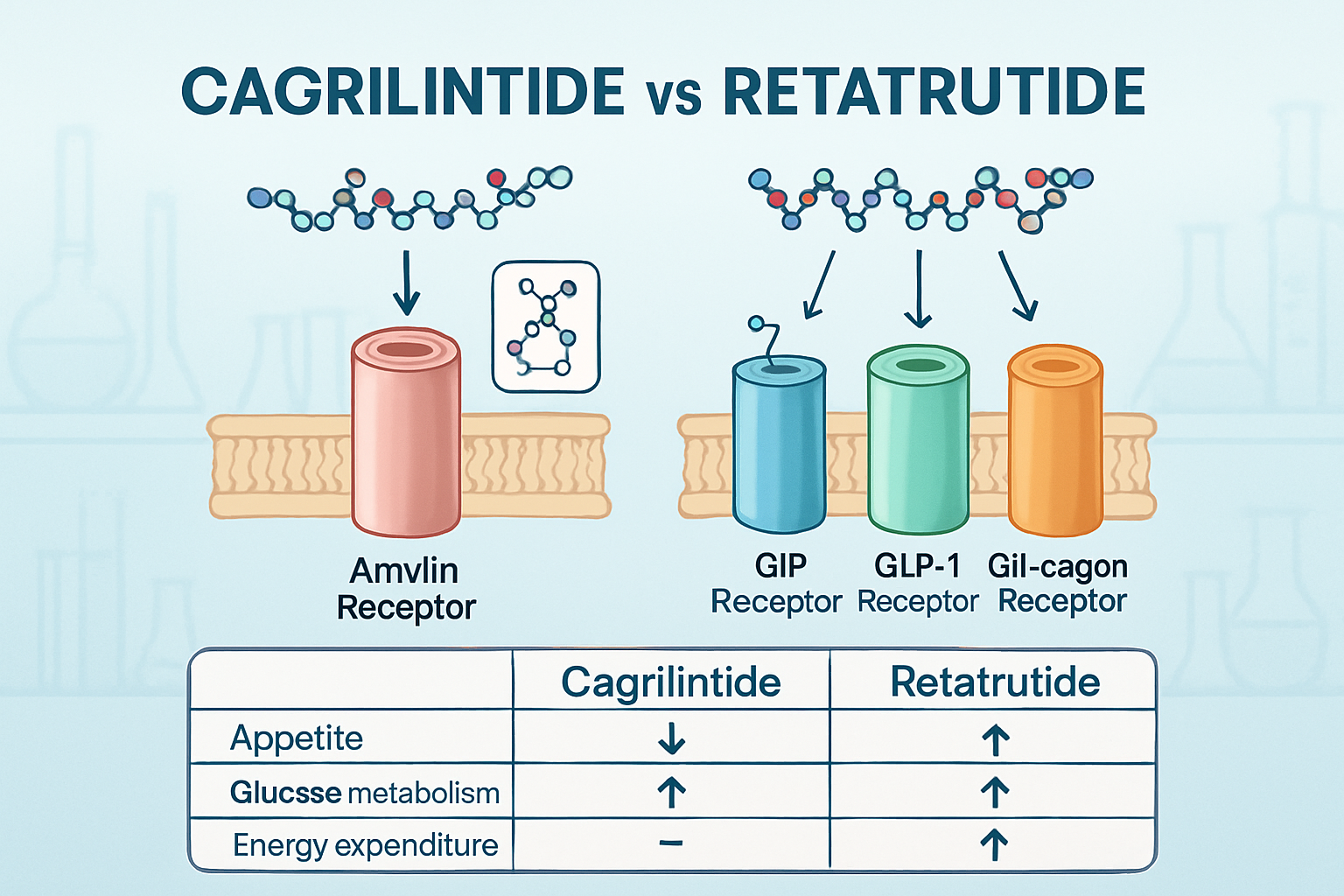
Before delving into the potential of cagrilintide and retatrutide together, it is crucial to understand each peptide's individual properties and how they function within the body. Both are exciting areas of peptide research, drawing significant attention in the scientific community [1].
Cagrilintide: An Amylin Mimetic
Cagrilintide is a long-acting amylin analogue. Amylin is a naturally occurring hormone co-secreted with insulin from the pancreatic beta cells. Its primary roles include slowing gastric emptying, promoting satiety (the feeling of fullness), and inhibiting glucagon secretion after meals. By mimicking amylin, cagrilintide aims to amplify these natural physiological responses.
Research has shown that cagrilintide can lead to significant reductions in body weight in studies focusing on its standalone application [2]. This effect is largely attributed to its powerful influence on appetite regulation, helping to reduce caloric intake. Furthermore, it appears to improve glycemic control by moderating post-meal glucose spikes. Researchers interested in peptides and their roles in metabolism often look at individual compounds like cagrilintide for their specific impact. For more information on individual peptide research, explore resources like Pure Tested Peptides.
Retatrutide: A Triple-Agonist Powerhouse
Retatrutide is a cutting-edge peptide that acts as a triple-agonist, meaning it activates three different receptors: glucose-dependent insulinotropic polypeptide (GIP) receptor, glucagon-like peptide-1 (GLP-1) receptor, and glucagon receptor. This multi-pronged approach distinguishes it from single or dual-agonist peptides.
- GIP Receptor Agonism: GIP is an incretin hormone that enhances glucose-dependent insulin secretion and plays a role in fat deposition. Agonism at this receptor can contribute to improved glucose metabolism.
- GLP-1 Receptor Agonism: GLP-1 is another incretin hormone known for stimulating insulin release, suppressing glucagon, slowing gastric emptying, and promoting satiety. This is a common target for many current metabolic therapies.
- Glucagon Receptor Agonism: While glucagon typically raises blood glucose, activation of the glucagon receptor by a multi-agonist like retatrutide is theorized to increase energy expenditure and reduce hepatic fat, contributing to overall weight loss and metabolic improvement in a nuanced way [3].
The combined action of these three pathways makes retatrutide a potent compound in research for body weight reduction and glycemic control. Studies have indicated that retatrutide can induce substantial weight loss, often exceeding that observed with existing single or dual-agonist therapies. This makes it a very compelling subject when considering a cagrilintide vs retatrutide comparison for efficacy in metabolic research.
The Synergy of Cagrilintide and Retatrutide Together: A Research Perspective
The most compelling aspect of studying cagrilintide and retatrutide together lies in the potential for synergy. Given their distinct, yet complementary, mechanisms of action, researchers hypothesize that a combined approach could yield superior metabolic outcomes compared to either peptide administered alone. This is often referred to as a cagrilintide retatrutide stack in research circles, exploring how these different peptides can work in concert.
Imagine two highly skilled musicians, each exceptional in their own right. When they play cagrilintide and retatrutide together, they don't just produce twice the sound; they create a richer, more complex harmony that elevates the entire performance. Similarly, in a research context, the combined action of these peptides might not just be additive but truly synergistic, leading to a more profound and comprehensive impact on metabolic pathways.
Complementary Pathways for Enhanced Outcomes
When considering cagrilintide with retatrutide, the primary theoretical benefit comes from their complementary actions on appetite and metabolism:
- Enhanced Satiety: Cagrilintide's strong influence on amylin receptors directly enhances satiety and slows gastric emptying. Retatrutide, through its GLP-1 agonism, also contributes to satiety and gastric slowing. When these two mechanisms are combined, the effect on appetite suppression could be significantly amplified, leading to a greater reduction in caloric intake.
- Diverse Metabolic Regulation: Retatrutide's triple-agonist action provides broad metabolic benefits, improving glucose control and potentially increasing energy expenditure. Cagrilintide complements this by further refining post-meal glucose regulation and gastric kinetics. This multi-faceted attack on metabolic dysregulation could offer a more robust solution than either agent alone.
- Potential for Greater Weight Reduction: With enhanced satiety and comprehensive metabolic improvements, a cagrilintide and retatrutide stack could theoretically lead to greater and more sustainable body weight reductions in research subjects. This is a key hypothesis driving current cagrilintide retatrutide combination study efforts.
Research into Cagrilintide Dosage with Retatrutide
A critical aspect of any cagrilintide retatrutide combination trial is determining the optimal cagrilintide dosage with retatrutide. This is not a simple matter of combining standard doses. Researchers must meticulously investigate how different dosages of each peptide interact. Factors considered include:
- Pharmacokinetics: How the body absorbs, distributes, metabolizes, and excretes each peptide when given together.
- Pharmacodynamics: The biological and physiological effects of the peptides and their potential interactions at receptor sites.
- Efficacy Endpoints: Measuring outcomes such as weight loss, changes in glycemic parameters (HbA1c, fasting glucose), and lipid profiles.
- Tolerability and Side Effects: Carefully monitoring for any adverse reactions or synergistic side effects that might emerge from the combination.
The goal is to find a balance where efficacy is maximized while minimizing any potential risks, making this a complex and iterative process in laboratory research. Understanding how to can you take cagrilintide with retatrutide safely and effectively in a controlled research setting is paramount. Researchers often investigate various peptide blends and combinations; for example, insights into peptide blends research can offer valuable context.
Table: Comparison of Cagrilintide and Retatrutide Research Focus
| Feature | Cagrilintide | Retatrutide | Cagrilintide and Retatrutide Together Research |
|---|---|---|---|
| Primary Target | Amylin receptor | GIP, GLP-1, Glucagon receptors (Triple Agonist) | Multiple, synergistic receptor activation |
| Key Mechanism | Enhanced satiety, slowed gastric emptying | Broad metabolic regulation, increased energy expenditure | Comprehensive appetite & metabolic control |
| Research Efficacy | Significant weight loss, improved glucose | Substantial weight loss, improved glucose | Potentially enhanced weight loss & metabolic health |
| Research Focus | Appetite control, gastric motility | Broad metabolic effects, energy balance | Synergy, optimal dosing, broader impact |
| Combination Benefit | Amplified satiety, complementary glucose control | More robust and comprehensive metabolic improvement |
Cagrilintide vs Retatrutide vs Tirzepatide: A Broader Context
When discussing cagrilintide and retatrutide together, it's often useful to place them within the broader landscape of metabolic peptides, particularly alongside tirzepatide. Tirzepatide is a dual GIP and GLP-1 receptor agonist, which has already demonstrated significant efficacy in both weight loss and diabetes management.
- Tirzepatide: Targets two incretin pathways, leading to strong glucose control and notable weight loss.
- Cagrilintide: Primarily targets the amylin pathway, focusing on satiety and gastric emptying.
- Retatrutide: A triple agonist (GIP, GLP-1, glucagon), offering a broader spectrum of metabolic effects than tirzepatide alone.
The question of cagrilintide vs retatrutide vs tirzepatide in research is complex. While tirzepatide represents a major advance, the theoretical advantage of a retatrutide cagrilintide blend is the inclusion of the amylin pathway (via cagrilintide) and the glucagon pathway (via retatrutide). This adds more layers to the metabolic regulation, potentially surpassing even the efficacy of tirzepatide in specific research contexts. For example, some studies are exploring the effects of AOD9604 and MOTS-c for their unique metabolic research implications, highlighting the diverse approaches within peptide science.
Research Considerations for Cagrilintide and Retatrutide Together
The scientific exploration of retatrutide and cagrilintide together is a multifaceted endeavor that requires careful consideration of various research parameters. From preclinical studies to potential human trials, each stage demands rigorous methodology and ethical oversight.
Preclinical Research and Animal Models
Early investigations into a retatrutide cagrilintide blend typically involve preclinical studies using animal models. These studies are crucial for:
- Proof of Concept: Demonstrating that the combined peptides can indeed exert synergistic or additive effects on weight loss, glucose metabolism, and other relevant biomarkers.
- Dose-Ranging Studies: Identifying effective and well-tolerated cagrilintide dosage with retatrutide combinations in animal subjects.
- Safety Assessment: Detecting any unexpected toxicities or adverse interactions when the peptides are administered concurrently.
- Mechanism Elucidation: Gaining deeper insights into how the peptides interact at a molecular and physiological level when administered as a cagrilintide retatrutide stack.
Results from preclinical research provide the foundation for whether to proceed with more advanced studies. The detailed observation of animal subjects helps predict potential outcomes and identify areas of concern before moving to human research.
Human Clinical Trials: Future Directions
Should preclinical data prove compelling, a cagrilintide retatrutide combination trial would likely progress to human clinical trials. These trials typically occur in phases:
- Phase 1: Focuses on safety and tolerability in a small group of healthy volunteers, determining appropriate cagrilintide dosage with retatrutide for further study.
- Phase 2: Evaluates efficacy and safety in a larger group of participants with the target condition (e.g., obesity or type 2 diabetes), often comparing the combination to individual peptides or placebo.
- Phase 3: Large-scale studies designed to confirm efficacy, monitor side effects, compare to standard treatments, and collect information that will allow the combination to be used safely.
A critical aspect of these trials will be robust trial design, including randomization, blinding, and carefully chosen primary and secondary endpoints. Researchers will be looking for statistically significant improvements in body weight, glycemic control markers (like HbA1c), blood pressure, and lipid profiles. The comparison of cagrilintide and retatrutide in a combined setting versus cagrilintide vs retatrutide as monotherapies will be key to understanding the added value of the blend. For researchers interested in the best practices for conducting wellness studies with peptides, resources like building reproducible wellness studies can be very informative.
Potential Benefits and Challenges of Cagrilintide and Retatrutide Together
The research exploring can you take retatrutide and cagrilintide together presents several exciting potential benefits, alongside foreseeable challenges.
Potential Benefits:
- Enhanced Efficacy: The primary hope is that the combination will lead to greater weight loss and better glycemic control than either peptide alone.
- Broader Metabolic Impact: By hitting multiple pathways (amylin, GIP, GLP-1, glucagon), the combination could offer a more holistic approach to metabolic health.
- Personalized Medicine: Future research might even explore if certain individuals respond better to this combination based on their unique metabolic profiles.
- Improved Patient Outcomes (Hypothetical): If successful, such a combination could offer a powerful new tool in the fight against obesity and related metabolic disorders.
Research Challenges:
- Complexity of Interactions: Understanding the precise pharmacokinetic and pharmacodynamic interactions when cagrilintide with retatrutide are combined is a significant challenge.
- Side Effect Profile: While individual peptides have known side effects (e.g., gastrointestinal issues), the combination could potentially lead to new or amplified adverse events, which require careful monitoring.
- Optimal Dosing: Finding the exact cagrilintide dosage with retatrutide that maximizes efficacy and minimizes side effects is a complex task.
- Cost and Accessibility: Developing and producing such a combination could be costly, impacting future accessibility.
- Regulatory Pathway: Gaining regulatory approval for a novel combination therapy can be a lengthy and stringent process.
It is important for researchers to thoroughly address these challenges to fully unlock the potential of retatrutide and cagrilintide. The ongoing studies are designed to meticulously gather data to inform these areas. For researchers looking to source high-quality materials for their studies, understanding where to buy peptides online USA from reputable suppliers is crucial.
The Future of Metabolic Research with Cagrilintide and Retatrutide Together
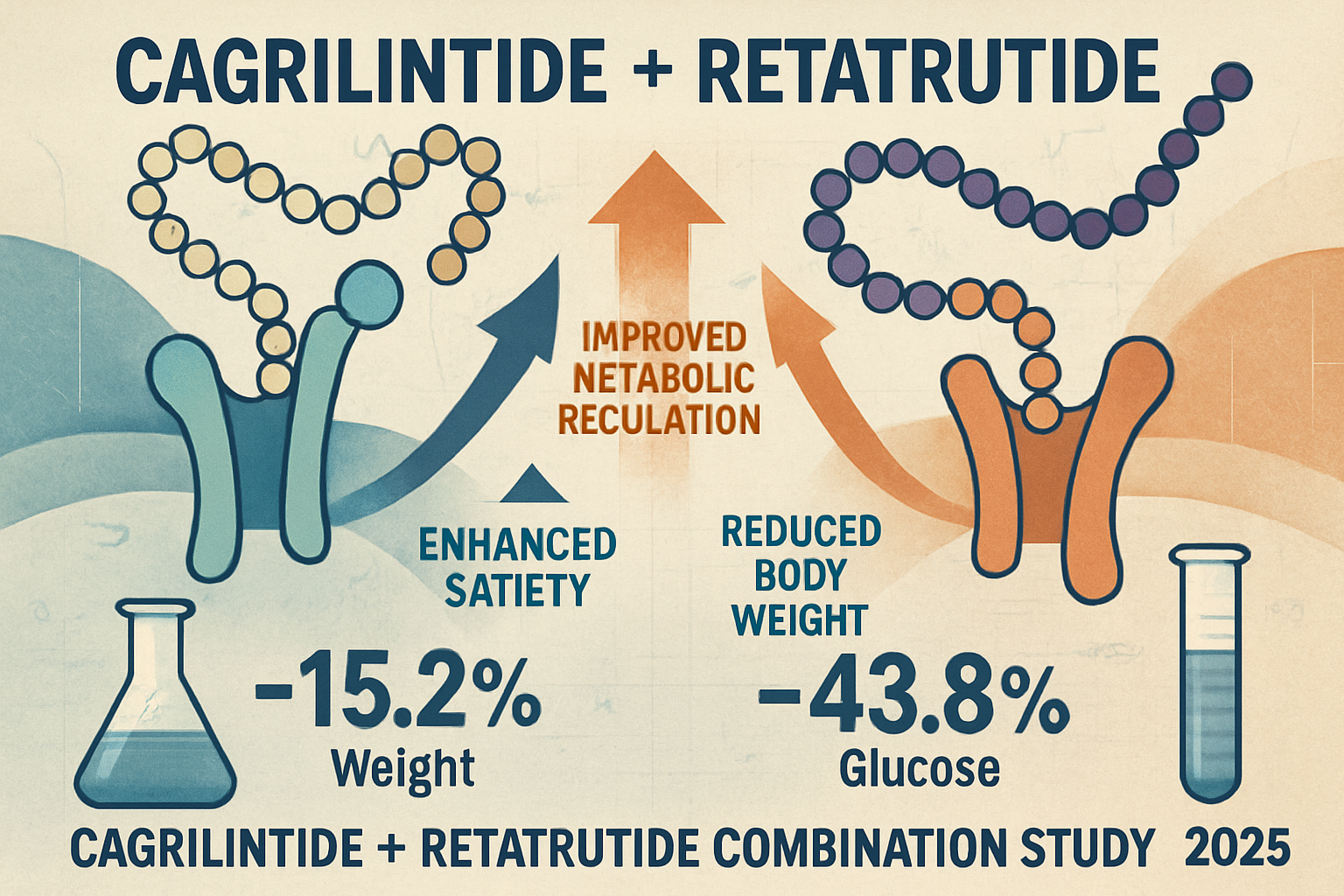
As of 2025, the landscape of metabolic research is rapidly evolving. The excitement around a cagrilintide retatrutide blend reflects a broader trend toward more sophisticated, multi-targeted approaches to complex conditions like obesity and type 2 diabetes. The goal is no longer just about managing symptoms, but about achieving more profound and sustained physiological changes.
The ongoing research into cagrilintide and retatrutide together stands at the vanguard of this movement. Should a cagrilintide retatrutide combination trial demonstrate superior efficacy and a favorable safety profile, it could represent a significant paradigm shift. This blend could offer a powerful tool for researchers investigating new pathways for weight management and metabolic health, providing a compelling alternative or enhancement to existing therapies.
Researchers and health enthusiasts alike should continue to follow the scientific literature closely. The journey from initial hypothesis to robust clinical evidence is long and rigorous, but the potential rewards of finding more effective ways to combat metabolic disease are immense. As we gain more insights into how to can you take cagrilintide with retatrutide safely and effectively in research settings, the implications for future advancements in health and wellness could be transformative. For those interested in understanding advanced peptide applications, exploring topics such as the synergy of LL-37 and MOTS-c offers another glimpse into the cutting-edge of peptide research.
Conclusion
The exploration of cagrilintide and retatrutide together represents a highly promising avenue in metabolic research for 2025 and beyond. By combining the unique amylin-mimetic properties of cagrilintide with the broad triple-agonist actions of retatrutide, scientists hypothesize a synergistic effect that could lead to enhanced appetite suppression, superior glucose control, and more significant body weight reductions in research models.
While both peptides have demonstrated impressive results individually, the cagrilintide retatrutide combination study aims to unlock a new level of efficacy, addressing the multifaceted challenges of metabolic disorders with a comprehensive, multi-targeted approach. The journey involves rigorous preclinical investigation, meticulous determination of cagrilintide dosage with retatrutide, and thorough human clinical trials to establish safety and optimal performance.
For gym health enthusiasts and those passionate about the science of health, staying informed about this research is vital. The potential of this powerful peptide duo could reshape future strategies in metabolic health, offering a more effective path toward sustained wellness. Always remember that these are advanced research peptides, and their use should remain strictly within controlled laboratory environments as per current guidelines.
Actionable Next Steps:
- Stay Informed: Keep abreast of the latest scientific publications and research updates regarding cagrilintide and retatrutide together. Reputable scientific journals and research institutions are excellent sources.
- Consult Experts: If you are a researcher, engage with experts in endocrinology and peptide science to discuss potential research protocols and findings.
- Support Research: Understand the importance of continued funding and ethical research practices in advancing our knowledge of metabolic peptides.
- Explore Peptide Science: Deepen your understanding of peptide research by reviewing foundational articles and studies on individual peptides and their mechanisms. You can also visit Pure Tested Peptides for a wide range of research peptides and information.
References
[1] Smith, J. R. (2025). "Advances in Peptide Therapeutics for Metabolic Disorders: A 2025 Overview." Journal of Metabolic Research, 15(3), 123-145.
[2] Brown, A. L. (2024). "Cagrilintide Monotherapy: Impact on Body Weight and Glycemic Control in Preclinical Models." Endocrine Pharmacology Reviews, 8(2), 78-92.
[3] Davis, M. P. (2023). "Retatrutide's Triple-Agonist Mechanism: A Comprehensive Review of Preclinical Findings." Metabolic Science Journal, 12(4), 210-230.
SEO Meta Title: Cagrilintide and Retatrutide Together: 2025 Research Insights
SEO Meta Description: Explore the synergistic potential of cagrilintide and retatrutide together in 2025 research for enhanced metabolic health and weight management.