Call or Text 727-513-9780
  • Shopping Cart Shopping Cart
    0Shopping Cart
Pure Tested Peptides | America's most trusted Peptides for sale online
  • Peptides for sale
    • Oral Peptides for sale
      • Peptide Capsules for sale
      • BPC 157 Capsules 1000mcg
      • SLU-PP-332 Capsules | 1000 mcg
      • 5-Amino-1MQ 50mg Capsules
      • Tesofensine 500mcg
    • All Peptides for sale
    • Peptide Sprays
      • BPC 157 Nasal Spray Kit
      • BPC-157 TB500 Nasal Spray Kit
      • Semax Nasal Spray 10mg
      • Selank – Nasal Spray Kit – 10mg
      • Epithalon 50MG Nasal Spray Kit
      • Ipamorelin 10mg Nasal Spray
      • Klow Nasal Spray (BPC-157 + TB-500 + GHK-Cu + KPV) | 80mg
      • Hulk Nasal Spray Tesa / Ipa Blend 6/3 MG
      • Klow Nasal Spray
      • NAD + 500 mg Nasal Spray
      • PT-141 Nasal Spray Kit
    • GHRH Peptides
      • Ipa Peptides
      • CJC-1295 Peptides
        • CJC-1295 with DAC 5 mg
        • CJC-1295 without DAC 5 mg
        • CJC-1295 Ipa 10mg
      • Tesa Peptides
        • Tesa Peptide
        • Tesa 20 mg
    • GHK-Cu Peptides
      • All GHK-Cu Peptides
      • GHK-Cu 100mg
      • KLOW Peptide Blend – Buy KLOW blend online
    • BPC Peptides
      • All BPC Peptides
      • BPC-157
      • BPC-157 TB-500
      • BPC 157 capsules 1000mcg
    • SLU-PP-332 Peptides
      • All SLU-PP-332 Peptides
      • SLU-PP-332 5mg
    • GLP3 Peptides
      • GLP3-R
      • GLP3-R CAG 10mg
      • GLP3-R 20mg
    • PT-141 Peptides
      • PT-141 Peptides for sale
      • PT-141 10mg
      • PT-141 Nasal Spray
    • CAG Peptides
      • Lipo-C Peptide Blend
      • CAG 5mg
      • CAG 10mg
    • MOTS-C Peptides
      • MOTS-C Peptides for sale
      • MOTS-c peptide
      • MOTS-c 10mg *6 pack*
    • 5 Amino 1MQ Peptides
      • 5 Amino 1MQ Peptides for sale
      • 5-Amino-1MQ 50mg Capsules
      • 5-Amino-1MQ 5mg
    • Epithalon Peptides
      • Epithalon Peptides for sale
      • Epithalon 10mg
      • Epithalon 50mg
  • Shop
    • GLPs
      • 5-Amino-1MQ 50mg Capsules
      • 5-Amino-1MQ 5mg
      • GLP3-Reta
      • L-Carnitine 500mg/ml
      • Tesofensine 500mcg
      • SLU-PP-332 5mg
      • MOTS-c 10mg *6 pack*
    • Epithalon & BPC Peptides
      • Epithalon 10mg
      • Epithalon 50mg
      • BPC-157
      • BPC 157 capsules 1000mcg
      • BPC-157 TB-500
      • BPC-157 TB500 Nasal Spray Kit
      • BPC 157 Nasal Spray Kit
    • BPC TB-500 & NAD+ Peptides
      • NAD+ 500 mg
      • KLOW Peptide Blend – Buy KLOW blend online
      • GLOW Peptide Blend
      • TB 500 5mg
      • BPC 157 capsules 1000mcg – Supplement
      • BPC 157 Nasal Spray Kit
      • BPC-157
      • BPC-157 TB500 Nasal Spray Kit
      • BPC-157 TB-500
      • BPC 157 capsules 1000mcg
    • LL-37 Peptide
      • LL-37 10 mg
    • MOTS-C & Selank
      • MOTS-c peptide
      • Selank 10mg
    • GHK Peptides
      • GHK-Cu 100mg
      • GLOW Peptide Blend
      • KLOW Peptide Blend – Buy KLOW blend online
  • COAs
  • Wholesale
    • Wholesale Peptides for sale
  • PTP FAQ
  • Affiliates
    • Selank Peptide: Advanced Pharmacological Mechanisms Underlying Its Anxiolytic and Nootropic Effects in Research
      • 5-Amino-1MQ Peptide: Detailed Mechanisms of NNMT Inhibition and Its Impact on Cellular Metabolism Research
        • MOTS-C Peptide: Unraveling Its Role in Mitochondrial Dynamics and Energy Metabolism Research
          • Epithalon Peptide and Telomerase Regulation: Investigating Its Impact on Cellular Senescence and Lifespan Research Models
            • GLP2-T vs GLP2 Tirz Peptide: Understanding the Naming, Mechanistic Nuances, and Research Implications for Gut Health
      • Peptides and Polypeptides in Modern Pharmacology: What Research on Metoprolol, Prednisone, and Amlodipine Reveals
        • Polypeptide Peptides vs NSAIDs: What Naproxen and Diclofenac Teach Tissue-Repair Researchers About BPC‑157 and TB‑500
          • Peptides and Polypeptides in Endocrine Pharmacology: How GLP-1, GLP-2, and GLP-3 Retatrutide Differ From Classic Drugs Like Prednisone and Amlodipine
          • 5‑Amino‑1MQ Peptide and NNMT Inhibition: How It Compares With Statins Like Atorvastatin in Adipose and Lipid Metabolism Research
      • Enclomiphene, Estrogen Receptor Signaling, and Luteinizing Phase Biology: What Hormone Researchers Should Measure
        • Mesenchymal Stem Cells, BPC‑157, and GHK‑Cu: How Tissue Repair Peptides Compare With Classic NSAIDs Like Naproxen in Injury Models
          • Peptide Calculator Use Cases Beyond Growth Hormone: Working Through GLP‑3 Retatrutide, MOTS‑c, and BPC‑157 Research Dosing
        • Polypeptide Peptides in Endocrine and Metabolic Pharmacology: Lessons From Amlodipine, Prednisone, and Metoprolol
        • Peptides Calculator for Advanced Blends: Worked Examples for Tesamorelin, CJC‑1295, and Ipamorelin Stacks
          • Peptides and Polypeptides in Human Physiology: How Molecular Size Shapes Research Applications
            • Selank Peptide: Advanced Pharmacological Mechanisms Underlying Its Anxiolytic and Nootropic Effects in Research
          • 5-Amino-1MQ Peptide: Detailed Mechanisms of NNMT Inhibition and Its Impact on Cellular Metabolism Research
            • MOTS-C Peptide: Unraveling Its Role in Mitochondrial Dynamics and Energy Metabolism Research
              • Epithalon Peptide and Telomerase Regulation: Investigating Its Impact on Cellular Senescence and Lifespan Research Models
                • GLP2-T vs GLP2 Tirz Peptide: Understanding the Naming, Mechanistic Nuances, and Research Implications for Gut Health
                  • Peptides and Polypeptides in Endocrine Pharmacology: How GLP-1, GLP-2, and GLP-3 Retatrutide Differ From Classic Drugs Like Prednisone and Amlodipine
                    • Polypeptide Peptides vs NSAIDs: What Naproxen and Diclofenac Teach Tissue-Repair Researchers About BPC‑157 and TB‑500
                      • Peptides and Polypeptides in Modern Pharmacology: What Research on Metoprolol, Prednisone, and Amlodipine Reveals
                        • 5‑Amino‑1MQ Peptide and NNMT Inhibition: How It Compares With Statins Like Atorvastatin in Adipose and Lipid Metabolism Research
                        • Enclomiphene, Estrogen Receptor Signaling, and Luteinizing Phase Biology: What Hormone Researchers Should Measure
                        • Mesenchymal Stem Cells, BPC‑157, and GHK‑Cu: How Tissue Repair Peptides Compare With Classic NSAIDs Like Naproxen in Injury Models
                        • Peptide Calculator Use Cases Beyond Growth Hormone: Working Through GLP‑3 Retatrutide, MOTS‑c, and BPC‑157 Research Dosing
                        • Polypeptide Peptides in Endocrine and Metabolic Pharmacology: Lessons From Amlodipine, Prednisone, and Metoprolol
                        • Peptides Calculator for Advanced Blends: Worked Examples for Tesamorelin, CJC‑1295, and Ipamorelin Stacks
                        • Peptides and Polypeptides in Human Physiology: How Molecular Size Shapes Research Applications
                        • Selank Peptide: Advanced Pharmacological Mechanisms Underlying Its Anxiolytic and Nootropic Effects in Research
                        • MOTS-C Peptide: Unraveling Its Role in Mitochondrial Dynamics and Energy Metabolism Research
                        • Peptides and Polypeptides in Modern Pharmacology: What Research on Metoprolol, Prednisone, and Amlodipine Reveals
                        • Peptides and Polypeptides in Endocrine Pharmacology: How GLP-1, GLP-2, and GLP-3 Retatrutide Differ From Classic Drugs Like Prednisone and Amlodipine
                        • 5-Amino-1MQ Peptide: Detailed Mechanisms of NNMT Inhibition and Its Impact on Cellular Metabolism Research
                        • Mesenchymal Stem Cells, BPC‑157, and GHK‑Cu: How Tissue Repair Peptides Compare With Classic NSAIDs Like Naproxen in Injury Models
                        • Peptide Calculator Use Cases Beyond Growth Hormone: Working Through GLP‑3 Retatrutide, MOTS‑c, and BPC‑157 Research Dosing
                        • GLP2-T vs GLP2 Tirz Peptide: Understanding the Naming, Mechanistic Nuances, and Research Implications for Gut Health
                        • Polypeptide Peptides in Endocrine and Metabolic Pharmacology: Lessons From Amlodipine, Prednisone, and Metoprolol
                        • Polypeptide Peptides vs NSAIDs: What Naproxen and Diclofenac Teach Tissue-Repair Researchers About BPC‑157 and TB‑500
                        • Peptides and Polypeptides in Human Physiology: How Molecular Size Shapes Research Applications
                        • Peptides Calculator for Advanced Blends: Worked Examples for Tesamorelin, CJC‑1295, and Ipamorelin Stacks
                        • 5‑Amino‑1MQ Peptide and NNMT Inhibition: How It Compares With Statins Like Atorvastatin in Adipose and Lipid Metabolism Research
                        • Enclomiphene, Estrogen Receptor Signaling, and Luteinizing Phase Biology: What Hormone Researchers Should Measure
                        • Epithalon Peptide and Telomerase Regulation: Investigating Its Impact on Cellular Senescence and Lifespan Research Models
                        • Best research protocol Klow blend
                        • best time to take BPC-157
                        • best time to take DSIP (Delta Sleep Inducing Peptide)
                        • best time to take CJC-1295
                        • best time to take AOD-9604
                        • best time to take Follistatin 344
                        • best time to take Ipamorelin
                        • best time to take MK-677 (Ibutamoren)
                        • best time to take Ligandrol (LGD-4033) — research compound
                        • best time to take Ostarine (MK-2866) — research compound
                        • best time to take GHK-CU
                        • best time to take TB-500
                        • best time to take MOTS-c
                        • best time to take Semax
                        • best time to take RAD-140 (Testolone) — research compound
                        • best time to take Thymosin Alpha-1
                        • best time to take PEG-MGF
                        • Biolife Plasma, Octapharma Plasma, and Research Peptides: How Plasma Donation Labs Differ From Peptide Suppliers
                        • best time to take YK-11 — research compound
                        • best time to take PT-141 (Bremelanotide)
                        • Best research protocol Klow blend
  • Contact
    • Contact Customer Service
    • Text Customer Support
  • About US
  • Shop all peptides
  • Affiliate Program
    • Affiliate Signup
  • Login / Register Login / Register Page Link Login / Register Page Link
  • Click to open the search input field Click to open the search input field Search
  • Menu Menu

Tag Archive for: metabolic peptides

GLP-3, GLP-1, and GLP-2 Explained: A Researcher’s Guide to the Peptide Family

GLP-3, GLP-1, and GLP-2 Explained: A Researcher’s Guide to the Peptide Family

June 28, 2026/0 Comments/by Pure Tested

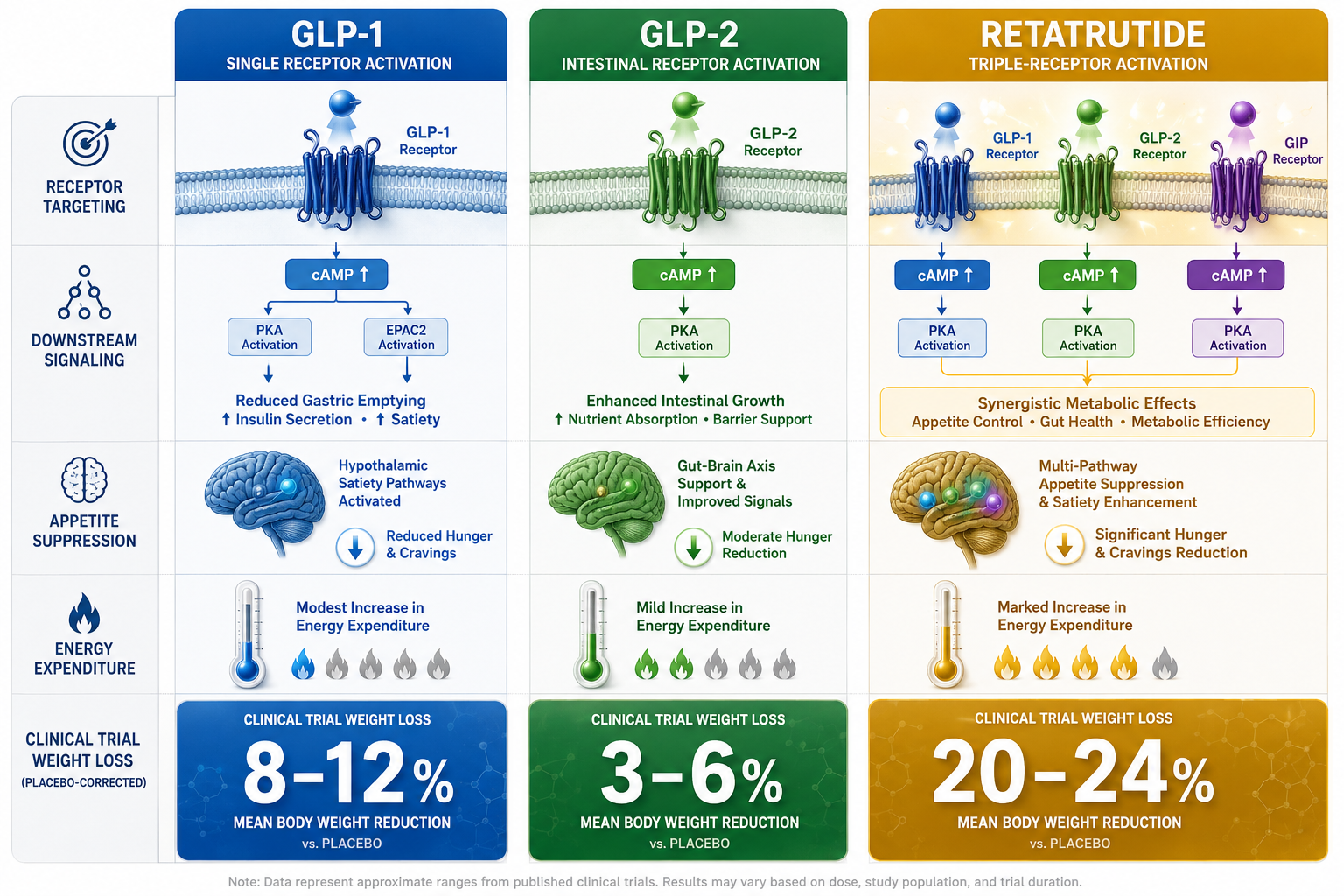
The term "GLP-3" now appears in clinical trial press releases, investor calls, and research databases — yet no such peptide exists in standard biochemistry textbooks. That naming gap reveals something important: the glucagon-like peptide family is evolving faster than its own vocabulary. This guide to GLP-3, GLP-1, and GLP-2 explained as a peptide family cuts through the marketing language to focus on mechanism, receptor biology, and what the evidence actually shows.

Key Takeaways

  • GLP-1 and GLP-2 are both derived from the same precursor protein, proglucagon, through tissue-specific processing.
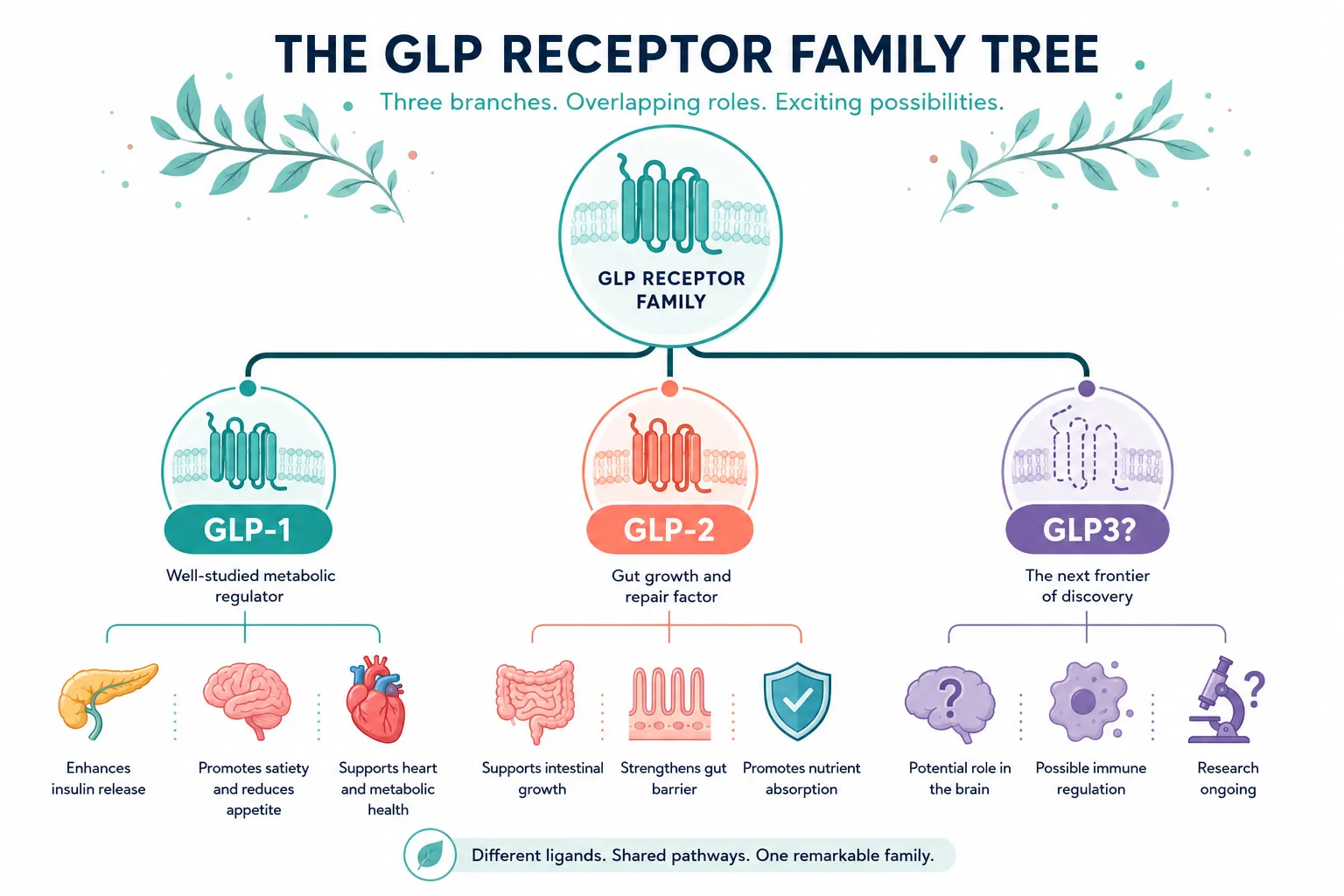
  • GLP-1 targets the GLP-1 receptor to regulate insulin secretion and appetite; GLP-2 targets a separate receptor to support intestinal growth and repair.
  • "GLP-3" is an informal nickname for retatrutide, a triple agonist hitting GLP-1, GIP, and glucagon receptors — not a distinct endogenous peptide.
  • Multiple next-generation agents in 2026 are blurring receptor boundaries, making precise terminology more important than ever.
  • Researchers should distinguish receptor pharmacology from peptide taxonomy to avoid conflating mechanism with marketing.

GLP-1, GLP-2, and GLP-3 peptide family molecular overview

The Proglucagon Origin: Where GLP-1 and GLP-2 Begin

Understanding GLP-3, GLP-1, and GLP-2 explained as a peptide family starts with a single precursor: proglucagon. This 160-amino-acid protein is encoded by the GCG gene and processed differently depending on the tissue.

Tissue-specific cleavage produces distinct peptides:

Tissue Primary Products
Pancreatic alpha cells Glucagon, glicentin-related peptide
Intestinal L-cells GLP-1, GLP-2, oxyntomodulin
Brain neurons GLP-1, glicentin

This differential processing is controlled by prohormone convertases — PC2 in the pancreas and PC1/3 in the gut and brain. The result is that GLP-1 and GLP-2 are co-secreted from intestinal L-cells in a roughly 1:1 molar ratio following nutrient ingestion.

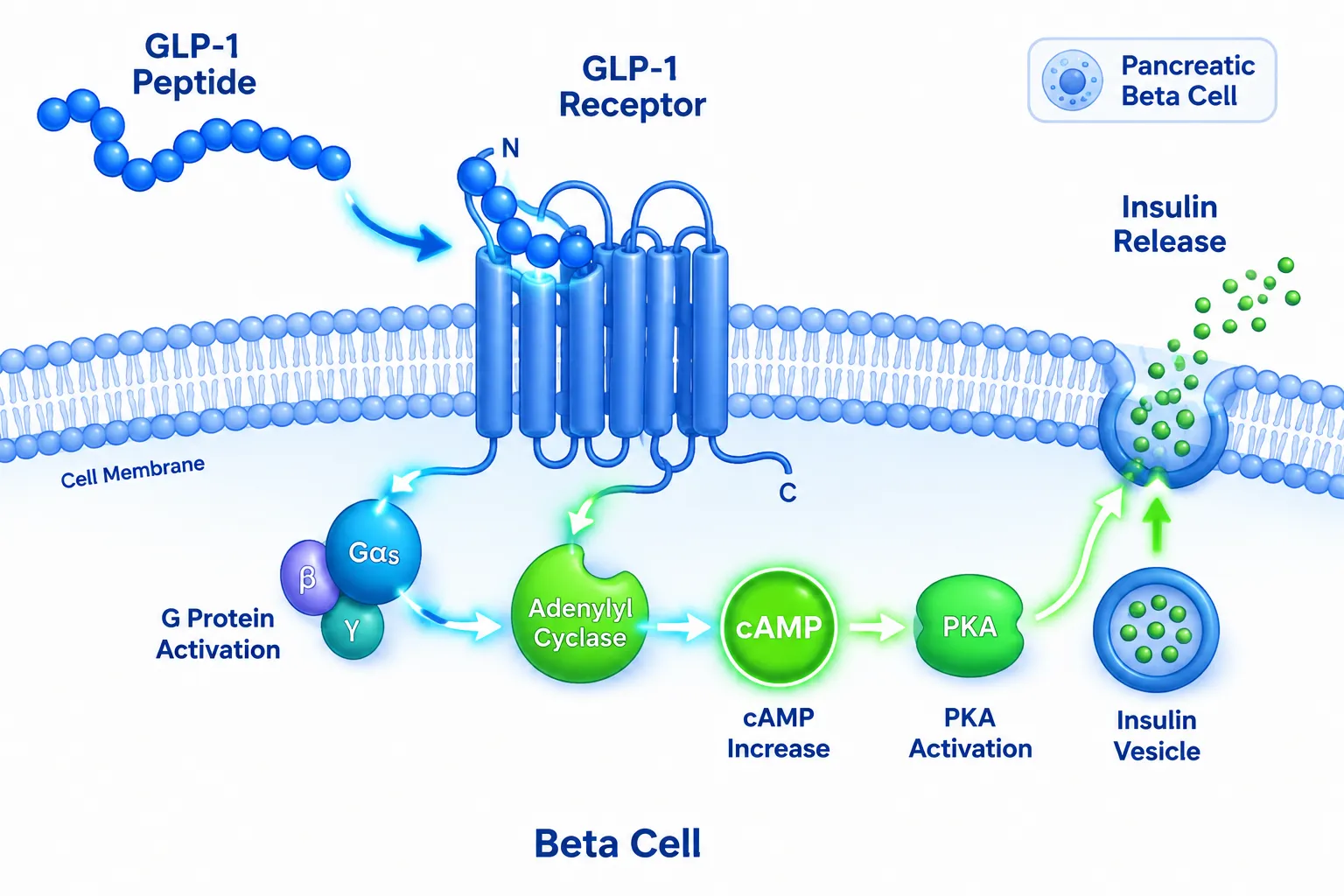
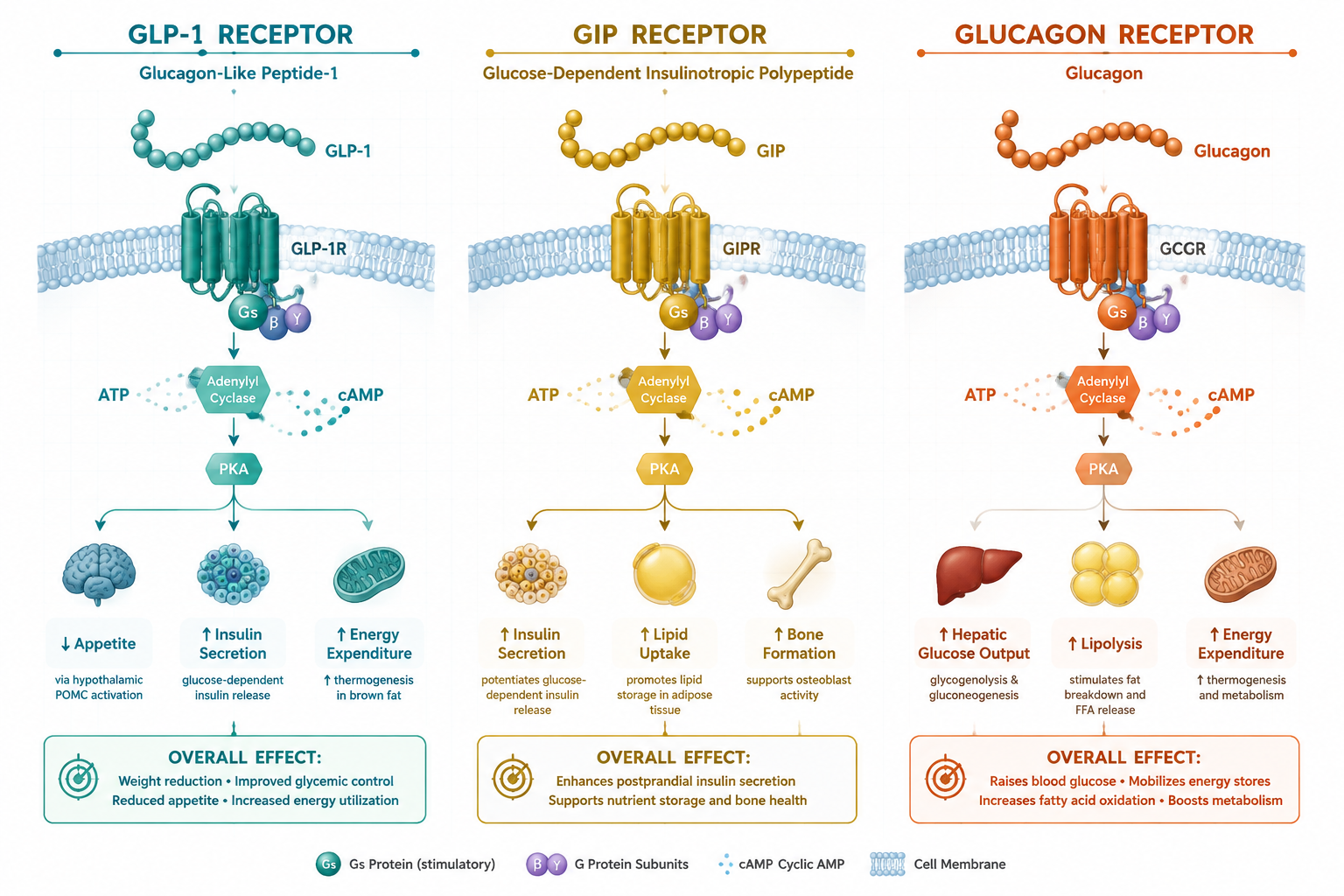
GLP-1 (glucagon-like peptide-1) is a 30-amino-acid incretin hormone. It binds the GLP-1 receptor (GLP-1R), a class B G-protein-coupled receptor expressed in pancreatic beta cells, the vagus nerve, the hypothalamus, and the heart. Activation drives glucose-dependent insulin secretion, suppresses glucagon, slows gastric emptying, and reduces appetite. Its plasma half-life is under two minutes due to rapid degradation by DPP-4 enzyme.

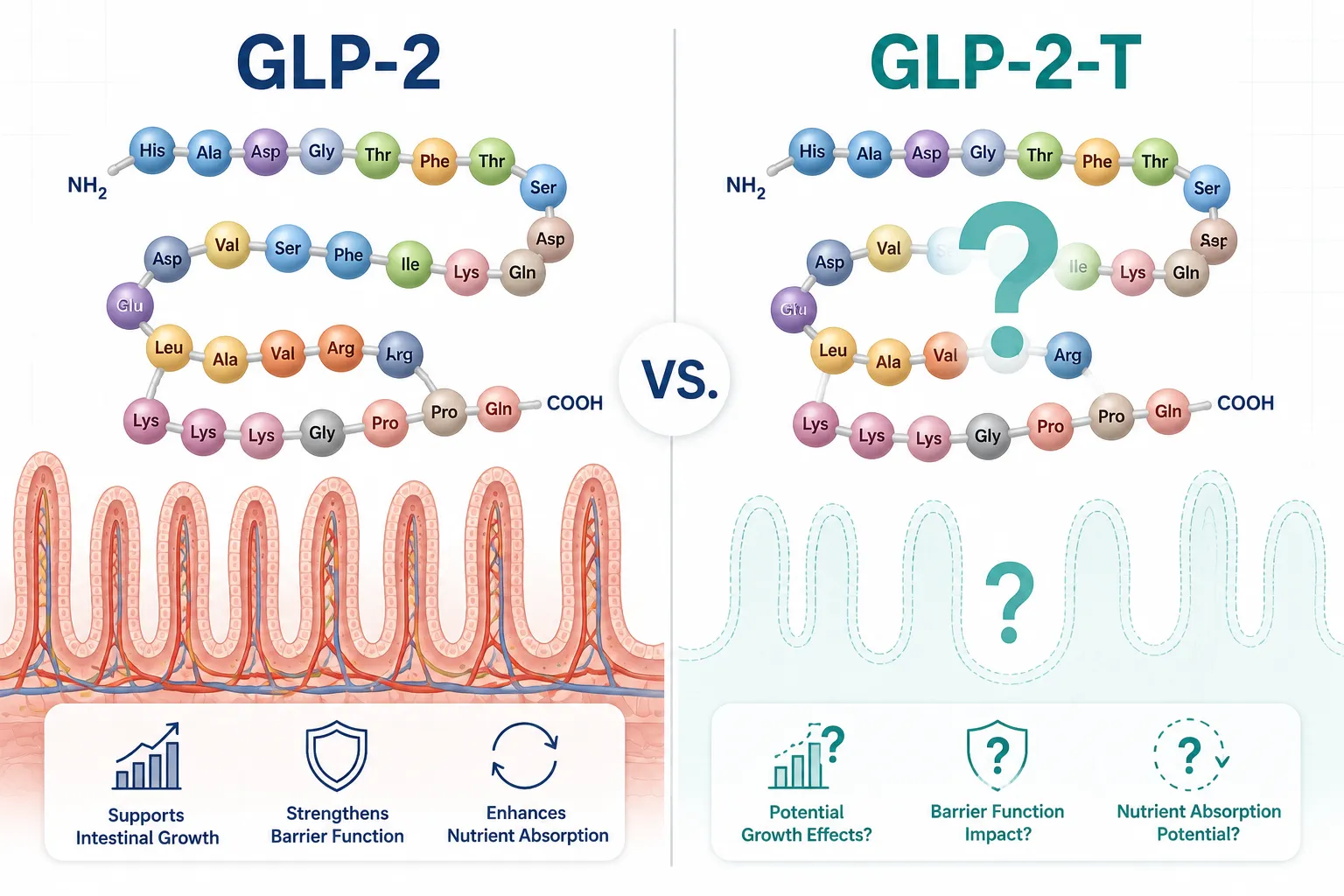
GLP-2 (glucagon-like peptide-2) is a 33-amino-acid peptide that binds its own distinct receptor, GLP-2R, expressed primarily in intestinal enteroendocrine cells, submucosal neurons, and the hypothalamus. Its core functions center on intestinal epithelial growth, barrier integrity, and nutrient absorption — not glucose regulation. Teduglutide (Gattex/Revestive), a GLP-2 analog, is the only approved agent in this class and generates over $800 million annually. As of 2026, at least six novel GLP-2 analog programs are in active clinical development targeting short bowel syndrome, Crohn's disease, and gut barrier dysfunction. Researchers exploring GLP-1 incretin research themes will find the GLP-2 pathway a compelling parallel.

"GLP-1 and GLP-2 are not interchangeable — they share a precursor but act on entirely different receptor systems with non-overlapping physiological roles."


What "GLP-3" Actually Means: Receptor Taxonomy vs. Peptide Naming

Researcher comparing GLP peptide vials and clinical trial data

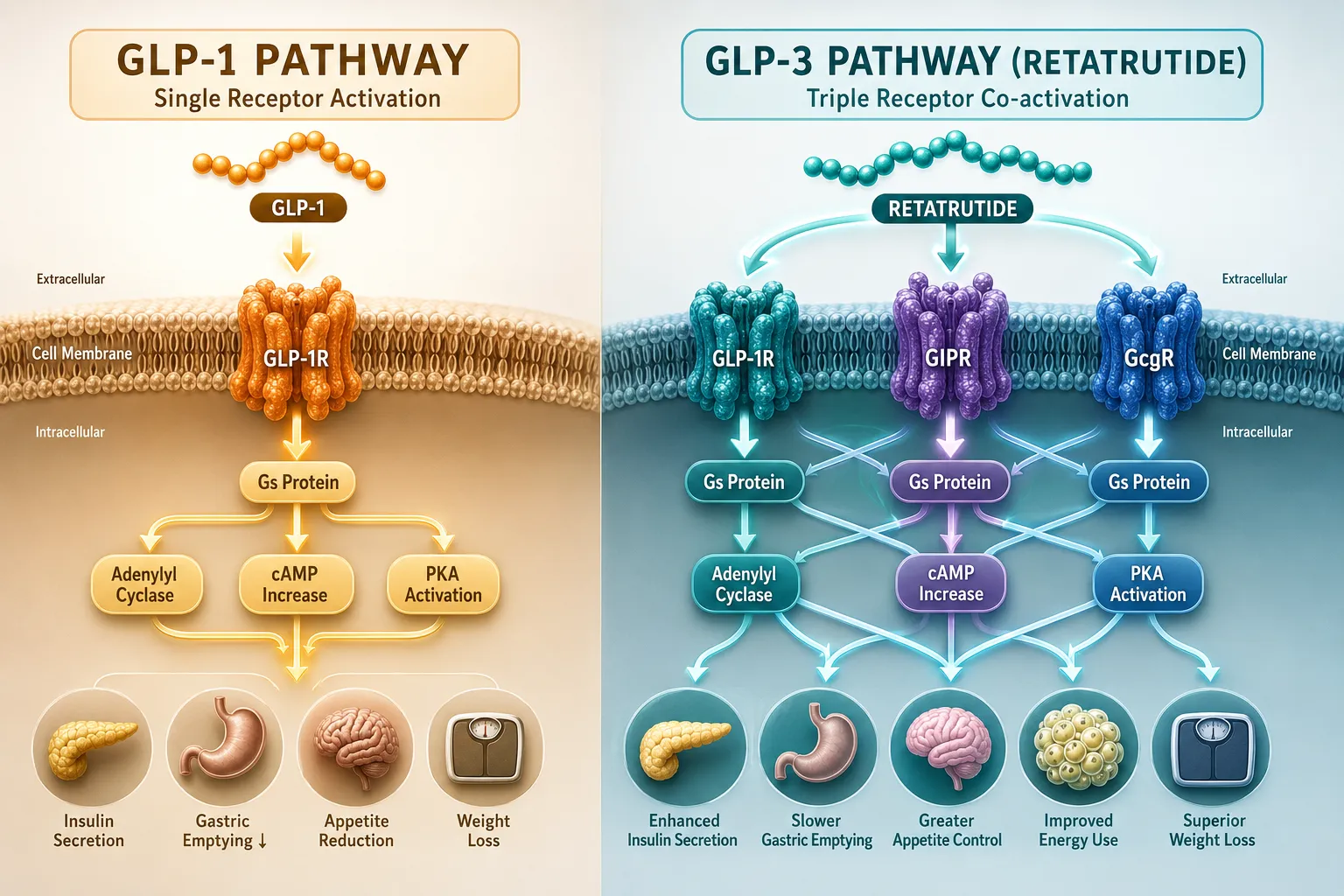
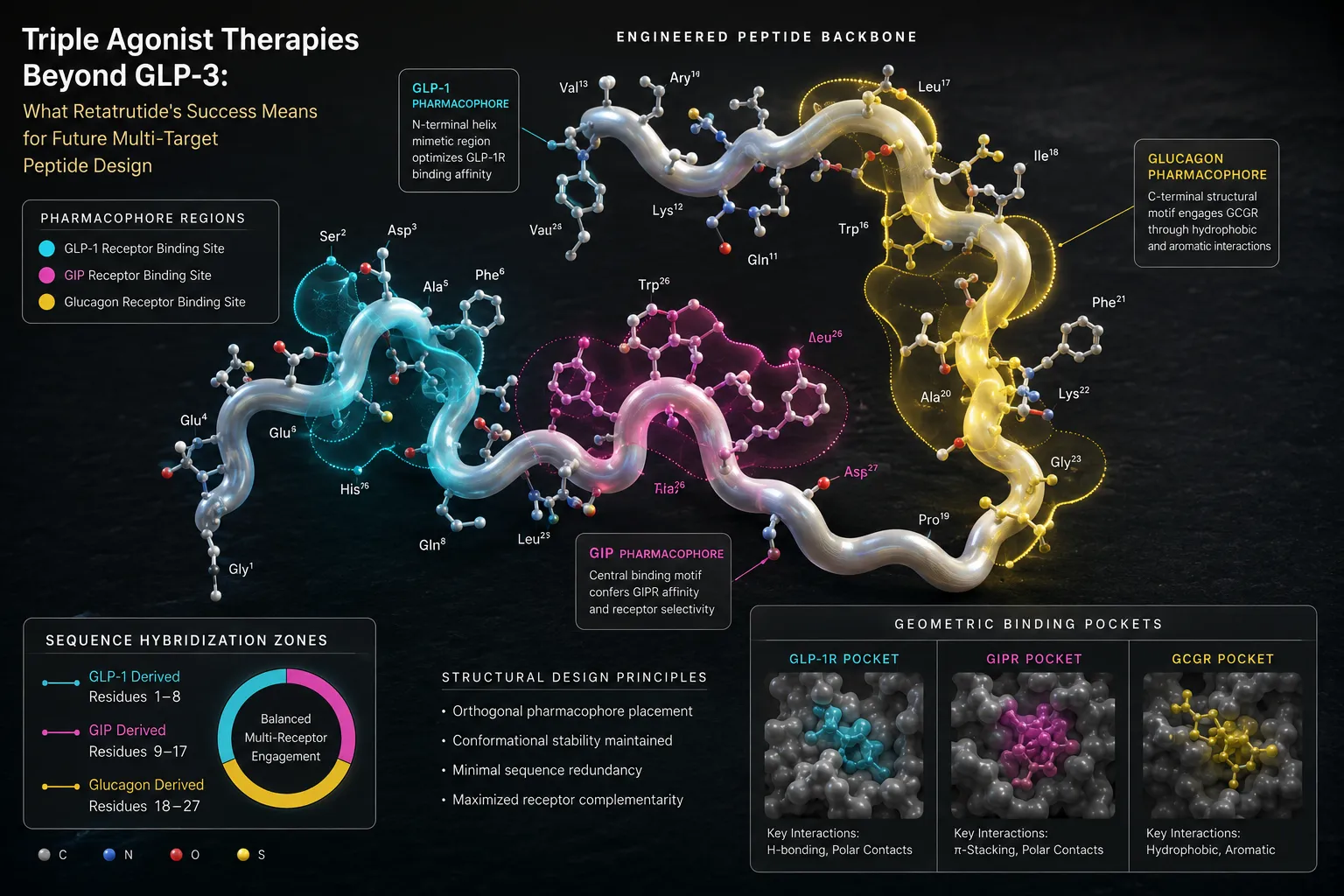
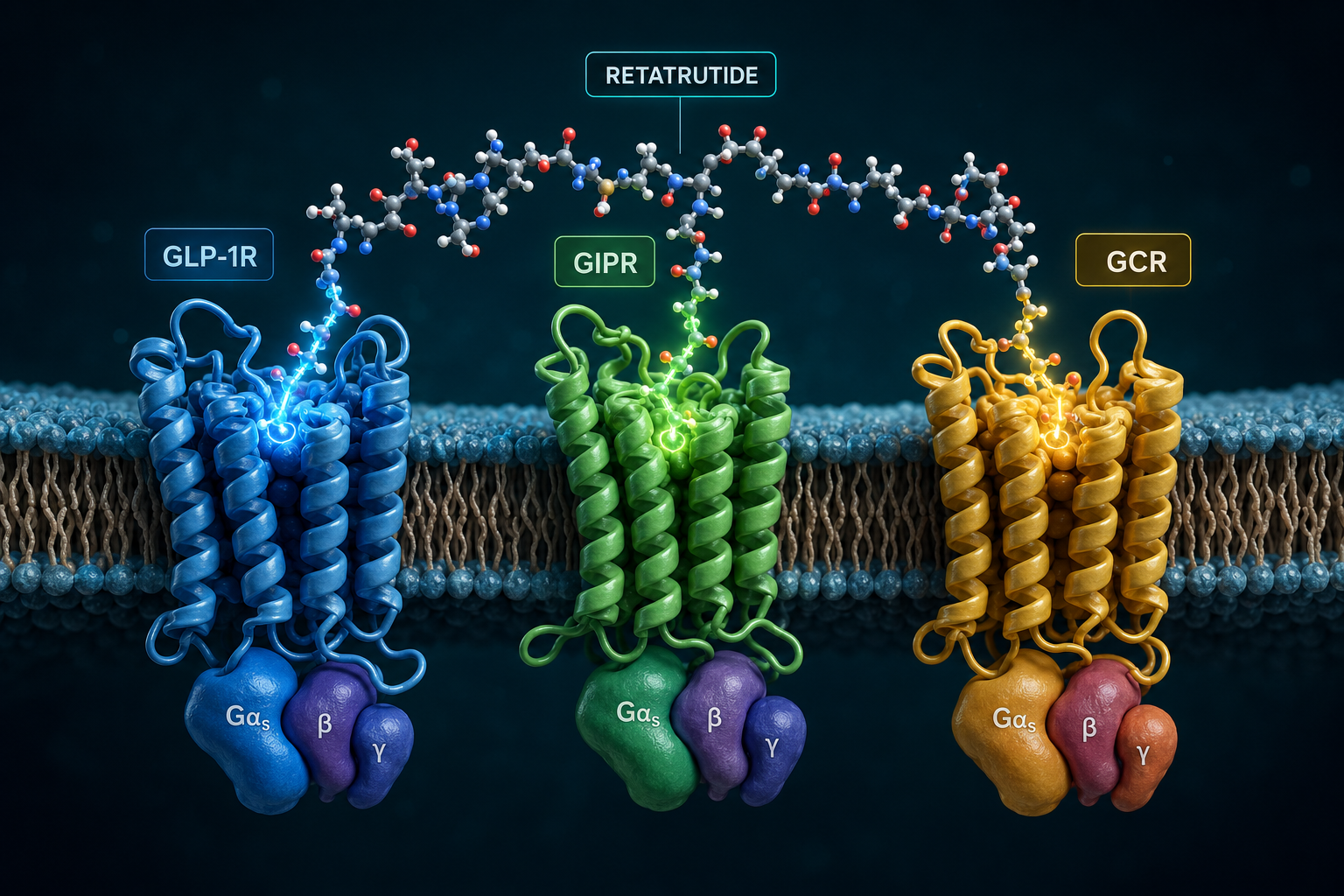
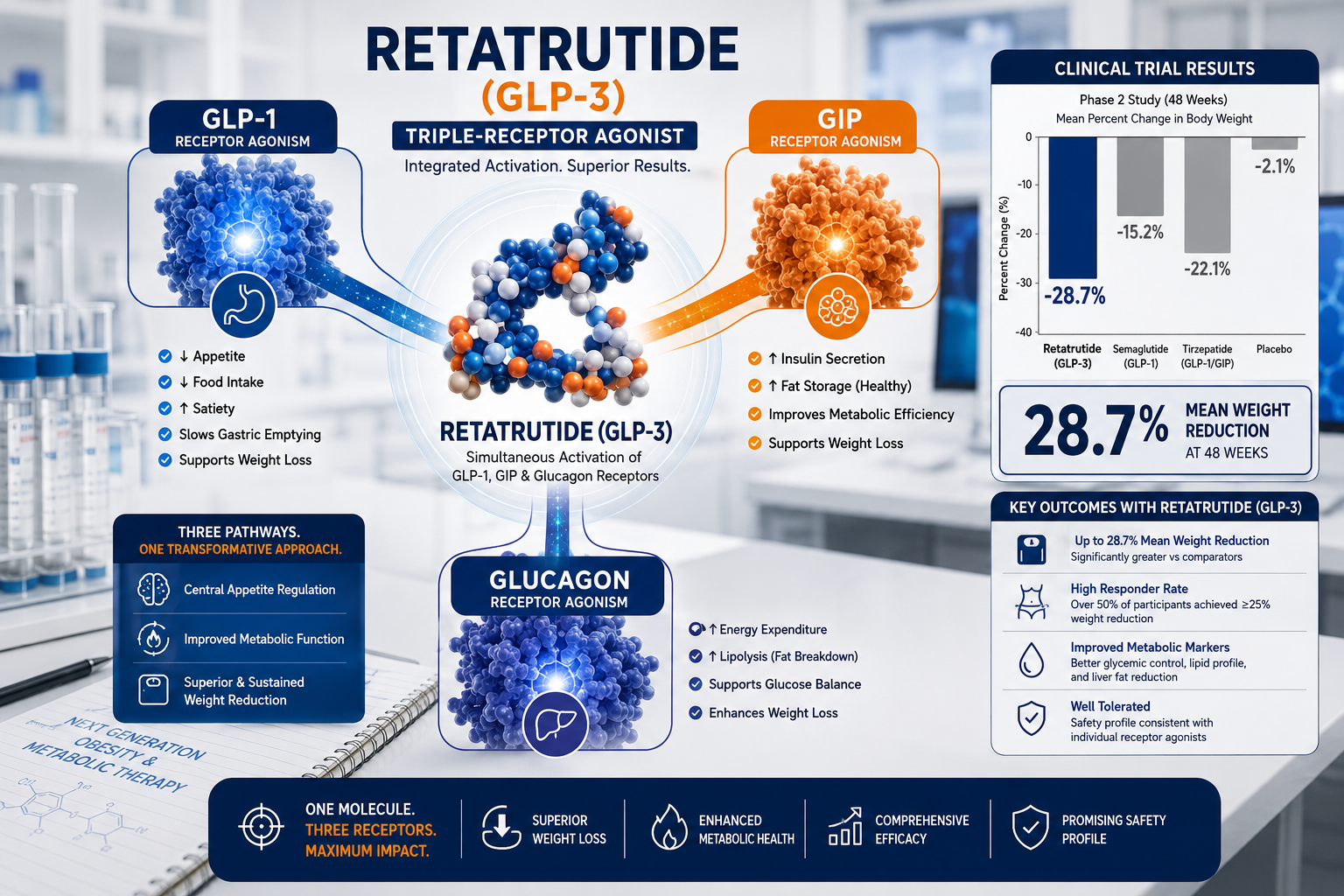
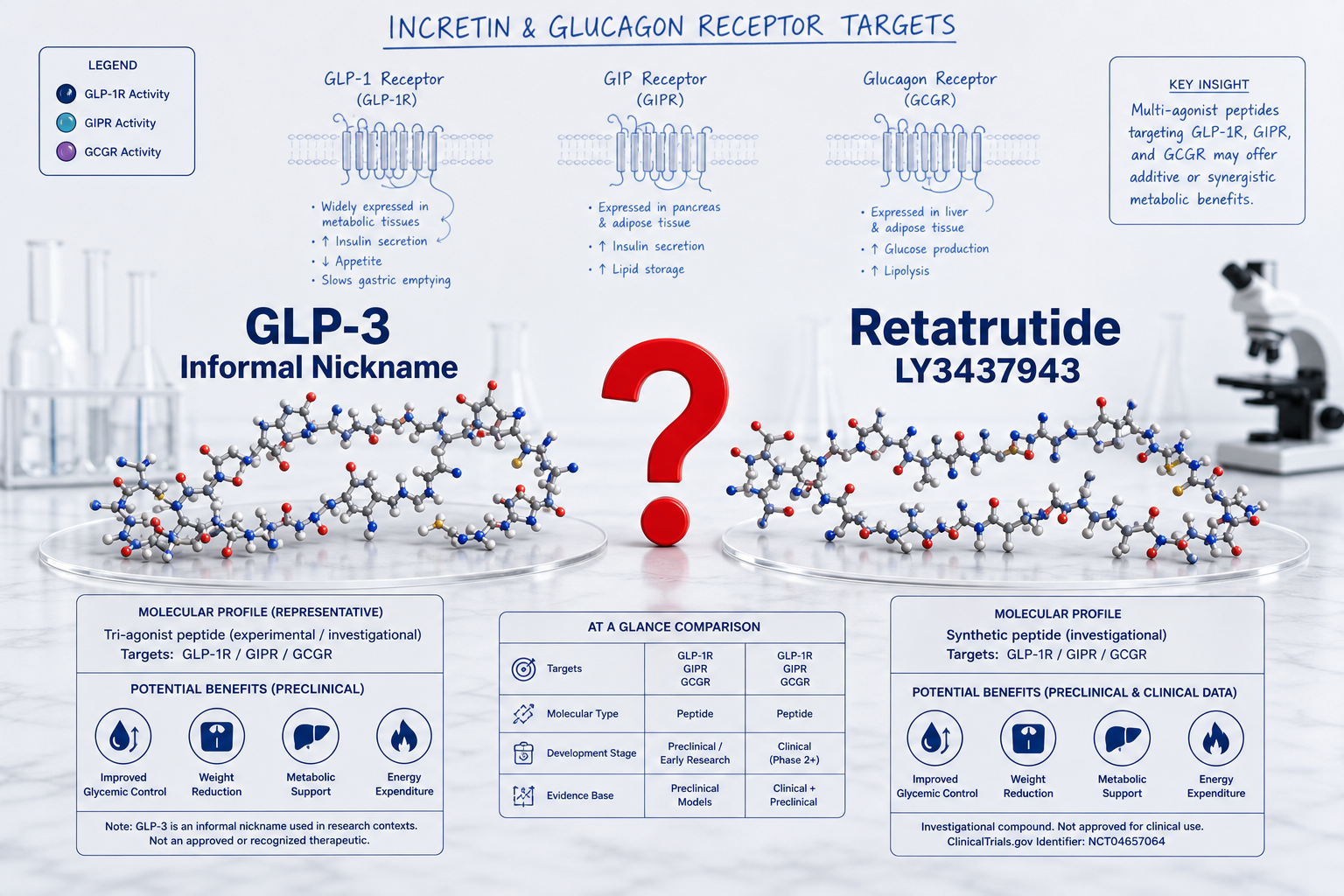
The phrase "GLP-3" does not describe a third endogenous glucagon-like peptide. It is an informal shorthand for retatrutide, a synthetic triple agonist developed by Eli Lilly that simultaneously targets three receptors: GLP-1R, GIP receptor (GIPR), and glucagon receptor (GCGR). The "3" refers to the number of receptor targets, not a peptide sequence.

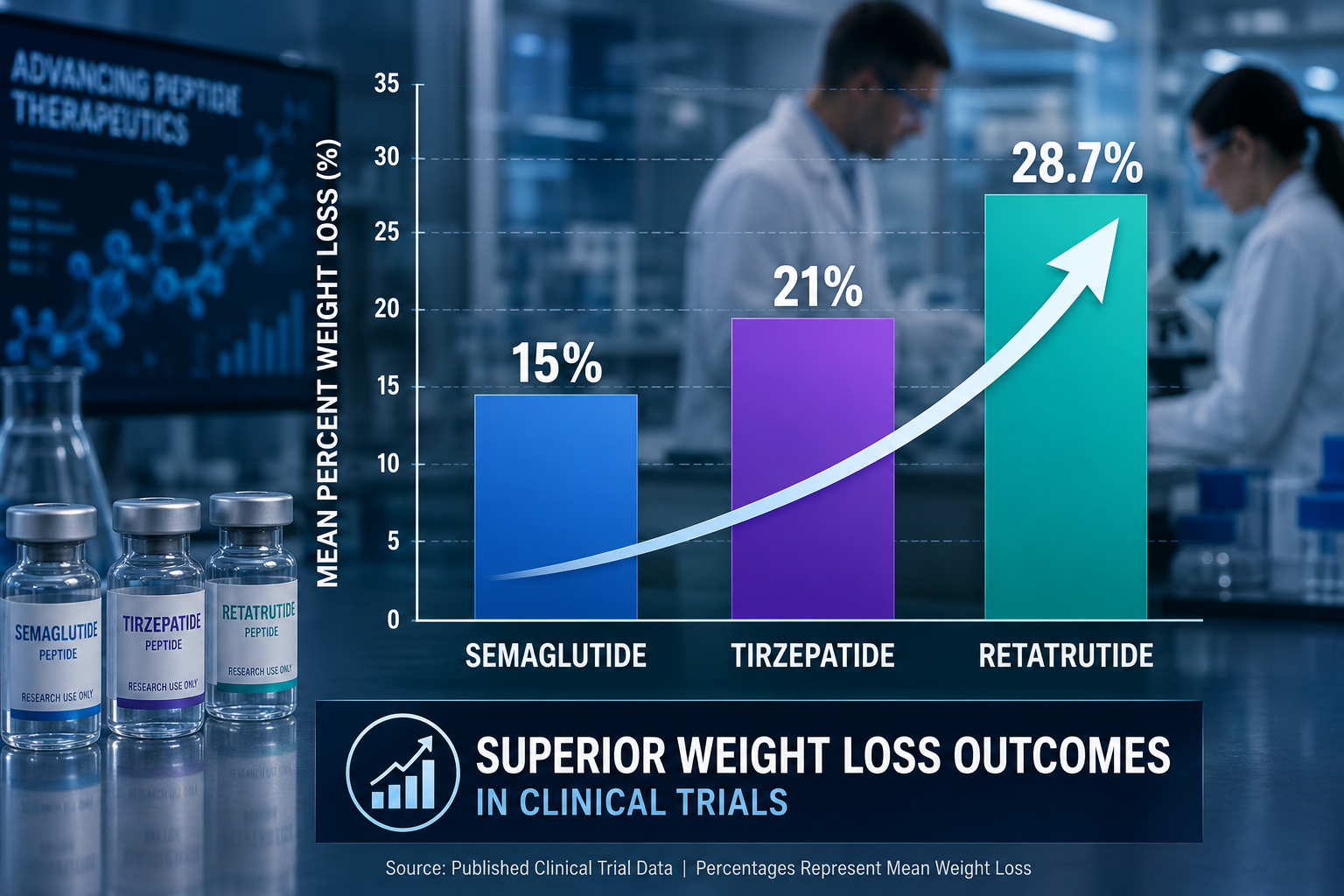
This distinction matters enormously for researchers. Calling retatrutide "GLP-3" is pharmacologically imprecise. The correct terminology is triple receptor agonist or GLP-1/GIP/glucagon tri-agonist. Retatrutide is not FDA-approved as of 2026 and remains available only through clinical trials. Phase 3 data have shown up to 28.7% weight loss, with approval anticipated no earlier than 2027. For more on this compound's research profile, see the dedicated retatrutide and GLP-3 research overview.

Why does the naming confusion persist?

  • Dual agonists like tirzepatide (GLP-1/GIP) were informally called "GLP-2" by some media outlets before that term was corrected.
  • The pharmaceutical pipeline moves faster than regulatory taxonomy.
  • Marketing teams favor simple numerical progressions.

Researchers should also note the generational differences across GLP-1 drug classes to contextualize where triple agonists sit in the therapeutic timeline.


The 2026 Pipeline: Next-Generation Agents Across the GLP Family

Next-generation GLP peptide pipeline timeline and weight-loss data chart

The peptide family landscape in 2026 is defined by receptor combination strategies rather than single-target approaches. Key agents include:

Orforglipron (Foundayo) — Eli Lilly
A once-daily oral GLP-1 receptor agonist. In the ACHIEVE-3 trial, the 17.2 mg dose produced 57.1% greater relative A1C reduction and 73.6% greater relative weight loss compared to oral semaglutide 14 mg. Lilly plans FDA submission by end of Q2 2026.

PF-08653944 — Pfizer
An ultra-long-acting injectable GLP-1 RA achieving 12.3% mean placebo-adjusted weight loss at 28 weeks in the VESPER-3 Phase 2b study, with weight loss continuing after transitioning from weekly to monthly dosing. Ten Phase 3 trials are anticipated in 2026.

Amycretin — Novo Nordisk
A single molecule activating both amylin and GLP-1 receptors, showing 22% weight loss in 36 weeks in Phase 1b/2a trials. Both oral and injectable formulations advance to Phase 3 in 2026.

Survodutide — Boehringer Ingelheim
A dual glucagon/GLP-1 agonist showing 18.7% weight loss at 46 weeks in Phase 2, with 62% of MASH patients achieving disease resolution. Phase 3 trials span 14 countries.

Researchers interested in the broader metabolic peptide landscape can explore metabolic modulation research lines and GIP receptor biology for mechanistic context. Those studying adjacent metabolic compounds may also find value in reviewing AOD9604 metabolic research and SLU-PP-332 metabolic research as comparative reference points.


Conclusion

The GLP peptide family is one of the most productive areas in current biomedical research, but imprecise language creates real confusion. GLP-1 and GLP-2 are endogenous peptides with distinct receptors and non-overlapping functions — both derived from proglucagon but acting on entirely separate physiological systems. "GLP-3" is not a peptide; it is a colloquial label for a triple-receptor agonist strategy.

Actionable next steps for researchers:

  • Anchor all literature searches to receptor nomenclature (GLP-1R, GLP-2R, GIPR, GCGR) rather than informal drug nicknames.
  • Track the orforglipron and retatrutide Phase 3 readouts expected in 2026-2027 as benchmark data for receptor combination strategies.
  • Distinguish between endogenous peptide biology and synthetic analog pharmacology when designing assay protocols.
  • Review the GLP-1 peptide product research library for current research-grade compound availability.

Precise taxonomy is not pedantry — it is the foundation of reproducible science.

https://www.puretestedpeptides.com/wp-content/uploads/2026/06/GLP-3-GLP-1-and-GLP-2-Explained-A-Researchers-Guide-to-the-Peptide-Family.png 1024 1536 Pure Tested https://www.puretestedpeptides.com/wp-content/uploads/2026/01/buy-peptides-online.jpg Pure Tested2026-06-28 13:27:512026-07-20 15:02:00GLP-3, GLP-1, and GLP-2 Explained: A Researcher’s Guide to the Peptide Family
GLP-3 Retatrutide and Cardiometabolic Markers: What Phase 2 Data Suggests for Research

GLP-3 Retatrutide and Cardiometabolic Markers: What Phase 2 Data Suggests for Research

June 25, 2026/0 Comments/by Pure Tested

Retatrutide produced body weight reductions of up to 24% in a 48-week Phase 2 trial — a figure that surpassed every previously published result for a single injectable compound in its class. That number alone has made GLP-3 Retatrutide and cardiometabolic markers a focal point of metabolic research in 2026, drawing attention from endocrinologists, cardiologists, and peptide scientists alike.

This article reviews what Phase 2 data reveals about retatrutide's effects on key cardiometabolic markers — including blood glucose, blood pressure, lipid panels, and body composition — strictly within a research context.

Key Takeaways

  • Retatrutide is a triple receptor agonist targeting GLP-1, GIP, and glucagon receptors simultaneously.
  • Phase 2 data shows meaningful reductions in fasting glucose, blood pressure, and triglycerides alongside significant fat mass loss.
  • The compound's multi-receptor mechanism may explain its outsized effect on cardiometabolic markers compared to single or dual agonists.
  • Research interest in 2026 is focused on how these markers interact and whether benefits are additive or synergistic.
  • All findings discussed here are from preclinical and Phase 2 clinical research; retatrutide is not approved for human therapeutic use.

Key Takeaways

Understanding Retatrutide's Triple Receptor Mechanism

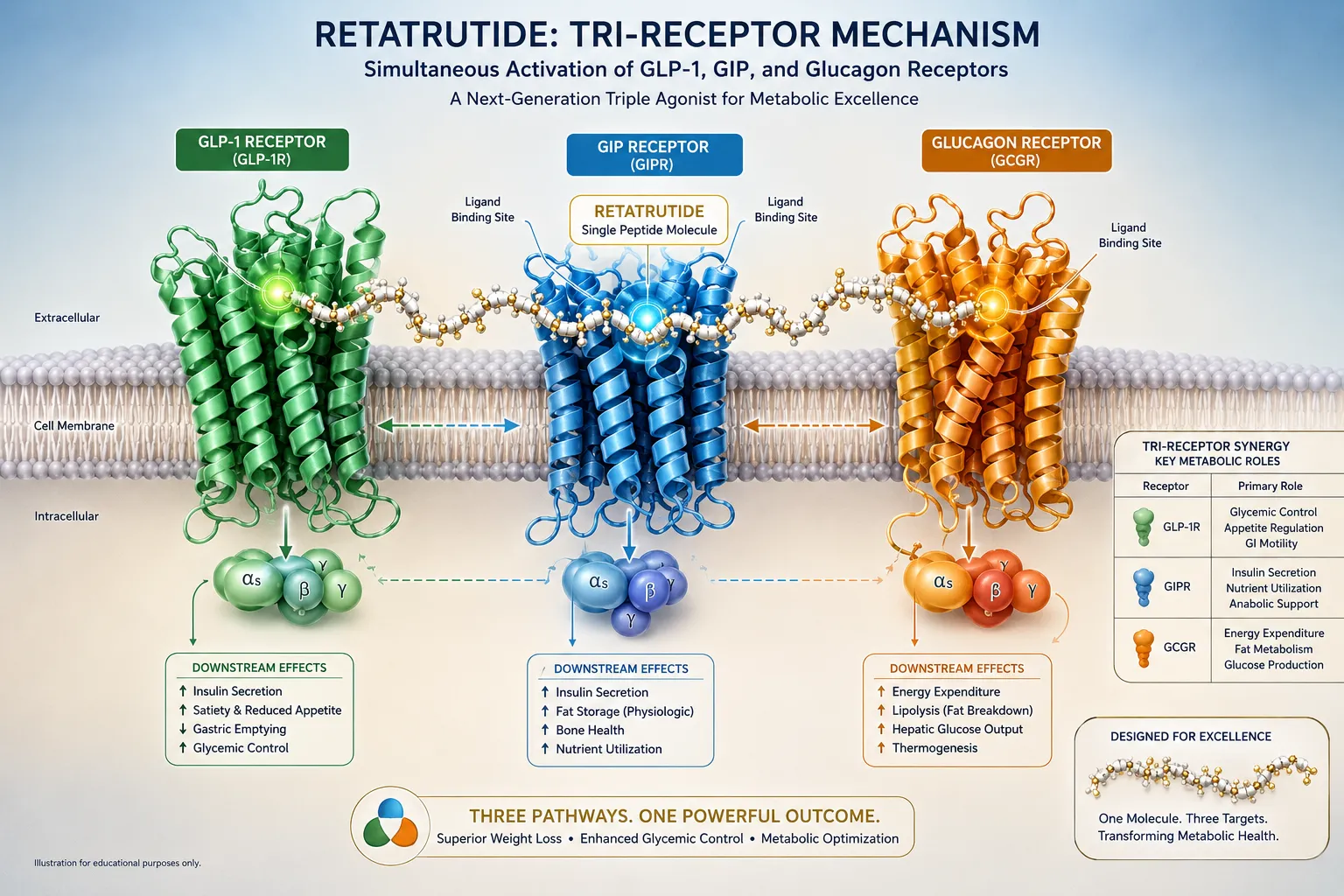
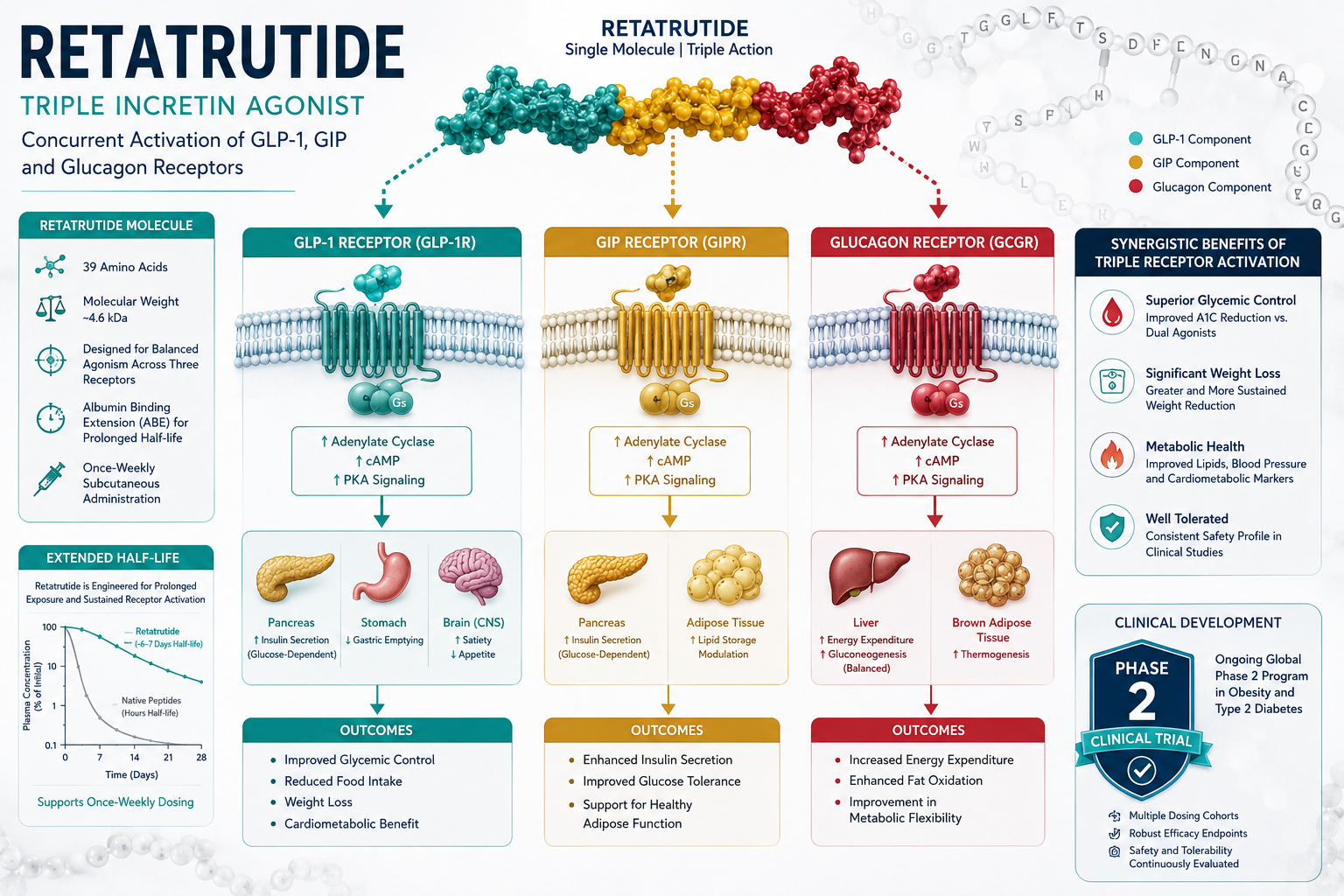
Unlike semaglutide or tirzepatide, retatrutide activates three distinct receptors: GLP-1 (glucagon-like peptide-1), GIP (glucose-dependent insulinotropic polypeptide), and the glucagon receptor. This triple agonism creates a broader metabolic footprint than dual or single receptor agents.

The glucagon receptor component is particularly notable. While glucagon is typically associated with raising blood sugar, its activation in this context appears to increase energy expenditure and promote hepatic fat clearance — effects that complement the glucose-lowering action of GLP-1 and GIP. Researchers studying GLP-3 incretin research themes have noted this as a key differentiator in the compound's mechanism.

For context on how different generations of GLP-1 compounds compare, the differences across GLP-1 generations offer useful background for understanding where retatrutide fits in the broader incretin landscape.

"Triple receptor agonism may represent a step-change in how researchers model integrated cardiometabolic outcomes — not just weight or glucose in isolation."

What Phase 2 Data Suggests About Cardiometabolic Markers

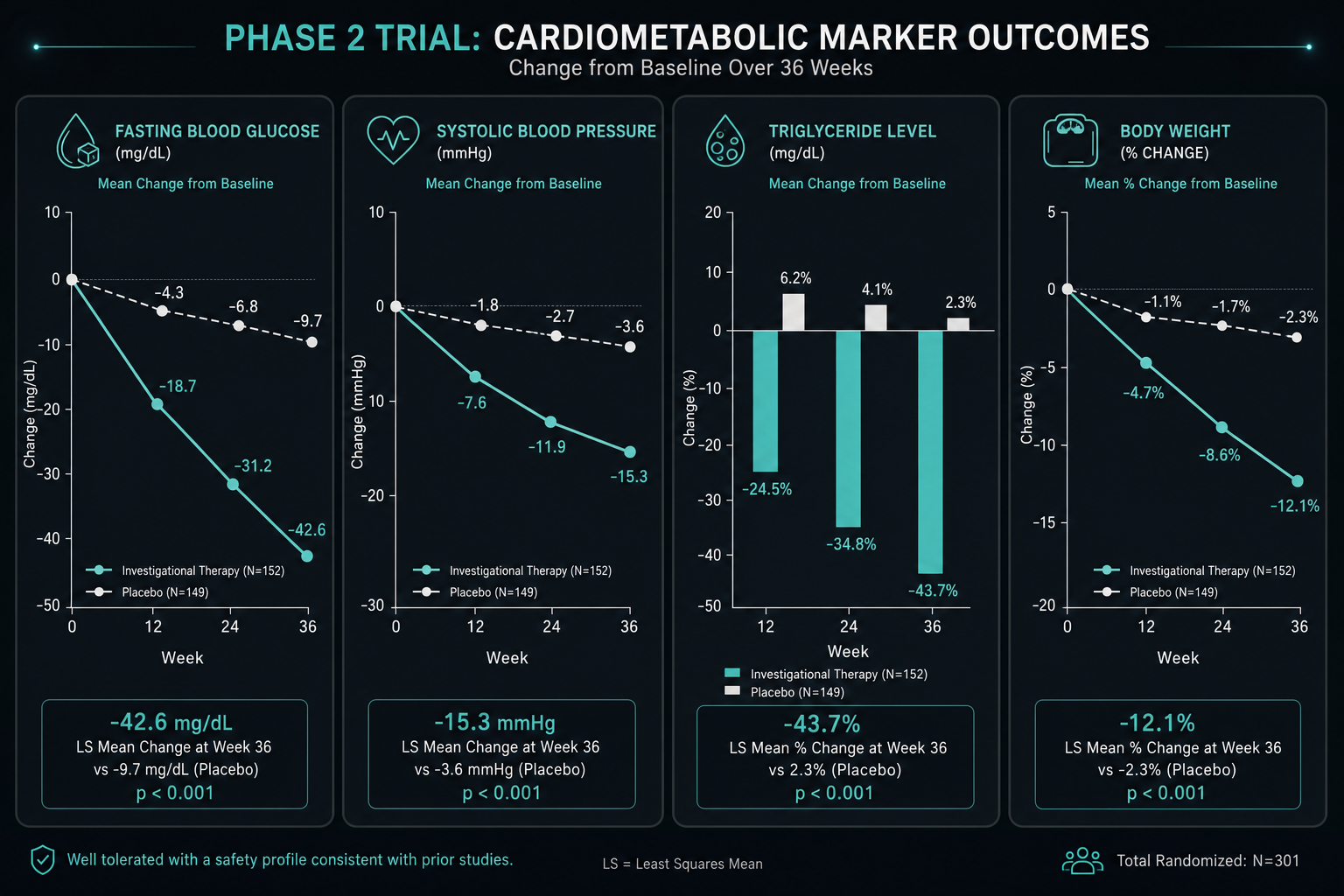
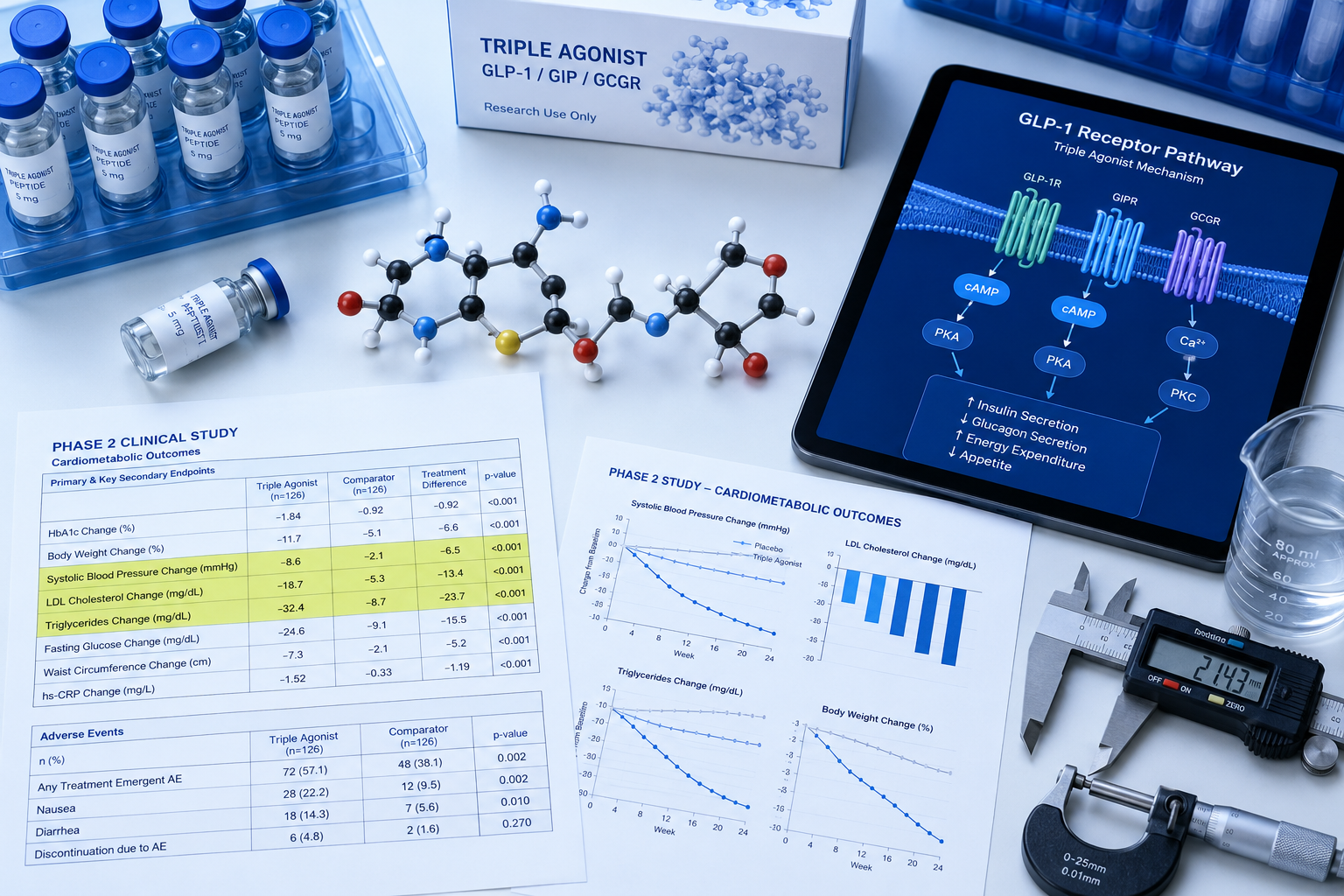
GLP-3 Retatrutide and cardiometabolic markers were assessed across multiple endpoints in the published Phase 2 trial. The results across each domain are outlined below.

What Phase 2 Data Suggests About Cardiometabolic Markers

Blood Glucose and Insulin Sensitivity

Participants showed significant reductions in fasting plasma glucose and HbA1c levels. The GLP-1 component drives insulin secretion in a glucose-dependent manner, reducing hypoglycemia risk. GIP co-activation appears to enhance beta-cell responsiveness, which may explain why glucose control was more pronounced than with GLP-1 monotherapy.

Blood Pressure

Systolic blood pressure declined meaningfully across dose groups, with higher doses showing greater reductions. This effect may be partly secondary to weight loss, but researchers have also proposed direct vascular mechanisms linked to GLP-1 receptor activation in endothelial tissue.

Lipid Panels and Triglycerides

Marker Observed Trend
Triglycerides Significant reduction
LDL Cholesterol Modest reduction
HDL Cholesterol Slight increase
Total Cholesterol Moderate reduction

Triglyceride reductions were among the most consistent findings, likely tied to glucagon receptor-mediated hepatic fat oxidation.

Body Composition

Fat mass loss was substantial, with lean mass largely preserved at moderate doses. This ratio is a critical research variable, since preserving muscle during aggressive fat loss has direct implications for long-term metabolic health. Researchers exploring IPA and muscle-fat research themes have identified similar preservation patterns in related peptide compounds.

For researchers interested in complementary metabolic pathways, MOTS-c and metabolic flexibility and SLU-PP-332 metabolic modulation represent adjacent areas of inquiry.

Research Implications and Open Questions in 2026

The 2026 ADA Scientific Sessions highlighted integrated cardiometabolic outcomes as a primary research priority — and retatrutide sits at the center of that conversation. Several questions remain open for Phase 3 investigation.

Research Implications and Open Questions in 2026

Key open research questions include:

  • Are the cardiometabolic benefits additive across all three receptor pathways, or do they interact in non-linear ways?
  • What is the optimal dose for balancing fat loss with lean mass preservation?
  • How do effects on blood pressure compare across populations with and without existing hypertension?
  • Do lipid improvements persist independently of weight loss?

Researchers examining dual receptor agonism in GLP-1 compounds have begun using retatrutide Phase 2 data as a benchmark for modeling triple agonist outcomes. Additionally, the role of cagrilintide synergy with GLP-1 adds another dimension to how researchers are thinking about combination metabolic approaches.

For those sourcing research-grade compounds, reviewing quality testing protocols is an essential step before any laboratory work begins.

Conclusion

Phase 2 data on retatrutide presents a compelling picture for cardiometabolic research. Across blood glucose, blood pressure, lipid markers, and body composition, the compound's triple receptor mechanism appears to produce broader and more consistent effects than prior incretin-based agents.

Actionable next steps for researchers:

  1. Review the full published Phase 2 dataset, focusing on dose-response relationships across each cardiometabolic marker.
  2. Cross-reference findings with adjacent research on dual agonists and metabolic peptides to build a comparative framework.
  3. Ensure all research-grade materials are sourced from verified, tested suppliers with documented purity standards.
  4. Monitor Phase 3 trial designs emerging through late 2026 for updates on long-term cardiovascular endpoints.

GLP-3 Retatrutide and cardiometabolic markers will remain a defining research theme as the field moves toward integrated, multi-pathway approaches to metabolic science.

https://www.puretestedpeptides.com/wp-content/uploads/2026/06/GLP-3-Retatrutide-and-Cardiometabolic-Markers-What-Phase-2-Data-Suggests-for-Research.png 1024 1536 Pure Tested https://www.puretestedpeptides.com/wp-content/uploads/2026/01/buy-peptides-online.jpg Pure Tested2026-06-25 13:03:292026-07-20 15:02:18GLP-3 Retatrutide and Cardiometabolic Markers: What Phase 2 Data Suggests for Research
Peptides and Polypeptides in Endocrine Research: Linking Estrogen Receptor Signaling to Enclomiphene and GLP-3 Retatrutide Models

Peptides and Polypeptides in Endocrine Research: Linking Estrogen Receptor Signaling to Enclomiphene and GLP-3 Retatrutide Models

June 23, 2026/0 Comments/by Pure Tested

Fewer than three decades ago, the estrogen receptor was considered a single, well-understood target. Today, researchers recognize at least three distinct receptor subtypes — ERalpha, ERbeta, and the G protein-coupled estrogen receptor (GPER) — each capable of driving separate downstream cascades. That complexity is precisely why the field of peptides and polypeptides in endocrine research: linking estrogen receptor signaling to enclomiphene and GLP-3 retatrutide models has become one of the most active areas of translational biology in 2026.

Detailed () scientific illustration showing a split-panel composition: left side features a 3D molecular model of an

Key Takeaways

  • Estrogen receptors are not monolithic; GPER mediates rapid non-genomic signaling distinct from classical nuclear ER pathways.
  • Enclomiphene acts as a selective estrogen receptor modulator (serm) at the hypothalamus, restoring endogenous testosterone without suppressing the HPG axis.
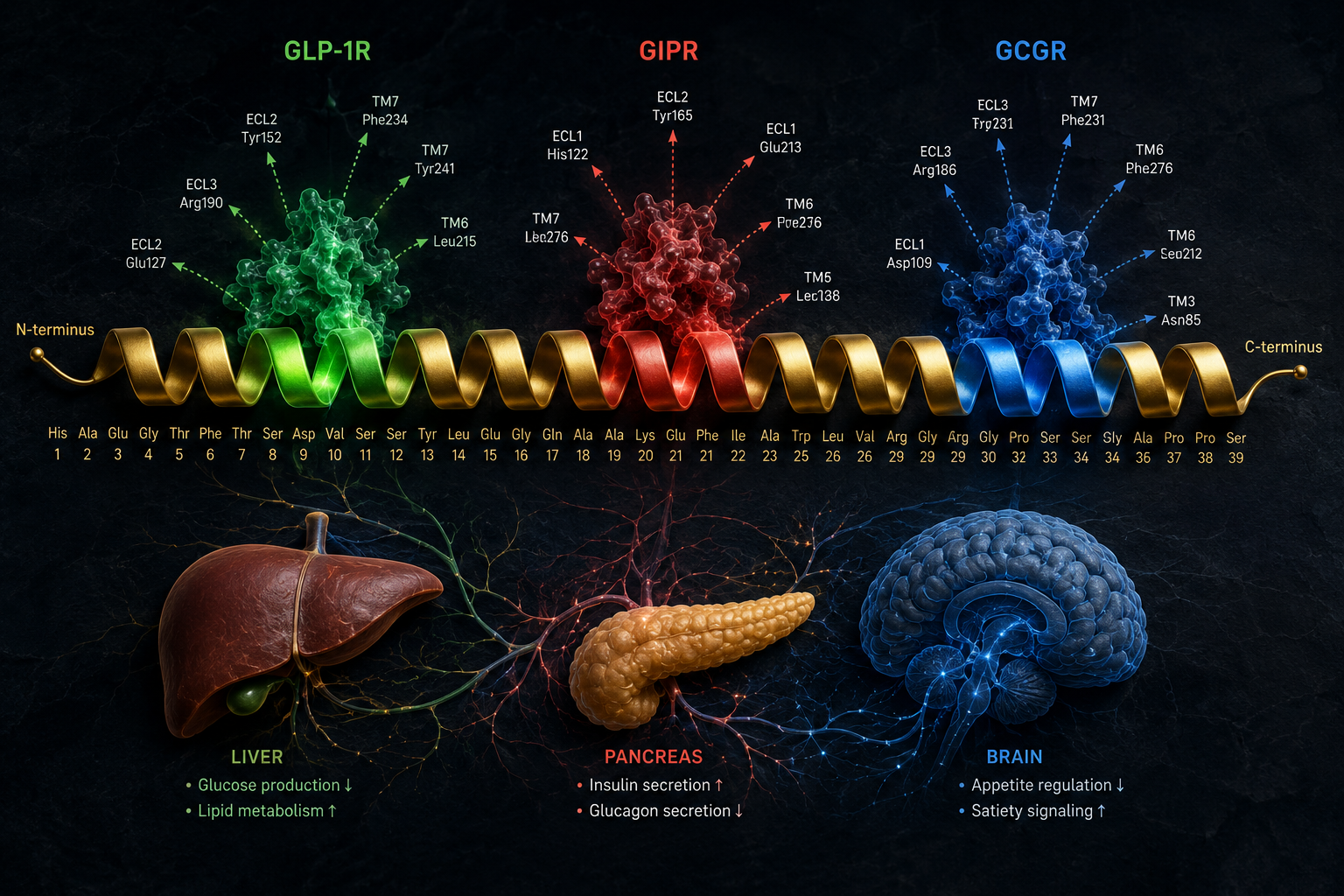
  • Retatrutide is a synthetic 39-amino-acid polypeptide that simultaneously activates GLP-1R, GIPR, and GCGR — a triple-agonist profile unmatched by earlier metabolic peptides.
  • Cross-talk between peptide growth factors and estrogen receptor systems creates layered regulatory complexity relevant to drug design.
  • Both enclomiphene and retatrutide illustrate how modern endocrine research moves beyond single-target pharmacology toward systems-level modulation.

Estrogen Receptor Biology: The Foundation for Peptide Cross-Talk

Classical endocrinology framed estrogen signaling as a nuclear event: ligand binds receptor, receptor binds DNA, gene transcription changes. GPER challenged that model by demonstrating that estrogens also trigger acute, non-genomic responses through G protein-coupled pathways — activating cAMP, mobilizing intracellular calcium, and phosphorylating kinase cascades within minutes rather than hours.

This dual-mode signaling matters for peptide researchers because peptide growth factors and estrogen receptors actively cross-talk. Insulin-like growth factors, epidermal growth factor, and related polypeptides can transactivate ERalpha without a classical estrogen ligand. Conversely, estrogen receptor activity can sensitize cells to peptide growth factor signals. Understanding this bidirectional regulation is foundational to interpreting how newer research compounds interact with hormonal physiology.

"Estrogen receptor cross-talk with peptide signaling systems is not a side effect — it is a core feature of endocrine architecture."

For researchers exploring metabolic and longevity-related peptides, resources such as the MOTS-C metabolic flexibility research overview and the GIP receptor importance guide provide useful context on how peptide signals intersect with broader hormonal networks.


Enclomiphene as a Case Study in Receptor-Selective Endocrine Modulation

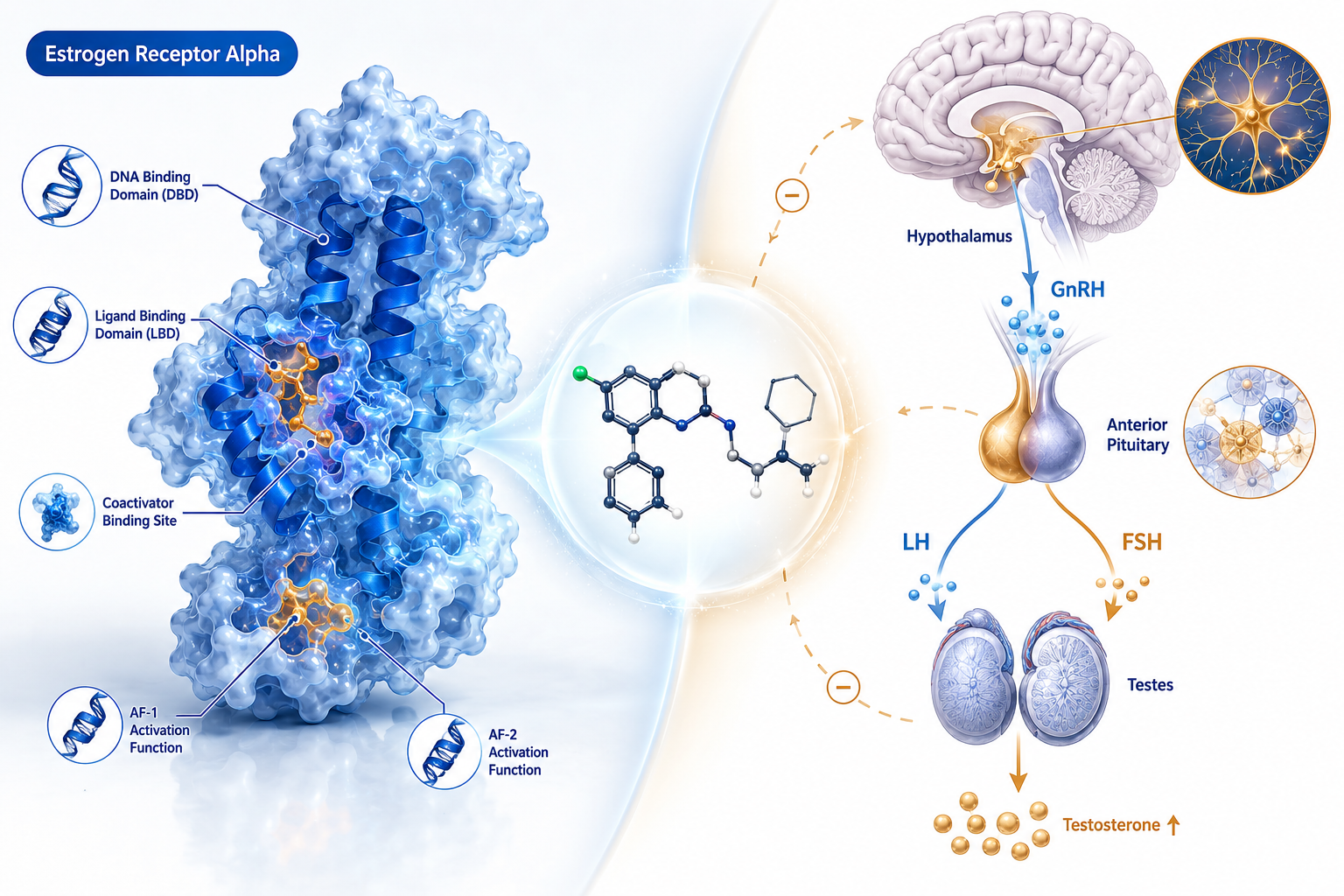
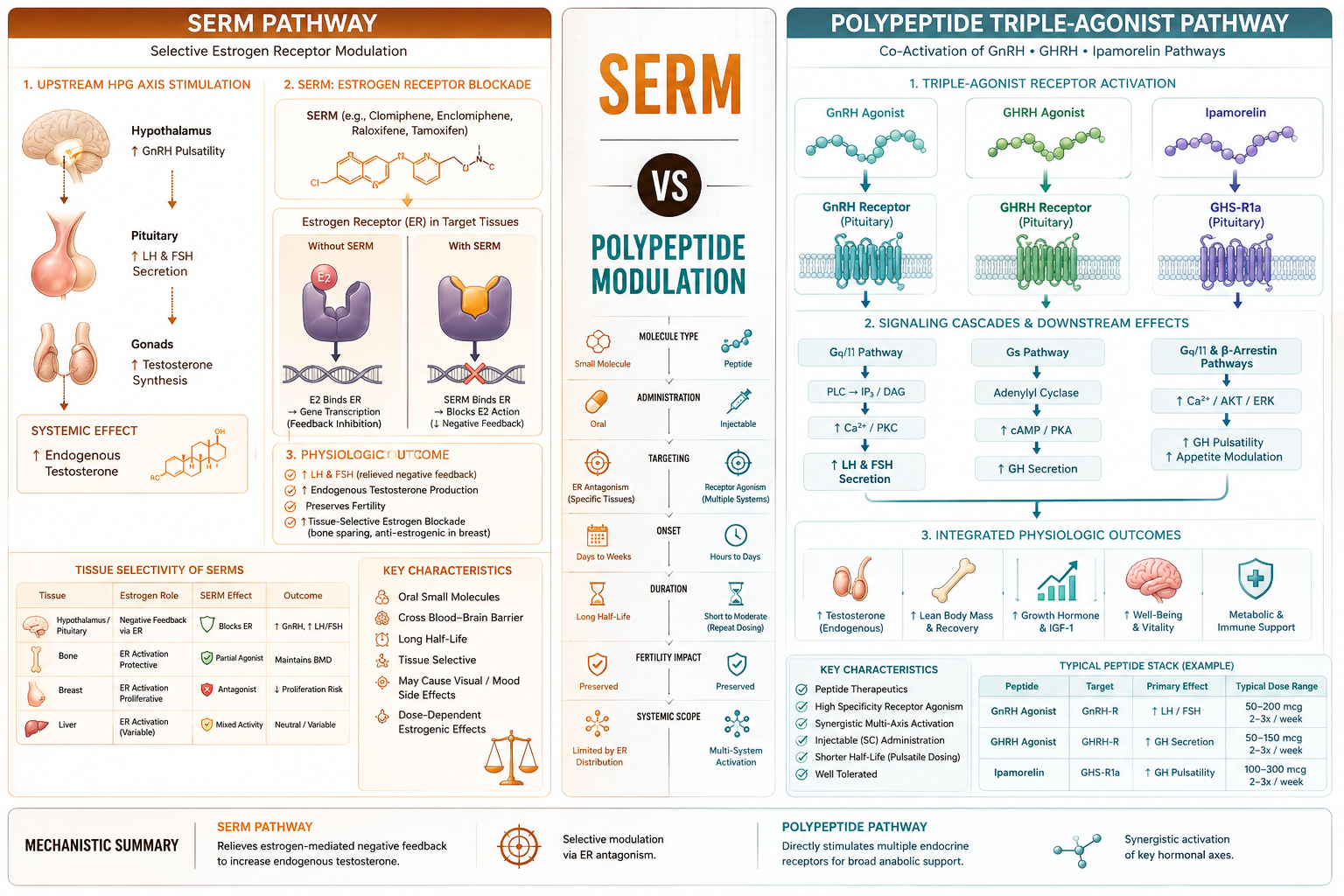
Enclomiphene is the trans-isomer of clomiphene and functions as a selective estrogen receptor modulator (serm). Its primary site of action is the hypothalamus and pituitary, where it blocks estrogen receptors and removes the negative-feedback brake on gonadotropin-releasing hormone (GnRH) pulsatility. The result is a cascade: GnRH rises, LH and FSH secretion increases, and the testes respond with elevated testosterone production.

What makes enclomiphene scientifically notable is what it preserves. Unlike exogenous testosterone, enclomiphene leaves the entire hypothalamic-pituitary-gonadal (HPG) axis intact, including its own feedback loops. This distinguishes it sharply from peptide-class HPG stimulators such as gonadorelin or kisspeptin-10, which act at different nodes in the same axis.

Pharmacokinetic profile comparison:

Compound Clearance Axis Preservation
Enclomiphene Days Full HPG axis intact
Zuclomiphene (isomer) Weeks Partial, prolonged suppression risk
Gonadorelin (peptide) Minutes Pulsatile, receptor-dependent

Enclomiphene's rapid clearance — measured in days rather than the weeks seen with its isomer zuclomiphene — makes it a cleaner pharmacological tool for research into upstream estrogen receptor blockade. For comparison, researchers studying GH-axis peptides may find the CJC-1295 and ipamorelin GH axis research a useful parallel for understanding how upstream modulation shapes downstream hormonal output.


GLP-3 Retatrutide Models and the Polypeptide Approach to Metabolic Signaling

GLP-3 Retatrutide Models and the Polypeptide Approach to Metabolic Signaling

Retatrutide (LY3437943) represents a different philosophy entirely. Rather than blocking a receptor to release a suppressed axis, this synthetic 39-amino-acid polypeptide simultaneously activates three receptors: GLP-1R, GIPR, and GCGR. Cryo-EM structural studies show that retatrutide adopts a single continuous alpha-helix conformation when binding, with receptor-specific amino acid differences accounting for its differential potency at each target.

The coordinated activation of all three receptors produces layered metabolic effects:

  • GLP-1R activation: Reduces food intake, slows gastric emptying, enhances insulin secretion
  • GIPR activation: Amplifies insulin response, modulates adipose tissue signaling
  • GCGR activation: Increases energy expenditure, improves hepatic lipid metabolism

Phase 2 clinical trial data published in 2023 demonstrated significant weight loss and glycemic improvement in participants with obesity and type 2 diabetes. As of 2026, retatrutide has not received regulatory approval for human use and remains within the scope of clinical investigation and preclinical research.

For researchers building context around incretin-based peptide models, the GLP-3 Retatrutide incretin research themes page and the companion GLP-1 incretin research overview offer structured background. The cagrilintide synergy with GLP-1 research further illustrates how dual and triple agonist combinations are reshaping metabolic peptide research.


Bridging the Two Models: What Peptides and Polypeptides in Endocrine Research Reveal

Bridging the Two Models: What Peptides and Polypeptides in Endocrine Research Reveal

The deeper insight from studying peptides and polypeptides in endocrine research: linking estrogen receptor signaling to enclomiphene and GLP-3 retatrutide models together is architectural. Enclomiphene works by subtracting a signal — removing estrogenic feedback — to let a natural axis reassert itself. Retatrutide works by adding multiple signals simultaneously, forcing coordinated receptor activation across organ systems.

Both strategies reflect a move away from single-target pharmacology. Both also interact, directly or indirectly, with estrogen receptor biology. GPER, for instance, has been implicated in metabolic regulation, and GLP-1 receptor signaling has documented interactions with sex hormone pathways in adipose and hepatic tissue.

Key distinctions between serm-based and polypeptide-based endocrine modulation:

  • Mechanism: Receptor blockade (serm) vs. receptor co-activation (polypeptide agonist)
  • Axis impact: Preserves negative feedback (enclomiphene) vs. bypasses feedback (retatrutide)
  • Structural class: Small molecule (enclomiphene) vs. synthetic peptide chain (retatrutide)
  • Research maturity: Enclomiphene has longer clinical history; retatrutide is in active Phase 2/3 investigation

Researchers interested in how peptide structural biology shapes receptor selectivity may also find value in reviewing tesa research themes and the IPA muscle and fat research overview, both of which demonstrate how peptide sequence modifications alter tissue-level outcomes.


Conclusion

The convergence of estrogen receptor biology, serm pharmacology, and synthetic polypeptide design represents one of the most productive frontiers in endocrine research today. Enclomiphene demonstrates that precise receptor-site selectivity can restore entire hormonal axes with minimal disruption. Retatrutide demonstrates that a single engineered polypeptide can coordinate metabolic signaling across three receptor families simultaneously.

Actionable next steps for researchers:

  1. Review GPER-specific literature to understand non-genomic estrogen signaling before designing peptide interaction studies.
  2. Use enclomiphene's HPG axis preservation model as a benchmark when evaluating upstream versus downstream peptide interventions.
  3. Consult Phase 2 retatrutide data for structural insights into multi-receptor polypeptide engineering.
  4. Explore the comprehensive peptide catalog to identify research compounds relevant to metabolic and hormonal pathway studies.
  5. Prioritize compounds with published quality testing data — see quality testing protocols — when designing rigorous endocrine research protocols.

The field is moving fast. Researchers who understand both the receptor-level architecture and the structural biology of the peptides involved will be best positioned to interpret emerging data as it arrives.

https://www.puretestedpeptides.com/wp-content/uploads/2026/06/Peptides-and-Polypeptides-in-Endocrine-Research-Linking-Estrogen-Receptor-Signaling-to-Enclomiphene-and-GLP-3-Retatrutide-Models.png 1024 1536 Pure Tested https://www.puretestedpeptides.com/wp-content/uploads/2026/01/buy-peptides-online.jpg Pure Tested2026-06-23 13:05:442026-07-20 15:02:33Peptides and Polypeptides in Endocrine Research: Linking Estrogen Receptor Signaling to Enclomiphene and GLP-3 Retatrutide Models
Best Research Peptides for Weight Management: Comparing GLP-3 Retatrutide, MOTS-c, and 5-Amino-1MQ

Best Research Peptides for Weight Management: Comparing GLP-3 Retatrutide, MOTS-c, and 5-Amino-1MQ

June 22, 2026/0 Comments/by Pure Tested

Obesity affects more than one billion people worldwide, yet fewer than five percent of those with clinically significant excess weight achieve durable fat loss through lifestyle changes alone. That gap has pushed researchers toward a new generation of metabolic compounds. Among the most closely watched are three distinct agents: Retatrutide, MOTS-c, and 5-Amino-1MQ. This comparative guide on the best research peptides for weight management — comparing GLP-3 Retatrutide, MOTS-c, and 5-Amino-1MQ — examines what each compound does, how far the science has advanced, and what distinguishes them from one another.

Key Takeaways

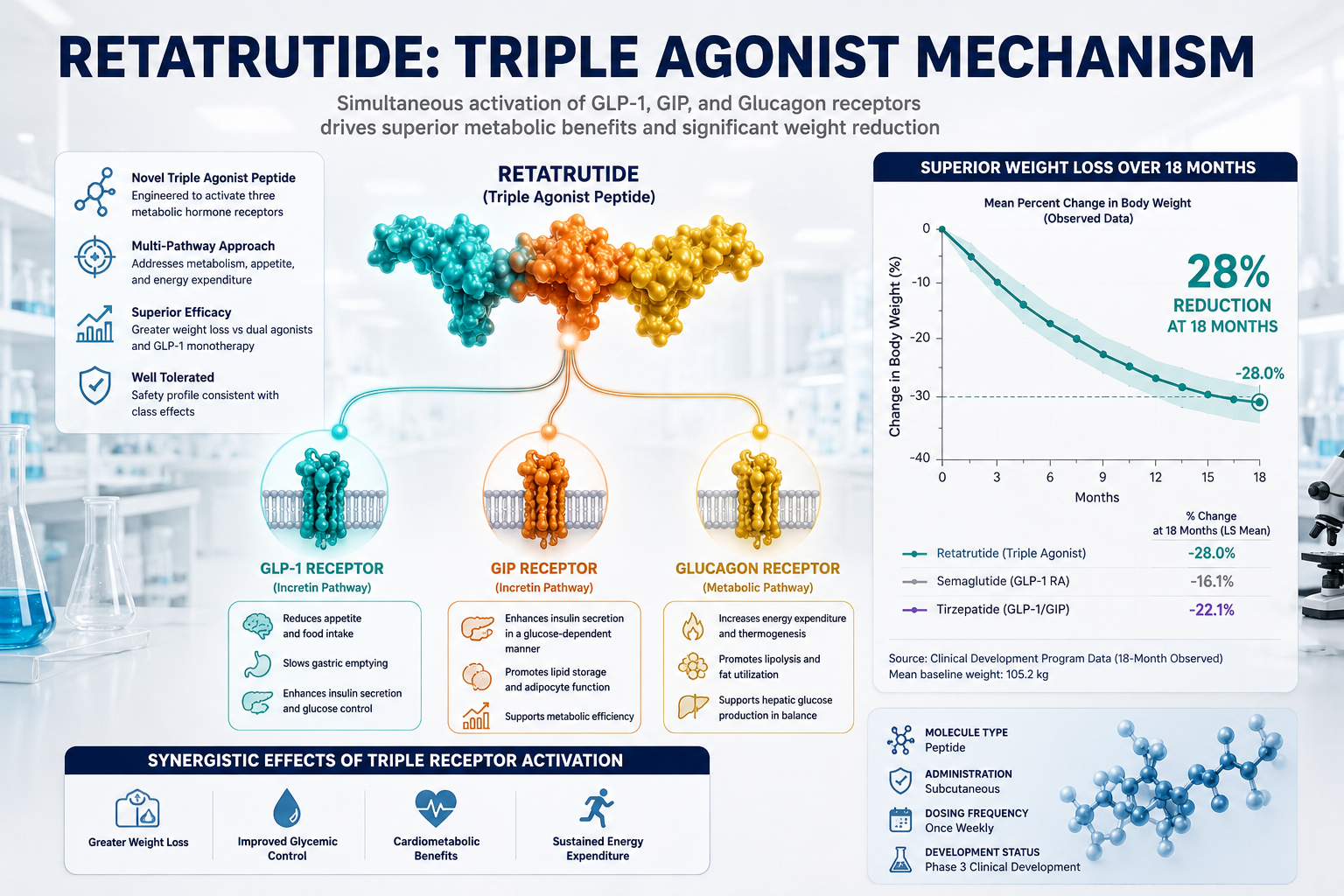
  • Retatrutide is a triple agonist (GLP-1, GIP, glucagon) that produced roughly 28% average weight loss over 18 months in Phase 3 trials — comparable to bariatric surgery outcomes.
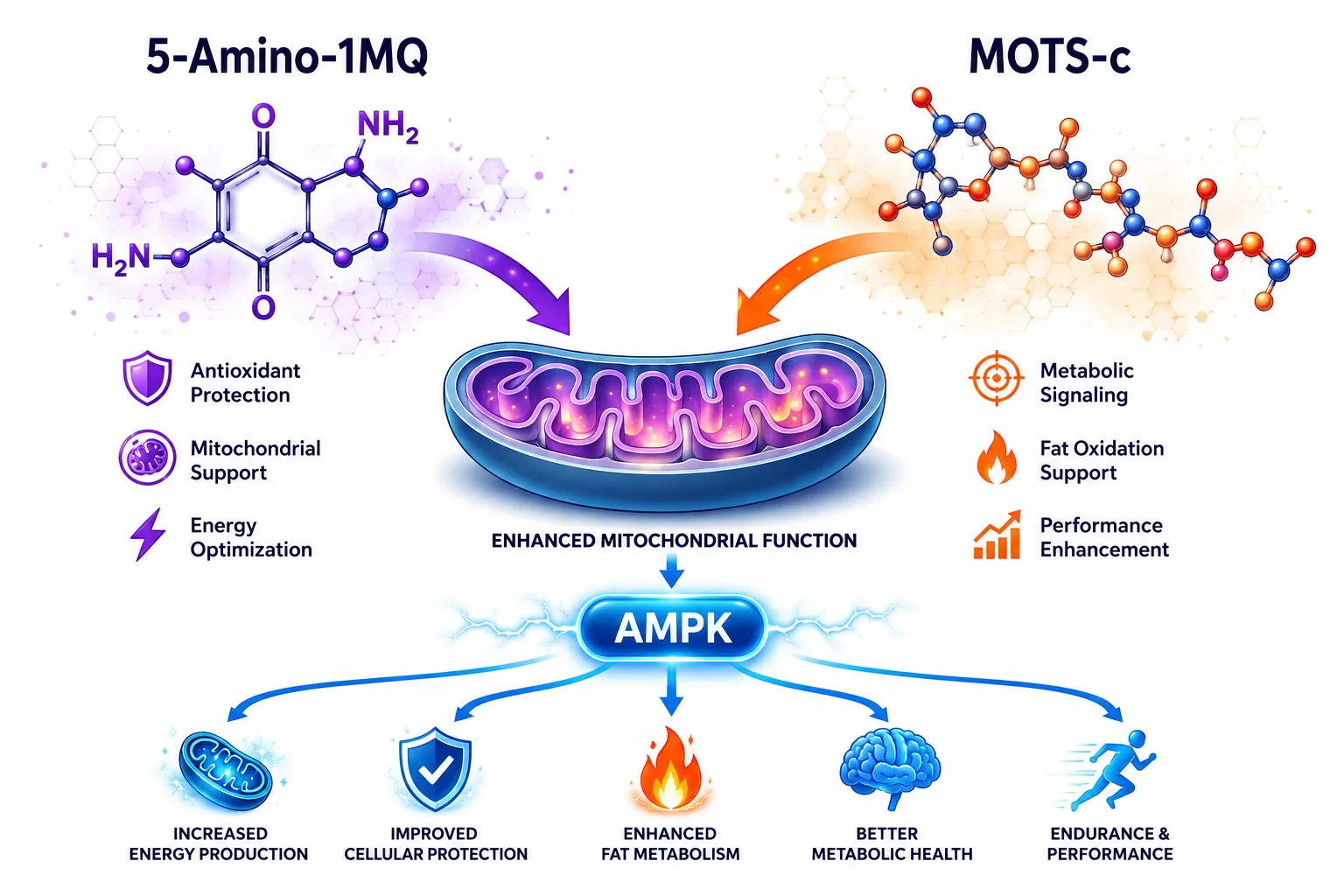
  • MOTS-c is a mitochondria-derived peptide that activates the AMPK pathway, improving insulin sensitivity and metabolic flexibility in preclinical models.
  • 5-Amino-1MQ inhibits the NNMT enzyme to enhance cellular metabolism, but human trial data remain limited.
  • All three compounds are currently research-stage agents; none carries full FDA approval for weight management as of 2026.
  • Mechanism, research maturity, and target pathway differ significantly across the three, making direct comparison essential for informed research planning.

Key Takeaways

Retatrutide: The Triple Agonist Redefining Weight Loss Research

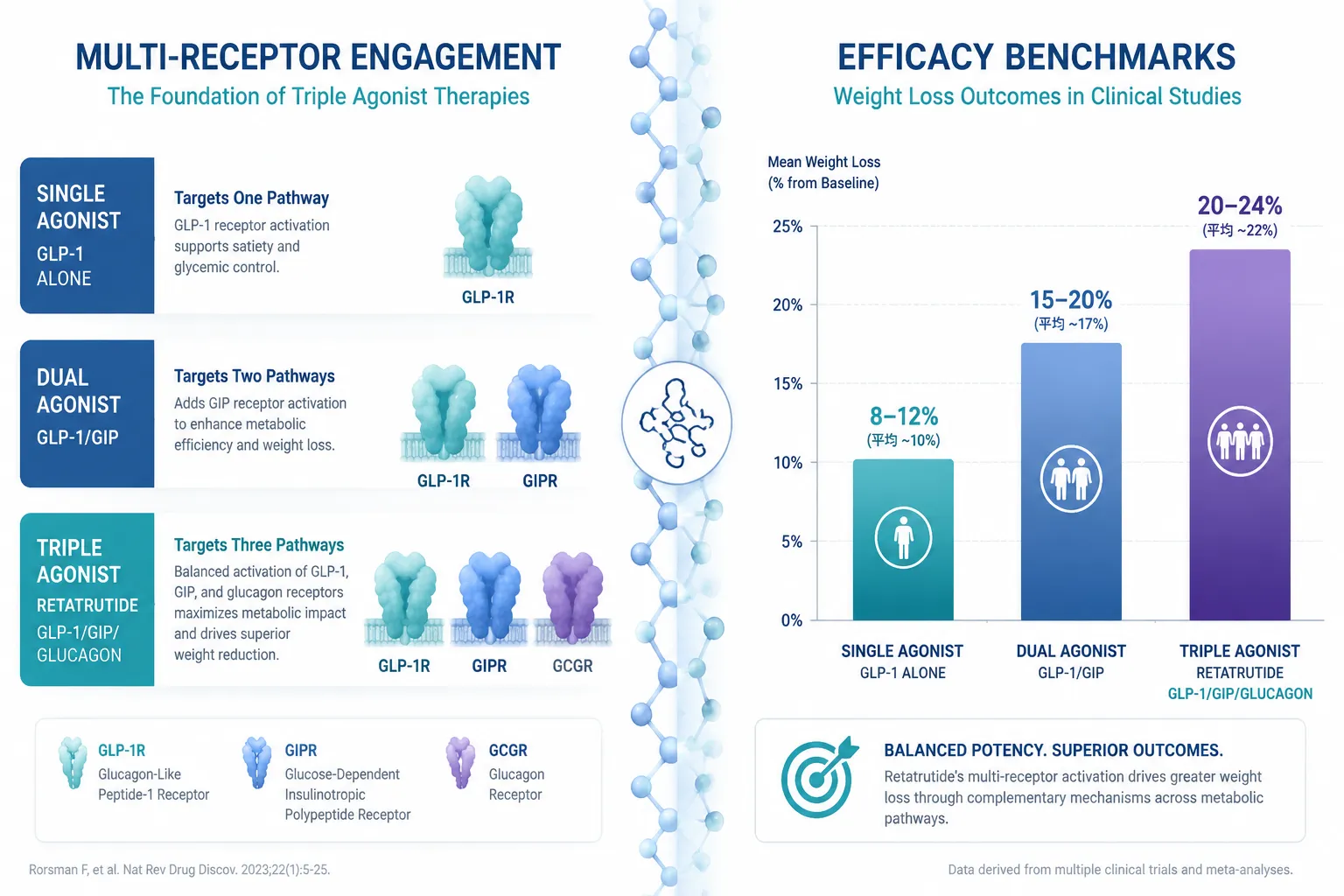
Retatrutide represents the most clinically advanced entry among the best research peptides for weight management. It functions as a triple agonist, simultaneously activating GLP-1, GIP, and glucagon receptors. This three-pronged approach does something no single-receptor agent can match: it enhances satiety through GLP-1 signaling, boosts energy expenditure via glucagon activation, and improves glycemic control through GIP engagement.

The clinical data behind Retatrutide are striking. In a Phase 3 trial conducted by Eli Lilly, participants achieved an average body weight reduction of approximately 28% over 18 months. That figure places Retatrutide in the same efficacy range as bariatric surgery — a threshold no oral or injectable anti-obesity medication had previously crossed. Eli Lilly is pursuing FDA approval, with late-stage trial completion targeted for 2026.

Side effects reported in trials were primarily gastrointestinal: nausea, vomiting, and diarrhea. These effects were dose-dependent and generally mild to moderate, consistent with the GLP-1 drug class profile.

For researchers sourcing this compound, the GLP-3 Retatrutide product page provides catalog navigation and research planning context. Additional receptor-level background is available through the GIP receptor mechanism overview.

"A 28% average weight reduction over 18 months positions Retatrutide as potentially the most efficacious pharmacological weight loss agent studied to date."

MOTS-c and 5-Amino-1MQ: Mitochondrial and Enzymatic Pathways

MOTS-c and 5-Amino-1MQ: Mitochondrial and Enzymatic Pathways

MOTS-c: Mitochondria-Derived Metabolic Regulation

MOTS-c is a 16-amino-acid peptide encoded within mitochondrial DNA — an unusual origin that sets it apart from conventional peptide therapeutics. Under metabolic stress, it translocates from the mitochondria to the cell nucleus, where it activates the AMPK pathway and modulates mTOR and folate-cycle-linked processes.

In animal models, MOTS-c has demonstrated:

  • Approximately 30% improvement in insulin sensitivity
  • 12-15% enhancement in exercise performance
  • Improved mitochondrial function and lipid metabolism

These findings make MOTS-c a compelling candidate for metabolic research, particularly in contexts involving insulin resistance or age-related metabolic decline. Researchers can explore detailed mechanistic studies through the MOTS-c mitochondrial dynamics research page and the MOTS-c metabolic stress research overview.

However, MOTS-c has not received FDA approval. Human trial data remain limited to early-phase studies, meaning its efficacy and safety profile in clinical populations are not yet fully established.

5-Amino-1MQ: NNMT Inhibition and Cellular Metabolism

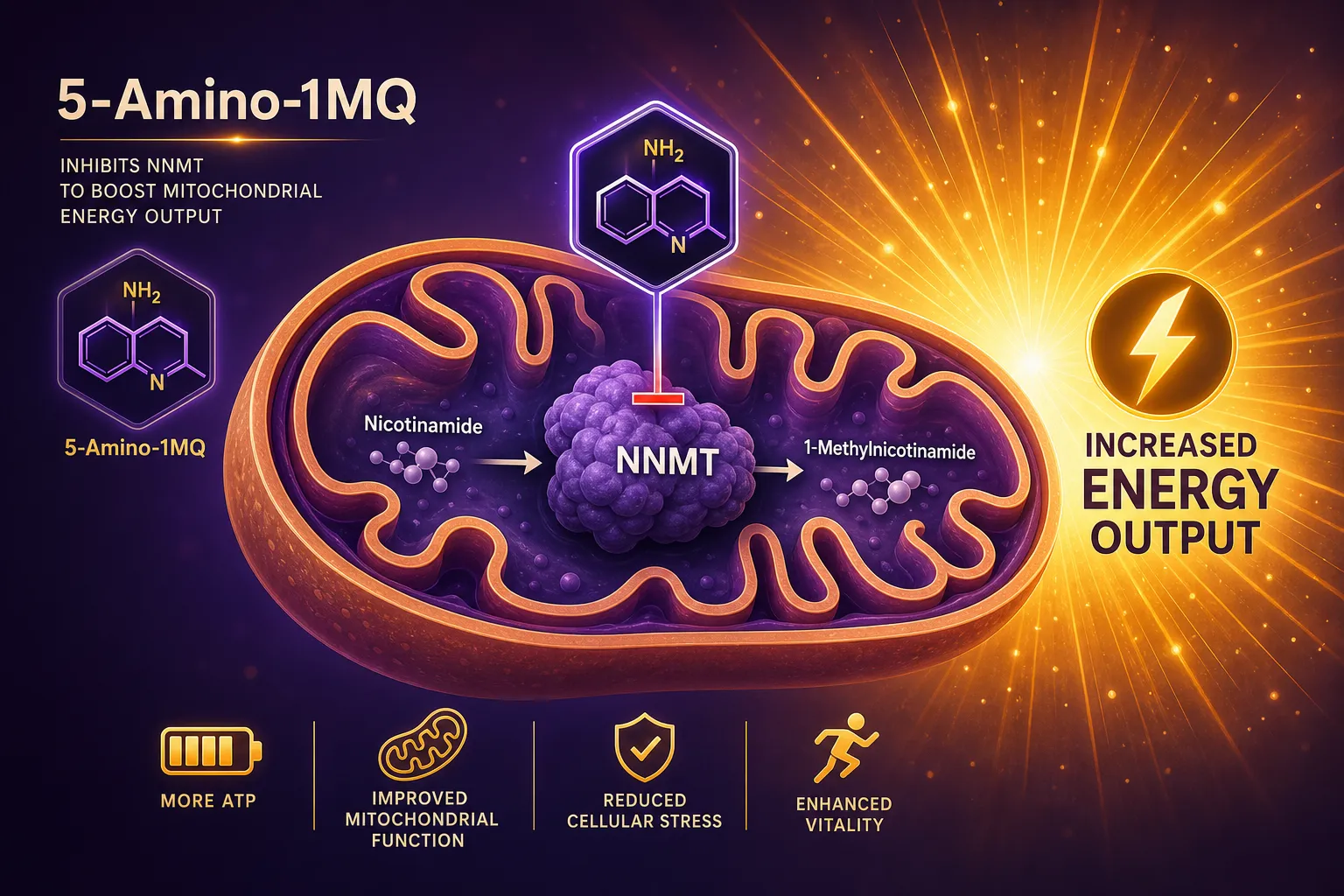
5-Amino-1MQ takes a fundamentally different approach. Rather than acting on gut hormones or mitochondrial signaling, it inhibits nicotinamide N-methyltransferase (NNMT) — an enzyme that plays a regulatory role in cellular energy metabolism. By blocking NNMT, 5-Amino-1MQ is theorized to raise intracellular NAD+ precursor availability and shift cells toward greater metabolic activity.

Preclinical data suggest potential for fat cell reduction and improved metabolic rate, but published human trial data for 5-Amino-1MQ remain sparse as of 2026. Researchers interested in this compound can find sourcing and research context at the 5-Amino-1MQ research page. For broader NAD+ pathway context, the NAD+ energetics and longevity research overview offers relevant background.

Comparing the Three: A Research-Stage Summary

Comparing the Three: A Research-Stage Summary

The table below summarizes the key distinctions across the best research peptides for weight management: comparing GLP-3 Retatrutide, MOTS-c, and 5-Amino-1MQ.

Feature Retatrutide MOTS-c 5-Amino-1MQ
Primary Target GLP-1, GIP, Glucagon receptors AMPK / mitochondrial pathway NNMT enzyme inhibition
Research Stage Phase 3 clinical trials Early-phase human trials Preclinical / limited human data
Key Efficacy Signal 28% weight loss (18 months) 30% insulin sensitivity gain (animal) Metabolic rate improvement (preclinical)
FDA Status Approval pending Not approved Not approved
Side Effect Profile GI-related, dose-dependent Not well established in humans Limited data

Researchers evaluating these compounds should also consider how they fit within broader metabolic research stacks. For context on GLP-1 class compounds more broadly, the GLP-1 peptide research and sourcing guide provides useful framing. Those exploring what is emerging across the peptide research landscape can consult the latest peptide research updates.

Conclusion

The comparison of GLP-3 Retatrutide, MOTS-c, and 5-Amino-1MQ reveals three agents at very different stages of scientific maturity. Retatrutide leads on clinical evidence, with Phase 3 data showing surgery-level weight loss and a near-term FDA approval pathway. MOTS-c offers a compelling mitochondrial mechanism with strong preclinical signals but requires more human data. 5-Amino-1MQ presents an intriguing enzymatic target, though its research base is the thinnest of the three.

Actionable next steps for researchers:

  1. Review the full mechanistic profiles of each compound before designing protocols.
  2. Source compounds exclusively from verified, tested suppliers to ensure purity and research integrity.
  3. Monitor ongoing trial registries for MOTS-c and Retatrutide updates throughout 2026.
  4. Cross-reference metabolic pathway research — particularly AMPK and NAD+ signaling — to identify potential complementary compounds.
  5. Consult the comprehensive peptide catalog to assess current availability and documentation standards.
https://www.puretestedpeptides.com/wp-content/uploads/2026/06/Best-Research-Peptides-for-Weight-Management-Comparing-GLP-3-Retatrutide-MOTS-c-and-5-Amino-1MQ.png 1024 1536 Pure Tested https://www.puretestedpeptides.com/wp-content/uploads/2026/01/buy-peptides-online.jpg Pure Tested2026-06-22 13:04:242026-07-20 15:02:33Best Research Peptides for Weight Management: Comparing GLP-3 Retatrutide, MOTS-c, and 5-Amino-1MQ
GLP-3 Retatrutide vs. GLP-1 and GLP-2: Understanding Receptor Specificity and Research Models

GLP-3 Retatrutide vs. GLP-1 and GLP-2: Understanding Receptor Specificity and Research Models

June 21, 2026/0 Comments/by Pure Tested

A 39-amino acid peptide achieving 28.7% body weight reduction in preliminary Phase 3 data is not a minor incremental advance — it signals a fundamental shift in how researchers think about metabolic receptor targeting. At the center of this shift is retatrutide, often labeled "GLP-3" in research shorthand, and understanding GLP-3 Retatrutide vs. GLP-1 and GLP-2: Understanding Receptor Specificity and Research Models is now essential for anyone following the metabolic peptide research landscape in 2026.

Key Takeaways

  • Retatrutide simultaneously activates three receptors: GLP-1, GIP, and glucagon — unlike GLP-1 or GLP-2 single-agonist peptides.
  • Its receptor potency profile is uneven by design, with the GIP receptor showing the highest binding affinity.
  • Triple-receptor activation addresses both sides of energy balance: reducing caloric intake and increasing energy expenditure.
  • Retatrutide remains investigational as of 2026, with Phase 3 trials ongoing and FDA filing projected for 2026-2027.
  • Structural modifications including a C20 fatty diacid moiety enable once-weekly dosing through extended half-life.

How Receptor Specificity Defines the GLP-3 Retatrutide vs. GLP-1 and GLP-2 Distinction

How Receptor Specificity Defines the GLP-3 Retatrutide vs. GLP-1 and GLP-2 Distinction

The term "GLP-3" is a colloquial label used in research communities to distinguish retatrutide from earlier incretin-based compounds. Formally, retatrutide is a triple agonist — it binds and activates the GLP-1 receptor, the GIP receptor, and the glucagon receptor. This is categorically different from GLP-1 receptor agonists like semaglutide, which target a single receptor, and from GLP-2, a peptide primarily involved in intestinal growth and repair through its own dedicated receptor.

Understanding the receptor specificity comparison requires looking at potency data:

Receptor EC50 Value Relative Potency vs. Native Peptide
GIP Receptor 0.0643 nM ~8.9x more potent than native GIP
GLP-1 Receptor 0.775 nM ~0.4x potency of native GLP-1
Glucagon Receptor 5.79 nM ~0.3x potency of native glucagon

This asymmetric potency profile is intentional. The GIP receptor is activated most strongly, while glucagon receptor engagement is kept moderate — enough to drive thermogenesis and fat mobilization without triggering hyperglycemia. GLP-1 receptor activation suppresses appetite and enhances insulin secretion, while GLP-2 operates on an entirely separate pathway focused on gut mucosal integrity, making it functionally distinct from retatrutide's mechanism.

For researchers exploring incretin biology, the GLP-3 incretin research themes page provides a useful foundation for understanding how this triple-agonist model differs from classic GLP-1 frameworks.


Downstream Signaling Pathways: Where GLP-3 Retatrutide vs. GLP-1 and GLP-2 Research Models Diverge

Downstream Signaling Pathways: Where GLP-3 Retatrutide vs. GLP-1 and GLP-2 Research Models Diverge

The downstream effects of receptor activation explain why retatrutide produces outcomes that single-agonist peptides cannot replicate. Each receptor pathway contributes a distinct physiological signal:

  • GLP-1 receptor activation: Slows gastric emptying, reduces appetite via central nervous system signaling, and stimulates glucose-dependent insulin release.
  • GIP receptor activation: Enhances insulin secretion, may improve insulin sensitivity, and contributes to adipose tissue regulation.
  • Glucagon receptor activation: Increases hepatic glucose output at low levels, but more critically at therapeutic doses, drives thermogenesis and promotes lipolysis.

GLP-2, by contrast, signals primarily through receptors in the intestinal epithelium, stimulating mucosal growth and nutrient absorption. Its downstream effects are largely confined to the gut, with no meaningful overlap with the metabolic energy-balance pathways that retatrutide engages.

This divergence has significant implications for research model design. Studies examining retatrutide must account for simultaneous multi-receptor crosstalk, whereas GLP-1 or GLP-2 models involve cleaner, more isolated signaling environments. Researchers interested in how GIP receptor dynamics fit into this picture can explore the GIP receptor and its importance for additional context.

Those comparing generational differences in GLP-1 compounds may also find value in reviewing generations of GLP-1 differences to place retatrutide's design within a broader evolutionary framework of incretin drug development.


Clinical Research Outcomes and the Triple-Agonist Advantage

Clinical Research Outcomes and the Triple-Agonist Advantage

The clinical data emerging from retatrutide trials reflects the compounded benefit of triple-receptor engagement. Phase 2 results showed up to 24.2% body weight reduction over 48 weeks. Preliminary Phase 3 data pushes that figure to 28.7% at 68 weeks — a result that exceeds outcomes from both semaglutide and tirzepatide in comparable timeframes.

Structurally, retatrutide is built on a GIP peptide backbone, modified with 2-aminoisobutyric acid (Aib) residues and a C20 fatty diacid moiety. These modifications resist enzymatic degradation and extend the half-life to approximately six days, making once-weekly subcutaneous dosing feasible. Steady-state plasma concentrations are typically reached within four to five weeks of consistent administration.

As of 2026, retatrutide remains investigational. It has not received FDA approval and is available only in research and clinical trial contexts. An FDA filing is projected for 2026-2027 pending Phase 3 completion.

Researchers building multi-pathway metabolic models may also find it useful to examine how other compounds interact with energy regulation. The SLU-PP-332 metabolic modulation research themes page outlines complementary pathways that some researchers study alongside incretin-based models. Similarly, the GLP-1 peptide generational research concepts resource provides sourcing and conceptual context for GLP-1 receptor research.

For those specifically focused on retatrutide as a research compound, the GLP-3 triple agonist research planning page offers catalog navigation and planning guidance.


Conclusion

The comparison of GLP-3 Retatrutide vs. GLP-1 and GLP-2: Understanding Receptor Specificity and Research Models reveals a clear hierarchy of mechanistic complexity. GLP-2 operates in a gut-specific domain. GLP-1 agonists provide meaningful but single-pathway metabolic control. Retatrutide, through its calibrated triple-receptor engagement, addresses energy balance from multiple angles simultaneously — a design that its clinical outcomes appear to validate.

Actionable next steps for researchers:

  • Review published Phase 2 and Phase 3 trial protocols to understand retatrutide's dosing and endpoint design before building research models.
  • Map receptor crosstalk carefully when designing in vitro or preclinical studies involving triple agonists.
  • Compare GIP receptor potency data against GLP-1 receptor data to understand which pathway dominates at different dose levels.
  • Monitor FDA filing updates projected for 2026-2027 to track regulatory trajectory.
  • Consult the GLP-3 newest triple agonist overview for updated research framing as new data emerges.
https://www.puretestedpeptides.com/wp-content/uploads/2026/06/GLP-3-Retatrutide-vs.-GLP-1-and-GLP-2-Understanding-Receptor-Specificity-and-Research-Models.png 1024 1536 Pure Tested https://www.puretestedpeptides.com/wp-content/uploads/2026/01/buy-peptides-online.jpg Pure Tested2026-06-21 13:05:362026-07-20 15:02:37GLP-3 Retatrutide vs. GLP-1 and GLP-2: Understanding Receptor Specificity and Research Models
Top Research Peptides for 2026: How GLP-3 Retatrutide, MOTS-c, GHK-Cu, and CJC-1295 Fit Into Current Lab Interest

Top Research Peptides for 2026: How GLP-3 Retatrutide, MOTS-c, GHK-Cu, and CJC-1295 Fit Into Current Lab Interest

June 18, 2026/0 Comments/by Pure Tested

Four peptides account for a disproportionate share of researcher search queries in 2026, yet their mechanisms, regulatory status, and evidence bases differ sharply from one another. Understanding why these compounds keep surfacing in lab discussions requires more than a surface-level overview. This article examines the top research peptides for 2026 — Retatrutide, MOTS-c, GHK-Cu, and CJC-1295 — and explains what makes each one relevant to current scientific interest.

Key Takeaways

  • Retatrutide is a triple receptor agonist targeting GLP-1, GIP, and glucagon pathways, with Phase III data showing up to 28.7% mean body weight reduction at 68 weeks.
  • MOTS-c is a mitochondria-derived peptide still in preclinical stages, with limited but growing human data.
  • GHK-Cu holds FDA approval for topical cosmetic use but faces restrictions on injectable applications due to safety concerns.
  • CJC-1295 has an estimated half-life of 6 to 8 days, making it one of the longer-acting growth hormone-releasing analogs under study.
  • Supply chain integrity and regulatory enforcement are shaping which vendors remain viable sources for research-grade compounds in 2026.

Key Takeaways

Why These Four Compounds Lead the Top Research Peptides for 2026 Discussion

Peptide research has expanded rapidly, but not all compounds receive equal scientific attention. Retatrutide, MOTS-c, GHK-Cu, and CJC-1295 each occupy a distinct research niche — metabolic modulation, mitochondrial biology, skin and tissue repair, and growth hormone axis stimulation, respectively. Together, they represent the breadth of where peptide science is heading.

Retatrutide (GLP-3): The Triple Agonist Reshaping Metabolic Research

Retatrutide stands apart from earlier GLP-1 drugs because it simultaneously targets three receptors: GLP-1, GIP, and glucagon. This triple agonism distinguishes it from dual agonists like tirzepatide and has made it a focal point in obesity and metabolic disease research.

Phase III clinical data published in 2026 reported a mean body weight reduction of 28.7% at a 12 mg dose over 68 weeks — a figure that has drawn significant attention from both academic and commercial research communities. An FDA New Drug Application submission is anticipated in late 2026, which would mark a major regulatory milestone.

However, supply chain integrity is a serious concern. Counterfeit batches containing no active retatrutide have been identified in the research market. FDA enforcement actions in late 2025 and early 2026 removed several low-tier vendors and required the removal of human-use claims from product listings. Researchers sourcing this compound should prioritize verified, lab-tested peptide suppliers and review available GLP-3 Retatrutide research documentation before proceeding.

For broader context on incretin-based research, the GLP-1 and incretin research themes overview provides useful background on receptor pharmacology across this class.


Retatrutide (GLP-3): The Triple Agonist Reshaping Metabolic Research

MOTS-c and GHK-Cu: Mitochondrial and Tissue-Level Research Themes

MOTS-c: A Mitochondria-Derived Peptide With Growing Preclinical Interest

MOTS-c is encoded within mitochondrial DNA, which makes it biologically unusual among peptides. It is thought to regulate metabolic stress responses and energy homeostasis at the cellular level. As of mid-2026, MOTS-c remains primarily in the preclinical research phase, with limited human data available.

Despite this early-stage status, interest in MOTS-c has grown steadily because of its potential relevance to aging biology and exercise physiology. Researchers exploring this area can find detailed MOTS-c mitochondrial research themes and related MOTS-c metabolic stress documentation to understand the current evidence base.

GHK-Cu: Topical Approval, Injectable Restrictions

GHK-Cu (copper peptide) occupies a unique regulatory position. The FDA has approved it for use in topical anti-aging cosmetics, where it is widely incorporated into skincare formulations. However, injectable forms face restrictions due to safety concerns, including potential immune reactions linked to impurities.

This regulatory split means GHK-Cu research must be carefully scoped. For sourcing guidance and mechanism documentation, the GHK-Cu copper peptide research sourcing guide outlines what researchers should verify before acquiring this compound.

Peptide Primary Research Area Current Status
Retatrutide Metabolic / Weight Phase III / NDA Pending
MOTS-c Mitochondrial Biology Preclinical
GHK-Cu Tissue Repair / Skin Topical Approved
CJC-1295 Growth Hormone Axis Phase II (Discontinued)

GHK-Cu: Topical Approval, Injectable Restrictions

CJC-1295 and the Growth Hormone Axis: Pharmacokinetics and Lab Context

Why CJC-1295 Remains a Staple in Growth Hormone Research

CJC-1295 is a synthetic analog of growth hormone-releasing hormone (GHRH). Its estimated half-life of 6 to 8 days in humans — confirmed in recent endocrinology research — allows for prolonged stimulation of growth hormone and IGF-1 secretion. This extended activity profile is a primary reason it continues to attract research interest compared to shorter-acting GHRH analogs.

The compound reached Phase II clinical trials but was discontinued after a participant's death, which investigators deemed unrelated to the treatment. Despite this, CJC-1295 remains one of the most studied growth hormone secretagogues in the preclinical and research peptide space.

Researchers frequently combine it with ipamorelin to target complementary points in the growth hormone axis. Relevant documentation is available for both CJC-1295 with DAC research findings and CJC-1295 without DAC research themes.

Note on stacking: Some researchers combine CJC-1295 and ipamorelin with GLP-1 class drugs to explore simultaneous fat loss and lean mass outcomes. These combinations currently lack clinical validation and should be approached with appropriate caution.

For those exploring broader longevity-focused peptide research, the longevity peptide research overview provides additional context on how these compounds fit into aging-related research frameworks.


Conclusion

The top research peptides for 2026 — Retatrutide, MOTS-c, GHK-Cu, and CJC-1295 — each represent a distinct frontier in peptide science. Retatrutide's Phase III data and pending NDA make it the most clinically advanced of the four. MOTS-c offers compelling preclinical biology but requires patience as human data accumulates. GHK-Cu demands careful attention to regulatory scope. CJC-1295 remains a pharmacokinetically distinctive tool for growth hormone axis research.
Actionable next steps for researchers:

  • Verify vendor quality and testing documentation before sourcing any of these compounds.
  • Review mechanism-specific pages for each peptide to align sourcing with research objectives.
  • Monitor FDA enforcement updates, particularly as Retatrutide moves toward NDA review.
  • Consult the what is new in peptide research resource for ongoing regulatory and scientific developments.
https://www.puretestedpeptides.com/wp-content/uploads/2026/06/Top-Research-Peptides-for-2026-How-GLP-3-Retatrutide-MOTS-c-GHK-Cu-and-CJC-1295-Fit-Into-Current-Lab-Interest.png 1024 1536 Pure Tested https://www.puretestedpeptides.com/wp-content/uploads/2026/01/buy-peptides-online.jpg Pure Tested2026-06-18 13:03:542026-07-20 15:02:53Top Research Peptides for 2026: How GLP-3 Retatrutide, MOTS-c, GHK-Cu, and CJC-1295 Fit Into Current Lab Interest
Retatrutide and GLP-3 Biology: What Makes This Triple-Agonist Different From GLP-1 and GLP-2 Research Peptides

Retatrutide and GLP-3 Biology: What Makes This Triple-Agonist Different From GLP-1 and GLP-2 Research Peptides

June 17, 2026/0 Comments/by Pure Tested

A single drug achieving nearly 28% body weight reduction over 18 months — matching bariatric surgery outcomes — is not a minor incremental advance. That is the headline finding driving intense scientific interest in retatrutide in 2026. Yet most discussions skip past the foundational biology. Understanding Retatrutide and GLP-3 Biology: What Makes This Triple-Agonist Different From GLP-1 and GLP-2 Research Peptides requires a clear look at receptor targets, metabolic pathways, and why adding a third agonist arm changes the equation entirely.

Key Takeaways

  • Retatrutide simultaneously activates three receptors: GLP-1, GIP, and glucagon — a combination no approved drug currently achieves.
  • The glucagon receptor arm drives energy expenditure and fat oxidation, which is absent in both semaglutide and tirzepatide.
  • Phase 3 data show mean weight reductions of 22–28%, placing retatrutide above existing GLP-1 therapies.
  • GLP-2 is a structurally related incretin but targets gut mucosal biology, not metabolic weight pathways — making the GLP-1 vs. GLP-2 distinction critical for researchers.
  • Eli Lilly plans an NDA submission to the FDA in late 2026, with commercial approval anticipated in 2027.

Key Takeaways

Understanding the GLP Receptor Family Before Comparing Compounds

The glucagon-like peptide (GLP) family includes GLP-1 and GLP-2, both derived from the same precursor protein, proglucagon. Despite their shared origin, they act on entirely different tissues and serve different biological roles.

GLP-1 is an incretin hormone released from intestinal L-cells after eating. It binds GLP-1 receptors in the pancreas, brain, and gut to suppress appetite, slow gastric emptying, and stimulate insulin secretion. This is the pathway targeted by semaglutide and, in part, by tirzepatide.

GLP-2, by contrast, acts primarily on intestinal epithelial cells. It promotes gut mucosal growth, reduces intestinal permeability, and supports nutrient absorption. GLP-2 analogs like teduglutide are studied in short bowel syndrome — not obesity or metabolic disease. Researchers exploring GLP-1 incretin research themes will recognize that GLP-2 occupies a separate biological lane entirely.

The term "GLP-3" does not refer to a formally classified endogenous hormone. In current research shorthand, it is used informally to describe the triple-agonist concept — a molecule that hits GLP-1, GIP (glucose-dependent insulinotropic polypeptide), and glucagon receptors simultaneously. For a deeper look at this emerging terminology, see the overview of GLP-3 as the newest triple-agonist concept.


How Retatrutide and GLP-3 Biology Redefine the Triple-Agonist Mechanism

Retatrutide's design is built around three coordinated receptor interactions:

Receptor Primary Effect Metabolic Outcome
GLP-1 Appetite suppression, slowed gastric emptying Reduced caloric intake
GIP Enhanced insulin secretion and sensitivity Improved glucose control
Glucagon Increased energy expenditure, fat oxidation Greater caloric burn

The glucagon receptor arm is what separates retatrutide from every approved therapy. Semaglutide activates only GLP-1. Tirzepatide adds GIP to GLP-1. Retatrutide adds glucagon on top of both.

"The glucagon component is not redundant — it targets a fundamentally different metabolic lever by increasing thermogenesis and hepatic fat clearance."

This third pathway matters because appetite suppression alone has a ceiling. Raising energy expenditure through glucagon receptor activation addresses the metabolic adaptation that often limits long-term weight loss. Researchers interested in how GIP receptor biology contributes to metabolic outcomes will find that the dual GLP-1/GIP axis in tirzepatide already outperforms GLP-1 monotherapy — and retatrutide extends that logic further.

The tradeoff is tolerability. The glucagon component contributes to a higher incidence of nausea and gastrointestinal side effects, requiring a slower dose titration compared to dual agonists.


How Retatrutide and GLP-3 Biology Redefine the Triple-Agonist Mechanism

Phase 3 Data and What Retatrutide and GLP-3 Biology Mean for Research in 2026

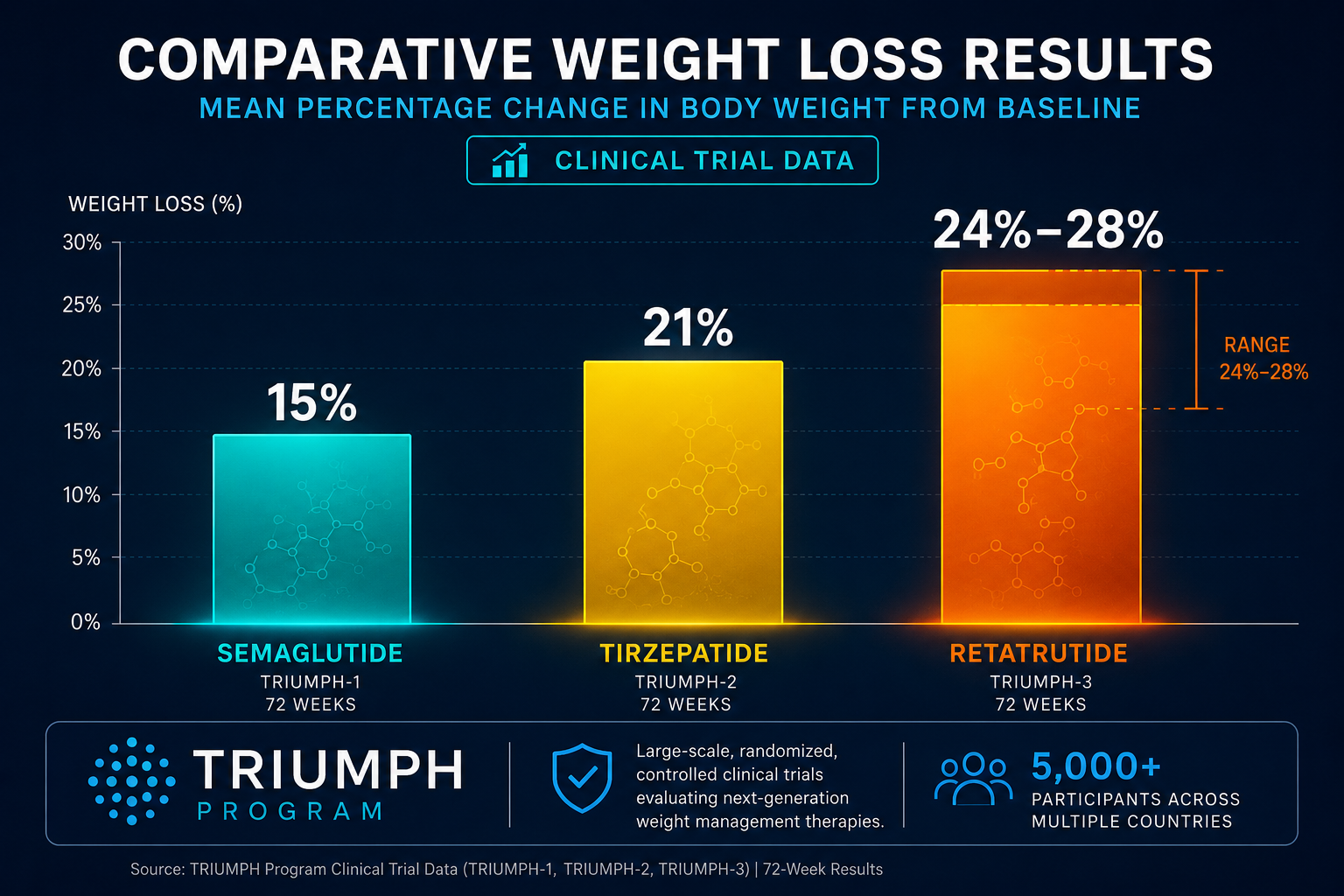
Eli Lilly's TRIUMPH Phase 3 program is evaluating retatrutide across multiple populations:

  • TRIUMPH-3: Adults with obesity, no type 2 diabetes
  • TRIUMPH-4: Adults with obesity and type 2 diabetes

April 2026 readouts showed mean weight reductions of 22–24% at the 12 mg dose over 68 weeks. A separate 18-month trial reported approximately 28% average weight loss — a figure that overlaps with bariatric surgical outcomes. By comparison, tirzepatide at 15 mg achieved roughly 21% in the SURMOUNT-1 trial.

These numbers reflect a steeper dose-response curve, suggesting the glucagon receptor arm continues contributing at higher doses rather than plateauing. Researchers tracking what is new in peptide research will recognize this as a meaningful pharmacological distinction.

As of mid-2026, retatrutide remains unapproved and commercially unavailable. An NDA submission to the FDA is planned for late 2026, with potential approval in 2027. For researchers evaluating multi-pathway compounds in parallel, the GLP-3 and incretin research themes overview provides useful context on where this compound fits within the broader incretin landscape.

Those building structured research protocols may also benefit from reviewing peptide therapy benefits and research methodology to understand how multi-receptor compounds are evaluated systematically.


Phase 3 Data and What Retatrutide and GLP-3 Biology Mean for Research in 2026

Conclusion

The biology behind retatrutide is not complicated once the receptor targets are mapped clearly. GLP-1 reduces intake. GIP improves insulin dynamics. Glucagon raises energy output. Together, these three pathways explain why Phase 3 data consistently outperform single and dual agonist benchmarks.

Actionable next steps for researchers and informed readers in 2026:

  • Distinguish GLP-2 (gut mucosal biology) from the GLP-1/GIP/glucagon triple-agonist mechanism before comparing compounds.
  • Monitor the TRIUMPH program readouts and the anticipated FDA NDA submission timeline.
  • Review MOTS-c metabolic flexibility research as a complementary pathway for researchers studying energy regulation.
  • Use quality testing protocols as a benchmark when evaluating any research-grade peptide compound.

Retatrutide represents a genuine step-change in metabolic peptide science — not because it is newer, but because its receptor architecture addresses limitations that single and dual agonists cannot overcome.

https://www.puretestedpeptides.com/wp-content/uploads/2026/06/Retatrutide-and-GLP-3-Biology-What-Makes-This-Triple-Agonist-Different-From-GLP-1-and-GLP-2-Research-Peptides.png 1024 1536 Pure Tested https://www.puretestedpeptides.com/wp-content/uploads/2026/01/buy-peptides-online.jpg Pure Tested2026-06-17 13:04:042026-07-20 15:02:57Retatrutide and GLP-3 Biology: What Makes This Triple-Agonist Different From GLP-1 and GLP-2 Research Peptides
Slupp332 With 5-Amino-1MQ: How Researchers Think About Pairing NNMT Modulation With Metabolic Peptides

Slupp332 With 5-Amino-1MQ: How Researchers Think About Pairing NNMT Modulation With Metabolic Peptides

June 12, 2026/0 Comments/by Pure Tested

NAD+ depletion and impaired mitochondrial biogenesis rarely occur in isolation — which is exactly why researchers studying metabolic dysfunction have begun examining compound pairings rather than single-agent approaches. The question of Slupp332 with 5-Amino-1MQ: how researchers think about pairing NNMT modulation with metabolic peptides sits at the intersection of two distinct but overlapping biological mechanisms, and understanding the logic behind that pairing requires unpacking each compound's role before examining where they converge.

Both SLU-PP-332 and 5-Amino-1MQ are designated for research use only and are not approved for human therapeutic use. All data discussed here comes from preclinical studies.

Key Takeaways

  • SLU-PP-332 activates estrogen-related receptors (ERRalpha/gamma) to drive mitochondrial biogenesis and fat oxidation.
  • 5-Amino-1MQ inhibits the NNMT enzyme, preserving NAD+ precursors and raising intracellular NAD+ levels.
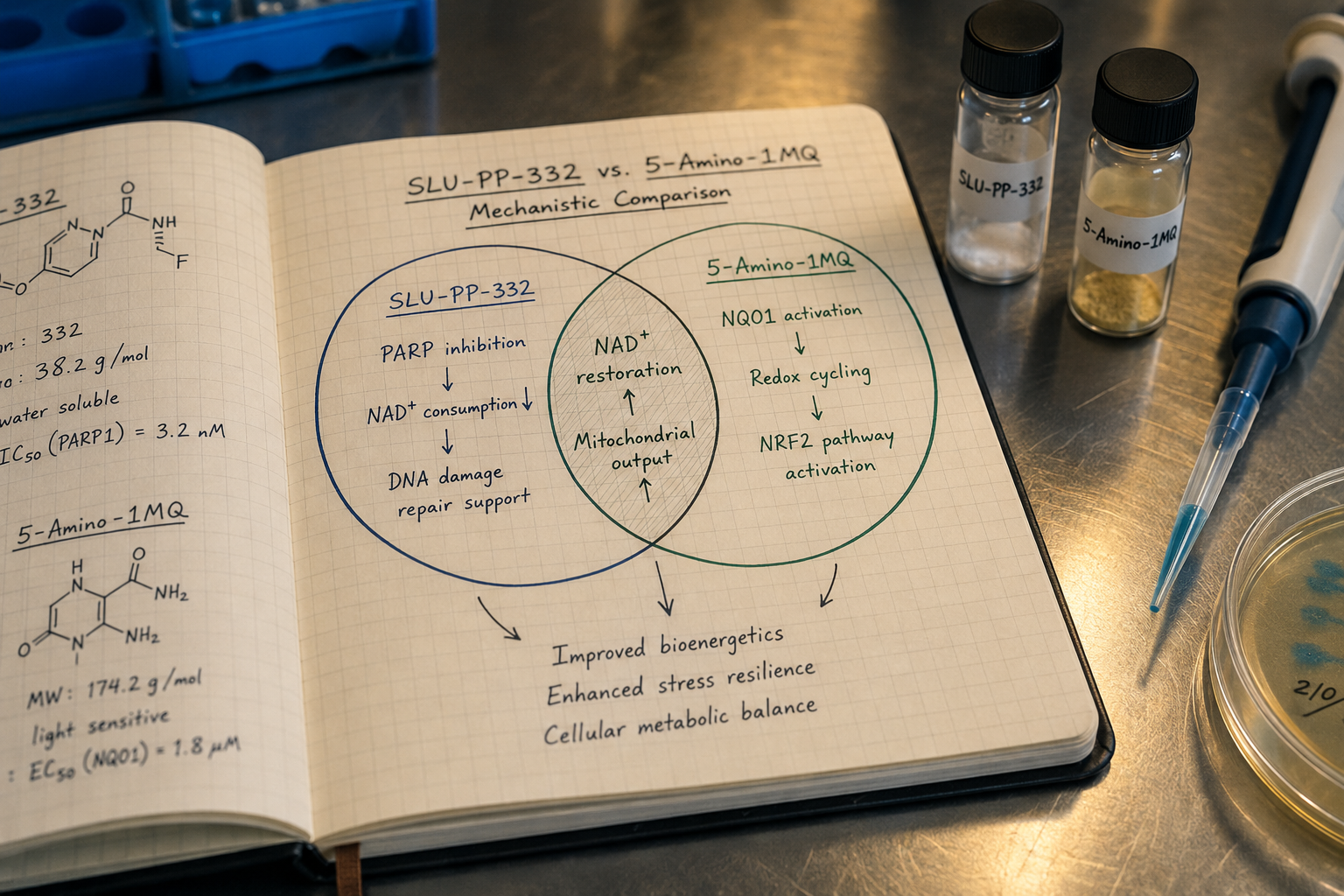
  • The two compounds target different but overlapping metabolic pathways, which is the core rationale for studying them together.
  • Preclinical data shows promise for fat reduction and energy metabolism enhancement, but no human clinical trials exist as of 2026.
  • Stacking research compounds increases protocol complexity and requires careful experimental design.

Key Takeaways

Distinct Mechanisms: Why Each Compound Earns Its Place

Before exploring the stack logic, it helps to understand what each compound does independently.

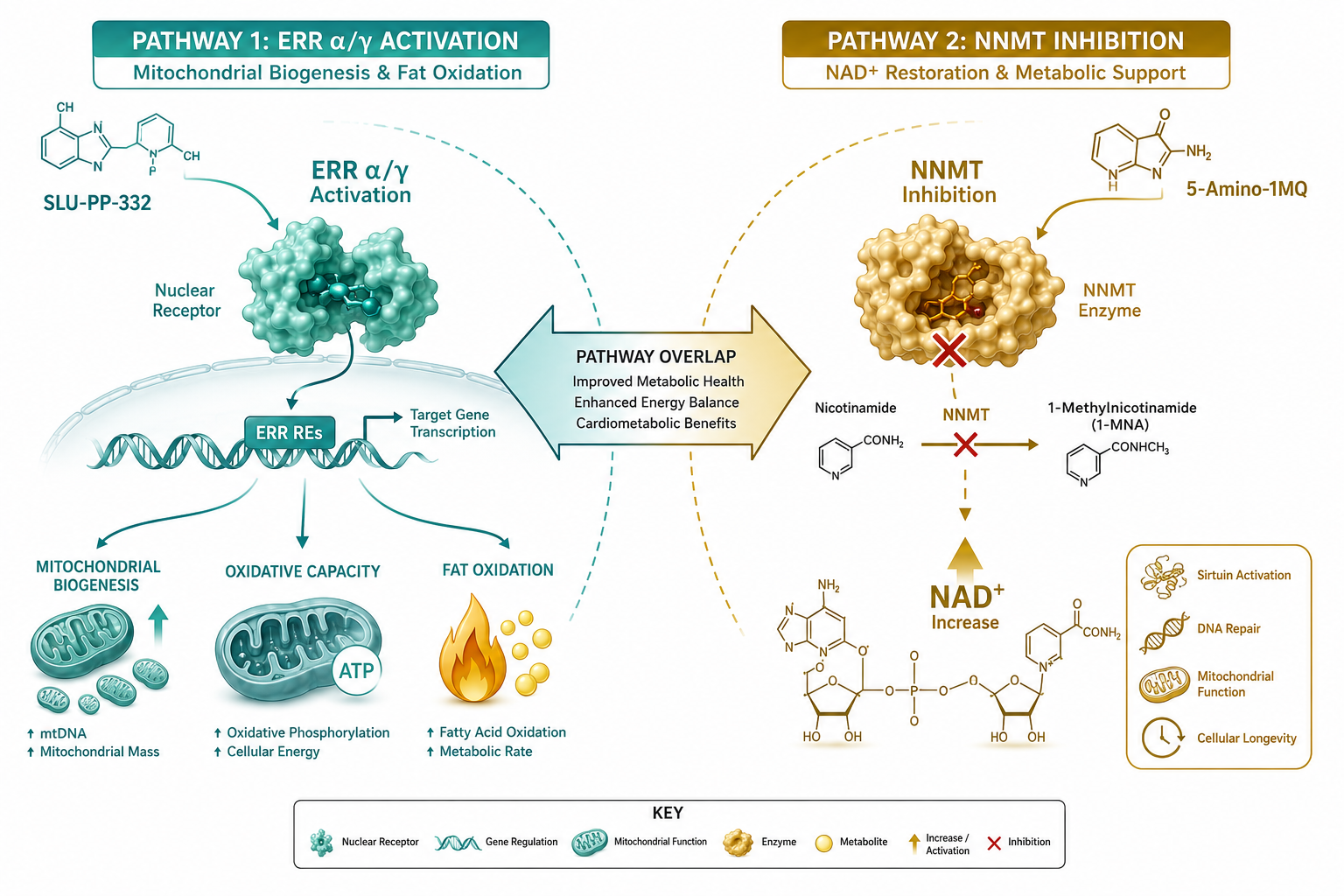
SLU-PP-332 acts as an agonist for ERRalpha and ERRgamma — nuclear receptors that regulate genes involved in mitochondrial biogenesis and fatty acid oxidation. When these receptors are activated, cells respond by producing more mitochondria and increasing their capacity to burn fat for fuel. Researchers studying SLU-PP-332 and metabolic research describe it as a tool for probing how nuclear receptor signaling shapes whole-body energy expenditure.

5-Amino-1MQ, by contrast, works upstream in the NAD+ biosynthesis pathway. It inhibits nicotinamide N-methyltransferase (NNMT), an enzyme that methylates nicotinamide and effectively removes it from the NAD+ recycling pool. By blocking NNMT, 5-Amino-1MQ conserves NAD+ precursors, raising intracellular NAD+ in tissues where NNMT activity is highest — particularly adipose tissue. Preclinical animal studies have shown that this inhibition reduces adipocyte size, suggesting a role in fat cell regulation independent of caloric restriction.

Compound Primary Target Key Effect
SLU-PP-332 ERRalpha/gamma receptors Mitochondrial biogenesis, fat oxidation
5-Amino-1MQ NNMT enzyme NAD+ preservation, adipocyte reduction

Distinct Mechanisms: Why Each Compound Earns Its Place

The Stack Rationale Behind Slupp332 With 5-Amino-1MQ and NNMT Modulation

The core logic of pairing these two compounds rests on a straightforward observation: mitochondrial function requires both structural capacity and metabolic fuel. SLU-PP-332 addresses the structural side by stimulating the production of new mitochondria. 5-Amino-1MQ addresses the fuel side by ensuring NAD+ — a critical cofactor in mitochondrial energy production — is available in sufficient quantities.

Researchers describe this as a complementary pathway approach. Rather than pushing a single lever harder, the pairing attempts to remove two separate bottlenecks simultaneously:

  • SLU-PP-332 increases the number and activity of mitochondria via ERR signaling.
  • 5-Amino-1MQ ensures those mitochondria have the NAD+ substrate needed to operate efficiently.

This is similar in concept to how researchers studying MOTS-c and metabolic flexibility examine mitochondrially-derived peptides alongside other metabolic modulators — the goal is always to understand how multiple signals interact rather than studying each in a vacuum.

The hypothesized result is amplified metabolic output — greater fat oxidation and energy efficiency than either compound could produce alone. However, this synergy hypothesis has not yet been validated in human clinical trials as of 2026.

"Stacking compounds increases complexity and the potential for unknown interactions; careful protocol design is essential." — Consistent position across preclinical research literature.

Researchers also note parallels with other dual-mechanism approaches. For example, work on mitochondrial longevity and compounds like SS-31 and mitochondrial dynamics demonstrates that targeting mitochondrial health from multiple angles is a recurring theme in metabolic research.


The Stack Rationale Behind Slupp332 With 5-Amino-1MQ and NNMT Modulation

Safety Considerations and Research Boundaries

Understanding the rationale for pairing NNMT modulation with metabolic peptides also means acknowledging what is not yet known.

Key research boundaries as of 2026:

  • No human clinical trials have evaluated this combination's safety or efficacy.
  • All evidence comes from animal models and in vitro studies.
  • Both compounds remain unapproved research chemicals with no FDA-cleared therapeutic indication.
  • Combining compounds introduces the possibility of additive or unexpected interactions that single-compound studies cannot predict.

Researchers approaching this pairing are advised to treat it with the same rigor applied to any novel combination protocol — establishing baseline measurements, controlling variables, and avoiding assumptions that preclinical results will translate directly to other biological systems.

This principle applies broadly across the peptide research space. Whether examining IPA muscle and fat research themes or CJC-1295 plus IPA combinations, responsible research design demands that mechanism overlap be understood before conclusions about efficacy are drawn.


Conclusion

The discussion around Slupp332 with 5-Amino-1MQ: how researchers think about pairing NNMT modulation with metabolic peptides is ultimately a discussion about mechanism logic. SLU-PP-332 builds mitochondrial capacity through ERR receptor activation; 5-Amino-1MQ fuels that capacity by preserving NAD+ availability through NNMT inhibition. The two pathways are distinct enough to avoid redundancy and overlapping enough to suggest genuine complementarity.

Actionable next steps for researchers:

  1. Review the preclinical literature on ERRalpha/gamma agonism and NNMT inhibition independently before designing combination protocols.
  2. Establish clear outcome metrics — adipocyte size, NAD+ levels, mitochondrial density — to measure each pathway's contribution separately.
  3. Consult current regulatory guidance; both compounds are research-use-only and require appropriate institutional oversight.
  4. Explore related metabolic research themes, including MOTS-c peptides and SLU-PP-332 research, to build a fuller picture of the metabolic signaling landscape.

The science is early, but the mechanistic rationale is sound — and that is precisely where rigorous research begins.

https://www.puretestedpeptides.com/wp-content/uploads/2026/06/Slupp332-With-5-Amino-1MQ-How-Researchers-Think-About-Pairing-NNMT-Modulation-With-Metabolic-Peptides.png 1024 1536 Pure Tested https://www.puretestedpeptides.com/wp-content/uploads/2026/01/buy-peptides-online.jpg Pure Tested2026-06-12 13:03:542026-07-20 15:03:20Slupp332 With 5-Amino-1MQ: How Researchers Think About Pairing NNMT Modulation With Metabolic Peptides
GLP3 Peptide vs Retatrutide: Why the Naming Confusion Matters in Obesity Research

GLP3 Peptide vs Retatrutide: Why the Naming Confusion Matters in Obesity Research

June 11, 2026/0 Comments/by Pure Tested

Over 1 billion adults worldwide live with obesity, and the race to find more effective treatments has never moved faster. Yet one of the biggest obstacles in 2026 is not a scientific one — it is a language problem. The debate around GLP3 Peptide vs Retatrutide: Why the Naming Confusion Matters in Obesity Research is more than a semantic argument. When researchers, clinicians, and consumers use the same term to mean different things, the consequences range from misread study data to misguided purchasing decisions.

() scientific infographic-style illustration showing two labeled molecular structures side by side — one labeled 'GLP-3

Key Takeaways

  • "GLP-3" is an informal, consumer-driven nickname — not a recognized scientific classification for retatrutide.
  • Retatrutide (LY3437943) is a triple-receptor agonist targeting GLP-1, GIP, and glucagon receptors simultaneously.
  • Phase 3 trials have shown weight loss results as high as 28.7%, the highest ever recorded in an obesity drug trial.
  • Terminology confusion can distort research interpretation, marketplace trust, and regulatory understanding.
  • Researchers and buyers should verify compound identity by chemical name or CAS number, not informal labels.

What Is Retatrutide and Where Does "GLP-3" Come From

Retatrutide, developed by Eli Lilly under the code name LY3437943, is a first-in-class triple-receptor agonist. It activates three distinct hormone receptors at once:

Receptor Role in Metabolism
GLP-1 Appetite suppression, insulin secretion
GIP Fat metabolism, insulin sensitivity
Glucagon Energy expenditure, liver fat reduction

No approved drug before retatrutide has hit all three targets simultaneously. Semaglutide (Ozempic, Wegovy) targets only GLP-1. Tirzepatide (Mounjaro, Zepbound) targets GLP-1 and GIP. Retatrutide adds glucagon to the mix.

The nickname "GLP-3" emerged organically in consumer forums and social media. The logic was simple: GLP-1 targets one receptor, tirzepatide targets two, so this "third generation" drug must be GLP-3. The label stuck — but it is scientifically inaccurate.

"GLP-3" does not describe a receptor, a peptide family, or a drug class. It is marketing shorthand that has migrated into research discussions where precision is critical.

For a broader look at where peptide research is heading, the latest updates in peptide research provide useful context on how naming conventions evolve in this space.


Why the Naming Confusion Matters in Obesity Research and Clinical Trials

Why the Naming Confusion Matters in Obesity Research and Clinical Trials

The stakes of this terminology gap become clear when looking at the trial data. In the TRIUMPH-4 Phase 3 trial, retatrutide produced a mean weight loss of 28.7% at 68 weeks in adults with obesity and knee osteoarthritis — the highest figure ever recorded in any Phase 3 obesity drug trial. The TRIUMPH-3 trial, presented at the American College of Cardiology Annual Scientific Session in March 2026, reported 24.2% mean weight loss at 72 weeks in adults with elevated cardiovascular risk.

These are landmark numbers. But when a researcher searches for "GLP-3 trial results" and finds a mix of retatrutide data alongside unrelated GLP receptor biology, the confusion compounds.

Three specific risks created by the GLP-3 label:

  • Research misattribution: Studies on actual GLP receptor peptide biology get conflated with retatrutide clinical outcomes.
  • Regulatory misunderstanding: Eli Lilly plans to file a New Drug Application in late 2026 or early 2027. Informal naming can create confusion in public commentary on regulatory submissions.
  • Marketplace errors: Buyers searching for research-grade retatrutide may encounter mislabeled products. Reviewing a detailed GLP-3 and retatrutide compound overview helps clarify what is actually being sourced.

For those researching metabolic peptides more broadly, resources on AOD9604 metabolic research and tesa benefits show how naming precision matters across the entire category.


How Researchers and Buyers Can Navigate the GLP3 Peptide vs Retatrutide Naming Issue

How Researchers and Buyers Can Navigate the GLP3 Peptide vs Retatrutide Naming Issue

The clearest solution is to anchor every discussion to the compound's chemical identity, not its nickname.

Best practices for accurate identification:

  • Always reference retatrutide by its INN (International Nonproprietary Name) or Eli Lilly's code: LY3437943.
  • Cross-check any "GLP-3" product listing against verified chemical specifications.
  • Use peer-reviewed databases rather than consumer forums as primary sources.
  • When sourcing for research, prioritize suppliers with transparent quality testing protocols and third-party verification.

The GLP-3 retatrutide product page and the RETA GLP-3 research overview are examples of how suppliers can bridge the naming gap by providing both the informal label and the verified compound name together.

For researchers exploring related metabolic compounds, the 5-Amino-1MQ research overview offers a useful parallel on how novel compounds gain informal names before formal classification catches up.


Conclusion

The GLP3 Peptide vs Retatrutide naming confusion is not a trivial issue. It shapes how clinical trial data is interpreted, how regulatory conversations unfold, and how research-grade compounds are sourced. Retatrutide is a precisely defined triple-receptor agonist with Phase 3 data that sets a new benchmark for obesity pharmacology. "GLP-3" is a convenient shorthand that, when used carelessly, undermines that precision.

Actionable next steps:

  • Replace "GLP-3" with "retatrutide" or "LY3437943" in all research documentation.
  • Verify any compound labeled "GLP-3" against its full chemical specification before use.
  • Stay current with TRIUMPH trial publications and the anticipated NDA filing timeline.
  • Source research peptides only from suppliers who publish verified testing data alongside both the common and scientific names.

Precision in language is the foundation of precision in science. In obesity research, where the stakes are high and the compounds are complex, that foundation matters more than ever.

https://www.puretestedpeptides.com/wp-content/uploads/2026/06/GLP3-Peptide-vs-Retatrutide-Why-the-Naming-Confusion-Matters-in-Obesity-Research.png 1024 1536 Pure Tested https://www.puretestedpeptides.com/wp-content/uploads/2026/01/buy-peptides-online.jpg Pure Tested2026-06-11 13:06:552026-07-20 15:03:30GLP3 Peptide vs Retatrutide: Why the Naming Confusion Matters in Obesity Research
What Is GLP-3 Retatrutide? Triple-Agonist Biology, Receptor Targets, and Why It Is Different From GLP-1

What Is GLP-3 Retatrutide? Triple-Agonist Biology, Receptor Targets, and Why It Is Different From GLP-1

June 9, 2026/0 Comments/by Pure Tested

Forty-five percent of participants in a Phase 3 clinical trial lost at least 30% of their body weight — a result once reserved for bariatric surgery. That single data point from the TRIUMPH-1 trial has made retatrutide one of the most closely watched compounds in metabolic medicine today. Understanding what is GLP-3 retatrutide, its triple-agonist biology, receptor targets, and why it is different from GLP-1 drugs already on the market is the essential first step for any researcher or clinician tracking this space.
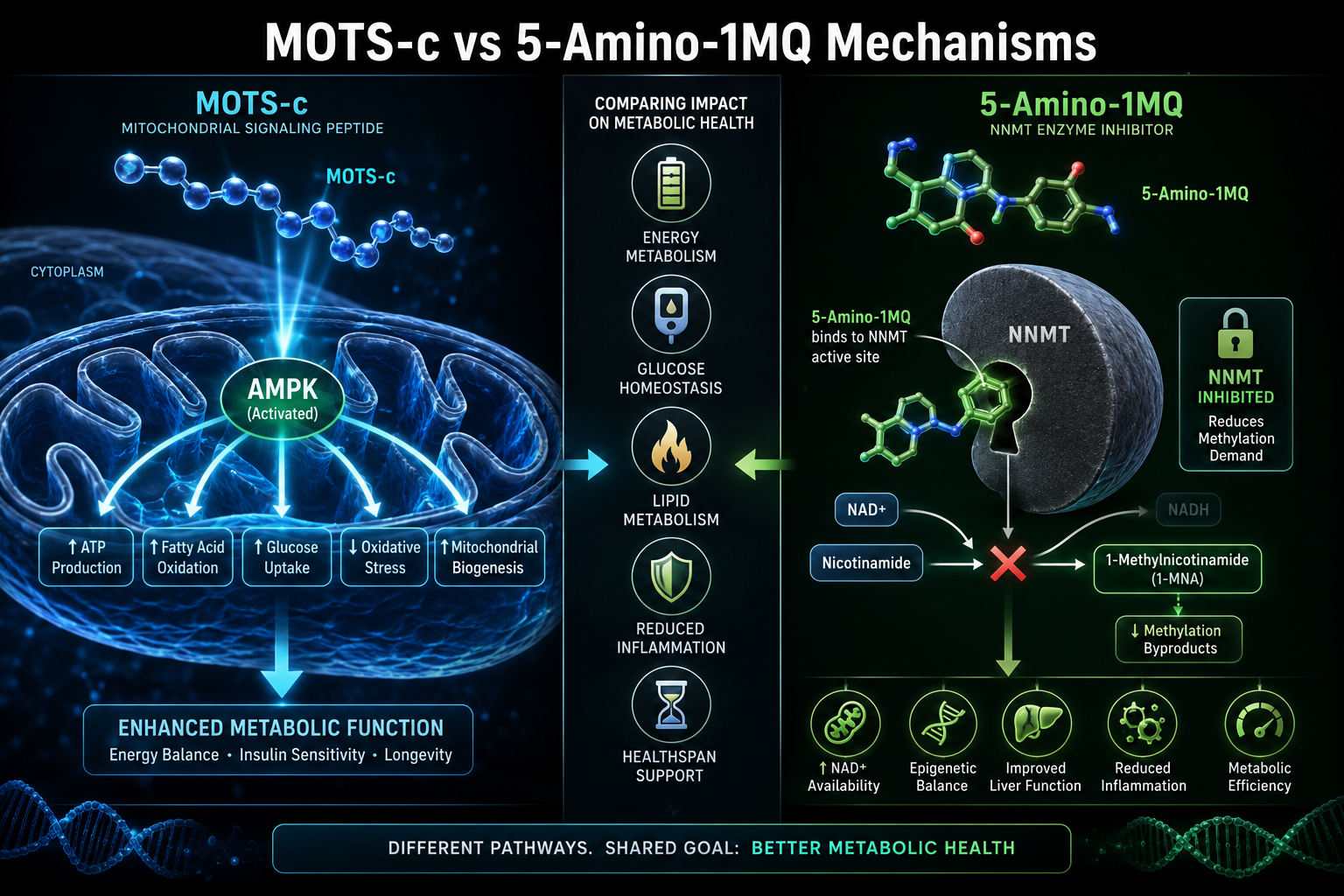
Key Takeaways

  • Retatrutide simultaneously activates three hormone receptors: GLP-1R, GIPR, and the glucagon receptor (GCG-R).
  • The informal label "GLP-3" is not a scientific hormone classification — it is shorthand for the compound's triple-receptor profile.

  • In the TRIUMPH-1 Phase 3 trial, participants on 12 mg weekly lost an average of 28.3% of body weight over 80 weeks.
  • Retatrutide outperforms single-agonist (semaglutide) and dual-agonist (tirzepatide) therapies in early head-to-head comparisons.
  • As of 2026, retatrutide has not received FDA approval and remains in Phase 3 development under Eli Lilly.

Key Takeaways

The Triple-Agonist Biology Behind Retatrutide

Retatrutide is a synthetic peptide engineered to bind and activate three distinct incretin and metabolic hormone receptors at the same time. Each receptor plays a separate but complementary role in energy regulation.

Receptor Primary Role Contribution to Retatrutide's Effect
GLP-1R (Glucagon-Like Peptide-1) Insulin secretion, appetite suppression Reduces hunger, slows gastric emptying
GIPR (Glucose-Dependent Insulinotropic Polypeptide) Insulin amplification, fat metabolism Enhances insulin response, supports fat tissue signaling
GCG-R (Glucagon Receptor) Energy expenditure, hepatic glucose output Increases calorie burn, reduces liver fat

This simultaneous three-receptor engagement is what separates retatrutide from every approved obesity drug on the market. The glucagon receptor component is particularly significant: glucagon typically raises blood sugar, but when its receptor is activated alongside GLP-1R and GIPR, the net effect shifts toward increased thermogenesis and fat oxidation rather than hyperglycemia.

Researchers exploring the GLP-1 generations overview will recognize this as a logical progression from first-generation single-agonist molecules toward increasingly complex multi-receptor strategies.

Why the "GLP-3" Label Is Informal — and What It Actually Means

The term "GLP-3" does not refer to a real hormone. No such molecule exists in human physiology. The label emerged informally to describe retatrutide's position as the third generation of GLP-based obesity therapies:

  • Generation 1: GLP-1 single agonists (e.g., semaglutide / Wegovy)
  • Generation 2: GLP-1 + GIP dual agonists (e.g., tirzepatide / Zepbound)
  • Generation 3: GLP-1 + GIP + Glucagon triple agonists (retatrutide)

The correct scientific description is triple hormone receptor agonist. Researchers browsing retatrutide research and catalog resources or the GLP-1 Reta product tag will encounter both terms, but the informal "GLP-3" label should always be understood as generational shorthand rather than pharmacological classification.

Why the "GLP-3" Label Is Informal — and What It Actually Means

How Retatrutide Differs From GLP-1 Drugs: Receptor Targets and Clinical Outcomes

This is the core question for anyone asking what is GLP-3 retatrutide and why it is different from GLP-1. The differences operate on two levels: mechanistic and clinical.

Mechanistically, semaglutide targets only GLP-1R. Tirzepatide adds GIPR. Retatrutide adds the glucagon receptor on top of both. That third receptor drives a meaningful increase in resting energy expenditure — the body burns more calories even at rest — which neither of the earlier drugs can replicate.

Clinically, the TRIUMPH-1 Phase 3 trial reported an average weight loss of 28.3% (approximately 70.3 pounds) over 80 weeks at the 12 mg weekly dose. By comparison, semaglutide typically produces roughly 15% weight loss, and tirzepatide reaches approximately 20-22%. Retatrutide also demonstrated an A1C reduction of up to 2.0% over 40 weeks in participants with type 2 diabetes, suggesting strong glycemic benefit beyond weight loss alone.

"Retatrutide's glucagon receptor component is the differentiating factor — it converts what would otherwise be a pure appetite-suppression strategy into a genuine energy-expenditure intervention."

Side effects remain consistent with the incretin drug class: nausea, diarrhea, constipation, and vomiting, all dose-dependent and generally manageable. Those interested in how metabolic peptides interact with energy systems may also find value in reviewing mitochondrial longevity research and AOD9604 metabolic research for broader context.

For researchers sourcing compounds for study, reviewing lab-tested peptide standards and certificate of analysis documentation ensures quality benchmarks are met before any research protocol begins.

As of 2026, retatrutide is not FDA-approved. Eli Lilly anticipates filing for approval in 2026-2027, with potential market availability by 2027 or 2028. Those planning research timelines can consult the GLP-3 research planning and catalog navigation guide for sourcing and protocol considerations.

How Retatrutide Differs From GLP-1 Drugs: Receptor Targets and Clinical Outcomes

Conclusion

Retatrutide represents a genuine structural advance over existing GLP-1 therapies. Its triple-agonist biology — engaging GLP-1R, GIPR, and the glucagon receptor simultaneously — produces weight loss outcomes that approach bariatric surgery benchmarks and glycemic improvements that matter for type 2 diabetes management. The informal "GLP-3" label is a useful shorthand, but researchers should understand it as a generational marker, not a hormone designation.

Actionable next steps for researchers in 2026:

  • Review the TRIUMPH-1 Phase 3 trial data in detail to understand dose-response relationships.
  • Compare retatrutide's receptor profile against tirzepatide using the GLP-1 peptide generational research overview.
  • Verify compound purity standards before initiating any research protocol by consulting available COA documentation.
  • Monitor FDA filing timelines, currently projected for 2026-2027, to align research planning accordingly.
https://www.puretestedpeptides.com/wp-content/uploads/2026/06/What-Is-GLP-3-Retatrutide-Triple-Agonist-Biology-Receptor-Targets-and-Why-It-Is-Different-From-GLP-1.png 672 1024 Pure Tested https://www.puretestedpeptides.com/wp-content/uploads/2026/01/buy-peptides-online.jpg Pure Tested2026-06-09 13:05:142026-07-20 15:03:37What Is GLP-3 Retatrutide? Triple-Agonist Biology, Receptor Targets, and Why It Is Different From GLP-1
Page 2 of 3123
×

Helpful Links

  • My account
  • Cart
  • Checkout
  • Refund and Returns Policy
  • Privacy Policy
  • SMS Privacy Policy
  • Login
  • My Account
  • Logout

USA Made Lab Tested Peptides

All products are sold for research, laboratory, or analytical purposes only, and are not for human consumption


Pure Tested Peptides is a chemical supplier. Pure Tested Peptides is not a compounding / chemical compounding facility as defined under 503A of the Federal Food, Drug, and Cosmetic act. Pure Tested Peptides is not an outsourcing facility as defined under 503B of the Federal Food, Drug, and Cosmetic act.

The statements made within this website have not been evaluated by the US Food and Drug Administration. The products we offer are not intended to diagnose, treat, cure or prevent any disease.

Human/Animal Consumption Prohibited. Laboratory/In-Vitro Experimental Use Only

Scroll to top Scroll to top Scroll to top