Call or Text 727-513-9780
  • Shopping Cart Shopping Cart
    0Shopping Cart
Pure Tested Peptides | America's most trusted Peptides for sale online
  • Peptides for sale
    • Oral Peptides for sale
      • Peptide Capsules for sale
      • BPC 157 Capsules 1000mcg
      • SLU-PP-332 Capsules | 1000 mcg
      • 5-Amino-1MQ 50mg Capsules
      • Tesofensine 500mcg
    • All Peptides for sale
    • Peptide Sprays
      • BPC 157 Nasal Spray Kit
      • BPC-157 TB500 Nasal Spray Kit
      • Semax Nasal Spray 10mg
      • Selank – Nasal Spray Kit – 10mg
      • Epithalon 50MG Nasal Spray Kit
      • Ipamorelin 10mg Nasal Spray
      • Klow Nasal Spray (BPC-157 + TB-500 + GHK-Cu + KPV) | 80mg
      • Hulk Nasal Spray Tesa / Ipa Blend 6/3 MG
      • Klow Nasal Spray
      • NAD + 500 mg Nasal Spray
      • PT-141 Nasal Spray Kit
    • GHRH Peptides
      • Ipa Peptides
      • CJC-1295 Peptides
        • CJC-1295 with DAC 5 mg
        • CJC-1295 without DAC 5 mg
        • CJC-1295 Ipa 10mg
      • Tesa Peptides
        • Tesa Peptide
        • Tesa 20 mg
    • GHK-Cu Peptides
      • All GHK-Cu Peptides
      • GHK-Cu 100mg
      • KLOW Peptide Blend – Buy KLOW blend online
    • BPC Peptides
      • All BPC Peptides
      • BPC-157
      • BPC-157 TB-500
      • BPC 157 capsules 1000mcg
    • SLU-PP-332 Peptides
      • All SLU-PP-332 Peptides
      • SLU-PP-332 5mg
    • GLP3 Peptides
      • GLP3-R
      • GLP3-R CAG 10mg
      • GLP3-R 20mg
    • PT-141 Peptides
      • PT-141 Peptides for sale
      • PT-141 10mg
      • PT-141 Nasal Spray
    • CAG Peptides
      • Lipo-C Peptide Blend
      • CAG 5mg
      • CAG 10mg
    • MOTS-C Peptides
      • MOTS-C Peptides for sale
      • MOTS-c peptide
      • MOTS-c 10mg *6 pack*
    • 5 Amino 1MQ Peptides
      • 5 Amino 1MQ Peptides for sale
      • 5-Amino-1MQ 50mg Capsules
      • 5-Amino-1MQ 5mg
    • Epithalon Peptides
      • Epithalon Peptides for sale
      • Epithalon 10mg
      • Epithalon 50mg
  • Shop
    • GLPs
      • 5-Amino-1MQ 50mg Capsules
      • 5-Amino-1MQ 5mg
      • GLP3-Reta
      • L-Carnitine 500mg/ml
      • Tesofensine 500mcg
      • SLU-PP-332 5mg
      • MOTS-c 10mg *6 pack*
    • Epithalon & BPC Peptides
      • Epithalon 10mg
      • Epithalon 50mg
      • BPC-157
      • BPC 157 capsules 1000mcg
      • BPC-157 TB-500
      • BPC-157 TB500 Nasal Spray Kit
      • BPC 157 Nasal Spray Kit
    • BPC TB-500 & NAD+ Peptides
      • NAD+ 500 mg
      • KLOW Peptide Blend – Buy KLOW blend online
      • GLOW Peptide Blend
      • TB 500 5mg
      • BPC 157 capsules 1000mcg – Supplement
      • BPC 157 Nasal Spray Kit
      • BPC-157
      • BPC-157 TB500 Nasal Spray Kit
      • BPC-157 TB-500
      • BPC 157 capsules 1000mcg
    • LL-37 Peptide
      • LL-37 10 mg
    • MOTS-C & Selank
      • MOTS-c peptide
      • Selank 10mg
    • GHK Peptides
      • GHK-Cu 100mg
      • GLOW Peptide Blend
      • KLOW Peptide Blend – Buy KLOW blend online
  • COAs
  • Wholesale
    • Wholesale Peptides for sale
  • PTP FAQ
  • Affiliates
    • Selank Peptide: Advanced Pharmacological Mechanisms Underlying Its Anxiolytic and Nootropic Effects in Research
      • 5-Amino-1MQ Peptide: Detailed Mechanisms of NNMT Inhibition and Its Impact on Cellular Metabolism Research
        • MOTS-C Peptide: Unraveling Its Role in Mitochondrial Dynamics and Energy Metabolism Research
          • Epithalon Peptide and Telomerase Regulation: Investigating Its Impact on Cellular Senescence and Lifespan Research Models
            • GLP2-T vs GLP2 Tirz Peptide: Understanding the Naming, Mechanistic Nuances, and Research Implications for Gut Health
      • Peptides and Polypeptides in Modern Pharmacology: What Research on Metoprolol, Prednisone, and Amlodipine Reveals
        • Polypeptide Peptides vs NSAIDs: What Naproxen and Diclofenac Teach Tissue-Repair Researchers About BPC‑157 and TB‑500
          • Peptides and Polypeptides in Endocrine Pharmacology: How GLP-1, GLP-2, and GLP-3 Retatrutide Differ From Classic Drugs Like Prednisone and Amlodipine
          • 5‑Amino‑1MQ Peptide and NNMT Inhibition: How It Compares With Statins Like Atorvastatin in Adipose and Lipid Metabolism Research
      • Enclomiphene, Estrogen Receptor Signaling, and Luteinizing Phase Biology: What Hormone Researchers Should Measure
        • Mesenchymal Stem Cells, BPC‑157, and GHK‑Cu: How Tissue Repair Peptides Compare With Classic NSAIDs Like Naproxen in Injury Models
          • Peptide Calculator Use Cases Beyond Growth Hormone: Working Through GLP‑3 Retatrutide, MOTS‑c, and BPC‑157 Research Dosing
        • Polypeptide Peptides in Endocrine and Metabolic Pharmacology: Lessons From Amlodipine, Prednisone, and Metoprolol
        • Peptides Calculator for Advanced Blends: Worked Examples for Tesamorelin, CJC‑1295, and Ipamorelin Stacks
          • Peptides and Polypeptides in Human Physiology: How Molecular Size Shapes Research Applications
            • Selank Peptide: Advanced Pharmacological Mechanisms Underlying Its Anxiolytic and Nootropic Effects in Research
          • 5-Amino-1MQ Peptide: Detailed Mechanisms of NNMT Inhibition and Its Impact on Cellular Metabolism Research
            • MOTS-C Peptide: Unraveling Its Role in Mitochondrial Dynamics and Energy Metabolism Research
              • Epithalon Peptide and Telomerase Regulation: Investigating Its Impact on Cellular Senescence and Lifespan Research Models
                • GLP2-T vs GLP2 Tirz Peptide: Understanding the Naming, Mechanistic Nuances, and Research Implications for Gut Health
                  • Peptides and Polypeptides in Endocrine Pharmacology: How GLP-1, GLP-2, and GLP-3 Retatrutide Differ From Classic Drugs Like Prednisone and Amlodipine
                    • Polypeptide Peptides vs NSAIDs: What Naproxen and Diclofenac Teach Tissue-Repair Researchers About BPC‑157 and TB‑500
                      • Peptides and Polypeptides in Modern Pharmacology: What Research on Metoprolol, Prednisone, and Amlodipine Reveals
                        • 5‑Amino‑1MQ Peptide and NNMT Inhibition: How It Compares With Statins Like Atorvastatin in Adipose and Lipid Metabolism Research
                        • Enclomiphene, Estrogen Receptor Signaling, and Luteinizing Phase Biology: What Hormone Researchers Should Measure
                        • Mesenchymal Stem Cells, BPC‑157, and GHK‑Cu: How Tissue Repair Peptides Compare With Classic NSAIDs Like Naproxen in Injury Models
                        • Peptide Calculator Use Cases Beyond Growth Hormone: Working Through GLP‑3 Retatrutide, MOTS‑c, and BPC‑157 Research Dosing
                        • Polypeptide Peptides in Endocrine and Metabolic Pharmacology: Lessons From Amlodipine, Prednisone, and Metoprolol
                        • Peptides Calculator for Advanced Blends: Worked Examples for Tesamorelin, CJC‑1295, and Ipamorelin Stacks
                        • Peptides and Polypeptides in Human Physiology: How Molecular Size Shapes Research Applications
                        • Selank Peptide: Advanced Pharmacological Mechanisms Underlying Its Anxiolytic and Nootropic Effects in Research
                        • MOTS-C Peptide: Unraveling Its Role in Mitochondrial Dynamics and Energy Metabolism Research
                        • Peptides and Polypeptides in Modern Pharmacology: What Research on Metoprolol, Prednisone, and Amlodipine Reveals
                        • Peptides and Polypeptides in Endocrine Pharmacology: How GLP-1, GLP-2, and GLP-3 Retatrutide Differ From Classic Drugs Like Prednisone and Amlodipine
                        • 5-Amino-1MQ Peptide: Detailed Mechanisms of NNMT Inhibition and Its Impact on Cellular Metabolism Research
                        • Mesenchymal Stem Cells, BPC‑157, and GHK‑Cu: How Tissue Repair Peptides Compare With Classic NSAIDs Like Naproxen in Injury Models
                        • Peptide Calculator Use Cases Beyond Growth Hormone: Working Through GLP‑3 Retatrutide, MOTS‑c, and BPC‑157 Research Dosing
                        • GLP2-T vs GLP2 Tirz Peptide: Understanding the Naming, Mechanistic Nuances, and Research Implications for Gut Health
                        • Polypeptide Peptides in Endocrine and Metabolic Pharmacology: Lessons From Amlodipine, Prednisone, and Metoprolol
                        • Polypeptide Peptides vs NSAIDs: What Naproxen and Diclofenac Teach Tissue-Repair Researchers About BPC‑157 and TB‑500
                        • Peptides and Polypeptides in Human Physiology: How Molecular Size Shapes Research Applications
                        • Peptides Calculator for Advanced Blends: Worked Examples for Tesamorelin, CJC‑1295, and Ipamorelin Stacks
                        • 5‑Amino‑1MQ Peptide and NNMT Inhibition: How It Compares With Statins Like Atorvastatin in Adipose and Lipid Metabolism Research
                        • Enclomiphene, Estrogen Receptor Signaling, and Luteinizing Phase Biology: What Hormone Researchers Should Measure
                        • Epithalon Peptide and Telomerase Regulation: Investigating Its Impact on Cellular Senescence and Lifespan Research Models
                        • Best research protocol Klow blend
                        • best time to take BPC-157
                        • best time to take DSIP (Delta Sleep Inducing Peptide)
                        • best time to take CJC-1295
                        • best time to take AOD-9604
                        • best time to take Follistatin 344
                        • best time to take Ipamorelin
                        • best time to take MK-677 (Ibutamoren)
                        • best time to take Ligandrol (LGD-4033) — research compound
                        • best time to take Ostarine (MK-2866) — research compound
                        • best time to take GHK-CU
                        • best time to take TB-500
                        • best time to take MOTS-c
                        • best time to take Semax
                        • best time to take RAD-140 (Testolone) — research compound
                        • best time to take Thymosin Alpha-1
                        • best time to take PEG-MGF
                        • Biolife Plasma, Octapharma Plasma, and Research Peptides: How Plasma Donation Labs Differ From Peptide Suppliers
                        • best time to take YK-11 — research compound
                        • best time to take PT-141 (Bremelanotide)
                        • Best research protocol Klow blend
                        • 5-Amino-1MQ and MOTS-C Synergy: Metabolic Signaling, Mitochondria, and Research Design
                        • BPC-157 and TB-500: Investigating Their Combined Effects on Angiogenesis and Cellular Migration in Tissue Repair Models
                        • BPC-157 Peptide: Gut Barrier Function, Inflammation, and Tissue-Recovery Research
                        • 5‑Amino‑1MQ and MOTS‑c Synergy in Metabolic Research: Designing NNMT and Mitochondrial Biogenesis Stacks
                        • CJC-1295 with DAC vs. Without DAC: Half-Life, Release Kinetics, and Research Implications
                        • CJC‑1295 with DAC vs. Without DAC: Expanding on Half‑Life Differences Using Tesamorelin and Ipamorelin Blend Case Studies
                        • Collagen Biology and Copper‑Binding Peptides: How GHK‑Cu, Glow Blend, and Klow Blend Interact with Skin and Connective Tissue
                        • Collagen Biology and Regenerative Peptides: How GHK‑Cu, Glow Blend, and Klow Blend Affect Extracellular Matrix Research
                    • DNA, Telomeres, and Longevity Peptides: Positioning Epithalon and MOTS‑c in Genetic Aging Research
                      • Enclomiphene Citrate: serm Mechanism, Testosterone Research, and Stack Compatibility
                        • Enclomiphene vs Enclomiphene Citrate: Formulation, Bioavailability, and Research Distinctions
                        • Epithalon Peptide Research: Telomerase Activation, Aging, and Pineal Gland Function
                        • Estrogen Receptor Signaling and Enclomiphene: How Selective Modulators Compare with Classic Polypeptide Hormones
                        • GHK-Cu Peptide: Advanced Mechanisms in Extracellular Matrix Remodeling and Wound Healing Research
                        • GHK-Cu Peptide: Collagen Synthesis, Wound Repair, and Skin-Barrier Research Models
                        • GLP-1 vs GLP-3 vs GLP-2: Peptide Classification and Research Applications
                        • GLP-2 Peptide Research Guide: Gut Barrier Function, Nutrient Absorption, and Intestinal Recovery Models
                        • GLP-3 Retatrutide vs. GLP-1 Drugs: What Triple-Agonist Biology Changes in Research Models
                        • Ipamorelin and Tesamorelin Combination: Synergistic GH Secretagogue Research and Dosing Protocols
                        • GLP2 Tirz Peptide: What It Is, Why the Name Exists, and How Researchers Should Interpret It
                        • Klow Blend Peptide Nasal Spray: What the Formulation Is Trying to Do in Cognitive Research
                        • Mitochondria, NNMT Inhibition, and Peptide Modulators: Where MOTS‑c and 5‑Amino‑1MQ Fit in Cellular Energy Research
                        • MOTS-c Peptide: Mitochondrial Function, Energy Metabolism, and What Researchers Measure
                        • MOTS-c vs. 5-Amino-1MQ: Which Metabolic Research Questions Each Compound Actually Answers
                        • Nasal Spray Peptides: Bioavailability, Administration, and Semax/Selank Research Applications
                        • PT-141 Peptide Research: Mechanism of Action and Melanocortin Receptor Signaling
                        • Retatrutide for Research: Mechanism, Structure, and GLP-1/GLP-3 Dual Action
                        • Retatrutide for Obesity and Type 2 Diabetes: What the Latest Trial Data Suggest
                        • Tesofensine Peptide Research: Mechanism, Appetite Suppression, and Neuropeptide Y Pathways
  • Contact
    • Contact Customer Service
    • Text Customer Support
  • About US
  • Shop all peptides
  • Affiliate Program
    • Affiliate Signup
  • Login / Register Login / Register Page Link Login / Register Page Link
  • Click to open the search input field Click to open the search input field Search
  • Menu Menu
The Broad Spectrum of Peptides: A Comprehensive Guide to Their Structure, Synthesis, and Diverse Research Applications

The Broad Spectrum of Peptides: A Comprehensive Guide to Their Structure, Synthesis, and Diverse Research Applications

August 22, 2026/0 Comments/in Uncategorized/by

More than 80 peptide therapeutics have received FDA approval to date, and over 150 additional candidates are currently moving through active clinical trials, a pipeline that spans metabolic disease, oncology, neurology, and rare disorders. This level of scientific momentum reflects just how central peptides have become to modern biomedical research. The broad spectrum of peptides: a comprehensive guide to their structure, synthesis, and diverse research applications covers the full landscape, from the basic chemical building blocks that define these molecules to the cutting-edge synthesis methods and the wide range of fields where peptide science is making a measurable difference in 2026.

Key Takeaways

  • Peptides are short chains of amino acids linked by peptide bonds, and their precise sequence determines their biological function.
  • Solid-phase peptide synthesis (SPPS) remains the dominant production method, but newer approaches including photocatalysis and electrochemistry are expanding what can be built.
  • Structural modifications such as cyclization, PEGylation, and lipidation are critical tools for improving peptide stability and bioavailability.
  • The metabolic disease space, driven by GLP-1, GIP, and amylin analogues, leads the global peptide pipeline, with dual and triple agonists entering late-stage trials.
  • Research applications extend well beyond metabolism into oncology, neurology, antimicrobial therapy, and regenerative medicine.

Understanding Peptide Structure: The Foundation of Function
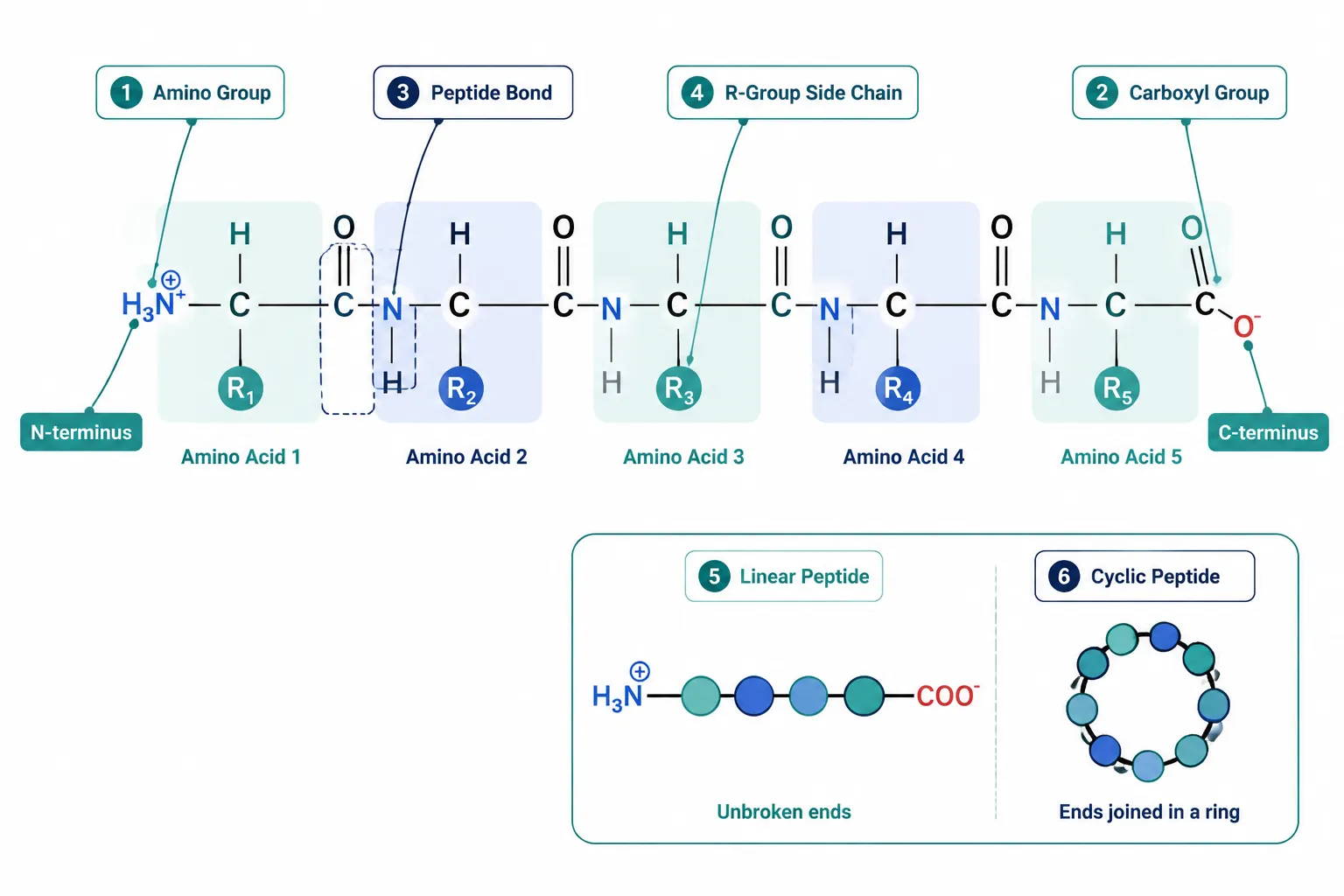
Understanding Peptide Structure: The Foundation of Function

At the most fundamental level, a peptide is a chain of amino acids joined together by peptide bonds, the covalent links formed between the carboxyl group of one amino acid and the amino group of the next. Chains of fewer than 50 amino acids are generally classified as peptides, while longer chains are called proteins. The number, type, and sequence of amino acids in a chain determine the peptide's three-dimensional shape and, by extension, its biological activity.

Key structural features of peptides include:

  • N-terminus and C-terminus: Every peptide chain has a free amino group at one end (N-terminus) and a free carboxyl group at the other (C-terminus).
  • Side chains (R-groups): Each amino acid carries a unique side chain that influences charge, polarity, and how the peptide interacts with receptors or enzymes.
  • Secondary structure: Short peptides may adopt alpha-helical or beta-sheet conformations that are critical for receptor binding.
  • Linear vs. cyclic forms: Linear peptides are the most common, but cyclic peptides, where the chain loops back on itself, offer greater resistance to enzymatic degradation.

"The sequence of amino acids in a peptide is not just a chemical identity, it is a precise biological instruction."

Structural engineering has become one of the most active areas in peptide science. Researchers now routinely incorporate non-natural amino acids, apply PEGylation (attaching polyethylene glycol chains), and use lipidation to extend half-life and improve receptor selectivity. These modifications are central to developing peptides that can survive in biological environments long enough to be therapeutically useful. Understanding peptide measurement and accurate characterization is equally essential at this stage of research.

Synthesis Methods: From Classical Chemistry to Modern Innovation
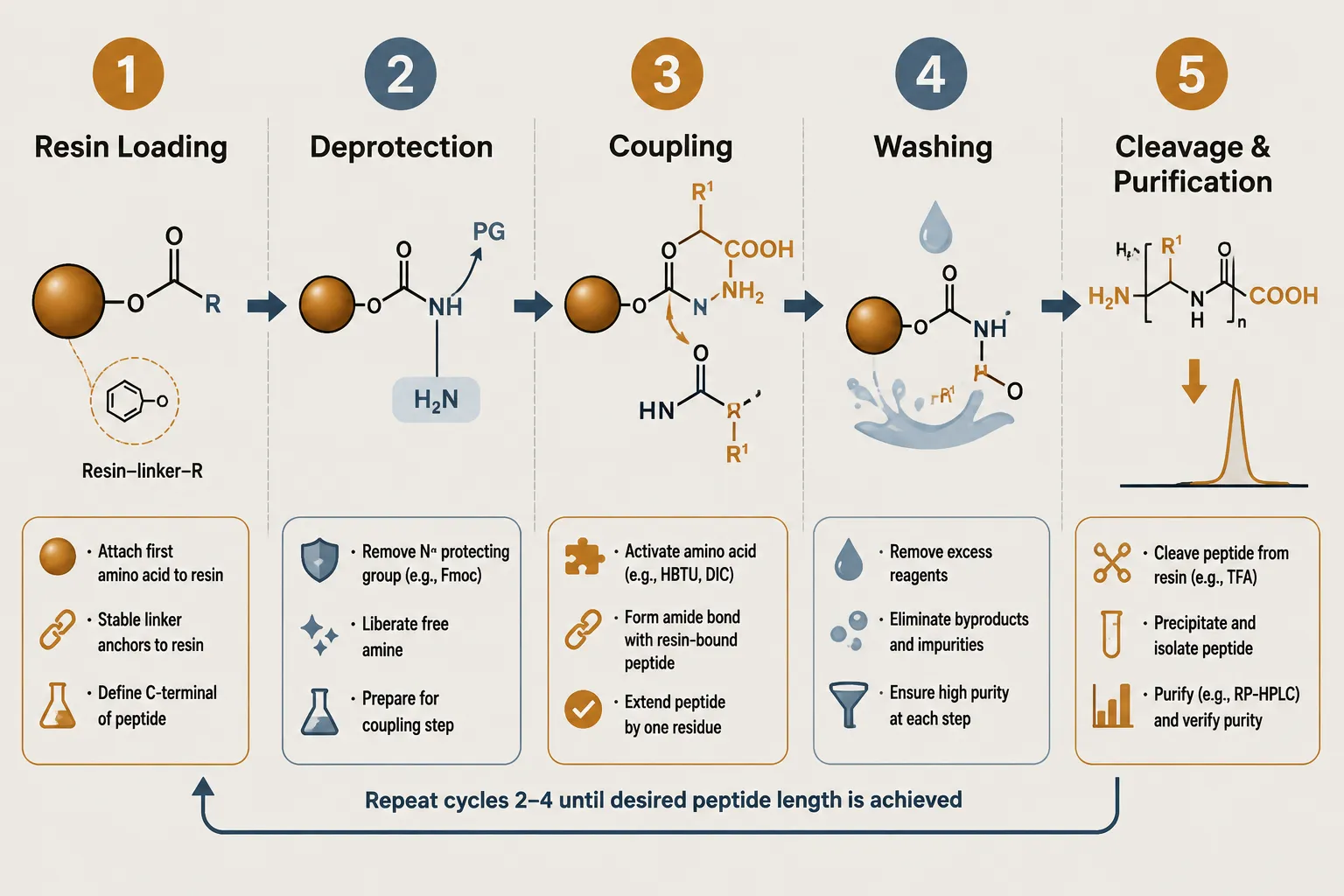
Synthesis Methods: From Classical Chemistry to Modern Innovation

Producing peptides reliably and at scale is a prerequisite for research and drug development. The broad spectrum of peptides: a comprehensive guide to their structure, synthesis, and diverse research applications would be incomplete without a clear breakdown of how these molecules are made.

The main synthesis approaches currently in use are:

Method Key Feature Best Suited For
Solid-Phase Peptide Synthesis (SPPS) Sequential amino acid coupling on a resin Most research and therapeutic peptides
Solution-Phase Synthesis Reactions in liquid medium Large-scale industrial production
Biosynthesis Ribosomal or enzymatic production in cells Complex or very long peptides
Transition-Metal Catalysis Metal-catalyzed bond formation Challenging sequences
Photocatalysis / Electrochemistry Light- or current-driven reactions Late-stage modifications

SPPS remains the dominant method for research-grade peptides because it allows precise, stepwise control over sequence. Each amino acid is added one at a time to a growing chain anchored to a solid resin, and the product is cleaved and purified at the end. For researchers sourcing materials, working with verified suppliers matters enormously, resources like supplier comparison guides for peptide vendors and Bachem reference standards for peptide benchmarks help ensure that purity and consistency meet research-grade requirements.

Newer catalytic methods, including photocatalysis and electrochemistry, are gaining ground for sequences that are difficult to assemble by conventional means. These approaches allow late-stage chemical modifications that were previously impractical, expanding the structural space available to peptide chemists.

Diverse Research Applications: Where Peptide Science Is Heading in 2026

Diverse Research Applications: Where Peptide Science Is Heading in 2026

The broad spectrum of peptides: a comprehensive guide to their structure, synthesis, and diverse research applications reflects a field that has grown far beyond its early focus on hormones and antibiotics. Today, peptide research spans at least five major domains.

Metabolic Disease and Obesity

Metabolic disease represents the largest single application area. GLP-1 receptor agonists, GIP analogues, glucagon analogues, and amylin-like peptides are at the core of obesity and diabetes treatment strategies. Oral Wegovy for weight management launched in early 2026, and petrelintide, a long-acting amylin analogue from Roche/Genentech, reported positive Phase II results in the same period. Researchers interested in this space can explore GLP-1 peptides and the latest findings on top research peptides for metabolic health.

Dual and triple agonist peptides targeting GLP-1, GIP, and glucagon simultaneously are now in multiple Phase III trials, with seven major readouts expected in 2026. For a closer look at where this is heading, the GLP-3 triple agonist research and catalog navigation guide provides useful context.

Neurology and Neuroprotection

Peptides such as Semax and Selank have been studied for their effects on neurogenesis and synaptic plasticity. Research in this area is expanding as scientists look for compounds that can cross the blood-brain barrier or modulate neuroinflammation. A detailed comparison of Semax and Selank in neurogenesis and synaptic plasticity research outlines current findings.

Oncology and Targeted Drug Delivery

Cell-penetrating peptides (CPPs) are being used as vectors to deliver small molecules, nucleic acids, and cytotoxic agents directly into cancer cells. This approach reduces systemic toxicity and improves therapeutic precision. Peptide-drug conjugates (PDCs) for solid tumors are among the late-stage programs currently in development.

Antimicrobial and Immunological Applications

Antimicrobial peptides (AMPs) disrupt bacterial membranes or modulate immune responses, making them attractive candidates in the fight against antibiotic-resistant organisms. In Q1 2026, the FDA approved icotrokinra (ICOTYDE), the first targeted oral IL-23 receptor peptide for moderate-to-severe plaque psoriasis, marking a landmark for orally delivered immunomodulatory peptides. SGX945, a synthetic peptide for Behçet's disease, also received Orphan Drug Designation in the same period.

Regenerative Medicine and Tissue Repair

Copper peptides such as GHK-Cu have been studied for their roles in wound healing and tissue remodeling. Research into copper peptide sourcing and GHK-Cu applications continues to grow as interest in regenerative applications expands.

Conclusion

Peptide science in 2026 is defined by both depth and breadth. From the precise chemistry of amino acid chains to the sophisticated synthesis platforms that produce them, and from metabolic disease to oncology and antimicrobial research, the field offers researchers an expanding toolkit with real translational potential.

Actionable next steps for researchers and practitioners:

  1. Audit your synthesis knowledge, Understand which method (SPPS, biosynthesis, or catalytic) best fits your target sequence and scale.
  2. Prioritize structural modification, Evaluate whether cyclization, lipidation, or non-natural amino acid incorporation could improve the stability of your compound of interest.
  3. Follow the pipeline, With seven major dual/triple agonist readouts expected in 2026 and regulatory activity from both the FDA and EMA, staying current on approvals and designations is essential.
  4. Source rigorously, Use verified suppliers and reference standards to ensure purity and reproducibility in your research.
  5. Explore adjacent applications, If your primary focus is metabolic disease, consider how CPP or AMP research might inform delivery strategies or combination approaches.

The broad spectrum of peptides: a comprehensive guide to their structure, synthesis, and diverse research applications is ultimately a guide to one of the most productive frontiers in modern science, one that rewards both chemical precision and strategic research planning.

Tags: antimicrobial peptides, cell-penetrating peptides, glp-1 peptides, metabolic disease research, peptide synthesis, peptides, research peptides, solid-phase peptide synthesis
https://www.puretestedpeptides.com/wp-content/uploads/2026/08/the-broad-spectrum-of-peptides-a-comprehensive-guide-to-their-structure-synthesi.webp 1024 1536 https://www.puretestedpeptides.com/wp-content/uploads/2026/01/buy-peptides-online.jpg 2026-08-22 13:04:402026-08-22 13:04:40The Broad Spectrum of Peptides: A Comprehensive Guide to Their Structure, Synthesis, and Diverse Research Applications
You might also like
Carbohydrate Antigens and Peptide-Based Assays: How Glycoprotein Markers Interface With Modern Research Peptides Carbohydrate Antigens and Peptide-Based Assays: How Glycoprotein Markers Interface With Modern Research Peptides
Peptides in Modern Research: From Simple Chains to Complex Polypeptide Hormones Peptides in Modern Research: From Simple Chains to Complex Polypeptide Hormones
Enclomiphene vs Enclomiphene Citrate: What Researchers Need to Know Before Choosing a Formulation Enclomiphene vs Enclomiphene Citrate: What Researchers Need to Know Before Choosing a Formulation
Nasal Spray Peptides: Delivery Methods, Bioavailability, and Research Advantages Nasal Spray Peptides: Delivery Methods, Bioavailability, and Research Advantages
Top 5 Research Peptides for Metabolic Health: An Updated Buyer's Guide Top 5 Research Peptides for Metabolic Health: An Updated Buyer’s Guide
Klow Blend vs. Semax and Selank: Intranasal Nootropic Peptides Compared for Research Klow Blend vs. Semax and Selank: Intranasal Nootropic Peptides Compared for Research
Glow Blend vs Klow Blend Peptides: Ingredient Comparison and Research Applications Glow Blend vs Klow Blend Peptides: Ingredient Comparison and Research Applications
DNA, Mitochondria, and Research Peptides: How MOTS-c and 5-Amino-1MQ Interface With Cellular Energy and Genomic Pathways DNA, Mitochondria, and Research Peptides: How MOTS-c and 5-Amino-1MQ Interface With Cellular Energy and Genomic Pathways
0 replies

Leave a Reply

Want to join the discussion?
Feel free to contribute!

Leave a Reply Cancel reply

Your email address will not be published. Required fields are marked *

×

Helpful Links

  • My account
  • Cart
  • Checkout
  • Refund and Returns Policy
  • Privacy Policy
  • SMS Privacy Policy
  • Login
  • My Account
  • Logout

USA Made Lab Tested Peptides

All products are sold for research, laboratory, or analytical purposes only, and are not for human consumption


Pure Tested Peptides is a chemical supplier. Pure Tested Peptides is not a compounding / chemical compounding facility as defined under 503A of the Federal Food, Drug, and Cosmetic act. Pure Tested Peptides is not an outsourcing facility as defined under 503B of the Federal Food, Drug, and Cosmetic act.

The statements made within this website have not been evaluated by the US Food and Drug Administration. The products we offer are not intended to diagnose, treat, cure or prevent any disease.

Human/Animal Consumption Prohibited. Laboratory/In-Vitro Experimental Use Only

Link to: What Retatrutide Means for GLP-3 Research in 2026: Mechanism, Nomenclature, and Market Search Behavior Link to: What Retatrutide Means for GLP-3 Research in 2026: Mechanism, Nomenclature, and Market Search Behavior What Retatrutide Means for GLP-3 Research in 2026: Mechanism, Nomenclature,...What Retatrutide Means for GLP-3 Research in 2026: Mechanism, Nomenclature, and Market Search Behavior Link to: GLP-3 Retatrutide: Exploring the Mechanism of Action and Research Potential Beyond GLP-1 and GLP-2 Link to: GLP-3 Retatrutide: Exploring the Mechanism of Action and Research Potential Beyond GLP-1 and GLP-2 GLP-3 Retatrutide: Exploring the Mechanism of Action and Research Potential Beyond GLP-1 and GLP-2GLP-3 Retatrutide: Exploring the Mechanism of Action and Research Potential...
Scroll to top Scroll to top Scroll to top