Call or Text 727-513-9780
  • Shopping Cart Shopping Cart
    0Shopping Cart
Pure Tested Peptides | America's most trusted Peptides for sale online
  • Peptides for sale
    • Oral Peptides for sale
      • Peptide Capsules for sale
      • BPC 157 Capsules 1000mcg
      • SLU-PP-332 Capsules | 1000 mcg
      • 5-Amino-1MQ 50mg Capsules
      • Tesofensine 500mcg
    • All Peptides for sale
    • Peptide Sprays
      • BPC 157 Nasal Spray Kit
      • BPC-157 TB500 Nasal Spray Kit
      • Semax Nasal Spray 10mg
      • Selank – Nasal Spray Kit – 10mg
      • Epithalon 50MG Nasal Spray Kit
      • Ipamorelin 10mg Nasal Spray
      • Klow Nasal Spray (BPC-157 + TB-500 + GHK-Cu + KPV) | 80mg
      • Hulk Nasal Spray Tesa / Ipa Blend 6/3 MG
      • Klow Nasal Spray
      • NAD + 500 mg Nasal Spray
      • PT-141 Nasal Spray Kit
    • GHRH Peptides
      • Ipa Peptides
      • CJC-1295 Peptides
        • CJC-1295 with DAC 5 mg
        • CJC-1295 without DAC 5 mg
        • CJC-1295 Ipa 10mg
      • Tesa Peptides
        • Tesa Peptide
        • Tesa 20 mg
    • GHK-Cu Peptides
      • All GHK-Cu Peptides
      • GHK-Cu 100mg
      • KLOW Peptide Blend – Buy KLOW blend online
    • BPC Peptides
      • All BPC Peptides
      • BPC-157
      • BPC-157 TB-500
      • BPC 157 capsules 1000mcg
    • SLU-PP-332 Peptides
      • All SLU-PP-332 Peptides
      • SLU-PP-332 5mg
    • GLP3 Peptides
      • GLP3-R
      • GLP3-R CAG 10mg
      • GLP3-R 20mg
    • PT-141 Peptides
      • PT-141 Peptides for sale
      • PT-141 10mg
      • PT-141 Nasal Spray
    • CAG Peptides
      • Lipo-C Peptide Blend
      • CAG 5mg
      • CAG 10mg
    • MOTS-C Peptides
      • MOTS-C Peptides for sale
      • MOTS-c peptide
      • MOTS-c 10mg *6 pack*
    • 5 Amino 1MQ Peptides
      • 5 Amino 1MQ Peptides for sale
      • 5-Amino-1MQ 50mg Capsules
      • 5-Amino-1MQ 5mg
    • Epithalon Peptides
      • Epithalon Peptides for sale
      • Epithalon 10mg
      • Epithalon 50mg
  • Shop
    • GLPs
      • 5-Amino-1MQ 50mg Capsules
      • 5-Amino-1MQ 5mg
      • GLP3-Reta
      • L-Carnitine 500mg/ml
      • Tesofensine 500mcg
      • SLU-PP-332 5mg
      • MOTS-c 10mg *6 pack*
    • Epithalon & BPC Peptides
      • Epithalon 10mg
      • Epithalon 50mg
      • BPC-157
      • BPC 157 capsules 1000mcg
      • BPC-157 TB-500
      • BPC-157 TB500 Nasal Spray Kit
      • BPC 157 Nasal Spray Kit
    • BPC TB-500 & NAD+ Peptides
      • NAD+ 500 mg
      • KLOW Peptide Blend – Buy KLOW blend online
      • GLOW Peptide Blend
      • TB 500 5mg
      • BPC 157 capsules 1000mcg – Supplement
      • BPC 157 Nasal Spray Kit
      • BPC-157
      • BPC-157 TB500 Nasal Spray Kit
      • BPC-157 TB-500
      • BPC 157 capsules 1000mcg
    • LL-37 Peptide
      • LL-37 10 mg
    • MOTS-C & Selank
      • MOTS-c peptide
      • Selank 10mg
    • GHK Peptides
      • GHK-Cu 100mg
      • GLOW Peptide Blend
      • KLOW Peptide Blend – Buy KLOW blend online
  • COAs
  • Wholesale
    • Wholesale Peptides for sale
  • PTP FAQ
  • Affiliates
    • Selank Peptide: Advanced Pharmacological Mechanisms Underlying Its Anxiolytic and Nootropic Effects in Research
      • 5-Amino-1MQ Peptide: Detailed Mechanisms of NNMT Inhibition and Its Impact on Cellular Metabolism Research
        • MOTS-C Peptide: Unraveling Its Role in Mitochondrial Dynamics and Energy Metabolism Research
          • Epithalon Peptide and Telomerase Regulation: Investigating Its Impact on Cellular Senescence and Lifespan Research Models
            • GLP2-T vs GLP2 Tirz Peptide: Understanding the Naming, Mechanistic Nuances, and Research Implications for Gut Health
      • Peptides and Polypeptides in Modern Pharmacology: What Research on Metoprolol, Prednisone, and Amlodipine Reveals
        • Polypeptide Peptides vs NSAIDs: What Naproxen and Diclofenac Teach Tissue-Repair Researchers About BPC‑157 and TB‑500
          • Peptides and Polypeptides in Endocrine Pharmacology: How GLP-1, GLP-2, and GLP-3 Retatrutide Differ From Classic Drugs Like Prednisone and Amlodipine
          • 5‑Amino‑1MQ Peptide and NNMT Inhibition: How It Compares With Statins Like Atorvastatin in Adipose and Lipid Metabolism Research
      • Enclomiphene, Estrogen Receptor Signaling, and Luteinizing Phase Biology: What Hormone Researchers Should Measure
        • Mesenchymal Stem Cells, BPC‑157, and GHK‑Cu: How Tissue Repair Peptides Compare With Classic NSAIDs Like Naproxen in Injury Models
          • Peptide Calculator Use Cases Beyond Growth Hormone: Working Through GLP‑3 Retatrutide, MOTS‑c, and BPC‑157 Research Dosing
        • Polypeptide Peptides in Endocrine and Metabolic Pharmacology: Lessons From Amlodipine, Prednisone, and Metoprolol
        • Peptides Calculator for Advanced Blends: Worked Examples for Tesamorelin, CJC‑1295, and Ipamorelin Stacks
          • Peptides and Polypeptides in Human Physiology: How Molecular Size Shapes Research Applications
            • Selank Peptide: Advanced Pharmacological Mechanisms Underlying Its Anxiolytic and Nootropic Effects in Research
          • 5-Amino-1MQ Peptide: Detailed Mechanisms of NNMT Inhibition and Its Impact on Cellular Metabolism Research
            • MOTS-C Peptide: Unraveling Its Role in Mitochondrial Dynamics and Energy Metabolism Research
              • Epithalon Peptide and Telomerase Regulation: Investigating Its Impact on Cellular Senescence and Lifespan Research Models
                • GLP2-T vs GLP2 Tirz Peptide: Understanding the Naming, Mechanistic Nuances, and Research Implications for Gut Health
                  • Peptides and Polypeptides in Endocrine Pharmacology: How GLP-1, GLP-2, and GLP-3 Retatrutide Differ From Classic Drugs Like Prednisone and Amlodipine
                    • Polypeptide Peptides vs NSAIDs: What Naproxen and Diclofenac Teach Tissue-Repair Researchers About BPC‑157 and TB‑500
                      • Peptides and Polypeptides in Modern Pharmacology: What Research on Metoprolol, Prednisone, and Amlodipine Reveals
                        • 5‑Amino‑1MQ Peptide and NNMT Inhibition: How It Compares With Statins Like Atorvastatin in Adipose and Lipid Metabolism Research
                        • Enclomiphene, Estrogen Receptor Signaling, and Luteinizing Phase Biology: What Hormone Researchers Should Measure
                        • Mesenchymal Stem Cells, BPC‑157, and GHK‑Cu: How Tissue Repair Peptides Compare With Classic NSAIDs Like Naproxen in Injury Models
                        • Peptide Calculator Use Cases Beyond Growth Hormone: Working Through GLP‑3 Retatrutide, MOTS‑c, and BPC‑157 Research Dosing
                        • Polypeptide Peptides in Endocrine and Metabolic Pharmacology: Lessons From Amlodipine, Prednisone, and Metoprolol
                        • Peptides Calculator for Advanced Blends: Worked Examples for Tesamorelin, CJC‑1295, and Ipamorelin Stacks
                        • Peptides and Polypeptides in Human Physiology: How Molecular Size Shapes Research Applications
                        • Selank Peptide: Advanced Pharmacological Mechanisms Underlying Its Anxiolytic and Nootropic Effects in Research
                        • MOTS-C Peptide: Unraveling Its Role in Mitochondrial Dynamics and Energy Metabolism Research
                        • Peptides and Polypeptides in Modern Pharmacology: What Research on Metoprolol, Prednisone, and Amlodipine Reveals
                        • Peptides and Polypeptides in Endocrine Pharmacology: How GLP-1, GLP-2, and GLP-3 Retatrutide Differ From Classic Drugs Like Prednisone and Amlodipine
                        • 5-Amino-1MQ Peptide: Detailed Mechanisms of NNMT Inhibition and Its Impact on Cellular Metabolism Research
                        • Mesenchymal Stem Cells, BPC‑157, and GHK‑Cu: How Tissue Repair Peptides Compare With Classic NSAIDs Like Naproxen in Injury Models
                        • Peptide Calculator Use Cases Beyond Growth Hormone: Working Through GLP‑3 Retatrutide, MOTS‑c, and BPC‑157 Research Dosing
                        • GLP2-T vs GLP2 Tirz Peptide: Understanding the Naming, Mechanistic Nuances, and Research Implications for Gut Health
                        • Polypeptide Peptides in Endocrine and Metabolic Pharmacology: Lessons From Amlodipine, Prednisone, and Metoprolol
                        • Polypeptide Peptides vs NSAIDs: What Naproxen and Diclofenac Teach Tissue-Repair Researchers About BPC‑157 and TB‑500
                        • Peptides and Polypeptides in Human Physiology: How Molecular Size Shapes Research Applications
                        • Peptides Calculator for Advanced Blends: Worked Examples for Tesamorelin, CJC‑1295, and Ipamorelin Stacks
                        • 5‑Amino‑1MQ Peptide and NNMT Inhibition: How It Compares With Statins Like Atorvastatin in Adipose and Lipid Metabolism Research
                        • Enclomiphene, Estrogen Receptor Signaling, and Luteinizing Phase Biology: What Hormone Researchers Should Measure
                        • Epithalon Peptide and Telomerase Regulation: Investigating Its Impact on Cellular Senescence and Lifespan Research Models
                        • Best research protocol Klow blend
                        • best time to take BPC-157
                        • best time to take DSIP (Delta Sleep Inducing Peptide)
                        • best time to take CJC-1295
                        • best time to take AOD-9604
                        • best time to take Follistatin 344
                        • best time to take Ipamorelin
                        • best time to take MK-677 (Ibutamoren)
                        • best time to take Ligandrol (LGD-4033) — research compound
                        • best time to take Ostarine (MK-2866) — research compound
                        • best time to take GHK-CU
                        • best time to take TB-500
                        • best time to take MOTS-c
                        • best time to take Semax
                        • best time to take RAD-140 (Testolone) — research compound
                        • best time to take Thymosin Alpha-1
                        • best time to take PEG-MGF
                        • Biolife Plasma, Octapharma Plasma, and Research Peptides: How Plasma Donation Labs Differ From Peptide Suppliers
                        • best time to take YK-11 — research compound
                        • best time to take PT-141 (Bremelanotide)
                        • Best research protocol Klow blend
  • Contact
    • Contact Customer Service
    • Text Customer Support
  • About US
  • Shop all peptides
  • Affiliate Program
    • Affiliate Signup
  • Login / Register Login / Register Page Link Login / Register Page Link
  • Click to open the search input field Click to open the search input field Search
  • Menu Menu

Tag Archive for: glp-1 peptides

Peptides and Polypeptides: A Complete Research Guide to Structure, Signaling, and Therapeutic Classes

Peptides and Polypeptides: A Complete Research Guide to Structure, Signaling, and Therapeutic Classes

June 16, 2026/0 Comments/by Pure Tested

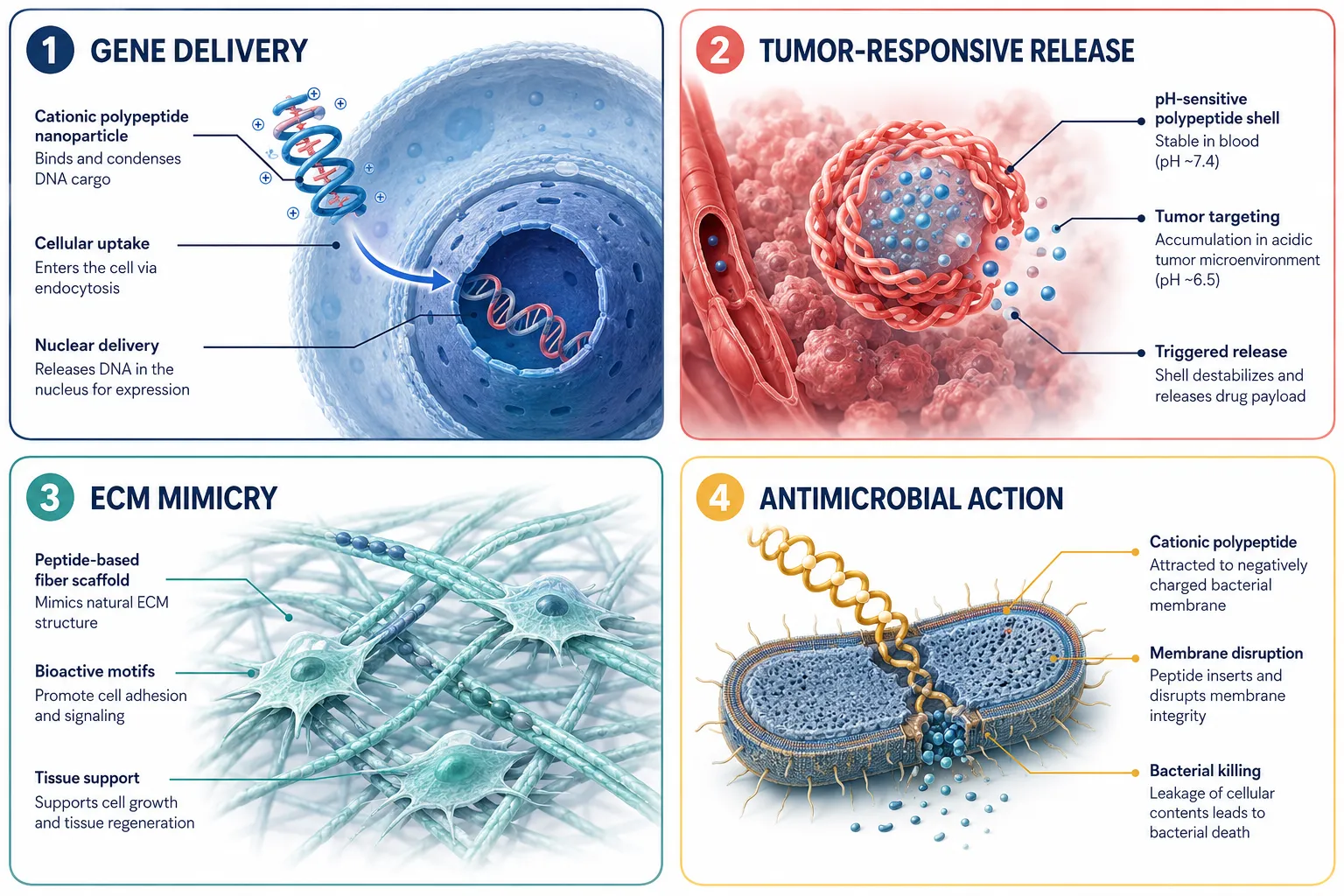
Over 80 peptide-based drugs are currently approved for clinical use worldwide, and that number is accelerating rapidly as manufacturing infrastructure and AI-driven design tools reshape what is possible. For researchers and science-curious readers alike, understanding the foundational biology behind these molecules is the essential first step. This guide to Peptides and Polypeptides: A Complete Research Guide to Structure, Signaling, and Therapeutic Classes builds that foundation — covering molecular structure, receptor signaling, and the major therapeutic categories active in research today.

Key Takeaways

  • Peptides are short amino acid chains (typically 2-50 residues); polypeptides are longer chains that may fold into functional proteins.
  • Peptide bonds form the backbone of all these molecules, and chain length determines biological behavior.
  • Peptides act as signaling molecules, binding receptors to trigger metabolic, regenerative, and neuroactive responses.
  • Major research classes include growth hormone secretagogues, GLP-family metabolic peptides, mitochondrial peptides, and tissue-repair compounds.
  • The global peptide drug pipeline is expanding fast, with new oral delivery formats and AI design tools entering the field in 2026.

Key Takeaways

Structure Basics: What Separates Peptides from Proteins

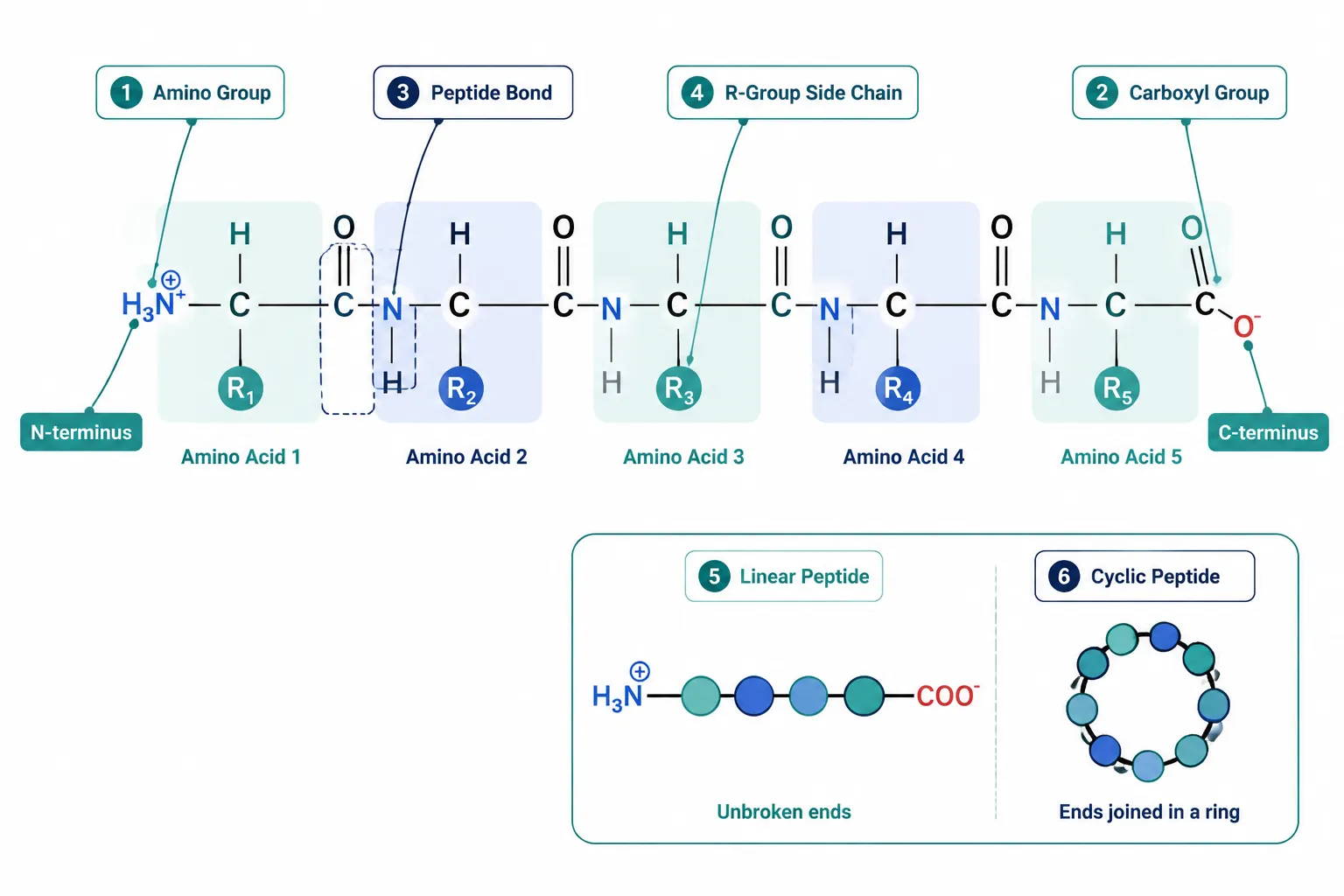
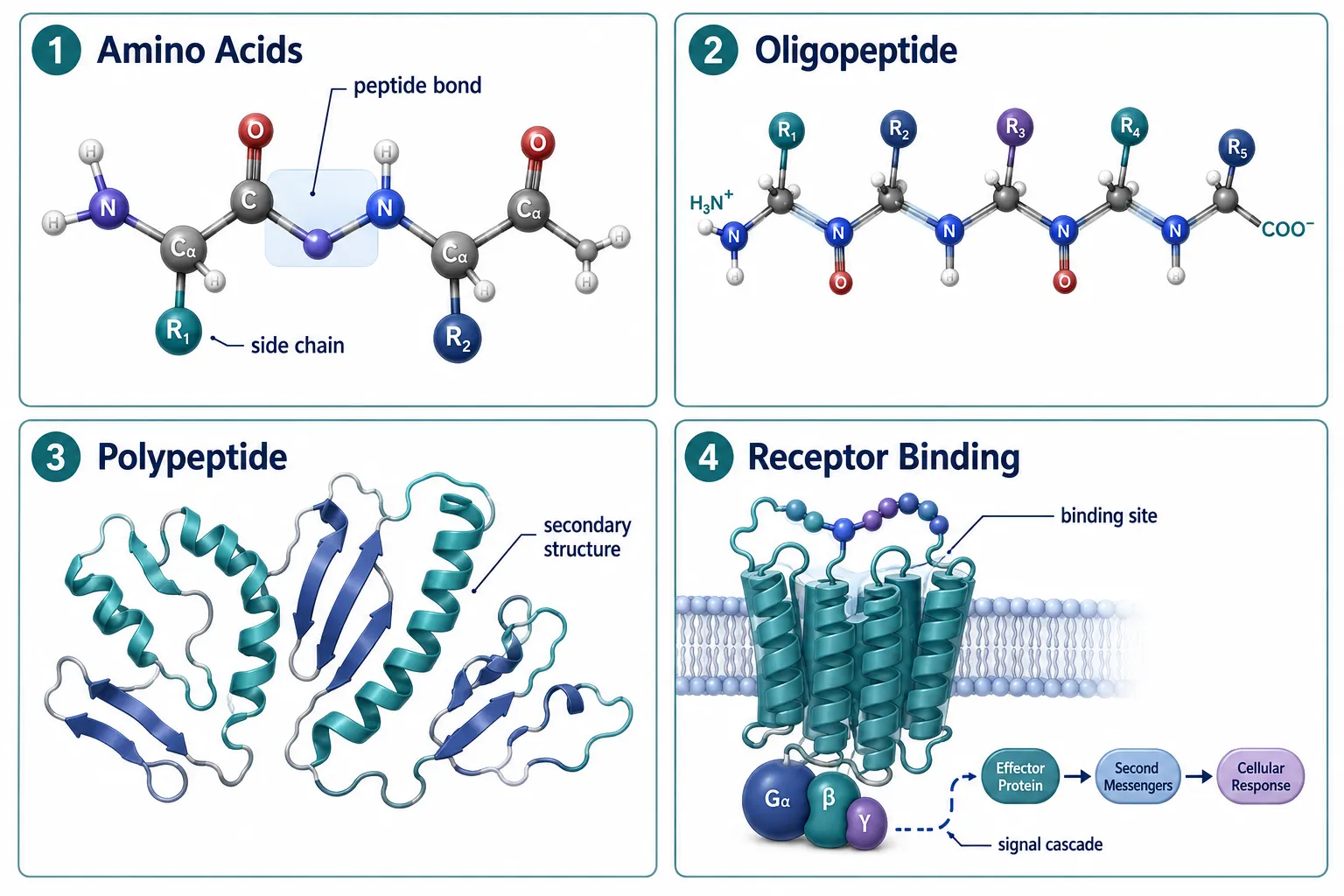
A peptide is a molecule made of two or more amino acids joined by peptide bonds. Each bond forms when the carboxyl group of one amino acid reacts with the amino group of the next, releasing water. The resulting chain is called a polypeptide.

The size distinction matters:

Category Residue Count Example
Dipeptide 2 Carnosine
Oligopeptide 3-10 Glutathione (tripeptide)
Polypeptide 10-50+ GLP-1, BPC-157
Protein 50+ (folded) Insulin, Growth Hormone

Chain length shapes function. Short peptides often act as direct signaling molecules. Longer polypeptides may fold into three-dimensional structures that enable enzymatic or structural roles. Researchers working with simple peptides often start with this size framework to predict solubility, stability, and receptor compatibility.

The primary structure (amino acid sequence) encodes all downstream behavior. Small changes in sequence — even a single residue swap — can dramatically alter receptor binding, half-life, and tissue targeting.


Structure Basics: What Separates Peptides from Proteins

How Peptides Signal: Receptors, Cascades, and Tissue Targets

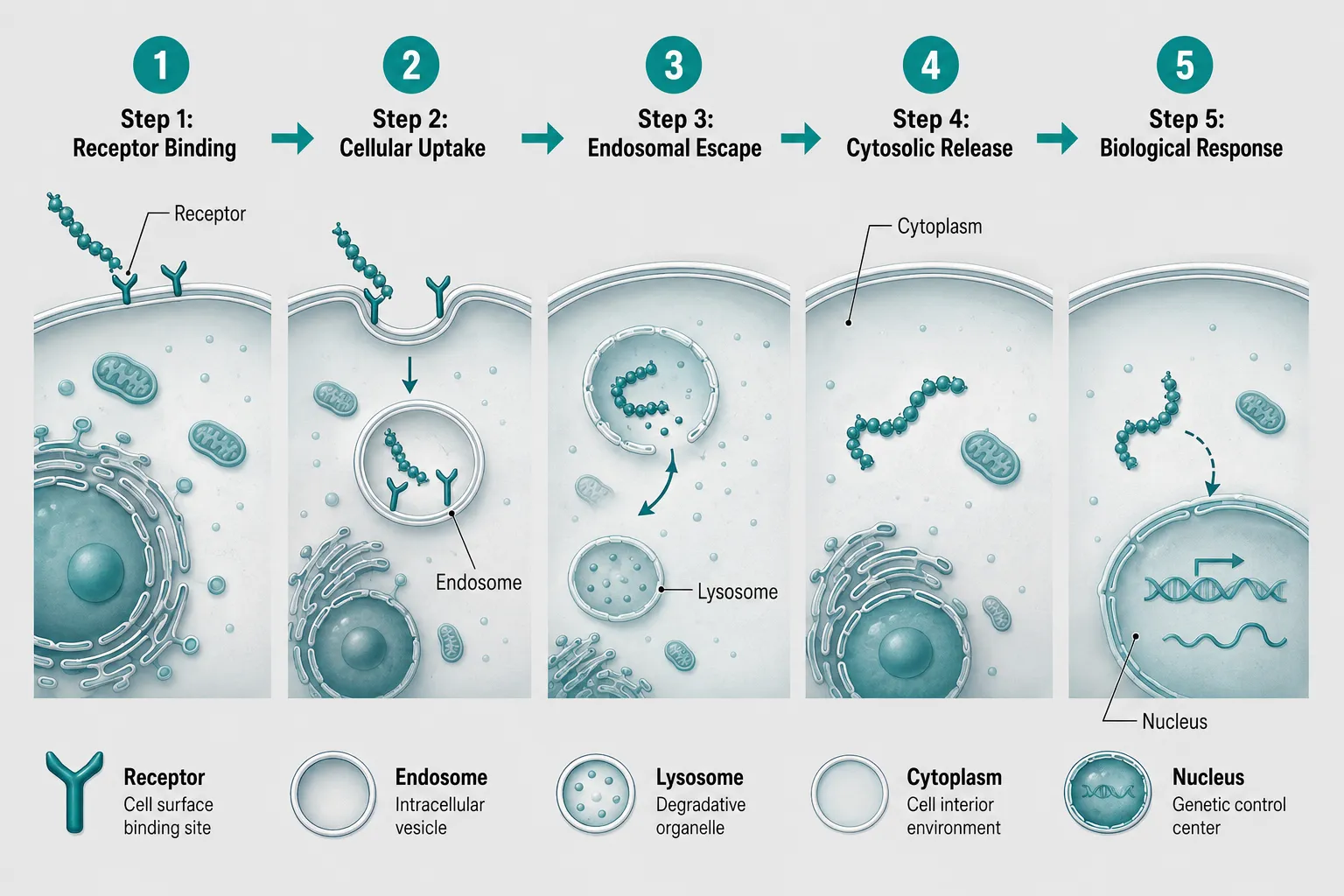
Peptides do not act randomly. They bind specific G protein-coupled receptors (GPCRs) or receptor tyrosine kinases on cell surfaces, triggering intracellular cascades that regulate gene expression, metabolism, and repair.

"A single peptide molecule binding its receptor can initiate a cascade affecting hundreds of downstream proteins — amplification is built into the system."

Key signaling categories in current research include:

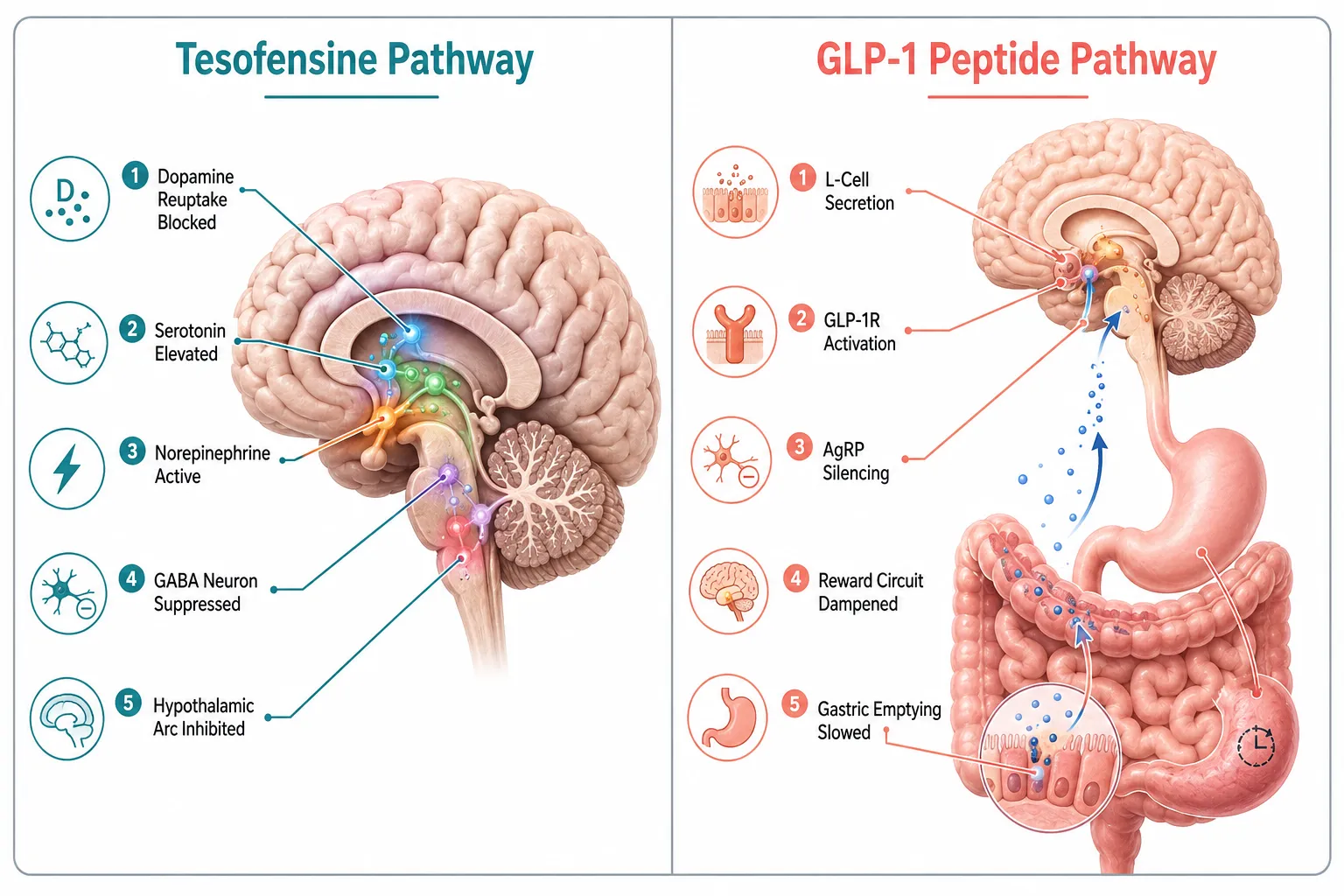
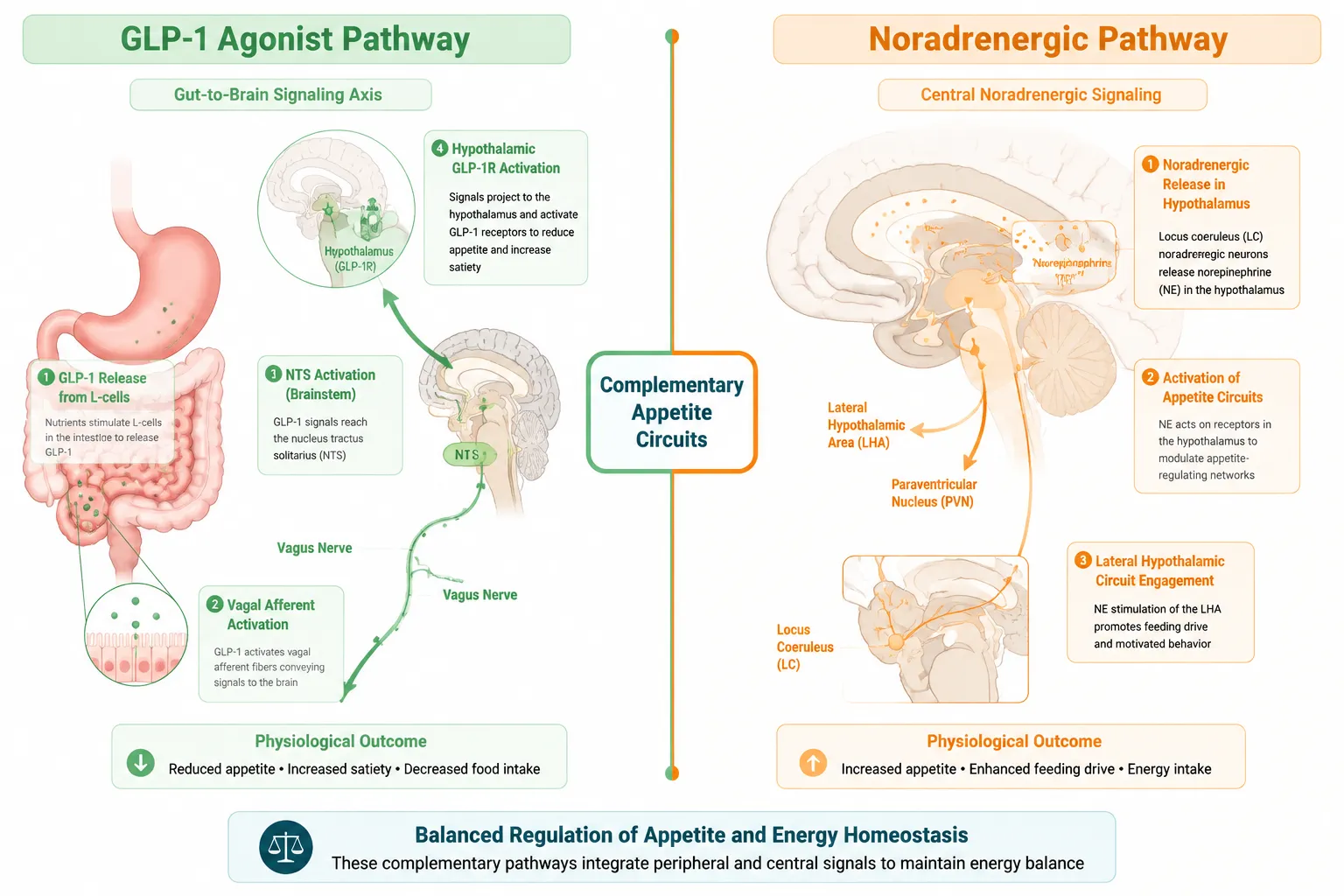
  • Metabolic signaling: GLP-1 receptor agonists modulate insulin secretion and appetite. Research into GLP-1 peptide concepts and sourcing reflects intense interest in this pathway.
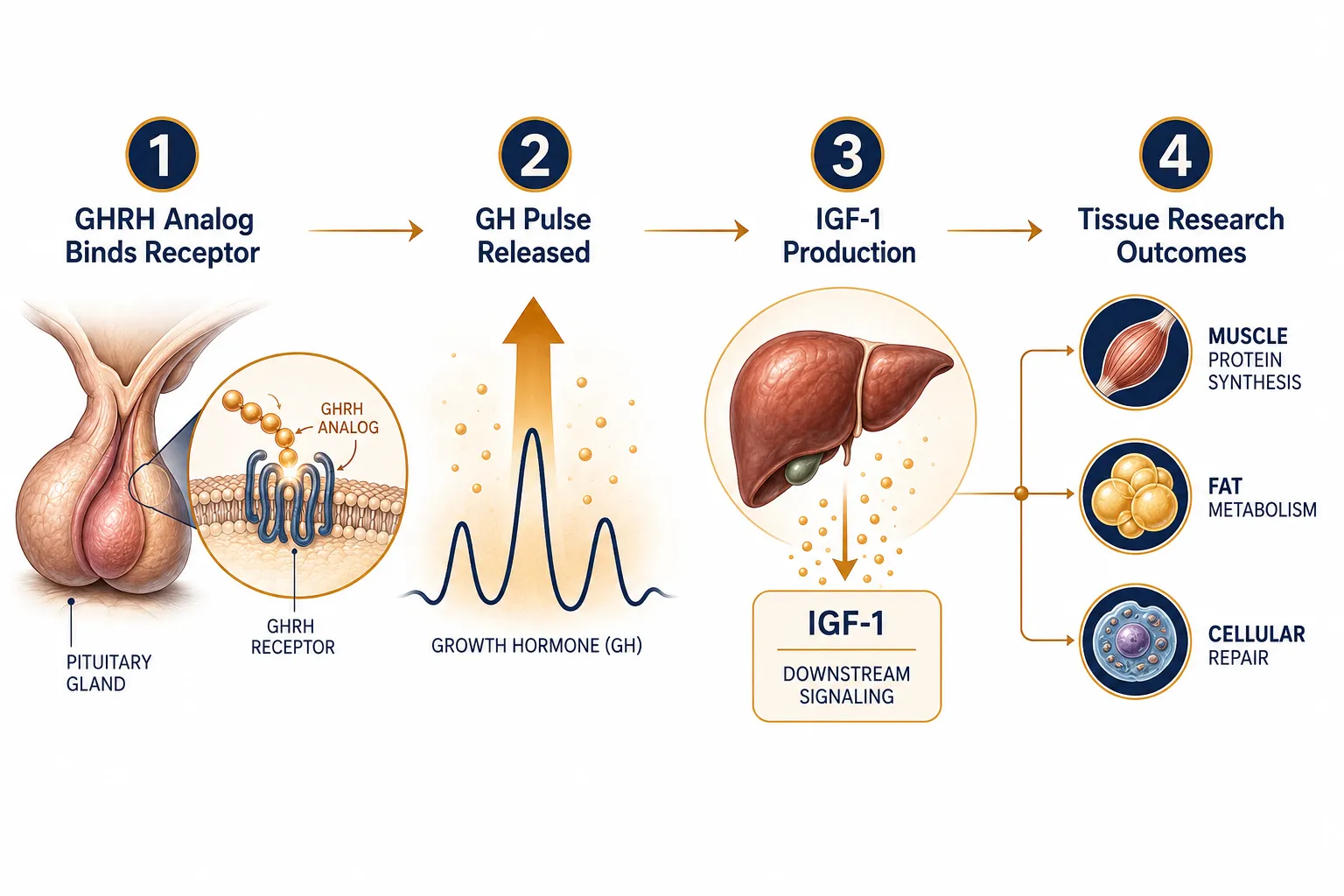
  • Growth hormone axis: Secretagogues like CJC-1295 and Ipamorelin stimulate pituitary GHRH receptors. The CJC-1295 plus Ipamorelin stack is one of the most studied combinations in this category.
  • Mitochondrial signaling: Peptides such as SS-31 and MOTS-c act on mitochondrial membranes to reduce oxidative stress. Detailed research themes for SS-31 mitochondrial research and MOTS-c metabolic flexibility explore these pathways.
  • Tissue repair: Compounds like BPC-157 and TB-500 influence angiogenesis and cytoskeletal remodeling. The BPC-157 core documentation guide provides a detailed starting point.
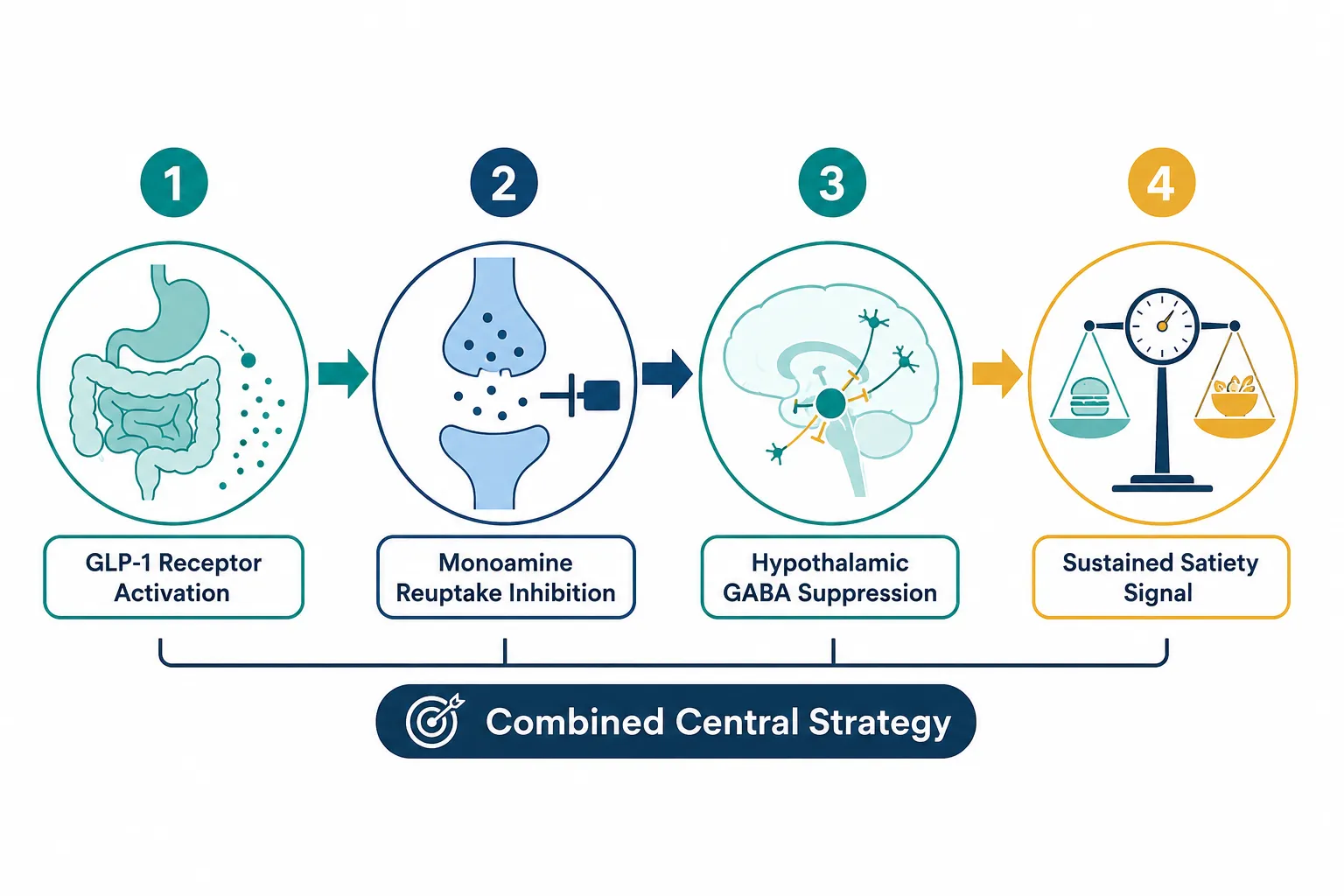
  • Neuroactive peptides: Selank and related compounds modulate anxiety and cognition pathways through GABAergic and serotonergic interactions.

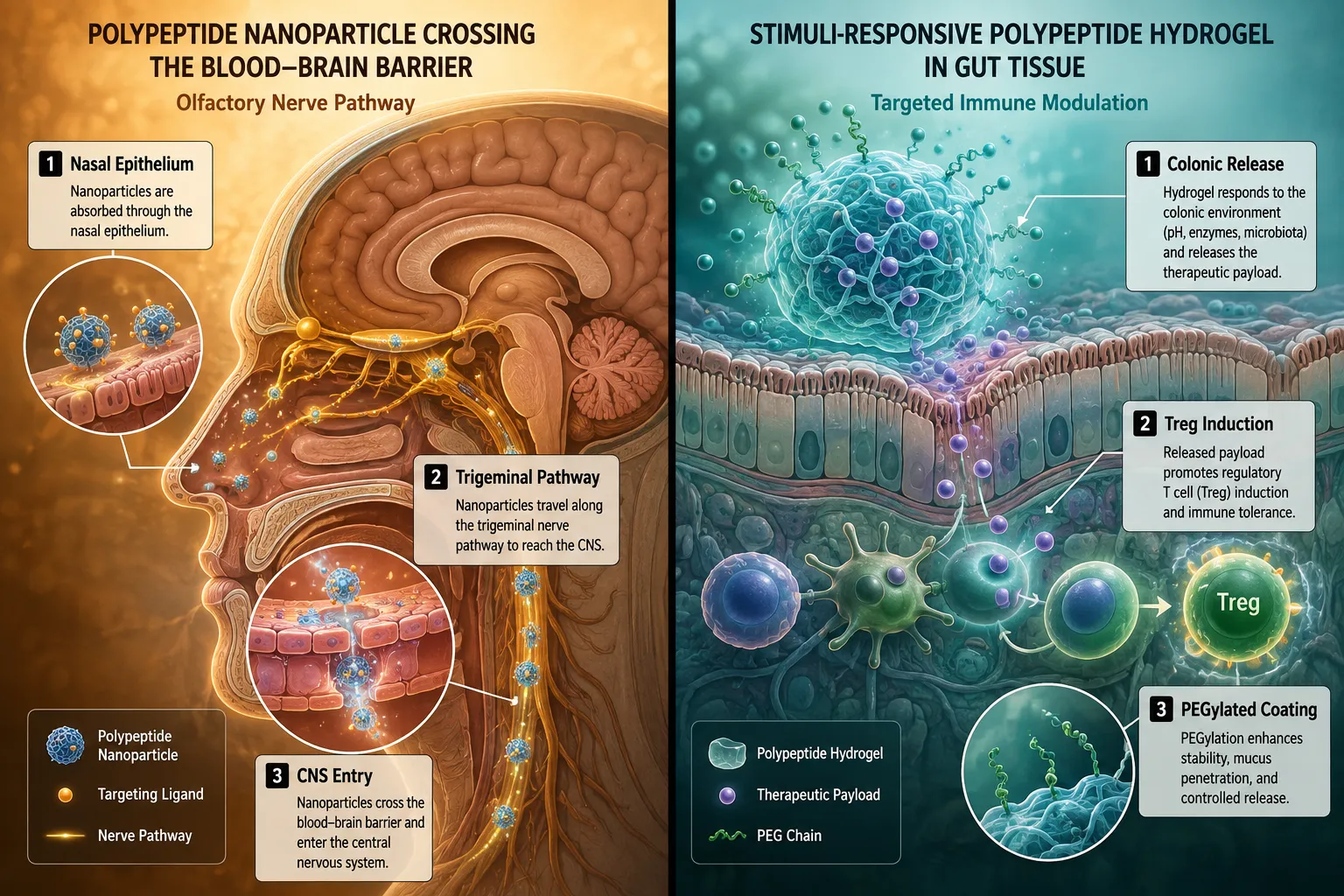
Delivery format affects how well a peptide reaches its target receptor. Injectable routes preserve bioavailability, while newer sublingual and nasal spray peptide formats are being developed to improve compliance and absorption.


How Peptides Signal: Receptors, Cascades, and Tissue Targets

Major Therapeutic Classes in 2026 Research

This section of the Peptides and Polypeptides: A Complete Research Guide to Structure, Signaling, and Therapeutic Classes maps the primary research categories active today.

Growth Hormone Secretagogues
These peptides stimulate natural GH release rather than replacing it directly. Tesamorelin, CJC-1295, and Ipamorelin are the most studied. Research themes around body composition and tesa highlight visceral fat reduction as a key area.

GLP-Family Metabolic Peptides
GLP-1, GLP-3/retatrutide, and dual-receptor agonists represent a rapidly evolving class. The GLP-3 and retatrutide incretin research themes page covers next-generation variants.

Mitochondrial and Longevity Peptides
SS-31 and MOTS-c target mitochondrial function and metabolic flexibility. These compounds are gaining traction in aging research.

Regenerative and Skin Matrix Peptides
GHK-Cu is a copper-binding tripeptide studied for collagen synthesis and wound healing. Research into skin matrix biology connects peptide signaling to dermal repair mechanisms.

Industry momentum reinforces the importance of understanding these classes. In early 2026, Lifecore Biomedical and PolyPeptide Laboratories formed a GMP alliance linking domestic API production with fill-finish capacity. SK pharmteco invested $6.1 million to expand U.S. peptide manufacturing. Pinnacle Medicines raised $89 million for oral peptide development targeting asthma and COPD. AI tools like PepTune now generate optimized peptide sequences using diffusion models, compressing design timelines significantly.


Conclusion

Peptides and polypeptides are not a single category — they are a broad molecular language the body uses to coordinate metabolism, repair, and cognition. Understanding chain length, receptor specificity, and signaling class is the prerequisite for evaluating any specific compound.

Actionable next steps for researchers:

  1. Start with structural basics before evaluating any specific peptide compound.
  2. Identify the target receptor class (GPCR, mitochondrial, nuclear) before comparing delivery formats.
  3. Use foundational guides for individual compounds — such as those covering BPC-157, GLP-family peptides, or SS-31 — to move from general understanding to specific research design.
  4. Monitor the rapidly evolving oral and sublingual delivery landscape, as bioavailability improvements are changing research protocols in 2026.

The field is moving fast. A solid structural and signaling foundation makes every subsequent research decision more precise.

https://www.puretestedpeptides.com/wp-content/uploads/2026/06/Peptides-and-Polypeptides-A-Complete-Research-Guide-to-Structure-Signaling-and-Therapeutic-Classes.png 1024 1536 Pure Tested https://www.puretestedpeptides.com/wp-content/uploads/2026/01/buy-peptides-online.jpg Pure Tested2026-06-16 13:04:522026-07-20 15:02:59Peptides and Polypeptides: A Complete Research Guide to Structure, Signaling, and Therapeutic Classes
SLUPP332 and 5‑Amino‑1MQ in Obesity Research: Building Mitochondrial and NNMT‑Targeted Multi‑Peptide Protocols

SLUPP332 and 5‑Amino‑1MQ in Obesity Research: Building Mitochondrial and NNMT‑Targeted Multi‑Peptide Protocols

June 14, 2026/0 Comments/by Pure Tested

Obesity affects more than one billion people globally, yet most research compounds still target only appetite or caloric intake — leaving the mitochondrial and enzymatic roots of metabolic dysfunction largely unaddressed. The convergence of SLUPP332 and 5-Amino-1MQ in obesity research opens a distinct experimental avenue: building mitochondrial and NNMT-targeted multi-peptide protocols that act on energy production and fat storage simultaneously, rather than suppressing hunger alone.

Detailed () scientific illustration showing a split-panel diagram: left side depicts SLUPP332 activating estrogen-related

Key Takeaways

  • 5-Amino-1MQ inhibits NNMT to raise cellular NAD+ and activate SIRT1, shifting adipose tissue toward a leaner metabolic phenotype.
  • SLUPP332 activates estrogen-related receptors (ERRs), directly driving mitochondrial biogenesis and oxidative capacity.
  • Combining both compounds with MOTS-C or GLP-1-based peptides creates layered, complementary mechanisms in preclinical models.
  • Endpoint selection — energy expenditure, insulin sensitivity, adipocyte size — is critical to meaningful experimental design.
  • All compounds discussed remain research-stage; no human clinical trials have been published as of 2026.

Mechanistic Foundations: What SLUPP332 and 5-Amino-1MQ Each Bring

Understanding why these two compounds are studied together starts with their distinct but complementary targets.

5-Amino-1MQ is a small-molecule inhibitor of nicotinamide N-methyltransferase (NNMT), an enzyme overexpressed in the adipose tissue of obese subjects. When NNMT is overactive, it consumes SAM (S-adenosylmethionine) and depletes the methyl donor pool, suppressing NAD+ availability. By blocking NNMT, 5-Amino-1MQ restores NAD+ levels and activates SIRT1 — a deacetylase that promotes a lean, energy-expending cellular state. In diet-induced obese mouse models, this mechanism produced measurable reductions in body weight, white adipose tissue mass, and adipocyte size without altering food intake. For a deeper look at the compound's research profile, see the 5-Amino-1MQ research and data page.

SLUPP332 (SLU-PP-332) is a synthetic ERR (estrogen-related receptor) agonist. ERRs are nuclear receptors that govern mitochondrial biogenesis, fatty acid oxidation, and oxidative phosphorylation gene networks. Activating ERRs with SLUPP332 essentially instructs cells to build more mitochondria and burn more fuel — an effect sometimes described as "exercise mimicry" at the molecular level. Research on SLUPP332 oral and subcutaneous evidence outlines the current understanding of its bioavailability and tissue distribution.

Compound Primary Target Key Downstream Effect
5-Amino-1MQ NNMT inhibition NAD+ elevation, SIRT1 activation
SLUPP332 ERR agonism Mitochondrial biogenesis, fat oxidation
MOTS-C AMPK activation Metabolic flexibility, glucose uptake

Experimental Design for SLUPP332 and 5-Amino-1MQ in Obesity Research: Building Mitochondrial and NNMT-Targeted Multi-Peptide Protocols

Experimental Design for SLUPP332 and 5-Amino-1MQ in Obesity Research: Building Mitochondrial and NNMT-Targeted Multi-Peptide

Rigorous experimental design is what separates publishable data from noise. When planning a dual-compound study, three decisions matter most: model selection, endpoint battery, and dosing schedule.

Model Selection

Diet-induced obesity (DIO) mouse models remain the standard because they replicate the high-fat, sedentary phenotype seen in human metabolic syndrome. Genetic models (ob/ob, db/db) are useful for isolating specific pathways but may not reflect the NNMT overexpression pattern that makes 5-Amino-1MQ relevant. For SLUPP332, aged DIO models are particularly informative because ERR activity naturally declines with age.

Endpoint Battery

A meaningful protocol should measure:

  • Indirect calorimetry (VO2, VCO2, respiratory exchange ratio) to quantify energy expenditure shifts
  • Glucose tolerance and insulin sensitivity tests (GTT/ITT) to capture metabolic flexibility
  • Adipocyte morphology via histology — adipocyte size is a sensitive marker of lipid mobilization
  • Mitochondrial density in skeletal muscle and brown adipose tissue via electron microscopy or citrate synthase activity
  • Plasma NAD+ metabolomics to confirm NNMT inhibition is pharmacologically active

Dosing Considerations

Preclinical data suggest 5-Amino-1MQ at 50-100 mg/kg orally, with a half-life of roughly 4-6 hours, requiring once or twice-daily administration. SLUPP332 dosing varies by route; researchers should consult the SLUPP332 research overview for current preclinical parameters. Running a 4-week washout arm between single-agent and combination phases helps isolate additive versus synergistic effects.


Building Complex Stacks: Adding GLP-Based and Mitochondrial Peptides

Building Complex Stacks: Adding GLP-Based and Mitochondrial Peptides

The most compelling frontier in SLUPP332 and 5-Amino-1MQ in obesity research is their integration into broader multi-peptide protocols targeting mitochondrial and NNMT pathways alongside appetite and hormonal regulators.

MOTS-C is a mitochondria-derived peptide that activates AMPK, improving glucose utilization and metabolic flexibility. Its mechanism complements both SLUPP332 (upstream mitochondrial biogenesis) and 5-Amino-1MQ (NAD+ restoration), creating a three-node mitochondrial stack. Research on MOTS-C mitochondrial dynamics supports its use as a third agent in such protocols.

GLP-1-based peptides address the appetite and incretin axis that SLUPP332 and 5-Amino-1MQ do not directly target. Combining a GLP-1 agonist with NNMT inhibition may produce additive body composition effects: the GLP-1 agent reduces caloric intake while 5-Amino-1MQ and SLUPP332 improve the metabolic efficiency of remaining calories. For context on GLP-1 evolution and receptor pharmacology, the generations of GLP-1 differences article provides useful background. Similarly, cagrilintide synergy with GLP-1 illustrates how dual hormonal targeting is already being explored in research models.

SS-31, a mitochondria-targeted antioxidant peptide, is another candidate for stack inclusion when oxidative stress is a confounding variable. Its role in protecting inner mitochondrial membrane integrity is detailed in SS-31 mitochondrial research themes.

"The most productive multi-peptide stacks in obesity research are not simply additive — they are architecturally designed, with each compound addressing a distinct node in the metabolic failure cascade."

Practical Stack Design Principles

  • Introduce compounds sequentially in pilot studies before combining
  • Use vehicle-matched controls for each agent
  • Monitor hepatic enzyme panels and renal markers throughout
  • Confirm each compound reaches its target tissue before attributing endpoint changes to combination effects

Conclusion

The pairing of SLUPP332 and 5-Amino-1MQ in obesity research represents a scientifically grounded approach to building mitochondrial and NNMT-targeted multi-peptide protocols that go beyond appetite suppression. SLUPP332 drives mitochondrial biogenesis via ERR activation; 5-Amino-1MQ restores NAD+ by blocking NNMT; together, they address two of the most underexplored nodes in metabolic dysfunction.

For researchers designing studies in 2026, the actionable next steps are clear: select DIO models that reflect NNMT overexpression, deploy a full endpoint battery including indirect calorimetry and insulin sensitivity testing, and consider layering MOTS-C or a GLP-1 agent to build mechanistically complete stacks. All compounds remain research-stage with no approved human applications, so rigorous preclinical design is not optional — it is the foundation on which any future translational work must rest. Explore the latest developments in peptide research to stay current as this field evolves rapidly.

https://www.puretestedpeptides.com/wp-content/uploads/2026/06/SLUPP332-and-5‑Amino‑1MQ-in-Obesity-Research-Building-Mitochondrial-and-NNMT‑Targeted-Multi‑Peptide-Protocols.png 1024 1536 Pure Tested https://www.puretestedpeptides.com/wp-content/uploads/2026/01/buy-peptides-online.jpg Pure Tested2026-06-14 13:04:582026-07-20 15:03:15SLUPP332 and 5‑Amino‑1MQ in Obesity Research: Building Mitochondrial and NNMT‑Targeted Multi‑Peptide Protocols
How Retatrutide Compares With GLP-1 and GLP-2 Research Peptides in Obesity Models

How Retatrutide Compares With GLP-1 and GLP-2 Research Peptides in Obesity Models

June 4, 2026/0 Comments/by Pure Tested

Triple agonism has quietly shifted the center of gravity in metabolic peptide research. While single-receptor approaches dominated the conversation for years, a 39-amino acid compound called retatrutide now sits at the intersection of three distinct signaling pathways — and the weight-loss data from preclinical and clinical obesity models is unlike anything seen before in this class.

Understanding how retatrutide compares with GLP-1 and GLP-2 research peptides in obesity models requires a clear look at receptor biology, efficacy endpoints, and the structural differences that separate these compounds at the molecular level.

Key Takeaways

  • Retatrutide is a triple agonist activating GLP-1, GIP, and glucagon receptors simultaneously, producing greater metabolic effects than single or dual agonists.
  • Phase 3 TRIUMPH-4 data showed 28.7% average weight loss at 68 weeks — the highest recorded in any obesity trial to date.
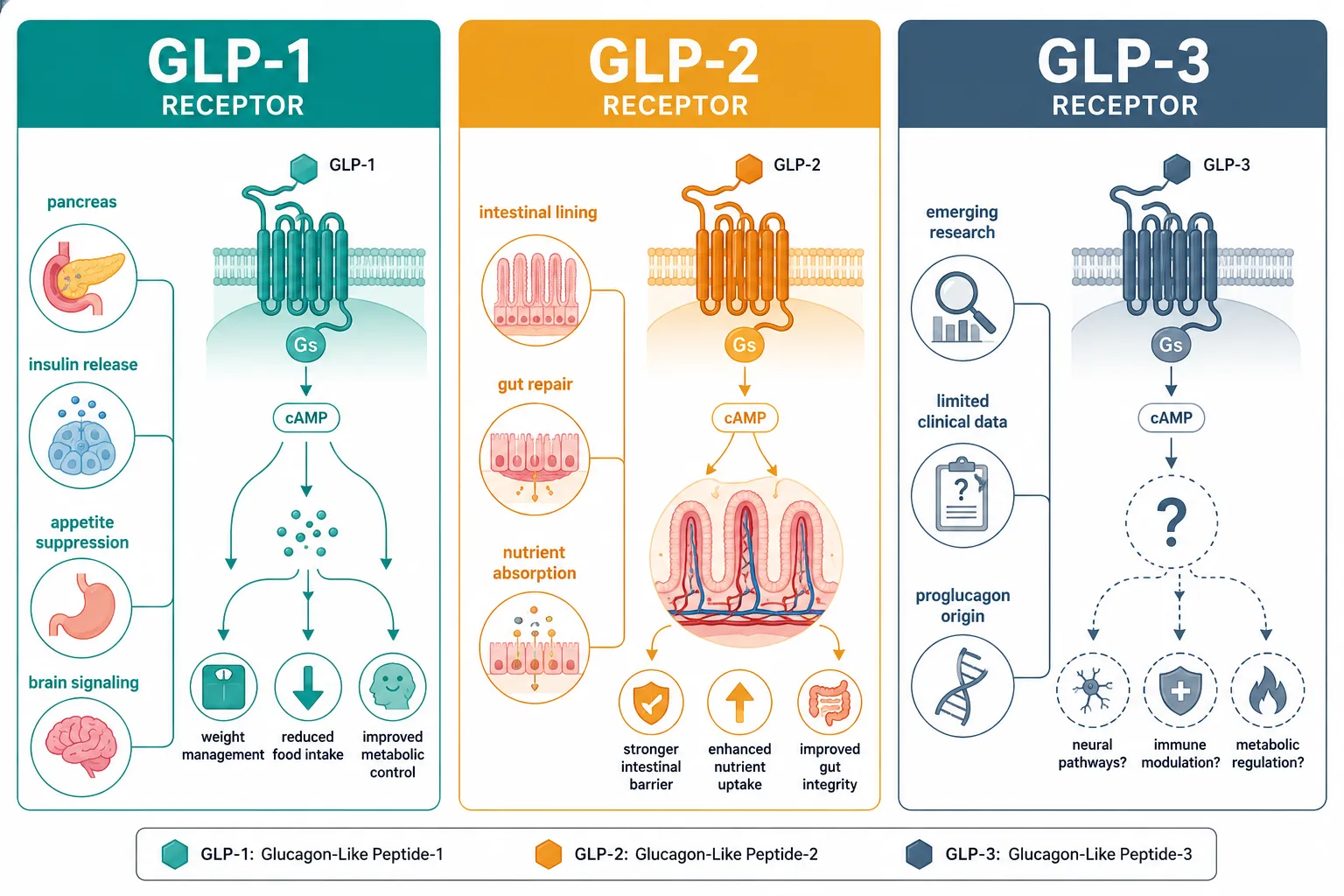
  • GLP-2 peptides act primarily on intestinal repair and growth, not on adipose tissue or appetite suppression, making them functionally distinct from GLP-1 class agents.
  • Retatrutide's glucagon receptor component raises resting metabolic rate and promotes lipolysis, a mechanism absent in GLP-1-only agents.
  • As of 2026, retatrutide remains in Phase 3 trials, with a New Drug Application filing anticipated in late 2026 or early 2027.

Retatrutide triple receptor agonist mechanism diagram

The Receptor Architecture Behind Triple Agonism

How retatrutide compares with GLP-1 and GLP-2 research peptides in obesity models starts with a fundamental structural distinction. Retatrutide is built on a GIP backbone, modified to resist DPP-4 enzymatic degradation, and conjugated to a C20 fatty diacid moiety that extends its half-life. This architecture allows it to engage three receptors simultaneously:

Receptor Primary Effect
GLP-1R Insulin secretion, appetite suppression
GIPR Enhanced insulin response, fat metabolism
GCG-R Increased resting metabolic rate, lipolysis

GLP-1 agonists like semaglutide activate only the GLP-1 receptor. This reduces appetite and improves glycemic control but leaves energy expenditure largely unchanged. Dual agonists such as tirzepatide add GIP receptor activation, improving insulin sensitivity and fat metabolism. Retatrutide layers glucagon receptor agonism on top of both, actively raising the rate at which the body burns stored fat.

GLP-2 peptides occupy a completely different functional space. Their primary role is intestinal epithelial growth, mucosal repair, and nutrient absorption regulation. In obesity models, GLP-2 analogs show minimal direct impact on body weight or adipose tissue reduction. Researchers studying gut-barrier integrity or inflammatory bowel conditions find GLP-2 highly relevant, but it does not compete with GLP-1 class agents on weight-loss endpoints.

For those exploring the broader landscape of incretin-related research, the GLP-3 and retatrutide incretin research themes page provides useful context on how these receptor classes are being studied in parallel.


Weight loss comparison bar chart: Retatrutide vs GLP-1 agents

Efficacy Data Across Obesity Models: Where the Numbers Diverge

The clinical weight-loss data illustrates the gap between these approaches with precision.

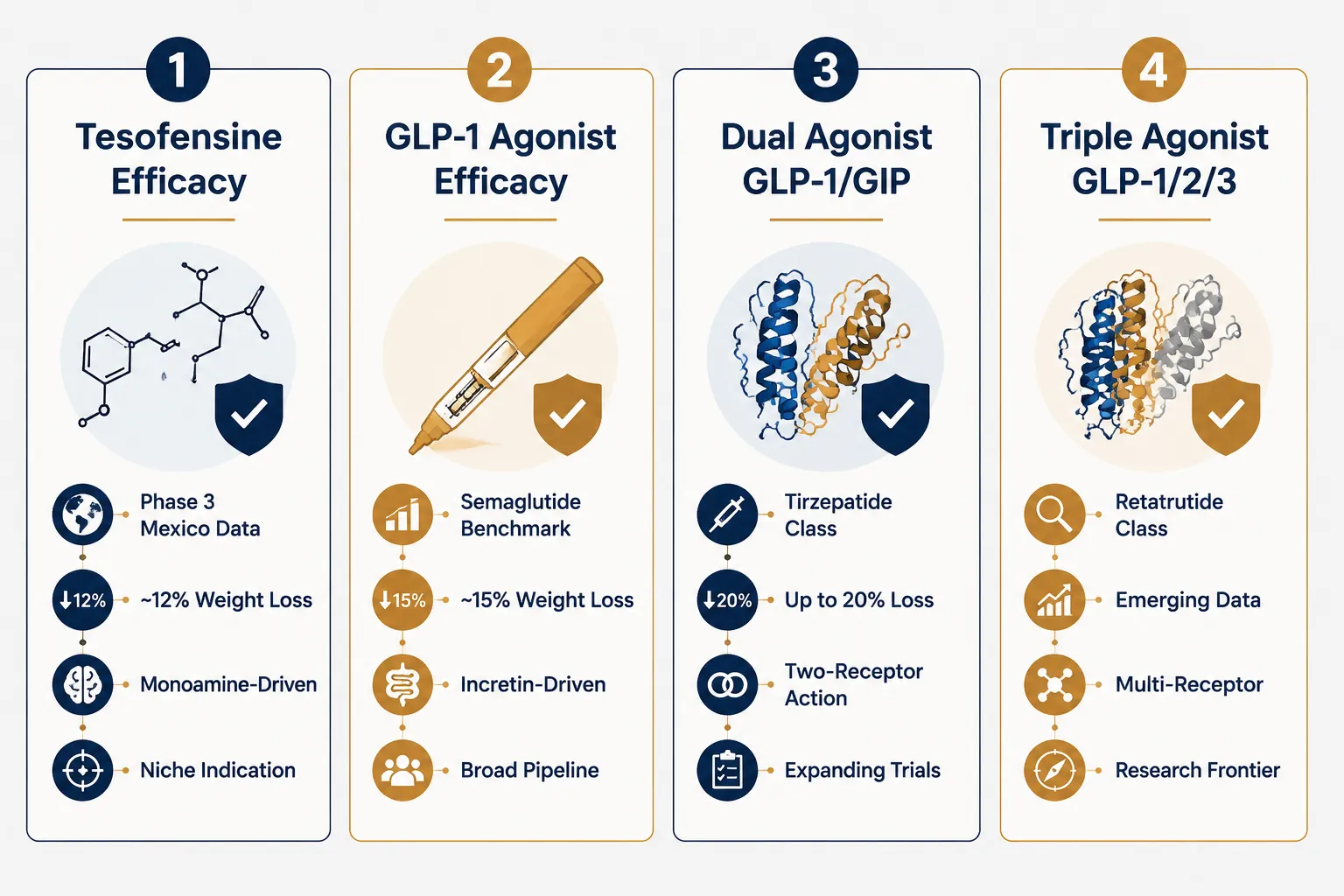
  • Semaglutide (GLP-1 only): approximately 14.9% body weight reduction over 68 weeks
  • Tirzepatide (GLP-1 + GIP): approximately 22.5% over 72 weeks
  • Retatrutide 12 mg (GLP-1 + GIP + GCG): 28.7% over 68 weeks in the TRIUMPH-4 Phase 3 trial

"Retatrutide's triple-agonist approach may redefine obesity treatment by offering weight loss results approaching those of bariatric surgery."

In Phase 2 trials, participants at the 12 mg dose also showed a 2.2% reduction in HbA1c from a baseline of approximately 8.3%, with 82% reaching HbA1c levels at or below 6.5%. This dual impact on both body weight and glycemic control strengthens retatrutide's research profile considerably.

The glucagon receptor component deserves particular attention. By increasing resting metabolic rate and driving lipolysis, it creates an energy-expenditure advantage that neither GLP-1 nor GLP-2 agents can replicate. This is why researchers tracking AOD-9604 metabolic research and lipolytic peptide mechanisms are increasingly interested in how glucagon co-agonism fits into broader fat-loss models.

For context on how GLP-1 peptides are currently categorized and studied, that resource outlines the foundational receptor class from which retatrutide diverges.


Researcher reviewing peptide molecular data in laboratory

How Retatrutide Compares With GLP-1 and GLP-2 Research Peptides in Obesity Models: Safety and Research Outlook

The side-effect profile of retatrutide largely mirrors that of other GLP-1 class agents. Nausea, diarrhea, vomiting, and constipation are the most commonly reported issues. One notable distinction is dysesthesia — tingling or burning sensations — reported in approximately 20.9% of participants at the 12 mg dose in TRIUMPH-4. This is not commonly observed with GLP-1-only or GLP-2 agents and likely reflects glucagon receptor activity.

As of 2026, retatrutide remains in Phase 3 trials. An NDA filing is anticipated in late 2026 or early 2027. Researchers sourcing compounds for preclinical work can review the GLP-3 Retatrutide 10mg research product for current availability.

Those building a broader metabolic research framework may also find value in exploring what is new in peptide research to understand how retatrutide fits alongside other emerging compounds, or reviewing NAD research and GLP-3 online resources for complementary metabolic pathways under investigation.

For researchers studying peptide blends in research contexts, the triple-agonist design of retatrutide also raises questions about whether combination approaches in preclinical models could replicate or extend its receptor-engagement profile.


Conclusion

How retatrutide compares with GLP-1 and GLP-2 research peptides in obesity models comes down to receptor breadth and metabolic reach. GLP-1 agents suppress appetite and improve insulin response. GLP-2 agents repair intestinal tissue. Retatrutide does something categorically different: it activates three complementary pathways at once, producing weight-loss outcomes that exceed all prior pharmacological benchmarks and approach the efficacy of surgical intervention.

Actionable next steps for researchers:

  • Review Phase 2 and TRIUMPH-4 Phase 3 trial data to understand dose-response relationships at the 4 mg, 8 mg, and 12 mg levels.
  • Distinguish GLP-2 research models (gut repair, nutrient absorption) from GLP-1/GCG co-agonism models before designing obesity endpoints.
  • Monitor NDA filing timelines in late 2026 and early 2027 for regulatory developments that may affect research access.
  • Evaluate glucagon receptor co-agonism as a distinct variable when comparing metabolic outcomes across peptide classes.

The research conversation around obesity pharmacology has changed. Triple agonism is no longer a theoretical advantage — the data has made it a measurable one.


https://www.puretestedpeptides.com/wp-content/uploads/2026/06/How-Retatrutide-Compares-With-GLP-1-and-GLP-2-Research-Peptides-in-Obesity-Models-1.png 672 1024 Pure Tested https://www.puretestedpeptides.com/wp-content/uploads/2026/01/buy-peptides-online.jpg Pure Tested2026-06-04 13:18:082026-07-20 15:03:56How Retatrutide Compares With GLP-1 and GLP-2 Research Peptides in Obesity Models
How Retatrutide Compares With GLP-1 and GLP-2 Research Peptides in Obesity Models

How Retatrutide Compares With GLP-1 and GLP-2 Research Peptides in Obesity Models

June 4, 2026/0 Comments/by Pure Tested

Triple agonism has quietly shifted the center of gravity in metabolic peptide research. While single-receptor approaches dominated the conversation for years, a 39-amino acid compound called retatrutide now sits at the intersection of three distinct signaling pathways — and the weight-loss data from preclinical and clinical obesity models is unlike anything seen before in this class.

Understanding how retatrutide compares with GLP-1 and GLP-2 research peptides in obesity models requires a clear look at receptor biology, efficacy endpoints, and the structural differences that separate these compounds at the molecular level.

Key Takeaways

  • Retatrutide is a triple agonist activating GLP-1, GIP, and glucagon receptors simultaneously, producing greater metabolic effects than single or dual agonists.
  • Phase 3 TRIUMPH-4 data showed 28.7% average weight loss at 68 weeks — the highest recorded in any obesity trial to date.
  • GLP-2 peptides act primarily on intestinal repair and growth, not on adipose tissue or appetite suppression, making them functionally distinct from GLP-1 class agents.
  • Retatrutide's glucagon receptor component raises resting metabolic rate and promotes lipolysis, a mechanism absent in GLP-1-only agents.
  • As of 2026, retatrutide remains in Phase 3 trials, with a New Drug Application filing anticipated in late 2026 or early 2027.

Retatrutide triple receptor agonist mechanism diagram

The Receptor Architecture Behind Triple Agonism

How retatrutide compares with GLP-1 and GLP-2 research peptides in obesity models starts with a fundamental structural distinction. Retatrutide is built on a GIP backbone, modified to resist DPP-4 enzymatic degradation, and conjugated to a C20 fatty diacid moiety that extends its half-life. This architecture allows it to engage three receptors simultaneously:

Receptor Primary Effect
GLP-1R Insulin secretion, appetite suppression
GIPR Enhanced insulin response, fat metabolism
GCG-R Increased resting metabolic rate, lipolysis

GLP-1 agonists like semaglutide activate only the GLP-1 receptor. This reduces appetite and improves glycemic control but leaves energy expenditure largely unchanged. Dual agonists such as tirzepatide add GIP receptor activation, improving insulin sensitivity and fat metabolism. Retatrutide layers glucagon receptor agonism on top of both, actively raising the rate at which the body burns stored fat.

GLP-2 peptides occupy a completely different functional space. Their primary role is intestinal epithelial growth, mucosal repair, and nutrient absorption regulation. In obesity models, GLP-2 analogs show minimal direct impact on body weight or adipose tissue reduction. Researchers studying gut-barrier integrity or inflammatory bowel conditions find GLP-2 highly relevant, but it does not compete with GLP-1 class agents on weight-loss endpoints.

For those exploring the broader landscape of incretin-related research, the GLP-3 and retatrutide incretin research themes page provides useful context on how these receptor classes are being studied in parallel.


Weight loss comparison bar chart: Retatrutide vs GLP-1 agents

Efficacy Data Across Obesity Models: Where the Numbers Diverge

The clinical weight-loss data illustrates the gap between these approaches with precision.

  • Semaglutide (GLP-1 only): approximately 14.9% body weight reduction over 68 weeks
  • Tirzepatide (GLP-1 + GIP): approximately 22.5% over 72 weeks
  • Retatrutide 12 mg (GLP-1 + GIP + GCG): 28.7% over 68 weeks in the TRIUMPH-4 Phase 3 trial

"Retatrutide's triple-agonist approach may redefine obesity treatment by offering weight loss results approaching those of bariatric surgery."

In Phase 2 trials, participants at the 12 mg dose also showed a 2.2% reduction in HbA1c from a baseline of approximately 8.3%, with 82% reaching HbA1c levels at or below 6.5%. This dual impact on both body weight and glycemic control strengthens retatrutide's research profile considerably.

The glucagon receptor component deserves particular attention. By increasing resting metabolic rate and driving lipolysis, it creates an energy-expenditure advantage that neither GLP-1 nor GLP-2 agents can replicate. This is why researchers tracking AOD-9604 metabolic research and lipolytic peptide mechanisms are increasingly interested in how glucagon co-agonism fits into broader fat-loss models.

For context on how GLP-1 peptides are currently categorized and studied, that resource outlines the foundational receptor class from which retatrutide diverges.


Researcher reviewing peptide molecular data in laboratory

How Retatrutide Compares With GLP-1 and GLP-2 Research Peptides in Obesity Models: Safety and Research Outlook

The side-effect profile of retatrutide largely mirrors that of other GLP-1 class agents. Nausea, diarrhea, vomiting, and constipation are the most commonly reported issues. One notable distinction is dysesthesia — tingling or burning sensations — reported in approximately 20.9% of participants at the 12 mg dose in TRIUMPH-4. This is not commonly observed with GLP-1-only or GLP-2 agents and likely reflects glucagon receptor activity.

As of 2026, retatrutide remains in Phase 3 trials. An NDA filing is anticipated in late 2026 or early 2027. Researchers sourcing compounds for preclinical work can review the GLP-3 Retatrutide 10mg research product for current availability.

Those building a broader metabolic research framework may also find value in exploring what is new in peptide research to understand how retatrutide fits alongside other emerging compounds, or reviewing NAD research and GLP-3 online resources for complementary metabolic pathways under investigation.

For researchers studying peptide blends in research contexts, the triple-agonist design of retatrutide also raises questions about whether combination approaches in preclinical models could replicate or extend its receptor-engagement profile.


Conclusion

How retatrutide compares with GLP-1 and GLP-2 research peptides in obesity models comes down to receptor breadth and metabolic reach. GLP-1 agents suppress appetite and improve insulin response. GLP-2 agents repair intestinal tissue. Retatrutide does something categorically different: it activates three complementary pathways at once, producing weight-loss outcomes that exceed all prior pharmacological benchmarks and approach the efficacy of surgical intervention.

Actionable next steps for researchers:

  • Review Phase 2 and TRIUMPH-4 Phase 3 trial data to understand dose-response relationships at the 4 mg, 8 mg, and 12 mg levels.
  • Distinguish GLP-2 research models (gut repair, nutrient absorption) from GLP-1/GCG co-agonism models before designing obesity endpoints.
  • Monitor NDA filing timelines in late 2026 and early 2027 for regulatory developments that may affect research access.
  • Evaluate glucagon receptor co-agonism as a distinct variable when comparing metabolic outcomes across peptide classes.

The research conversation around obesity pharmacology has changed. Triple agonism is no longer a theoretical advantage — the data has made it a measurable one.


https://www.puretestedpeptides.com/wp-content/uploads/2026/06/How-Retatrutide-Compares-With-GLP-1-and-GLP-2-Research-Peptides-in-Obesity-Models.png 672 1024 Pure Tested https://www.puretestedpeptides.com/wp-content/uploads/2026/01/buy-peptides-online.jpg Pure Tested2026-06-04 13:18:082026-07-20 15:03:57How Retatrutide Compares With GLP-1 and GLP-2 Research Peptides in Obesity Models
How Retatrutide Compares With GLP-1 and GLP-2 Research Peptides in Obesity Models

How Retatrutide Compares With GLP-1 and GLP-2 Research Peptides in Obesity Models

June 4, 2026/0 Comments/by Pure Tested

Triple agonism has quietly shifted the center of gravity in metabolic peptide research. While single-receptor approaches dominated the conversation for years, a 39-amino acid compound called retatrutide now sits at the intersection of three distinct signaling pathways — and the weight-loss data from preclinical and clinical obesity models is unlike anything seen before in this class.

Understanding how retatrutide compares with GLP-1 and GLP-2 research peptides in obesity models requires a clear look at receptor biology, efficacy endpoints, and the structural differences that separate these compounds at the molecular level.

Key Takeaways

  • Retatrutide is a triple agonist activating GLP-1, GIP, and glucagon receptors simultaneously, producing greater metabolic effects than single or dual agonists.
  • Phase 3 TRIUMPH-4 data showed 28.7% average weight loss at 68 weeks — the highest recorded in any obesity trial to date.
  • GLP-2 peptides act primarily on intestinal repair and growth, not on adipose tissue or appetite suppression, making them functionally distinct from GLP-1 class agents.
  • Retatrutide's glucagon receptor component raises resting metabolic rate and promotes lipolysis, a mechanism absent in GLP-1-only agents.
  • As of 2026, retatrutide remains in Phase 3 trials, with a New Drug Application filing anticipated in late 2026 or early 2027.

Retatrutide triple receptor agonist mechanism diagram

The Receptor Architecture Behind Triple Agonism

How retatrutide compares with GLP-1 and GLP-2 research peptides in obesity models starts with a fundamental structural distinction. Retatrutide is built on a GIP backbone, modified to resist DPP-4 enzymatic degradation, and conjugated to a C20 fatty diacid moiety that extends its half-life. This architecture allows it to engage three receptors simultaneously:

Receptor Primary Effect
GLP-1R Insulin secretion, appetite suppression
GIPR Enhanced insulin response, fat metabolism
GCG-R Increased resting metabolic rate, lipolysis

GLP-1 agonists like semaglutide activate only the GLP-1 receptor. This reduces appetite and improves glycemic control but leaves energy expenditure largely unchanged. Dual agonists such as tirzepatide add GIP receptor activation, improving insulin sensitivity and fat metabolism. Retatrutide layers glucagon receptor agonism on top of both, actively raising the rate at which the body burns stored fat.

GLP-2 peptides occupy a completely different functional space. Their primary role is intestinal epithelial growth, mucosal repair, and nutrient absorption regulation. In obesity models, GLP-2 analogs show minimal direct impact on body weight or adipose tissue reduction. Researchers studying gut-barrier integrity or inflammatory bowel conditions find GLP-2 highly relevant, but it does not compete with GLP-1 class agents on weight-loss endpoints.

For those exploring the broader landscape of incretin-related research, the GLP-3 and retatrutide incretin research themes page provides useful context on how these receptor classes are being studied in parallel.


Weight loss comparison bar chart: Retatrutide vs GLP-1 agents

Efficacy Data Across Obesity Models: Where the Numbers Diverge

The clinical weight-loss data illustrates the gap between these approaches with precision.

  • Semaglutide (GLP-1 only): approximately 14.9% body weight reduction over 68 weeks
  • Tirzepatide (GLP-1 + GIP): approximately 22.5% over 72 weeks
  • Retatrutide 12 mg (GLP-1 + GIP + GCG): 28.7% over 68 weeks in the TRIUMPH-4 Phase 3 trial

"Retatrutide's triple-agonist approach may redefine obesity treatment by offering weight loss results approaching those of bariatric surgery."

In Phase 2 trials, participants at the 12 mg dose also showed a 2.2% reduction in HbA1c from a baseline of approximately 8.3%, with 82% reaching HbA1c levels at or below 6.5%. This dual impact on both body weight and glycemic control strengthens retatrutide's research profile considerably.

The glucagon receptor component deserves particular attention. By increasing resting metabolic rate and driving lipolysis, it creates an energy-expenditure advantage that neither GLP-1 nor GLP-2 agents can replicate. This is why researchers tracking AOD-9604 metabolic research and lipolytic peptide mechanisms are increasingly interested in how glucagon co-agonism fits into broader fat-loss models.

For context on how GLP-1 peptides are currently categorized and studied, that resource outlines the foundational receptor class from which retatrutide diverges.


Researcher reviewing peptide molecular data in laboratory

How Retatrutide Compares With GLP-1 and GLP-2 Research Peptides in Obesity Models: Safety and Research Outlook

The side-effect profile of retatrutide largely mirrors that of other GLP-1 class agents. Nausea, diarrhea, vomiting, and constipation are the most commonly reported issues. One notable distinction is dysesthesia — tingling or burning sensations — reported in approximately 20.9% of participants at the 12 mg dose in TRIUMPH-4. This is not commonly observed with GLP-1-only or GLP-2 agents and likely reflects glucagon receptor activity.

As of 2026, retatrutide remains in Phase 3 trials. An NDA filing is anticipated in late 2026 or early 2027. Researchers sourcing compounds for preclinical work can review the GLP-3 Retatrutide 10mg research product for current availability.

Those building a broader metabolic research framework may also find value in exploring what is new in peptide research to understand how retatrutide fits alongside other emerging compounds, or reviewing NAD research and GLP-3 online resources for complementary metabolic pathways under investigation.

For researchers studying peptide blends in research contexts, the triple-agonist design of retatrutide also raises questions about whether combination approaches in preclinical models could replicate or extend its receptor-engagement profile.


Conclusion

How retatrutide compares with GLP-1 and GLP-2 research peptides in obesity models comes down to receptor breadth and metabolic reach. GLP-1 agents suppress appetite and improve insulin response. GLP-2 agents repair intestinal tissue. Retatrutide does something categorically different: it activates three complementary pathways at once, producing weight-loss outcomes that exceed all prior pharmacological benchmarks and approach the efficacy of surgical intervention.

Actionable next steps for researchers:

  • Review Phase 2 and TRIUMPH-4 Phase 3 trial data to understand dose-response relationships at the 4 mg, 8 mg, and 12 mg levels.
  • Distinguish GLP-2 research models (gut repair, nutrient absorption) from GLP-1/GCG co-agonism models before designing obesity endpoints.
  • Monitor NDA filing timelines in late 2026 and early 2027 for regulatory developments that may affect research access.
  • Evaluate glucagon receptor co-agonism as a distinct variable when comparing metabolic outcomes across peptide classes.

The research conversation around obesity pharmacology has changed. Triple agonism is no longer a theoretical advantage — the data has made it a measurable one.


https://www.puretestedpeptides.com/wp-content/uploads/2026/06/How-Retatrutide-Compares-With-GLP-1-and-GLP-2-Research-Peptides-in-Obesity-Models.png 672 1024 Pure Tested https://www.puretestedpeptides.com/wp-content/uploads/2026/01/buy-peptides-online.jpg Pure Tested2026-06-04 13:18:082026-07-20 15:04:06How Retatrutide Compares With GLP-1 and GLP-2 Research Peptides in Obesity Models
How Retatrutide Compares With GLP-1 and GLP-2 Research Peptides in Obesity Models

How Retatrutide Compares With GLP-1 and GLP-2 Research Peptides in Obesity Models

June 4, 2026/0 Comments/by Pure Tested

Triple agonism has quietly shifted the center of gravity in metabolic peptide research. While single-receptor approaches dominated the conversation for years, a 39-amino acid compound called retatrutide now sits at the intersection of three distinct signaling pathways — and the weight-loss data from preclinical and clinical obesity models is unlike anything seen before in this class.

Understanding how retatrutide compares with GLP-1 and GLP-2 research peptides in obesity models requires a clear look at receptor biology, efficacy endpoints, and the structural differences that separate these compounds at the molecular level.

Key Takeaways

  • Retatrutide is a triple agonist activating GLP-1, GIP, and glucagon receptors simultaneously, producing greater metabolic effects than single or dual agonists.
  • Phase 3 TRIUMPH-4 data showed 28.7% average weight loss at 68 weeks — the highest recorded in any obesity trial to date.
  • GLP-2 peptides act primarily on intestinal repair and growth, not on adipose tissue or appetite suppression, making them functionally distinct from GLP-1 class agents.
  • Retatrutide's glucagon receptor component raises resting metabolic rate and promotes lipolysis, a mechanism absent in GLP-1-only agents.
  • As of 2026, retatrutide remains in Phase 3 trials, with a New Drug Application filing anticipated in late 2026 or early 2027.

Retatrutide triple receptor agonist mechanism diagram

The Receptor Architecture Behind Triple Agonism

How retatrutide compares with GLP-1 and GLP-2 research peptides in obesity models starts with a fundamental structural distinction. Retatrutide is built on a GIP backbone, modified to resist DPP-4 enzymatic degradation, and conjugated to a C20 fatty diacid moiety that extends its half-life. This architecture allows it to engage three receptors simultaneously:

Receptor Primary Effect
GLP-1R Insulin secretion, appetite suppression
GIPR Enhanced insulin response, fat metabolism
GCG-R Increased resting metabolic rate, lipolysis

GLP-1 agonists like semaglutide activate only the GLP-1 receptor. This reduces appetite and improves glycemic control but leaves energy expenditure largely unchanged. Dual agonists such as tirzepatide add GIP receptor activation, improving insulin sensitivity and fat metabolism. Retatrutide layers glucagon receptor agonism on top of both, actively raising the rate at which the body burns stored fat.

GLP-2 peptides occupy a completely different functional space. Their primary role is intestinal epithelial growth, mucosal repair, and nutrient absorption regulation. In obesity models, GLP-2 analogs show minimal direct impact on body weight or adipose tissue reduction. Researchers studying gut-barrier integrity or inflammatory bowel conditions find GLP-2 highly relevant, but it does not compete with GLP-1 class agents on weight-loss endpoints.

For those exploring the broader landscape of incretin-related research, the GLP-3 and retatrutide incretin research themes page provides useful context on how these receptor classes are being studied in parallel.


Weight loss comparison bar chart: Retatrutide vs GLP-1 agents

Efficacy Data Across Obesity Models: Where the Numbers Diverge

The clinical weight-loss data illustrates the gap between these approaches with precision.

  • Semaglutide (GLP-1 only): approximately 14.9% body weight reduction over 68 weeks
  • Tirzepatide (GLP-1 + GIP): approximately 22.5% over 72 weeks
  • Retatrutide 12 mg (GLP-1 + GIP + GCG): 28.7% over 68 weeks in the TRIUMPH-4 Phase 3 trial

"Retatrutide's triple-agonist approach may redefine obesity treatment by offering weight loss results approaching those of bariatric surgery."

In Phase 2 trials, participants at the 12 mg dose also showed a 2.2% reduction in HbA1c from a baseline of approximately 8.3%, with 82% reaching HbA1c levels at or below 6.5%. This dual impact on both body weight and glycemic control strengthens retatrutide's research profile considerably.

The glucagon receptor component deserves particular attention. By increasing resting metabolic rate and driving lipolysis, it creates an energy-expenditure advantage that neither GLP-1 nor GLP-2 agents can replicate. This is why researchers tracking AOD-9604 metabolic research and lipolytic peptide mechanisms are increasingly interested in how glucagon co-agonism fits into broader fat-loss models.

For context on how GLP-1 peptides are currently categorized and studied, that resource outlines the foundational receptor class from which retatrutide diverges.


Researcher reviewing peptide molecular data in laboratory

How Retatrutide Compares With GLP-1 and GLP-2 Research Peptides in Obesity Models: Safety and Research Outlook

The side-effect profile of retatrutide largely mirrors that of other GLP-1 class agents. Nausea, diarrhea, vomiting, and constipation are the most commonly reported issues. One notable distinction is dysesthesia — tingling or burning sensations — reported in approximately 20.9% of participants at the 12 mg dose in TRIUMPH-4. This is not commonly observed with GLP-1-only or GLP-2 agents and likely reflects glucagon receptor activity.

As of 2026, retatrutide remains in Phase 3 trials. An NDA filing is anticipated in late 2026 or early 2027. Researchers sourcing compounds for preclinical work can review the GLP-3 Retatrutide 10mg research product for current availability.

Those building a broader metabolic research framework may also find value in exploring what is new in peptide research to understand how retatrutide fits alongside other emerging compounds, or reviewing NAD research and GLP-3 online resources for complementary metabolic pathways under investigation.

For researchers studying peptide blends in research contexts, the triple-agonist design of retatrutide also raises questions about whether combination approaches in preclinical models could replicate or extend its receptor-engagement profile.


Conclusion

How retatrutide compares with GLP-1 and GLP-2 research peptides in obesity models comes down to receptor breadth and metabolic reach. GLP-1 agents suppress appetite and improve insulin response. GLP-2 agents repair intestinal tissue. Retatrutide does something categorically different: it activates three complementary pathways at once, producing weight-loss outcomes that exceed all prior pharmacological benchmarks and approach the efficacy of surgical intervention.

Actionable next steps for researchers:

  • Review Phase 2 and TRIUMPH-4 Phase 3 trial data to understand dose-response relationships at the 4 mg, 8 mg, and 12 mg levels.
  • Distinguish GLP-2 research models (gut repair, nutrient absorption) from GLP-1/GCG co-agonism models before designing obesity endpoints.
  • Monitor NDA filing timelines in late 2026 and early 2027 for regulatory developments that may affect research access.
  • Evaluate glucagon receptor co-agonism as a distinct variable when comparing metabolic outcomes across peptide classes.

The research conversation around obesity pharmacology has changed. Triple agonism is no longer a theoretical advantage — the data has made it a measurable one.


https://www.puretestedpeptides.com/wp-content/uploads/2026/06/How-Retatrutide-Compares-With-GLP-1-and-GLP-2-Research-Peptides-in-Obesity-Models.png 672 1024 Pure Tested https://www.puretestedpeptides.com/wp-content/uploads/2026/01/buy-peptides-online.jpg Pure Tested2026-06-04 13:18:082026-07-20 15:03:57How Retatrutide Compares With GLP-1 and GLP-2 Research Peptides in Obesity Models
How Retatrutide Compares With GLP-1 and GLP-2 Research Peptides in Obesity Models

How Retatrutide Compares With GLP-1 and GLP-2 Research Peptides in Obesity Models

June 4, 2026/0 Comments/by Pure Tested

Triple agonism has quietly shifted the center of gravity in metabolic peptide research. While single-receptor approaches dominated the conversation for years, a 39-amino acid compound called retatrutide now sits at the intersection of three distinct signaling pathways — and the weight-loss data from preclinical and clinical obesity models is unlike anything seen before in this class.

Understanding how retatrutide compares with GLP-1 and GLP-2 research peptides in obesity models requires a clear look at receptor biology, efficacy endpoints, and the structural differences that separate these compounds at the molecular level.

Key Takeaways

  • Retatrutide is a triple agonist activating GLP-1, GIP, and glucagon receptors simultaneously, producing greater metabolic effects than single or dual agonists.
  • Phase 3 TRIUMPH-4 data showed 28.7% average weight loss at 68 weeks — the highest recorded in any obesity trial to date.
  • GLP-2 peptides act primarily on intestinal repair and growth, not on adipose tissue or appetite suppression, making them functionally distinct from GLP-1 class agents.
  • Retatrutide's glucagon receptor component raises resting metabolic rate and promotes lipolysis, a mechanism absent in GLP-1-only agents.
  • As of 2026, retatrutide remains in Phase 3 trials, with a New Drug Application filing anticipated in late 2026 or early 2027.

Retatrutide triple receptor agonist mechanism diagram

The Receptor Architecture Behind Triple Agonism

How retatrutide compares with GLP-1 and GLP-2 research peptides in obesity models starts with a fundamental structural distinction. Retatrutide is built on a GIP backbone, modified to resist DPP-4 enzymatic degradation, and conjugated to a C20 fatty diacid moiety that extends its half-life. This architecture allows it to engage three receptors simultaneously:

Receptor Primary Effect
GLP-1R Insulin secretion, appetite suppression
GIPR Enhanced insulin response, fat metabolism
GCG-R Increased resting metabolic rate, lipolysis

GLP-1 agonists like semaglutide activate only the GLP-1 receptor. This reduces appetite and improves glycemic control but leaves energy expenditure largely unchanged. Dual agonists such as tirzepatide add GIP receptor activation, improving insulin sensitivity and fat metabolism. Retatrutide layers glucagon receptor agonism on top of both, actively raising the rate at which the body burns stored fat.

GLP-2 peptides occupy a completely different functional space. Their primary role is intestinal epithelial growth, mucosal repair, and nutrient absorption regulation. In obesity models, GLP-2 analogs show minimal direct impact on body weight or adipose tissue reduction. Researchers studying gut-barrier integrity or inflammatory bowel conditions find GLP-2 highly relevant, but it does not compete with GLP-1 class agents on weight-loss endpoints.

For those exploring the broader landscape of incretin-related research, the GLP-3 and retatrutide incretin research themes page provides useful context on how these receptor classes are being studied in parallel.


Weight loss comparison bar chart: Retatrutide vs GLP-1 agents

Efficacy Data Across Obesity Models: Where the Numbers Diverge

The clinical weight-loss data illustrates the gap between these approaches with precision.

  • Semaglutide (GLP-1 only): approximately 14.9% body weight reduction over 68 weeks
  • Tirzepatide (GLP-1 + GIP): approximately 22.5% over 72 weeks
  • Retatrutide 12 mg (GLP-1 + GIP + GCG): 28.7% over 68 weeks in the TRIUMPH-4 Phase 3 trial

"Retatrutide's triple-agonist approach may redefine obesity treatment by offering weight loss results approaching those of bariatric surgery."

In Phase 2 trials, participants at the 12 mg dose also showed a 2.2% reduction in HbA1c from a baseline of approximately 8.3%, with 82% reaching HbA1c levels at or below 6.5%. This dual impact on both body weight and glycemic control strengthens retatrutide's research profile considerably.

The glucagon receptor component deserves particular attention. By increasing resting metabolic rate and driving lipolysis, it creates an energy-expenditure advantage that neither GLP-1 nor GLP-2 agents can replicate. This is why researchers tracking AOD-9604 metabolic research and lipolytic peptide mechanisms are increasingly interested in how glucagon co-agonism fits into broader fat-loss models.

For context on how GLP-1 peptides are currently categorized and studied, that resource outlines the foundational receptor class from which retatrutide diverges.


Researcher reviewing peptide molecular data in laboratory

How Retatrutide Compares With GLP-1 and GLP-2 Research Peptides in Obesity Models: Safety and Research Outlook

The side-effect profile of retatrutide largely mirrors that of other GLP-1 class agents. Nausea, diarrhea, vomiting, and constipation are the most commonly reported issues. One notable distinction is dysesthesia — tingling or burning sensations — reported in approximately 20.9% of participants at the 12 mg dose in TRIUMPH-4. This is not commonly observed with GLP-1-only or GLP-2 agents and likely reflects glucagon receptor activity.

As of 2026, retatrutide remains in Phase 3 trials. An NDA filing is anticipated in late 2026 or early 2027. Researchers sourcing compounds for preclinical work can review the GLP-3 Retatrutide 10mg research product for current availability.

Those building a broader metabolic research framework may also find value in exploring what is new in peptide research to understand how retatrutide fits alongside other emerging compounds, or reviewing NAD research and GLP-3 online resources for complementary metabolic pathways under investigation.

For researchers studying peptide blends in research contexts, the triple-agonist design of retatrutide also raises questions about whether combination approaches in preclinical models could replicate or extend its receptor-engagement profile.


Conclusion

How retatrutide compares with GLP-1 and GLP-2 research peptides in obesity models comes down to receptor breadth and metabolic reach. GLP-1 agents suppress appetite and improve insulin response. GLP-2 agents repair intestinal tissue. Retatrutide does something categorically different: it activates three complementary pathways at once, producing weight-loss outcomes that exceed all prior pharmacological benchmarks and approach the efficacy of surgical intervention.

Actionable next steps for researchers:

  • Review Phase 2 and TRIUMPH-4 Phase 3 trial data to understand dose-response relationships at the 4 mg, 8 mg, and 12 mg levels.
  • Distinguish GLP-2 research models (gut repair, nutrient absorption) from GLP-1/GCG co-agonism models before designing obesity endpoints.
  • Monitor NDA filing timelines in late 2026 and early 2027 for regulatory developments that may affect research access.
  • Evaluate glucagon receptor co-agonism as a distinct variable when comparing metabolic outcomes across peptide classes.

The research conversation around obesity pharmacology has changed. Triple agonism is no longer a theoretical advantage — the data has made it a measurable one.


https://www.puretestedpeptides.com/wp-content/uploads/2026/06/How-Retatrutide-Compares-With-GLP-1-and-GLP-2-Research-Peptides-in-Obesity-Models.png 672 1024 Pure Tested https://www.puretestedpeptides.com/wp-content/uploads/2026/01/buy-peptides-online.jpg Pure Tested2026-06-04 13:18:082026-07-20 15:04:07How Retatrutide Compares With GLP-1 and GLP-2 Research Peptides in Obesity Models
×

Helpful Links

  • My account
  • Cart
  • Checkout
  • Refund and Returns Policy
  • Privacy Policy
  • SMS Privacy Policy
  • Login
  • My Account
  • Logout

USA Made Lab Tested Peptides

All products are sold for research, laboratory, or analytical purposes only, and are not for human consumption


Pure Tested Peptides is a chemical supplier. Pure Tested Peptides is not a compounding / chemical compounding facility as defined under 503A of the Federal Food, Drug, and Cosmetic act. Pure Tested Peptides is not an outsourcing facility as defined under 503B of the Federal Food, Drug, and Cosmetic act.

The statements made within this website have not been evaluated by the US Food and Drug Administration. The products we offer are not intended to diagnose, treat, cure or prevent any disease.

Human/Animal Consumption Prohibited. Laboratory/In-Vitro Experimental Use Only

Scroll to top Scroll to top Scroll to top