Call or Text 727-513-9780
  • Shopping Cart Shopping Cart
    0Shopping Cart
Pure Tested Peptides | America's most trusted Peptides for sale online
  • Peptides for sale
    • Oral Peptides for sale
      • Peptide Capsules for sale
      • BPC 157 Capsules 1000mcg
      • SLU-PP-332 Capsules | 1000 mcg
      • 5-Amino-1MQ 50mg Capsules
      • Tesofensine 500mcg
    • All Peptides for sale
    • Peptide Sprays
      • BPC 157 Nasal Spray Kit
      • BPC-157 TB500 Nasal Spray Kit
      • Semax Nasal Spray 10mg
      • Selank – Nasal Spray Kit – 10mg
      • Epithalon 50MG Nasal Spray Kit
      • Ipamorelin 10mg Nasal Spray
      • Klow Nasal Spray (BPC-157 + TB-500 + GHK-Cu + KPV) | 80mg
      • Hulk Nasal Spray Tesa / Ipa Blend 6/3 MG
      • Klow Nasal Spray
      • NAD + 500 mg Nasal Spray
      • PT-141 Nasal Spray Kit
    • GHRH Peptides
      • Ipa Peptides
      • CJC-1295 Peptides
        • CJC-1295 with DAC 5 mg
        • CJC-1295 without DAC 5 mg
        • CJC-1295 Ipa 10mg
      • Tesa Peptides
        • Tesa Peptide
        • Tesa 20 mg
    • GHK-Cu Peptides
      • All GHK-Cu Peptides
      • GHK-Cu 100mg
      • KLOW Peptide Blend – Buy KLOW blend online
    • BPC Peptides
      • All BPC Peptides
      • BPC-157
      • BPC-157 TB-500
      • BPC 157 capsules 1000mcg
    • SLU-PP-332 Peptides
      • All SLU-PP-332 Peptides
      • SLU-PP-332 5mg
    • GLP3 Peptides
    • PT-141 Peptides
      • PT-141 Peptides for sale
      • PT-141 10mg
      • PT-141 Nasal Spray
    • CAG Peptides
      • Lipo-C Peptide Blend
      • CAG 5mg
      • CAG 10mg
    • MOTS-C Peptides
      • MOTS-C Peptides for sale
      • MOTS-c peptide
      • MOTS-c 10mg *6 pack*
    • 5 Amino 1MQ Peptides
      • 5 Amino 1MQ Peptides for sale
      • 5-Amino-1MQ 50mg Capsules
      • 5-Amino-1MQ 5mg
    • Epithalon Peptides
      • Epithalon Peptides for sale
      • Epithalon 10mg
      • Epithalon 50mg
  • Shop
    • GLPs
      • 5-Amino-1MQ 50mg Capsules
      • 5-Amino-1MQ 5mg
      • L-Carnitine 500mg/ml
      • Tesofensine 500mcg
      • SLU-PP-332 5mg
      • MOTS-c 10mg *6 pack*
    • Epithalon & BPC Peptides
      • Epithalon 10mg
      • Epithalon 50mg
      • BPC-157
      • BPC 157 capsules 1000mcg
      • BPC-157 TB-500
      • BPC-157 TB500 Nasal Spray Kit
      • BPC 157 Nasal Spray Kit
    • BPC TB-500 & NAD+ Peptides
      • NAD+ 500 mg
      • KLOW Peptide Blend – Buy KLOW blend online
      • GLOW Peptide Blend
      • TB 500 5mg
      • BPC 157 capsules 1000mcg – Supplement
      • BPC 157 Nasal Spray Kit
      • BPC-157
      • BPC-157 TB500 Nasal Spray Kit
      • BPC-157 TB-500
      • BPC 157 capsules 1000mcg
    • LL-37 Peptide
      • LL-37 10 mg
    • MOTS-C & Selank
      • MOTS-c peptide
      • Selank 10mg
    • GHK Peptides
      • GHK-Cu 100mg
      • GLOW Peptide Blend
      • KLOW Peptide Blend – Buy KLOW blend online
  • COAs
  • Wholesale
    • Wholesale Peptides for sale
  • PTP FAQ
  • Affiliates
    • Selank Peptide: Advanced Pharmacological Mechanisms Underlying Its Anxiolytic and Nootropic Effects in Research
      • 5-Amino-1MQ Peptide: Detailed Mechanisms of NNMT Inhibition and Its Impact on Cellular Metabolism Research
        • MOTS-C Peptide: Unraveling Its Role in Mitochondrial Dynamics and Energy Metabolism Research
          • Epithalon Peptide and Telomerase Regulation: Investigating Its Impact on Cellular Senescence and Lifespan Research Models
            • GLP2-T vs GLP2 Tirz Peptide: Understanding the Naming, Mechanistic Nuances, and Research Implications for Gut Health
      • Peptides and Polypeptides in Modern Pharmacology: What Research on Metoprolol, Prednisone, and Amlodipine Reveals
        • Polypeptide Peptides vs NSAIDs: What Naproxen and Diclofenac Teach Tissue-Repair Researchers About BPC‑157 and TB‑500
          • Peptides and Polypeptides in Endocrine Pharmacology: How GLP-1, GLP-2, and GLP-3 Retatrutide Differ From Classic Drugs Like Prednisone and Amlodipine
          • 5‑Amino‑1MQ Peptide and NNMT Inhibition: How It Compares With Statins Like Atorvastatin in Adipose and Lipid Metabolism Research
      • Enclomiphene, Estrogen Receptor Signaling, and Luteinizing Phase Biology: What Hormone Researchers Should Measure
        • Mesenchymal Stem Cells, BPC‑157, and GHK‑Cu: How Tissue Repair Peptides Compare With Classic NSAIDs Like Naproxen in Injury Models
          • Peptide Calculator Use Cases Beyond Growth Hormone: Working Through GLP‑3 Retatrutide, MOTS‑c, and BPC‑157 Research Dosing
        • Polypeptide Peptides in Endocrine and Metabolic Pharmacology: Lessons From Amlodipine, Prednisone, and Metoprolol
        • Peptides Calculator for Advanced Blends: Worked Examples for Tesamorelin, CJC‑1295, and Ipamorelin Stacks
          • Peptides and Polypeptides in Human Physiology: How Molecular Size Shapes Research Applications
            • Selank Peptide: Advanced Pharmacological Mechanisms Underlying Its Anxiolytic and Nootropic Effects in Research
          • 5-Amino-1MQ Peptide: Detailed Mechanisms of NNMT Inhibition and Its Impact on Cellular Metabolism Research
            • MOTS-C Peptide: Unraveling Its Role in Mitochondrial Dynamics and Energy Metabolism Research
              • Epithalon Peptide and Telomerase Regulation: Investigating Its Impact on Cellular Senescence and Lifespan Research Models
                • GLP2-T vs GLP2 Tirz Peptide: Understanding the Naming, Mechanistic Nuances, and Research Implications for Gut Health
                  • Peptides and Polypeptides in Endocrine Pharmacology: How GLP-1, GLP-2, and GLP-3 Retatrutide Differ From Classic Drugs Like Prednisone and Amlodipine
                    • Polypeptide Peptides vs NSAIDs: What Naproxen and Diclofenac Teach Tissue-Repair Researchers About BPC‑157 and TB‑500
                      • Peptides and Polypeptides in Modern Pharmacology: What Research on Metoprolol, Prednisone, and Amlodipine Reveals
                        • 5‑Amino‑1MQ Peptide and NNMT Inhibition: How It Compares With Statins Like Atorvastatin in Adipose and Lipid Metabolism Research
                        • Enclomiphene, Estrogen Receptor Signaling, and Luteinizing Phase Biology: What Hormone Researchers Should Measure
                        • Mesenchymal Stem Cells, BPC‑157, and GHK‑Cu: How Tissue Repair Peptides Compare With Classic NSAIDs Like Naproxen in Injury Models
                        • Peptide Calculator Use Cases Beyond Growth Hormone: Working Through GLP‑3 Retatrutide, MOTS‑c, and BPC‑157 Research Dosing
                        • Polypeptide Peptides in Endocrine and Metabolic Pharmacology: Lessons From Amlodipine, Prednisone, and Metoprolol
                        • Peptides Calculator for Advanced Blends: Worked Examples for Tesamorelin, CJC‑1295, and Ipamorelin Stacks
                        • Peptides and Polypeptides in Human Physiology: How Molecular Size Shapes Research Applications
                        • Selank Peptide: Advanced Pharmacological Mechanisms Underlying Its Anxiolytic and Nootropic Effects in Research
                        • MOTS-C Peptide: Unraveling Its Role in Mitochondrial Dynamics and Energy Metabolism Research
                        • Peptides and Polypeptides in Modern Pharmacology: What Research on Metoprolol, Prednisone, and Amlodipine Reveals
                        • Peptides and Polypeptides in Endocrine Pharmacology: How GLP-1, GLP-2, and GLP-3 Retatrutide Differ From Classic Drugs Like Prednisone and Amlodipine
                        • 5-Amino-1MQ Peptide: Detailed Mechanisms of NNMT Inhibition and Its Impact on Cellular Metabolism Research
                        • Mesenchymal Stem Cells, BPC‑157, and GHK‑Cu: How Tissue Repair Peptides Compare With Classic NSAIDs Like Naproxen in Injury Models
                        • Peptide Calculator Use Cases Beyond Growth Hormone: Working Through GLP‑3 Retatrutide, MOTS‑c, and BPC‑157 Research Dosing
                        • GLP2-T vs GLP2 Tirz Peptide: Understanding the Naming, Mechanistic Nuances, and Research Implications for Gut Health
                        • Polypeptide Peptides in Endocrine and Metabolic Pharmacology: Lessons From Amlodipine, Prednisone, and Metoprolol
                        • Polypeptide Peptides vs NSAIDs: What Naproxen and Diclofenac Teach Tissue-Repair Researchers About BPC‑157 and TB‑500
                        • Peptides and Polypeptides in Human Physiology: How Molecular Size Shapes Research Applications
                        • Peptides Calculator for Advanced Blends: Worked Examples for Tesamorelin, CJC‑1295, and Ipamorelin Stacks
                        • 5‑Amino‑1MQ Peptide and NNMT Inhibition: How It Compares With Statins Like Atorvastatin in Adipose and Lipid Metabolism Research
                        • Enclomiphene, Estrogen Receptor Signaling, and Luteinizing Phase Biology: What Hormone Researchers Should Measure
                        • Epithalon Peptide and Telomerase Regulation: Investigating Its Impact on Cellular Senescence and Lifespan Research Models
                        • Best research protocol Klow blend
                        • best time to take BPC-157
                        • best time to take DSIP (Delta Sleep Inducing Peptide)
                        • best time to take CJC-1295
                        • best time to take AOD-9604
                        • best time to take Follistatin 344
                        • best time to take Ipamorelin
                        • best time to take MK-677 (Ibutamoren)
                        • best time to take Ligandrol (LGD-4033) — research compound
                        • best time to take Ostarine (MK-2866) — research compound
                        • best time to take GHK-CU
                        • best time to take TB-500
                        • best time to take MOTS-c
                        • best time to take Semax
                        • best time to take RAD-140 (Testolone) — research compound
                        • best time to take Thymosin Alpha-1
                        • best time to take PEG-MGF
                        • Biolife Plasma, Octapharma Plasma, and Research Peptides: How Plasma Donation Labs Differ From Peptide Suppliers
                        • best time to take YK-11 — research compound
                        • best time to take PT-141 (Bremelanotide)
                        • Best research protocol Klow blend
                        • 5-Amino-1MQ and MOTS-C Synergy: Metabolic Signaling, Mitochondria, and Research Design
                        • BPC-157 and TB-500: Investigating Their Combined Effects on Angiogenesis and Cellular Migration in Tissue Repair Models
                        • BPC-157 Peptide: Gut Barrier Function, Inflammation, and Tissue-Recovery Research
                        • 5‑Amino‑1MQ and MOTS‑c Synergy in Metabolic Research: Designing NNMT and Mitochondrial Biogenesis Stacks
                        • CJC-1295 with DAC vs. Without DAC: Half-Life, Release Kinetics, and Research Implications
                        • CJC‑1295 with DAC vs. Without DAC: Expanding on Half‑Life Differences Using Tesamorelin and Ipamorelin Blend Case Studies
                        • Collagen Biology and Copper‑Binding Peptides: How GHK‑Cu, Glow Blend, and Klow Blend Interact with Skin and Connective Tissue
                        • Collagen Biology and Regenerative Peptides: How GHK‑Cu, Glow Blend, and Klow Blend Affect Extracellular Matrix Research
                    • DNA, Telomeres, and Longevity Peptides: Positioning Epithalon and MOTS‑c in Genetic Aging Research
                      • Enclomiphene Citrate: serm Mechanism, Testosterone Research, and Stack Compatibility
                        • Enclomiphene vs Enclomiphene Citrate: Formulation, Bioavailability, and Research Distinctions
                        • Epithalon Peptide Research: Telomerase Activation, Aging, and Pineal Gland Function
                        • Estrogen Receptor Signaling and Enclomiphene: How Selective Modulators Compare with Classic Polypeptide Hormones
                        • GHK-Cu Peptide: Advanced Mechanisms in Extracellular Matrix Remodeling and Wound Healing Research
                        • GHK-Cu Peptide: Collagen Synthesis, Wound Repair, and Skin-Barrier Research Models
                        • GLP-1 vs GLP-3 vs GLP-2: Peptide Classification and Research Applications
                        • GLP-2 Peptide Research Guide: Gut Barrier Function, Nutrient Absorption, and Intestinal Recovery Models
                        • GLP-3 Retatrutide vs. GLP-1 Drugs: What Triple-Agonist Biology Changes in Research Models
                        • Ipamorelin and Tesamorelin Combination: Synergistic GH Secretagogue Research and Dosing Protocols
                        • GLP2 Tirz Peptide: What It Is, Why the Name Exists, and How Researchers Should Interpret It
                        • Klow Blend Peptide Nasal Spray: What the Formulation Is Trying to Do in Cognitive Research
                        • Mitochondria, NNMT Inhibition, and Peptide Modulators: Where MOTS‑c and 5‑Amino‑1MQ Fit in Cellular Energy Research
                        • MOTS-c Peptide: Mitochondrial Function, Energy Metabolism, and What Researchers Measure
                        • MOTS-c vs. 5-Amino-1MQ: Which Metabolic Research Questions Each Compound Actually Answers
                        • Nasal Spray Peptides: Bioavailability, Administration, and Semax/Selank Research Applications
                        • PT-141 Peptide Research: Mechanism of Action and Melanocortin Receptor Signaling
                        • Retatrutide for Research: Mechanism, Structure, and GLP-1/GLP-3 Dual Action
                        • Retatrutide for Obesity and Type 2 Diabetes: What the Latest Trial Data Suggest
                        • Tesofensine Peptide Research: Mechanism, Appetite Suppression, and Neuropeptide Y Pathways
  • Contact
    • Contact Customer Service
    • Text Customer Support
  • About US
  • Shop all peptides
  • Affiliate Program
    • Affiliate Signup
  • Login / Register Login / Register Page Link Login / Register Page Link
  • Click to open the search input field Click to open the search input field Search
  • Menu Menu

Tag Archive for: glp-1 peptides

GLP-2-T and GLP2 Tirz Peptides: Why Naming Matters for Translational Research and Trial Design

GLP-2-T and GLP2 Tirz Peptides: Why Naming Matters for Translational Research and Trial Design

August 16, 2026/0 Comments/in Uncategorized/by

A single mislabeled peptide in a vendor catalog can quietly derail months of preclinical work. As of 2026, the confusion surrounding GLP-2-T and GLP2 Tirz nomenclature has moved from a minor nuisance to a documented problem in translational research and trial design, one that experts are now actively working to resolve.

The core issue is straightforward but consequential: two structurally and mechanistically distinct compound classes are being sold, cited, and sometimes studied under overlapping names. Understanding why GLP-2-T and GLP2 Tirz peptides: why naming matters for translational research and trial design is not a semantic debate, it is a question of scientific integrity and patient safety.

Key Takeaways

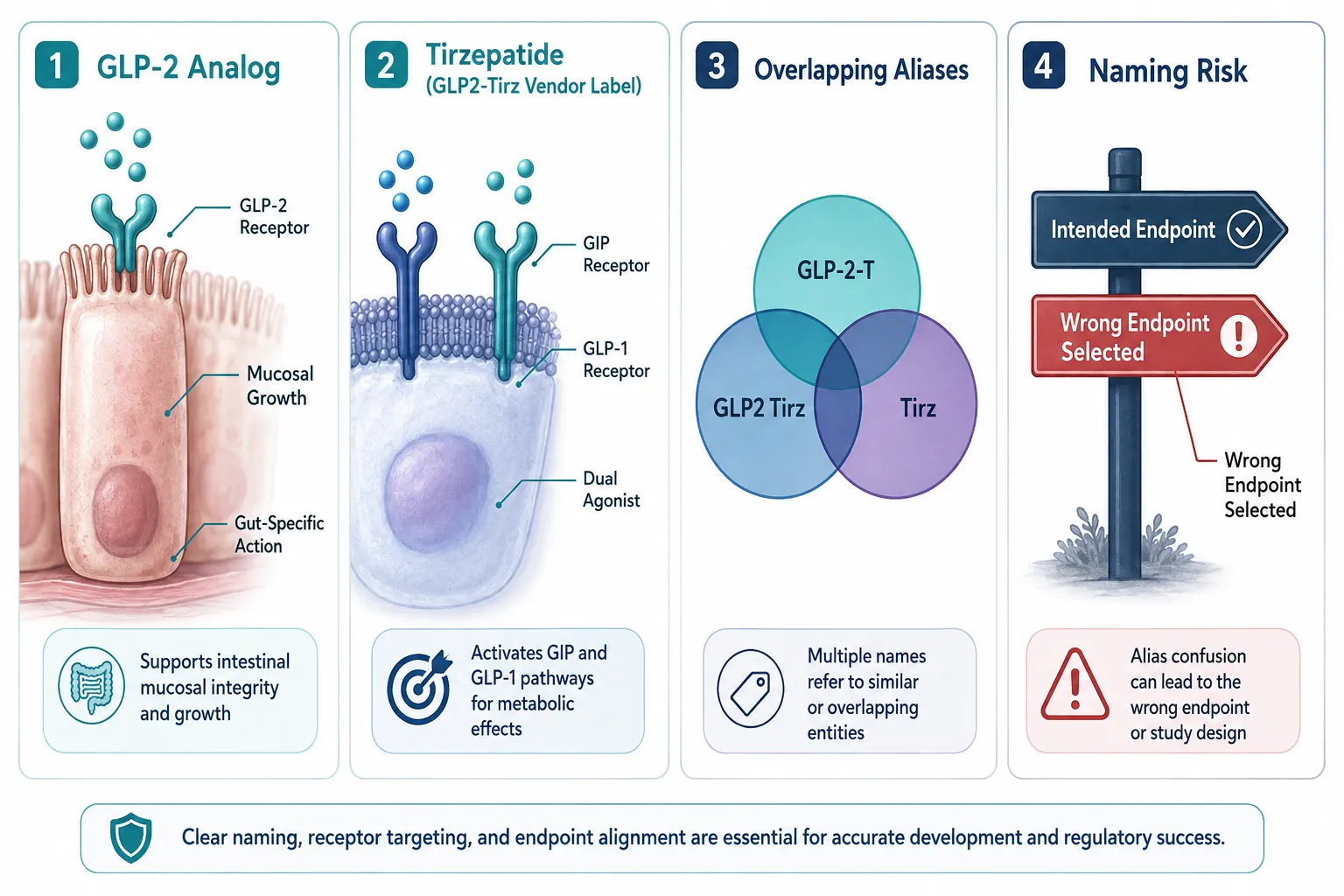
  • GLP-2 refers to a gut-specific peptide that acts on GLP-2 receptors to promote mucosal growth; GLP2 Tirz is a vendor alias increasingly applied to tirzepatide, a dual GIP/GLP-1 receptor agonist.
  • These two compound classes have entirely different receptor targets, mechanisms of action, and translational endpoints.
  • Vendor catalogs in 2026 show widespread aliasing of tirzepatide under GLP-2-adjacent labels, creating literature search contamination and protocol errors.
  • Experts recommend reverting to International Nonproprietary Names (INN) and explicit receptor labeling in all research documentation.
  • Early industry movement toward clearer disclosures is underway, but standardization is not yet complete.

Understanding the Two Compound Classes Behind the Naming Confusion
Understanding the Two Compound Classes Behind the Naming Confusion

GLP-2 (glucagon-like peptide-2) is a 33-amino-acid peptide secreted by intestinal L-cells. It binds selectively to the GLP-2 receptor, driving intestinal mucosal growth, reducing gut permeability, and supporting nutrient absorption. Analogs of GLP-2, such as teduglutide, are approved for short bowel syndrome and have a well-defined mechanistic profile tied entirely to gut biology.

Tirzepatide, on the other hand, is a dual agonist targeting both the GIP (glucose-dependent insulinotropic polypeptide) receptor and the GLP-1 receptor. It has no meaningful activity at the GLP-2 receptor. Its translational endpoints center on metabolic outcomes: glycemic control, body weight reduction, and insulin sensitivity. For researchers exploring GLP-1 peptides, tirzepatide represents a distinct pharmacological category from GLP-2 analogs.

The problem emerges in vendor catalogs and informal research communications. The shorthand "GLP2-T" or "GLP2 Tirz" has been applied to tirzepatide by multiple suppliers, likely because tirzepatide's name contains "tirz" and its GLP-class designation invites casual abbreviation. Meanwhile, mechanistic literature uses "GLP-2-T" to denote modified GLP-2 analogs. The result is a naming collision with real consequences.

Key distinction: GLP-2 analogs act on the gut epithelium. Tirzepatide acts on pancreatic and hypothalamic GIP/GLP-1 receptors. Conflating these in a protocol is not a minor error, it is a fundamental mechanistic mismatch.

How Naming Errors Enter Research Protocols and Trial Design
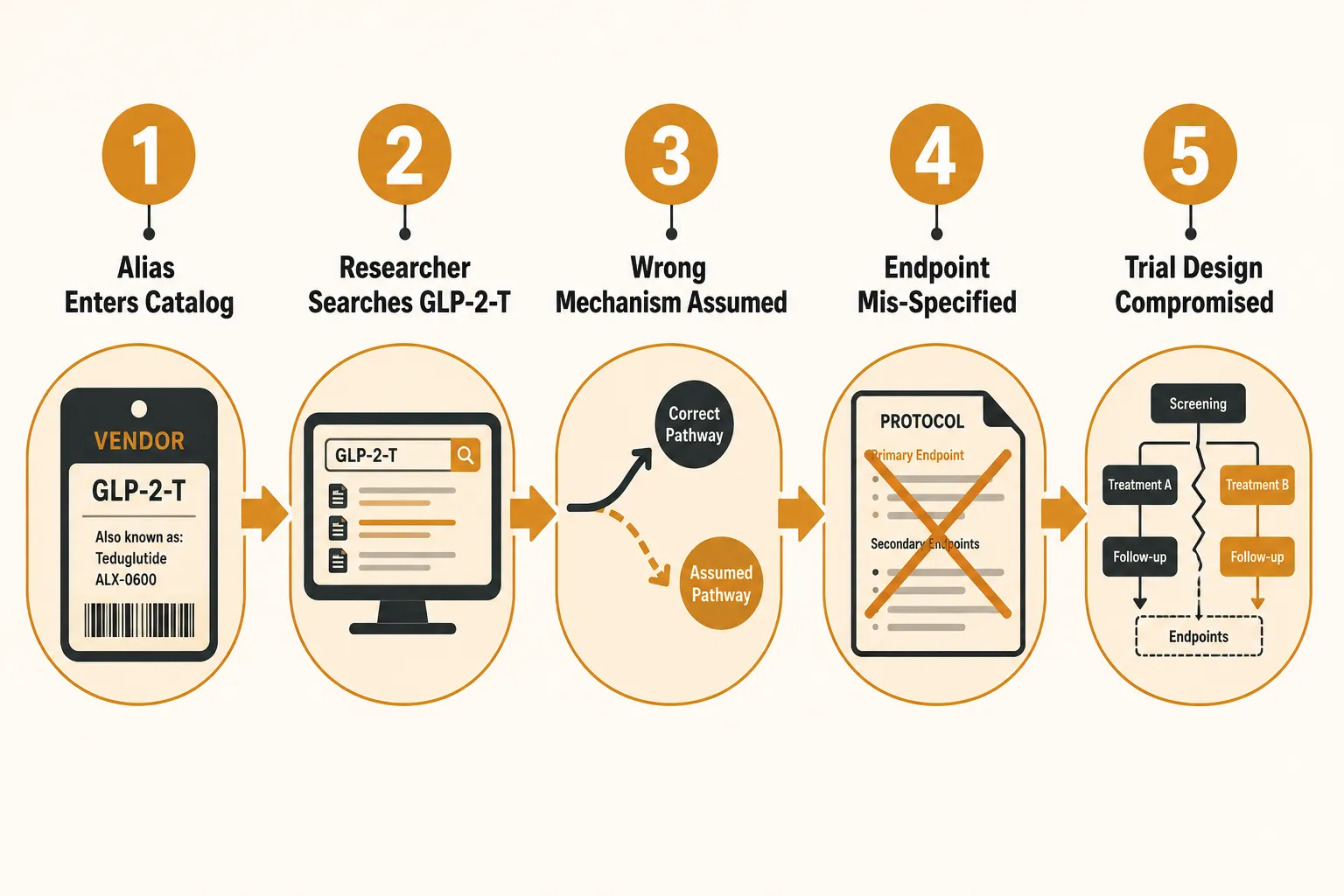
How Naming Errors Enter Research Protocols and Trial Design

The pathway from naming confusion to flawed trial design follows a predictable sequence. A researcher queries a database or vendor catalog using "GLP-2-T." They retrieve results that include both genuine GLP-2 analog literature and tirzepatide vendor listings. Without careful cross-referencing of CAS numbers or INN designations, the wrong compound profile gets incorporated into a protocol.

This matters most at three points in research design:

1. Endpoint selection
GLP-2 analog studies measure intestinal villus height, crypt depth, tight junction protein expression, and gut permeability markers. Tirzepatide studies measure HbA1c, body mass index, fasting glucose, and lipid panels. A protocol built on the wrong compound assumption will specify endpoints that cannot detect the actual mechanism at work.

2. Inclusion and exclusion criteria
Subjects enrolled for a GLP-2 mechanism study, for example, patients with inflammatory bowel conditions or short bowel syndrome, are categorically different from subjects appropriate for a tirzepatide metabolic study. Naming errors upstream can produce inclusion criteria that are scientifically incoherent.

3. Literature search contamination
Systematic reviews and meta-analyses depend on clean search terms. When "GLP2-T" retrieves a mix of GLP-2 analog and tirzepatide studies, pooled analyses become unreliable. This is not a hypothetical risk, it is an active problem flagged by researchers in 2026.

Researchers working with related GLP-class compounds, including those exploring GLP-1 Tirz 60mg GA2 formulations, should verify receptor specificity before drawing mechanistic parallels. Similarly, those following retatrutide Phase 3 and beyond developments will recognize that multi-receptor agonist nomenclature is already complex enough without additional aliasing.

Expert Recommendations and the Path Toward Standardization
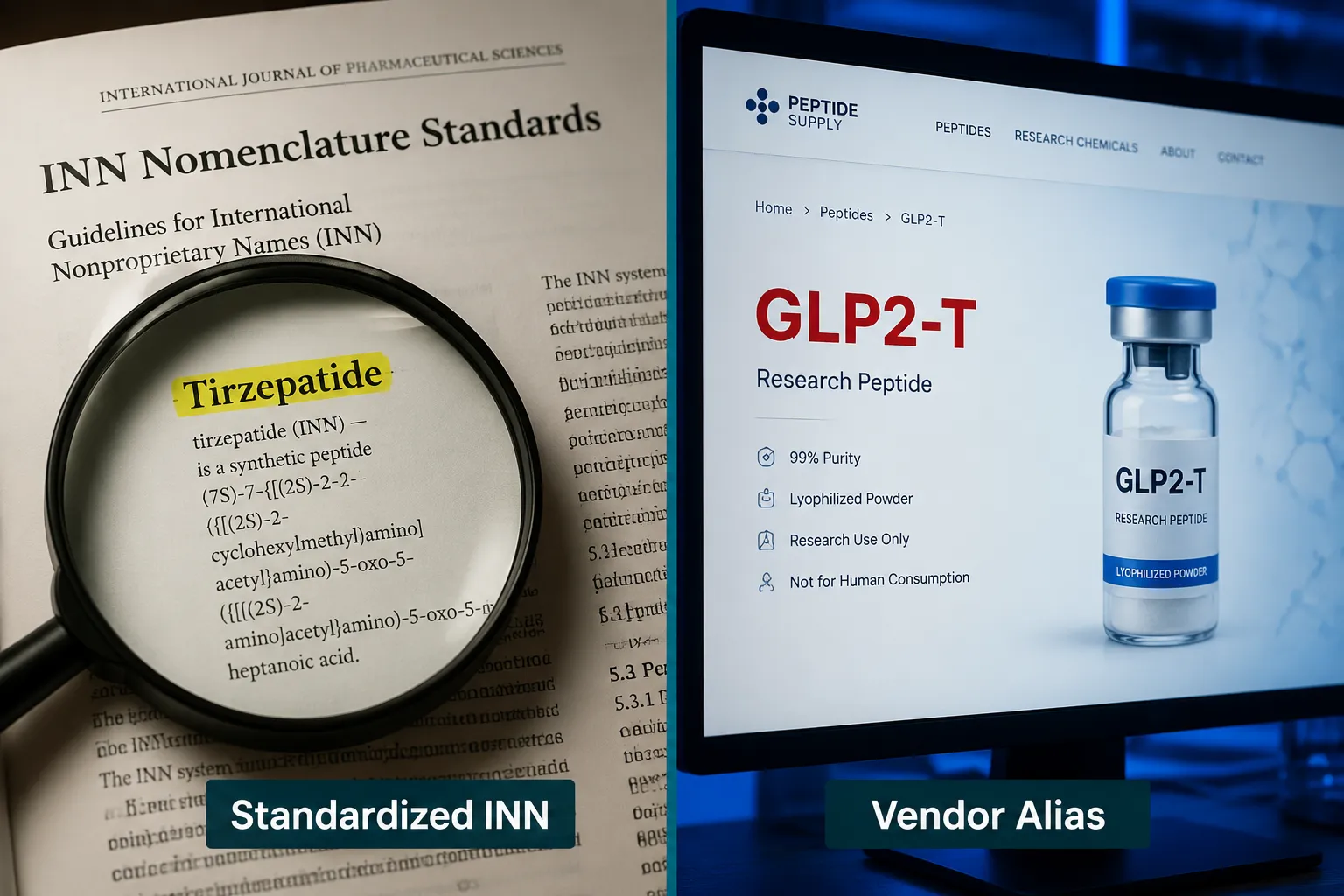
Expert Recommendations and the Path Toward Standardization

The expert consensus emerging in 2026 is clear: all research documentation, vendor communications, and trial protocols should use INN designations (tirzepatide, teduglutide) and explicit receptor labels (GIP/GLP-1 dual agonist; GLP-2 receptor agonist) rather than shorthand aliases.

Specific recommendations include:

  • Always cross-reference CAS numbers when sourcing peptides from vendor catalogs, particularly for GLP2-T tagged products where alias use is documented.
  • State receptor targets explicitly in Methods sections, "dual GIP/GLP-1 receptor agonist (tirzepatide)" rather than "GLP2 Tirz."
  • Audit literature search strings in systematic reviews to exclude alias contamination before pooling data.
  • Request certificates of analysis that include INN and CAS number, not just catalog shorthand.

Some vendors are beginning to add clarifying disclosures to listings, a positive early sign. However, marketplace data from mid-2026 shows that alias use remains widespread across supplier catalogs, meaning researchers cannot yet rely on vendor labeling alone.

The broader principle applies across peptide research categories. Nomenclature discipline is equally important in adjacent fields, researchers working with compounds like those covered in BPC-157 TB-500 peptide research or BDNF peptides understand that precise naming underpins reproducible science.

For those sourcing research-grade GLP-class compounds, oral peptides for sale resources that include full INN disclosure represent the current best practice standard.

Conclusion

The confusion surrounding GLP-2-T and GLP2 Tirz peptides: why naming matters for translational research and trial design is a concrete, solvable problem, but only if researchers, vendors, and trial designers treat it as a priority rather than a footnote.

Actionable next steps for researchers and trial designers:

  1. Verify every GLP-class compound against its INN and CAS number before incorporating it into a protocol.
  2. Rewrite any Methods section that uses "GLP2-T" or "GLP2 Tirz" without explicit receptor designation.
  3. Audit systematic review search strings for alias contamination before finalizing inclusion criteria.
  4. Advocate for vendor disclosure standards that require INN labeling alongside catalog shorthand.
  5. Treat mechanistic divergence, gut epithelial vs. metabolic receptor targets, as a hard boundary when selecting translational endpoints.

Standardization is coming, but it is not here yet. Until it is, the responsibility falls on individual researchers to close the gap between what a label says and what a compound does.

https://www.puretestedpeptides.com/wp-content/uploads/2026/08/glp-2-t-and-glp2-tirz-peptides-why-naming-matters-for-translational-research-and.webp 1024 1536 https://www.puretestedpeptides.com/wp-content/uploads/2026/01/buy-peptides-online.jpg 2026-08-16 13:04:022026-08-16 13:04:02GLP-2-T and GLP2 Tirz Peptides: Why Naming Matters for Translational Research and Trial Design
Peptides in Modern Research: From Simple Chains to Complex Polypeptide Hormones

Peptides in Modern Research: From Simple Chains to Complex Polypeptide Hormones

August 15, 2026/0 Comments/in Uncategorized/by

More than 80 peptide-based drugs have received FDA approval to date, covering everything from endocrinology to oncology, and in 2026 alone, the pipeline holds over 150 additional candidates in active clinical development. That scale of activity signals something fundamental: the study of peptides in modern research, from simple chains to complex polypeptide hormones, has moved from a niche biochemical pursuit to one of the most productive frontiers in science.

Key Takeaways

  • Peptides range from two-amino-acid dipeptides to large, folded polypeptide hormones, and their size directly shapes their biological function and research utility.
  • The FDA approved oral semaglutide for chronic weight management in late 2025, and orforglipron followed in April 2026, both driven by polypeptide hormone biology.
  • Research compounds such as BPC-157, GHK-Cu, MOTS-c, and 5-Amino-1MQ represent distinct peptide classes with different mechanisms and experimental profiles.
  • Regulatory policy shifted in 2026, with 12 peptides removed from the FDA's restricted Category 2 compounding list, reshaping access for research applications.
  • Purity and sourcing quality remain critical variables in any peptide research program.

Classifying Peptides: Size, Structure, and Function

Classifying Peptides: Size, Structure, and Function

Understanding peptides in modern research, from simple chains to complex polypeptide hormones, starts with a clear classification framework. Not all peptides are alike. Their length, folding behavior, and receptor interactions differ significantly, and those differences determine what each compound can do in a research model.

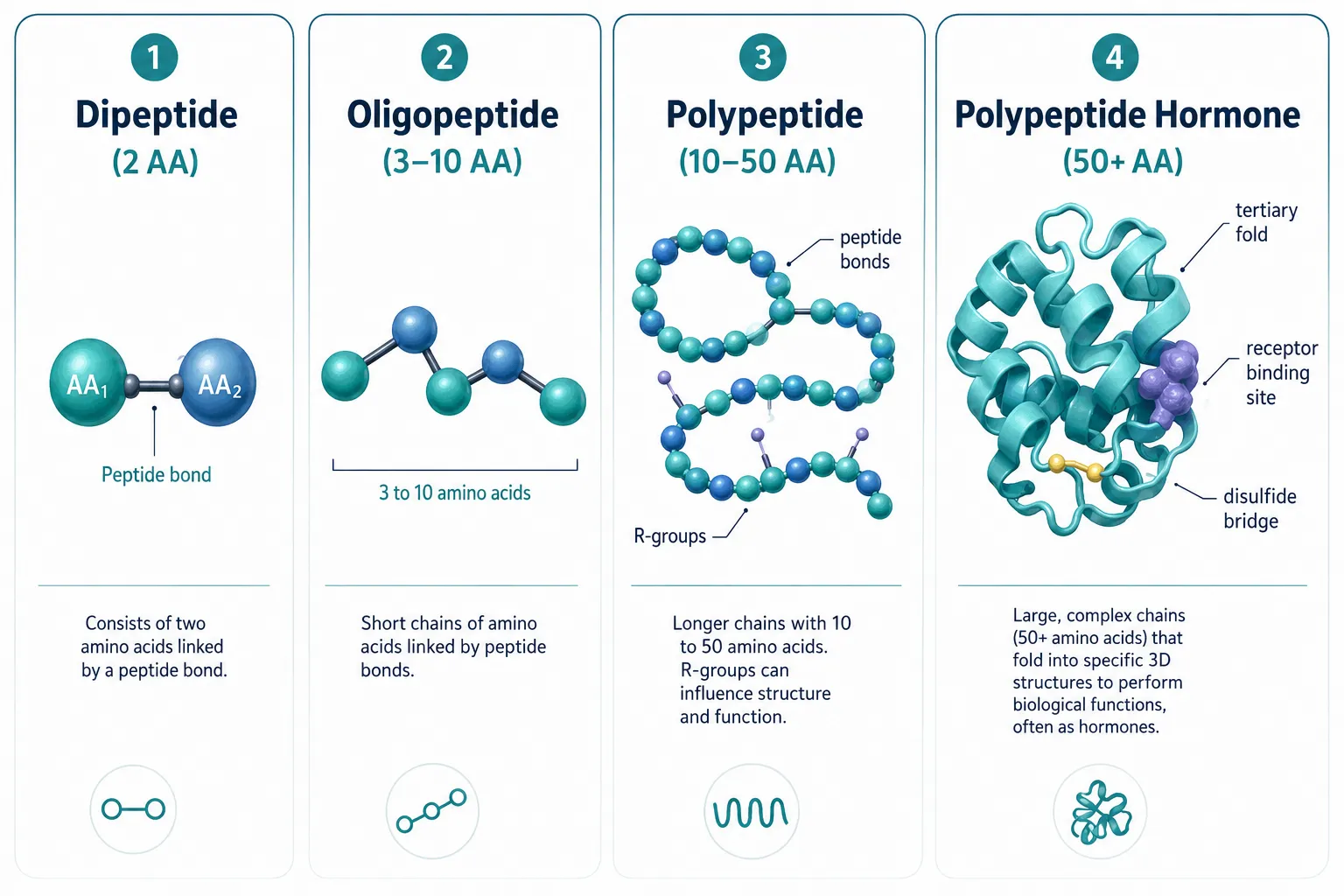
Peptide size categories at a glance:

Category Amino Acid Count Examples
Dipeptide 2 Carnosine
Oligopeptide 3-10 BPC-157 fragment analogs
Polypeptide 10-50 GHK-Cu, MOTS-c
Polypeptide Hormone 50+ Semaglutide, PTH analogs

Short peptides, those with fewer than ten amino acids, tend to be more stable, easier to synthesize, and simpler to study in isolated cellular models. Longer polypeptides and hormone analogs introduce complexity: tertiary folding, disulfide bridges, and receptor-binding domains that require more sophisticated handling and storage protocols.

For a deeper look at how molecular size shapes experimental design, the article on peptides and polypeptides in modern research: how molecular size shapes function, stability, and experimental design provides a detailed structural breakdown.

"Peptide length is not just a chemical detail, it is a primary determinant of how a compound behaves in biological systems, how it is stored, and how it is interpreted in research data."

Key Research Peptide Classes in 2026

Key Research Peptide Classes in 2026

The landscape of peptides in modern research, from simple chains to complex polypeptide hormones, now spans several distinct compound classes. Each class serves different experimental goals.

Short and Mid-Length Research Peptides

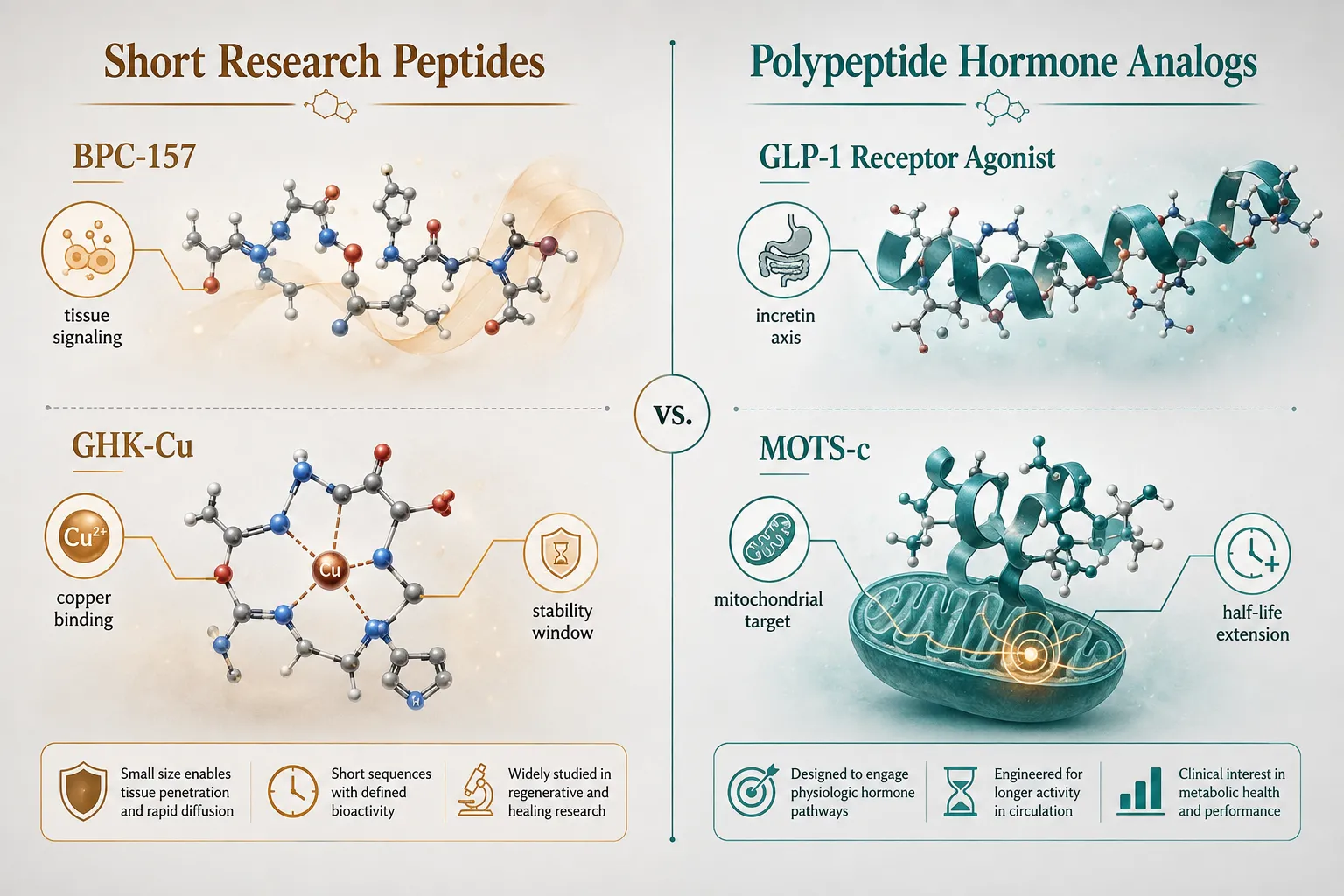
BPC-157 is a synthetic pentadecapeptide derived from a gastric protein sequence. It has been studied extensively in tissue and wound models. Researchers interested in its documented profile can consult the BPC-157 core peptides documentation first research guide for a structured overview of its experimental applications.

GHK-Cu is a copper-binding tripeptide that has attracted attention in skin, collagen, and tissue research. Its copper-complex chemistry gives it unique stability considerations. The GHK-Cu peptide: copper complex chemistry, research stability, and lab use considerations article covers the handling nuances relevant to lab settings.

Mitochondrial Peptides

MOTS-c and 5-Amino-1MQ represent a newer class of metabolically active research compounds. MOTS-c is a mitochondria-derived peptide that influences insulin sensitivity and energy metabolism pathways. 5-Amino-1MQ is a small-molecule NNMT inhibitor often studied alongside MOTS-c in adiposity models. Their combined profile is explored in the article on 5-Amino-1MQ and MOTS-c synergy: how mitochondrial peptides target adiposity and insulin resistance in experimental models.

Polypeptide Hormone Analogs

This is the most clinically advanced category. GLP-1 receptor agonists such as semaglutide and dulaglutide are structurally engineered polypeptide hormones designed to mimic and extend the action of endogenous incretin hormones. Retatrutide, a triple agonist targeting GLP-1, GIP, and glucagon receptors, represents the next generation of multi-target hormone-mimetic design.

Emerging compounds like GLP-3 and GLP-2-T are also entering research discussions, reflecting how the incretin hormone family continues to expand as a research target. For context on how these naming conventions and compound categories are evolving, the GLP-2-T peptide and GLP-2 Tirz peptide: naming confusion, product labels, and research interpretation article addresses common points of confusion.

Regulatory Shifts and the Research Pipeline

Regulatory Shifts and the Research Pipeline

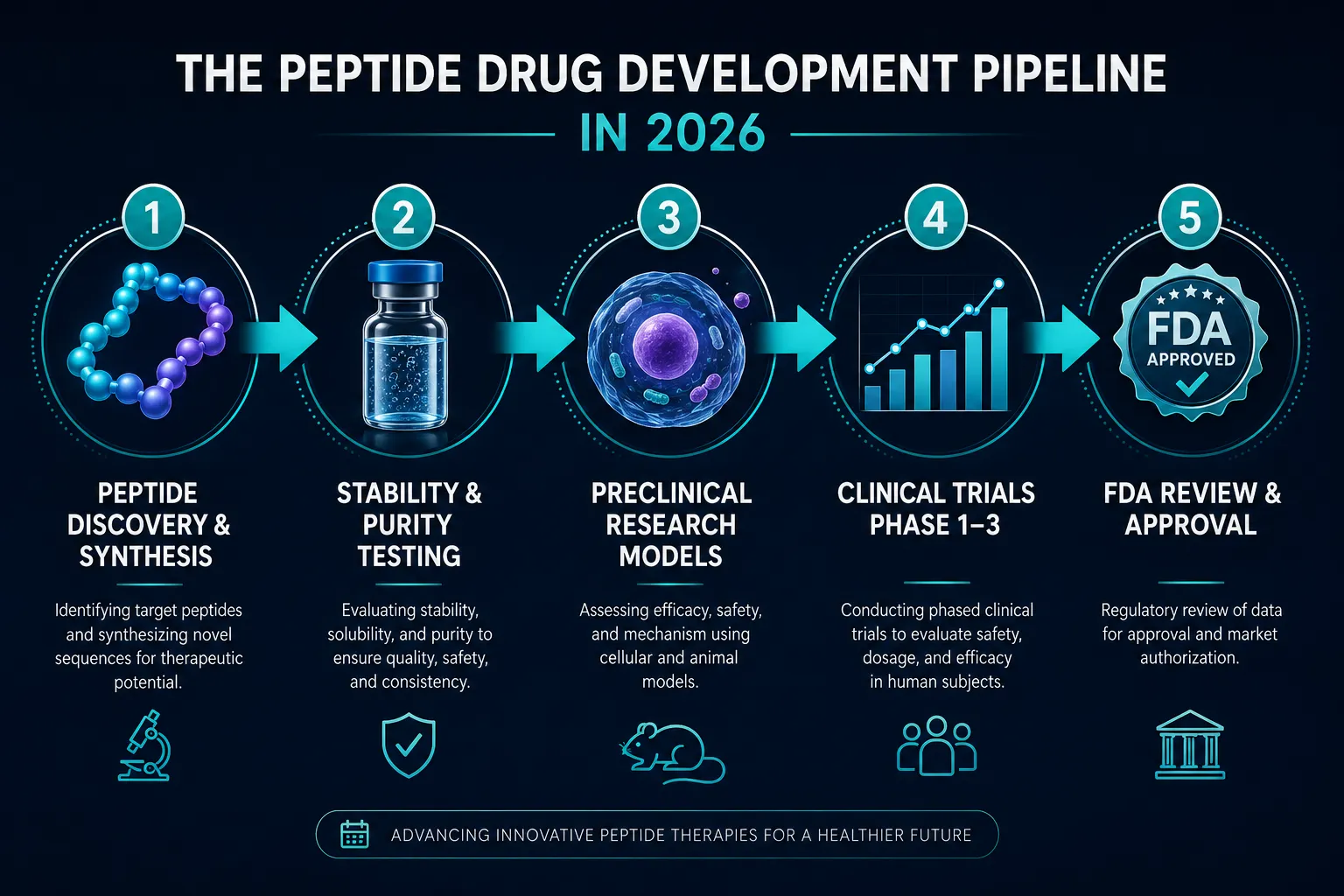
The regulatory environment surrounding peptides in modern research, from simple chains to complex polypeptide hormones, changed materially in 2026. In February 2026, HHS announced that roughly 14 of 19 peptides on the FDA's restricted Category 2 compounding list would be returned to Category 1 status. By April 23, 2026, the FDA formally removed 12 peptides from that restricted list following Federal Register notices issued April 15-16.

However, compounds including BPC-157 and TB-500 remained on the restricted list and were scheduled for review by the FDA Peptide Compounding Advisory Committee in July 2026. These deliberations reflect the ongoing tension between research access and consumer safety in the compounding space.

On the clinical side, several milestones defined the period:

  • Oral semaglutide (25 mg) was approved in December 2025 for chronic weight management, extending polypeptide hormone therapy beyond injectables.
  • Orforglipron (Foundayo) was approved April 1, 2026, as the first oral, non-peptide GLP-1 receptor agonist, a product directly enabled by decades of polypeptide hormone biology research.
  • Palopegteriparatide (Yorvipath), a PEGylated parathyroid hormone prodrug, was approved in 2024 as the first treatment specifically for hypoparathyroidism, illustrating how complex polypeptide engineering enables long-acting endocrine therapies.
  • A peptide-based radiopharmaceutical was among the landmark approvals in Q1 2026, reflecting the growing use of conjugated peptides as diagnostic imaging agents.

Seven Phase 3 trial readouts are expected across 2026 in type 2 diabetes, sleep apnea, liver disease, and cardiovascular outcomes, most driven by incretin and hormone-mimetic peptide analogs.

For researchers evaluating metabolic peptides, the top 5 research peptides for metabolic health: an updated buyer's guide offers a curated overview of compounds with the strongest current research profiles.

Conclusion

The field of peptides in modern research, from simple chains to complex polypeptide hormones, is advancing on multiple fronts simultaneously. Short peptides like BPC-157 and GHK-Cu continue to generate data in tissue and cellular models. Mid-length compounds like MOTS-c are opening new windows into mitochondrial biology. And large polypeptide hormone analogs are reshaping clinical medicine in metabolic disease, endocrinology, and oncology.

Actionable next steps for researchers and professionals:

  1. Audit the peptide compounds in your current research program against the updated 2026 FDA compounding classifications to ensure compliance.
  2. Distinguish clearly between short peptides, polypeptides, and hormone analogs in experimental design, size and structure determine stability, dosing, and data interpretation.
  3. Prioritize purity-verified, lab-tested peptide sources. Compound quality directly affects result reproducibility.
  4. Monitor the FDA Peptide Compounding Advisory Committee outputs from mid-2026 onward, as these will continue to shape access to research compounds.
  5. Explore the growing literature on mitochondrial peptides and multi-agonist hormone analogs, as these represent the most active areas of mechanistic discovery heading into 2027.
https://www.puretestedpeptides.com/wp-content/uploads/2026/08/peptides-in-modern-research-from-simple-chains-to-complex-polypeptide-hormones.webp 1024 1536 https://www.puretestedpeptides.com/wp-content/uploads/2026/01/buy-peptides-online.jpg 2026-08-15 13:04:552026-08-15 13:04:55Peptides in Modern Research: From Simple Chains to Complex Polypeptide Hormones
Polypeptide Peptides Explained: Structure, Function, and Research Applications

Polypeptide Peptides Explained: Structure, Function, and Research Applications

August 7, 2026/0 Comments/in Uncategorized/by

More than half of all approved biologic drugs in 2026 are derived from or inspired by naturally occurring peptide sequences, a fact that underscores just how central these molecules have become to modern science. Whether the goal is understanding cellular signaling, designing antimicrobial agents, or developing next-generation therapeutics, a solid grasp of polypeptide peptides explained through structure, function, and research applications is essential for anyone working in biochemistry, pharmacology, or life sciences research.

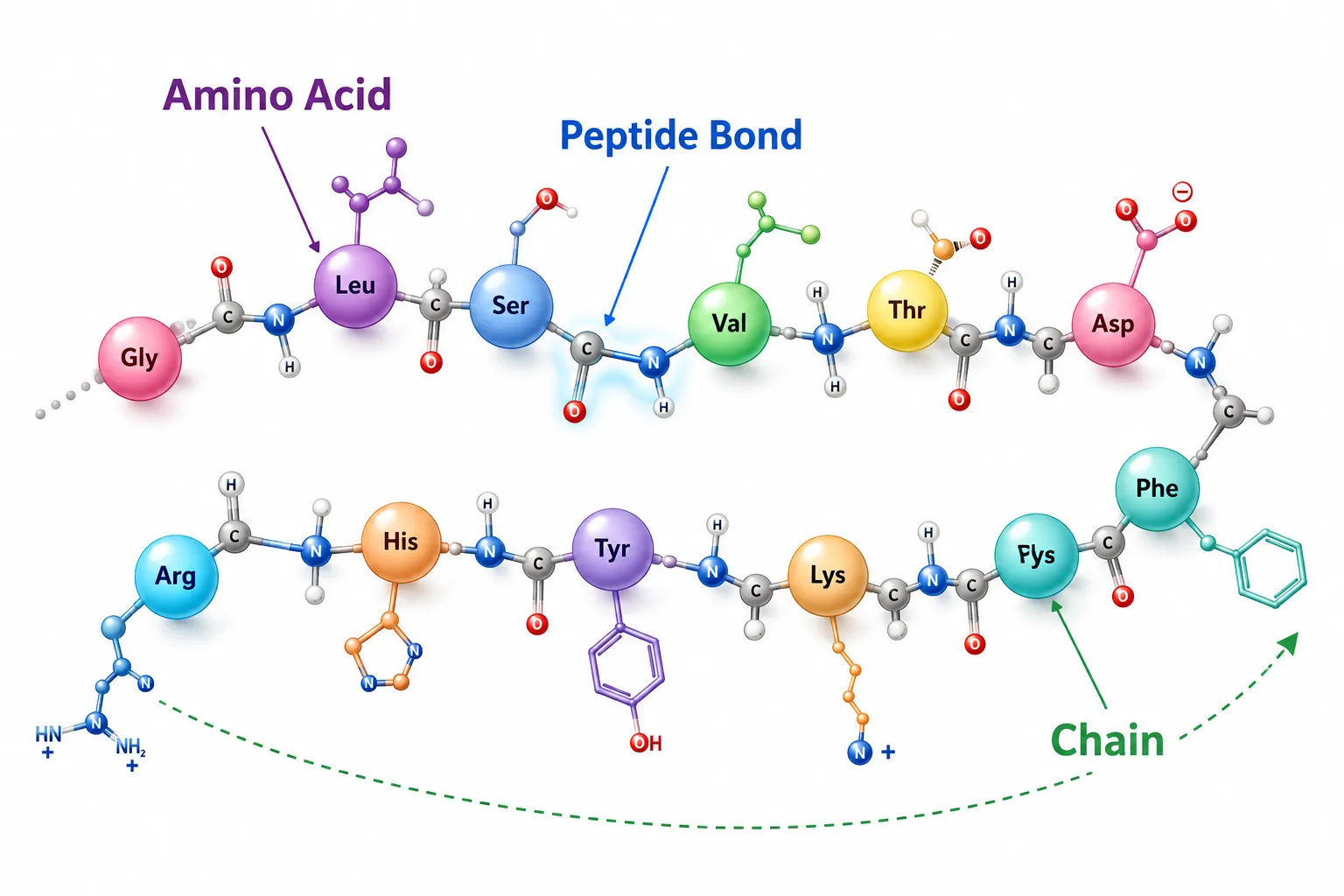
Bright isometric illustration () showing a detailed polypeptide chain diagram: amino acid beads connected by peptide bonds

Key Takeaways

  • Polypeptides are chains of amino acids linked by peptide bonds; chain length determines whether a molecule is classified as a peptide, polypeptide, or protein.
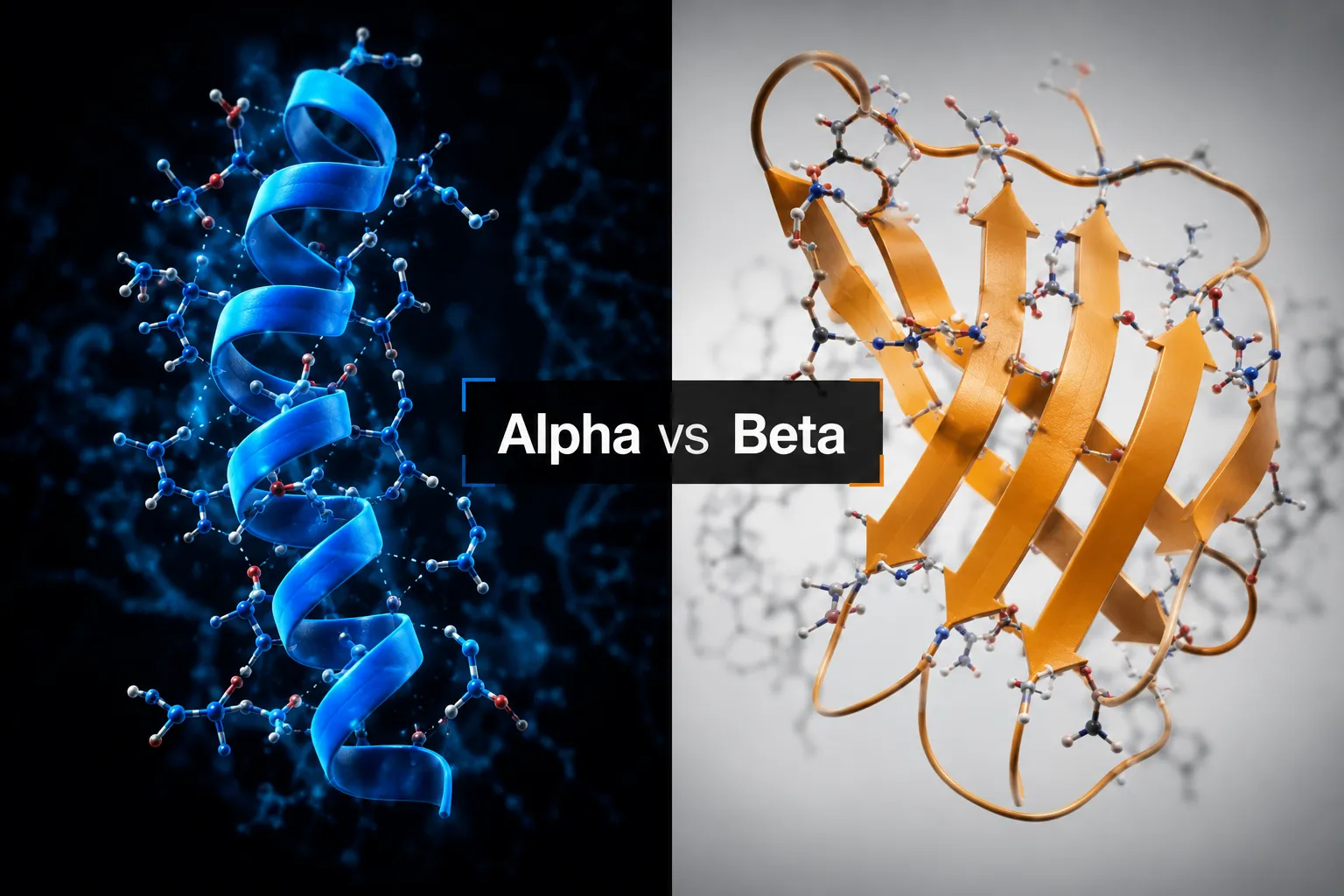
  • Three-dimensional structure, including alpha-helices and beta-sheets, directly governs biological function.
  • Antimicrobial peptides, signaling peptides, and enzyme inhibitors represent major functional categories with active research pipelines.
  • Oral delivery of peptide-based compounds remains a key challenge, though 2026 has seen landmark progress with approved oral peptide-like drugs.
  • Structural modifications such as cyclization, D-amino acid substitution, and lipidation are standard tools for improving peptide stability and potency in research settings.

What Are Polypeptides? Definitions and Chain Length

The term "peptide" describes any short chain of amino acids joined by covalent peptide bonds. The prefix "poly" simply means many, so a polypeptide is a longer chain, typically more than 10 amino acids. In practice, researchers use the following rough classifications:

Term Approximate Chain Length Common Examples
Dipeptide / Oligopeptide 2-9 amino acids Carnosine, glutathione
Polypeptide 10-50 amino acids BPC-157, TB-500 analogs
Protein 50+ amino acids Insulin, growth hormone

These boundaries are not rigid. Insulin, for instance, contains 51 amino acids but is functionally treated as a protein. What matters most in research is not the exact count but how the chain folds, what receptors it binds, and how stable it is under physiological conditions.

For researchers sourcing specific compounds, browsing a curated peptide sale collection can help identify well-characterized research-grade options across multiple peptide classes.

Structure: How Amino Acid Sequences Become Functional Molecules

Understanding polypeptide peptides explained at the structural level requires looking at four organizational tiers:

  1. Primary structure, the linear sequence of amino acids. This sequence encodes all downstream folding behavior.
  2. Secondary structure, local folding patterns. The two most common are:
    • Alpha-helices: coiled, rod-like segments stabilized by hydrogen bonds
    • Beta-sheets: flat, sheet-like arrangements of parallel or antiparallel strands
  3. Tertiary structure, the overall three-dimensional shape of a single chain.
  4. Quaternary structure, relevant when multiple polypeptide chains assemble into a complex (e.g., hemoglobin).

"Biological activity is governed by sequence, conformation, and chemical modifications, not chain length alone."

Chemical modifications add another layer of complexity. Cyclization (forming a ring structure), N-methylation, and side-chain conjugation all alter how a peptide folds, how resistant it is to enzymatic degradation, and how selectively it binds its target. These modifications are not cosmetic, they are precision tools that researchers use to tune performance.

Structure: How Amino Acid Sequences Become Functional Molecules

Function: What Polypeptide Peptides Actually Do

Polypeptides carry out an enormous range of biological roles. The major functional categories relevant to current research include:

Signaling peptides act as hormones or neurotransmitters. GLP-1 (glucagon-like peptide-1) is a well-studied example; it regulates insulin secretion and appetite. Researchers interested in metabolic signaling often explore GLP-1 peptides as part of broader studies on energy homeostasis.

Antimicrobial peptides (AMPs) are structurally diverse polypeptides, often cationic and amphipathic, that selectively disrupt microbial membranes or interact with intracellular bacterial targets. Their amphipathic nature (having both hydrophilic and hydrophobic regions) allows them to embed into lipid bilayers. Bacteria can develop resistance through protease degradation, membrane remodeling, or efflux pumps, which is why researchers use D-amino acid substitution and cyclization to improve AMP stability.

Repair and regeneration peptides such as BPC-157 analogs have drawn significant research interest for their roles in tissue repair pathways. Those exploring this area can review available X Peptides BPC options for research-grade compounds.

Mitochondria-targeting peptides represent a newer frontier. SS-31 is a tetrapeptide that accumulates in the inner mitochondrial membrane and has been studied for its antioxidant properties. Detailed notes on SS-31 mitochondrial research themes provide useful context for investigators in this area.

Growth hormone-related peptides such as Tesamorelin work by stimulating endogenous hormone release. A review of Tesamorelin peptide benefits outlines the research rationale behind this compound class.

Research Applications: Polypeptide Peptides Explained in Practice

The translation from structural understanding to applied research has accelerated considerably. Key application areas in 2026 include:

Oral Peptide Delivery

Historically, peptides required injection because oral administration exposed them to enzymatic degradation in the gut, poor intestinal permeability, and first-pass liver metabolism. Three strategies have emerged to overcome these barriers:

  • Chemical modification: cyclization, N-methylation, and PEGylation
  • Formulation engineering: enteric coatings, lipid nanoparticles, and polymeric carriers
  • Permeation enhancers: co-administered agents that transiently open tight junctions

In 2026, Eli Lilly's orforglipron (Foundayo) received FDA approval as a once-daily oral GLP-1 receptor agonist for weight management, a landmark that demonstrates the oral barrier for peptide-like compounds can be overcome at commercial scale. Merck's oral macrocyclic peptide PCSK9 inhibitor MK-0616 has also completed Phase 3 trials and proceeded to a New Drug Application for hypercholesterolemia.

Non-Injectable Delivery Routes

Nasal, transdermal, and microneedle delivery systems are moving toward clinical validation. Microneedle patches, in particular, allow polypeptides to bypass the skin barrier without injection, opening doors for patient-friendly administration of larger peptide molecules.

Peptide Libraries and Structural Screening

High-throughput peptide synthesis allows researchers to build libraries of thousands of sequence variants, screen them for receptor binding or antimicrobial activity, and identify lead candidates rapidly. Compounds like TB500 peptides and Epithalon peptide are among those that have emerged from research pipelines focused on regenerative and longevity-related mechanisms.

Peptide Libraries and Structural Screening

Conclusion

Polypeptide peptides explained through structure, function, and research applications reveal a field that is both foundational to biology and actively expanding at the clinical frontier. The core principle, that amino acid sequence determines three-dimensional shape, and shape determines function, underpins every therapeutic design decision, from antimicrobial peptide engineering to oral GLP-1 drug development.

Actionable next steps for researchers:

  • Map the structural class (alpha-helix, beta-sheet, cyclic) of any peptide before designing experiments, as this predicts stability and delivery challenges.
  • Evaluate chemical modification strategies (cyclization, D-amino acid substitution) when working with protease-sensitive sequences.
  • Stay current with oral delivery advances, the approval landscape in 2026 signals that formulation barriers once considered insurmountable are now tractable.
  • Source compounds from verified, tested suppliers; reviewing options at established peptide stores ensures traceability and purity documentation for research use.

The structural logic of polypeptides is not abstract chemistry, it is the blueprint for the next generation of targeted, deliverable, and effective research tools.

https://www.puretestedpeptides.com/wp-content/uploads/2026/08/polypeptide-peptides-explained-structure-function-and-research-applications.webp 1024 1536 https://www.puretestedpeptides.com/wp-content/uploads/2026/01/buy-peptides-online.jpg 2026-08-07 13:07:402026-08-07 13:07:40Polypeptide Peptides Explained: Structure, Function, and Research Applications
Retatrutide Phase 3 and Beyond: What Ongoing Obesity Trials Mean for Research Readers

Retatrutide Phase 3 and Beyond: What Ongoing Obesity Trials Mean for Research Readers

July 28, 2026/0 Comments/in Uncategorized/by

Obesity now affects more than one billion people worldwide, and the pharmaceutical pipeline has never moved faster to address it. At the center of that momentum is retatrutide, a triple-receptor agonist that produced weight-loss results in Phase 2 trials that surprised even seasoned researchers. For anyone tracking the obesity drug pipeline, understanding Retatrutide Phase 3 and Beyond: What Ongoing Obesity Trials Mean for Research Readers is no longer optional, it is essential context for interpreting what comes next without overreading early signals.

Key Takeaways

  • Retatrutide simultaneously activates GLP-1, GIP, and glucagon receptors, setting it apart from dual-agonist competitors.
  • Phase 2 data showed up to 24% mean body weight reduction at 48 weeks, among the highest figures recorded in an obesity drug trial.
  • Phase 3 trials (the TRIUMPH program) are actively enrolling and will provide the larger, longer-term safety and efficacy data that Phase 2 cannot.
  • Research readers should distinguish between statistically significant results and clinically meaningful outcomes before drawing conclusions.
  • The broader GLP-1 and multi-agonist peptide research space is expanding rapidly, with retatrutide representing one of several active pipelines.

Understanding the Triple-Agonist Mechanism Behind the Headlines

Retatrutide (LY3437943) is developed by Eli Lilly. Unlike semaglutide or tirzepatide, it targets three receptors simultaneously: GLP-1 (glucagon-like peptide-1), GIP (glucose-dependent insulinotropic polypeptide), and glucagon receptors. This triple action is the core reason researchers are watching it so closely.

  • GLP-1 receptor activation suppresses appetite and slows gastric emptying.
  • GIP receptor activation enhances insulin secretion and may improve the tolerability of GLP-1 effects.
  • Glucagon receptor activation increases energy expenditure and promotes fat breakdown in the liver.

The combination theoretically creates a stronger metabolic effect than any single pathway alone. For readers exploring the broader landscape of metabolic peptides, it is worth noting that GLP-1 class peptides represent a rapidly growing category of research compounds, and retatrutide sits at the frontier of that category.

"Triple agonism is not just additive, it may be synergistic, which is why the Phase 2 weight-loss numbers were so striking."

What Phase 2 Results Actually Showed, and What They Did Not

What Phase 2 Results Actually Showed, and What They Did Not

The Phase 2 SURMOUNT-adjacent trial published in 2023 enrolled 338 adults with obesity or overweight. At the highest dose (12 mg weekly), participants lost a mean of 24.2% of body weight at 48 weeks. That figure circulated widely and generated significant excitement.

However, research readers should apply careful filters before extrapolating:

What Phase 2 Established What Phase 2 Did Not Establish
Dose-response relationship Long-term cardiovascular outcomes
Short-term tolerability profile Safety in diverse real-world populations
Preliminary efficacy signals Durability of weight loss after discontinuation
Biomarker improvements (lipids, glucose) Regulatory-grade safety data

Phase 2 trials are designed to find the right dose and detect obvious safety signals, not to confirm that a drug is safe and effective for broad clinical use. The sample size is intentionally small. Adverse events that occur in fewer than 1 in 100 patients may not appear at all.

For context on how peptide research benchmarks are established before large trials, the Bachem reference standards and peptide benchmarking guide provides useful background on how analytical rigor shapes compound evaluation.

Retatrutide Phase 3 and Beyond: What Ongoing Obesity Trials Mean for Research Readers

Retatrutide Phase 3 and Beyond: What Ongoing Obesity Trials Mean for Research Readers

The TRIUMPH Phase 3 program is the critical next step. As of 2026, multiple arms of this program are actively running, covering:

  • Adults with obesity (BMI 30 or above)
  • Adults with obesity and type 2 diabetes
  • Cardiovascular outcomes in high-risk populations
  • Adolescents with obesity (a newer, closely watched cohort)

Phase 3 trials typically enroll thousands of participants across multiple countries and run for one to five years. This scale is what allows researchers to detect rarer adverse events, assess durability, and compare outcomes across demographic subgroups.

What research readers should watch for in Phase 3 reporting:

  1. Primary endpoint clarity, Is the trial powered for weight loss, cardiovascular events, or both?
  2. Dropout and completion rates, High dropout can bias results in either direction.
  3. Comparator arms, Is retatrutide being tested against placebo, tirzepatide, or standard of care?
  4. Safety signal monitoring, Thyroid C-cell findings (a concern with GLP-1 agents in rodents) will be tracked closely.

Understanding how multi-receptor peptides interact with metabolic pathways is also relevant to adjacent research areas. Readers interested in related receptor research may find the MC4R research tag useful for exploring how central appetite-regulation pathways connect to broader obesity biology.

How to Interpret Ongoing Trial Data Without Overreading It

How to Interpret Ongoing Trial Data Without Overreading It

One of the most common mistakes in following active drug trials is treating interim data as definitive. Here is a practical framework for staying grounded:

Apply the "so what" test to every headline. A statistically significant result means the finding is unlikely to be due to chance, it does not automatically mean the effect is large enough to matter clinically.

Track the full publication, not the press release. Pharmaceutical companies release top-line results before peer-reviewed data is available. The full dataset often reveals nuances, particularly around adverse event rates and subgroup performance, that headlines omit.

Compare effect sizes in context. Retatrutide's Phase 2 weight-loss figures exceeded those of tirzepatide at comparable time points. But tirzepatide itself exceeded semaglutide. Each comparison requires matching dose, duration, and population characteristics.

Monitor regulatory milestones, not just trial milestones. A successful Phase 3 trial is necessary but not sufficient for approval. The FDA and EMA review manufacturing consistency, labeling, and risk-management plans alongside efficacy data.

For research readers building a broader understanding of the peptide research landscape, including how compounds like GLP-3 class agents are being characterized, staying current with the research blog provides ongoing context across multiple peptide categories.

Those specifically tracking retatrutide's compound profile for research purposes can also review available Reta 10mg research material listings for sourcing context.

Conclusion

Retatrutide Phase 3 and Beyond: What Ongoing Obesity Trials Mean for Research Readers comes down to one discipline: calibrated patience. The Phase 2 data is genuinely remarkable, but it is a starting point, not a conclusion. Phase 3 will answer the questions that matter most: long-term safety, cardiovascular impact, durability after treatment ends, and performance across diverse populations.

Actionable next steps for research readers in 2026:

  • Bookmark ClinicalTrials.gov entries for the TRIUMPH program and set alerts for status updates.
  • Read full peer-reviewed publications rather than relying on company press releases.
  • Cross-reference retatrutide findings with the broader multi-agonist literature, including tirzepatide and emerging GLP-1/glucagon dual agents.
  • Apply the Phase 2 vs. Phase 3 interpretive framework above every time new data surfaces.
  • Explore how adjacent peptide mechanisms, including peptide supplier quality standards, affect the reliability of research-grade compounds used in parallel studies.

The obesity treatment pipeline is moving at an unprecedented pace. Staying analytically rigorous, rather than reactive, is what separates informed research readers from those chasing headlines.

https://www.puretestedpeptides.com/wp-content/uploads/2026/07/retatrutide-phase-3-and-beyond-what-ongoing-obesity-trials-mean-for-research-rea-1.webp 1024 1536 https://www.puretestedpeptides.com/wp-content/uploads/2026/01/buy-peptides-online.jpg 2026-07-28 13:04:352026-07-28 13:04:35Retatrutide Phase 3 and Beyond: What Ongoing Obesity Trials Mean for Research Readers
Page 2 of 212

Tag Archive for: glp-1 peptides

Nothing Found

Sorry, no posts matched your criteria

×

Helpful Links

  • My account
  • Cart
  • Checkout
  • Refund and Returns Policy
  • Privacy Policy
  • SMS Privacy Policy
  • Login
  • My Account
  • Logout

USA Made Lab Tested Peptides

All products are sold for research, laboratory, or analytical purposes only, and are not for human consumption


Pure Tested Peptides is a chemical supplier. Pure Tested Peptides is not a compounding / chemical compounding facility as defined under 503A of the Federal Food, Drug, and Cosmetic act. Pure Tested Peptides is not an outsourcing facility as defined under 503B of the Federal Food, Drug, and Cosmetic act.

The statements made within this website have not been evaluated by the US Food and Drug Administration. The products we offer are not intended to diagnose, treat, cure or prevent any disease.

Human/Animal Consumption Prohibited. Laboratory/In-Vitro Experimental Use Only

Scroll to top Scroll to top Scroll to top