

Unpacking the ‘Peptides Calculator’: Essential Tools and Methods for Accurate Dosing and Reconstitution in Research
A single decimal-point error during peptide reconstitution can shift an experimental dose by a factor of ten, enough to invalidate months of research data. That reality is precisely why unpacking the 'Peptides Calculator' and its essential tools and methods for accurate dosing and reconstitution in research has become a priority for serious investigators in 2026.
Key Takeaways
- Peptide calculators standardize the math behind reconstitution, concentration, and dose volume to reduce human error.
- The core formula, concentration equals mass divided by volume, underpins every reliable calculator on the market.
- Bacteriostatic water (BAC water) remains the standard diluent for most lyophilized research peptides.
- Modern tools now support single-peptide, blend, nasal, and GLP-1 pen modes with device-specific syringe guidance.
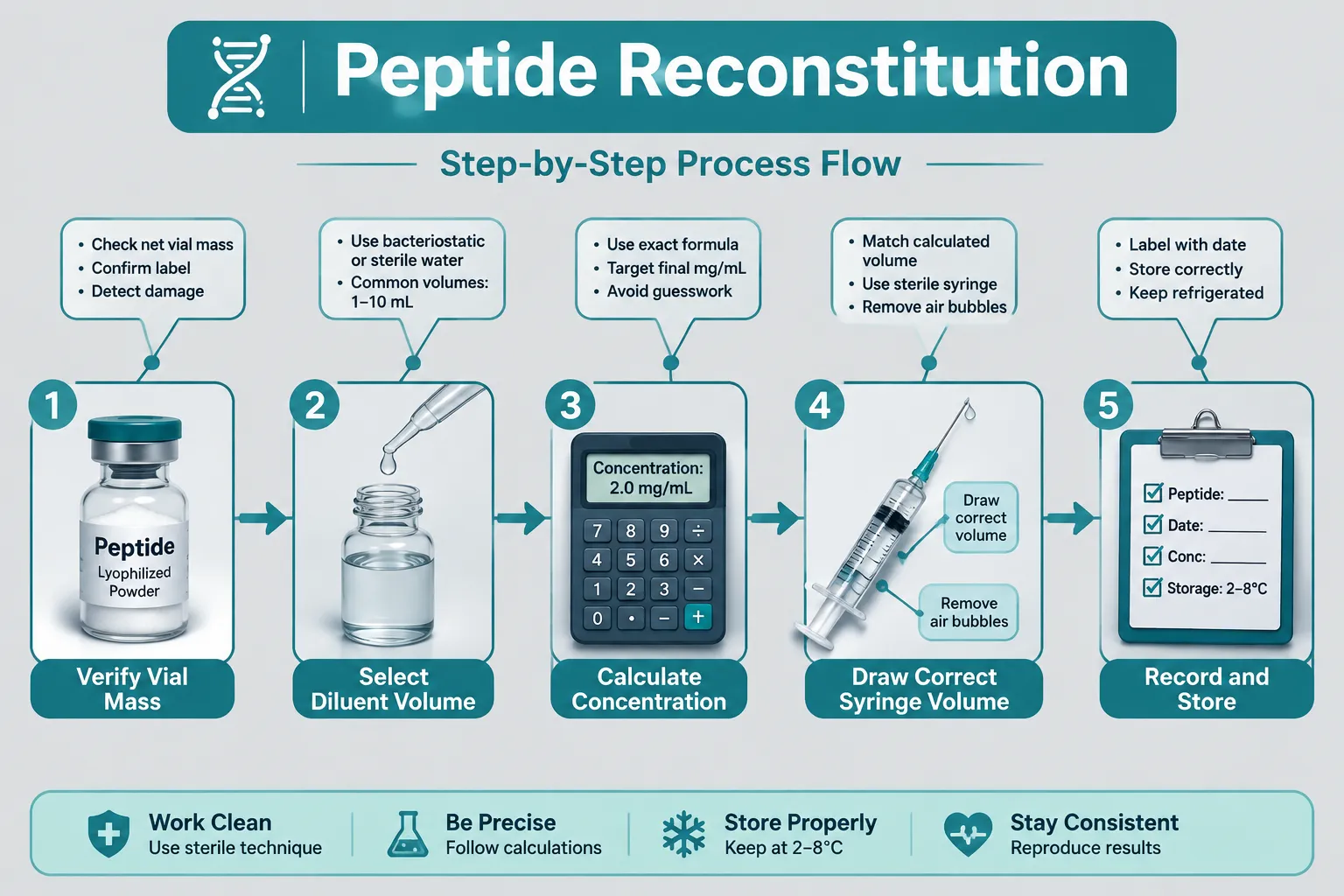
- Reproducibility depends on consistent workflow: verify vial mass, select diluent volume, calculate concentration, then draw the correct syringe volume.
Why Accurate Peptide Dosing Matters in Research
Lyophilized peptides arrive as a dry powder measured in milligrams or micrograms. Before any research protocol can proceed, that powder must be dissolved in a precise volume of diluent to create a usable liquid concentration. Without a structured calculation method, researchers risk under-dosing (producing no measurable effect) or over-dosing (introducing confounding variables or compromising sample integrity).
The stakes are especially high for sensitive compounds. For example, research into GLP-1 peptide sourcing and generational research concepts highlights how concentration accuracy directly shapes the validity of metabolic outcome data. Similarly, mitochondrial work involving compounds like those covered in SS-31 mitochondrial research themes demands tight dosing windows to produce reproducible results.
The core formula every researcher must internalize:
Concentration (mcg/mL) = Peptide Mass (mcg) / Diluent Volume (mL)
From this single equation, all downstream dose-volume calculations follow.
Standard Reconstitution Protocol with BAC Water
Bacteriostatic water is the preferred diluent for most lyophilized peptides because it contains 0.9% benzyl alcohol, which inhibits microbial growth and extends vial stability. The reconstitution steps below represent the standardized workflow recommended across leading peptide research platforms in 2026:
- Verify vial mass, confirm the labeled peptide mass (e.g., 5 mg = 5,000 mcg).
- Select diluent volume, choose a volume that produces a workable concentration (e.g., 2 mL BAC water for a 5 mg vial yields 2,500 mcg/mL).
- Add diluent slowly, inject BAC water along the vial wall; do not shake.
- Swirl gently, rotate until the powder fully dissolves.
- Calculate dose volume, divide the desired dose (mcg) by the concentration (mcg/mL).
A researcher needing a 250 mcg dose from a 2,500 mcg/mL solution draws exactly 0.1 mL (100 mcL) into an insulin syringe. A peptides calculator automates this final step, eliminating arithmetic errors under lab conditions.
Unpacking the 'Peptides Calculator': Core Features and Input Modes
Modern peptide calculators have expanded well beyond a single-formula widget. Unpacking the 'Peptides Calculator' and its essential tools and methods for accurate dosing and reconstitution in research reveals at least four distinct operational modes now standard across leading platforms.
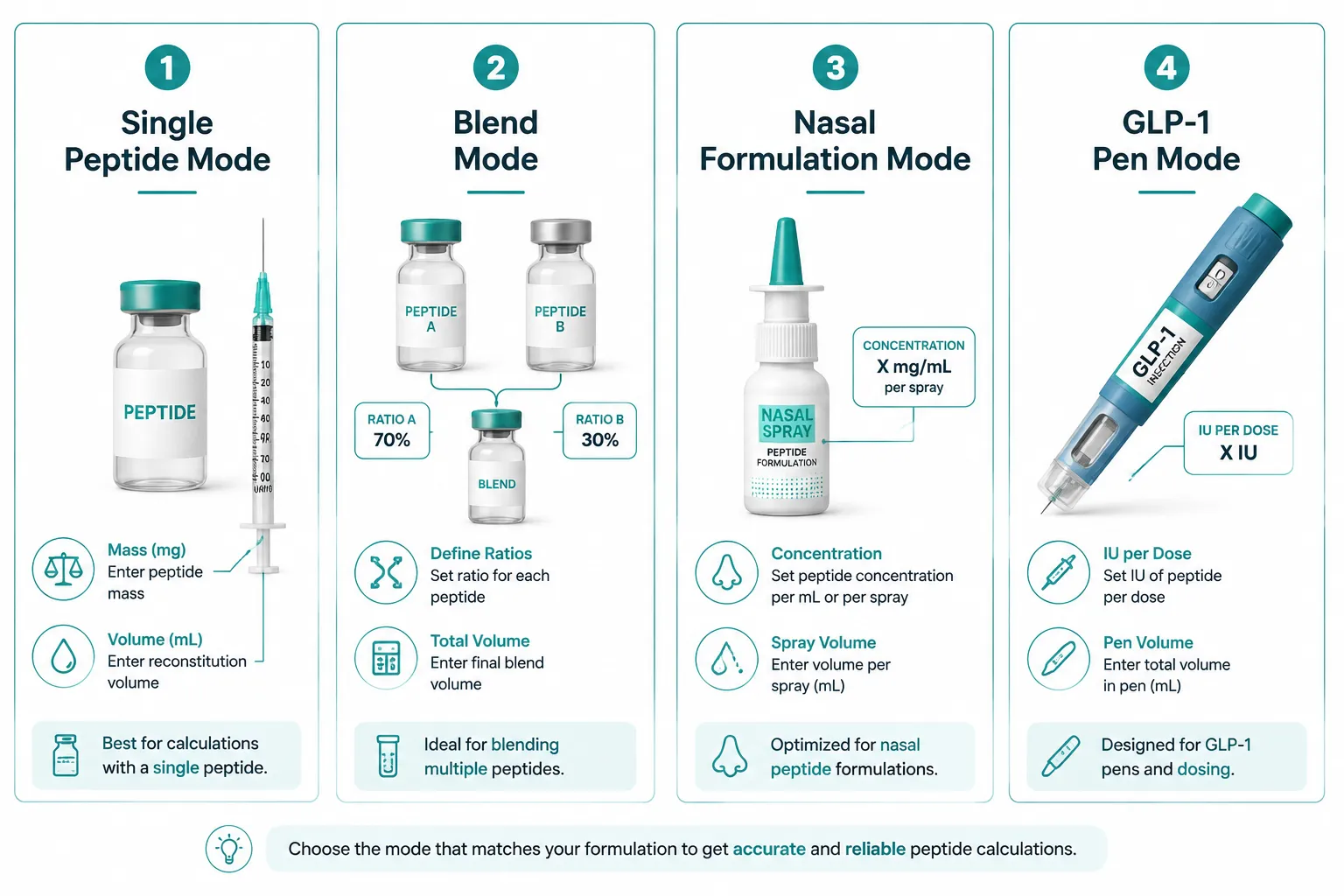
| Calculator Mode | Primary Use Case | Key Inputs |
|---|---|---|
| Single Peptide | Standard vial reconstitution | Vial mass, diluent volume, target dose |
| Blend Mode | Multi-peptide stacks | Individual masses, shared diluent volume |
| Nasal Formulation | Intranasal delivery research | Concentration per spray, spray volume |
| GLP-1 / Pen Mode | Injection pen devices | Units per mL, dose in units or mcg |
The GLP-1 pen mode deserves particular attention. As research interest in GLP-1 class compounds grows, see the detailed breakdown in Retatrutide Phase 3 and ongoing obesity trial research, calculators must handle "per-IU" concentration reporting alongside standard mcg/mL outputs. This dual-unit capability prevents the unit-conversion errors that historically account for a large share of dosing mistakes.
Enhanced unit conversion features now common in 2026 tools include:
- Automatic mg-to-mcg conversion on input
- IU-to-mcg translation for growth hormone-adjacent peptides
- Syringe-mark visualization (e.g., "draw to the 10-unit line on a U-100 syringe")
- Mobile-optimized interfaces for field and clinic-adjacent research settings
Researchers sourcing compounds for these protocols should consult resources like where to buy peptides to ensure purity and labeled mass accuracy, both of which are prerequisites for any calculator to produce valid outputs.
Applying the Calculator: Workflow, Reproducibility, and Research Compliance
Unpacking the 'Peptides Calculator' and its essential tools and methods for accurate dosing and reconstitution in research is only half the task. The other half is embedding the tool into a reproducible, documented workflow.
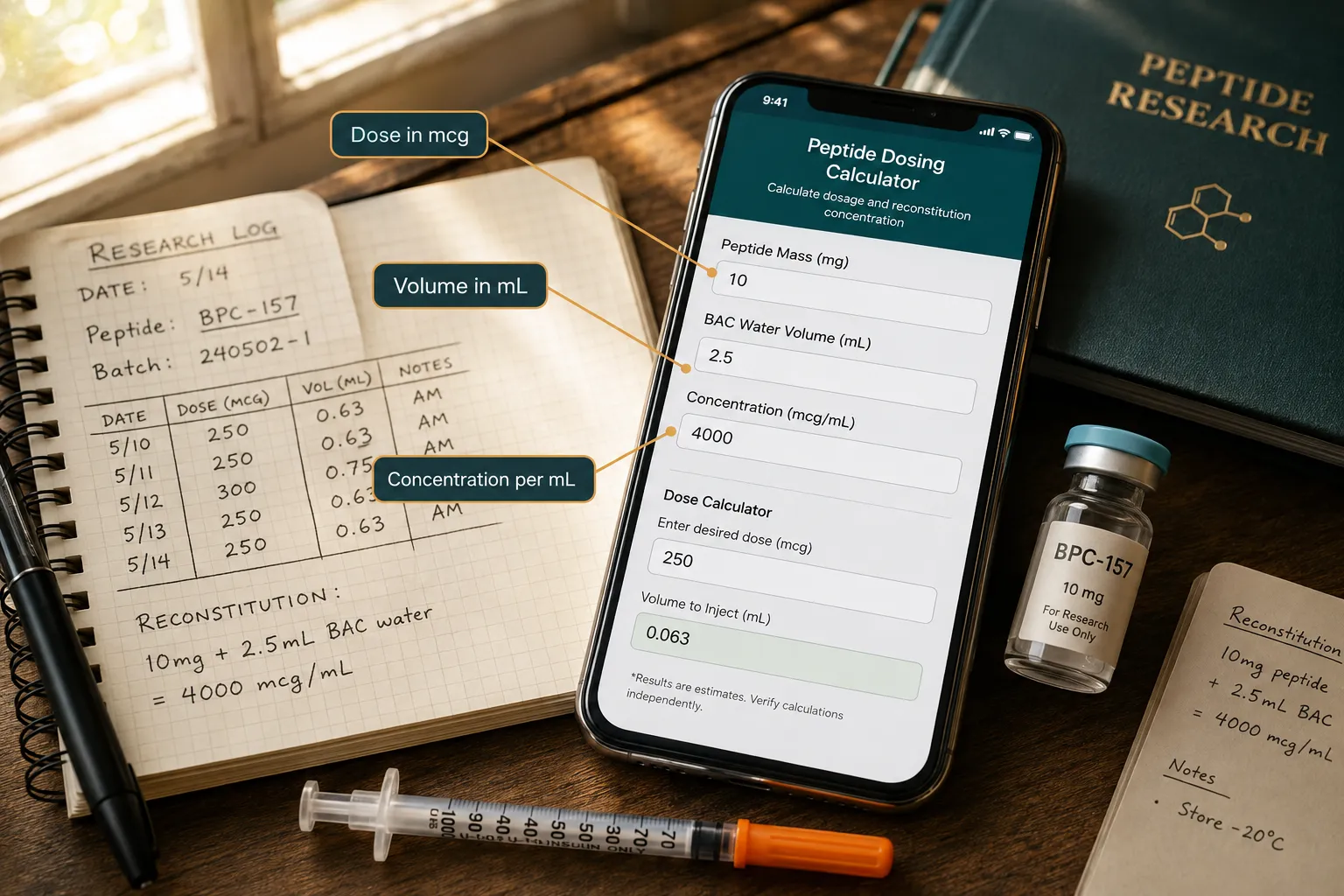
Recommended documentation checklist for each reconstitution event:
- Record the peptide name, lot number, and labeled mass.
- Log the diluent type, volume added, and date of reconstitution.
- Calculate and record the resulting concentration.
- Note storage conditions (temperature, light exposure).
- Document each dose drawn: target dose, calculated volume, and actual syringe reading.
This level of documentation supports reproducibility, the cornerstone of credible research. It also aligns with the quality-control principles discussed in resources like PT-141 research context, QA, and controls and the reference standard benchmarks explored in Bachem and reference standards for peptide benchmarks.
A critical compliance note: All peptide calculator tools and the research protocols they support are intended strictly for laboratory and investigational use. Regulatory frameworks in most jurisdictions classify research peptides as not approved for human administration outside of licensed clinical trials. Every workflow built around these tools must reflect that framing clearly.
Avoiding the Most Common Calculation Errors
- Unit mismatch: Entering mass in mg but volume in mL without converting produces a 1,000-fold concentration error.
- Assuming full vial mass: Overfill or underfill from the manufacturer means the labeled mass may differ slightly from actual mass; always use a calibrated scale when precision is critical.
- Ignoring dead volume: Syringes retain a small volume in the needle hub; account for this in high-precision protocols.
Conclusion
Accurate dosing and reconstitution are not optional refinements, they are foundational to any research protocol that expects reproducible, interpretable results. The rapid evolution of peptide calculator tools in 2026 has made it easier than ever to perform these calculations correctly, but the tools only work when researchers understand the underlying math and commit to a disciplined workflow.
Actionable next steps for researchers:
- Select a calculator that supports the specific mode required (single peptide, blend, nasal, or pen-based).
- Verify vial mass with a calibrated scale before every reconstitution.
- Document every reconstitution event and dose draw in a dedicated lab log.
- Cross-check unit conversions manually at least once per new peptide or protocol.
- Source peptides from suppliers who provide verified purity data, ensuring the labeled mass is reliable input for any calculation.
Applying these steps consistently transforms a peptides calculator from a convenience tool into a genuine instrument of scientific rigor.


Leave a Reply
Want to join the discussion?Feel free to contribute!