Call or Text 727-513-9780
  • Shopping Cart Shopping Cart
    0Shopping Cart
Pure Tested Peptides | America's most trusted Peptides for sale online
  • Peptides for sale
    • Oral Peptides for sale
      • Peptide Capsules for sale
      • BPC 157 Capsules 1000mcg
      • SLU-PP-332 Capsules | 1000 mcg
      • 5-Amino-1MQ 50mg Capsules
      • Tesofensine 500mcg
    • All Peptides for sale
    • Peptide Sprays
      • BPC 157 Nasal Spray Kit
      • BPC-157 TB500 Nasal Spray Kit
      • Semax Nasal Spray 10mg
      • Selank – Nasal Spray Kit – 10mg
      • Epithalon 50MG Nasal Spray Kit
      • Ipamorelin 10mg Nasal Spray
      • Klow Nasal Spray (BPC-157 + TB-500 + GHK-Cu + KPV) | 80mg
      • Hulk Nasal Spray Tesa / Ipa Blend 6/3 MG
      • Klow Nasal Spray
      • NAD + 500 mg Nasal Spray
      • PT-141 Nasal Spray Kit
    • GHRH Peptides
      • Ipa Peptides
      • CJC-1295 Peptides
        • CJC-1295 with DAC 5 mg
        • CJC-1295 without DAC 5 mg
        • CJC-1295 Ipa 10mg
      • Tesa Peptides
        • Tesa Peptide
        • Tesa 20 mg
    • GHK-Cu Peptides
      • All GHK-Cu Peptides
      • GHK-Cu 100mg
      • KLOW Peptide Blend – Buy KLOW blend online
    • BPC Peptides
      • All BPC Peptides
      • BPC-157
      • BPC-157 TB-500
      • BPC 157 capsules 1000mcg
    • SLU-PP-332 Peptides
      • All SLU-PP-332 Peptides
      • SLU-PP-332 5mg
    • GLP3 Peptides
      • GLP3-R
      • GLP3-R CAG 10mg
      • GLP3-R 20mg
    • PT-141 Peptides
      • PT-141 Peptides for sale
      • PT-141 10mg
      • PT-141 Nasal Spray
    • CAG Peptides
      • Lipo-C Peptide Blend
      • CAG 5mg
      • CAG 10mg
    • MOTS-C Peptides
      • MOTS-C Peptides for sale
      • MOTS-c peptide
      • MOTS-c 10mg *6 pack*
    • 5 Amino 1MQ Peptides
      • 5 Amino 1MQ Peptides for sale
      • 5-Amino-1MQ 50mg Capsules
      • 5-Amino-1MQ 5mg
    • Epithalon Peptides
      • Epithalon Peptides for sale
      • Epithalon 10mg
      • Epithalon 50mg
  • Shop
    • GLPs
      • 5-Amino-1MQ 50mg Capsules
      • 5-Amino-1MQ 5mg
      • GLP3-Reta
      • L-Carnitine 500mg/ml
      • Tesofensine 500mcg
      • SLU-PP-332 5mg
      • MOTS-c 10mg *6 pack*
    • Epithalon & BPC Peptides
      • Epithalon 10mg
      • Epithalon 50mg
      • BPC-157
      • BPC 157 capsules 1000mcg
      • BPC-157 TB-500
      • BPC-157 TB500 Nasal Spray Kit
      • BPC 157 Nasal Spray Kit
    • BPC TB-500 & NAD+ Peptides
      • NAD+ 500 mg
      • KLOW Peptide Blend – Buy KLOW blend online
      • GLOW Peptide Blend
      • TB 500 5mg
      • BPC 157 capsules 1000mcg – Supplement
      • BPC 157 Nasal Spray Kit
      • BPC-157
      • BPC-157 TB500 Nasal Spray Kit
      • BPC-157 TB-500
      • BPC 157 capsules 1000mcg
    • LL-37 Peptide
      • LL-37 10 mg
    • MOTS-C & Selank
      • MOTS-c peptide
      • Selank 10mg
    • GHK Peptides
      • GHK-Cu 100mg
      • GLOW Peptide Blend
      • KLOW Peptide Blend – Buy KLOW blend online
  • COAs
  • Wholesale
    • Wholesale Peptides for sale
  • PTP FAQ
  • Affiliates
    • Selank Peptide: Advanced Pharmacological Mechanisms Underlying Its Anxiolytic and Nootropic Effects in Research
      • 5-Amino-1MQ Peptide: Detailed Mechanisms of NNMT Inhibition and Its Impact on Cellular Metabolism Research
        • MOTS-C Peptide: Unraveling Its Role in Mitochondrial Dynamics and Energy Metabolism Research
          • Epithalon Peptide and Telomerase Regulation: Investigating Its Impact on Cellular Senescence and Lifespan Research Models
            • GLP2-T vs GLP2 Tirz Peptide: Understanding the Naming, Mechanistic Nuances, and Research Implications for Gut Health
      • Peptides and Polypeptides in Modern Pharmacology: What Research on Metoprolol, Prednisone, and Amlodipine Reveals
        • Polypeptide Peptides vs NSAIDs: What Naproxen and Diclofenac Teach Tissue-Repair Researchers About BPC‑157 and TB‑500
          • Peptides and Polypeptides in Endocrine Pharmacology: How GLP-1, GLP-2, and GLP-3 Retatrutide Differ From Classic Drugs Like Prednisone and Amlodipine
          • 5‑Amino‑1MQ Peptide and NNMT Inhibition: How It Compares With Statins Like Atorvastatin in Adipose and Lipid Metabolism Research
      • Enclomiphene, Estrogen Receptor Signaling, and Luteinizing Phase Biology: What Hormone Researchers Should Measure
        • Mesenchymal Stem Cells, BPC‑157, and GHK‑Cu: How Tissue Repair Peptides Compare With Classic NSAIDs Like Naproxen in Injury Models
          • Peptide Calculator Use Cases Beyond Growth Hormone: Working Through GLP‑3 Retatrutide, MOTS‑c, and BPC‑157 Research Dosing
        • Polypeptide Peptides in Endocrine and Metabolic Pharmacology: Lessons From Amlodipine, Prednisone, and Metoprolol
        • Peptides Calculator for Advanced Blends: Worked Examples for Tesamorelin, CJC‑1295, and Ipamorelin Stacks
          • Peptides and Polypeptides in Human Physiology: How Molecular Size Shapes Research Applications
            • Selank Peptide: Advanced Pharmacological Mechanisms Underlying Its Anxiolytic and Nootropic Effects in Research
          • 5-Amino-1MQ Peptide: Detailed Mechanisms of NNMT Inhibition and Its Impact on Cellular Metabolism Research
            • MOTS-C Peptide: Unraveling Its Role in Mitochondrial Dynamics and Energy Metabolism Research
              • Epithalon Peptide and Telomerase Regulation: Investigating Its Impact on Cellular Senescence and Lifespan Research Models
                • GLP2-T vs GLP2 Tirz Peptide: Understanding the Naming, Mechanistic Nuances, and Research Implications for Gut Health
                  • Peptides and Polypeptides in Endocrine Pharmacology: How GLP-1, GLP-2, and GLP-3 Retatrutide Differ From Classic Drugs Like Prednisone and Amlodipine
                    • Polypeptide Peptides vs NSAIDs: What Naproxen and Diclofenac Teach Tissue-Repair Researchers About BPC‑157 and TB‑500
                      • Peptides and Polypeptides in Modern Pharmacology: What Research on Metoprolol, Prednisone, and Amlodipine Reveals
                        • 5‑Amino‑1MQ Peptide and NNMT Inhibition: How It Compares With Statins Like Atorvastatin in Adipose and Lipid Metabolism Research
                        • Enclomiphene, Estrogen Receptor Signaling, and Luteinizing Phase Biology: What Hormone Researchers Should Measure
                        • Mesenchymal Stem Cells, BPC‑157, and GHK‑Cu: How Tissue Repair Peptides Compare With Classic NSAIDs Like Naproxen in Injury Models
                        • Peptide Calculator Use Cases Beyond Growth Hormone: Working Through GLP‑3 Retatrutide, MOTS‑c, and BPC‑157 Research Dosing
                        • Polypeptide Peptides in Endocrine and Metabolic Pharmacology: Lessons From Amlodipine, Prednisone, and Metoprolol
                        • Peptides Calculator for Advanced Blends: Worked Examples for Tesamorelin, CJC‑1295, and Ipamorelin Stacks
                        • Peptides and Polypeptides in Human Physiology: How Molecular Size Shapes Research Applications
                        • Selank Peptide: Advanced Pharmacological Mechanisms Underlying Its Anxiolytic and Nootropic Effects in Research
                        • MOTS-C Peptide: Unraveling Its Role in Mitochondrial Dynamics and Energy Metabolism Research
                        • Peptides and Polypeptides in Modern Pharmacology: What Research on Metoprolol, Prednisone, and Amlodipine Reveals
                        • Peptides and Polypeptides in Endocrine Pharmacology: How GLP-1, GLP-2, and GLP-3 Retatrutide Differ From Classic Drugs Like Prednisone and Amlodipine
                        • 5-Amino-1MQ Peptide: Detailed Mechanisms of NNMT Inhibition and Its Impact on Cellular Metabolism Research
                        • Mesenchymal Stem Cells, BPC‑157, and GHK‑Cu: How Tissue Repair Peptides Compare With Classic NSAIDs Like Naproxen in Injury Models
                        • Peptide Calculator Use Cases Beyond Growth Hormone: Working Through GLP‑3 Retatrutide, MOTS‑c, and BPC‑157 Research Dosing
                        • GLP2-T vs GLP2 Tirz Peptide: Understanding the Naming, Mechanistic Nuances, and Research Implications for Gut Health
                        • Polypeptide Peptides in Endocrine and Metabolic Pharmacology: Lessons From Amlodipine, Prednisone, and Metoprolol
                        • Polypeptide Peptides vs NSAIDs: What Naproxen and Diclofenac Teach Tissue-Repair Researchers About BPC‑157 and TB‑500
                        • Peptides and Polypeptides in Human Physiology: How Molecular Size Shapes Research Applications
                        • Peptides Calculator for Advanced Blends: Worked Examples for Tesamorelin, CJC‑1295, and Ipamorelin Stacks
                        • 5‑Amino‑1MQ Peptide and NNMT Inhibition: How It Compares With Statins Like Atorvastatin in Adipose and Lipid Metabolism Research
                        • Enclomiphene, Estrogen Receptor Signaling, and Luteinizing Phase Biology: What Hormone Researchers Should Measure
                        • Epithalon Peptide and Telomerase Regulation: Investigating Its Impact on Cellular Senescence and Lifespan Research Models
                        • Best research protocol Klow blend
                        • best time to take BPC-157
                        • best time to take DSIP (Delta Sleep Inducing Peptide)
                        • best time to take CJC-1295
                        • best time to take AOD-9604
                        • best time to take Follistatin 344
                        • best time to take Ipamorelin
                        • best time to take MK-677 (Ibutamoren)
                        • best time to take Ligandrol (LGD-4033) — research compound
                        • best time to take Ostarine (MK-2866) — research compound
                        • best time to take GHK-CU
                        • best time to take TB-500
                        • best time to take MOTS-c
                        • best time to take Semax
                        • best time to take RAD-140 (Testolone) — research compound
                        • best time to take Thymosin Alpha-1
                        • best time to take PEG-MGF
                        • Biolife Plasma, Octapharma Plasma, and Research Peptides: How Plasma Donation Labs Differ From Peptide Suppliers
                        • best time to take YK-11 — research compound
                        • best time to take PT-141 (Bremelanotide)
                        • Best research protocol Klow blend
                        • 5-Amino-1MQ and MOTS-C Synergy: Metabolic Signaling, Mitochondria, and Research Design
                        • BPC-157 and TB-500: Investigating Their Combined Effects on Angiogenesis and Cellular Migration in Tissue Repair Models
                        • BPC-157 Peptide: Gut Barrier Function, Inflammation, and Tissue-Recovery Research
                        • 5‑Amino‑1MQ and MOTS‑c Synergy in Metabolic Research: Designing NNMT and Mitochondrial Biogenesis Stacks
                        • CJC-1295 with DAC vs. Without DAC: Half-Life, Release Kinetics, and Research Implications
                        • CJC‑1295 with DAC vs. Without DAC: Expanding on Half‑Life Differences Using Tesamorelin and Ipamorelin Blend Case Studies
                        • Collagen Biology and Copper‑Binding Peptides: How GHK‑Cu, Glow Blend, and Klow Blend Interact with Skin and Connective Tissue
                        • Collagen Biology and Regenerative Peptides: How GHK‑Cu, Glow Blend, and Klow Blend Affect Extracellular Matrix Research
                    • DNA, Telomeres, and Longevity Peptides: Positioning Epithalon and MOTS‑c in Genetic Aging Research
                      • Enclomiphene Citrate: serm Mechanism, Testosterone Research, and Stack Compatibility
                        • Enclomiphene vs Enclomiphene Citrate: Formulation, Bioavailability, and Research Distinctions
                        • Epithalon Peptide Research: Telomerase Activation, Aging, and Pineal Gland Function
                        • Estrogen Receptor Signaling and Enclomiphene: How Selective Modulators Compare with Classic Polypeptide Hormones
                        • GHK-Cu Peptide: Advanced Mechanisms in Extracellular Matrix Remodeling and Wound Healing Research
                        • GHK-Cu Peptide: Collagen Synthesis, Wound Repair, and Skin-Barrier Research Models
                        • GLP-1 vs GLP-3 vs GLP-2: Peptide Classification and Research Applications
                        • GLP-2 Peptide Research Guide: Gut Barrier Function, Nutrient Absorption, and Intestinal Recovery Models
                        • GLP-3 Retatrutide vs. GLP-1 Drugs: What Triple-Agonist Biology Changes in Research Models
                        • Ipamorelin and Tesamorelin Combination: Synergistic GH Secretagogue Research and Dosing Protocols
                        • GLP2 Tirz Peptide: What It Is, Why the Name Exists, and How Researchers Should Interpret It
                        • Klow Blend Peptide Nasal Spray: What the Formulation Is Trying to Do in Cognitive Research
                        • Mitochondria, NNMT Inhibition, and Peptide Modulators: Where MOTS‑c and 5‑Amino‑1MQ Fit in Cellular Energy Research
                        • MOTS-c Peptide: Mitochondrial Function, Energy Metabolism, and What Researchers Measure
                        • MOTS-c vs. 5-Amino-1MQ: Which Metabolic Research Questions Each Compound Actually Answers
                        • Nasal Spray Peptides: Bioavailability, Administration, and Semax/Selank Research Applications
                        • PT-141 Peptide Research: Mechanism of Action and Melanocortin Receptor Signaling
                        • Retatrutide for Research: Mechanism, Structure, and GLP-1/GLP-3 Dual Action
                        • Retatrutide for Obesity and Type 2 Diabetes: What the Latest Trial Data Suggest
                        • Tesofensine Peptide Research: Mechanism, Appetite Suppression, and Neuropeptide Y Pathways
  • Contact
    • Contact Customer Service
    • Text Customer Support
  • About US
  • Shop all peptides
  • Affiliate Program
    • Affiliate Signup
  • Login / Register Login / Register Page Link Login / Register Page Link
  • Click to open the search input field Click to open the search input field Search
  • Menu Menu
Selank Peptide: What It Is, How It Is Studied, and Why Intranasal Delivery Matters

Selank Peptide: What It Is, How It Is Studied, and Why Intranasal Delivery Matters

August 16, 2026/0 Comments/in Uncategorized/by

A synthetic heptapeptide developed by the Russian Academy of Sciences has quietly attracted serious attention from neuroscience researchers worldwide, not because of hype, but because of a documented regulatory approval and a growing body of mechanistic data. Understanding Selank Peptide: What It Is, How It Is Studied, and Why Intranasal Delivery Matters is increasingly relevant for researchers comparing anxiolytic-class peptides, especially as 2026 reviews continue to consolidate findings from the past decade of preclinical and clinical work.

Key Takeaways

  • Selank is a synthetic analog of the immune peptide tuftsin, engineered for enhanced stability and central nervous system activity.
  • It holds regulatory approval in Russia as an anxiolytic agent, making it one of the few peptides in this class with formal clinical validation.
  • Intranasal delivery is the primary and clinically validated route, enabling direct nose-to-brain transport that bypasses the blood-brain barrier.
  • Research models consistently show anxiolytic effects, BDNF modulation, and enkephalin enzyme inhibition without the sedation or dependence risks associated with benzodiazepines.
  • Western regulatory approval remains absent as of mid-2026, so Selank is studied strictly in research contexts outside Russia.

What Selank Is: Structure and Core Pharmacology
What Selank Is: Structure and Core Pharmacology

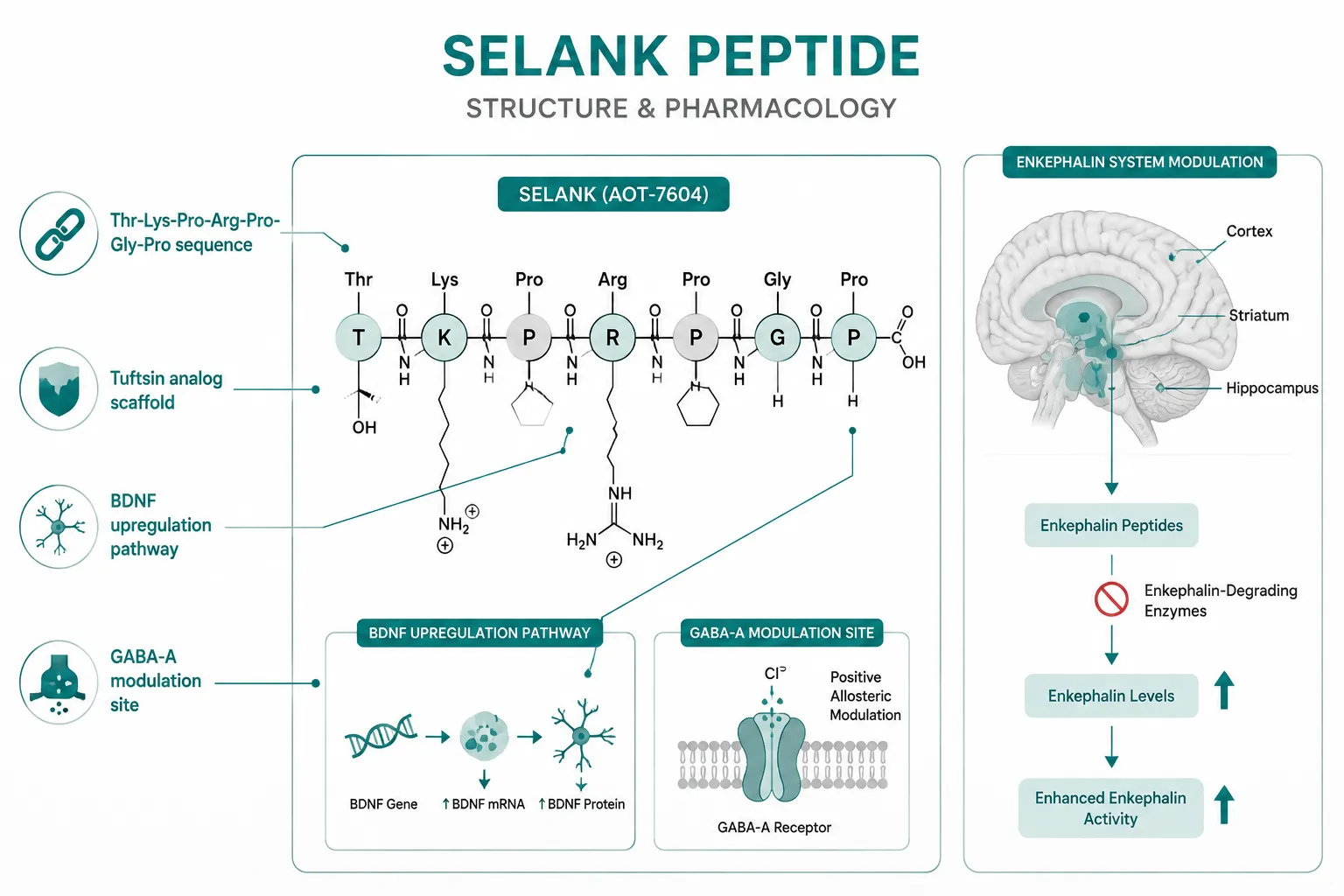
Selank carries the amino acid sequence Thr-Lys-Pro-Arg-Pro-Gly-Pro. It was synthesized as a stabilized analog of tuftsin, a naturally occurring tetrapeptide fragment of immunoglobulin G that plays roles in immune regulation and neuropeptide signaling. By extending the tuftsin scaffold and modifying its terminal structure, researchers created a compound with significantly improved metabolic stability, a critical factor for any peptide intended to reach the central nervous system intact.

At the pharmacological level, Selank appears to work through several overlapping mechanisms:

  • GABA-A receptor modulation, researchers observe anxiolytic-like effects consistent with GABAergic activity, though Selank does not bind benzodiazepine receptor sites directly.
  • Enkephalin enzyme inhibition, Selank slows the breakdown of endogenous enkephalins, prolonging their activity in stress-response pathways.
  • BDNF upregulation, brain-derived neurotrophic factor expression increases in several preclinical models, suggesting a role in synaptic plasticity and cognitive support.
  • Serotonin and dopamine modulation, gene-expression studies point to downstream effects on monoamine systems, particularly under stress conditions.

These mechanisms collectively explain why Selank is often categorized alongside anxiolytic nootropics rather than sedatives. For researchers comparing it to other studied peptides, resources like the GHK-Cu peptide purchase and sourcing guide and what is TB-500 provide useful context on how peptide structure shapes research applications.

"Selank's multi-target pharmacology distinguishes it from single-mechanism anxiolytics, making it a compelling subject for systems-level neuroscience research."

How Selank Is Studied: Clinical Evidence and Research Models
How Selank Is Studied: Clinical Evidence and Research Models

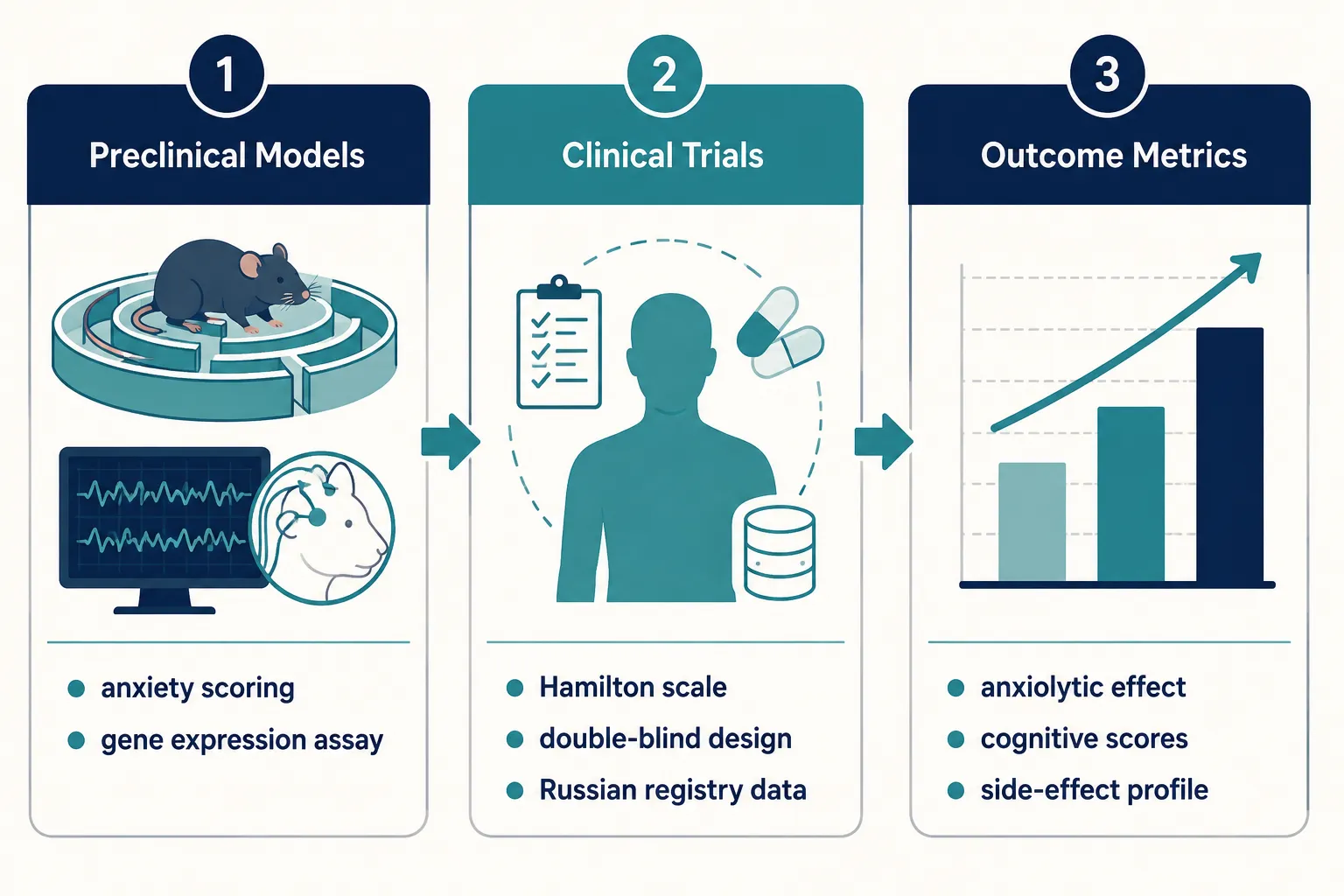
The most authoritative clinical evidence comes from Russian trials conducted before and after the compound received approval from the Russian Ministry of Health as an anxiolytic drug. These trials used standardized anxiety rating instruments, including the Hamilton Anxiety Scale, and employed double-blind, placebo-controlled designs in populations with generalized anxiety disorder and neurasthenia.

Key findings from that body of work include:

Research Area Consistent Finding
Anxiety reduction Significant improvement on Hamilton scale vs. placebo
Cognitive function Improved attention and memory scores in stressed subjects
Side-effect profile No sedation, no withdrawal, no dependence markers
Immune parameters Modest immunomodulatory signals in some cohorts

Preclinical models, primarily rodent-based, have extended these findings into gene-expression territory. Intranasal Selank administration in animal models produces measurable changes in BDNF mRNA, enkephalin metabolism markers, and stress-hormone profiles within hours of dosing. This mechanistic depth is part of what has sustained research interest well into 2026.

Researchers working with peptide compounds benefit from understanding documentation standards. The peptide Certificate of Analysis resource and the Bachem and reference standards guide are both relevant for ensuring compound integrity in experimental settings.

Why Intranasal Delivery Matters: The Nose-to-Brain Advantage
Why Intranasal Delivery Matters: The Nose-to-Brain Advantage

Understanding Selank Peptide: What It Is, How It Is Studied, and Why Intranasal Delivery Matters requires a clear grasp of why the delivery route is not a minor detail, it is central to the compound's entire research rationale.

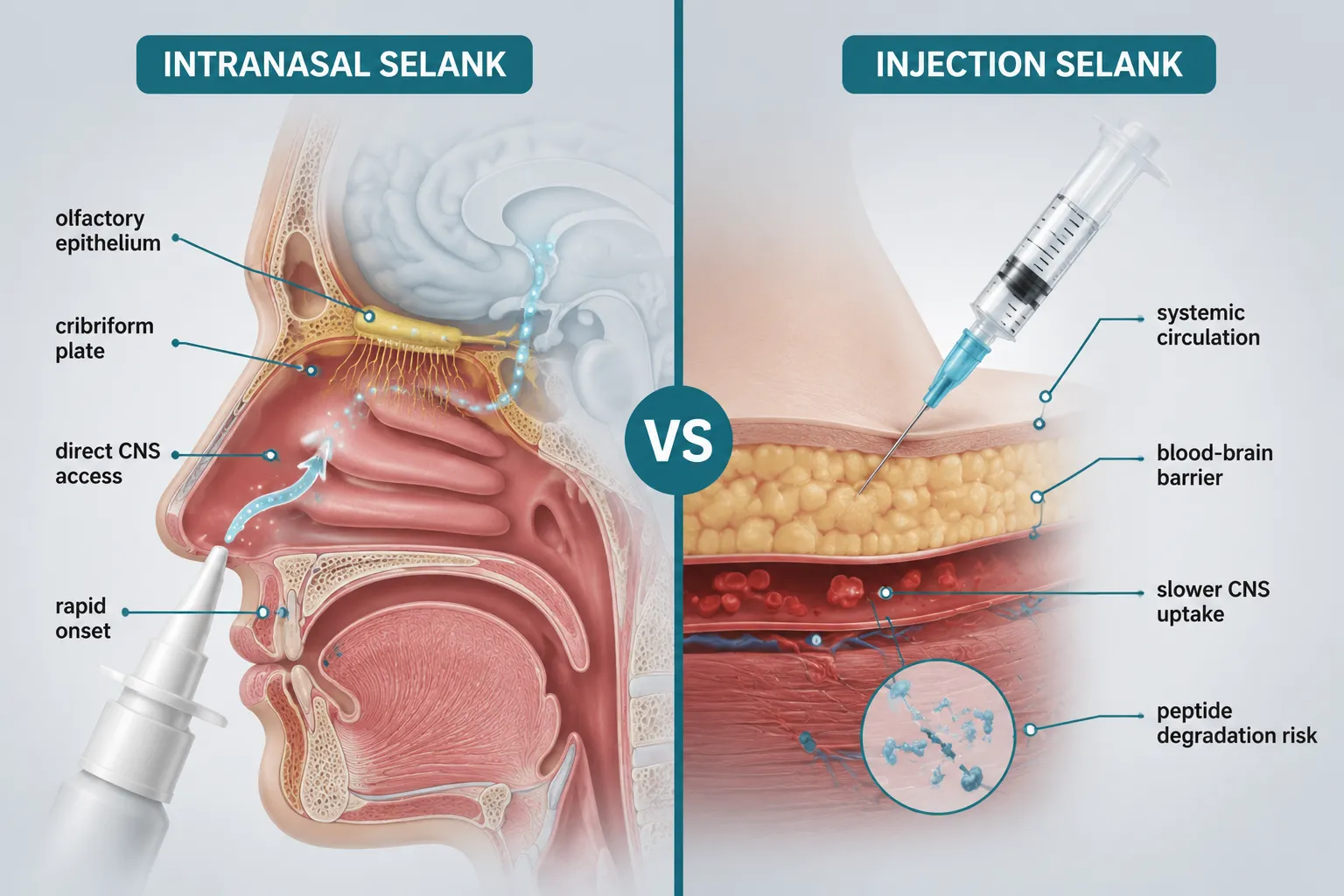
Peptides face a fundamental obstacle: the blood-brain barrier (BBB) degrades or excludes most peptide molecules before they reach CNS tissue. Intranasal delivery sidesteps this problem through the olfactory and trigeminal pathways. The olfactory epithelium sits directly adjacent to the cribriform plate, which provides a structural corridor into the central nervous system without systemic circulation as an intermediary.

Why this matters for Selank specifically:

  • Selank's anxiolytic and nootropic effects depend on CNS bioavailability.
  • Systemic injection routes expose the peptide to rapid enzymatic degradation in plasma.
  • Intranasal delivery achieves measurable CNS concentrations at lower total doses.
  • Onset is faster, and the pharmacokinetic profile more closely mirrors the timing of observed behavioral effects in animal models.

The intranasal route also explains why Selank's approved formulation in Russia is a nasal drop solution rather than an injectable. Contemporary dosing guidance in 2026 research contexts continues to favor intranasal administration, with subcutaneous injection studied as a secondary route in some protocols. For researchers exploring delivery considerations across peptide classes, the oral peptides for sale resource illustrates how route of administration shapes the entire research design.

Safety Profile and Regulatory Landscape in 2026

Selank's safety profile is one of its most-cited research attributes. Unlike benzodiazepines, which carry well-documented risks of tolerance, dependence, and cognitive blunting, Selank studies have not produced evidence of receptor downregulation or withdrawal phenomena. Sedation is absent at anxiolytic-effective doses. This profile has made it a frequent comparison point in research examining alternatives to classical GABA modulators.

Regulatory status as of mid-2026:

  • Russia: Approved anxiolytic drug, available by prescription.
  • European Union: Not approved; classified as a research compound.
  • United States: Not FDA-approved; legal only for research use.
  • Other markets: Unscheduled in most jurisdictions but without formal approval.

The global access gap means that outside Russia, Selank is studied exclusively in laboratory and preclinical research contexts. Researchers sourcing the compound should prioritize suppliers that provide verified purity documentation. The carbohydrate antigens and peptide-based assays article offers broader context on how assay integrity affects peptide research validity.

For researchers interested in other well-studied peptides with documented safety data, SS-31 peptide research provides a useful parallel in terms of mechanistic specificity and research-use framing.

Conclusion

Selank stands out in the peptide research landscape for three reasons: a defined molecular mechanism, a formal clinical approval in at least one major jurisdiction, and a delivery route, intranasal, that is scientifically justified rather than arbitrary. For researchers comparing anxiolytic-class peptides or studying nose-to-brain transport mechanisms, it represents one of the more thoroughly characterized compounds available for preclinical investigation.

Actionable next steps for researchers:

  1. Review the original Russian clinical trial data for Hamilton Scale methodology and dosing parameters before designing any comparative study.
  2. Prioritize intranasal administration protocols, as this is the route with the strongest mechanistic and clinical support.
  3. Verify compound purity through third-party Certificate of Analysis documentation before any experimental use.
  4. Monitor 2026 review literature for updated gene-expression findings, particularly around BDNF and enkephalin pathways.
  5. Ensure full compliance with local regulations governing research peptide use before sourcing or studying Selank.
Tags: anxiolytic peptides, bdnf modulation, gabaergic peptides, intranasal peptide delivery, nootropic peptides, nose-to-brain transport, peptide bioavailability, peptide pharmacology, peptide research, research peptides 2026, selank peptide, tuftsin analog
https://www.puretestedpeptides.com/wp-content/uploads/2026/08/selank-peptide-what-it-is-how-it-is-studied-and-why-intranasal-delivery-matters.webp 1024 1536 https://www.puretestedpeptides.com/wp-content/uploads/2026/01/buy-peptides-online.jpg 2026-08-16 13:04:022026-08-16 13:04:02Selank Peptide: What It Is, How It Is Studied, and Why Intranasal Delivery Matters
You might also like
Enclomiphene vs Enclomiphene Citrate: Differences, Research Applications, and Dosing Considerations Enclomiphene vs Enclomiphene Citrate: Differences, Research Applications, and Dosing Considerations
Semax Peptide Nasal Spray: Administration, Dosing Concepts, and Research Applications Semax Peptide Nasal Spray: Administration, Dosing Concepts, and Research Applications
Polypeptide Peptides in Cardiometabolic Research: How GLP-2-T and GLP-3 Fit With Classic Drug Pathways Polypeptide Peptides in Cardiometabolic Research: How GLP-2-T and GLP-3 Fit With Classic Drug Pathways
Klow Blend Peptide Nasal Spray: Research Applications and Bioavailability Considerations Klow Blend Peptide Nasal Spray: Research Applications and Bioavailability Considerations
Adenosine Triphosphate, Mitochondrial Function, and Why Peptide Researchers Care About Cellular Energy Adenosine Triphosphate, Mitochondrial Function, and Why Peptide Researchers Care About Cellular Energy
Understanding Polypeptide Peptides: Mechanism of Action in Research Applications Understanding Polypeptide Peptides: Mechanism of Action in Research Applications
Selank vs Semax: Which Nootropic Peptide Is Better Suited to Different Research Questions? Selank vs Semax: Which Nootropic Peptide Is Better Suited to Different Research Questions?
Klow Blend vs. Semax and Selank: Intranasal Nootropic Peptides Compared for Research Klow Blend vs. Semax and Selank: Intranasal Nootropic Peptides Compared for Research
0 replies

Leave a Reply

Want to join the discussion?
Feel free to contribute!

Leave a Reply Cancel reply

Your email address will not be published. Required fields are marked *

×

Helpful Links

  • My account
  • Cart
  • Checkout
  • Refund and Returns Policy
  • Privacy Policy
  • SMS Privacy Policy
  • Login
  • My Account
  • Logout

USA Made Lab Tested Peptides

All products are sold for research, laboratory, or analytical purposes only, and are not for human consumption


Pure Tested Peptides is a chemical supplier. Pure Tested Peptides is not a compounding / chemical compounding facility as defined under 503A of the Federal Food, Drug, and Cosmetic act. Pure Tested Peptides is not an outsourcing facility as defined under 503B of the Federal Food, Drug, and Cosmetic act.

The statements made within this website have not been evaluated by the US Food and Drug Administration. The products we offer are not intended to diagnose, treat, cure or prevent any disease.

Human/Animal Consumption Prohibited. Laboratory/In-Vitro Experimental Use Only

Link to: Polypeptide Peptides in Cardiometabolic Research: How GLP-2-T and GLP-3 Fit With Classic Drug Pathways Link to: Polypeptide Peptides in Cardiometabolic Research: How GLP-2-T and GLP-3 Fit With Classic Drug Pathways Polypeptide Peptides in Cardiometabolic Research: How GLP-2-T and GLP-3 Fit...Polypeptide Peptides in Cardiometabolic Research: How GLP-2-T and GLP-3 Fit With Classic Drug Pathways Link to: GLP-2-T and GLP2 Tirz Peptides: Why Naming Matters for Translational Research and Trial Design Link to: GLP-2-T and GLP2 Tirz Peptides: Why Naming Matters for Translational Research and Trial Design GLP-2-T and GLP2 Tirz Peptides: Why Naming Matters for Translational Research and Trial DesignGLP-2-T and GLP2 Tirz Peptides: Why Naming Matters for Translational Research...
Scroll to top Scroll to top Scroll to top