Call or Text 727-513-9780
  • Shopping Cart Shopping Cart
    0Shopping Cart
Pure Tested Peptides | America's most trusted Peptides for sale online
  • Peptides for sale
    • Oral Peptides for sale
      • Peptide Capsules for sale
      • BPC 157 Capsules 1000mcg
      • SLU-PP-332 Capsules | 1000 mcg
      • 5-Amino-1MQ 50mg Capsules
      • Tesofensine 500mcg
    • All Peptides for sale
    • Peptide Sprays
      • BPC 157 Nasal Spray Kit
      • BPC-157 TB500 Nasal Spray Kit
      • Semax Nasal Spray 10mg
      • Selank – Nasal Spray Kit – 10mg
      • Epithalon 50MG Nasal Spray Kit
      • Ipamorelin 10mg Nasal Spray
      • Klow Nasal Spray (BPC-157 + TB-500 + GHK-Cu + KPV) | 80mg
      • Hulk Nasal Spray Tesa / Ipa Blend 6/3 MG
      • Klow Nasal Spray
      • NAD + 500 mg Nasal Spray
      • PT-141 Nasal Spray Kit
    • GHRH Peptides
      • Ipa Peptides
      • CJC-1295 Peptides
        • CJC-1295 with DAC 5 mg
        • CJC-1295 without DAC 5 mg
        • CJC-1295 Ipa 10mg
      • Tesa Peptides
        • Tesa Peptide
        • Tesa 20 mg
    • GHK-Cu Peptides
      • All GHK-Cu Peptides
      • GHK-Cu 100mg
      • KLOW Peptide Blend – Buy KLOW blend online
    • BPC Peptides
      • All BPC Peptides
      • BPC-157
      • BPC-157 TB-500
      • BPC 157 capsules 1000mcg
    • SLU-PP-332 Peptides
      • All SLU-PP-332 Peptides
      • SLU-PP-332 5mg
    • GLP3 Peptides
    • PT-141 Peptides
      • PT-141 Peptides for sale
      • PT-141 10mg
      • PT-141 Nasal Spray
    • CAG Peptides
      • Lipo-C Peptide Blend
      • CAG 5mg
      • CAG 10mg
    • MOTS-C Peptides
      • MOTS-C Peptides for sale
      • MOTS-c peptide
      • MOTS-c 10mg *6 pack*
    • 5 Amino 1MQ Peptides
      • 5 Amino 1MQ Peptides for sale
      • 5-Amino-1MQ 50mg Capsules
      • 5-Amino-1MQ 5mg
    • Epithalon Peptides
      • Epithalon Peptides for sale
      • Epithalon 10mg
      • Epithalon 50mg
  • Shop
    • GLPs
      • 5-Amino-1MQ 50mg Capsules
      • 5-Amino-1MQ 5mg
      • L-Carnitine 500mg/ml
      • Tesofensine 500mcg
      • SLU-PP-332 5mg
      • MOTS-c 10mg *6 pack*
    • Epithalon & BPC Peptides
      • Epithalon 10mg
      • Epithalon 50mg
      • BPC-157
      • BPC 157 capsules 1000mcg
      • BPC-157 TB-500
      • BPC-157 TB500 Nasal Spray Kit
      • BPC 157 Nasal Spray Kit
    • BPC TB-500 & NAD+ Peptides
      • NAD+ 500 mg
      • KLOW Peptide Blend – Buy KLOW blend online
      • GLOW Peptide Blend
      • TB 500 5mg
      • BPC 157 capsules 1000mcg – Supplement
      • BPC 157 Nasal Spray Kit
      • BPC-157
      • BPC-157 TB500 Nasal Spray Kit
      • BPC-157 TB-500
      • BPC 157 capsules 1000mcg
    • LL-37 Peptide
      • LL-37 10 mg
    • MOTS-C & Selank
      • MOTS-c peptide
      • Selank 10mg
    • GHK Peptides
      • GHK-Cu 100mg
      • GLOW Peptide Blend
      • KLOW Peptide Blend – Buy KLOW blend online
  • COAs
  • Wholesale
    • Wholesale Peptides for sale
  • PTP FAQ
  • Affiliates
    • Selank Peptide: Advanced Pharmacological Mechanisms Underlying Its Anxiolytic and Nootropic Effects in Research
      • 5-Amino-1MQ Peptide: Detailed Mechanisms of NNMT Inhibition and Its Impact on Cellular Metabolism Research
        • MOTS-C Peptide: Unraveling Its Role in Mitochondrial Dynamics and Energy Metabolism Research
          • Epithalon Peptide and Telomerase Regulation: Investigating Its Impact on Cellular Senescence and Lifespan Research Models
            • GLP2-T vs GLP2 Tirz Peptide: Understanding the Naming, Mechanistic Nuances, and Research Implications for Gut Health
      • Peptides and Polypeptides in Modern Pharmacology: What Research on Metoprolol, Prednisone, and Amlodipine Reveals
        • Polypeptide Peptides vs NSAIDs: What Naproxen and Diclofenac Teach Tissue-Repair Researchers About BPC‑157 and TB‑500
          • Peptides and Polypeptides in Endocrine Pharmacology: How GLP-1, GLP-2, and GLP-3 Retatrutide Differ From Classic Drugs Like Prednisone and Amlodipine
          • 5‑Amino‑1MQ Peptide and NNMT Inhibition: How It Compares With Statins Like Atorvastatin in Adipose and Lipid Metabolism Research
      • Enclomiphene, Estrogen Receptor Signaling, and Luteinizing Phase Biology: What Hormone Researchers Should Measure
        • Mesenchymal Stem Cells, BPC‑157, and GHK‑Cu: How Tissue Repair Peptides Compare With Classic NSAIDs Like Naproxen in Injury Models
          • Peptide Calculator Use Cases Beyond Growth Hormone: Working Through GLP‑3 Retatrutide, MOTS‑c, and BPC‑157 Research Dosing
        • Polypeptide Peptides in Endocrine and Metabolic Pharmacology: Lessons From Amlodipine, Prednisone, and Metoprolol
        • Peptides Calculator for Advanced Blends: Worked Examples for Tesamorelin, CJC‑1295, and Ipamorelin Stacks
          • Peptides and Polypeptides in Human Physiology: How Molecular Size Shapes Research Applications
            • Selank Peptide: Advanced Pharmacological Mechanisms Underlying Its Anxiolytic and Nootropic Effects in Research
          • 5-Amino-1MQ Peptide: Detailed Mechanisms of NNMT Inhibition and Its Impact on Cellular Metabolism Research
            • MOTS-C Peptide: Unraveling Its Role in Mitochondrial Dynamics and Energy Metabolism Research
              • Epithalon Peptide and Telomerase Regulation: Investigating Its Impact on Cellular Senescence and Lifespan Research Models
                • GLP2-T vs GLP2 Tirz Peptide: Understanding the Naming, Mechanistic Nuances, and Research Implications for Gut Health
                  • Peptides and Polypeptides in Endocrine Pharmacology: How GLP-1, GLP-2, and GLP-3 Retatrutide Differ From Classic Drugs Like Prednisone and Amlodipine
                    • Polypeptide Peptides vs NSAIDs: What Naproxen and Diclofenac Teach Tissue-Repair Researchers About BPC‑157 and TB‑500
                      • Peptides and Polypeptides in Modern Pharmacology: What Research on Metoprolol, Prednisone, and Amlodipine Reveals
                        • 5‑Amino‑1MQ Peptide and NNMT Inhibition: How It Compares With Statins Like Atorvastatin in Adipose and Lipid Metabolism Research
                        • Enclomiphene, Estrogen Receptor Signaling, and Luteinizing Phase Biology: What Hormone Researchers Should Measure
                        • Mesenchymal Stem Cells, BPC‑157, and GHK‑Cu: How Tissue Repair Peptides Compare With Classic NSAIDs Like Naproxen in Injury Models
                        • Peptide Calculator Use Cases Beyond Growth Hormone: Working Through GLP‑3 Retatrutide, MOTS‑c, and BPC‑157 Research Dosing
                        • Polypeptide Peptides in Endocrine and Metabolic Pharmacology: Lessons From Amlodipine, Prednisone, and Metoprolol
                        • Peptides Calculator for Advanced Blends: Worked Examples for Tesamorelin, CJC‑1295, and Ipamorelin Stacks
                        • Peptides and Polypeptides in Human Physiology: How Molecular Size Shapes Research Applications
                        • Selank Peptide: Advanced Pharmacological Mechanisms Underlying Its Anxiolytic and Nootropic Effects in Research
                        • MOTS-C Peptide: Unraveling Its Role in Mitochondrial Dynamics and Energy Metabolism Research
                        • Peptides and Polypeptides in Modern Pharmacology: What Research on Metoprolol, Prednisone, and Amlodipine Reveals
                        • Peptides and Polypeptides in Endocrine Pharmacology: How GLP-1, GLP-2, and GLP-3 Retatrutide Differ From Classic Drugs Like Prednisone and Amlodipine
                        • 5-Amino-1MQ Peptide: Detailed Mechanisms of NNMT Inhibition and Its Impact on Cellular Metabolism Research
                        • Mesenchymal Stem Cells, BPC‑157, and GHK‑Cu: How Tissue Repair Peptides Compare With Classic NSAIDs Like Naproxen in Injury Models
                        • Peptide Calculator Use Cases Beyond Growth Hormone: Working Through GLP‑3 Retatrutide, MOTS‑c, and BPC‑157 Research Dosing
                        • GLP2-T vs GLP2 Tirz Peptide: Understanding the Naming, Mechanistic Nuances, and Research Implications for Gut Health
                        • Polypeptide Peptides in Endocrine and Metabolic Pharmacology: Lessons From Amlodipine, Prednisone, and Metoprolol
                        • Polypeptide Peptides vs NSAIDs: What Naproxen and Diclofenac Teach Tissue-Repair Researchers About BPC‑157 and TB‑500
                        • Peptides and Polypeptides in Human Physiology: How Molecular Size Shapes Research Applications
                        • Peptides Calculator for Advanced Blends: Worked Examples for Tesamorelin, CJC‑1295, and Ipamorelin Stacks
                        • 5‑Amino‑1MQ Peptide and NNMT Inhibition: How It Compares With Statins Like Atorvastatin in Adipose and Lipid Metabolism Research
                        • Enclomiphene, Estrogen Receptor Signaling, and Luteinizing Phase Biology: What Hormone Researchers Should Measure
                        • Epithalon Peptide and Telomerase Regulation: Investigating Its Impact on Cellular Senescence and Lifespan Research Models
                        • Best research protocol Klow blend
                        • best time to take BPC-157
                        • best time to take DSIP (Delta Sleep Inducing Peptide)
                        • best time to take CJC-1295
                        • best time to take AOD-9604
                        • best time to take Follistatin 344
                        • best time to take Ipamorelin
                        • best time to take MK-677 (Ibutamoren)
                        • best time to take Ligandrol (LGD-4033) — research compound
                        • best time to take Ostarine (MK-2866) — research compound
                        • best time to take GHK-CU
                        • best time to take TB-500
                        • best time to take MOTS-c
                        • best time to take Semax
                        • best time to take RAD-140 (Testolone) — research compound
                        • best time to take Thymosin Alpha-1
                        • best time to take PEG-MGF
                        • Biolife Plasma, Octapharma Plasma, and Research Peptides: How Plasma Donation Labs Differ From Peptide Suppliers
                        • best time to take YK-11 — research compound
                        • best time to take PT-141 (Bremelanotide)
                        • Best research protocol Klow blend
                        • 5-Amino-1MQ and MOTS-C Synergy: Metabolic Signaling, Mitochondria, and Research Design
                        • BPC-157 and TB-500: Investigating Their Combined Effects on Angiogenesis and Cellular Migration in Tissue Repair Models
                        • BPC-157 Peptide: Gut Barrier Function, Inflammation, and Tissue-Recovery Research
                        • 5‑Amino‑1MQ and MOTS‑c Synergy in Metabolic Research: Designing NNMT and Mitochondrial Biogenesis Stacks
                        • CJC-1295 with DAC vs. Without DAC: Half-Life, Release Kinetics, and Research Implications
                        • CJC‑1295 with DAC vs. Without DAC: Expanding on Half‑Life Differences Using Tesamorelin and Ipamorelin Blend Case Studies
                        • Collagen Biology and Copper‑Binding Peptides: How GHK‑Cu, Glow Blend, and Klow Blend Interact with Skin and Connective Tissue
                        • Collagen Biology and Regenerative Peptides: How GHK‑Cu, Glow Blend, and Klow Blend Affect Extracellular Matrix Research
                    • DNA, Telomeres, and Longevity Peptides: Positioning Epithalon and MOTS‑c in Genetic Aging Research
                      • Enclomiphene Citrate: serm Mechanism, Testosterone Research, and Stack Compatibility
                        • Enclomiphene vs Enclomiphene Citrate: Formulation, Bioavailability, and Research Distinctions
                        • Epithalon Peptide Research: Telomerase Activation, Aging, and Pineal Gland Function
                        • Estrogen Receptor Signaling and Enclomiphene: How Selective Modulators Compare with Classic Polypeptide Hormones
                        • GHK-Cu Peptide: Advanced Mechanisms in Extracellular Matrix Remodeling and Wound Healing Research
                        • GHK-Cu Peptide: Collagen Synthesis, Wound Repair, and Skin-Barrier Research Models
                        • GLP-1 vs GLP-3 vs GLP-2: Peptide Classification and Research Applications
                        • GLP-2 Peptide Research Guide: Gut Barrier Function, Nutrient Absorption, and Intestinal Recovery Models
                        • GLP-3 Retatrutide vs. GLP-1 Drugs: What Triple-Agonist Biology Changes in Research Models
                        • Ipamorelin and Tesamorelin Combination: Synergistic GH Secretagogue Research and Dosing Protocols
                        • GLP2 Tirz Peptide: What It Is, Why the Name Exists, and How Researchers Should Interpret It
                        • Klow Blend Peptide Nasal Spray: What the Formulation Is Trying to Do in Cognitive Research
                        • Mitochondria, NNMT Inhibition, and Peptide Modulators: Where MOTS‑c and 5‑Amino‑1MQ Fit in Cellular Energy Research
                        • MOTS-c Peptide: Mitochondrial Function, Energy Metabolism, and What Researchers Measure
                        • MOTS-c vs. 5-Amino-1MQ: Which Metabolic Research Questions Each Compound Actually Answers
                        • Nasal Spray Peptides: Bioavailability, Administration, and Semax/Selank Research Applications
                        • PT-141 Peptide Research: Mechanism of Action and Melanocortin Receptor Signaling
                        • Retatrutide for Research: Mechanism, Structure, and GLP-1/GLP-3 Dual Action
                        • Retatrutide for Obesity and Type 2 Diabetes: What the Latest Trial Data Suggest
                        • Tesofensine Peptide Research: Mechanism, Appetite Suppression, and Neuropeptide Y Pathways
  • Contact
    • Contact Customer Service
    • Text Customer Support
  • About US
  • Shop all peptides
  • Affiliate Program
    • Affiliate Signup
  • Login / Register Login / Register Page Link Login / Register Page Link
  • Click to open the search input field Click to open the search input field Search
  • Menu Menu
Meloxicam and Tissue-Repair Peptides: Comparing Nonsteroidal Anti-Inflammatory Drugs with BPC-157 in In Vitro Models

Meloxicam and Tissue-Repair Peptides: Comparing Nonsteroidal Anti-Inflammatory Drugs with BPC-157 in In Vitro Models

September 16, 2026/0 Comments/in Uncategorized/by

COX-2 inhibition and growth factor upregulation are not two sides of the same coin, they are mechanistically opposite strategies for managing tissue injury. This fundamental difference sits at the center of any rigorous comparison of meloxicam and tissue-repair peptides: comparing nonsteroidal anti-inflammatory drugs with BPC-157 in in vitro models. As cell culture research grows more sophisticated in 2026, the contrast between these two approaches has become sharper, more clinically relevant, and more debated.

Key Takeaways

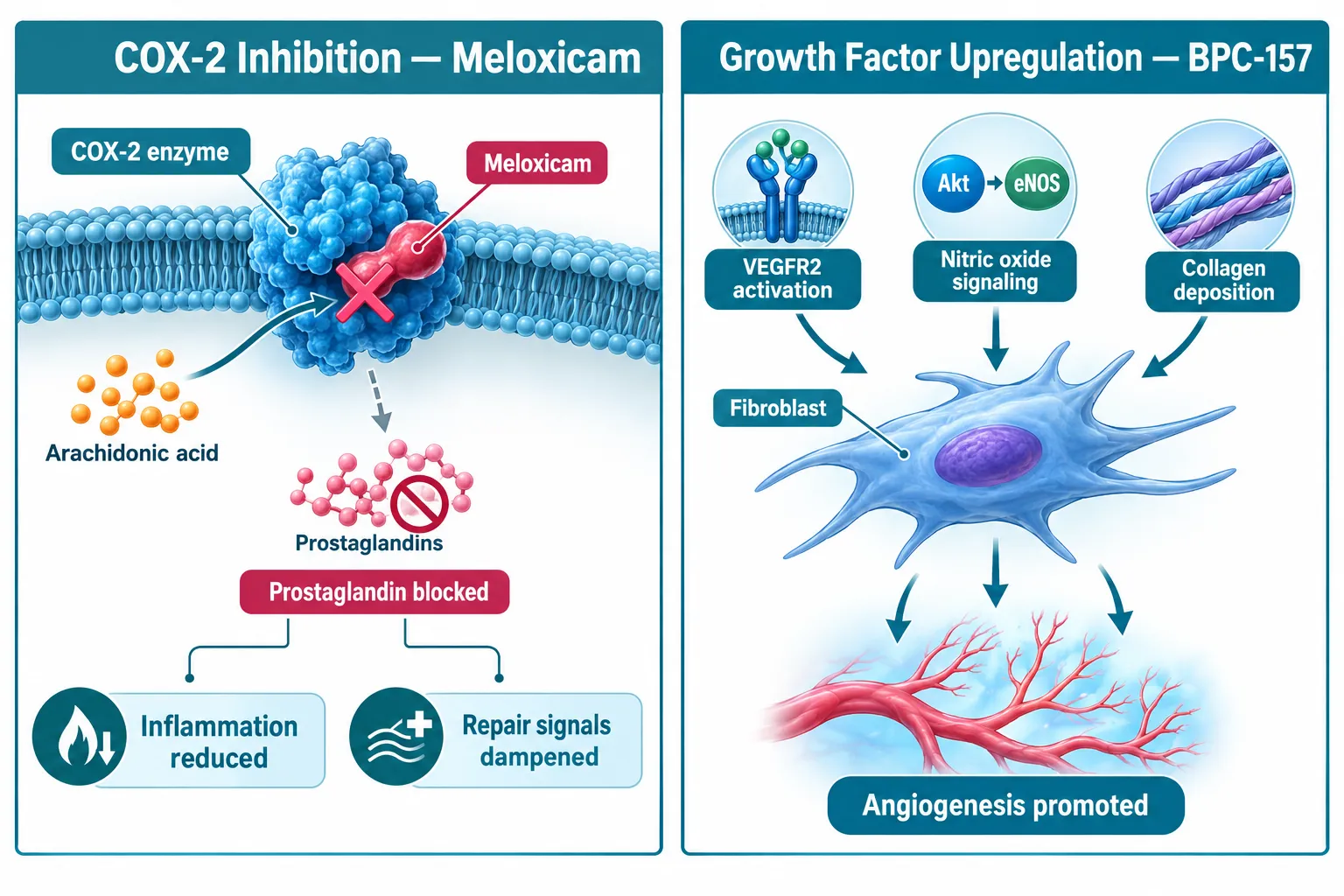
  • Meloxicam reduces inflammation primarily by blocking COX-2 enzymes and suppressing prostaglandin synthesis, which may also dampen early repair signaling.
  • BPC-157 is a pleiotropic tissue-repair peptide that activates VEGFR2, the Akt-eNOS nitric oxide axis, and promotes fibroblast activity, collagen deposition, and angiogenesis.
  • In vitro musculoskeletal models consistently show BPC-157 enhancing tenocyte survival, fibroblast migration, and growth hormone receptor expression.
  • NSAIDs such as meloxicam have been repeatedly associated with reduced collagen synthesis in preclinical models, contrasting with BPC-157's repair-promoting profile.
  • BPC-157 remains a research-only compound without major regulatory approval; meloxicam is a fully approved NSAID with no clinical indication for tissue regeneration.

How COX-2 Inhibition and Peptide Signaling Differ at the Cellular Level

Understanding the mechanistic gap between meloxicam and BPC-157 starts at the receptor level.

Meloxicam is a COX-2-preferential NSAID. It works by blocking cyclooxygenase-2 enzymes, which halts the conversion of arachidonic acid into prostaglandins. This reduces pain and swelling efficiently. However, prostaglandins also serve as early-phase messengers that recruit repair cells to damaged tissue. When that signal is suppressed, the downstream cascade of fibroblast recruitment, collagen synthesis, and angiogenesis can be partially blunted.
How COX-2 Inhibition and Peptide Signaling Differ at the Cellular Level

BPC-157, by contrast, operates through an entirely different set of molecular targets. It activates VEGFR2 (vascular endothelial growth factor receptor 2) and the Akt-eNOS nitric oxide pathway, which directly promotes new blood vessel formation and cell survival. It also upregulates growth hormone receptors on fibroblasts and tenocytes, enhancing their proliferative and migratory capacity. Rather than silencing an inflammatory cascade, BPC-157 accelerates the transition from injury to active repair.

Key distinction: Meloxicam turns down the inflammatory signal. BPC-157 turns up the repair signal. These are not equivalent actions.

This mechanistic separation is why researchers studying meloxicam and tissue-repair peptides in cell culture systems often find these two compounds occupying non-overlapping functional roles rather than competing for the same outcome.

What In Vitro Models Reveal About BPC-157 and NSAID Effects on Tissue Repair

Cell culture studies have produced some of the clearest evidence for BPC-157's repair-promoting properties.

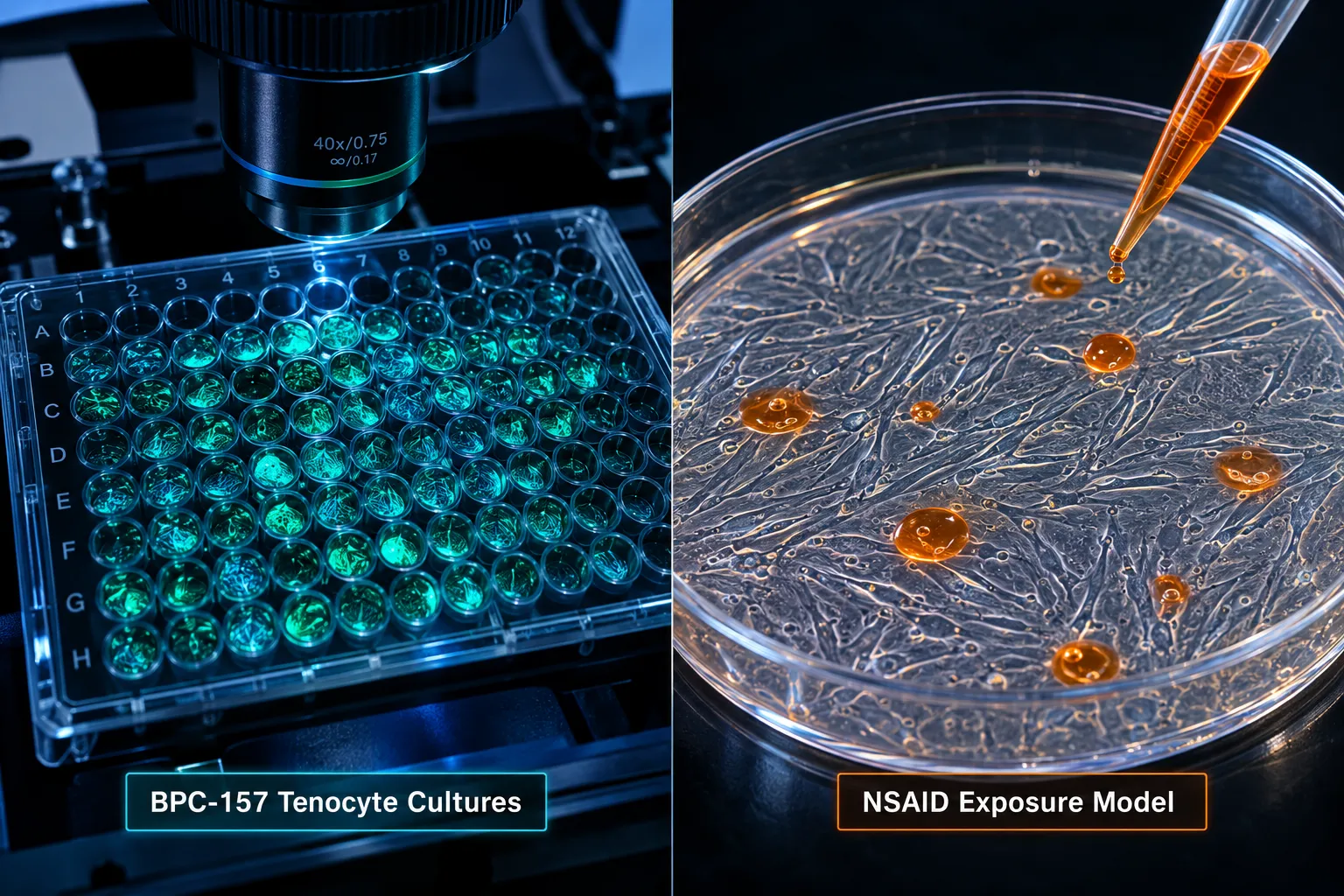
In rat Achilles tenocyte cultures, BPC-157 exposure consistently produces enhanced cell survival and proliferation. Fibroblast cultures treated with BPC-157 show increased growth hormone receptor expression, which correlates with improved collagen fiber organization. Wound-healing scratch assays demonstrate accelerated cell migration into the injury zone, and angiogenesis assays confirm increased tubule formation in endothelial cell models.
What In Vitro Models Reveal About BPC-157 and NSAID Effects on Tissue Repair

NSAIDs tell a different story in the same types of models. Multiple preclinical musculoskeletal studies, including a 2026 systematic overview of 36 studies, have linked conventional NSAID use to reduced collagen synthesis and slower long-term structural healing. Ibuprofen and naproxen are the most cited examples, but the COX-2 inhibition mechanism shared with meloxicam raises similar theoretical concerns for repair-focused endpoints.

Summary of in vitro findings:

Compound Primary Mechanism Effect on Collagen Effect on Angiogenesis Effect on Fibroblast Activity
Meloxicam COX-2 inhibition Potentially reduced Neutral to negative Minimal direct effect
BPC-157 VEGFR2 / Akt-eNOS activation Enhanced Strongly promoted Significantly increased

A particularly compelling area of in vitro research involves gastrointestinal cell models. BPC-157 has repeatedly protected gastric and intestinal mucosal cells from NSAID-induced damage in rat studies, positioning it as a cytoprotective reference compound rather than an NSAID substitute. For researchers exploring SS-31 peptides for sale or other mitochondria-targeted compounds, this cytoprotective angle offers a useful parallel framework.

Practical Research Considerations When Comparing NSAIDs with BPC-157 in Cell Culture Systems

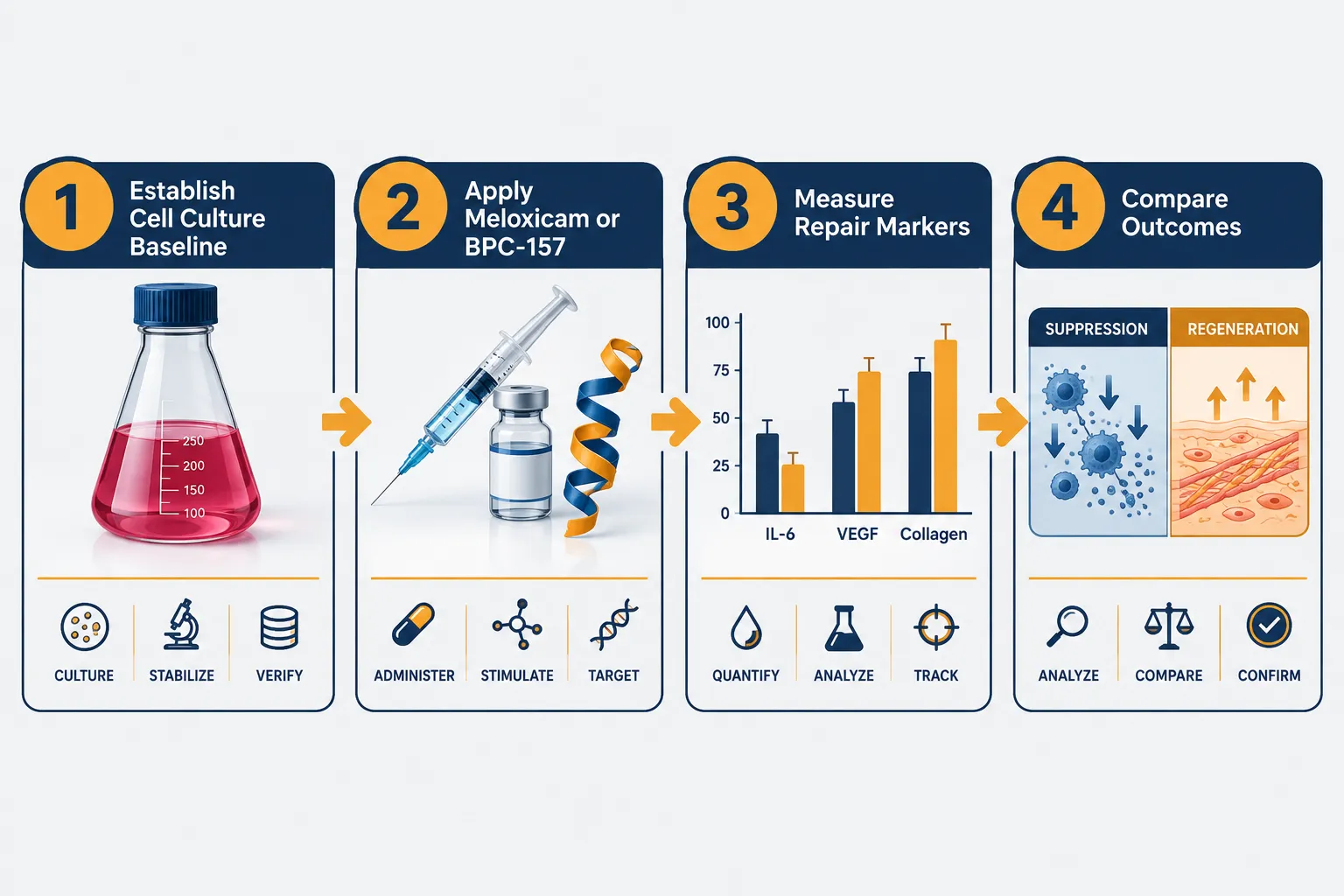
Designing in vitro experiments that meaningfully compare meloxicam and tissue-repair peptides: comparing nonsteroidal anti-inflammatory drugs with BPC-157 in in vitro models requires careful attention to endpoint selection, dosing protocols, and timing.
Practical Research Considerations When Comparing NSAIDs with BPC-157 in Cell Culture Systems

Key design considerations include:

  • Endpoint selection: If the primary endpoint is inflammation suppression (IL-6, TNF-alpha, PGE2), meloxicam performs reliably. If the endpoint is structural repair (collagen density, cell migration rate, VEGF expression), BPC-157 is the mechanistically appropriate comparator.
  • Timing of compound exposure: COX-2 inhibition is most relevant in the early inflammatory phase. BPC-157's growth-factor-driven effects are most active during the proliferative and remodeling phases. Applying both simultaneously may produce conflicting signals.
  • Concentration calibration: BPC-157 research protocols for gut and NSAID-induced damage models typically span 4-6 weeks in animal studies; in vitro timelines should account for the compound's mechanism of action rather than simply mirroring NSAID dosing schedules.

Researchers working with multiple peptide classes, such as those exploring GHK-Cu peptide for skin and connective tissue models, or reviewing CJC-1295 pharmacokinetic comparisons for growth hormone axis research, will recognize that peptide-driven repair signaling requires different experimental frameworks than small-molecule anti-inflammatory drugs.

One 2026 molecular docking study identified FER, TUBA1B, and MICAL2 as proteins where meloxicam shows strong in silico binding affinity, suggesting possible cytoskeletal and signaling roles beyond prostaglandin suppression. However, these findings remain computational and have not yet been validated in dedicated cell culture assays.

Regulatory context matters: BPC-157 is currently a research-only compound under ongoing regulatory review, while meloxicam is a fully approved NSAID. Researchers combining them in experimental settings should note that continuous COX-2 inhibition may theoretically blunt BPC-157's growth-factor-driven repair signaling. Using the lowest effective NSAID dose and avoiding around-the-clock administration during BPC-157 protocols is a commonly recommended precaution when structural repair is the primary endpoint.

Those exploring complementary peptide combinations may also find value in reviewing the synergy of LL-37 and SS-31 for additional context on how peptide combinations interact in repair-focused models. Similarly, researchers studying metabolic and hormonal contexts alongside tissue repair may reference Tesamorelin and Ipamorelin combination safety considerations as a model for responsible multi-compound research design.

For those sourcing research-grade compounds, wholesale peptides with verified purity documentation are essential for reproducible in vitro results.

Conclusion

The comparison of meloxicam and tissue-repair peptides: comparing nonsteroidal anti-inflammatory drugs with BPC-157 in in vitro models ultimately reveals two compounds with fundamentally different roles in tissue biology. Meloxicam is a well-characterized, clinically approved tool for reducing prostaglandin-mediated inflammation, effective, predictable, but limited in its capacity to actively drive structural repair. BPC-157 is a pleiotropic research peptide that promotes angiogenesis, collagen deposition, and fibroblast activity through growth factor pathways, offering a mechanistically distinct and potentially complementary profile.

Actionable next steps for researchers:

  1. Define repair-specific endpoints (VEGF, collagen, cell migration) separately from inflammation endpoints (IL-6, COX-2, PGE2) in study design.
  2. Avoid applying NSAID dosing logic to BPC-157 protocols; align exposure timing with the compound's mechanism of action.
  3. Treat computational findings (such as meloxicam's docking affinity to cytoskeletal proteins) as hypothesis-generating, not conclusive.
  4. Source third-party tested, purity-verified peptides to ensure experimental reproducibility.
  5. Monitor the regulatory landscape for BPC-157, as its status continues to evolve in 2026.

The field is moving toward a clearer understanding that analgesia with suppression and analgesia with repair are not interchangeable goals, and that in vitro models are the most precise tool available for distinguishing between them.

Tags: angiogenesis, bpc-157, collagen synthesis, cox-2 inhibition, in-vitro models, meloxicam, nsaids, tissue repair peptides
https://www.puretestedpeptides.com/wp-content/uploads/2026/09/meloxicam-and-tissue-repair-peptides-comparing-nonsteroidal-anti-inflammatory-dr.webp 1024 1536 https://www.puretestedpeptides.com/wp-content/uploads/2026/01/buy-peptides-online.jpg 2026-09-16 13:06:352026-09-16 13:06:35Meloxicam and Tissue-Repair Peptides: Comparing Nonsteroidal Anti-Inflammatory Drugs with BPC-157 in In Vitro Models
You might also like
Where to Buy Glow Blend, Klow Blend, and Klow Nasal Peptide Sprays: Lab-Grade vs Cosmetic-Grade Options Where to Buy Glow Blend, Klow Blend, and Klow Nasal Peptide Sprays: Lab-Grade vs Cosmetic-Grade Options
Complement-Dependent Cytotoxicity and Peptide Safety: What BPC-157, GHK-Cu, and Nasal Spray Peptides Teach Immunology-Focused Labs Complement-Dependent Cytotoxicity and Peptide Safety: What BPC-157, GHK-Cu, and Nasal Spray Peptides Teach Immunology-Focused Labs
Collagen Research Peptides: Where GHK-Cu, Glow Blend, and Skin-Focused Formulas Fit in Laboratory Models Collagen Research Peptides: Where GHK-Cu, Glow Blend, and Skin-Focused Formulas Fit in Laboratory Models
GHK-Cu Peptide: Collagen Synthesis, Tissue Repair, and Longevity Research Applications GHK-Cu Peptide: Collagen Synthesis, Tissue Repair, and Longevity Research Applications
Mesenchymal Stem Cells and Peptide Signaling: Where MOTS-c, BPC-157, and GHK-Cu Fit in Regenerative Research Mesenchymal Stem Cells and Peptide Signaling: Where MOTS-c, BPC-157, and GHK-Cu Fit in Regenerative Research
Klow Peptide Nasal Spray: What It Is, How Researchers Evaluate It, and Why Formulation Matters Klow Peptide Nasal Spray: What It Is, How Researchers Evaluate It, and Why Formulation Matters
GHK-Cu Peptide: Collagen Synthesis and Skin Matrix Biology Research GHK-Cu Peptide: Collagen Synthesis and Skin Matrix Biology Research
Collagen, GHK-Cu, and Glow Blend: How Classic Collagen Biology Intersects With Copper Peptide Research Collagen, GHK-Cu, and Glow Blend: How Classic Collagen Biology Intersects With Copper Peptide Research
0 replies

Leave a Reply

Want to join the discussion?
Feel free to contribute!

Leave a Reply Cancel reply

Your email address will not be published. Required fields are marked *

×

Helpful Links

  • My account
  • Cart
  • Checkout
  • Refund and Returns Policy
  • Privacy Policy
  • SMS Privacy Policy
  • Login
  • My Account
  • Logout

USA Made Lab Tested Peptides

All products are sold for research, laboratory, or analytical purposes only, and are not for human consumption


Pure Tested Peptides is a chemical supplier. Pure Tested Peptides is not a compounding / chemical compounding facility as defined under 503A of the Federal Food, Drug, and Cosmetic act. Pure Tested Peptides is not an outsourcing facility as defined under 503B of the Federal Food, Drug, and Cosmetic act.

The statements made within this website have not been evaluated by the US Food and Drug Administration. The products we offer are not intended to diagnose, treat, cure or prevent any disease.

Human/Animal Consumption Prohibited. Laboratory/In-Vitro Experimental Use Only

Link to: CJC-1295 With DAC vs Without DAC: Half-Life, Release Profile, and Research Selection Guide Link to: CJC-1295 With DAC vs Without DAC: Half-Life, Release Profile, and Research Selection Guide CJC-1295 With DAC vs Without DAC: Half-Life, Release Profile, and Research Selection...CJC-1295 With DAC vs Without DAC: Half-Life, Release Profile, and Research Selection Guide Link to: Evaluating Antiemetic Protocols in Incretin Research: Ondansetron Mechanisms During GLP-3 Retatrutide Administration Link to: Evaluating Antiemetic Protocols in Incretin Research: Ondansetron Mechanisms During GLP-3 Retatrutide Administration Evaluating Antiemetic Protocols in Incretin Research: Ondansetron Mechanisms During GLP-3 Retatrutide AdministrationEvaluating Antiemetic Protocols in Incretin Research: Ondansetron Mechanisms...
Scroll to top Scroll to top Scroll to top