Call or Text 727-513-9780
  • Shopping Cart Shopping Cart
    0Shopping Cart
Pure Tested Peptides | America's most trusted Peptides for sale online
  • Peptides for sale
    • Oral Peptides for sale
      • Peptide Capsules for sale
      • BPC 157 Capsules 1000mcg
      • SLU-PP-332 Capsules | 1000 mcg
      • 5-Amino-1MQ 50mg Capsules
      • Tesofensine 500mcg
    • All Peptides for sale
    • Peptide Sprays
      • BPC 157 Nasal Spray Kit
      • BPC-157 TB500 Nasal Spray Kit
      • Semax Nasal Spray 10mg
      • Selank – Nasal Spray Kit – 10mg
      • Epithalon 50MG Nasal Spray Kit
      • Ipamorelin 10mg Nasal Spray
      • Klow Nasal Spray (BPC-157 + TB-500 + GHK-Cu + KPV) | 80mg
      • Hulk Nasal Spray Tesa / Ipa Blend 6/3 MG
      • Klow Nasal Spray
      • NAD + 500 mg Nasal Spray
      • PT-141 Nasal Spray Kit
    • GHRH Peptides
      • Ipa Peptides
      • CJC-1295 Peptides
        • CJC-1295 with DAC 5 mg
        • CJC-1295 without DAC 5 mg
        • CJC-1295 Ipa 10mg
      • Tesa Peptides
        • Tesa Peptide
        • Tesa 20 mg
    • GHK-Cu Peptides
      • All GHK-Cu Peptides
      • GHK-Cu 100mg
      • KLOW Peptide Blend – Buy KLOW blend online
    • BPC Peptides
      • All BPC Peptides
      • BPC-157
      • BPC-157 TB-500
      • BPC 157 capsules 1000mcg
    • SLU-PP-332 Peptides
      • All SLU-PP-332 Peptides
      • SLU-PP-332 5mg
    • GLP3 Peptides
      • GLP3-R
      • GLP3-R CAG 10mg
      • GLP3-R 20mg
    • PT-141 Peptides
      • PT-141 Peptides for sale
      • PT-141 10mg
      • PT-141 Nasal Spray
    • CAG Peptides
      • Lipo-C Peptide Blend
      • CAG 5mg
      • CAG 10mg
    • MOTS-C Peptides
      • MOTS-C Peptides for sale
      • MOTS-c peptide
      • MOTS-c 10mg *6 pack*
    • 5 Amino 1MQ Peptides
      • 5 Amino 1MQ Peptides for sale
      • 5-Amino-1MQ 50mg Capsules
      • 5-Amino-1MQ 5mg
    • Epithalon Peptides
      • Epithalon Peptides for sale
      • Epithalon 10mg
      • Epithalon 50mg
  • Shop
    • GLPs
      • 5-Amino-1MQ 50mg Capsules
      • 5-Amino-1MQ 5mg
      • GLP3-Reta
      • L-Carnitine 500mg/ml
      • Tesofensine 500mcg
      • SLU-PP-332 5mg
      • MOTS-c 10mg *6 pack*
    • Epithalon & BPC Peptides
      • Epithalon 10mg
      • Epithalon 50mg
      • BPC-157
      • BPC 157 capsules 1000mcg
      • BPC-157 TB-500
      • BPC-157 TB500 Nasal Spray Kit
      • BPC 157 Nasal Spray Kit
    • BPC TB-500 & NAD+ Peptides
      • NAD+ 500 mg
      • KLOW Peptide Blend – Buy KLOW blend online
      • GLOW Peptide Blend
      • TB 500 5mg
      • BPC 157 capsules 1000mcg – Supplement
      • BPC 157 Nasal Spray Kit
      • BPC-157
      • BPC-157 TB500 Nasal Spray Kit
      • BPC-157 TB-500
      • BPC 157 capsules 1000mcg
    • LL-37 Peptide
      • LL-37 10 mg
    • MOTS-C & Selank
      • MOTS-c peptide
      • Selank 10mg
    • GHK Peptides
      • GHK-Cu 100mg
      • GLOW Peptide Blend
      • KLOW Peptide Blend – Buy KLOW blend online
  • COAs
  • Wholesale
    • Wholesale Peptides for sale
  • PTP FAQ
  • Affiliates
    • Selank Peptide: Advanced Pharmacological Mechanisms Underlying Its Anxiolytic and Nootropic Effects in Research
      • 5-Amino-1MQ Peptide: Detailed Mechanisms of NNMT Inhibition and Its Impact on Cellular Metabolism Research
        • MOTS-C Peptide: Unraveling Its Role in Mitochondrial Dynamics and Energy Metabolism Research
          • Epithalon Peptide and Telomerase Regulation: Investigating Its Impact on Cellular Senescence and Lifespan Research Models
            • GLP2-T vs GLP2 Tirz Peptide: Understanding the Naming, Mechanistic Nuances, and Research Implications for Gut Health
      • Peptides and Polypeptides in Modern Pharmacology: What Research on Metoprolol, Prednisone, and Amlodipine Reveals
        • Polypeptide Peptides vs NSAIDs: What Naproxen and Diclofenac Teach Tissue-Repair Researchers About BPC‑157 and TB‑500
          • Peptides and Polypeptides in Endocrine Pharmacology: How GLP-1, GLP-2, and GLP-3 Retatrutide Differ From Classic Drugs Like Prednisone and Amlodipine
          • 5‑Amino‑1MQ Peptide and NNMT Inhibition: How It Compares With Statins Like Atorvastatin in Adipose and Lipid Metabolism Research
      • Enclomiphene, Estrogen Receptor Signaling, and Luteinizing Phase Biology: What Hormone Researchers Should Measure
        • Mesenchymal Stem Cells, BPC‑157, and GHK‑Cu: How Tissue Repair Peptides Compare With Classic NSAIDs Like Naproxen in Injury Models
          • Peptide Calculator Use Cases Beyond Growth Hormone: Working Through GLP‑3 Retatrutide, MOTS‑c, and BPC‑157 Research Dosing
        • Polypeptide Peptides in Endocrine and Metabolic Pharmacology: Lessons From Amlodipine, Prednisone, and Metoprolol
        • Peptides Calculator for Advanced Blends: Worked Examples for Tesamorelin, CJC‑1295, and Ipamorelin Stacks
          • Peptides and Polypeptides in Human Physiology: How Molecular Size Shapes Research Applications
            • Selank Peptide: Advanced Pharmacological Mechanisms Underlying Its Anxiolytic and Nootropic Effects in Research
          • 5-Amino-1MQ Peptide: Detailed Mechanisms of NNMT Inhibition and Its Impact on Cellular Metabolism Research
            • MOTS-C Peptide: Unraveling Its Role in Mitochondrial Dynamics and Energy Metabolism Research
              • Epithalon Peptide and Telomerase Regulation: Investigating Its Impact on Cellular Senescence and Lifespan Research Models
                • GLP2-T vs GLP2 Tirz Peptide: Understanding the Naming, Mechanistic Nuances, and Research Implications for Gut Health
                  • Peptides and Polypeptides in Endocrine Pharmacology: How GLP-1, GLP-2, and GLP-3 Retatrutide Differ From Classic Drugs Like Prednisone and Amlodipine
                    • Polypeptide Peptides vs NSAIDs: What Naproxen and Diclofenac Teach Tissue-Repair Researchers About BPC‑157 and TB‑500
                      • Peptides and Polypeptides in Modern Pharmacology: What Research on Metoprolol, Prednisone, and Amlodipine Reveals
                        • 5‑Amino‑1MQ Peptide and NNMT Inhibition: How It Compares With Statins Like Atorvastatin in Adipose and Lipid Metabolism Research
                        • Enclomiphene, Estrogen Receptor Signaling, and Luteinizing Phase Biology: What Hormone Researchers Should Measure
                        • Mesenchymal Stem Cells, BPC‑157, and GHK‑Cu: How Tissue Repair Peptides Compare With Classic NSAIDs Like Naproxen in Injury Models
                        • Peptide Calculator Use Cases Beyond Growth Hormone: Working Through GLP‑3 Retatrutide, MOTS‑c, and BPC‑157 Research Dosing
                        • Polypeptide Peptides in Endocrine and Metabolic Pharmacology: Lessons From Amlodipine, Prednisone, and Metoprolol
                        • Peptides Calculator for Advanced Blends: Worked Examples for Tesamorelin, CJC‑1295, and Ipamorelin Stacks
                        • Peptides and Polypeptides in Human Physiology: How Molecular Size Shapes Research Applications
                        • Selank Peptide: Advanced Pharmacological Mechanisms Underlying Its Anxiolytic and Nootropic Effects in Research
                        • MOTS-C Peptide: Unraveling Its Role in Mitochondrial Dynamics and Energy Metabolism Research
                        • Peptides and Polypeptides in Modern Pharmacology: What Research on Metoprolol, Prednisone, and Amlodipine Reveals
                        • Peptides and Polypeptides in Endocrine Pharmacology: How GLP-1, GLP-2, and GLP-3 Retatrutide Differ From Classic Drugs Like Prednisone and Amlodipine
                        • 5-Amino-1MQ Peptide: Detailed Mechanisms of NNMT Inhibition and Its Impact on Cellular Metabolism Research
                        • Mesenchymal Stem Cells, BPC‑157, and GHK‑Cu: How Tissue Repair Peptides Compare With Classic NSAIDs Like Naproxen in Injury Models
                        • Peptide Calculator Use Cases Beyond Growth Hormone: Working Through GLP‑3 Retatrutide, MOTS‑c, and BPC‑157 Research Dosing
                        • GLP2-T vs GLP2 Tirz Peptide: Understanding the Naming, Mechanistic Nuances, and Research Implications for Gut Health
                        • Polypeptide Peptides in Endocrine and Metabolic Pharmacology: Lessons From Amlodipine, Prednisone, and Metoprolol
                        • Polypeptide Peptides vs NSAIDs: What Naproxen and Diclofenac Teach Tissue-Repair Researchers About BPC‑157 and TB‑500
                        • Peptides and Polypeptides in Human Physiology: How Molecular Size Shapes Research Applications
                        • Peptides Calculator for Advanced Blends: Worked Examples for Tesamorelin, CJC‑1295, and Ipamorelin Stacks
                        • 5‑Amino‑1MQ Peptide and NNMT Inhibition: How It Compares With Statins Like Atorvastatin in Adipose and Lipid Metabolism Research
                        • Enclomiphene, Estrogen Receptor Signaling, and Luteinizing Phase Biology: What Hormone Researchers Should Measure
                        • Epithalon Peptide and Telomerase Regulation: Investigating Its Impact on Cellular Senescence and Lifespan Research Models
                        • Best research protocol Klow blend
                        • best time to take BPC-157
                        • best time to take DSIP (Delta Sleep Inducing Peptide)
                        • best time to take CJC-1295
                        • best time to take AOD-9604
                        • best time to take Follistatin 344
                        • best time to take Ipamorelin
                        • best time to take MK-677 (Ibutamoren)
                        • best time to take Ligandrol (LGD-4033) — research compound
                        • best time to take Ostarine (MK-2866) — research compound
                        • best time to take GHK-CU
                        • best time to take TB-500
                        • best time to take MOTS-c
                        • best time to take Semax
                        • best time to take RAD-140 (Testolone) — research compound
                        • best time to take Thymosin Alpha-1
                        • best time to take PEG-MGF
                        • Biolife Plasma, Octapharma Plasma, and Research Peptides: How Plasma Donation Labs Differ From Peptide Suppliers
                        • best time to take YK-11 — research compound
                        • best time to take PT-141 (Bremelanotide)
                        • Best research protocol Klow blend
                        • 5-Amino-1MQ and MOTS-C Synergy: Metabolic Signaling, Mitochondria, and Research Design
                        • BPC-157 and TB-500: Investigating Their Combined Effects on Angiogenesis and Cellular Migration in Tissue Repair Models
                        • BPC-157 Peptide: Gut Barrier Function, Inflammation, and Tissue-Recovery Research
                        • 5‑Amino‑1MQ and MOTS‑c Synergy in Metabolic Research: Designing NNMT and Mitochondrial Biogenesis Stacks
                        • CJC-1295 with DAC vs. Without DAC: Half-Life, Release Kinetics, and Research Implications
                        • CJC‑1295 with DAC vs. Without DAC: Expanding on Half‑Life Differences Using Tesamorelin and Ipamorelin Blend Case Studies
                        • Collagen Biology and Copper‑Binding Peptides: How GHK‑Cu, Glow Blend, and Klow Blend Interact with Skin and Connective Tissue
                        • Collagen Biology and Regenerative Peptides: How GHK‑Cu, Glow Blend, and Klow Blend Affect Extracellular Matrix Research
                    • DNA, Telomeres, and Longevity Peptides: Positioning Epithalon and MOTS‑c in Genetic Aging Research
                      • Enclomiphene Citrate: serm Mechanism, Testosterone Research, and Stack Compatibility
                        • Enclomiphene vs Enclomiphene Citrate: Formulation, Bioavailability, and Research Distinctions
                        • Epithalon Peptide Research: Telomerase Activation, Aging, and Pineal Gland Function
                        • Estrogen Receptor Signaling and Enclomiphene: How Selective Modulators Compare with Classic Polypeptide Hormones
                        • GHK-Cu Peptide: Advanced Mechanisms in Extracellular Matrix Remodeling and Wound Healing Research
                        • GHK-Cu Peptide: Collagen Synthesis, Wound Repair, and Skin-Barrier Research Models
                        • GLP-1 vs GLP-3 vs GLP-2: Peptide Classification and Research Applications
                        • GLP-2 Peptide Research Guide: Gut Barrier Function, Nutrient Absorption, and Intestinal Recovery Models
                        • GLP-3 Retatrutide vs. GLP-1 Drugs: What Triple-Agonist Biology Changes in Research Models
                        • Ipamorelin and Tesamorelin Combination: Synergistic GH Secretagogue Research and Dosing Protocols
                        • GLP2 Tirz Peptide: What It Is, Why the Name Exists, and How Researchers Should Interpret It
                        • Klow Blend Peptide Nasal Spray: What the Formulation Is Trying to Do in Cognitive Research
                        • Mitochondria, NNMT Inhibition, and Peptide Modulators: Where MOTS‑c and 5‑Amino‑1MQ Fit in Cellular Energy Research
                        • MOTS-c Peptide: Mitochondrial Function, Energy Metabolism, and What Researchers Measure
                        • MOTS-c vs. 5-Amino-1MQ: Which Metabolic Research Questions Each Compound Actually Answers
                        • Nasal Spray Peptides: Bioavailability, Administration, and Semax/Selank Research Applications
                        • PT-141 Peptide Research: Mechanism of Action and Melanocortin Receptor Signaling
                        • Retatrutide for Research: Mechanism, Structure, and GLP-1/GLP-3 Dual Action
                        • Retatrutide for Obesity and Type 2 Diabetes: What the Latest Trial Data Suggest
                        • Tesofensine Peptide Research: Mechanism, Appetite Suppression, and Neuropeptide Y Pathways
  • Contact
    • Contact Customer Service
    • Text Customer Support
  • About US
  • Shop all peptides
  • Affiliate Program
    • Affiliate Signup
  • Login / Register Login / Register Page Link Login / Register Page Link
  • Click to open the search input field Click to open the search input field Search
  • Menu Menu
Klow Peptide Nasal Spray: What It Is, How Researchers Evaluate It, and Why Formulation Matters

Klow Peptide Nasal Spray: What It Is, How Researchers Evaluate It, and Why Formulation Matters

August 21, 2026/0 Comments/in Uncategorized/by

Only a handful of multi-peptide research blends have generated as much cataloging activity across vendor platforms in 2026 as Klow, yet a search of PubMed or ClinicalTrials.gov returns zero results for the name. That gap between commercial visibility and clinical literature is exactly why understanding Klow Peptide Nasal Spray: What It Is, How Researchers Evaluate It, and Why Formulation Matters is worth doing carefully before any laboratory protocol is designed around it.

Key Takeaways

  • Klow is an 80 mg four-peptide research blend containing GHK-Cu, BPC-157, TB-500, and KPV, sold exclusively as a research-use-only product.
  • The blend has no entry in major biomedical trial registries and no peer-reviewed data on the combined intranasal stack.
  • Any mechanistic claims are extrapolated from individual peptide studies, not from Klow-specific trials.
  • Formulation variables, pH, osmolarity, droplet size, and carrier solvent, are critical to reproducible intranasal delivery.
  • Rigorous purity verification through HPLC and mass spectrometry, alongside batch-specific Certificates of Analysis, is the baseline standard for responsible sourcing.

What Klow Peptide Nasal Spray Actually Contains

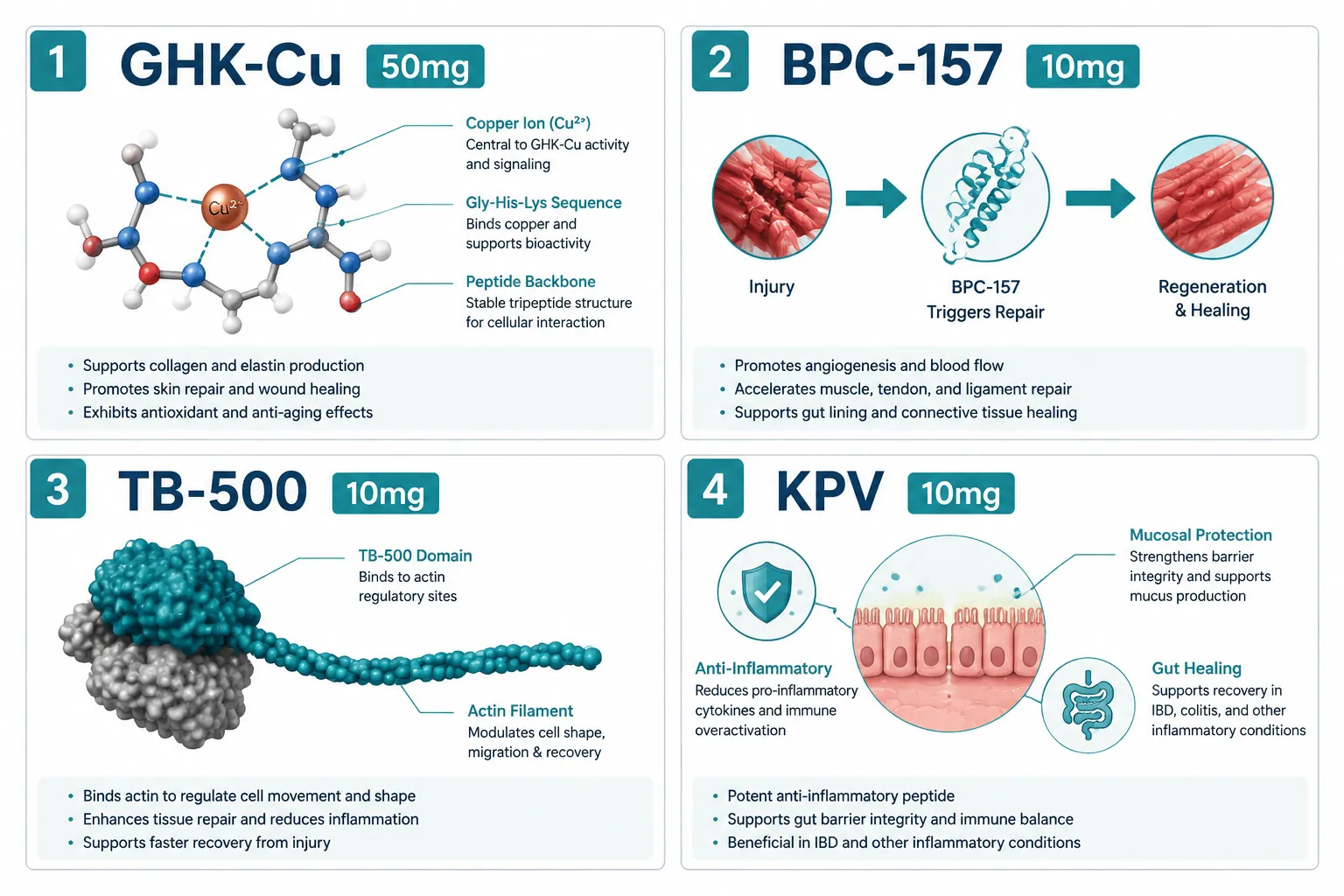
Klow is marketed as an 80 mg multi-peptide research kit, typically formulated as a nasal spray and sometimes as sublingual capsules. The composition reported across multiple vendors breaks down as follows:

Peptide Amount per Vial Primary Research Focus
GHK-Cu 50 mg Tissue repair, skin biology, anti-aging models
BPC-157 10 mg Gut integrity, musculoskeletal recovery
TB-500 10 mg Actin-binding, wound healing, inflammation
KPV 10 mg Mucosal anti-inflammation, gut pathways

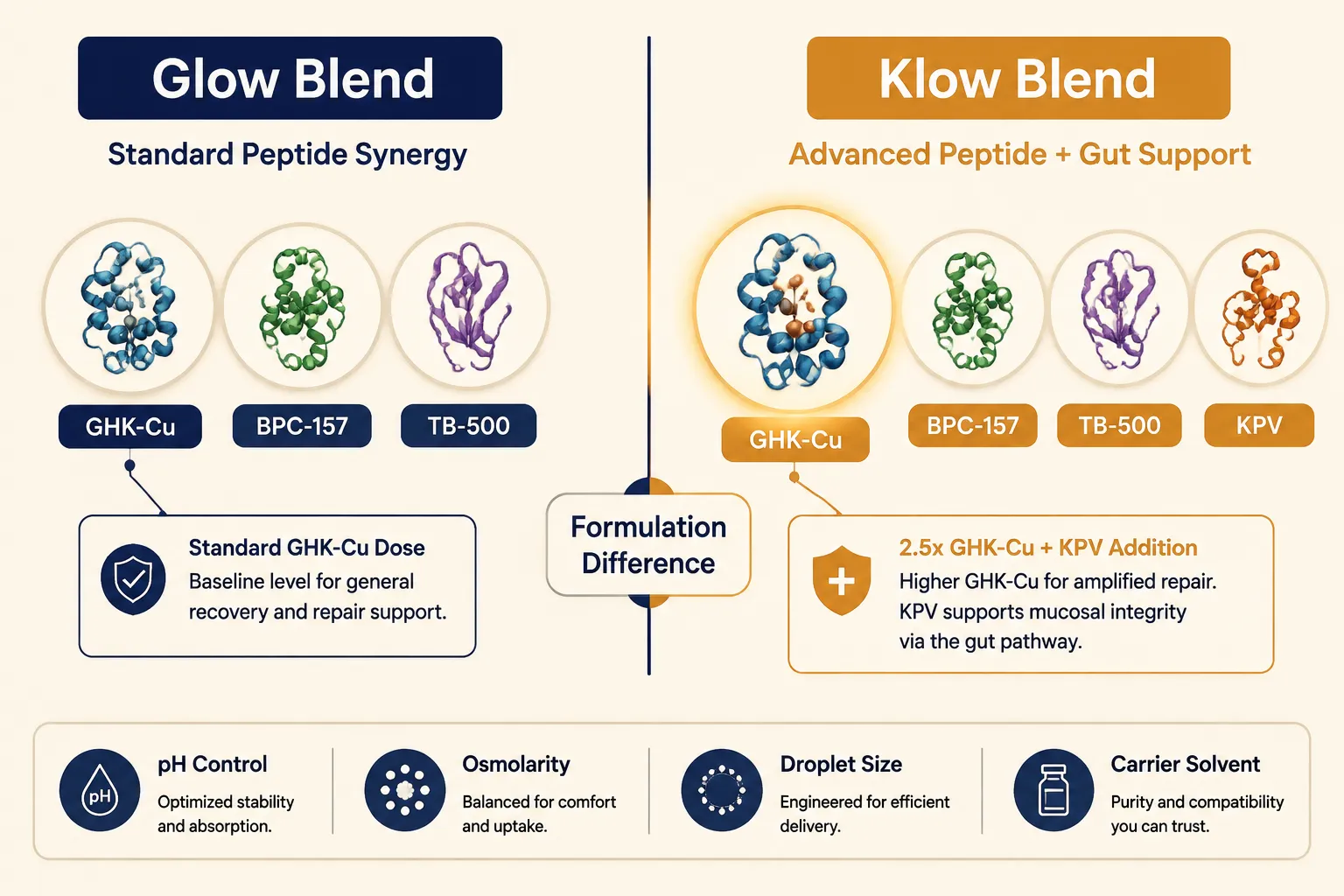
The GHK-Cu component makes up the bulk of the blend at roughly 62.5% of total peptide content. This is notably about 2.5 times higher than the GHK-Cu dose found in the closely related "Glow" blend, which contains the same base trio of GHK-Cu, BPC-157, and TB-500 but omits KPV entirely.

KPV, a tripeptide fragment of alpha-melanocyte-stimulating hormone, is the distinguishing addition. It has been studied primarily for anti-inflammatory activity in gastrointestinal and mucosal models. Its inclusion is intended to extend the blend's putative research utility to systemic inflammatory and gut-related pathways, though no Klow-specific clinical evidence supports this rationale.
What Klow Peptide Nasal Spray Actually Contains

Klow is sold by multiple vendors, including those focused on high purity peptide sourcing, with explicit disclaimers that it is not an approved drug and is not intended for human consumption. It is positioned strictly for controlled, non-human, or in-vitro experimental models.

How Researchers Evaluate Klow Peptide Nasal Spray

Because Klow as a named blend does not appear in any WHO trial registry or formal pharmacology literature, researchers working with it must apply particularly disciplined evaluation standards. The evaluation process covers three distinct layers.

Analytical Verification

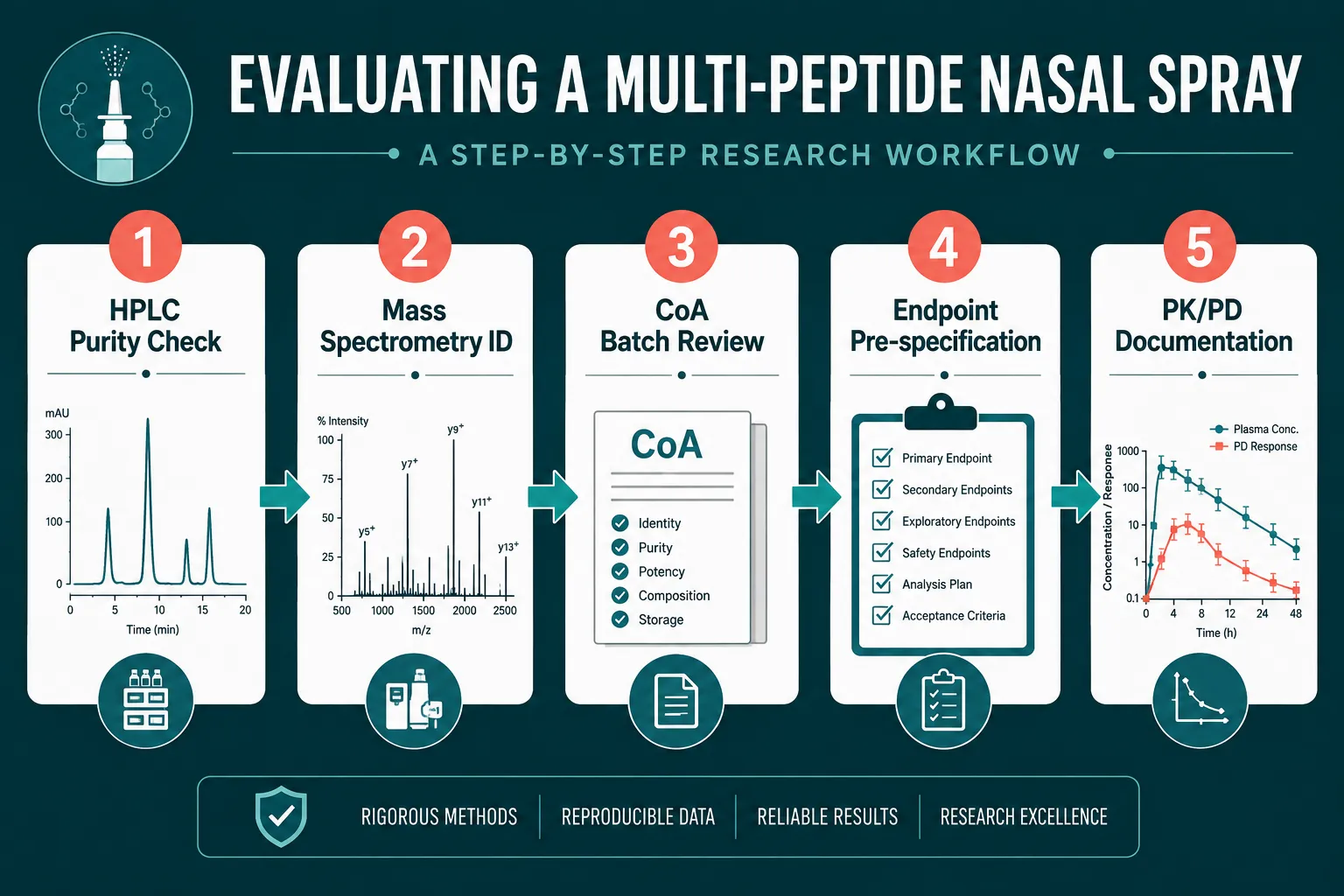
Before any experiment begins, purity confirmation is non-negotiable. Researchers are advised to verify each peptide component by HPLC (high-performance liquid chromatography) and mass spectrometry. A batch-specific Certificate of Analysis (CoA) should document individual peptide identity, purity percentage, and actual weighed content.

Real-world examples from supplier data illustrate why this matters. One European lab reported a KLOW Blend 80 mg batch with 99.87% purity and an actual weighed content of 85.38 mg, a slight overage from the labeled 80 mg that would affect dosing calculations in any quantitative study. Checking Peptide CoA verification standards before purchasing is a practical first step.

For researchers also working with related metabolic or regenerative peptides, the SS-31 10mg research peptide considerations page offers a useful parallel framework for analytical evaluation.

Endpoint and Protocol Design

Because all mechanistic claims for Klow are extrapolated from separate studies on its individual components, researchers must pre-specify endpoints clearly. Key protocol requirements include:

  • Defining cognitive or behavioral endpoints before data collection, particularly if neuroprotective effects are being explored
  • Pre-specifying statistical power based on expected effect sizes from individual peptide literature
  • Documenting all preparation variables in full, including reconstitution solvent, storage temperature, and spray device calibration

No validated pharmacokinetic or pharmacodynamic data exist for this exact multi-peptide nasal combination. Brain-delivery or neurocognitive claims remain speculative until such data are generated.

This mirrors the rigor applied to other complex peptide research programs. The CJC-1295 without DAC half-life research guide demonstrates how half-life and delivery route variables must be explicitly controlled in any growth-related peptide study.
Endpoint and Protocol Design

Safety and Tolerability Documentation

The four peptides in Klow have generally shown acceptable tolerability in preclinical and cosmetic research contexts individually. However, comprehensive intranasal safety profiles for the combined stack are not yet available. Researchers should document and monitor for:

  • Local nasal irritation
  • Headache
  • Fatigue or systemic responses

These observations should be recorded systematically, not dismissed as minor, because the combined mucosal exposure profile of four peptides simultaneously is genuinely unstudied.

Why Formulation Matters for Klow Peptide Nasal Spray

Intranasal delivery is not simply a matter of putting a peptide into a spray bottle. For a blend as compositionally complex as Klow, formulation decisions directly determine whether the research produces reproducible, interpretable results.

Critical Formulation Variables

Researchers and suppliers working with Klow nasal spray must control the following parameters:

pH: Each peptide has a stability range. A pH that preserves GHK-Cu may accelerate degradation of BPC-157 if not carefully balanced. Target pH should be documented per batch.

Osmolarity: Nasal mucosal tissue is sensitive to hypertonic or hypotonic solutions. Osmolarity outside the physiological range (approximately 285-310 mOsm/kg) increases irritation risk and can reduce absorption.

Carrier solvent selection: Each peptide's hydrophobicity differs. Carrier solvents must be chosen to maintain solubility across all four components simultaneously while remaining mucosal-safe.

Droplet size: Nasal spray devices produce droplets across a range of diameters. Droplets that are too large deposit in the anterior nasal cavity; too small and they reach the lungs. For intranasal peptide delivery, a droplet size in the 50-200 micron range is generally targeted.

Viscosity: Affects both spray pattern and mucociliary clearance rate, which influences how long the peptide solution remains in contact with the nasal epithelium.
Critical Formulation Variables

The Klow vs. Glow Formulation Distinction

The comparison between Klow and Glow is frequently raised in vendor educational content. The practical difference is structural:

  • Glow: GHK-Cu + BPC-157 + TB-500 (standard GHK-Cu dose)
  • Klow: GHK-Cu (2.5x dose) + BPC-157 + TB-500 + KPV

No published head-to-head data show one blend to be superior to the other in any model system. Researchers selecting between them should base the choice on which individual peptide's mechanism is most relevant to their specific endpoint, not on marketing positioning.

For context on how peptide families interact in research design, the GLP-3, GLP-1, and GLP-2 researchers guide to the peptide family offers a useful model for thinking about multi-peptide interactions and endpoint specificity.

Conclusion

Klow Peptide Nasal Spray sits at an interesting intersection: commercially active, compositionally defined, but clinically unvalidated as a combined entity. For researchers in 2026 who encounter it, the actionable path forward is straightforward.

Next steps for researchers:

  1. Obtain batch-specific CoA documentation with HPLC and mass spectrometry data before any experiment.
  2. Pre-specify all endpoints, statistical power calculations, and preparation variables in writing before data collection begins.
  3. Treat all mechanistic claims as hypotheses derived from individual peptide literature, not as established effects of the combined stack.
  4. Control formulation variables (pH, osmolarity, droplet size, carrier solvent) rigorously and document them in every protocol iteration.
  5. Monitor and record tolerability observations systematically, even in preclinical models.

The absence of Klow from formal trial registries is not a reason to dismiss it as a research tool, it is a reason to apply higher, not lower, methodological standards when working with it.

Tags: bpc-157, ghk-cu, intranasal peptide delivery, klow peptide nasal spray, kpv peptide, peptide formulation, peptide research blend, tb-500
https://www.puretestedpeptides.com/wp-content/uploads/2026/08/klow-peptide-nasal-spray-what-it-is-how-researchers-evaluate-it-and-why-formulat.webp 1024 1536 https://www.puretestedpeptides.com/wp-content/uploads/2026/01/buy-peptides-online.jpg 2026-08-21 13:04:212026-08-21 13:04:21Klow Peptide Nasal Spray: What It Is, How Researchers Evaluate It, and Why Formulation Matters
You might also like
Peptides and Polypeptides in Modern Research: How Molecular Size Shapes Function, Stability, and Experimental Design Peptides and Polypeptides in Modern Research: How Molecular Size Shapes Function, Stability, and Experimental Design
Research-Use Only Nasal Spray Peptides: Comparing Semax, Selank, and Klow Nasal for Cognitive and Anxiolytic Models Research-Use Only Nasal Spray Peptides: Comparing Semax, Selank, and Klow Nasal for Cognitive and Anxiolytic Models
Collagen Research Peptides: Where GHK-Cu, Glow Blend, and Skin-Focused Formulas Fit in Laboratory Models Collagen Research Peptides: Where GHK-Cu, Glow Blend, and Skin-Focused Formulas Fit in Laboratory Models
Complete Guide to Research Peptides: Types, Mechanisms, and Laboratory Use Cases Complete Guide to Research Peptides: Types, Mechanisms, and Laboratory Use Cases
Semax Peptide Nasal Spray: Administration, Dosing Concepts, and Research Applications Semax Peptide Nasal Spray: Administration, Dosing Concepts, and Research Applications
Klow Peptide Nasal Spray: Formulation Science, Carrier Solvents, and Brain Delivery Considerations Klow Peptide Nasal Spray: Formulation Science, Carrier Solvents, and Brain Delivery Considerations
Peptides in Modern Research: From Simple Chains to Complex Polypeptide Hormones Peptides in Modern Research: From Simple Chains to Complex Polypeptide Hormones
Tesofensine, Enclomiphene, and Peptide-Based Approaches: How Small Molecules Fit Alongside GLP-3 and GH Secretagogues in Metabolic Research Tesofensine, Enclomiphene, and Peptide-Based Approaches: How Small Molecules Fit Alongside GLP-3 and GH Secretagogues in Metabolic Research
0 replies

Leave a Reply

Want to join the discussion?
Feel free to contribute!

Leave a Reply Cancel reply

Your email address will not be published. Required fields are marked *

×

Helpful Links

  • My account
  • Cart
  • Checkout
  • Refund and Returns Policy
  • Privacy Policy
  • SMS Privacy Policy
  • Login
  • My Account
  • Logout

USA Made Lab Tested Peptides

All products are sold for research, laboratory, or analytical purposes only, and are not for human consumption


Pure Tested Peptides is a chemical supplier. Pure Tested Peptides is not a compounding / chemical compounding facility as defined under 503A of the Federal Food, Drug, and Cosmetic act. Pure Tested Peptides is not an outsourcing facility as defined under 503B of the Federal Food, Drug, and Cosmetic act.

The statements made within this website have not been evaluated by the US Food and Drug Administration. The products we offer are not intended to diagnose, treat, cure or prevent any disease.

Human/Animal Consumption Prohibited. Laboratory/In-Vitro Experimental Use Only

Link to: Enclomiphene in Male Endocrine Research: LH, FSH, and Testosterone Signaling Without Clomiphene’s Mixed Isomers Link to: Enclomiphene in Male Endocrine Research: LH, FSH, and Testosterone Signaling Without Clomiphene’s Mixed Isomers Enclomiphene in Male Endocrine Research: LH, FSH, and Testosterone Signaling...Enclomiphene in Male Endocrine Research: LH, FSH, and Testosterone Signaling Without Clomiphene’s Mixed Isomers Link to: Intranasal Semax and Selank in 2026: Why Nasal Delivery Keeps Surging in Research Interest Link to: Intranasal Semax and Selank in 2026: Why Nasal Delivery Keeps Surging in Research Interest Intranasal Semax and Selank in 2026: Why Nasal Delivery Keeps Surging in Research InterestIntranasal Semax and Selank in 2026: Why Nasal Delivery Keeps Surging in Research...
Scroll to top Scroll to top Scroll to top