Call or Text 727-513-9780
  • Shopping Cart Shopping Cart
    0Shopping Cart
Pure Tested Peptides | America's most trusted Peptides for sale online
  • Peptides for sale
    • Oral Peptides for sale
      • Peptide Capsules for sale
      • BPC 157 Capsules 1000mcg
      • SLU-PP-332 Capsules | 1000 mcg
      • 5-Amino-1MQ 50mg Capsules
      • Tesofensine 500mcg
    • All Peptides for sale
    • Peptide Sprays
      • BPC 157 Nasal Spray Kit
      • BPC-157 TB500 Nasal Spray Kit
      • Semax Nasal Spray 10mg
      • Selank – Nasal Spray Kit – 10mg
      • Epithalon 50MG Nasal Spray Kit
      • Ipamorelin 10mg Nasal Spray
      • Klow Nasal Spray (BPC-157 + TB-500 + GHK-Cu + KPV) | 80mg
      • Hulk Nasal Spray Tesa / Ipa Blend 6/3 MG
      • Klow Nasal Spray
      • NAD + 500 mg Nasal Spray
      • PT-141 Nasal Spray Kit
    • GHRH Peptides
      • Ipa Peptides
      • CJC-1295 Peptides
        • CJC-1295 with DAC 5 mg
        • CJC-1295 without DAC 5 mg
        • CJC-1295 Ipa 10mg
      • Tesa Peptides
        • Tesa Peptide
        • Tesa 20 mg
    • GHK-Cu Peptides
      • All GHK-Cu Peptides
      • GHK-Cu 100mg
      • KLOW Peptide Blend – Buy KLOW blend online
    • BPC Peptides
      • All BPC Peptides
      • BPC-157
      • BPC-157 TB-500
      • BPC 157 capsules 1000mcg
    • SLU-PP-332 Peptides
      • All SLU-PP-332 Peptides
      • SLU-PP-332 5mg
    • GLP3 Peptides
      • GLP3-R
      • GLP3-R CAG 10mg
      • GLP3-R 20mg
    • PT-141 Peptides
      • PT-141 Peptides for sale
      • PT-141 10mg
      • PT-141 Nasal Spray
    • CAG Peptides
      • Lipo-C Peptide Blend
      • CAG 5mg
      • CAG 10mg
    • MOTS-C Peptides
      • MOTS-C Peptides for sale
      • MOTS-c peptide
      • MOTS-c 10mg *6 pack*
    • 5 Amino 1MQ Peptides
      • 5 Amino 1MQ Peptides for sale
      • 5-Amino-1MQ 50mg Capsules
      • 5-Amino-1MQ 5mg
    • Epithalon Peptides
      • Epithalon Peptides for sale
      • Epithalon 10mg
      • Epithalon 50mg
  • Shop
    • GLPs
      • 5-Amino-1MQ 50mg Capsules
      • 5-Amino-1MQ 5mg
      • GLP3-Reta
      • L-Carnitine 500mg/ml
      • Tesofensine 500mcg
      • SLU-PP-332 5mg
      • MOTS-c 10mg *6 pack*
    • Epithalon & BPC Peptides
      • Epithalon 10mg
      • Epithalon 50mg
      • BPC-157
      • BPC 157 capsules 1000mcg
      • BPC-157 TB-500
      • BPC-157 TB500 Nasal Spray Kit
      • BPC 157 Nasal Spray Kit
    • BPC TB-500 & NAD+ Peptides
      • NAD+ 500 mg
      • KLOW Peptide Blend – Buy KLOW blend online
      • GLOW Peptide Blend
      • TB 500 5mg
      • BPC 157 capsules 1000mcg – Supplement
      • BPC 157 Nasal Spray Kit
      • BPC-157
      • BPC-157 TB500 Nasal Spray Kit
      • BPC-157 TB-500
      • BPC 157 capsules 1000mcg
    • LL-37 Peptide
      • LL-37 10 mg
    • MOTS-C & Selank
      • MOTS-c peptide
      • Selank 10mg
    • GHK Peptides
      • GHK-Cu 100mg
      • GLOW Peptide Blend
      • KLOW Peptide Blend – Buy KLOW blend online
  • COAs
  • Wholesale
    • Wholesale Peptides for sale
  • PTP FAQ
  • Affiliates
    • Selank Peptide: Advanced Pharmacological Mechanisms Underlying Its Anxiolytic and Nootropic Effects in Research
      • 5-Amino-1MQ Peptide: Detailed Mechanisms of NNMT Inhibition and Its Impact on Cellular Metabolism Research
        • MOTS-C Peptide: Unraveling Its Role in Mitochondrial Dynamics and Energy Metabolism Research
          • Epithalon Peptide and Telomerase Regulation: Investigating Its Impact on Cellular Senescence and Lifespan Research Models
            • GLP2-T vs GLP2 Tirz Peptide: Understanding the Naming, Mechanistic Nuances, and Research Implications for Gut Health
      • Peptides and Polypeptides in Modern Pharmacology: What Research on Metoprolol, Prednisone, and Amlodipine Reveals
        • Polypeptide Peptides vs NSAIDs: What Naproxen and Diclofenac Teach Tissue-Repair Researchers About BPC‑157 and TB‑500
          • Peptides and Polypeptides in Endocrine Pharmacology: How GLP-1, GLP-2, and GLP-3 Retatrutide Differ From Classic Drugs Like Prednisone and Amlodipine
          • 5‑Amino‑1MQ Peptide and NNMT Inhibition: How It Compares With Statins Like Atorvastatin in Adipose and Lipid Metabolism Research
      • Enclomiphene, Estrogen Receptor Signaling, and Luteinizing Phase Biology: What Hormone Researchers Should Measure
        • Mesenchymal Stem Cells, BPC‑157, and GHK‑Cu: How Tissue Repair Peptides Compare With Classic NSAIDs Like Naproxen in Injury Models
          • Peptide Calculator Use Cases Beyond Growth Hormone: Working Through GLP‑3 Retatrutide, MOTS‑c, and BPC‑157 Research Dosing
        • Polypeptide Peptides in Endocrine and Metabolic Pharmacology: Lessons From Amlodipine, Prednisone, and Metoprolol
        • Peptides Calculator for Advanced Blends: Worked Examples for Tesamorelin, CJC‑1295, and Ipamorelin Stacks
          • Peptides and Polypeptides in Human Physiology: How Molecular Size Shapes Research Applications
            • Selank Peptide: Advanced Pharmacological Mechanisms Underlying Its Anxiolytic and Nootropic Effects in Research
          • 5-Amino-1MQ Peptide: Detailed Mechanisms of NNMT Inhibition and Its Impact on Cellular Metabolism Research
            • MOTS-C Peptide: Unraveling Its Role in Mitochondrial Dynamics and Energy Metabolism Research
              • Epithalon Peptide and Telomerase Regulation: Investigating Its Impact on Cellular Senescence and Lifespan Research Models
                • GLP2-T vs GLP2 Tirz Peptide: Understanding the Naming, Mechanistic Nuances, and Research Implications for Gut Health
                  • Peptides and Polypeptides in Endocrine Pharmacology: How GLP-1, GLP-2, and GLP-3 Retatrutide Differ From Classic Drugs Like Prednisone and Amlodipine
                    • Polypeptide Peptides vs NSAIDs: What Naproxen and Diclofenac Teach Tissue-Repair Researchers About BPC‑157 and TB‑500
                      • Peptides and Polypeptides in Modern Pharmacology: What Research on Metoprolol, Prednisone, and Amlodipine Reveals
                        • 5‑Amino‑1MQ Peptide and NNMT Inhibition: How It Compares With Statins Like Atorvastatin in Adipose and Lipid Metabolism Research
                        • Enclomiphene, Estrogen Receptor Signaling, and Luteinizing Phase Biology: What Hormone Researchers Should Measure
                        • Mesenchymal Stem Cells, BPC‑157, and GHK‑Cu: How Tissue Repair Peptides Compare With Classic NSAIDs Like Naproxen in Injury Models
                        • Peptide Calculator Use Cases Beyond Growth Hormone: Working Through GLP‑3 Retatrutide, MOTS‑c, and BPC‑157 Research Dosing
                        • Polypeptide Peptides in Endocrine and Metabolic Pharmacology: Lessons From Amlodipine, Prednisone, and Metoprolol
                        • Peptides Calculator for Advanced Blends: Worked Examples for Tesamorelin, CJC‑1295, and Ipamorelin Stacks
                        • Peptides and Polypeptides in Human Physiology: How Molecular Size Shapes Research Applications
                        • Selank Peptide: Advanced Pharmacological Mechanisms Underlying Its Anxiolytic and Nootropic Effects in Research
                        • MOTS-C Peptide: Unraveling Its Role in Mitochondrial Dynamics and Energy Metabolism Research
                        • Peptides and Polypeptides in Modern Pharmacology: What Research on Metoprolol, Prednisone, and Amlodipine Reveals
                        • Peptides and Polypeptides in Endocrine Pharmacology: How GLP-1, GLP-2, and GLP-3 Retatrutide Differ From Classic Drugs Like Prednisone and Amlodipine
                        • 5-Amino-1MQ Peptide: Detailed Mechanisms of NNMT Inhibition and Its Impact on Cellular Metabolism Research
                        • Mesenchymal Stem Cells, BPC‑157, and GHK‑Cu: How Tissue Repair Peptides Compare With Classic NSAIDs Like Naproxen in Injury Models
                        • Peptide Calculator Use Cases Beyond Growth Hormone: Working Through GLP‑3 Retatrutide, MOTS‑c, and BPC‑157 Research Dosing
                        • GLP2-T vs GLP2 Tirz Peptide: Understanding the Naming, Mechanistic Nuances, and Research Implications for Gut Health
                        • Polypeptide Peptides in Endocrine and Metabolic Pharmacology: Lessons From Amlodipine, Prednisone, and Metoprolol
                        • Polypeptide Peptides vs NSAIDs: What Naproxen and Diclofenac Teach Tissue-Repair Researchers About BPC‑157 and TB‑500
                        • Peptides and Polypeptides in Human Physiology: How Molecular Size Shapes Research Applications
                        • Peptides Calculator for Advanced Blends: Worked Examples for Tesamorelin, CJC‑1295, and Ipamorelin Stacks
                        • 5‑Amino‑1MQ Peptide and NNMT Inhibition: How It Compares With Statins Like Atorvastatin in Adipose and Lipid Metabolism Research
                        • Enclomiphene, Estrogen Receptor Signaling, and Luteinizing Phase Biology: What Hormone Researchers Should Measure
                        • Epithalon Peptide and Telomerase Regulation: Investigating Its Impact on Cellular Senescence and Lifespan Research Models
                        • Best research protocol Klow blend
                        • best time to take BPC-157
                        • best time to take DSIP (Delta Sleep Inducing Peptide)
                        • best time to take CJC-1295
                        • best time to take AOD-9604
                        • best time to take Follistatin 344
                        • best time to take Ipamorelin
                        • best time to take MK-677 (Ibutamoren)
                        • best time to take Ligandrol (LGD-4033) — research compound
                        • best time to take Ostarine (MK-2866) — research compound
                        • best time to take GHK-CU
                        • best time to take TB-500
                        • best time to take MOTS-c
                        • best time to take Semax
                        • best time to take RAD-140 (Testolone) — research compound
                        • best time to take Thymosin Alpha-1
                        • best time to take PEG-MGF
                        • Biolife Plasma, Octapharma Plasma, and Research Peptides: How Plasma Donation Labs Differ From Peptide Suppliers
                        • best time to take YK-11 — research compound
                        • best time to take PT-141 (Bremelanotide)
                        • Best research protocol Klow blend
  • Contact
    • Contact Customer Service
    • Text Customer Support
  • About US
  • Shop all peptides
  • Affiliate Program
    • Affiliate Signup
  • Login / Register Login / Register Page Link Login / Register Page Link
  • Click to open the search input field Click to open the search input field Search
  • Menu Menu

Tag Archive for: tb-500

Mesenchymal Stem Cells and Peptide‑Driven Tissue Repair: Comparing BPC‑157, TB‑500, and GHK‑Cu in Regeneration Studies

Mesenchymal Stem Cells and Peptide‑Driven Tissue Repair: Comparing BPC‑157, TB‑500, and GHK‑Cu in Regeneration Studies

July 17, 2026/0 Comments/by Pure Tested

Roughly 50 million musculoskeletal injuries are treated in the United States each year, yet tendons and ligaments remain notoriously slow to heal, largely because their resident stem cell populations receive weak biochemical signals after damage. That gap has pushed researchers toward a compelling question: can short-chain peptides amplify what mesenchymal stem cells (MSCs) already do naturally? The field of mesenchymal stem cells and peptide-driven tissue repair: comparing BPC-157, TB-500, and GHK-Cu in regeneration studies is now producing some of the most actionable preclinical data in regenerative biology.

Key Takeaways

  • MSCs drive repair through migration, differentiation, and paracrine signaling, all three pathways can be modulated by targeted peptides.
  • BPC-157 enhances MSC migration and angiogenesis, making it particularly relevant for tendon and ligament models.
  • TB-500 (Thymosin Beta-4) promotes actin cytoskeleton remodeling, directly supporting MSC motility and engraftment at injury sites.
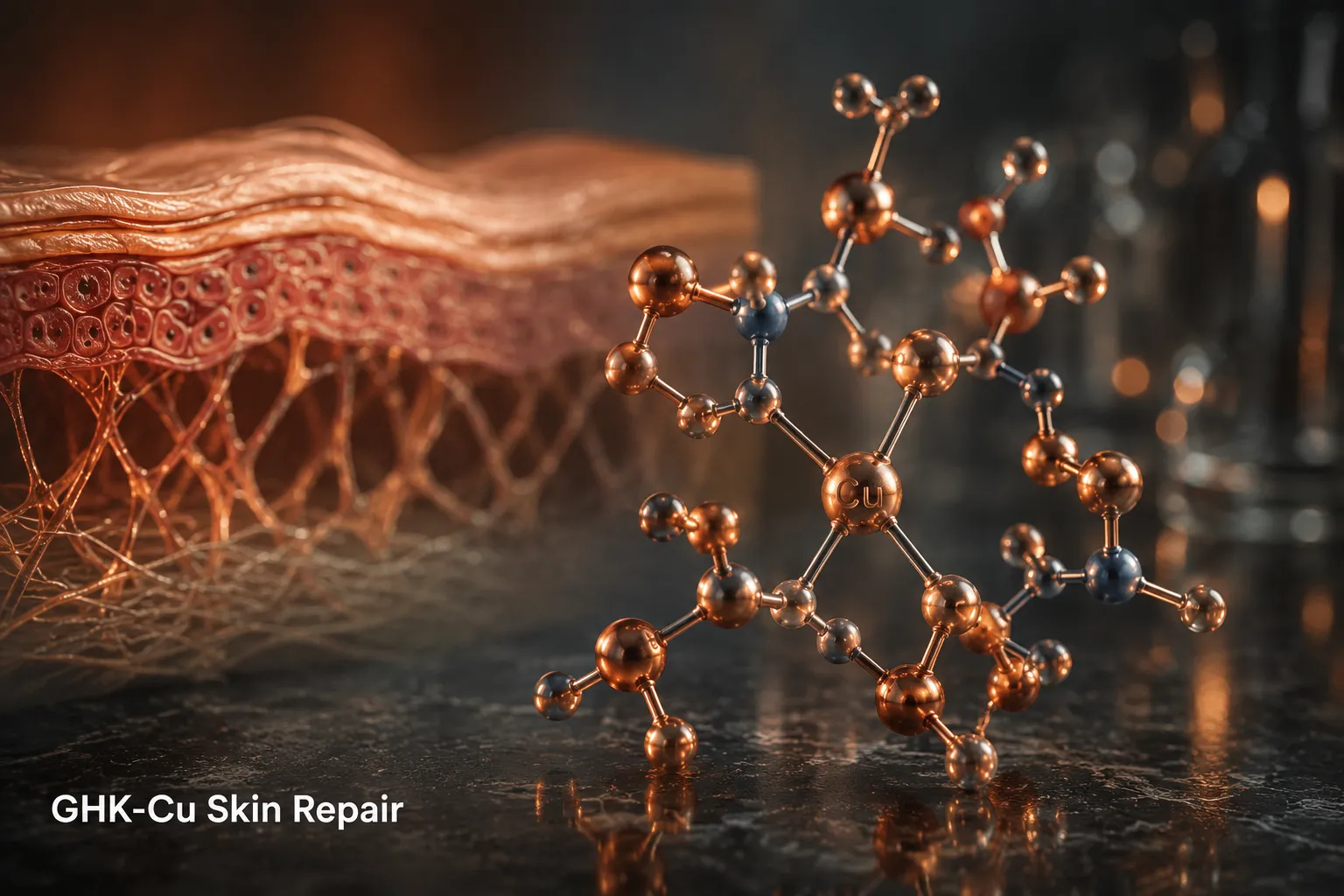
  • GHK-Cu activates gene expression linked to collagen synthesis and anti-inflammatory signaling in dermal MSC models.
  • Peptide purity and validated sourcing are critical variables when interpreting or replicating regeneration study results.

Key Takeaways


How MSCs Orchestrate Tissue Repair

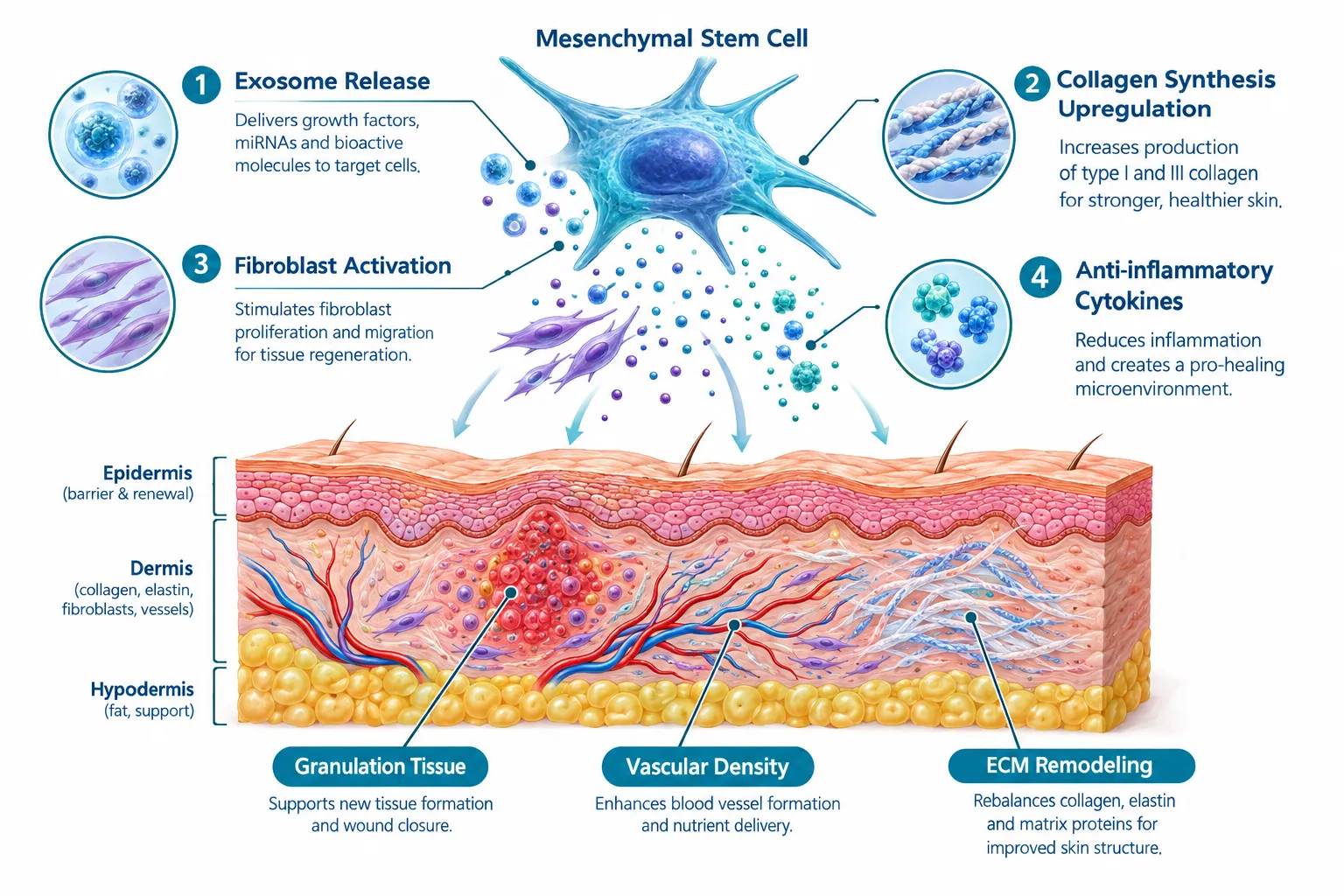
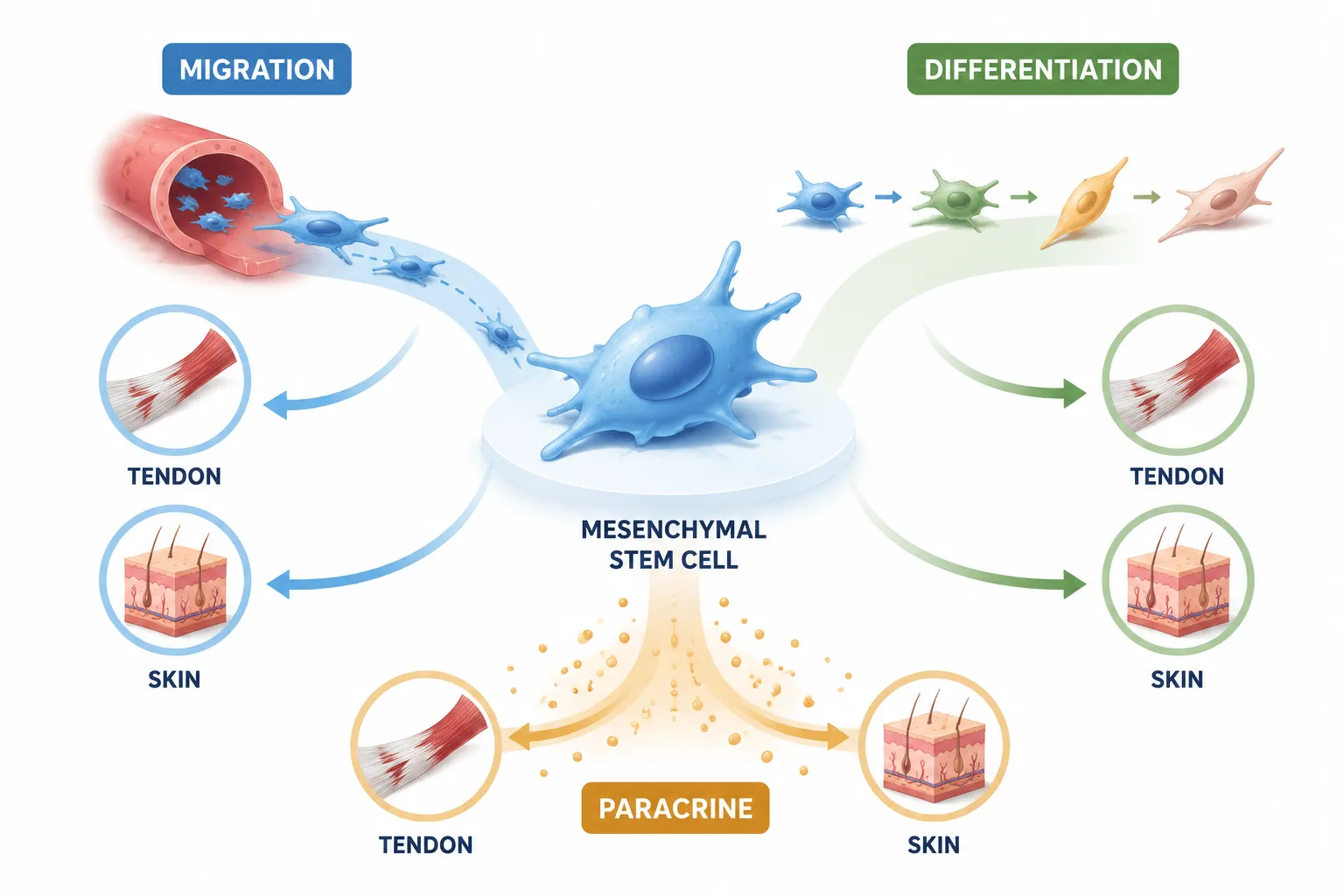
Mesenchymal stem cells are multipotent stromal cells found in bone marrow, adipose tissue, and connective tissue niches. In healthy tissue, they remain largely quiescent. After injury, damage-associated signals recruit MSCs to the wound site, where they contribute through three core mechanisms:

  1. Migration, chemotactic movement toward injury signals (SDF-1, VEGF, growth factors).
  2. Differentiation, commitment to tenocyte, fibroblast, or chondrocyte lineages depending on local cues.
  3. Paracrine signaling, secretion of cytokines, exosomes, and growth factors that modulate inflammation and stimulate resident cells.

Understanding these three pathways is essential for evaluating how peptides interact with MSC biology. For a broader overview of how tissue biology underpins recovery, the recovery and tissue biology overview provides useful foundational context.


Comparing BPC-157, TB-500, and GHK-Cu in Regeneration Studies: MSC-Level Mechanisms

BPC-157: Angiogenesis and MSC Recruitment

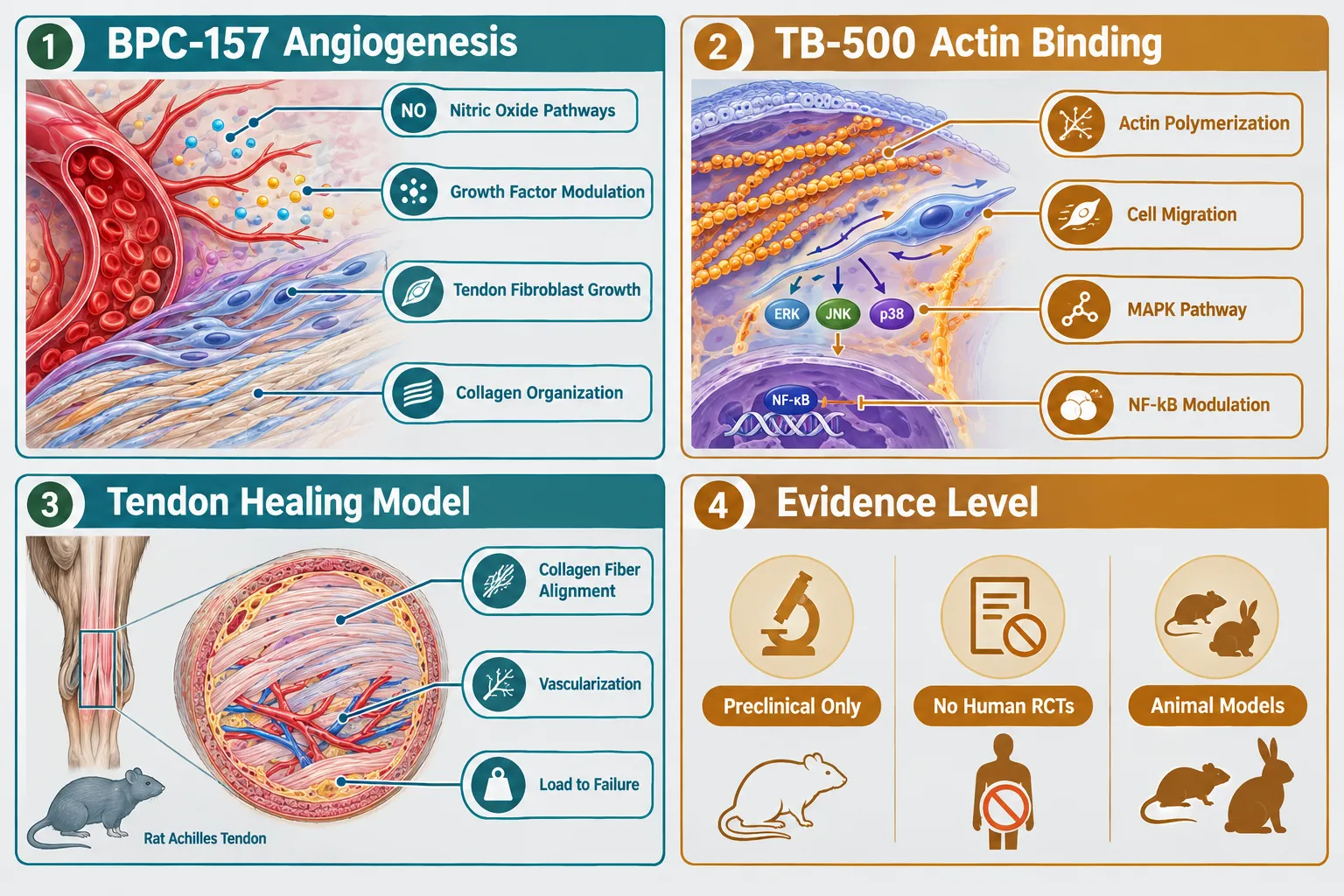
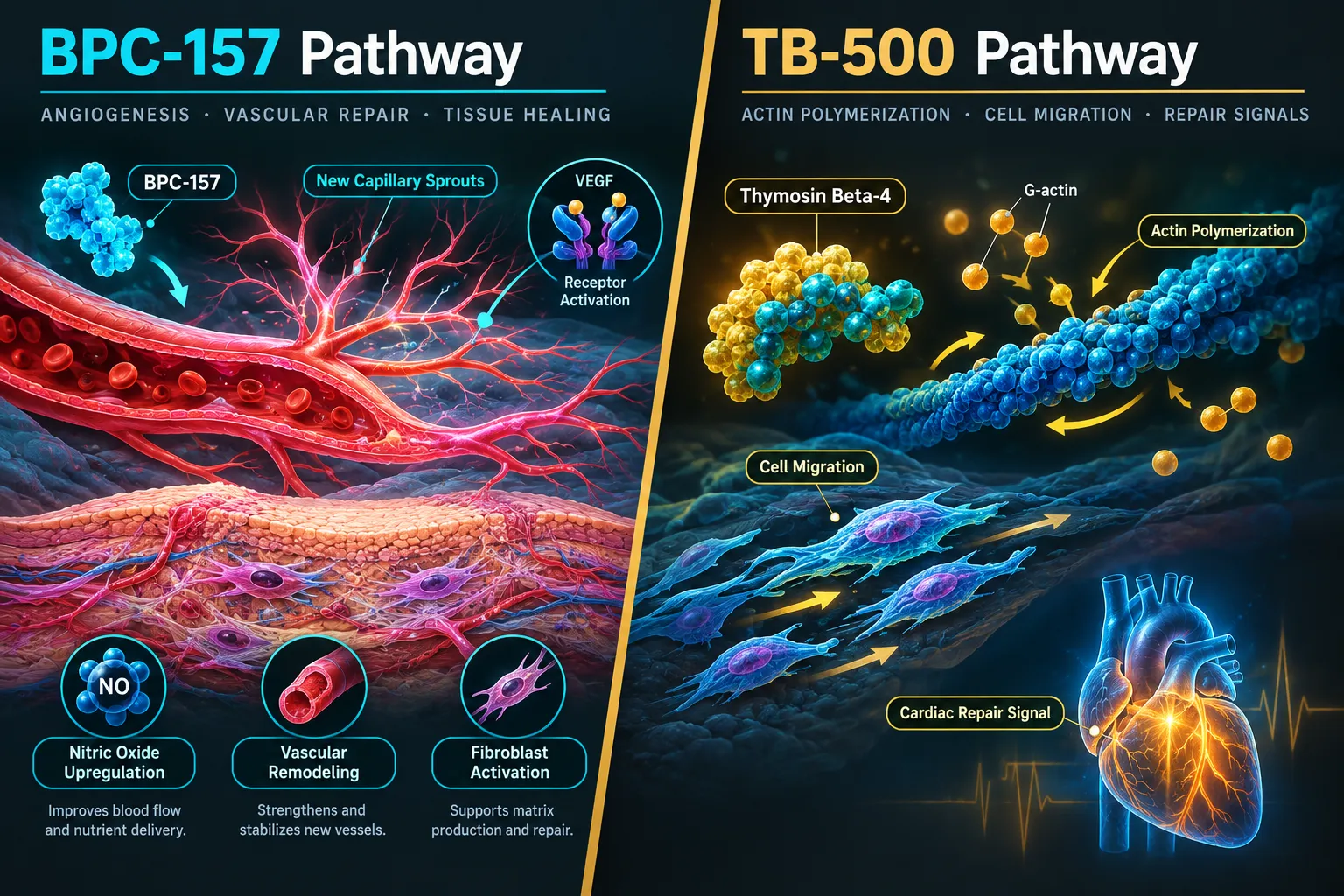
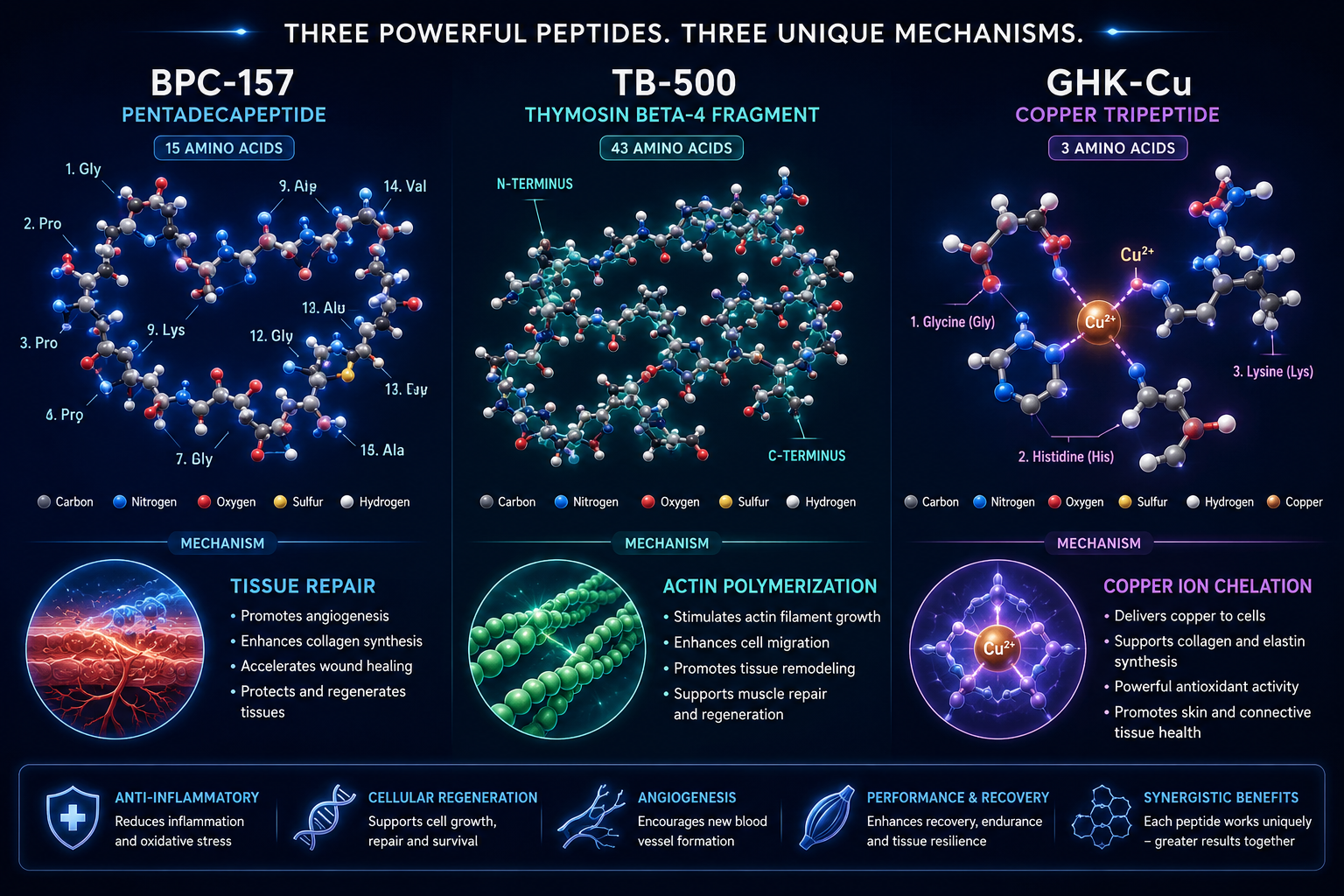
BPC-157 (Body Protection Compound-157) is a 15-amino-acid peptide derived from a gastric protein. In tendon and ligament models, it upregulates VEGF receptor expression and activates the FAK-paxillin pathway, both critical for MSC chemotaxis toward injury zones.

Key findings from preclinical research:

  • Accelerated tendon-to-bone healing in rat rotator cuff models
  • Increased fibroblast and MSC density at repair sites
  • Reduced pro-inflammatory cytokine load (TNF-alpha, IL-6), creating a more permissive environment for MSC engraftment

The BPC-157 research overview and detailed data on BPC-157 nasal and oral delivery formats expand on delivery considerations relevant to tissue-level dosing.

TB-500: Actin Dynamics and MSC Motility

TB-500 is a synthetic analog of Thymosin Beta-4, a 43-amino-acid peptide that sequesters G-actin monomers. Its relevance to MSC biology centers on actin cytoskeleton remodeling, the physical process that allows cells to extend lamellipodia and migrate through extracellular matrix.

"Thymosin Beta-4 does not simply accelerate healing, it changes the cellular architecture that makes directed migration possible."

In muscle and ligament repair models, TB-500 has been shown to:

  • Enhance MSC spreading and adhesion on collagen substrates
  • Upregulate MMP-2 (matrix metalloproteinase-2), facilitating matrix remodeling
  • Promote anti-apoptotic signaling in transplanted MSC populations

Detailed compound data is available on the TB-500 product and research page. Researchers comparing stacking strategies will also find the BPC-157 and TB-500 combination research directly relevant.

TB-500: Actin Dynamics and MSC Motility

GHK-Cu: Gene Activation and Dermal MSC Signaling

GHK-Cu (glycyl-L-histidyl-L-lysine copper complex) operates through a distinct mechanism. Rather than driving cell motility, it functions primarily as a gene expression modulator, activating over 4,000 human genes in microarray studies, many of them tied to collagen I and III synthesis, anti-inflammatory pathways, and antioxidant defense.

In dermal regeneration models, GHK-Cu:

  • Stimulates fibroblast proliferation and MSC-derived collagen deposition
  • Downregulates TGF-beta-1 (associated with fibrosis) while upregulating TGF-beta-3 (associated with scarless repair)
  • Activates the ubiquitin-proteasome pathway to clear damaged proteins from the extracellular matrix

This makes GHK-Cu particularly valuable in skin and wound-healing contexts, where dermal MSC paracrine output determines scar quality and tissue architecture.


Comparing the Three Peptides: A Functional Summary

Peptide Primary MSC Target Key Tissue Model Dominant Pathway
BPC-157 Migration, angiogenesis Tendon, ligament VEGF / FAK-paxillin
TB-500 Motility, matrix remodeling Muscle, ligament Actin / MMP-2
GHK-Cu Paracrine gene activation Dermis, wound healing TGF-beta / ubiquitin

These peptides are not interchangeable, they target different nodes of the MSC repair cascade. Researchers exploring broader regenerative peptide categories can also review longevity peptide research for adjacent mechanistic context.


Research Quality and Sourcing Considerations

Research Quality and Sourcing Considerations

Reproducibility in MSC and peptide-driven tissue repair studies depends heavily on compound purity. Contaminated or degraded peptides introduce confounding variables that distort migration assays, gene expression data, and histological outcomes. Reference-grade benchmarking, as outlined in resources on Bachem and reference standards for peptide benchmarks, is considered best practice in serious regeneration research.

Researchers sourcing compounds for in vitro or in vivo work should also consult all peptides available for research to evaluate purity specifications before designing studies.


Conclusion

The intersection of mesenchymal stem cells and peptide-driven tissue repair: comparing BPC-157, TB-500, and GHK-Cu in regeneration studies reveals a nuanced picture. Each peptide engages a distinct MSC mechanism, BPC-157 drives recruitment and vascularization, TB-500 enables physical cell migration through matrix remodeling, and GHK-Cu reshapes the paracrine signaling environment at the gene expression level. No single compound covers all three nodes simultaneously.

Actionable next steps for researchers in 2026:

  • Design studies that distinguish MSC migration endpoints from differentiation and paracrine outputs to avoid conflating mechanisms.
  • Use validated, purity-certified peptide sources to ensure reproducible results across tendon, ligament, and dermal models.
  • Consider sequential or combinatorial peptide protocols that address all three MSC repair pathways, informed by the mechanistic distinctions outlined above.
  • Cross-reference findings against established tissue biology frameworks before drawing translational conclusions.

The stem cell biology foregrounded here offers a more precise lens than general "healing peptide" narratives, and that precision is exactly what rigorous regeneration research demands.

https://www.puretestedpeptides.com/wp-content/uploads/2026/07/mesenchymal-stem-cells-and-peptide-driven-tissue-repair-comparing-bpc-157-tb-500.webp 1024 1536 Pure Tested https://www.puretestedpeptides.com/wp-content/uploads/2026/01/buy-peptides-online.jpg Pure Tested2026-07-17 13:05:072026-07-20 14:59:51Mesenchymal Stem Cells and Peptide‑Driven Tissue Repair: Comparing BPC‑157, TB‑500, and GHK‑Cu in Regeneration Studies
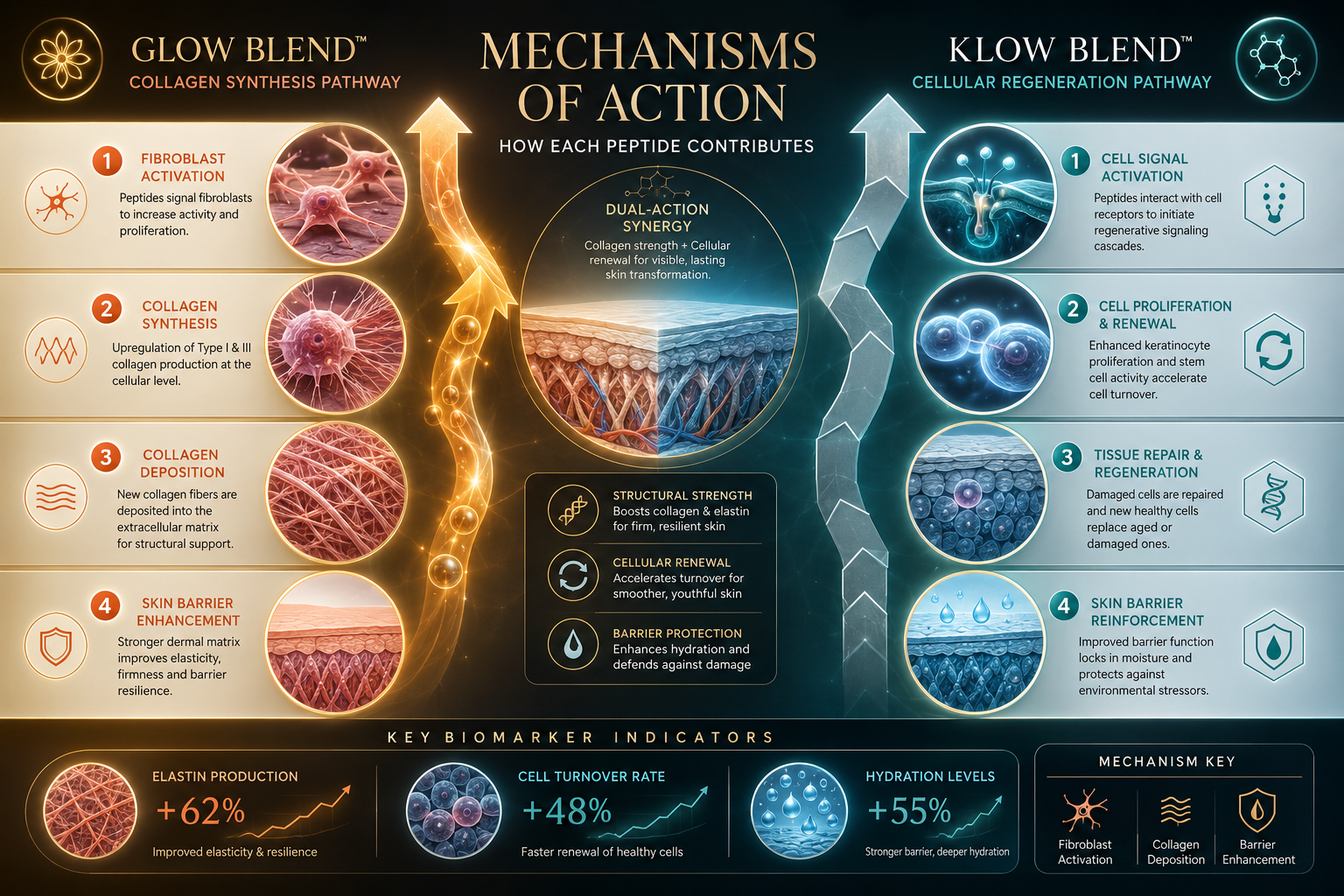
Glow Blend vs. Klow Blend: Which Peptide Formulation is Best for Skin Rejuvenation Research?

Glow Blend vs. Klow Blend: Which Peptide Formulation is Best for Skin Rejuvenation Research?

July 4, 2026/0 Comments/by Pure Tested

{"cover":"Professional landscape format (1536×1024) hero image with bold text overlay: 'Glow Blend vs. Klow Blend: Which Peptide Formulation is Best for Skin Rejuvenation Research?' in extra large 72pt white bold sans-serif font with dark drop shadow, centered upper third. Background features a split-panel laboratory aesthetic: left side glowing amber-gold vials labeled Glow Blend on a clean white lab bench, right side cool blue-tinted vials labeled Klow Blend, with microscopic skin cell imagery subtly overlaid. Color palette: deep navy, gold, white. Magazine cover quality, editorial style, high contrast, cinematic lighting.","content":["Detailed landscape format (1536×1024) scientific comparison infographic showing two peptide vial sets side by side on a sterile lab surface, left vial cluster labeled Glow Blend with GHK-Cu, BPC-157, TB-500 ingredient callouts in gold text, right cluster labeled Klow Blend with added KPV callout in blue text. Molecular structure diagrams float above each set. Clean white background with subtle skin-texture overlay. Professional research aesthetic, annotated diagram style, high contrast labels.","Landscape format (1536×1024) close-up macro photography of human skin cross-section illustration showing collagen fiber networks and cellular repair activity, with split overlay: left half showing smooth rejuvenated skin texture representing Glow Blend effects, right half showing reduced redness and inflammation representing Klow Blend KPV action. Warm amber and cool teal color grading. Scientific diagram aesthetic with subtle peptide molecule graphics, editorial quality, research-focused composition.","Landscape format (1536×1024) overhead flat-lay research planning scene on a dark slate surface: open laboratory notebook with peptide comparison notes, two clearly labeled research vials (Glow Blend and Klow Blend), a magnifying glass, printed assay results, and a checklist. Soft directional lighting from upper left. Color palette: charcoal, white, gold accents. Clean, professional research workspace aesthetic, editorial quality, no people, organized composition emphasizing decision-making in peptide research."]

Professional landscape hero image () with : "Glow Blend vs. Klow Blend: Which Peptide Formulation is Best for Skin

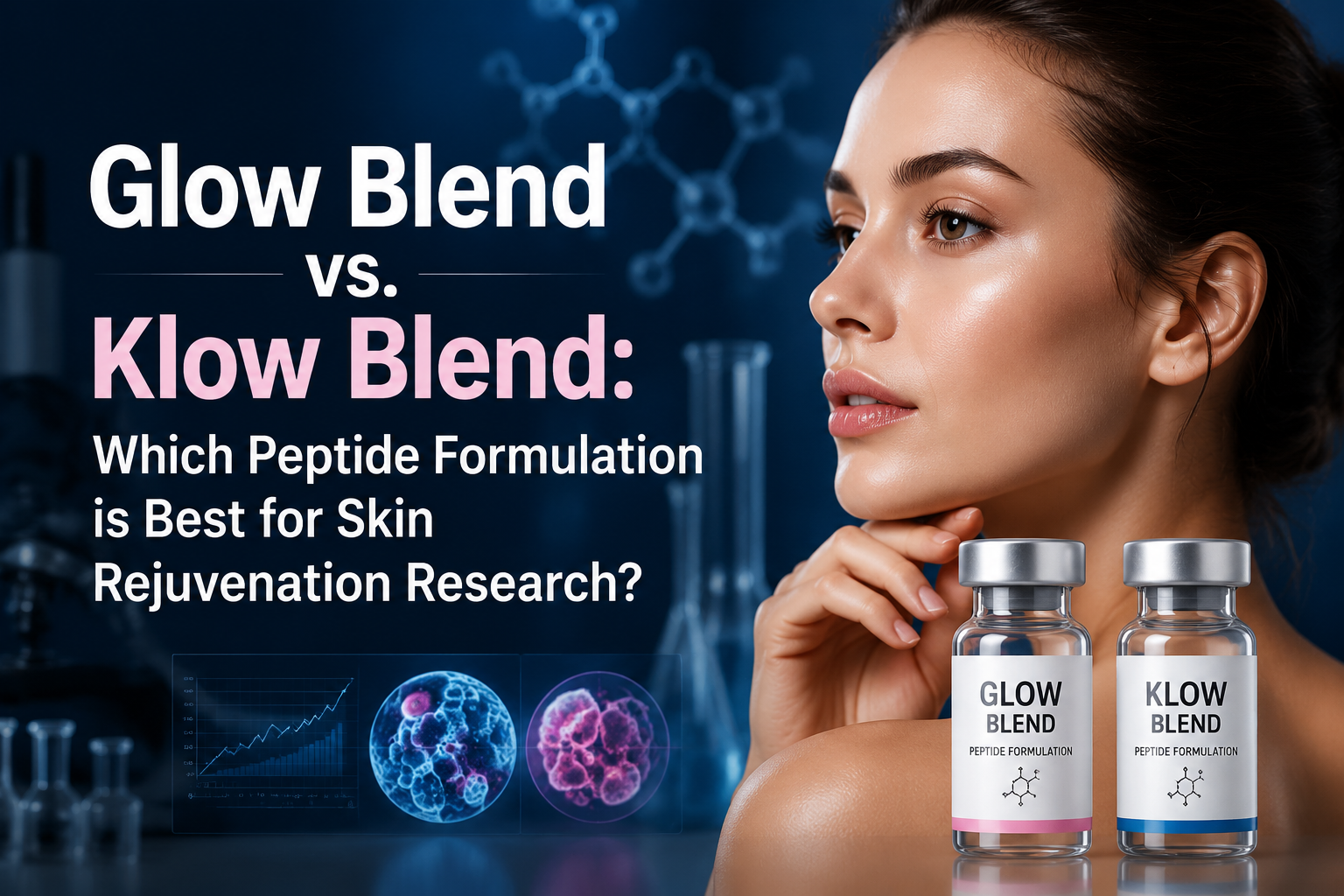
Collagen synthesis declines by roughly 1% per year after age 20, a fact that has driven researchers toward multi-peptide formulations designed to address skin aging at the cellular level. Among the most discussed options in 2026 are two closely related blends: Glow Blend and Klow Blend. The question of Glow Blend vs. Klow Blend: Which Peptide Formulation is Best for Skin Rejuvenation Research? is not simply a matter of preference, it depends on the specific biological pathways a study aims to target.

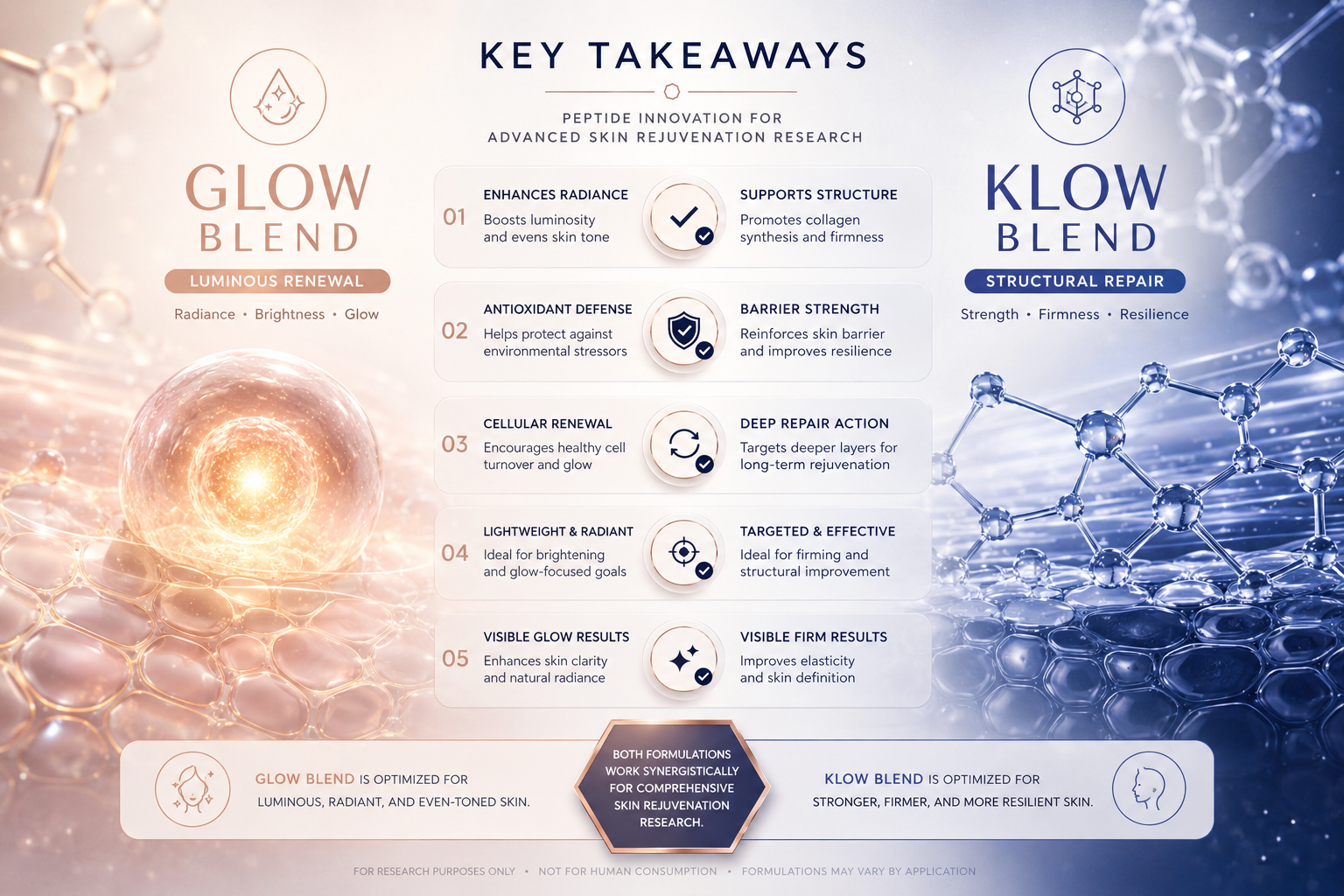
Editorial infographic for 'Key Takeaways' section comparing Glow Blend vs. Klow Blend peptide formulations for skin

Key Takeaways

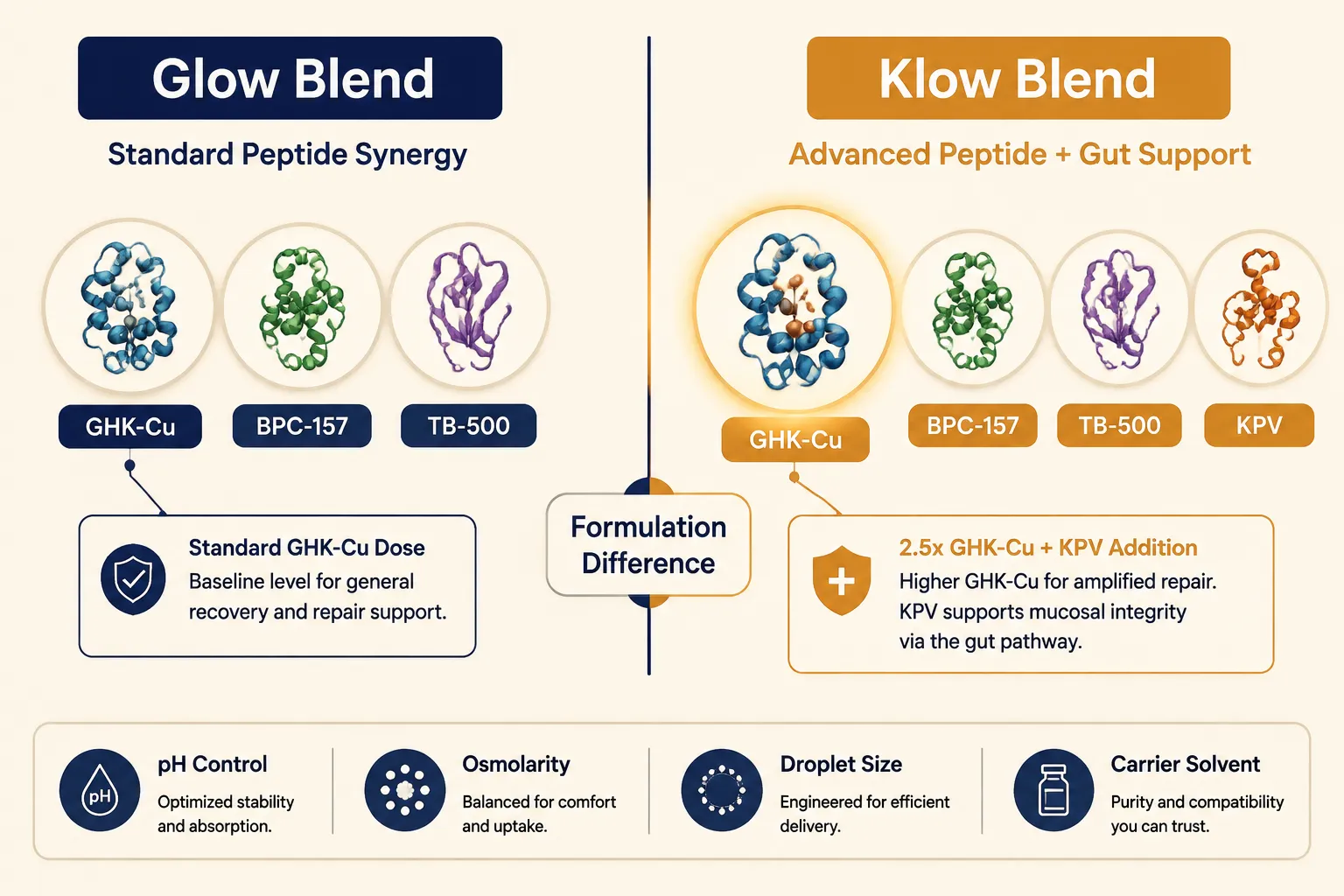
  • Glow Blend and Klow Blend share three core peptides: GHK-Cu, BPC-157, and TB-500.
  • Klow Blend adds KPV, a tripeptide with targeted anti-inflammatory properties.
  • Glow Blend is best suited for collagen-focused and general anti-aging research protocols.
  • Klow Blend is more appropriate for studies involving inflammation-driven skin conditions such as rosacea or post-procedure redness.
  • Choosing between the two depends on the primary research endpoint: structural rejuvenation versus inflammatory modulation.

Composition: What Sets These Two Formulations Apart

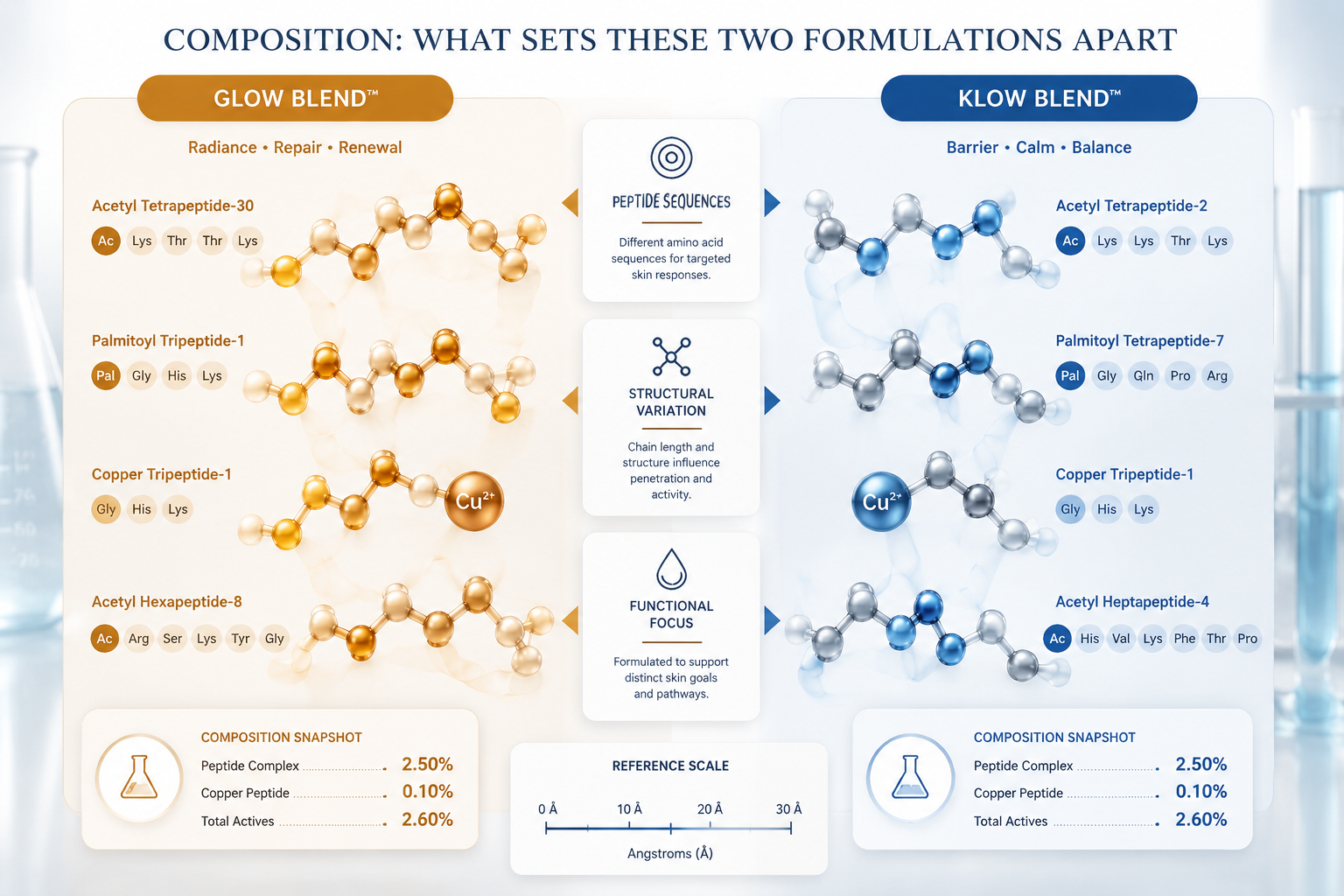
Both blends are built on a shared foundation of three well-studied peptides.

Peptide Glow Blend Klow Blend
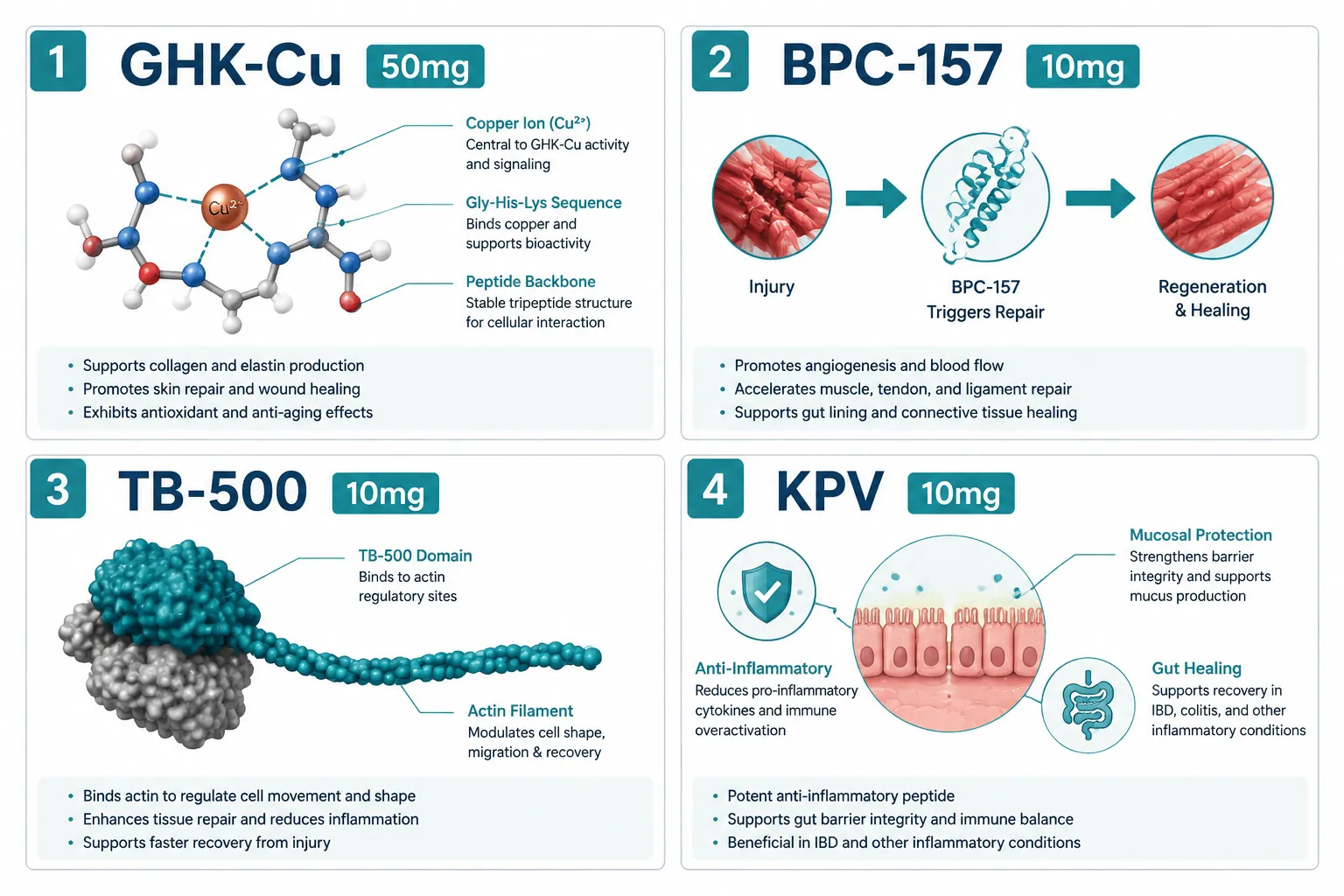
GHK-Cu (50 mg) Yes Yes
BPC-157 (10 mg) Yes Yes
TB-500 (10 mg) Yes Yes
KPV (10 mg) No Yes

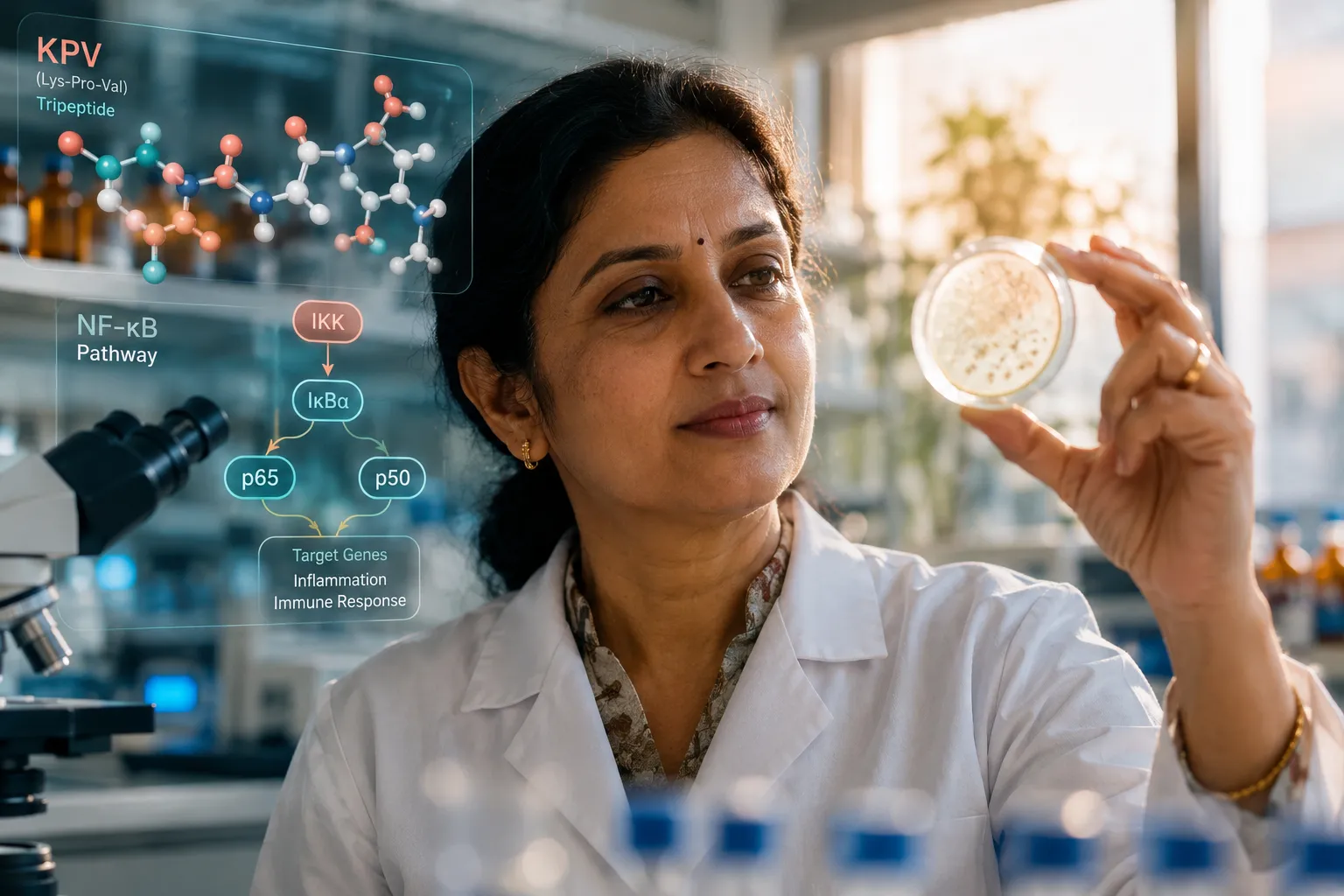
The addition of KPV in Klow Blend is the defining difference. KPV is a tripeptide fragment derived from alpha-melanocyte-stimulating hormone. It works primarily by inhibiting NF-kB signaling, which reduces the production of pro-inflammatory cytokines. This makes Klow Blend a more targeted tool for research involving skin inflammation rather than structural remodeling alone.

Researchers exploring the Glow Blend formulation will find it optimized for collagen-centric endpoints, while those examining the Klow Blend formulation gain an additional inflammatory modulation variable.


Mechanisms of Action: How Each Peptide Contributes

Understanding the role of each component is essential when evaluating Glow Blend vs. Klow Blend: Which Peptide Formulation is Best for Skin Rejuvenation Research?

GHK-Cu (Copper Peptide)
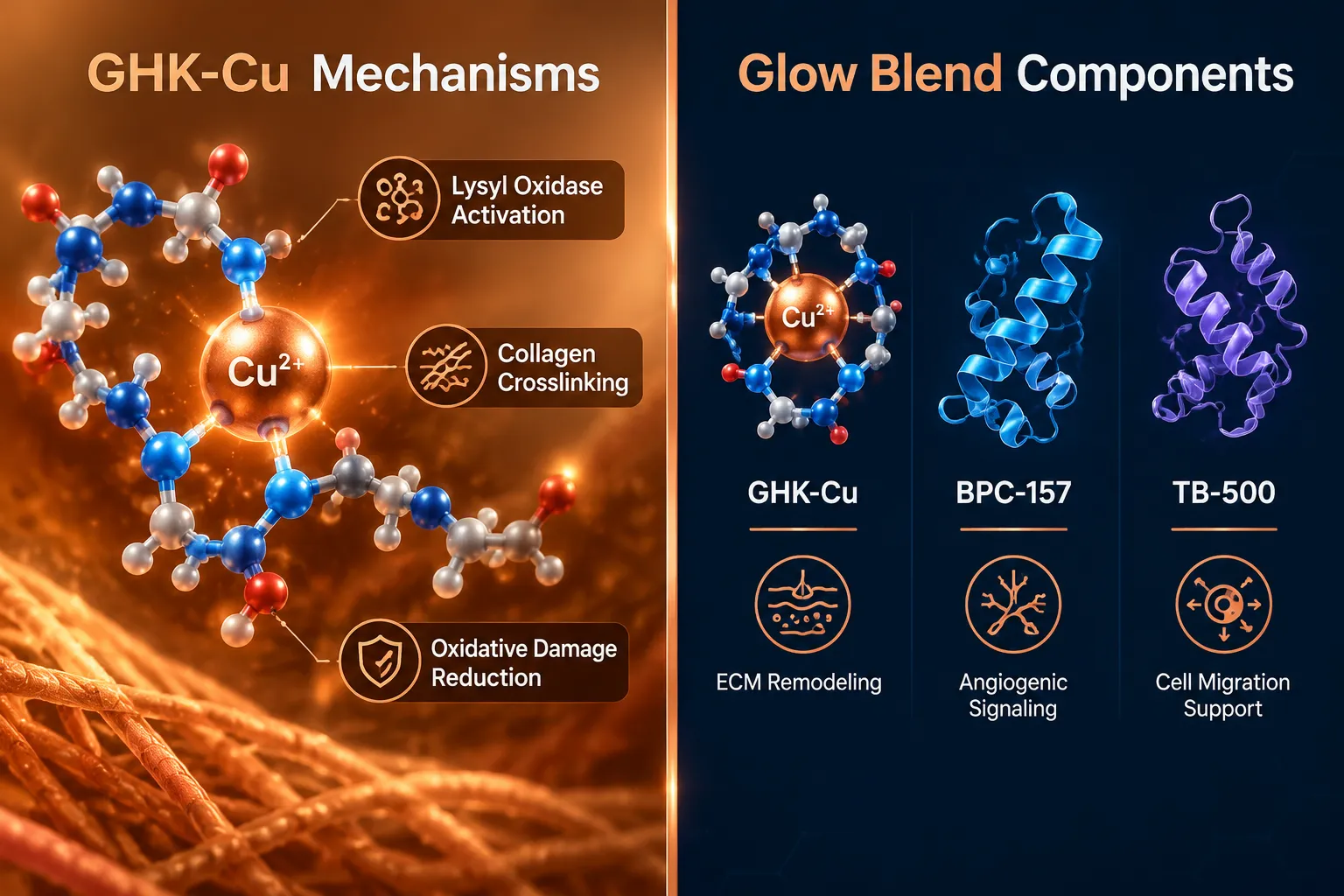
This peptide stimulates collagen and elastin synthesis, promotes skin remodeling, and supports the activity of antioxidant enzymes. It is considered the primary driver of anti-aging effects in both blends. Researchers interested in the broader regenerative context of copper peptides can also review GHK-Cu research themes.

BPC-157 (Body Protection Compound)
BPC-157 supports tissue repair and promotes angiogenesis, the formation of new blood vessels. This is relevant to skin research because improved vascularization supports nutrient delivery to dermal layers. For additional context on tissue repair peptide research, see BPC-157 and TB-500 research.

TB-500 (Thymosin Beta-4 Fragment)
TB-500 facilitates cell migration, reduces localized inflammation, and accelerates wound-healing responses. It works synergistically with BPC-157 in both formulations.

KPV (Klow Blend Only)
By blocking NF-kB pathways, KPV specifically targets the inflammatory cascade. This makes it highly relevant for studies on rosacea, post-procedure skin recovery, and chronic inflammatory dermatological conditions.

"The distinction between these two blends is not about potency, it is about pathway specificity."

Mechanisms of Action: How Each Peptide Contributes


Choosing the Right Blend for Your Research Protocol

When evaluating Glow Blend vs. Klow Blend: Which Peptide Formulation is Best for Skin Rejuvenation Research?, the answer hinges on the study's primary endpoint.

Choose Glow Blend if the research focuses on:

  • Collagen and elastin production
  • General skin texture and firmness improvement
  • Anti-aging biomarker studies
  • Skin remodeling without an inflammatory component

Choose Klow Blend if the research focuses on:

  • Inflammatory skin conditions (rosacea, eczema-adjacent models)
  • Post-procedure recovery protocols
  • NF-kB pathway modulation
  • Multi-pathway skin rejuvenation with an inflammatory variable

Researchers working on broader longevity and skin health themes may also find value in reviewing Glow Blend longevity research themes and Klow Blend multi-pathway research for additional context on how each formulation fits within wider research frameworks.

For labs sourcing multiple peptide compounds, the wholesale peptides catalog offers relevant procurement options, and reviewing quality testing protocols is strongly recommended before initiating any assay.

Choosing the Right Blend for Your Research Protocol


Conclusion

The Glow Blend vs. Klow Blend: Which Peptide Formulation is Best for Skin Rejuvenation Research? question does not have a single universal answer. Glow Blend is the stronger choice for studies centered on structural skin rejuvenation, collagen synthesis, and general anti-aging endpoints. Klow Blend is better suited when inflammatory modulation is a core variable in the research design.

Actionable next steps for researchers:

  1. Define the primary biological endpoint before selecting a formulation.
  2. Review the full ingredient profiles of both Glow Blend and Klow Blend against your assay requirements.
  3. Verify purity and concentration data through third-party certificates of analysis.
  4. Consider whether a multi-pathway approach (Klow Blend) adds value or introduces confounding variables to your specific protocol.

Selecting the right peptide blend from the outset saves time, reduces variability, and produces more interpretable data.

https://www.puretestedpeptides.com/wp-content/uploads/2026/07/Glow-Blend-vs.-Klow-Blend-Which-Peptide-Formulation-is-Best-for-Skin-Rejuvenation-Research.png 1024 1536 Pure Tested https://www.puretestedpeptides.com/wp-content/uploads/2026/01/buy-peptides-online.jpg Pure Tested2026-07-04 13:04:002026-07-20 15:01:09Glow Blend vs. Klow Blend: Which Peptide Formulation is Best for Skin Rejuvenation Research?
BPC-157 and TB-500 Synergy: Optimizing Tissue Regeneration Protocols in Research Models

BPC-157 and TB-500 Synergy: Optimizing Tissue Regeneration Protocols in Research Models

July 2, 2026/0 Comments/by Pure Tested

Fewer than 5% of peptide research protocols test compounds in combination — yet preclinical data consistently show that multi-peptide stacking can produce outcomes no single agent achieves alone. The study of BPC-157 and TB-500 Synergy: Optimizing Tissue Regeneration Protocols in Research Models sits at exactly that frontier, drawing growing attention from researchers exploring accelerated connective tissue repair, angiogenesis, and cellular recovery in animal models.

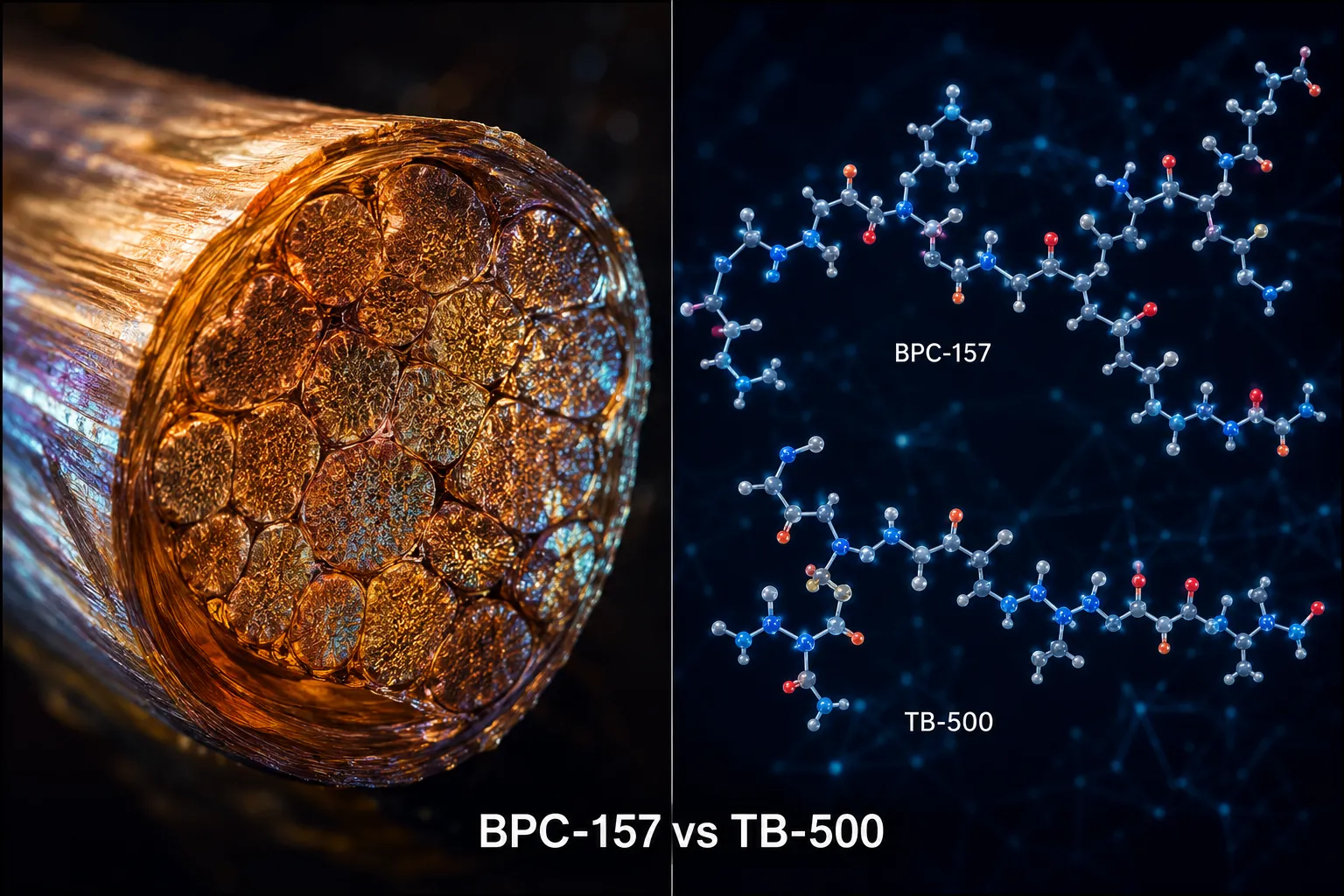
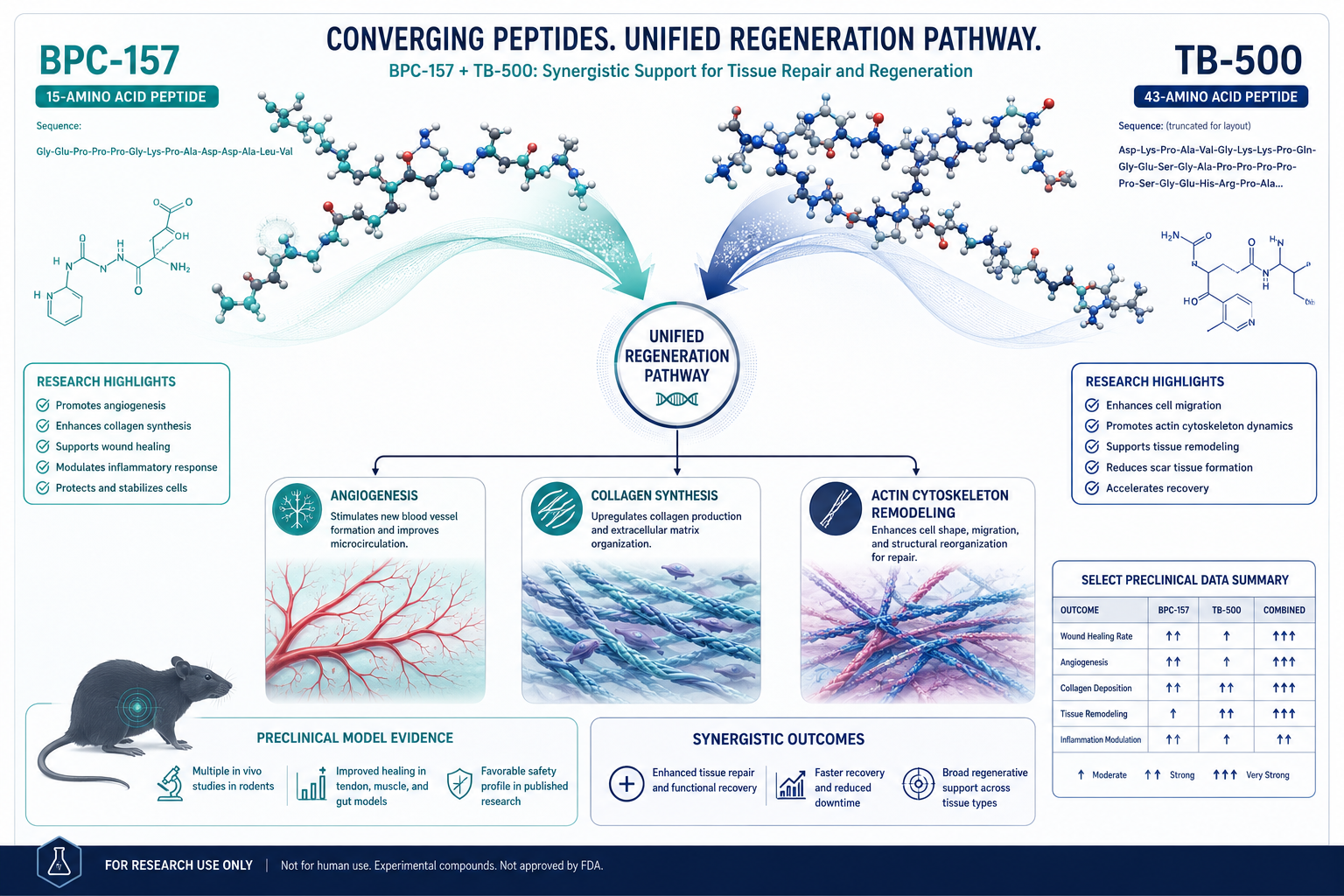
Detailed () scientific infographic illustration showing two peptide molecular structures labeled BPC-157 and TB-500

Key Takeaways

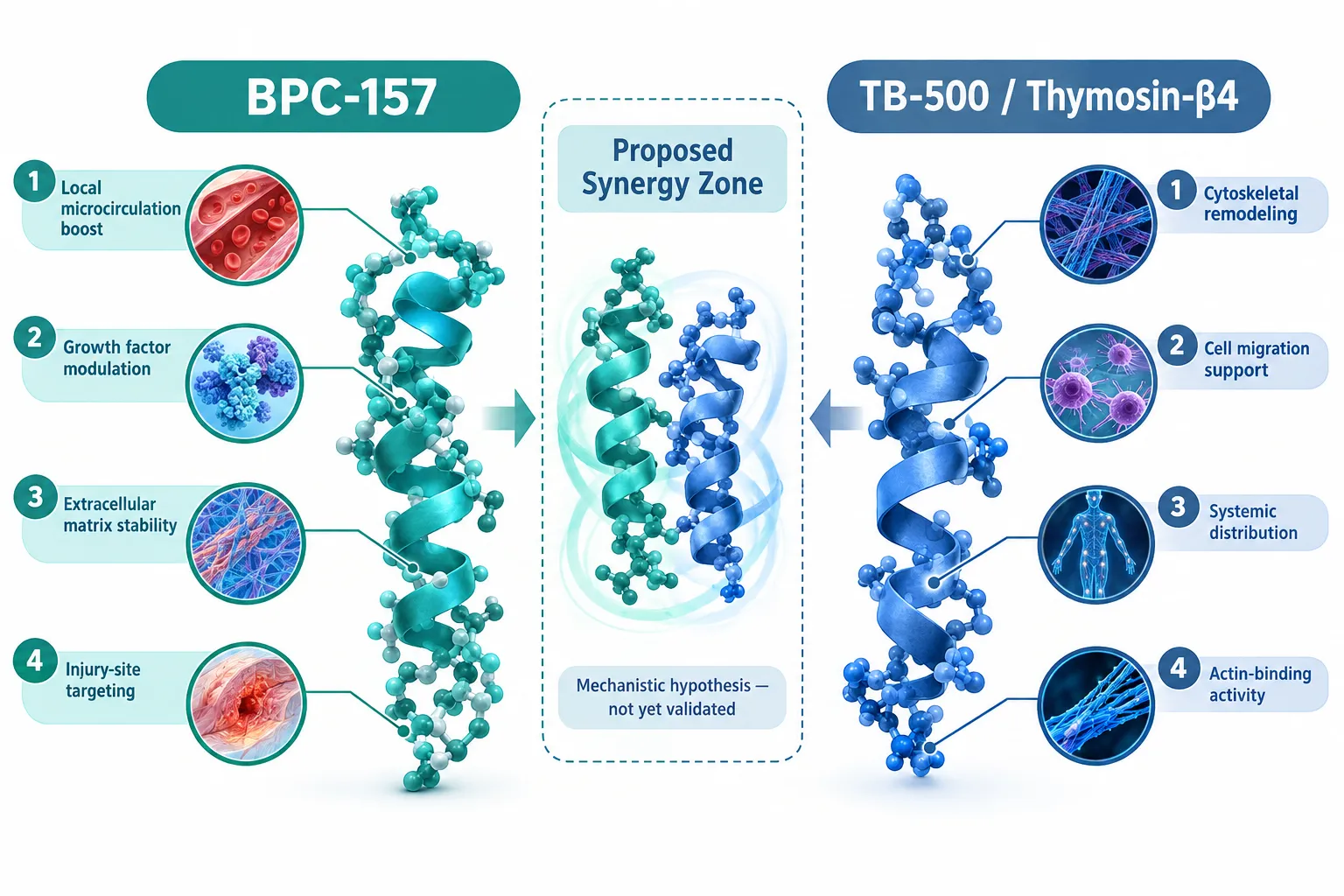
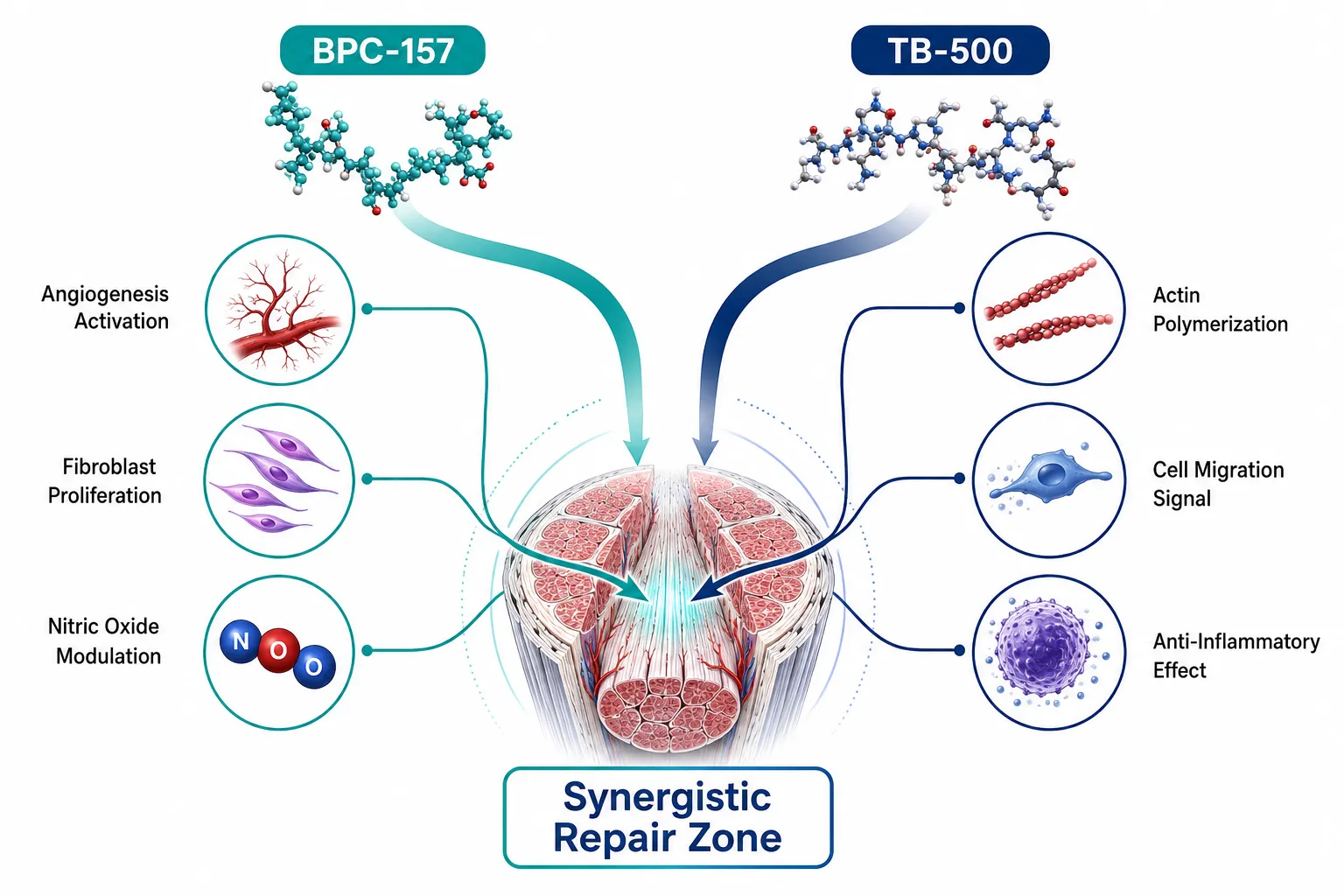
  • BPC-157 and TB-500 target distinct but complementary biological pathways, making their combination mechanistically rational.
  • Preclinical models suggest the pairing may accelerate tendon, muscle, and ligament repair beyond what either peptide achieves independently.
  • Dosing timing, route of administration, and peptide purity are critical variables in well-controlled research protocols.
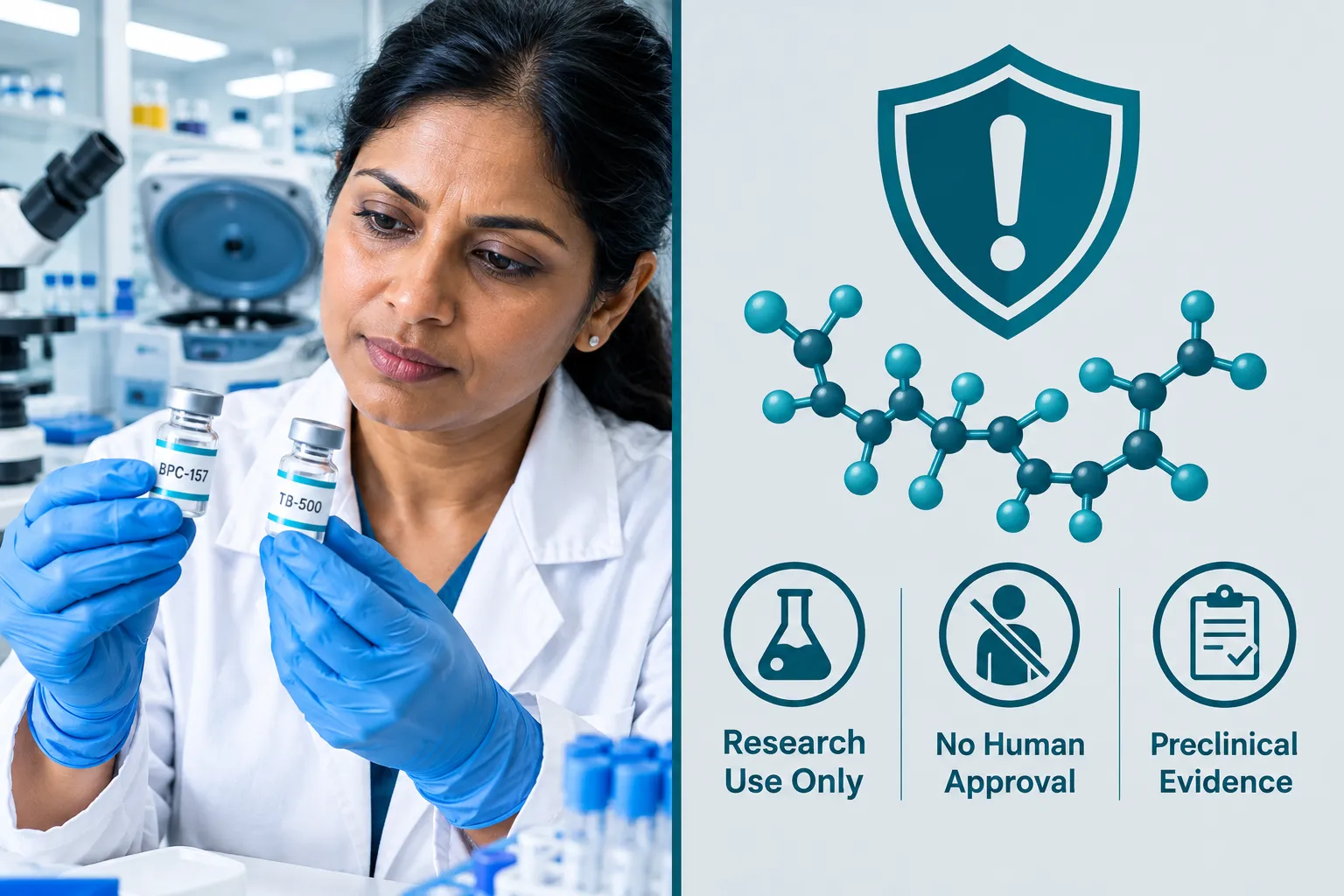
  • Neither peptide is approved for human use; all applications remain within research and investigational contexts.
  • Sourcing lab-tested peptides is a non-negotiable quality control step for reproducible results.

Understanding the Two Peptides and Why Combination Research Makes Sense

BPC-157 (Body Protection Compound-157) is a synthetic pentadecapeptide derived from a protein found in gastric juice. In rodent models, it has demonstrated consistent activity in tendon-to-bone healing, gut mucosal repair, and neurological recovery. Its primary mechanisms include upregulation of growth hormone receptors, promotion of angiogenesis via VEGF pathways, and modulation of nitric oxide synthesis.

TB-500 is a synthetic analogue of Thymosin Beta-4, a naturally occurring peptide present in virtually all human and animal cells. It promotes actin polymerization, supports endothelial cell migration, and reduces local inflammation. Critically, TB-500 facilitates the formation of new blood vessels and supports the migration of stem cells to injury sites.

"The mechanistic complementarity between BPC-157 and TB-500 is not incidental — one primes the vascular scaffold while the other drives structural repair."

When researchers evaluate BPC-157 and TB-500 synergy, the rationale becomes clear:

Feature BPC-157 TB-500
Primary pathway VEGF / GH receptor Actin / Thymosin Beta-4
Key tissue targets Tendon, gut, nerve Muscle, cardiac, connective
Anti-inflammatory Moderate Strong
Angiogenic effect High Moderate-High
Stem cell mobilization Indirect Direct

This complementary profile is why combined protocols have become a focus in tissue regeneration research. Researchers can also explore how similar synergy principles apply in other peptide pairings, such as the synergy of LL-37 and SS-31, which demonstrates comparable multi-pathway logic.


Optimizing Tissue Regeneration Protocols in Research Models: Dosing and Design

Optimizing Tissue Regeneration Protocols in Research Models: Dosing and Design

Designing a rigorous protocol for optimizing tissue regeneration protocols in research models requires attention to four core variables: dose, frequency, route, and timing relative to the injury event.

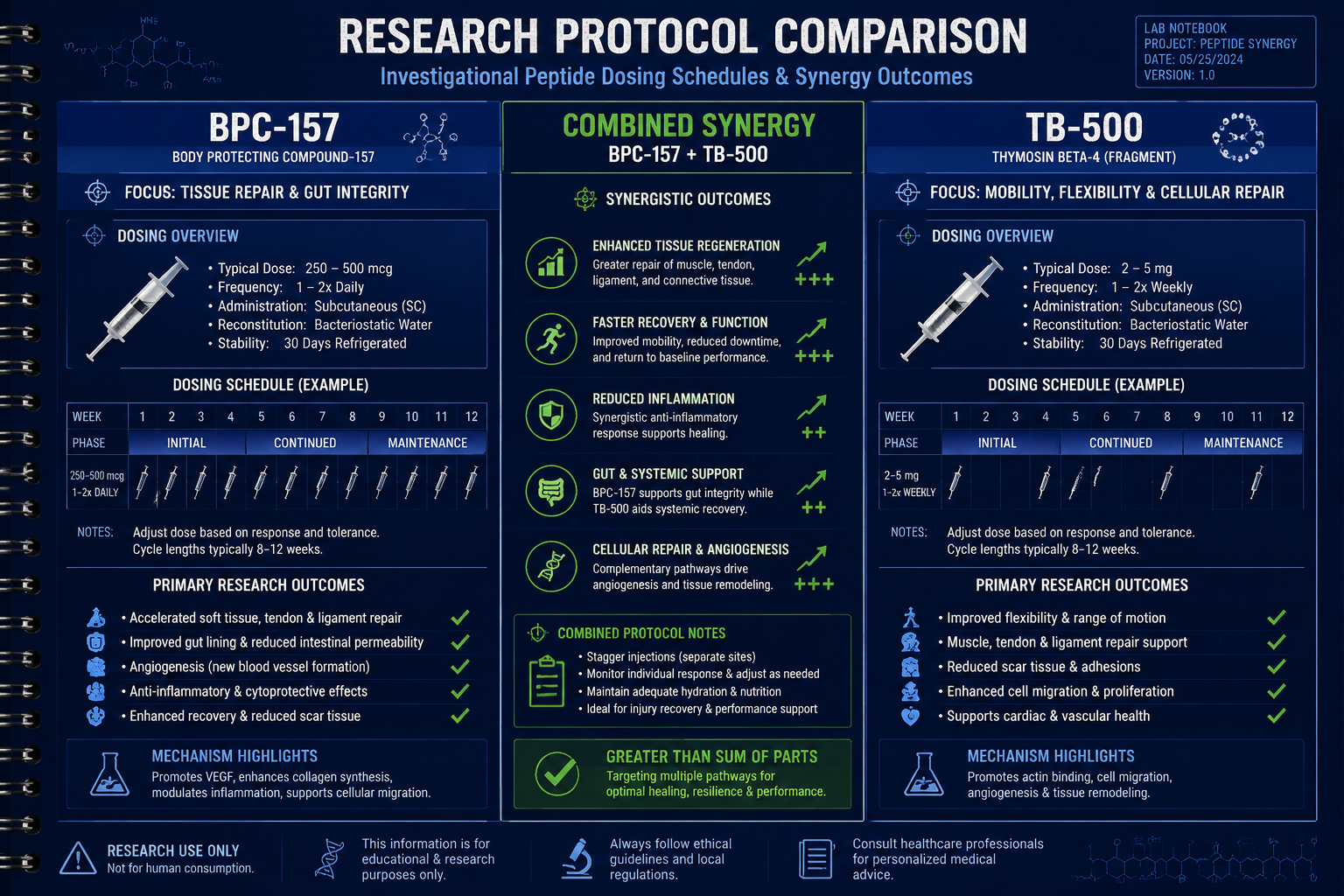
Typical Preclinical Dosing Ranges

Research in rodent models has used the following approximate ranges:

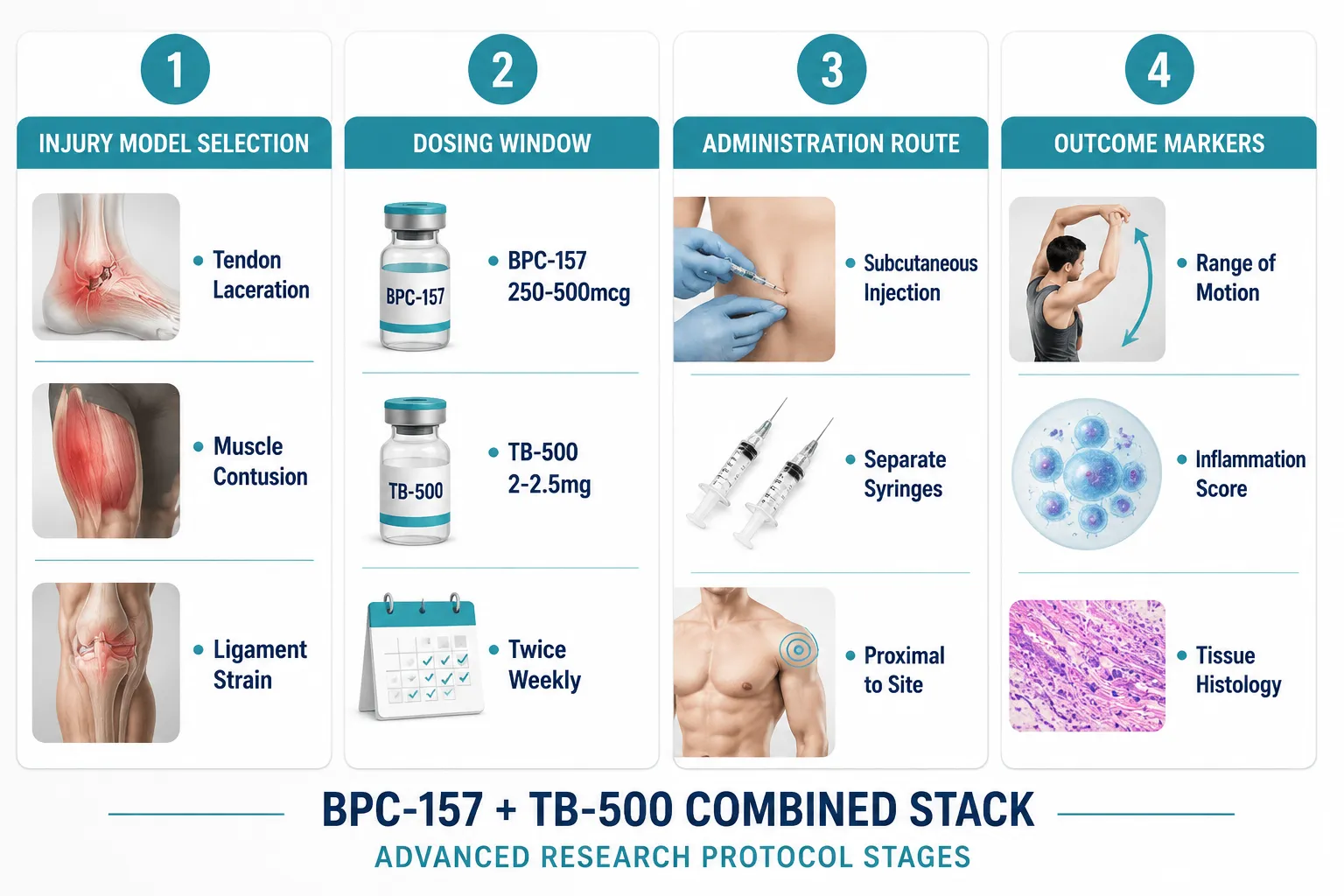
  • BPC-157: 1–10 mcg/kg body weight, administered intraperitoneally or subcutaneously, once daily
  • TB-500: 2.0–7.5 mg/kg body weight, administered subcutaneously, two to three times per week

When used in combination, some protocols apply a loading phase (higher frequency in weeks 1–2) followed by a maintenance phase (reduced frequency in weeks 3–6). This mirrors the approach used in other multi-peptide blends, such as the Klow Blend multi-pathway research framework, which also employs phased administration strategies.

Route of Administration Considerations

Subcutaneous injection remains the most common route in preclinical models for both peptides. Intraperitoneal delivery is also documented for BPC-157. Oral administration of BPC-157 has shown activity in gut-related endpoints but is generally considered less reliable for systemic musculoskeletal targets.

Key Protocol Design Checkpoints

  • Randomize subject assignment to control and treatment groups
  • Standardize injury induction method (e.g., Achilles tendon transection, muscle crush)
  • Use blinded outcome assessment (histology, tensile strength testing, immunohistochemistry)
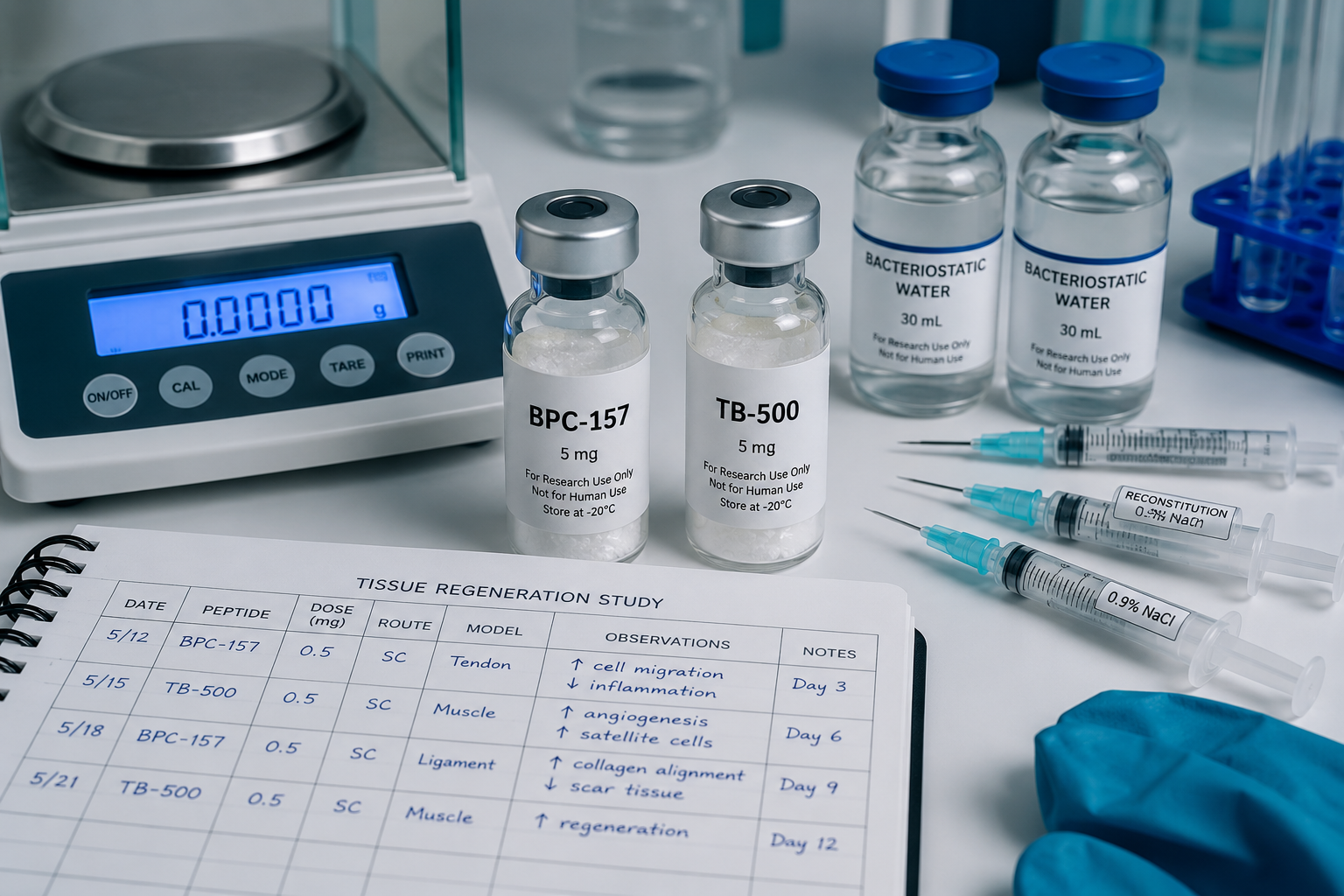
  • Log reconstitution conditions and storage temperature for each peptide lot
  • Verify peptide identity and purity via third-party certificate of analysis

Researchers interested in related regenerative peptides may also find value in reviewing GHK-Cu longevity research themes, as copper peptide activity intersects with collagen synthesis pathways relevant to tissue repair models.


Practical Sourcing and Quality Control for BPC-157 and TB-500 Research

Practical Sourcing and Quality Control for BPC-157 and TB-500 Research

The reproducibility of any BPC-157 and TB-500 synergy study depends directly on peptide quality. Impure or misidentified compounds introduce confounding variables that invalidate results. Researchers should prioritize suppliers who provide:

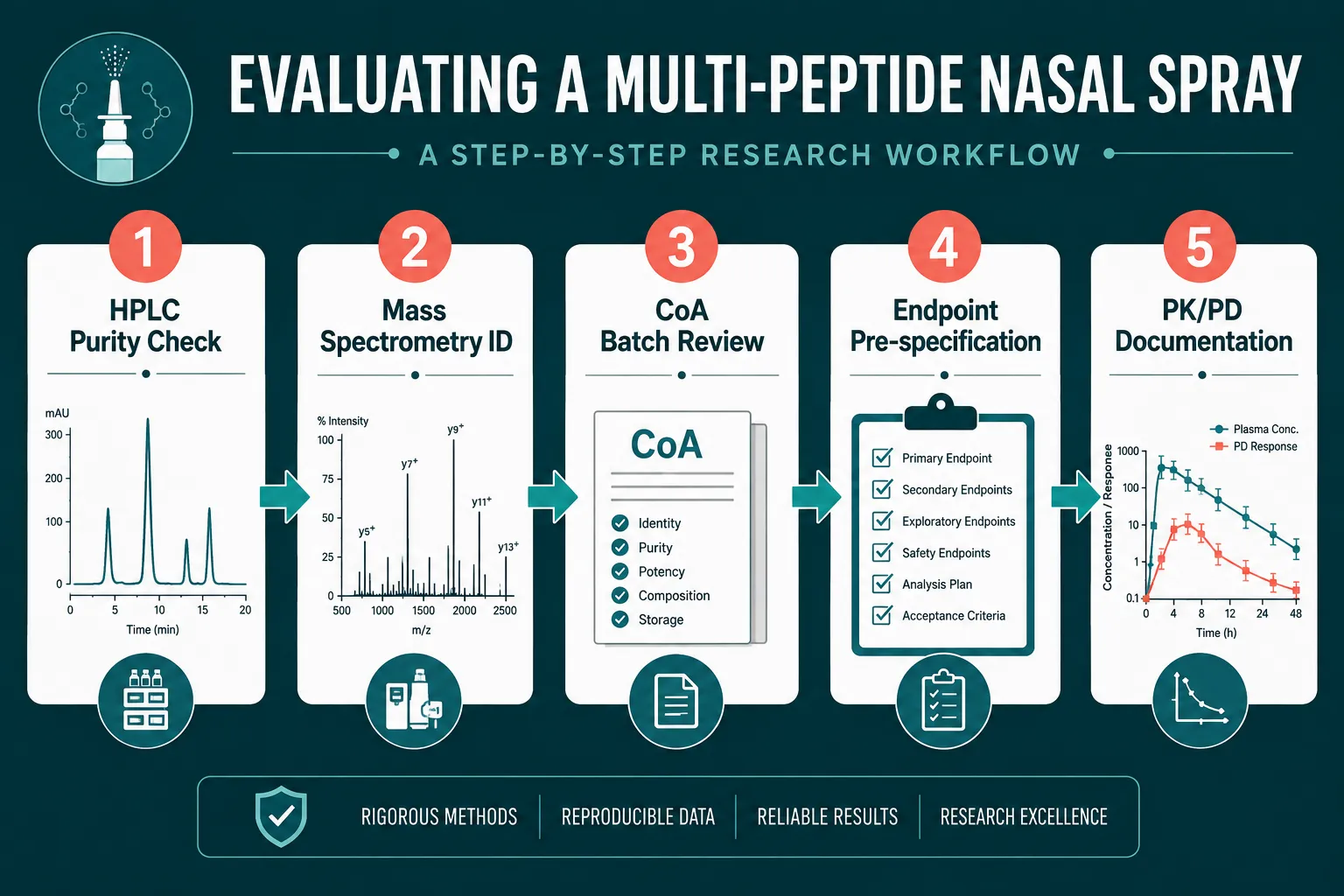
  • HPLC purity certificates (minimum 98% purity recommended)
  • Mass spectrometry confirmation of molecular identity
  • Sterility testing documentation
  • Clearly labeled lot numbers for traceability

For reference, the BPC-157 and TB-500 combined research page and the dedicated TB-500 research resource provide sourcing context and compound-specific notes useful for protocol planning.

Researchers should also note that peptide stability varies. BPC-157 is generally stable at 4°C for short-term storage and at -20°C for longer periods. TB-500 follows similar cold-chain requirements. Both should be reconstituted with bacteriostatic water immediately before use and protected from repeated freeze-thaw cycles.

For those building broader regenerative research programs, exploring complementary compounds such as LL-37 innate research themes or IPA muscle and fat research themes can help contextualize where BPC-157/TB-500 protocols fit within a wider investigational framework.


Conclusion

The investigation of BPC-157 and TB-500 Synergy: Optimizing Tissue Regeneration Protocols in Research Models represents one of the most mechanistically grounded areas of current peptide science. The two compounds address distinct but interlocking repair pathways, making their combined study both logical and productive for preclinical researchers.

Actionable next steps for researchers:

  1. Review existing rodent tendon and muscle repair literature to benchmark expected outcomes before designing new protocols.
  2. Establish purity verification as a non-negotiable pre-study step — source only from suppliers with documented third-party testing.
  3. Apply phased dosing designs (loading plus maintenance) to better mirror physiological repair timelines.
  4. Include histological and biomechanical endpoints alongside functional assessments for multi-dimensional data.
  5. Document all reconstitution, storage, and administration variables in a standardized research log to support reproducibility.

As 2026 brings increased scrutiny to peptide research standards, well-designed combination protocols will be essential for generating data that withstands peer review and advances the field.

https://www.puretestedpeptides.com/wp-content/uploads/2026/07/BPC-157-and-TB-500-Synergy-Optimizing-Tissue-Regeneration-Protocols-in-Research-Models.png 1024 1536 Pure Tested https://www.puretestedpeptides.com/wp-content/uploads/2026/01/buy-peptides-online.jpg Pure Tested2026-07-02 13:08:092026-07-20 15:01:14BPC-157 and TB-500 Synergy: Optimizing Tissue Regeneration Protocols in Research Models
Best Research Peptides for Advanced Wound Healing: Comparing BPC-157, TB-500, and GHK-Cu

Best Research Peptides for Advanced Wound Healing: Comparing BPC-157, TB-500, and GHK-Cu

June 30, 2026/0 Comments/by Pure Tested

Chronic wounds affect more than 6.5 million patients in the United States annually, costing the healthcare system upward of $25 billion per year — yet standard-of-care options remain limited. That gap has pushed researchers toward a focused investigation of the best research peptides for advanced wound healing: comparing BPC-157, TB-500, and GHK-Cu as candidates that may address healing at the molecular level.

This article breaks down each peptide's mechanism, compares their individual strengths, and examines the evidence for combining them in research protocols.

Key Takeaways

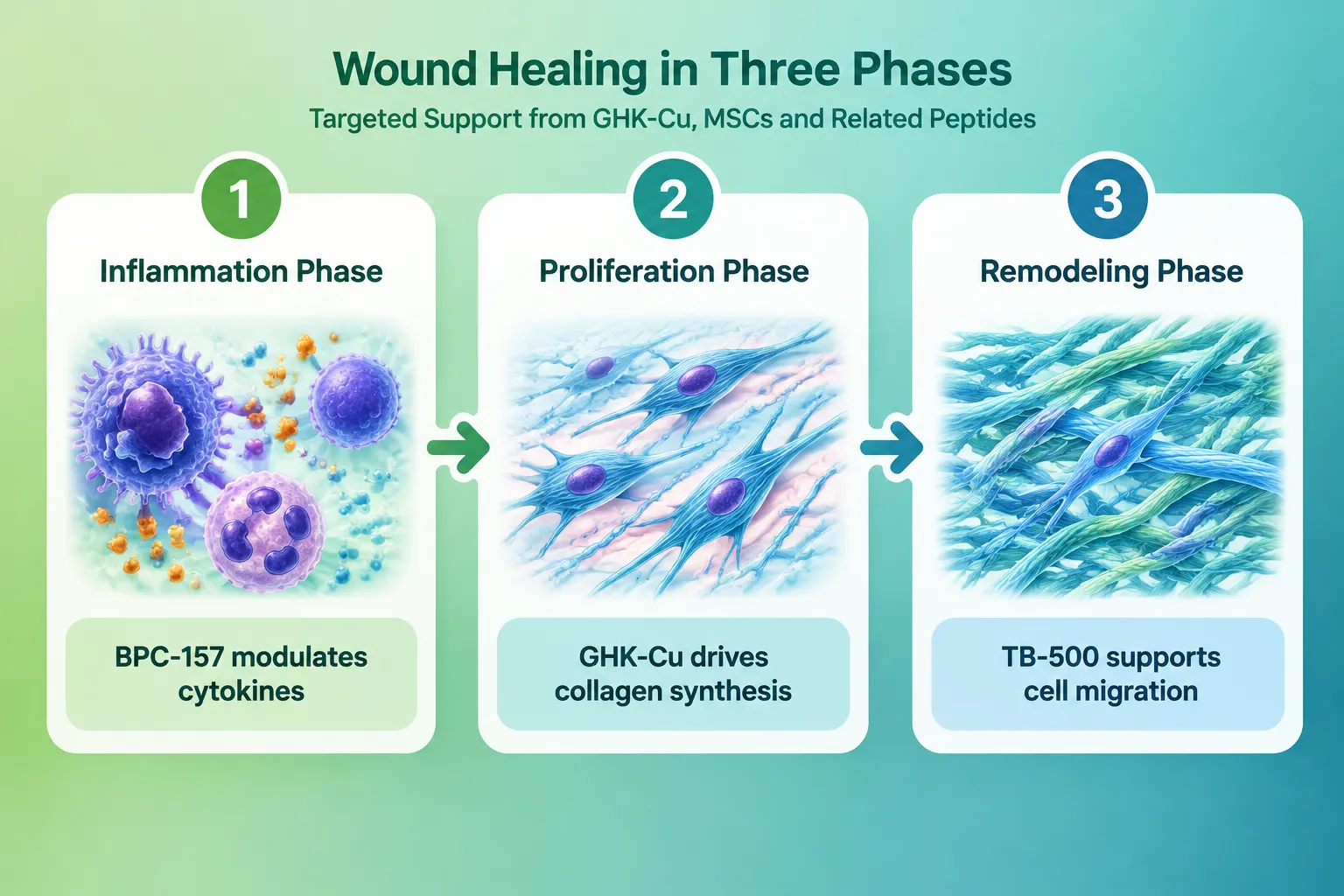
  • BPC-157, TB-500, and GHK-Cu each target distinct but complementary phases of the wound healing cascade.
  • BPC-157 is notable for its angiogenic and cytoprotective properties; TB-500 promotes cell migration and actin regulation; GHK-Cu drives collagen synthesis and antioxidant activity.
  • Synergistic stacking of these peptides is an active area of preclinical research.
  • Purity and third-party testing are critical variables when sourcing peptides for research use.
  • All three compounds remain research-use-only; none are approved for human therapeutic use outside of clinical trials.

Key Takeaways

Understanding the Three Peptides: Mechanisms and Roles

BPC-157: Angiogenesis and Cytoprotection

Body Protection Compound-157 (BPC-157) is a synthetic pentadecapeptide derived from a protective protein found in gastric juice. Its most well-documented mechanism is the upregulation of vascular endothelial growth factor (VEGF), which drives angiogenesis — the formation of new blood vessels essential for tissue repair.

Preclinical studies show BPC-157 also modulates nitric oxide synthesis, reduces oxidative stress, and accelerates tendon-to-bone healing. For a detailed breakdown of its documented research profile, see this BPC-157 first research guide.

Key research-noted properties of BPC-157:

  • Promotes capillary formation in wound beds
  • Reduces inflammation via nitric oxide pathways
  • Accelerates muscle, tendon, and ligament repair in animal models
  • Demonstrates gastroprotective effects in gastric ulcer models

TB-500: Actin Regulation and Cell Migration

Thymosin Beta-4 (TB-500) is a synthetic analog of a naturally occurring 43-amino-acid peptide. Its primary mechanism involves binding to G-actin, which regulates actin polymerization. This process is fundamental to cell migration — a critical step in the proliferative phase of wound healing.

TB-500 also promotes the upregulation of stem cell recruitment and has shown anti-inflammatory effects in multiple animal models. Researchers interested in its regenerative profile can explore TB-500 research documentation here.

Key research-noted properties of TB-500:

  • Regulates actin dynamics to facilitate keratinocyte and fibroblast migration
  • Promotes stem cell homing to wound sites
  • Reduces scar tissue formation in preclinical models
  • Demonstrates cardioprotective effects in ischemic injury models

GHK-Cu: Collagen Synthesis and Antioxidant Defense

GHK-Cu (Glycyl-L-Histidyl-L-Lysine Copper) is a naturally occurring copper-binding tripeptide. It is one of the most studied peptides in skin biology, with a research record spanning several decades. Its primary wound healing actions include stimulating collagen and glycosaminoglycan synthesis, activating matrix metalloproteinases (MMPs) for tissue remodeling, and exerting potent antioxidant effects.

Topical GHK-Cu formulations are already used in cosmetic research. For more on its longevity and skin-repair research themes, see GHK-Cu longevity research and the topical GHK-Cu product page.


GHK-Cu: Collagen Synthesis and Antioxidant Defense

Side-by-Side Comparison: Best Research Peptides for Advanced Wound Healing

The table below summarizes key differentiators across the three peptides when evaluating them as the best research peptides for advanced wound healing: comparing BPC-157, TB-500, and GHK-Cu.

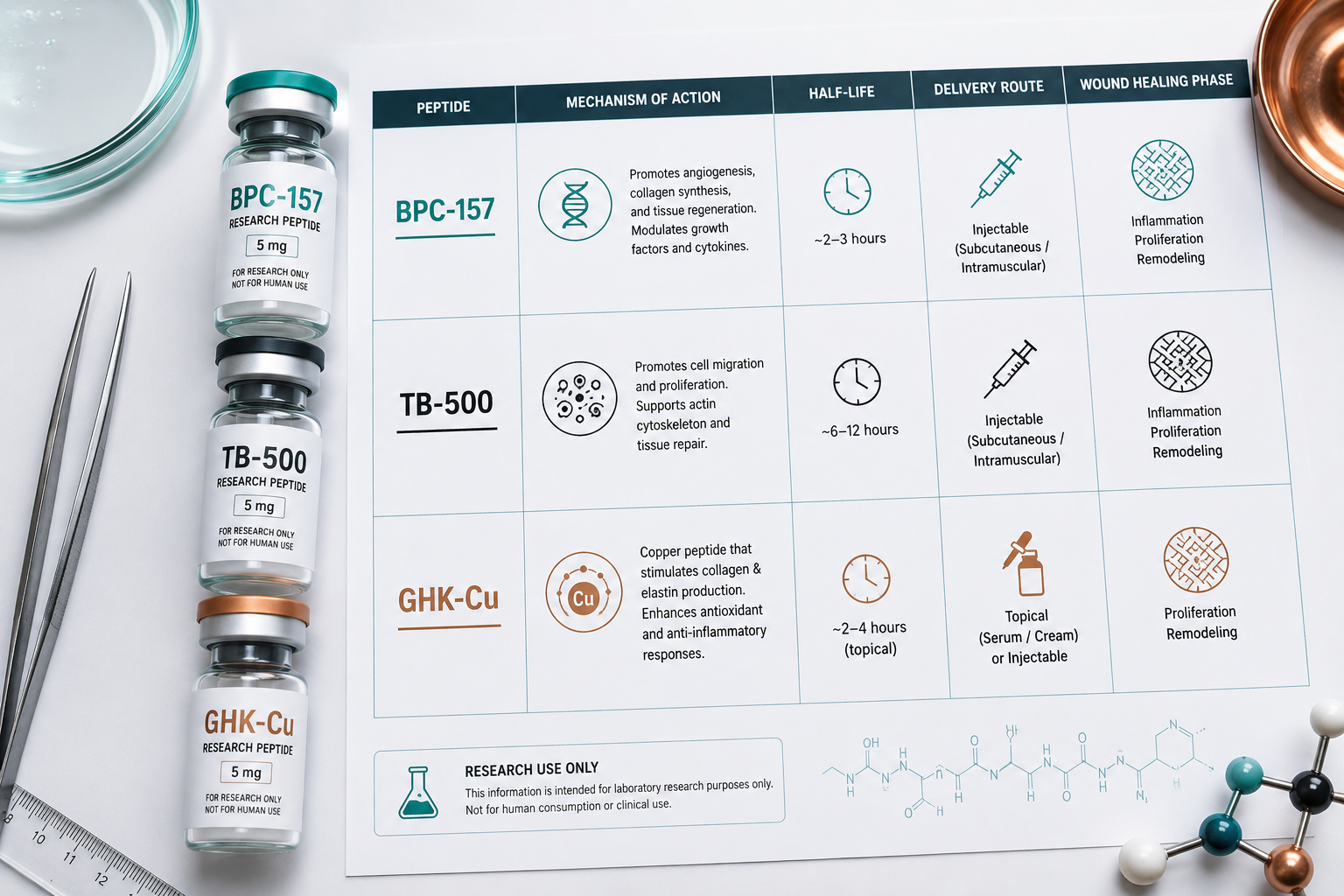
Feature BPC-157 TB-500 GHK-Cu
Primary Mechanism Angiogenesis, VEGF upregulation Actin regulation, cell migration Collagen synthesis, MMP activation
Wound Healing Phase All phases, especially proliferative Proliferative and remodeling Remodeling and maturation
Delivery Route (Research) Subcutaneous, oral Subcutaneous Topical, subcutaneous
Anti-inflammatory Yes Yes Yes
Antioxidant Activity Moderate Low High
Scar Reduction Evidence Moderate Strong Strong

Key insight: No single peptide covers every phase of wound healing with equal potency. This is precisely why researchers have begun exploring combination protocols.


Synergistic Protocols: Combining BPC-157, TB-500, and GHK-Cu

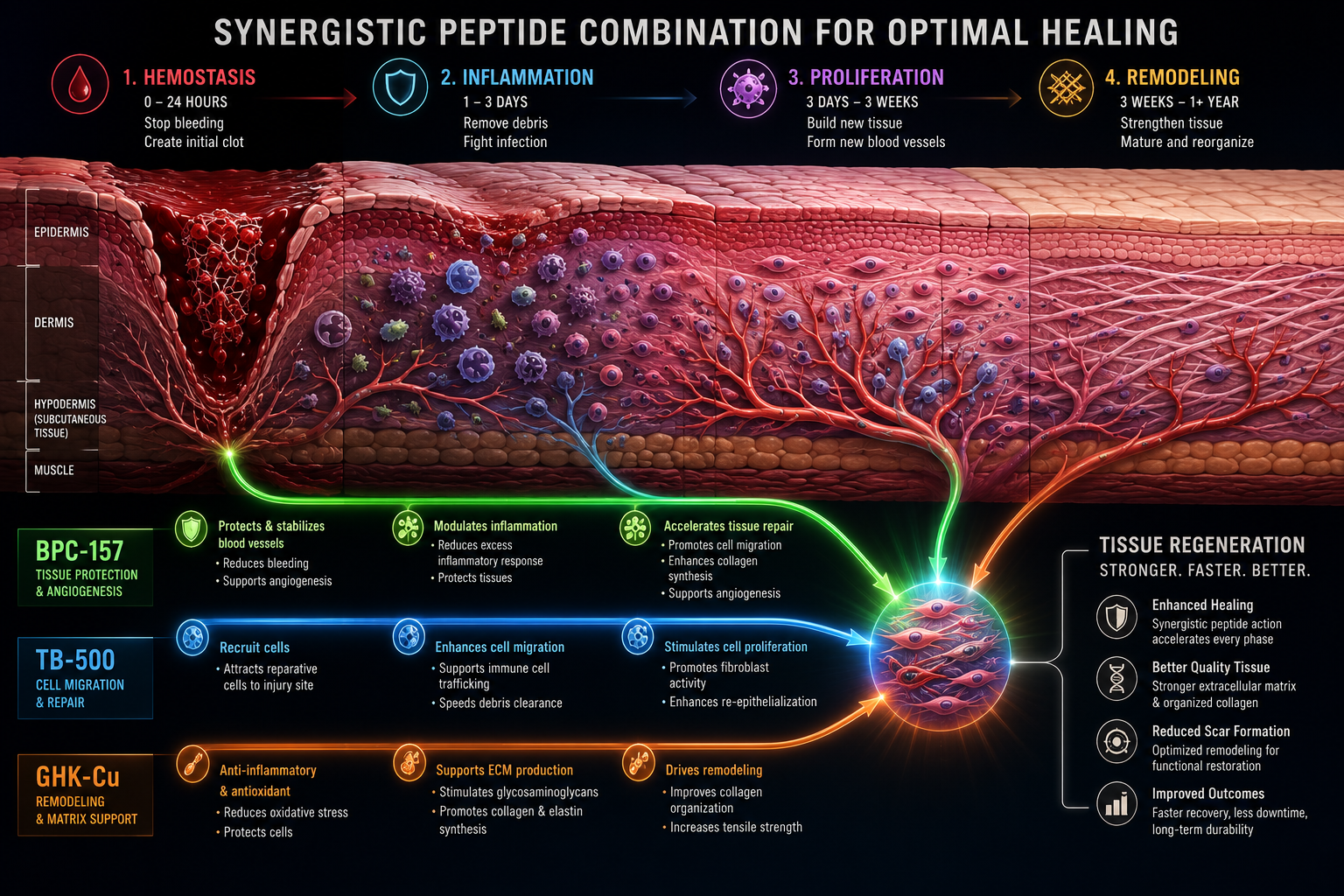
The most advanced research direction in this space involves stacking these three peptides to address the full wound healing cascade simultaneously. The logic is straightforward: BPC-157 establishes vascular supply, TB-500 drives cellular migration into the wound bed, and GHK-Cu orchestrates collagen deposition and tissue remodeling.

This complementary action across all four healing phases — hemostasis, inflammation, proliferation, and remodeling — makes the combination theoretically superior to any single agent. For a focused look at how BPC-157 and TB-500 work together in regeneration research, see TB-500 and BPC-157 regeneration protocols.

Researchers should also consider the broader landscape of longevity peptide research, as wound healing intersects significantly with cellular aging and tissue maintenance.

Synergistic Protocols: Combining BPC-157, TB-500, and GHK-Cu

Sourcing and Purity Considerations

For any research protocol involving these peptides, purity is non-negotiable. Contaminants such as endotoxins or residual solvents can confound results and introduce variables that invalidate findings. Researchers should prioritize suppliers that provide third-party HPLC and mass spectrometry certificates of analysis. A practical overview of what to look for is available in this peptide purity testing guide.

Additionally, understanding how different suppliers compare on documentation standards is essential — see peptide supplier comparisons for a structured evaluation framework.


Conclusion

The best research peptides for advanced wound healing — BPC-157, TB-500, and GHK-Cu — each bring distinct and well-documented mechanisms to the table. BPC-157 drives vascular growth, TB-500 facilitates cellular migration, and GHK-Cu anchors the remodeling phase with collagen synthesis and antioxidant protection. Together, they represent a comprehensive toolkit for researchers designing multi-target wound healing protocols.

Actionable next steps for researchers:

  1. Review the primary literature for each peptide before designing protocols.
  2. Source only from suppliers with verified third-party purity documentation.
  3. Consider combination protocols that address all four wound healing phases.
  4. Document dosing, timing, and delivery routes rigorously for reproducible results.
  5. Stay current with emerging findings through resources like what is new in peptide research.
https://www.puretestedpeptides.com/wp-content/uploads/2026/06/Best-Research-Peptides-for-Advanced-Wound-Healing-Comparing-BPC-157-TB-500-and-GHK-Cu.png 1024 1536 Pure Tested https://www.puretestedpeptides.com/wp-content/uploads/2026/01/buy-peptides-online.jpg Pure Tested2026-06-30 13:03:252026-07-20 15:01:54Best Research Peptides for Advanced Wound Healing: Comparing BPC-157, TB-500, and GHK-Cu
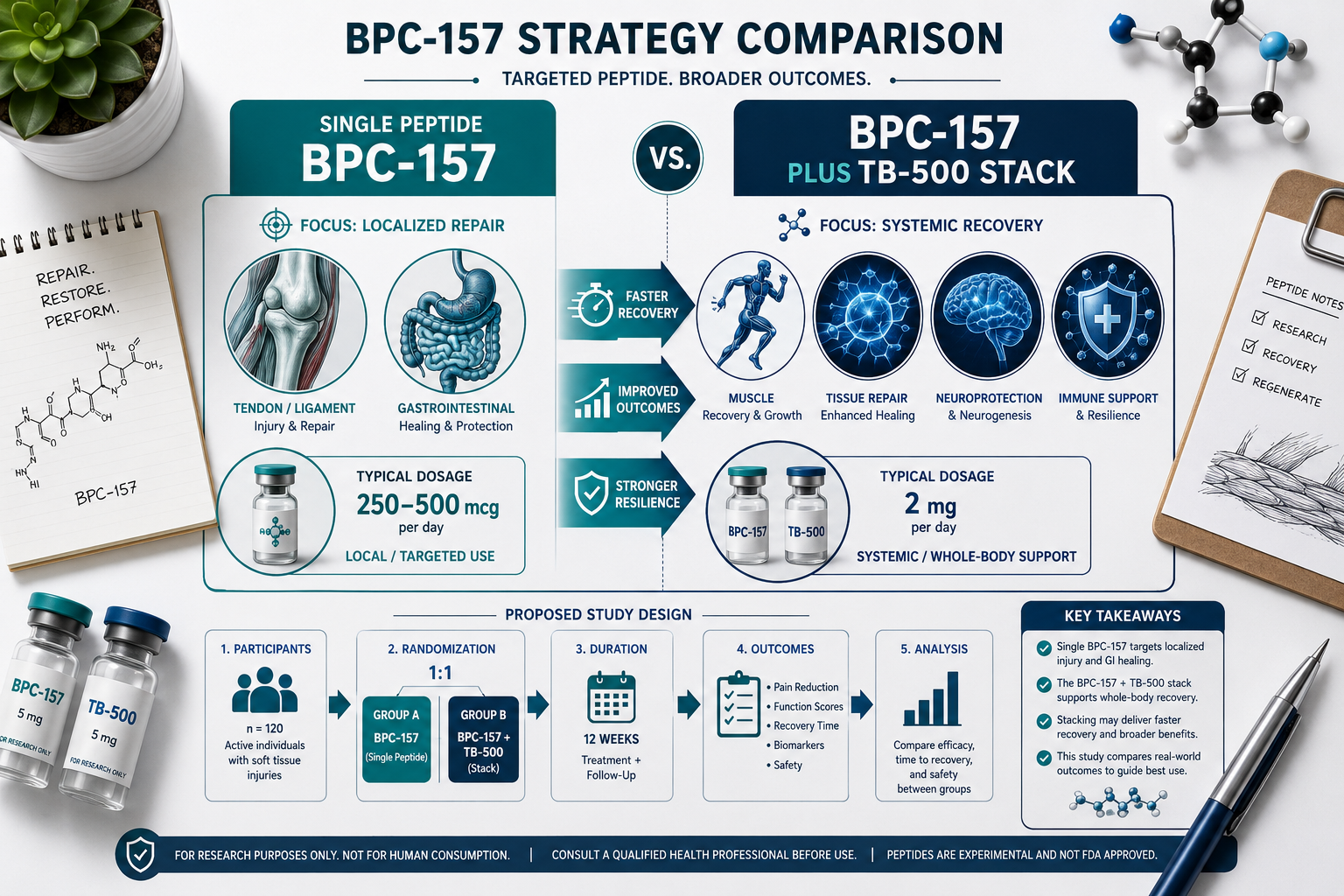
BPC-157 vs BPC-157 and TB-500: When Does a Single-Peptide Model Make More Sense Than a Stack?

BPC-157 vs BPC-157 and TB-500: When Does a Single-Peptide Model Make More Sense Than a Stack?

June 27, 2026/0 Comments/by Pure Tested

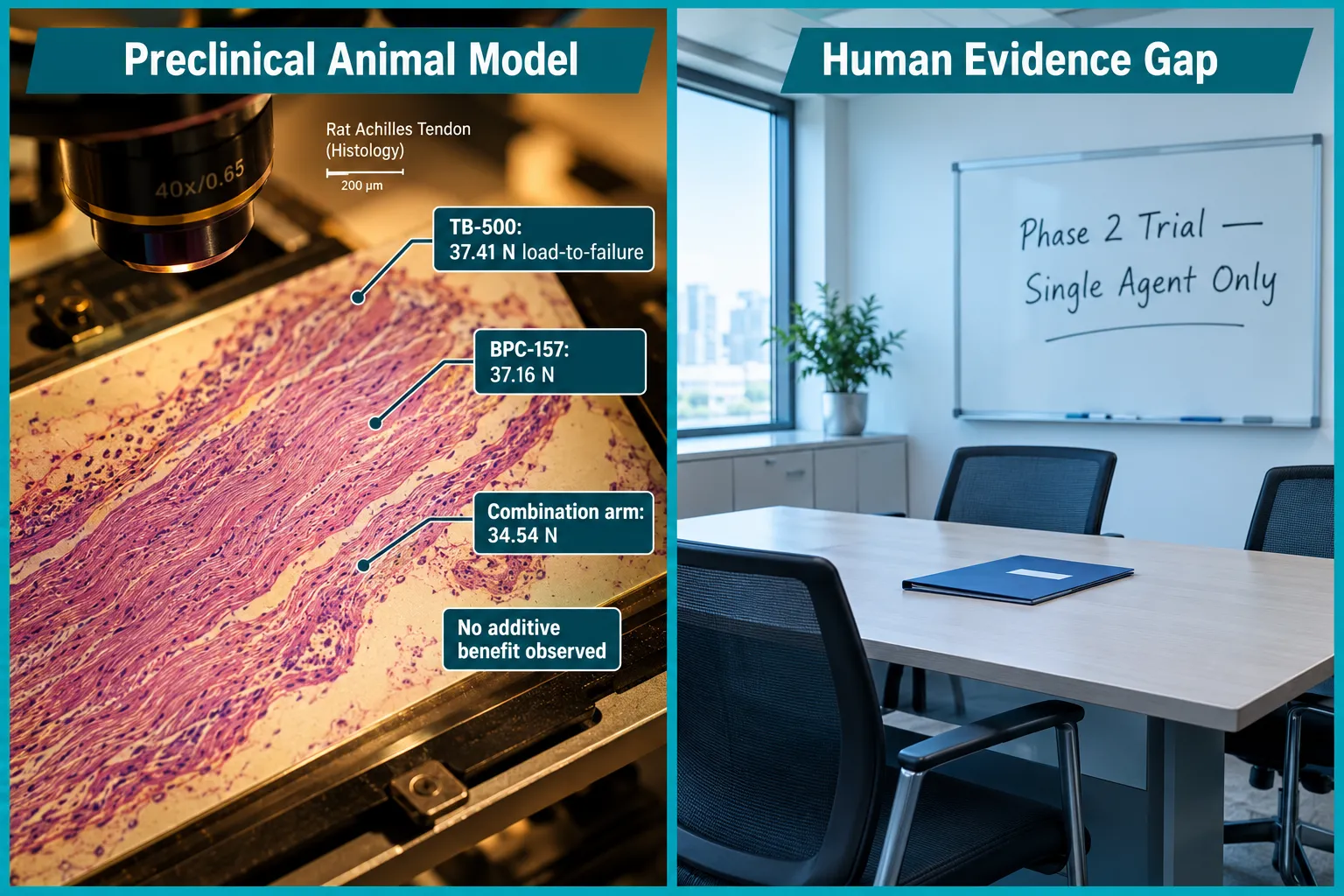
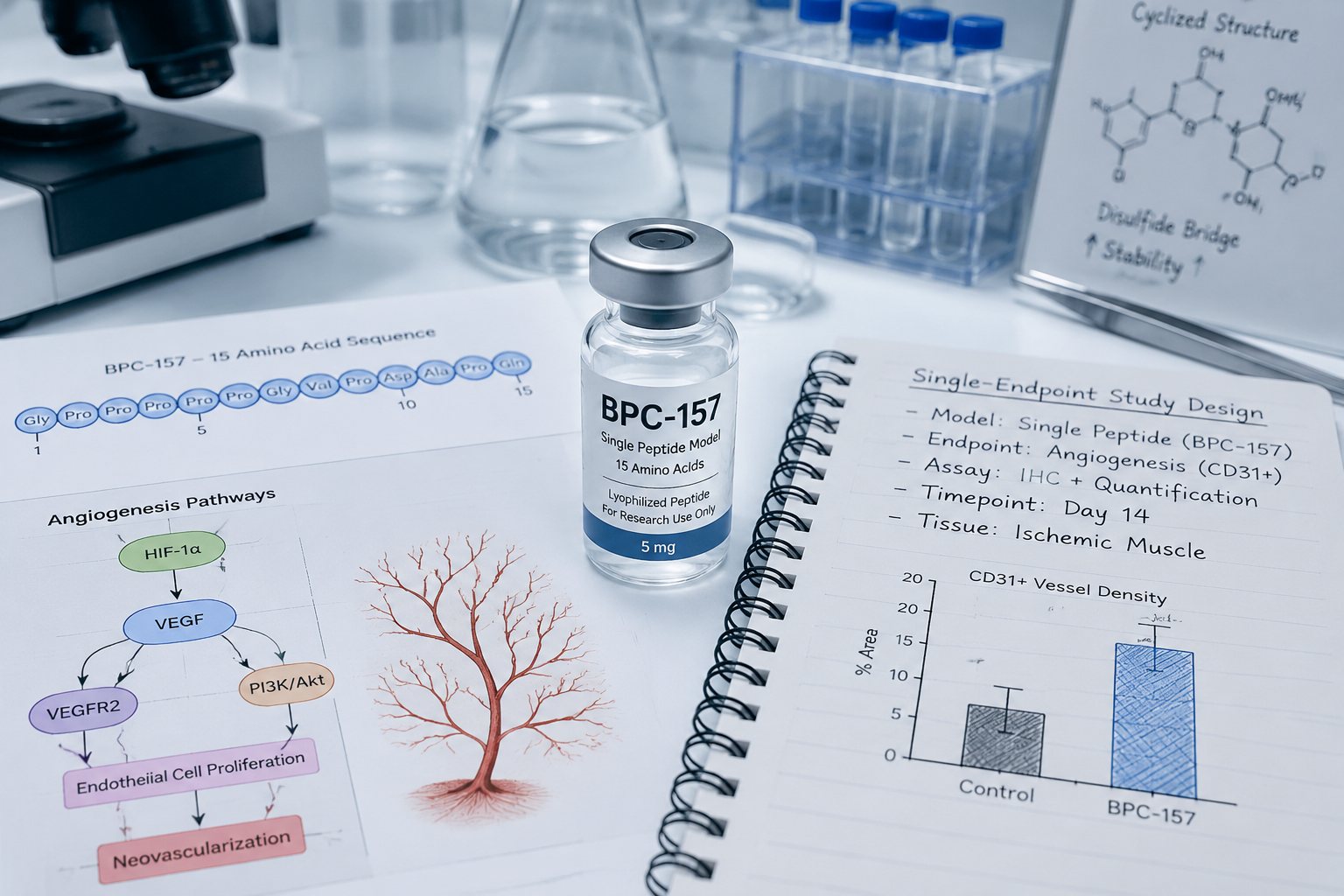
Fewer than 5% of peptide combination studies include a proper single-agent control arm — a gap that makes interpreting stack results far harder than most researchers acknowledge. The question of BPC-157 vs BPC-157 and TB-500: when does a single-peptide model make more sense than a stack? is not simply a dosing preference. It is a fundamental study design choice that shapes what conclusions can and cannot be drawn from any given experiment.

Key Takeaways

  • BPC-157 acts locally through angiogenesis and nitric oxide signaling; TB-500 acts systemically via actin regulation and cell migration.
  • Single-peptide BPC-157 models are preferred when the research goal is to isolate a specific mechanism or treat a localized injury.
  • Stacking adds complexity that can obscure which agent is driving an observed effect.
  • Endpoint selection must match the peptide's mechanism — localized markers for BPC-157, systemic markers for TB-500.
  • Combination protocols are justified when evidence already supports each agent independently and the injury profile is multi-system.

How Each Peptide Works — and Why That Distinction Matters

BPC-157 is a 15-amino-acid peptide derived from human gastric juice. Its primary mechanisms include stimulating angiogenesis, modulating VEGF expression, and activating nitric oxide signaling pathways. These actions are largely localized, making BPC-157 especially effective for tendon, ligament, and gastrointestinal injuries. It has been studied in over 100 preclinical models and at least three small human pilot studies.

TB-500, a synthetic fragment of thymosin beta-4, works through a different axis entirely. It regulates actin polymerization and promotes cell migration, which supports systemic healing across muscle tissue and connective structures. TB-500 evidence also includes Phase 2 and 3 clinical trial data on thymosin beta-4 formulations, giving it a broader systemic evidence base.

Understanding this mechanistic split is the first step in deciding whether to use a single simple peptide protocol or a combination stack.

How Each Peptide Works — and Why That Distinction Matters

"When two agents share overlapping endpoints, combining them before establishing individual baselines creates an attribution problem that no post-hoc analysis can fully resolve."


BPC-157 vs BPC-157 and TB-500: Choosing the Right Study Design for Your Endpoint

The core tension in BPC-157 vs BPC-157 and TB-500: when does a single-peptide model make more sense than a stack? comes down to endpoint clarity.

When a Single-Peptide BPC-157 Model Is the Right Choice

Use BPC-157 alone when:

  • The injury is localized — tendon rupture, ligament strain, gastric ulceration, or intestinal permeability issues.
  • The research goal is mechanistic — isolating VEGF modulation or nitric oxide pathway activity requires a clean single-agent design.
  • Confounding variables must be minimized — adding TB-500 introduces actin-pathway effects that overlap with some BPC-157 downstream markers, making attribution difficult.
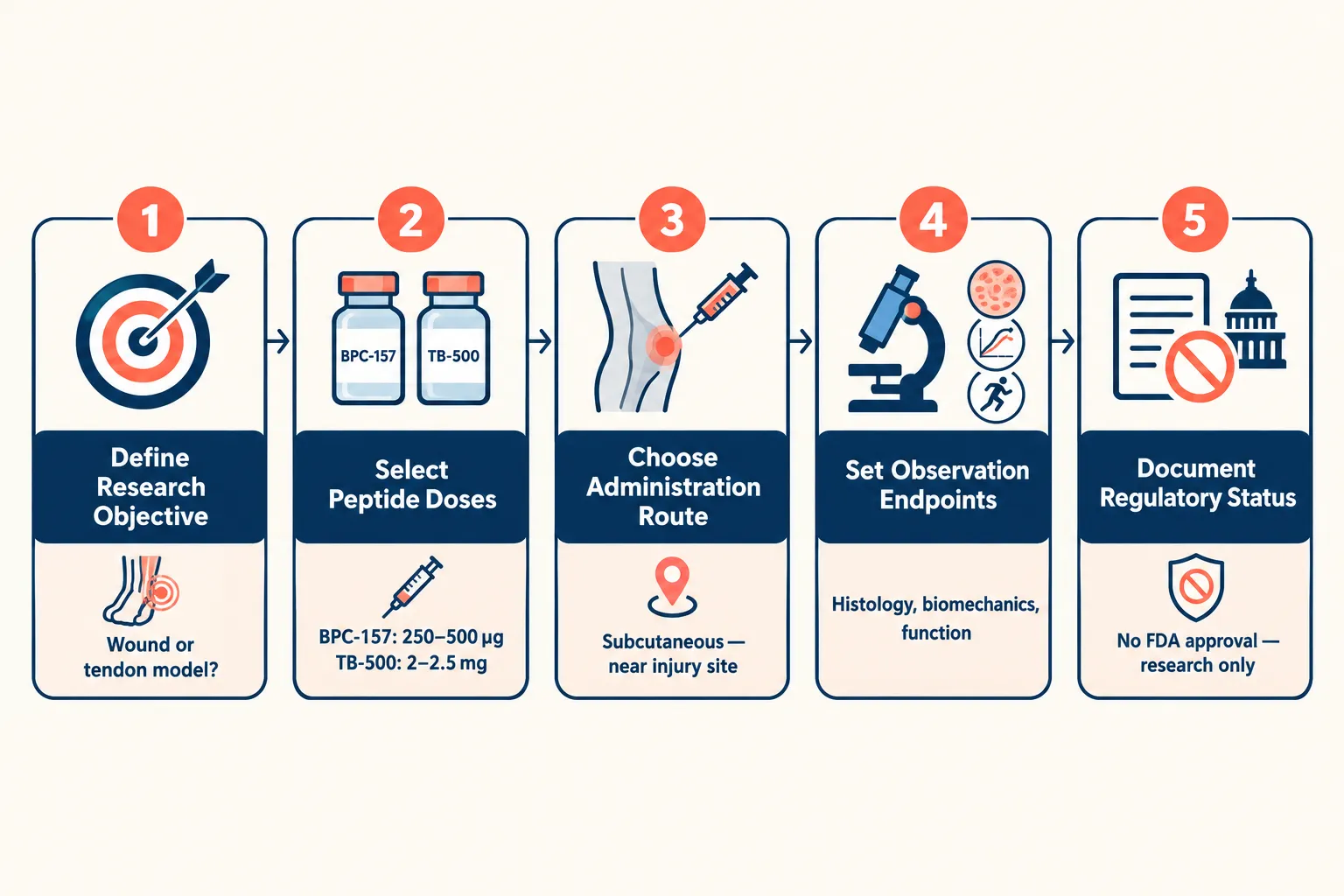
  • Dosing is straightforward — BPC-157 at 250–500 mcg per day, administered subcutaneously near the injury site or orally for GI applications, is a well-characterized protocol.

This approach aligns with how researchers working on recovery and tissue biology typically structure early-phase experiments: one variable, one primary endpoint.

When the Stack Becomes Justified

A BPC-157 plus TB-500 combination is defensible when:

  • Both agents have been tested independently and each shows individual efficacy for the injury type in question.
  • The injury profile is multi-system — for example, a complex musculoskeletal tear with both localized tendon damage and broader inflammatory involvement.
  • The study is designed to detect additive or synergistic effects, with separate biomarker panels for each mechanism.

TB-500 is typically dosed at 2–2.5 mg twice weekly during a loading phase, then 2 mg weekly for maintenance. Combining this with BPC-157's daily subcutaneous protocol means managing two distinct administration schedules. Researchers should also review TB-500 product specifications before finalizing a combination protocol.

When the Stack Becomes Justified


Interpretation Limits: What Stacking Obscures

Interpretation Limits: What Stacking Obscures

The most underappreciated problem in combination peptide research is attribution failure. When a stack produces a positive result, the researcher cannot determine:

  1. Which peptide drove the primary effect.
  2. Whether the interaction was additive, synergistic, or antagonistic.
  3. Whether reducing one agent would have produced the same outcome at lower cost and risk.

This is not a hypothetical concern. It mirrors well-documented issues in polypharmacy research, where combination therapies frequently show benefit but leave mechanism questions unanswered.

For those exploring other peptide combinations with similar design challenges, the Selank and Semax combination overview and the CJC-1295 plus Ipamorelin stack offer instructive parallels in how to frame multi-agent endpoints.

Researchers should also consider delivery method as a variable. Nasal spray peptide delivery changes bioavailability profiles and can interact with stack timing in ways that subcutaneous administration does not.


Conclusion

The debate over BPC-157 vs BPC-157 and TB-500: when does a single-peptide model make more sense than a stack? resolves most cleanly by returning to first principles of study design. If the goal is mechanistic clarity, localized endpoint measurement, or early-phase dose-finding, a single-peptide BPC-157 model is the stronger choice. If the goal is to replicate a real-world multi-system injury scenario where both local and systemic healing pathways are relevant, a stack with independent control arms is justifiable — but only after each agent has been validated separately.

Actionable next steps for researchers:

  • Define the primary endpoint before selecting a single or combination protocol.
  • Always include a single-agent BPC-157 arm in any combination study design.
  • Select biomarkers that map specifically to each peptide's known mechanism.
  • Review the evidence-based insights on peptide serums for additional context on endpoint selection in peptide research.
https://www.puretestedpeptides.com/wp-content/uploads/2026/06/BPC-157-vs-BPC-157-and-TB-500-When-Does-a-Single-Peptide-Model-Make-More-Sense-Than-a-Stack.png 1024 1536 Pure Tested https://www.puretestedpeptides.com/wp-content/uploads/2026/01/buy-peptides-online.jpg Pure Tested2026-06-27 13:04:312026-07-20 15:02:13BPC-157 vs BPC-157 and TB-500: When Does a Single-Peptide Model Make More Sense Than a Stack?
Mesenchymal Stem Cells and Peptide Modulators: Designing BPC-157, TB-500, and GHK-Cu Experiments for Tissue Repair

Mesenchymal Stem Cells and Peptide Modulators: Designing BPC-157, TB-500, and GHK-Cu Experiments for Tissue Repair

June 25, 2026/0 Comments/by Pure Tested

{"cover":"Professional landscape format (1536×1024) hero image with bold text overlay: 'Mesenchymal Stem Cells & Peptide Modulators: BPC-157, TB-500, and GHK-Cu for Tissue Repair' in extra large 72pt white bold sans-serif font with deep shadow effect, centered upper-third placement. Background features a high-resolution microscopy visualization of mesenchymal stem cells with glowing blue-green fluorescent markers against a dark navy background, with molecular peptide chain diagrams overlaid in translucent gold. Color palette: deep navy, electric teal, gold accents. Magazine cover aesthetic, editorial quality, cinematic lighting.","content":["Landscape format (1536×1024) scientific illustration showing three distinct peptide molecular structures labeled BPC-157, TB-500, and GHK-Cu arranged in a triangular comparison diagram, each connected by glowing arrows to a central mesenchymal stem cell cluster rendered in photorealistic 3D. Background is a clean white laboratory setting with subtle grid lines. Color coding: BPC-157 in blue, TB-500 in green, GHK-Cu in copper-gold. Annotation callouts highlight angiogenesis, actin remodeling, and collagen synthesis pathways. Scientific infographic style, editorial quality.","Landscape format (1536×1024) top-down laboratory bench scene showing organized experimental design layout: multi-well culture plates with color-coded peptide solutions, a digital microscope displaying MSC migration assay results on its screen, lab notebooks with experimental protocol charts, and vials labeled BPC-157 and TB-500. Warm laboratory lighting, teal and white color scheme, clean modern research aesthetic. Inset diagram in lower right corner shows a simplified experimental timeline flowchart with treatment and control groups. Editorial quality, research photography style.","Landscape format (1536×1024) split-panel tissue repair visualization: left panel shows damaged tendon tissue at cellular level with fragmented collagen fibers rendered in detailed 3D, right panel shows the same tissue post-peptide modulation with dense organized collagen matrix, active stem cells migrating into repair zone, and new capillary formation highlighted in red. GHK-Cu copper-toned molecular icons float between panels. Background gradient from dark red-orange to healthy tissue pink. Scientific visualization style, high contrast, editorial quality with annotation labels."]

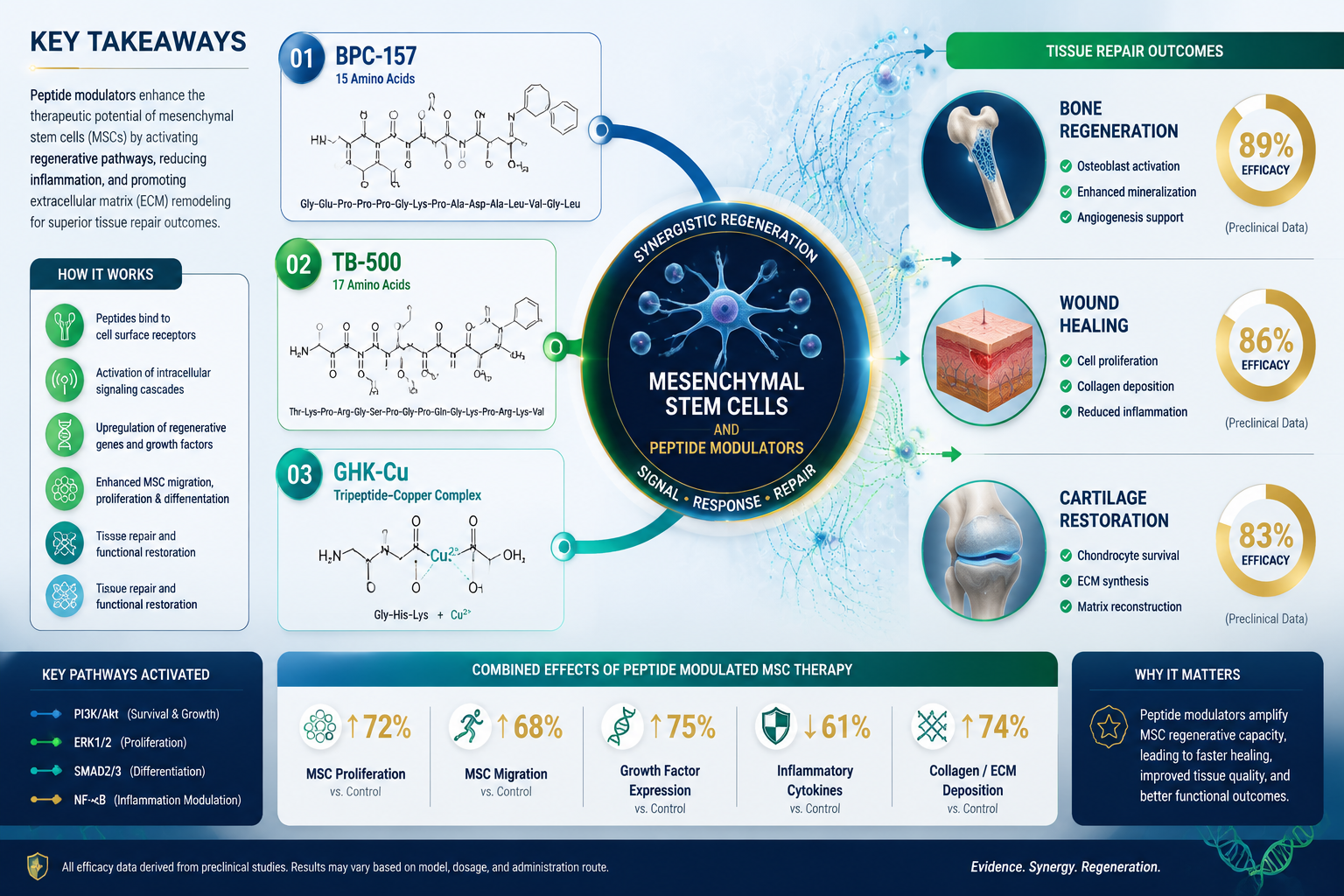
Fewer than three published human studies exist for BPC-157 as of 2026 — yet researcher interest in pairing this peptide with mesenchymal stem cell models has grown sharply across preclinical literature. The same pattern holds for TB-500 and GHK-Cu. Together, these compounds represent a converging frontier in regenerative biology, where mesenchymal stem cells and peptide modulators: designing BPC-157, TB-500, and GHK-Cu experiments for tissue repair has become one of the most actively discussed frameworks in preclinical research circles.

Editorial infographic for 'Key Takeaways' section featuring a central circular hub labeled 'Mesenchymal Stem Cells and

Key Takeaways

  • BPC-157, TB-500, and GHK-Cu each act through distinct biological mechanisms — angiogenesis, cell migration, and matrix remodeling, respectively — making them complementary candidates in MSC-paired experimental designs.
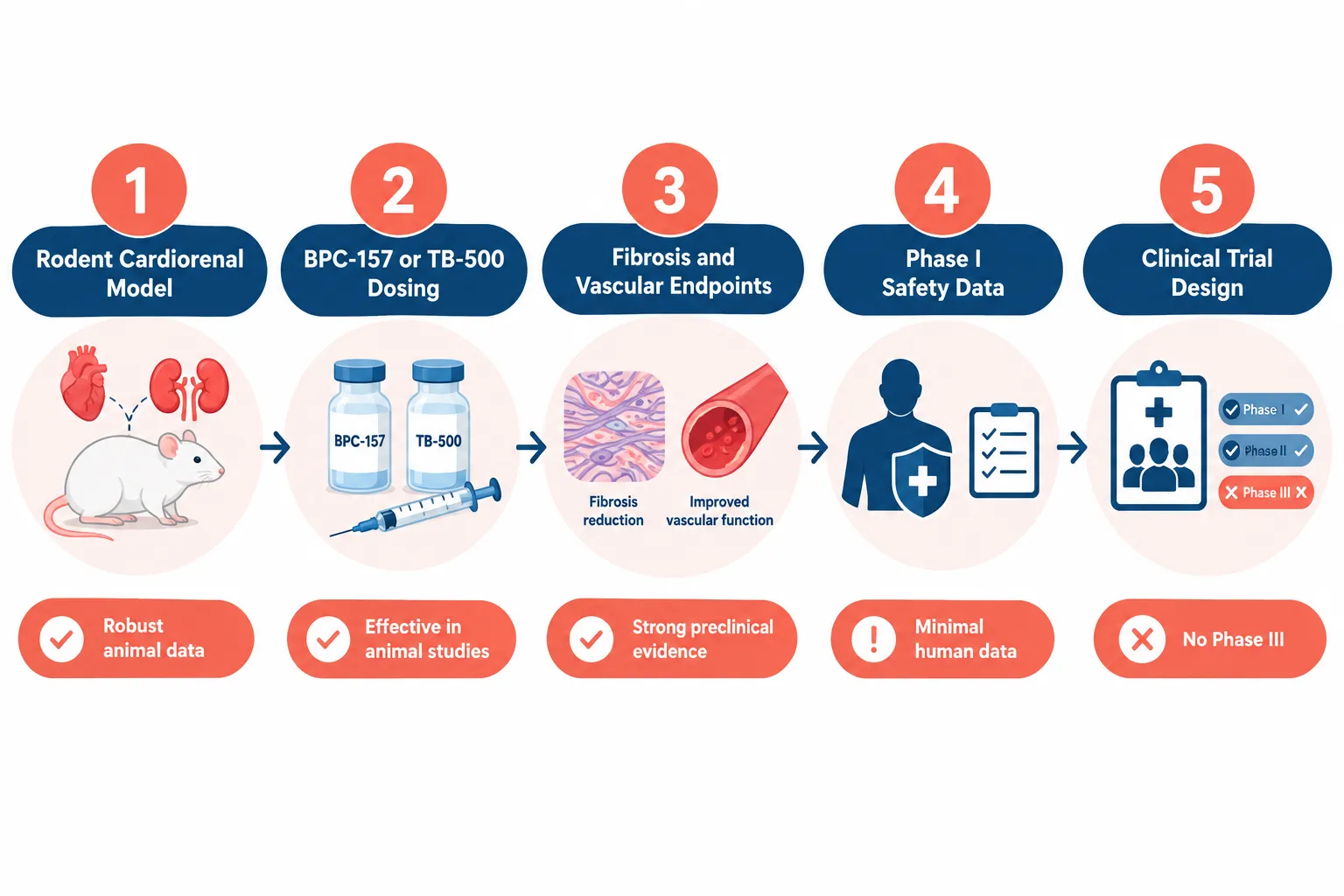
  • All three peptides remain strictly preclinical for tissue repair purposes, with no FDA-approved indications and significant regulatory constraints on human use.
  • Mesenchymal stem cells serve as a powerful experimental platform because they respond to the microenvironmental signals these peptides generate.
  • Rigorous experimental design requires clear controls, validated assay endpoints, and awareness of sourcing quality for research-grade compounds.
  • Blend formulations combining two or more peptides are an emerging area of study, but mechanistic clarity demands single-agent baseline data first.

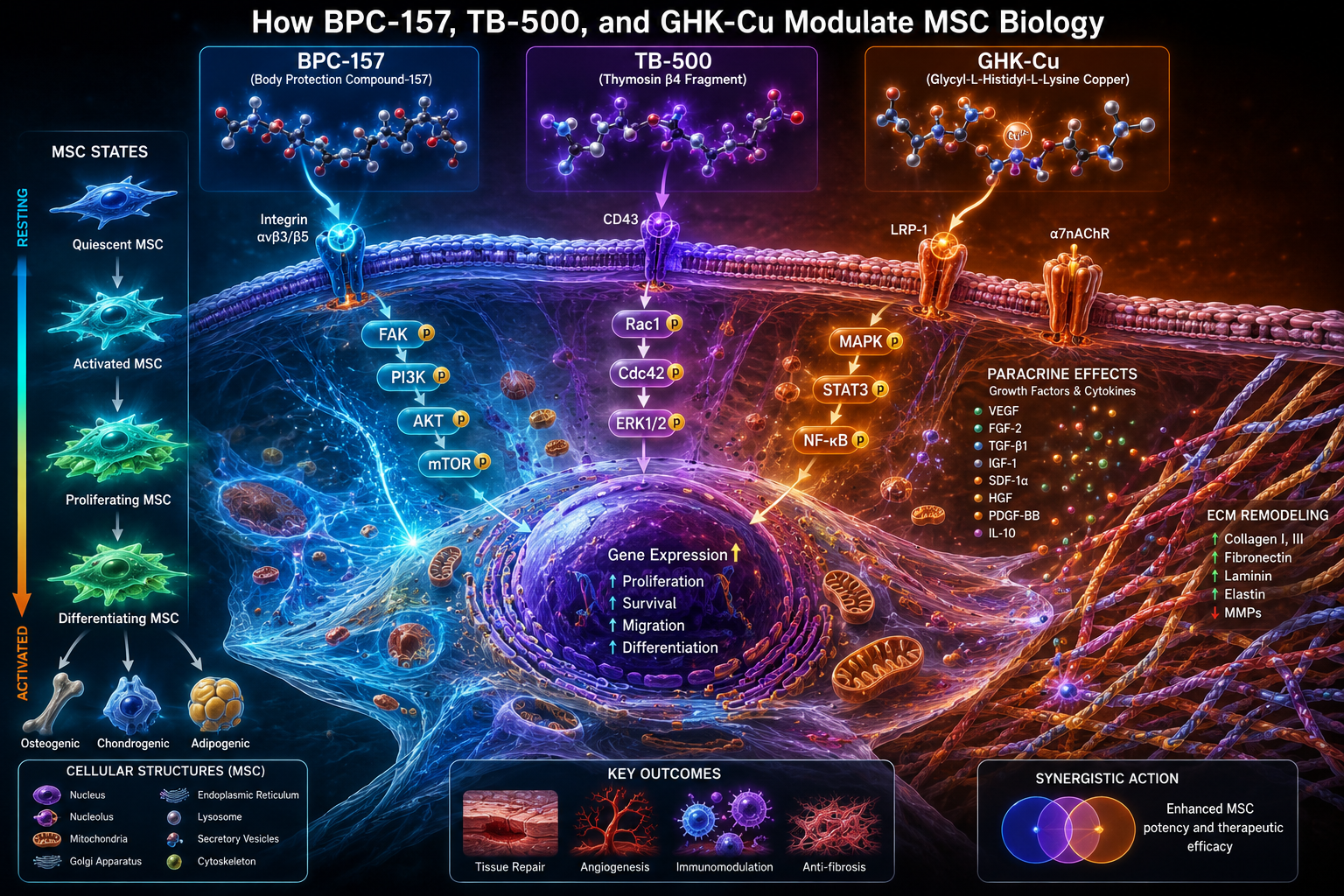
How BPC-157, TB-500, and GHK-Cu Modulate MSC Biology

Each peptide operates through a different cellular lever, which is precisely why researchers find them compelling when studying tissue repair alongside mesenchymal stem cell populations.

BPC-157 (Body Protection Compound-157) is a synthetic 15-amino-acid peptide derived from a gastric protein sequence. Preclinical data from small-animal models show it improving the repair microenvironment — specifically through enhanced angiogenesis and growth factor signaling. In the context of MSC research, this matters because stem cells depend on vascular support to engraft and survive in damaged tissue. For a deeper look at BPC-157's role in angiogenesis and tendon biology, see this BPC-157 angiogenesis and tendon research overview.

TB-500 (a synthetic fragment of Thymosin Beta-4) works primarily through actin cytoskeleton modulation, which directly enables cell migration. Research suggests it reactivates progenitor cells and supports their movement into injury zones — a function that maps well onto MSC homing studies. Researchers exploring this mechanism can reference TB-500 muscle recovery research themes for additional context.

GHK-Cu (Copper peptide GHK) takes a third path: matrix remodeling and collagen synthesis. Evidence points to its ability to restore stemness in skin stem cells by increasing the proliferative capacity of epidermal basal cells through integrin and p63 signaling pathways. This makes it particularly relevant in dermal and connective tissue MSC models. Researchers can explore GHK-Cu longevity research themes for mechanistic background.

Peptide Primary Mechanism MSC-Relevant Action
BPC-157 Angiogenesis, growth factor signaling Improves engraftment environment
TB-500 Actin remodeling, cell migration Supports progenitor homing
GHK-Cu Collagen synthesis, matrix remodeling Restores stemness, basal cell proliferation

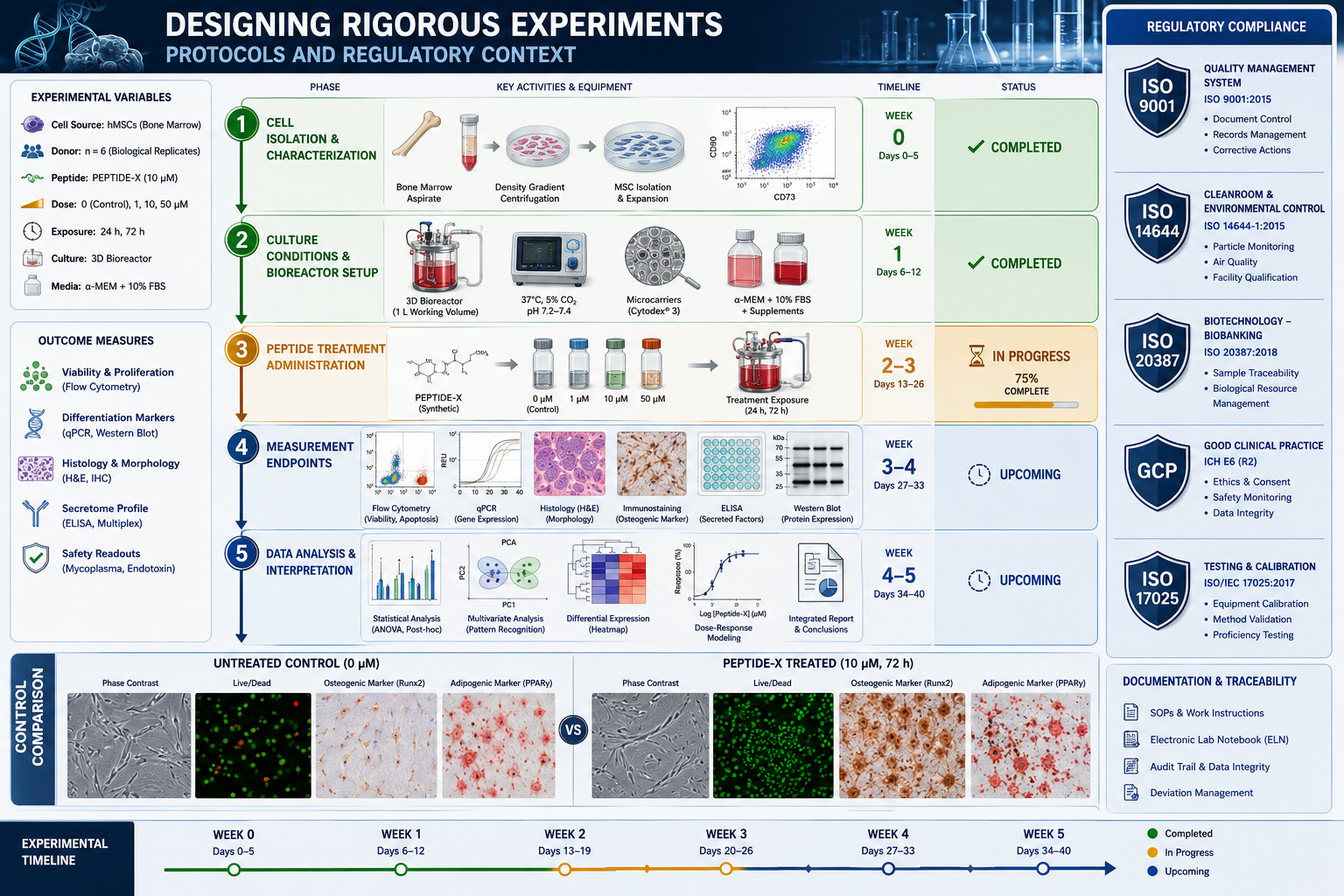
Designing Rigorous Experiments: Protocols and Regulatory Context

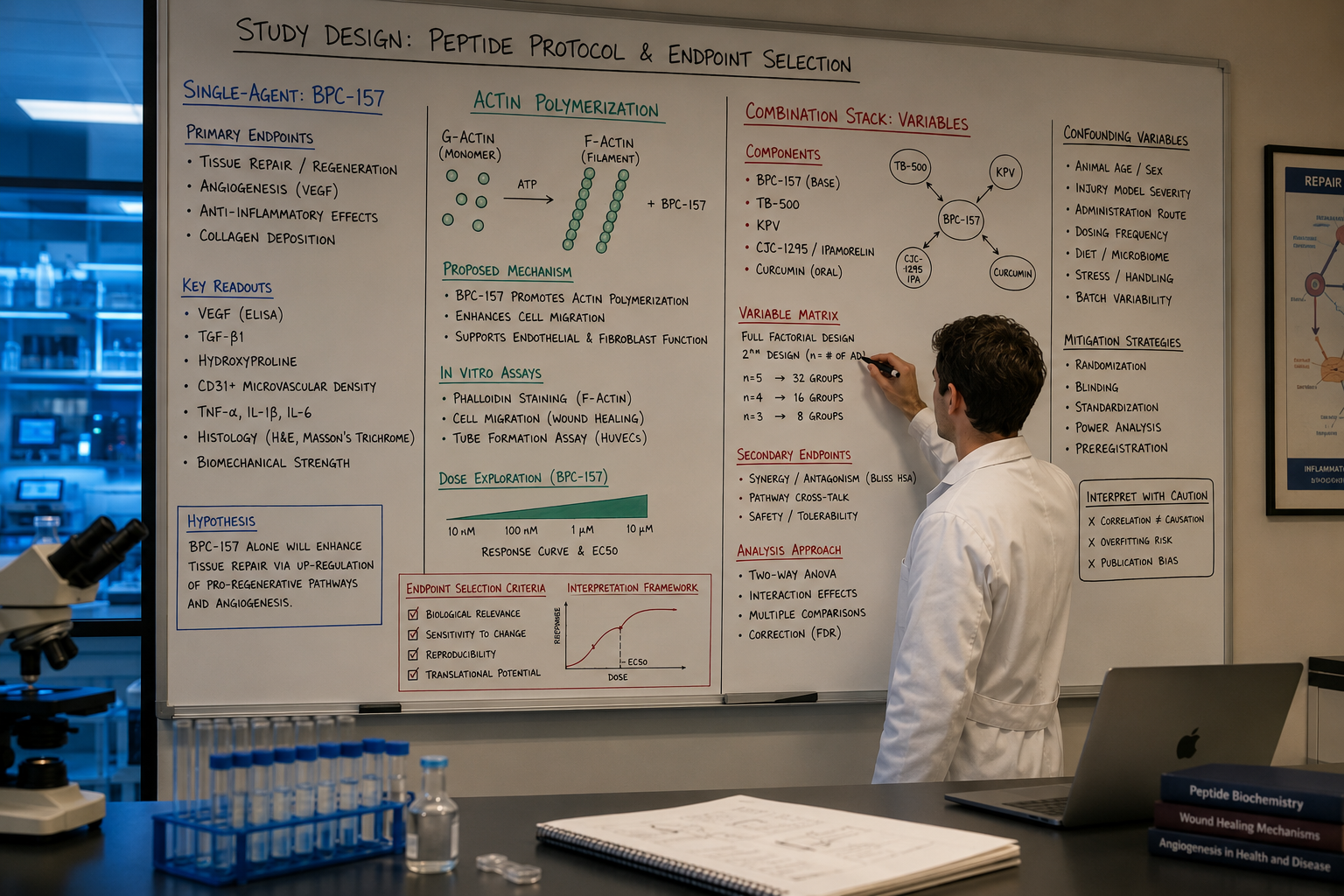
Sound experimental design for mesenchymal stem cells and peptide modulators: designing BPC-157, TB-500, and GHK-Cu experiments for tissue repair requires both scientific and regulatory clarity.

Designing Rigorous Experiments: Protocols and Regulatory Context

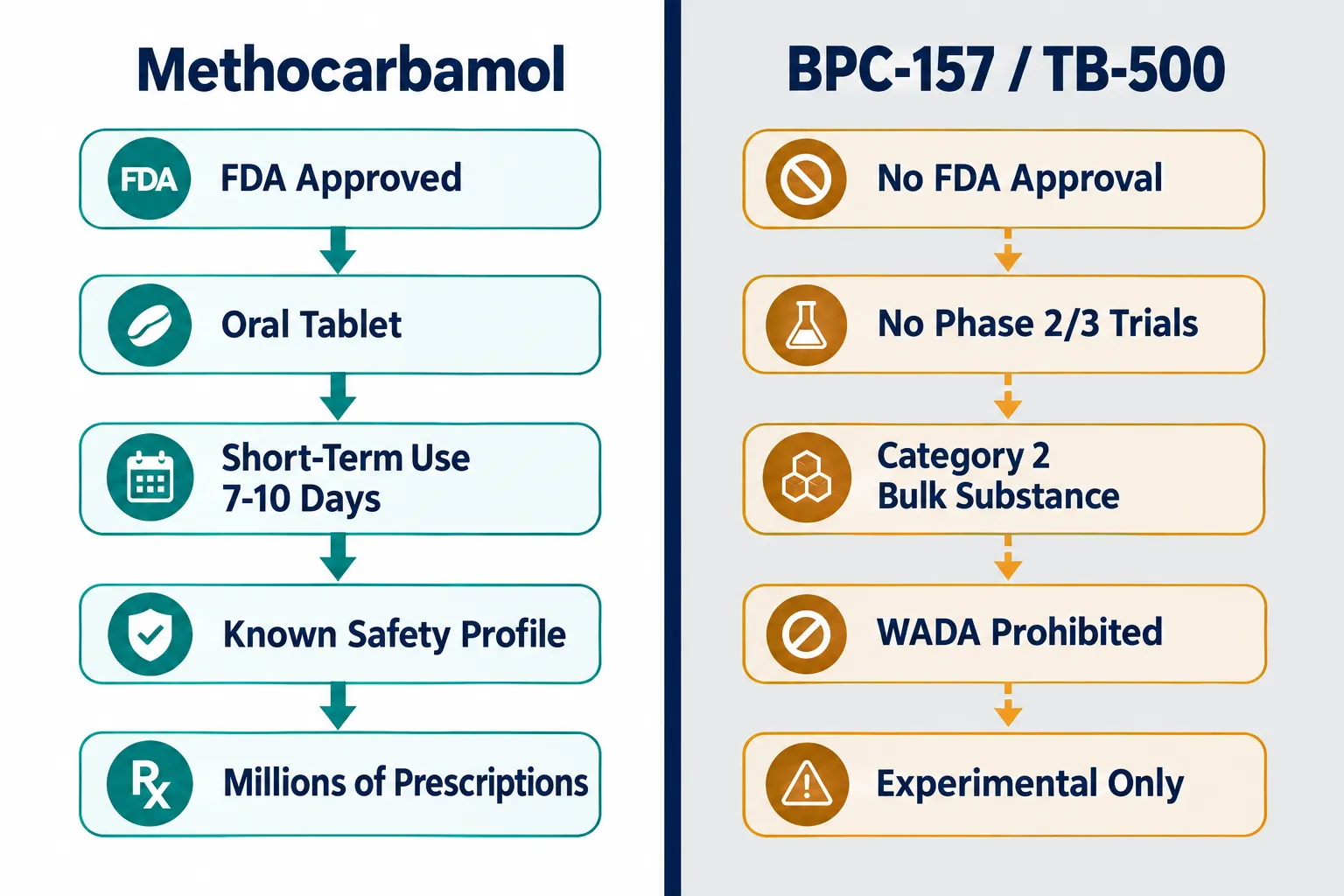
Regulatory constraints shape the experimental scope. The FDA classified BPC-157 as a Category 2 bulk drug substance in 2023, prohibiting its compounding for human use by commercial pharmacies in the United States. TB-500 and GHK-Cu similarly carry no FDA-approved indications for tissue repair or stem-cell modulation. All three are available for research use only, which confines rigorous study to in-vitro MSC models, animal studies, or tightly regulated investigator-initiated trials.

Researchers designing in-vitro protocols should consider:

  • Cell source standardization — bone marrow-derived vs. adipose-derived MSCs respond differently to peptide stimuli
  • Concentration gradients — dose-response curves are essential before any combination studies
  • Validated endpoints — migration assays (scratch/wound healing), collagen quantification (Sircol assay), and angiogenesis co-culture models
  • Vehicle controls — sterile carrier solutions must be matched to peptide formulation conditions
  • Compound purity verification — sourcing from vendors with documented quality testing protocols is non-negotiable for reproducible data

For researchers interested in blend formulations, the BPC-157 and TB-500 combination resource provides useful background on how these peptides have been studied together.


Translational Gaps and What Current Evidence Actually Supports

A 2024 review in the Yale Journal of Biology and Medicine described BPC-157 as showing "great promise" in small-animal models for tendon, ligament, skeletal muscle, and bone healing — while explicitly confirming the data remain preclinical. That framing captures the state of the field accurately.

Translational Gaps and What Current Evidence Actually Supports

For mesenchymal stem cells and peptide modulators: designing BPC-157, TB-500, and GHK-Cu experiments for tissue repair, the translational gap is real but not discouraging. It simply means experimental designs must prioritize mechanistic clarity over clinical extrapolation.

Researchers should also consider adjacent peptide systems that interact with MSC biology. Vilon and tissue homeostasis research offers a comparative lens on short-chain peptide regulators, while what is new in peptide research tracks emerging findings relevant to regenerative models.

"The most reproducible preclinical findings emerge when researchers isolate one mechanistic variable at a time before layering peptide combinations onto MSC platforms."

Key gaps the field still needs to address:

  • Long-term MSC viability data under sustained peptide exposure
  • Species-specific differences in MSC peptide receptor expression
  • Standardized outcome metrics across research groups

Conclusion

Pairing mesenchymal stem cells with BPC-157, TB-500, and GHK-Cu in tissue repair experiments offers a scientifically grounded — if still early-stage — research strategy. Each peptide addresses a distinct phase of the repair cascade, making them logical candidates for sequential or combination study designs. Researchers should prioritize single-agent baseline experiments before advancing to blends, verify compound purity through documented testing, and design assays with validated, quantifiable endpoints. Regulatory constraints make in-vitro and animal MSC models the appropriate arena for this work in 2026. The path forward is methodical: build mechanistic evidence layer by layer, and the translational potential of these peptide-MSC pairings will become clearer with each well-designed study.

https://www.puretestedpeptides.com/wp-content/uploads/2026/06/Mesenchymal-Stem-Cells-and-Peptide-Modulators-Designing-BPC-157-TB-500-and-GHK-Cu-Experiments-for-Tissue-Repair.png 1254 1254 Pure Tested https://www.puretestedpeptides.com/wp-content/uploads/2026/01/buy-peptides-online.jpg Pure Tested2026-06-25 13:19:122026-07-20 15:02:15Mesenchymal Stem Cells and Peptide Modulators: Designing BPC-157, TB-500, and GHK-Cu Experiments for Tissue Repair
Collagen, GHK-Cu, and Glow/Klow Blends: How Peptides and Polypeptides Influence Skin and Connective Tissue Research

Collagen, GHK-Cu, and Glow/Klow Blends: How Peptides and Polypeptides Influence Skin and Connective Tissue Research

June 23, 2026/0 Comments/by Pure Tested

By age 60, the body's circulating levels of GHK-Cu — a copper-binding tripeptide central to collagen biology — have fallen to roughly 40% of what they were at age 20. That single data point has driven a growing body of preclinical research into how peptides and polypeptides can modulate skin structure, wound repair, and connective tissue remodeling. Collagen, GHK-Cu, and Glow/Klow Blends: How Peptides and Polypeptides Influence Skin and Connective Tissue Research sits at the intersection of biochemistry, aging science, and formulation strategy — and understanding the mechanisms matters before drawing any conclusions.
Key Takeaways

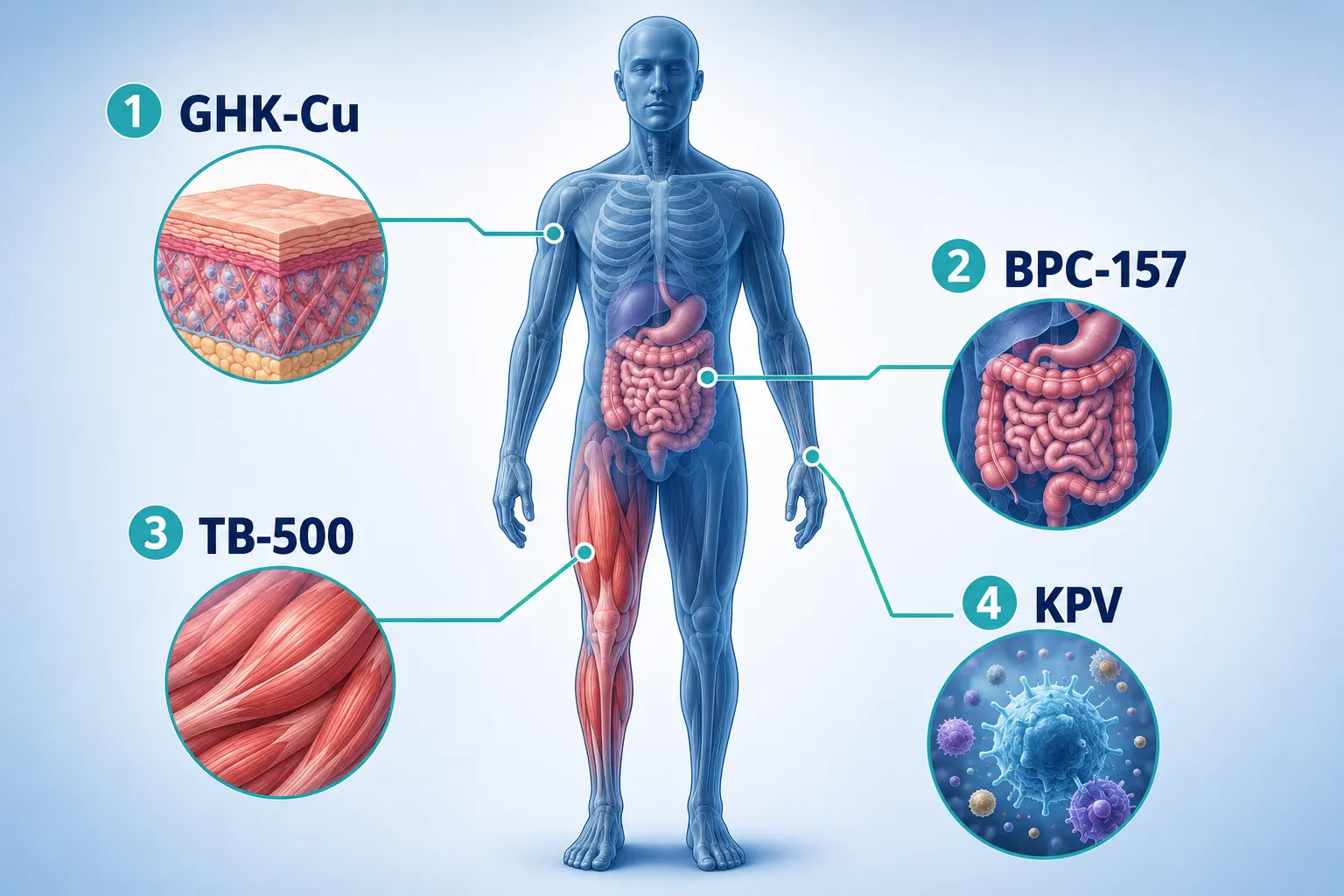
  • GHK-Cu is a naturally occurring tripeptide that declines significantly with age and plays a documented role in collagen synthesis and gene expression modulation.
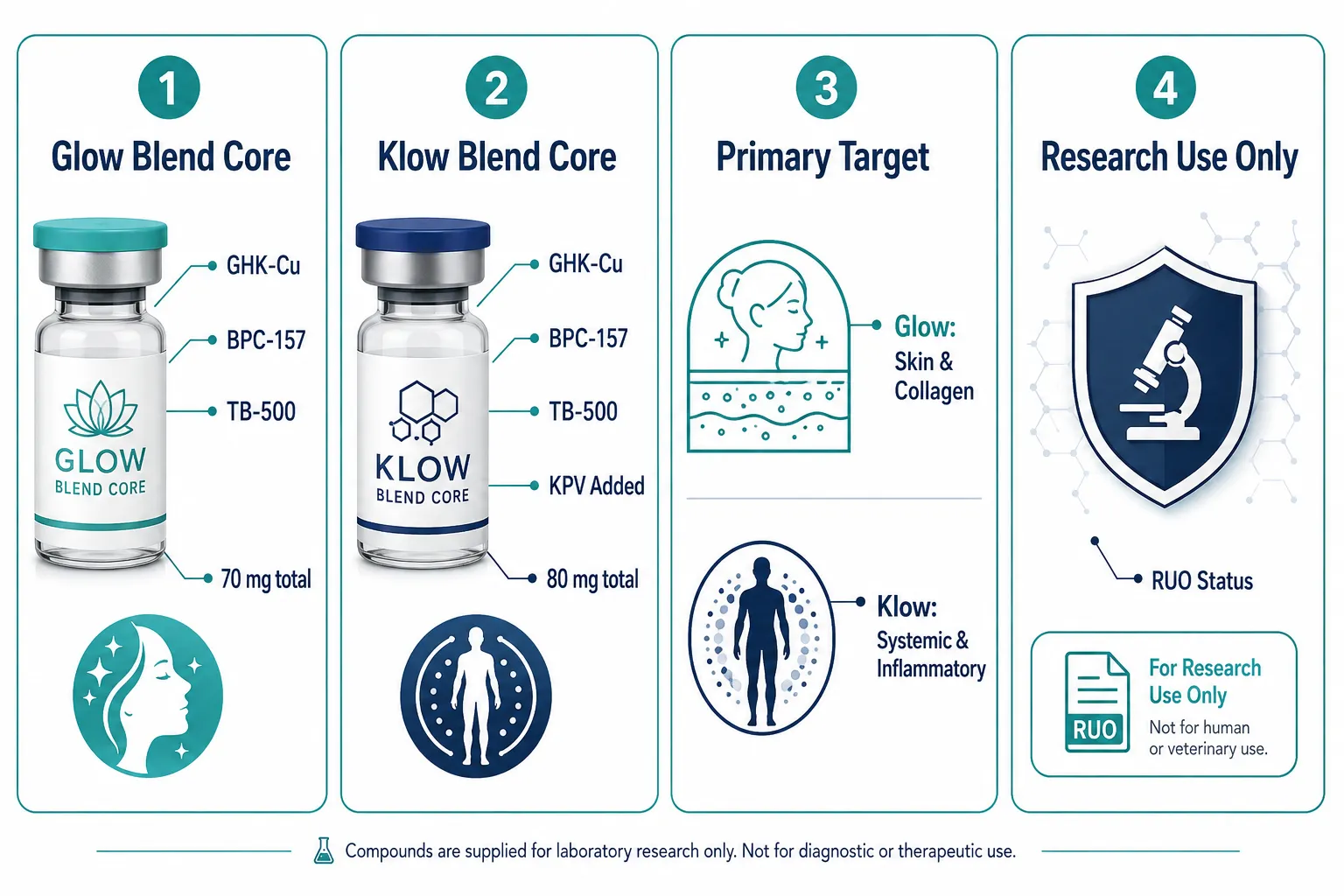
  • The Glow Blend combines GHK-Cu, BPC-157, and TB-500 in a 5:1:1 ratio, targeting skin remodeling through complementary mechanisms.
  • The Klow Blend adds KPV to the Glow formula, introducing an anti-inflammatory component studied in epithelial and gut barrier contexts.
  • No controlled in-vivo study has directly tested these multi-peptide blends against single-agent monotherapy — all synergy claims remain mechanistic extrapolations.
  • Purity, sourcing, and documentation standards are critical considerations when evaluating any peptide research compound.

GHK-Cu molecular structure and age-related collagen decline graph

GHK-Cu and Collagen Biology: The Copper-Peptide Foundation

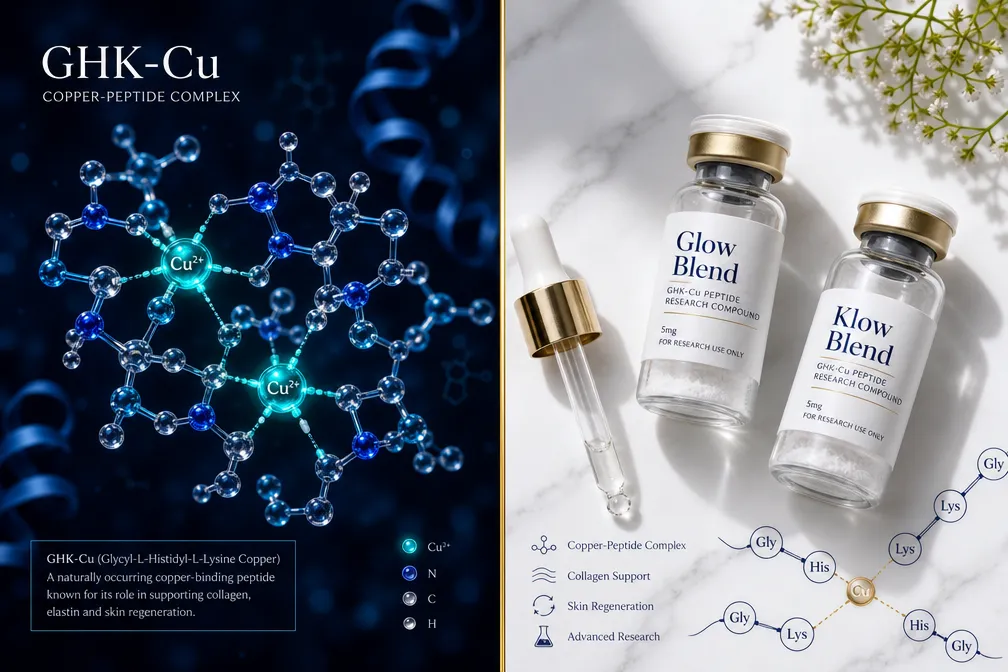
GHK-Cu (Glycyl-L-Histidyl-L-Lysine-Copper) is a tripeptide that occurs naturally in human plasma, saliva, and urine. At age 20, plasma concentrations sit near 200 ng/ml. By age 60, that figure drops to approximately 80 ng/ml — a decline that parallels well-known changes in skin elasticity and wound-healing capacity.

In in-vitro and animal model research, GHK-Cu has demonstrated several relevant activities:

  • Collagen synthesis stimulation: GHK-Cu upregulates collagen gene expression in fibroblast cultures, promoting the production of Types I and III collagen.
  • Matrix metalloproteinase (MMP) modulation: It appears to balance MMP activity, supporting matrix remodeling without unchecked degradation.
  • Antioxidant and anti-inflammatory effects: The copper-chelating structure helps neutralize reactive oxygen species in cellular environments.
  • Gene expression breadth: Microarray studies suggest GHK-Cu influences the expression of over 4,000 human genes, including pathways tied to tissue repair and inflammation resolution.

"GHK-Cu does not simply stimulate collagen production — it appears to act as a broad biological signal for tissue remodeling and repair."

For researchers exploring copper-binding polypeptides, GHK-Cu peptides for research use represent one of the more well-documented starting points in the skin biology literature. Related work on KPV and epithelial barrier function provides useful mechanistic context for the Klow formulation discussed below.


Glow Blend and Klow Blend side-by-side composition comparison infographic

Glow and Klow Blends: Collagen, GHK-Cu, and Glow/Klow Blends Composition and Mechanisms

The Glow and Klow blends are multi-peptide formulations designed to combine complementary mechanisms into a single research compound. Understanding their composition is essential before evaluating any mechanistic claims.

Glow Blend

The Glow Blend contains three peptides in a 5:1:1 mass ratio:

Peptide Mass Primary Research Focus
GHK-Cu 50 mg Collagen synthesis, gene modulation
BPC-157 10 mg Angiogenesis, tissue stabilization
TB-500 10 mg Cellular migration, cytoskeletal remodeling

BPC-157 has been studied extensively for its role in promoting angiogenesis and stabilizing connective tissue, as detailed in BPC-157 core peptides documentation. TB-500's contribution involves actin-binding activity that supports cellular migration during wound repair. For a broader look at how the Glow formulation fits into longevity-oriented research, the Glow Blend longevity research themes overview offers additional context.

Klow Blend

The Klow Blend expands the Glow formula with a fourth component:

  • KPV (10 mg): A tripeptide derived from alpha-MSH, studied for reducing cellular and gut inflammation via NF-kB pathway modulation.

Total mass is 80 mg at a 50:10:10:10 ratio. The addition of KPV positions Klow toward research contexts where inflammatory modulation alongside structural remodeling is relevant.

Researchers can also review Glow Blend peptide benefits for a component-level breakdown.


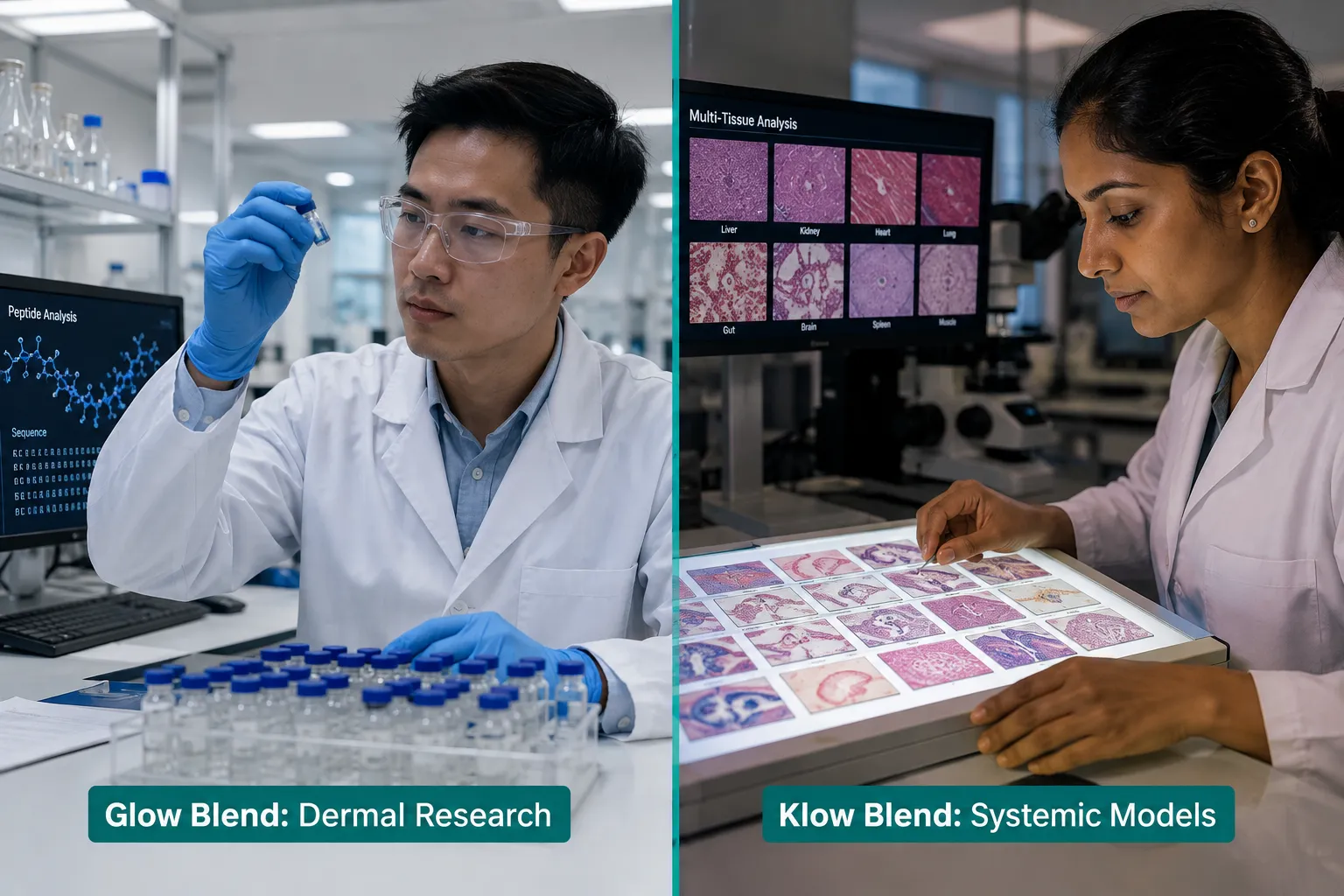
Peptide research laboratory vials and connective tissue study materials

Research Limitations and What the Evidence Actually Shows

A critical point in evaluating Collagen, GHK-Cu, and Glow/Klow Blends: How Peptides and Polypeptides Influence Skin and Connective Tissue Research is understanding where the evidence base currently stands.

What is established:

  • Individual components — GHK-Cu, BPC-157, TB-500, and KPV — each have peer-reviewed in-vitro and animal model data supporting their proposed mechanisms.
  • GHK-Cu's influence on collagen gene expression is among the better-characterized effects in the peptide skin biology literature.

What remains unproven:

  • No controlled in-vivo study has tested the four-peptide Klow blend against any single-agent monotherapy.
  • No head-to-head trial compares Glow versus Klow versus individual components in a matched model.
  • All synergy claims are mechanistic extrapolations from single-agent studies — not direct experimental findings.

This distinction matters for anyone interpreting research data or designing study protocols. The mechanistic rationale is logical, but logic is not evidence.

Researchers sourcing compounds for structured studies should prioritize verified purity and documentation. Reviewing certificates of analysis is a standard due-diligence step, and exploring the broader peptide research catalog can help identify complementary compounds relevant to connective tissue and skin biology.


Conclusion

The science connecting GHK-Cu to collagen synthesis and tissue remodeling is well-grounded in preclinical literature. The Glow and Klow blends extend that foundation by combining peptides with distinct but potentially complementary mechanisms — angiogenesis support from BPC-157, cytoskeletal remodeling from TB-500, and inflammatory modulation from KPV. However, the absence of controlled blend-versus-monotherapy studies means the synergy hypothesis, while mechanistically plausible, remains unconfirmed at the in-vivo level.

Actionable next steps for researchers:

  1. Review single-agent literature for each component before drawing conclusions about blend behavior.
  2. Prioritize compounds with third-party certificates of analysis to ensure research-grade purity.
  3. Design protocols that include single-agent controls alongside blend groups to begin generating direct comparative data.
  4. Track the evolving literature on copper-binding polypeptides, as GHK-Cu gene expression research continues to expand.

The field is moving quickly. Rigorous, well-controlled study design will be what separates mechanistic speculation from actionable science.

https://www.puretestedpeptides.com/wp-content/uploads/2026/06/Collagen-GHK-Cu-and-GlowKlow-Blends-How-Peptides-and-Polypeptides-Influence-Skin-and-Connective-Tissue-Research.png 1024 1536 Pure Tested https://www.puretestedpeptides.com/wp-content/uploads/2026/01/buy-peptides-online.jpg Pure Tested2026-06-23 13:19:092026-07-20 15:02:22Collagen, GHK-Cu, and Glow/Klow Blends: How Peptides and Polypeptides Influence Skin and Connective Tissue Research
Collagen, GHK-Cu, and Glow/Klow Blends: How Peptides and Polypeptides Influence Skin and Connective Tissue Research

Collagen, GHK-Cu, and Glow/Klow Blends: How Peptides and Polypeptides Influence Skin and Connective Tissue Research

June 23, 2026/0 Comments/by Pure Tested

By age 60, the body's circulating levels of GHK-Cu — a copper-binding tripeptide central to collagen biology — have fallen to roughly 40% of what they were at age 20. That single data point has driven a growing body of preclinical research into how peptides and polypeptides can modulate skin structure, wound repair, and connective tissue remodeling. Collagen, GHK-Cu, and Glow/Klow Blends: How Peptides and Polypeptides Influence Skin and Connective Tissue Research sits at the intersection of biochemistry, aging science, and formulation strategy — and understanding the mechanisms matters before drawing any conclusions.
Key Takeaways

  • GHK-Cu is a naturally occurring tripeptide that declines significantly with age and plays a documented role in collagen synthesis and gene expression modulation.
  • The Glow Blend combines GHK-Cu, BPC-157, and TB-500 in a 5:1:1 ratio, targeting skin remodeling through complementary mechanisms.
  • The Klow Blend adds KPV to the Glow formula, introducing an anti-inflammatory component studied in epithelial and gut barrier contexts.
  • No controlled in-vivo study has directly tested these multi-peptide blends against single-agent monotherapy — all synergy claims remain mechanistic extrapolations.
  • Purity, sourcing, and documentation standards are critical considerations when evaluating any peptide research compound.

GHK-Cu molecular structure and age-related collagen decline graph

GHK-Cu and Collagen Biology: The Copper-Peptide Foundation

GHK-Cu (Glycyl-L-Histidyl-L-Lysine-Copper) is a tripeptide that occurs naturally in human plasma, saliva, and urine. At age 20, plasma concentrations sit near 200 ng/ml. By age 60, that figure drops to approximately 80 ng/ml — a decline that parallels well-known changes in skin elasticity and wound-healing capacity.

In in-vitro and animal model research, GHK-Cu has demonstrated several relevant activities:

  • Collagen synthesis stimulation: GHK-Cu upregulates collagen gene expression in fibroblast cultures, promoting the production of Types I and III collagen.
  • Matrix metalloproteinase (MMP) modulation: It appears to balance MMP activity, supporting matrix remodeling without unchecked degradation.
  • Antioxidant and anti-inflammatory effects: The copper-chelating structure helps neutralize reactive oxygen species in cellular environments.
  • Gene expression breadth: Microarray studies suggest GHK-Cu influences the expression of over 4,000 human genes, including pathways tied to tissue repair and inflammation resolution.

"GHK-Cu does not simply stimulate collagen production — it appears to act as a broad biological signal for tissue remodeling and repair."

For researchers exploring copper-binding polypeptides, GHK-Cu peptides for research use represent one of the more well-documented starting points in the skin biology literature. Related work on KPV and epithelial barrier function provides useful mechanistic context for the Klow formulation discussed below.


Glow Blend and Klow Blend side-by-side composition comparison infographic

Glow and Klow Blends: Collagen, GHK-Cu, and Glow/Klow Blends Composition and Mechanisms

The Glow and Klow blends are multi-peptide formulations designed to combine complementary mechanisms into a single research compound. Understanding their composition is essential before evaluating any mechanistic claims.

Glow Blend

The Glow Blend contains three peptides in a 5:1:1 mass ratio:

Peptide Mass Primary Research Focus
GHK-Cu 50 mg Collagen synthesis, gene modulation
BPC-157 10 mg Angiogenesis, tissue stabilization
TB-500 10 mg Cellular migration, cytoskeletal remodeling

BPC-157 has been studied extensively for its role in promoting angiogenesis and stabilizing connective tissue, as detailed in BPC-157 core peptides documentation. TB-500's contribution involves actin-binding activity that supports cellular migration during wound repair. For a broader look at how the Glow formulation fits into longevity-oriented research, the Glow Blend longevity research themes overview offers additional context.

Klow Blend

The Klow Blend expands the Glow formula with a fourth component:

  • KPV (10 mg): A tripeptide derived from alpha-MSH, studied for reducing cellular and gut inflammation via NF-kB pathway modulation.

Total mass is 80 mg at a 50:10:10:10 ratio. The addition of KPV positions Klow toward research contexts where inflammatory modulation alongside structural remodeling is relevant.

Researchers can also review Glow Blend peptide benefits for a component-level breakdown.


Peptide research laboratory vials and connective tissue study materials

Research Limitations and What the Evidence Actually Shows

A critical point in evaluating Collagen, GHK-Cu, and Glow/Klow Blends: How Peptides and Polypeptides Influence Skin and Connective Tissue Research is understanding where the evidence base currently stands.

What is established:

  • Individual components — GHK-Cu, BPC-157, TB-500, and KPV — each have peer-reviewed in-vitro and animal model data supporting their proposed mechanisms.
  • GHK-Cu's influence on collagen gene expression is among the better-characterized effects in the peptide skin biology literature.

What remains unproven:

  • No controlled in-vivo study has tested the four-peptide Klow blend against any single-agent monotherapy.
  • No head-to-head trial compares Glow versus Klow versus individual components in a matched model.
  • All synergy claims are mechanistic extrapolations from single-agent studies — not direct experimental findings.

This distinction matters for anyone interpreting research data or designing study protocols. The mechanistic rationale is logical, but logic is not evidence.

Researchers sourcing compounds for structured studies should prioritize verified purity and documentation. Reviewing certificates of analysis is a standard due-diligence step, and exploring the broader peptide research catalog can help identify complementary compounds relevant to connective tissue and skin biology.


Conclusion

The science connecting GHK-Cu to collagen synthesis and tissue remodeling is well-grounded in preclinical literature. The Glow and Klow blends extend that foundation by combining peptides with distinct but potentially complementary mechanisms — angiogenesis support from BPC-157, cytoskeletal remodeling from TB-500, and inflammatory modulation from KPV. However, the absence of controlled blend-versus-monotherapy studies means the synergy hypothesis, while mechanistically plausible, remains unconfirmed at the in-vivo level.

Actionable next steps for researchers:

  1. Review single-agent literature for each component before drawing conclusions about blend behavior.
  2. Prioritize compounds with third-party certificates of analysis to ensure research-grade purity.
  3. Design protocols that include single-agent controls alongside blend groups to begin generating direct comparative data.
  4. Track the evolving literature on copper-binding polypeptides, as GHK-Cu gene expression research continues to expand.

The field is moving quickly. Rigorous, well-controlled study design will be what separates mechanistic speculation from actionable science.

https://www.puretestedpeptides.com/wp-content/uploads/2026/06/Collagen-GHK-Cu-and-GlowKlow-Blends-How-Peptides-and-Polypeptides-Influence-Skin-and-Connective-Tissue-Research.png 1024 1536 Pure Tested https://www.puretestedpeptides.com/wp-content/uploads/2026/01/buy-peptides-online.jpg Pure Tested2026-06-23 13:19:092026-07-20 15:02:22Collagen, GHK-Cu, and Glow/Klow Blends: How Peptides and Polypeptides Influence Skin and Connective Tissue Research
Collagen, GHK-Cu, and Glow/Klow Blends: How Peptides and Polypeptides Influence Skin and Connective Tissue Research

Collagen, GHK-Cu, and Glow/Klow Blends: How Peptides and Polypeptides Influence Skin and Connective Tissue Research

June 23, 2026/0 Comments/by Pure Tested

By age 60, the body's circulating levels of GHK-Cu — a copper-binding tripeptide central to collagen biology — have fallen to roughly 40% of what they were at age 20. That single data point has driven a growing body of preclinical research into how peptides and polypeptides can modulate skin structure, wound repair, and connective tissue remodeling. Collagen, GHK-Cu, and Glow/Klow Blends: How Peptides and Polypeptides Influence Skin and Connective Tissue Research sits at the intersection of biochemistry, aging science, and formulation strategy — and understanding the mechanisms matters before drawing any conclusions.

Key Takeaways

  • GHK-Cu is a naturally occurring tripeptide that declines significantly with age and plays a documented role in collagen synthesis and gene expression modulation.
  • The Glow Blend combines GHK-Cu, BPC-157, and TB-500 in a 5:1:1 ratio, targeting skin remodeling through complementary mechanisms.
  • The Klow Blend adds KPV to the Glow formula, introducing an anti-inflammatory component studied in epithelial and gut barrier contexts.
  • No controlled in-vivo study has directly tested these multi-peptide blends against single-agent monotherapy — all synergy claims remain mechanistic extrapolations.
  • Purity, sourcing, and documentation standards are critical considerations when evaluating any peptide research compound.

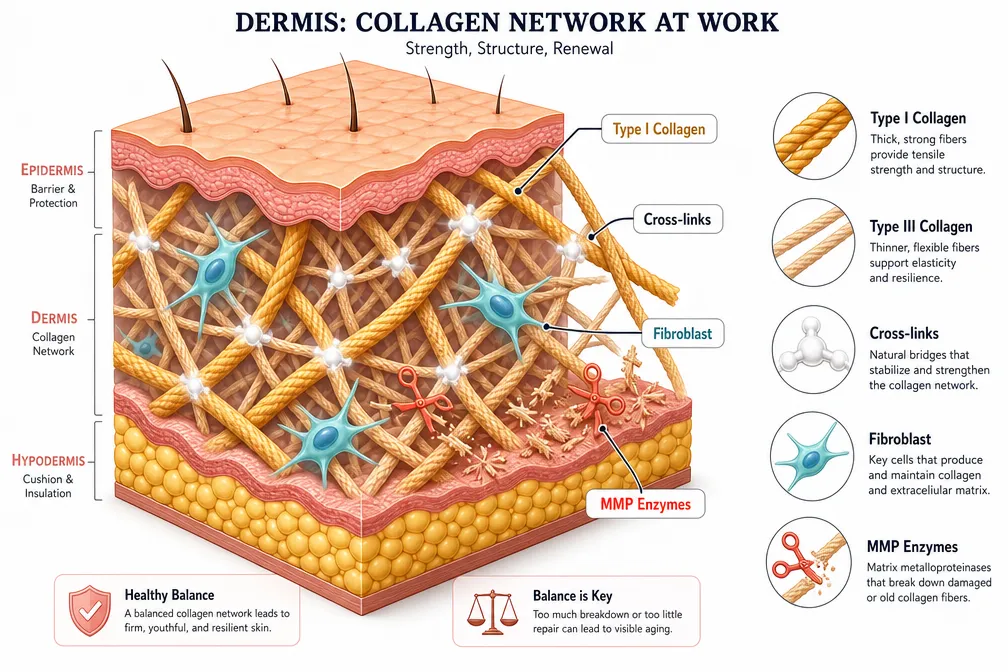
GHK-Cu molecular structure and age-related collagen decline graph

GHK-Cu and Collagen Biology: The Copper-Peptide Foundation

GHK-Cu (Glycyl-L-Histidyl-L-Lysine-Copper) is a tripeptide that occurs naturally in human plasma, saliva, and urine. At age 20, plasma concentrations sit near 200 ng/ml. By age 60, that figure drops to approximately 80 ng/ml — a decline that parallels well-known changes in skin elasticity and wound-healing capacity.

In in-vitro and animal model research, GHK-Cu has demonstrated several relevant activities:

  • Collagen synthesis stimulation: GHK-Cu upregulates collagen gene expression in fibroblast cultures, promoting the production of Types I and III collagen.
  • Matrix metalloproteinase (MMP) modulation: It appears to balance MMP activity, supporting matrix remodeling without unchecked degradation.
  • Antioxidant and anti-inflammatory effects: The copper-chelating structure helps neutralize reactive oxygen species in cellular environments.
  • Gene expression breadth: Microarray studies suggest GHK-Cu influences the expression of over 4,000 human genes, including pathways tied to tissue repair and inflammation resolution.
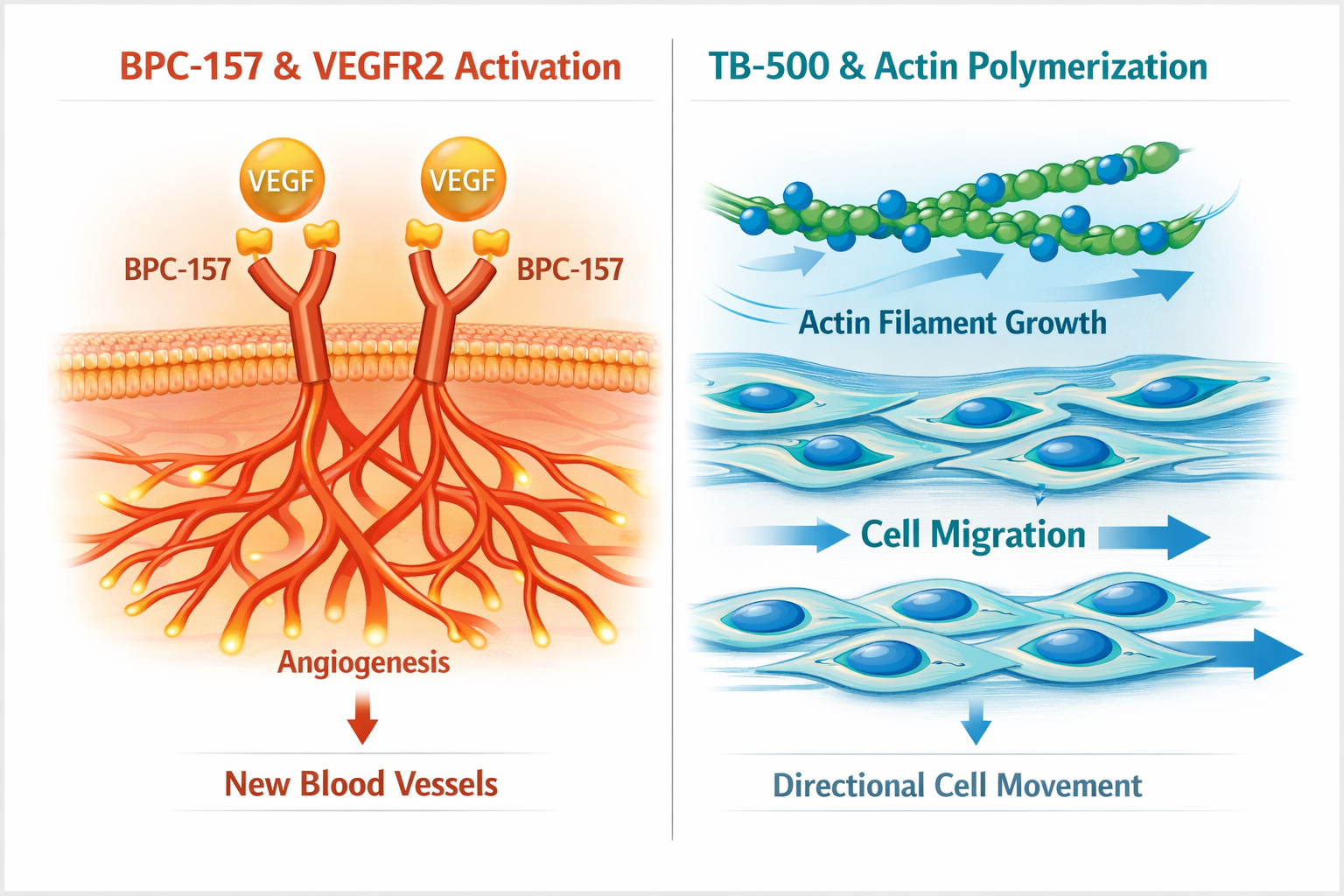
"GHK-Cu does not simply stimulate collagen production — it appears to act as a broad biological signal for tissue remodeling and repair."

For researchers exploring copper-binding polypeptides, GHK-Cu peptides for research use represent one of the more well-documented starting points in the skin biology literature. Related work on KPV and epithelial barrier function provides useful mechanistic context for the Klow formulation discussed below.


Glow Blend and Klow Blend side-by-side composition comparison infographic

Glow and Klow Blends: Collagen, GHK-Cu, and Glow/Klow Blends Composition and Mechanisms

The Glow and Klow blends are multi-peptide formulations designed to combine complementary mechanisms into a single research compound. Understanding their composition is essential before evaluating any mechanistic claims.

Glow Blend

The Glow Blend contains three peptides in a 5:1:1 mass ratio:

Peptide Mass Primary Research Focus
GHK-Cu 50 mg Collagen synthesis, gene modulation
BPC-157 10 mg Angiogenesis, tissue stabilization
TB-500 10 mg Cellular migration, cytoskeletal remodeling

BPC-157 has been studied extensively for its role in promoting angiogenesis and stabilizing connective tissue, as detailed in BPC-157 core peptides documentation. TB-500's contribution involves actin-binding activity that supports cellular migration during wound repair. For a broader look at how the Glow formulation fits into longevity-oriented research, the Glow Blend longevity research themes overview offers additional context.

Klow Blend

The Klow Blend expands the Glow formula with a fourth component:

  • KPV (10 mg): A tripeptide derived from alpha-MSH, studied for reducing cellular and gut inflammation via NF-kB pathway modulation.

Total mass is 80 mg at a 50:10:10:10 ratio. The addition of KPV positions Klow toward research contexts where inflammatory modulation alongside structural remodeling is relevant.

Researchers can also review Glow Blend peptide benefits for a component-level breakdown.


Peptide research laboratory vials and connective tissue study materials

Research Limitations and What the Evidence Actually Shows

A critical point in evaluating Collagen, GHK-Cu, and Glow/Klow Blends: How Peptides and Polypeptides Influence Skin and Connective Tissue Research is understanding where the evidence base currently stands.

What is established:

  • Individual components — GHK-Cu, BPC-157, TB-500, and KPV — each have peer-reviewed in-vitro and animal model data supporting their proposed mechanisms.
  • GHK-Cu's influence on collagen gene expression is among the better-characterized effects in the peptide skin biology literature.

What remains unproven:

  • No controlled in-vivo study has tested the four-peptide Klow blend against any single-agent monotherapy.
  • No head-to-head trial compares Glow versus Klow versus individual components in a matched model.
  • All synergy claims are mechanistic extrapolations from single-agent studies — not direct experimental findings.

This distinction matters for anyone interpreting research data or designing study protocols. The mechanistic rationale is logical, but logic is not evidence.

Researchers sourcing compounds for structured studies should prioritize verified purity and documentation. Reviewing certificates of analysis is a standard due-diligence step, and exploring the broader peptide research catalog can help identify complementary compounds relevant to connective tissue and skin biology.


Conclusion

The science connecting GHK-Cu to collagen synthesis and tissue remodeling is well-grounded in preclinical literature. The Glow and Klow blends extend that foundation by combining peptides with distinct but potentially complementary mechanisms — angiogenesis support from BPC-157, cytoskeletal remodeling from TB-500, and inflammatory modulation from KPV. However, the absence of controlled blend-versus-monotherapy studies means the synergy hypothesis, while mechanistically plausible, remains unconfirmed at the in-vivo level.

Actionable next steps for researchers:

  1. Review single-agent literature for each component before drawing conclusions about blend behavior.
  2. Prioritize compounds with third-party certificates of analysis to ensure research-grade purity.
  3. Design protocols that include single-agent controls alongside blend groups to begin generating direct comparative data.
  4. Track the evolving literature on copper-binding polypeptides, as GHK-Cu gene expression research continues to expand.

The field is moving quickly. Rigorous, well-controlled study design will be what separates mechanistic speculation from actionable science.

https://www.puretestedpeptides.com/wp-content/uploads/2026/06/Collagen-GHK-Cu-and-GlowKlow-Blends-How-Peptides-and-Polypeptides-Influence-Skin-and-Connective-Tissue-Research-1.png 1024 1536 Pure Tested https://www.puretestedpeptides.com/wp-content/uploads/2026/01/buy-peptides-online.jpg Pure Tested2026-06-23 13:19:092026-07-20 15:02:23Collagen, GHK-Cu, and Glow/Klow Blends: How Peptides and Polypeptides Influence Skin and Connective Tissue Research
BPC-157 and TB-500 Stack: Synergistic Mechanisms in Experimental Tendon and Ligament Repair

BPC-157 and TB-500 Stack: Synergistic Mechanisms in Experimental Tendon and Ligament Repair

June 22, 2026/0 Comments/by Pure Tested

}

Professional () hero image with : 'BPC-157 & TB-500 Stack: Synergistic Mechanisms in Tendon & Ligament Repair' in extra

Tendon and ligament injuries account for roughly 45% of all musculoskeletal injuries treated in sports medicine clinics worldwide, yet conventional recovery timelines remain stubbornly long. Against that backdrop, preclinical research into the BPC-157 and TB-500 stack: synergistic mechanisms in experimental tendon and ligament repair has drawn serious attention from researchers studying peptide-based recovery models.

Detailed () scientific illustration showing two distinct peptide molecules labeled BPC-157 and TB-500 approaching a damaged

Key Takeaways

  • BPC-157 promotes localized repair through angiogenesis and growth factor modulation; TB-500 drives systemic healing via actin regulation and cell migration.
  • When combined, the two peptides target complementary biological pathways, suggesting additive or synergistic effects in preclinical tendon and ligament models.
  • Animal studies report improved tensile strength and faster recovery timelines compared to single-agent protocols.
  • Neither peptide holds FDA approval; both are classified as research chemicals and are prohibited by WADA under the S0 category.
  • No large-scale human clinical trials exist as of 2026, making all dosing and efficacy data preliminary.

How Each Peptide Works: Distinct but Complementary Pathways

Understanding why researchers pair these two compounds begins with their individual mechanisms.

BPC-157 (Body Protection Compound-157) is a synthetic pentadecapeptide derived from a protective gastric protein. In experimental models, it consistently stimulates:

  • Angiogenesis – the formation of new blood vessels that deliver oxygen and nutrients to injured tissue
  • Growth factor upregulation – particularly VEGF and EGF signaling
  • Fibroblast activation – accelerating collagen scaffold formation at the injury site

TB-500 (Thymosin Beta-4) works through a fundamentally different route. Its primary action involves binding G-actin, which reorganizes the cytoskeleton and enables rapid cell migration to wound sites. This systemic mobility effect means TB-500 can mobilize repair cells from distant tissues, not just the local injury zone.

Feature BPC-157 TB-500
Primary action Angiogenesis, growth factor boost Actin regulation, cell migration
Scope Localized Systemic
Key target tissue Tendon, gut lining Muscle, tendon, cardiac tissue
Origin Gastric protein fragment Thymosin Beta-4 derivative

This distinction is critical. BPC-157 builds the local vascular and structural environment; TB-500 recruits the cellular workforce to populate it. For a broader look at how peptides interact with tissue biology, the recovery and tissue biology overview provides useful context.


Preclinical Evidence for the BPC-157 and TB-500 Stack: Synergistic Mechanisms in Experimental Tendon and Ligament Repair

Preclinical Evidence for the BPC-157 and TB-500 Stack: Synergistic Mechanisms in Experimental Tendon and Ligament Repair

Animal studies examining the combined protocol have produced encouraging, though preliminary, data. Rodent models of Achilles tendon transection and medial collateral ligament damage showed that subjects receiving both peptides demonstrated:

  • Greater tensile strength recovery at the repair site compared to either agent alone
  • Faster collagen fiber alignment, indicating more organized tissue remodeling
  • Reduced inflammatory markers in the peri-tendinous tissue during early recovery phases

The mechanistic logic behind these findings is straightforward. BPC-157 creates a well-vascularized, growth-factor-rich local environment. TB-500 simultaneously accelerates the migration of tenocytes and fibroblasts into that environment. The result is a faster, more organized repair cascade than either peptide can produce independently.

"The complementary nature of localized angiogenesis and systemic cell mobilization represents one of the more scientifically coherent rationales for combining two research peptides."

Researchers studying related peptide stacking strategies, such as those examining TB-500 and cytoskeletal remodeling, note that actin-binding activity is central to understanding why TB-500 contributes uniquely to connective tissue repair. Similarly, detailed BPC-157 research profiles outline the growth factor pathways that make it effective in isolation and potentially more powerful in combination.

For those exploring other peptide combinations in research contexts, resources on simple peptide frameworks and vilon tissue homeostasis models offer comparative mechanistic reading.


Regulatory Status, Safety, and Research Limitations

Regulatory Status, Safety, and Research Limitations

The BPC-157 and TB-500 stack: synergistic mechanisms in experimental tendon and ligament repair remains firmly in the preclinical research category as of 2026. Key facts researchers and informed readers should understand:

  • No FDA approval exists for either compound in any therapeutic indication
  • WADA prohibition: Both are listed under the S0 Non-Approved Substances category, making them banned in competitive sport
  • No large-scale RCTs: All human data comes from anecdotal reports and small observational accounts
  • Unregulated supply chain risks: Products from unverified sources carry contamination and dosing accuracy concerns

Experimental protocols in the literature reference BPC-157 at approximately 500 mcg to 1 mg daily and TB-500 at 2.5 to 5 mg twice weekly during a loading phase, followed by reduced maintenance dosing. These figures are derived from animal-to-human extrapolation and anecdotal reports, not validated clinical trials.

Medical professionals consistently advise that use outside controlled research settings carries unknown long-term risks. The absence of comprehensive safety data is not a minor caveat – it is the defining limitation of this entire research area. Researchers sourcing compounds for legitimate study should prioritize verified, lab-tested peptide suppliers and review available certificates of analysis before procurement.


Conclusion

The scientific rationale for the BPC-157 and TB-500 stack: synergistic mechanisms in experimental tendon and ligament repair is genuinely compelling. Localized angiogenesis paired with systemic cell mobilization addresses tendon and ligament healing from two distinct and complementary angles. Preclinical data supports improved tensile strength and faster tissue remodeling when both peptides are administered together.

However, the gap between animal models and validated human therapy remains wide. Actionable next steps for those engaged in this research area include:

  1. Review primary preclinical literature before drawing conclusions about human applicability
  2. Monitor regulatory updates from FDA and WADA, as classification can shift
  3. Advocate for well-designed Phase I and Phase II human trials to generate the safety and efficacy data this field urgently needs
  4. Source only from verified, tested suppliers with transparent quality documentation

The promise is real. The evidence base, as of 2026, is not yet sufficient for clinical recommendation.

https://www.puretestedpeptides.com/wp-content/uploads/2026/06/BPC-157-and-TB-500-Stack-Synergistic-Mechanisms-in-Experimental-Tendon-and-Ligament-Repair.png 1024 1536 Pure Tested https://www.puretestedpeptides.com/wp-content/uploads/2026/01/buy-peptides-online.jpg Pure Tested2026-06-22 13:03:422026-07-20 15:02:34BPC-157 and TB-500 Stack: Synergistic Mechanisms in Experimental Tendon and Ligament Repair
Page 1 of 212
×

Helpful Links

  • My account
  • Cart
  • Checkout
  • Refund and Returns Policy
  • Privacy Policy
  • SMS Privacy Policy
  • Login
  • My Account
  • Logout

USA Made Lab Tested Peptides

All products are sold for research, laboratory, or analytical purposes only, and are not for human consumption


Pure Tested Peptides is a chemical supplier. Pure Tested Peptides is not a compounding / chemical compounding facility as defined under 503A of the Federal Food, Drug, and Cosmetic act. Pure Tested Peptides is not an outsourcing facility as defined under 503B of the Federal Food, Drug, and Cosmetic act.

The statements made within this website have not been evaluated by the US Food and Drug Administration. The products we offer are not intended to diagnose, treat, cure or prevent any disease.

Human/Animal Consumption Prohibited. Laboratory/In-Vitro Experimental Use Only

Scroll to top Scroll to top Scroll to top