

Spironolactone, Cardiorenal Pathways, and Tissue-Repair Peptides: How BPC-157 and TB-500 Complement Classic Heart and Kidney Drug Models
Nearly 64 million people worldwide live with heart failure, and a large proportion of them carry simultaneous kidney dysfunction, a dual burden that no single drug has fully solved. The intersection of spironolactone, cardiorenal pathways, and tissue-repair peptides: how BPC-157 and TB-500 complement classic heart and kidney drug models is now a serious focus in advanced cardiometabolic research. Understanding where established mineralocorticoid receptor antagonists (MRAs) succeed, where they fall short, and how regenerative peptides might fill mechanistic gaps is increasingly relevant for researchers and clinicians alike.
Key Takeaways
- Spironolactone blocks aldosterone receptors to reduce fibrosis and fluid retention, but large trials in specific populations, including dialysis patients, show limits to its cardiovascular benefit.
- Newer non-steroidal MRAs like finerenone demonstrate stronger cardiorenal outcome data, signaling that the MRA class is still evolving.
- BPC-157 and TB-500 operate through vascular and tissue-repair pathways that are mechanistically distinct from neurohormonal blockade.
- Both peptides have compelling animal-model data for cardiac and vascular endpoints, but human clinical evidence remains early and limited.
- Combining neurohormonal drugs with tissue-repair peptides is a conceptual frontier, not yet a validated clinical strategy.
How Spironolactone Shapes Cardiorenal Pathways
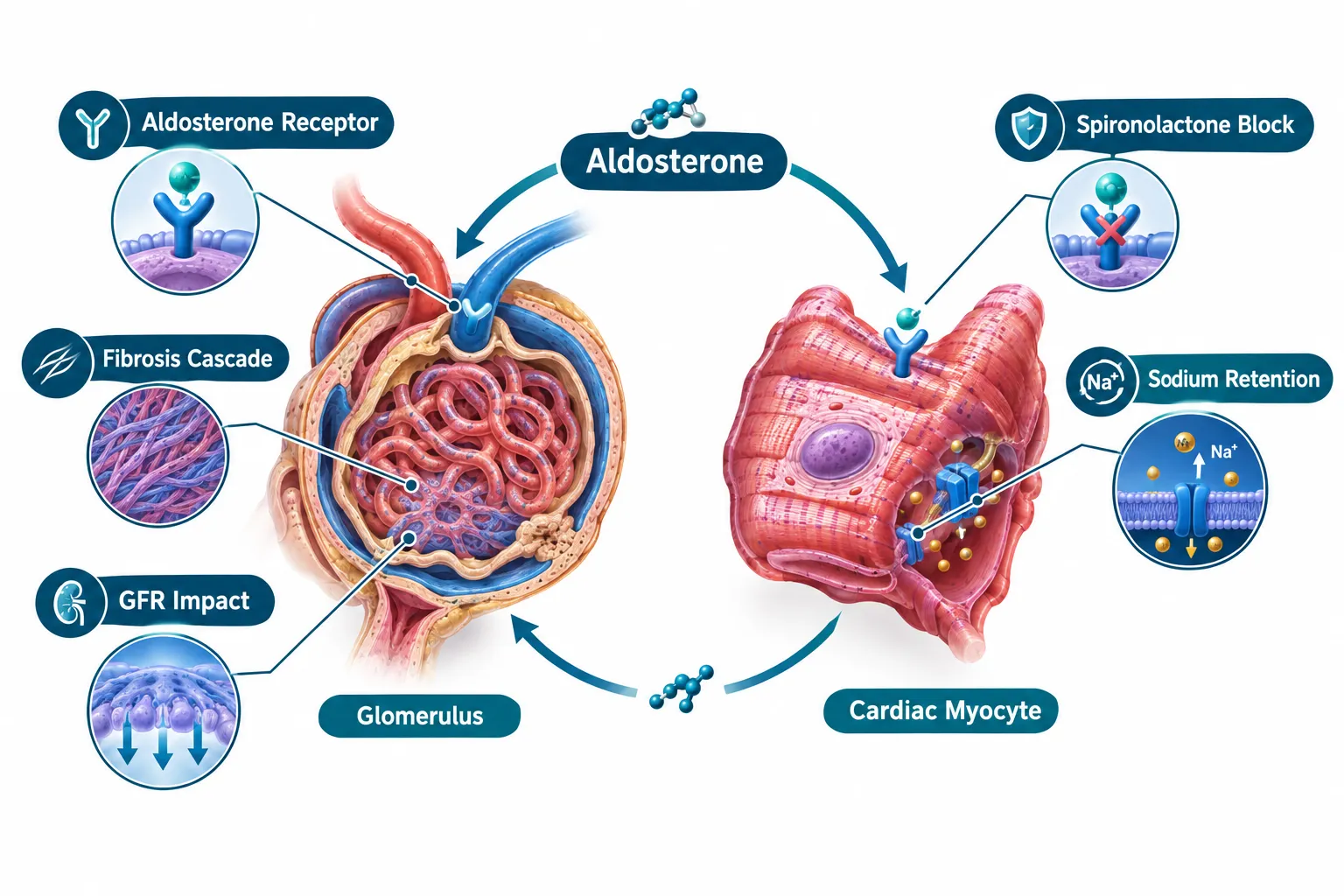
Spironolactone has been a cornerstone of heart failure therapy for decades. It works by blocking aldosterone receptors in the kidney, heart, and vasculature, reducing sodium retention, lowering blood pressure, and most importantly, suppressing the fibrotic signaling that aldosterone drives in cardiac and renal tissue.
The fibrosis connection is critical. Aldosterone excess promotes collagen deposition in the myocardium and glomeruli. By blocking this pathway, spironolactone reduces myocardial stiffness and slows the structural decline that characterizes both heart failure with preserved ejection fraction (HFpEF) and chronic kidney disease (CKD).
However, clinical trial results have complicated the picture:
- The SPIRIT-HF program, running from 2018 through 2024, produced neutral outcomes for spironolactone in HFpEF and heart failure with mildly reduced ejection fraction (HFmrEF).
- A large trial in dialysis patients was stopped early for futility, spironolactone showed no cardiovascular benefit in that population.
- The CLEAR SYNERGY post-MI trial found that spironolactone reduced new or worsening heart failure, but did not significantly reduce major cardiovascular events overall.
These results do not dismiss spironolactone, they clarify its boundaries. The pragmatic SPIRRIT-HFpEF registry continues to test MRAs in real-world HFpEF populations, acknowledging that patient selection matters enormously.
Finerenone, a third-generation non-steroidal MRA, has now produced robust cardiorenal outcome data across both heart failure and diabetic kidney disease populations. Its greater receptor selectivity reduces the side-effect burden of older steroidal MRAs while maintaining anti-fibrotic potency. The modern cardiorenal therapeutic core now integrates MRAs alongside SGLT2 inhibitors and incretin-based therapies, a multi-pathway approach that reflects how complex cardiorenal disease truly is.
"The cardiorenal axis is not a single switch, it is a network of overlapping signals, and blocking one node rarely resolves the whole system."
BPC-157 and TB-500: Tissue-Repair Mechanisms in Cardiorenal Research
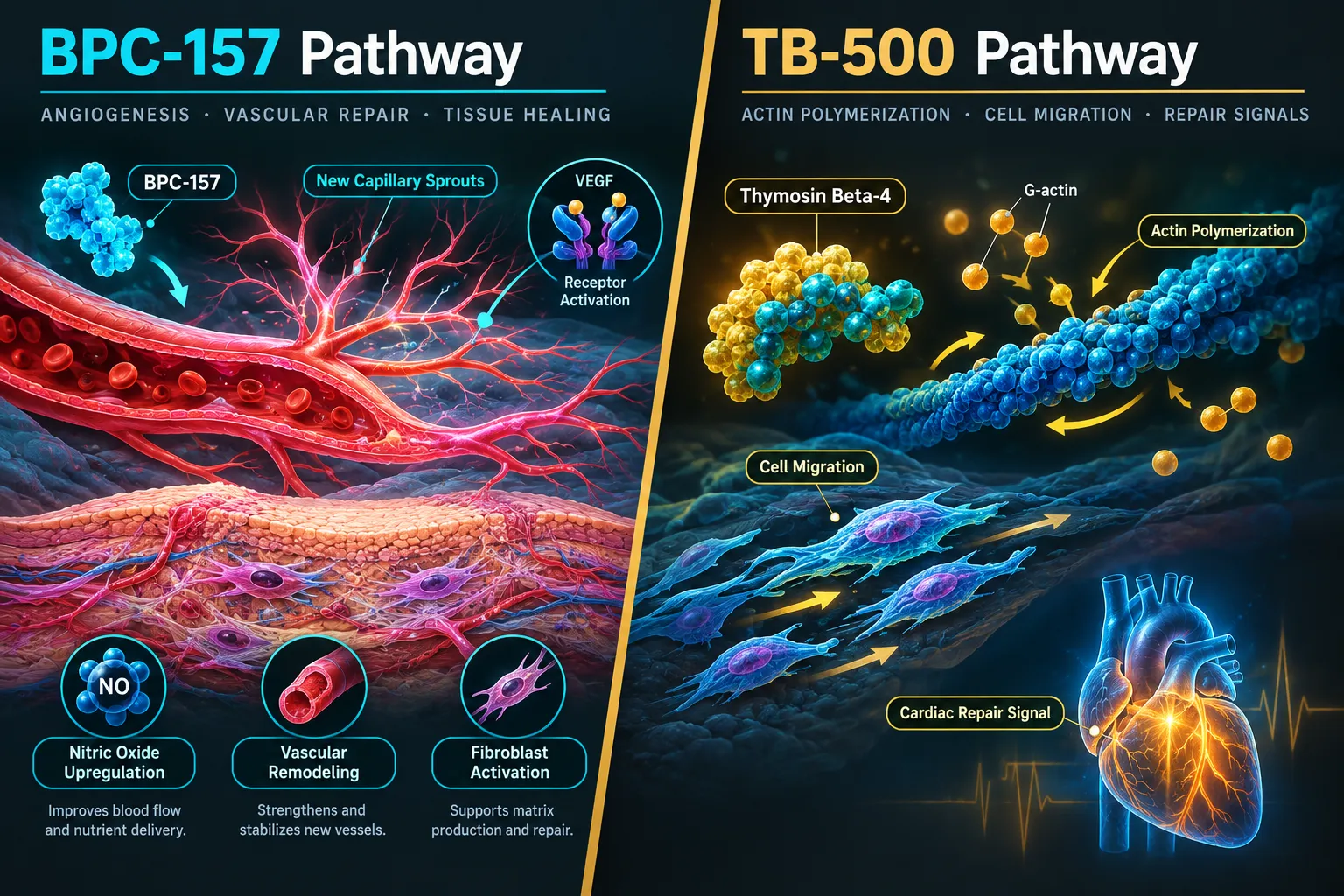
This is where the conversation about spironolactone, cardiorenal pathways, and tissue-repair peptides, and how BPC-157 and TB-500 complement classic heart and kidney drug models, becomes genuinely novel. These two peptides work through entirely different biological levers than MRAs.
BPC-157 (Body Protection Compound-157) is a synthetic pentadecapeptide derived from a gastric protein. In animal models, it has demonstrated:
- Upregulation of nitric oxide synthase, improving vascular tone
- Promotion of angiogenesis through VEGF receptor pathways
- Reduction of fibrotic markers in cardiac and renal tissue
- Accelerated healing in wound models relevant to ischemic injury
TB-500 (synthetic thymosin beta-4) targets actin polymerization and cell migration. In small animal cardiac studies, it has shown potential to:
- Stimulate cardiac progenitor cell activation after ischemic injury
- Reduce scar formation in post-MI myocardium
- Support endothelial repair and vascular remodeling
These are properties that MRAs simply do not possess. Spironolactone blocks a hormonal signal; BPC-157 and TB-500 actively promote structural repair. Researchers exploring wound healing peptides in vascular contexts recognize this distinction as foundational.
The critical caveat: almost all of this evidence comes from rodent and small-animal models. Current human trials for BPC-157 focus on musculoskeletal repair, not cardiorenal indications. TB-500 has small human studies with mixed signals and no Phase III data. Neither peptide is approved by any regulatory agency; BPC-157 is classified as a Category 2 bulk substance in several jurisdictions.
For researchers sourcing compounds for preclinical work, working with a best peptide manufacturer that provides verified purity documentation is essential for valid experimental outcomes.
Mechanistic Complementarity: Where the Two Models Meet
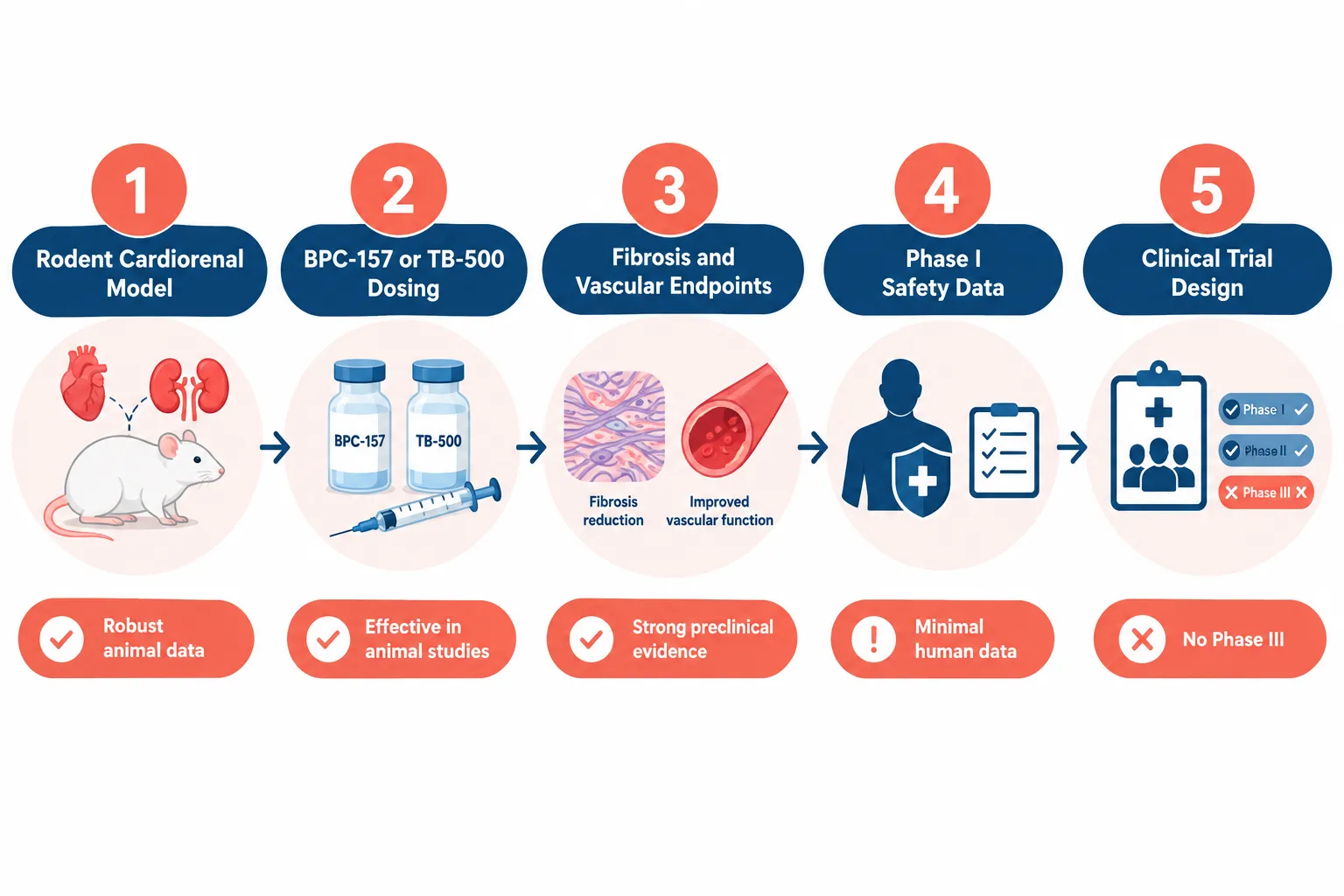
The most intellectually productive framing of spironolactone, cardiorenal pathways, and tissue-repair peptides, and how BPC-157 and TB-500 complement classic heart and kidney drug models, is mechanistic layering, not replacement.
| Mechanism | Spironolactone / Finerenone | BPC-157 | TB-500 |
|---|---|---|---|
| Aldosterone blockade | Yes | No | No |
| Anti-fibrotic signaling | Yes (indirect) | Yes (direct, animal data) | Partial (animal data) |
| Angiogenesis promotion | No | Yes (animal data) | Yes (animal data) |
| Cardiac structural repair | No | Emerging | Emerging |
| Human outcome data | Robust | Minimal | Minimal |
The table above illustrates why these are complementary, not competing, research targets. MRAs address the neurohormonal driver of cardiorenal damage. Tissue-repair peptides, if their animal-model promise translates to humans, could address the downstream structural consequences, the scarring, the vascular rarefaction, the impaired healing that persists even after hormonal blockade.
Researchers working with 5 amino peptide compounds and related short-chain structures are increasingly interested in how these molecules interact with established pharmacological frameworks. Similarly, interest in GHK-Cu peptide for vascular and tissue remodeling endpoints reflects a broader shift toward regenerative mechanisms in cardiometabolic research.
The integrated cardiorenal model, combining MRAs, SGLT2 inhibitors, and incretin therapies, already demonstrates that multi-pathway intervention outperforms single-target strategies. The logical next research question is whether tissue-repair peptides can add a structural-regeneration layer on top of that neurohormonal foundation.
Sourcing quality compounds from a verified best peptide supplier remains a prerequisite for any preclinical work attempting to answer that question rigorously.
Conclusion
The relationship between spironolactone, cardiorenal pathways, and tissue-repair peptides, and how BPC-157 and TB-500 complement classic heart and kidney drug models, represents one of the more promising conceptual frontiers in cardiometabolic research in 2026. Spironolactone and its successor finerenone have defined the neurohormonal anti-fibrotic standard, even as large trials have refined the populations most likely to benefit. BPC-157 and TB-500 offer a mechanistically distinct toolkit, vascular repair, angiogenesis, and structural healing, that animal models suggest could layer meaningfully onto established pharmacology.
Actionable next steps for researchers:
- Review the current SPIRRIT-HFpEF registry data to understand real-world MRA performance benchmarks.
- Design preclinical cardiorenal studies that include both fibrosis endpoints (relevant to MRAs) and vascular repair endpoints (relevant to BPC-157 and TB-500).
- Demand purity-verified peptide compounds for any experimental work to ensure data validity.
- Monitor emerging Phase I human data on BPC-157 musculoskeletal trials, the safety signals from those studies will inform whether cardiorenal indications are feasible.
- Consider finerenone's non-steroidal MRA profile as the appropriate comparator benchmark when designing combination studies.
The gap between animal-model promise and clinical validation remains wide. Closing it requires rigorous, well-sourced research, and a clear understanding of what each drug class can and cannot do.


Leave a Reply
Want to join the discussion?Feel free to contribute!