

Spironolactone vs Research-Use Peptides: How Tissue-Repair Peptides Like BPC-157 and TB-500 Complement Classic Cardiorenal Drugs
Roughly 64 million people worldwide live with heart failure, yet the drugs anchoring most treatment protocols were developed decades ago. That gap between established pharmacology and emerging regenerative science is exactly where the conversation around Spironolactone vs Research-Use Peptides: How Tissue-Repair Peptides Like BPC-157 and TB-500 Complement Classic Cardiorenal Drugs becomes most relevant for researchers and clinicians trying to understand what each tool does, and what it cannot.
Key Takeaways
- Spironolactone is a well-validated aldosterone antagonist with proven mortality benefits in heart failure with reduced ejection fraction (HFrEF), but its utility in HFpEF and chronic kidney disease is narrower than once assumed.
- The SPIRIT-HF trial (2026) confirmed spironolactone does not significantly reduce cardiovascular death or HF hospitalization in HFpEF or mildly reduced ejection fraction populations.
- Research-use peptides BPC-157 and TB-500 operate through distinct tissue-repair and angiogenic pathways that do not overlap with aldosterone blockade.
- In preclinical frameworks, these peptides are studied as complementary agents rather than replacements for classic cardiorenal drugs.
- Rigorous translational research design is essential before any conclusions about combined protocols can be drawn.
How Spironolactone Works in Cardiorenal Disease
Spironolactone is a potassium-sparing diuretic and aldosterone receptor antagonist with a long clinical track record. It is FDA-approved for HFrEF, resistant hypertension, primary hyperaldosteronism, cirrhotic edema, nephrotic-syndrome edema, and hypokalemia. In patients with NYHA class II, IV HFrEF, guidelines recommend its use when renal function and potassium levels are adequately controlled.
The landmark RALES trial established that spironolactone reduced all-cause mortality by approximately 30% and heart-failure hospitalization by roughly 35% in chronic HFrEF with ejection fraction below 35%. Real-world data in older populations have reinforced these findings, showing an 8-13% lower risk of mortality and HF readmission when eligibility criteria are respected.
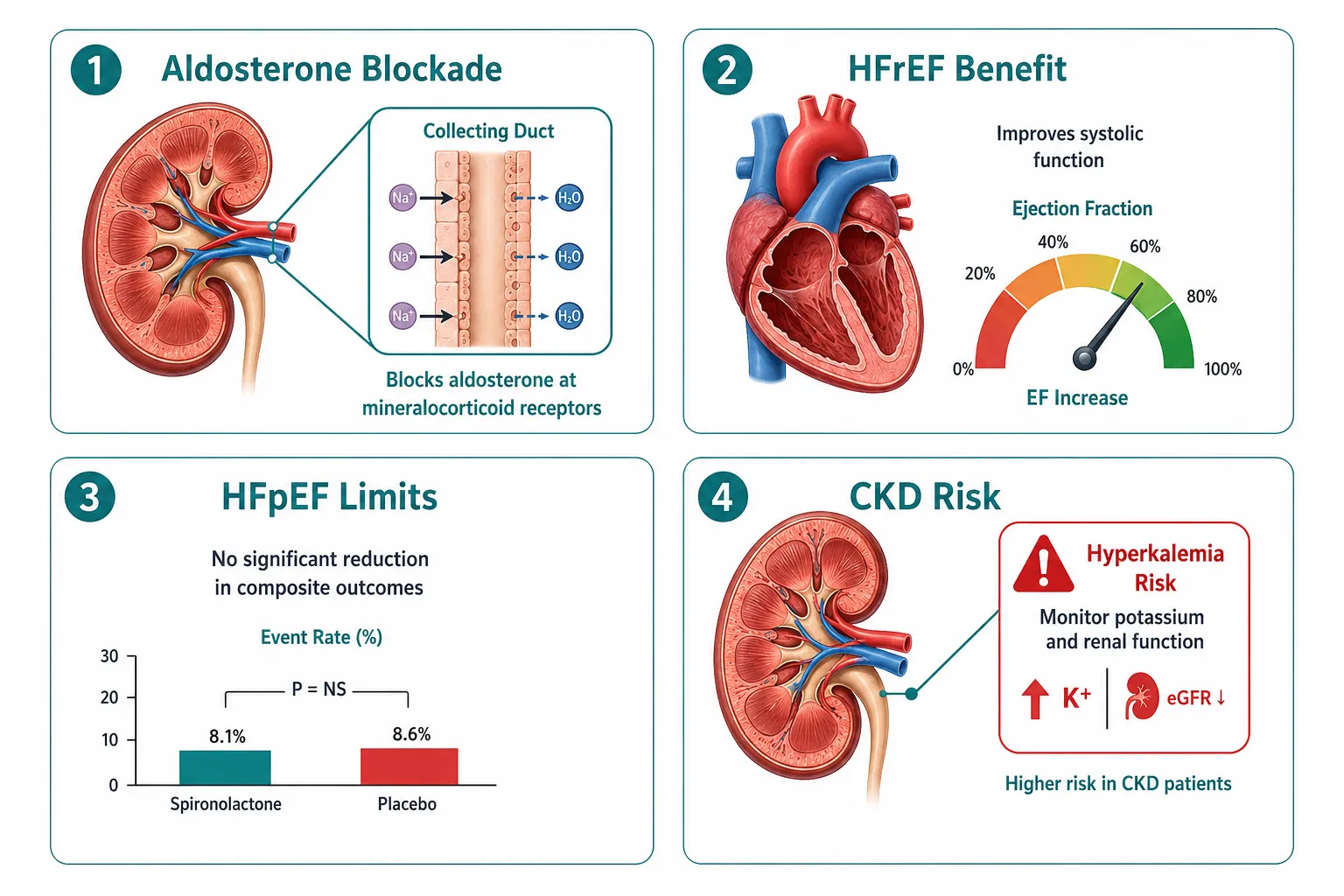
However, 2026 data have sharpened the boundaries of that benefit. The SPIRIT-HF trial, presented at ACC.26 in March 2026, found that spironolactone did not significantly reduce the composite of HF hospitalization and cardiovascular death over 24 months in patients with heart failure with preserved or mildly reduced ejection fraction (HFpEF/HFmrEF). Event rates were 10.8 versus 12.7 per 100 patient-years for placebo versus spironolactone, a difference that did not reach significance. Secondary analyses also showed higher rates of total hospitalizations, hypotension, renal events, and hyperkalemia in the spironolactone group.
Earlier HFpEF work had similarly concluded that spironolactone may improve diastolic function and left ventricular remodeling without clearly reducing all-cause or cardiovascular mortality, positioning it as a selective rather than universal therapy.
In chronic kidney disease (CKD), the picture is equally nuanced. Hospital-based cohort data show spironolactone use associated with increased all-cause mortality and severe hyperkalemia, yet reduced major adverse cardiovascular events, driven largely by lower stroke risk. In advanced CKD combined with HFpEF, very close laboratory surveillance is mandatory given the elevated risks of hyperkalemia and worsening renal function. Studies in advanced heart failure do suggest that higher spironolactone doses can be generally safe when patients are already on ACE inhibitors, beta-blockers, and loop diuretics, provided careful outpatient monitoring is in place.
Key insight: Spironolactone's power lies in aldosterone blockade and fluid regulation, it does not directly promote tissue regeneration, angiogenesis, or extracellular matrix repair.
Understanding Research-Use Peptides: BPC-157 and TB-500
The term "research-use peptides" refers to compounds studied exclusively in preclinical and laboratory settings, not approved for human therapeutic use. BPC-157 (Body Protection Compound-157) and TB-500 (a synthetic analog of Thymosin Beta-4) are two of the most studied examples in tissue repair research.
BPC-157 is a 15-amino-acid peptide derived from a gastric protein. In animal models, it has been studied for its effects on:
- Accelerating tendon and ligament healing
- Promoting angiogenesis via upregulation of VEGFR2
- Modulating nitric oxide pathways
- Reducing fibrotic tissue formation
TB-500 is associated with actin-binding activity and has been investigated for its role in cell migration, wound healing, and anti-inflammatory signaling. Research into tissue repair pathways suggests TB-500 may support cardiac muscle recovery in ischemia models by reducing apoptosis and promoting endothelial repair.

Both peptides act through mechanisms entirely distinct from aldosterone blockade. Where spironolactone controls fluid retention and electrolyte balance, BPC-157 and TB-500 target the cellular machinery of repair, collagen synthesis, angiogenesis, and inflammatory resolution. This distinction is what makes them conceptually complementary in research frameworks rather than interchangeable.
For researchers interested in broader regenerative applications, systemic peptide research and tissue remodeling resources provide additional context on how these compounds are being modeled across organ systems.
Spironolactone vs Research-Use Peptides: Designing Complementary Research Frameworks
When researchers frame the question of Spironolactone vs Research-Use Peptides: How Tissue-Repair Peptides Like BPC-157 and TB-500 Complement Classic Cardiorenal Drugs, the most productive framing is not competition but layered inquiry. Each class of compound addresses a different biological problem.
| Feature | Spironolactone | BPC-157 / TB-500 |
|---|---|---|
| Primary mechanism | Aldosterone receptor antagonism | Angiogenesis, actin binding, tissue repair |
| Regulatory status | FDA-approved (multiple indications) | Research use only (preclinical) |
| Target tissue | Kidney, heart, vasculature | Musculoskeletal, cardiac, GI, vascular |
| Key risk | Hyperkalemia, renal impairment | Limited long-term safety data |
| Research gap addressed | Fluid overload, aldosterone excess | Structural repair, regeneration |
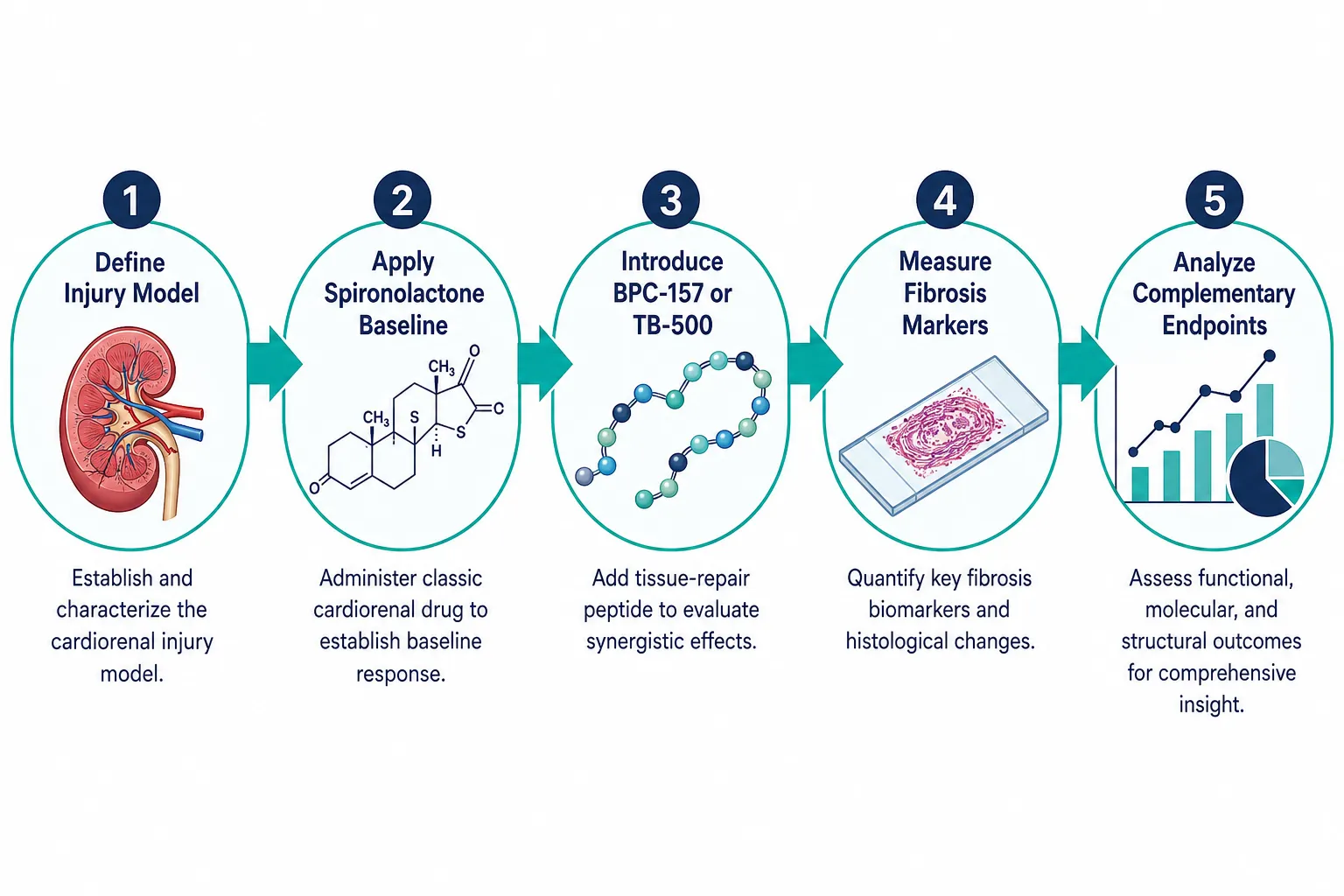
In well-designed preclinical models, a spironolactone baseline can control the hemodynamic and electrolyte environment while peptide interventions are assessed for their structural repair effects. This layered approach aligns with principles outlined in translational research design, where controlling one variable allows cleaner measurement of another.
It is also worth noting that mitochondrial health is an emerging endpoint in cardiorenal research. Resources like SS-31 mitochondrial research themes illustrate how peptide science is expanding into energy metabolism, another domain where classic diuretics have no direct action.
Three principles for sound comparative research design:
- Establish baseline pharmacology, document spironolactone's hemodynamic effects before introducing peptide variables.
- Use orthogonal endpoints, measure fibrosis markers, angiogenic density, and electrolyte panels separately to avoid conflating mechanisms.
- Account for CKD status, renal function alters both spironolactone metabolism and peptide clearance, making it a critical covariate.
Conclusion
The debate framed as Spironolactone vs Research-Use Peptides: How Tissue-Repair Peptides Like BPC-157 and TB-500 Complement Classic Cardiorenal Drugs is ultimately a false competition. Spironolactone remains a cornerstone of HFrEF management with strong mortality data, but 2026 evidence from SPIRIT-HF confirms its limits in HFpEF and CKD populations. Research-use peptides like BPC-157 and TB-500 operate through entirely different biological pathways, targeting structural repair rather than fluid regulation, which makes them conceptually additive in laboratory frameworks.
Actionable next steps for researchers:
- Review current SPIRIT-HF data to understand the precise HFpEF population where spironolactone adds limited benefit.
- Explore tissue repair research literature to identify validated preclinical endpoints for BPC-157 and TB-500.
- Design studies with orthogonal outcome measures so that cardiorenal drug effects and peptide-mediated repair signals can be distinguished cleanly.
- Monitor electrolyte and renal function parameters rigorously in any model combining aldosterone antagonism with systemic peptide administration.
- Consult translational research design frameworks before scaling from animal models to more complex study protocols.
The future of cardiorenal research likely lies not in choosing between classic drugs and regenerative peptides, but in understanding precisely where each one's mechanism begins and ends.


Leave a Reply
Want to join the discussion?Feel free to contribute!