Call or Text 727-513-9780
  • Shopping Cart Shopping Cart
    0Shopping Cart
Pure Tested Peptides | America's most trusted Peptides for sale online
  • Peptides for sale
    • Oral Peptides for sale
      • Peptide Capsules for sale
      • BPC 157 Capsules 1000mcg
      • SLU-PP-332 Capsules | 1000 mcg
      • 5-Amino-1MQ 50mg Capsules
      • Tesofensine 500mcg
    • All Peptides for sale
    • Peptide Sprays
      • BPC 157 Nasal Spray Kit
      • BPC-157 TB500 Nasal Spray Kit
      • Semax Nasal Spray 10mg
      • Selank – Nasal Spray Kit – 10mg
      • Epithalon 50MG Nasal Spray Kit
      • Ipamorelin 10mg Nasal Spray
      • Klow Nasal Spray (BPC-157 + TB-500 + GHK-Cu + KPV) | 80mg
      • Hulk Nasal Spray Tesa / Ipa Blend 6/3 MG
      • Klow Nasal Spray
      • NAD + 500 mg Nasal Spray
      • PT-141 Nasal Spray Kit
    • GHRH Peptides
      • Ipa Peptides
      • CJC-1295 Peptides
        • CJC-1295 with DAC 5 mg
        • CJC-1295 without DAC 5 mg
        • CJC-1295 Ipa 10mg
      • Tesa Peptides
        • Tesa Peptide
        • Tesa 20 mg
    • GHK-Cu Peptides
      • All GHK-Cu Peptides
      • GHK-Cu 100mg
      • KLOW Peptide Blend – Buy KLOW blend online
    • BPC Peptides
      • All BPC Peptides
      • BPC-157
      • BPC-157 TB-500
      • BPC 157 capsules 1000mcg
    • SLU-PP-332 Peptides
      • All SLU-PP-332 Peptides
      • SLU-PP-332 5mg
    • GLP3 Peptides
      • GLP3-R
      • GLP3-R CAG 10mg
      • GLP3-R 20mg
    • PT-141 Peptides
      • PT-141 Peptides for sale
      • PT-141 10mg
      • PT-141 Nasal Spray
    • CAG Peptides
      • Lipo-C Peptide Blend
      • CAG 5mg
      • CAG 10mg
    • MOTS-C Peptides
      • MOTS-C Peptides for sale
      • MOTS-c peptide
      • MOTS-c 10mg *6 pack*
    • 5 Amino 1MQ Peptides
      • 5 Amino 1MQ Peptides for sale
      • 5-Amino-1MQ 50mg Capsules
      • 5-Amino-1MQ 5mg
    • Epithalon Peptides
      • Epithalon Peptides for sale
      • Epithalon 10mg
      • Epithalon 50mg
  • Shop
    • GLPs
      • 5-Amino-1MQ 50mg Capsules
      • 5-Amino-1MQ 5mg
      • GLP3-Reta
      • L-Carnitine 500mg/ml
      • Tesofensine 500mcg
      • SLU-PP-332 5mg
      • MOTS-c 10mg *6 pack*
    • Epithalon & BPC Peptides
      • Epithalon 10mg
      • Epithalon 50mg
      • BPC-157
      • BPC 157 capsules 1000mcg
      • BPC-157 TB-500
      • BPC-157 TB500 Nasal Spray Kit
      • BPC 157 Nasal Spray Kit
    • BPC TB-500 & NAD+ Peptides
      • NAD+ 500 mg
      • KLOW Peptide Blend – Buy KLOW blend online
      • GLOW Peptide Blend
      • TB 500 5mg
      • BPC 157 capsules 1000mcg – Supplement
      • BPC 157 Nasal Spray Kit
      • BPC-157
      • BPC-157 TB500 Nasal Spray Kit
      • BPC-157 TB-500
      • BPC 157 capsules 1000mcg
    • LL-37 Peptide
      • LL-37 10 mg
    • MOTS-C & Selank
      • MOTS-c peptide
      • Selank 10mg
    • GHK Peptides
      • GHK-Cu 100mg
      • GLOW Peptide Blend
      • KLOW Peptide Blend – Buy KLOW blend online
  • COAs
  • Wholesale
    • Wholesale Peptides for sale
  • PTP FAQ
  • Affiliates
    • Affiliate Program
    • Affiliate Signup
  • Contact
    • Contact Customer Service
    • Text Customer Support
  • About US
  • Shop all peptides
  • Login / Register Login / Register Page Link Login / Register Page Link
  • Click to open the search input field Click to open the search input field Search
  • Menu Menu
Best Research Peptides for Advanced Wound Healing: Comparing BPC-157, TB-500, and GHK-Cu

Best Research Peptides for Advanced Wound Healing: Comparing BPC-157, TB-500, and GHK-Cu

June 30, 2026/0 Comments/in Uncategorized/by

Chronic wounds affect more than 6.5 million patients in the United States annually, costing the healthcare system upward of $25 billion per year — yet standard-of-care options remain limited. That gap has pushed researchers toward a focused investigation of the best research peptides for advanced wound healing: comparing BPC-157, TB-500, and GHK-Cu as candidates that may address healing at the molecular level.

This article breaks down each peptide's mechanism, compares their individual strengths, and examines the evidence for combining them in research protocols.

Key Takeaways

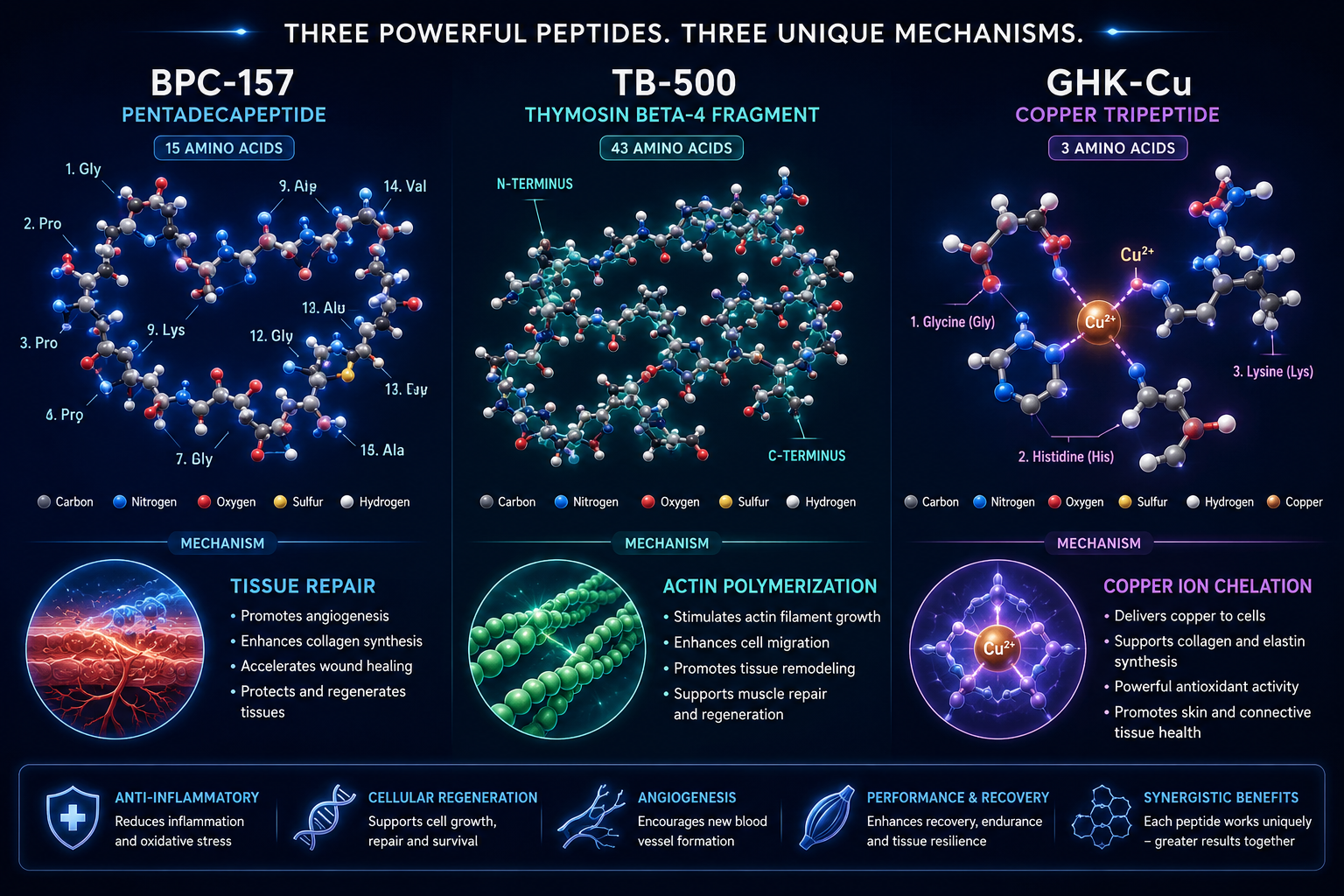
  • BPC-157, TB-500, and GHK-Cu each target distinct but complementary phases of the wound healing cascade.
  • BPC-157 is notable for its angiogenic and cytoprotective properties; TB-500 promotes cell migration and actin regulation; GHK-Cu drives collagen synthesis and antioxidant activity.
  • Synergistic stacking of these peptides is an active area of preclinical research.
  • Purity and third-party testing are critical variables when sourcing peptides for research use.
  • All three compounds remain research-use-only; none are approved for human therapeutic use outside of clinical trials.
Key Takeaways

Understanding the Three Peptides: Mechanisms and Roles

BPC-157: Angiogenesis and Cytoprotection

Body Protection Compound-157 (BPC-157) is a synthetic pentadecapeptide derived from a protective protein found in gastric juice. Its most well-documented mechanism is the upregulation of vascular endothelial growth factor (VEGF), which drives angiogenesis — the formation of new blood vessels essential for tissue repair.

Preclinical studies show BPC-157 also modulates nitric oxide synthesis, reduces oxidative stress, and accelerates tendon-to-bone healing. For a detailed breakdown of its documented research profile, see this BPC-157 first research guide.

Key research-noted properties of BPC-157:

  • Promotes capillary formation in wound beds
  • Reduces inflammation via nitric oxide pathways
  • Accelerates muscle, tendon, and ligament repair in animal models
  • Demonstrates gastroprotective effects in gastric ulcer models

TB-500: Actin Regulation and Cell Migration

Thymosin Beta-4 (TB-500) is a synthetic analog of a naturally occurring 43-amino-acid peptide. Its primary mechanism involves binding to G-actin, which regulates actin polymerization. This process is fundamental to cell migration — a critical step in the proliferative phase of wound healing.

TB-500 also promotes the upregulation of stem cell recruitment and has shown anti-inflammatory effects in multiple animal models. Researchers interested in its regenerative profile can explore TB-500 research documentation here.

Key research-noted properties of TB-500:

  • Regulates actin dynamics to facilitate keratinocyte and fibroblast migration
  • Promotes stem cell homing to wound sites
  • Reduces scar tissue formation in preclinical models
  • Demonstrates cardioprotective effects in ischemic injury models

GHK-Cu: Collagen Synthesis and Antioxidant Defense

GHK-Cu (Glycyl-L-Histidyl-L-Lysine Copper) is a naturally occurring copper-binding tripeptide. It is one of the most studied peptides in skin biology, with a research record spanning several decades. Its primary wound healing actions include stimulating collagen and glycosaminoglycan synthesis, activating matrix metalloproteinases (MMPs) for tissue remodeling, and exerting potent antioxidant effects.

Topical GHK-Cu formulations are already used in cosmetic research. For more on its longevity and skin-repair research themes, see GHK-Cu longevity research and the topical GHK-Cu product page.

GHK-Cu: Collagen Synthesis and Antioxidant Defense

Side-by-Side Comparison: Best Research Peptides for Advanced Wound Healing

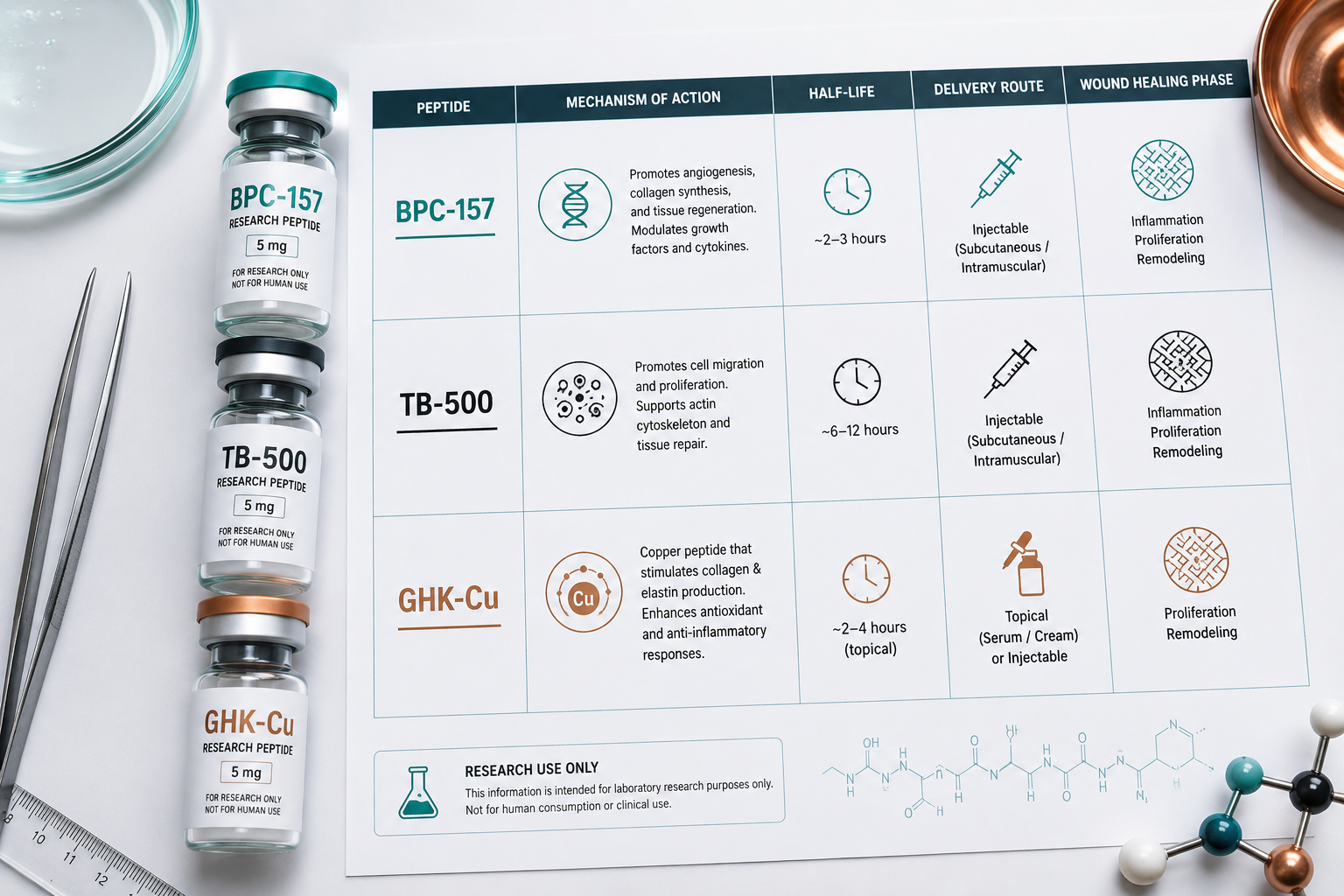
The table below summarizes key differentiators across the three peptides when evaluating them as the best research peptides for advanced wound healing: comparing BPC-157, TB-500, and GHK-Cu.

Feature BPC-157 TB-500 GHK-Cu
Primary Mechanism Angiogenesis, VEGF upregulation Actin regulation, cell migration Collagen synthesis, MMP activation
Wound Healing Phase All phases, especially proliferative Proliferative and remodeling Remodeling and maturation
Delivery Route (Research) Subcutaneous, oral Subcutaneous Topical, subcutaneous
Anti-inflammatory Yes Yes Yes
Antioxidant Activity Moderate Low High
Scar Reduction Evidence Moderate Strong Strong

Key insight: No single peptide covers every phase of wound healing with equal potency. This is precisely why researchers have begun exploring combination protocols.


Synergistic Protocols: Combining BPC-157, TB-500, and GHK-Cu

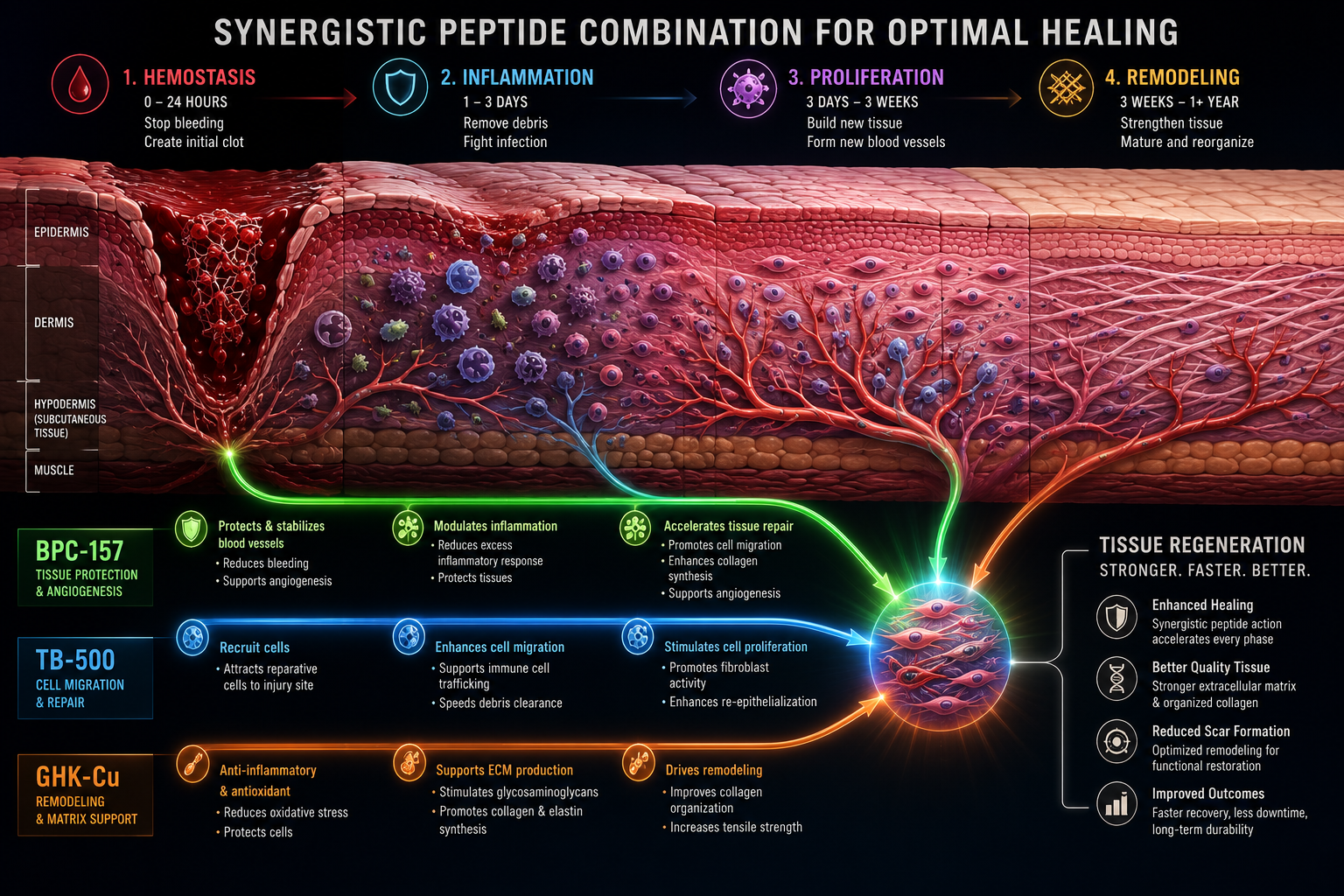
The most advanced research direction in this space involves stacking these three peptides to address the full wound healing cascade simultaneously. The logic is straightforward: BPC-157 establishes vascular supply, TB-500 drives cellular migration into the wound bed, and GHK-Cu orchestrates collagen deposition and tissue remodeling.

This complementary action across all four healing phases — hemostasis, inflammation, proliferation, and remodeling — makes the combination theoretically superior to any single agent. For a focused look at how BPC-157 and TB-500 work together in regeneration research, see TB-500 and BPC-157 regeneration protocols.

Researchers should also consider the broader landscape of longevity peptide research, as wound healing intersects significantly with cellular aging and tissue maintenance.
Synergistic Protocols: Combining BPC-157, TB-500, and GHK-Cu

Sourcing and Purity Considerations

For any research protocol involving these peptides, purity is non-negotiable. Contaminants such as endotoxins or residual solvents can confound results and introduce variables that invalidate findings. Researchers should prioritize suppliers that provide third-party HPLC and mass spectrometry certificates of analysis. A practical overview of what to look for is available in this peptide purity testing guide.

Additionally, understanding how different suppliers compare on documentation standards is essential — see peptide supplier comparisons for a structured evaluation framework.


Conclusion

The best research peptides for advanced wound healing — BPC-157, TB-500, and GHK-Cu — each bring distinct and well-documented mechanisms to the table. BPC-157 drives vascular growth, TB-500 facilitates cellular migration, and GHK-Cu anchors the remodeling phase with collagen synthesis and antioxidant protection. Together, they represent a comprehensive toolkit for researchers designing multi-target wound healing protocols.

Actionable next steps for researchers:

  1. Review the primary literature for each peptide before designing protocols.
  2. Source only from suppliers with verified third-party purity documentation.
  3. Consider combination protocols that address all four wound healing phases.
  4. Document dosing, timing, and delivery routes rigorously for reproducible results.
  5. Stay current with emerging findings through resources like what is new in peptide research.
Tags: advanced wound care, angiogenesis research, bpc-157, collagen synthesis, ghk-cu, peptide comparison, peptide synergy, preclinical research, research peptides, tb-500, tissue regeneration, wound healing peptides
https://www.puretestedpeptides.com/wp-content/uploads/2026/06/Best-Research-Peptides-for-Advanced-Wound-Healing-Comparing-BPC-157-TB-500-and-GHK-Cu.png 1024 1536 https://www.puretestedpeptides.com/wp-content/uploads/2026/01/buy-peptides-online.jpg 2026-06-30 13:03:252026-06-30 13:03:25Best Research Peptides for Advanced Wound Healing: Comparing BPC-157, TB-500, and GHK-Cu
You might also like
PT-141 in Research: Mechanism, Receptor Targets, and How It Differs from PDE5 Inhibitors PT-141 in Research: Mechanism, Receptor Targets, and How It Differs from PDE5 Inhibitors
BPC-157 and TB-500 Stack: Synergistic Mechanisms in Experimental Tendon and Ligament Repair BPC-157 and TB-500 Stack: Synergistic Mechanisms in Experimental Tendon and Ligament Repair
BPC-157 Research Mechanisms: Angiogenesis, Fibroblast Activity, and Tissue Repair Pathways BPC-157 Research Mechanisms: Angiogenesis, Fibroblast Activity, and Tissue Repair Pathways
Regulatory Scrutiny in the GLP‑1/GLP‑3 Era: How BPC‑157, PT‑141, and Enclomiphene Are Being Re‑Evaluated Regulatory Scrutiny in the GLP‑1/GLP‑3 Era: How BPC‑157, PT‑141, and Enclomiphene Are Being Re‑Evaluated
Semax Nasal Spray and Selank Nasal Spray: Administration, Absorption, and Research Practicalities Semax Nasal Spray and Selank Nasal Spray: Administration, Absorption, and Research Practicalities
BPC-157 vs BPC-157 and TB-500: How to Interpret Single-Peptide and Stack Research Results BPC-157 vs BPC-157 and TB-500: How to Interpret Single-Peptide and Stack Research Results
Mesenchymal Stem Cells and Peptides: How BPC‑157, TB‑500, GHK‑Cu, and Glow Blend Are Used in Regeneration Research Mesenchymal Stem Cells and Peptides: How BPC‑157, TB‑500, GHK‑Cu, and Glow Blend Are Used in Regeneration Research
Polypeptide Peptides in Modern Lab Research: From Structure to Synthesis Workflows Polypeptide Peptides in Modern Lab Research: From Structure to Synthesis Workflows
0 replies

Leave a Reply

Want to join the discussion?
Feel free to contribute!

Leave a Reply Cancel reply

Your email address will not be published. Required fields are marked *

×

Helpful Links

  • My account
  • Cart
  • Checkout
  • Refund and Returns Policy
  • Privacy Policy
  • SMS Privacy Policy
  • Login
  • My Account
  • Logout

USA Made Lab Tested Peptides

All products are sold for research, laboratory, or analytical purposes only, and are not for human consumption


Pure Tested Peptides is a chemical supplier. Pure Tested Peptides is not a compounding / chemical compounding facility as defined under 503A of the Federal Food, Drug, and Cosmetic act. Pure Tested Peptides is not an outsourcing facility as defined under 503B of the Federal Food, Drug, and Cosmetic act.

The statements made within this website have not been evaluated by the US Food and Drug Administration. The products we offer are not intended to diagnose, treat, cure or prevent any disease.

Human/Animal Consumption Prohibited. Laboratory/In-Vitro Experimental Use Only

Link to: Where to Buy High-Purity Research Peptides: A Guide to Trusted Suppliers and COA Verification Link to: Where to Buy High-Purity Research Peptides: A Guide to Trusted Suppliers and COA Verification Where to Buy High-Purity Research Peptides: A Guide to Trusted Suppliers and...Where to Buy High-Purity Research Peptides: A Guide to Trusted Suppliers and COA Verification Link to: Slupp332 with 5-Amino-1MQ: Investigating Synergistic Metabolic Effects in Cellular Models Link to: Slupp332 with 5-Amino-1MQ: Investigating Synergistic Metabolic Effects in Cellular Models Slupp332 with 5-Amino-1MQ: Investigating Synergistic Metabolic Effects in Cellular ModelsSlupp332 with 5-Amino-1MQ: Investigating Synergistic Metabolic Effects in Cellular...
Scroll to top Scroll to top Scroll to top