

Selank achieves an intranasal bioavailability of approximately 92.8% — a figure that rivals many injectable peptides and makes delivery method selection a genuinely consequential variable for research design. For anyone working with Semax nasal spray and Selank nasal spray, understanding administration, absorption, and research practicalities is not background knowledge; it is the foundation of reproducible results.
Key Takeaways
- Both Semax and Selank use the nasal mucosa as a direct CNS delivery pathway, bypassing the blood-brain barrier.
- Semax reaches peak cerebrospinal fluid concentrations within 3-10 minutes; Selank's plasma half-life is only 2-3 minutes yet its effects extend well beyond clearance.
- Selank's intranasal bioavailability (
92.8%) is notably higher than Semax's (60-70%), which affects dosing calculations in structured protocols. - Proper spray technique, nostril rotation, and cold-chain storage directly influence experimental consistency.
- Oral administration is not viable for either peptide due to rapid enzymatic degradation in the gastrointestinal tract.
How Intranasal Delivery Works for These Peptides
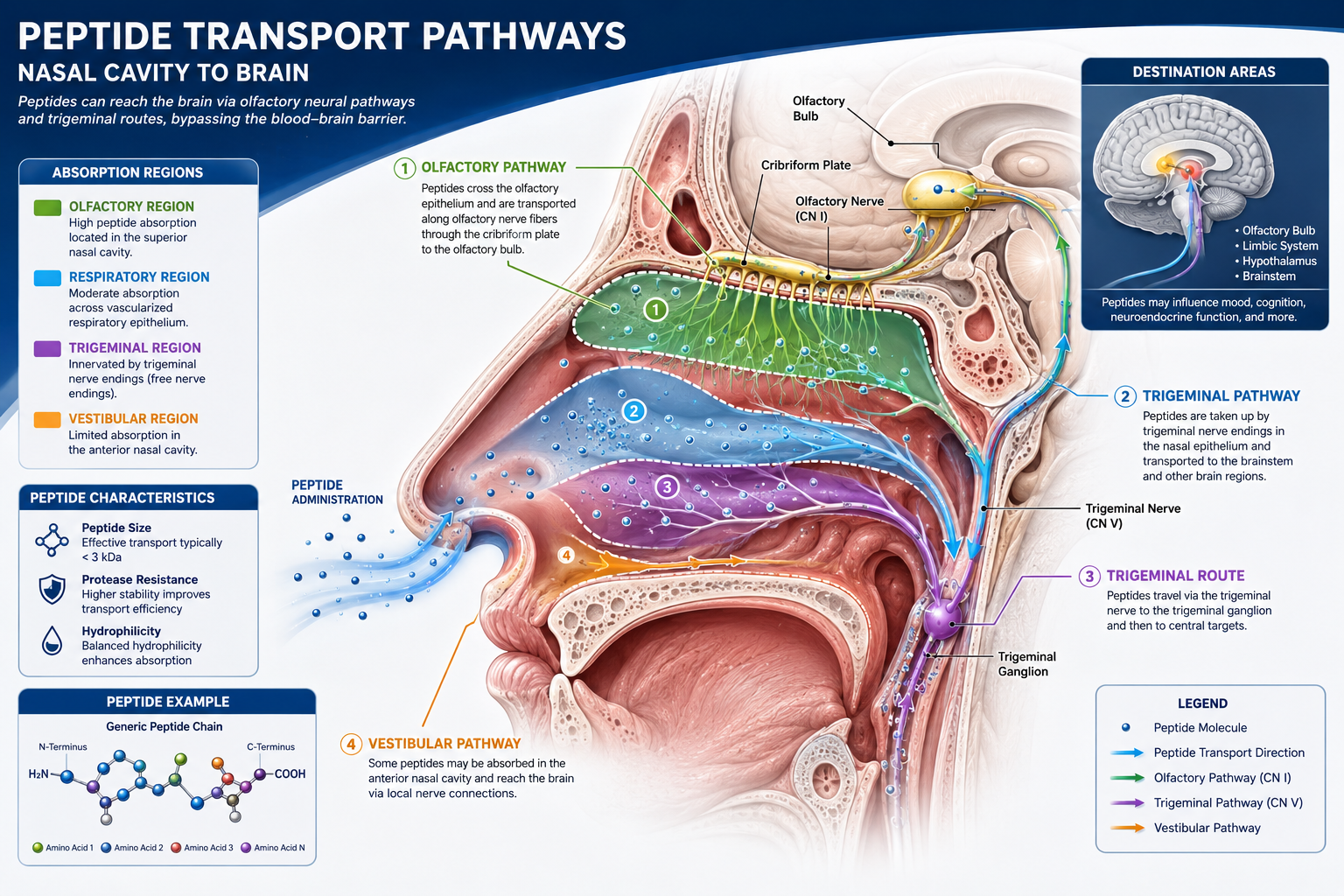
The nasal mucosa offers two primary nerve pathways to the central nervous system: the olfactory nerve and the trigeminal nerve. Both Semax and Selank exploit these routes, allowing peptide molecules to reach the brain without crossing the blood-brain barrier through systemic circulation.
This is a meaningful distinction. Subcutaneous injection delivers peptides into the bloodstream first, where enzymatic degradation begins immediately. Intranasal delivery sends a significant fraction of the dose directly toward CNS tissue, which is why researchers consistently favor this route for neuropeptide work.
Oral administration is not a viable alternative. Gastrointestinal enzymes break down both peptides before meaningful absorption can occur. For research requiring CNS-targeted delivery, intranasal remains the gold standard for these compounds.
Researchers interested in how other peptides navigate delivery challenges can review PT-141 neural and metabolic research themes for a comparative perspective on CNS-adjacent peptide work.
Absorption Profiles: Semax vs. Selank Side by Side
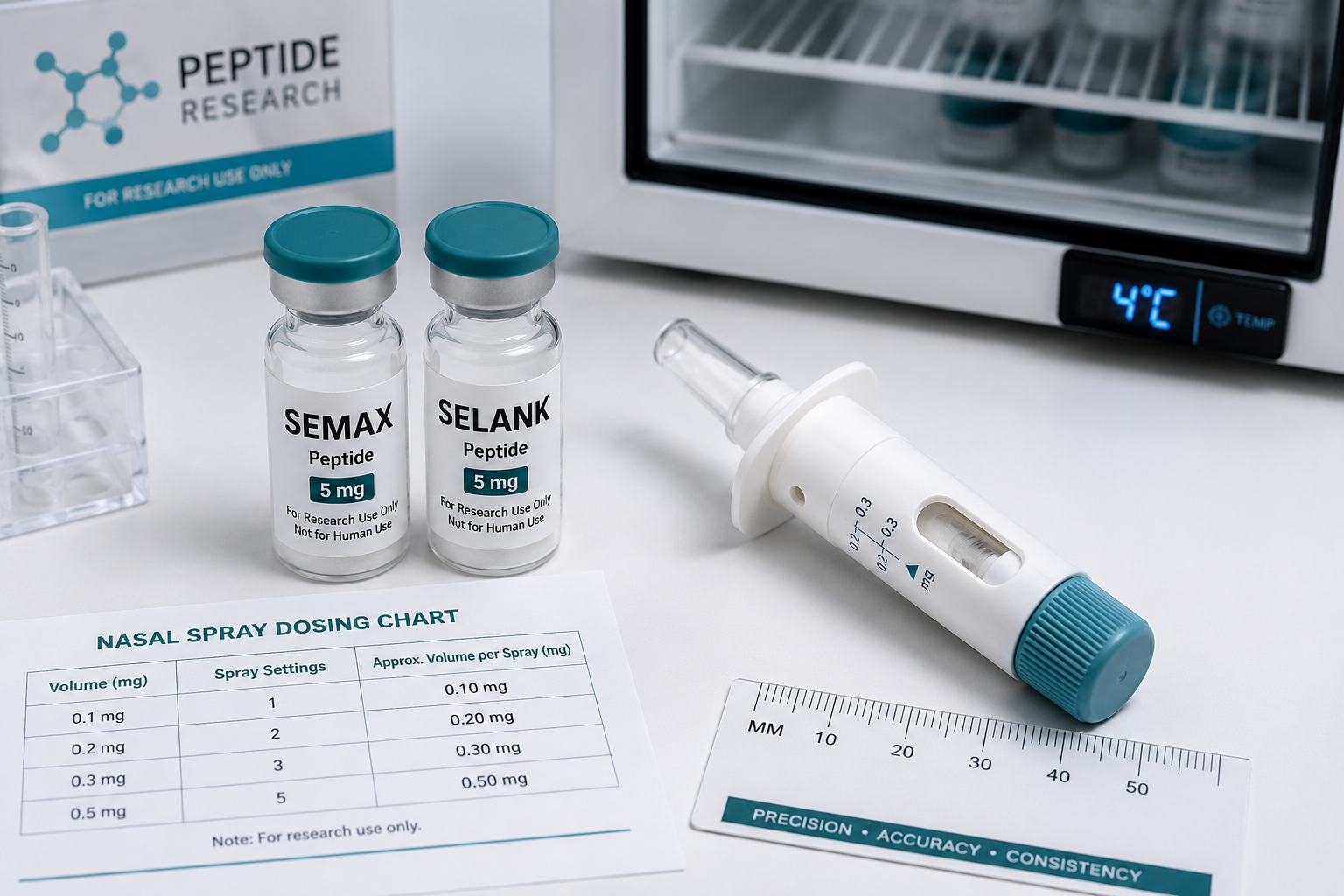
Understanding the absorption differences between these two peptides is central to Semax nasal spray and Selank nasal spray administration, absorption, and research practicalities.
| Parameter | Semax | Selank |
|---|---|---|
| Intranasal Bioavailability | ~60-70% | ~92.8% |
| Peak CNS Concentration | 3-10 minutes | Rapid, within minutes |
| Plasma Half-Life | 15-25 minutes | 2-3 minutes |
| Pharmacodynamic Duration | 24+ hours | Extended beyond clearance |
| Cleared From Plasma | ~90 minutes | Very rapid |
Semax induces brain-derived neurotrophic factor (BDNF) and nerve growth factor (NGF) expression. These downstream effects persist for over 24 hours after a single dose, even though the peptide itself clears plasma within 90 minutes. This dissociation between pharmacokinetics and pharmacodynamics is a critical variable when designing washout periods in research protocols.
Selank's short plasma half-life of 2-3 minutes is actually a structural achievement. Its parent peptide, tuftsin, degrades far faster. A C-terminal Pro-Gly-Pro extension was added specifically to improve metabolic stability — a detail that matters when comparing formulation batches for purity and structural integrity.
"The pharmacodynamic window of Semax extends far beyond its plasma half-life, meaning dosing frequency calculations cannot rely on clearance time alone."
For researchers also working with other neuropeptides, the Selank peptide benefits overview and the detailed Selank research profile provide useful mechanistic context.
Administration Technique, Dosing, and Storage for Research Protocols
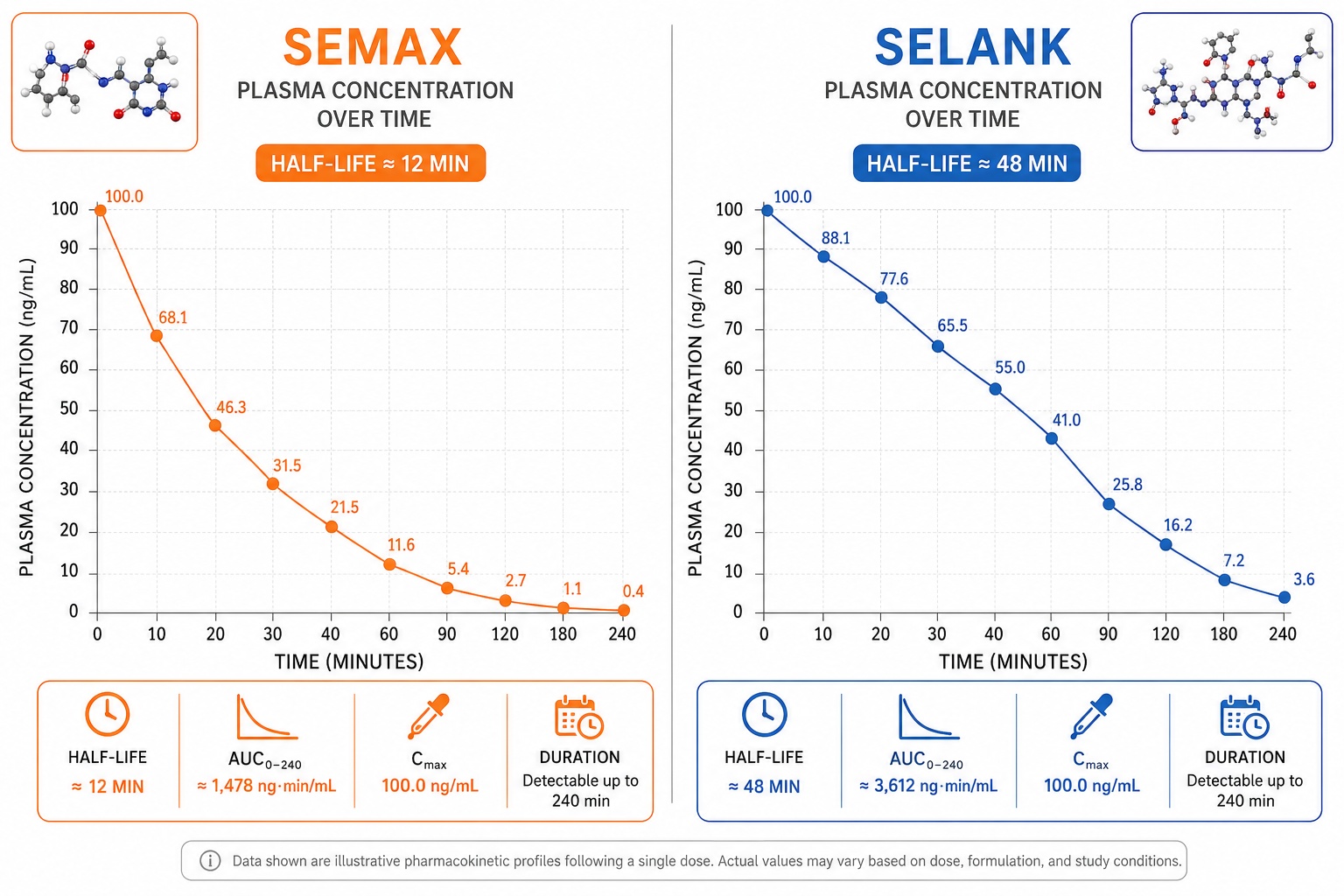
Consistent technique is where many research protocols introduce unnecessary variability. For both Semax and Selank nasal spray administration, absorption, and research practicalities depend heavily on how the spray is delivered.
Recommended spray technique:
- Tilt the head slightly forward, not back
- Insert the tip gently into one nostril
- Deliver the spray while inhaling gently
- Alternate nostrils between administrations to reduce local irritation
Dosing reference for research use:
- Semax: 200-300 mcg per nostril, typically administered twice daily at 8-hour intervals
- Selank: Conservative starting point is 250 mcg once daily; standard anxiolytic research doses are 500 mcg once daily
Selank received regulatory approval in Russia in 2009 as a clinical anxiolytic, with trial data showing efficacy comparable to benzodiazepines — without sedation, dependence, or cognitive impairment. This clinical history gives researchers a useful benchmark when structuring behavioral endpoints.
Storage is non-negotiable for data integrity. Reconstituted solutions for both peptides must be refrigerated at 2-8 degrees Celsius and remain stable for approximately four weeks. Deviations from cold-chain storage introduce degradation variables that compromise reproducibility.
Common side effects observed in research subjects include mild nasal irritation, transient sleep disturbances, and occasional anxiety at higher doses. Serious adverse events are rare but possible with excessive neurological stimulation or co-administration of psychoactive compounds.
Researchers sourcing verified peptides for structured protocols can review lab-tested peptide options to ensure formulation standards meet experimental requirements. Those interested in related neuropeptide delivery work may also find value in reviewing KPV peptide research and GHK-Cu peptide sourcing guidance for broader formulation context.
Conclusion
Semax nasal spray and Selank nasal spray administration, absorption, and research practicalities converge on one core principle: delivery method is not a secondary consideration. The nasal route offers direct CNS access, high bioavailability, and rapid onset — but only when technique, dosing, and storage are handled with precision.
Actionable next steps for researchers:
- Standardize spray technique across all subjects using the forward-tilt, gentle-inhalation method.
- Account for Semax's 24-hour pharmacodynamic window when designing washout periods.
- Verify cold-chain storage compliance before each experimental session.
- Source peptides with documented purity testing to eliminate formulation variability as a confounding factor.
- Review Selank's clinical approval history as a baseline for anxiolytic endpoint calibration.
Reproducibility in peptide research begins with delivery. Getting the administration variables right is the first step toward data that holds up.
Leave a Reply
Want to join the discussion?Feel free to contribute!