Call or Text 727-513-9780
  • Shopping Cart Shopping Cart
    0Shopping Cart
Pure Tested Peptides | America's most trusted Peptides for sale online
  • Peptides for sale
    • Oral Peptides for sale
      • Peptide Capsules for sale
      • BPC 157 Capsules 1000mcg
      • SLU-PP-332 Capsules | 1000 mcg
      • 5-Amino-1MQ 50mg Capsules
      • Tesofensine 500mcg
    • All Peptides for sale
    • Peptide Sprays
      • BPC 157 Nasal Spray Kit
      • BPC-157 TB500 Nasal Spray Kit
      • Semax Nasal Spray 10mg
      • Selank – Nasal Spray Kit – 10mg
      • Epithalon 50MG Nasal Spray Kit
      • Ipamorelin 10mg Nasal Spray
      • Klow Nasal Spray (BPC-157 + TB-500 + GHK-Cu + KPV) | 80mg
      • Hulk Nasal Spray Tesa / Ipa Blend 6/3 MG
      • Klow Nasal Spray
      • NAD + 500 mg Nasal Spray
      • PT-141 Nasal Spray Kit
    • GHRH Peptides
      • Ipa Peptides
      • CJC-1295 Peptides
        • CJC-1295 with DAC 5 mg
        • CJC-1295 without DAC 5 mg
        • CJC-1295 Ipa 10mg
      • Tesa Peptides
        • Tesa Peptide
        • Tesa 20 mg
    • GHK-Cu Peptides
      • All GHK-Cu Peptides
      • GHK-Cu 100mg
      • KLOW Peptide Blend – Buy KLOW blend online
    • BPC Peptides
      • All BPC Peptides
      • BPC-157
      • BPC-157 TB-500
      • BPC 157 capsules 1000mcg
    • SLU-PP-332 Peptides
      • All SLU-PP-332 Peptides
      • SLU-PP-332 5mg
    • GLP3 Peptides
      • GLP3-R
      • GLP3-R CAG 10mg
      • GLP3-R 20mg
    • PT-141 Peptides
      • PT-141 Peptides for sale
      • PT-141 10mg
      • PT-141 Nasal Spray
    • CAG Peptides
      • Lipo-C Peptide Blend
      • CAG 5mg
      • CAG 10mg
    • MOTS-C Peptides
      • MOTS-C Peptides for sale
      • MOTS-c peptide
      • MOTS-c 10mg *6 pack*
    • 5 Amino 1MQ Peptides
      • 5 Amino 1MQ Peptides for sale
      • 5-Amino-1MQ 50mg Capsules
      • 5-Amino-1MQ 5mg
    • Epithalon Peptides
      • Epithalon Peptides for sale
      • Epithalon 10mg
      • Epithalon 50mg
  • Shop
    • GLPs
      • 5-Amino-1MQ 50mg Capsules
      • 5-Amino-1MQ 5mg
      • GLP3-Reta
      • L-Carnitine 500mg/ml
      • Tesofensine 500mcg
      • SLU-PP-332 5mg
      • MOTS-c 10mg *6 pack*
    • Epithalon & BPC Peptides
      • Epithalon 10mg
      • Epithalon 50mg
      • BPC-157
      • BPC 157 capsules 1000mcg
      • BPC-157 TB-500
      • BPC-157 TB500 Nasal Spray Kit
      • BPC 157 Nasal Spray Kit
    • BPC TB-500 & NAD+ Peptides
      • NAD+ 500 mg
      • KLOW Peptide Blend – Buy KLOW blend online
      • GLOW Peptide Blend
      • TB 500 5mg
      • BPC 157 capsules 1000mcg – Supplement
      • BPC 157 Nasal Spray Kit
      • BPC-157
      • BPC-157 TB500 Nasal Spray Kit
      • BPC-157 TB-500
      • BPC 157 capsules 1000mcg
    • LL-37 Peptide
      • LL-37 10 mg
    • MOTS-C & Selank
      • MOTS-c peptide
      • Selank 10mg
    • GHK Peptides
      • GHK-Cu 100mg
      • GLOW Peptide Blend
      • KLOW Peptide Blend – Buy KLOW blend online
  • COAs
  • Wholesale
    • Wholesale Peptides for sale
  • PTP FAQ
  • Affiliates
    • Selank Peptide: Advanced Pharmacological Mechanisms Underlying Its Anxiolytic and Nootropic Effects in Research
      • 5-Amino-1MQ Peptide: Detailed Mechanisms of NNMT Inhibition and Its Impact on Cellular Metabolism Research
        • MOTS-C Peptide: Unraveling Its Role in Mitochondrial Dynamics and Energy Metabolism Research
          • Epithalon Peptide and Telomerase Regulation: Investigating Its Impact on Cellular Senescence and Lifespan Research Models
            • GLP2-T vs GLP2 Tirz Peptide: Understanding the Naming, Mechanistic Nuances, and Research Implications for Gut Health
      • Peptides and Polypeptides in Modern Pharmacology: What Research on Metoprolol, Prednisone, and Amlodipine Reveals
        • Polypeptide Peptides vs NSAIDs: What Naproxen and Diclofenac Teach Tissue-Repair Researchers About BPC‑157 and TB‑500
          • Peptides and Polypeptides in Endocrine Pharmacology: How GLP-1, GLP-2, and GLP-3 Retatrutide Differ From Classic Drugs Like Prednisone and Amlodipine
          • 5‑Amino‑1MQ Peptide and NNMT Inhibition: How It Compares With Statins Like Atorvastatin in Adipose and Lipid Metabolism Research
      • Enclomiphene, Estrogen Receptor Signaling, and Luteinizing Phase Biology: What Hormone Researchers Should Measure
        • Mesenchymal Stem Cells, BPC‑157, and GHK‑Cu: How Tissue Repair Peptides Compare With Classic NSAIDs Like Naproxen in Injury Models
          • Peptide Calculator Use Cases Beyond Growth Hormone: Working Through GLP‑3 Retatrutide, MOTS‑c, and BPC‑157 Research Dosing
        • Polypeptide Peptides in Endocrine and Metabolic Pharmacology: Lessons From Amlodipine, Prednisone, and Metoprolol
        • Peptides Calculator for Advanced Blends: Worked Examples for Tesamorelin, CJC‑1295, and Ipamorelin Stacks
          • Peptides and Polypeptides in Human Physiology: How Molecular Size Shapes Research Applications
            • Selank Peptide: Advanced Pharmacological Mechanisms Underlying Its Anxiolytic and Nootropic Effects in Research
          • 5-Amino-1MQ Peptide: Detailed Mechanisms of NNMT Inhibition and Its Impact on Cellular Metabolism Research
            • MOTS-C Peptide: Unraveling Its Role in Mitochondrial Dynamics and Energy Metabolism Research
              • Epithalon Peptide and Telomerase Regulation: Investigating Its Impact on Cellular Senescence and Lifespan Research Models
                • GLP2-T vs GLP2 Tirz Peptide: Understanding the Naming, Mechanistic Nuances, and Research Implications for Gut Health
                  • Peptides and Polypeptides in Endocrine Pharmacology: How GLP-1, GLP-2, and GLP-3 Retatrutide Differ From Classic Drugs Like Prednisone and Amlodipine
                    • Polypeptide Peptides vs NSAIDs: What Naproxen and Diclofenac Teach Tissue-Repair Researchers About BPC‑157 and TB‑500
                      • Peptides and Polypeptides in Modern Pharmacology: What Research on Metoprolol, Prednisone, and Amlodipine Reveals
                        • 5‑Amino‑1MQ Peptide and NNMT Inhibition: How It Compares With Statins Like Atorvastatin in Adipose and Lipid Metabolism Research
                        • Enclomiphene, Estrogen Receptor Signaling, and Luteinizing Phase Biology: What Hormone Researchers Should Measure
                        • Mesenchymal Stem Cells, BPC‑157, and GHK‑Cu: How Tissue Repair Peptides Compare With Classic NSAIDs Like Naproxen in Injury Models
                        • Peptide Calculator Use Cases Beyond Growth Hormone: Working Through GLP‑3 Retatrutide, MOTS‑c, and BPC‑157 Research Dosing
                        • Polypeptide Peptides in Endocrine and Metabolic Pharmacology: Lessons From Amlodipine, Prednisone, and Metoprolol
                        • Peptides Calculator for Advanced Blends: Worked Examples for Tesamorelin, CJC‑1295, and Ipamorelin Stacks
                        • Peptides and Polypeptides in Human Physiology: How Molecular Size Shapes Research Applications
                        • Selank Peptide: Advanced Pharmacological Mechanisms Underlying Its Anxiolytic and Nootropic Effects in Research
                        • MOTS-C Peptide: Unraveling Its Role in Mitochondrial Dynamics and Energy Metabolism Research
                        • Peptides and Polypeptides in Modern Pharmacology: What Research on Metoprolol, Prednisone, and Amlodipine Reveals
                        • Peptides and Polypeptides in Endocrine Pharmacology: How GLP-1, GLP-2, and GLP-3 Retatrutide Differ From Classic Drugs Like Prednisone and Amlodipine
                        • 5-Amino-1MQ Peptide: Detailed Mechanisms of NNMT Inhibition and Its Impact on Cellular Metabolism Research
                        • Mesenchymal Stem Cells, BPC‑157, and GHK‑Cu: How Tissue Repair Peptides Compare With Classic NSAIDs Like Naproxen in Injury Models
                        • Peptide Calculator Use Cases Beyond Growth Hormone: Working Through GLP‑3 Retatrutide, MOTS‑c, and BPC‑157 Research Dosing
                        • GLP2-T vs GLP2 Tirz Peptide: Understanding the Naming, Mechanistic Nuances, and Research Implications for Gut Health
                        • Polypeptide Peptides in Endocrine and Metabolic Pharmacology: Lessons From Amlodipine, Prednisone, and Metoprolol
                        • Polypeptide Peptides vs NSAIDs: What Naproxen and Diclofenac Teach Tissue-Repair Researchers About BPC‑157 and TB‑500
                        • Peptides and Polypeptides in Human Physiology: How Molecular Size Shapes Research Applications
                        • Peptides Calculator for Advanced Blends: Worked Examples for Tesamorelin, CJC‑1295, and Ipamorelin Stacks
                        • 5‑Amino‑1MQ Peptide and NNMT Inhibition: How It Compares With Statins Like Atorvastatin in Adipose and Lipid Metabolism Research
                        • Enclomiphene, Estrogen Receptor Signaling, and Luteinizing Phase Biology: What Hormone Researchers Should Measure
                        • Epithalon Peptide and Telomerase Regulation: Investigating Its Impact on Cellular Senescence and Lifespan Research Models
                        • Best research protocol Klow blend
                        • best time to take BPC-157
                        • best time to take DSIP (Delta Sleep Inducing Peptide)
                        • best time to take CJC-1295
                        • best time to take AOD-9604
                        • best time to take Follistatin 344
                        • best time to take Ipamorelin
                        • best time to take MK-677 (Ibutamoren)
                        • best time to take Ligandrol (LGD-4033) — research compound
                        • best time to take Ostarine (MK-2866) — research compound
                        • best time to take GHK-CU
                        • best time to take TB-500
                        • best time to take MOTS-c
                        • best time to take Semax
                        • best time to take RAD-140 (Testolone) — research compound
                        • best time to take Thymosin Alpha-1
                        • best time to take PEG-MGF
                        • Biolife Plasma, Octapharma Plasma, and Research Peptides: How Plasma Donation Labs Differ From Peptide Suppliers
                        • best time to take YK-11 — research compound
                        • best time to take PT-141 (Bremelanotide)
                        • Best research protocol Klow blend
  • Contact
    • Contact Customer Service
    • Text Customer Support
  • About US
  • Shop all peptides
  • Affiliate Program
    • Affiliate Signup
  • Login / Register Login / Register Page Link Login / Register Page Link
  • Click to open the search input field Click to open the search input field Search
  • Menu Menu

Tag Archive for: angiogenesis research

Best Research Peptides for Advanced Wound Healing: Comparing BPC-157, TB-500, and GHK-Cu

Best Research Peptides for Advanced Wound Healing: Comparing BPC-157, TB-500, and GHK-Cu

June 30, 2026/0 Comments/by Pure Tested

Chronic wounds affect more than 6.5 million patients in the United States annually, costing the healthcare system upward of $25 billion per year — yet standard-of-care options remain limited. That gap has pushed researchers toward a focused investigation of the best research peptides for advanced wound healing: comparing BPC-157, TB-500, and GHK-Cu as candidates that may address healing at the molecular level.

This article breaks down each peptide's mechanism, compares their individual strengths, and examines the evidence for combining them in research protocols.

Key Takeaways

  • BPC-157, TB-500, and GHK-Cu each target distinct but complementary phases of the wound healing cascade.
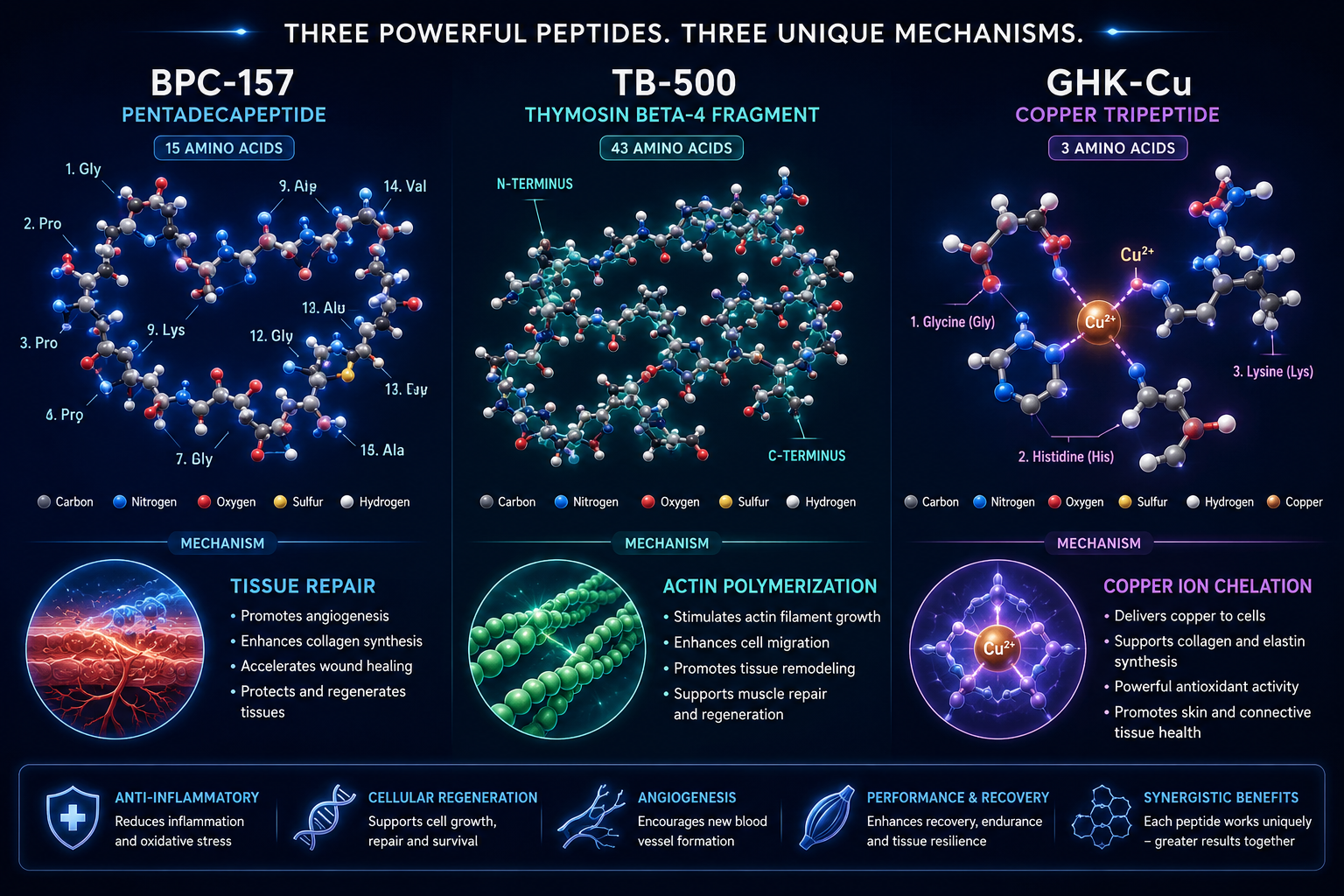
  • BPC-157 is notable for its angiogenic and cytoprotective properties; TB-500 promotes cell migration and actin regulation; GHK-Cu drives collagen synthesis and antioxidant activity.
  • Synergistic stacking of these peptides is an active area of preclinical research.
  • Purity and third-party testing are critical variables when sourcing peptides for research use.
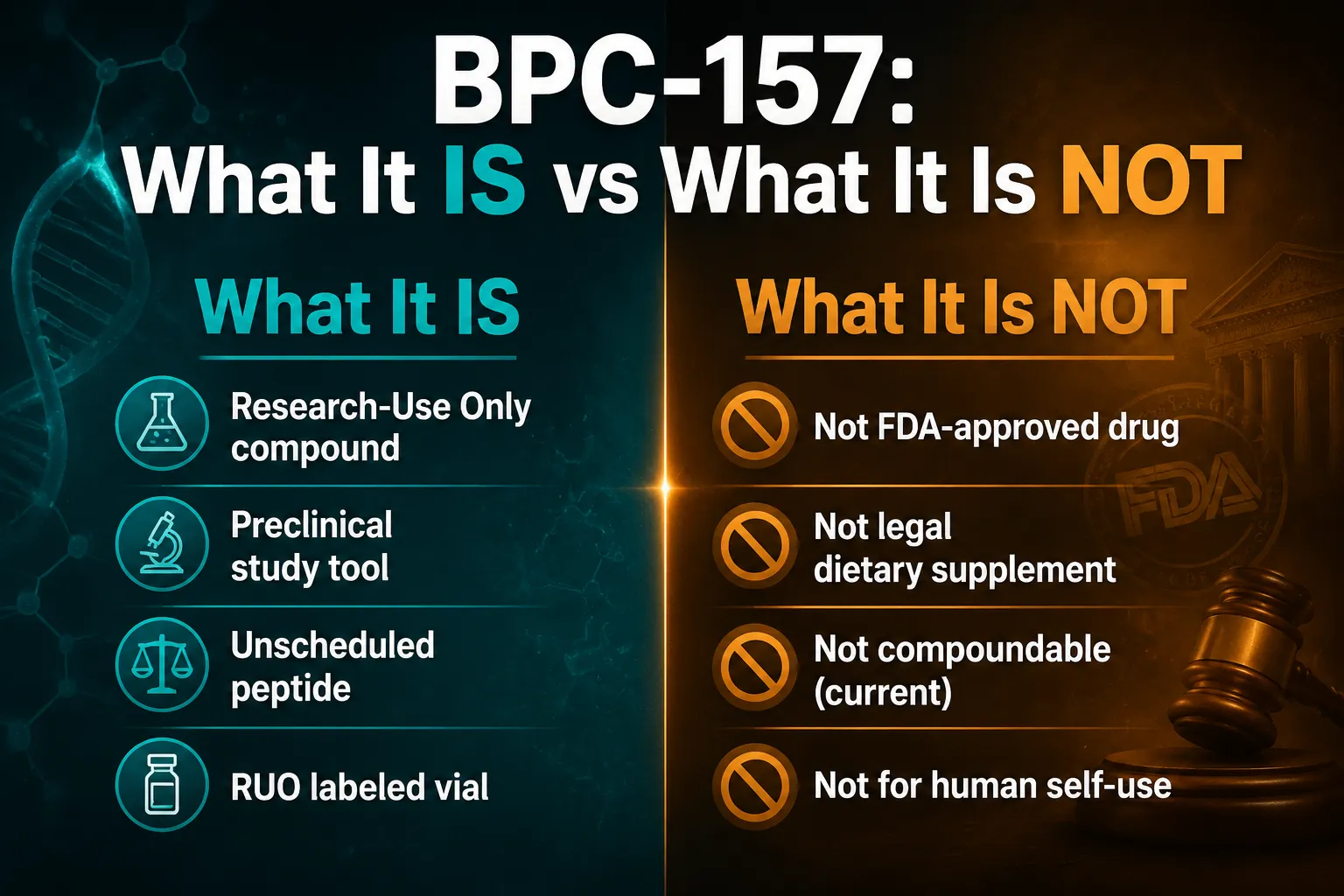
  • All three compounds remain research-use-only; none are approved for human therapeutic use outside of clinical trials.

Key Takeaways

Understanding the Three Peptides: Mechanisms and Roles

BPC-157: Angiogenesis and Cytoprotection

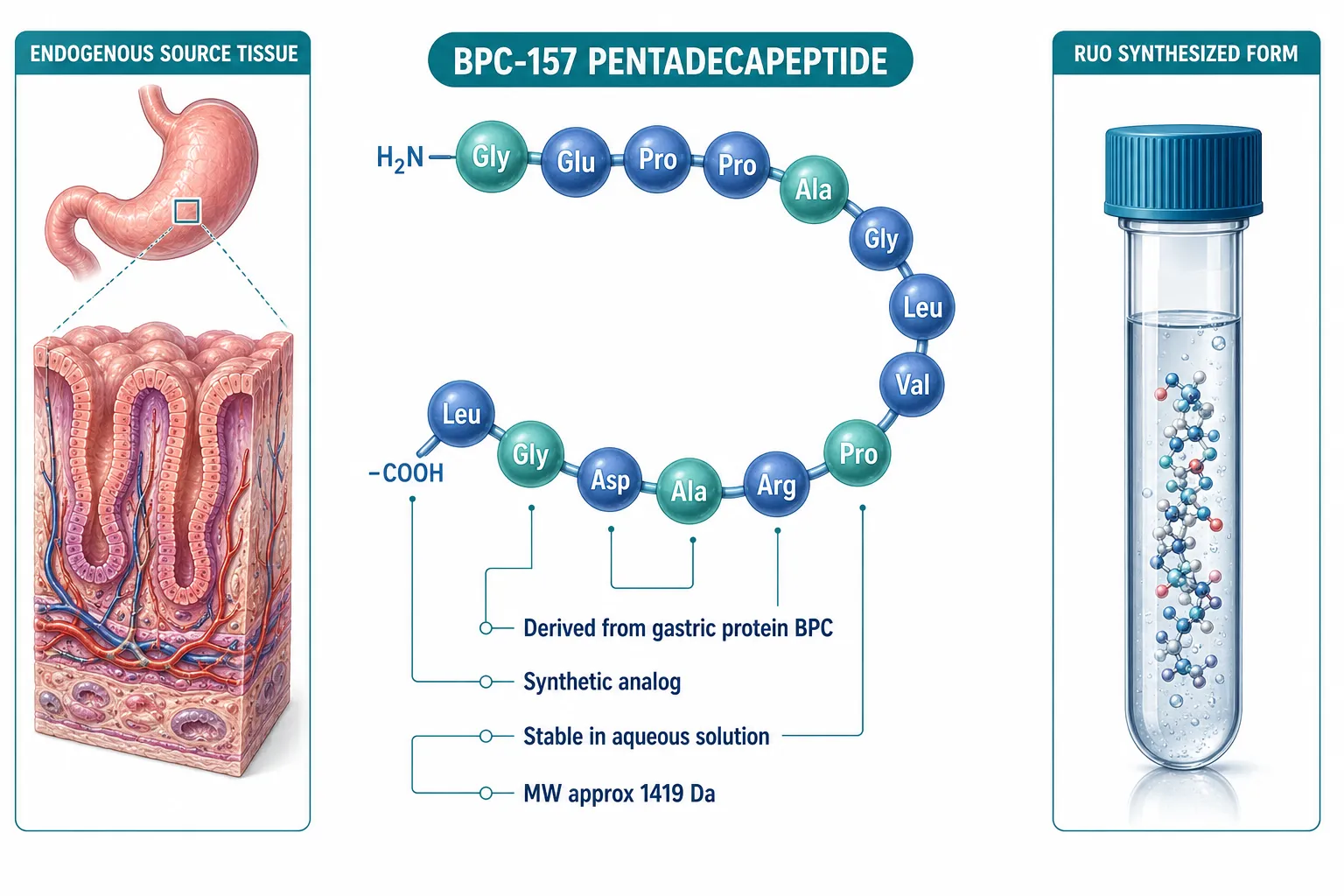
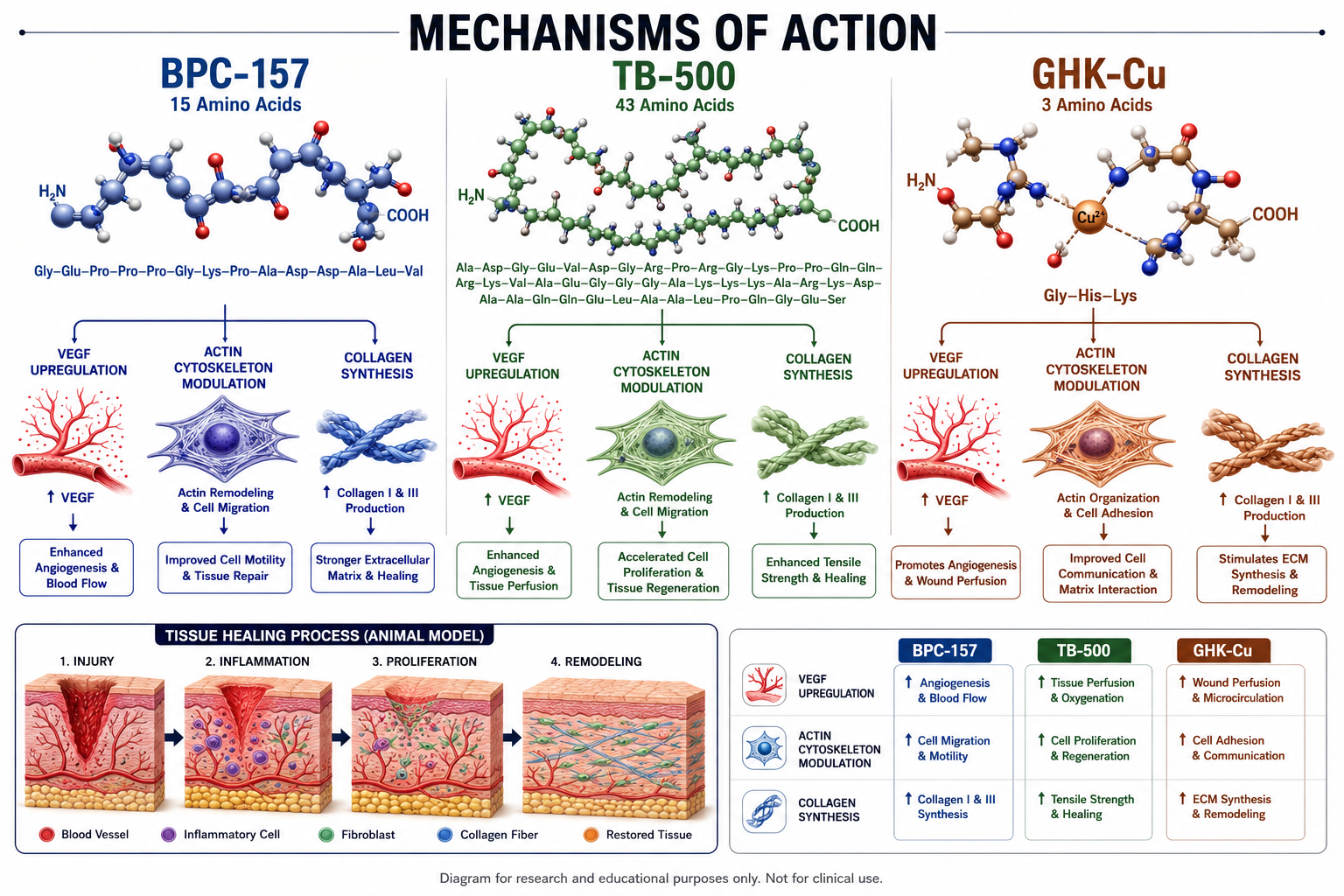
Body Protection Compound-157 (BPC-157) is a synthetic pentadecapeptide derived from a protective protein found in gastric juice. Its most well-documented mechanism is the upregulation of vascular endothelial growth factor (VEGF), which drives angiogenesis — the formation of new blood vessels essential for tissue repair.

Preclinical studies show BPC-157 also modulates nitric oxide synthesis, reduces oxidative stress, and accelerates tendon-to-bone healing. For a detailed breakdown of its documented research profile, see this BPC-157 first research guide.

Key research-noted properties of BPC-157:

  • Promotes capillary formation in wound beds
  • Reduces inflammation via nitric oxide pathways
  • Accelerates muscle, tendon, and ligament repair in animal models
  • Demonstrates gastroprotective effects in gastric ulcer models

TB-500: Actin Regulation and Cell Migration

Thymosin Beta-4 (TB-500) is a synthetic analog of a naturally occurring 43-amino-acid peptide. Its primary mechanism involves binding to G-actin, which regulates actin polymerization. This process is fundamental to cell migration — a critical step in the proliferative phase of wound healing.

TB-500 also promotes the upregulation of stem cell recruitment and has shown anti-inflammatory effects in multiple animal models. Researchers interested in its regenerative profile can explore TB-500 research documentation here.

Key research-noted properties of TB-500:

  • Regulates actin dynamics to facilitate keratinocyte and fibroblast migration
  • Promotes stem cell homing to wound sites
  • Reduces scar tissue formation in preclinical models
  • Demonstrates cardioprotective effects in ischemic injury models

GHK-Cu: Collagen Synthesis and Antioxidant Defense

GHK-Cu (Glycyl-L-Histidyl-L-Lysine Copper) is a naturally occurring copper-binding tripeptide. It is one of the most studied peptides in skin biology, with a research record spanning several decades. Its primary wound healing actions include stimulating collagen and glycosaminoglycan synthesis, activating matrix metalloproteinases (MMPs) for tissue remodeling, and exerting potent antioxidant effects.

Topical GHK-Cu formulations are already used in cosmetic research. For more on its longevity and skin-repair research themes, see GHK-Cu longevity research and the topical GHK-Cu product page.


GHK-Cu: Collagen Synthesis and Antioxidant Defense

Side-by-Side Comparison: Best Research Peptides for Advanced Wound Healing

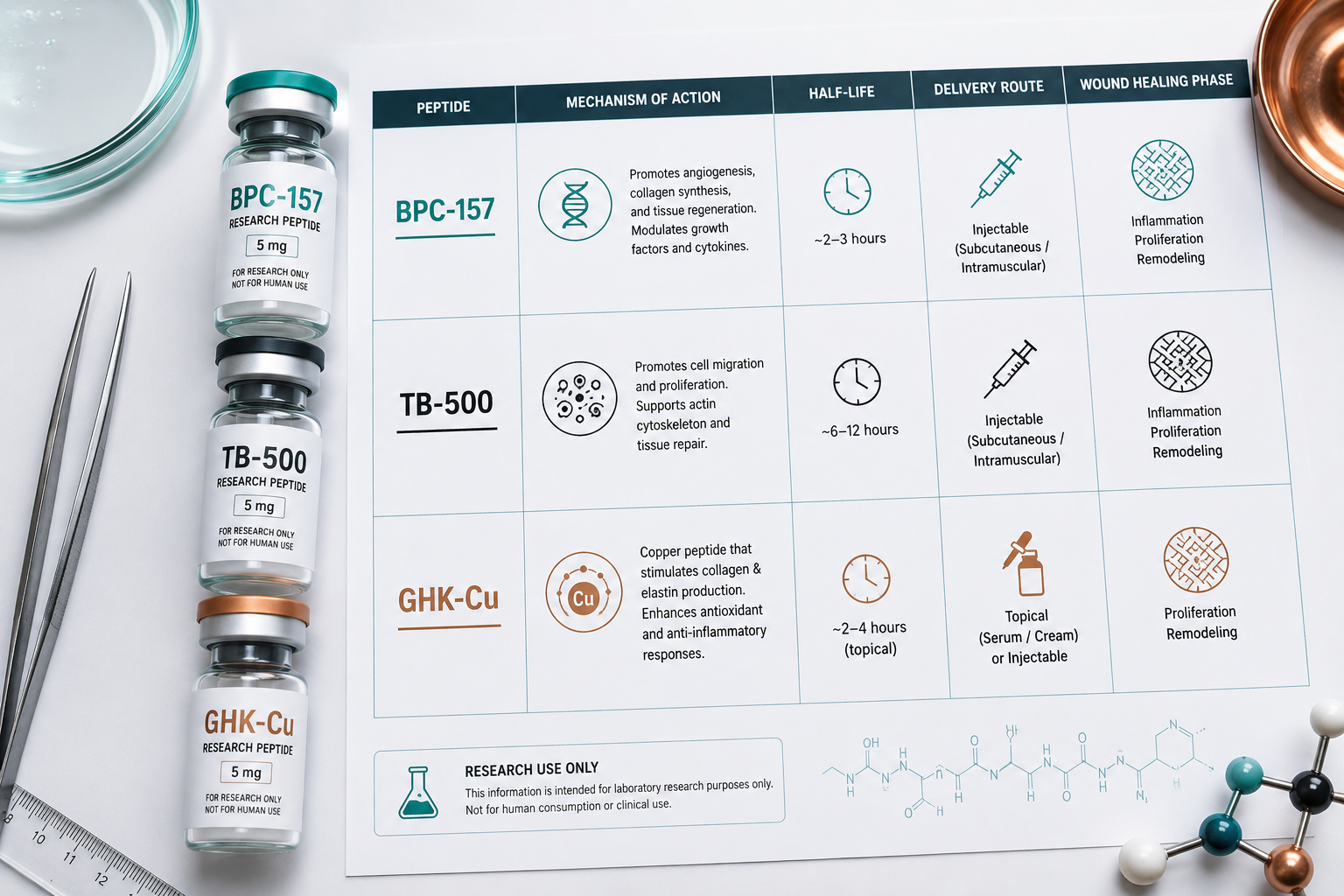
The table below summarizes key differentiators across the three peptides when evaluating them as the best research peptides for advanced wound healing: comparing BPC-157, TB-500, and GHK-Cu.

Feature BPC-157 TB-500 GHK-Cu
Primary Mechanism Angiogenesis, VEGF upregulation Actin regulation, cell migration Collagen synthesis, MMP activation
Wound Healing Phase All phases, especially proliferative Proliferative and remodeling Remodeling and maturation
Delivery Route (Research) Subcutaneous, oral Subcutaneous Topical, subcutaneous
Anti-inflammatory Yes Yes Yes
Antioxidant Activity Moderate Low High
Scar Reduction Evidence Moderate Strong Strong

Key insight: No single peptide covers every phase of wound healing with equal potency. This is precisely why researchers have begun exploring combination protocols.


Synergistic Protocols: Combining BPC-157, TB-500, and GHK-Cu

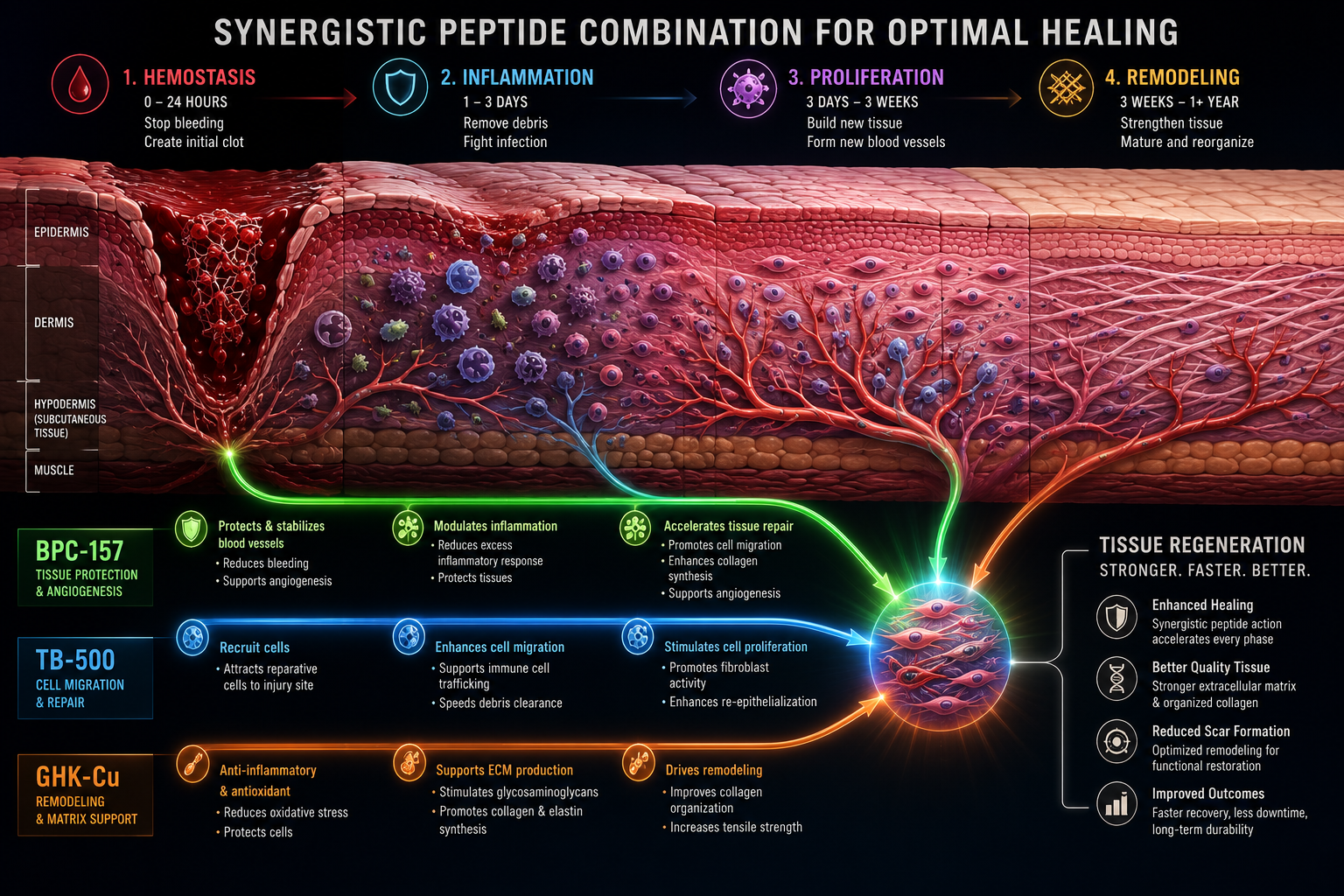
The most advanced research direction in this space involves stacking these three peptides to address the full wound healing cascade simultaneously. The logic is straightforward: BPC-157 establishes vascular supply, TB-500 drives cellular migration into the wound bed, and GHK-Cu orchestrates collagen deposition and tissue remodeling.

This complementary action across all four healing phases — hemostasis, inflammation, proliferation, and remodeling — makes the combination theoretically superior to any single agent. For a focused look at how BPC-157 and TB-500 work together in regeneration research, see TB-500 and BPC-157 regeneration protocols.

Researchers should also consider the broader landscape of longevity peptide research, as wound healing intersects significantly with cellular aging and tissue maintenance.

Synergistic Protocols: Combining BPC-157, TB-500, and GHK-Cu

Sourcing and Purity Considerations

For any research protocol involving these peptides, purity is non-negotiable. Contaminants such as endotoxins or residual solvents can confound results and introduce variables that invalidate findings. Researchers should prioritize suppliers that provide third-party HPLC and mass spectrometry certificates of analysis. A practical overview of what to look for is available in this peptide purity testing guide.

Additionally, understanding how different suppliers compare on documentation standards is essential — see peptide supplier comparisons for a structured evaluation framework.


Conclusion

The best research peptides for advanced wound healing — BPC-157, TB-500, and GHK-Cu — each bring distinct and well-documented mechanisms to the table. BPC-157 drives vascular growth, TB-500 facilitates cellular migration, and GHK-Cu anchors the remodeling phase with collagen synthesis and antioxidant protection. Together, they represent a comprehensive toolkit for researchers designing multi-target wound healing protocols.

Actionable next steps for researchers:

  1. Review the primary literature for each peptide before designing protocols.
  2. Source only from suppliers with verified third-party purity documentation.
  3. Consider combination protocols that address all four wound healing phases.
  4. Document dosing, timing, and delivery routes rigorously for reproducible results.
  5. Stay current with emerging findings through resources like what is new in peptide research.
https://www.puretestedpeptides.com/wp-content/uploads/2026/06/Best-Research-Peptides-for-Advanced-Wound-Healing-Comparing-BPC-157-TB-500-and-GHK-Cu.png 1024 1536 Pure Tested https://www.puretestedpeptides.com/wp-content/uploads/2026/01/buy-peptides-online.jpg Pure Tested2026-06-30 13:03:252026-07-20 15:01:54Best Research Peptides for Advanced Wound Healing: Comparing BPC-157, TB-500, and GHK-Cu
Best Research Peptides for Tissue Repair: Comparing BPC‑157, TB‑500, GHK‑Cu, and Glow/Klow Blends for In‑Vitro and Animal Models

Best Research Peptides for Tissue Repair: Comparing BPC‑157, TB‑500, GHK‑Cu, and Glow/Klow Blends for In‑Vitro and Animal Models

June 8, 2026/0 Comments/by Pure Tested

Fewer than 30 human subjects have been enrolled across all published pilot studies on BPC‑157 combined — yet preclinical data on this and related peptides continues to accelerate at a striking pace. For researchers selecting compounds for tissue repair models in 2026, that gap between animal evidence and human data is the central challenge. This article examines the best research peptides for tissue repair: comparing BPC‑157, TB‑500, GHK‑Cu, and Glow/Klow blends for in‑vitro and animal models, covering mechanisms, model selection, reconstitution ranges, and purity considerations.

Key Takeaways

  • BPC‑157, TB‑500, and GHK‑Cu each target a distinct phase of tissue repair, making them complementary rather than redundant.
  • GLOW blends combine all three peptides; KLOW adds the anti-inflammatory tripeptide KPV for a broader repair profile.
  • Preclinical evidence is robust, but human clinical data remains extremely limited — these compounds are for research use only.
  • Purity verification and proper reconstitution are non-negotiable for reproducible in-vitro and animal model results.
  • None of these peptides are FDA-approved for medical use in tissue repair contexts as of 2026.

Key Takeaways


Mechanisms of Action: What Each Peptide Does

Understanding why these peptides are considered among the best research peptides for tissue repair starts with their distinct biological pathways.

BPC‑157 (Body Protection Compound 157) is a 15-amino-acid synthetic peptide derived from a gastric protein. Its primary mechanism involves upregulating vascular endothelial growth factor (VEGF), which drives angiogenesis — the formation of new blood vessels. In animal models, this translates to accelerated healing across tendons, muscles, ligaments, bones, and gut mucosa. Researchers can explore the BPC-157 research overview for detailed preclinical data summaries.

TB‑500 (Thymosin Beta‑4 fragment) works differently. It modulates the actin cytoskeleton, facilitating cell migration and differentiation. This makes it particularly relevant in wound-closure and muscle-repair models where cellular mobility is rate-limiting.

GHK‑Cu (Glycine-Histidine-Lysine copper complex) focuses on the reconstruction phase. It stimulates collagen synthesis and extracellular matrix remodeling. Researchers studying dermal and connective tissue models will find the GHK-Cu extracellular matrix research a useful reference. The copper chelation component also appears to modulate gene expression related to tissue remodeling.

Peptide Primary Mechanism Key Repair Phase
BPC‑157 VEGF upregulation, angiogenesis Vascularization
TB‑500 Actin modulation, cell migration Proliferation
GHK‑Cu Collagen synthesis, ECM remodeling Reconstruction

Comparing GLOW and KLOW Blends for Research Models

Comparing GLOW and KLOW Blends for Research Models

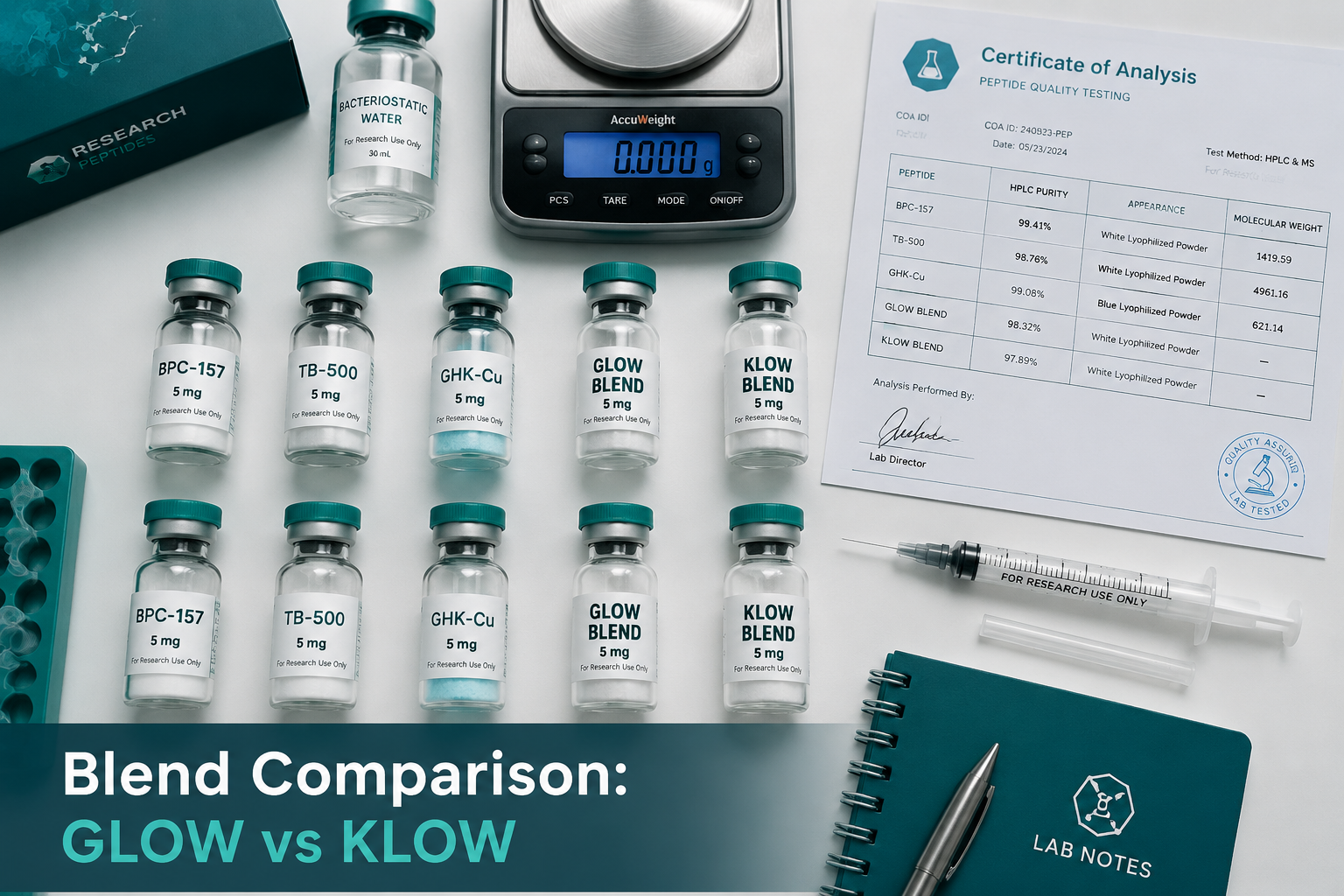
The GLOW blend combines BPC‑157, TB‑500, and GHK‑Cu in a single formulation, targeting all three stages of the repair cascade sequentially. This multi-phase approach is the core rationale behind proprietary blends — rather than isolating one mechanism, researchers can observe how overlapping pathways interact. The GLOW and KLOW peptide blend overview provides composition details relevant to experimental design.

The KLOW blend extends GLOW by adding KPV, a tripeptide (Lysine-Proline-Valine) with documented anti-inflammatory properties. In models where inflammation is a confounding variable — such as inflammatory bowel or skin wound models — KLOW may offer a more controlled environment for observing net repair outcomes.

Important note: No published clinical trials have evaluated GLOW or KLOW blends in human subjects. Both are marketed strictly for in-vitro research purposes and are not intended for human or veterinary use.

For researchers interested in longevity-adjacent tissue repair themes, the GLOW blend longevity research themes page outlines how these compounds intersect with broader aging biology questions.


Model Selection, Reconstitution, and Purity Considerations

Model Selection, Reconstitution, and Purity Considerations

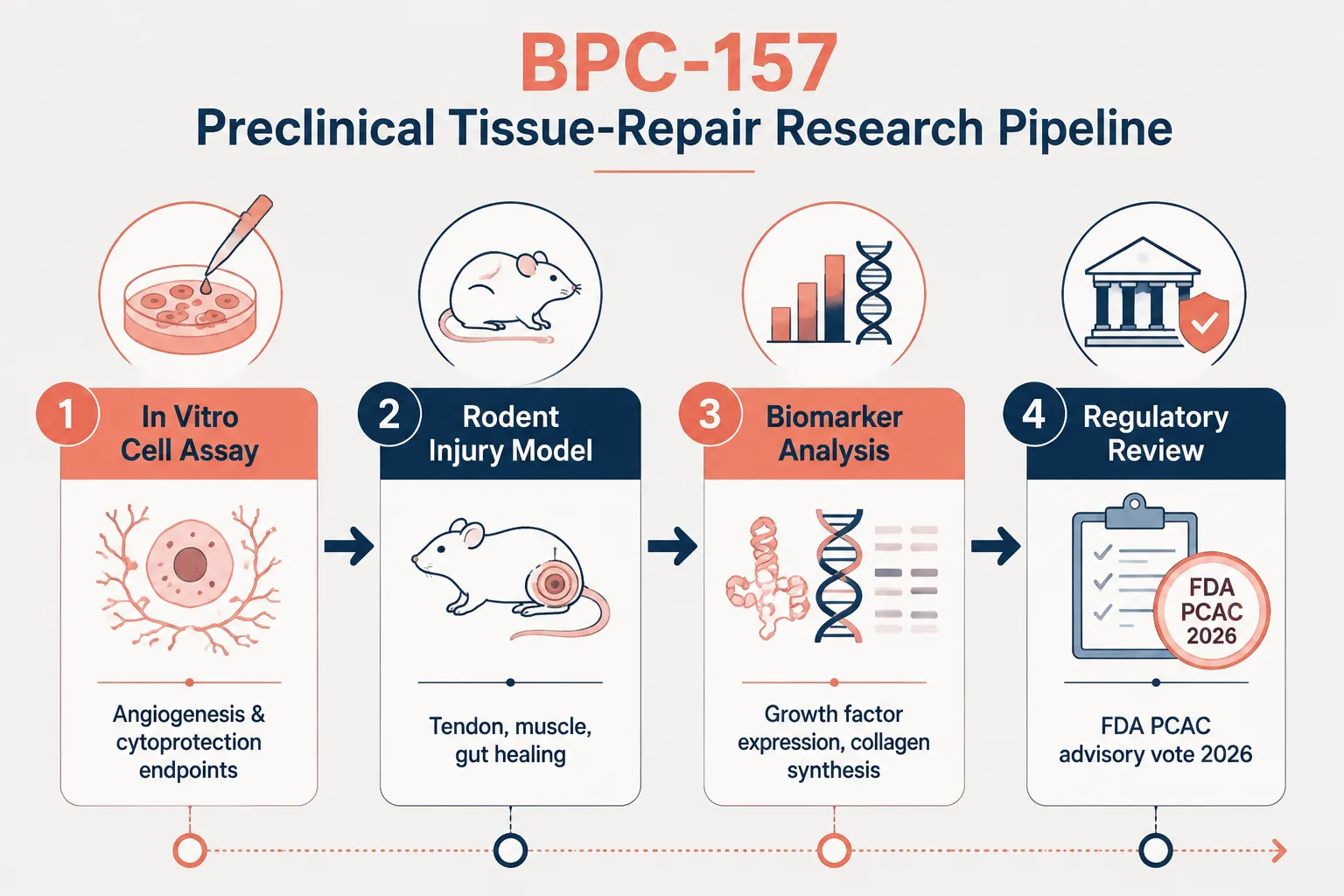
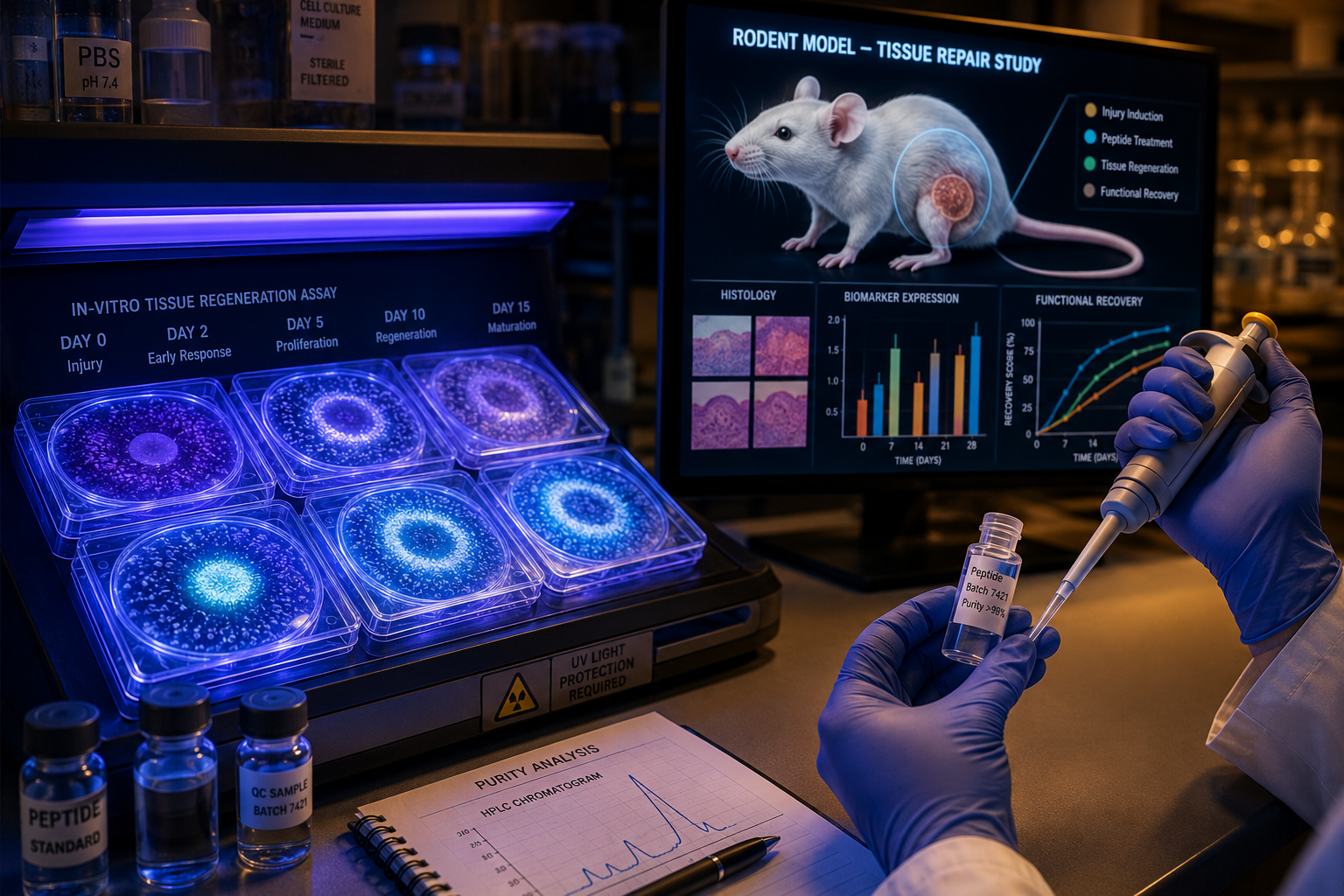
Selecting the right model is as critical as selecting the peptide. For in-vitro work, cell migration assays (scratch assays), tube formation assays for angiogenesis, and collagen gel contraction models are the most common formats aligned with BPC‑157, TB‑500, and GHK‑Cu mechanisms respectively.

For animal models, rodent tendon transection, excisional wound, and colitis models dominate the published literature on BPC‑157. TB‑500 has shown relevance in cardiac and skeletal muscle injury models. GHK‑Cu is frequently evaluated in dermal punch-biopsy models.

Reconstitution guidance (for research use only):

  • Peptides should be reconstituted with bacteriostatic water or sterile saline.
  • Typical working concentrations in cell culture range from 1 nM to 1 µM depending on the assay.
  • Avoid repeated freeze-thaw cycles; aliquot prior to storage at -20°C.

Purity is the most overlooked variable in peptide research reproducibility. Researchers should require certificates of analysis (CoA) confirming HPLC purity of at least 98% and mass spectrometry confirmation. The quality testing protocols page outlines what rigorous third-party verification looks like in practice. For broader peptide sourcing context, peptide blend research options can help orient purchasing decisions.

Researchers exploring adjacent repair-related compounds may also find the TB-500 and BPC-157 regeneration research page useful for comparative study design.


Conclusion

The best research peptides for tissue repair — BPC‑157, TB‑500, GHK‑Cu, and Glow/Klow blends for in‑vitro and animal models — each bring distinct, well-characterized mechanisms to the repair cascade. BPC‑157 drives vascularization, TB‑500 enables cell migration, and GHK‑Cu rebuilds the extracellular matrix. GLOW and KLOW blends combine these actions, with KLOW adding anti-inflammatory KPV for more complex inflammatory models.

Actionable next steps for researchers:

  • Match peptide selection to the specific repair phase your model targets.
  • Demand third-party CoA documentation with HPLC and mass spec data before ordering.
  • Design controls that isolate individual peptide contributions when using blends.
  • Remain current on regulatory status — none of these compounds are approved for human use as of 2026.

Rigorous experimental design, verified purity, and clear model alignment remain the foundation of reproducible tissue repair research.

https://www.puretestedpeptides.com/wp-content/uploads/2026/06/Best-Research-Peptides-for-Tissue-Repair-Comparing-BPC‑157-TB‑500-GHK‑Cu-and-GlowKlow-Blends-for-In‑Vitro-and-Animal-Models.png 1024 1536 Pure Tested https://www.puretestedpeptides.com/wp-content/uploads/2026/01/buy-peptides-online.jpg Pure Tested2026-06-08 13:04:002026-07-20 15:03:37Best Research Peptides for Tissue Repair: Comparing BPC‑157, TB‑500, GHK‑Cu, and Glow/Klow Blends for In‑Vitro and Animal Models
BPC-157 and TB-500 in Experimental Tissue-Repair Models: Synergy, Overlaps, and Key Differences

BPC-157 and TB-500 in Experimental Tissue-Repair Models: Synergy, Overlaps, and Key Differences

June 6, 2026/0 Comments/by Pure Tested

Over 100 preclinical studies have examined BPC-157 alone — yet researchers increasingly argue the more interesting story begins when this peptide is paired with TB-500. The study of BPC-157 and TB-500 in experimental tissue-repair models: synergy, overlaps, and key differences has become one of the more active corners of peptide research in 2026, driven by animal and cell-based data suggesting these two compounds may address healing from complementary angles.

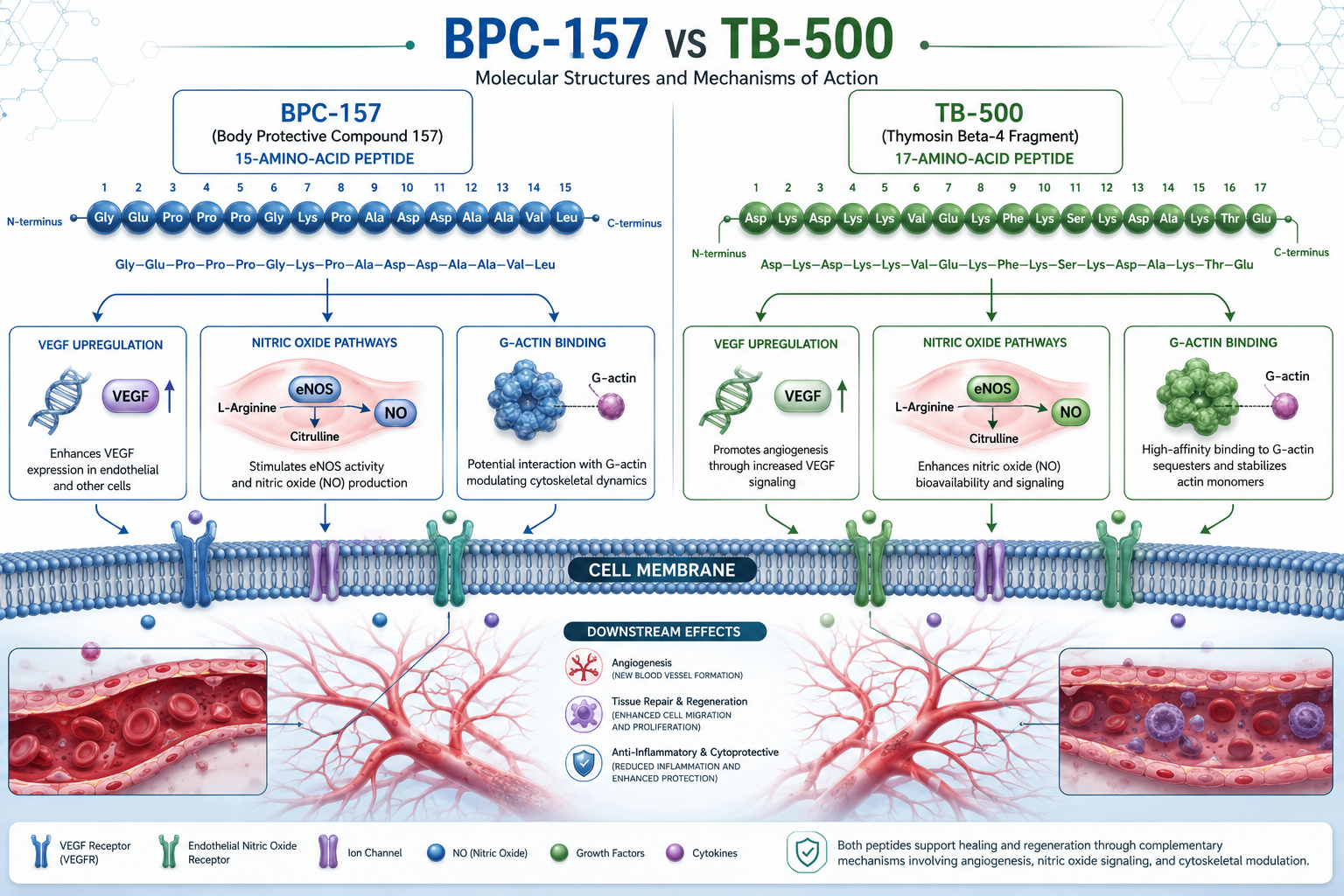
Detailed () scientific illustration showing side-by-side molecular diagrams of BPC-157 (15-amino-acid chain highlighted in

Key Takeaways

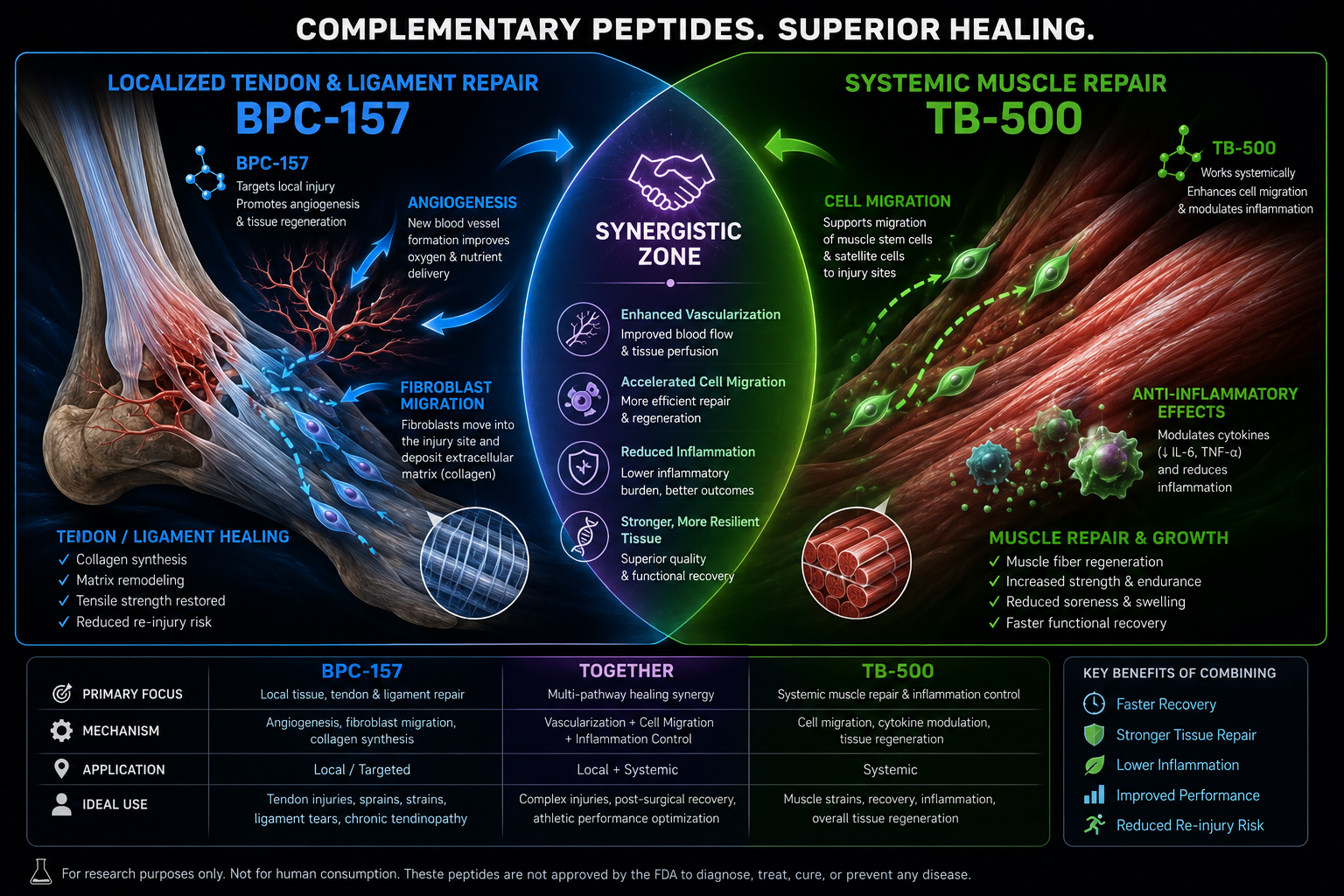
  • BPC-157 drives localized repair through angiogenesis and nitric oxide modulation; TB-500 promotes systemic healing via G-actin binding and cell migration.
  • In animal models, combining both peptides — sometimes called the "Wolverine Stack" — may accelerate recovery faster than either compound alone.
  • BPC-157 shows stronger preclinical evidence for tendon, ligament, and gastrointestinal repair; TB-500 is better studied for muscle and post-surgical recovery.
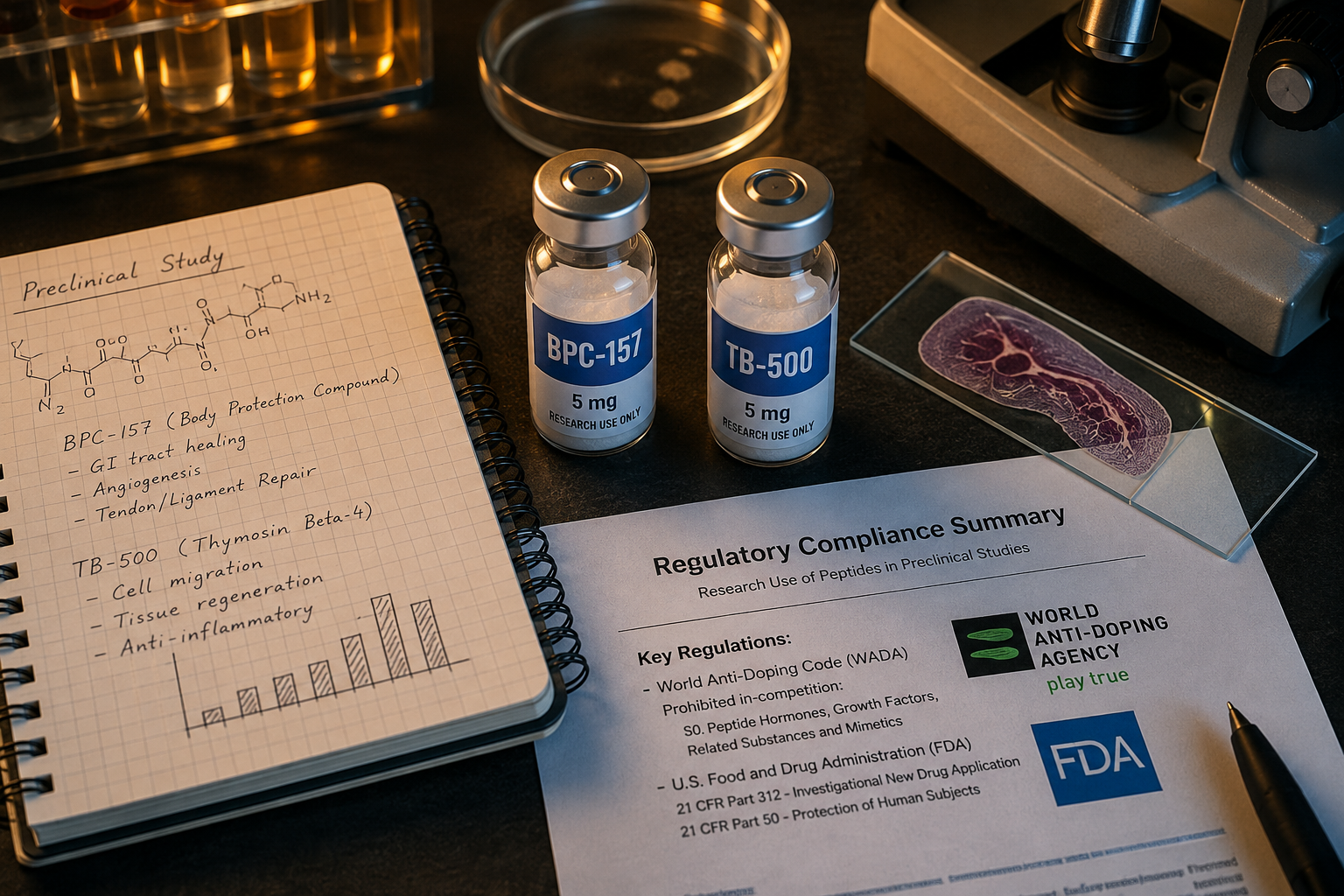
  • Neither peptide holds FDA approval for human use, and both are banned by WADA under the S0 category.
  • All findings discussed here come from preclinical and experimental models; human clinical evidence remains limited.

Distinct Mechanisms: How Each Peptide Acts on Tissue

BPC-157 is a 15-amino-acid peptide derived from human gastric juice. In cell-based and animal studies, it promotes localized tissue repair primarily through two pathways: upregulation of vascular endothelial growth factor (VEGF) and modulation of nitric oxide signaling. The result, as seen in rodent tendon and ligament models, is faster formation of new blood vessels at the injury site — a process called angiogenesis. This vascular scaffolding appears to support downstream fibroblast activity and collagen deposition.

You can explore a deeper breakdown of BPC-157's documented research profile in this BPC-157 core peptides documentation and research guide.

TB-500, a synthetic fragment of thymosin beta-4, works differently. Rather than anchoring to a specific injury site, it binds to G-actin — a protein involved in cytoskeletal structure — and facilitates cell migration throughout the body. In preclinical inflammation models, TB-500 also demonstrates measurable reductions in pro-inflammatory cytokines, suggesting a systemic anti-inflammatory role that complements localized repair.

Feature BPC-157 TB-500
Source Gastric juice-derived Thymosin beta-4 fragment
Primary action Angiogenesis, NO modulation G-actin binding, cell migration
Repair focus Localized (tendon, GI, ligament) Systemic (muscle, post-surgical)
Typical dose range 250-500 mcg/day 2-2.5 mg twice weekly (loading)
Administration route Subcutaneous or oral Subcutaneous, any site

Overlaps and Synergy in Experimental Tissue-Repair Models

Overlaps and Synergy in Experimental Tissue-Repair Models

The question researchers ask most often is whether BPC-157 and TB-500 in experimental tissue-repair models produce additive or truly synergistic effects. The distinction matters: additive effects simply stack two separate benefits, while synergy means the combined outcome exceeds what either compound achieves independently.

Animal studies on musculoskeletal injuries suggest the combination — informally called the "Wolverine Stack" — may lean toward synergy. BPC-157 builds the vascular infrastructure at the wound site, while TB-500 mobilizes repair cells from distant tissue depots and dampens the inflammatory environment systemically. These roles do not overlap significantly, which is precisely why researchers find the pairing compelling.

"The two peptides appear to operate on different rungs of the healing ladder — one building the road, the other sending the workers."

Both compounds share some overlap in fibroblast stimulation and anti-inflammatory activity, but the mechanisms differ enough that co-administration in rodent models has not shown obvious redundancy. For researchers interested in how peptide combinations can be designed around complementary pathways, the synergy of LL-37 and SS-31 offers a useful parallel framework.

Those looking to review available research-grade formulations can browse the BPC-157 and TB-500 combined product page for sourcing context.


Regulatory Status, Safety Signals, and Research Limitations

Regulatory Status, Safety Signals, and Research Limitations

Understanding BPC-157 and TB-500 in experimental tissue-repair models: synergy, overlaps, and key differences requires an honest look at what the data cannot yet confirm. As of 2026, neither peptide holds FDA approval for human therapeutic use. Both are listed under WADA's S0 category — non-approved substances — making them prohibited in competitive sports regardless of context.

TB-500's parent compound, thymosin beta-4, has progressed through Phase 2 and Phase 3 clinical trials in certain formulations, providing a broader human safety dataset than BPC-157, which has only three small pilot studies in humans alongside its extensive animal literature.

Potential side effects for both remain under active investigation. Reported concerns in preclinical settings include injection-site reactions and, at high doses, possible effects on cell proliferation pathways. Researchers working with these compounds should consult current literature and institutional review protocols before designing any study.

For researchers interested in other peptides with documented aging and tissue-support profiles, the GHK-Cu research overview and epithalon research page provide useful comparative context. Those exploring oral delivery formats may also find the oral BPC-157 research themes relevant to bioavailability questions.


Conclusion

The preclinical case for studying BPC-157 and TB-500 together is built on a logical foundation: two peptides with non-overlapping primary mechanisms, each addressing a different phase or dimension of tissue repair. BPC-157 anchors vascular and fibroblast activity locally; TB-500 coordinates systemic cell migration and inflammation control. Where they overlap — in fibroblast support and anti-inflammatory signaling — the redundancy appears minimal rather than wasteful.

Actionable next steps for researchers:

  • Review the full preclinical literature for each compound separately before designing combination protocols.
  • Note dosing asymmetry: BPC-157 requires daily administration while TB-500 follows a loading-then-maintenance schedule.
  • Prioritize models that measure both local and systemic healing markers to capture the full potential of the combination.
  • Stay current on regulatory updates, as the status of unapproved peptides can shift rapidly.
  • Ensure all research use complies with institutional ethics guidelines and applicable jurisdiction rules.

The data available in 2026 is promising but not conclusive for human application. Rigorous, well-controlled clinical trials remain the necessary next step before any therapeutic claims can be made with confidence.

https://www.puretestedpeptides.com/wp-content/uploads/2026/06/BPC-157-and-TB-500-in-Experimental-Tissue-Repair-Models-Synergy-Overlaps-and-Key-Differences.png 1024 1536 Pure Tested https://www.puretestedpeptides.com/wp-content/uploads/2026/01/buy-peptides-online.jpg Pure Tested2026-06-06 13:03:512026-07-20 15:03:52BPC-157 and TB-500 in Experimental Tissue-Repair Models: Synergy, Overlaps, and Key Differences
×

Helpful Links

  • My account
  • Cart
  • Checkout
  • Refund and Returns Policy
  • Privacy Policy
  • SMS Privacy Policy
  • Login
  • My Account
  • Logout

USA Made Lab Tested Peptides

All products are sold for research, laboratory, or analytical purposes only, and are not for human consumption


Pure Tested Peptides is a chemical supplier. Pure Tested Peptides is not a compounding / chemical compounding facility as defined under 503A of the Federal Food, Drug, and Cosmetic act. Pure Tested Peptides is not an outsourcing facility as defined under 503B of the Federal Food, Drug, and Cosmetic act.

The statements made within this website have not been evaluated by the US Food and Drug Administration. The products we offer are not intended to diagnose, treat, cure or prevent any disease.

Human/Animal Consumption Prohibited. Laboratory/In-Vitro Experimental Use Only

Scroll to top Scroll to top Scroll to top