Call or Text 727-513-9780
  • Shopping Cart Shopping Cart
    0Shopping Cart
Pure Tested Peptides | America's most trusted Peptides for sale online
  • Peptides for sale
    • Oral Peptides for sale
      • Peptide Capsules for sale
      • BPC 157 Capsules 1000mcg
      • SLU-PP-332 Capsules | 1000 mcg
      • 5-Amino-1MQ 50mg Capsules
      • Tesofensine 500mcg
    • All Peptides for sale
    • Peptide Sprays
      • BPC 157 Nasal Spray Kit
      • BPC-157 TB500 Nasal Spray Kit
      • Semax Nasal Spray 10mg
      • Selank – Nasal Spray Kit – 10mg
      • Epithalon 50MG Nasal Spray Kit
      • Ipamorelin 10mg Nasal Spray
      • Klow Nasal Spray (BPC-157 + TB-500 + GHK-Cu + KPV) | 80mg
      • Hulk Nasal Spray Tesa / Ipa Blend 6/3 MG
      • Klow Nasal Spray
      • NAD + 500 mg Nasal Spray
      • PT-141 Nasal Spray Kit
    • GHRH Peptides
      • Ipa Peptides
      • CJC-1295 Peptides
        • CJC-1295 with DAC 5 mg
        • CJC-1295 without DAC 5 mg
        • CJC-1295 Ipa 10mg
      • Tesa Peptides
        • Tesa Peptide
        • Tesa 20 mg
    • GHK-Cu Peptides
      • All GHK-Cu Peptides
      • GHK-Cu 100mg
      • KLOW Peptide Blend – Buy KLOW blend online
    • BPC Peptides
      • All BPC Peptides
      • BPC-157
      • BPC-157 TB-500
      • BPC 157 capsules 1000mcg
    • SLU-PP-332 Peptides
      • All SLU-PP-332 Peptides
      • SLU-PP-332 5mg
    • GLP3 Peptides
      • GLP3-R
      • GLP3-R CAG 10mg
      • GLP3-R 20mg
    • PT-141 Peptides
      • PT-141 Peptides for sale
      • PT-141 10mg
      • PT-141 Nasal Spray
    • CAG Peptides
      • Lipo-C Peptide Blend
      • CAG 5mg
      • CAG 10mg
    • MOTS-C Peptides
      • MOTS-C Peptides for sale
      • MOTS-c peptide
      • MOTS-c 10mg *6 pack*
    • 5 Amino 1MQ Peptides
      • 5 Amino 1MQ Peptides for sale
      • 5-Amino-1MQ 50mg Capsules
      • 5-Amino-1MQ 5mg
    • Epithalon Peptides
      • Epithalon Peptides for sale
      • Epithalon 10mg
      • Epithalon 50mg
  • Shop
    • GLPs
      • 5-Amino-1MQ 50mg Capsules
      • 5-Amino-1MQ 5mg
      • GLP3-Reta
      • L-Carnitine 500mg/ml
      • Tesofensine 500mcg
      • SLU-PP-332 5mg
      • MOTS-c 10mg *6 pack*
    • Epithalon & BPC Peptides
      • Epithalon 10mg
      • Epithalon 50mg
      • BPC-157
      • BPC 157 capsules 1000mcg
      • BPC-157 TB-500
      • BPC-157 TB500 Nasal Spray Kit
      • BPC 157 Nasal Spray Kit
    • BPC TB-500 & NAD+ Peptides
      • NAD+ 500 mg
      • KLOW Peptide Blend – Buy KLOW blend online
      • GLOW Peptide Blend
      • TB 500 5mg
      • BPC 157 capsules 1000mcg – Supplement
      • BPC 157 Nasal Spray Kit
      • BPC-157
      • BPC-157 TB500 Nasal Spray Kit
      • BPC-157 TB-500
      • BPC 157 capsules 1000mcg
    • LL-37 Peptide
      • LL-37 10 mg
    • MOTS-C & Selank
      • MOTS-c peptide
      • Selank 10mg
    • GHK Peptides
      • GHK-Cu 100mg
      • GLOW Peptide Blend
      • KLOW Peptide Blend – Buy KLOW blend online
  • COAs
  • Wholesale
    • Wholesale Peptides for sale
  • PTP FAQ
  • Affiliates
    • Selank Peptide: Advanced Pharmacological Mechanisms Underlying Its Anxiolytic and Nootropic Effects in Research
      • 5-Amino-1MQ Peptide: Detailed Mechanisms of NNMT Inhibition and Its Impact on Cellular Metabolism Research
        • MOTS-C Peptide: Unraveling Its Role in Mitochondrial Dynamics and Energy Metabolism Research
          • Epithalon Peptide and Telomerase Regulation: Investigating Its Impact on Cellular Senescence and Lifespan Research Models
            • GLP2-T vs GLP2 Tirz Peptide: Understanding the Naming, Mechanistic Nuances, and Research Implications for Gut Health
      • Peptides and Polypeptides in Modern Pharmacology: What Research on Metoprolol, Prednisone, and Amlodipine Reveals
        • Polypeptide Peptides vs NSAIDs: What Naproxen and Diclofenac Teach Tissue-Repair Researchers About BPC‑157 and TB‑500
          • Peptides and Polypeptides in Endocrine Pharmacology: How GLP-1, GLP-2, and GLP-3 Retatrutide Differ From Classic Drugs Like Prednisone and Amlodipine
          • 5‑Amino‑1MQ Peptide and NNMT Inhibition: How It Compares With Statins Like Atorvastatin in Adipose and Lipid Metabolism Research
      • Enclomiphene, Estrogen Receptor Signaling, and Luteinizing Phase Biology: What Hormone Researchers Should Measure
        • Mesenchymal Stem Cells, BPC‑157, and GHK‑Cu: How Tissue Repair Peptides Compare With Classic NSAIDs Like Naproxen in Injury Models
          • Peptide Calculator Use Cases Beyond Growth Hormone: Working Through GLP‑3 Retatrutide, MOTS‑c, and BPC‑157 Research Dosing
        • Polypeptide Peptides in Endocrine and Metabolic Pharmacology: Lessons From Amlodipine, Prednisone, and Metoprolol
        • Peptides Calculator for Advanced Blends: Worked Examples for Tesamorelin, CJC‑1295, and Ipamorelin Stacks
          • Peptides and Polypeptides in Human Physiology: How Molecular Size Shapes Research Applications
            • Selank Peptide: Advanced Pharmacological Mechanisms Underlying Its Anxiolytic and Nootropic Effects in Research
          • 5-Amino-1MQ Peptide: Detailed Mechanisms of NNMT Inhibition and Its Impact on Cellular Metabolism Research
            • MOTS-C Peptide: Unraveling Its Role in Mitochondrial Dynamics and Energy Metabolism Research
              • Epithalon Peptide and Telomerase Regulation: Investigating Its Impact on Cellular Senescence and Lifespan Research Models
                • GLP2-T vs GLP2 Tirz Peptide: Understanding the Naming, Mechanistic Nuances, and Research Implications for Gut Health
                  • Peptides and Polypeptides in Endocrine Pharmacology: How GLP-1, GLP-2, and GLP-3 Retatrutide Differ From Classic Drugs Like Prednisone and Amlodipine
                    • Polypeptide Peptides vs NSAIDs: What Naproxen and Diclofenac Teach Tissue-Repair Researchers About BPC‑157 and TB‑500
                      • Peptides and Polypeptides in Modern Pharmacology: What Research on Metoprolol, Prednisone, and Amlodipine Reveals
                        • 5‑Amino‑1MQ Peptide and NNMT Inhibition: How It Compares With Statins Like Atorvastatin in Adipose and Lipid Metabolism Research
                        • Enclomiphene, Estrogen Receptor Signaling, and Luteinizing Phase Biology: What Hormone Researchers Should Measure
                        • Mesenchymal Stem Cells, BPC‑157, and GHK‑Cu: How Tissue Repair Peptides Compare With Classic NSAIDs Like Naproxen in Injury Models
                        • Peptide Calculator Use Cases Beyond Growth Hormone: Working Through GLP‑3 Retatrutide, MOTS‑c, and BPC‑157 Research Dosing
                        • Polypeptide Peptides in Endocrine and Metabolic Pharmacology: Lessons From Amlodipine, Prednisone, and Metoprolol
                        • Peptides Calculator for Advanced Blends: Worked Examples for Tesamorelin, CJC‑1295, and Ipamorelin Stacks
                        • Peptides and Polypeptides in Human Physiology: How Molecular Size Shapes Research Applications
                        • Selank Peptide: Advanced Pharmacological Mechanisms Underlying Its Anxiolytic and Nootropic Effects in Research
                        • MOTS-C Peptide: Unraveling Its Role in Mitochondrial Dynamics and Energy Metabolism Research
                        • Peptides and Polypeptides in Modern Pharmacology: What Research on Metoprolol, Prednisone, and Amlodipine Reveals
                        • Peptides and Polypeptides in Endocrine Pharmacology: How GLP-1, GLP-2, and GLP-3 Retatrutide Differ From Classic Drugs Like Prednisone and Amlodipine
                        • 5-Amino-1MQ Peptide: Detailed Mechanisms of NNMT Inhibition and Its Impact on Cellular Metabolism Research
                        • Mesenchymal Stem Cells, BPC‑157, and GHK‑Cu: How Tissue Repair Peptides Compare With Classic NSAIDs Like Naproxen in Injury Models
                        • Peptide Calculator Use Cases Beyond Growth Hormone: Working Through GLP‑3 Retatrutide, MOTS‑c, and BPC‑157 Research Dosing
                        • GLP2-T vs GLP2 Tirz Peptide: Understanding the Naming, Mechanistic Nuances, and Research Implications for Gut Health
                        • Polypeptide Peptides in Endocrine and Metabolic Pharmacology: Lessons From Amlodipine, Prednisone, and Metoprolol
                        • Polypeptide Peptides vs NSAIDs: What Naproxen and Diclofenac Teach Tissue-Repair Researchers About BPC‑157 and TB‑500
                        • Peptides and Polypeptides in Human Physiology: How Molecular Size Shapes Research Applications
                        • Peptides Calculator for Advanced Blends: Worked Examples for Tesamorelin, CJC‑1295, and Ipamorelin Stacks
                        • 5‑Amino‑1MQ Peptide and NNMT Inhibition: How It Compares With Statins Like Atorvastatin in Adipose and Lipid Metabolism Research
                        • Enclomiphene, Estrogen Receptor Signaling, and Luteinizing Phase Biology: What Hormone Researchers Should Measure
                        • Epithalon Peptide and Telomerase Regulation: Investigating Its Impact on Cellular Senescence and Lifespan Research Models
                        • Best research protocol Klow blend
                        • best time to take BPC-157
                        • best time to take DSIP (Delta Sleep Inducing Peptide)
                        • best time to take CJC-1295
                        • best time to take AOD-9604
                        • best time to take Follistatin 344
                        • best time to take Ipamorelin
                        • best time to take MK-677 (Ibutamoren)
                        • best time to take Ligandrol (LGD-4033) — research compound
                        • best time to take Ostarine (MK-2866) — research compound
                        • best time to take GHK-CU
                        • best time to take TB-500
                        • best time to take MOTS-c
                        • best time to take Semax
                        • best time to take RAD-140 (Testolone) — research compound
                        • best time to take Thymosin Alpha-1
                        • best time to take PEG-MGF
                        • Biolife Plasma, Octapharma Plasma, and Research Peptides: How Plasma Donation Labs Differ From Peptide Suppliers
                        • best time to take YK-11 — research compound
                        • best time to take PT-141 (Bremelanotide)
                        • Best research protocol Klow blend
                        • 5-Amino-1MQ and MOTS-C Synergy: Metabolic Signaling, Mitochondria, and Research Design
                        • BPC-157 and TB-500: Investigating Their Combined Effects on Angiogenesis and Cellular Migration in Tissue Repair Models
                        • BPC-157 Peptide: Gut Barrier Function, Inflammation, and Tissue-Recovery Research
                        • 5‑Amino‑1MQ and MOTS‑c Synergy in Metabolic Research: Designing NNMT and Mitochondrial Biogenesis Stacks
                        • CJC-1295 with DAC vs. Without DAC: Half-Life, Release Kinetics, and Research Implications
                        • CJC‑1295 with DAC vs. Without DAC: Expanding on Half‑Life Differences Using Tesamorelin and Ipamorelin Blend Case Studies
                        • Collagen Biology and Copper‑Binding Peptides: How GHK‑Cu, Glow Blend, and Klow Blend Interact with Skin and Connective Tissue
                        • Collagen Biology and Regenerative Peptides: How GHK‑Cu, Glow Blend, and Klow Blend Affect Extracellular Matrix Research
                    • DNA, Telomeres, and Longevity Peptides: Positioning Epithalon and MOTS‑c in Genetic Aging Research
                      • Enclomiphene Citrate: serm Mechanism, Testosterone Research, and Stack Compatibility
                        • Enclomiphene vs Enclomiphene Citrate: Formulation, Bioavailability, and Research Distinctions
                        • Epithalon Peptide Research: Telomerase Activation, Aging, and Pineal Gland Function
                        • Estrogen Receptor Signaling and Enclomiphene: How Selective Modulators Compare with Classic Polypeptide Hormones
                        • GHK-Cu Peptide: Advanced Mechanisms in Extracellular Matrix Remodeling and Wound Healing Research
                        • GHK-Cu Peptide: Collagen Synthesis, Wound Repair, and Skin-Barrier Research Models
                        • GLP-1 vs GLP-3 vs GLP-2: Peptide Classification and Research Applications
                        • GLP-2 Peptide Research Guide: Gut Barrier Function, Nutrient Absorption, and Intestinal Recovery Models
                        • GLP-3 Retatrutide vs. GLP-1 Drugs: What Triple-Agonist Biology Changes in Research Models
                        • Ipamorelin and Tesamorelin Combination: Synergistic GH Secretagogue Research and Dosing Protocols
                        • GLP2 Tirz Peptide: What It Is, Why the Name Exists, and How Researchers Should Interpret It
                        • Klow Blend Peptide Nasal Spray: What the Formulation Is Trying to Do in Cognitive Research
                        • Mitochondria, NNMT Inhibition, and Peptide Modulators: Where MOTS‑c and 5‑Amino‑1MQ Fit in Cellular Energy Research
                        • MOTS-c Peptide: Mitochondrial Function, Energy Metabolism, and What Researchers Measure
                        • MOTS-c vs. 5-Amino-1MQ: Which Metabolic Research Questions Each Compound Actually Answers
                        • Nasal Spray Peptides: Bioavailability, Administration, and Semax/Selank Research Applications
                        • PT-141 Peptide Research: Mechanism of Action and Melanocortin Receptor Signaling
                        • Retatrutide for Research: Mechanism, Structure, and GLP-1/GLP-3 Dual Action
                        • Retatrutide for Obesity and Type 2 Diabetes: What the Latest Trial Data Suggest
                        • Tesofensine Peptide Research: Mechanism, Appetite Suppression, and Neuropeptide Y Pathways
  • Contact
    • Contact Customer Service
    • Text Customer Support
  • About US
  • Shop all peptides
  • Affiliate Program
    • Affiliate Signup
  • Login / Register Login / Register Page Link Login / Register Page Link
  • Click to open the search input field Click to open the search input field Search
  • Menu Menu
Intranasal Semax and Selank in 2026: Why Nasal Delivery Keeps Surging in Research Interest

Intranasal Semax and Selank in 2026: Why Nasal Delivery Keeps Surging in Research Interest

August 21, 2026/0 Comments/in Uncategorized/by

Fewer than two dozen peptide compounds have sustained consistent growth in peer-reviewed search volume across three consecutive years, Semax and Selank are among them. The reason is not coincidence. It is anatomy. The nasal cavity offers a direct biological shortcut to the central nervous system, and in 2026, that shortcut is driving a measurable uptick in preclinical and early clinical work focused on these two neuropeptides.

This article examines why intranasal Semax and Selank in 2026 continue to attract serious research attention, what the delivery route actually means for bioavailability, and where the evidence base currently stands.

Key Takeaways

  • Intranasal delivery exploits olfactory and trigeminal pathways to bypass the blood-brain barrier, giving neuropeptides like Semax and Selank rapid CNS access.
  • 2026 Phase II trials are examining Semax Amidate in stroke recovery, ADHD, and traumatic brain injury, with intranasal dosing as the primary route.
  • Selank's clinical evidence remains almost entirely Russia-centric, though 2026 summaries now quantify effect sizes more rigorously.
  • Both compounds face regulatory headwinds in the United States, including FDA scrutiny of compounding practices and shifting scheduling categories.
  • Long-term pharmacovigilance data from Western populations remain sparse, making cautious interpretation essential for researchers.

Why the Nose-to-Brain Route Changes Everything for Peptide Research
Why the Nose-to-Brain Route Changes Everything for Peptide Research

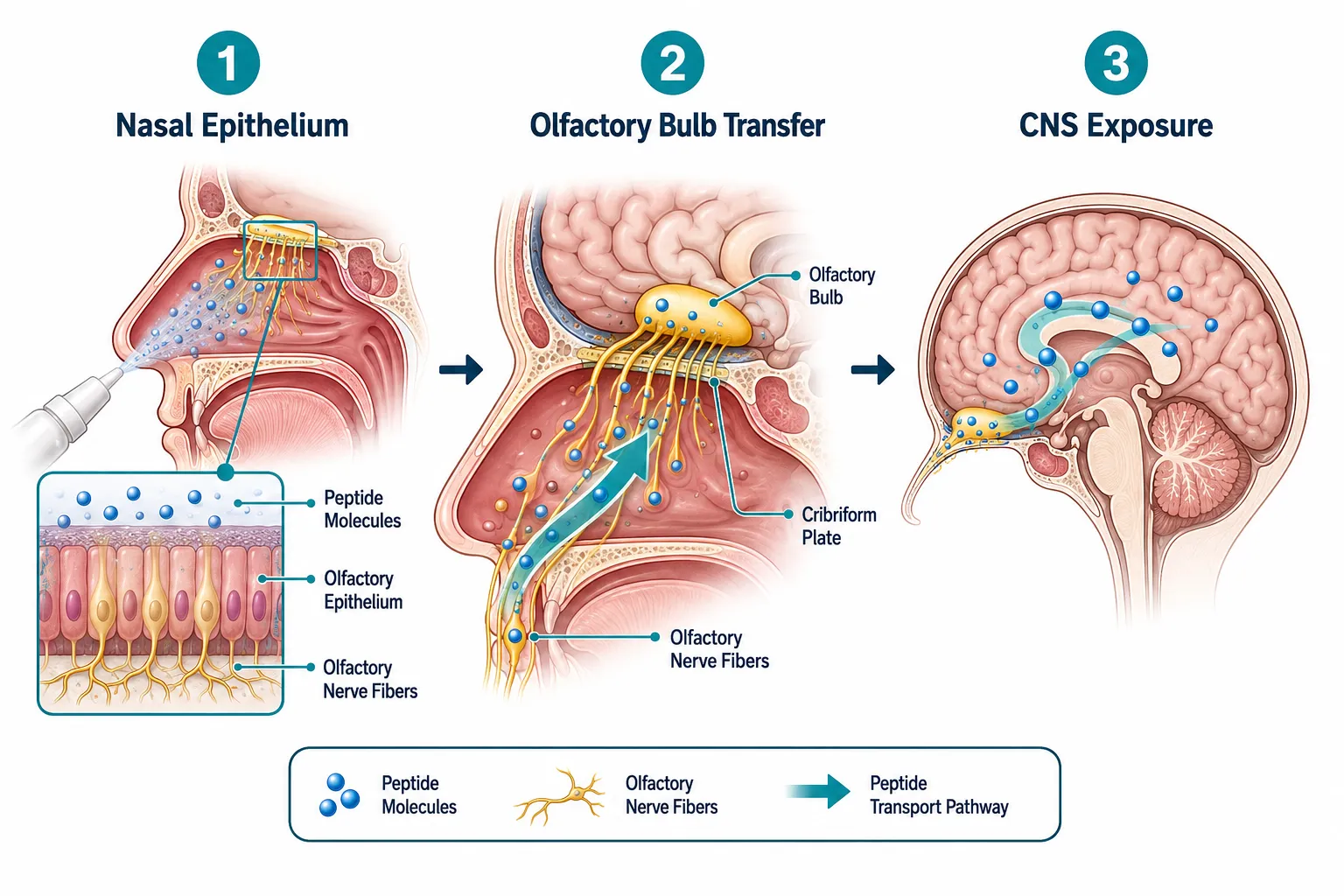
Most peptides face a fundamental problem: the blood-brain barrier degrades or blocks them before they reach meaningful CNS concentrations. Oral delivery is even less efficient, as enzymatic breakdown in the gut eliminates most peptide structures before absorption.

Intranasal delivery sidesteps both obstacles. When a peptide is deposited on the olfactory epithelium, it can travel along olfactory nerve axons directly into the olfactory bulb and from there into deeper brain structures. The trigeminal nerve provides a second parallel pathway. Together, these routes allow compounds to reach the CNS within minutes, at concentrations that systemic injection often cannot match for brain-specific targets.

For Semax, a synthetic heptapeptide analogue of ACTH(4-7), and Selank, a synthetic analogue of the immunomodulatory peptide tuftsin, this anatomy is not incidental. It is the entire rationale for why intranasal formulations became the default in contemporary research protocols. Understanding this mechanism is foundational before evaluating any trial data.

Researchers interested in delivery-route pharmacokinetics will find useful parallel reading in the CJC-1295 without DAC half-life and growth hormone research overview, which addresses how molecular half-life interacts with route of administration in peptide research design.

The 2026 Evidence Landscape: Semax and Selank Under the Microscope
The 2026 Evidence Landscape: Semax and Selank Under the Microscope

Semax: Expanding Trials, Persistent Geographic Concentration

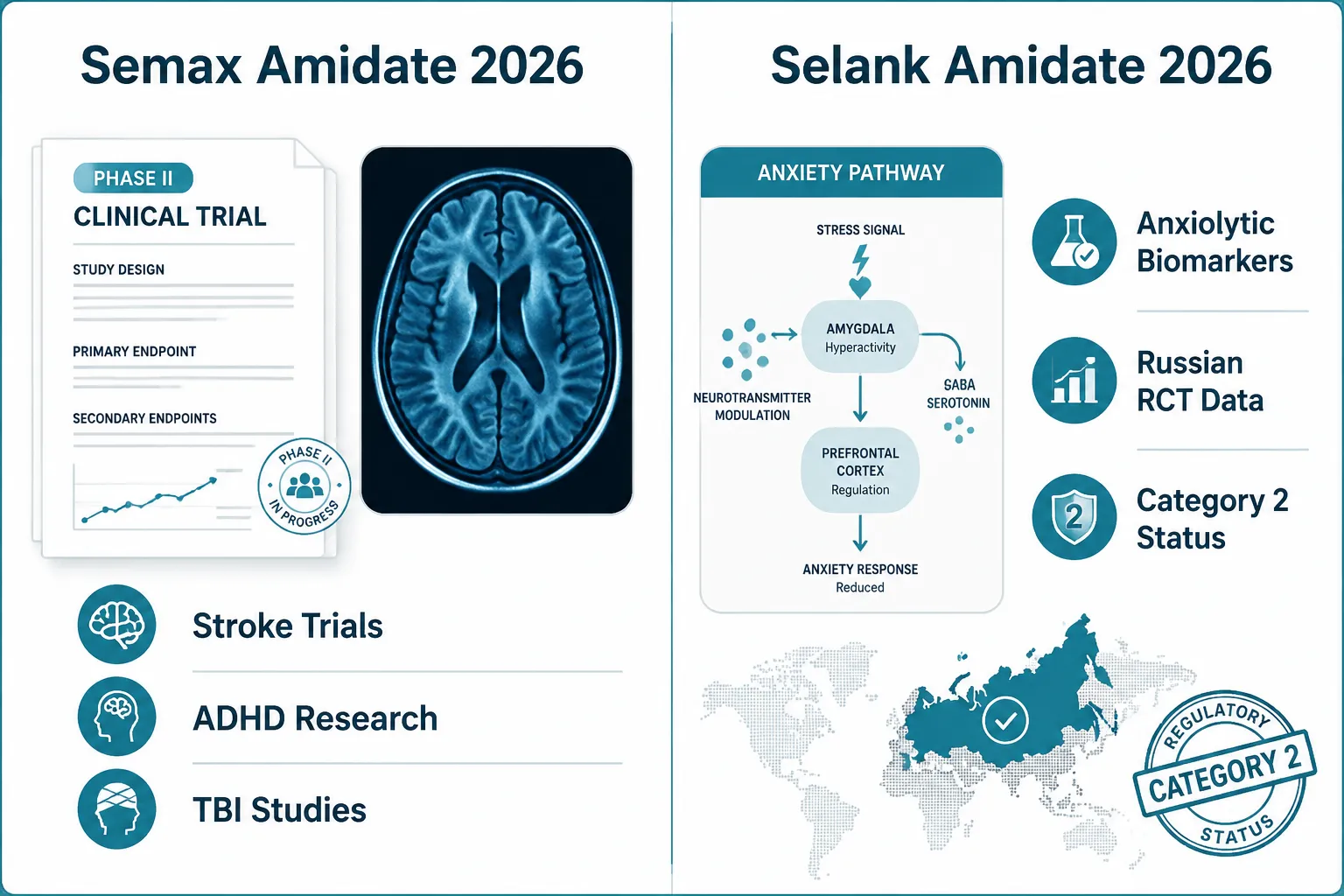
The Semax evidence base has grown in 2026, but it remains heavily Russia-centric. Phase II randomized controlled trials examining Semax Amidate are now active in three clinical areas: ischemic stroke recovery, attention-deficit/hyperactivity disorder, and traumatic brain injury. All three trial designs specify intranasal dosing as the primary administration route, reinforcing the nose-to-brain framing that has characterized this compound's research history.

Preclinical data published in 2026 add a notable dimension. Studies using Alzheimer's-model mice report that intranasal Semax administration was associated with measurable improvements in spatial cognition tasks and reductions in amyloid burden markers. These are early-stage findings, but they have contributed directly to the surge in citation frequency for intranasal neuropeptide delivery as a research topic.

"The intranasal route is not a convenience, it is a mechanistic requirement for compounds designed to act on central targets without systemic dilution."

Selank: Quantified Effect Sizes, Limited Western Replication

Selank's clinical picture is narrower. Its evidence base is almost entirely Russian, drawn from trials conducted over the past two decades. What is new in 2026 is the quality of the synthesis: updated meta-analytic summaries now report standardized effect sizes for Selank's anxiolytic and nootropic endpoints, giving researchers a cleaner statistical baseline than was previously available.

New Phase II RCTs for Selank Amidate are also underway, with trial designs that emphasize intranasal dosing and include mechanistic biomarkers, cytokine panels, BDNF levels, and EEG coherence measures, rather than relying solely on behavioral rating scales.

For background on Selank's mechanism and research context, the What Is Selank overview provides a useful primer. Researchers exploring the broader neuropeptide landscape may also find value in the top 5 research peptides for metabolic health buyer's guide, which situates cognitive peptides within the wider research peptide ecosystem.

Regulatory Status, Safety Data, and What Researchers Should Know in 2026
Regulatory Status, Safety Data, and What Researchers Should Know in 2026

The Regulatory Picture

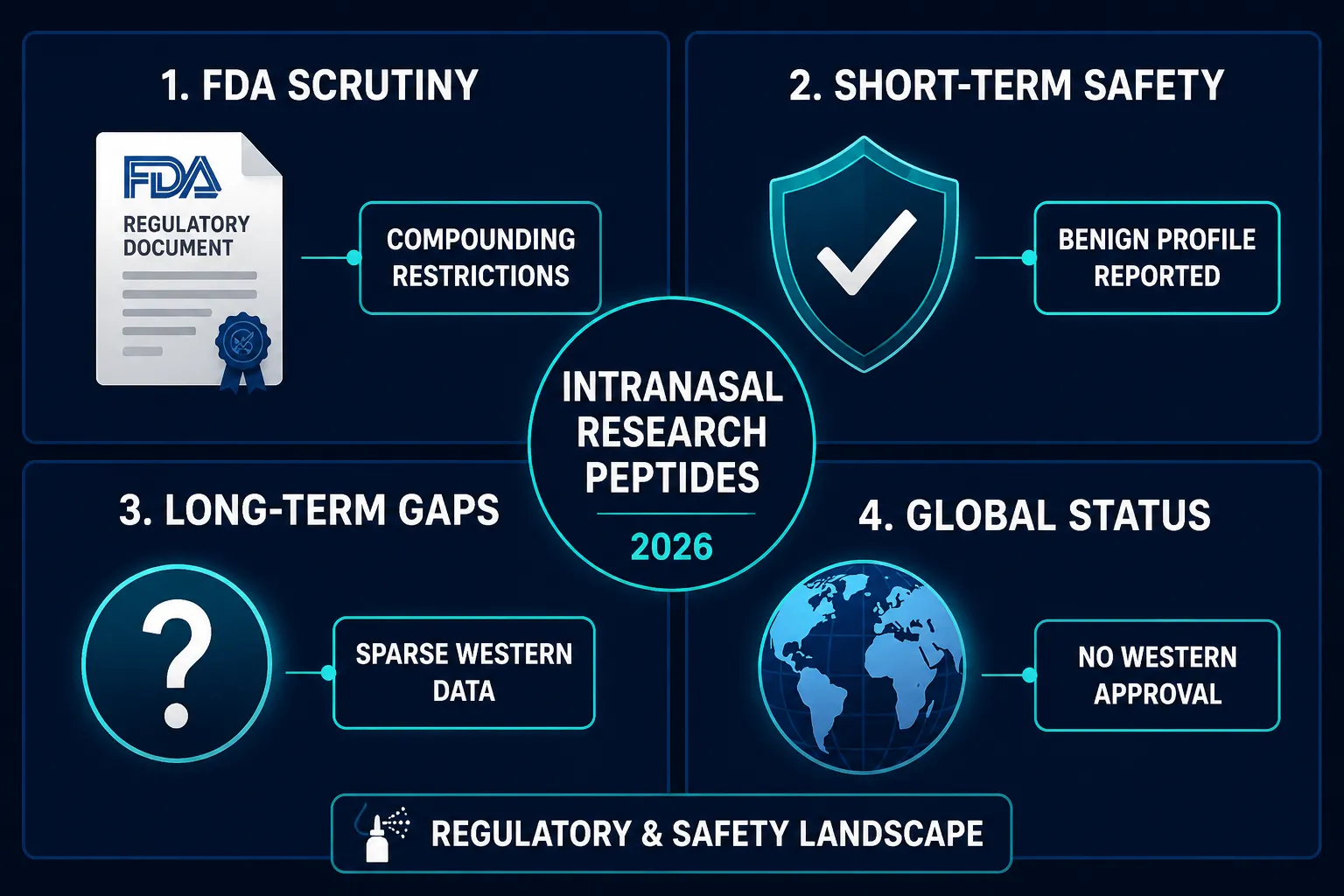
The regulatory environment for intranasal Semax and Selank in 2026 is complicated. In the United States, FDA scrutiny of compounding pharmacies has tightened, and Semax has been subject to restrictions under evolving bulk drug substance rules. Selank occupies an even more uncertain position, it remains unapproved globally and carries a shifting "Category 2" status in US compounding frameworks, meaning no active Western development pathway exists at present.

Researchers should track these developments carefully. Regulatory status affects not only sourcing but also the interpretability of any self-reported use data in observational studies.

Safety Profile: Promising but Incomplete

Short-term trial data for both compounds show generally benign tolerability profiles. Reported adverse events in existing trials are mild and transient, most commonly localized nasal irritation. No serious adverse events have been attributed to either compound in controlled settings.

The critical gap is long-term data. Western pharmacovigilance records for both Semax and Selank are sparse. Researchers drawing conclusions about chronic safety should treat the existing literature as hypothesis-generating rather than definitive. This mirrors challenges seen across the peptide research field, a point addressed in the BPC-157 core peptides documentation first research guide, which outlines similar evidence-quality considerations.

The Broader Nose-to-Brain Research Ecosystem

The surge in intranasal Semax and Selank research interest does not exist in isolation. Intranasal delivery as a CNS drug delivery strategy is attracting investment and trial activity across multiple compound classes in 2026. That broader ecosystem, covering everything from insulin analogues to oxytocin derivatives, is generating methodological infrastructure that benefits smaller-compound research like Semax and Selank by establishing validated biomarker panels and delivery device standards.

Researchers tracking adjacent peptide work may find relevant context in the AOD-9604 research method notes on storage and traceability, which addresses practical research documentation standards applicable across peptide classes.

Conclusion

The sustained growth in research interest around intranasal Semax and Selank in 2026 is grounded in biology, not trend-chasing. The nose-to-brain delivery pathway offers a mechanistically sound solution to the CNS bioavailability problem that limits most peptide compounds. Phase II trials are now active across stroke, ADHD, TBI, and anxiety indications, with intranasal dosing as the standard protocol.

Actionable next steps for researchers:

  • Review the 2026 Phase II trial registrations for Semax Amidate and Selank Amidate to identify open data-sharing opportunities.
  • Prioritize sourcing compounds with verified purity documentation; delivery-route efficiency is irrelevant if compound integrity is uncertain.
  • Monitor FDA compounding rule updates quarterly, as Category 2 status for Selank and bulk drug substance decisions for Semax can shift research access rapidly.
  • Treat current safety data as short-term only; design any observational work with appropriate follow-up windows to contribute to the long-term pharmacovigilance gap.

The delivery route is no longer a secondary consideration in neuropeptide research. In 2026, it is the primary variable, and that shift is what keeps intranasal Semax and Selank at the center of the conversation.

Tags: cns drug delivery, intranasal semax, neuropeptides 2026, nose-to-brain delivery, peptide bioavailability, selank amidate, selank research, semax amidate
https://www.puretestedpeptides.com/wp-content/uploads/2026/08/intranasal-semax-and-selank-in-2026-why-nasal-delivery-keeps-surging-in-research.webp 1024 1536 https://www.puretestedpeptides.com/wp-content/uploads/2026/01/buy-peptides-online.jpg 2026-08-21 13:04:312026-08-21 13:04:31Intranasal Semax and Selank in 2026: Why Nasal Delivery Keeps Surging in Research Interest
You might also like
Klow Blend Peptide Nasal Spray: Research Applications and Bioavailability Considerations Klow Blend Peptide Nasal Spray: Research Applications and Bioavailability Considerations
Peptides vs Classic Small-Molecule Drugs: How Compounds Like Prednisone, Amlodipine, and Metoprolol Differ From Modern Research-Use Peptides Peptides vs Classic Small-Molecule Drugs: How Compounds Like Prednisone, Amlodipine, and Metoprolol Differ From Modern Research-Use Peptides
Selank vs Semax: Which Nootropic Peptide Is Better Suited to Different Research Questions? Selank vs Semax: Which Nootropic Peptide Is Better Suited to Different Research Questions?
Nasal Spray Peptides: Delivery Methods, Bioavailability, and Research Advantages Nasal Spray Peptides: Delivery Methods, Bioavailability, and Research Advantages
Research-Use Only Nasal Spray Peptides: What Labs Should Know Before Buying Semax, Selank, and Klow Nasal Formulations Research-Use Only Nasal Spray Peptides: What Labs Should Know Before Buying Semax, Selank, and Klow Nasal Formulations
Selank Peptide: What It Is, How It Is Studied, and Why Intranasal Delivery Matters Selank Peptide: What It Is, How It Is Studied, and Why Intranasal Delivery Matters
Semax Peptide Nasal Spray: Cognitive Enhancement, Neuroprotection, and Research Protocols Semax Peptide Nasal Spray: Cognitive Enhancement, Neuroprotection, and Research Protocols
0 replies

Leave a Reply

Want to join the discussion?
Feel free to contribute!

Leave a Reply Cancel reply

Your email address will not be published. Required fields are marked *

×

Helpful Links

  • My account
  • Cart
  • Checkout
  • Refund and Returns Policy
  • Privacy Policy
  • SMS Privacy Policy
  • Login
  • My Account
  • Logout

USA Made Lab Tested Peptides

All products are sold for research, laboratory, or analytical purposes only, and are not for human consumption


Pure Tested Peptides is a chemical supplier. Pure Tested Peptides is not a compounding / chemical compounding facility as defined under 503A of the Federal Food, Drug, and Cosmetic act. Pure Tested Peptides is not an outsourcing facility as defined under 503B of the Federal Food, Drug, and Cosmetic act.

The statements made within this website have not been evaluated by the US Food and Drug Administration. The products we offer are not intended to diagnose, treat, cure or prevent any disease.

Human/Animal Consumption Prohibited. Laboratory/In-Vitro Experimental Use Only

Link to: Klow Peptide Nasal Spray: What It Is, How Researchers Evaluate It, and Why Formulation Matters Link to: Klow Peptide Nasal Spray: What It Is, How Researchers Evaluate It, and Why Formulation Matters Klow Peptide Nasal Spray: What It Is, How Researchers Evaluate It, and Why Formulation...Klow Peptide Nasal Spray: What It Is, How Researchers Evaluate It, and Why Formulation Matters Link to: Current Research Questions Around GLP-3 Peptides: What Makes Retatrutide Different From Other Incretin Analogs Link to: Current Research Questions Around GLP-3 Peptides: What Makes Retatrutide Different From Other Incretin Analogs Current Research Questions Around GLP-3 Peptides: What Makes Retatrutide Different From Other Incretin AnalogsCurrent Research Questions Around GLP-3 Peptides: What Makes Retatrutide Different...
Scroll to top Scroll to top Scroll to top