Call or Text 727-513-9780
  • Shopping Cart Shopping Cart
    0Shopping Cart
Pure Tested Peptides | America's most trusted Peptides for sale online
  • Peptides for sale
    • Oral Peptides for sale
      • Peptide Capsules for sale
      • BPC 157 Capsules 1000mcg
      • SLU-PP-332 Capsules | 1000 mcg
      • 5-Amino-1MQ 50mg Capsules
      • Tesofensine 500mcg
    • All Peptides for sale
    • Peptide Sprays
      • BPC 157 Nasal Spray Kit
      • BPC-157 TB500 Nasal Spray Kit
      • Semax Nasal Spray 10mg
      • Selank – Nasal Spray Kit – 10mg
      • Epithalon 50MG Nasal Spray Kit
      • Ipamorelin 10mg Nasal Spray
      • Klow Nasal Spray (BPC-157 + TB-500 + GHK-Cu + KPV) | 80mg
      • Hulk Nasal Spray Tesa / Ipa Blend 6/3 MG
      • Klow Nasal Spray
      • NAD + 500 mg Nasal Spray
      • PT-141 Nasal Spray Kit
    • GHRH Peptides
      • Ipa Peptides
      • CJC-1295 Peptides
        • CJC-1295 with DAC 5 mg
        • CJC-1295 without DAC 5 mg
        • CJC-1295 Ipa 10mg
      • Tesa Peptides
        • Tesa Peptide
        • Tesa 20 mg
    • GHK-Cu Peptides
      • All GHK-Cu Peptides
      • GHK-Cu 100mg
      • KLOW Peptide Blend – Buy KLOW blend online
    • BPC Peptides
      • All BPC Peptides
      • BPC-157
      • BPC-157 TB-500
      • BPC 157 capsules 1000mcg
    • SLU-PP-332 Peptides
      • All SLU-PP-332 Peptides
      • SLU-PP-332 5mg
    • GLP3 Peptides
      • GLP3-R
      • GLP3-R CAG 10mg
      • GLP3-R 20mg
    • PT-141 Peptides
      • PT-141 Peptides for sale
      • PT-141 10mg
      • PT-141 Nasal Spray
    • CAG Peptides
      • Lipo-C Peptide Blend
      • CAG 5mg
      • CAG 10mg
    • MOTS-C Peptides
      • MOTS-C Peptides for sale
      • MOTS-c peptide
      • MOTS-c 10mg *6 pack*
    • 5 Amino 1MQ Peptides
      • 5 Amino 1MQ Peptides for sale
      • 5-Amino-1MQ 50mg Capsules
      • 5-Amino-1MQ 5mg
    • Epithalon Peptides
      • Epithalon Peptides for sale
      • Epithalon 10mg
      • Epithalon 50mg
  • Shop
    • GLPs
      • 5-Amino-1MQ 50mg Capsules
      • 5-Amino-1MQ 5mg
      • GLP3-Reta
      • L-Carnitine 500mg/ml
      • Tesofensine 500mcg
      • SLU-PP-332 5mg
      • MOTS-c 10mg *6 pack*
    • Epithalon & BPC Peptides
      • Epithalon 10mg
      • Epithalon 50mg
      • BPC-157
      • BPC 157 capsules 1000mcg
      • BPC-157 TB-500
      • BPC-157 TB500 Nasal Spray Kit
      • BPC 157 Nasal Spray Kit
    • BPC TB-500 & NAD+ Peptides
      • NAD+ 500 mg
      • KLOW Peptide Blend – Buy KLOW blend online
      • GLOW Peptide Blend
      • TB 500 5mg
      • BPC 157 capsules 1000mcg – Supplement
      • BPC 157 Nasal Spray Kit
      • BPC-157
      • BPC-157 TB500 Nasal Spray Kit
      • BPC-157 TB-500
      • BPC 157 capsules 1000mcg
    • LL-37 Peptide
      • LL-37 10 mg
    • MOTS-C & Selank
      • MOTS-c peptide
      • Selank 10mg
    • GHK Peptides
      • GHK-Cu 100mg
      • GLOW Peptide Blend
      • KLOW Peptide Blend – Buy KLOW blend online
  • COAs
  • Wholesale
    • Wholesale Peptides for sale
  • PTP FAQ
  • Affiliates
    • Selank Peptide: Advanced Pharmacological Mechanisms Underlying Its Anxiolytic and Nootropic Effects in Research
      • 5-Amino-1MQ Peptide: Detailed Mechanisms of NNMT Inhibition and Its Impact on Cellular Metabolism Research
        • MOTS-C Peptide: Unraveling Its Role in Mitochondrial Dynamics and Energy Metabolism Research
          • Epithalon Peptide and Telomerase Regulation: Investigating Its Impact on Cellular Senescence and Lifespan Research Models
            • GLP2-T vs GLP2 Tirz Peptide: Understanding the Naming, Mechanistic Nuances, and Research Implications for Gut Health
      • Peptides and Polypeptides in Modern Pharmacology: What Research on Metoprolol, Prednisone, and Amlodipine Reveals
        • Polypeptide Peptides vs NSAIDs: What Naproxen and Diclofenac Teach Tissue-Repair Researchers About BPC‑157 and TB‑500
          • Peptides and Polypeptides in Endocrine Pharmacology: How GLP-1, GLP-2, and GLP-3 Retatrutide Differ From Classic Drugs Like Prednisone and Amlodipine
          • 5‑Amino‑1MQ Peptide and NNMT Inhibition: How It Compares With Statins Like Atorvastatin in Adipose and Lipid Metabolism Research
      • Enclomiphene, Estrogen Receptor Signaling, and Luteinizing Phase Biology: What Hormone Researchers Should Measure
        • Mesenchymal Stem Cells, BPC‑157, and GHK‑Cu: How Tissue Repair Peptides Compare With Classic NSAIDs Like Naproxen in Injury Models
          • Peptide Calculator Use Cases Beyond Growth Hormone: Working Through GLP‑3 Retatrutide, MOTS‑c, and BPC‑157 Research Dosing
        • Polypeptide Peptides in Endocrine and Metabolic Pharmacology: Lessons From Amlodipine, Prednisone, and Metoprolol
        • Peptides Calculator for Advanced Blends: Worked Examples for Tesamorelin, CJC‑1295, and Ipamorelin Stacks
          • Peptides and Polypeptides in Human Physiology: How Molecular Size Shapes Research Applications
            • Selank Peptide: Advanced Pharmacological Mechanisms Underlying Its Anxiolytic and Nootropic Effects in Research
          • 5-Amino-1MQ Peptide: Detailed Mechanisms of NNMT Inhibition and Its Impact on Cellular Metabolism Research
            • MOTS-C Peptide: Unraveling Its Role in Mitochondrial Dynamics and Energy Metabolism Research
              • Epithalon Peptide and Telomerase Regulation: Investigating Its Impact on Cellular Senescence and Lifespan Research Models
                • GLP2-T vs GLP2 Tirz Peptide: Understanding the Naming, Mechanistic Nuances, and Research Implications for Gut Health
                  • Peptides and Polypeptides in Endocrine Pharmacology: How GLP-1, GLP-2, and GLP-3 Retatrutide Differ From Classic Drugs Like Prednisone and Amlodipine
                    • Polypeptide Peptides vs NSAIDs: What Naproxen and Diclofenac Teach Tissue-Repair Researchers About BPC‑157 and TB‑500
                      • Peptides and Polypeptides in Modern Pharmacology: What Research on Metoprolol, Prednisone, and Amlodipine Reveals
                        • 5‑Amino‑1MQ Peptide and NNMT Inhibition: How It Compares With Statins Like Atorvastatin in Adipose and Lipid Metabolism Research
                        • Enclomiphene, Estrogen Receptor Signaling, and Luteinizing Phase Biology: What Hormone Researchers Should Measure
                        • Mesenchymal Stem Cells, BPC‑157, and GHK‑Cu: How Tissue Repair Peptides Compare With Classic NSAIDs Like Naproxen in Injury Models
                        • Peptide Calculator Use Cases Beyond Growth Hormone: Working Through GLP‑3 Retatrutide, MOTS‑c, and BPC‑157 Research Dosing
                        • Polypeptide Peptides in Endocrine and Metabolic Pharmacology: Lessons From Amlodipine, Prednisone, and Metoprolol
                        • Peptides Calculator for Advanced Blends: Worked Examples for Tesamorelin, CJC‑1295, and Ipamorelin Stacks
                        • Peptides and Polypeptides in Human Physiology: How Molecular Size Shapes Research Applications
                        • Selank Peptide: Advanced Pharmacological Mechanisms Underlying Its Anxiolytic and Nootropic Effects in Research
                        • MOTS-C Peptide: Unraveling Its Role in Mitochondrial Dynamics and Energy Metabolism Research
                        • Peptides and Polypeptides in Modern Pharmacology: What Research on Metoprolol, Prednisone, and Amlodipine Reveals
                        • Peptides and Polypeptides in Endocrine Pharmacology: How GLP-1, GLP-2, and GLP-3 Retatrutide Differ From Classic Drugs Like Prednisone and Amlodipine
                        • 5-Amino-1MQ Peptide: Detailed Mechanisms of NNMT Inhibition and Its Impact on Cellular Metabolism Research
                        • Mesenchymal Stem Cells, BPC‑157, and GHK‑Cu: How Tissue Repair Peptides Compare With Classic NSAIDs Like Naproxen in Injury Models
                        • Peptide Calculator Use Cases Beyond Growth Hormone: Working Through GLP‑3 Retatrutide, MOTS‑c, and BPC‑157 Research Dosing
                        • GLP2-T vs GLP2 Tirz Peptide: Understanding the Naming, Mechanistic Nuances, and Research Implications for Gut Health
                        • Polypeptide Peptides in Endocrine and Metabolic Pharmacology: Lessons From Amlodipine, Prednisone, and Metoprolol
                        • Polypeptide Peptides vs NSAIDs: What Naproxen and Diclofenac Teach Tissue-Repair Researchers About BPC‑157 and TB‑500
                        • Peptides and Polypeptides in Human Physiology: How Molecular Size Shapes Research Applications
                        • Peptides Calculator for Advanced Blends: Worked Examples for Tesamorelin, CJC‑1295, and Ipamorelin Stacks
                        • 5‑Amino‑1MQ Peptide and NNMT Inhibition: How It Compares With Statins Like Atorvastatin in Adipose and Lipid Metabolism Research
                        • Enclomiphene, Estrogen Receptor Signaling, and Luteinizing Phase Biology: What Hormone Researchers Should Measure
                        • Epithalon Peptide and Telomerase Regulation: Investigating Its Impact on Cellular Senescence and Lifespan Research Models
                        • Best research protocol Klow blend
                        • best time to take BPC-157
                        • best time to take DSIP (Delta Sleep Inducing Peptide)
                        • best time to take CJC-1295
                        • best time to take AOD-9604
                        • best time to take Follistatin 344
                        • best time to take Ipamorelin
                        • best time to take MK-677 (Ibutamoren)
                        • best time to take Ligandrol (LGD-4033) — research compound
                        • best time to take Ostarine (MK-2866) — research compound
                        • best time to take GHK-CU
                        • best time to take TB-500
                        • best time to take MOTS-c
                        • best time to take Semax
                        • best time to take RAD-140 (Testolone) — research compound
                        • best time to take Thymosin Alpha-1
                        • best time to take PEG-MGF
                        • Biolife Plasma, Octapharma Plasma, and Research Peptides: How Plasma Donation Labs Differ From Peptide Suppliers
                        • best time to take YK-11 — research compound
                        • best time to take PT-141 (Bremelanotide)
                        • Best research protocol Klow blend
                        • 5-Amino-1MQ and MOTS-C Synergy: Metabolic Signaling, Mitochondria, and Research Design
                        • BPC-157 and TB-500: Investigating Their Combined Effects on Angiogenesis and Cellular Migration in Tissue Repair Models
                        • BPC-157 Peptide: Gut Barrier Function, Inflammation, and Tissue-Recovery Research
                        • 5‑Amino‑1MQ and MOTS‑c Synergy in Metabolic Research: Designing NNMT and Mitochondrial Biogenesis Stacks
                        • CJC-1295 with DAC vs. Without DAC: Half-Life, Release Kinetics, and Research Implications
                        • CJC‑1295 with DAC vs. Without DAC: Expanding on Half‑Life Differences Using Tesamorelin and Ipamorelin Blend Case Studies
                        • Collagen Biology and Copper‑Binding Peptides: How GHK‑Cu, Glow Blend, and Klow Blend Interact with Skin and Connective Tissue
                        • Collagen Biology and Regenerative Peptides: How GHK‑Cu, Glow Blend, and Klow Blend Affect Extracellular Matrix Research
                    • DNA, Telomeres, and Longevity Peptides: Positioning Epithalon and MOTS‑c in Genetic Aging Research
                      • Enclomiphene Citrate: serm Mechanism, Testosterone Research, and Stack Compatibility
                        • Enclomiphene vs Enclomiphene Citrate: Formulation, Bioavailability, and Research Distinctions
                        • Epithalon Peptide Research: Telomerase Activation, Aging, and Pineal Gland Function
                        • Estrogen Receptor Signaling and Enclomiphene: How Selective Modulators Compare with Classic Polypeptide Hormones
                        • GHK-Cu Peptide: Advanced Mechanisms in Extracellular Matrix Remodeling and Wound Healing Research
                        • GHK-Cu Peptide: Collagen Synthesis, Wound Repair, and Skin-Barrier Research Models
                        • GLP-1 vs GLP-3 vs GLP-2: Peptide Classification and Research Applications
                        • GLP-2 Peptide Research Guide: Gut Barrier Function, Nutrient Absorption, and Intestinal Recovery Models
                        • GLP-3 Retatrutide vs. GLP-1 Drugs: What Triple-Agonist Biology Changes in Research Models
                        • Ipamorelin and Tesamorelin Combination: Synergistic GH Secretagogue Research and Dosing Protocols
                        • GLP2 Tirz Peptide: What It Is, Why the Name Exists, and How Researchers Should Interpret It
                        • Klow Blend Peptide Nasal Spray: What the Formulation Is Trying to Do in Cognitive Research
                        • Mitochondria, NNMT Inhibition, and Peptide Modulators: Where MOTS‑c and 5‑Amino‑1MQ Fit in Cellular Energy Research
                        • MOTS-c Peptide: Mitochondrial Function, Energy Metabolism, and What Researchers Measure
                        • MOTS-c vs. 5-Amino-1MQ: Which Metabolic Research Questions Each Compound Actually Answers
                        • Nasal Spray Peptides: Bioavailability, Administration, and Semax/Selank Research Applications
                        • PT-141 Peptide Research: Mechanism of Action and Melanocortin Receptor Signaling
                        • Retatrutide for Research: Mechanism, Structure, and GLP-1/GLP-3 Dual Action
                        • Retatrutide for Obesity and Type 2 Diabetes: What the Latest Trial Data Suggest
                        • Tesofensine Peptide Research: Mechanism, Appetite Suppression, and Neuropeptide Y Pathways
  • Contact
    • Contact Customer Service
    • Text Customer Support
  • About US
  • Shop all peptides
  • Affiliate Program
    • Affiliate Signup
  • Login / Register Login / Register Page Link Login / Register Page Link
  • Click to open the search input field Click to open the search input field Search
  • Menu Menu
Nasal Spray Peptides: Bioavailability, Administration Routes, and Research Design Considerations

Nasal Spray Peptides: Bioavailability, Administration Routes, and Research Design Considerations

August 30, 2026/0 Comments/in Uncategorized/by

Only about 1% of parathyroid hormone (PTH 1-34) administered as a nasal spray reaches systemic circulation compared to subcutaneous injection, a stark reminder that the intranasal route is far from a simple swap for the needle. For researchers studying peptides such as Semax, Selank, or experimental blends, understanding the pharmacokinetic realities of nasal delivery is not optional. It is foundational.

This guide covers the core principles behind Nasal Spray Peptides: Bioavailability, Administration Routes, and Research Design Considerations, giving researchers the framework needed to design rigorous, reproducible studies.

Key Takeaways

  • Nasal bioavailability for most peptides remains in the low single digits, with molecular weight being the primary limiting factor.
  • Small peptides under approximately 1 kDa can achieve meaningfully higher nasal absorption in optimized formulations.
  • Device type and spray deposition can alter bioavailability by two to three times compared to nasal drops.
  • The nose-to-brain pathway offers a unique research advantage: direct CNS exposure without proportionally high systemic levels.
  • Robust study design for intranasal peptides requires specific pharmacokinetic controls, formulation documentation, and safety monitoring of the nasal mucosa.

Bioavailability Fundamentals for Intranasal Peptides
Bioavailability Fundamentals for Intranasal Peptides

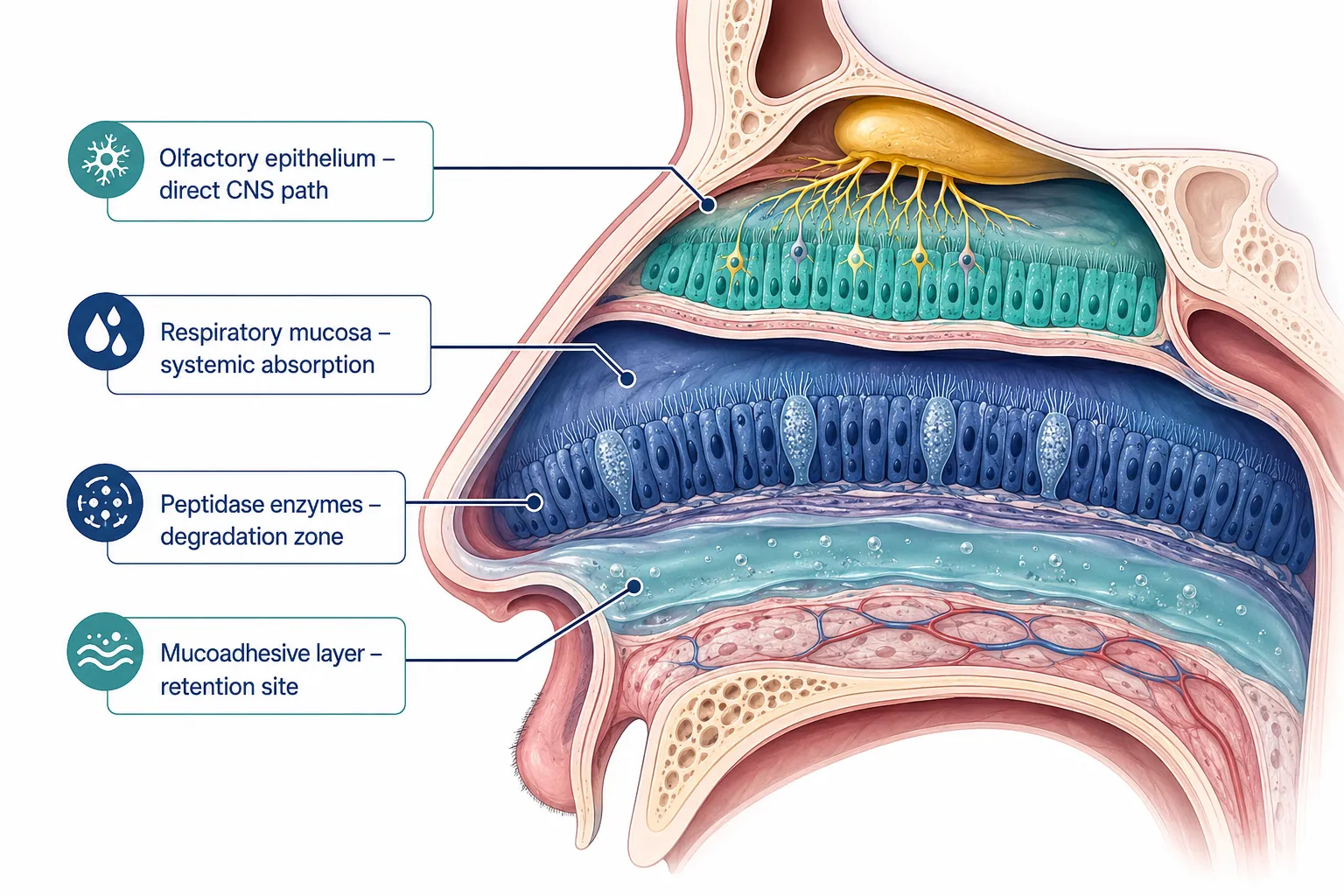
The nasal mucosa presents both an opportunity and a barrier. On one hand, it offers a highly vascularized surface with relatively thin epithelium. On the other hand, active peptidase enzymes, rapid mucociliary clearance, and tight epithelial junctions work against peptide absorption.

Molecular weight is the single most predictive factor. Peptides above roughly 1,000 to 2,000 Daltons rarely exceed 10 to 20% nasal bioavailability, even when absorption enhancers are used. Smaller peptides, those under approximately 1 kDa, can be outliers. In optimized spray formulations, some small peptides achieve bioavailability figures that rival alternative non-injectable routes.

The broader consensus, however, is sobering: most nasal peptide sprays available for research lack any published human pharmacokinetic data. This gap makes it difficult to draw firm conclusions about relative bioavailability without controlled study conditions.

"For peptides above 2,000 Da, researchers should treat nasal bioavailability as a variable to be measured, not assumed."

Peptides like Selank, studied for intranasal delivery, illustrate the complexity well. Their small size and neuropeptide profile make them candidates for meaningful nasal absorption, yet precise human PK data remains limited in the published literature. Similarly, Semax research protocols frequently reference intranasal administration as the primary route, underlining the practical importance of understanding these delivery dynamics.

Key bioavailability factors at a glance:

Factor Effect on Nasal Bioavailability
Molecular weight >2,000 Da Strongly reduces absorption
Peptidase activity Degrades peptide before absorption
Mucociliary clearance Removes formulation before uptake
Mucoadhesive excipients Extends contact time, improves uptake
Absorption enhancers Can improve permeation but carry toxicity risk

Administration Routes and Formulation Choices
Administration Routes and Formulation Choices

Not all intranasal delivery is equal. The physical device and formulation together determine how much peptide reaches the absorptive epithelium, and in what condition.

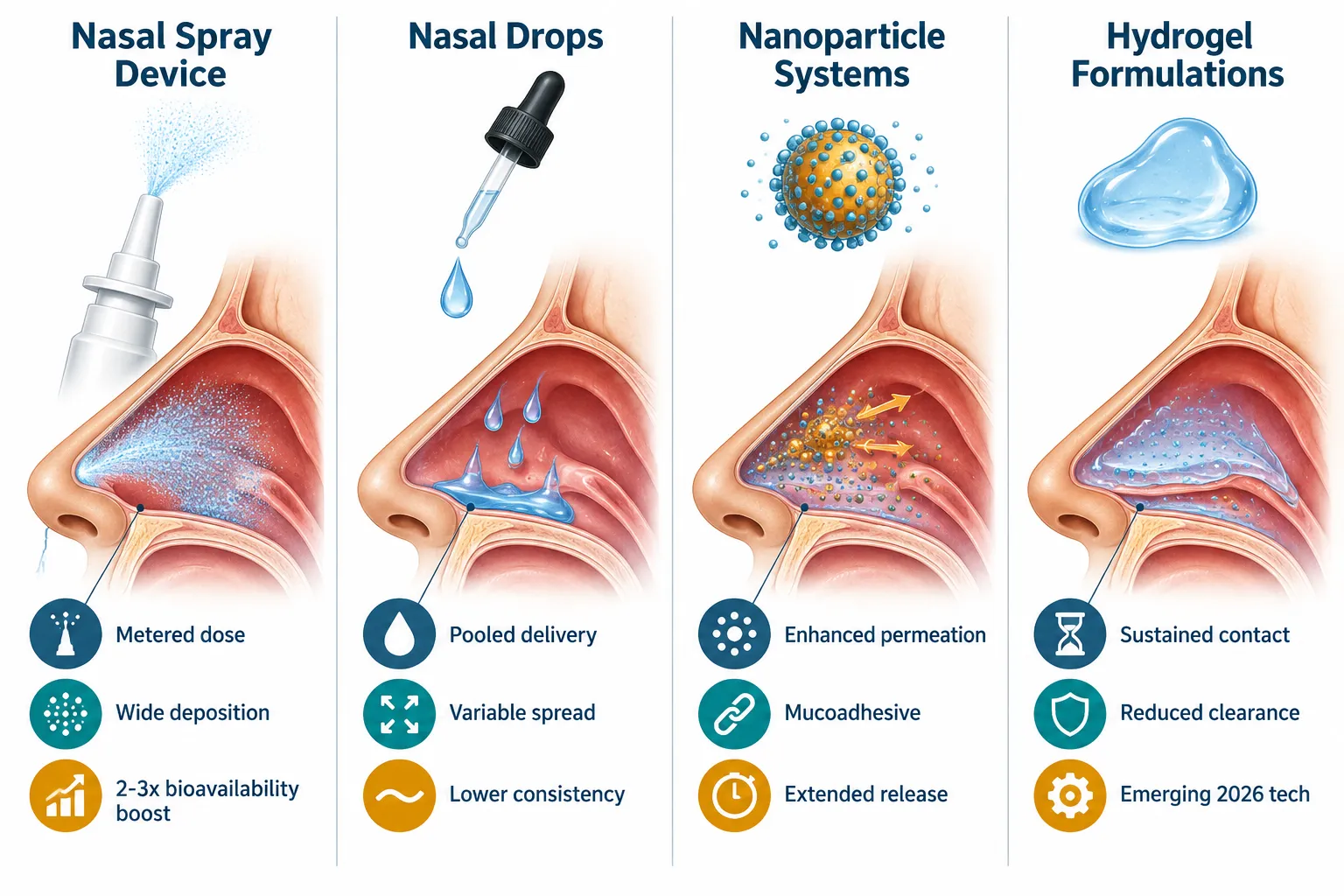
Spray versus drops is the most fundamental choice. Research data consistently shows that a well-calibrated nasal spray device can deliver two to three times the bioavailability of simple nasal drops for the same peptide formulation. Sprays create finer droplets with wider mucosal coverage, while drops tend to pool in the anterior nasal cavity and drain quickly.

Advanced delivery systems are a major focus of 2026 research activity:

  • Nanoparticle systems, Encapsulate the peptide, protect it from peptidases, and improve epithelial permeation.
  • Mucoadhesive hydrogels, Extend residence time on the mucosal surface, reducing the impact of mucociliary clearance.
  • Cyclodextrin complexes, Improve solubility and membrane interaction for hydrophobic peptides.

The nose-to-brain (N2B) pathway deserves special attention. Imaging studies confirm that certain neuropeptides can reach the CNS via olfactory and trigeminal nerve pathways without generating proportionally high systemic plasma levels. This makes intranasal delivery uniquely valuable for signaling peptides targeting neurological endpoints, where systemic exposure may be undesirable.

For researchers exploring systemic peptide research alongside intranasal routes, it is worth noting that the N2B pathway and systemic absorption are not mutually exclusive, both can occur simultaneously, complicating PK interpretation if not controlled for.

Research Design Considerations for Nasal Spray Peptide Studies
Research Design Considerations for Nasal Spray Peptide Studies

Designing a rigorous study around Nasal Spray Peptides: Bioavailability, Administration Routes, and Research Design Considerations requires attention to variables that injectable peptide studies often ignore.

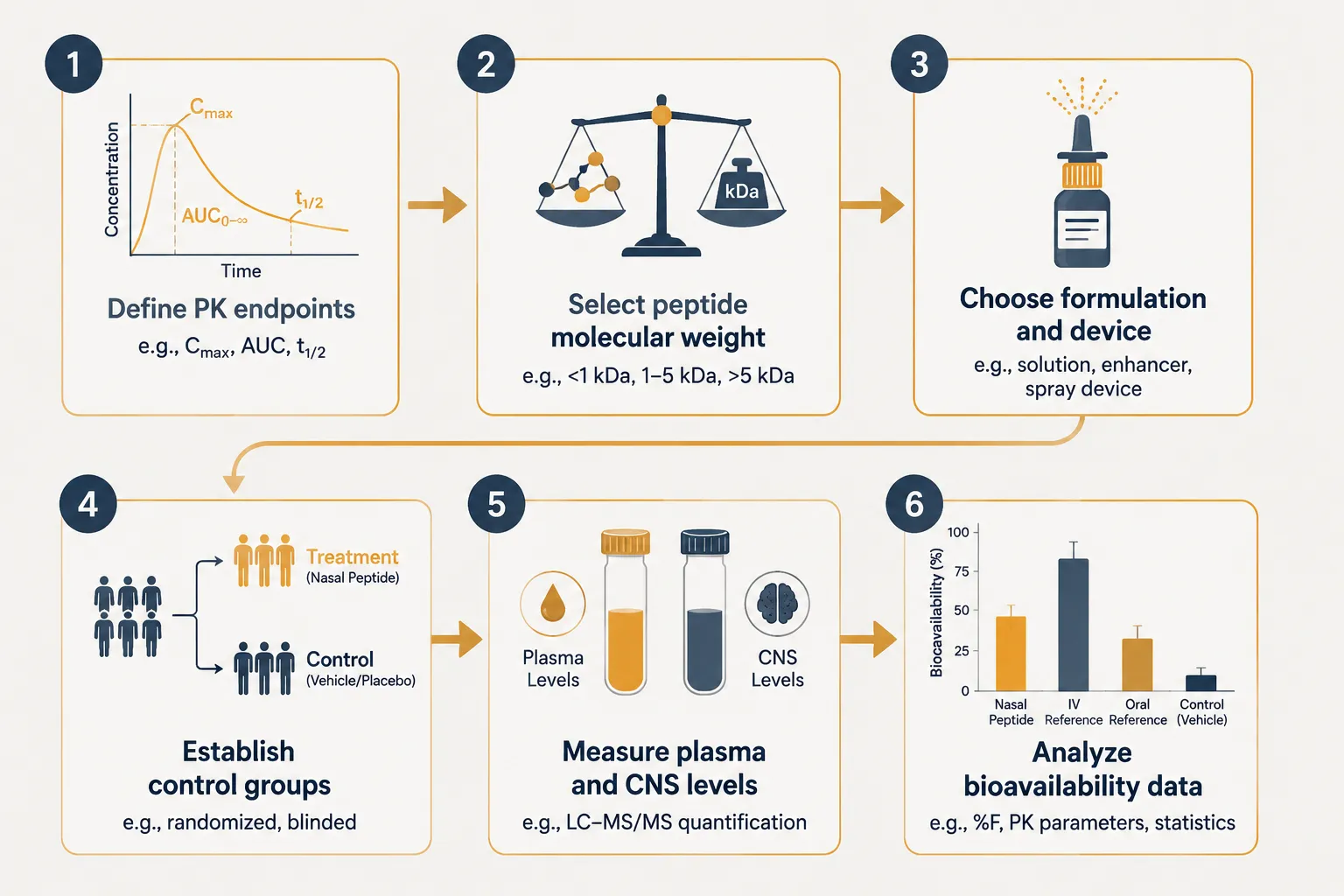
Critical design elements include:

  1. Pharmacokinetic endpoint selection, Define whether the study measures systemic plasma levels, CNS exposure (via CSF sampling in animal models), or tissue-specific concentrations.
  2. Molecular weight documentation, Record the exact peptide mass and purity. Impurities can alter absorption profiles significantly. Third-party peptide testing is a non-negotiable quality step before any PK study.
  3. Device standardization, Specify the spray device, actuation force, droplet size distribution, and delivered dose per actuation. Variation here destroys reproducibility.
  4. Formulation controls, Document pH, osmolarity, excipient identity, and enhancer concentration. Enhancers such as chitosan or bile salts improve absorption but carry dose-dependent mucosal toxicity risks.
  5. Comparison arms, Include a subcutaneous or intravenous reference arm to calculate relative bioavailability. Without this, absolute absorption data is uninterpretable.
  6. Nasal mucosa safety monitoring, Assess ciliotoxicity, mucosal inflammation, and barrier integrity, particularly in repeat-dose designs.

Researchers working with study design peptides should also account for inter-subject variability in nasal anatomy, mucosal hydration, and baseline peptidase activity. These factors can create wide confidence intervals if sample sizes are not powered appropriately.

For neuropeptide-focused investigations, the Selank research literature provides useful precedent for combining behavioral endpoints with PK measurements in rodent models, a design approach transferable to other intranasal peptide candidates.

Common research design pitfalls:

  • Assuming bioavailability from one peptide applies to another of similar size
  • Failing to control for nasal congestion or mucosal inflammation in subjects
  • Using non-validated spray devices with inconsistent dose delivery
  • Omitting a systemic reference arm, making relative bioavailability calculations impossible

Conclusion

Intranasal peptide delivery sits at the intersection of pharmacology, formulation science, and study design rigor. The core message from available research is clear: bioavailability for most nasal spray peptides is low, highly variable, and heavily dependent on molecular weight, formulation, and device quality.

Actionable next steps for researchers:

  • Confirm peptide molecular weight and purity through third-party peptide testing before initiating any PK study.
  • Select a calibrated, metered-dose spray device and document all device parameters.
  • Design studies with a subcutaneous or IV reference arm to calculate true relative bioavailability.
  • Consider advanced formulation strategies, nanoparticles, mucoadhesive systems, for peptides above 1,000 Da.
  • Monitor nasal mucosal safety in all repeat-dose protocols.

Understanding Nasal Spray Peptides: Bioavailability, Administration Routes, and Research Design Considerations at this level of detail is what separates publishable, reproducible research from inconclusive data. The intranasal route holds genuine promise, but only for researchers who respect its pharmacokinetic constraints.

Tags: intranasal peptide delivery, nasal spray peptides, nose-to-brain pathway, peptide bioavailability, peptide pharmacokinetics, selank intranasal, semax research, study design peptides
https://www.puretestedpeptides.com/wp-content/uploads/2026/08/nasal-spray-peptides-bioavailability-administration-routes-and-research-design-c.webp 1024 1536 https://www.puretestedpeptides.com/wp-content/uploads/2026/01/buy-peptides-online.jpg 2026-08-30 13:04:592026-08-30 13:04:59Nasal Spray Peptides: Bioavailability, Administration Routes, and Research Design Considerations
You might also like
Nasal Spray Peptides: Delivery Methods, Bioavailability, and Research Advantages Nasal Spray Peptides: Delivery Methods, Bioavailability, and Research Advantages
Intranasal Semax and Selank in 2026: Why Nasal Delivery Keeps Surging in Research Interest Intranasal Semax and Selank in 2026: Why Nasal Delivery Keeps Surging in Research Interest
Research-Use Only Nasal Spray Peptides: What Labs Should Know Before Buying Semax, Selank, and Klow Nasal Formulations Research-Use Only Nasal Spray Peptides: What Labs Should Know Before Buying Semax, Selank, and Klow Nasal Formulations
Semax Peptide Nasal Spray: Cognitive Enhancement, Neuroprotection, and Research Protocols Semax Peptide Nasal Spray: Cognitive Enhancement, Neuroprotection, and Research Protocols
Semax Peptide Nasal Spray: Administration, Dosing Concepts, and Research Applications Semax Peptide Nasal Spray: Administration, Dosing Concepts, and Research Applications
Peptides vs Classic Small-Molecule Drugs: How Compounds Like Prednisone, Amlodipine, and Metoprolol Differ From Modern Research-Use Peptides Peptides vs Classic Small-Molecule Drugs: How Compounds Like Prednisone, Amlodipine, and Metoprolol Differ From Modern Research-Use Peptides
Selank Peptide: What It Is, How It Is Studied, and Why Intranasal Delivery Matters Selank Peptide: What It Is, How It Is Studied, and Why Intranasal Delivery Matters
Klow Blend Peptide Nasal Spray: Research Applications and Bioavailability Considerations Klow Blend Peptide Nasal Spray: Research Applications and Bioavailability Considerations
0 replies

Leave a Reply

Want to join the discussion?
Feel free to contribute!

Leave a Reply Cancel reply

Your email address will not be published. Required fields are marked *

×

Helpful Links

  • My account
  • Cart
  • Checkout
  • Refund and Returns Policy
  • Privacy Policy
  • SMS Privacy Policy
  • Login
  • My Account
  • Logout

USA Made Lab Tested Peptides

All products are sold for research, laboratory, or analytical purposes only, and are not for human consumption


Pure Tested Peptides is a chemical supplier. Pure Tested Peptides is not a compounding / chemical compounding facility as defined under 503A of the Federal Food, Drug, and Cosmetic act. Pure Tested Peptides is not an outsourcing facility as defined under 503B of the Federal Food, Drug, and Cosmetic act.

The statements made within this website have not been evaluated by the US Food and Drug Administration. The products we offer are not intended to diagnose, treat, cure or prevent any disease.

Human/Animal Consumption Prohibited. Laboratory/In-Vitro Experimental Use Only

Link to: MOTS‑c and 5‑Amino‑1MQ Beyond Adiposity: How Labs Are Starting to Explore Cognitive, Cardiometabolic, and Longevity Endpoints Link to: MOTS‑c and 5‑Amino‑1MQ Beyond Adiposity: How Labs Are Starting to Explore Cognitive, Cardiometabolic, and Longevity Endpoints MOTS‑c and 5‑Amino‑1MQ Beyond Adiposity: How Labs Are Starting to Explore...MOTS‑c and 5‑Amino‑1MQ Beyond Adiposity: How Labs Are Starting to Explore Cognitive, Cardiometabolic, and Longevity Endpoints Link to: BPC-157 and TB-500 Synergy: Advanced Tissue Repair and Regeneration Protocols Link to: BPC-157 and TB-500 Synergy: Advanced Tissue Repair and Regeneration Protocols BPC-157 and TB-500 Synergy: Advanced Tissue Repair and Regeneration ProtocolsBPC-157 and TB-500 Synergy: Advanced Tissue Repair and Regeneration Protoco...
Scroll to top Scroll to top Scroll to top