Call or Text 727-513-9780
  • Shopping Cart Shopping Cart
    0Shopping Cart
Pure Tested Peptides | America's most trusted Peptides for sale online
  • Peptides for sale
    • Oral Peptides for sale
      • Peptide Capsules for sale
      • BPC 157 Capsules 1000mcg
      • SLU-PP-332 Capsules | 1000 mcg
      • 5-Amino-1MQ 50mg Capsules
      • Tesofensine 500mcg
    • All Peptides for sale
    • Peptide Sprays
      • BPC 157 Nasal Spray Kit
      • BPC-157 TB500 Nasal Spray Kit
      • Semax Nasal Spray 10mg
      • Selank – Nasal Spray Kit – 10mg
      • Epithalon 50MG Nasal Spray Kit
      • Ipamorelin 10mg Nasal Spray
      • Klow Nasal Spray (BPC-157 + TB-500 + GHK-Cu + KPV) | 80mg
      • Hulk Nasal Spray Tesa / Ipa Blend 6/3 MG
      • Klow Nasal Spray
      • NAD + 500 mg Nasal Spray
      • PT-141 Nasal Spray Kit
    • GHRH Peptides
      • Ipa Peptides
      • CJC-1295 Peptides
        • CJC-1295 with DAC 5 mg
        • CJC-1295 without DAC 5 mg
        • CJC-1295 Ipa 10mg
      • Tesa Peptides
        • Tesa Peptide
        • Tesa 20 mg
    • GHK-Cu Peptides
      • All GHK-Cu Peptides
      • GHK-Cu 100mg
      • KLOW Peptide Blend – Buy KLOW blend online
    • BPC Peptides
      • All BPC Peptides
      • BPC-157
      • BPC-157 TB-500
      • BPC 157 capsules 1000mcg
    • SLU-PP-332 Peptides
      • All SLU-PP-332 Peptides
      • SLU-PP-332 5mg
    • GLP3 Peptides
      • GLP3-R
      • GLP3-R CAG 10mg
      • GLP3-R 20mg
    • PT-141 Peptides
      • PT-141 Peptides for sale
      • PT-141 10mg
      • PT-141 Nasal Spray
    • CAG Peptides
      • Lipo-C Peptide Blend
      • CAG 5mg
      • CAG 10mg
    • MOTS-C Peptides
      • MOTS-C Peptides for sale
      • MOTS-c peptide
      • MOTS-c 10mg *6 pack*
    • 5 Amino 1MQ Peptides
      • 5 Amino 1MQ Peptides for sale
      • 5-Amino-1MQ 50mg Capsules
      • 5-Amino-1MQ 5mg
    • Epithalon Peptides
      • Epithalon Peptides for sale
      • Epithalon 10mg
      • Epithalon 50mg
  • Shop
    • GLPs
      • 5-Amino-1MQ 50mg Capsules
      • 5-Amino-1MQ 5mg
      • GLP3-Reta
      • L-Carnitine 500mg/ml
      • Tesofensine 500mcg
      • SLU-PP-332 5mg
      • MOTS-c 10mg *6 pack*
    • Epithalon & BPC Peptides
      • Epithalon 10mg
      • Epithalon 50mg
      • BPC-157
      • BPC 157 capsules 1000mcg
      • BPC-157 TB-500
      • BPC-157 TB500 Nasal Spray Kit
      • BPC 157 Nasal Spray Kit
    • BPC TB-500 & NAD+ Peptides
      • NAD+ 500 mg
      • KLOW Peptide Blend – Buy KLOW blend online
      • GLOW Peptide Blend
      • TB 500 5mg
      • BPC 157 capsules 1000mcg – Supplement
      • BPC 157 Nasal Spray Kit
      • BPC-157
      • BPC-157 TB500 Nasal Spray Kit
      • BPC-157 TB-500
      • BPC 157 capsules 1000mcg
    • LL-37 Peptide
      • LL-37 10 mg
    • MOTS-C & Selank
      • MOTS-c peptide
      • Selank 10mg
    • GHK Peptides
      • GHK-Cu 100mg
      • GLOW Peptide Blend
      • KLOW Peptide Blend – Buy KLOW blend online
  • COAs
  • Wholesale
    • Wholesale Peptides for sale
  • PTP FAQ
  • Affiliates
    • Selank Peptide: Advanced Pharmacological Mechanisms Underlying Its Anxiolytic and Nootropic Effects in Research
      • 5-Amino-1MQ Peptide: Detailed Mechanisms of NNMT Inhibition and Its Impact on Cellular Metabolism Research
        • MOTS-C Peptide: Unraveling Its Role in Mitochondrial Dynamics and Energy Metabolism Research
          • Epithalon Peptide and Telomerase Regulation: Investigating Its Impact on Cellular Senescence and Lifespan Research Models
            • GLP2-T vs GLP2 Tirz Peptide: Understanding the Naming, Mechanistic Nuances, and Research Implications for Gut Health
      • Peptides and Polypeptides in Modern Pharmacology: What Research on Metoprolol, Prednisone, and Amlodipine Reveals
        • Polypeptide Peptides vs NSAIDs: What Naproxen and Diclofenac Teach Tissue-Repair Researchers About BPC‑157 and TB‑500
          • Peptides and Polypeptides in Endocrine Pharmacology: How GLP-1, GLP-2, and GLP-3 Retatrutide Differ From Classic Drugs Like Prednisone and Amlodipine
          • 5‑Amino‑1MQ Peptide and NNMT Inhibition: How It Compares With Statins Like Atorvastatin in Adipose and Lipid Metabolism Research
      • Enclomiphene, Estrogen Receptor Signaling, and Luteinizing Phase Biology: What Hormone Researchers Should Measure
        • Mesenchymal Stem Cells, BPC‑157, and GHK‑Cu: How Tissue Repair Peptides Compare With Classic NSAIDs Like Naproxen in Injury Models
          • Peptide Calculator Use Cases Beyond Growth Hormone: Working Through GLP‑3 Retatrutide, MOTS‑c, and BPC‑157 Research Dosing
        • Polypeptide Peptides in Endocrine and Metabolic Pharmacology: Lessons From Amlodipine, Prednisone, and Metoprolol
        • Peptides Calculator for Advanced Blends: Worked Examples for Tesamorelin, CJC‑1295, and Ipamorelin Stacks
          • Peptides and Polypeptides in Human Physiology: How Molecular Size Shapes Research Applications
            • Selank Peptide: Advanced Pharmacological Mechanisms Underlying Its Anxiolytic and Nootropic Effects in Research
          • 5-Amino-1MQ Peptide: Detailed Mechanisms of NNMT Inhibition and Its Impact on Cellular Metabolism Research
            • MOTS-C Peptide: Unraveling Its Role in Mitochondrial Dynamics and Energy Metabolism Research
              • Epithalon Peptide and Telomerase Regulation: Investigating Its Impact on Cellular Senescence and Lifespan Research Models
                • GLP2-T vs GLP2 Tirz Peptide: Understanding the Naming, Mechanistic Nuances, and Research Implications for Gut Health
                  • Peptides and Polypeptides in Endocrine Pharmacology: How GLP-1, GLP-2, and GLP-3 Retatrutide Differ From Classic Drugs Like Prednisone and Amlodipine
                    • Polypeptide Peptides vs NSAIDs: What Naproxen and Diclofenac Teach Tissue-Repair Researchers About BPC‑157 and TB‑500
                      • Peptides and Polypeptides in Modern Pharmacology: What Research on Metoprolol, Prednisone, and Amlodipine Reveals
                        • 5‑Amino‑1MQ Peptide and NNMT Inhibition: How It Compares With Statins Like Atorvastatin in Adipose and Lipid Metabolism Research
                        • Enclomiphene, Estrogen Receptor Signaling, and Luteinizing Phase Biology: What Hormone Researchers Should Measure
                        • Mesenchymal Stem Cells, BPC‑157, and GHK‑Cu: How Tissue Repair Peptides Compare With Classic NSAIDs Like Naproxen in Injury Models
                        • Peptide Calculator Use Cases Beyond Growth Hormone: Working Through GLP‑3 Retatrutide, MOTS‑c, and BPC‑157 Research Dosing
                        • Polypeptide Peptides in Endocrine and Metabolic Pharmacology: Lessons From Amlodipine, Prednisone, and Metoprolol
                        • Peptides Calculator for Advanced Blends: Worked Examples for Tesamorelin, CJC‑1295, and Ipamorelin Stacks
                        • Peptides and Polypeptides in Human Physiology: How Molecular Size Shapes Research Applications
                        • Selank Peptide: Advanced Pharmacological Mechanisms Underlying Its Anxiolytic and Nootropic Effects in Research
                        • MOTS-C Peptide: Unraveling Its Role in Mitochondrial Dynamics and Energy Metabolism Research
                        • Peptides and Polypeptides in Modern Pharmacology: What Research on Metoprolol, Prednisone, and Amlodipine Reveals
                        • Peptides and Polypeptides in Endocrine Pharmacology: How GLP-1, GLP-2, and GLP-3 Retatrutide Differ From Classic Drugs Like Prednisone and Amlodipine
                        • 5-Amino-1MQ Peptide: Detailed Mechanisms of NNMT Inhibition and Its Impact on Cellular Metabolism Research
                        • Mesenchymal Stem Cells, BPC‑157, and GHK‑Cu: How Tissue Repair Peptides Compare With Classic NSAIDs Like Naproxen in Injury Models
                        • Peptide Calculator Use Cases Beyond Growth Hormone: Working Through GLP‑3 Retatrutide, MOTS‑c, and BPC‑157 Research Dosing
                        • GLP2-T vs GLP2 Tirz Peptide: Understanding the Naming, Mechanistic Nuances, and Research Implications for Gut Health
                        • Polypeptide Peptides in Endocrine and Metabolic Pharmacology: Lessons From Amlodipine, Prednisone, and Metoprolol
                        • Polypeptide Peptides vs NSAIDs: What Naproxen and Diclofenac Teach Tissue-Repair Researchers About BPC‑157 and TB‑500
                        • Peptides and Polypeptides in Human Physiology: How Molecular Size Shapes Research Applications
                        • Peptides Calculator for Advanced Blends: Worked Examples for Tesamorelin, CJC‑1295, and Ipamorelin Stacks
                        • 5‑Amino‑1MQ Peptide and NNMT Inhibition: How It Compares With Statins Like Atorvastatin in Adipose and Lipid Metabolism Research
                        • Enclomiphene, Estrogen Receptor Signaling, and Luteinizing Phase Biology: What Hormone Researchers Should Measure
                        • Epithalon Peptide and Telomerase Regulation: Investigating Its Impact on Cellular Senescence and Lifespan Research Models
                        • Best research protocol Klow blend
                        • best time to take BPC-157
                        • best time to take DSIP (Delta Sleep Inducing Peptide)
                        • best time to take CJC-1295
                        • best time to take AOD-9604
                        • best time to take Follistatin 344
                        • best time to take Ipamorelin
                        • best time to take MK-677 (Ibutamoren)
                        • best time to take Ligandrol (LGD-4033) — research compound
                        • best time to take Ostarine (MK-2866) — research compound
                        • best time to take GHK-CU
                        • best time to take TB-500
                        • best time to take MOTS-c
                        • best time to take Semax
                        • best time to take RAD-140 (Testolone) — research compound
                        • best time to take Thymosin Alpha-1
                        • best time to take PEG-MGF
                        • Biolife Plasma, Octapharma Plasma, and Research Peptides: How Plasma Donation Labs Differ From Peptide Suppliers
                        • best time to take YK-11 — research compound
                        • best time to take PT-141 (Bremelanotide)
                        • Best research protocol Klow blend
                        • 5-Amino-1MQ and MOTS-C Synergy: Metabolic Signaling, Mitochondria, and Research Design
                        • BPC-157 and TB-500: Investigating Their Combined Effects on Angiogenesis and Cellular Migration in Tissue Repair Models
                        • BPC-157 Peptide: Gut Barrier Function, Inflammation, and Tissue-Recovery Research
                        • 5‑Amino‑1MQ and MOTS‑c Synergy in Metabolic Research: Designing NNMT and Mitochondrial Biogenesis Stacks
                        • CJC-1295 with DAC vs. Without DAC: Half-Life, Release Kinetics, and Research Implications
                        • CJC‑1295 with DAC vs. Without DAC: Expanding on Half‑Life Differences Using Tesamorelin and Ipamorelin Blend Case Studies
                        • Collagen Biology and Copper‑Binding Peptides: How GHK‑Cu, Glow Blend, and Klow Blend Interact with Skin and Connective Tissue
                        • Collagen Biology and Regenerative Peptides: How GHK‑Cu, Glow Blend, and Klow Blend Affect Extracellular Matrix Research
                    • DNA, Telomeres, and Longevity Peptides: Positioning Epithalon and MOTS‑c in Genetic Aging Research
                      • Enclomiphene Citrate: serm Mechanism, Testosterone Research, and Stack Compatibility
                        • Enclomiphene vs Enclomiphene Citrate: Formulation, Bioavailability, and Research Distinctions
                        • Epithalon Peptide Research: Telomerase Activation, Aging, and Pineal Gland Function
                        • Estrogen Receptor Signaling and Enclomiphene: How Selective Modulators Compare with Classic Polypeptide Hormones
                        • GHK-Cu Peptide: Advanced Mechanisms in Extracellular Matrix Remodeling and Wound Healing Research
                        • GHK-Cu Peptide: Collagen Synthesis, Wound Repair, and Skin-Barrier Research Models
                        • GLP-1 vs GLP-3 vs GLP-2: Peptide Classification and Research Applications
                        • GLP-2 Peptide Research Guide: Gut Barrier Function, Nutrient Absorption, and Intestinal Recovery Models
                        • GLP-3 Retatrutide vs. GLP-1 Drugs: What Triple-Agonist Biology Changes in Research Models
                        • Ipamorelin and Tesamorelin Combination: Synergistic GH Secretagogue Research and Dosing Protocols
                        • GLP2 Tirz Peptide: What It Is, Why the Name Exists, and How Researchers Should Interpret It
                        • Klow Blend Peptide Nasal Spray: What the Formulation Is Trying to Do in Cognitive Research
                        • Mitochondria, NNMT Inhibition, and Peptide Modulators: Where MOTS‑c and 5‑Amino‑1MQ Fit in Cellular Energy Research
                        • MOTS-c Peptide: Mitochondrial Function, Energy Metabolism, and What Researchers Measure
                        • MOTS-c vs. 5-Amino-1MQ: Which Metabolic Research Questions Each Compound Actually Answers
                        • Nasal Spray Peptides: Bioavailability, Administration, and Semax/Selank Research Applications
                        • PT-141 Peptide Research: Mechanism of Action and Melanocortin Receptor Signaling
                        • Retatrutide for Research: Mechanism, Structure, and GLP-1/GLP-3 Dual Action
                        • Retatrutide for Obesity and Type 2 Diabetes: What the Latest Trial Data Suggest
                        • Tesofensine Peptide Research: Mechanism, Appetite Suppression, and Neuropeptide Y Pathways
  • Contact
    • Contact Customer Service
    • Text Customer Support
  • About US
  • Shop all peptides
  • Affiliate Program
    • Affiliate Signup
  • Login / Register Login / Register Page Link Login / Register Page Link
  • Click to open the search input field Click to open the search input field Search
  • Menu Menu

Tag Archive for: nasal spray peptides

Nasal Spray Peptides: How Delivery Route Changes Bioavailability for Semax, Selank, and Klow Blend

Nasal Spray Peptides: How Delivery Route Changes Bioavailability for Semax, Selank, and Klow Blend

August 11, 2026/0 Comments/in Uncategorized/by

Oral peptide administration loses most of its active compound before it ever reaches systemic circulation, degradation by gastrointestinal enzymes and first-pass liver metabolism can strip bioavailability to single-digit percentages. That pharmacokinetic reality is precisely why researchers studying cognitive and anxiolytic peptides have turned their attention to the intranasal route. Understanding Nasal Spray Peptides: How Delivery Route Changes Bioavailability for Semax, Selank, and Klow Blend is not simply a product-format question. It is a formulation science question, one that touches mucosal transport biology, peptide stability, and the structural properties that determine whether a compound reaches its target tissue intact.

Professional () hero image with (≤42 chars): 'Nasal Spray Peptides: Bioavailability' in crisp white centered on a deep navy

Key Takeaways

  • Intranasal delivery bypasses gastrointestinal degradation and first-pass liver metabolism, dramatically improving bioavailability for short-chain peptides.
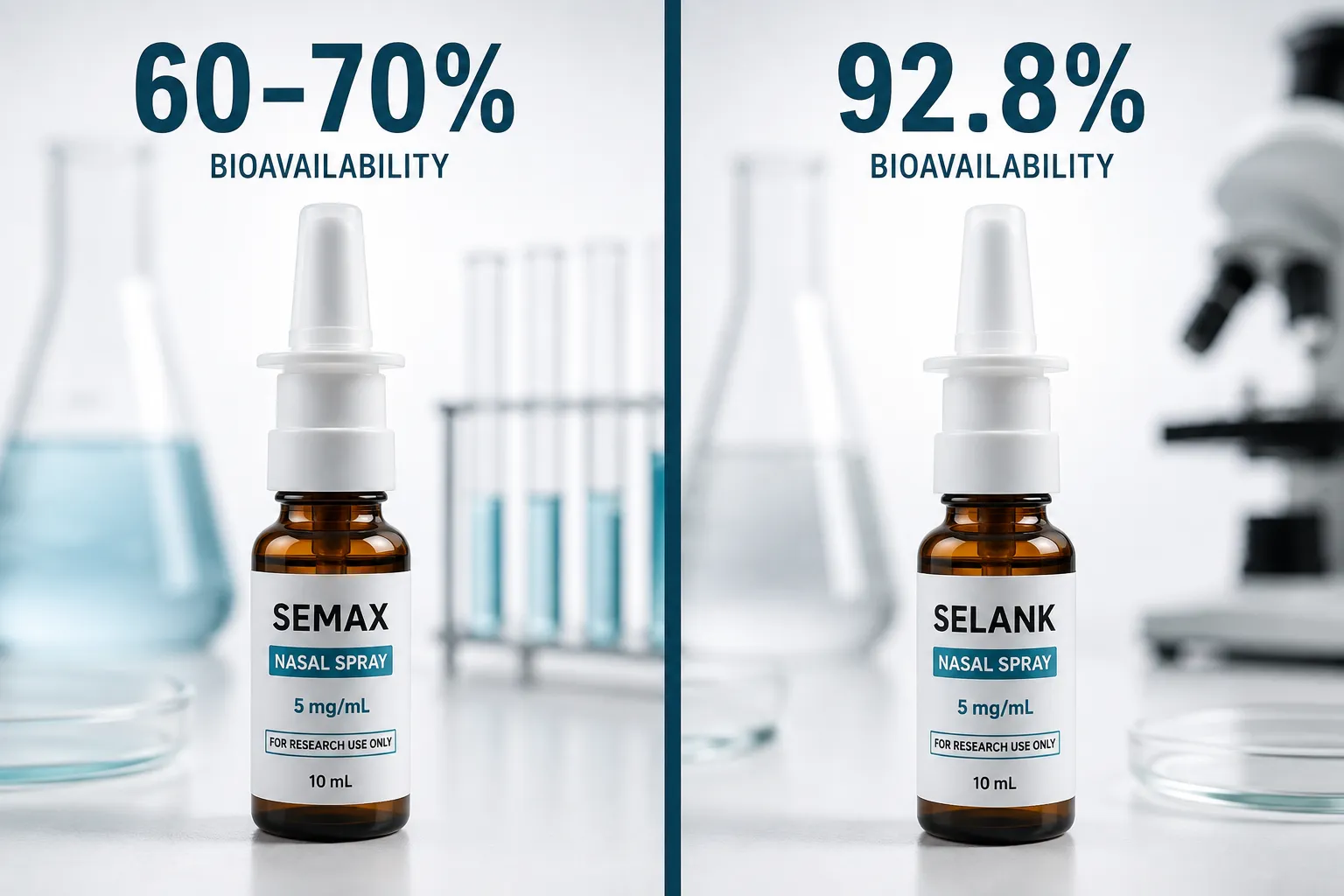
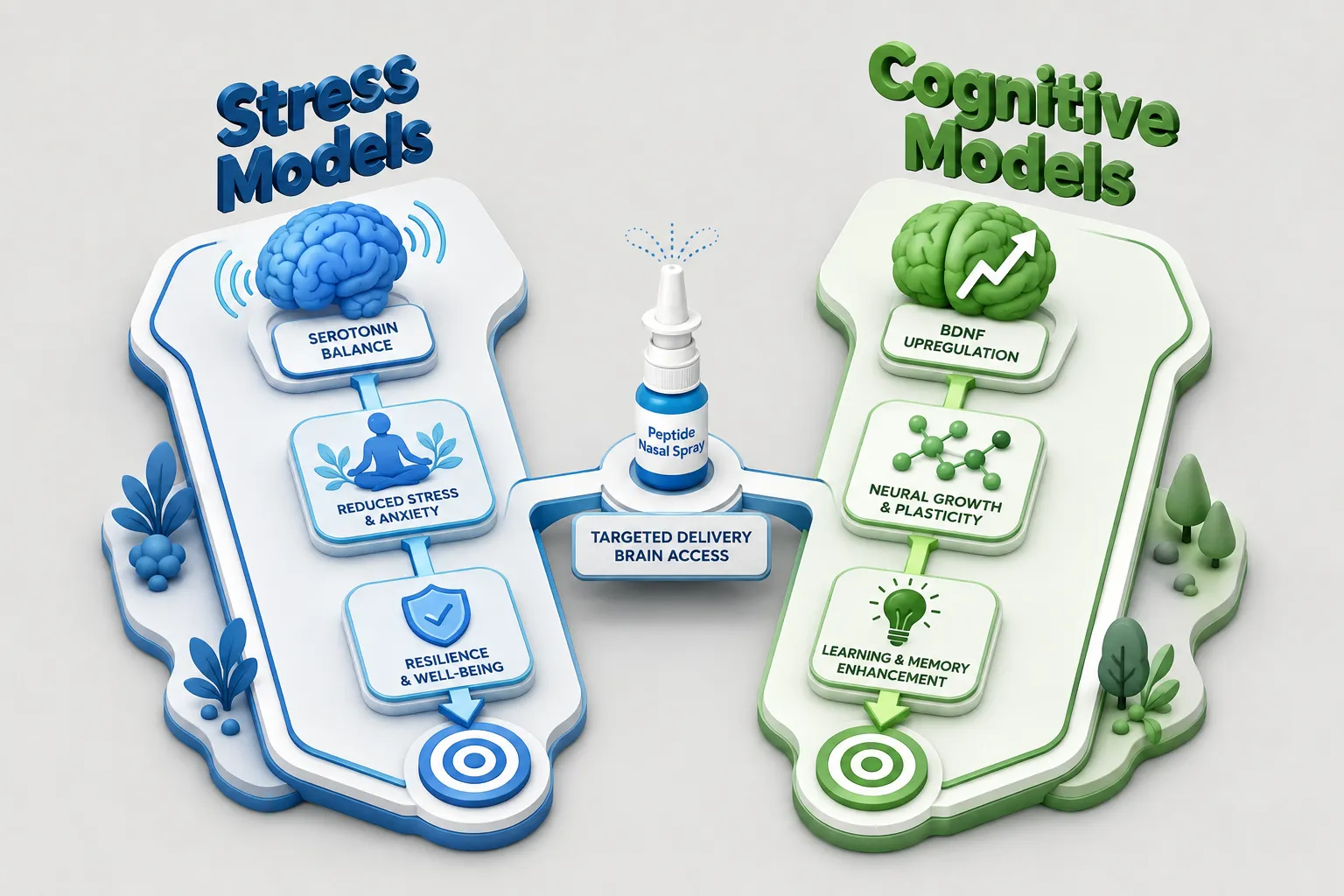
  • Selank achieves approximately 92.8% intranasal bioavailability, while Semax reaches roughly 60-70%, making both strong candidates for nasal spray formulation.
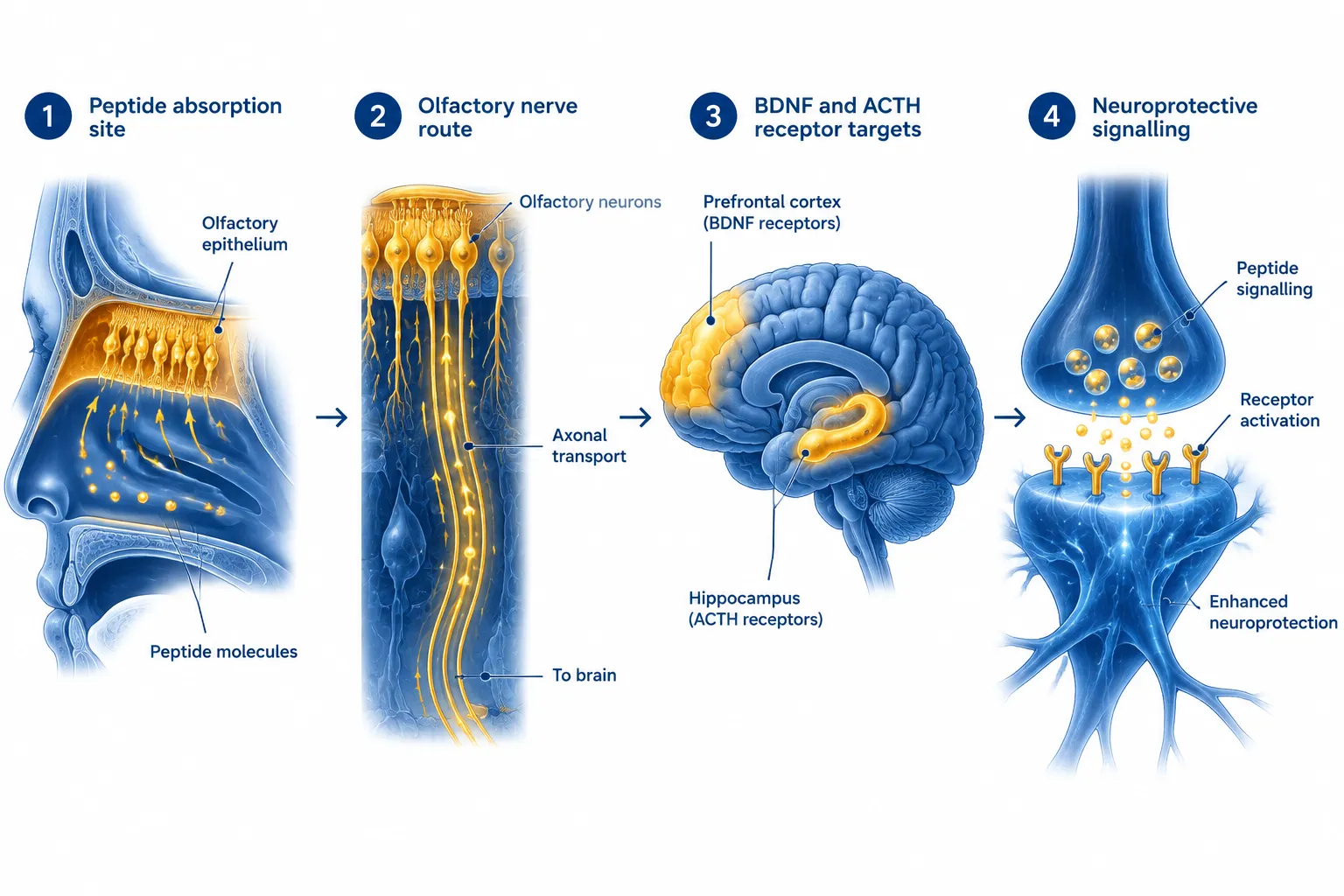
  • The nasal mucosa provides direct olfactory and trigeminal nerve pathways that allow certain peptides to reach the central nervous system rapidly.
  • Peptide molecular weight, charge, and enzymatic stability all influence how well a compound survives mucosal transit.
  • Blend formulations like Klow combine complementary peptides whose individual absorption profiles must be matched carefully to avoid delivery mismatches.

Why the Nasal Route Matters for Peptide Research

Peptides are fragile molecules. Most are chains of fewer than 50 amino acids, and their biological activity depends on maintaining that chain's precise three-dimensional shape. The gastrointestinal tract is hostile to that structure, proteases cleave peptide bonds aggressively, and even compounds that survive digestion face hepatic extraction before entering systemic blood flow.

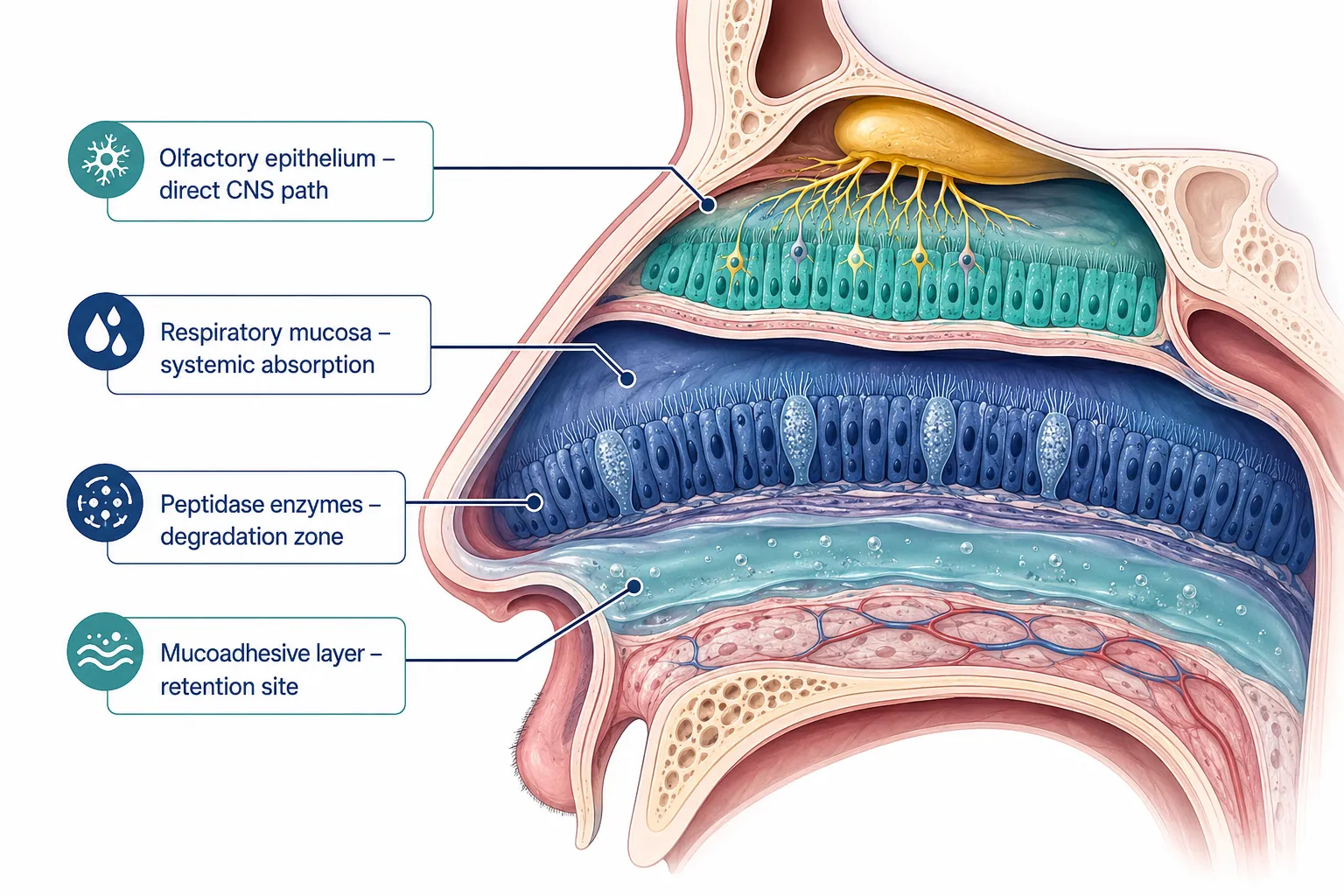
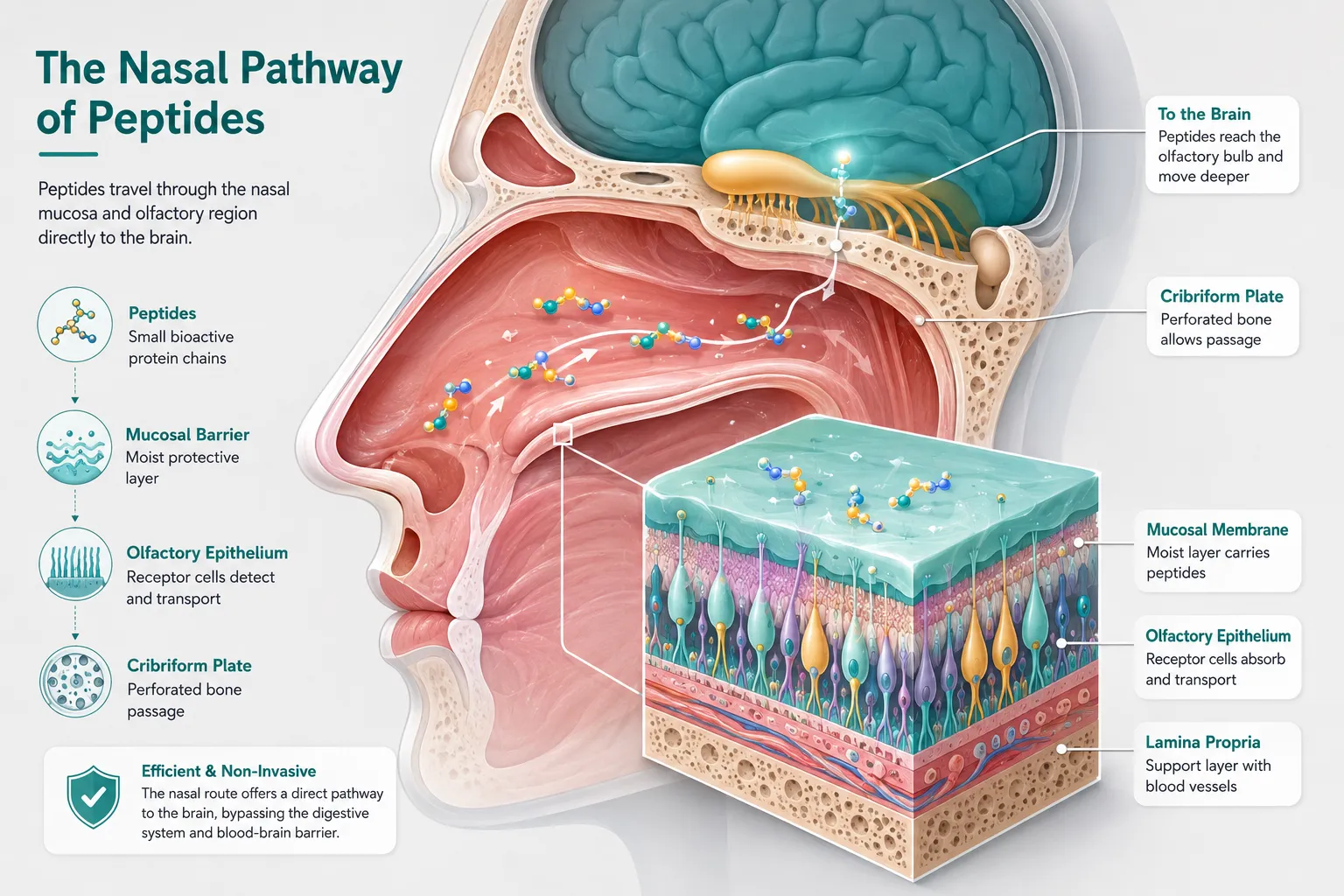
The nasal mucosa presents a fundamentally different environment. The epithelial surface of the nasal cavity is thin, highly vascularized, and equipped with transport mechanisms that favor rapid absorption of small hydrophilic molecules. For peptides in the 500-2,000 dalton molecular weight range, paracellular and transcellular transport across nasal epithelium can deliver meaningful plasma concentrations within minutes of administration.
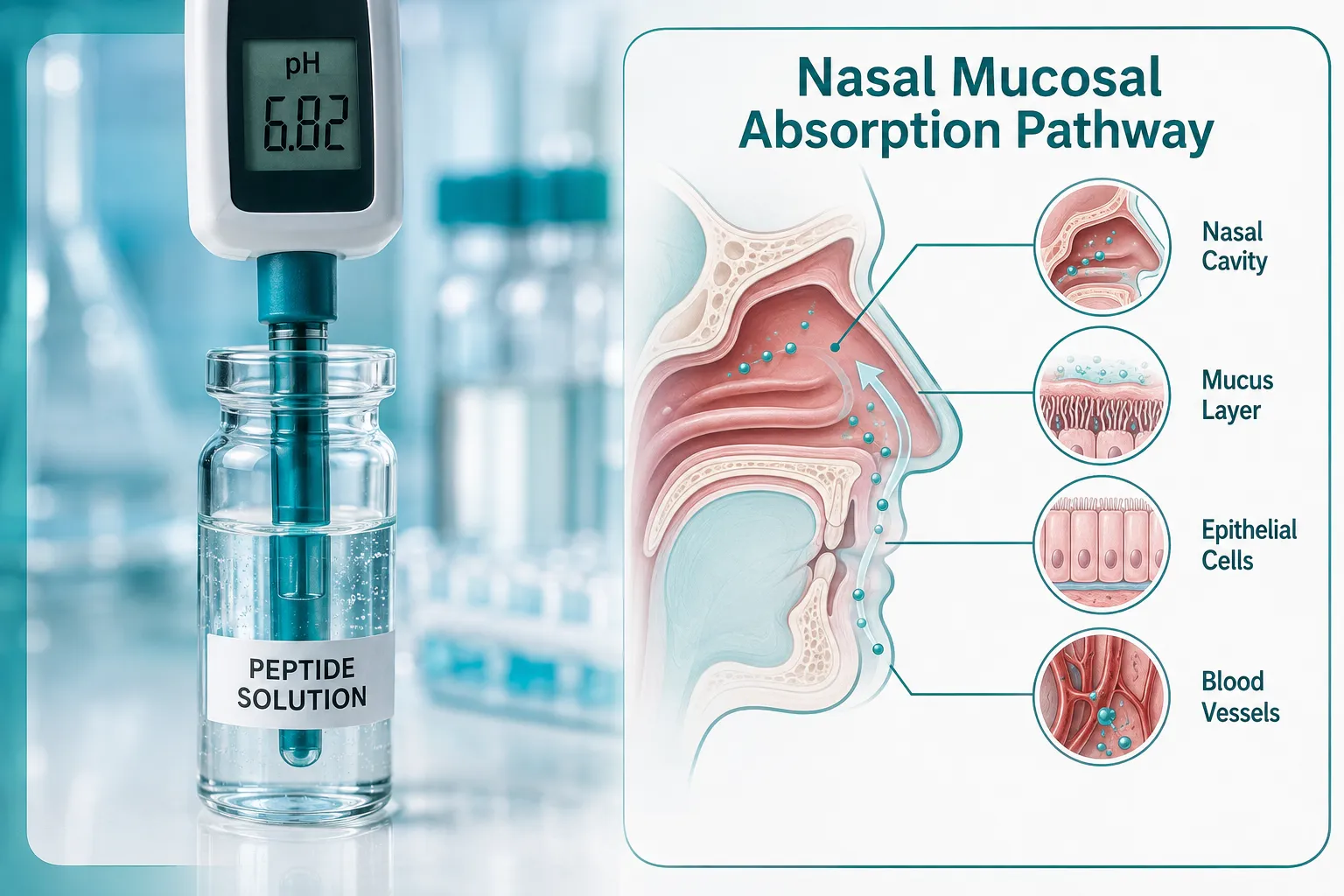

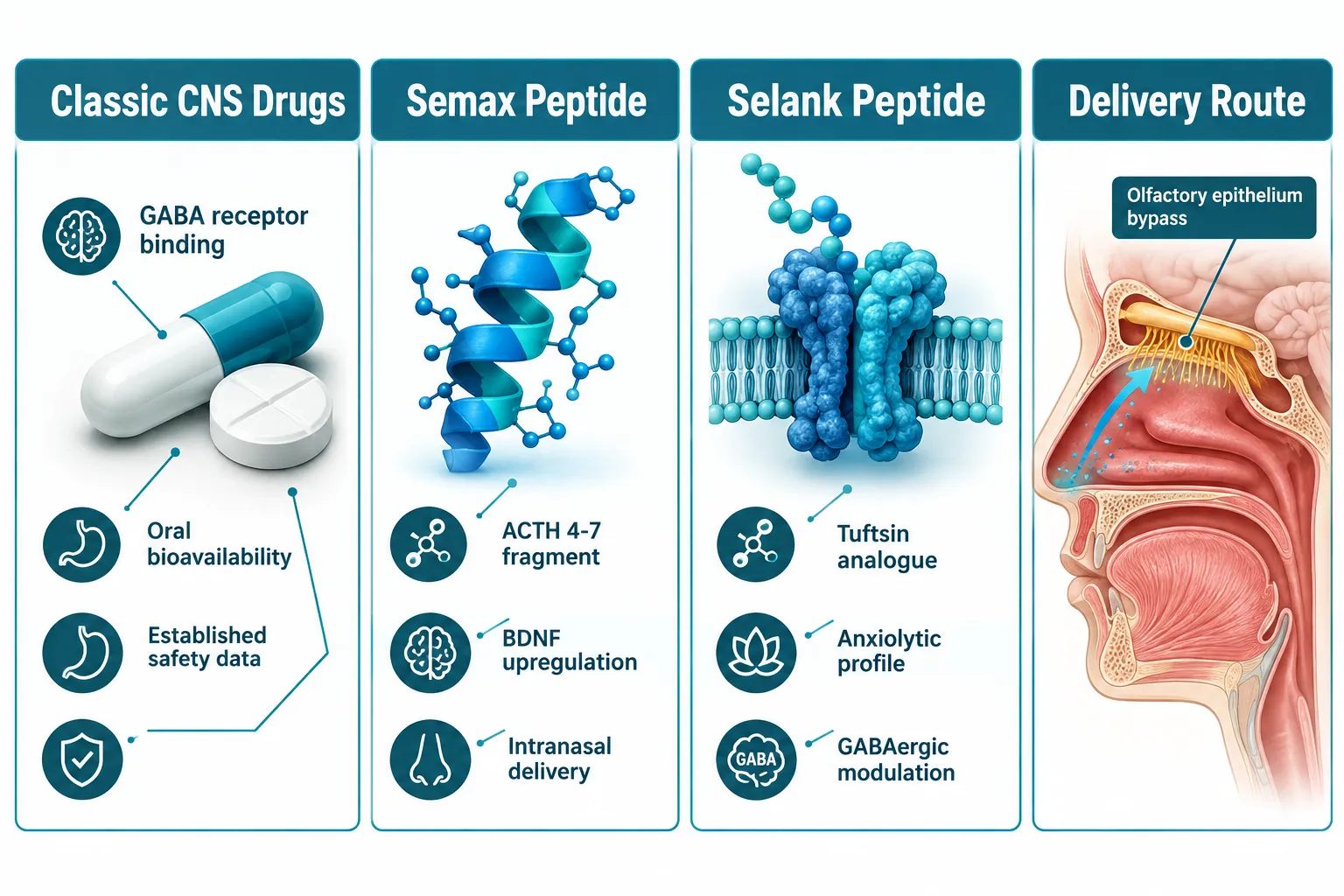
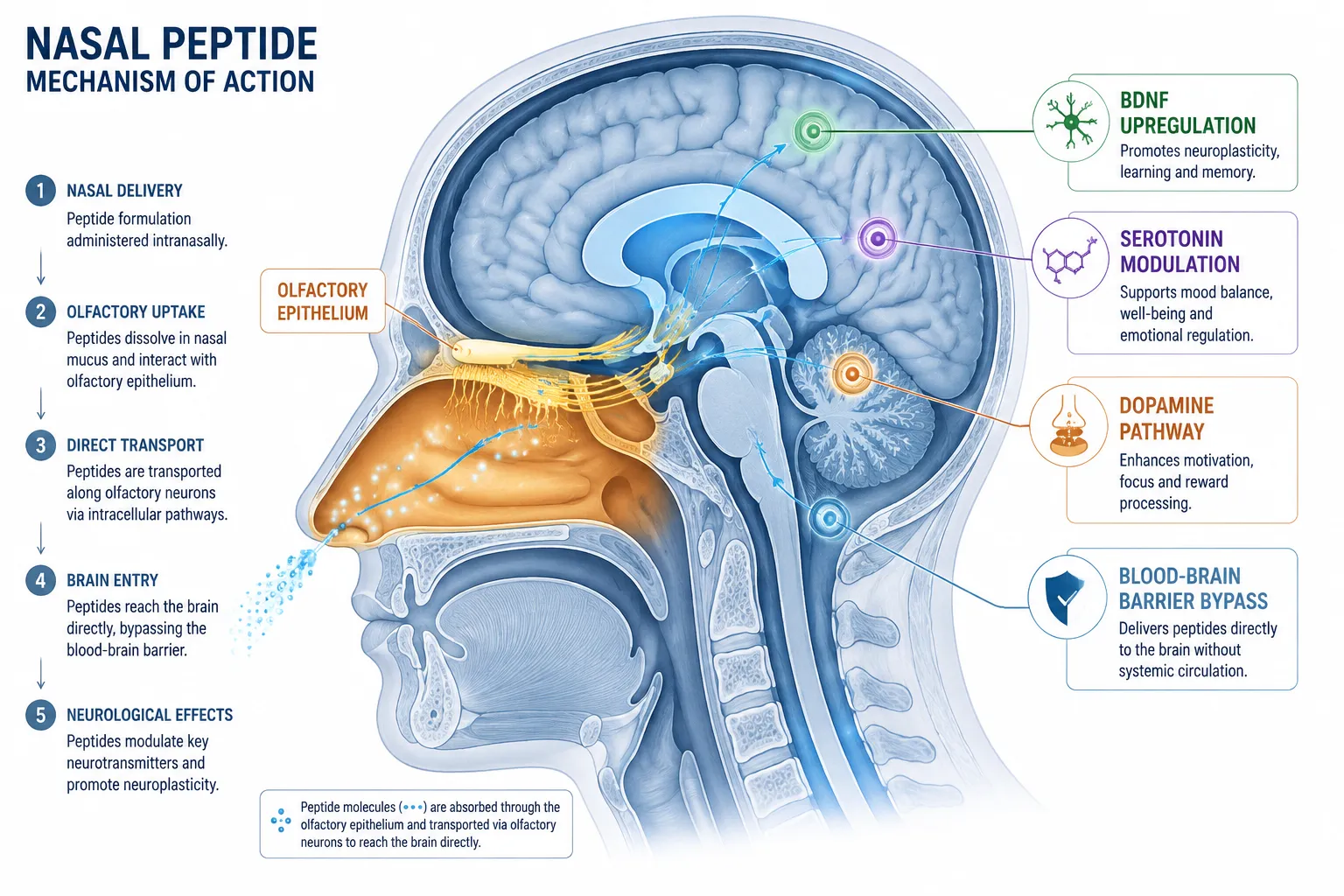
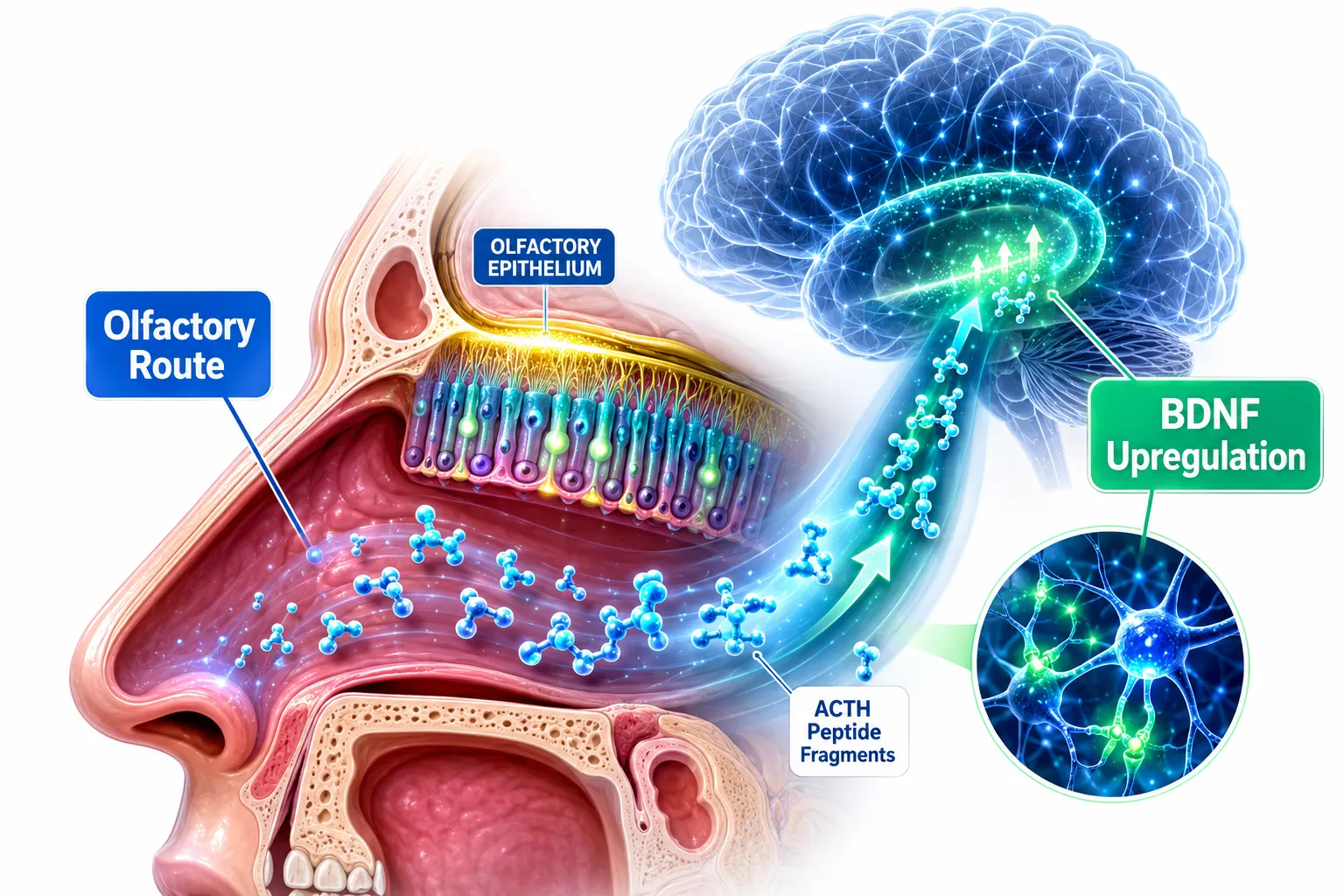
Beyond systemic absorption, the nasal route offers a second pathway that is uniquely relevant to cognitive and anxiolytic research: direct nose-to-brain transport. The olfactory epithelium sits at the roof of the nasal cavity, separated from the brain only by the cribriform plate. Peptides deposited in this region can travel along olfactory nerve axons and trigeminal nerve branches, bypassing the blood-brain barrier and arriving in cerebrospinal fluid or brain parenchyma without first entering peripheral circulation. This pathway is particularly relevant for compounds whose targets are central nervous system receptors.

For a deeper look at how peptide structure governs these transport dynamics, the polypeptide peptides explained guide covering structure, function, and research applications provides useful foundational context.

Why the Nasal Route Matters for Peptide Research

Semax and Selank: Comparing Intranasal Bioavailability

Semax: Structure, Stability, and Absorption

Semax is a synthetic heptapeptide derived from the adrenocorticotropic hormone (ACTH) fragment 4-7, with a Pro-Gly-Pro extension that confers resistance to enzymatic degradation. That structural modification is not incidental, it is a deliberate formulation decision that directly improves nasal mucosal survival time. Intranasal bioavailability for Semax is estimated at approximately 60-70%, a figure that reflects both its moderate lipophilicity and its relative stability against nasal mucosal peptidases.

Semax's primary research interest centers on neurotrophic and neuroprotective effects, including modulation of brain-derived neurotrophic factor (BDNF) expression. The nose-to-brain pathway is therefore not just a convenience, it is mechanistically aligned with the compound's proposed targets.

Selank: Higher Bioavailability, Anxiolytic Profile

Selank is a synthetic analog of the endogenous tetrapeptide tuftsin, extended with a stabilizing Gly-Pro-Pro sequence. This modification substantially reduces enzymatic breakdown at the nasal mucosa. A 2026 comparative review reports intranasal bioavailability for Selank at approximately 92.8%, markedly higher than Semax and among the highest reported for any peptide administered by this route.

The anxiolytic and GABAergic activity attributed to Selank in preclinical models makes central nervous system delivery particularly important. Its high mucosal bioavailability, combined with olfactory transport potential, positions intranasal administration as the most pharmacokinetically efficient route for research purposes.

Peptide Molecular Weight Intranasal Bioavailability Primary Research Focus
Semax ~863 Da ~60-70% Neuroprotection, BDNF modulation
Selank ~751 Da ~92.8% Anxiolytic, GABAergic activity

The contrast between these two compounds illustrates a core principle: bioavailability is not a fixed property of intranasal delivery in general, it is a property of each specific peptide's interaction with nasal tissue.

For context on how peptide safety profiles relate to immunological pathways, the article on complement-dependent cytotoxicity and peptide safety covering BPC-157, GHK-Cu, and nasal spray peptides is worth reviewing alongside absorption data.

Selank: Higher Bioavailability, Anxiolytic Profile

Formulating Blend Products: The Klow Challenge

What Makes a Blend Different from a Single Peptide

The Klow blend combines multiple peptide components into a single nasal spray formulation. From a formulation science standpoint, this introduces complexity that single-peptide products do not face. Each component in a blend carries its own:

  • Optimal pH range for stability
  • Enzymatic susceptibility profile at the nasal mucosa
  • Absorption rate and peak plasma timing
  • Potential for intermolecular interaction with co-formulated peptides

When two peptides with significantly different absorption rates are combined, one may reach target tissue well before the other, reducing any intended synergistic effect. Formulators must therefore consider whether the blend's components are pharmacokinetically compatible, not just chemically stable in the same solution.

Stability Considerations for Nasal Spray Formulations

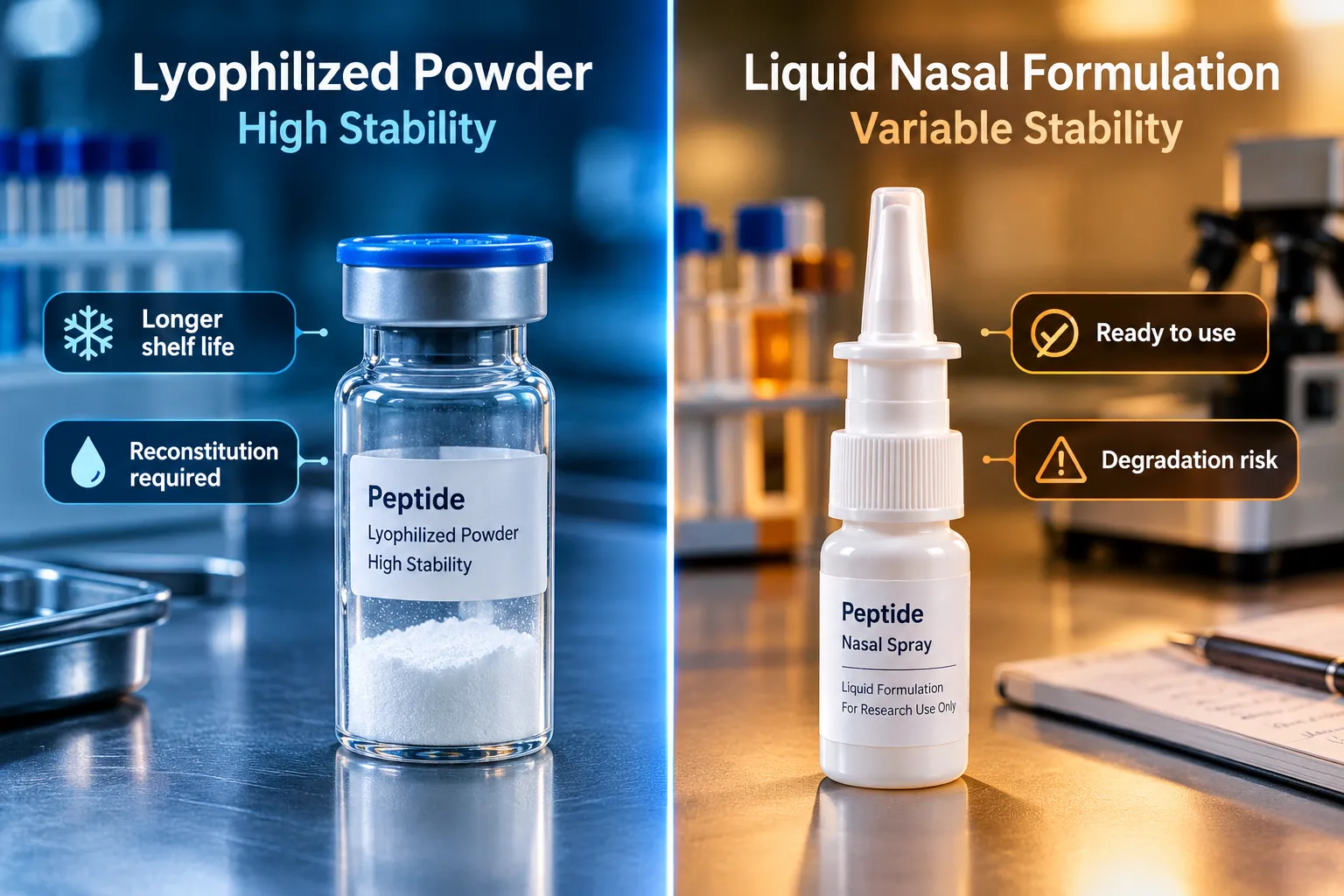
Peptide stability in aqueous nasal spray solutions is governed by several variables: pH (typically 4.5-6.5 for nasal formulations), preservative choice, osmolality, and storage temperature. Lyophilized peptides reconstituted immediately before use generally show superior stability to pre-dissolved solutions stored over time.

For blend formulations, excipient selection becomes more complex. Absorption enhancers such as cyclodextrins or chitosan can improve mucosal permeation for lower-bioavailability components, but they may also alter the absorption kinetics of already high-bioavailability peptides like Selank, potentially creating a mismatch.

The Glow Peptide Blend Benefits resource offers a useful parallel example of how multi-peptide blends are approached from a formulation and research perspective.

Stability Considerations for Nasal Spray Formulations

Practical Implications for Researchers

Understanding Nasal Spray Peptides: How Delivery Route Changes Bioavailability for Semax, Selank, and Klow Blend has direct implications for experimental design. Researchers using these compounds should account for:

  • Dose calculation based on bioavailability, not nominal amount, a 500 mcg nominal dose of Semax delivers a meaningfully different absorbed quantity than the same nominal dose of Selank
  • Administration site within the nasal cavity, posterior, superior deposition favors olfactory transport; anterior deposition favors systemic vascular absorption
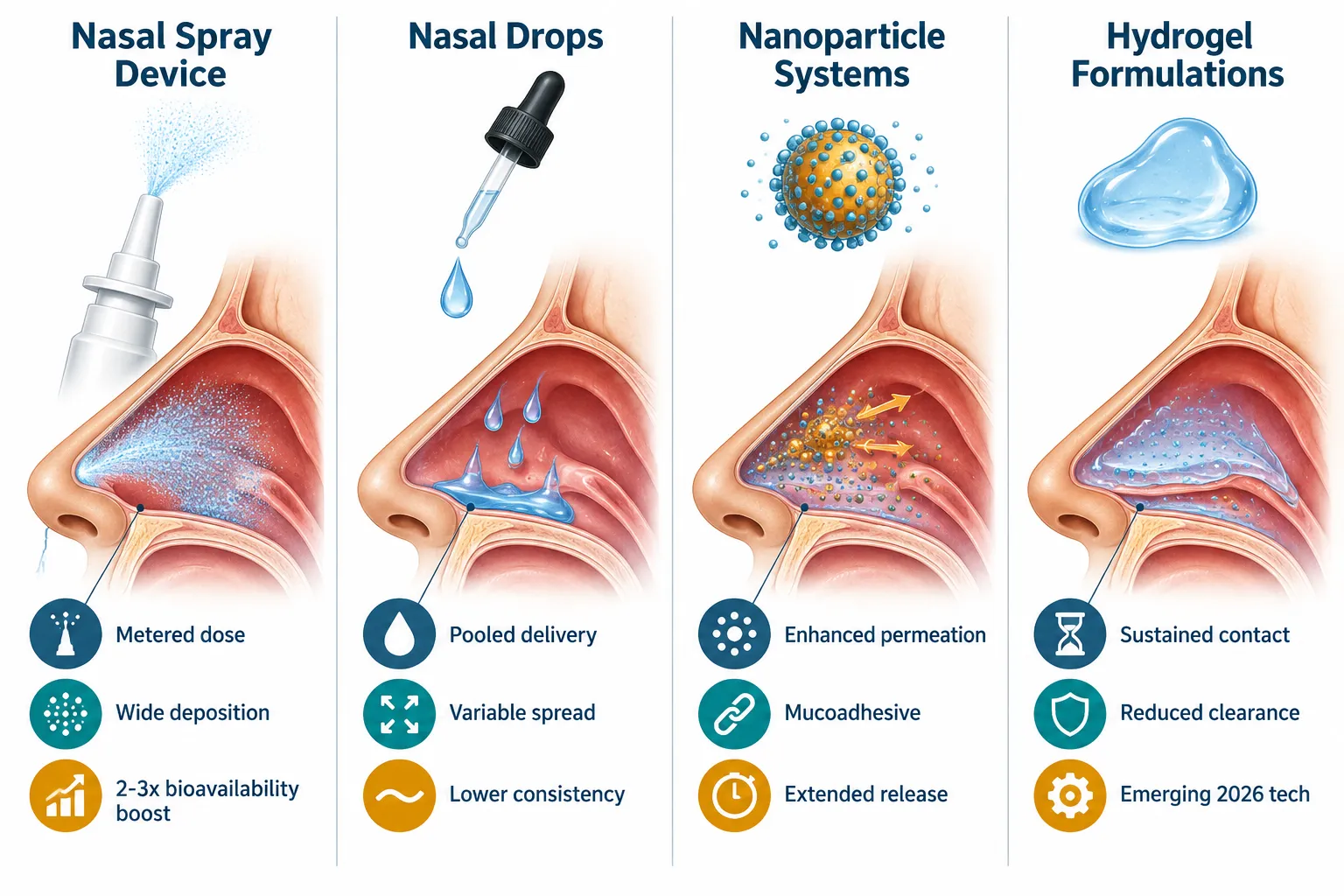
  • Spray device characteristics, droplet size, spray angle, and actuation volume all affect where the compound deposits and how much reaches the mucosa versus drains to the throat

For researchers interested in how other peptide delivery mechanisms compare, the complete guide to peptide mechanisms covering GLP-1, GLP-3, and growth hormone peptides provides broader mechanistic context.

Additionally, the peptides vs classic small-molecule drugs comparison helps frame why peptide-specific delivery considerations differ fundamentally from those applied to conventional pharmaceuticals.

Conclusion

The intranasal route is not simply a convenient alternative to injection, it is a biologically distinct delivery pathway with its own absorption mechanisms, stability challenges, and CNS-access advantages. For Semax, Selank, and blend formulations like Klow, understanding how delivery route changes bioavailability is foundational to designing valid research protocols and interpreting results accurately.

Actionable next steps for researchers:

  1. Verify the bioavailability data specific to each peptide in your blend before calculating working doses.
  2. Review formulation stability data, particularly for reconstituted aqueous solutions stored beyond 24 hours.
  3. Standardize administration technique, spray angle, head position, and volume per actuation, to reduce inter-experiment variability.
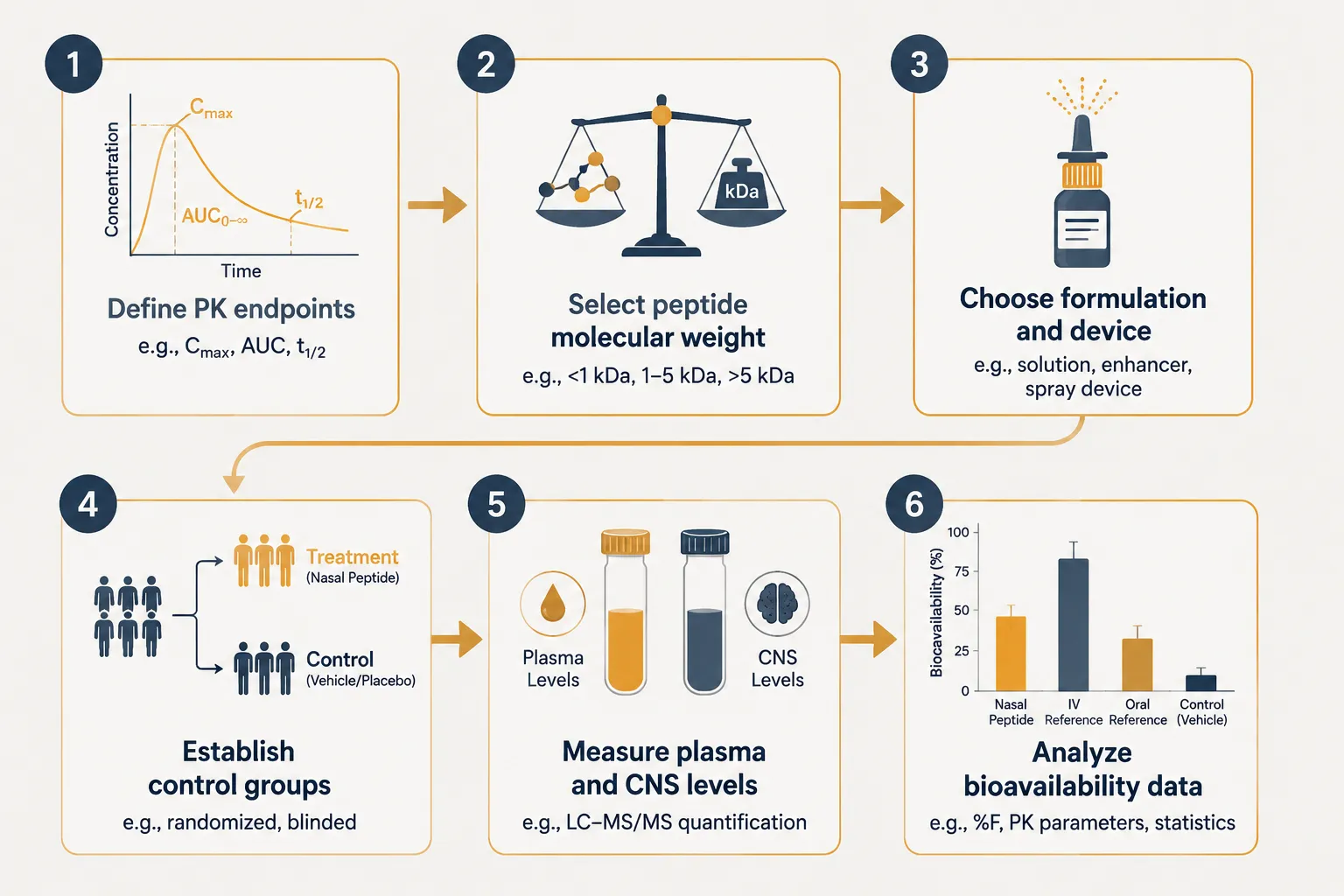
  4. Consult peptide-specific pharmacokinetic literature when combining compounds with different absorption rates in a single formulation.

Delivery route is a formulation variable, not a footnote. Treating it with the same rigor applied to dose selection and purity testing will improve the reliability of any intranasal peptide research program.

https://www.puretestedpeptides.com/wp-content/uploads/2026/08/nasal-spray-peptides-how-delivery-route-changes-bioavailability-for-semax-selank.webp 1024 1536 https://www.puretestedpeptides.com/wp-content/uploads/2026/01/buy-peptides-online.jpg 2026-08-11 13:05:062026-08-11 13:05:06Nasal Spray Peptides: How Delivery Route Changes Bioavailability for Semax, Selank, and Klow Blend
Selank vs Semax: Which Nootropic Peptide Is Better Suited to Different Research Questions?

Selank vs Semax: Which Nootropic Peptide Is Better Suited to Different Research Questions?

August 11, 2026/0 Comments/in Uncategorized/by

Two synthetic peptides derived from endogenous neuropeptides, one engineered from tuftsin, the other from ACTH(4-7), have quietly become among the most studied intranasal compounds in preclinical neuroscience. The question of Selank vs Semax: which nootropic peptide is better suited to different research questions? is not a matter of one compound being superior. It is a matter of which biological target, which model system, and which outcome variable the research design is built around.

Professional () hero image with (≤42 chars): 'Selank vs Semax: Nootropic Peptides' in crisp white on a deep navy

Key Takeaways

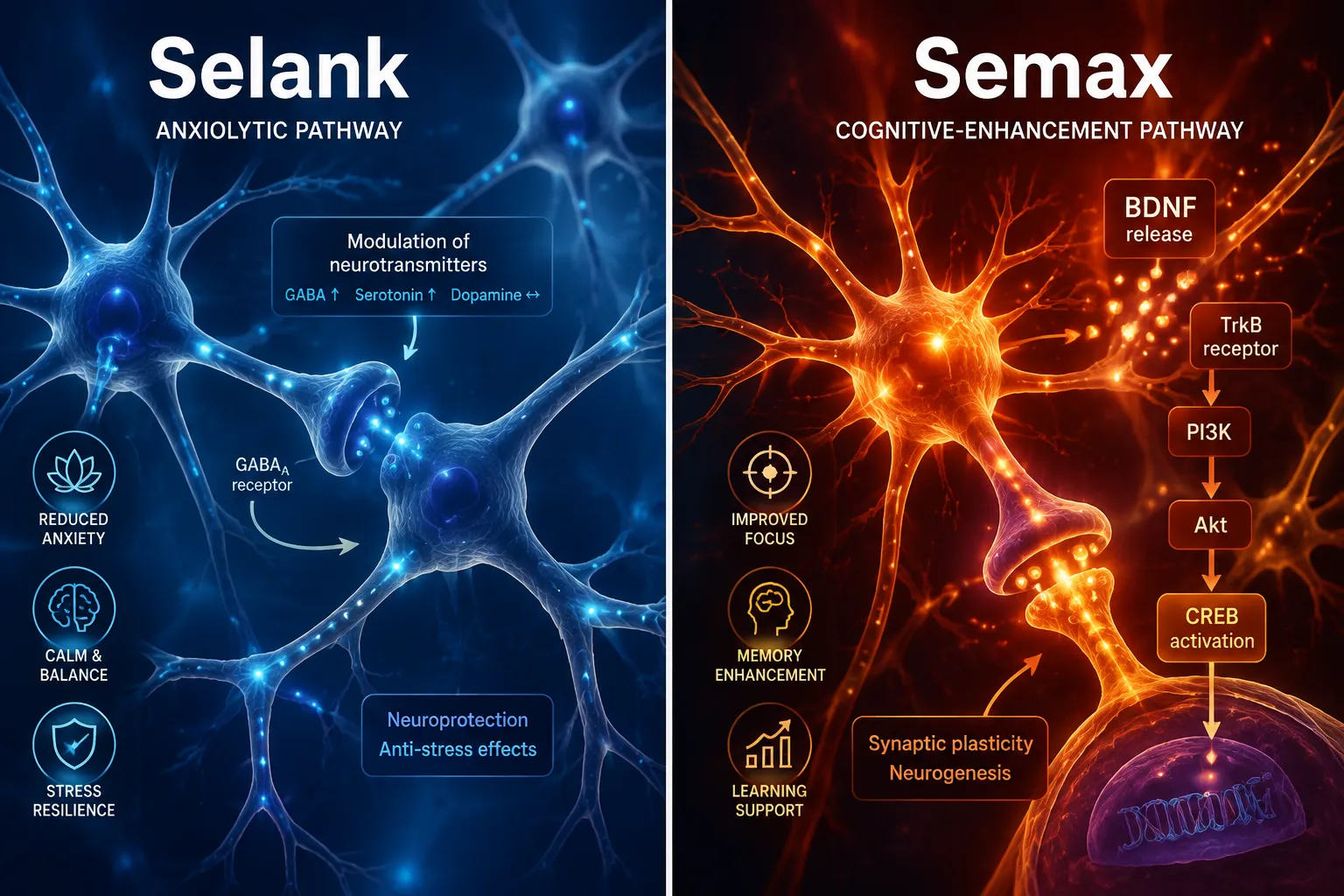
  • Selank (TP-7) is a heptapeptide analog of tuftsin with primary research interest in anxiolytic, GABAergic, and stress-response models.
  • Semax is an ACTH(4-7) analog with primary research interest in BDNF upregulation, neuroprotection, and cognitive-function models.
  • Both peptides are typically studied in intranasal formulations that allow for direct mucosal-to-CNS delivery pathways.
  • The two compounds are not interchangeable; their mechanistic profiles make them better suited to distinct experimental endpoints.
  • Researchers selecting between them should align the compound's known receptor interactions with the specific biological question being tested.

Structural Origins and Mechanistic Profiles

Understanding the Selank vs Semax distinction begins at the molecular level.

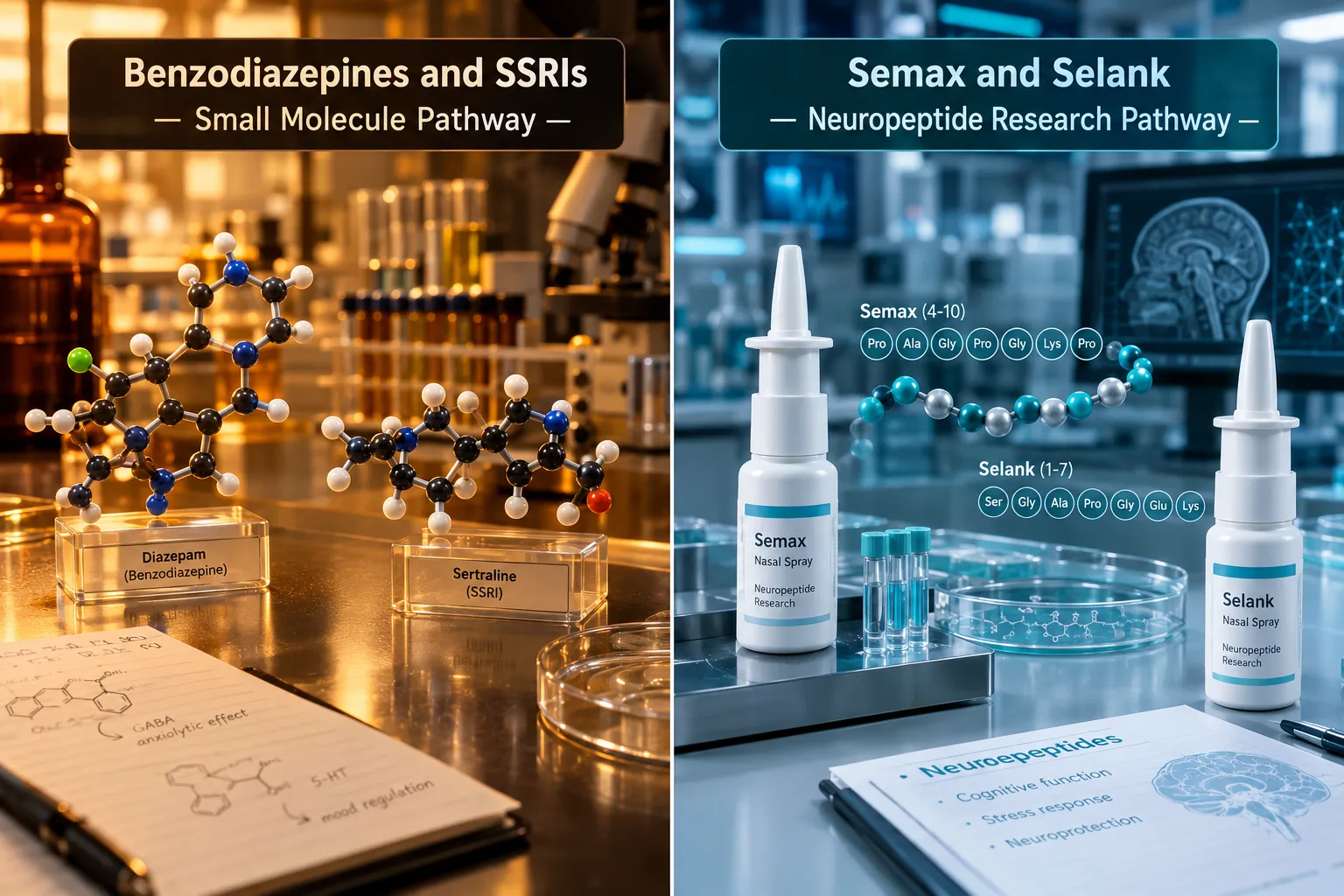
Selank (Thr-Lys-Pro-Arg-Pro-Gly-Pro) is a synthetic analog of the endogenous tetrapeptide tuftsin. Its seven-amino-acid sequence was developed to extend the biological half-life of tuftsin while preserving and amplifying its central nervous system activity. Preclinical data suggest Selank modulates GABAergic transmission, influences serotonin metabolism, and reduces expression of anxiety-related behaviors in rodent models. It has also been associated with regulation of interleukin-6, pointing toward potential neuroimmune research applications.

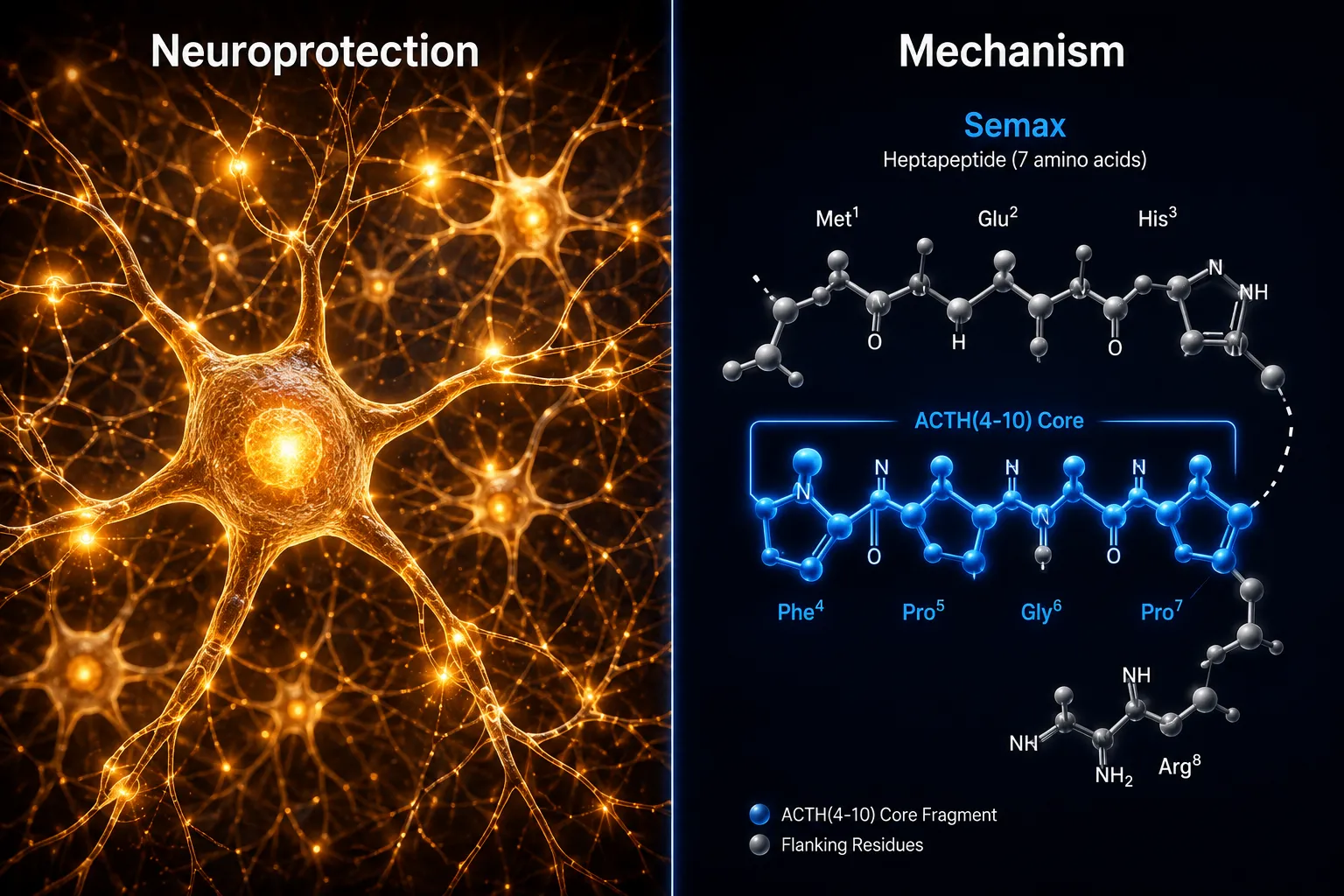
Semax (Met-Glu-His-Phe-Pro-Gly-Pro) is derived from the ACTH(4-7) fragment and was developed in Russia as a neuroprotective and cognitive-enhancing agent. Its most cited mechanism involves upregulation of brain-derived neurotrophic factor (BDNF) and its receptor TrkB, alongside effects on dopaminergic and serotonergic systems. Research models have also examined its role in reducing ischemic damage and supporting neuronal survival under stress conditions.

"The mechanistic divergence between Selank and Semax is not incidental, it reflects fundamentally different parent molecules and different design goals."

Both peptides are commonly delivered via nasal spray formulations. For a detailed look at how intranasal delivery affects bioavailability in CNS-targeted peptide research, see this overview of nasal spray peptides, delivery methods, bioavailability, and research advantages.

Selank vs Semax: Which Nootropic Peptide Is Better Suited to Different Research Questions in Stress and Anxiety Models?

Selank vs Semax: Which Nootropic Peptide Is Better Suited to Different Research Questions in Stress and Anxiety Models?

When the research question centers on stress response, anxiety behavior, or GABAergic modulation, Selank is generally the more mechanistically aligned candidate.

Selank in Stress and Anxiety Research

Preclinical studies in rodent models have consistently shown Selank reduces anxiety-like behavior in elevated plus-maze and open-field tests. The proposed mechanisms include:

  • Enhancement of GABAergic inhibitory tone
  • Modulation of serotonin (5-HT) turnover in limbic regions
  • Downregulation of pro-inflammatory cytokines, including IL-6, in stress-exposed animals
  • Stabilization of enkephalin degradation, extending endogenous opioid activity

These properties make Selank a logical selection for studies examining anxiolytic mechanisms without sedation, stress-induced neuroinflammation, or neuroimmune crosstalk in anxiety models.

Semax in Stress-Adjacent Models

Semax is not without stress-related research relevance. Its BDNF-upregulating activity has implications for stress-induced neuroplasticity research, and some studies have examined its role in reducing oxidative stress markers after ischemic events. However, its primary profile is oriented toward cognitive enhancement and neuroprotection rather than direct anxiolytic action.

For a side-by-side look at how both peptides are positioned in intranasal research formulations, the article on research-use only nasal spray peptides comparing Semax, Selank, and Klow Nasal for cognitive and anxiolytic models provides additional context.

Selank vs Semax: Which Nootropic Peptide Is Better Suited to Different Research Questions in Cognitive and Neuroprotective Models?

Selank vs Semax: Which Nootropic Peptide Is Better Suited to Different Research Questions in Cognitive and Neuroprotective Mo

Selank vs Semax: Which Nootropic Peptide Is Better Suited to Different Research Questions in Cognitive and Neuroprotective Mo

When the research question centers on memory, learning, neuroplasticity, or neuroprotection, Semax is the more mechanistically appropriate compound.

Semax in Cognitive Research

The BDNF-upregulating activity of Semax is its most studied and cited feature in cognitive research contexts. BDNF plays a central role in:

Research Area Semax Relevance
Long-term potentiation (LTP) BDNF/TrkB signaling supports synaptic strengthening
Ischemic neuroprotection Reduces apoptotic markers in oxygen-deprivation models
Dopaminergic modulation Influences dopamine receptor sensitivity in prefrontal models
Learning and memory tasks Improved performance in Morris water maze and passive avoidance tests

Researchers designing studies around post-ischemic recovery, cognitive deficit models, or BDNF-pathway interventions will find Semax's profile substantially more relevant than Selank's.

For detailed administration and dosing concepts specific to Semax nasal spray formulations, refer to the resource on Semax peptide nasal spray administration, dosing concepts, and research applications.

Selank in Cognitive Research

Selank is not without cognitive research relevance. Some studies report improvements in working memory and attention in anxious animal models, likely secondary to its anxiolytic effects reducing cognitive interference. However, these effects are generally considered downstream of its primary anxiolytic action rather than direct nootropic mechanisms.

Practical Research Design Considerations

Choosing between Selank and Semax in 2026 requires researchers to map compound profiles against experimental endpoints with precision. The following framework helps clarify the selection:

Choose Selank when:

  • The primary endpoint involves anxiety-like behavior or GABAergic tone
  • The model involves stress-induced neuroinflammation or cytokine dysregulation
  • The research question requires anxiolytic action without sedative confounds
  • The study examines neuroimmune interactions in limbic regions

Choose Semax when:

  • The primary endpoint involves BDNF expression, synaptic plasticity, or LTP
  • The model involves ischemia, hypoxia, or oxidative neuronal stress
  • The research question requires dopaminergic or serotonergic modulation in prefrontal circuits
  • The study examines neuroprotection or post-injury cognitive recovery

Researchers working with combined intranasal peptide formulations may also find value in reviewing the Klow blend peptide nasal spray research applications and bioavailability considerations for context on how multi-peptide nasal formulations are structured in preclinical settings.

For labs evaluating procurement and quality standards before sourcing either compound, the guide on research-use only nasal spray peptides: what labs should know before buying Semax, Selank, and Klow Nasal formulations outlines purity benchmarks and supplier evaluation criteria.

Conclusion

The debate around Selank vs Semax: which nootropic peptide is better suited to different research questions? resolves most cleanly when researchers anchor their compound selection to mechanistic specificity rather than general "nootropic" categorization.

Selank belongs in stress, anxiety, and neuroimmune research designs. Semax belongs in cognitive enhancement, neuroprotection, and BDNF-pathway studies. Both compounds deserve rigorous, hypothesis-driven investigation using research-grade materials with verified purity documentation.

Actionable next steps for researchers:

  • Define the primary biological endpoint before selecting a compound
  • Review the receptor-level mechanistic literature for the specific model system being used
  • Source only research-grade peptides with third-party purity verification
  • Design controls that account for each compound's secondary effects on overlapping neurotransmitter systems
  • Consult formulation-specific resources to ensure intranasal delivery parameters match published preclinical protocols
https://www.puretestedpeptides.com/wp-content/uploads/2026/08/selank-vs-semax-which-nootropic-peptide-is-better-suited-to-different-research-q-3.webp 1024 1536 https://www.puretestedpeptides.com/wp-content/uploads/2026/01/buy-peptides-online.jpg 2026-08-11 13:05:052026-08-11 13:05:05Selank vs Semax: Which Nootropic Peptide Is Better Suited to Different Research Questions?
Semax Peptide Nasal Spray: Cognitive Enhancement, Neuroprotection, and Research Protocols

Semax Peptide Nasal Spray: Cognitive Enhancement, Neuroprotection, and Research Protocols

August 9, 2026/0 Comments/in Uncategorized/by

Soviet-era neuroscience produced few compounds as structurally elegant as Semax. Derived from a fragment of adrenocorticotropic hormone (ACTH 4-7), this synthetic heptapeptide was developed at the Institute of Molecular Genetics in Moscow and has been approved in Russia for clinical use since the 1990s, yet Western research interest in Semax peptide nasal spray: cognitive enhancement, neuroprotection, and research protocols only accelerated meaningfully in the past decade.

Key Takeaways

  • Semax is a synthetic ACTH(4-10) analog delivered intranasally, bypassing the blood-brain barrier via the olfactory route.
  • Its primary research mechanisms involve BDNF upregulation, dopaminergic modulation, and anti-inflammatory neuroprotection.
  • Preclinical models suggest cognitive benefits including improved memory consolidation and attention.
  • Semax differs mechanistically from anxiolytic peptides like Selank, making it a distinct research target.
  • Research protocols typically examine dose-response relationships in the 300-900 mcg range per administration session.

Key Takeaways

The Mechanism Behind Semax Peptide Nasal Spray: Cognitive Enhancement, Neuroprotection, and Research Protocols

Structural Origins and Receptor Activity

Semax carries the amino acid sequence Met-Glu-His-Phe-Pro-Gly-Pro. This sequence corresponds to the ACTH(4-10) core, which lacks the corticosteroid-stimulating properties of full ACTH. That distinction matters enormously for research design: Semax can modulate neurotrophic and dopaminergic pathways without triggering adrenal axis responses.

The compound's primary molecular targets include:

  • Melanocortin receptors (MC4R): Expressed widely in the hypothalamus and limbic system, these receptors are linked to attention, arousal, and motivational processing.
  • BDNF (Brain-Derived Neurotrophic Factor): Multiple preclinical studies show Semax significantly upregulates BDNF and its receptor TrkB, supporting synaptic plasticity and neuronal survival.
  • Dopamine and serotonin systems: Semax appears to modulate catecholamine turnover in prefrontal and striatal regions, which may explain observed effects on working memory and executive function.

"Semax-induced BDNF elevation in rodent hippocampal tissue has been replicated across multiple independent laboratories, establishing it as one of the compound's most consistent mechanistic signatures."

Intranasal Delivery and CNS Bioavailability

The nasal route is not merely convenient, it is mechanistically critical. Intranasal delivery allows peptides to travel along the olfactory nerve axons directly into the olfactory bulb and then into deeper brain structures, circumventing hepatic first-pass metabolism and the blood-brain barrier.

For a deeper examination of how this delivery pathway compares across research peptides, see the Nasal Spray Peptides: Delivery Methods, Bioavailability, and Research resource, which covers absorption kinetics and formulation variables in detail.

Neuroprotective Models in Semax Research

Neuroprotective Models in Semax Research

Ischemia and Oxidative Stress Models

Much of the foundational Semax neuroprotection research emerged from stroke and ischemia models. In rat middle cerebral artery occlusion (MCAO) models, Semax administration reduced infarct volume and preserved neurological scoring compared to controls. Researchers attribute this to:

Mechanism Observed Effect in Preclinical Models
BDNF upregulation Enhanced neuronal survival post-ischemia
Anti-inflammatory gene expression Reduced IL-1beta and TNF-alpha markers
Antioxidant pathway activation Decreased lipid peroxidation in cortical tissue
Dopaminergic stabilization Preserved motor and cognitive function scores

Neuroinflammation and Cognitive Decline Models

Beyond acute ischemia, Semax has been studied in neuroinflammation paradigms relevant to age-related cognitive decline. Its ability to suppress pro-inflammatory cytokines while simultaneously boosting BDNF positions it as a dual-action compound, protective and regenerative rather than merely symptomatic.

Researchers comparing intranasal nootropic peptides should review the Klow Blend vs. Semax and Selank: Intranasal Nootropic Peptides analysis, which maps mechanism-level distinctions useful for designing comparative studies.

For those evaluating Semax alongside Selank and other nasal peptides, the Research-Use Only Nasal Spray Peptides: Comparing Semax, Selank, and overview provides a structured comparison of cognitive versus anxiolytic research models.

Research Protocols for Semax Peptide Nasal Spray: Cognitive Enhancement, Neuroprotection, and Research Protocols

Research Protocols for Semax Peptide Nasal Spray: Cognitive Enhancement, Neuroprotection, and Research Protocols

Dosing Frameworks in Preclinical Studies

Published preclinical literature and translated Russian clinical data suggest the following general parameters for Semax research protocols:

Concentration ranges commonly studied:

  • 0.1% solution (1 mg/mL), lower-dose cognitive and anxiolytic models
  • 1% solution (10 mg/mL), neuroprotection and ischemia models

Administration frequency:

  • Once or twice daily intranasal administration
  • Study durations ranging from 7 to 28 days in most rodent models

Key variables to control:

  • Ambient temperature during storage (2-8°C recommended for peptide stability)
  • Time of administration relative to behavioral testing
  • Carrier solvent composition (saline vs. buffered solutions)

For formulation science considerations relevant to intranasal peptide stability, the Klow Peptide Nasal Spray: Formulation Science, Carrier Solvents, and article addresses carrier solvent selection and brain delivery optimization.

Behavioral Outcome Measures

Cognitive research models using Semax typically incorporate:

  • Morris Water Maze: Spatial learning and memory consolidation
  • Novel Object Recognition (NOR): Short-term declarative memory
  • Elevated Plus Maze: Anxiety-adjacent behavioral profiling
  • Open Field Test: Locomotor activity controls (to rule out stimulant confounds)

Researchers designing multi-peptide protocols may also find value in reviewing Peptides Mechanism 101: From GLP-3 Retatrutide to CJC-1295 and MOTS-c for broader receptor-level context when building stacked research designs.

Distinguishing Semax from Selank in Research Design

A common question in 2026 research planning is whether Semax and Selank should be studied independently or in combination. The answer depends on the research question:

  • Semax targets cognitive enhancement and neuroprotection via BDNF and melanocortin pathways.
  • Selank primarily modulates anxiety and GABAergic tone via enkephalin stabilization.

These are complementary, not redundant, mechanisms. Combining them in a single protocol without controlling for their independent effects risks confounded outcome data.

Conclusion

Semax peptide nasal spray occupies a well-defined niche in neuropeptide research: a structurally compact, mechanistically specific compound with a documented history in clinical and preclinical settings. Its value lies not in broad-spectrum activity but in targeted BDNF upregulation, melanocortin receptor engagement, and anti-inflammatory neuroprotection, all accessible through a delivery route that maximizes CNS bioavailability.

Actionable next steps for researchers in 2026:

  1. Define whether the primary research question is cognitive enhancement, neuroprotection, or anxiolysis, this determines whether Semax, Selank, or a combined model is appropriate.
  2. Select concentration and administration frequency based on the specific behavioral or molecular outcome being measured.
  3. Control for carrier solvent variables and storage conditions before beginning any dosing protocol.
  4. Source only research-grade, third-party tested material with verified certificates of analysis to ensure data integrity.

Semax remains one of the most mechanistically transparent nootropic peptides available for preclinical study, and its research logic rewards investigators who engage with it at the mechanism level rather than treating it as a simple cognitive booster.

https://www.puretestedpeptides.com/wp-content/uploads/2026/08/semax-peptide-nasal-spray-cognitive-enhancement-neuroprotection-and-research-pro.webp 1024 1536 https://www.puretestedpeptides.com/wp-content/uploads/2026/01/buy-peptides-online.jpg 2026-08-09 13:05:082026-08-09 13:05:08Semax Peptide Nasal Spray: Cognitive Enhancement, Neuroprotection, and Research Protocols
Nasal Spray Peptides: Delivery Methods, Bioavailability, and Research Advantages

Nasal Spray Peptides: Delivery Methods, Bioavailability, and Research Advantages

August 7, 2026/0 Comments/in Uncategorized/by

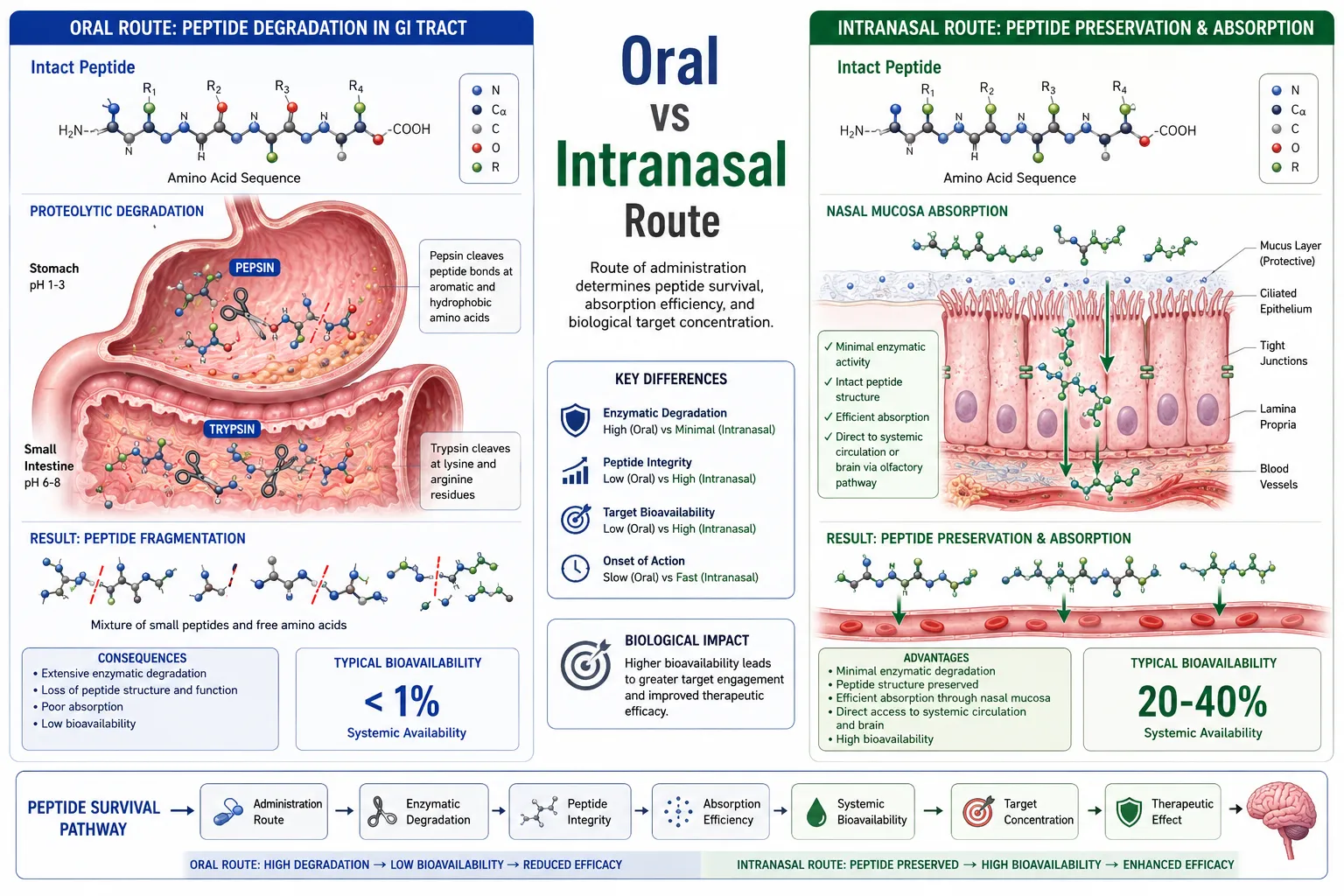
Oral peptide drugs lose up to 98% of their active compound before reaching systemic circulation, a pharmacokinetic obstacle that has pushed researchers toward alternative administration routes for decades. Among those alternatives, intranasal delivery has emerged as one of the most scientifically compelling options. Understanding nasal spray peptides: delivery methods, bioavailability, and research advantages is now central to designing effective preclinical protocols and advancing peptide science.

Professional () hero image with (≤42 chars): 'Nasal Spray Peptides: Delivery Methods…' in crisp white on a deep navy

Key Takeaways

  • Intranasal delivery bypasses first-pass hepatic metabolism, dramatically improving peptide bioavailability compared to oral routes.
  • The nasal mucosa and the olfactory pathway offer two distinct absorption mechanisms, each with different speed and target profiles.
  • Peptides such as Semax, Selank, and blend formulations have been studied specifically for intranasal administration.
  • Formulation variables, including pH, viscosity, and particle size, directly affect how much peptide reaches systemic or central targets.
  • Researchers sourcing compounds for intranasal studies benefit from verified purity data to ensure consistent experimental outcomes.

Why Delivery Route Defines Peptide Research Outcomes

The route of administration is not a minor logistical detail, it is a primary determinant of whether a peptide compound reaches its biological target at a meaningful concentration. Peptides are chains of amino acids. When taken orally, proteolytic enzymes in the gastrointestinal tract cleave those chains aggressively, and the liver further metabolizes whatever survives absorption. The result is negligible systemic exposure.

Injection, subcutaneous or intravenous, solves the degradation problem but introduces practical constraints in research settings: sterility requirements, tissue trauma at repeated dosing sites, and compliance challenges in longer study designs.

Intranasal delivery occupies a unique middle ground. The nasal epithelium is highly vascularized. Peptides applied to the nasal mucosa can diffuse directly into submucosal capillaries, entering systemic circulation without hepatic first-pass processing. For researchers studying peptides like those found in BPC-157 and TB-500 blend formulations, understanding how delivery route affects compound behavior is foundational.

The Olfactory Pathway: A Direct CNS Route

Beyond systemic absorption, the nasal cavity offers something injection cannot easily replicate: a potential direct route to the central nervous system via the olfactory epithelium. The olfactory nerve fibers run from the nasal roof to the olfactory bulb, bypassing the blood-brain barrier. This pathway has been studied extensively for neuropeptides, where CNS exposure is the primary research objective.

Peptides designed for cognitive or neurological research models, including Semax and Selank, are frequently formulated as nasal sprays precisely because this pathway may deliver compound to brain tissue faster and at higher concentrations than peripheral injection followed by CNS diffusion.

Bioavailability Factors in Nasal Spray Peptide Formulations

Bioavailability Factors in Nasal Spray Peptide Formulations

Bioavailability from nasal delivery is not automatic. Several formulation variables determine how efficiently a peptide crosses the nasal epithelium.

Key Formulation Variables

Variable Effect on Bioavailability
Molecular weight Peptides under 1,000 Da absorb more readily
pH of solution Must match nasal mucosa range (6.4-7.4)
Viscosity Higher viscosity extends mucosal contact time
Particle/droplet size 10-50 micron range targets turbinate deposition
Permeation enhancers Cyclodextrins and chitosan improve epithelial crossing

Mucociliary clearance is the main competing force. The nasal mucosa clears deposited material toward the nasopharynx within 15-20 minutes. Formulations must either absorb rapidly or use mucoadhesive agents to extend residence time.

Preservatives matter too. Benzalkonium chloride, commonly used in commercial nasal sprays, has shown ciliotoxic effects at certain concentrations in research models. Researchers using peptide nasal sprays in controlled studies often prefer preservative-free formulations to avoid confounding variables.

For researchers exploring Klow blend peptides or Glow blend peptides, formulation details are directly relevant to how intranasal administration protocols are designed.

Research Advantages of Nasal Spray Peptides: Delivery Methods, Bioavailability, and Research Advantages in Practice

Research Advantages of Nasal Spray Peptides: Delivery Methods, Bioavailability, and Research Advantages in Practice

Research Advantages of Nasal Spray Peptides: Delivery Methods, Bioavailability, and Research Advantages in Practice

The scientific case for intranasal peptide delivery in research settings rests on several converging advantages.

Rapid Onset and CNS Accessibility

Nasal absorption produces measurable plasma concentrations within minutes. For time-sensitive research endpoints, acute behavioral studies, rapid neurological assessments, this speed is a significant protocol advantage over subcutaneous injection, which typically peaks at 20-40 minutes post-dose depending on compound and vehicle.

Reduced Systemic Burden

Because intranasal delivery can target CNS endpoints via the olfactory route, researchers can potentially achieve meaningful brain exposure at lower total doses than systemic injection would require. Lower doses reduce off-target peripheral effects, which simplifies data interpretation.

Non-Invasive Repeated Dosing

Chronic study designs benefit enormously from non-invasive administration. Repeated injection introduces stress variables and injection-site pathology that can confound longitudinal data. Nasal spray administration reduces these confounders, improving data quality across multi-week protocols.

Researchers comparing growth hormone-related peptides, such as those reviewed in GHRP-2 versus Sermorelin research comparisons, often evaluate delivery route as part of their experimental design because administration method directly affects pharmacokinetic profiles.

Compound Integrity and Purity Requirements

Intranasal formulations demand high compound purity. Endotoxin contamination or degradation byproducts that might be tolerable in some systemic models become more significant when compound is delivered near olfactory nerve tissue. Researchers sourcing peptides from verified peptide stores with documented third-party testing reduce this risk substantially.

For compounds like those in the IPA peptides category, purity documentation is not optional, it is a baseline requirement for credible intranasal research design.

Conclusion

Nasal spray peptides: delivery methods, bioavailability, and research advantages represent a convergence of pharmacokinetics, formulation science, and practical research design. The intranasal route bypasses hepatic metabolism, offers potential direct CNS access via the olfactory pathway, and supports non-invasive repeated dosing, three properties that make it uniquely valuable for peptide research.

Actionable next steps for researchers:

  • Evaluate molecular weight and lipophilicity of target peptides before selecting intranasal as the primary route.
  • Specify formulation parameters (pH, viscosity, particle size) in protocols to ensure reproducibility.
  • Source compounds with verified purity certificates and endotoxin testing data.
  • Compare intranasal pharmacokinetic data against subcutaneous controls in pilot studies before committing to full experimental runs.
  • Review published olfactory pathway research to understand CNS exposure assumptions for specific peptide classes.

Delivery science is not secondary to compound selection, it is half the experiment.

https://www.puretestedpeptides.com/wp-content/uploads/2026/08/nasal-spray-peptides-delivery-methods-bioavailability-and-research-advantages.webp 1024 1536 https://www.puretestedpeptides.com/wp-content/uploads/2026/01/buy-peptides-online.jpg 2026-08-07 13:06:392026-08-07 13:06:39Nasal Spray Peptides: Delivery Methods, Bioavailability, and Research Advantages
Complement-Dependent Cytotoxicity and Peptide Safety: What BPC-157, GHK-Cu, and Nasal Spray Peptides Teach Immunology-Focused Labs

Complement-Dependent Cytotoxicity and Peptide Safety: What BPC-157, GHK-Cu, and Nasal Spray Peptides Teach Immunology-Focused Labs

August 5, 2026/0 Comments/in Uncategorized/by

Fewer than 15% of novel peptide compounds entering preclinical research pipelines are formally screened for complement system activation before advancing to in vivo models, a gap that immunology labs are now working urgently to close. The study of complement-dependent cytotoxicity and peptide safety has moved from a niche concern to a central pillar of responsible assay design, particularly as compounds like BPC-157, GHK-Cu, and intranasally delivered peptides gain traction in translational research. Understanding how these molecules interact with the complement cascade gives labs a sharper, more defensible picture of immune safety before resources are committed to advanced trials.

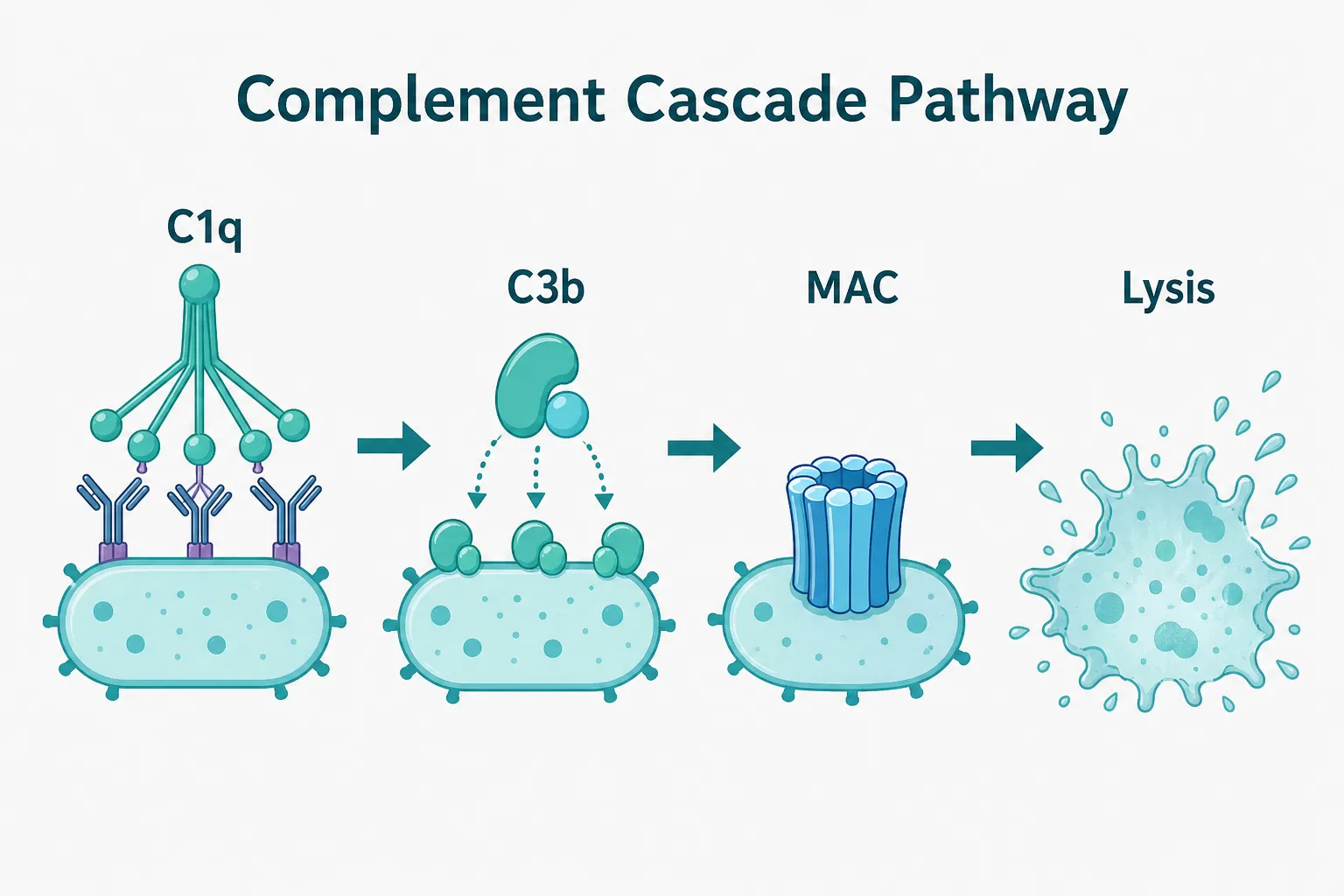
Bright scientific infographic illustration (): labeled diagram showing the complement cascade pathway — C1q binding, MAC

Key Takeaways

  • Complement-dependent cytotoxicity (CDC) is a critical immune safety endpoint that many peptide research programs overlook at the preclinical stage.
  • BPC-157 shows a favorable immunological profile in early models, with evidence of microvascular stabilization rather than complement activation.
  • GHK-Cu modulates inflammatory signaling pathways in ways that may reduce, rather than trigger, CDC-related immune responses.
  • Nasal spray peptide delivery introduces unique mucosal immune variables that demand route-specific complement screening.
  • Purity, aggregation state, and formulation excipients are often the true drivers of unexpected CDC signals, not the peptide sequence itself.

What Is Complement-Dependent Cytotoxicity and Why Does It Matter for Peptide Research

Complement-dependent cytotoxicity refers to the process by which antibodies bound to a cell surface activate the classical complement pathway, ultimately forming the membrane attack complex (MAC) and lysing the target cell. In drug safety research, an unintended CDC response means a therapeutic compound is triggering immune-mediated cell destruction, a serious liability.

For peptides, the risk is nuanced. Most short-chain peptides are too small to directly bind C1q and initiate the classical pathway. However, several indirect mechanisms can produce CDC signals:

  • Peptide aggregation forming larger immunogenic structures
  • Carrier proteins or excipients acting as complement activators
  • Sequence homology with endogenous proteins that carry existing antibody titers
  • Contaminants from synthesis, such as residual endotoxins

This is why complement-dependent cytotoxicity and peptide safety considerations must address the entire formulation, not just the active sequence. Labs that screen only the peptide backbone and ignore excipients routinely generate false-negative safety data.

"The peptide is rarely the problem. The formulation is where complement activation hides."

How BPC-157 and GHK-Cu Inform Complement-Dependent Cytotoxicity and Peptide Safety Protocols

How BPC-157 and GHK-Cu Inform Complement-Dependent Cytotoxicity and Peptide Safety Protocols

BPC-157: Microvascular Stabilization Over Immune Activation

BPC-157 (Body Protection Compound-157) is a 15-amino-acid peptide derived from a gastric protein. Its research profile is dominated by angiogenic and cytoprotective effects rather than immune stimulation. Preclinical data consistently show that BPC-157 promotes microvascular integrity, a property that works against the vascular permeability changes that typically accompany complement activation.

Key immunological observations from BPC-157 research include:

  • Upregulation of VEGFR2 signaling, supporting endothelial repair
  • Suppression of pro-inflammatory cytokine release (TNF-alpha, IL-6)
  • No reported direct activation of C1q or the lectin complement pathway in standard models

Labs sourcing BPC-157 and TB-500 combination peptides for immunology-focused assays should still run baseline CDC screens, because the synergistic formulation introduces new variables not present in single-compound studies.

GHK-Cu: Anti-Inflammatory Signaling and Complement Modulation

GHK-Cu (glycyl-L-histidyl-L-lysine copper complex) is a tripeptide-copper chelate with well-documented roles in wound healing and tissue remodeling. Its relevance to complement-dependent cytotoxicity and peptide safety lies in its downstream effects on NF-kB signaling, a master regulator of both inflammatory and complement gene expression.

Research suggests GHK-Cu:

  • Downregulates genes associated with complement component synthesis (C3, C4)
  • Reduces oxidative stress markers that can amplify MAC-mediated lysis
  • Supports macrophage polarization toward anti-inflammatory M2 phenotypes

A thorough GHK-Cu peptide sourcing and research guide is essential reading for labs designing complement assays around this compound, particularly regarding copper concentration thresholds that may independently affect immune cell viability.

Peptide Primary Immune Effect CDC Risk Level Key Assay Consideration
BPC-157 Microvascular stabilization Low Excipient screening
GHK-Cu NF-kB suppression Low-Moderate Copper ion concentration
Nasal peptides Mucosal IgA activation Variable Route-specific CDC panel

Nasal Spray Peptides and the Unique Challenges of Mucosal Complement Screening

Nasal Spray Peptides and the Unique Challenges of Mucosal Complement Screening

Intranasal delivery is increasingly favored for peptides targeting CNS and systemic endpoints. Compounds like Selank are administered nasally precisely because the olfactory route bypasses the blood-brain barrier. However, this delivery method introduces a distinct immunological environment that standard CDC assays do not capture.

The nasal mucosa is rich in:

  • Secretory IgA (sIgA), which can form immune complexes with peptide aggregates
  • Mucosal mast cells primed to activate the alternative complement pathway
  • Dendritic cells that may present peptide fragments to T cells, generating adaptive responses over repeated dosing

For immunology-focused labs, this means nasal peptide formulations require route-specific complement panels that include mucosal complement components, not just serum-derived C1q assays. Labs working with broader peptide portfolios, including compounds available through wholesale peptide sourcing programs, should establish separate mucosal and systemic CDC screening workflows.

Practical Assay Design Recommendations

  1. Use human serum complement sources at physiologically relevant concentrations (typically 10-50% v/v).
  2. Test multiple aggregation states, monomeric, oligomeric, and aggregated peptide fractions separately.
  3. Include excipient controls, run the vehicle formulation without active peptide as a standalone complement activation control.
  4. Assess both classical and alternative pathways using pathway-specific inhibitors (C1q depletion for classical; Factor D inhibition for alternative).
  5. Repeat at multiple peptide concentrations to identify dose-dependent CDC thresholds.

Labs exploring mitochondria-targeted peptides such as SS-31 alongside immunological endpoints will find that cationic peptide charge also influences complement binding kinetics, another variable requiring systematic documentation.

Conclusion

Complement-dependent cytotoxicity and peptide safety is not a single test, it is a framework that demands attention to formulation chemistry, delivery route, peptide aggregation state, and the specific complement pathways most relevant to the target tissue. BPC-157 and GHK-Cu offer immunology labs two well-characterized reference compounds: one demonstrating microvascular protection that suppresses CDC-permissive conditions, the other modulating the gene-level machinery of complement production. Nasal spray peptides add a third dimension by forcing researchers to account for mucosal immune variables absent from standard serum-based assays.

Actionable next steps for immunology-focused labs:

  • Implement a tiered CDC screening protocol that separates peptide sequence, formulation, and delivery route as independent variables.
  • Establish baseline complement activation profiles for reference peptides like BPC-157 and GHK-Cu before introducing novel compounds.
  • Consult route-specific mucosal complement literature before designing nasal peptide safety panels.
  • Verify peptide purity certificates and endotoxin levels from suppliers, contaminants remain the leading driver of false-positive CDC signals.
  • Document aggregation state at time of assay, not just at time of reconstitution.

For labs building out comprehensive immunological safety panels, exploring peptides available for research purposes with verified purity documentation is a practical first step toward generating reproducible, defensible complement safety data in 2026 and beyond.

https://www.puretestedpeptides.com/wp-content/uploads/2026/08/complement-dependent-cytotoxicity-and-peptide-safety-what-bpc-157-ghk-cu-and-nas.webp 1024 1536 https://www.puretestedpeptides.com/wp-content/uploads/2026/01/buy-peptides-online.jpg 2026-08-05 13:13:472026-08-05 13:13:47Complement-Dependent Cytotoxicity and Peptide Safety: What BPC-157, GHK-Cu, and Nasal Spray Peptides Teach Immunology-Focused Labs
Research-Use Only Nasal Spray Peptides: What Labs Should Know Before Buying Semax, Selank, and Klow Nasal Formulations

Research-Use Only Nasal Spray Peptides: What Labs Should Know Before Buying Semax, Selank, and Klow Nasal Formulations

August 2, 2026/0 Comments/in Uncategorized/by

Fewer than 30% of peptide researchers who order intranasal formulations verify solvent pH before running their first assay, yet pH drift alone can degrade Semax by up to 40% within 72 hours of preparation. For any laboratory sourcing research-use only nasal spray peptides, that single oversight can invalidate weeks of data.

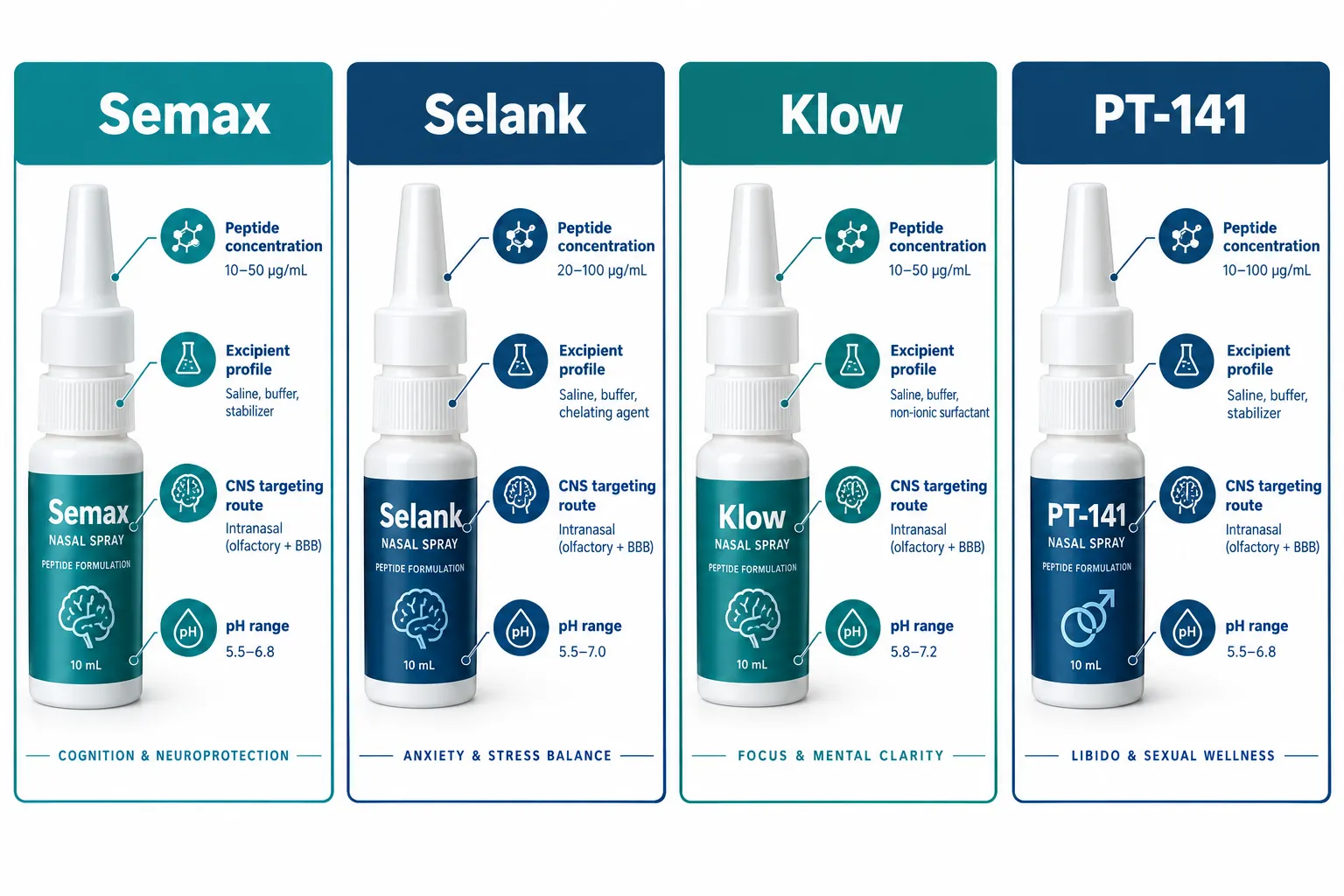
This guide addresses the practical procurement and formulation questions that matter most when working with Semax, Selank, and Klow nasal preparations in 2026, covering solvents, sterility, bioavailability, and supplier verification.

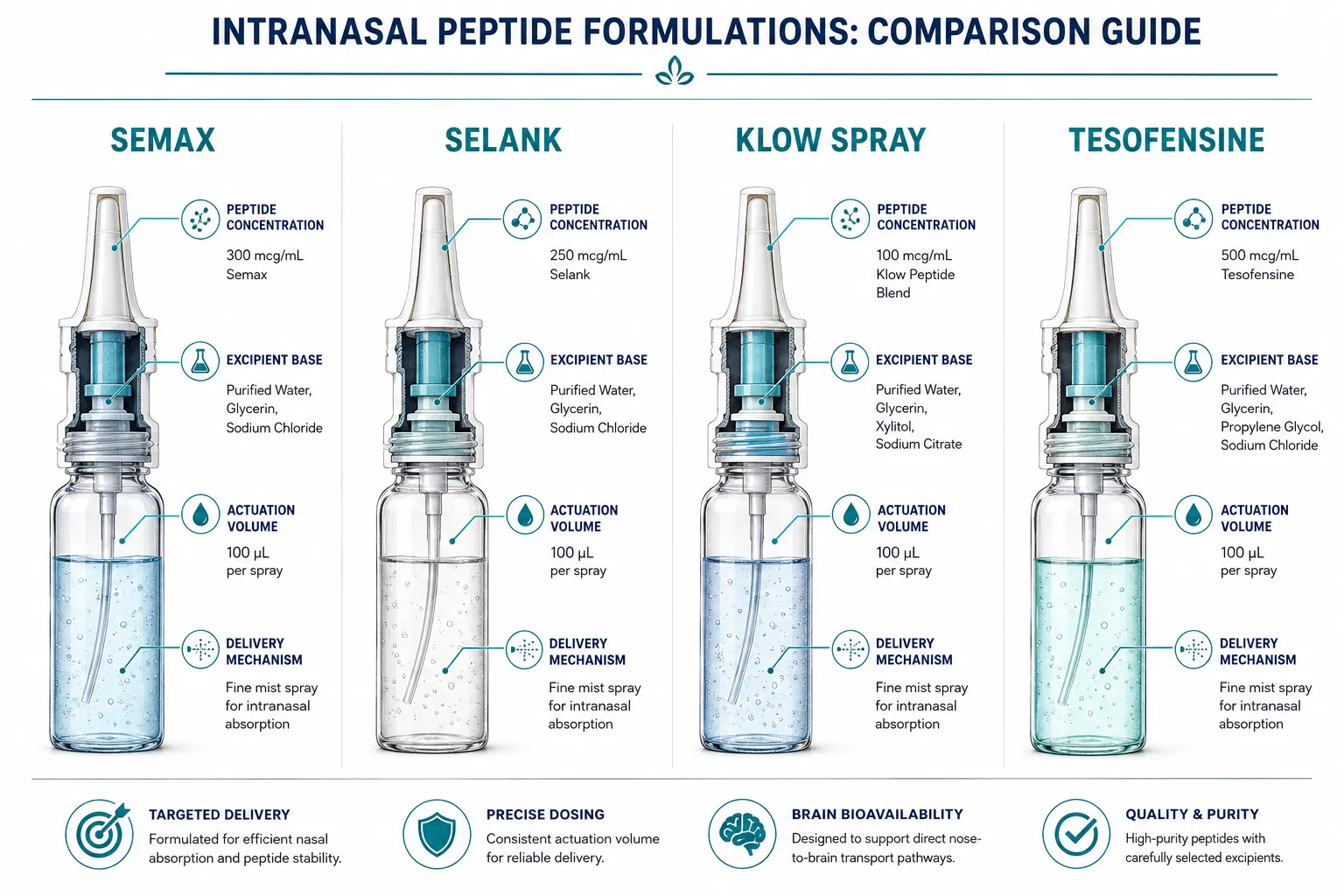
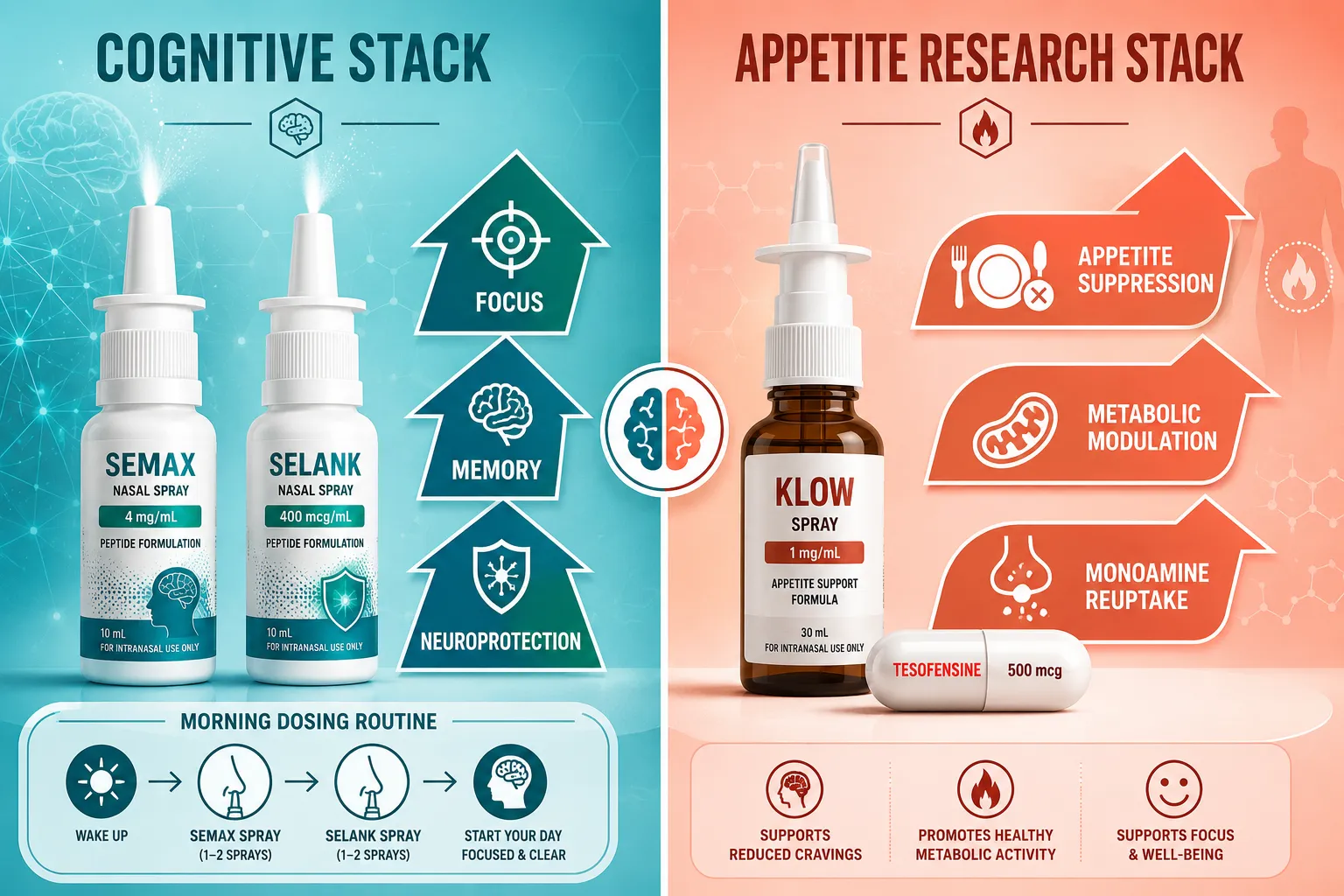
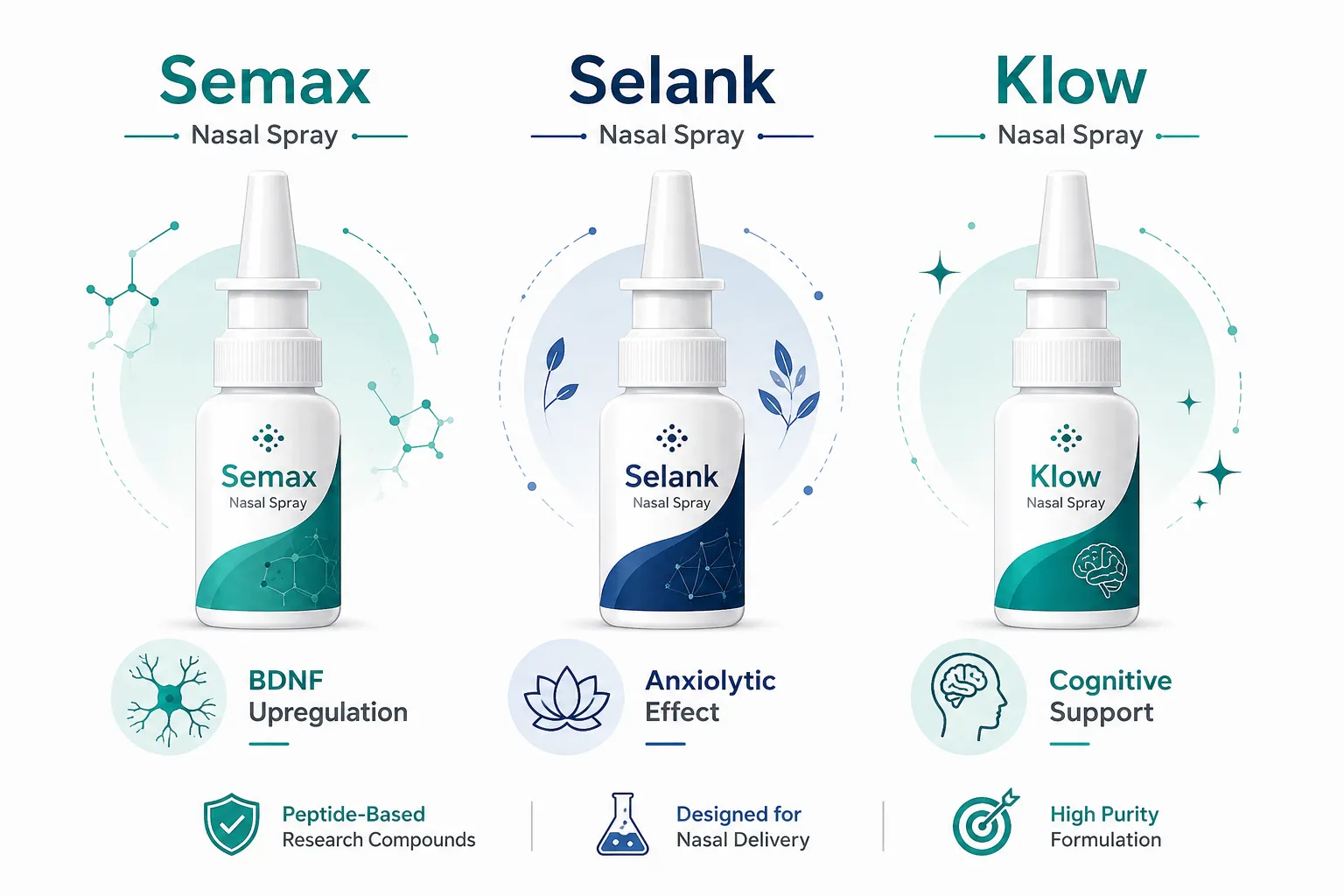
Flat-vector infographic landscape () showing three labeled nasal spray bottles — Semax, Selank, Klow — arranged left to

Key Takeaways

  • Semax, Selank, and Klow are strictly research-use only nasal spray peptides and must not be used in human clinical treatment outside approved trials.
  • Solvent selection, pH range, and preservative choice directly affect peptide stability and transmucosal bioavailability in both rodent and human experimental models.
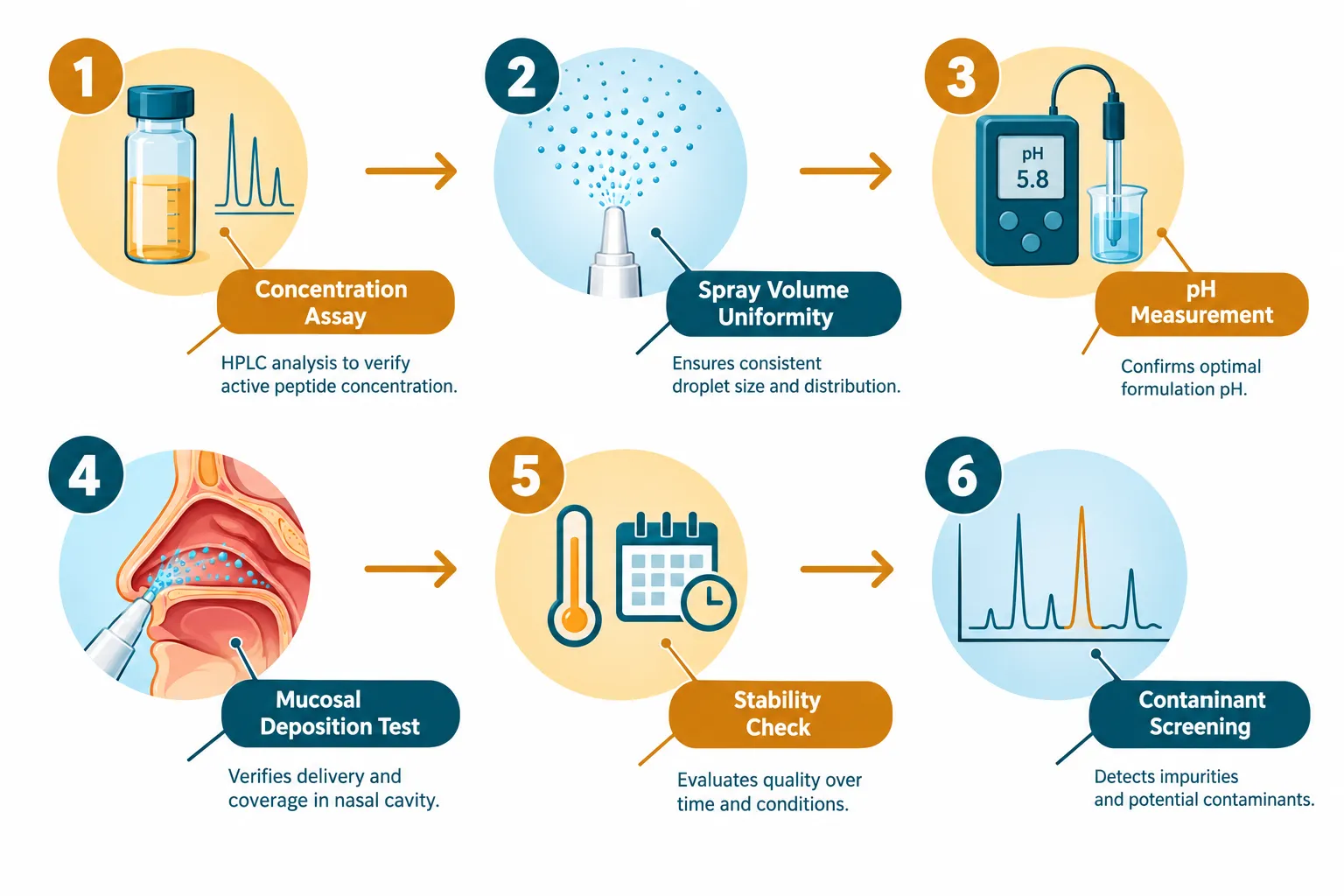
  • Sterility testing and third-party Certificates of Analysis (CoA) are non-negotiable procurement requirements.
  • Nasal formulations bypass first-pass metabolism, making dose accuracy more critical than with injectable peptides.
  • Supplier transparency, including HPLC purity data and endotoxin testing, is the clearest indicator of formulation quality.

Understanding the Three Peptides: Semax, Selank, and Klow

Before addressing procurement, labs need a clear picture of what each compound is and why nasal delivery is the preferred route in research settings.

Semax (ACTH(4-7)PGP) is a synthetic heptapeptide derived from adrenocorticotropic hormone. Research interest centers on its role in BDNF upregulation and neuroprotective signaling. You can explore related BDNF upregulation research themes for broader context on neurotrophin pathways.

Selank is a synthetic analog of tuftsin (Thr-Lys-Pro-Arg) combined with a stabilizing peptide sequence. Studies in rodent models have examined its anxiolytic and nootropic properties, particularly its interaction with GABAergic and serotonergic systems.

Klow is a newer nasal formulation blend that has attracted attention in 2026 for its proposed role in supporting cognitive and metabolic signaling pathways. Labs interested in related peptide blend research may also find value in reviewing what the Glow peptide does as a comparable blend-formulation reference.

All three are sold exclusively as research-use only compounds. They are not approved for human therapeutic use in most jurisdictions, and procurement must reflect that classification in documentation, storage, and handling protocols.

Formulation Science Behind Research-Use Only Nasal Spray Peptides

The nasal route offers a compelling advantage for peptide research: direct access to the olfactory epithelium and trigeminal nerve pathways, which allows compounds to bypass the blood-brain barrier and first-pass hepatic metabolism. However, this advantage depends entirely on formulation quality.

Formulation Science Behind Research-Use Only Nasal Spray Peptides

Solvent Selection and pH

The nasal mucosa maintains a physiological pH between 5.5 and 6.5. Formulations outside this range cause mucosal irritation in rodent models and can reduce absorption by disrupting tight junction permeability. For Semax and Selank specifically:

Parameter Recommended Range Risk if Out of Range
pH 5.5-6.5 Degradation, reduced absorption
Osmolality 285-310 mOsm/kg Mucosal damage in rodent models
Preservative (benzalkonium chloride) 0.01-0.02% Ciliotoxicity above 0.02%

Saline-based vehicles (0.9% NaCl) remain the most common solvent for both Semax and Selank. Some suppliers use phosphate-buffered saline (PBS) to stabilize pH, which is acceptable provided the buffer concentration does not exceed 10 mM.

Preservatives and Sterility

Multi-dose nasal spray vials require antimicrobial preservation. Benzalkonium chloride (BAK) is standard but must be kept below 0.02% to avoid ciliotoxic effects documented in murine nasal epithelium studies. Phenylethanol is an alternative worth specifying when ordering from suppliers.

Sterility is non-negotiable. Labs should require:

  • USP <71> sterility test results or equivalent
  • Endotoxin testing (LAL assay) with results below 1 EU/mL
  • Particulate matter testing per USP <788>

When sourcing from a lab-tested peptide supplier, always request documentation for all three tests before accepting a shipment.

Peptide Stability in Nasal Vehicles

Semax is notably susceptible to enzymatic degradation by nasal mucosal aminopeptidases. Research formulations that include cyclodextrin complexation (particularly hydroxypropyl-beta-cyclodextrin at 5-10%) have shown improved stability in in vitro nasal tissue models. Selank is comparatively more stable but should still be stored at 2-8°C and protected from light.

Procurement Standards: What Labs Should Know Before Buying

Sourcing research-use only nasal spray peptides requires more rigor than ordering standard lyophilized peptides, because the formulation itself introduces additional variables, solvent purity, fill volume accuracy, and container integrity.

Procurement Standards: What Labs Should Know Before Buying

Certificate of Analysis Checklist

A credible CoA for nasal peptide formulations should include:

  • HPLC purity (minimum 98% for research-grade)
  • Mass spectrometry confirmation of molecular weight
  • Endotoxin test result (LAL method)
  • Sterility test result
  • pH at time of manufacture
  • Batch number and manufacture date

Labs reviewing suppliers should also assess whether the vendor offers wholesale peptides for research with consistent batch documentation, which is critical for longitudinal studies requiring reproducibility.

Regulatory and Documentation Requirements

In the United States, research-use only peptides must be purchased by verified research institutions. Labs should maintain purchase records, intended-use declarations, and storage logs. The "not for human use" designation must appear on all internal labels.

For labs also working with injectable peptide research, understanding how nasal bioavailability compares to subcutaneous delivery is valuable. Researchers exploring dual-route protocols may find the TB-500 peptide research overview and BPC-157 and TB-500 combination data useful for cross-route comparison context.

Red Flags When Evaluating Suppliers

Avoid suppliers who:

  • Cannot provide batch-specific CoA (only generic documents)
  • List pH or osmolality as "N/A"
  • Offer no endotoxin testing data
  • Ship nasal formulations without cold-chain packaging

Reputable sources will also direct researchers to broader peptide buying resources that outline quality benchmarks across compound categories.

Conclusion

Research-use only nasal spray peptides, including Semax, Selank, and Klow nasal formulations, offer genuine scientific value when procured and handled correctly. The formulation variables that determine research validity are not abstract: pH, osmolality, preservative concentration, and sterility testing are concrete, measurable, and verifiable before a single assay begins.

Actionable next steps for labs in 2026:

  1. Request batch-specific CoA documents before placing any order, and reject suppliers who cannot provide HPLC purity above 98% with endotoxin results.
  2. Verify solvent pH falls within 5.5-6.5 and confirm osmolality data is included in supplier documentation.
  3. Establish internal cold-chain storage protocols (2-8°C) and log opening dates for all multi-dose vials.
  4. Maintain purchase records and intended-use declarations to satisfy institutional and regulatory requirements.
  5. Cross-reference nasal bioavailability data against injectable route studies where applicable to strengthen experimental design.

Sourcing from a verified peptide store that publishes transparent testing documentation is the single most reliable way to protect both research integrity and institutional compliance.

https://www.puretestedpeptides.com/wp-content/uploads/2026/08/research-use-only-nasal-spray-peptides-what-labs-should-know-before-buying-semax.webp 1024 1536 https://www.puretestedpeptides.com/wp-content/uploads/2026/01/buy-peptides-online.jpg 2026-08-02 13:03:422026-08-02 13:03:42Research-Use Only Nasal Spray Peptides: What Labs Should Know Before Buying Semax, Selank, and Klow Nasal Formulations

Tag Archive for: nasal spray peptides

Nasal Spray Peptides: Bioavailability, Administration, and Semax/Selank Research Applications

Nasal Spray Peptides: Bioavailability, Administration, and Semax/Selank Research Applications

July 23, 2026/0 Comments/by Pure Tested

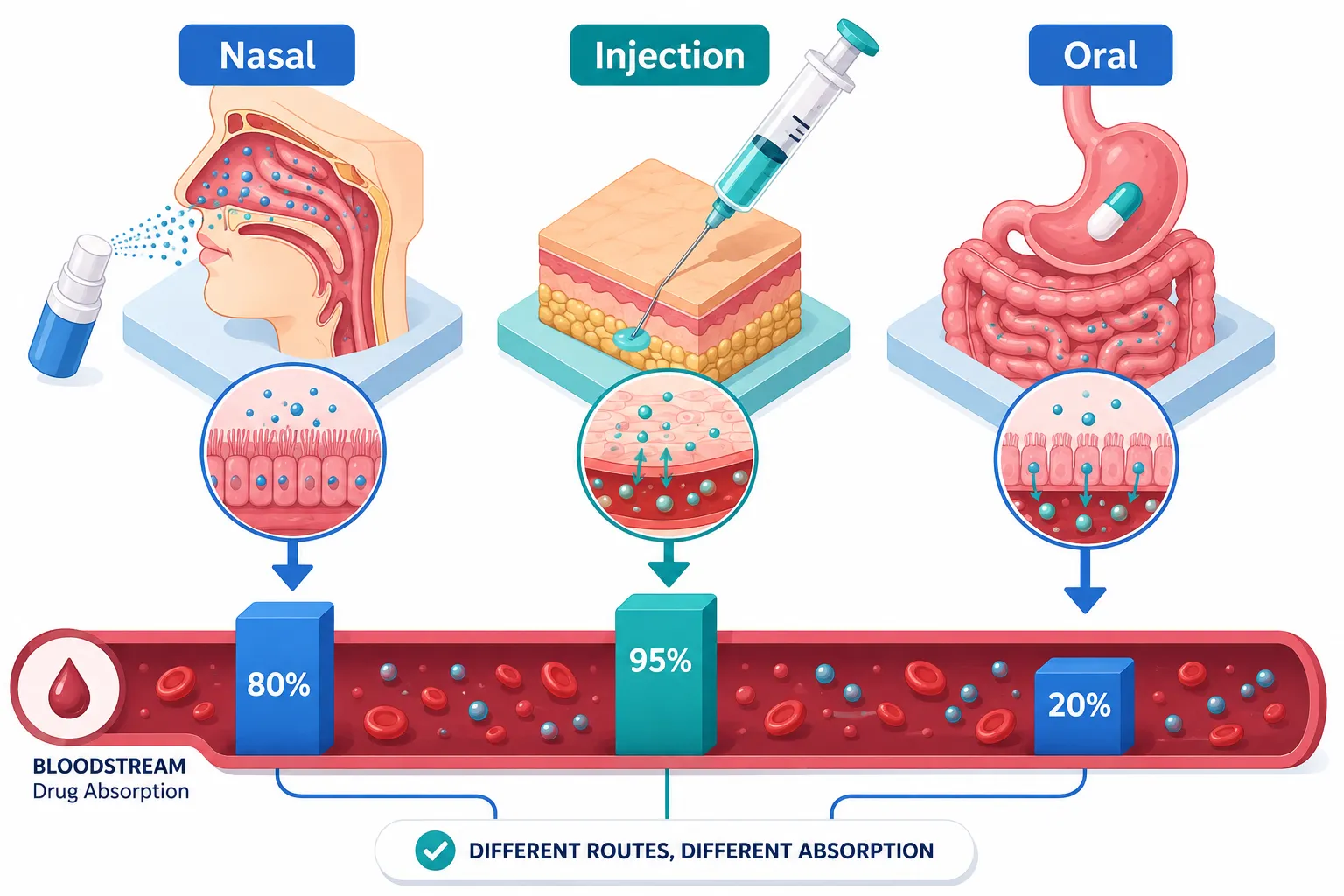
Intranasal peptide delivery achieves bioavailability figures that oral routes simply cannot match, recent industry analyses place intranasal Semax bioavailability at roughly 60-70%, compared to less than 5% via oral administration and approximately 95% via injection. That gap is not a minor detail; it fundamentally shapes how researchers design neurocognitive and anxiolytic peptide studies. Understanding nasal spray peptides: bioavailability, administration, and Semax/Selank research applications is therefore essential for any investigator working in this space in 2026.

Key Takeaways

  • Intranasal delivery bypasses first-pass hepatic metabolism, dramatically improving peptide bioavailability compared to oral routes.
  • The olfactory and trigeminal nerve pathways allow certain peptides to reach the central nervous system directly, bypassing the blood-brain barrier.
  • Semax and Selank are among the most well-characterized peptides for intranasal research, with distinct neurocognitive and anxiolytic profiles.
  • Formulation variables, pH, tonicity, preservatives, and droplet size, critically affect absorption efficiency and mucosal tolerability.
  • Purity and third-party testing of research peptides are non-negotiable factors for reproducible experimental outcomes.

Why Intranasal Delivery Changes the Peptide Research Equation

Most peptides are enzymatically degraded in the gastrointestinal tract before they reach systemic circulation. Oral bioavailability for many peptide compounds sits below 5%, making that route impractical for research protocols requiring consistent plasma or CNS concentrations. Subcutaneous or intravenous injection achieves near-complete bioavailability, but the intranasal route offers a compelling middle ground that is less invasive and, for certain peptides, nearly as effective.

Why Intranasal Delivery Changes the Peptide Research Equation

The Nasal Mucosa as an Absorption Gateway

The nasal cavity presents a large surface area, approximately 150 cm² in adults, lined with highly vascularized epithelium. Peptides deposited on this surface can be absorbed through several mechanisms:

  • Transcellular transport: Peptides pass directly through epithelial cells into the bloodstream.
  • Paracellular transport: Smaller molecules move between tight junctions.
  • Olfactory nerve pathway: Peptides travel along olfactory neurons, potentially reaching the brain directly without crossing the blood-brain barrier.
  • Trigeminal nerve pathway: A secondary direct CNS route running through the nasal mucosa.

The olfactory pathway is particularly relevant for neurocognitive peptide research because it offers a direct conduit to the central nervous system. This is one reason why compounds like Semax and Selank have been studied almost exclusively via the intranasal route rather than orally.

"For peptides targeting CNS endpoints, the intranasal route is not simply a convenience, it is a mechanistically distinct delivery strategy."

Researchers interested in a broader overview of intranasal peptide formats can explore the nasal spray peptides resource for additional context on formulation and delivery considerations.

Semax and Selank: Core Research Profiles

Understanding nasal spray peptides: bioavailability, administration, and Semax/Selank research applications requires a close look at the specific pharmacological profiles of these two compounds, which represent the most extensively studied intranasal neuropeptides in the current research literature.

Semax: Structure, Mechanism, and Neurocognitive Research

Semax is a synthetic heptapeptide derived from the ACTH(4-7) sequence, extended with a Pro-Gly-Pro fragment that confers metabolic stability. Its primary research interest centers on:

  • Upregulation of brain-derived neurotrophic factor (BDNF)
  • Modulation of the dopaminergic and serotonergic systems
  • Neuroprotective effects under ischemic conditions
  • Enhancement of memory consolidation and attention in preclinical models

Intranasal bioavailability of approximately 60-70% makes Semax a practical candidate for studies requiring reliable CNS exposure without surgical intervention. The Pro-Gly-Pro extension specifically resists enzymatic cleavage at the nasal mucosa, which helps explain why intranasal delivery is so effective for this compound compared to structurally simpler peptides.

Selank: Anxiolytic and Immunomodulatory Research

Selank is a synthetic analog of the endogenous tetrapeptide tuftsin, extended to a heptapeptide to improve stability. Research has focused on:

  • Anxiolytic activity without sedation or dependence markers
  • Modulation of GABA-A receptor sensitivity
  • Regulation of enkephalin metabolism
  • Potential immunomodulatory effects via tuftsin-related pathways

For researchers designing stress and cognition studies, the Selank stress and cognition research overview provides useful background on experimental models and observed outcomes.

Feature Semax Selank
Base sequence ACTH(4-7) + Pro-Gly-Pro Tuftsin analog
Primary research focus Neurocognition, neuroprotection Anxiolytic, immunomodulation
Intranasal bioavailability ~60-70% Comparable range
CNS pathway Olfactory/trigeminal Olfactory/trigeminal
Metabolic stability High (Pro-Gly-Pro extension) High (extended analog)

Administration Variables That Determine Research Outcomes

Administration Variables That Determine Research Outcomes

Even with well-characterized peptides, nasal spray peptides: bioavailability, administration, and Semax/Selank research applications depend heavily on how the formulation is prepared and delivered. Researchers who overlook these variables introduce significant confounds into their data.

Administration Variables That Determine Research Outcomes

Critical Formulation Parameters

pH and tonicity: The nasal mucosa tolerates a pH range of approximately 4.5-6.5. Solutions outside this range trigger mucociliary clearance, reducing contact time and absorption. Isotonic formulations (around 285-310 mOsm/kg) minimize mucosal irritation.

Preservatives: Benzalkonium chloride, a common preservative, has been shown to impair mucociliary function at higher concentrations. Research formulations should minimize preservative load or use alternatives such as sodium EDTA at low concentrations.

Droplet size: Particles in the 10-50 micron range deposit preferentially in the nasal cavity rather than the lungs. Larger droplets deposit anteriorly with faster clearance; smaller droplets risk pulmonary deposition.

Viscosity enhancers: Agents such as hydroxypropyl methylcellulose can extend mucosal contact time, improving absorption for peptides with slower transcellular transport rates.

Dosing Protocol Considerations

  • Administer with the head tilted slightly forward to maximize posterior nasal deposition
  • Alternate nostrils between doses to reduce local mucosal fatigue
  • Allow 5-10 minutes between sequential doses if split dosing is required
  • Store peptide solutions at 2-8°C; avoid freeze-thaw cycling

Researchers working with other peptide delivery formats, such as BPC-157 nasal spray and capsule evidence, will find that many of these formulation principles apply across peptide classes.

Purity as a Non-Negotiable Variable

Reproducibility in peptide research begins with compound purity. Impurities, whether residual solvents, truncated sequences, or oxidation products, can produce off-target effects that confound results. Reviewing peptide purity testing fundamentals is a practical first step for any researcher establishing a new protocol.

For studies that extend beyond neurocognitive endpoints into metabolic or regenerative domains, exploring metabolic modulation research lines can help contextualize multi-pathway experimental designs.

Conclusion

Intranasal delivery is not simply a convenient alternative to injection, for neuropeptides like Semax and Selank, it is a strategically optimal route that leverages direct CNS access through olfactory and trigeminal pathways while achieving bioavailability that oral administration cannot approach. Researchers designing studies in 2026 should treat formulation variables, pH, tonicity, droplet size, and preservative selection, as primary experimental controls rather than secondary considerations.

Actionable next steps for researchers:

  1. Verify peptide purity via third-party HPLC and mass spectrometry before beginning any protocol.
  2. Standardize formulation pH to the 4.5-6.5 range and confirm isotonicity before use.
  3. Document droplet size specifications for the delivery device to ensure reproducible nasal deposition.
  4. Review existing Semax and Selank literature to align dosing intervals with established pharmacokinetic windows.
  5. Consider how intranasal findings might complement or contrast with data from other administration routes when interpreting results.

Rigorous attention to these variables transforms intranasal peptide research from a loosely controlled experiment into a reproducible, publication-worthy investigation.

https://www.puretestedpeptides.com/wp-content/uploads/2026/07/nasal-spray-peptides-bioavailability-administration-and-semax-selank-research-ap.webp 1024 1536 Pure Tested https://www.puretestedpeptides.com/wp-content/uploads/2026/01/buy-peptides-online.jpg Pure Tested2026-07-23 13:07:112026-07-27 13:32:09Nasal Spray Peptides: Bioavailability, Administration, and Semax/Selank Research Applications
Semax Peptide Nasal Spray: Optimizing Delivery and Research Outcomes for Neurocognitive Studies

Semax Peptide Nasal Spray: Optimizing Delivery and Research Outcomes for Neurocognitive Studies

July 6, 2026/0 Comments/by Pure Tested

Intranasal administration of Semax achieves approximately 60-70% bioavailability to central compartments, compared to under 5% via oral routes. That single data point explains why researchers consistently choose the nasal spray format when designing neurocognitive studies with this synthetic ACTH(4-7) analogue.

For investigators working with Semax peptide nasal spray: optimizing delivery and research outcomes for neurocognitive studies is not a secondary concern, it is the foundation of reproducible, meaningful data.

Key Takeaways

  • Intranasal delivery of Semax achieves dramatically higher CNS bioavailability than oral administration, making spray format the preferred research vehicle.
  • Semax upregulates brain-derived neurotrophic factor (BDNF), a mechanism central to its observed neurocognitive effects in preclinical and clinical models.
  • Formulation stability, pH balance, and spray volume directly affect absorption consistency across study subjects.
  • Most published clinical evidence originates from Russian research programs; Western regulatory approval remains absent, and further large-scale trials are needed.
  • Proper storage, reconstitution protocols, and administration technique are critical variables for reliable research outcomes.

Key Takeaways

Why Intranasal Delivery Defines Semax Research

The olfactory epithelium and nasal mucosa offer a direct, low-barrier pathway to the central nervous system. Peptide molecules administered intranasally bypass first-pass hepatic metabolism entirely, allowing a significantly higher fraction of the active compound to reach neural tissue. This pharmacokinetic advantage is the primary reason nasal spray peptides have become a preferred format in neuroscience research settings.

Semax, a heptapeptide derived from the adrenocorticotropic hormone fragment, is particularly well-suited to this route. Its molecular weight and structural properties facilitate rapid mucosal absorption. Researchers working on focus, neuroprotection, and mood regulation protocols benefit from the predictable CNS exposure this route provides.

For comparison, consider how innovative peptide delivery systems have reshaped expectations around bioavailability across the broader peptide research landscape. Semax nasal spray sits at the leading edge of that shift.

Key delivery advantages of the intranasal route:

Factor Intranasal Oral
CNS Bioavailability ~60-70% Under 5%
Onset of Action Rapid (minutes) Slow (variable)
Hepatic First-Pass Bypassed Significant
Consistency High Low

Why Intranasal Delivery Defines Semax Research

Optimizing Delivery and Research Outcomes for Neurocognitive Studies: Formulation and Protocol Factors

Achieving consistent results with Semax peptide nasal spray: optimizing delivery and research outcomes for neurocognitive studies requires attention to several formulation variables that are often underestimated.

pH and Tonicity
Nasal mucosal tissue is sensitive to pH extremes. Formulations outside the 5.5-6.5 pH range can trigger mucociliary clearance, reducing contact time and absorption. Researchers should verify that reconstitution solutions maintain appropriate tonicity to avoid irritation artifacts that could confound behavioral or cognitive endpoints.

Spray Volume and Droplet Size
Optimal intranasal delivery typically uses volumes between 100-200 microliters per nostril. Droplet size matters equally, particles in the 10-50 micron range deposit in the olfactory region rather than draining into the nasopharynx. Standardizing spray device actuation force across subjects reduces inter-subject variability.

Storage Conditions
Semax peptide solutions are susceptible to degradation at room temperature. Refrigeration at 2-8°C is standard for short-term storage; lyophilized forms extend stability significantly. Researchers should document freeze-thaw cycles, as repeated cycling degrades peptide integrity and undermines dose accuracy.

Protocols that apply similar rigor to formulation quality are reflected in related research on BPC-157 nasal spray evidence, where delivery consistency proved critical to outcome reproducibility.


Neurocognitive Mechanisms and Research Outcomes

The primary mechanism driving interest in Semax for neurocognitive research is its upregulation of brain-derived neurotrophic factor (BDNF). BDNF supports neuronal survival, synaptic plasticity, and long-term potentiation, processes directly linked to learning, memory consolidation, and executive function.

In a study involving 110 stroke patients, Semax administration correlated with increased plasma BDNF levels and measurable improvements in motor performance and functional independence. This positions the compound as a candidate for neuroprotection and post-injury recovery research models.

Researchers also note Semax's interaction with serotonergic and dopaminergic systems, which may explain observed effects on anhedonia and motivational states in animal models. These properties make it a relevant comparator in studies examining Selank peptide benefits, another neuropeptide with anxiolytic and cognitive-enhancing properties.

Neurocognitive Mechanisms and Research Outcomes

Research areas where Semax shows documented activity:

  • Neuroprotection following ischemic events
  • BDNF upregulation and neuroplasticity support
  • Attention and working memory enhancement
  • Mood regulation and anhedonia reduction
  • Stroke rehabilitation functional recovery

Regulatory context matters. Semax is approved in Russia for cognitive enhancement and stroke recovery but carries no FDA approval in the United States. The FDA has categorized it as a Category 2 substance, meaning it is not sanctioned for compounding due to insufficient safety and efficacy evidence under Western standards. Researchers should design studies accordingly and consult applicable institutional review frameworks.

Experts consistently note that most clinical evidence originates from Russian studies, and large-scale, randomized, placebo-controlled trials in diverse Western populations remain necessary. This gap represents both a limitation and a significant research opportunity in 2026.

For teams exploring broader neuroendocrine and cognitive research themes, the intersection of peptide biology and neural signaling is further explored in resources covering neuroendocrine and innate immunity pathways.


Conclusion

Semax peptide nasal spray stands as one of the more rigorously studied intranasal peptides in the neurocognitive research space, yet its full potential remains constrained by a limited body of Western clinical data. For researchers aiming to close that gap, actionable next steps include:

  1. Standardize formulation protocols, document pH, tonicity, spray volume, and storage conditions in every study design.
  2. Select validated spray devices, actuation consistency directly affects dose reproducibility across subjects.
  3. Design BDNF-inclusive endpoints, plasma BDNF measurement strengthens mechanistic claims and aligns with existing literature.
  4. Acknowledge regulatory boundaries, ensure institutional compliance given the compound's current FDA classification.
  5. Engage with the broader peptide delivery literature, advances in peptide delivery system innovation continue to offer translatable insights for Semax-specific protocols.

Rigorous attention to delivery optimization is not peripheral to neurocognitive research with Semax, it is the variable that separates meaningful data from noise.

https://www.puretestedpeptides.com/wp-content/uploads/2026/07/Semax-Peptide-Nasal-Spray-Optimizing-Delivery-and-Research-Outcomes-for-Neurocognitive-Studies.png 1024 1536 Pure Tested https://www.puretestedpeptides.com/wp-content/uploads/2026/01/buy-peptides-online.jpg Pure Tested2026-07-06 13:04:462026-07-20 15:00:53Semax Peptide Nasal Spray: Optimizing Delivery and Research Outcomes for Neurocognitive Studies
×

Helpful Links

  • My account
  • Cart
  • Checkout
  • Refund and Returns Policy
  • Privacy Policy
  • SMS Privacy Policy
  • Login
  • My Account
  • Logout

USA Made Lab Tested Peptides

All products are sold for research, laboratory, or analytical purposes only, and are not for human consumption


Pure Tested Peptides is a chemical supplier. Pure Tested Peptides is not a compounding / chemical compounding facility as defined under 503A of the Federal Food, Drug, and Cosmetic act. Pure Tested Peptides is not an outsourcing facility as defined under 503B of the Federal Food, Drug, and Cosmetic act.

The statements made within this website have not been evaluated by the US Food and Drug Administration. The products we offer are not intended to diagnose, treat, cure or prevent any disease.

Human/Animal Consumption Prohibited. Laboratory/In-Vitro Experimental Use Only

Scroll to top Scroll to top Scroll to top