Semax vs Classic Anxiolytics: How Semax Nasal Spray Research Differs From Buspirone and Benzodiazepine Models
Anxiety disorders affect roughly one in three adults at some point in their lifetime, yet the dominant pharmacological tools, benzodiazepines and buspirone, were developed under research frameworks that prioritize direct anxiolysis over neuroplasticity or cognitive preservation. That gap has driven renewed scientific interest in peptide-based compounds, and nowhere is the contrast sharper than in the growing body of Semax research comparing this synthetic neuropeptide to classical anxiolytic drug models.
Understanding Semax vs classic anxiolytics: how Semax nasal spray research differs from buspirone and benzodiazepine models requires examining not just outcomes, but the underlying research frameworks, mechanistic targets, and endpoint definitions that separate these approaches.
Key Takeaways
- Semax acts primarily on neurotrophic and neuroprotective pathways, not on GABA-A receptors or serotonin 5-HT1A sites like benzodiazepines and buspirone.
- Preclinical research positions Semax as a stress-resilience agent rather than a direct anxiolytic, a meaningful distinction in research design.
- Semax nasal spray delivers the peptide intranasally, bypassing first-pass metabolism and raising distinct bioavailability questions compared to oral anxiolytics.
- As of 2026, Semax holds regulatory approval in Russia and some Eastern European countries but lacks Western clinical trial validation for anxiety indications.
- Evidence gaps remain significant, and current findings should be interpreted within their preclinical and limited clinical contexts.
Mechanistic Foundations: Where the Research Models Diverge
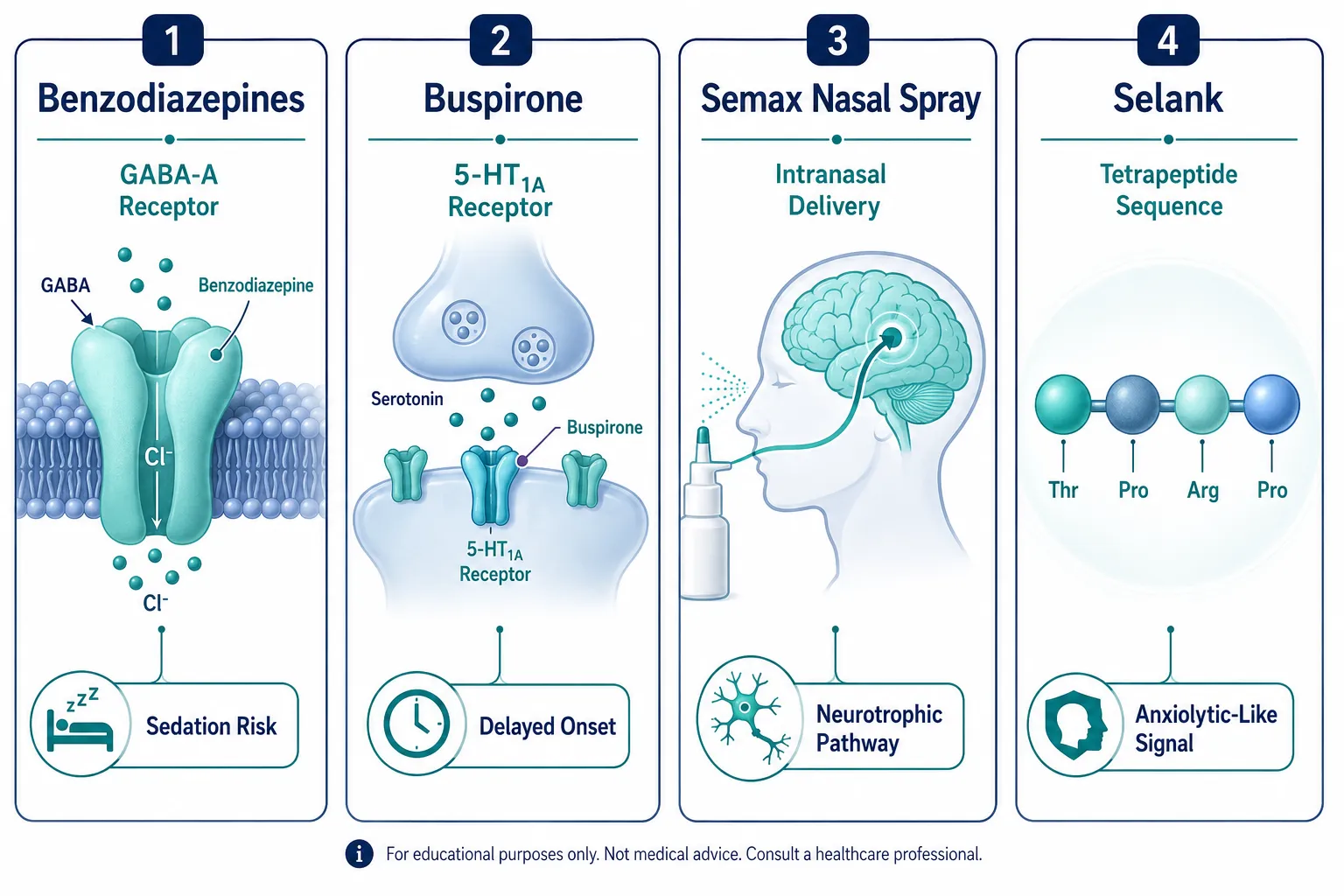
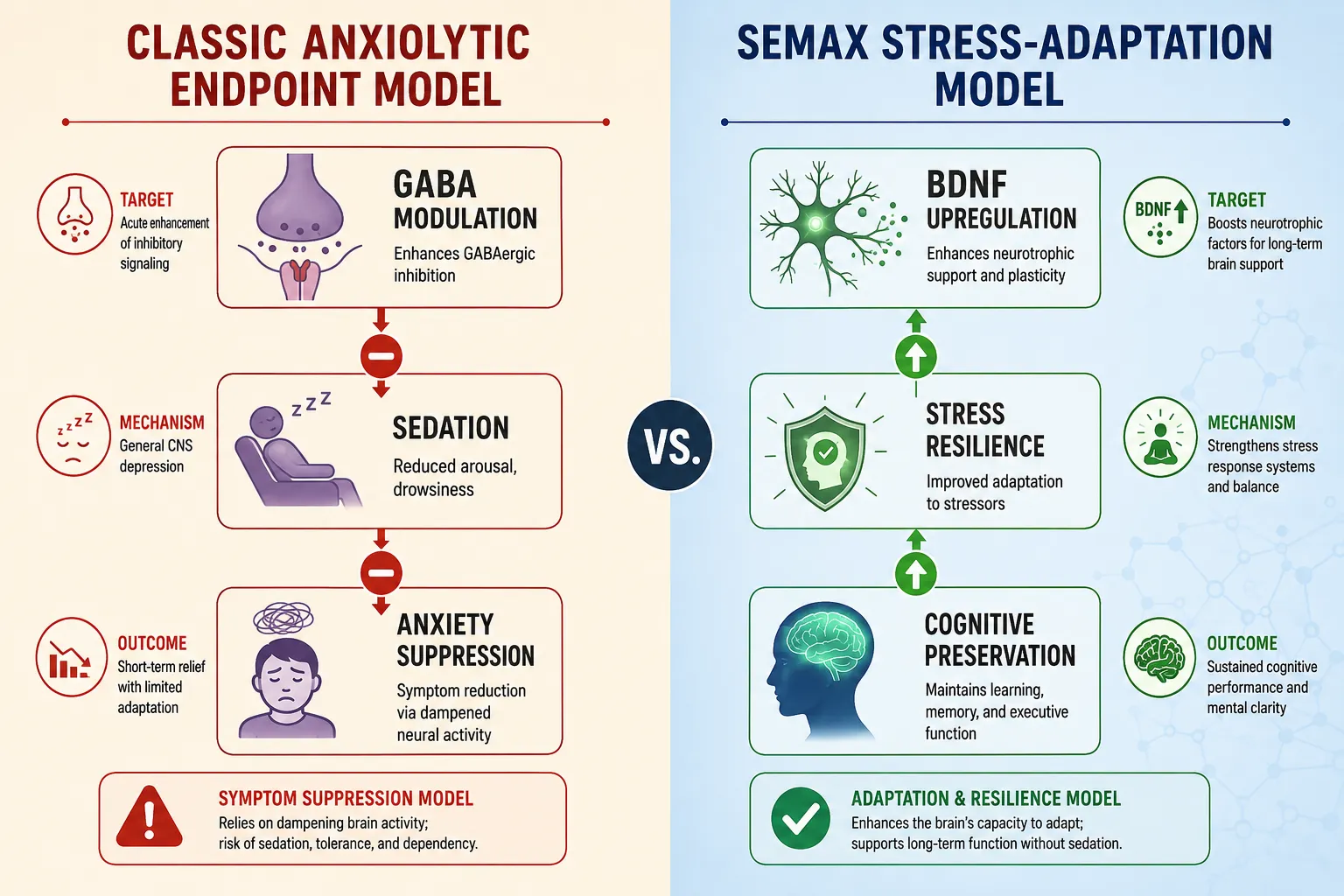
The clearest way to understand Semax vs classic anxiolytics is to start at the receptor level. Benzodiazepines bind to GABA-A receptors, enhancing chloride ion influx and producing rapid sedation alongside anxiolysis. Buspirone, a non-benzodiazepine anxiolytic, acts as a partial agonist at 5-HT1A receptors and takes one to two weeks to produce measurable effects. Both mechanisms target anxiety suppression as a primary endpoint.
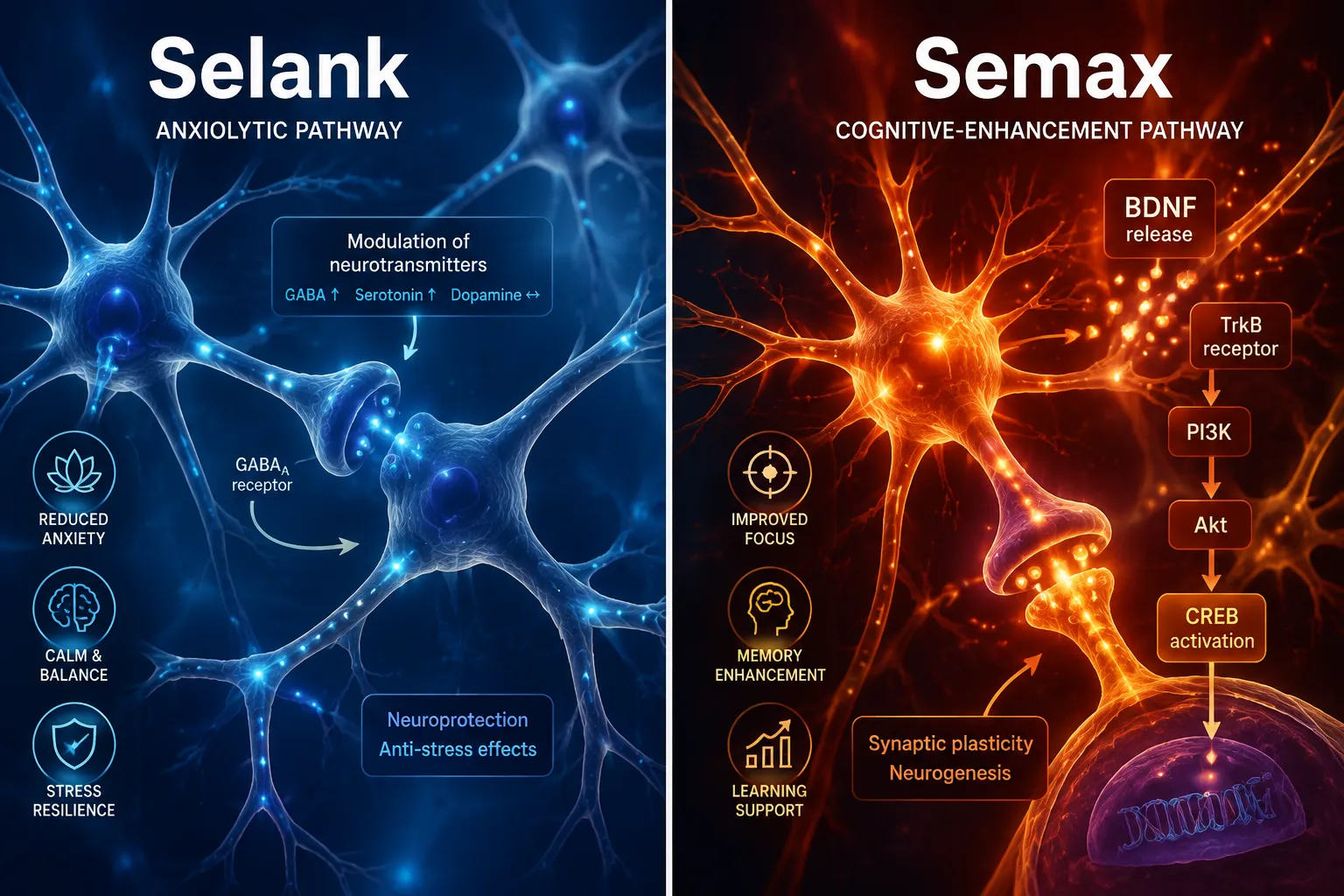
Semax, a synthetic heptapeptide derived from adrenocorticotropic hormone (ACTH), works through a fundamentally different pathway. Research models indicate it upregulates brain-derived neurotrophic factor (BDNF) and modulates dopaminergic and serotonergic transmission without direct receptor binding at GABA-A or 5-HT1A sites. This places Semax in a neuroprotective and neurotrophic category rather than a classical anxiolytic one.
"The distinction is not merely pharmacological, it reflects entirely different research questions. Classic anxiolytic models ask: does the compound suppress anxiety signals? Semax research asks: does the compound strengthen the brain's adaptive response to stress?"
This mechanistic separation explains why Semax administration protocols and outcome measures in research settings look so different from standard anxiolytic drug trials.
Key mechanistic differences at a glance:
| Feature | Benzodiazepines | Buspirone | Semax |
|---|---|---|---|
| Primary target | GABA-A receptor | 5-HT1A receptor | BDNF / neurotrophic axis |
| Onset | Rapid (minutes) | Slow (1-2 weeks) | Variable; model-dependent |
| Sedation risk | High | Low | Minimal in preclinical data |
| Cognitive effects | Impairment common | Neutral | Potential enhancement |
| Dependence risk | Significant | Low | Not established |
How Semax Nasal Spray Research Differs From Buspirone and Benzodiazepine Models in Preclinical Settings
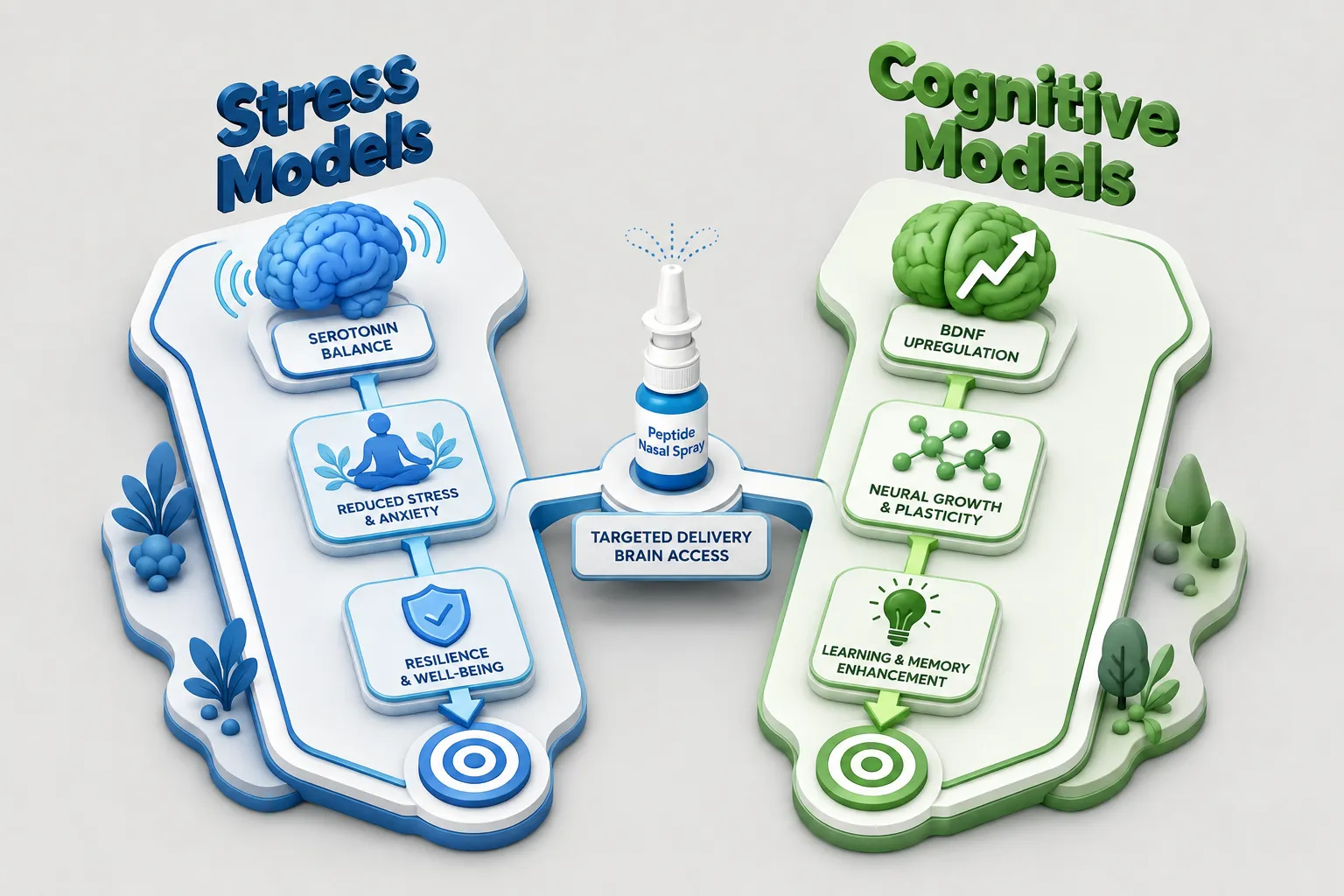
The preclinical landscape reveals how deeply the research designs diverge. A 2024 chronic unpredictable stress (CUS) rat model demonstrated that Semax promoted stress resilience, animals showed preserved cognitive function and reduced depressive-like behavior, rather than direct suppression of anxiety-related behaviors as measured by classic endpoints like the elevated plus maze or open field test.
Older rodent studies did show conditional anxiolytic-like effects, but these were context-dependent and dose-sensitive. Critically, Semax did not produce the sedation or motor impairment that consistently appears in benzodiazepine-treated rodent cohorts.
Buspirone research models, by contrast, are built around 5-HT1A partial agonism and use generalized anxiety disorder (GAD) symptom clusters as primary endpoints. These models do not measure cognitive preservation, neuroplasticity markers, or BDNF expression, endpoints that are central to understanding Semax's profile.
For researchers exploring peptide comparisons, the Selank vs Semax distinction is equally instructive. Selank, another synthetic peptide with anxiolytic-like properties, more closely mirrors classical anxiolytic endpoints in some models, while Semax leans toward neuroprotection and cognitive enhancement. Reviewing Selank research alongside Semax data helps clarify where these compounds overlap and where they diverge.
Three defining differences in research model design:
- Endpoint selection, Semax studies measure BDNF levels, cognitive task performance, and stress biomarkers; anxiolytic drug trials measure anxiety symptom scores and sedation thresholds.
- Stress model type, Semax research favors chronic stress paradigms; benzodiazepine research often uses acute anxiety provocation models.
- Administration route, Semax bioavailability via intranasal delivery bypasses hepatic first-pass metabolism, a pharmacokinetic consideration absent from oral drug models.
Regulatory Status, Evidence Gaps, and the 2026 Research Landscape
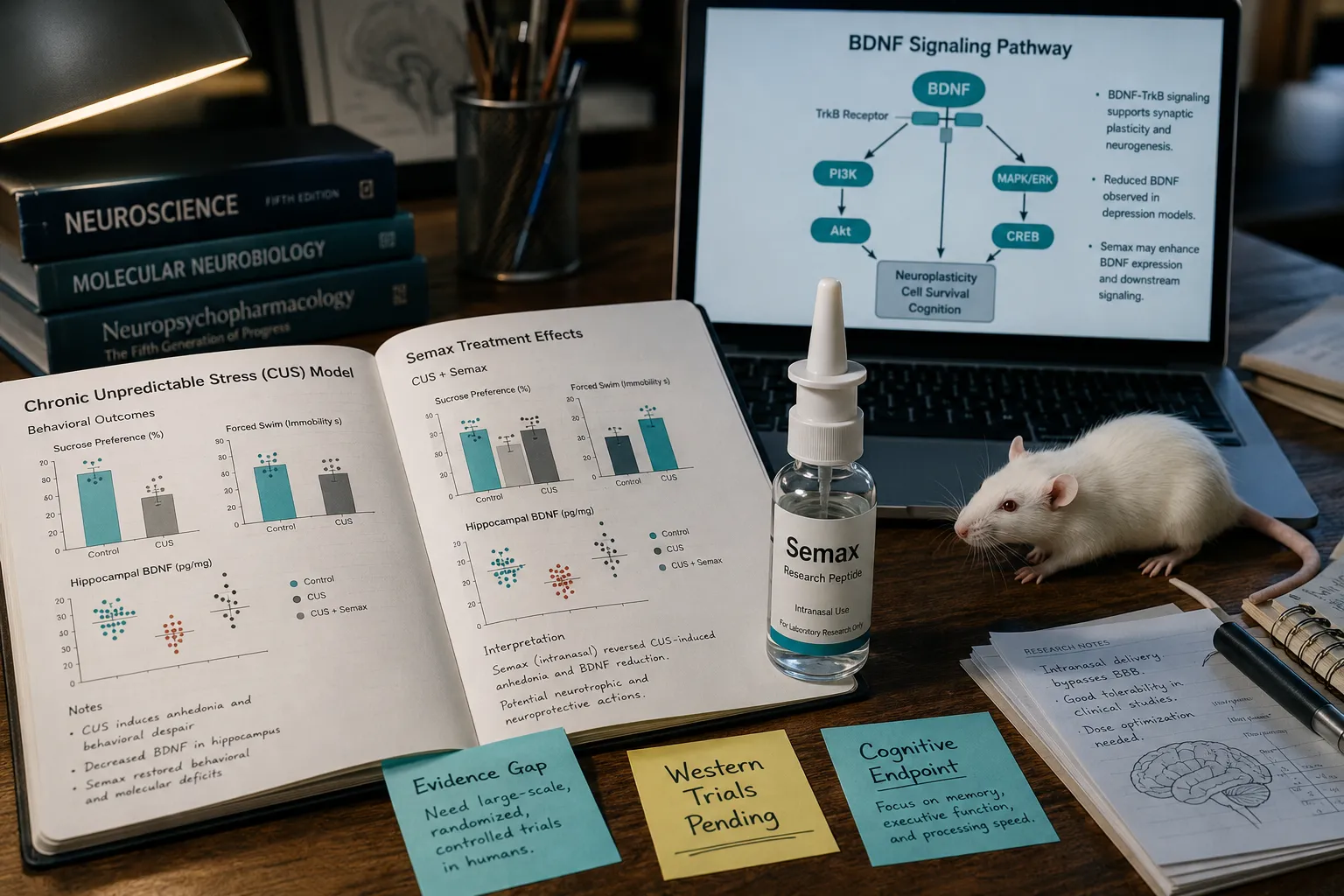
As of 2026, the regulatory and clinical picture for Semax remains uneven. The compound holds approval in Russia and select Eastern European countries for neurological and cognitive indications. No Western regulatory agency, including the FDA or EMA, has approved Semax for anxiety or any other indication, and no large-scale randomized controlled trials in Western populations have been completed for anxiety endpoints.
This creates a significant evidence gap when comparing Semax to buspirone or benzodiazepines, both of which have decades of human trial data. Integrative reviews published in 2026 consistently position Semax as a neuroprotective agent with "anxiolytic-like signals" rather than a validated anxiolytic drug, an important distinction for both researchers and clinicians.
The safety profile from available data is notable: Semax shows minimal sedation, no reported physical dependence in preclinical models, and no significant motor impairment, a sharp contrast to benzodiazepine risks. However, long-term human safety data remain limited.
Researchers interested in combined peptide approaches can explore Selank Semax stack models, where the two peptides are studied together for potentially complementary anxiolytic-like and neuroprotective effects. For those examining intranasal delivery specifically, Selank intranasal research provides useful parallel data on peptide absorption and CNS delivery via nasal routes.
Proper Semax dosing protocols in research settings vary considerably from the fixed-dose models used in classic anxiolytic drug trials, further complicating direct comparisons.
Current evidence status summary:
- Preclinical support: Moderate, with stress-resilience and cognitive endpoints showing consistent signals
- Human clinical data: Limited; primarily from Russian clinical settings
- Western RCT data: Absent as of 2026
- Regulatory approval (Western): None for anxiety indications
Conclusion
The comparison of Semax vs classic anxiolytics: how Semax nasal spray research differs from buspirone and benzodiazepine models ultimately reflects two different scientific philosophies. Classical anxiolytic research targets symptom suppression through well-characterized receptor systems. Semax research targets neuroadaptation, resilience, and cognitive preservation through neurotrophic pathways, a framework that produces different data, different endpoints, and different clinical implications.
Actionable next steps for researchers and informed readers:
- Review the primary preclinical literature on Semax's BDNF-mediated mechanisms before drawing comparisons to GABAergic or serotonergic drug models.
- Treat current "anxiolytic-like" findings as hypothesis-generating, not confirmatory, given the absence of Western RCT data.
- Examine Selank peptide research alongside Semax data for a fuller picture of intranasal peptide anxiolytic-like profiles.
- Follow Western trial registries for emerging Semax and related peptide studies expected in the 2026-2028 window.
- Consult qualified research professionals before applying any findings from preclinical or limited clinical models to human health contexts.
The science is evolving. What is clear in 2026 is that Semax occupies a genuinely distinct research category, one that deserves rigorous, independent evaluation rather than direct mapping onto the anxiolytic drug frameworks built for benzodiazepines and buspirone.