Call or Text 727-513-9780
  • Shopping Cart Shopping Cart
    0Shopping Cart
Pure Tested Peptides | America's most trusted Peptides for sale online
  • Peptides for sale
    • Oral Peptides for sale
      • Peptide Capsules for sale
      • BPC 157 Capsules 1000mcg
      • SLU-PP-332 Capsules | 1000 mcg
      • 5-Amino-1MQ 50mg Capsules
      • Tesofensine 500mcg
    • All Peptides for sale
    • Peptide Sprays
      • BPC 157 Nasal Spray Kit
      • BPC-157 TB500 Nasal Spray Kit
      • Semax Nasal Spray 10mg
      • Selank – Nasal Spray Kit – 10mg
      • Epithalon 50MG Nasal Spray Kit
      • Ipamorelin 10mg Nasal Spray
      • Klow Nasal Spray (BPC-157 + TB-500 + GHK-Cu + KPV) | 80mg
      • Hulk Nasal Spray Tesa / Ipa Blend 6/3 MG
      • Klow Nasal Spray
      • NAD + 500 mg Nasal Spray
      • PT-141 Nasal Spray Kit
    • GHRH Peptides
      • Ipa Peptides
      • CJC-1295 Peptides
        • CJC-1295 with DAC 5 mg
        • CJC-1295 without DAC 5 mg
        • CJC-1295 Ipa 10mg
      • Tesa Peptides
        • Tesa Peptide
        • Tesa 20 mg
    • GHK-Cu Peptides
      • All GHK-Cu Peptides
      • GHK-Cu 100mg
      • KLOW Peptide Blend – Buy KLOW blend online
    • BPC Peptides
      • All BPC Peptides
      • BPC-157
      • BPC-157 TB-500
      • BPC 157 capsules 1000mcg
    • SLU-PP-332 Peptides
      • All SLU-PP-332 Peptides
      • SLU-PP-332 5mg
    • GLP3 Peptides
      • GLP3-R
      • GLP3-R CAG 10mg
      • GLP3-R 20mg
    • PT-141 Peptides
      • PT-141 Peptides for sale
      • PT-141 10mg
      • PT-141 Nasal Spray
    • CAG Peptides
      • Lipo-C Peptide Blend
      • CAG 5mg
      • CAG 10mg
    • MOTS-C Peptides
      • MOTS-C Peptides for sale
      • MOTS-c peptide
      • MOTS-c 10mg *6 pack*
    • 5 Amino 1MQ Peptides
      • 5 Amino 1MQ Peptides for sale
      • 5-Amino-1MQ 50mg Capsules
      • 5-Amino-1MQ 5mg
    • Epithalon Peptides
      • Epithalon Peptides for sale
      • Epithalon 10mg
      • Epithalon 50mg
  • Shop
    • GLPs
      • 5-Amino-1MQ 50mg Capsules
      • 5-Amino-1MQ 5mg
      • GLP3-Reta
      • L-Carnitine 500mg/ml
      • Tesofensine 500mcg
      • SLU-PP-332 5mg
      • MOTS-c 10mg *6 pack*
    • Epithalon & BPC Peptides
      • Epithalon 10mg
      • Epithalon 50mg
      • BPC-157
      • BPC 157 capsules 1000mcg
      • BPC-157 TB-500
      • BPC-157 TB500 Nasal Spray Kit
      • BPC 157 Nasal Spray Kit
    • BPC TB-500 & NAD+ Peptides
      • NAD+ 500 mg
      • KLOW Peptide Blend – Buy KLOW blend online
      • GLOW Peptide Blend
      • TB 500 5mg
      • BPC 157 capsules 1000mcg – Supplement
      • BPC 157 Nasal Spray Kit
      • BPC-157
      • BPC-157 TB500 Nasal Spray Kit
      • BPC-157 TB-500
      • BPC 157 capsules 1000mcg
    • LL-37 Peptide
      • LL-37 10 mg
    • MOTS-C & Selank
      • MOTS-c peptide
      • Selank 10mg
    • GHK Peptides
      • GHK-Cu 100mg
      • GLOW Peptide Blend
      • KLOW Peptide Blend – Buy KLOW blend online
  • COAs
  • Wholesale
    • Wholesale Peptides for sale
  • PTP FAQ
  • Affiliates
    • Selank Peptide: Advanced Pharmacological Mechanisms Underlying Its Anxiolytic and Nootropic Effects in Research
      • 5-Amino-1MQ Peptide: Detailed Mechanisms of NNMT Inhibition and Its Impact on Cellular Metabolism Research
        • MOTS-C Peptide: Unraveling Its Role in Mitochondrial Dynamics and Energy Metabolism Research
          • Epithalon Peptide and Telomerase Regulation: Investigating Its Impact on Cellular Senescence and Lifespan Research Models
            • GLP2-T vs GLP2 Tirz Peptide: Understanding the Naming, Mechanistic Nuances, and Research Implications for Gut Health
      • Peptides and Polypeptides in Modern Pharmacology: What Research on Metoprolol, Prednisone, and Amlodipine Reveals
        • Polypeptide Peptides vs NSAIDs: What Naproxen and Diclofenac Teach Tissue-Repair Researchers About BPC‑157 and TB‑500
          • Peptides and Polypeptides in Endocrine Pharmacology: How GLP-1, GLP-2, and GLP-3 Retatrutide Differ From Classic Drugs Like Prednisone and Amlodipine
          • 5‑Amino‑1MQ Peptide and NNMT Inhibition: How It Compares With Statins Like Atorvastatin in Adipose and Lipid Metabolism Research
      • Enclomiphene, Estrogen Receptor Signaling, and Luteinizing Phase Biology: What Hormone Researchers Should Measure
        • Mesenchymal Stem Cells, BPC‑157, and GHK‑Cu: How Tissue Repair Peptides Compare With Classic NSAIDs Like Naproxen in Injury Models
          • Peptide Calculator Use Cases Beyond Growth Hormone: Working Through GLP‑3 Retatrutide, MOTS‑c, and BPC‑157 Research Dosing
        • Polypeptide Peptides in Endocrine and Metabolic Pharmacology: Lessons From Amlodipine, Prednisone, and Metoprolol
        • Peptides Calculator for Advanced Blends: Worked Examples for Tesamorelin, CJC‑1295, and Ipamorelin Stacks
          • Peptides and Polypeptides in Human Physiology: How Molecular Size Shapes Research Applications
            • Selank Peptide: Advanced Pharmacological Mechanisms Underlying Its Anxiolytic and Nootropic Effects in Research
          • 5-Amino-1MQ Peptide: Detailed Mechanisms of NNMT Inhibition and Its Impact on Cellular Metabolism Research
            • MOTS-C Peptide: Unraveling Its Role in Mitochondrial Dynamics and Energy Metabolism Research
              • Epithalon Peptide and Telomerase Regulation: Investigating Its Impact on Cellular Senescence and Lifespan Research Models
                • GLP2-T vs GLP2 Tirz Peptide: Understanding the Naming, Mechanistic Nuances, and Research Implications for Gut Health
                  • Peptides and Polypeptides in Endocrine Pharmacology: How GLP-1, GLP-2, and GLP-3 Retatrutide Differ From Classic Drugs Like Prednisone and Amlodipine
                    • Polypeptide Peptides vs NSAIDs: What Naproxen and Diclofenac Teach Tissue-Repair Researchers About BPC‑157 and TB‑500
                      • Peptides and Polypeptides in Modern Pharmacology: What Research on Metoprolol, Prednisone, and Amlodipine Reveals
                        • 5‑Amino‑1MQ Peptide and NNMT Inhibition: How It Compares With Statins Like Atorvastatin in Adipose and Lipid Metabolism Research
                        • Enclomiphene, Estrogen Receptor Signaling, and Luteinizing Phase Biology: What Hormone Researchers Should Measure
                        • Mesenchymal Stem Cells, BPC‑157, and GHK‑Cu: How Tissue Repair Peptides Compare With Classic NSAIDs Like Naproxen in Injury Models
                        • Peptide Calculator Use Cases Beyond Growth Hormone: Working Through GLP‑3 Retatrutide, MOTS‑c, and BPC‑157 Research Dosing
                        • Polypeptide Peptides in Endocrine and Metabolic Pharmacology: Lessons From Amlodipine, Prednisone, and Metoprolol
                        • Peptides Calculator for Advanced Blends: Worked Examples for Tesamorelin, CJC‑1295, and Ipamorelin Stacks
                        • Peptides and Polypeptides in Human Physiology: How Molecular Size Shapes Research Applications
                        • Selank Peptide: Advanced Pharmacological Mechanisms Underlying Its Anxiolytic and Nootropic Effects in Research
                        • MOTS-C Peptide: Unraveling Its Role in Mitochondrial Dynamics and Energy Metabolism Research
                        • Peptides and Polypeptides in Modern Pharmacology: What Research on Metoprolol, Prednisone, and Amlodipine Reveals
                        • Peptides and Polypeptides in Endocrine Pharmacology: How GLP-1, GLP-2, and GLP-3 Retatrutide Differ From Classic Drugs Like Prednisone and Amlodipine
                        • 5-Amino-1MQ Peptide: Detailed Mechanisms of NNMT Inhibition and Its Impact on Cellular Metabolism Research
                        • Mesenchymal Stem Cells, BPC‑157, and GHK‑Cu: How Tissue Repair Peptides Compare With Classic NSAIDs Like Naproxen in Injury Models
                        • Peptide Calculator Use Cases Beyond Growth Hormone: Working Through GLP‑3 Retatrutide, MOTS‑c, and BPC‑157 Research Dosing
                        • GLP2-T vs GLP2 Tirz Peptide: Understanding the Naming, Mechanistic Nuances, and Research Implications for Gut Health
                        • Polypeptide Peptides in Endocrine and Metabolic Pharmacology: Lessons From Amlodipine, Prednisone, and Metoprolol
                        • Polypeptide Peptides vs NSAIDs: What Naproxen and Diclofenac Teach Tissue-Repair Researchers About BPC‑157 and TB‑500
                        • Peptides and Polypeptides in Human Physiology: How Molecular Size Shapes Research Applications
                        • Peptides Calculator for Advanced Blends: Worked Examples for Tesamorelin, CJC‑1295, and Ipamorelin Stacks
                        • 5‑Amino‑1MQ Peptide and NNMT Inhibition: How It Compares With Statins Like Atorvastatin in Adipose and Lipid Metabolism Research
                        • Enclomiphene, Estrogen Receptor Signaling, and Luteinizing Phase Biology: What Hormone Researchers Should Measure
                        • Epithalon Peptide and Telomerase Regulation: Investigating Its Impact on Cellular Senescence and Lifespan Research Models
                        • Best research protocol Klow blend
                        • best time to take BPC-157
                        • best time to take DSIP (Delta Sleep Inducing Peptide)
                        • best time to take CJC-1295
                        • best time to take AOD-9604
                        • best time to take Follistatin 344
                        • best time to take Ipamorelin
                        • best time to take MK-677 (Ibutamoren)
                        • best time to take Ligandrol (LGD-4033) — research compound
                        • best time to take Ostarine (MK-2866) — research compound
                        • best time to take GHK-CU
                        • best time to take TB-500
                        • best time to take MOTS-c
                        • best time to take Semax
                        • best time to take RAD-140 (Testolone) — research compound
                        • best time to take Thymosin Alpha-1
                        • best time to take PEG-MGF
                        • Biolife Plasma, Octapharma Plasma, and Research Peptides: How Plasma Donation Labs Differ From Peptide Suppliers
                        • best time to take YK-11 — research compound
                        • best time to take PT-141 (Bremelanotide)
                        • Best research protocol Klow blend
                        • 5-Amino-1MQ and MOTS-C Synergy: Metabolic Signaling, Mitochondria, and Research Design
                        • BPC-157 and TB-500: Investigating Their Combined Effects on Angiogenesis and Cellular Migration in Tissue Repair Models
                        • BPC-157 Peptide: Gut Barrier Function, Inflammation, and Tissue-Recovery Research
                        • 5‑Amino‑1MQ and MOTS‑c Synergy in Metabolic Research: Designing NNMT and Mitochondrial Biogenesis Stacks
                        • CJC-1295 with DAC vs. Without DAC: Half-Life, Release Kinetics, and Research Implications
                        • CJC‑1295 with DAC vs. Without DAC: Expanding on Half‑Life Differences Using Tesamorelin and Ipamorelin Blend Case Studies
                        • Collagen Biology and Copper‑Binding Peptides: How GHK‑Cu, Glow Blend, and Klow Blend Interact with Skin and Connective Tissue
                        • Collagen Biology and Regenerative Peptides: How GHK‑Cu, Glow Blend, and Klow Blend Affect Extracellular Matrix Research
                    • DNA, Telomeres, and Longevity Peptides: Positioning Epithalon and MOTS‑c in Genetic Aging Research
                      • Enclomiphene Citrate: serm Mechanism, Testosterone Research, and Stack Compatibility
                        • Enclomiphene vs Enclomiphene Citrate: Formulation, Bioavailability, and Research Distinctions
                        • Epithalon Peptide Research: Telomerase Activation, Aging, and Pineal Gland Function
                        • Estrogen Receptor Signaling and Enclomiphene: How Selective Modulators Compare with Classic Polypeptide Hormones
                        • GHK-Cu Peptide: Advanced Mechanisms in Extracellular Matrix Remodeling and Wound Healing Research
                        • GHK-Cu Peptide: Collagen Synthesis, Wound Repair, and Skin-Barrier Research Models
                        • GLP-1 vs GLP-3 vs GLP-2: Peptide Classification and Research Applications
                        • GLP-2 Peptide Research Guide: Gut Barrier Function, Nutrient Absorption, and Intestinal Recovery Models
                        • GLP-3 Retatrutide vs. GLP-1 Drugs: What Triple-Agonist Biology Changes in Research Models
                        • Ipamorelin and Tesamorelin Combination: Synergistic GH Secretagogue Research and Dosing Protocols
                        • GLP2 Tirz Peptide: What It Is, Why the Name Exists, and How Researchers Should Interpret It
                        • Klow Blend Peptide Nasal Spray: What the Formulation Is Trying to Do in Cognitive Research
                        • Mitochondria, NNMT Inhibition, and Peptide Modulators: Where MOTS‑c and 5‑Amino‑1MQ Fit in Cellular Energy Research
                        • MOTS-c Peptide: Mitochondrial Function, Energy Metabolism, and What Researchers Measure
                        • MOTS-c vs. 5-Amino-1MQ: Which Metabolic Research Questions Each Compound Actually Answers
                        • Nasal Spray Peptides: Bioavailability, Administration, and Semax/Selank Research Applications
                        • PT-141 Peptide Research: Mechanism of Action and Melanocortin Receptor Signaling
                        • Retatrutide for Research: Mechanism, Structure, and GLP-1/GLP-3 Dual Action
                        • Retatrutide for Obesity and Type 2 Diabetes: What the Latest Trial Data Suggest
                        • Tesofensine Peptide Research: Mechanism, Appetite Suppression, and Neuropeptide Y Pathways
  • Contact
    • Contact Customer Service
    • Text Customer Support
  • About US
  • Shop all peptides
  • Affiliate Program
    • Affiliate Signup
  • Login / Register Login / Register Page Link Login / Register Page Link
  • Click to open the search input field Click to open the search input field Search
  • Menu Menu
Semax Peptide Nasal Spray: Cognitive Enhancement, Neuroprotection, and Research Protocols

Semax Peptide Nasal Spray: Cognitive Enhancement, Neuroprotection, and Research Protocols

August 9, 2026/0 Comments/in Uncategorized/by

Soviet-era neuroscience produced few compounds as structurally elegant as Semax. Derived from a fragment of adrenocorticotropic hormone (ACTH 4-7), this synthetic heptapeptide was developed at the Institute of Molecular Genetics in Moscow and has been approved in Russia for clinical use since the 1990s, yet Western research interest in Semax peptide nasal spray: cognitive enhancement, neuroprotection, and research protocols only accelerated meaningfully in the past decade.

Key Takeaways

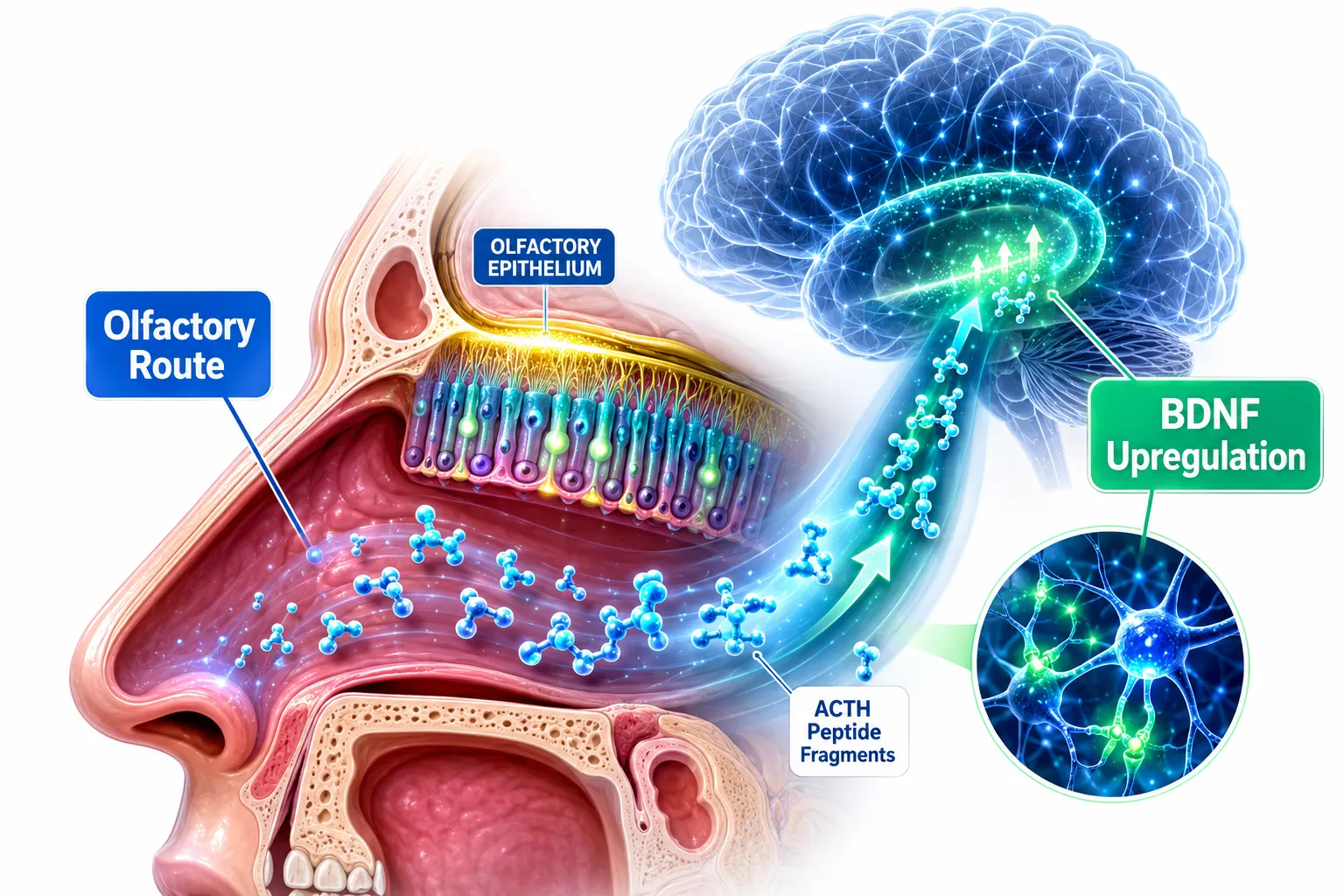
  • Semax is a synthetic ACTH(4-10) analog delivered intranasally, bypassing the blood-brain barrier via the olfactory route.
  • Its primary research mechanisms involve BDNF upregulation, dopaminergic modulation, and anti-inflammatory neuroprotection.
  • Preclinical models suggest cognitive benefits including improved memory consolidation and attention.
  • Semax differs mechanistically from anxiolytic peptides like Selank, making it a distinct research target.
  • Research protocols typically examine dose-response relationships in the 300-900 mcg range per administration session.
Key Takeaways

The Mechanism Behind Semax Peptide Nasal Spray: Cognitive Enhancement, Neuroprotection, and Research Protocols

Structural Origins and Receptor Activity

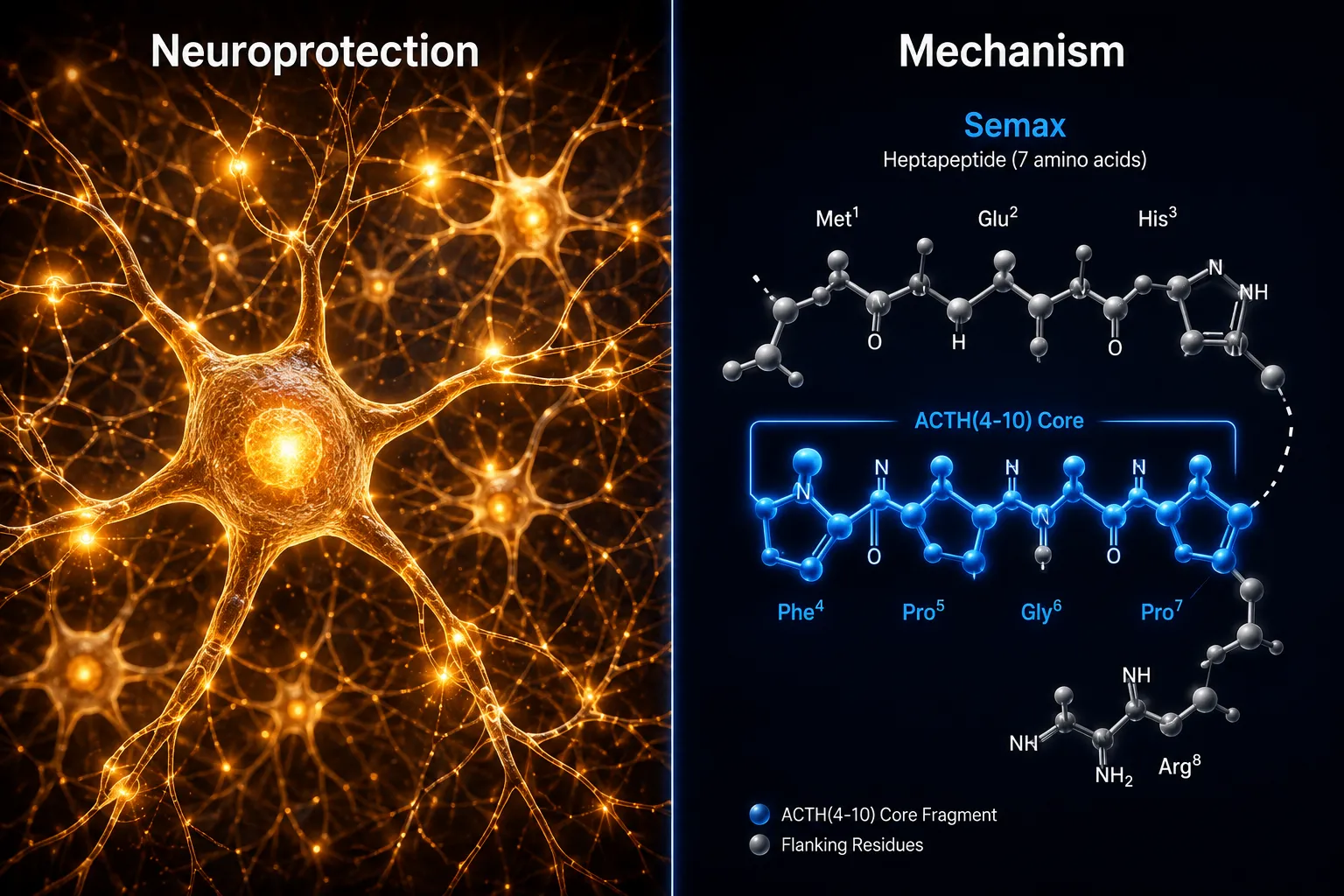
Semax carries the amino acid sequence Met-Glu-His-Phe-Pro-Gly-Pro. This sequence corresponds to the ACTH(4-10) core, which lacks the corticosteroid-stimulating properties of full ACTH. That distinction matters enormously for research design: Semax can modulate neurotrophic and dopaminergic pathways without triggering adrenal axis responses.

The compound's primary molecular targets include:

  • Melanocortin receptors (MC4R): Expressed widely in the hypothalamus and limbic system, these receptors are linked to attention, arousal, and motivational processing.
  • BDNF (Brain-Derived Neurotrophic Factor): Multiple preclinical studies show Semax significantly upregulates BDNF and its receptor TrkB, supporting synaptic plasticity and neuronal survival.
  • Dopamine and serotonin systems: Semax appears to modulate catecholamine turnover in prefrontal and striatal regions, which may explain observed effects on working memory and executive function.

"Semax-induced BDNF elevation in rodent hippocampal tissue has been replicated across multiple independent laboratories, establishing it as one of the compound's most consistent mechanistic signatures."

Intranasal Delivery and CNS Bioavailability

The nasal route is not merely convenient, it is mechanistically critical. Intranasal delivery allows peptides to travel along the olfactory nerve axons directly into the olfactory bulb and then into deeper brain structures, circumventing hepatic first-pass metabolism and the blood-brain barrier.

For a deeper examination of how this delivery pathway compares across research peptides, see the Nasal Spray Peptides: Delivery Methods, Bioavailability, and Research resource, which covers absorption kinetics and formulation variables in detail.

Neuroprotective Models in Semax Research
Neuroprotective Models in Semax Research

Ischemia and Oxidative Stress Models

Much of the foundational Semax neuroprotection research emerged from stroke and ischemia models. In rat middle cerebral artery occlusion (MCAO) models, Semax administration reduced infarct volume and preserved neurological scoring compared to controls. Researchers attribute this to:

Mechanism Observed Effect in Preclinical Models
BDNF upregulation Enhanced neuronal survival post-ischemia
Anti-inflammatory gene expression Reduced IL-1beta and TNF-alpha markers
Antioxidant pathway activation Decreased lipid peroxidation in cortical tissue
Dopaminergic stabilization Preserved motor and cognitive function scores

Neuroinflammation and Cognitive Decline Models

Beyond acute ischemia, Semax has been studied in neuroinflammation paradigms relevant to age-related cognitive decline. Its ability to suppress pro-inflammatory cytokines while simultaneously boosting BDNF positions it as a dual-action compound, protective and regenerative rather than merely symptomatic.

Researchers comparing intranasal nootropic peptides should review the Klow Blend vs. Semax and Selank: Intranasal Nootropic Peptides analysis, which maps mechanism-level distinctions useful for designing comparative studies.

For those evaluating Semax alongside Selank and other nasal peptides, the Research-Use Only Nasal Spray Peptides: Comparing Semax, Selank, and overview provides a structured comparison of cognitive versus anxiolytic research models.

Research Protocols for Semax Peptide Nasal Spray: Cognitive Enhancement, Neuroprotection, and Research Protocols
Research Protocols for Semax Peptide Nasal Spray: Cognitive Enhancement, Neuroprotection, and Research Protocols

Dosing Frameworks in Preclinical Studies

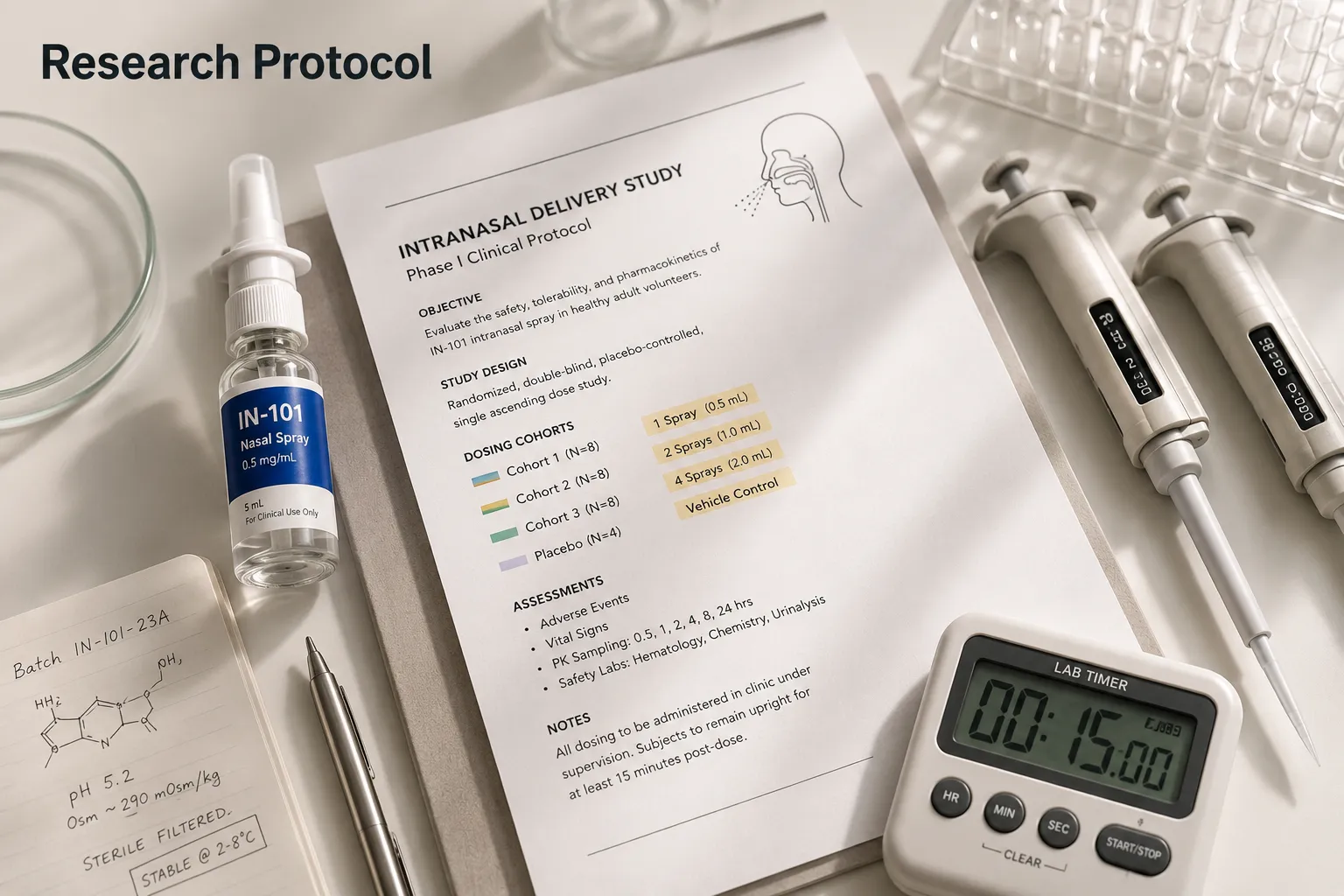
Published preclinical literature and translated Russian clinical data suggest the following general parameters for Semax research protocols:

Concentration ranges commonly studied:

  • 0.1% solution (1 mg/mL), lower-dose cognitive and anxiolytic models
  • 1% solution (10 mg/mL), neuroprotection and ischemia models

Administration frequency:

  • Once or twice daily intranasal administration
  • Study durations ranging from 7 to 28 days in most rodent models

Key variables to control:

  • Ambient temperature during storage (2-8°C recommended for peptide stability)
  • Time of administration relative to behavioral testing
  • Carrier solvent composition (saline vs. buffered solutions)

For formulation science considerations relevant to intranasal peptide stability, the Klow Peptide Nasal Spray: Formulation Science, Carrier Solvents, and article addresses carrier solvent selection and brain delivery optimization.

Behavioral Outcome Measures

Cognitive research models using Semax typically incorporate:

  • Morris Water Maze: Spatial learning and memory consolidation
  • Novel Object Recognition (NOR): Short-term declarative memory
  • Elevated Plus Maze: Anxiety-adjacent behavioral profiling
  • Open Field Test: Locomotor activity controls (to rule out stimulant confounds)

Researchers designing multi-peptide protocols may also find value in reviewing Peptides Mechanism 101: From GLP-3 Retatrutide to CJC-1295 and MOTS-c for broader receptor-level context when building stacked research designs.

Distinguishing Semax from Selank in Research Design

A common question in 2026 research planning is whether Semax and Selank should be studied independently or in combination. The answer depends on the research question:

  • Semax targets cognitive enhancement and neuroprotection via BDNF and melanocortin pathways.
  • Selank primarily modulates anxiety and GABAergic tone via enkephalin stabilization.

These are complementary, not redundant, mechanisms. Combining them in a single protocol without controlling for their independent effects risks confounded outcome data.

Conclusion

Semax peptide nasal spray occupies a well-defined niche in neuropeptide research: a structurally compact, mechanistically specific compound with a documented history in clinical and preclinical settings. Its value lies not in broad-spectrum activity but in targeted BDNF upregulation, melanocortin receptor engagement, and anti-inflammatory neuroprotection, all accessible through a delivery route that maximizes CNS bioavailability.

Actionable next steps for researchers in 2026:

  1. Define whether the primary research question is cognitive enhancement, neuroprotection, or anxiolysis, this determines whether Semax, Selank, or a combined model is appropriate.
  2. Select concentration and administration frequency based on the specific behavioral or molecular outcome being measured.
  3. Control for carrier solvent variables and storage conditions before beginning any dosing protocol.
  4. Source only research-grade, third-party tested material with verified certificates of analysis to ensure data integrity.

Semax remains one of the most mechanistically transparent nootropic peptides available for preclinical study, and its research logic rewards investigators who engage with it at the mechanism level rather than treating it as a simple cognitive booster.

Tags: bdnf upregulation, cognitive enhancement, intranasal peptide delivery, melanocortin receptors, nasal spray peptides, neuroprotection, nootropic peptides, peptide bioavailability, research peptides, semax peptide, semax research protocols, semax vs selank
https://www.puretestedpeptides.com/wp-content/uploads/2026/08/semax-peptide-nasal-spray-cognitive-enhancement-neuroprotection-and-research-pro.webp 1024 1536 https://www.puretestedpeptides.com/wp-content/uploads/2026/01/buy-peptides-online.jpg 2026-08-09 13:05:082026-08-09 13:05:08Semax Peptide Nasal Spray: Cognitive Enhancement, Neuroprotection, and Research Protocols
You might also like
Semax Peptide Nasal Spray: Administration, Dosing Concepts, and Research Applications Semax Peptide Nasal Spray: Administration, Dosing Concepts, and Research Applications
DNA, Mitochondria, and Research Peptides: How MOTS-c and 5-Amino-1MQ Interface With Cellular Energy and Genomic Pathways DNA, Mitochondria, and Research Peptides: How MOTS-c and 5-Amino-1MQ Interface With Cellular Energy and Genomic Pathways
Complement-Dependent Cytotoxicity and Peptide Safety: What BPC-157, GHK-Cu, and Nasal Spray Peptides Teach Immunology-Focused Labs Complement-Dependent Cytotoxicity and Peptide Safety: What BPC-157, GHK-Cu, and Nasal Spray Peptides Teach Immunology-Focused Labs
GHK-Cu Peptide: Collagen Synthesis, Tissue Repair, and Longevity Research Applications GHK-Cu Peptide: Collagen Synthesis, Tissue Repair, and Longevity Research Applications
CJC-1295 with Ipamorelin: What the Combination Means for Growth Hormone Research Models CJC-1295 with Ipamorelin: What the Combination Means for Growth Hormone Research Models
Klow Blend Peptide Nasal Spray: Research Applications and Bioavailability Considerations Klow Blend Peptide Nasal Spray: Research Applications and Bioavailability Considerations
CJC-1295 With DAC in 2026 Research: Why Long-Acting GHRH Analogs Remain a Core Search Topic CJC-1295 With DAC in 2026 Research: Why Long-Acting GHRH Analogs Remain a Core Search Topic
Research-Use Only Nasal Spray Peptides: What Labs Should Know Before Buying Semax, Selank, and Klow Nasal Formulations Research-Use Only Nasal Spray Peptides: What Labs Should Know Before Buying Semax, Selank, and Klow Nasal Formulations
0 replies

Leave a Reply

Want to join the discussion?
Feel free to contribute!

Leave a Reply Cancel reply

Your email address will not be published. Required fields are marked *

×

Helpful Links

  • My account
  • Cart
  • Checkout
  • Refund and Returns Policy
  • Privacy Policy
  • SMS Privacy Policy
  • Login
  • My Account
  • Logout

USA Made Lab Tested Peptides

All products are sold for research, laboratory, or analytical purposes only, and are not for human consumption


Pure Tested Peptides is a chemical supplier. Pure Tested Peptides is not a compounding / chemical compounding facility as defined under 503A of the Federal Food, Drug, and Cosmetic act. Pure Tested Peptides is not an outsourcing facility as defined under 503B of the Federal Food, Drug, and Cosmetic act.

The statements made within this website have not been evaluated by the US Food and Drug Administration. The products we offer are not intended to diagnose, treat, cure or prevent any disease.

Human/Animal Consumption Prohibited. Laboratory/In-Vitro Experimental Use Only

Link to: GHK-Cu Peptide: Collagen Synthesis, Tissue Repair, and Longevity Research Applications Link to: GHK-Cu Peptide: Collagen Synthesis, Tissue Repair, and Longevity Research Applications GHK-Cu Peptide: Collagen Synthesis, Tissue Repair, and Longevity Research A...GHK-Cu Peptide: Collagen Synthesis, Tissue Repair, and Longevity Research Applications Link to: PT-141 Peptide Research: Mechanism, Applications, and Comparison to Traditional Approaches Link to: PT-141 Peptide Research: Mechanism, Applications, and Comparison to Traditional Approaches PT-141 Peptide Research: Mechanism, Applications, and Comparison to Traditional ApproachesPT-141 Peptide Research: Mechanism, Applications, and Comparison to Traditional...
Scroll to top Scroll to top Scroll to top