Call or Text 727-513-9780
  • Shopping Cart Shopping Cart
    0Shopping Cart
Pure Tested Peptides | America's most trusted Peptides for sale online
  • Peptides for sale
    • Oral Peptides for sale
      • Peptide Capsules for sale
      • BPC 157 Capsules 1000mcg
      • SLU-PP-332 Capsules | 1000 mcg
      • 5-Amino-1MQ 50mg Capsules
      • Tesofensine 500mcg
    • All Peptides for sale
    • Peptide Sprays
      • BPC 157 Nasal Spray Kit
      • BPC-157 TB500 Nasal Spray Kit
      • Semax Nasal Spray 10mg
      • Selank – Nasal Spray Kit – 10mg
      • Epithalon 50MG Nasal Spray Kit
      • Ipamorelin 10mg Nasal Spray
      • Klow Nasal Spray (BPC-157 + TB-500 + GHK-Cu + KPV) | 80mg
      • Hulk Nasal Spray Tesa / Ipa Blend 6/3 MG
      • Klow Nasal Spray
      • NAD + 500 mg Nasal Spray
      • PT-141 Nasal Spray Kit
    • GHRH Peptides
      • Ipa Peptides
      • CJC-1295 Peptides
        • CJC-1295 with DAC 5 mg
        • CJC-1295 without DAC 5 mg
        • CJC-1295 Ipa 10mg
      • Tesa Peptides
        • Tesa Peptide
        • Tesa 20 mg
    • GHK-Cu Peptides
      • All GHK-Cu Peptides
      • GHK-Cu 100mg
      • KLOW Peptide Blend – Buy KLOW blend online
    • BPC Peptides
      • All BPC Peptides
      • BPC-157
      • BPC-157 TB-500
      • BPC 157 capsules 1000mcg
    • SLU-PP-332 Peptides
      • All SLU-PP-332 Peptides
      • SLU-PP-332 5mg
    • GLP3 Peptides
      • GLP3-R
      • GLP3-R CAG 10mg
      • GLP3-R 20mg
    • PT-141 Peptides
      • PT-141 Peptides for sale
      • PT-141 10mg
      • PT-141 Nasal Spray
    • CAG Peptides
      • Lipo-C Peptide Blend
      • CAG 5mg
      • CAG 10mg
    • MOTS-C Peptides
      • MOTS-C Peptides for sale
      • MOTS-c peptide
      • MOTS-c 10mg *6 pack*
    • 5 Amino 1MQ Peptides
      • 5 Amino 1MQ Peptides for sale
      • 5-Amino-1MQ 50mg Capsules
      • 5-Amino-1MQ 5mg
    • Epithalon Peptides
      • Epithalon Peptides for sale
      • Epithalon 10mg
      • Epithalon 50mg
  • Shop
    • GLPs
      • 5-Amino-1MQ 50mg Capsules
      • 5-Amino-1MQ 5mg
      • GLP3-Reta
      • L-Carnitine 500mg/ml
      • Tesofensine 500mcg
      • SLU-PP-332 5mg
      • MOTS-c 10mg *6 pack*
    • Epithalon & BPC Peptides
      • Epithalon 10mg
      • Epithalon 50mg
      • BPC-157
      • BPC 157 capsules 1000mcg
      • BPC-157 TB-500
      • BPC-157 TB500 Nasal Spray Kit
      • BPC 157 Nasal Spray Kit
    • BPC TB-500 & NAD+ Peptides
      • NAD+ 500 mg
      • KLOW Peptide Blend – Buy KLOW blend online
      • GLOW Peptide Blend
      • TB 500 5mg
      • BPC 157 capsules 1000mcg – Supplement
      • BPC 157 Nasal Spray Kit
      • BPC-157
      • BPC-157 TB500 Nasal Spray Kit
      • BPC-157 TB-500
      • BPC 157 capsules 1000mcg
    • LL-37 Peptide
      • LL-37 10 mg
    • MOTS-C & Selank
      • MOTS-c peptide
      • Selank 10mg
    • GHK Peptides
      • GHK-Cu 100mg
      • GLOW Peptide Blend
      • KLOW Peptide Blend – Buy KLOW blend online
  • COAs
  • Wholesale
    • Wholesale Peptides for sale
  • PTP FAQ
  • Affiliates
    • Affiliate Program
    • Affiliate Signup
  • Contact
    • Contact Customer Service
    • Text Customer Support
  • About US
  • Shop all peptides
  • Login / Register Login / Register Page Link Login / Register Page Link
  • Click to open the search input field Click to open the search input field Search
  • Menu Menu

Tag Archive for: melanocortin receptors

PT-141, Tadalafil, and Sildenafil in Erectile Function Research: When Do Peptides Outperform Pills in Preclinical Models?

PT-141, Tadalafil, and Sildenafil in Erectile Function Research: When Do Peptides Outperform Pills in Preclinical Models?

June 18, 2026/0 Comments/in Uncategorized/by

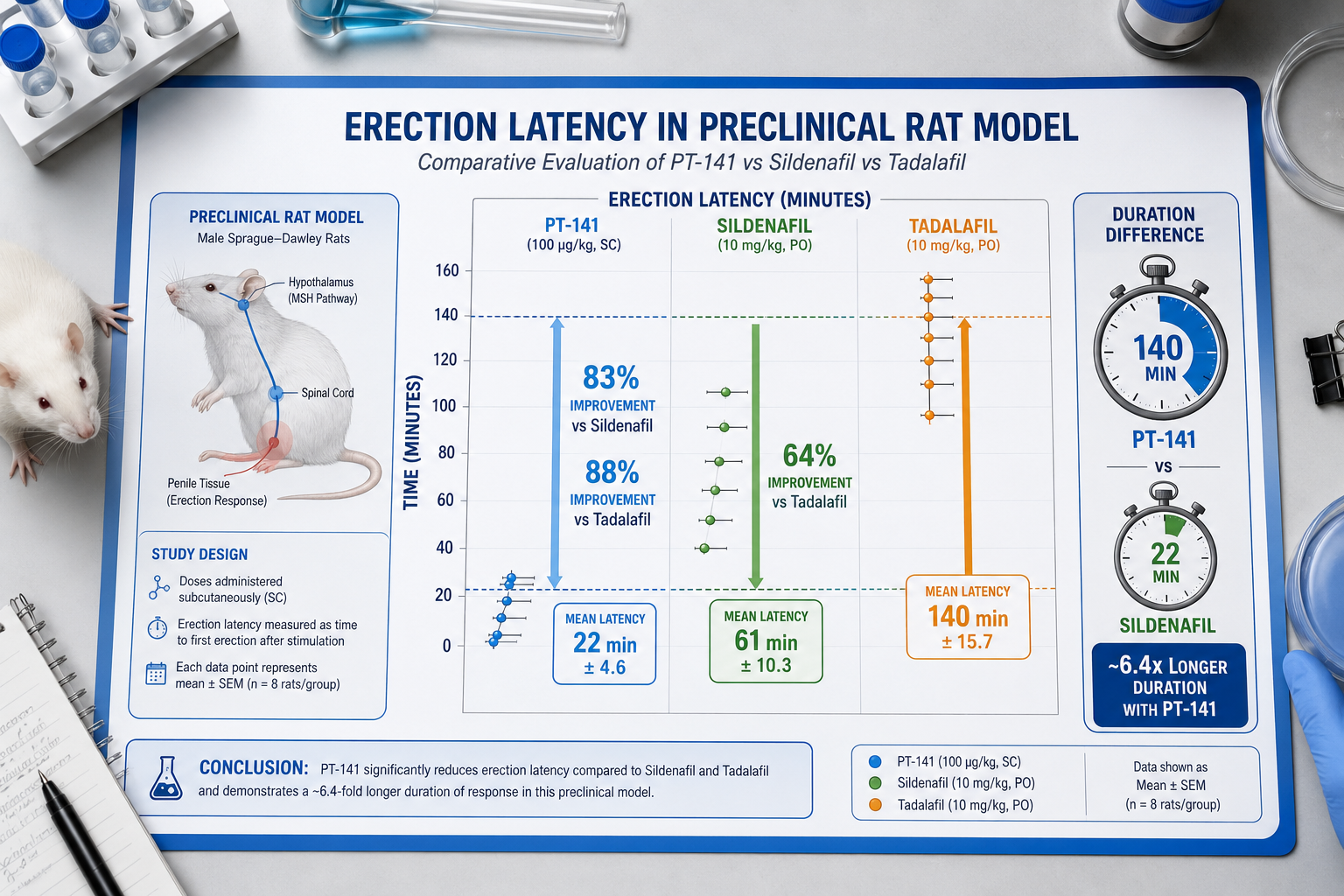
Erection duration in a PT-141-treated group ran approximately 140 minutes in controlled trials — compared to just 22 minutes in the placebo group. That single data point raises a mechanistically important question for researchers studying erectile function: does a centrally acting peptide offer advantages that peripheral vasodilators simply cannot replicate? Exploring PT-141, Tadalafil, and Sildenafil in Erectile Function Research — specifically when peptides outperform pills in preclinical models — requires a close look at receptor biology, pathway architecture, and what animal data actually show.

Key Takeaways

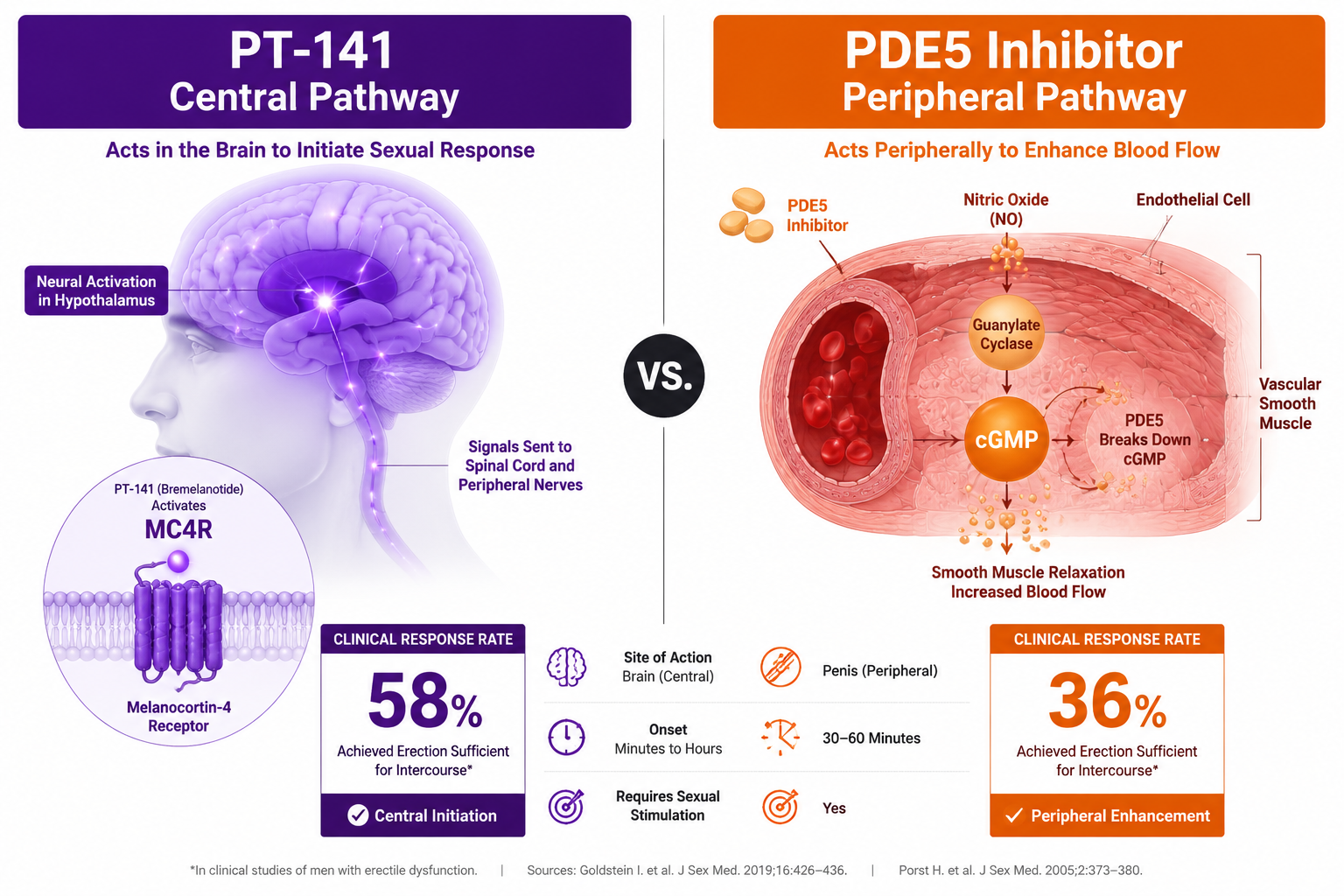
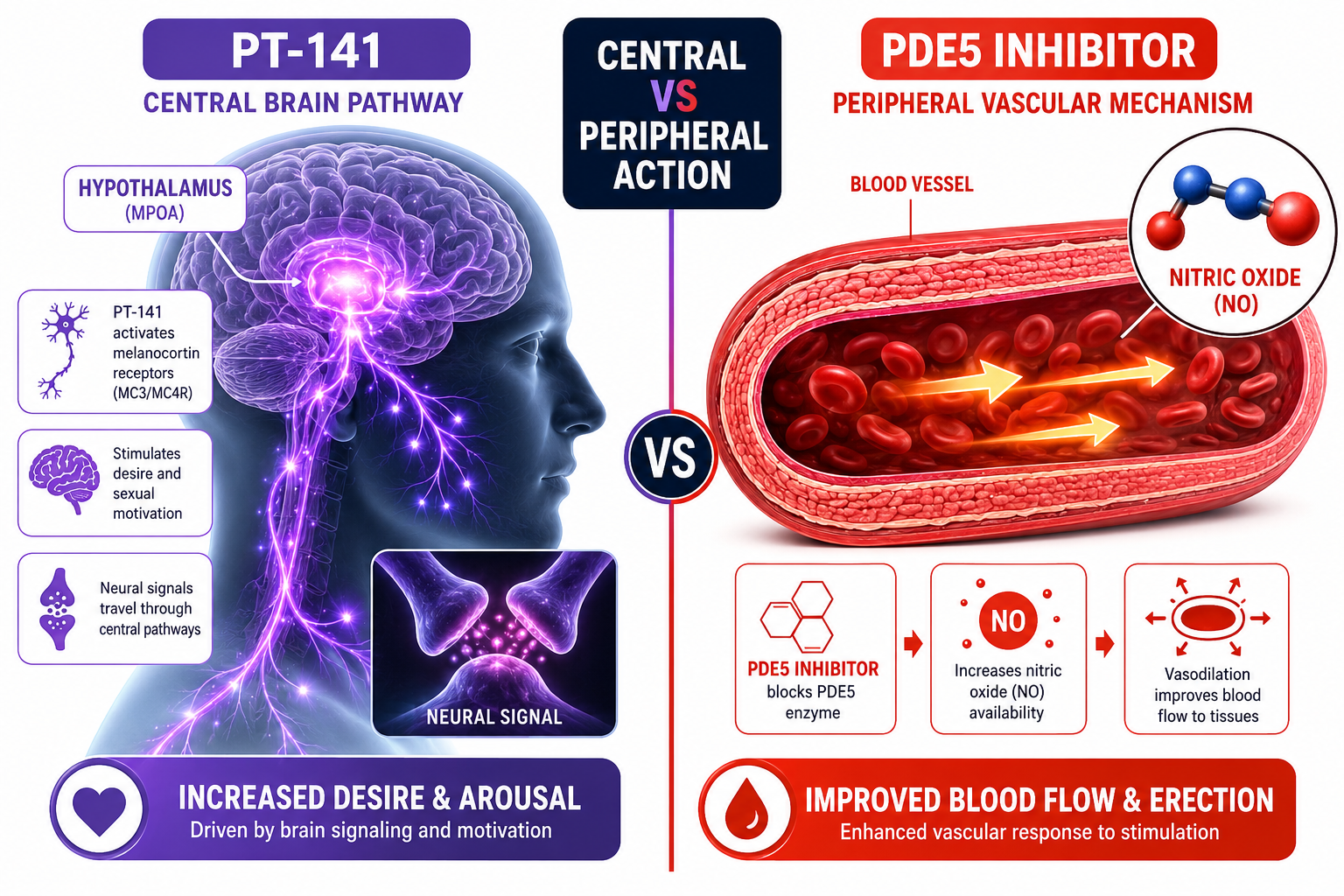
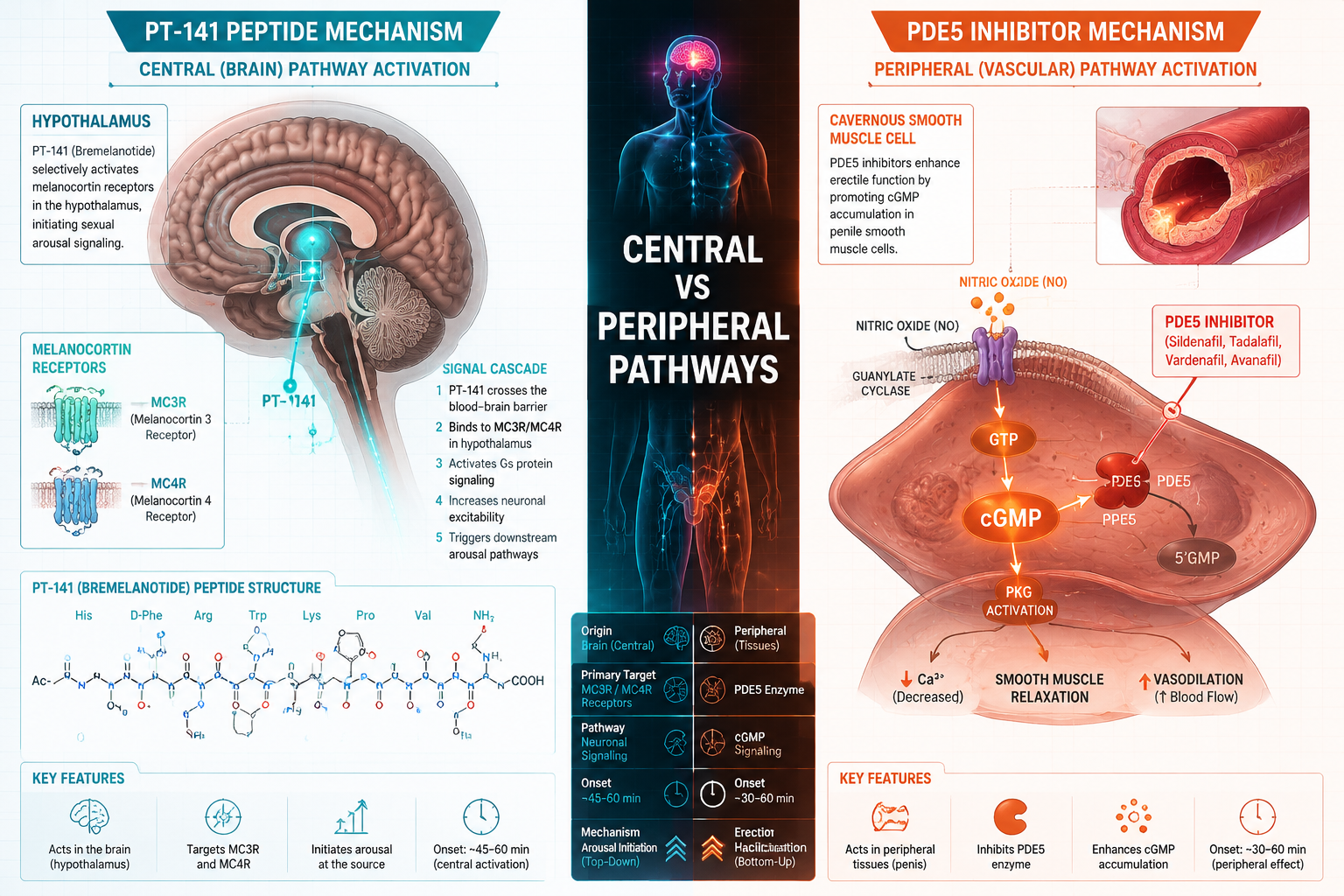
  • PT-141 (bremelanotide) acts centrally through melanocortin receptors MC3R and MC4R, while tadalafil and sildenafil act peripherally via PDE5 inhibition.
  • Preclinical rodent models show PT-141 significantly increases spontaneous erection frequency through central neural pathways.
  • PT-141 has demonstrated erectile responses in sildenafil non-responders, suggesting a non-overlapping mechanism.
  • Combination data indicate a synergistic effect when PT-141 and sildenafil are co-administered.
  • Mechanistic divergence makes these compounds complementary research tools rather than simple substitutes.

Key Takeaways

Mechanistic Divergence: Central Peptide vs. Peripheral Pill

The foundational difference between PT-141 and PDE5 inhibitors lies in where each compound acts.

Sildenafil and tadalafil both inhibit phosphodiesterase type 5, preventing the breakdown of cyclic GMP (cGMP) in penile smooth muscle. This prolongs nitric oxide-driven vasodilation and facilitates engorgement — but the pathway depends entirely on prior sexual stimulation to generate nitric oxide in the first place. Without that upstream signal, PDE5 inhibitors have limited effect.

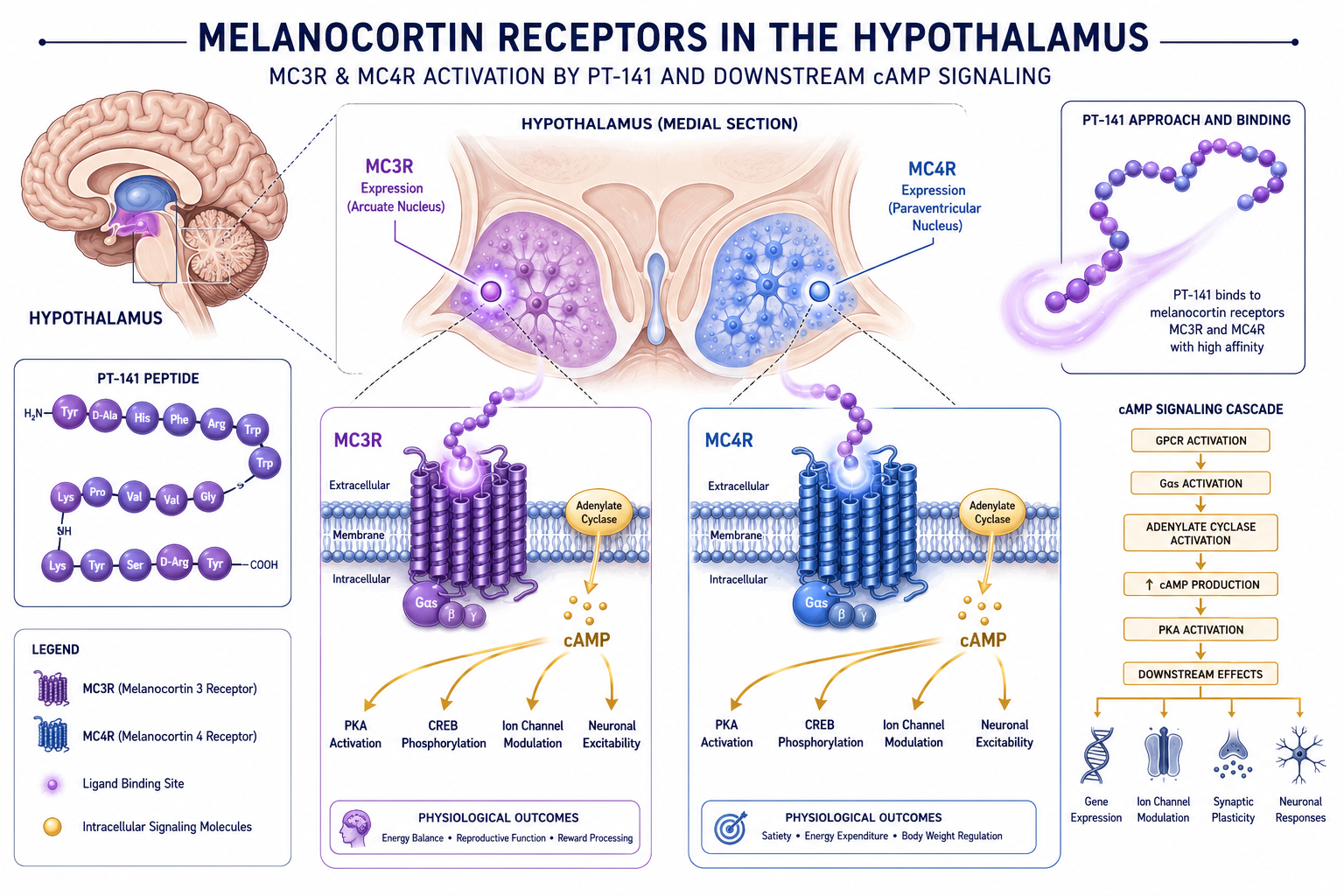
PT-141, by contrast, is a synthetic melanocortin receptor agonist. It binds preferentially to MC3R and MC4R in the central nervous system, particularly in hypothalamic regions associated with sexual arousal circuitry. This central activation can initiate an erectile response independent of peripheral vascular priming.

"PT-141 does not require nitric oxide as a prerequisite signal — it bypasses the peripheral dependency entirely."

This mechanistic split is why researchers studying neurogenic or psychogenic components of erectile dysfunction find PT-141 particularly informative as a research tool. For a broader overview of how peptides interact with neuroendocrine pathways, the PT-141 central arousal research overview provides useful context.


What Preclinical Models Reveal About PT-141, Tadalafil, and Sildenafil in Erectile Function Research: When Do Peptides Outperform Pills in Preclinical Models?

Animal models — primarily rodents — have been the primary setting for comparing these compounds mechanistically.

Rodent Erection Latency and Frequency Data

In rat studies, intranasal PT-141 administration produced a statistically significant increase in spontaneous erection frequency compared to vehicle controls. The response did not require external stimulation, which directly mirrors its central mechanism. PDE5 inhibitors in the same models show weaker spontaneous erection induction, reinforcing that their efficacy is stimulus-dependent.

Parameter PT-141 Sildenafil Tadalafil
Primary site of action CNS (MC3R/MC4R) Peripheral (PDE5) Peripheral (PDE5)
Stimulus dependency Low High High
Erection latency reduction Significant Moderate Moderate
Duration advantage Extended Moderate Extended (longer half-life)

Non-Responder Models

A critical finding in the research literature involves subjects with inadequate responses to sildenafil. Subcutaneous PT-141 at 4 mg and 6 mg doses produced statistically significant erectile responses in this population. This is a mechanistically logical result: if the peripheral pathway is compromised (vascular insufficiency, receptor downregulation), central activation via melanocortin signaling offers an alternative route.

Researchers interested in PT-141 peptide for research contexts will find this non-responder data particularly relevant for experimental design.


Non-Responder Models

Synergy Data and Combination Research Findings

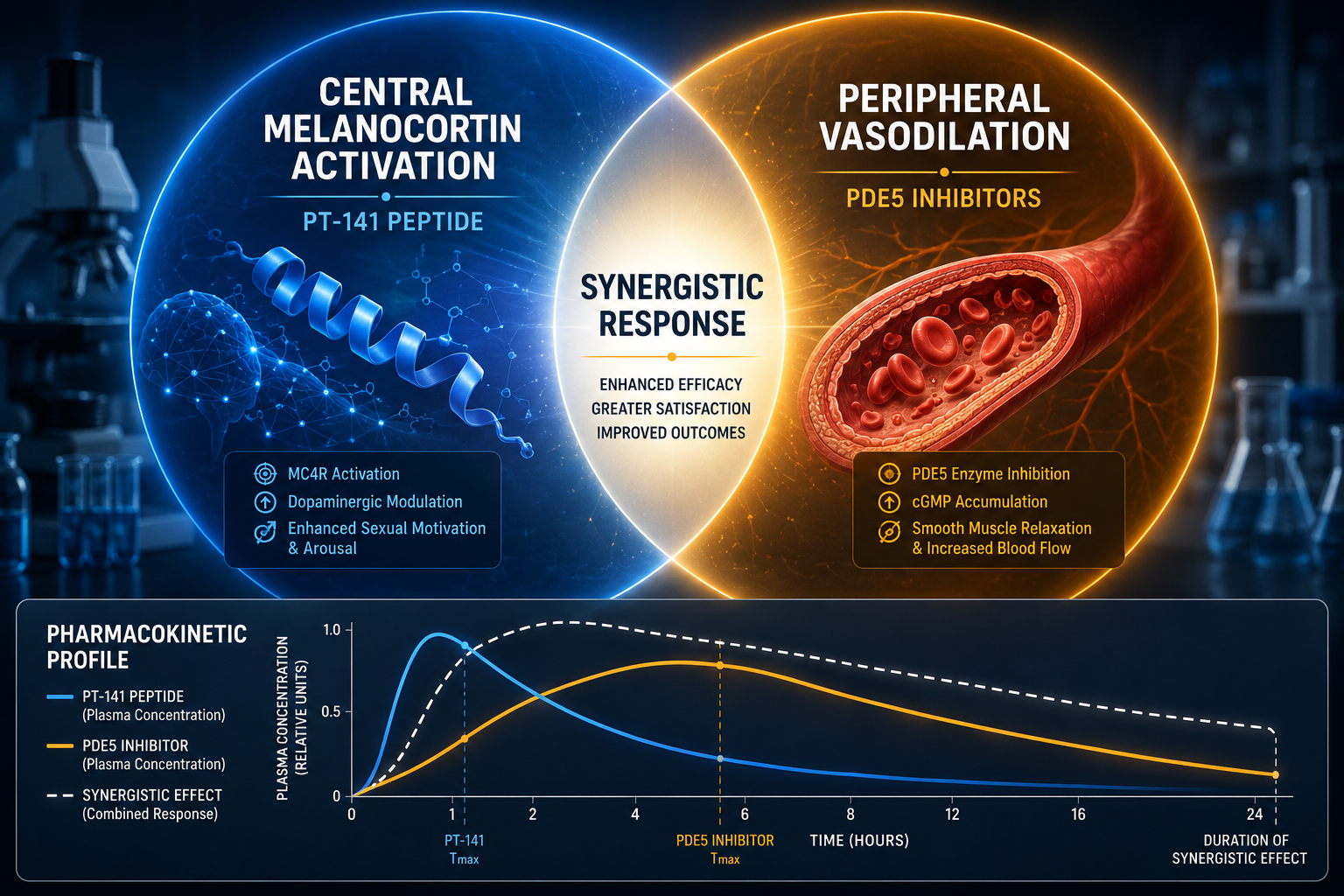
One of the more compelling findings in this research area involves co-administration. A crossover study using 25 mg sildenafil combined with 7.5 mg intranasal PT-141 produced a significantly greater erectile response than sildenafil alone. This synergy is mechanistically coherent: PT-141 amplifies the central arousal signal while sildenafil sustains the peripheral vascular response once initiated.

This complementary profile suggests that in preclinical research designs, combining a melanocortin agonist with a PDE5 inhibitor can model the full erectile pathway — central initiation plus peripheral amplification — more completely than either agent alone.

For researchers building multi-peptide experimental frameworks, resources like the ultimate guide to peptide therapy research offer broader context on stacking and synergy considerations.


Synergy Data and Combination Research Findings

Pharmacokinetics and Practical Research Considerations

PT-141's pharmacokinetic profile adds another dimension to its research utility. Following intranasal administration, peak serum concentrations occur roughly 30 minutes post-dose, with a half-life of approximately 2 hours. This rapid onset supports time-locked experimental protocols where researchers need a predictable arousal window.

Tadalafil's much longer half-life (17–21 hours) makes it better suited for studies examining sustained vascular tone, while sildenafil's intermediate profile (~4 hours) fits acute response models.

Key pharmacokinetic comparison:

  • PT-141: Onset ~30 min, half-life ~2 hours, central action
  • Sildenafil: Onset ~30–60 min, half-life ~4 hours, peripheral action
  • Tadalafil: Onset ~1–2 hours, half-life ~17–21 hours, peripheral action

Researchers sourcing research-grade peptides should prioritize verified purity documentation. The PT-141 for sale research page and PT-141 for sale online resources outline quality control considerations relevant to preclinical work.

Safety data from controlled studies show no significant hemodynamic changes with PT-141 at research-relevant doses, which contrasts with PDE5 inhibitors that can produce measurable blood pressure effects — an important variable to control in animal models.

For researchers also examining mitochondrial or vascular biology alongside erectile function research, SS-31 mitochondrial dynamics research offers a complementary mechanistic lens on vascular tissue health.


Conclusion

The comparison of PT-141, Tadalafil, and Sildenafil in Erectile Function Research — specifically when peptides outperform pills in preclinical models — points to one clear answer: PT-141 outperforms PDE5 inhibitors when the research question centers on central arousal mechanisms, stimulus-independent erection induction, or non-responder populations. PDE5 inhibitors remain superior tools for studying peripheral vascular amplification and sustained engorgement.

Actionable next steps for researchers in 2026:

  • Design experiments that isolate central versus peripheral pathways using PT-141 and PDE5 inhibitors as mechanistic controls.
  • Use non-responder models to probe the independence of melanocortin-driven arousal from nitric oxide availability.
  • Consider combination protocols when the research goal is modeling the full erectile response arc.
  • Verify peptide purity through certificate of analysis documentation before any preclinical use.

Understanding where each compound excels mechanistically — rather than treating them as interchangeable — produces more precise, reproducible preclinical data.

https://www.puretestedpeptides.com/wp-content/uploads/2026/06/PT-141-Tadalafil-and-Sildenafil-in-Erectile-Function-Research-When-Do-Peptides-Outperform-Pills-in-Preclinical-Models.png 1024 1536 https://www.puretestedpeptides.com/wp-content/uploads/2026/01/buy-peptides-online.jpg 2026-06-18 13:03:492026-06-18 13:03:49PT-141, Tadalafil, and Sildenafil in Erectile Function Research: When Do Peptides Outperform Pills in Preclinical Models?
Selank vs Semax vs PT-141: A Research-Only Guide to Distinct Neuropeptide Mechanisms, Delivery Routes, and Use Cases

Selank vs Semax vs PT-141: A Research-Only Guide to Distinct Neuropeptide Mechanisms, Delivery Routes, and Use Cases

June 9, 2026/0 Comments/in Uncategorized/by

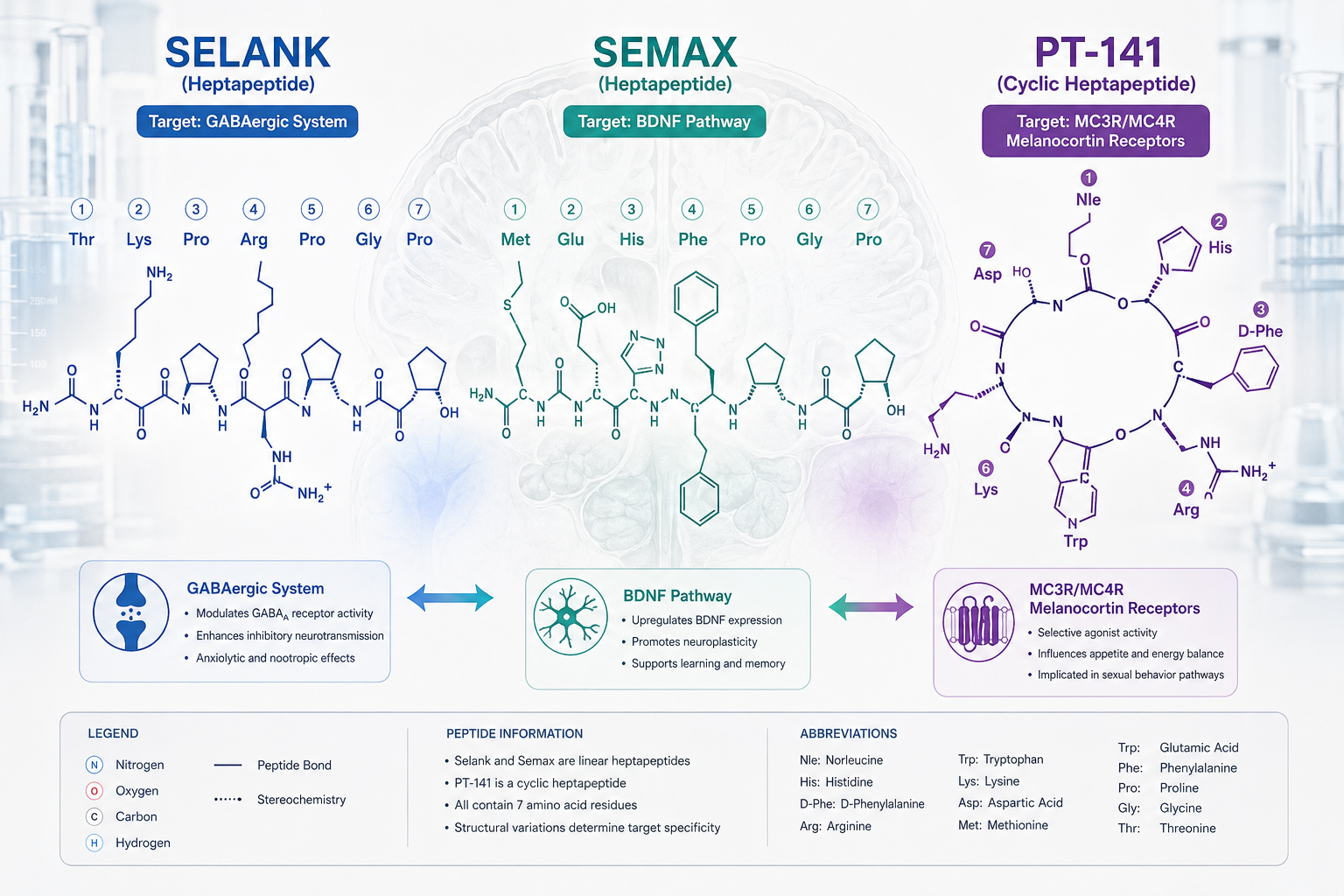
Three synthetic heptapeptides. Three completely different receptor targets. Three delivery strategies that reflect fundamentally different pharmacological goals. Researchers who treat Selank, Semax, and PT-141 as interchangeable nootropic compounds are missing the point entirely — and potentially compromising experimental design in the process.

This guide to Selank vs Semax vs PT-141: A Research-Only Guide to Distinct Neuropeptide Mechanisms, Delivery Routes, and Use Cases breaks down what actually separates these compounds at the mechanistic level, where each one is delivered and why, and which research contexts each one fits.

All three compounds are for research purposes only. None should be used for human self-administration outside of approved clinical settings.


Key Takeaways

  • Selank targets the GABAergic system for anxiolytic effects without sedation; Semax modulates BDNF and monoamine pathways for cognitive enhancement.
  • PT-141 (bremelanotide) acts on central melanocortin receptors MC3R and MC4R — a mechanism entirely unrelated to the other two peptides.
  • Selank and Semax are primarily delivered intranasally; PT-141 is delivered via subcutaneous injection.
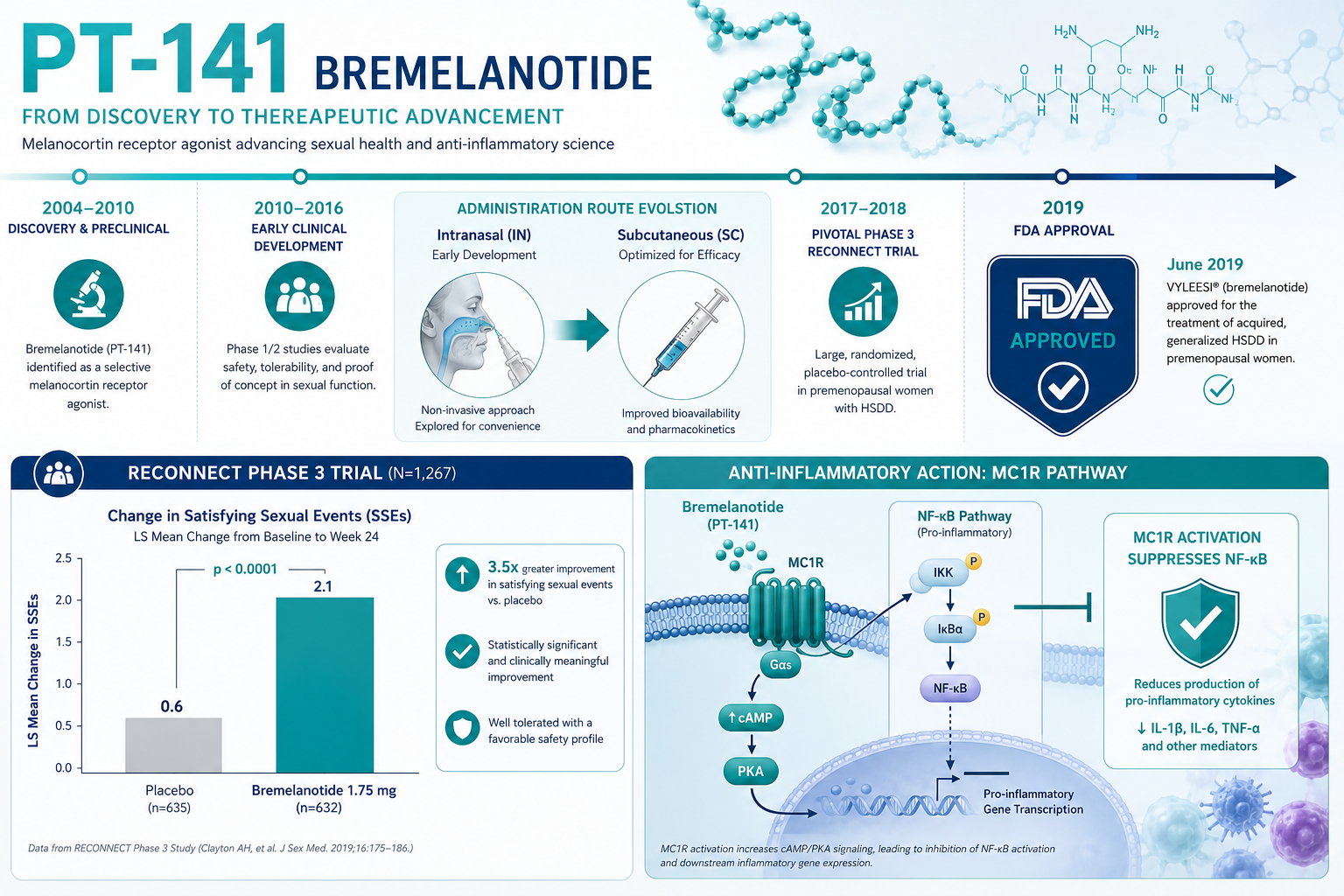
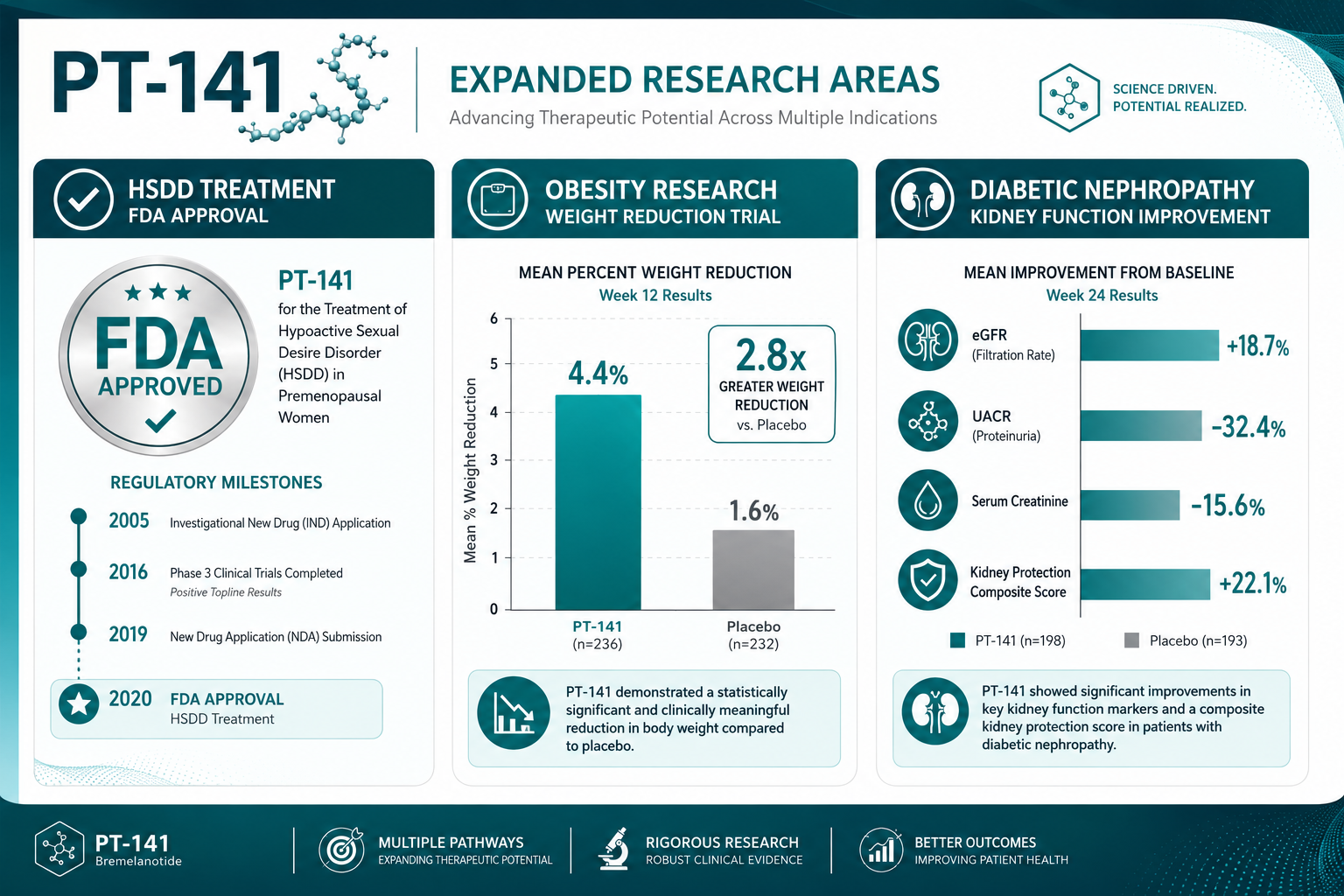
  • PT-141 received FDA approval in 2019 for HSDD in premenopausal women; Selank and Semax remain unapproved by the FDA.
  • Choosing the right peptide for a given research model requires understanding receptor specificity, not just general "neuropeptide" classification.

Key Takeaways

Mechanisms: What Each Peptide Actually Does

Understanding this research-only guide to distinct neuropeptide mechanisms starts at the receptor level.

Selank: GABAergic Modulation and Anxiolytic Signaling

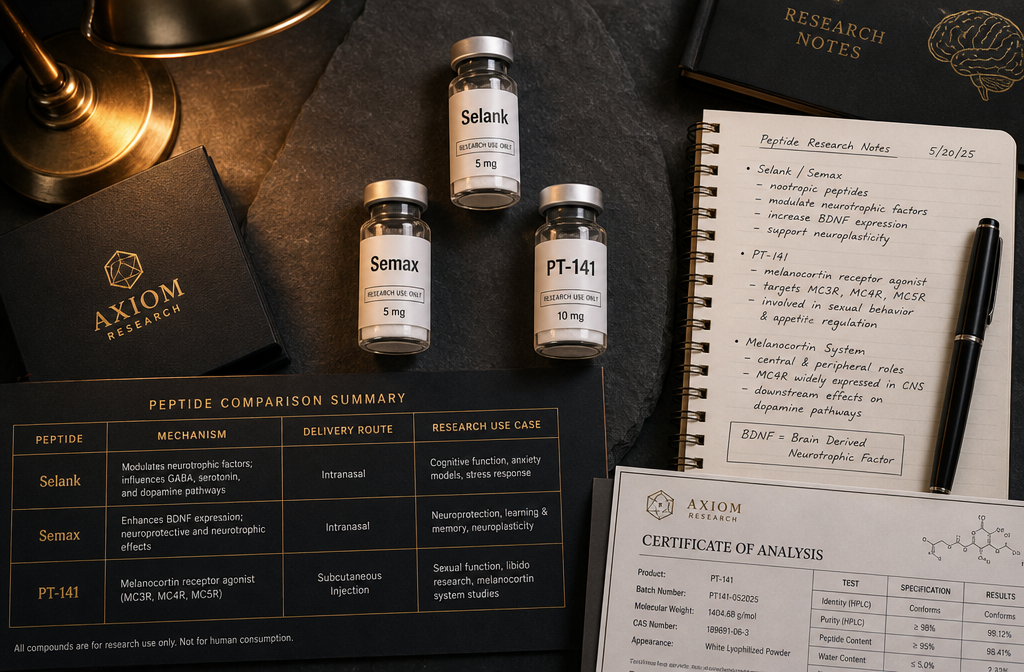
Selank is a synthetic analog of the endogenous tetrapeptide tuftsin. Its primary mechanism involves modulating gene expression within the GABAergic system — the same neurotransmitter network targeted by benzodiazepines, but without the sedation or dependence risk associated with those drugs. Research models using Selank focus on anxiety reduction, stress response, and immune-adjacent signaling. For researchers studying the Selank side effects profile, the GABAergic mechanism is central to interpreting observed outcomes.

Semax: BDNF Upregulation and Monoamine Influence

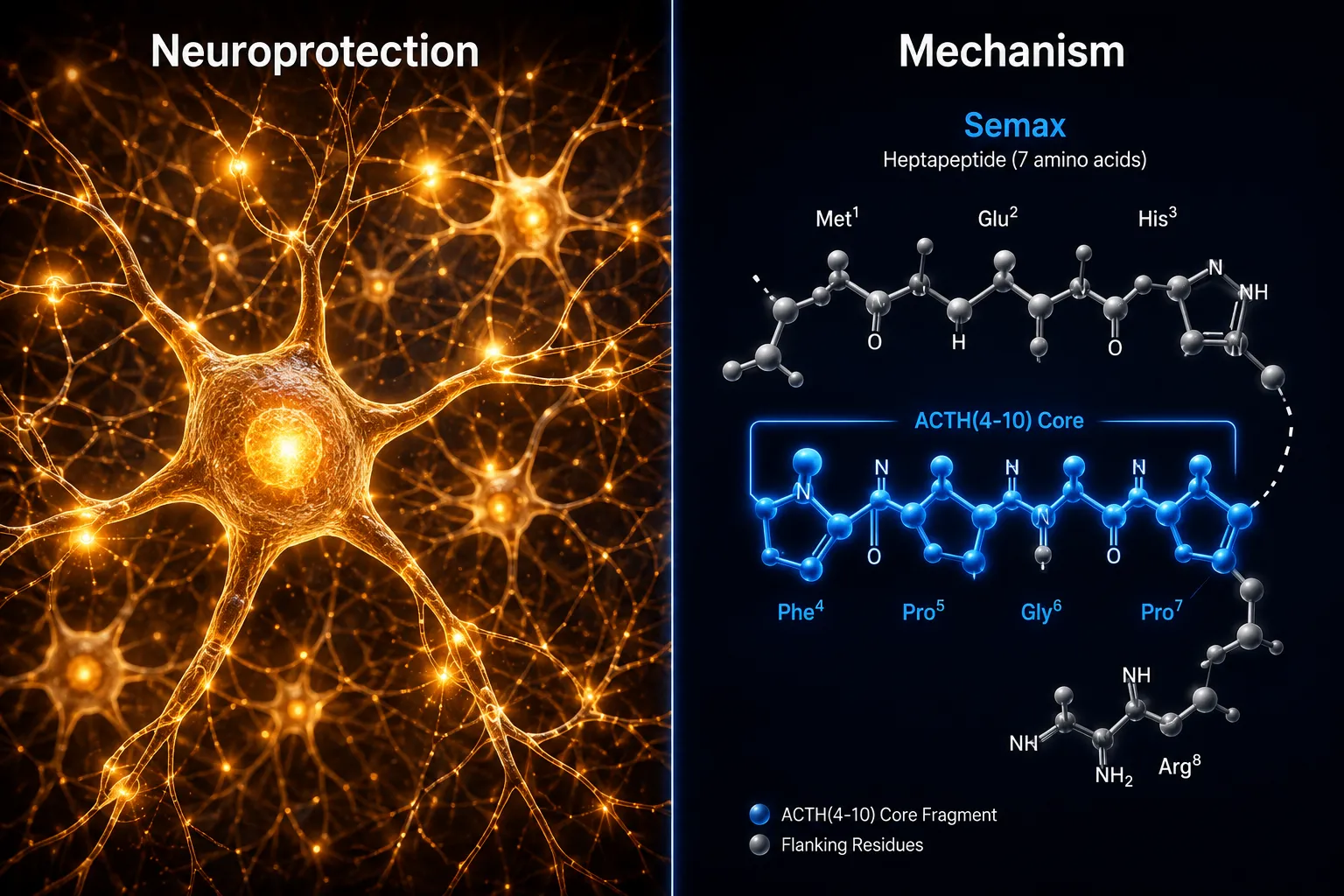
Semax works differently. It is believed to enhance cognitive function by upregulating brain-derived neurotrophic factor (BDNF) and influencing dopaminergic and serotonergic systems. This makes Semax relevant to research on neuroplasticity, attention, and neuroprotection rather than anxiety. The two peptides are frequently compared, but their mechanisms are distinct enough that stacking them in a single model requires careful justification.

PT-141: Central Melanocortin Pathway

PT-141 (bremelanotide) operates through an entirely different system. As a synthetic cyclic heptapeptide, it acts as a melanocortin receptor agonist — specifically targeting MC3R and MC4R in the central nervous system. This distinguishes it sharply from PDE5 inhibitors, which work peripherally. PT-141 enhances sexual desire and arousal through central CNS signaling, not vasodilation. Researchers can explore the PT-141 research context and quality controls for sourcing and experimental design guidance.


Delivery Routes: Why Administration Method Matters

Delivery Routes: Why Administration Method Matters

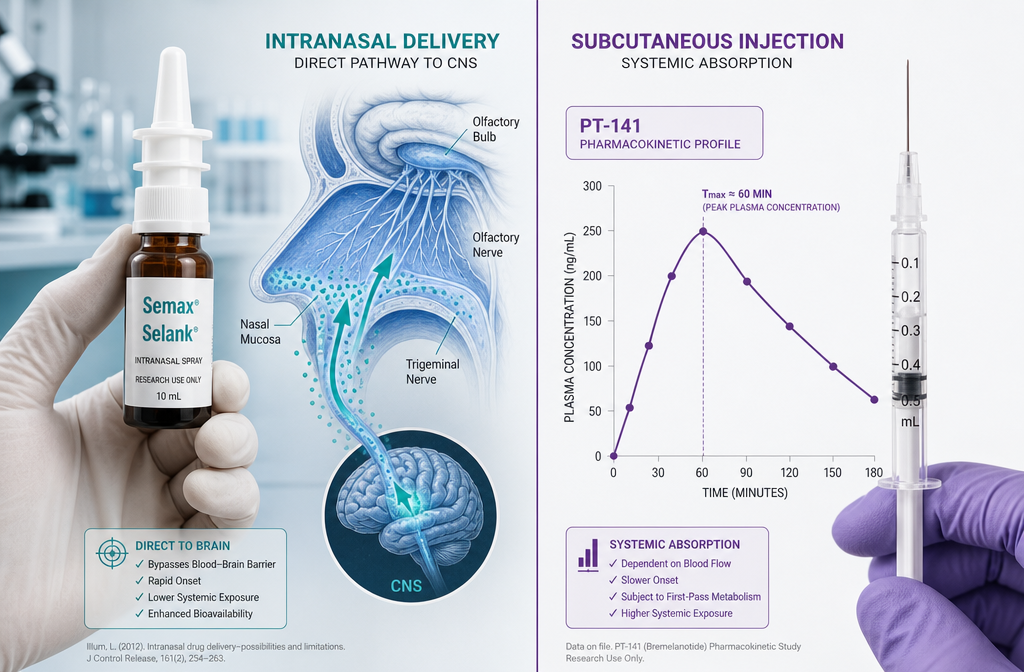
Delivery route is not a minor detail — it directly affects bioavailability, onset time, and CNS penetration. This section of the Selank vs Semax vs PT-141 guide is where researchers often make consequential decisions.

Intranasal Delivery: Selank and Semax

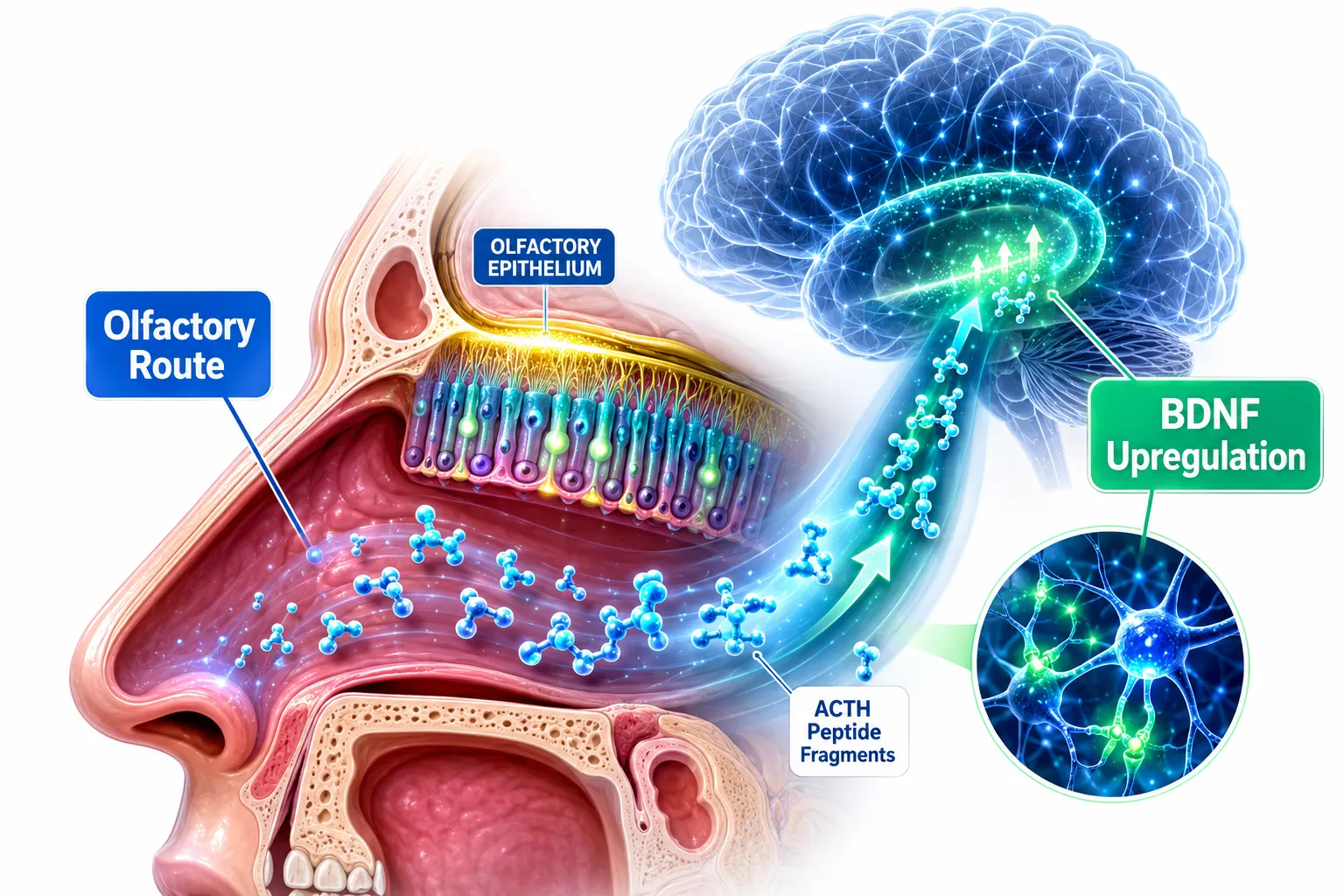
Both Selank and Semax are administered intranasally in research settings. The nasal mucosa offers rich vascularization and direct neural connections to the CNS via the olfactory pathway. This allows for rapid onset and relatively efficient CNS delivery without requiring injection. The intranasal route is also practical for repeated-dosing protocols.

Peptide Primary Delivery CNS Target Onset
Selank Intranasal GABAergic system Rapid
Semax Intranasal BDNF / Dopamine / Serotonin Rapid
PT-141 Subcutaneous injection MC3R / MC4R ~60 min

Subcutaneous Injection: PT-141

PT-141 follows a different path. The FDA-approved route is subcutaneous injection at 1.75 mg as needed. Following injection, peak plasma concentrations are reached approximately 60 minutes post-administration, with effects lasting 6 to 12 hours. Intranasal PT-141 was explored in early research but showed variable absorption and lower bioavailability, leading to its exclusion from the approved protocol.

Researchers comparing peptide delivery strategies may also find value in reviewing BPC-157 nasal spray and capsule evidence as a parallel case study in route-dependent outcomes.


Research Use Cases and Regulatory Status

Research Use Cases and Regulatory Status

Where Each Peptide Fits in Preclinical Research

Selank is best suited for models examining anxiety, stress resilience, and immune modulation. Its clean anxiolytic profile — without sedation — makes it useful in behavioral paradigms where motor function must remain intact.

Semax fits cognitive enhancement, neuroprotection, and neuroplasticity research. Its BDNF-modulating properties make it relevant in models of neurodegeneration or cognitive decline.

PT-141 belongs in research focused on sexual dysfunction, melanocortin signaling, or CNS-mediated arousal pathways. Its 2019 FDA approval for hypoactive sexual desire disorder (HSDD) in premenopausal women — based on two Phase III trials with 1,247 participants — gives it the strongest clinical validation of the three. Common side effects observed in trials included nausea (approximately 40% of participants), flushing, and headache.

Researchers building multi-peptide protocols may also want to examine how other neuropeptides interact with overlapping systems. The IPA-Sermorelin stack research overview and peptide supplier comparison guide offer useful context for sourcing decisions and protocol design.

Regulatory Landscape in 2026

As of 2026, Semax and Selank remain unapproved by the FDA for any medical use in the United States. They are available for research purposes only. PT-141 holds FDA approval under the brand name Vyleesi, though research-grade material is subject to different handling and documentation standards. Researchers should always verify certificates of analysis — the COA verification resource provides guidance on what to look for.

For those exploring adjacent peptide categories, GHK-Cu copper peptide sourcing guidance and AOD-9604 research method notes illustrate how traceability standards apply across different peptide classes.


Conclusion

The comparison at the heart of Selank vs Semax vs PT-141: A Research-Only Guide to Distinct Neuropeptide Mechanisms, Delivery Routes, and Use Cases reveals three peptides with almost nothing in common beyond their heptapeptide structure. Selank calms through GABAergic modulation. Semax stimulates cognitive pathways via BDNF and monoamines. PT-141 activates melanocortin receptors to influence central arousal signaling.

Actionable next steps for researchers:

  • Match peptide selection to the specific receptor system under investigation — do not group these compounds by structural similarity alone.
  • Account for delivery route when designing dosing intervals and bioavailability assumptions.
  • Verify regulatory status and obtain certificates of analysis before initiating any research protocol.
  • Review published clinical data on PT-141 as a benchmark for what rigorous peptide trial design looks like, then apply those standards to Selank and Semax research where Western-accessible data remains limited.

Precision in peptide research begins with precision in compound selection.

https://www.puretestedpeptides.com/wp-content/uploads/2026/06/Selank-vs-Semax-vs-PT-141-A-Research-Only-Guide-to-Distinct-Neuropeptide-Mechanisms-Delivery-Routes-and-Use-Cases.png 1024 1536 https://www.puretestedpeptides.com/wp-content/uploads/2026/01/buy-peptides-online.jpg 2026-06-09 13:05:202026-06-09 13:05:20Selank vs Semax vs PT-141: A Research-Only Guide to Distinct Neuropeptide Mechanisms, Delivery Routes, and Use Cases
×

Helpful Links

  • My account
  • Cart
  • Checkout
  • Refund and Returns Policy
  • Privacy Policy
  • SMS Privacy Policy
  • Login
  • My Account
  • Logout

USA Made Lab Tested Peptides

All products are sold for research, laboratory, or analytical purposes only, and are not for human consumption


Pure Tested Peptides is a chemical supplier. Pure Tested Peptides is not a compounding / chemical compounding facility as defined under 503A of the Federal Food, Drug, and Cosmetic act. Pure Tested Peptides is not an outsourcing facility as defined under 503B of the Federal Food, Drug, and Cosmetic act.

The statements made within this website have not been evaluated by the US Food and Drug Administration. The products we offer are not intended to diagnose, treat, cure or prevent any disease.

Human/Animal Consumption Prohibited. Laboratory/In-Vitro Experimental Use Only

Scroll to top Scroll to top Scroll to top