Call or Text 727-513-9780
  • Shopping Cart Shopping Cart
    0Shopping Cart
Pure Tested Peptides | America's most trusted Peptides for sale online
  • Peptides for sale
    • Oral Peptides for sale
      • Peptide Capsules for sale
      • BPC 157 Capsules 1000mcg
      • SLU-PP-332 Capsules | 1000 mcg
      • 5-Amino-1MQ 50mg Capsules
      • Tesofensine 500mcg
    • All Peptides for sale
    • Peptide Sprays
      • BPC 157 Nasal Spray Kit
      • BPC-157 TB500 Nasal Spray Kit
      • Semax Nasal Spray 10mg
      • Selank – Nasal Spray Kit – 10mg
      • Epithalon 50MG Nasal Spray Kit
      • Ipamorelin 10mg Nasal Spray
      • Klow Nasal Spray (BPC-157 + TB-500 + GHK-Cu + KPV) | 80mg
      • Hulk Nasal Spray Tesa / Ipa Blend 6/3 MG
      • Klow Nasal Spray
      • NAD + 500 mg Nasal Spray
      • PT-141 Nasal Spray Kit
    • GHRH Peptides
      • Ipa Peptides
      • CJC-1295 Peptides
        • CJC-1295 with DAC 5 mg
        • CJC-1295 without DAC 5 mg
        • CJC-1295 Ipa 10mg
      • Tesa Peptides
        • Tesa Peptide
        • Tesa 20 mg
    • GHK-Cu Peptides
      • All GHK-Cu Peptides
      • GHK-Cu 100mg
      • KLOW Peptide Blend – Buy KLOW blend online
    • BPC Peptides
      • All BPC Peptides
      • BPC-157
      • BPC-157 TB-500
      • BPC 157 capsules 1000mcg
    • SLU-PP-332 Peptides
      • All SLU-PP-332 Peptides
      • SLU-PP-332 5mg
    • GLP3 Peptides
      • GLP3-R
      • GLP3-R CAG 10mg
      • GLP3-R 20mg
    • PT-141 Peptides
      • PT-141 Peptides for sale
      • PT-141 10mg
      • PT-141 Nasal Spray
    • CAG Peptides
      • Lipo-C Peptide Blend
      • CAG 5mg
      • CAG 10mg
    • MOTS-C Peptides
      • MOTS-C Peptides for sale
      • MOTS-c peptide
      • MOTS-c 10mg *6 pack*
    • 5 Amino 1MQ Peptides
      • 5 Amino 1MQ Peptides for sale
      • 5-Amino-1MQ 50mg Capsules
      • 5-Amino-1MQ 5mg
    • Epithalon Peptides
      • Epithalon Peptides for sale
      • Epithalon 10mg
      • Epithalon 50mg
  • Shop
    • GLPs
      • 5-Amino-1MQ 50mg Capsules
      • 5-Amino-1MQ 5mg
      • GLP3-Reta
      • L-Carnitine 500mg/ml
      • Tesofensine 500mcg
      • SLU-PP-332 5mg
      • MOTS-c 10mg *6 pack*
    • Epithalon & BPC Peptides
      • Epithalon 10mg
      • Epithalon 50mg
      • BPC-157
      • BPC 157 capsules 1000mcg
      • BPC-157 TB-500
      • BPC-157 TB500 Nasal Spray Kit
      • BPC 157 Nasal Spray Kit
    • BPC TB-500 & NAD+ Peptides
      • NAD+ 500 mg
      • KLOW Peptide Blend – Buy KLOW blend online
      • GLOW Peptide Blend
      • TB 500 5mg
      • BPC 157 capsules 1000mcg – Supplement
      • BPC 157 Nasal Spray Kit
      • BPC-157
      • BPC-157 TB500 Nasal Spray Kit
      • BPC-157 TB-500
      • BPC 157 capsules 1000mcg
    • LL-37 Peptide
      • LL-37 10 mg
    • MOTS-C & Selank
      • MOTS-c peptide
      • Selank 10mg
    • GHK Peptides
      • GHK-Cu 100mg
      • GLOW Peptide Blend
      • KLOW Peptide Blend – Buy KLOW blend online
  • COAs
  • Wholesale
    • Wholesale Peptides for sale
  • PTP FAQ
  • Affiliates
    • Selank Peptide: Advanced Pharmacological Mechanisms Underlying Its Anxiolytic and Nootropic Effects in Research
      • 5-Amino-1MQ Peptide: Detailed Mechanisms of NNMT Inhibition and Its Impact on Cellular Metabolism Research
        • MOTS-C Peptide: Unraveling Its Role in Mitochondrial Dynamics and Energy Metabolism Research
          • Epithalon Peptide and Telomerase Regulation: Investigating Its Impact on Cellular Senescence and Lifespan Research Models
            • GLP2-T vs GLP2 Tirz Peptide: Understanding the Naming, Mechanistic Nuances, and Research Implications for Gut Health
      • Peptides and Polypeptides in Modern Pharmacology: What Research on Metoprolol, Prednisone, and Amlodipine Reveals
        • Polypeptide Peptides vs NSAIDs: What Naproxen and Diclofenac Teach Tissue-Repair Researchers About BPC‑157 and TB‑500
          • Peptides and Polypeptides in Endocrine Pharmacology: How GLP-1, GLP-2, and GLP-3 Retatrutide Differ From Classic Drugs Like Prednisone and Amlodipine
          • 5‑Amino‑1MQ Peptide and NNMT Inhibition: How It Compares With Statins Like Atorvastatin in Adipose and Lipid Metabolism Research
      • Enclomiphene, Estrogen Receptor Signaling, and Luteinizing Phase Biology: What Hormone Researchers Should Measure
        • Mesenchymal Stem Cells, BPC‑157, and GHK‑Cu: How Tissue Repair Peptides Compare With Classic NSAIDs Like Naproxen in Injury Models
          • Peptide Calculator Use Cases Beyond Growth Hormone: Working Through GLP‑3 Retatrutide, MOTS‑c, and BPC‑157 Research Dosing
        • Polypeptide Peptides in Endocrine and Metabolic Pharmacology: Lessons From Amlodipine, Prednisone, and Metoprolol
        • Peptides Calculator for Advanced Blends: Worked Examples for Tesamorelin, CJC‑1295, and Ipamorelin Stacks
          • Peptides and Polypeptides in Human Physiology: How Molecular Size Shapes Research Applications
            • Selank Peptide: Advanced Pharmacological Mechanisms Underlying Its Anxiolytic and Nootropic Effects in Research
          • 5-Amino-1MQ Peptide: Detailed Mechanisms of NNMT Inhibition and Its Impact on Cellular Metabolism Research
            • MOTS-C Peptide: Unraveling Its Role in Mitochondrial Dynamics and Energy Metabolism Research
              • Epithalon Peptide and Telomerase Regulation: Investigating Its Impact on Cellular Senescence and Lifespan Research Models
                • GLP2-T vs GLP2 Tirz Peptide: Understanding the Naming, Mechanistic Nuances, and Research Implications for Gut Health
                  • Peptides and Polypeptides in Endocrine Pharmacology: How GLP-1, GLP-2, and GLP-3 Retatrutide Differ From Classic Drugs Like Prednisone and Amlodipine
                    • Polypeptide Peptides vs NSAIDs: What Naproxen and Diclofenac Teach Tissue-Repair Researchers About BPC‑157 and TB‑500
                      • Peptides and Polypeptides in Modern Pharmacology: What Research on Metoprolol, Prednisone, and Amlodipine Reveals
                        • 5‑Amino‑1MQ Peptide and NNMT Inhibition: How It Compares With Statins Like Atorvastatin in Adipose and Lipid Metabolism Research
                        • Enclomiphene, Estrogen Receptor Signaling, and Luteinizing Phase Biology: What Hormone Researchers Should Measure
                        • Mesenchymal Stem Cells, BPC‑157, and GHK‑Cu: How Tissue Repair Peptides Compare With Classic NSAIDs Like Naproxen in Injury Models
                        • Peptide Calculator Use Cases Beyond Growth Hormone: Working Through GLP‑3 Retatrutide, MOTS‑c, and BPC‑157 Research Dosing
                        • Polypeptide Peptides in Endocrine and Metabolic Pharmacology: Lessons From Amlodipine, Prednisone, and Metoprolol
                        • Peptides Calculator for Advanced Blends: Worked Examples for Tesamorelin, CJC‑1295, and Ipamorelin Stacks
                        • Peptides and Polypeptides in Human Physiology: How Molecular Size Shapes Research Applications
                        • Selank Peptide: Advanced Pharmacological Mechanisms Underlying Its Anxiolytic and Nootropic Effects in Research
                        • MOTS-C Peptide: Unraveling Its Role in Mitochondrial Dynamics and Energy Metabolism Research
                        • Peptides and Polypeptides in Modern Pharmacology: What Research on Metoprolol, Prednisone, and Amlodipine Reveals
                        • Peptides and Polypeptides in Endocrine Pharmacology: How GLP-1, GLP-2, and GLP-3 Retatrutide Differ From Classic Drugs Like Prednisone and Amlodipine
                        • 5-Amino-1MQ Peptide: Detailed Mechanisms of NNMT Inhibition and Its Impact on Cellular Metabolism Research
                        • Mesenchymal Stem Cells, BPC‑157, and GHK‑Cu: How Tissue Repair Peptides Compare With Classic NSAIDs Like Naproxen in Injury Models
                        • Peptide Calculator Use Cases Beyond Growth Hormone: Working Through GLP‑3 Retatrutide, MOTS‑c, and BPC‑157 Research Dosing
                        • GLP2-T vs GLP2 Tirz Peptide: Understanding the Naming, Mechanistic Nuances, and Research Implications for Gut Health
                        • Polypeptide Peptides in Endocrine and Metabolic Pharmacology: Lessons From Amlodipine, Prednisone, and Metoprolol
                        • Polypeptide Peptides vs NSAIDs: What Naproxen and Diclofenac Teach Tissue-Repair Researchers About BPC‑157 and TB‑500
                        • Peptides and Polypeptides in Human Physiology: How Molecular Size Shapes Research Applications
                        • Peptides Calculator for Advanced Blends: Worked Examples for Tesamorelin, CJC‑1295, and Ipamorelin Stacks
                        • 5‑Amino‑1MQ Peptide and NNMT Inhibition: How It Compares With Statins Like Atorvastatin in Adipose and Lipid Metabolism Research
                        • Enclomiphene, Estrogen Receptor Signaling, and Luteinizing Phase Biology: What Hormone Researchers Should Measure
                        • Epithalon Peptide and Telomerase Regulation: Investigating Its Impact on Cellular Senescence and Lifespan Research Models
                        • Best research protocol Klow blend
                        • best time to take BPC-157
                        • best time to take DSIP (Delta Sleep Inducing Peptide)
                        • best time to take CJC-1295
                        • best time to take AOD-9604
                        • best time to take Follistatin 344
                        • best time to take Ipamorelin
                        • best time to take MK-677 (Ibutamoren)
                        • best time to take Ligandrol (LGD-4033) — research compound
                        • best time to take Ostarine (MK-2866) — research compound
                        • best time to take GHK-CU
                        • best time to take TB-500
                        • best time to take MOTS-c
                        • best time to take Semax
                        • best time to take RAD-140 (Testolone) — research compound
                        • best time to take Thymosin Alpha-1
                        • best time to take PEG-MGF
                        • Biolife Plasma, Octapharma Plasma, and Research Peptides: How Plasma Donation Labs Differ From Peptide Suppliers
                        • best time to take YK-11 — research compound
                        • best time to take PT-141 (Bremelanotide)
                        • Best research protocol Klow blend
                        • 5-Amino-1MQ and MOTS-C Synergy: Metabolic Signaling, Mitochondria, and Research Design
                        • BPC-157 and TB-500: Investigating Their Combined Effects on Angiogenesis and Cellular Migration in Tissue Repair Models
                        • BPC-157 Peptide: Gut Barrier Function, Inflammation, and Tissue-Recovery Research
                        • 5‑Amino‑1MQ and MOTS‑c Synergy in Metabolic Research: Designing NNMT and Mitochondrial Biogenesis Stacks
                        • CJC-1295 with DAC vs. Without DAC: Half-Life, Release Kinetics, and Research Implications
                        • CJC‑1295 with DAC vs. Without DAC: Expanding on Half‑Life Differences Using Tesamorelin and Ipamorelin Blend Case Studies
                        • Collagen Biology and Copper‑Binding Peptides: How GHK‑Cu, Glow Blend, and Klow Blend Interact with Skin and Connective Tissue
                        • Collagen Biology and Regenerative Peptides: How GHK‑Cu, Glow Blend, and Klow Blend Affect Extracellular Matrix Research
                    • DNA, Telomeres, and Longevity Peptides: Positioning Epithalon and MOTS‑c in Genetic Aging Research
                      • Enclomiphene Citrate: serm Mechanism, Testosterone Research, and Stack Compatibility
                        • Enclomiphene vs Enclomiphene Citrate: Formulation, Bioavailability, and Research Distinctions
                        • Epithalon Peptide Research: Telomerase Activation, Aging, and Pineal Gland Function
                        • Estrogen Receptor Signaling and Enclomiphene: How Selective Modulators Compare with Classic Polypeptide Hormones
                        • GHK-Cu Peptide: Advanced Mechanisms in Extracellular Matrix Remodeling and Wound Healing Research
                        • GHK-Cu Peptide: Collagen Synthesis, Wound Repair, and Skin-Barrier Research Models
                        • GLP-1 vs GLP-3 vs GLP-2: Peptide Classification and Research Applications
                        • GLP-2 Peptide Research Guide: Gut Barrier Function, Nutrient Absorption, and Intestinal Recovery Models
                        • GLP-3 Retatrutide vs. GLP-1 Drugs: What Triple-Agonist Biology Changes in Research Models
                        • Ipamorelin and Tesamorelin Combination: Synergistic GH Secretagogue Research and Dosing Protocols
                        • GLP2 Tirz Peptide: What It Is, Why the Name Exists, and How Researchers Should Interpret It
                        • Klow Blend Peptide Nasal Spray: What the Formulation Is Trying to Do in Cognitive Research
                        • Mitochondria, NNMT Inhibition, and Peptide Modulators: Where MOTS‑c and 5‑Amino‑1MQ Fit in Cellular Energy Research
                        • MOTS-c Peptide: Mitochondrial Function, Energy Metabolism, and What Researchers Measure
                        • MOTS-c vs. 5-Amino-1MQ: Which Metabolic Research Questions Each Compound Actually Answers
                        • Nasal Spray Peptides: Bioavailability, Administration, and Semax/Selank Research Applications
                        • PT-141 Peptide Research: Mechanism of Action and Melanocortin Receptor Signaling
                        • Retatrutide for Research: Mechanism, Structure, and GLP-1/GLP-3 Dual Action
                        • Retatrutide for Obesity and Type 2 Diabetes: What the Latest Trial Data Suggest
                        • Tesofensine Peptide Research: Mechanism, Appetite Suppression, and Neuropeptide Y Pathways
  • Contact
    • Contact Customer Service
    • Text Customer Support
  • About US
  • Shop all peptides
  • Affiliate Program
    • Affiliate Signup
  • Login / Register Login / Register Page Link Login / Register Page Link
  • Click to open the search input field Click to open the search input field Search
  • Menu Menu

Tag Archive for: triple agonist peptides

GLP-3 Retatrutide and Triple-Agonist Peptides: How Phase 3 Obesity Data Are Shaping Next-Generation Metabolic Research

GLP-3 Retatrutide and Triple-Agonist Peptides: How Phase 3 Obesity Data Are Shaping Next-Generation Metabolic Research

August 5, 2026/0 Comments/in Uncategorized/by

A single injectable peptide producing nearly 30% body weight loss over 80 weeks is not a headline from a speculative pipeline report, it is the topline result from the TRIUMPH-1 Phase 3 trial announced in May 2026. That number has fundamentally shifted how researchers, clinicians, and peptide scientists think about metabolic intervention. The story of GLP-3 Retatrutide and Triple-Agonist Peptides: How Phase 3 Obesity Data Are Shaping Next-Generation Metabolic Research is now one of the most consequential conversations in modern pharmacology.

Key Takeaways

  • Retatrutide (LY3437943) simultaneously activates GLP-1, GIP, and glucagon receptors, making it a true triple agonist.
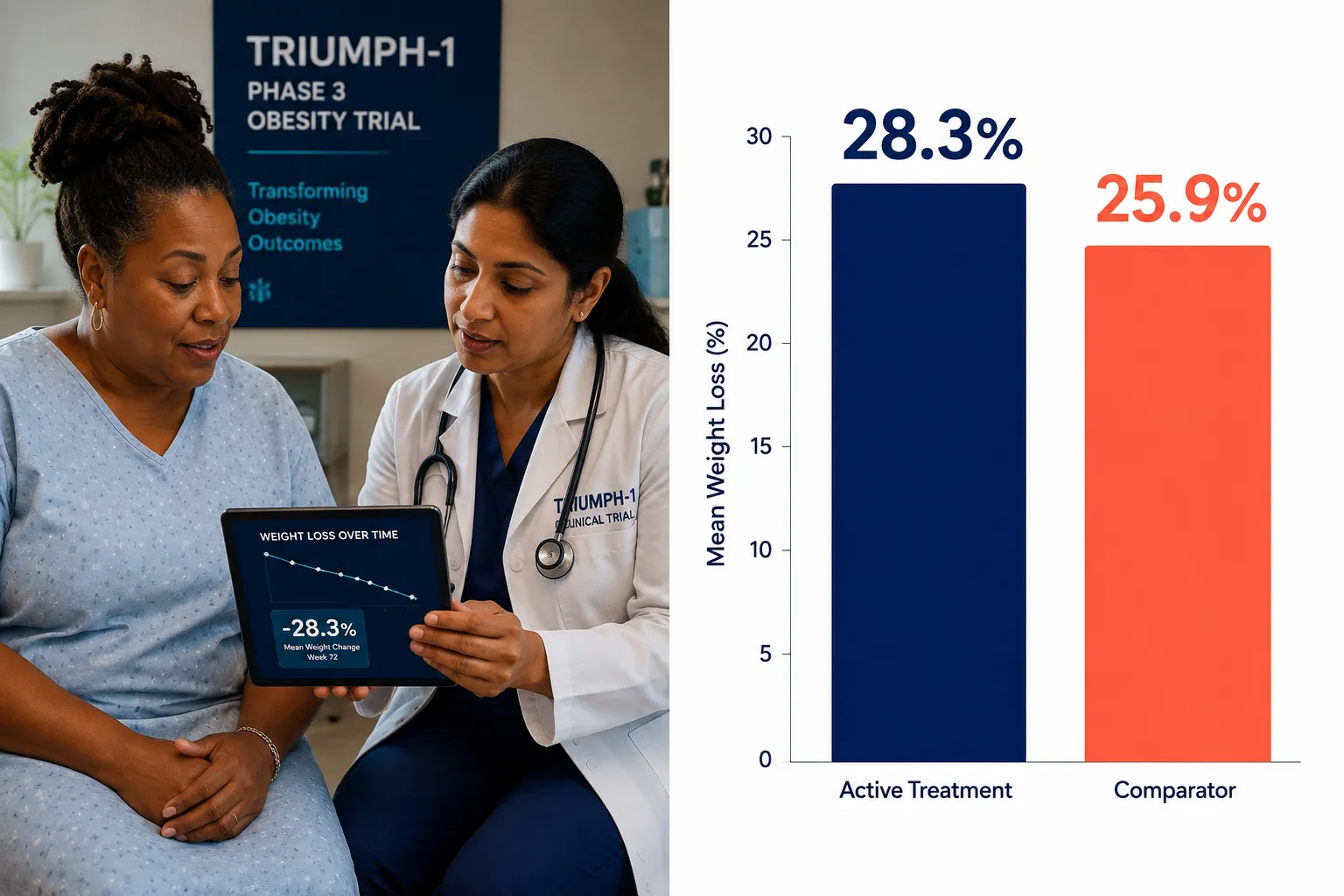
  • TRIUMPH-1 Phase 3 data show 28.3% mean body weight reduction at the 12 mg dose over 80 weeks.
  • The 9 mg dose achieved 25.9% mean weight loss, both results far exceeding earlier Phase 2 findings.
  • These outcomes are redefining study endpoints and peptide design benchmarks across metabolic research.
  • Downstream research interest in related receptor pathways, including GLP-2, MC4R, and growth hormone secretagogues, is accelerating as a result.

Key Takeaways

What Is Retatrutide and Why Does Triple Agonism Matter

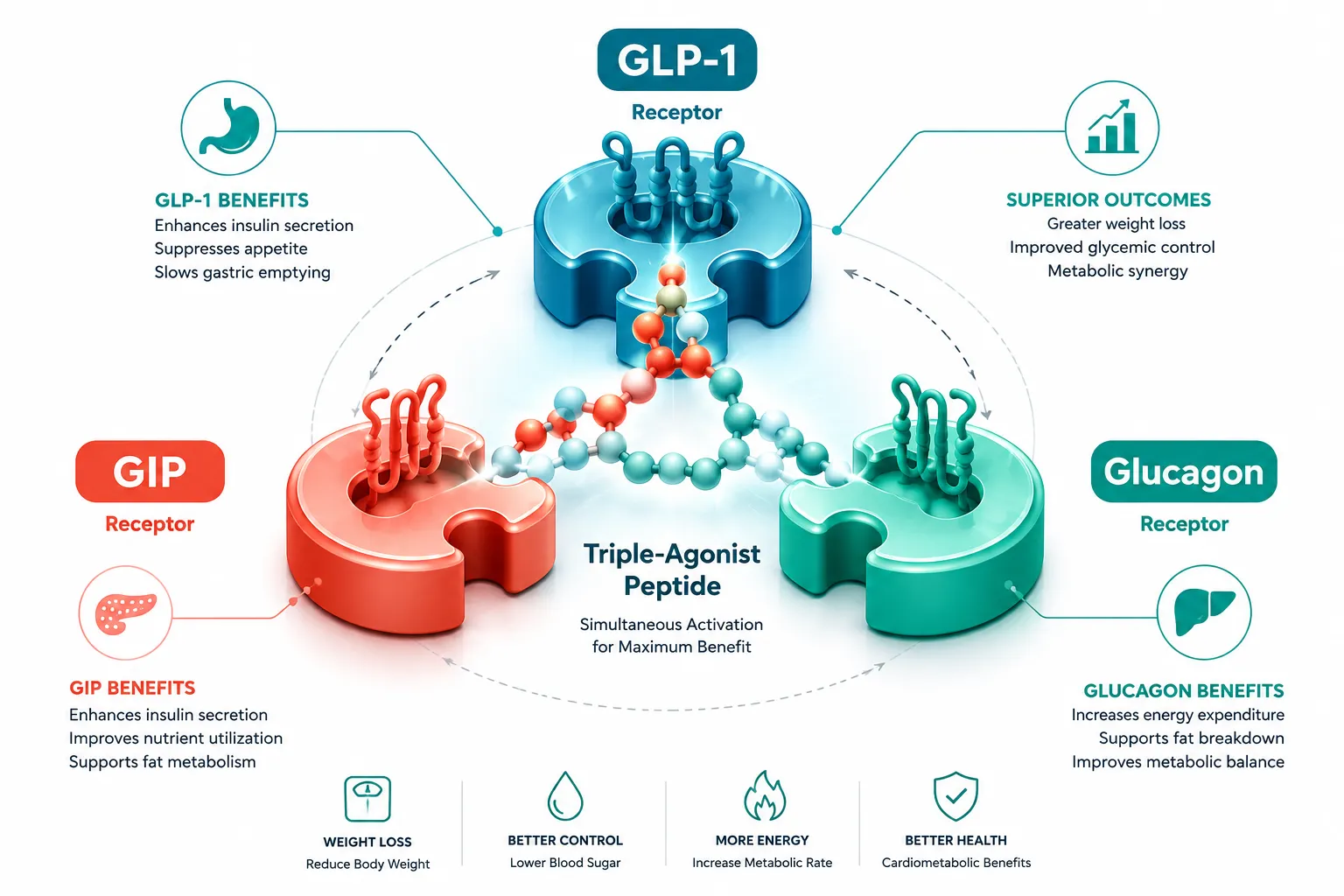
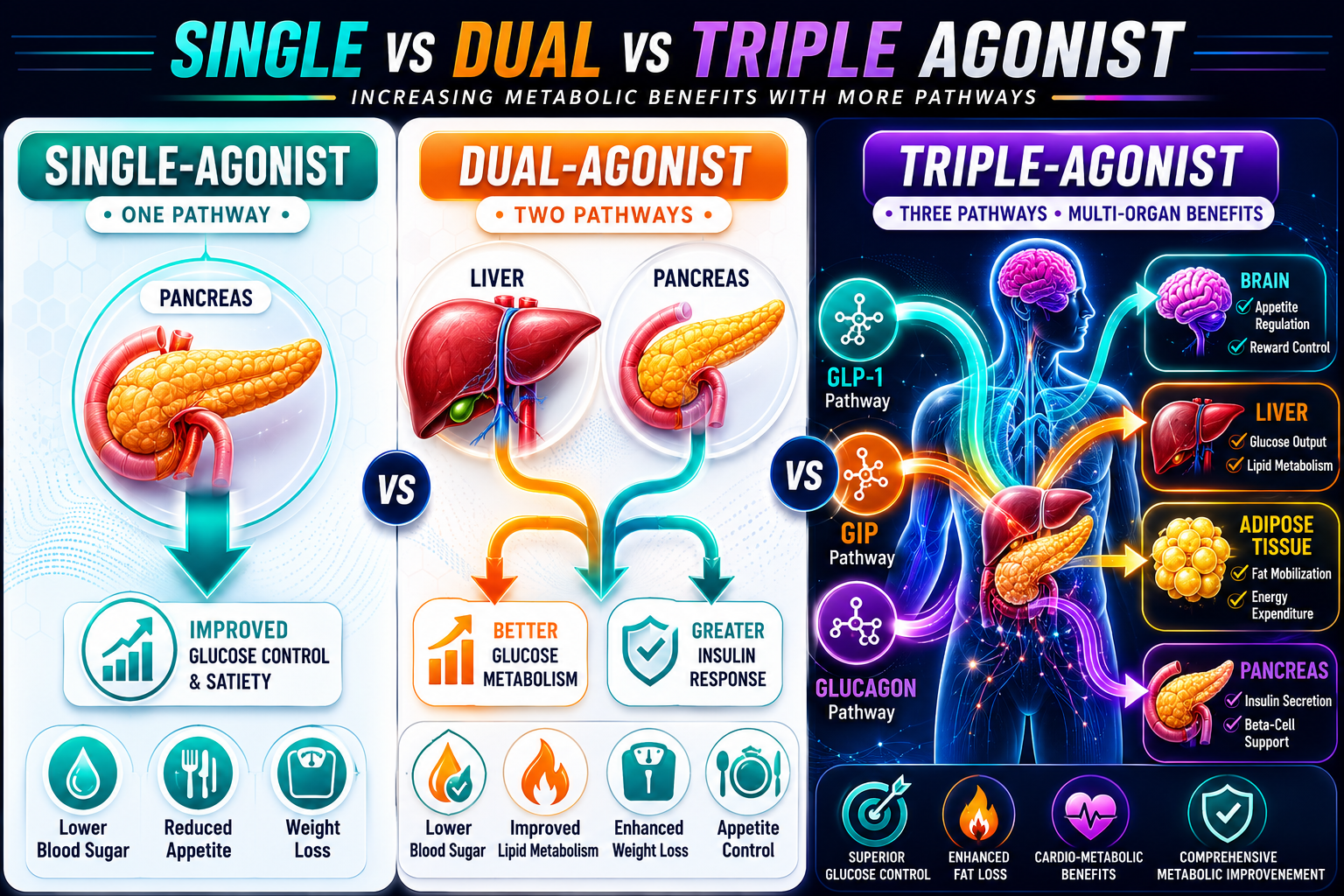
Retatrutide, developed by Eli Lilly under the code LY3437943, is a once-weekly injectable peptide that targets three distinct metabolic receptors simultaneously: the glucagon-like peptide-1 (GLP-1) receptor, the glucose-dependent insulinotropic polypeptide (GIP) receptor, and the glucagon receptor. Each receptor contributes a different metabolic effect.

Receptor Primary Effect
GLP-1 Appetite suppression, slower gastric emptying
GIP Enhanced insulin secretion, fat metabolism support
Glucagon Increased energy expenditure, hepatic fat reduction

By engaging all three pathways, retatrutide aims to deliver compounding benefits that single or dual agonists cannot replicate. Earlier GLP-1 agents like semaglutide and dual GIP/GLP-1 agonists like tirzepatide set a high bar. Retatrutide appears to clear it.

Researchers exploring GLP-1 peptides for metabolic studies will recognize that the triple-agonist architecture represents a logical progression from the single-receptor models that dominated the field just five years ago.

TRIUMPH-1 Phase 3 Data: The Numbers Redefining the Field

The TRIUMPH-1 trial enrolled adults with obesity or overweight without type 2 diabetes. Topline results released in May 2026 reported:

  • 12 mg dose: 70.3 lb (28.3%) mean body weight reduction over 80 weeks
  • 9 mg dose: 64.4 lb (25.9%) mean weight loss over the same period
  • Both doses dramatically exceeded placebo and prior Phase 2 benchmarks

"A 28% mean weight reduction in a Phase 3 trial is not an incremental improvement, it represents a categorical shift in what metabolic pharmacology can achieve."

These results place retatrutide in a performance class that no approved obesity therapy has previously occupied. For context, the best-in-class dual agonist tirzepatide achieved approximately 20-22% weight loss in comparable trial designs.

Researchers sourcing GLP-3 Retatrutide peptide for study purposes are paying close attention to how these Phase 3 endpoints translate into preclinical and in-vitro research models.

TRIUMPH-1 Phase 3 Data: The Numbers Redefining the Field

How Phase 3 Obesity Data Are Shaping Next-Generation Metabolic Research

The impact of GLP-3 Retatrutide and Triple-Agonist Peptides: How Phase 3 Obesity Data Are Shaping Next-Generation Metabolic Research extends well beyond a single drug's approval pathway. These findings are actively reshaping:

1. Study Endpoint Benchmarks
Researchers designing new metabolic peptide studies now face a significantly higher performance bar. A 10-15% weight reduction, once considered a strong outcome, is no longer a compelling endpoint when triple agonism achieves nearly 30%.

2. Receptor Combination Strategies
The TRIUMPH-1 data validate the multi-receptor hypothesis. This is accelerating interest in other receptor combinations, including MC4R receptor pathways that influence energy homeostasis and appetite regulation at the central nervous system level.

3. GLP-2 and Intestinal Metabolic Pathways
Parallel interest is growing in GLP-2 peptide research, which targets intestinal adaptation and nutrient absorption. Researchers are investigating whether GLP-2 co-agonism could enhance the metabolic profile of future triple or quadruple agonist candidates.

4. Growth Hormone Axis Interactions
The glucagon receptor component of retatrutide shares metabolic territory with growth hormone secretagogue pathways. Investigators studying ipamorelin and CJC-1295 combinations are examining whether GH axis modulation can complement triple-agonist mechanisms in body composition research.

5. Adipose Tissue Remodeling
The scale of fat mass reduction seen in TRIUMPH-1 is prompting new questions about adipose tissue biology. Research intersecting with beige adipose tissue conversion is gaining renewed attention as scientists try to understand the cellular mechanisms behind such dramatic fat loss.

Peptide Design Implications for Research Use

The TRIUMPH-1 results are not just clinically significant, they are structurally instructive. Peptide researchers are drawing several design lessons:

  • Half-life engineering matters. Retatrutide's once-weekly dosing relies on fatty acid conjugation that extends plasma half-life. Future research peptides are being designed with similar pharmacokinetic stability in mind.
  • Receptor selectivity ratios are tunable. The balance between GLP-1, GIP, and glucagon activity can be adjusted at the molecular level, allowing researchers to probe which receptor combination drives specific outcomes.
  • Tolerability profiles inform dosing models. Phase 3 data provide real-world tolerability benchmarks that preclinical models can be calibrated against.

Researchers building broader metabolic study panels can explore the full catalog of peptides for sale to identify complementary compounds for multi-pathway investigations.

For those specifically focused on the GLP class, the GLP-1 for sale research category provides a useful starting point for assembling comparative study frameworks.

Peptide Design Implications for Research Use

Conclusion

The TRIUMPH-1 Phase 3 data have set a new standard for what metabolic peptide research must aspire to achieve. With 28.3% mean body weight reduction at the 12 mg dose, retatrutide has moved triple-agonist pharmacology from a promising hypothesis to a clinically validated reality. For researchers, this means recalibrating study endpoints, expanding receptor combination strategies, and engaging more deeply with the molecular architecture that makes multi-target agonism so effective.

Actionable next steps for researchers in 2026:

  • Review updated Phase 3 endpoints and align preclinical models to match realistic efficacy benchmarks.
  • Explore GIP, GLP-1, and glucagon receptor interactions as a combined rather than isolated system.
  • Investigate complementary pathways, MC4R, GLP-2, growth hormone axis, for synergistic study designs.
  • Source high-purity, well-characterized peptides to ensure experimental reproducibility as study complexity increases.

The era of single-receptor metabolic research is giving way to a more sophisticated, multi-pathway paradigm. The data are clear. The direction is set.

https://www.puretestedpeptides.com/wp-content/uploads/2026/08/glp-3-retatrutide-and-triple-agonist-peptides-how-phase-3-obesity-data-are-shapi.webp 1024 1536 https://www.puretestedpeptides.com/wp-content/uploads/2026/01/buy-peptides-online.jpg 2026-08-05 13:04:022026-08-05 13:04:02GLP-3 Retatrutide and Triple-Agonist Peptides: How Phase 3 Obesity Data Are Shaping Next-Generation Metabolic Research

Tag Archive for: triple agonist peptides

Triple‑agonist design and receptor structural biology behind GLP‑1/GIP/glucagon peptides like retatrutide

Triple‑agonist design and receptor structural biology behind GLP‑1/GIP/glucagon peptides like retatrutide

July 4, 2026/0 Comments/by Pure Tested

Retatrutide achieved a mean body weight reduction of over 24% in a 48-week Phase 2 trial, a figure that surpassed every single- and dual-agonist result recorded up to that point. That number is not a coincidence. It is a direct consequence of deliberate molecular engineering, and the triple-agonist design and receptor structural biology behind GLP-1/GIP/glucagon peptides like retatrutide is now one of the most intensively studied areas in metabolic medicine.

Key Takeaways

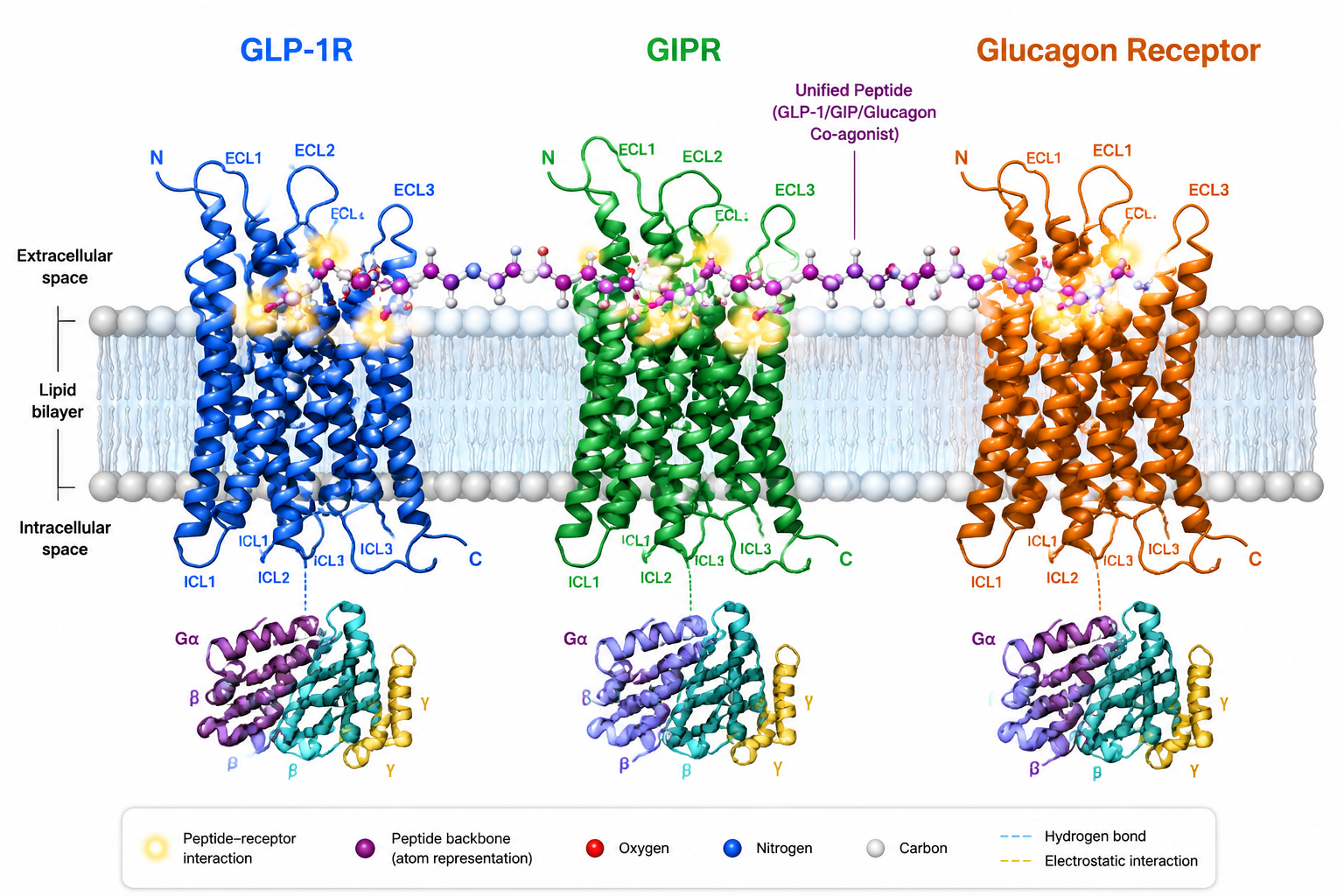
  • Retatrutide simultaneously activates three gut-hormone receptors: GLP-1R, GIPR, and glucagon receptor (GCGR).
  • High-resolution cryo-EM structural data reveal how a single peptide backbone can engage all three receptor binding pockets.
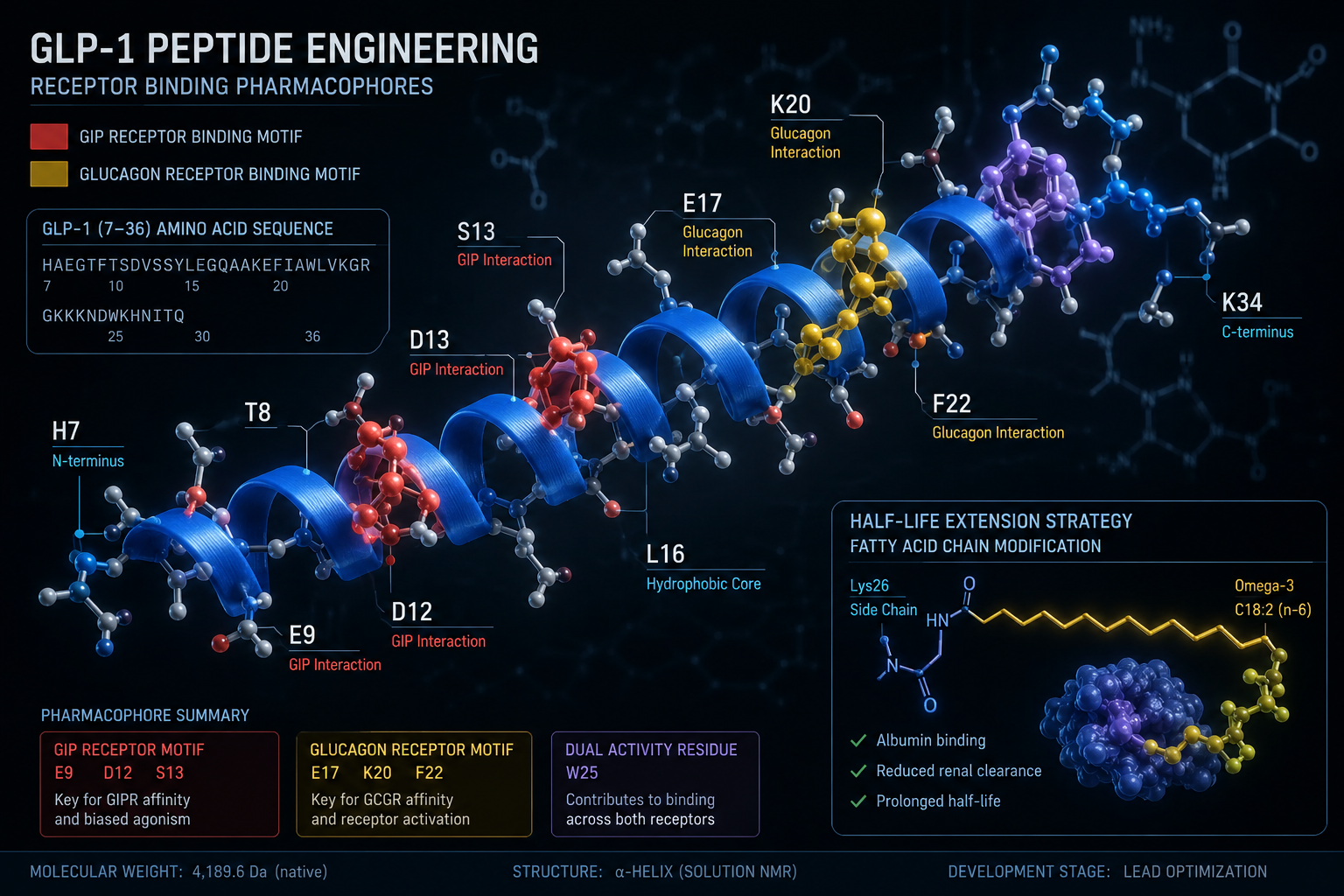
  • The GLP-1 backbone serves as the scaffold, with GIP and glucagon pharmacophore elements grafted at specific residue positions.
  • Fatty acid conjugation extends plasma half-life, enabling once-weekly dosing without sacrificing receptor selectivity.
  • Understanding this structural framework is essential for interpreting next-generation incretin-mimetic research.

Key Takeaways

How Three Receptors Are Activated by One Molecule

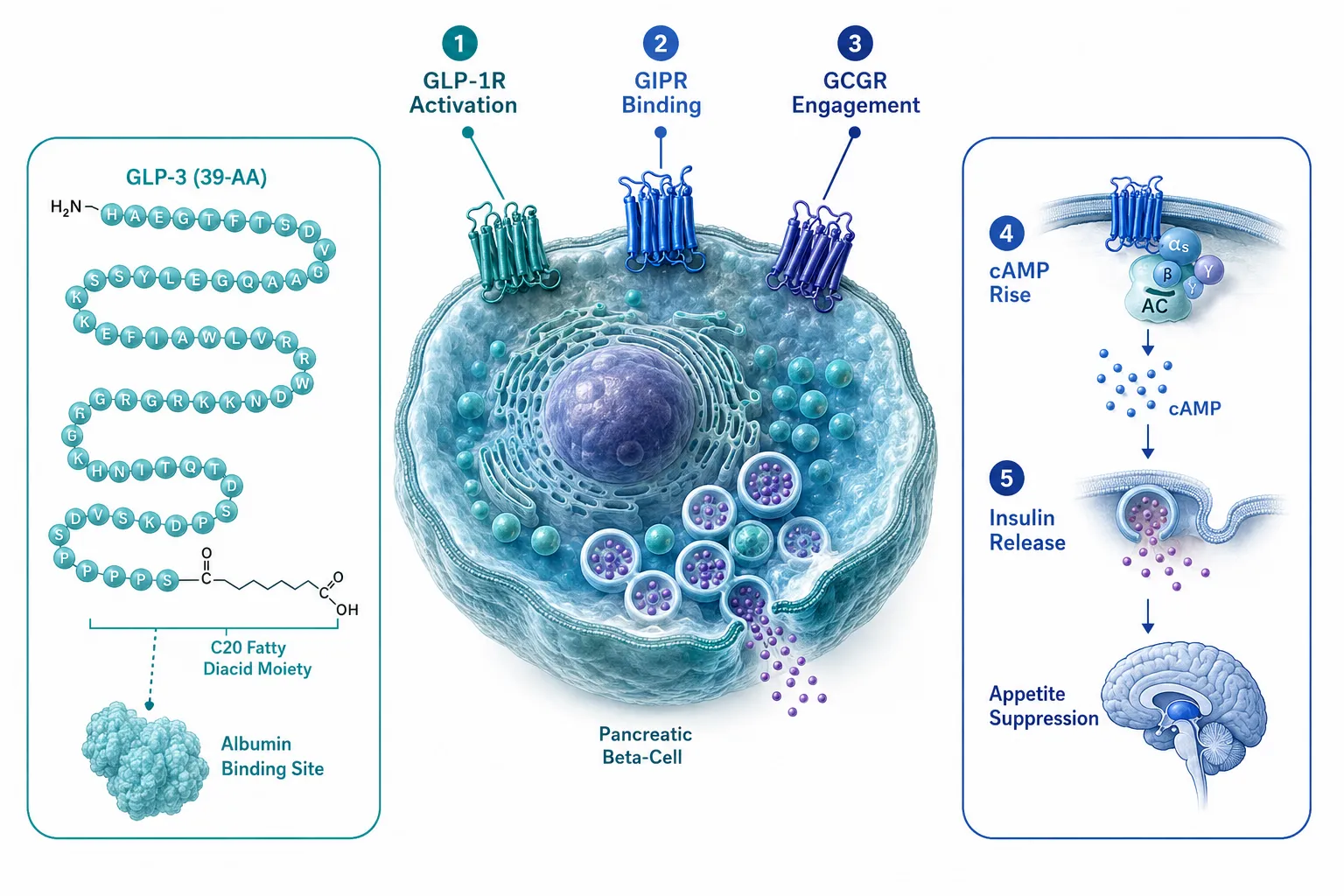
All three target receptors, GLP-1R, GIPR, and GCGR, belong to the class B1 family of G-protein coupled receptors (GPCRs). Each has a large extracellular domain that captures the peptide's N-terminus and a transmembrane bundle that transduces the signal intracellularly. What makes the triple-agonist design and receptor structural biology behind GLP-1/GIP/glucagon peptides like retatrutide so remarkable is that these three receptors share enough structural homology to be addressed by a single engineered peptide, yet differ enough that achieving balanced potency across all three requires precise residue-level tuning.

Cryo-electron microscopy data published in 2024 resolved retatrutide-receptor complexes at near-atomic resolution. The structures confirmed that the peptide adopts an alpha-helical conformation upon receptor engagement. The N-terminal region drives glucagon receptor activation, the mid-helix segment is critical for GIP receptor binding, and the C-terminal portion anchors GLP-1 receptor engagement. Each pharmacophore region overlaps partially, meaning a single amino acid substitution can shift the balance of potency across all three targets simultaneously.

For a broader look at how GLP-1 receptor agonism has evolved across generations, the GLP-1 generations overview provides useful context on how single-receptor agents gave way to more complex multi-target designs.


Rational Poly-Agonist Engineering: Building the Retatrutide Scaffold

Rational Poly-Agonist Engineering: Building the Retatrutide Scaffold

The design strategy starts with the native GLP-1 peptide as the structural backbone. This choice is deliberate. GLP-1R agonism is well-validated for glycemic control and appetite suppression, and the GLP-1 helix provides a stable scaffold onto which additional pharmacophore elements can be introduced.

Key engineering steps include:

Modification Purpose
N-terminal glucagon pharmacophore grafting Activates GCGR to increase energy expenditure and hepatic glucose output
Mid-helix GIP motif insertion Engages GIPR for enhanced insulin secretion and adipose tissue effects
C18 fatty acid chain conjugation Extends half-life via albumin binding; enables once-weekly dosing
Aib (alpha-aminoisobutyric acid) substitutions Resists dipeptidyl peptidase-4 (DPP-4) enzymatic cleavage

The glucagon receptor component is particularly significant. Glucagon alone raises blood glucose, a seemingly counterproductive effect in metabolic disease. However, when glucagon receptor activation is balanced against strong GLP-1R and GIPR agonism, the net result is increased thermogenesis and fat oxidation without net hyperglycemia. This balance is the central challenge of poly-agonist design.

Researchers interested in dual-receptor agonism as a stepping stone to this triple-target approach will find the GLP-1T research breakdown on dual receptor agonism a valuable reference.

"Balanced tri-receptor engagement is not about maximal activation at each target, it is about calibrating the ratio of potencies to produce a synergistic metabolic outcome."

The GLP-3 triple agonist overview explores how related molecules in this class are being characterized for research purposes in 2026.


Metabolic Consequences of Simultaneous Tri-Receptor Activation

Metabolic Consequences of Simultaneous Tri-Receptor Activation

The triple-agonist design and receptor structural biology behind GLP-1/GIP/glucagon peptides like retatrutide produces a layered metabolic effect that no single-receptor agent can replicate.

GLP-1R activation contributes:

  • Slowed gastric emptying
  • Reduced appetite via hypothalamic signaling
  • Glucose-dependent insulin secretion

GIPR activation adds:

  • Enhanced postprandial insulin response
  • Possible direct adipocyte effects reducing lipid accumulation
  • Complementary appetite modulation

GCGR activation provides:

  • Increased hepatic glucose production (offset by GLP-1R effects)
  • Elevated energy expenditure through brown adipose tissue thermogenesis
  • Enhanced lipolysis in white adipose tissue

This convergence explains the superior weight loss data. Researchers studying metabolic modulation pathways can explore additional mechanistic context through the metabolic modulation research lines resource.

The structural data also have formulation implications. Because the fatty acid chain binds albumin reversibly, the peptide circulates in a depot-like state, releasing gradually. This pharmacokinetic profile is a direct product of the structural biology, not an afterthought. For those interested in how delivery systems shape peptide therapeutics broadly, the innovative peptide delivery systems overview covers relevant advances.

Researchers examining related metabolic peptides may also find the MOTS-c metabolic flexibility research themes relevant, as mitochondrial and incretin pathways intersect in energy homeostasis models.


Conclusion

The triple-agonist design and receptor structural biology behind GLP-1/GIP/glucagon peptides like retatrutide represents a landmark convergence of structural biology, medicinal chemistry, and metabolic physiology. High-resolution cryo-EM data have moved this field from empirical screening toward genuinely rational drug design, where each amino acid substitution is chosen with a specific receptor interaction in mind.

Actionable next steps for researchers and clinicians:

  1. Review published cryo-EM structural data on retatrutide-receptor complexes to understand residue-level binding determinants.
  2. Track ongoing Phase 3 trial data for retatrutide to assess whether preclinical structural predictions translate to clinical outcomes.
  3. Explore the generations of GLP-1 receptor agonists to contextualize where triple agonism fits in the therapeutic timeline.
  4. Consider how poly-agonist design principles may inform research into other multi-target peptide systems beyond metabolic disease.

The structural biology is no longer a black box. That clarity is accelerating the next wave of incretin-mimetic innovation.

https://www.puretestedpeptides.com/wp-content/uploads/2026/07/Triple‑agonist-design-and-receptor-structural-biology-behind-GLP‑1GIPglucagon-peptides-like-retatrutide.png 1024 1536 Pure Tested https://www.puretestedpeptides.com/wp-content/uploads/2026/01/buy-peptides-online.jpg Pure Tested2026-07-04 13:03:572026-07-20 15:01:09Triple‑agonist design and receptor structural biology behind GLP‑1/GIP/glucagon peptides like retatrutide
×

Helpful Links

  • My account
  • Cart
  • Checkout
  • Refund and Returns Policy
  • Privacy Policy
  • SMS Privacy Policy
  • Login
  • My Account
  • Logout

USA Made Lab Tested Peptides

All products are sold for research, laboratory, or analytical purposes only, and are not for human consumption


Pure Tested Peptides is a chemical supplier. Pure Tested Peptides is not a compounding / chemical compounding facility as defined under 503A of the Federal Food, Drug, and Cosmetic act. Pure Tested Peptides is not an outsourcing facility as defined under 503B of the Federal Food, Drug, and Cosmetic act.

The statements made within this website have not been evaluated by the US Food and Drug Administration. The products we offer are not intended to diagnose, treat, cure or prevent any disease.

Human/Animal Consumption Prohibited. Laboratory/In-Vitro Experimental Use Only

Scroll to top Scroll to top Scroll to top