

Nasal Spray Peptides Compared: Semax, Selank, Klow, and PT-141 Formulation Variables Researchers Should Measure
Fewer than 5% of peptide nasal spray products on the research market carry published pharmacokinetic data, yet formulation decisions made at the bench level directly determine what a researcher is actually delivering to tissue. When comparing Semax, Selank, Klow, and PT-141 as intranasal peptide candidates, the meaningful differences are not found in marketing copy. They are found in concentration accuracy, excipient choice, spray uniformity, and documented stability. Understanding these variables is the foundation of any credible nasal spray peptides comparison.
Key Takeaways
- Concentration, pH, excipient profile, and spray-volume uniformity are the four most critical formulation variables to document across Semax, Selank, Klow, and PT-141 nasal sprays.
- Liquid nasal peptide formulations are inherently less stable than lyophilized powders, making storage conditions and expiry documentation essential data points.
- Klow-style multi-peptide blends introduce compounding complexity that requires independent identity and purity testing for each active ingredient.
- Robust pharmacokinetic data for intranasal peptide delivery remains largely absent in the published literature as of 2026, making in-house assay documentation even more important.
- Researchers sourcing any of these peptides should prioritize suppliers that provide third-party certificate of analysis (CoA) data and reference-standard benchmarks.
Why Formulation Variables Matter More Than Brand Names
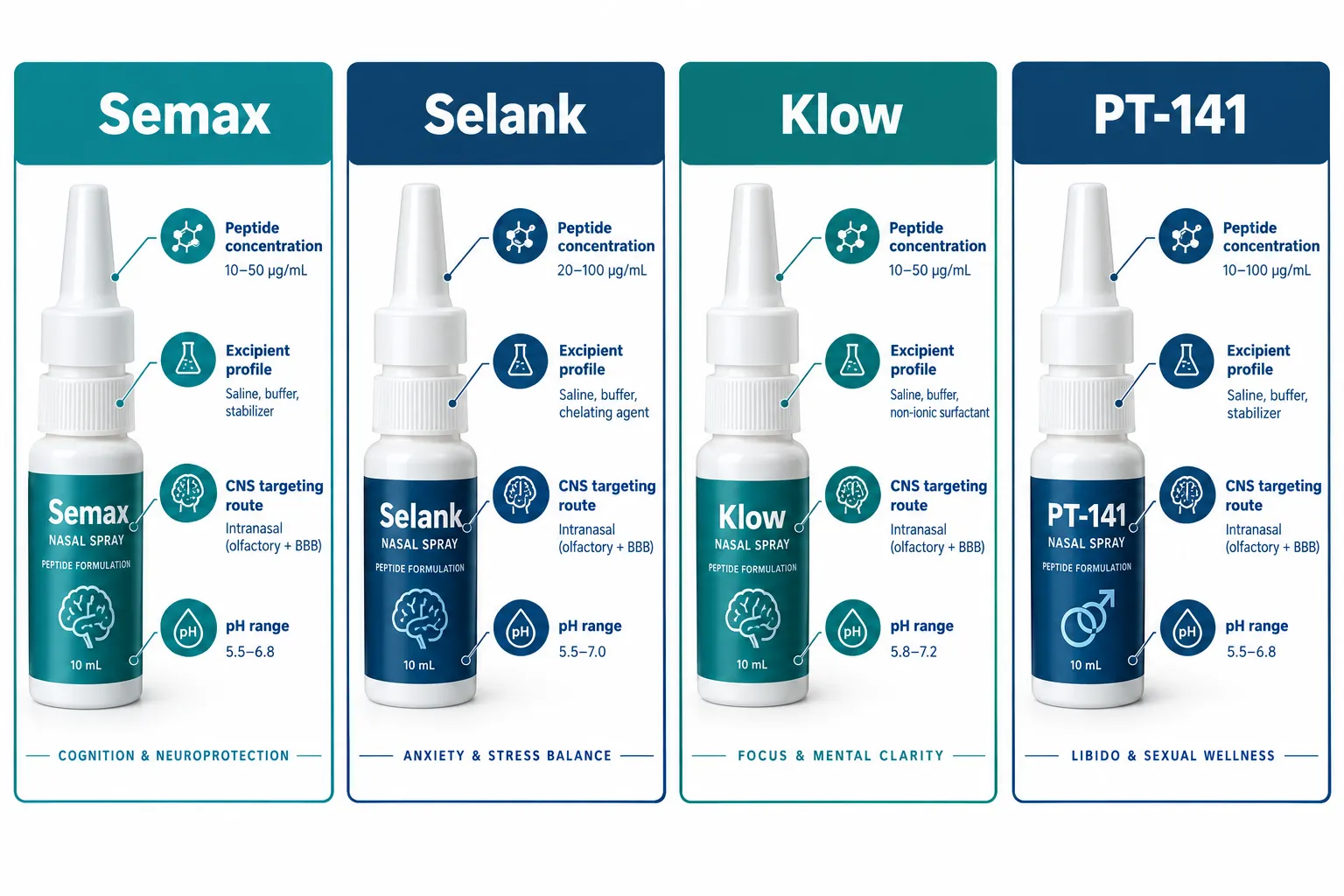
The intranasal route is consistently promoted as a pathway to reach central nervous system (CNS) targets or local nasal mucosa, bypassing first-pass hepatic metabolism. However, without verified formulation data, a researcher cannot confirm that the delivered dose matches the labeled dose, that the peptide remains intact at the time of use, or that excipients are compatible with mucosal tissue.
For Semax nasal spray and Selank, both of which originated as Russian pharmaceutical compounds and remain approved only in that regulatory context, no comparative clinical trials exist, and no combination-use data have been published. This regulatory gap places the burden of quality verification entirely on the researcher.
Key formulation variables to measure for any nasal peptide spray:
| Variable | Why It Matters |
|---|---|
| Peptide concentration (mcg/mL) | Determines actual dose per actuation |
| Spray volume per actuation (mcL) | Affects dose reproducibility |
| pH | Impacts mucosal tolerability and peptide stability |
| Excipient identity | Influences absorption and shelf life |
| Purity (% by HPLC) | Confirms active peptide vs. degradation products |
| Microbial/endotoxin load | Safety threshold for mucosal use |
Semax and Selank: CNS-Targeted Peptides With Minimal Excipient Disclosure
Both Semax (a synthetic ACTH analog) and Selank (a tuftsin-based anxiolytic peptide) are short-chain peptides typically formulated at concentrations between 0.1% and 1% in aqueous solution. The Semax peptide literature suggests that intranasal delivery may support olfactory nerve transport toward CNS targets, but robust human pharmacokinetic studies confirming this pathway are absent.
Formulation variables researchers should explicitly measure for Semax and Selank:
- Concentration verification: Use HPLC or mass spectrometry to confirm labeled concentration. Batch-to-batch drift is common in liquid peptide preparations.
- Excipient screening: Many formulations include preservatives such as benzalkonium chloride. Researchers should document whether excipients are present and at what levels, as mucosal irritation thresholds vary.
- pH range: Optimal mucosal pH tolerance is generally 4.5 to 6.5. Values outside this range can degrade both the peptide and the nasal epithelium.
- Storage temperature compliance: Both peptides show accelerated degradation above 4°C in liquid form. Freeze-thaw cycle documentation is critical.
"A labeled concentration means nothing without an independent assay confirming it, especially in liquid nasal formulations stored at variable temperatures."
Consulting Bachem and reference standards resources provides useful guidance on establishing analytical benchmarks when no pharmacopeial monograph exists for a given peptide.
PT-141 and Klow: Spray-Volume Uniformity and Multi-Peptide Complexity
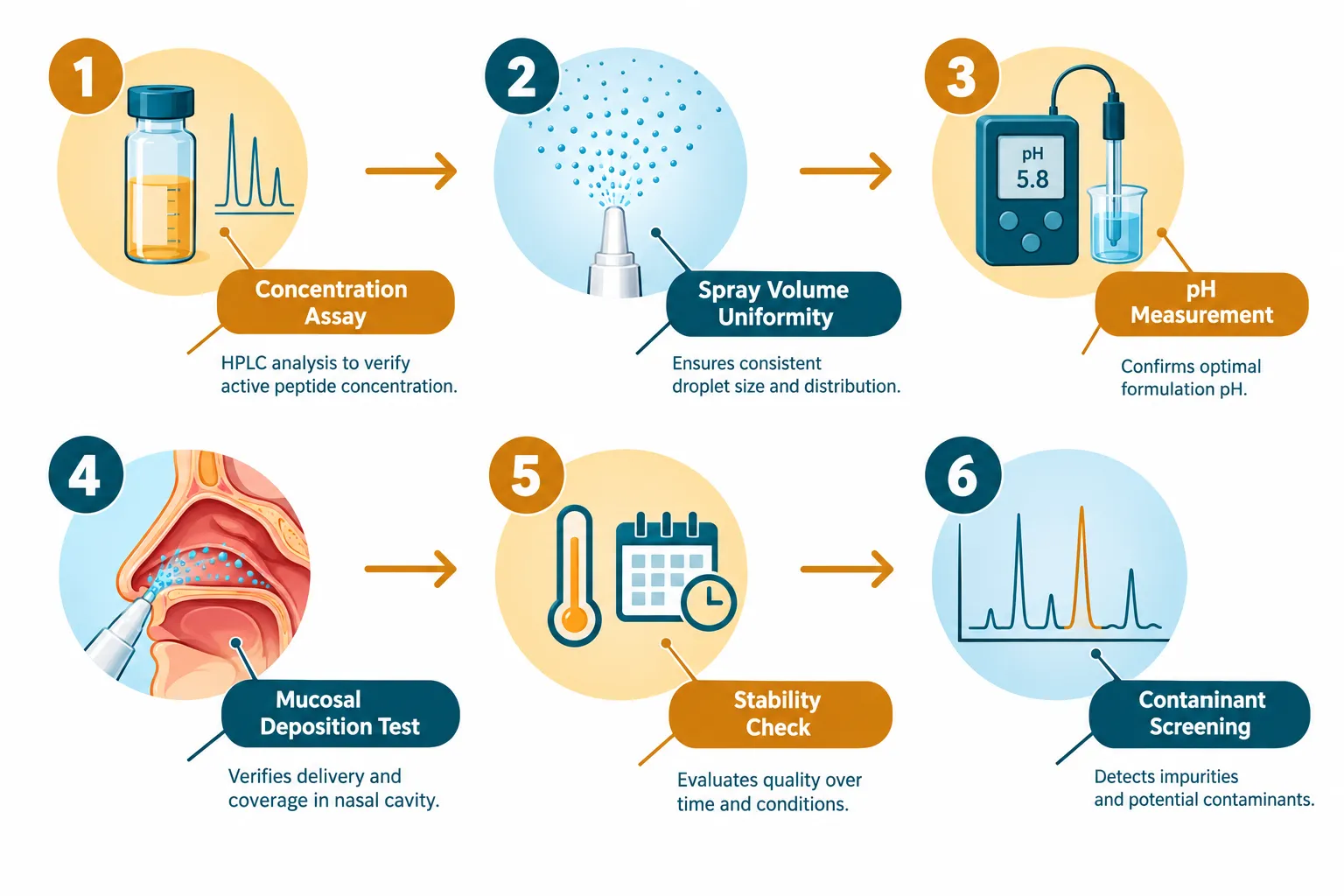
PT-141 (bremelanotide) has the most defined formulation profile among the four peptides discussed here. The approved injectable form provides a reference point, but intranasal research preparations introduce additional variables that researchers must track independently.
PT-141 nasal spray variables to document:
- Dose per spray actuation: Typically targeted at 0.5 to 1.0 mg per spray, but device performance varies significantly between pump mechanisms.
- Spray volume uniformity: Measured across multiple actuations from the same device. Coefficient of variation above 5% indicates unreliable dosing.
- pH: PT-141 solutions are generally formulated near pH 5.0. Drift toward alkaline conditions accelerates degradation.
- Device compatibility: Nasal pump materials (particularly rubber seals) can interact with peptide solutions, introducing leachable contaminants.
Klow nasal spray products represent a different challenge: they are multi-peptide blends, often combining two to four active compounds in a single formulation. This structure requires researchers to verify the identity and purity of each individual peptide within the blend, not just the total protein content.
For Klow-style blends, additional variables include:
- Independent identity confirmation for each peptide component (mass spectrometry is preferred)
- Interaction screening between peptides sharing the same excipient matrix
- Contaminant profiling to detect synthesis byproducts from each active ingredient
Those sourcing wholesale peptides for sale for research purposes should request blend-specific CoA documentation that addresses each component separately, not just the finished product.
Stability, Storage, and Assay Documentation Across All Four Peptides
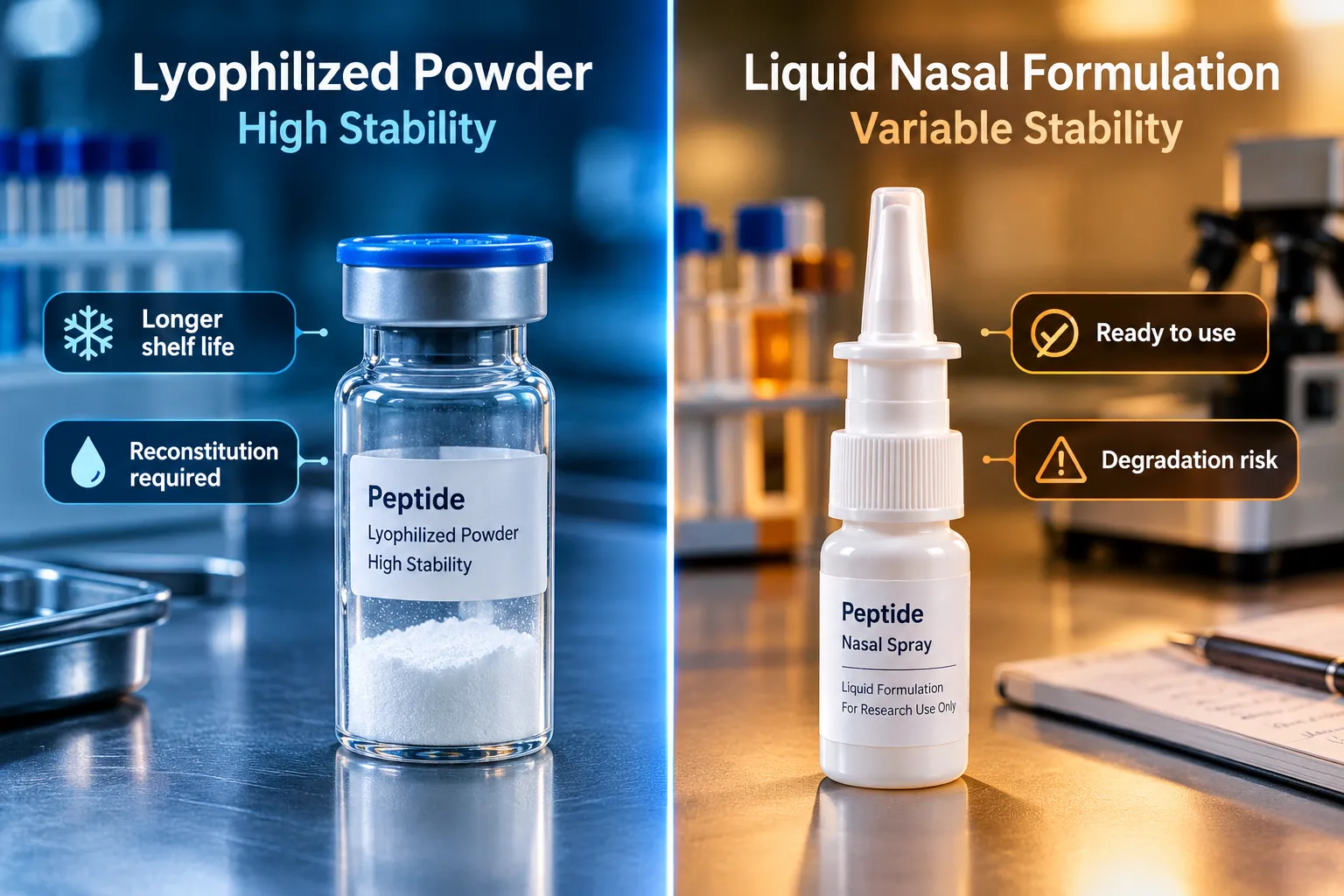
Liquid nasal peptide formulations are fundamentally less stable than lyophilized powders. This is a consistent finding across BPC-157, TB-500, GHK-Cu, KPV, and the four peptides discussed here. Researchers who treat nasal spray vials with the same handling protocols as reconstituted lyophilized peptides will likely encounter degraded material.
Minimum stability documentation researchers should maintain:
- Initial purity assay at receipt (HPLC or MS)
- Storage temperature log (continuous, not spot-checked)
- Re-assay at 30, 60, and 90 days post-opening
- Visual inspection record (color, particulate, clarity)
- pH measurement at each use interval
The fragmented, largely unregulated research peptide market means pricing and branding vary widely without corresponding quality differences. Researchers comparing IPA peptides or other intranasal research compounds should apply the same assay discipline regardless of supplier reputation.
For context on how analytical rigor applies across peptide classes, the methodology described in SS-31 10mg research peptide considerations offers a transferable framework for documentation standards.
Conclusion
When conducting a nasal spray peptides comparison across Semax, Selank, Klow, and PT-141, the most defensible research practice is to treat formulation variables, not brand claims, as the primary data points. Concentration accuracy, spray-volume uniformity, pH, excipient identity, and stability over time are measurable. CNS delivery claims and efficacy assertions, without supporting pharmacokinetic data, are not.
Actionable next steps for researchers in 2026:
- Request full CoA documentation, including HPLC purity and mass spectrometry identity confirmation, before using any nasal peptide formulation.
- Establish a baseline assay at receipt and retest at regular intervals during storage.
- Document spray-volume uniformity across at least five actuations per device before recording dose data.
- For multi-peptide blends like Klow, require component-level identity testing, not aggregate protein quantification.
- Cross-reference supplier quality practices against established wholesale peptides sourcing standards to identify vendors with transparent analytical documentation.
The intranasal route holds genuine research interest, but its value depends entirely on what is actually inside the spray device, and whether a researcher can prove it.


Leave a Reply
Want to join the discussion?Feel free to contribute!