

Klow Peptide Nasal Spray: What It Is, How Researchers Evaluate It, and Why Formulation Matters
Only a handful of multi-peptide research blends have generated as much cataloging activity across vendor platforms in 2026 as Klow, yet a search of PubMed or ClinicalTrials.gov returns zero results for the name. That gap between commercial visibility and clinical literature is exactly why understanding Klow Peptide Nasal Spray: What It Is, How Researchers Evaluate It, and Why Formulation Matters is worth doing carefully before any laboratory protocol is designed around it.
Key Takeaways
- Klow is an 80 mg four-peptide research blend containing GHK-Cu, BPC-157, TB-500, and KPV, sold exclusively as a research-use-only product.
- The blend has no entry in major biomedical trial registries and no peer-reviewed data on the combined intranasal stack.
- Any mechanistic claims are extrapolated from individual peptide studies, not from Klow-specific trials.
- Formulation variables, pH, osmolarity, droplet size, and carrier solvent, are critical to reproducible intranasal delivery.
- Rigorous purity verification through HPLC and mass spectrometry, alongside batch-specific Certificates of Analysis, is the baseline standard for responsible sourcing.
What Klow Peptide Nasal Spray Actually Contains
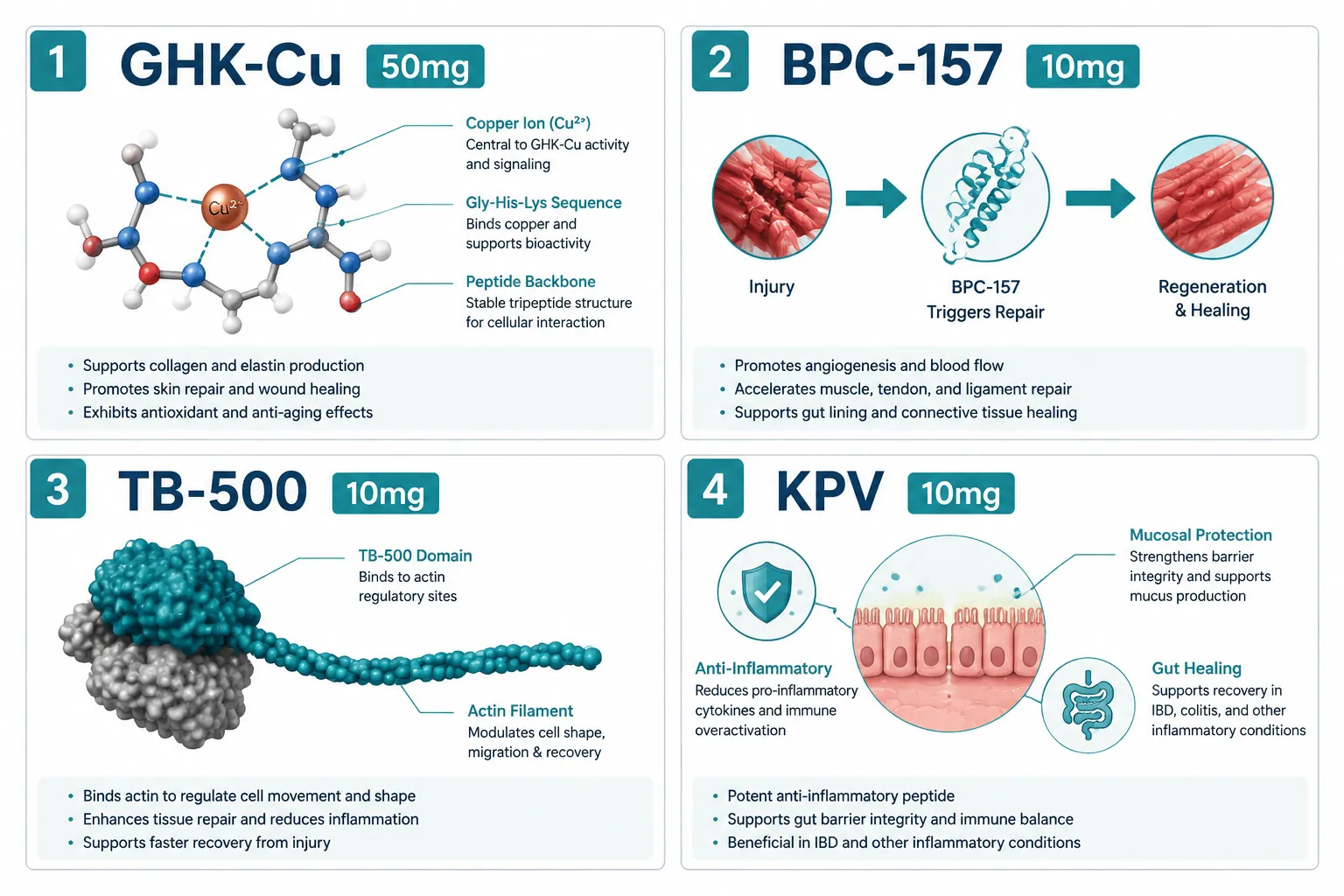
Klow is marketed as an 80 mg multi-peptide research kit, typically formulated as a nasal spray and sometimes as sublingual capsules. The composition reported across multiple vendors breaks down as follows:
| Peptide | Amount per Vial | Primary Research Focus |
|---|---|---|
| GHK-Cu | 50 mg | Tissue repair, skin biology, anti-aging models |
| BPC-157 | 10 mg | Gut integrity, musculoskeletal recovery |
| TB-500 | 10 mg | Actin-binding, wound healing, inflammation |
| KPV | 10 mg | Mucosal anti-inflammation, gut pathways |
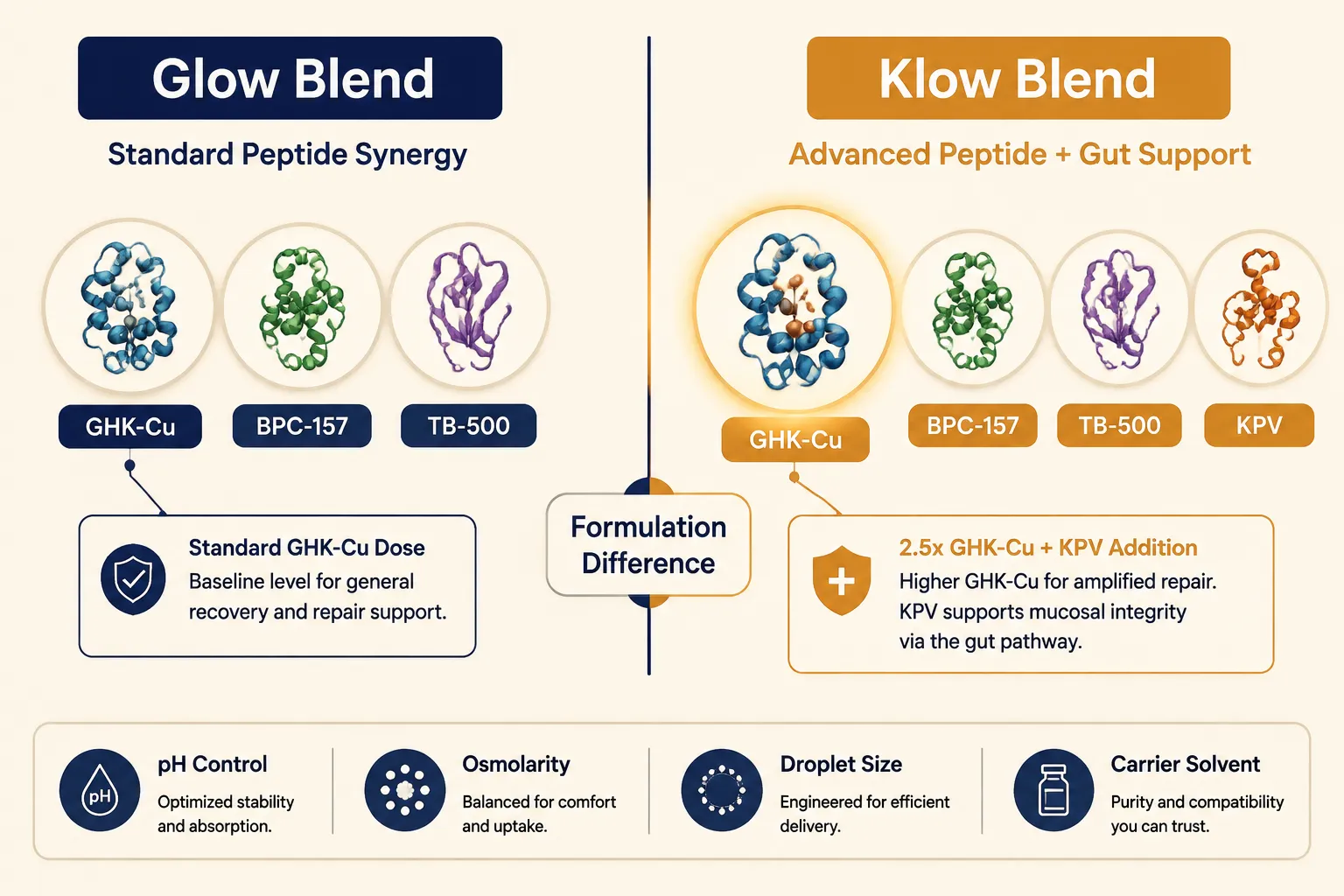
The GHK-Cu component makes up the bulk of the blend at roughly 62.5% of total peptide content. This is notably about 2.5 times higher than the GHK-Cu dose found in the closely related "Glow" blend, which contains the same base trio of GHK-Cu, BPC-157, and TB-500 but omits KPV entirely.
KPV, a tripeptide fragment of alpha-melanocyte-stimulating hormone, is the distinguishing addition. It has been studied primarily for anti-inflammatory activity in gastrointestinal and mucosal models. Its inclusion is intended to extend the blend's putative research utility to systemic inflammatory and gut-related pathways, though no Klow-specific clinical evidence supports this rationale.
Klow is sold by multiple vendors, including those focused on high purity peptide sourcing, with explicit disclaimers that it is not an approved drug and is not intended for human consumption. It is positioned strictly for controlled, non-human, or in-vitro experimental models.
How Researchers Evaluate Klow Peptide Nasal Spray
Because Klow as a named blend does not appear in any WHO trial registry or formal pharmacology literature, researchers working with it must apply particularly disciplined evaluation standards. The evaluation process covers three distinct layers.
Analytical Verification
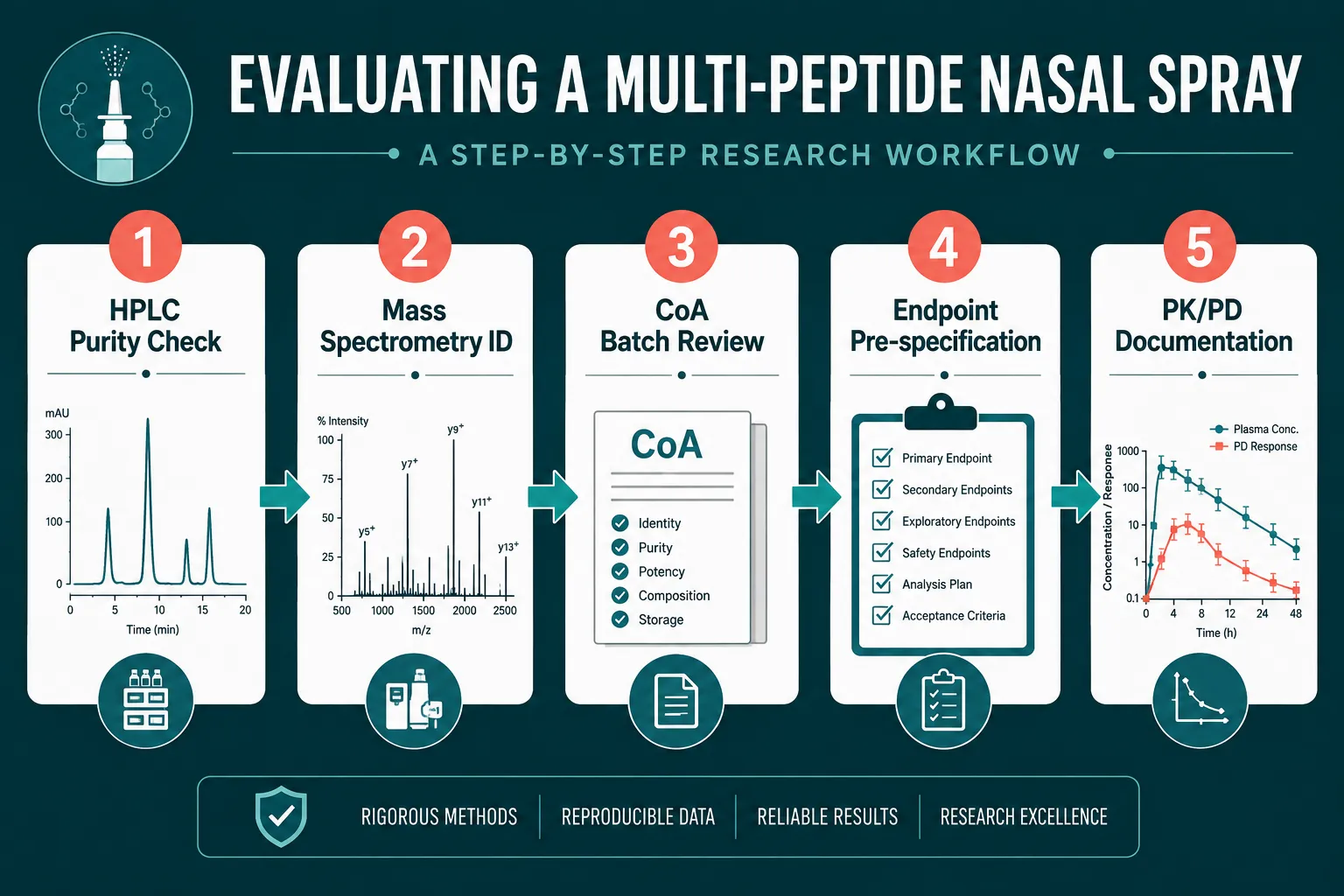
Before any experiment begins, purity confirmation is non-negotiable. Researchers are advised to verify each peptide component by HPLC (high-performance liquid chromatography) and mass spectrometry. A batch-specific Certificate of Analysis (CoA) should document individual peptide identity, purity percentage, and actual weighed content.
Real-world examples from supplier data illustrate why this matters. One European lab reported a KLOW Blend 80 mg batch with 99.87% purity and an actual weighed content of 85.38 mg, a slight overage from the labeled 80 mg that would affect dosing calculations in any quantitative study. Checking Peptide CoA verification standards before purchasing is a practical first step.
For researchers also working with related metabolic or regenerative peptides, the SS-31 10mg research peptide considerations page offers a useful parallel framework for analytical evaluation.
Endpoint and Protocol Design
Because all mechanistic claims for Klow are extrapolated from separate studies on its individual components, researchers must pre-specify endpoints clearly. Key protocol requirements include:
- Defining cognitive or behavioral endpoints before data collection, particularly if neuroprotective effects are being explored
- Pre-specifying statistical power based on expected effect sizes from individual peptide literature
- Documenting all preparation variables in full, including reconstitution solvent, storage temperature, and spray device calibration
No validated pharmacokinetic or pharmacodynamic data exist for this exact multi-peptide nasal combination. Brain-delivery or neurocognitive claims remain speculative until such data are generated.
This mirrors the rigor applied to other complex peptide research programs. The CJC-1295 without DAC half-life research guide demonstrates how half-life and delivery route variables must be explicitly controlled in any growth-related peptide study.
Safety and Tolerability Documentation
The four peptides in Klow have generally shown acceptable tolerability in preclinical and cosmetic research contexts individually. However, comprehensive intranasal safety profiles for the combined stack are not yet available. Researchers should document and monitor for:
- Local nasal irritation
- Headache
- Fatigue or systemic responses
These observations should be recorded systematically, not dismissed as minor, because the combined mucosal exposure profile of four peptides simultaneously is genuinely unstudied.
Why Formulation Matters for Klow Peptide Nasal Spray
Intranasal delivery is not simply a matter of putting a peptide into a spray bottle. For a blend as compositionally complex as Klow, formulation decisions directly determine whether the research produces reproducible, interpretable results.
Critical Formulation Variables
Researchers and suppliers working with Klow nasal spray must control the following parameters:
pH: Each peptide has a stability range. A pH that preserves GHK-Cu may accelerate degradation of BPC-157 if not carefully balanced. Target pH should be documented per batch.
Osmolarity: Nasal mucosal tissue is sensitive to hypertonic or hypotonic solutions. Osmolarity outside the physiological range (approximately 285-310 mOsm/kg) increases irritation risk and can reduce absorption.
Carrier solvent selection: Each peptide's hydrophobicity differs. Carrier solvents must be chosen to maintain solubility across all four components simultaneously while remaining mucosal-safe.
Droplet size: Nasal spray devices produce droplets across a range of diameters. Droplets that are too large deposit in the anterior nasal cavity; too small and they reach the lungs. For intranasal peptide delivery, a droplet size in the 50-200 micron range is generally targeted.
Viscosity: Affects both spray pattern and mucociliary clearance rate, which influences how long the peptide solution remains in contact with the nasal epithelium.
The Klow vs. Glow Formulation Distinction
The comparison between Klow and Glow is frequently raised in vendor educational content. The practical difference is structural:
- Glow: GHK-Cu + BPC-157 + TB-500 (standard GHK-Cu dose)
- Klow: GHK-Cu (2.5x dose) + BPC-157 + TB-500 + KPV
No published head-to-head data show one blend to be superior to the other in any model system. Researchers selecting between them should base the choice on which individual peptide's mechanism is most relevant to their specific endpoint, not on marketing positioning.
For context on how peptide families interact in research design, the GLP-3, GLP-1, and GLP-2 researchers guide to the peptide family offers a useful model for thinking about multi-peptide interactions and endpoint specificity.
Conclusion
Klow Peptide Nasal Spray sits at an interesting intersection: commercially active, compositionally defined, but clinically unvalidated as a combined entity. For researchers in 2026 who encounter it, the actionable path forward is straightforward.
Next steps for researchers:
- Obtain batch-specific CoA documentation with HPLC and mass spectrometry data before any experiment.
- Pre-specify all endpoints, statistical power calculations, and preparation variables in writing before data collection begins.
- Treat all mechanistic claims as hypotheses derived from individual peptide literature, not as established effects of the combined stack.
- Control formulation variables (pH, osmolarity, droplet size, carrier solvent) rigorously and document them in every protocol iteration.
- Monitor and record tolerability observations systematically, even in preclinical models.
The absence of Klow from formal trial registries is not a reason to dismiss it as a research tool, it is a reason to apply higher, not lower, methodological standards when working with it.