

Klow Blend vs Glow Blend: Choosing Skin and Wellness Peptide Formulations for Different Research Endpoints
Fewer than 15% of multi-peptide blend studies published through mid-2026 include blend-level pharmacokinetic data, meaning most researchers selecting between formulations like Klow and Glow are working from single-peptide evidence extrapolated to combination products. Understanding Klow Blend vs Glow Blend: Choosing Skin and Wellness Peptide Formulations for Different Research Endpoints is therefore not just a matter of reading a label. It requires a clear-eyed look at component mechanisms, intended research positioning, and how each formulation aligns with specific experimental goals.
Key Takeaways
- Glow Blend is positioned primarily for skin-focused endpoints such as collagen synthesis and barrier integrity, while Klow Blend targets systemic and inflammatory research models.
- GHK-Cu is a central component in Glow Blend, with well-documented fibroblast-stimulating activity relevant to dermal research.
- Klow Blend contains peptides with broader systemic reach, making it more suitable for tissue repair and neuromodulatory endpoint studies.
- Neither blend holds therapeutic approval; both are strictly research-grade compounds as of 2026.
- Endpoint selection, not brand preference, should drive formulation choice between these two products.
What Separates Klow Blend and Glow Blend at the Formulation Level
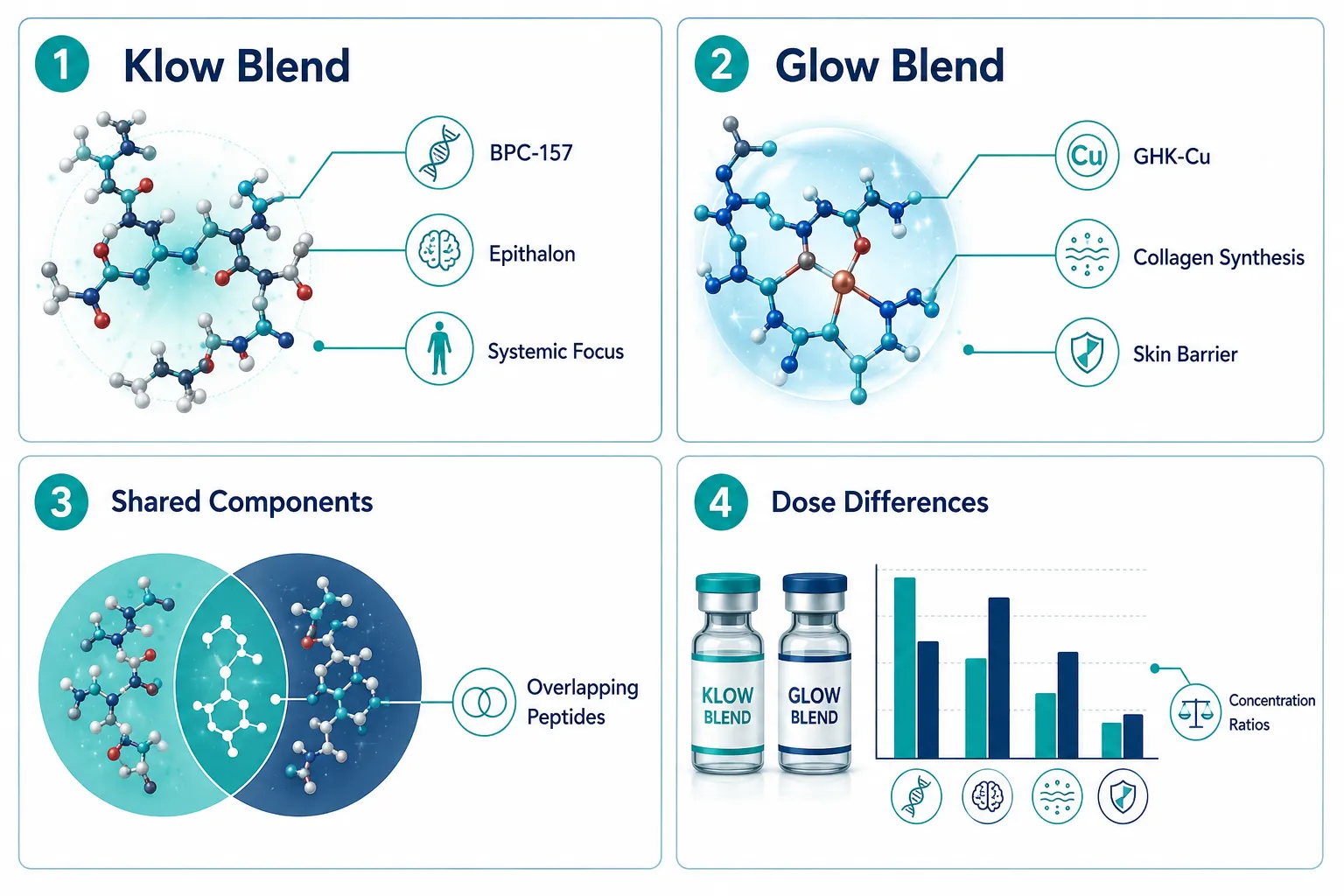
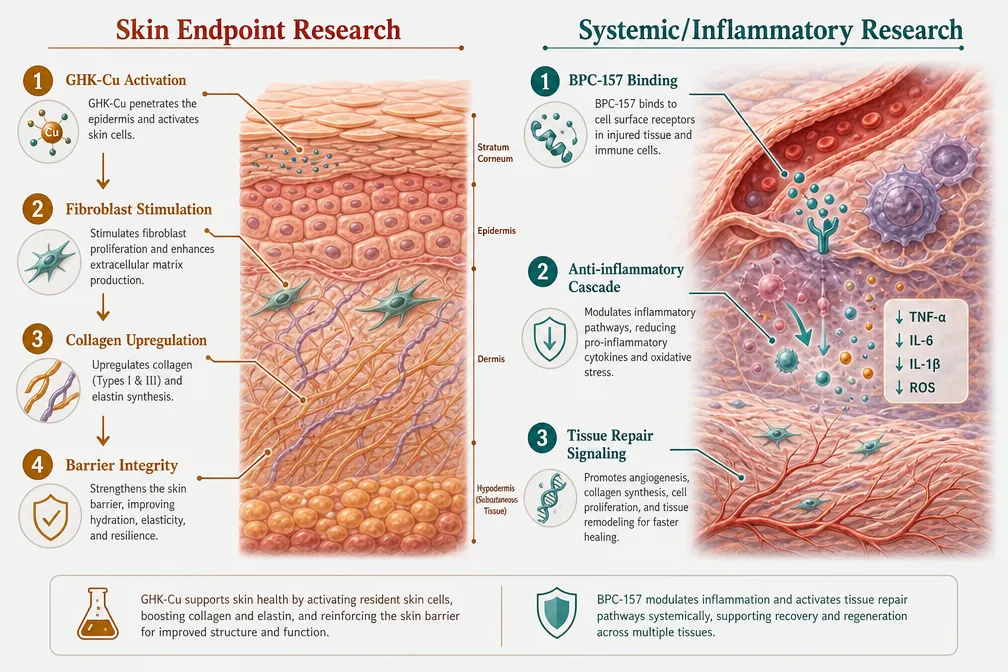
The two blends share a family resemblance but diverge sharply in component ratios and target biology. Glow Blend is built around GHK-Cu (copper tripeptide-1), a peptide with an extensive published record in collagen upregulation, matrix metalloproteinase modulation, and skin barrier support. Supporting peptides in the Glow formulation are typically selected to amplify dermal fibroblast activity and reduce oxidative stress at the epidermal level.
Klow Blend, by contrast, incorporates peptides associated with systemic tissue repair and anti-inflammatory signaling. A mid-2026 clarification from the supplier confirmed the standard Klow formula, resolving earlier naming ambiguity that had caused some researchers to conflate the two products. Klow's component profile makes it better suited for models examining gut-mucosal healing, connective tissue regeneration, or neuromodulatory pathways rather than surface-level dermal outcomes.
For researchers sourcing GHK-Cu independently, the GHK-Cu peptide purchase and copper peptide research sourcing guide provides detailed purity and documentation benchmarks worth reviewing before committing to a blend versus a single-peptide approach.
Key distinction: Glow Blend optimizes for skin-surface endpoints. Klow Blend optimizes for deeper tissue and systemic endpoints. Conflating the two wastes resources and muddies data.
Matching Klow Blend vs Glow Blend: Choosing Skin and Wellness Peptide Formulations for Different Research Endpoints to Specific Study Designs
Collagen Synthesis and Skin Barrier Endpoints
When the primary research question involves collagen type I or III expression, transepidermal water loss (TEWL), or keratinocyte proliferation, Glow Blend is the more defensible choice. GHK-Cu has been studied extensively in fibroblast cultures, and its inclusion at research-grade concentrations provides a reproducible signal for collagen-pathway assays.
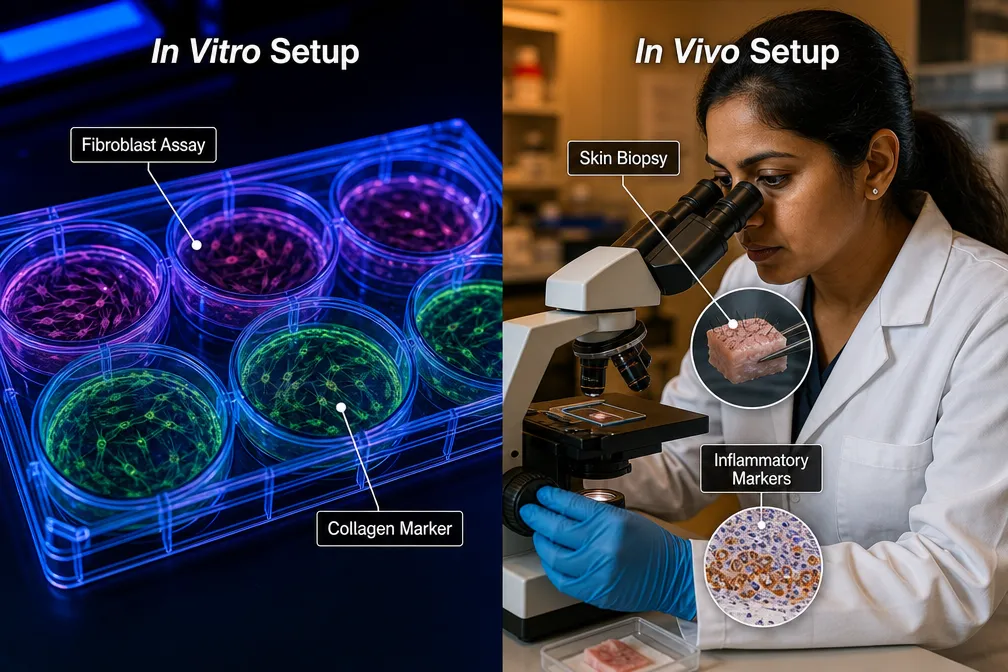
Typical in vitro setups for Glow Blend include:
- Human dermal fibroblast (HDF) monolayer cultures with collagen ELISA readouts
- Reconstructed human epidermis (RHE) models measuring barrier protein expression
- Oxidative stress assays using hydrogen peroxide challenge protocols
For in vivo models, Glow Blend has been applied in rodent wound-healing studies where skin tensile strength and histological collagen density serve as primary endpoints.
The broader context of how molecular size and peptide structure influence experimental outcomes is covered in the article on peptides and polypeptides in modern research: how molecular size shapes function, stability, and experimental design.
Systemic, Inflammatory, and Tissue Repair Endpoints
Klow Blend's component profile positions it for research questions that extend beyond the dermis. Studies examining intestinal permeability, tendon or ligament repair, or systemic inflammatory markers (IL-6, TNF-alpha, CRP proxies) are better served by Klow's formulation architecture.
Researchers working with mesenchymal stem cell models may also find Klow Blend components relevant. The intersection of peptide-based modulators and regenerative research is explored in depth in the article on mesenchymal stem cells and peptide-based modulators: how BPC-157, GHK-Cu, and Glow Blend are used in regenerative research models.
Mood and Cognitive Endpoints
Neither Klow nor Glow Blend is primarily designed for cognitive or neurological endpoints. However, certain Klow components have overlapping neuromodulatory activity documented in preclinical literature. Researchers pursuing mood-related or cognitive endpoints should review dedicated resources on peptide cognitive endpoints before defaulting to a systemic blend not optimized for CNS readouts.
Analytical Quality, Regulatory Status, and Practical Sourcing Considerations
Both Klow Blend and Glow Blend are research-grade compounds with no therapeutic approval in any jurisdiction as of 2026. Researchers must confirm that supplier certificates of analysis (CoA) include:
| Quality Parameter | Minimum Standard |
|---|---|
| HPLC purity | >/= 98% |
| Mass spectrometry confirmation | Required per component |
| Endotoxin testing | LAL or equivalent |
| Sterility testing | USP <71> or equivalent |
Analytical rigor matters especially for blend products because impurities in one component can confound readouts attributed to another. High purity peptide sourcing standards should be non-negotiable when designing publishable studies.
On pricing and access: mid-2026 market data shows blend products trending toward slight cost premiums over single-peptide equivalents, reflecting the analytical complexity of multi-component testing. Researchers with narrow budgets may find that sourcing individual peptides and combining them in-house offers greater concentration control, though this approach demands additional QC documentation.
The Klow Blend peptide nasal spray: research applications and bioavailability considerations article addresses delivery-route variables that can significantly affect endpoint sensitivity, particularly for systemic models.
Applying the Framework: A Decision Guide for Klow Blend vs Glow Blend: Choosing Skin and Wellness Peptide Formulations for Different Research Endpoints
The following framework helps researchers align formulation choice with endpoint logic:
Step 1, Define the primary endpoint. Is it dermal (collagen, barrier, wound healing) or systemic (inflammation, tissue repair, neuromodulation)?
Step 2, Audit component relevance. Map each blend component to a published mechanism relevant to that endpoint. Avoid blends where fewer than half the components have mechanistic relevance to your model.
Step 3, Confirm delivery route compatibility. Nasal, subcutaneous, and topical delivery produce different bioavailability profiles. Match the route to the tissue target.
Step 4, Establish baseline single-peptide controls. Running GHK-Cu alone alongside Glow Blend, or a key Klow component alongside the full blend, allows researchers to isolate blend-specific effects from individual peptide contributions.
Step 5, Document everything. Blend-level evidence remains sparse. Every well-documented study adds to a thin but growing body of literature.
Researchers interested in the broader landscape of peptide combinations may also find value in reviewing Semax and Selank peptides: comparative research on neurogenesis and synaptic plasticity as a methodological reference for comparative blend study design.
Conclusion
Selecting between Klow Blend and Glow Blend is not a cosmetic choice, it is a scientific one. Glow Blend's GHK-Cu-centered profile makes it the rational option for collagen synthesis, skin barrier, and dermal regeneration endpoints. Klow Blend's broader systemic component profile suits tissue repair, inflammatory signaling, and neuromodulatory models more effectively.
Actionable next steps for researchers in 2026:
- Obtain full CoAs for both blends before purchasing, and verify each component against your endpoint requirements.
- Run single-peptide controls alongside blend treatments to isolate mechanistic contributions.
- Consult the growing body of GHK-Cu and BPC-157 single-peptide literature to build mechanistic rationale before designing blend-level studies.
- Document delivery route, reconstitution protocol, and storage conditions meticulously to support reproducibility.
The field of multi-peptide blend research is maturing rapidly. Researchers who build rigorous, endpoint-driven protocols today will be positioned to contribute meaningfully to the evidence base that the field still urgently needs.


Leave a Reply
Want to join the discussion?Feel free to contribute!