Call or Text 727-513-9780
  • Shopping Cart Shopping Cart
    0Shopping Cart
Pure Tested Peptides | America's most trusted Peptides for sale online
  • Peptides for sale
    • Oral Peptides for sale
      • Peptide Capsules for sale
      • BPC 157 Capsules 1000mcg
      • SLU-PP-332 Capsules | 1000 mcg
      • 5-Amino-1MQ 50mg Capsules
      • Tesofensine 500mcg
    • All Peptides for sale
    • Peptide Sprays
      • BPC 157 Nasal Spray Kit
      • BPC-157 TB500 Nasal Spray Kit
      • Semax Nasal Spray 10mg
      • Selank – Nasal Spray Kit – 10mg
      • Epithalon 50MG Nasal Spray Kit
      • Ipamorelin 10mg Nasal Spray
      • Klow Nasal Spray (BPC-157 + TB-500 + GHK-Cu + KPV) | 80mg
      • Hulk Nasal Spray Tesa / Ipa Blend 6/3 MG
      • Klow Nasal Spray
      • NAD + 500 mg Nasal Spray
      • PT-141 Nasal Spray Kit
    • GHRH Peptides
      • Ipa Peptides
      • CJC-1295 Peptides
        • CJC-1295 with DAC 5 mg
        • CJC-1295 without DAC 5 mg
        • CJC-1295 Ipa 10mg
      • Tesa Peptides
        • Tesa Peptide
        • Tesa 20 mg
    • GHK-Cu Peptides
      • All GHK-Cu Peptides
      • GHK-Cu 100mg
      • KLOW Peptide Blend – Buy KLOW blend online
    • BPC Peptides
      • All BPC Peptides
      • BPC-157
      • BPC-157 TB-500
      • BPC 157 capsules 1000mcg
    • SLU-PP-332 Peptides
      • All SLU-PP-332 Peptides
      • SLU-PP-332 5mg
    • GLP3 Peptides
      • GLP3-R
      • GLP3-R CAG 10mg
      • GLP3-R 20mg
    • PT-141 Peptides
      • PT-141 Peptides for sale
      • PT-141 10mg
      • PT-141 Nasal Spray
    • CAG Peptides
      • Lipo-C Peptide Blend
      • CAG 5mg
      • CAG 10mg
    • MOTS-C Peptides
      • MOTS-C Peptides for sale
      • MOTS-c peptide
      • MOTS-c 10mg *6 pack*
    • 5 Amino 1MQ Peptides
      • 5 Amino 1MQ Peptides for sale
      • 5-Amino-1MQ 50mg Capsules
      • 5-Amino-1MQ 5mg
    • Epithalon Peptides
      • Epithalon Peptides for sale
      • Epithalon 10mg
      • Epithalon 50mg
  • Shop
    • GLPs
      • 5-Amino-1MQ 50mg Capsules
      • 5-Amino-1MQ 5mg
      • GLP3-Reta
      • L-Carnitine 500mg/ml
      • Tesofensine 500mcg
      • SLU-PP-332 5mg
      • MOTS-c 10mg *6 pack*
    • Epithalon & BPC Peptides
      • Epithalon 10mg
      • Epithalon 50mg
      • BPC-157
      • BPC 157 capsules 1000mcg
      • BPC-157 TB-500
      • BPC-157 TB500 Nasal Spray Kit
      • BPC 157 Nasal Spray Kit
    • BPC TB-500 & NAD+ Peptides
      • NAD+ 500 mg
      • KLOW Peptide Blend – Buy KLOW blend online
      • GLOW Peptide Blend
      • TB 500 5mg
      • BPC 157 capsules 1000mcg – Supplement
      • BPC 157 Nasal Spray Kit
      • BPC-157
      • BPC-157 TB500 Nasal Spray Kit
      • BPC-157 TB-500
      • BPC 157 capsules 1000mcg
    • LL-37 Peptide
      • LL-37 10 mg
    • MOTS-C & Selank
      • MOTS-c peptide
      • Selank 10mg
    • GHK Peptides
      • GHK-Cu 100mg
      • GLOW Peptide Blend
      • KLOW Peptide Blend – Buy KLOW blend online
  • COAs
  • Wholesale
    • Wholesale Peptides for sale
  • PTP FAQ
  • Affiliates
    • Affiliate Program
    • Affiliate Signup
  • Contact
    • Contact Customer Service
    • Text Customer Support
  • About US
  • Shop all peptides
  • Login / Register Login / Register Page Link Login / Register Page Link
  • Click to open the search input field Click to open the search input field Search
  • Menu Menu
Epithalon Peptide and Telomere Biology: What Researchers Actually Measure in Longevity Studies

Epithalon Peptide and Telomere Biology: What Researchers Actually Measure in Longevity Studies

June 28, 2026/0 Comments/in Uncategorized/by

Telomere length in human somatic cells shortens by roughly 50 to 200 base pairs with every cell division — a measurable countdown that researchers now treat as one of the most reliable proxies for biological aging. That single fact explains why Epithalon peptide and telomere biology has attracted serious scientific attention, and why longevity researchers are careful to distinguish between a mechanistic hypothesis and a reproducible, quantified outcome.

This article examines what investigators actually record in Epithalon studies: the assays used, the biomarkers tracked, and the honest limitations of the current evidence base.


Key Takeaways

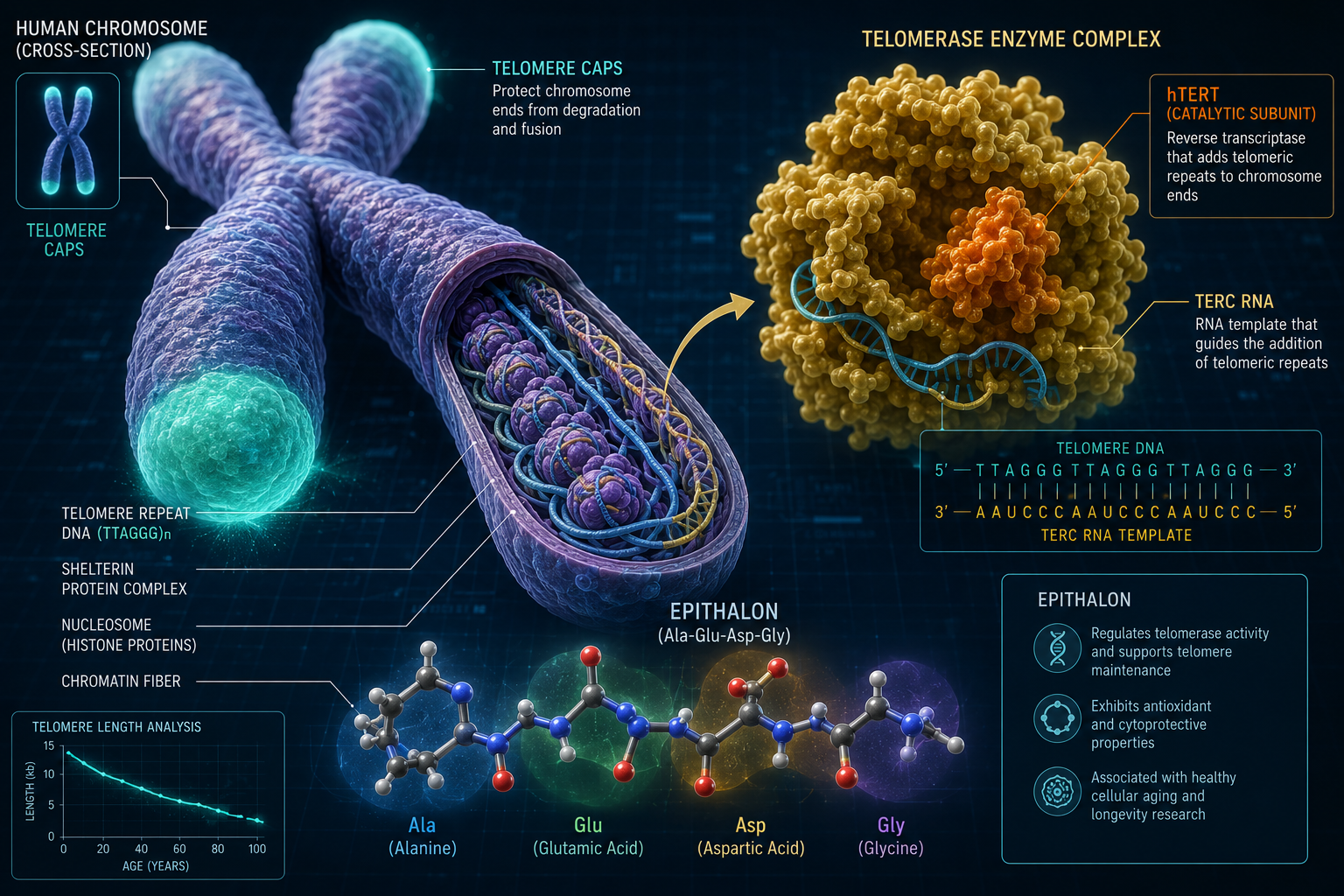
  • Epithalon is a synthetic tetrapeptide (Ala-Glu-Asp-Gly) reported to activate the hTERT catalytic subunit of telomerase, leading to measurable telomere elongation in cell models.
  • Researchers track telomere length, telomerase activity, oxidative stress markers, and gene expression — not simply lifespan — as primary endpoints.
  • Animal studies report up to a 13% increase in maximum lifespan; a multi-year human observational study found a 1.6 to 1.8-fold decrease in mortality among treated elderly patients.
  • The majority of published Epithalon research originates from a single laboratory group, making independent replication a critical unmet need.
  • Epithalon is not FDA-approved and is sold as a research chemical only; concerns about telomerase activation and oncogenesis remain an active area of scrutiny.
Key Takeaways

The Core Mechanism: What Epithalon Does at the Cellular Level

Epithalon is a synthetic tetrapeptide derived from epithalamin, a polypeptide extract of the pineal gland. Its proposed primary action is the activation of hTERT — the catalytic subunit of telomerase — in human somatic cells. In a 2003 cell study, Epithalon induced measurable telomerase activity and telomere elongation in human fetal fibroblasts, cells that normally do not express telomerase at significant levels.

What makes this relevant to longevity research is the Hayflick limit: somatic cells stop dividing once telomeres shorten below a critical threshold. If telomerase can be upregulated in a controlled, tissue-specific way, the theoretical result is extended replicative capacity.

Researchers measure several downstream variables to test this hypothesis:

  • Telomere length (via quantitative PCR or Southern blot)
  • Telomerase enzymatic activity (TRAP assay)
  • Expression levels of hTERT mRNA
  • Markers of oxidative DNA damage such as 8-OHdG
  • Melatonin and cortisol rhythms, which Epithalon may influence through pineal modulation

Beyond telomere biology, Epithalon has been studied alongside other peptides that target cellular aging pathways. Researchers interested in mitochondrial aging often compare it with compounds like SS-31, which focuses on mitochondrial membrane dynamics rather than telomere length. These represent distinct but potentially complementary mechanisms.


Measurable Outcomes in Epithalon Longevity Studies
Measurable Outcomes in Epithalon Longevity Studies

Understanding Epithalon peptide and telomere biology: what researchers actually measure in longevity studies requires separating three tiers of evidence: cell-based assays, animal models, and human observational data.

Cell and Animal Data

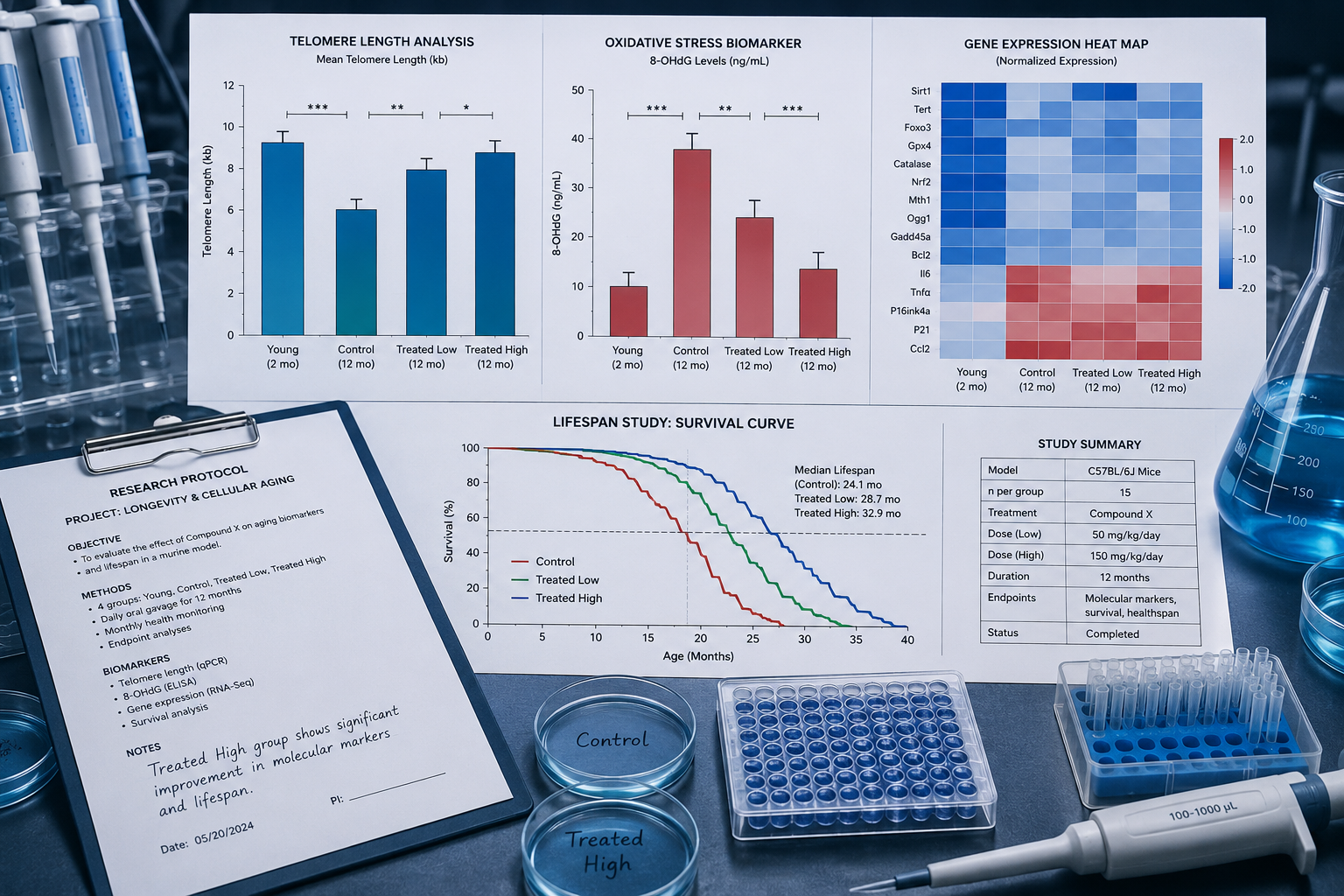
In rodent studies, Anisimov and colleagues reported that Epithalon increased maximum lifespan by approximately 13% in female SHR mice. The measured endpoints included tumor incidence, spontaneous mutation frequency, and estrous cycle regularity — not simply survival time.

Human Observational Evidence

A 6 to 8-year observational study involving 266 elderly patients found that those treated with epithalamin experienced a 1.6 to 1.8-fold decrease in mortality compared to untreated controls. Researchers tracked:

Endpoint Measurement Tool
Mortality rate Actuarial survival analysis
Immune function T-cell subset counts
Cardiovascular markers Lipid panels, blood pressure
Melatonin levels Urinary 6-sulfatoxymelatonin

These are concrete, quantifiable outcomes — not subjective wellness scores.

The Replication Problem

A critical issue in evaluating Epithalon peptide and telomere biology research is that most published data originates from one laboratory group in St. Petersburg, Russia. Independent replication using blinded protocols and diverse cell lines has not yet been published at scale. This is not a reason to dismiss the findings, but it is a reason to hold conclusions at a hypothesis level rather than treat them as established fact.

Researchers sourcing Epithalon for preclinical work can review available Epithalon research peptide options and detailed Epithalon research documentation to understand current purity standards and protocols.


Comparing Epithalon to Other Longevity-Focused Peptides
Comparing Epithalon to Other Longevity-Focused Peptides

Placing Epithalon peptide and telomere biology: what researchers actually measure in longevity studies into context means comparing it against other research-stage peptides targeting aging pathways.

Key distinctions:

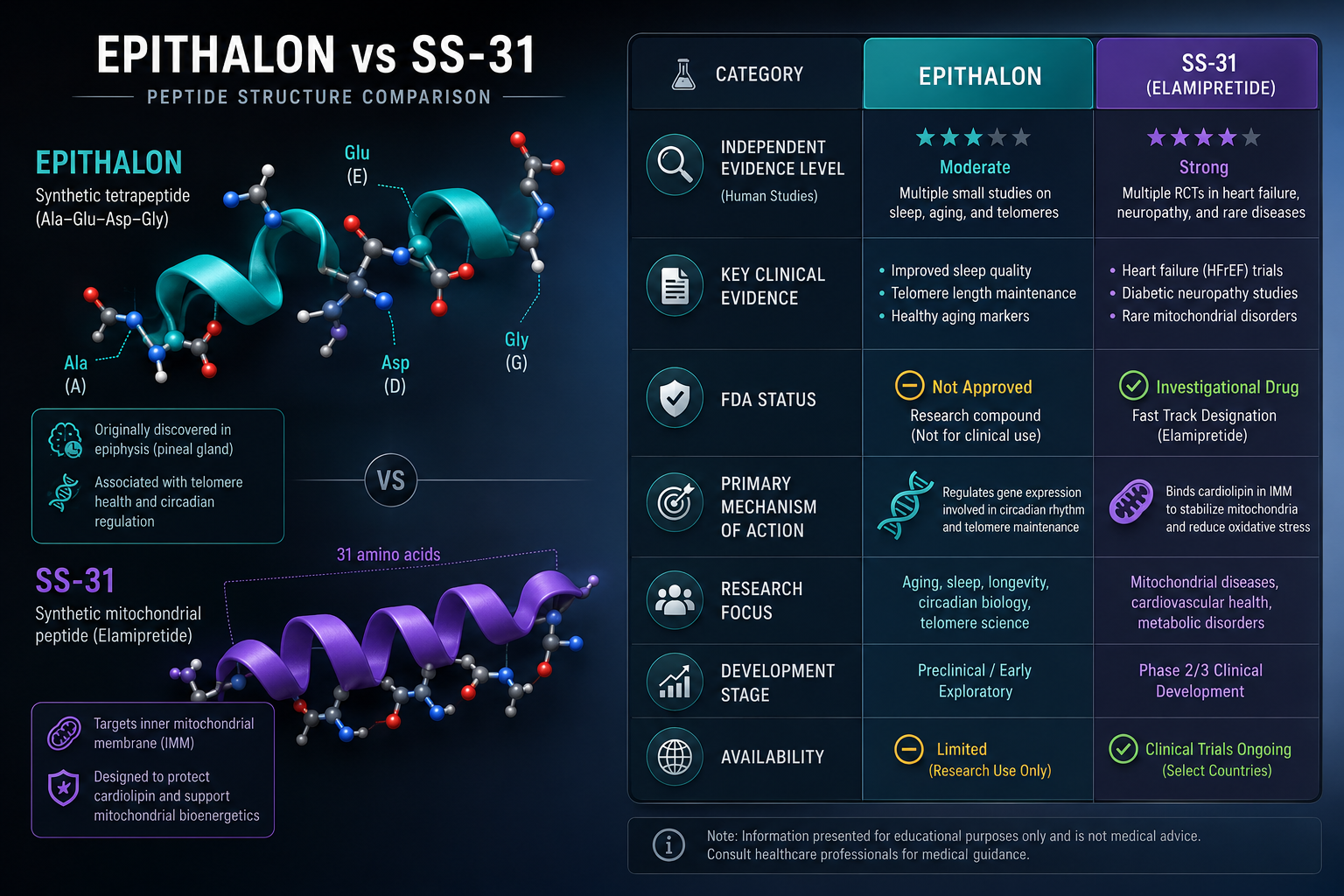
  • Epithalon targets telomerase activation and pineal/melatonin restoration
  • SS-31 (Elamipretide) targets mitochondrial inner membrane cardiolipin, with stronger independent evidence and FDA Breakthrough Therapy designation for certain conditions
  • GHK-Cu targets extracellular matrix remodeling and gene expression via copper-dependent pathways — relevant to skin matrix biology research
  • MOTS-c targets mitochondrial-derived metabolic signaling, as covered in MOTS-c metabolic flexibility research

Researchers interested in where to source both compounds can consult the SS-31 and Epithalon sourcing guide for comparative procurement information.

The Oncogenesis Concern

Telomerase is highly active in approximately 85% of human cancer cells. Any compound that broadly upregulates hTERT activity carries a theoretical oncogenic risk. This concern does not invalidate Epithalon research, but it does mean that studies must measure cell proliferation rates, tumor marker panels, and apoptosis indices alongside telomere length — and that protocols without these controls are incomplete.

Researchers studying peptide combinations in aging models may also find value in reviewing Pinealon neuroprotection research, which shares a pineal-derived origin with Epithalon and offers complementary mechanistic data.


Conclusion

The evidence base for Epithalon peptide and telomere biology is genuinely interesting and mechanistically coherent — but it is not yet definitive. Researchers who engage with this literature rigorously should:

  1. Prioritize studies that report quantified biomarkers (telomere length in base pairs, hTERT mRNA expression levels, oxidative stress indices) over those reporting only survival curves.
  2. Weight independent replications more heavily than studies from a single research group.
  3. Track oncogenesis safety markers in any protocol involving telomerase activators.
  4. Compare Epithalon's evidence tier against peptides with broader independent validation before drawing equivalence claims.

For researchers building a longevity-focused peptide library, browsing the full peptide catalog by research theme provides a structured way to identify compounds with overlapping or synergistic mechanisms. The science of telomere biology is advancing rapidly in 2026 — and the most valuable contribution any researcher can make is demanding measurable, reproducible outcomes at every step.

Tags: anti-aging science, cellular aging, epithalon peptide, htert, longevity research, oxidative stress markers, peptide research, pineal peptides, research peptides, telomerase activation, telomere biology, telomere length measurement
https://www.puretestedpeptides.com/wp-content/uploads/2026/06/Epithalon-Peptide-and-Telomere-Biology-What-Researchers-Actually-Measure-in-Longevity-Studies.png 1024 1536 https://www.puretestedpeptides.com/wp-content/uploads/2026/01/buy-peptides-online.jpg 2026-06-28 13:04:002026-06-28 13:04:00Epithalon Peptide and Telomere Biology: What Researchers Actually Measure in Longevity Studies
You might also like
5-Amino-1MQ Peptide: NNMT Inhibition, NAD+ Preservation, and Metabolic Research Applications 5-Amino-1MQ Peptide: NNMT Inhibition, NAD+ Preservation, and Metabolic Research Applications
GLP-2 and GLP-2-T Peptides: Unpacking Their Roles in Gut Microbiome Modulation and Barrier Function Research GLP-2 and GLP-2-T Peptides: Unpacking Their Roles in Gut Microbiome Modulation and Barrier Function Research
What Is Polypeptide Peptides? A Research-Friendly Guide to Terminology, Structure, and Function Polypeptide Peptides vs Small-Molecule Drugs: What Research on Amlodipine, Prednisone and Metoprolol Reveals About Mechanism Differences
Semax Peptide Nasal Spray: Optimizing Delivery and Research Outcomes for Neurocognitive Studies Semax Peptide Nasal Spray: Optimizing Delivery and Research Outcomes for Neurocognitive Studies
Best Research Peptides for Tissue Repair: Comparing BPC‑157, TB‑500, GHK‑Cu, and Glow/Klow Blends for In‑Vitro and Animal Models Best Research Peptides for Tissue Repair: Comparing BPC‑157, TB‑500, GHK‑Cu, and Glow/Klow Blends for In‑Vitro and Animal Models
PT-141 Peptide: Melanocortin Receptor Agonism and Its Role in Sexual Function Research PT-141 Peptide: Melanocortin Receptor Agonism and Its Role in Sexual Function Research
Polypeptide Peptides in Modern Lab Research: From Structure to Synthesis Workflows Polypeptide Peptides in Modern Lab Research: From Structure to Synthesis Workflows
What Is Polypeptide Peptides? A Research-Friendly Guide to Terminology, Structure, and Function What Is Polypeptide Peptides? A Research-Friendly Guide to Terminology, Structure, and Function
0 replies

Leave a Reply

Want to join the discussion?
Feel free to contribute!

Leave a Reply Cancel reply

Your email address will not be published. Required fields are marked *

×

Helpful Links

  • My account
  • Cart
  • Checkout
  • Refund and Returns Policy
  • Privacy Policy
  • SMS Privacy Policy
  • Login
  • My Account
  • Logout

USA Made Lab Tested Peptides

All products are sold for research, laboratory, or analytical purposes only, and are not for human consumption


Pure Tested Peptides is a chemical supplier. Pure Tested Peptides is not a compounding / chemical compounding facility as defined under 503A of the Federal Food, Drug, and Cosmetic act. Pure Tested Peptides is not an outsourcing facility as defined under 503B of the Federal Food, Drug, and Cosmetic act.

The statements made within this website have not been evaluated by the US Food and Drug Administration. The products we offer are not intended to diagnose, treat, cure or prevent any disease.

Human/Animal Consumption Prohibited. Laboratory/In-Vitro Experimental Use Only

Link to: PT-141 and Melanocortin Receptor Research: What Makes It Different From PDE5 Inhibitor Models? Link to: PT-141 and Melanocortin Receptor Research: What Makes It Different From PDE5 Inhibitor Models? PT-141 and Melanocortin Receptor Research: What Makes It Different From PDE5...PT-141 and Melanocortin Receptor Research: What Makes It Different From PDE5 Inhibitor Models? Link to: CJC-1295 Without DAC: Why Half-Life Matters in Growth Hormone Research Link to: CJC-1295 Without DAC: Why Half-Life Matters in Growth Hormone Research CJC-1295 Without DAC: Why Half-Life Matters in Growth Hormone ResearchCJC-1295 Without DAC: Why Half-Life Matters in Growth Hormone Research
Scroll to top Scroll to top Scroll to top