Call or Text 727-513-9780
  • Shopping Cart Shopping Cart
    0Shopping Cart
Pure Tested Peptides | America's most trusted Peptides for sale online
  • Peptides for sale
    • Oral Peptides for sale
      • Peptide Capsules for sale
      • BPC 157 Capsules 1000mcg
      • SLU-PP-332 Capsules | 1000 mcg
      • 5-Amino-1MQ 50mg Capsules
      • Tesofensine 500mcg
    • All Peptides for sale
    • Peptide Sprays
      • BPC 157 Nasal Spray Kit
      • BPC-157 TB500 Nasal Spray Kit
      • Semax Nasal Spray 10mg
      • Selank – Nasal Spray Kit – 10mg
      • Epithalon 50MG Nasal Spray Kit
      • Ipamorelin 10mg Nasal Spray
      • Klow Nasal Spray (BPC-157 + TB-500 + GHK-Cu + KPV) | 80mg
      • Hulk Nasal Spray Tesa / Ipa Blend 6/3 MG
      • Klow Nasal Spray
      • NAD + 500 mg Nasal Spray
      • PT-141 Nasal Spray Kit
    • GHRH Peptides
      • Ipa Peptides
      • CJC-1295 Peptides
        • CJC-1295 with DAC 5 mg
        • CJC-1295 without DAC 5 mg
        • CJC-1295 Ipa 10mg
      • Tesa Peptides
        • Tesa Peptide
        • Tesa 20 mg
    • GHK-Cu Peptides
      • All GHK-Cu Peptides
      • GHK-Cu 100mg
      • KLOW Peptide Blend – Buy KLOW blend online
    • BPC Peptides
      • All BPC Peptides
      • BPC-157
      • BPC-157 TB-500
      • BPC 157 capsules 1000mcg
    • SLU-PP-332 Peptides
      • All SLU-PP-332 Peptides
      • SLU-PP-332 5mg
    • GLP3 Peptides
      • GLP3-R
      • GLP3-R CAG 10mg
      • GLP3-R 20mg
    • PT-141 Peptides
      • PT-141 Peptides for sale
      • PT-141 10mg
      • PT-141 Nasal Spray
    • CAG Peptides
      • Lipo-C Peptide Blend
      • CAG 5mg
      • CAG 10mg
    • MOTS-C Peptides
      • MOTS-C Peptides for sale
      • MOTS-c peptide
      • MOTS-c 10mg *6 pack*
    • 5 Amino 1MQ Peptides
      • 5 Amino 1MQ Peptides for sale
      • 5-Amino-1MQ 50mg Capsules
      • 5-Amino-1MQ 5mg
    • Epithalon Peptides
      • Epithalon Peptides for sale
      • Epithalon 10mg
      • Epithalon 50mg
  • Shop
    • GLPs
      • 5-Amino-1MQ 50mg Capsules
      • 5-Amino-1MQ 5mg
      • GLP3-Reta
      • L-Carnitine 500mg/ml
      • Tesofensine 500mcg
      • SLU-PP-332 5mg
      • MOTS-c 10mg *6 pack*
    • Epithalon & BPC Peptides
      • Epithalon 10mg
      • Epithalon 50mg
      • BPC-157
      • BPC 157 capsules 1000mcg
      • BPC-157 TB-500
      • BPC-157 TB500 Nasal Spray Kit
      • BPC 157 Nasal Spray Kit
    • BPC TB-500 & NAD+ Peptides
      • NAD+ 500 mg
      • KLOW Peptide Blend – Buy KLOW blend online
      • GLOW Peptide Blend
      • TB 500 5mg
      • BPC 157 capsules 1000mcg – Supplement
      • BPC 157 Nasal Spray Kit
      • BPC-157
      • BPC-157 TB500 Nasal Spray Kit
      • BPC-157 TB-500
      • BPC 157 capsules 1000mcg
    • LL-37 Peptide
      • LL-37 10 mg
    • MOTS-C & Selank
      • MOTS-c peptide
      • Selank 10mg
    • GHK Peptides
      • GHK-Cu 100mg
      • GLOW Peptide Blend
      • KLOW Peptide Blend – Buy KLOW blend online
  • COAs
  • Wholesale
    • Wholesale Peptides for sale
  • PTP FAQ
  • Affiliates
    • Affiliate Program
    • Affiliate Signup
  • Contact
    • Contact Customer Service
    • Text Customer Support
  • About US
  • Shop all peptides
  • Login / Register Login / Register Page Link Login / Register Page Link
  • Click to open the search input field Click to open the search input field Search
  • Menu Menu

Tag Archive for: gip receptor

Retatrutide vs GLP-1 and GLP-2 Pathways: How Triple Agonism Changes the Research Conversation

Retatrutide vs GLP-1 and GLP-2 Pathways: How Triple Agonism Changes the Research Conversation

June 6, 2026/0 Comments/in Uncategorized/by

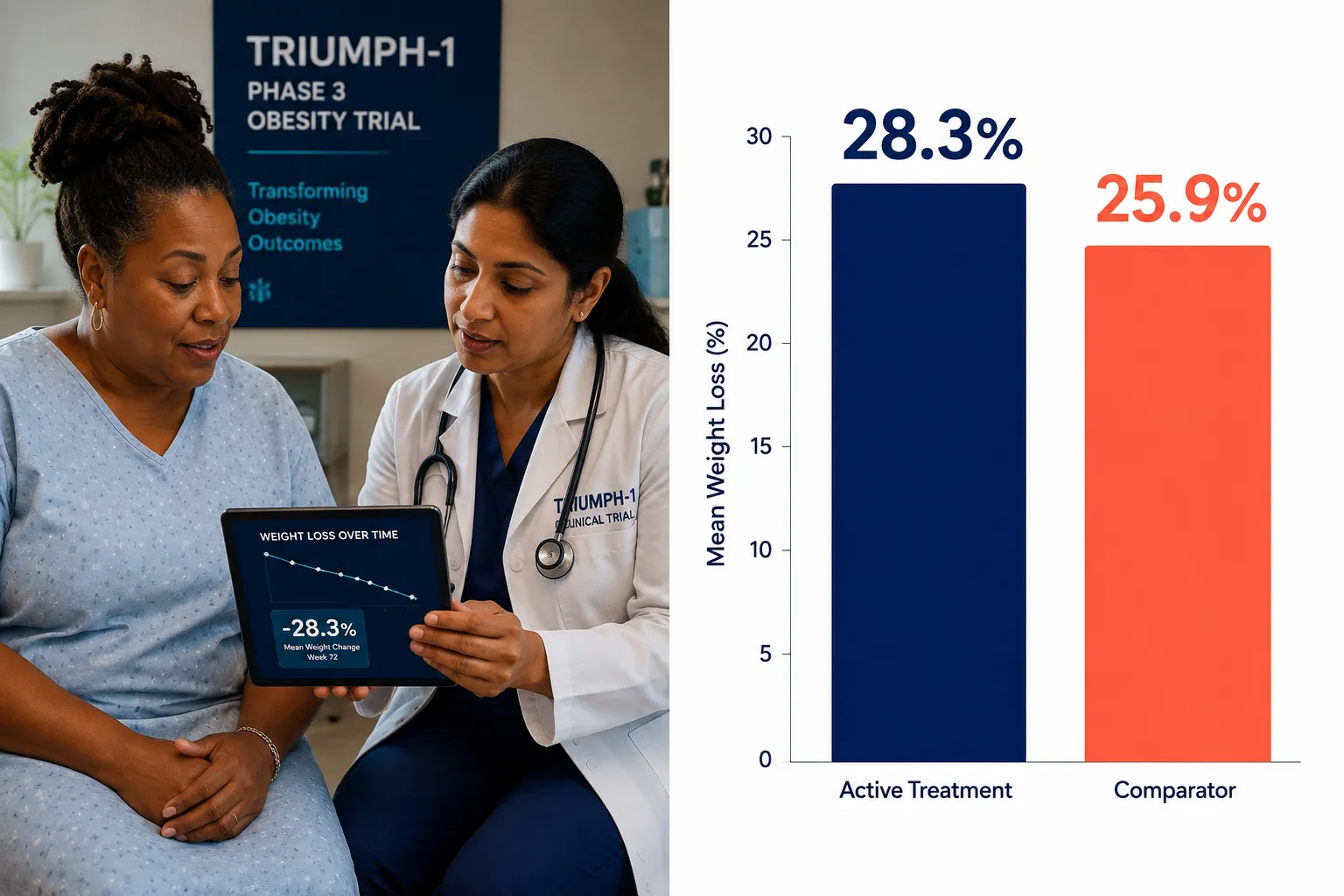
A single peptide producing nearly 29% body weight reduction in a Phase 3 trial is not an incremental advance — it is a structural shift in how researchers think about metabolic intervention. That result, recorded in the TRIUMPH-4 trial with retatrutide, has forced a direct comparison between the emerging triple agonist approach and the narrower incretin pathways that have defined obesity pharmacology for the past decade. The discussion around Retatrutide vs GLP-1 and GLP-2 Pathways: How Triple Agonism Changes the Research Conversation is no longer speculative; it is grounded in late-stage clinical data that demands a closer look at mechanism.

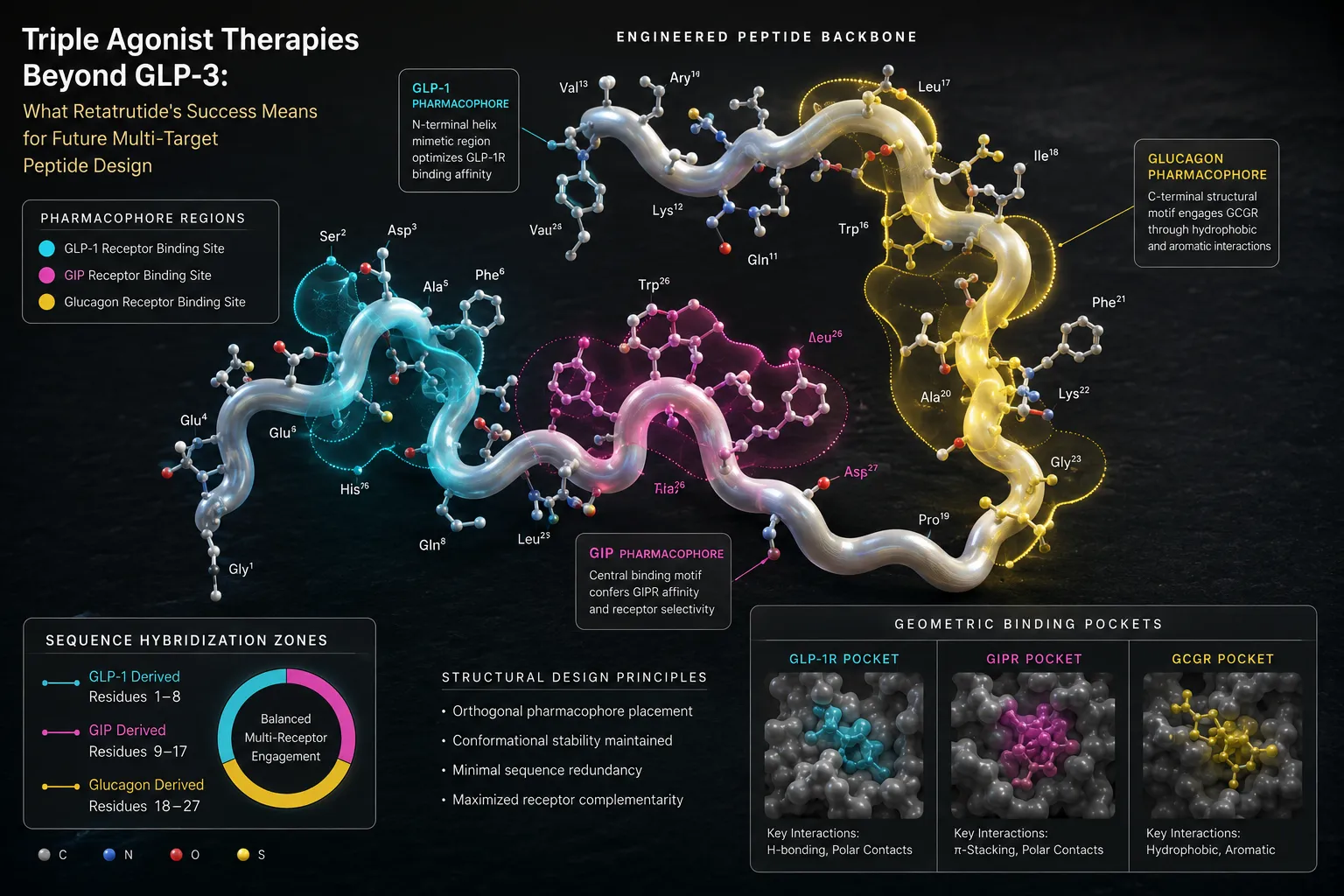
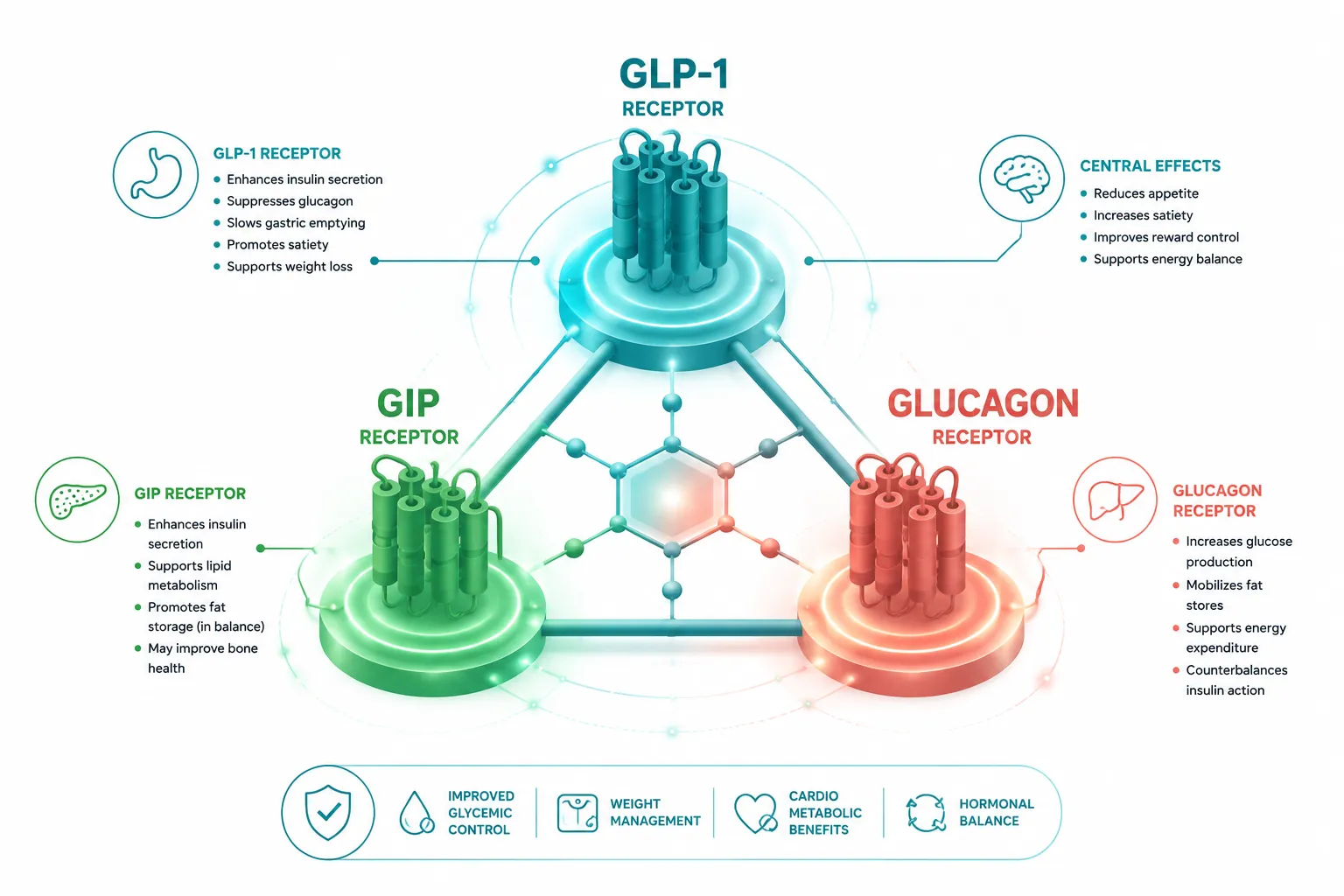
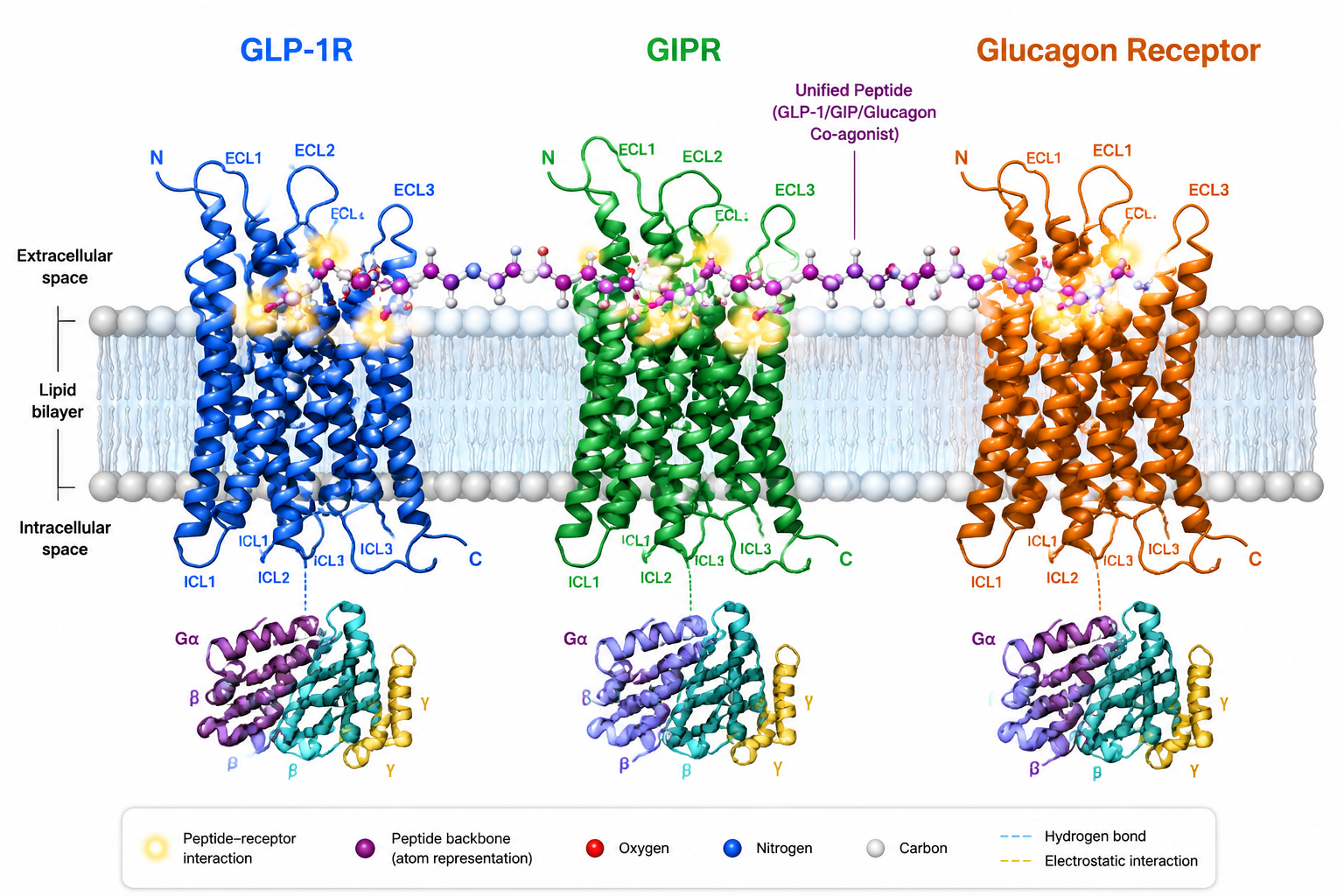
() scientific infographic showing a side-by-side molecular comparison of three peptide receptor pathways: GIP receptor node

Key Takeaways

  • Retatrutide activates three receptors — GIP, GLP-1, and glucagon — making it mechanistically distinct from both semaglutide (single agonist) and tirzepatide (dual agonist).
  • Its receptor potency is GIP-primary, with EC50 values of 0.0643 nM at GIP, 0.775 nM at GLP-1, and 5.79 nM at glucagon.
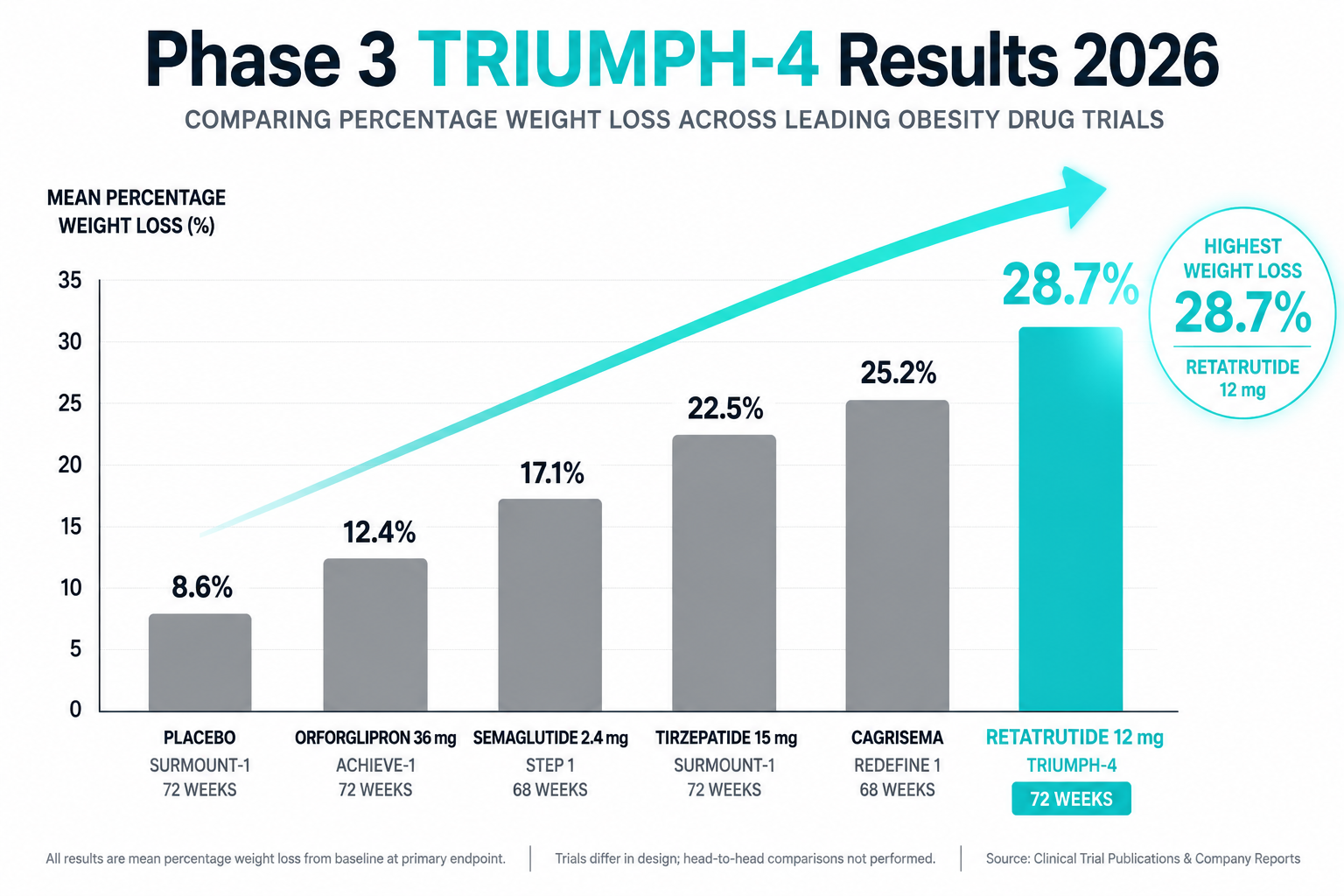
  • TRIUMPH-4 Phase 3 data showed an average weight loss of 28.7% over 68 weeks, roughly 71 pounds from a baseline of 249 pounds.
  • Glucagon receptor activity is considered a key driver of enhanced energy expenditure, separating retatrutide from pure incretin strategies.
  • As of 2026, retatrutide is not FDA-approved, with Eli Lilly targeting a regulatory submission by late 2026.

What Separates Triple Agonism from Incretin-Only Approaches

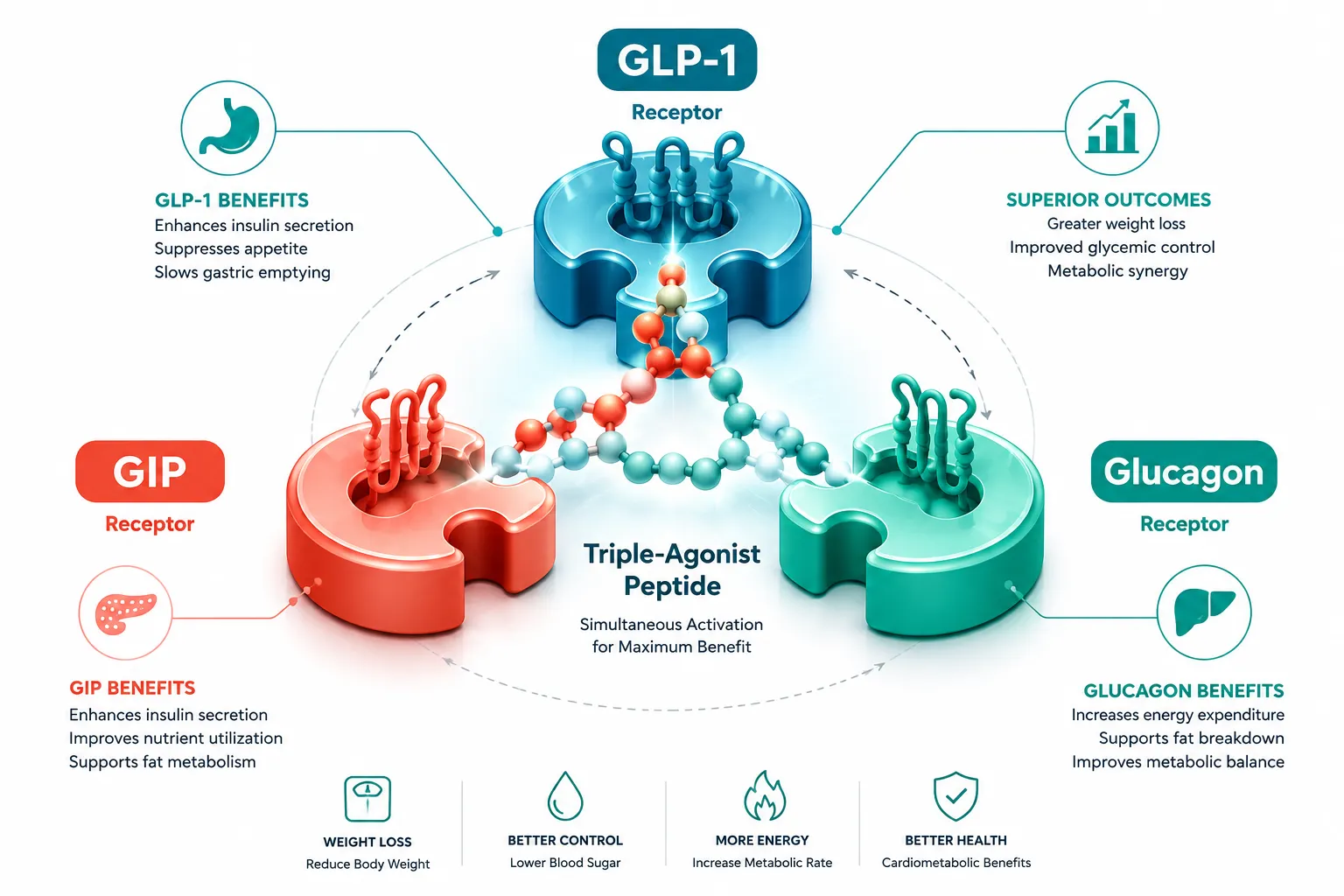
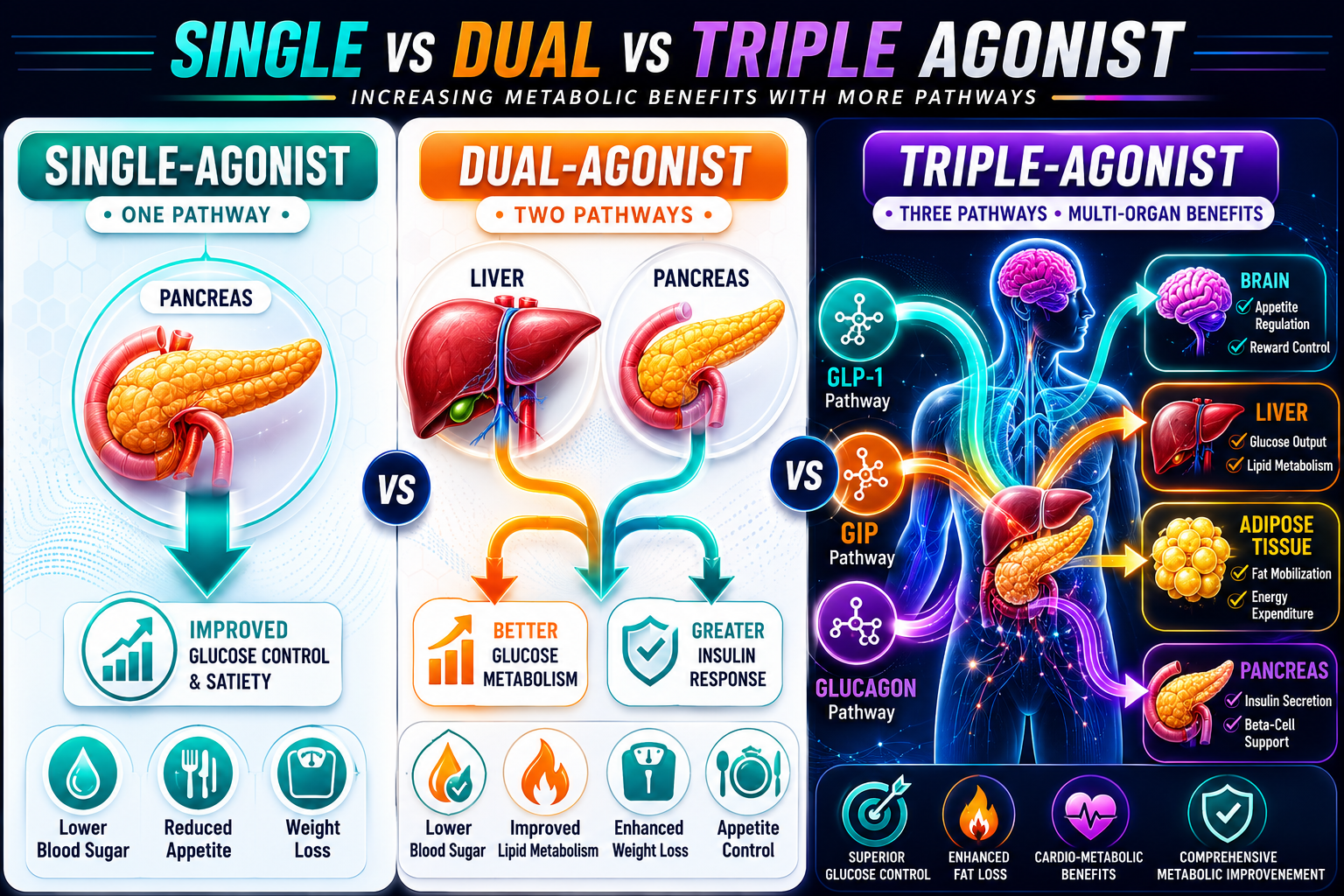
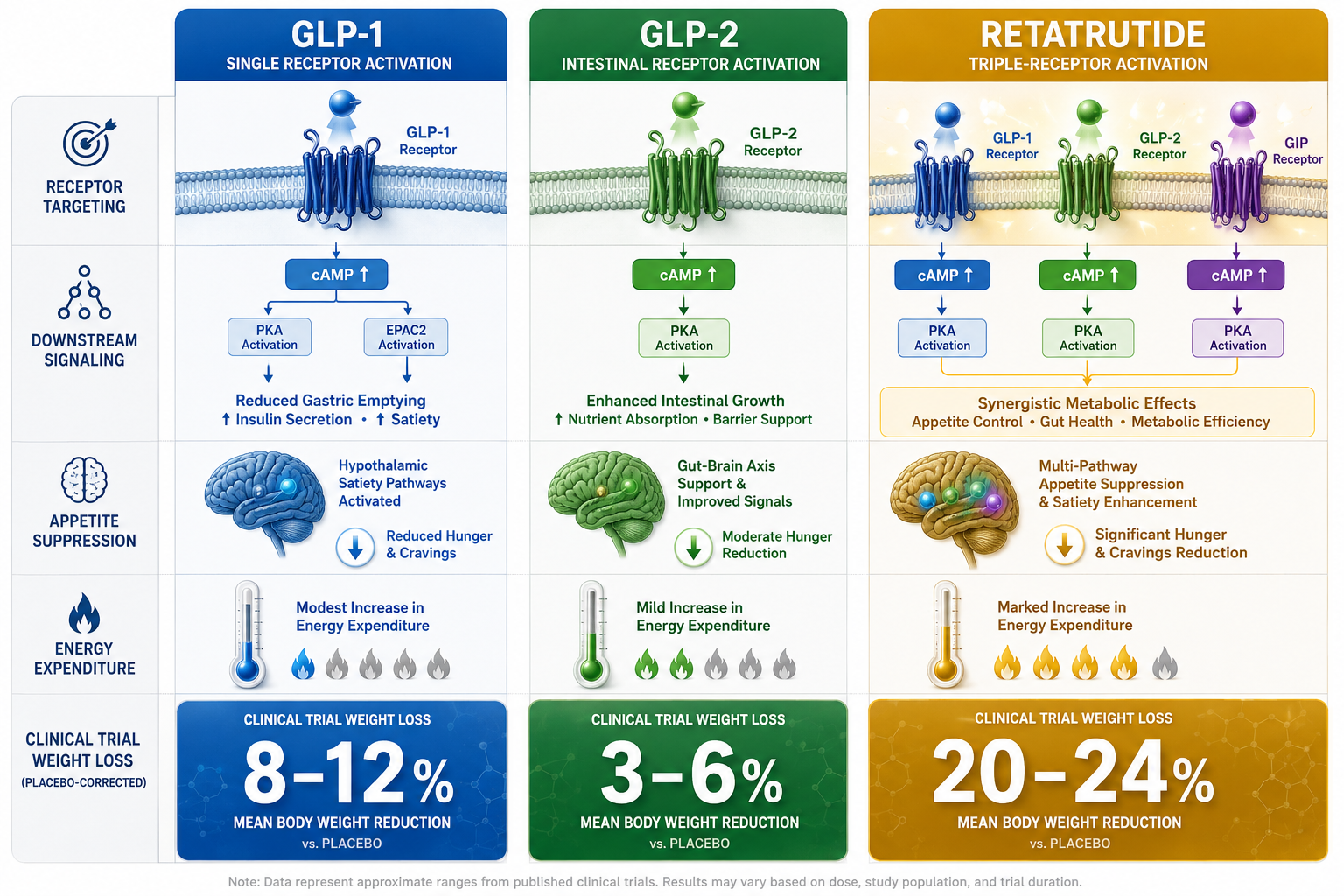
The GLP-1 receptor pathway has been the dominant target in metabolic research since the early success of semaglutide. GLP-1 agonism reduces appetite, slows gastric emptying, and improves insulin secretion. Adding GIP receptor activation — as tirzepatide does — brought a meaningful improvement in both glucose control and weight outcomes. However, both approaches remain within the incretin framework.

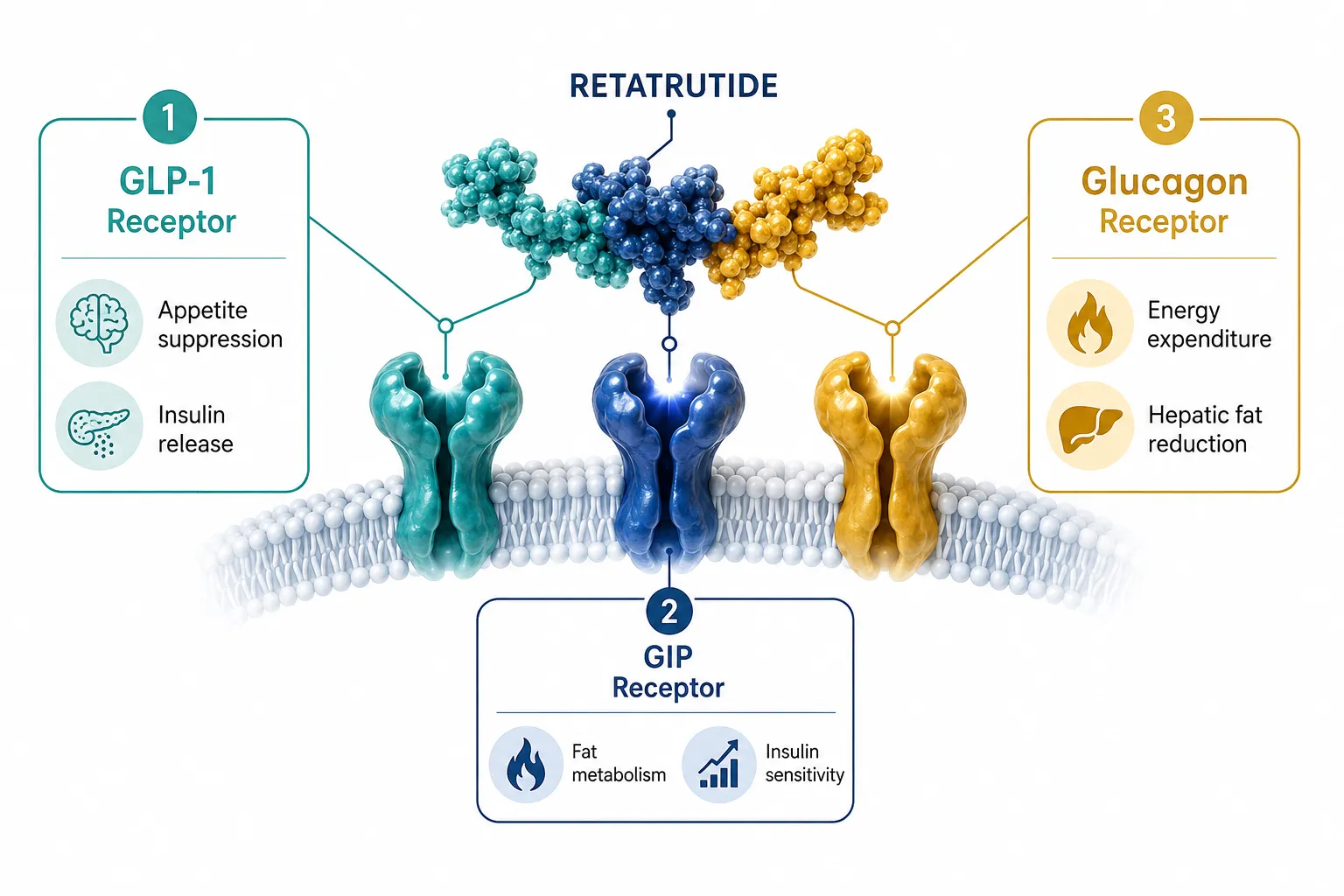
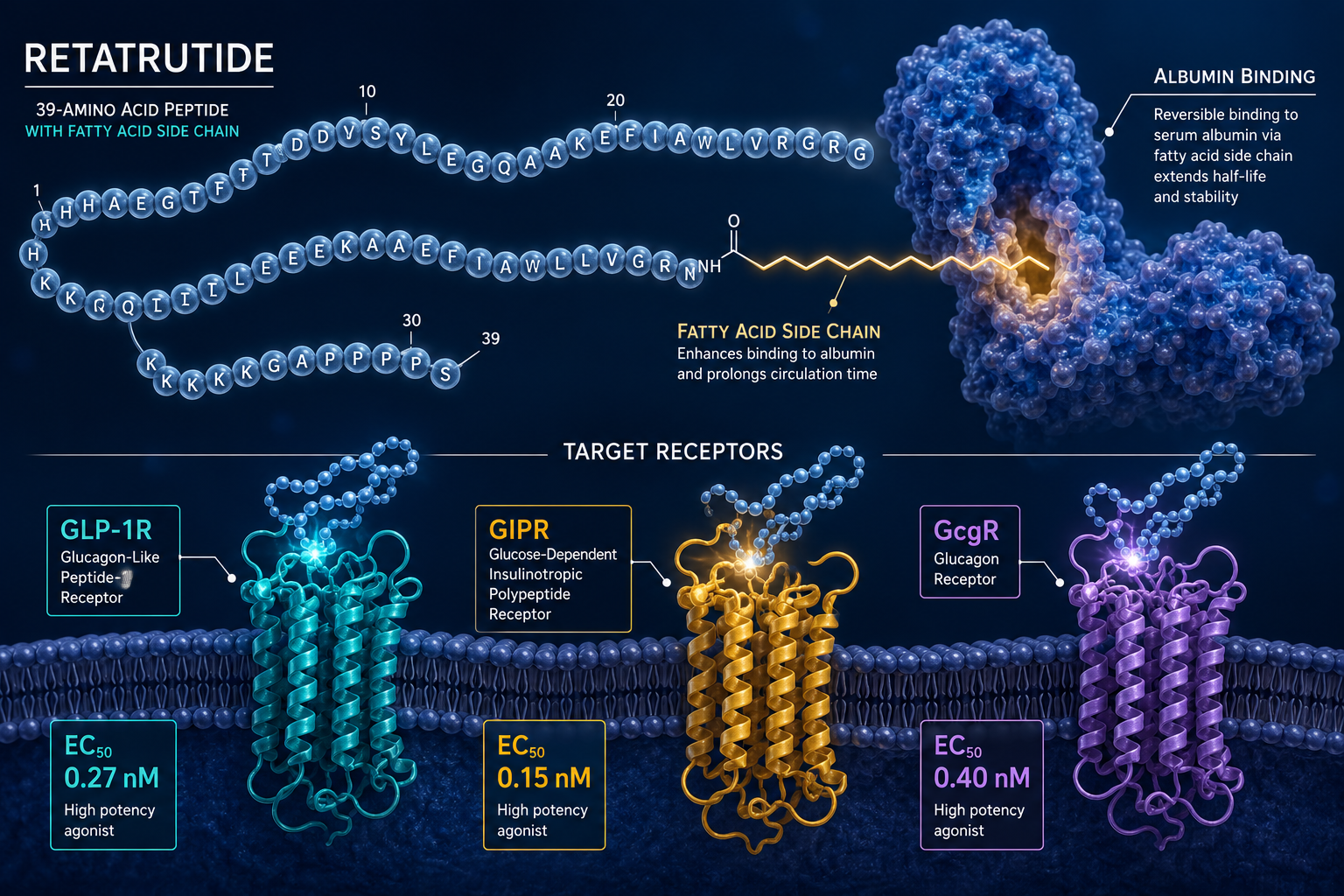
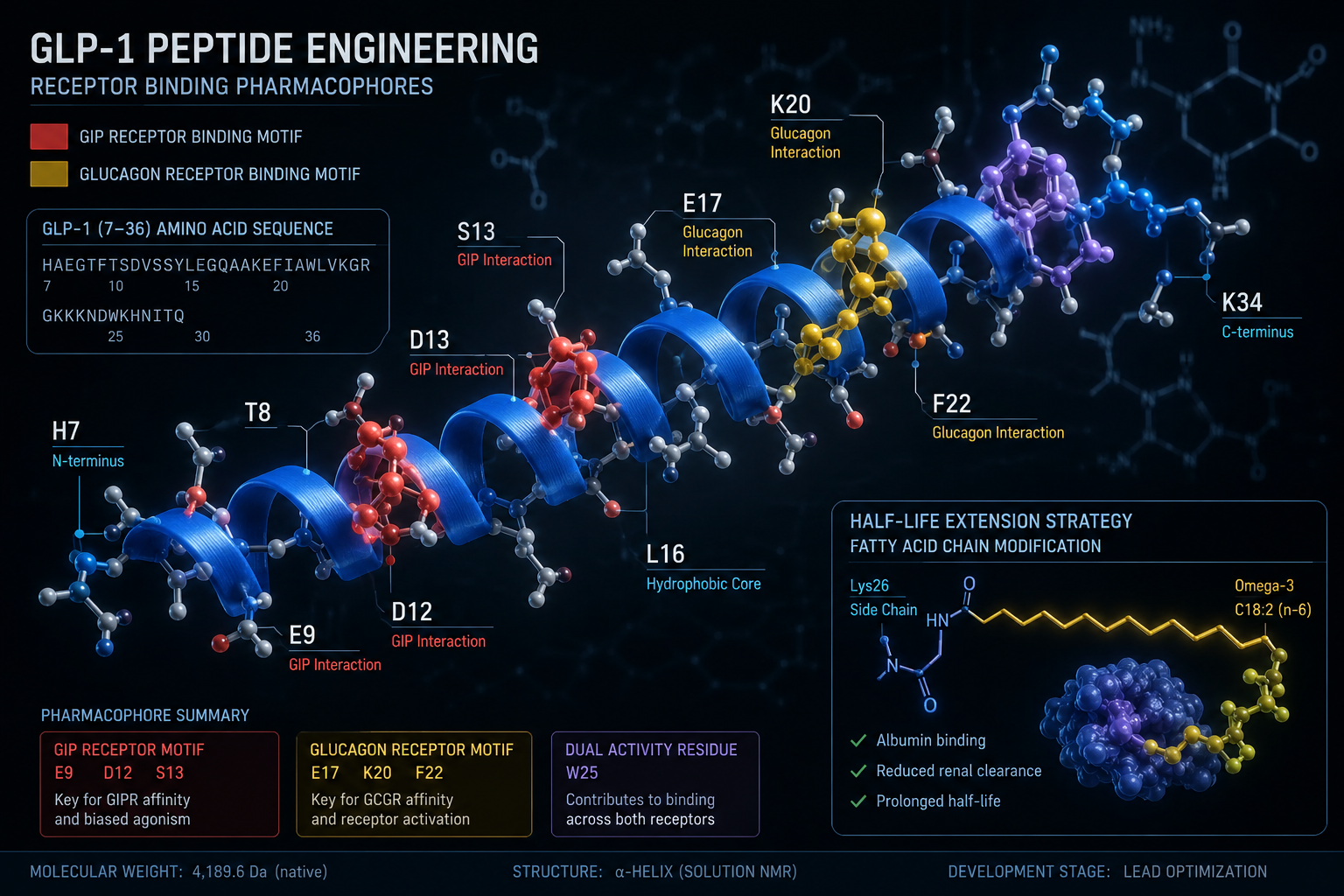
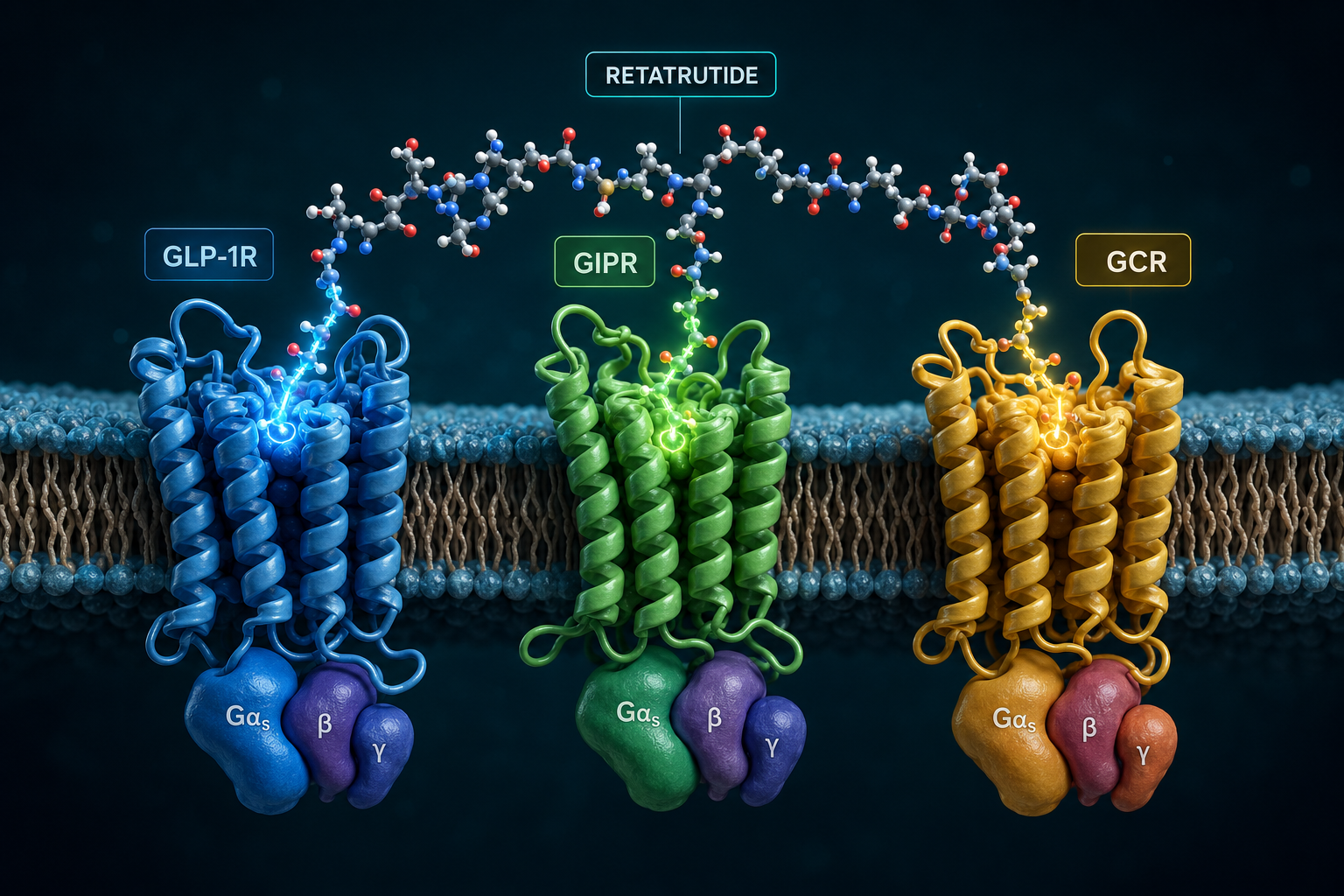
Retatrutide steps outside that framework. As a 39-amino acid peptide, it simultaneously activates the GIP, GLP-1, and glucagon receptors. The glucagon component is what most fundamentally changes the research conversation. Glucagon receptor activation increases energy expenditure and promotes fat breakdown in the liver, effects that incretin-only molecules cannot replicate. Researchers exploring GLP-3 and incretin research themes have noted that this third receptor engagement may explain why retatrutide's weight loss outcomes exceed what dual agonists have produced.

"The inclusion of glucagon receptor activity may represent the ceiling-raising mechanism that separates retatrutide from every prior pharmacological approach to obesity."

The potency hierarchy matters here. Retatrutide's EC50 values place GIP activation as the primary driver (0.0643 nM), followed by GLP-1 (0.775 nM), then glucagon (5.79 nM). This graduated profile is intentional — high glucagon activity without GLP-1 co-activation would raise blood sugar, so the balance is a deliberate design feature, not a side effect.

For researchers comparing generational differences in GLP-1 receptor approaches, this receptor hierarchy represents a fundamentally new design philosophy rather than a refinement of existing ones.


Retatrutide vs GLP-1 and GLP-2 Pathways: What the Phase 3 Data Reveals

Retatrutide vs GLP-1 and GLP-2 Pathways: What the Phase 3 Data Reveals

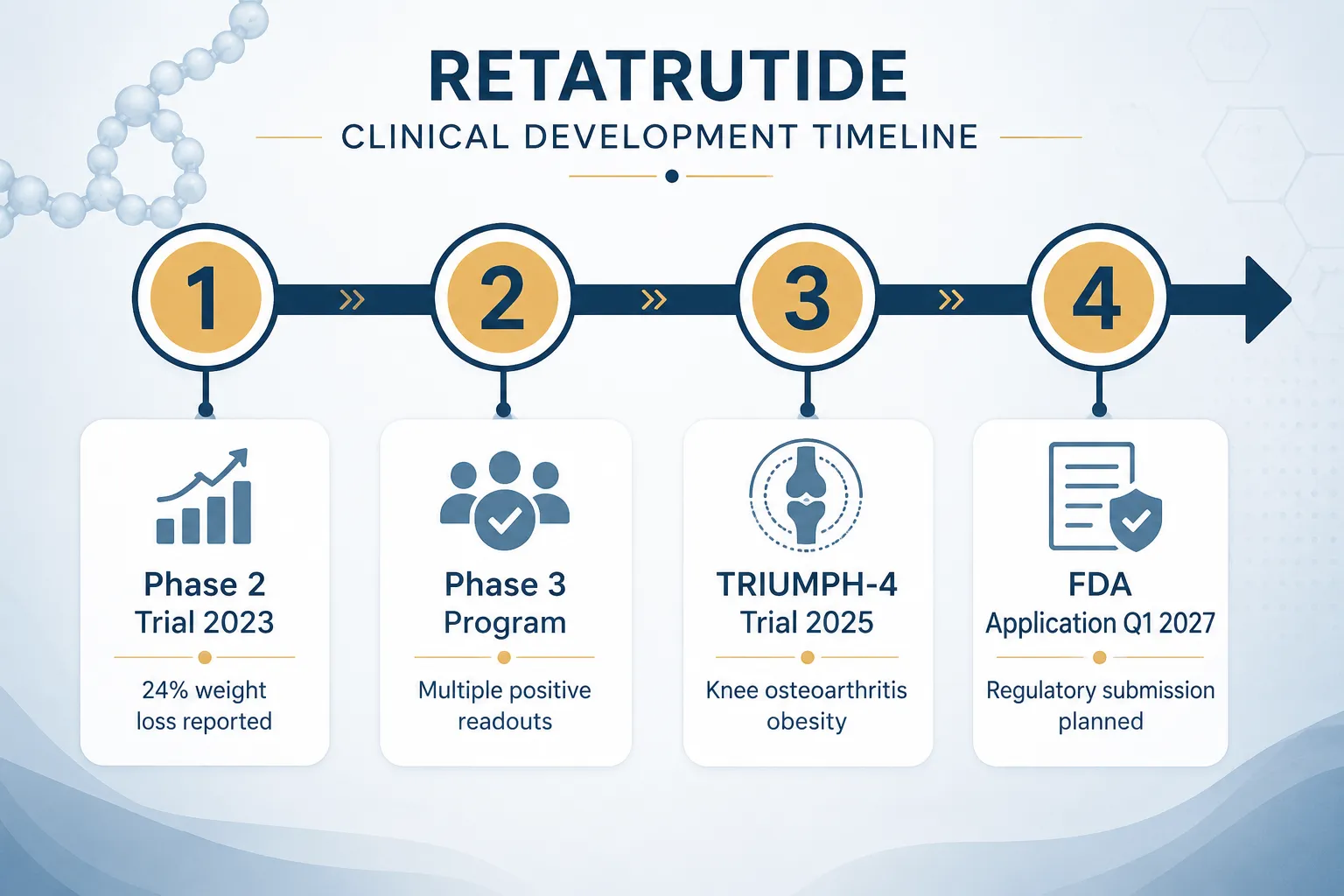
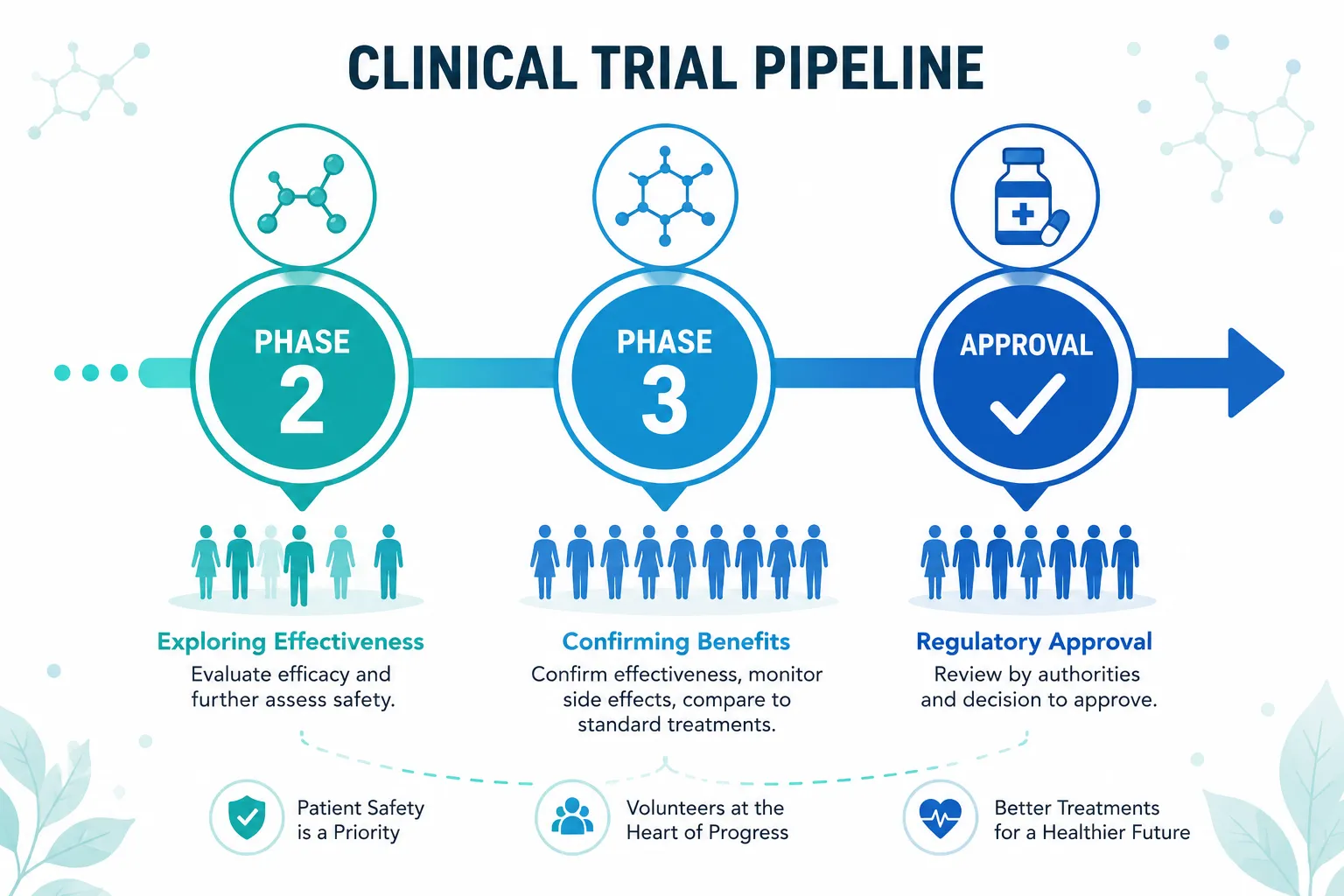
The TRIUMPH-4 trial enrolled participants with obesity and knee osteoarthritis. Over 68 weeks, the average participant lost 28.7% of body weight — approximately 71 pounds from a starting weight of 249 pounds. No approved pharmacological therapy has produced comparable results in a controlled Phase 3 setting.

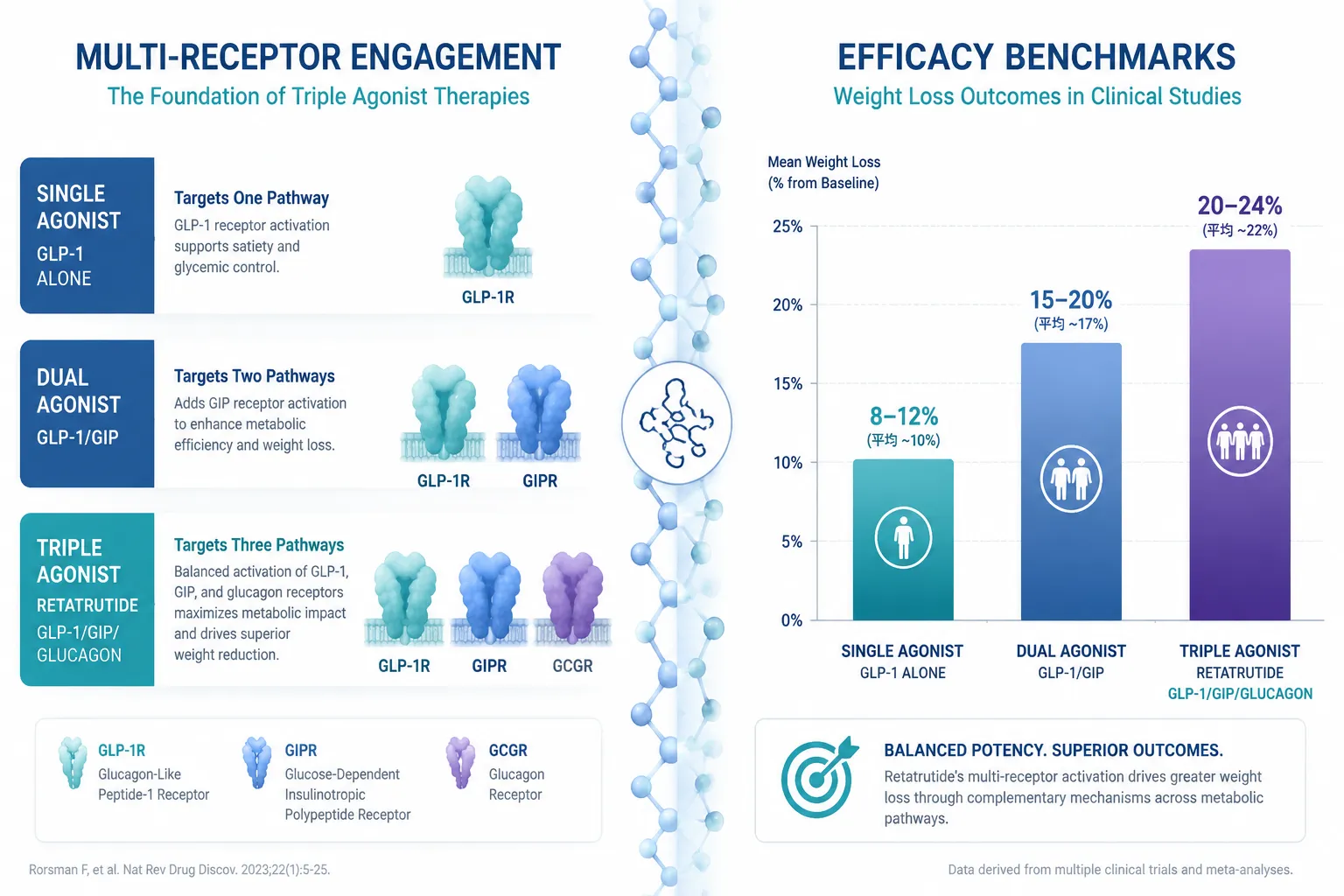
Comparison of key obesity drug mechanisms:

Drug Receptors Targeted Avg. Weight Loss (Phase 3)
Semaglutide GLP-1 ~15%
Tirzepatide GIP + GLP-1 ~20-22%
Retatrutide GIP + GLP-1 + Glucagon ~28.7%

The TRIUMPH program spans multiple indications, including type 2 diabetes and metabolic liver disease, reflecting the breadth of conditions that researchers believe triple agonism may address. Eli Lilly is targeting an FDA submission by late 2026, though as of 2026 the compound remains investigational.

Side effects reported in trials include nausea, vomiting, constipation, and diarrhea — a profile consistent with other GLP-class peptides. Researchers sourcing compounds for preclinical models can review the retatrutide research compound page for current availability context.

Those tracking the broader landscape of what is new in peptide research will recognize that retatrutide's data has elevated expectations across the entire metabolic peptide category.


How Triple Agonism Reshapes Metabolic Research Models

The Retatrutide vs GLP-1 and GLP-2 Pathways conversation extends beyond weight loss percentages. It raises questions about how researchers should model metabolic intervention going forward. Single-pathway models are increasingly insufficient for studying complex conditions like obesity-related liver disease or insulin resistance, where energy expenditure, appetite, and hepatic fat metabolism must be addressed simultaneously.

How Triple Agonism Reshapes Metabolic Research Models

Researchers working with metabolic modulation research lines are already integrating multi-receptor thinking into their experimental designs. The question is no longer whether multi-agonism outperforms single-agonism — the data answers that — but which receptor combinations produce the most favorable benefit-to-risk profiles for specific conditions.

Complementary research areas are also gaining attention. Compounds like MOTS-c, studied for metabolic flexibility, and SLU-PP-332, explored for metabolic modulation, represent parallel lines of inquiry that may eventually intersect with incretin-based approaches in combination research models.

The GLP-1 receptor remains central, but retatrutide's data suggests that anchoring research exclusively to that pathway may limit what is discoverable. For researchers sourcing GLP-1 class compounds, the GLP-1 peptide research and sourcing notes page provides useful context on how this category has evolved.


Conclusion

The evidence from retatrutide's Phase 3 program makes the case clearly: triple agonism is not a variation on existing GLP-1 therapy — it is a different category of metabolic intervention. The glucagon receptor component adds an energy expenditure dimension that incretin-only approaches cannot replicate, and the clinical outcomes reflect that mechanistic difference.

For researchers, the actionable steps are straightforward. First, review the TRIUMPH trial data to understand how the three-receptor model performs across different patient populations. Second, evaluate whether current research models account for glucagon receptor activity alongside incretin pathways. Third, monitor the regulatory timeline, as Eli Lilly's planned FDA submission by late 2026 will bring additional data into the public domain. The research conversation has shifted — and the mechanism is the reason why.

https://www.puretestedpeptides.com/wp-content/uploads/2026/06/Retatrutide-vs-GLP-1-and-GLP-2-Pathways-How-Triple-Agonism-Changes-the-Research-Conversation.png 1024 1536 https://www.puretestedpeptides.com/wp-content/uploads/2026/01/buy-peptides-online.jpg 2026-06-06 13:04:302026-06-06 13:04:30Retatrutide vs GLP-1 and GLP-2 Pathways: How Triple Agonism Changes the Research Conversation
How Retatrutide Compares With GLP-1 and GLP-2 Research Peptides in Obesity Models

How Retatrutide Compares With GLP-1 and GLP-2 Research Peptides in Obesity Models

June 4, 2026/0 Comments/in Uncategorized/by

Triple agonism has quietly shifted the center of gravity in metabolic peptide research. While single-receptor approaches dominated the conversation for years, a 39-amino acid compound called retatrutide now sits at the intersection of three distinct signaling pathways — and the weight-loss data from preclinical and clinical obesity models is unlike anything seen before in this class.

Understanding how retatrutide compares with GLP-1 and GLP-2 research peptides in obesity models requires a clear look at receptor biology, efficacy endpoints, and the structural differences that separate these compounds at the molecular level.

Key Takeaways

  • Retatrutide is a triple agonist activating GLP-1, GIP, and glucagon receptors simultaneously, producing greater metabolic effects than single or dual agonists.
  • Phase 3 TRIUMPH-4 data showed 28.7% average weight loss at 68 weeks — the highest recorded in any obesity trial to date.
  • GLP-2 peptides act primarily on intestinal repair and growth, not on adipose tissue or appetite suppression, making them functionally distinct from GLP-1 class agents.
  • Retatrutide's glucagon receptor component raises resting metabolic rate and promotes lipolysis, a mechanism absent in GLP-1-only agents.
  • As of 2026, retatrutide remains in Phase 3 trials, with a New Drug Application filing anticipated in late 2026 or early 2027.

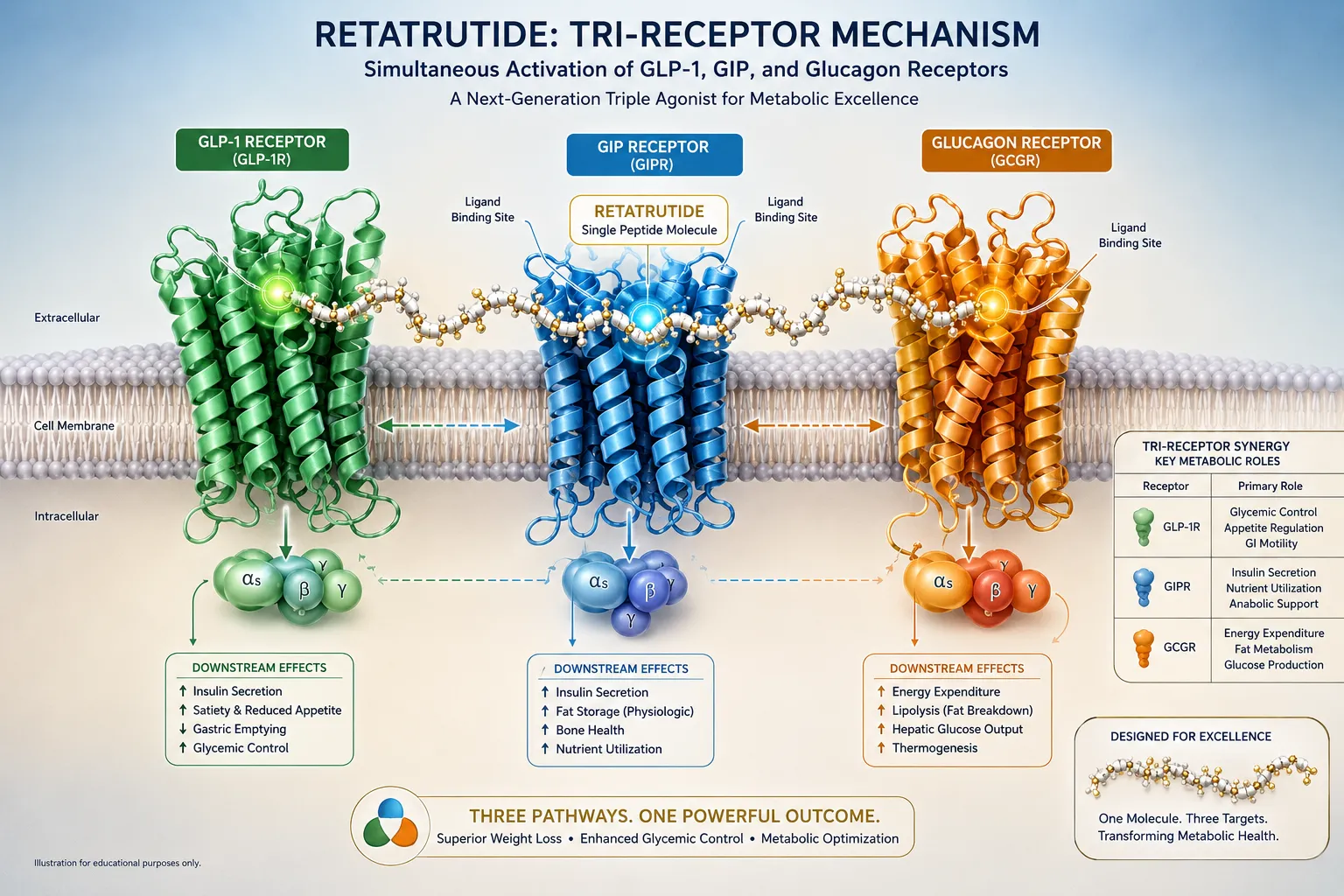
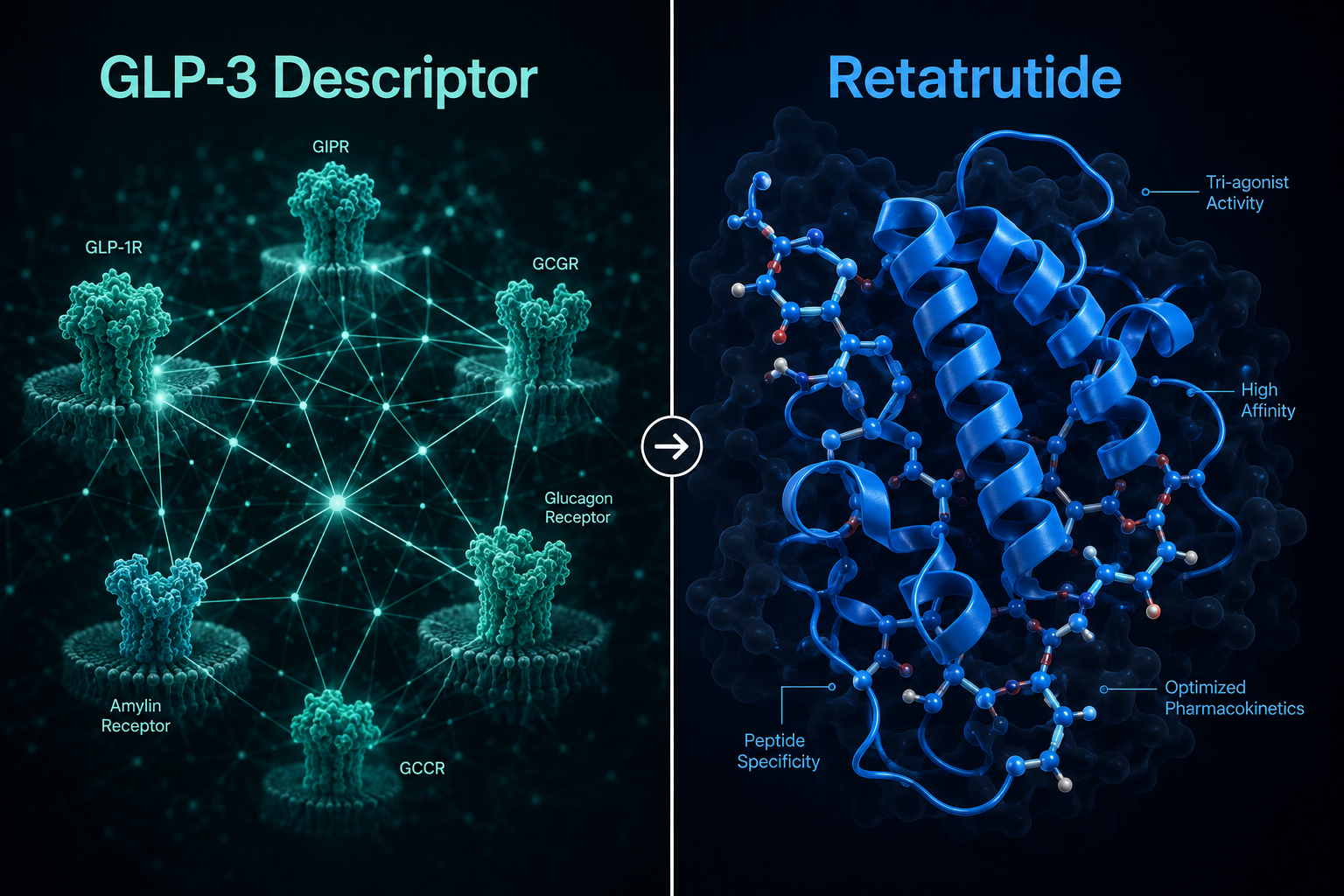
Retatrutide triple receptor agonist mechanism diagram

The Receptor Architecture Behind Triple Agonism

How retatrutide compares with GLP-1 and GLP-2 research peptides in obesity models starts with a fundamental structural distinction. Retatrutide is built on a GIP backbone, modified to resist DPP-4 enzymatic degradation, and conjugated to a C20 fatty diacid moiety that extends its half-life. This architecture allows it to engage three receptors simultaneously:

Receptor Primary Effect
GLP-1R Insulin secretion, appetite suppression
GIPR Enhanced insulin response, fat metabolism
GCG-R Increased resting metabolic rate, lipolysis

GLP-1 agonists like semaglutide activate only the GLP-1 receptor. This reduces appetite and improves glycemic control but leaves energy expenditure largely unchanged. Dual agonists such as tirzepatide add GIP receptor activation, improving insulin sensitivity and fat metabolism. Retatrutide layers glucagon receptor agonism on top of both, actively raising the rate at which the body burns stored fat.

GLP-2 peptides occupy a completely different functional space. Their primary role is intestinal epithelial growth, mucosal repair, and nutrient absorption regulation. In obesity models, GLP-2 analogs show minimal direct impact on body weight or adipose tissue reduction. Researchers studying gut-barrier integrity or inflammatory bowel conditions find GLP-2 highly relevant, but it does not compete with GLP-1 class agents on weight-loss endpoints.

For those exploring the broader landscape of incretin-related research, the GLP-3 and retatrutide incretin research themes page provides useful context on how these receptor classes are being studied in parallel.


Weight loss comparison bar chart: Retatrutide vs GLP-1 agents

Efficacy Data Across Obesity Models: Where the Numbers Diverge

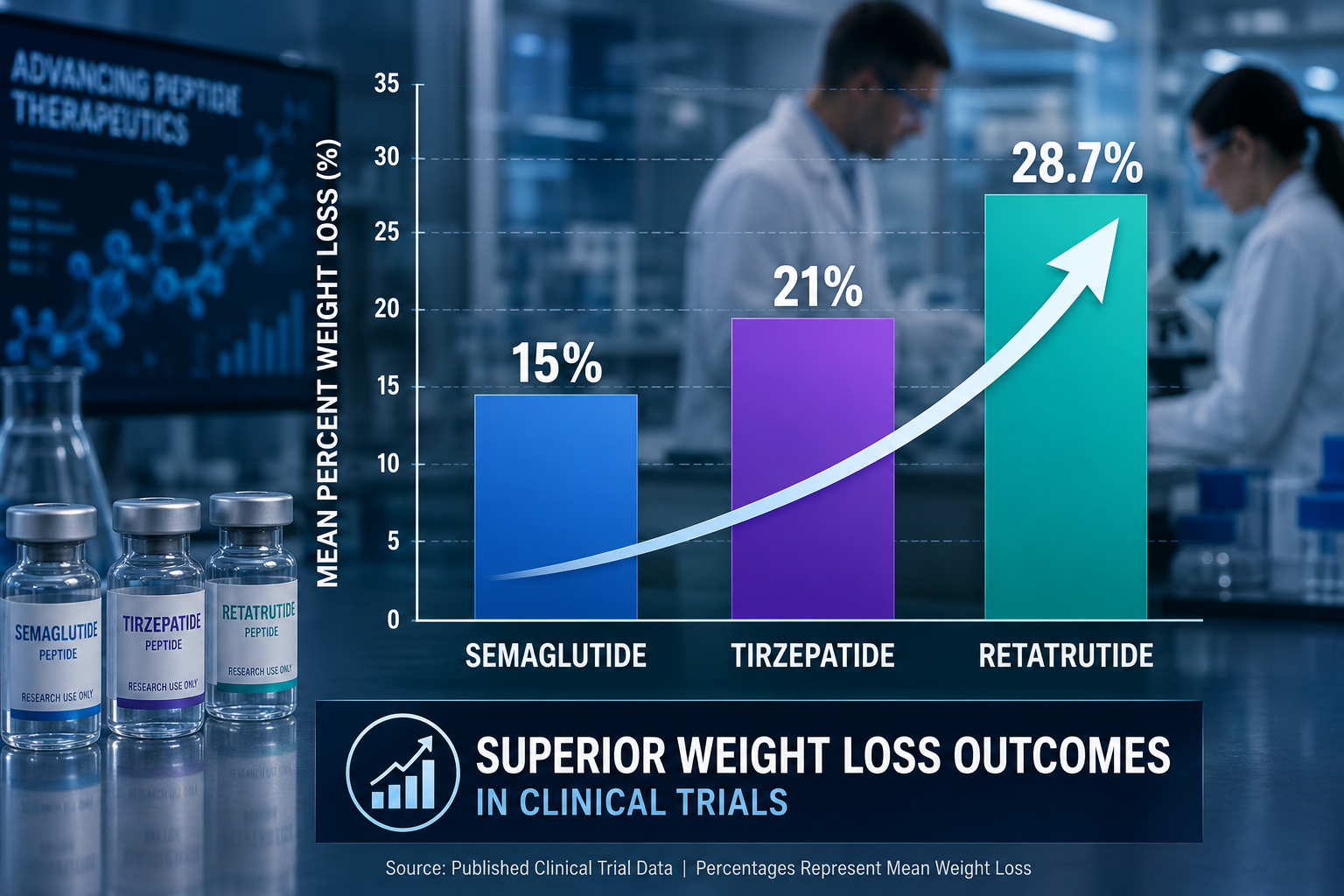
The clinical weight-loss data illustrates the gap between these approaches with precision.

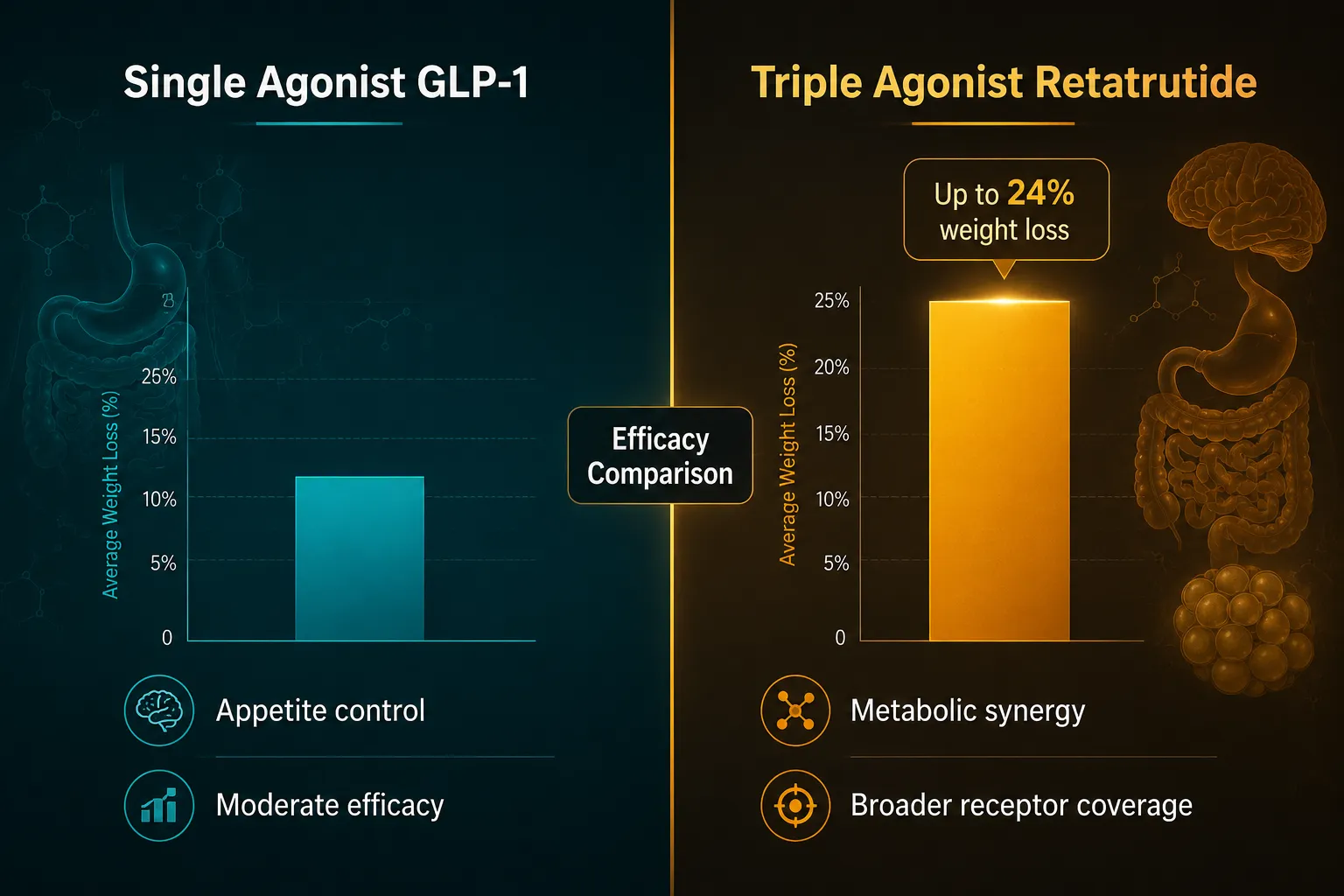
  • Semaglutide (GLP-1 only): approximately 14.9% body weight reduction over 68 weeks
  • Tirzepatide (GLP-1 + GIP): approximately 22.5% over 72 weeks
  • Retatrutide 12 mg (GLP-1 + GIP + GCG): 28.7% over 68 weeks in the TRIUMPH-4 Phase 3 trial

"Retatrutide's triple-agonist approach may redefine obesity treatment by offering weight loss results approaching those of bariatric surgery."

In Phase 2 trials, participants at the 12 mg dose also showed a 2.2% reduction in HbA1c from a baseline of approximately 8.3%, with 82% reaching HbA1c levels at or below 6.5%. This dual impact on both body weight and glycemic control strengthens retatrutide's research profile considerably.

The glucagon receptor component deserves particular attention. By increasing resting metabolic rate and driving lipolysis, it creates an energy-expenditure advantage that neither GLP-1 nor GLP-2 agents can replicate. This is why researchers tracking AOD-9604 metabolic research and lipolytic peptide mechanisms are increasingly interested in how glucagon co-agonism fits into broader fat-loss models.

For context on how GLP-1 peptides are currently categorized and studied, that resource outlines the foundational receptor class from which retatrutide diverges.


Researcher reviewing peptide molecular data in laboratory

How Retatrutide Compares With GLP-1 and GLP-2 Research Peptides in Obesity Models: Safety and Research Outlook

The side-effect profile of retatrutide largely mirrors that of other GLP-1 class agents. Nausea, diarrhea, vomiting, and constipation are the most commonly reported issues. One notable distinction is dysesthesia — tingling or burning sensations — reported in approximately 20.9% of participants at the 12 mg dose in TRIUMPH-4. This is not commonly observed with GLP-1-only or GLP-2 agents and likely reflects glucagon receptor activity.

As of 2026, retatrutide remains in Phase 3 trials. An NDA filing is anticipated in late 2026 or early 2027. Researchers sourcing compounds for preclinical work can review the GLP-3 Retatrutide 10mg research product for current availability.

Those building a broader metabolic research framework may also find value in exploring what is new in peptide research to understand how retatrutide fits alongside other emerging compounds, or reviewing NAD research and GLP-3 online resources for complementary metabolic pathways under investigation.

For researchers studying peptide blends in research contexts, the triple-agonist design of retatrutide also raises questions about whether combination approaches in preclinical models could replicate or extend its receptor-engagement profile.


Conclusion

How retatrutide compares with GLP-1 and GLP-2 research peptides in obesity models comes down to receptor breadth and metabolic reach. GLP-1 agents suppress appetite and improve insulin response. GLP-2 agents repair intestinal tissue. Retatrutide does something categorically different: it activates three complementary pathways at once, producing weight-loss outcomes that exceed all prior pharmacological benchmarks and approach the efficacy of surgical intervention.

Actionable next steps for researchers:

  • Review Phase 2 and TRIUMPH-4 Phase 3 trial data to understand dose-response relationships at the 4 mg, 8 mg, and 12 mg levels.
  • Distinguish GLP-2 research models (gut repair, nutrient absorption) from GLP-1/GCG co-agonism models before designing obesity endpoints.
  • Monitor NDA filing timelines in late 2026 and early 2027 for regulatory developments that may affect research access.
  • Evaluate glucagon receptor co-agonism as a distinct variable when comparing metabolic outcomes across peptide classes.

The research conversation around obesity pharmacology has changed. Triple agonism is no longer a theoretical advantage — the data has made it a measurable one.


https://www.puretestedpeptides.com/wp-content/uploads/2026/06/How-Retatrutide-Compares-With-GLP-1-and-GLP-2-Research-Peptides-in-Obesity-Models-1.png 672 1024 https://www.puretestedpeptides.com/wp-content/uploads/2026/01/buy-peptides-online.jpg 2026-06-04 13:18:082026-06-04 13:18:08How Retatrutide Compares With GLP-1 and GLP-2 Research Peptides in Obesity Models
How Retatrutide Compares With GLP-1 and GLP-2 Research Peptides in Obesity Models

How Retatrutide Compares With GLP-1 and GLP-2 Research Peptides in Obesity Models

June 4, 2026/0 Comments/in Uncategorized/by

Triple agonism has quietly shifted the center of gravity in metabolic peptide research. While single-receptor approaches dominated the conversation for years, a 39-amino acid compound called retatrutide now sits at the intersection of three distinct signaling pathways — and the weight-loss data from preclinical and clinical obesity models is unlike anything seen before in this class.

Understanding how retatrutide compares with GLP-1 and GLP-2 research peptides in obesity models requires a clear look at receptor biology, efficacy endpoints, and the structural differences that separate these compounds at the molecular level.

Key Takeaways

  • Retatrutide is a triple agonist activating GLP-1, GIP, and glucagon receptors simultaneously, producing greater metabolic effects than single or dual agonists.
  • Phase 3 TRIUMPH-4 data showed 28.7% average weight loss at 68 weeks — the highest recorded in any obesity trial to date.
  • GLP-2 peptides act primarily on intestinal repair and growth, not on adipose tissue or appetite suppression, making them functionally distinct from GLP-1 class agents.
  • Retatrutide's glucagon receptor component raises resting metabolic rate and promotes lipolysis, a mechanism absent in GLP-1-only agents.
  • As of 2026, retatrutide remains in Phase 3 trials, with a New Drug Application filing anticipated in late 2026 or early 2027.

Retatrutide triple receptor agonist mechanism diagram

The Receptor Architecture Behind Triple Agonism

How retatrutide compares with GLP-1 and GLP-2 research peptides in obesity models starts with a fundamental structural distinction. Retatrutide is built on a GIP backbone, modified to resist DPP-4 enzymatic degradation, and conjugated to a C20 fatty diacid moiety that extends its half-life. This architecture allows it to engage three receptors simultaneously:

Receptor Primary Effect
GLP-1R Insulin secretion, appetite suppression
GIPR Enhanced insulin response, fat metabolism
GCG-R Increased resting metabolic rate, lipolysis

GLP-1 agonists like semaglutide activate only the GLP-1 receptor. This reduces appetite and improves glycemic control but leaves energy expenditure largely unchanged. Dual agonists such as tirzepatide add GIP receptor activation, improving insulin sensitivity and fat metabolism. Retatrutide layers glucagon receptor agonism on top of both, actively raising the rate at which the body burns stored fat.

GLP-2 peptides occupy a completely different functional space. Their primary role is intestinal epithelial growth, mucosal repair, and nutrient absorption regulation. In obesity models, GLP-2 analogs show minimal direct impact on body weight or adipose tissue reduction. Researchers studying gut-barrier integrity or inflammatory bowel conditions find GLP-2 highly relevant, but it does not compete with GLP-1 class agents on weight-loss endpoints.

For those exploring the broader landscape of incretin-related research, the GLP-3 and retatrutide incretin research themes page provides useful context on how these receptor classes are being studied in parallel.


Weight loss comparison bar chart: Retatrutide vs GLP-1 agents

Efficacy Data Across Obesity Models: Where the Numbers Diverge

The clinical weight-loss data illustrates the gap between these approaches with precision.

  • Semaglutide (GLP-1 only): approximately 14.9% body weight reduction over 68 weeks
  • Tirzepatide (GLP-1 + GIP): approximately 22.5% over 72 weeks
  • Retatrutide 12 mg (GLP-1 + GIP + GCG): 28.7% over 68 weeks in the TRIUMPH-4 Phase 3 trial

"Retatrutide's triple-agonist approach may redefine obesity treatment by offering weight loss results approaching those of bariatric surgery."

In Phase 2 trials, participants at the 12 mg dose also showed a 2.2% reduction in HbA1c from a baseline of approximately 8.3%, with 82% reaching HbA1c levels at or below 6.5%. This dual impact on both body weight and glycemic control strengthens retatrutide's research profile considerably.

The glucagon receptor component deserves particular attention. By increasing resting metabolic rate and driving lipolysis, it creates an energy-expenditure advantage that neither GLP-1 nor GLP-2 agents can replicate. This is why researchers tracking AOD-9604 metabolic research and lipolytic peptide mechanisms are increasingly interested in how glucagon co-agonism fits into broader fat-loss models.

For context on how GLP-1 peptides are currently categorized and studied, that resource outlines the foundational receptor class from which retatrutide diverges.


Researcher reviewing peptide molecular data in laboratory

How Retatrutide Compares With GLP-1 and GLP-2 Research Peptides in Obesity Models: Safety and Research Outlook

The side-effect profile of retatrutide largely mirrors that of other GLP-1 class agents. Nausea, diarrhea, vomiting, and constipation are the most commonly reported issues. One notable distinction is dysesthesia — tingling or burning sensations — reported in approximately 20.9% of participants at the 12 mg dose in TRIUMPH-4. This is not commonly observed with GLP-1-only or GLP-2 agents and likely reflects glucagon receptor activity.

As of 2026, retatrutide remains in Phase 3 trials. An NDA filing is anticipated in late 2026 or early 2027. Researchers sourcing compounds for preclinical work can review the GLP-3 Retatrutide 10mg research product for current availability.

Those building a broader metabolic research framework may also find value in exploring what is new in peptide research to understand how retatrutide fits alongside other emerging compounds, or reviewing NAD research and GLP-3 online resources for complementary metabolic pathways under investigation.

For researchers studying peptide blends in research contexts, the triple-agonist design of retatrutide also raises questions about whether combination approaches in preclinical models could replicate or extend its receptor-engagement profile.


Conclusion

How retatrutide compares with GLP-1 and GLP-2 research peptides in obesity models comes down to receptor breadth and metabolic reach. GLP-1 agents suppress appetite and improve insulin response. GLP-2 agents repair intestinal tissue. Retatrutide does something categorically different: it activates three complementary pathways at once, producing weight-loss outcomes that exceed all prior pharmacological benchmarks and approach the efficacy of surgical intervention.

Actionable next steps for researchers:

  • Review Phase 2 and TRIUMPH-4 Phase 3 trial data to understand dose-response relationships at the 4 mg, 8 mg, and 12 mg levels.
  • Distinguish GLP-2 research models (gut repair, nutrient absorption) from GLP-1/GCG co-agonism models before designing obesity endpoints.
  • Monitor NDA filing timelines in late 2026 and early 2027 for regulatory developments that may affect research access.
  • Evaluate glucagon receptor co-agonism as a distinct variable when comparing metabolic outcomes across peptide classes.

The research conversation around obesity pharmacology has changed. Triple agonism is no longer a theoretical advantage — the data has made it a measurable one.


https://www.puretestedpeptides.com/wp-content/uploads/2026/06/How-Retatrutide-Compares-With-GLP-1-and-GLP-2-Research-Peptides-in-Obesity-Models.png 672 1024 https://www.puretestedpeptides.com/wp-content/uploads/2026/01/buy-peptides-online.jpg 2026-06-04 13:18:082026-06-04 13:18:08How Retatrutide Compares With GLP-1 and GLP-2 Research Peptides in Obesity Models
How Retatrutide Compares With GLP-1 and GLP-2 Research Peptides in Obesity Models

How Retatrutide Compares With GLP-1 and GLP-2 Research Peptides in Obesity Models

June 4, 2026/0 Comments/in Uncategorized/by

Triple agonism has quietly shifted the center of gravity in metabolic peptide research. While single-receptor approaches dominated the conversation for years, a 39-amino acid compound called retatrutide now sits at the intersection of three distinct signaling pathways — and the weight-loss data from preclinical and clinical obesity models is unlike anything seen before in this class.

Understanding how retatrutide compares with GLP-1 and GLP-2 research peptides in obesity models requires a clear look at receptor biology, efficacy endpoints, and the structural differences that separate these compounds at the molecular level.

Key Takeaways

  • Retatrutide is a triple agonist activating GLP-1, GIP, and glucagon receptors simultaneously, producing greater metabolic effects than single or dual agonists.
  • Phase 3 TRIUMPH-4 data showed 28.7% average weight loss at 68 weeks — the highest recorded in any obesity trial to date.
  • GLP-2 peptides act primarily on intestinal repair and growth, not on adipose tissue or appetite suppression, making them functionally distinct from GLP-1 class agents.
  • Retatrutide's glucagon receptor component raises resting metabolic rate and promotes lipolysis, a mechanism absent in GLP-1-only agents.
  • As of 2026, retatrutide remains in Phase 3 trials, with a New Drug Application filing anticipated in late 2026 or early 2027.

Retatrutide triple receptor agonist mechanism diagram

The Receptor Architecture Behind Triple Agonism

How retatrutide compares with GLP-1 and GLP-2 research peptides in obesity models starts with a fundamental structural distinction. Retatrutide is built on a GIP backbone, modified to resist DPP-4 enzymatic degradation, and conjugated to a C20 fatty diacid moiety that extends its half-life. This architecture allows it to engage three receptors simultaneously:

Receptor Primary Effect
GLP-1R Insulin secretion, appetite suppression
GIPR Enhanced insulin response, fat metabolism
GCG-R Increased resting metabolic rate, lipolysis

GLP-1 agonists like semaglutide activate only the GLP-1 receptor. This reduces appetite and improves glycemic control but leaves energy expenditure largely unchanged. Dual agonists such as tirzepatide add GIP receptor activation, improving insulin sensitivity and fat metabolism. Retatrutide layers glucagon receptor agonism on top of both, actively raising the rate at which the body burns stored fat.

GLP-2 peptides occupy a completely different functional space. Their primary role is intestinal epithelial growth, mucosal repair, and nutrient absorption regulation. In obesity models, GLP-2 analogs show minimal direct impact on body weight or adipose tissue reduction. Researchers studying gut-barrier integrity or inflammatory bowel conditions find GLP-2 highly relevant, but it does not compete with GLP-1 class agents on weight-loss endpoints.

For those exploring the broader landscape of incretin-related research, the GLP-3 and retatrutide incretin research themes page provides useful context on how these receptor classes are being studied in parallel.


Weight loss comparison bar chart: Retatrutide vs GLP-1 agents

Efficacy Data Across Obesity Models: Where the Numbers Diverge

The clinical weight-loss data illustrates the gap between these approaches with precision.

  • Semaglutide (GLP-1 only): approximately 14.9% body weight reduction over 68 weeks
  • Tirzepatide (GLP-1 + GIP): approximately 22.5% over 72 weeks
  • Retatrutide 12 mg (GLP-1 + GIP + GCG): 28.7% over 68 weeks in the TRIUMPH-4 Phase 3 trial

"Retatrutide's triple-agonist approach may redefine obesity treatment by offering weight loss results approaching those of bariatric surgery."

In Phase 2 trials, participants at the 12 mg dose also showed a 2.2% reduction in HbA1c from a baseline of approximately 8.3%, with 82% reaching HbA1c levels at or below 6.5%. This dual impact on both body weight and glycemic control strengthens retatrutide's research profile considerably.

The glucagon receptor component deserves particular attention. By increasing resting metabolic rate and driving lipolysis, it creates an energy-expenditure advantage that neither GLP-1 nor GLP-2 agents can replicate. This is why researchers tracking AOD-9604 metabolic research and lipolytic peptide mechanisms are increasingly interested in how glucagon co-agonism fits into broader fat-loss models.

For context on how GLP-1 peptides are currently categorized and studied, that resource outlines the foundational receptor class from which retatrutide diverges.


Researcher reviewing peptide molecular data in laboratory

How Retatrutide Compares With GLP-1 and GLP-2 Research Peptides in Obesity Models: Safety and Research Outlook

The side-effect profile of retatrutide largely mirrors that of other GLP-1 class agents. Nausea, diarrhea, vomiting, and constipation are the most commonly reported issues. One notable distinction is dysesthesia — tingling or burning sensations — reported in approximately 20.9% of participants at the 12 mg dose in TRIUMPH-4. This is not commonly observed with GLP-1-only or GLP-2 agents and likely reflects glucagon receptor activity.

As of 2026, retatrutide remains in Phase 3 trials. An NDA filing is anticipated in late 2026 or early 2027. Researchers sourcing compounds for preclinical work can review the GLP-3 Retatrutide 10mg research product for current availability.

Those building a broader metabolic research framework may also find value in exploring what is new in peptide research to understand how retatrutide fits alongside other emerging compounds, or reviewing NAD research and GLP-3 online resources for complementary metabolic pathways under investigation.

For researchers studying peptide blends in research contexts, the triple-agonist design of retatrutide also raises questions about whether combination approaches in preclinical models could replicate or extend its receptor-engagement profile.


Conclusion

How retatrutide compares with GLP-1 and GLP-2 research peptides in obesity models comes down to receptor breadth and metabolic reach. GLP-1 agents suppress appetite and improve insulin response. GLP-2 agents repair intestinal tissue. Retatrutide does something categorically different: it activates three complementary pathways at once, producing weight-loss outcomes that exceed all prior pharmacological benchmarks and approach the efficacy of surgical intervention.

Actionable next steps for researchers:

  • Review Phase 2 and TRIUMPH-4 Phase 3 trial data to understand dose-response relationships at the 4 mg, 8 mg, and 12 mg levels.
  • Distinguish GLP-2 research models (gut repair, nutrient absorption) from GLP-1/GCG co-agonism models before designing obesity endpoints.
  • Monitor NDA filing timelines in late 2026 and early 2027 for regulatory developments that may affect research access.
  • Evaluate glucagon receptor co-agonism as a distinct variable when comparing metabolic outcomes across peptide classes.

The research conversation around obesity pharmacology has changed. Triple agonism is no longer a theoretical advantage — the data has made it a measurable one.


https://www.puretestedpeptides.com/wp-content/uploads/2026/06/How-Retatrutide-Compares-With-GLP-1-and-GLP-2-Research-Peptides-in-Obesity-Models.png 672 1024 https://www.puretestedpeptides.com/wp-content/uploads/2026/01/buy-peptides-online.jpg 2026-06-04 13:18:082026-06-04 13:18:08How Retatrutide Compares With GLP-1 and GLP-2 Research Peptides in Obesity Models
How Retatrutide Compares With GLP-1 and GLP-2 Research Peptides in Obesity Models

How Retatrutide Compares With GLP-1 and GLP-2 Research Peptides in Obesity Models

June 4, 2026/0 Comments/in Uncategorized/by

Triple agonism has quietly shifted the center of gravity in metabolic peptide research. While single-receptor approaches dominated the conversation for years, a 39-amino acid compound called retatrutide now sits at the intersection of three distinct signaling pathways — and the weight-loss data from preclinical and clinical obesity models is unlike anything seen before in this class.

Understanding how retatrutide compares with GLP-1 and GLP-2 research peptides in obesity models requires a clear look at receptor biology, efficacy endpoints, and the structural differences that separate these compounds at the molecular level.

Key Takeaways

  • Retatrutide is a triple agonist activating GLP-1, GIP, and glucagon receptors simultaneously, producing greater metabolic effects than single or dual agonists.
  • Phase 3 TRIUMPH-4 data showed 28.7% average weight loss at 68 weeks — the highest recorded in any obesity trial to date.
  • GLP-2 peptides act primarily on intestinal repair and growth, not on adipose tissue or appetite suppression, making them functionally distinct from GLP-1 class agents.
  • Retatrutide's glucagon receptor component raises resting metabolic rate and promotes lipolysis, a mechanism absent in GLP-1-only agents.
  • As of 2026, retatrutide remains in Phase 3 trials, with a New Drug Application filing anticipated in late 2026 or early 2027.

Retatrutide triple receptor agonist mechanism diagram

The Receptor Architecture Behind Triple Agonism

How retatrutide compares with GLP-1 and GLP-2 research peptides in obesity models starts with a fundamental structural distinction. Retatrutide is built on a GIP backbone, modified to resist DPP-4 enzymatic degradation, and conjugated to a C20 fatty diacid moiety that extends its half-life. This architecture allows it to engage three receptors simultaneously:

Receptor Primary Effect
GLP-1R Insulin secretion, appetite suppression
GIPR Enhanced insulin response, fat metabolism
GCG-R Increased resting metabolic rate, lipolysis

GLP-1 agonists like semaglutide activate only the GLP-1 receptor. This reduces appetite and improves glycemic control but leaves energy expenditure largely unchanged. Dual agonists such as tirzepatide add GIP receptor activation, improving insulin sensitivity and fat metabolism. Retatrutide layers glucagon receptor agonism on top of both, actively raising the rate at which the body burns stored fat.

GLP-2 peptides occupy a completely different functional space. Their primary role is intestinal epithelial growth, mucosal repair, and nutrient absorption regulation. In obesity models, GLP-2 analogs show minimal direct impact on body weight or adipose tissue reduction. Researchers studying gut-barrier integrity or inflammatory bowel conditions find GLP-2 highly relevant, but it does not compete with GLP-1 class agents on weight-loss endpoints.

For those exploring the broader landscape of incretin-related research, the GLP-3 and retatrutide incretin research themes page provides useful context on how these receptor classes are being studied in parallel.


Weight loss comparison bar chart: Retatrutide vs GLP-1 agents

Efficacy Data Across Obesity Models: Where the Numbers Diverge

The clinical weight-loss data illustrates the gap between these approaches with precision.

  • Semaglutide (GLP-1 only): approximately 14.9% body weight reduction over 68 weeks
  • Tirzepatide (GLP-1 + GIP): approximately 22.5% over 72 weeks
  • Retatrutide 12 mg (GLP-1 + GIP + GCG): 28.7% over 68 weeks in the TRIUMPH-4 Phase 3 trial

"Retatrutide's triple-agonist approach may redefine obesity treatment by offering weight loss results approaching those of bariatric surgery."

In Phase 2 trials, participants at the 12 mg dose also showed a 2.2% reduction in HbA1c from a baseline of approximately 8.3%, with 82% reaching HbA1c levels at or below 6.5%. This dual impact on both body weight and glycemic control strengthens retatrutide's research profile considerably.

The glucagon receptor component deserves particular attention. By increasing resting metabolic rate and driving lipolysis, it creates an energy-expenditure advantage that neither GLP-1 nor GLP-2 agents can replicate. This is why researchers tracking AOD-9604 metabolic research and lipolytic peptide mechanisms are increasingly interested in how glucagon co-agonism fits into broader fat-loss models.

For context on how GLP-1 peptides are currently categorized and studied, that resource outlines the foundational receptor class from which retatrutide diverges.


Researcher reviewing peptide molecular data in laboratory

How Retatrutide Compares With GLP-1 and GLP-2 Research Peptides in Obesity Models: Safety and Research Outlook

The side-effect profile of retatrutide largely mirrors that of other GLP-1 class agents. Nausea, diarrhea, vomiting, and constipation are the most commonly reported issues. One notable distinction is dysesthesia — tingling or burning sensations — reported in approximately 20.9% of participants at the 12 mg dose in TRIUMPH-4. This is not commonly observed with GLP-1-only or GLP-2 agents and likely reflects glucagon receptor activity.

As of 2026, retatrutide remains in Phase 3 trials. An NDA filing is anticipated in late 2026 or early 2027. Researchers sourcing compounds for preclinical work can review the GLP-3 Retatrutide 10mg research product for current availability.

Those building a broader metabolic research framework may also find value in exploring what is new in peptide research to understand how retatrutide fits alongside other emerging compounds, or reviewing NAD research and GLP-3 online resources for complementary metabolic pathways under investigation.

For researchers studying peptide blends in research contexts, the triple-agonist design of retatrutide also raises questions about whether combination approaches in preclinical models could replicate or extend its receptor-engagement profile.


Conclusion

How retatrutide compares with GLP-1 and GLP-2 research peptides in obesity models comes down to receptor breadth and metabolic reach. GLP-1 agents suppress appetite and improve insulin response. GLP-2 agents repair intestinal tissue. Retatrutide does something categorically different: it activates three complementary pathways at once, producing weight-loss outcomes that exceed all prior pharmacological benchmarks and approach the efficacy of surgical intervention.

Actionable next steps for researchers:

  • Review Phase 2 and TRIUMPH-4 Phase 3 trial data to understand dose-response relationships at the 4 mg, 8 mg, and 12 mg levels.
  • Distinguish GLP-2 research models (gut repair, nutrient absorption) from GLP-1/GCG co-agonism models before designing obesity endpoints.
  • Monitor NDA filing timelines in late 2026 and early 2027 for regulatory developments that may affect research access.
  • Evaluate glucagon receptor co-agonism as a distinct variable when comparing metabolic outcomes across peptide classes.

The research conversation around obesity pharmacology has changed. Triple agonism is no longer a theoretical advantage — the data has made it a measurable one.


https://www.puretestedpeptides.com/wp-content/uploads/2026/06/How-Retatrutide-Compares-With-GLP-1-and-GLP-2-Research-Peptides-in-Obesity-Models.png 672 1024 https://www.puretestedpeptides.com/wp-content/uploads/2026/01/buy-peptides-online.jpg 2026-06-04 13:18:082026-06-04 13:18:08How Retatrutide Compares With GLP-1 and GLP-2 Research Peptides in Obesity Models
How Retatrutide Compares With GLP-1 and GLP-2 Research Peptides in Obesity Models

How Retatrutide Compares With GLP-1 and GLP-2 Research Peptides in Obesity Models

June 4, 2026/0 Comments/in Uncategorized/by

Triple agonism has quietly shifted the center of gravity in metabolic peptide research. While single-receptor approaches dominated the conversation for years, a 39-amino acid compound called retatrutide now sits at the intersection of three distinct signaling pathways — and the weight-loss data from preclinical and clinical obesity models is unlike anything seen before in this class.

Understanding how retatrutide compares with GLP-1 and GLP-2 research peptides in obesity models requires a clear look at receptor biology, efficacy endpoints, and the structural differences that separate these compounds at the molecular level.

Key Takeaways

  • Retatrutide is a triple agonist activating GLP-1, GIP, and glucagon receptors simultaneously, producing greater metabolic effects than single or dual agonists.
  • Phase 3 TRIUMPH-4 data showed 28.7% average weight loss at 68 weeks — the highest recorded in any obesity trial to date.
  • GLP-2 peptides act primarily on intestinal repair and growth, not on adipose tissue or appetite suppression, making them functionally distinct from GLP-1 class agents.
  • Retatrutide's glucagon receptor component raises resting metabolic rate and promotes lipolysis, a mechanism absent in GLP-1-only agents.
  • As of 2026, retatrutide remains in Phase 3 trials, with a New Drug Application filing anticipated in late 2026 or early 2027.

Retatrutide triple receptor agonist mechanism diagram

The Receptor Architecture Behind Triple Agonism

How retatrutide compares with GLP-1 and GLP-2 research peptides in obesity models starts with a fundamental structural distinction. Retatrutide is built on a GIP backbone, modified to resist DPP-4 enzymatic degradation, and conjugated to a C20 fatty diacid moiety that extends its half-life. This architecture allows it to engage three receptors simultaneously:

Receptor Primary Effect
GLP-1R Insulin secretion, appetite suppression
GIPR Enhanced insulin response, fat metabolism
GCG-R Increased resting metabolic rate, lipolysis

GLP-1 agonists like semaglutide activate only the GLP-1 receptor. This reduces appetite and improves glycemic control but leaves energy expenditure largely unchanged. Dual agonists such as tirzepatide add GIP receptor activation, improving insulin sensitivity and fat metabolism. Retatrutide layers glucagon receptor agonism on top of both, actively raising the rate at which the body burns stored fat.

GLP-2 peptides occupy a completely different functional space. Their primary role is intestinal epithelial growth, mucosal repair, and nutrient absorption regulation. In obesity models, GLP-2 analogs show minimal direct impact on body weight or adipose tissue reduction. Researchers studying gut-barrier integrity or inflammatory bowel conditions find GLP-2 highly relevant, but it does not compete with GLP-1 class agents on weight-loss endpoints.

For those exploring the broader landscape of incretin-related research, the GLP-3 and retatrutide incretin research themes page provides useful context on how these receptor classes are being studied in parallel.


Weight loss comparison bar chart: Retatrutide vs GLP-1 agents

Efficacy Data Across Obesity Models: Where the Numbers Diverge

The clinical weight-loss data illustrates the gap between these approaches with precision.

  • Semaglutide (GLP-1 only): approximately 14.9% body weight reduction over 68 weeks
  • Tirzepatide (GLP-1 + GIP): approximately 22.5% over 72 weeks
  • Retatrutide 12 mg (GLP-1 + GIP + GCG): 28.7% over 68 weeks in the TRIUMPH-4 Phase 3 trial

"Retatrutide's triple-agonist approach may redefine obesity treatment by offering weight loss results approaching those of bariatric surgery."

In Phase 2 trials, participants at the 12 mg dose also showed a 2.2% reduction in HbA1c from a baseline of approximately 8.3%, with 82% reaching HbA1c levels at or below 6.5%. This dual impact on both body weight and glycemic control strengthens retatrutide's research profile considerably.

The glucagon receptor component deserves particular attention. By increasing resting metabolic rate and driving lipolysis, it creates an energy-expenditure advantage that neither GLP-1 nor GLP-2 agents can replicate. This is why researchers tracking AOD-9604 metabolic research and lipolytic peptide mechanisms are increasingly interested in how glucagon co-agonism fits into broader fat-loss models.

For context on how GLP-1 peptides are currently categorized and studied, that resource outlines the foundational receptor class from which retatrutide diverges.


Researcher reviewing peptide molecular data in laboratory

How Retatrutide Compares With GLP-1 and GLP-2 Research Peptides in Obesity Models: Safety and Research Outlook

The side-effect profile of retatrutide largely mirrors that of other GLP-1 class agents. Nausea, diarrhea, vomiting, and constipation are the most commonly reported issues. One notable distinction is dysesthesia — tingling or burning sensations — reported in approximately 20.9% of participants at the 12 mg dose in TRIUMPH-4. This is not commonly observed with GLP-1-only or GLP-2 agents and likely reflects glucagon receptor activity.

As of 2026, retatrutide remains in Phase 3 trials. An NDA filing is anticipated in late 2026 or early 2027. Researchers sourcing compounds for preclinical work can review the GLP-3 Retatrutide 10mg research product for current availability.

Those building a broader metabolic research framework may also find value in exploring what is new in peptide research to understand how retatrutide fits alongside other emerging compounds, or reviewing NAD research and GLP-3 online resources for complementary metabolic pathways under investigation.

For researchers studying peptide blends in research contexts, the triple-agonist design of retatrutide also raises questions about whether combination approaches in preclinical models could replicate or extend its receptor-engagement profile.


Conclusion

How retatrutide compares with GLP-1 and GLP-2 research peptides in obesity models comes down to receptor breadth and metabolic reach. GLP-1 agents suppress appetite and improve insulin response. GLP-2 agents repair intestinal tissue. Retatrutide does something categorically different: it activates three complementary pathways at once, producing weight-loss outcomes that exceed all prior pharmacological benchmarks and approach the efficacy of surgical intervention.

Actionable next steps for researchers:

  • Review Phase 2 and TRIUMPH-4 Phase 3 trial data to understand dose-response relationships at the 4 mg, 8 mg, and 12 mg levels.
  • Distinguish GLP-2 research models (gut repair, nutrient absorption) from GLP-1/GCG co-agonism models before designing obesity endpoints.
  • Monitor NDA filing timelines in late 2026 and early 2027 for regulatory developments that may affect research access.
  • Evaluate glucagon receptor co-agonism as a distinct variable when comparing metabolic outcomes across peptide classes.

The research conversation around obesity pharmacology has changed. Triple agonism is no longer a theoretical advantage — the data has made it a measurable one.


https://www.puretestedpeptides.com/wp-content/uploads/2026/06/How-Retatrutide-Compares-With-GLP-1-and-GLP-2-Research-Peptides-in-Obesity-Models.png 672 1024 https://www.puretestedpeptides.com/wp-content/uploads/2026/01/buy-peptides-online.jpg 2026-06-04 13:18:082026-06-04 13:18:08How Retatrutide Compares With GLP-1 and GLP-2 Research Peptides in Obesity Models
Retatrutide Safety, Side Effects, and Study Design: What Researchers Should Watch in Ongoing Obesity Trials

Retatrutide Safety, Side Effects, and Study Design: What Researchers Should Watch in Ongoing Obesity Trials

June 3, 2026/0 Comments/in Uncategorized/by

Ninety-two percent of participants in a 48-week Phase 2 trial achieved at least 5% body weight loss with retatrutide — a figure that immediately set this triple-receptor agonist apart from earlier obesity pharmacotherapies. For researchers tracking the evolving landscape of investigational peptides, understanding retatrutide safety, side effects, and study design in ongoing obesity trials is now essential groundwork.

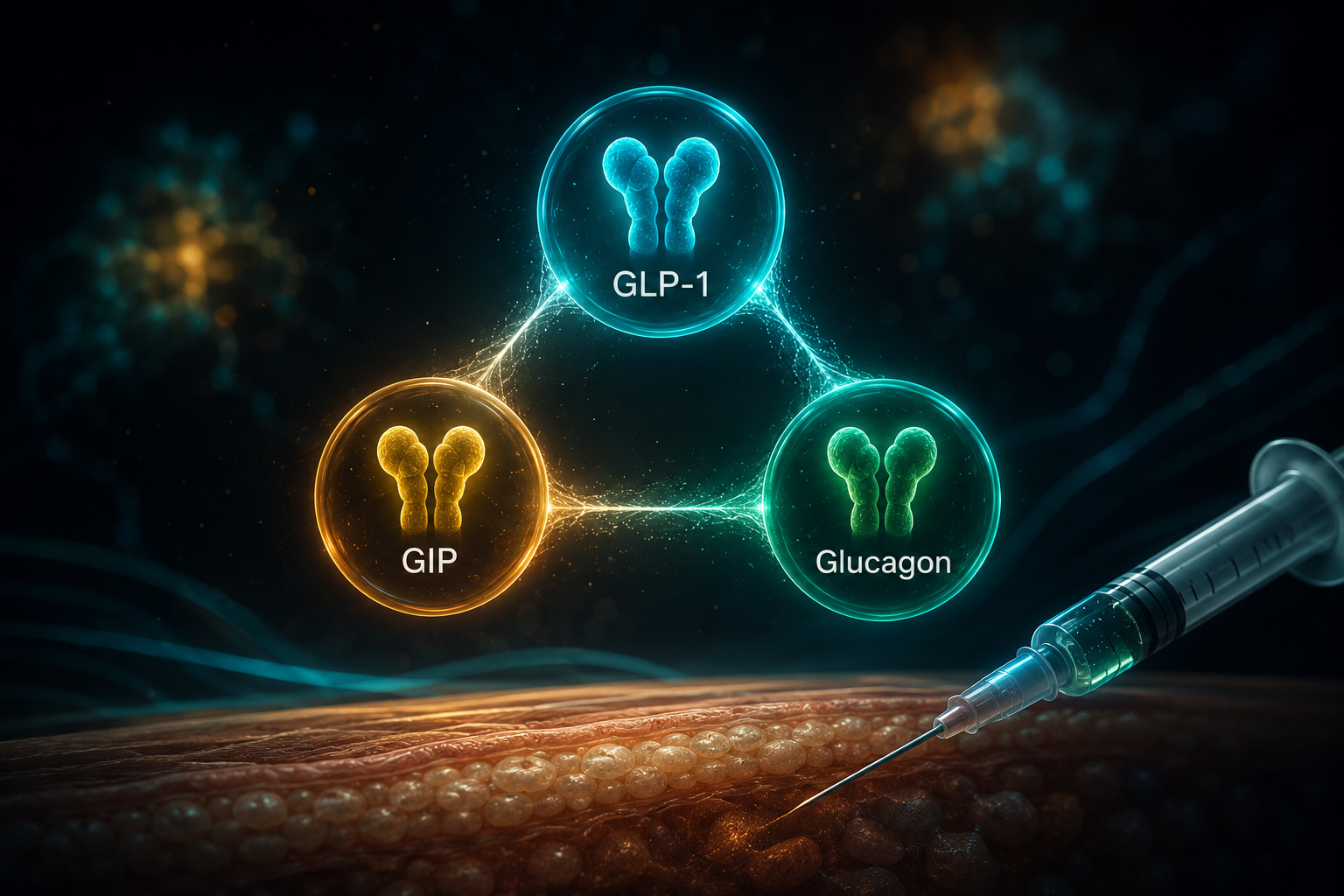
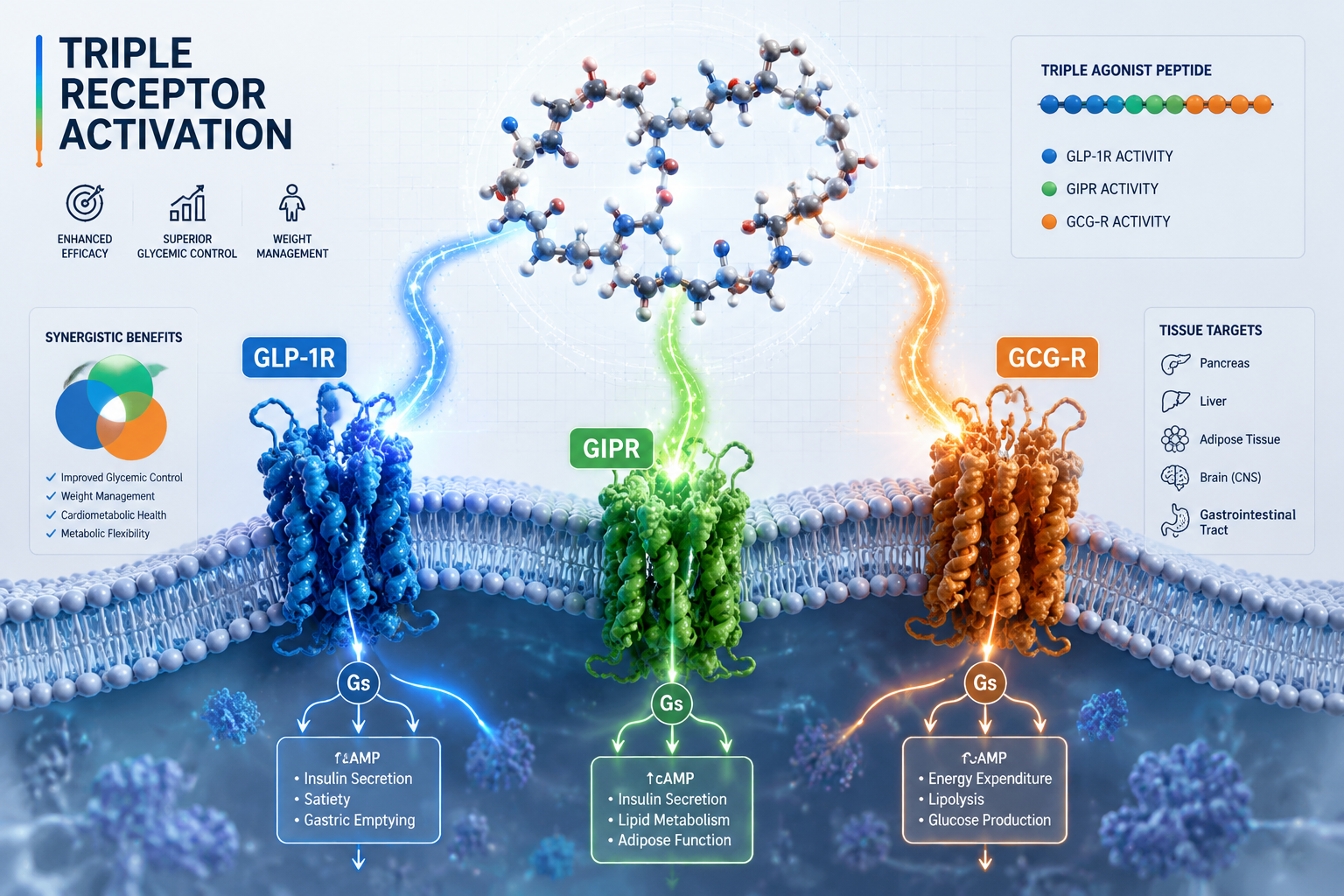
Scientific infographic-style landscape image () showing a detailed cross-section diagram of three hormone receptors — GIP,

Key Takeaways

  • Retatrutide simultaneously activates GIP, GLP-1, and glucagon receptors, producing weight loss superior to earlier single or dual agonists.
  • Gastrointestinal side effects are the most common adverse events and are dose-dependent and generally mild to moderate.
  • A structured dose-escalation schedule starting at 2 mg has been shown to reduce early tolerability issues.
  • The Phase 3 TRIUMPH program enrolls over 5,800 participants across four trials, including cardiovascular and musculoskeletal subpopulations.
  • Adverse event-related discontinuation rates in Phase 2 ranged from 6% to 16%, a critical tolerability signal for Phase 3 monitoring.

How Retatrutide Works: Triple Agonism and Its Research Implications

Retatrutide is a once-weekly subcutaneous peptide that activates three hormone receptors: glucose-dependent insulinotropic polypeptide (GIP), glucagon-like peptide-1 (GLP-1), and glucagon. This triple mechanism distinguishes it from earlier agents. Researchers familiar with GLP-1 peptide sourcing and generational research concepts will recognize how each successive generation of receptor agonists has broadened metabolic targets.

The glucagon receptor component is particularly notable. It drives energy expenditure and lipolysis in ways that GLP-1 alone does not. Understanding the GIP receptor and its importance alongside GLP-1 activity helps explain why retatrutide outperformed other glucagon receptor agonists in a network meta-analysis, showing a mean weight reduction of 13.44 kg compared to placebo.

A 2024 systematic review and meta-analysis of randomized controlled trials confirmed retatrutide reduced body weight by an average of 10.66 kg versus placebo, with additional improvements in waist circumference and BMI. These metabolic marker changes matter for researchers designing endpoints that go beyond simple weight outcomes.

For context on how this compares to other investigational metabolic peptides, the SLU-PP-332 metabolic modulation research overview provides useful framing on alternative pathways under investigation.


Retatrutide Safety and Side Effects: Tolerability Signals Researchers Must Track

Retatrutide Safety and Side Effects: Tolerability Signals Researchers Must Track

The most consistent finding across retatrutide trials is that gastrointestinal adverse events dominate the safety profile. Nausea, diarrhea, vomiting, and constipation are the primary concerns. These effects are dose-related, meaning higher doses produce more frequent and more intense symptoms.

Key tolerability data from Phase 2:

Adverse Event Category Frequency
Any gastrointestinal event Most common across all dose groups
Discontinuation due to adverse events 6% to 16% in retatrutide arms
Discontinuation in placebo group 0%
Serious adverse events (SAEs) 4% overall; 0%–6% by dose group

The SAE rate of 4% in retatrutide groups matched the 4% rate in placebo groups, which is an important signal: serious events were not meaningfully elevated above background rates. However, the gap in discontinuation rates — up to 16% versus 0% in placebo — indicates that tolerability, not safety in the traditional sense, is the primary challenge.

Dose-escalation as a mitigation strategy has been central to retatrutide's development. Starting participants at 2 mg before escalating to target doses partially reduced early gastrointestinal burden. This titration logic is now embedded in Phase 3 protocols and represents a key variable researchers should monitor when interpreting trial results.

Researchers comparing tolerability across investigational peptides may also find value in reviewing selank side effects research and BPC-157 core peptide documentation for contrast in adverse event profiles across different peptide classes.

"Tolerability, not toxicity, is the primary research question in retatrutide's Phase 3 program."


Phase 3 TRIUMPH Trial Design: What Researchers Should Watch in Ongoing Obesity Trials

Phase 3 TRIUMPH Trial Design: What Researchers Should Watch in Ongoing Obesity Trials

The TRIUMPH program is the definitive test of retatrutide safety, side effects, and study design in ongoing obesity trials. Four multicenter, randomized, double-blind Phase 3 studies enroll more than 5,800 participants receiving weekly subcutaneous retatrutide. The program spans standard obesity populations and extends into clinically complex subgroups.

Trial design features researchers should monitor:

  • Cardiovascular subpopulation (TRIUMPH-3): Specifically evaluates retatrutide in participants with established cardiovascular disease. This endpoint mirrors the cardiovascular outcomes trial model used with earlier GLP-1 agents.
  • Comorbidity expansion: Trials address obstructive sleep apnea and knee osteoarthritis alongside weight outcomes, broadening the clinical relevance of findings.
  • Dose-titration schedules: How Phase 3 protocols handle dose escalation will directly affect both efficacy outcomes and adverse event rates.
  • MASLD investigation: A separate Phase 2a trial is examining retatrutide's potential in metabolic dysfunction-associated steatotic liver disease, with results still pending in 2026.

Researchers following GLP-3 triple agonist research planning and the broader RETA GLP-3 research framework will find the TRIUMPH design choices instructive for understanding how trial architects balance efficacy ambition against tolerability risk.

The generations of GLP-1 differences resource also contextualizes why TRIUMPH's multi-indication design represents a meaningful evolution from earlier single-endpoint obesity trials.


Conclusion

Retatrutide's Phase 2 data established a compelling efficacy signal. The Phase 3 TRIUMPH program now carries the burden of confirming whether that signal holds across diverse populations while maintaining an acceptable tolerability profile. For researchers in 2026, the most actionable focus areas are:

  1. Track discontinuation rates by dose group as the primary tolerability benchmark.
  2. Monitor dose-escalation protocol adherence and its effect on gastrointestinal event frequency.
  3. Watch TRIUMPH-3 cardiovascular outcomes as the highest-stakes safety dataset in the program.
  4. Follow the MASLD Phase 2a results for evidence of retatrutide's reach beyond weight management.
  5. Compare SAE rates across subpopulations to identify whether cardiovascular or musculoskeletal comorbidities alter the safety profile.

The evidence base for retatrutide is maturing rapidly. Researchers who understand both the mechanism and the methodological choices embedded in its trial design will be best positioned to interpret findings as they emerge.


https://www.puretestedpeptides.com/wp-content/uploads/2026/06/Retatrutide-Safety-Side-Effects-and-Study-Design-What-Researchers-Should-Watch-in-Ongoing-Obesity-Trials.png 1024 1536 https://www.puretestedpeptides.com/wp-content/uploads/2026/01/buy-peptides-online.jpg 2026-06-03 13:06:002026-06-03 13:06:00Retatrutide Safety, Side Effects, and Study Design: What Researchers Should Watch in Ongoing Obesity Trials
GLP-3 Retatrutide vs Traditional GLP-1 Agonists: Mechanisms, Early Data, and Research-Only Use Cases

GLP-3 Retatrutide vs Traditional GLP-1 Agonists: Mechanisms, Early Data, and Research-Only Use Cases

June 3, 2026/0 Comments/in Uncategorized/by

A single peptide producing nearly 29% mean body weight loss in a clinical trial is not a headline most metabolic researchers expected to see this decade. Yet that is precisely what early data from retatrutide's Phase 3 program suggests. Understanding the comparison of GLP-3 Retatrutide vs Traditional GLP-1 Agonists: Mechanisms, Early Data, and Research-Only Use Cases requires looking closely at receptor biology, trial outcomes, and the strict research boundaries that currently govern this compound.

Key Takeaways

  • Retatrutide is a triple agonist activating GLP-1, GIP, and glucagon receptors simultaneously, while classic GLP-1 agents target only one receptor.
  • Phase 2 and early Phase 3 data show weight reductions of 24.2% to 28.7%, surpassing results seen with semaglutide or tirzepatide.
  • Retatrutide reduced liver fat by up to 82.4% in clinical studies, pointing to broad metabolic utility.
  • As of 2026, retatrutide is not FDA-approved and is designated for laboratory and research use only.
  • An FDA filing is anticipated between 2026 and 2027, making this a critical period for preclinical researchers to build foundational knowledge.

Receptor Mechanisms: How Retatrutide Differs from Classic GLP-1 Agonists

Receptor Mechanisms: How Retatrutide Differs from Classic GLP-1 Agonists

Traditional GLP-1 receptor agonists such as semaglutide work by mimicking the incretin hormone GLP-1. This single-receptor approach suppresses appetite, slows gastric emptying, and improves insulin secretion. The results are clinically meaningful, but the mechanism is inherently limited to one signaling pathway.

Retatrutide expands that model significantly. It activates three distinct receptors:

Receptor Primary Role
GLP-1 Appetite suppression, delayed gastric emptying
GIP Enhanced insulin secretion, lipid metabolism
Glucagon Increased energy expenditure, fat oxidation

This triple-agonist design means the compound addresses energy balance from multiple angles at once. The glucagon receptor component is particularly notable. While glucagon is classically associated with raising blood glucose, its activation in a balanced incretin context appears to drive thermogenesis and fat oxidation without destabilizing glycemic control.

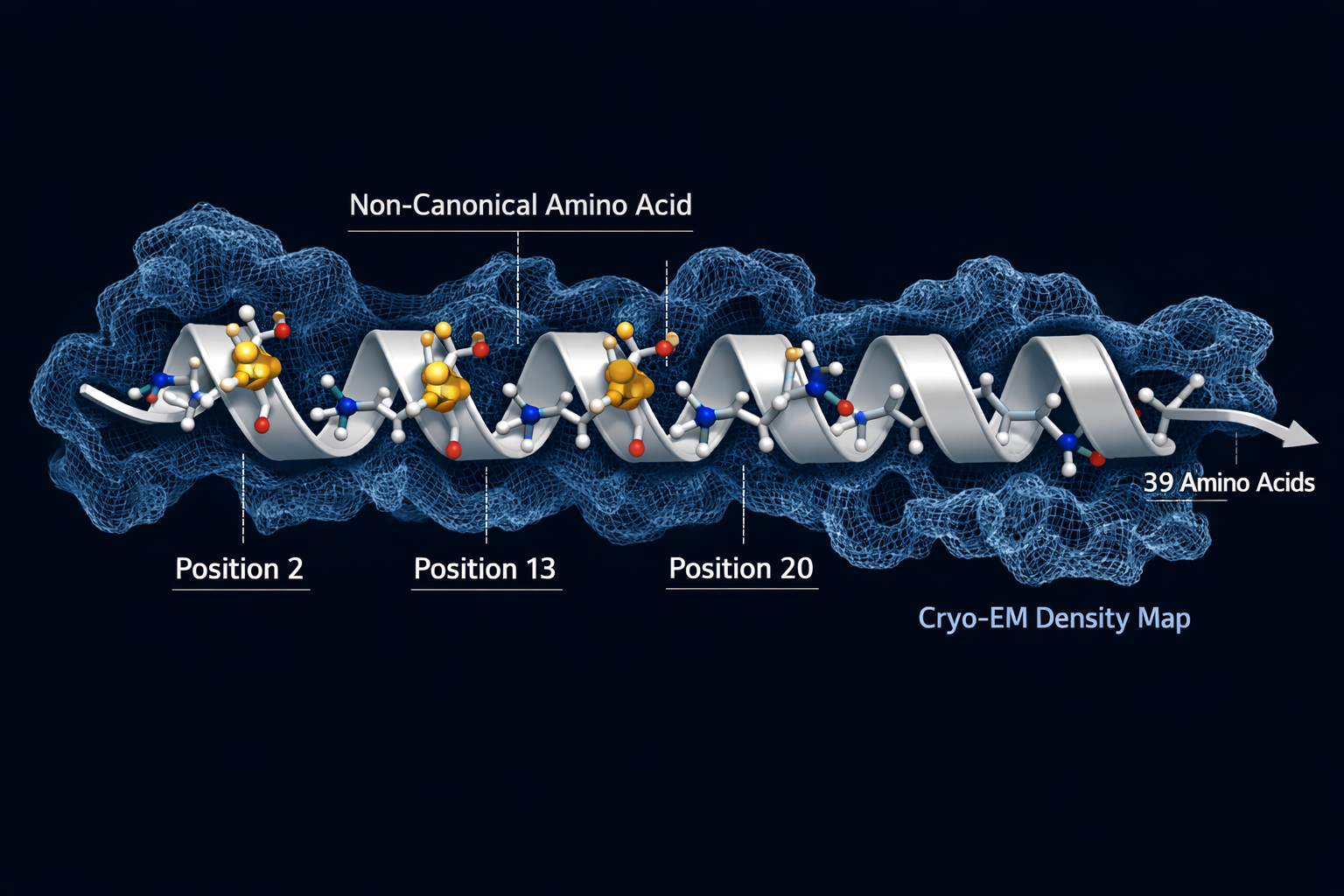
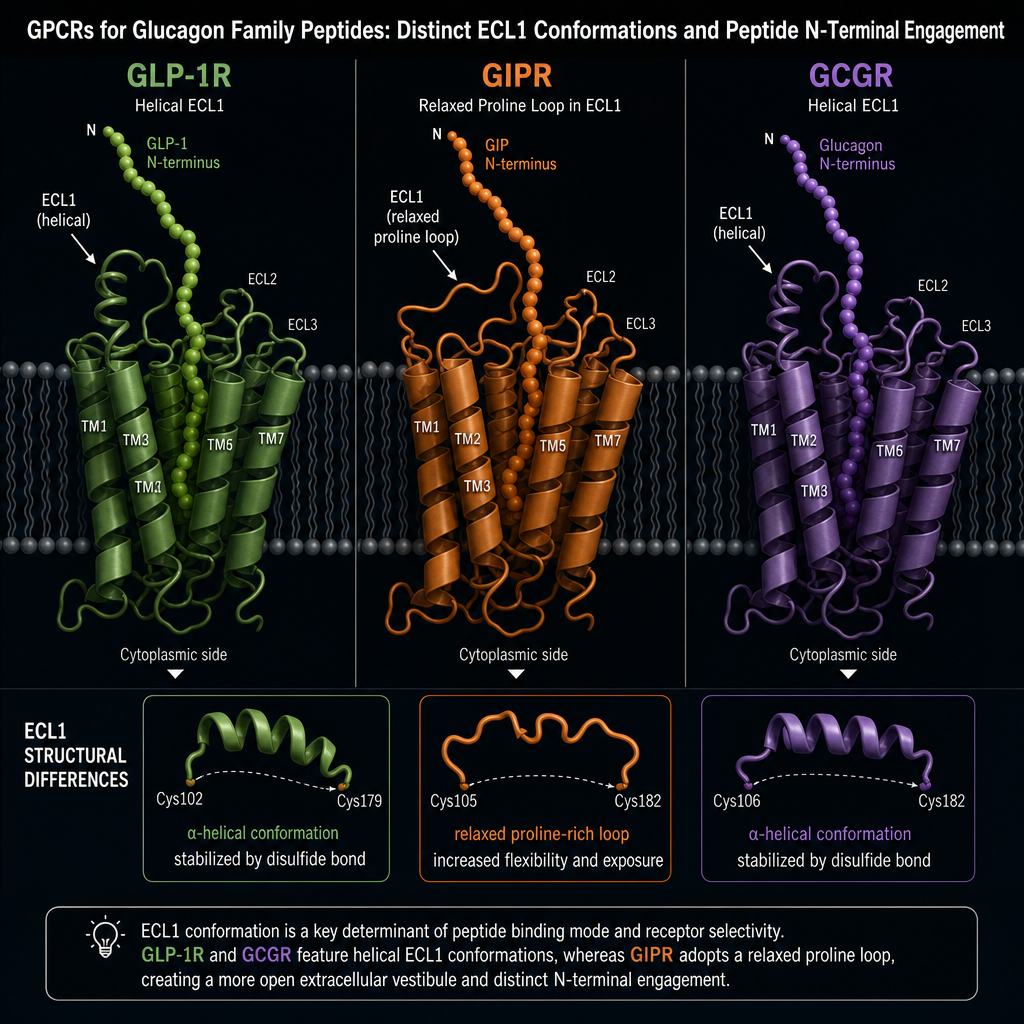
Cryo-electron microscopy studies have mapped exactly how retatrutide engages all three receptor types at the molecular level, providing a structural explanation for its activity profile. For researchers exploring the broader GLP-1 generations overview, this mechanistic leap from single to triple agonism represents a defining shift in incretin pharmacology.

Tirzepatide, a dual GLP-1/GIP agonist, sits between semaglutide and retatrutide on this spectrum. Retatrutide's additional glucagon receptor activation is the primary differentiator that researchers believe accounts for its superior efficacy signals in early trials.


Early Clinical Data: What the Trial Numbers Show

Early Clinical Data: What the Trial Numbers Show

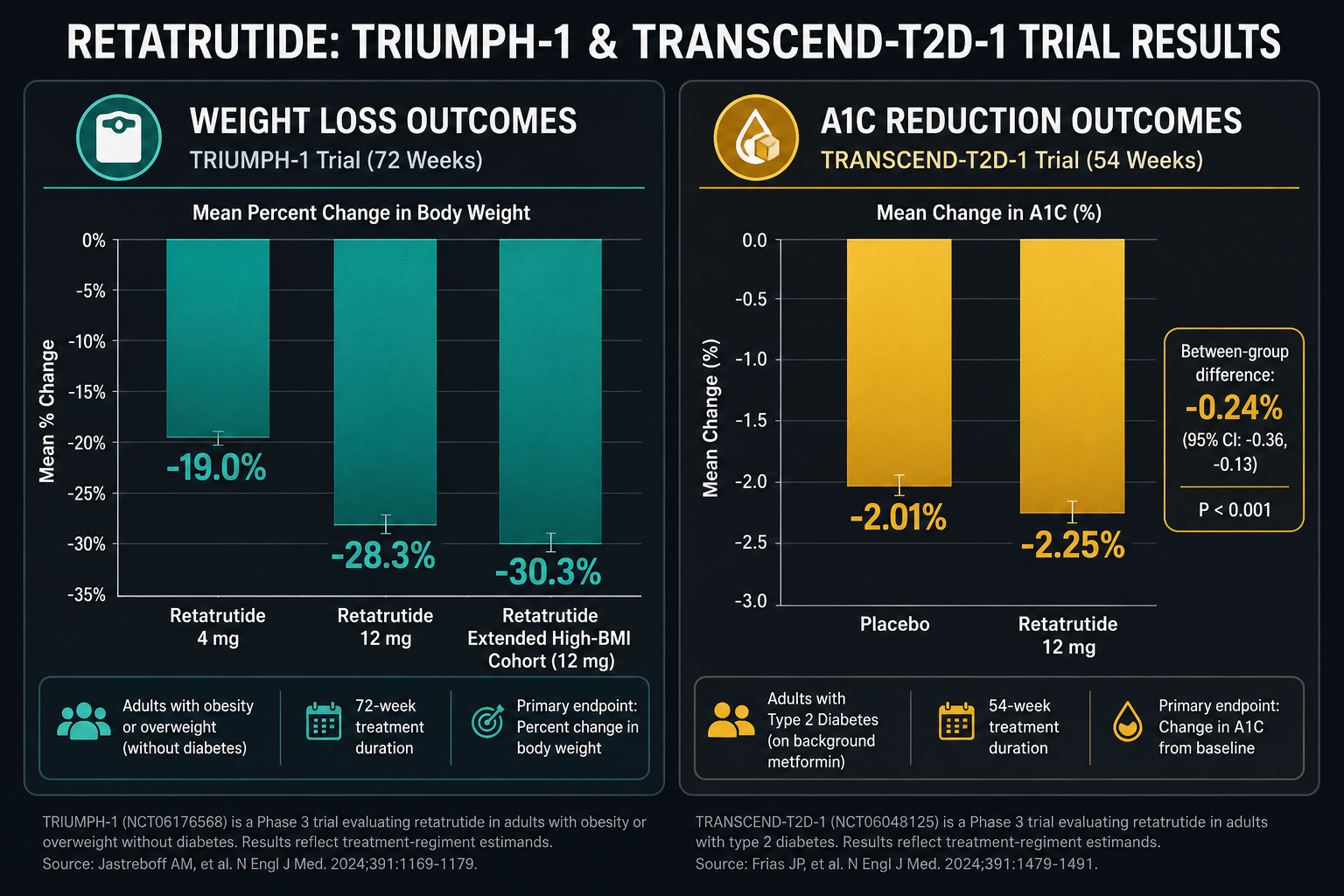
The numbers from retatrutide's clinical program are difficult to ignore. In a Phase 2 trial published in the New England Journal of Medicine, participants receiving the 12 mg dose achieved a mean body weight reduction of 24.2% at 48 weeks. That figure exceeded the weight loss benchmarks set by both semaglutide and tirzepatide in comparable timeframes.

Preliminary data from the Phase 3 TRIUMPH-4 trial pushed that figure further. At 68 weeks, the mean body weight loss reached 28.7%, the highest reduction recorded in an obesity trial to date.

Beyond weight, the metabolic data is equally compelling:

  • Liver fat reduction of up to 82.4%, suggesting significant potential for non-alcoholic fatty liver disease research
  • Improvements in glycemic control and lipid profiles across trial cohorts
  • Once-weekly subcutaneous dosing with a half-life of approximately 6 days, supporting practical research protocols

The side effect profile is consistent with other incretin-based compounds. Gastrointestinal effects including nausea and vomiting were the most commonly reported adverse events, which aligns with what researchers observe across the GLP-1 class.

For those tracking how body composition peptides interact with metabolic pathways, the TESA body composition research themes page offers relevant context on related investigational compounds. Similarly, researchers studying fat metabolism may find value in reviewing AOD-9604 research method notes as a complementary reference point.


Research-Only Use Cases for GLP-3 Retatrutide vs Traditional GLP-1 Agonists

Research-Only Use Cases for GLP-3 Retatrutide vs Traditional GLP-1 Agonists

As of 2026, retatrutide holds no FDA approval and is not available for commercial or clinical use outside of authorized trials. It is strictly designated for laboratory and research purposes. This boundary is not a limitation to work around; it is the appropriate framework for a compound still moving through regulatory evaluation.

Within that framework, legitimate research use cases include:

  • Receptor binding studies examining triple-agonist pharmacodynamics
  • In vitro metabolic models exploring GIP and glucagon receptor co-activation
  • Preclinical obesity models comparing retatrutide's efficacy signals against established GLP-1 benchmarks
  • Liver health investigations given the striking hepatic fat reduction data

Researchers building metabolic study panels may also find it useful to explore cagrilintide synergy with GLP-1 as a complementary area of investigation, since amylin-GLP-1 combinations represent another emerging research direction. For broader metabolic and longevity research themes, the GLP-3 Reta incretin research themes resource provides a structured overview of where the science currently stands.

Researchers interested in how mitochondrial function intersects with metabolic peptide research can also reference MOTS-c mitochondrial peptide research for related mechanistic context.

An FDA filing is anticipated between 2026 and 2027. Until that process concludes, all use must remain within certified research environments with appropriate oversight.


Conclusion

The comparison of GLP-3 Retatrutide vs Traditional GLP-1 Agonists: Mechanisms, Early Data, and Research-Only Use Cases reveals a compound that is mechanistically distinct and clinically promising. Its triple-receptor design addresses metabolic dysfunction through pathways that single and dual agonists cannot reach simultaneously. The trial data, while still maturing, places retatrutide ahead of any previously studied obesity intervention by weight-loss magnitude.

Actionable next steps for researchers in 2026:

  1. Review the Phase 2 NEJM publication and TRIUMPH-4 preliminary data to establish baseline familiarity with the efficacy and safety signals.
  2. Map retatrutide's receptor pharmacology against your existing GLP-1 or dual-agonist research models to identify where triple agonism adds mechanistic value.
  3. Ensure all procurement and use of retatrutide complies strictly with research-only designations and institutional oversight requirements.
  4. Monitor FDA filing developments expected in the 2026-2027 window, as regulatory milestones will reshape the research landscape quickly.

The science is moving fast. Researchers who build foundational knowledge now will be best positioned to interpret and apply what comes next.


https://www.puretestedpeptides.com/wp-content/uploads/2026/06/GLP-3-Retatrutide-vs-Traditional-GLP-1-Agonists-Mechanisms-Early-Data-and-Research-Only-Use-Cases.png 1024 1536 https://www.puretestedpeptides.com/wp-content/uploads/2026/01/buy-peptides-online.jpg 2026-06-03 13:04:222026-06-03 13:04:22GLP-3 Retatrutide vs Traditional GLP-1 Agonists: Mechanisms, Early Data, and Research-Only Use Cases
×

Helpful Links

  • My account
  • Cart
  • Checkout
  • Refund and Returns Policy
  • Privacy Policy
  • SMS Privacy Policy
  • Login
  • My Account
  • Logout

USA Made Lab Tested Peptides

All products are sold for research, laboratory, or analytical purposes only, and are not for human consumption


Pure Tested Peptides is a chemical supplier. Pure Tested Peptides is not a compounding / chemical compounding facility as defined under 503A of the Federal Food, Drug, and Cosmetic act. Pure Tested Peptides is not an outsourcing facility as defined under 503B of the Federal Food, Drug, and Cosmetic act.

The statements made within this website have not been evaluated by the US Food and Drug Administration. The products we offer are not intended to diagnose, treat, cure or prevent any disease.

Human/Animal Consumption Prohibited. Laboratory/In-Vitro Experimental Use Only

Scroll to top Scroll to top Scroll to top