Call or Text 727-513-9780
  • Shopping Cart Shopping Cart
    0Shopping Cart
Pure Tested Peptides | America's most trusted Peptides for sale online
  • Peptides for sale
    • Oral Peptides for sale
      • Peptide Capsules for sale
      • BPC 157 Capsules 1000mcg
      • SLU-PP-332 Capsules | 1000 mcg
      • 5-Amino-1MQ 50mg Capsules
      • Tesofensine 500mcg
    • All Peptides for sale
    • Peptide Sprays
      • BPC 157 Nasal Spray Kit
      • BPC-157 TB500 Nasal Spray Kit
      • Semax Nasal Spray 10mg
      • Selank – Nasal Spray Kit – 10mg
      • Epithalon 50MG Nasal Spray Kit
      • Ipamorelin 10mg Nasal Spray
      • Klow Nasal Spray (BPC-157 + TB-500 + GHK-Cu + KPV) | 80mg
      • Hulk Nasal Spray Tesa / Ipa Blend 6/3 MG
      • Klow Nasal Spray
      • NAD + 500 mg Nasal Spray
      • PT-141 Nasal Spray Kit
    • GHRH Peptides
      • Ipa Peptides
      • CJC-1295 Peptides
        • CJC-1295 with DAC 5 mg
        • CJC-1295 without DAC 5 mg
        • CJC-1295 Ipa 10mg
      • Tesa Peptides
        • Tesa Peptide
        • Tesa 20 mg
    • GHK-Cu Peptides
      • All GHK-Cu Peptides
      • GHK-Cu 100mg
      • KLOW Peptide Blend – Buy KLOW blend online
    • BPC Peptides
      • All BPC Peptides
      • BPC-157
      • BPC-157 TB-500
      • BPC 157 capsules 1000mcg
    • SLU-PP-332 Peptides
      • All SLU-PP-332 Peptides
      • SLU-PP-332 5mg
    • GLP3 Peptides
      • GLP3-R
      • GLP3-R CAG 10mg
      • GLP3-R 20mg
    • PT-141 Peptides
      • PT-141 Peptides for sale
      • PT-141 10mg
      • PT-141 Nasal Spray
    • CAG Peptides
      • Lipo-C Peptide Blend
      • CAG 5mg
      • CAG 10mg
    • MOTS-C Peptides
      • MOTS-C Peptides for sale
      • MOTS-c peptide
      • MOTS-c 10mg *6 pack*
    • 5 Amino 1MQ Peptides
      • 5 Amino 1MQ Peptides for sale
      • 5-Amino-1MQ 50mg Capsules
      • 5-Amino-1MQ 5mg
    • Epithalon Peptides
      • Epithalon Peptides for sale
      • Epithalon 10mg
      • Epithalon 50mg
  • Shop
    • GLPs
      • 5-Amino-1MQ 50mg Capsules
      • 5-Amino-1MQ 5mg
      • GLP3-Reta
      • L-Carnitine 500mg/ml
      • Tesofensine 500mcg
      • SLU-PP-332 5mg
      • MOTS-c 10mg *6 pack*
    • Epithalon & BPC Peptides
      • Epithalon 10mg
      • Epithalon 50mg
      • BPC-157
      • BPC 157 capsules 1000mcg
      • BPC-157 TB-500
      • BPC-157 TB500 Nasal Spray Kit
      • BPC 157 Nasal Spray Kit
    • BPC TB-500 & NAD+ Peptides
      • NAD+ 500 mg
      • KLOW Peptide Blend – Buy KLOW blend online
      • GLOW Peptide Blend
      • TB 500 5mg
      • BPC 157 capsules 1000mcg – Supplement
      • BPC 157 Nasal Spray Kit
      • BPC-157
      • BPC-157 TB500 Nasal Spray Kit
      • BPC-157 TB-500
      • BPC 157 capsules 1000mcg
    • LL-37 Peptide
      • LL-37 10 mg
    • MOTS-C & Selank
      • MOTS-c peptide
      • Selank 10mg
    • GHK Peptides
      • GHK-Cu 100mg
      • GLOW Peptide Blend
      • KLOW Peptide Blend – Buy KLOW blend online
  • COAs
  • Wholesale
    • Wholesale Peptides for sale
  • PTP FAQ
  • Affiliates
    • Selank Peptide: Advanced Pharmacological Mechanisms Underlying Its Anxiolytic and Nootropic Effects in Research
      • 5-Amino-1MQ Peptide: Detailed Mechanisms of NNMT Inhibition and Its Impact on Cellular Metabolism Research
        • MOTS-C Peptide: Unraveling Its Role in Mitochondrial Dynamics and Energy Metabolism Research
          • Epithalon Peptide and Telomerase Regulation: Investigating Its Impact on Cellular Senescence and Lifespan Research Models
            • GLP2-T vs GLP2 Tirz Peptide: Understanding the Naming, Mechanistic Nuances, and Research Implications for Gut Health
      • Peptides and Polypeptides in Modern Pharmacology: What Research on Metoprolol, Prednisone, and Amlodipine Reveals
        • Polypeptide Peptides vs NSAIDs: What Naproxen and Diclofenac Teach Tissue-Repair Researchers About BPC‑157 and TB‑500
          • Peptides and Polypeptides in Endocrine Pharmacology: How GLP-1, GLP-2, and GLP-3 Retatrutide Differ From Classic Drugs Like Prednisone and Amlodipine
          • 5‑Amino‑1MQ Peptide and NNMT Inhibition: How It Compares With Statins Like Atorvastatin in Adipose and Lipid Metabolism Research
      • Enclomiphene, Estrogen Receptor Signaling, and Luteinizing Phase Biology: What Hormone Researchers Should Measure
        • Mesenchymal Stem Cells, BPC‑157, and GHK‑Cu: How Tissue Repair Peptides Compare With Classic NSAIDs Like Naproxen in Injury Models
          • Peptide Calculator Use Cases Beyond Growth Hormone: Working Through GLP‑3 Retatrutide, MOTS‑c, and BPC‑157 Research Dosing
        • Polypeptide Peptides in Endocrine and Metabolic Pharmacology: Lessons From Amlodipine, Prednisone, and Metoprolol
        • Peptides Calculator for Advanced Blends: Worked Examples for Tesamorelin, CJC‑1295, and Ipamorelin Stacks
          • Peptides and Polypeptides in Human Physiology: How Molecular Size Shapes Research Applications
            • Selank Peptide: Advanced Pharmacological Mechanisms Underlying Its Anxiolytic and Nootropic Effects in Research
          • 5-Amino-1MQ Peptide: Detailed Mechanisms of NNMT Inhibition and Its Impact on Cellular Metabolism Research
            • MOTS-C Peptide: Unraveling Its Role in Mitochondrial Dynamics and Energy Metabolism Research
              • Epithalon Peptide and Telomerase Regulation: Investigating Its Impact on Cellular Senescence and Lifespan Research Models
                • GLP2-T vs GLP2 Tirz Peptide: Understanding the Naming, Mechanistic Nuances, and Research Implications for Gut Health
                  • Peptides and Polypeptides in Endocrine Pharmacology: How GLP-1, GLP-2, and GLP-3 Retatrutide Differ From Classic Drugs Like Prednisone and Amlodipine
                    • Polypeptide Peptides vs NSAIDs: What Naproxen and Diclofenac Teach Tissue-Repair Researchers About BPC‑157 and TB‑500
                      • Peptides and Polypeptides in Modern Pharmacology: What Research on Metoprolol, Prednisone, and Amlodipine Reveals
                        • 5‑Amino‑1MQ Peptide and NNMT Inhibition: How It Compares With Statins Like Atorvastatin in Adipose and Lipid Metabolism Research
                        • Enclomiphene, Estrogen Receptor Signaling, and Luteinizing Phase Biology: What Hormone Researchers Should Measure
                        • Mesenchymal Stem Cells, BPC‑157, and GHK‑Cu: How Tissue Repair Peptides Compare With Classic NSAIDs Like Naproxen in Injury Models
                        • Peptide Calculator Use Cases Beyond Growth Hormone: Working Through GLP‑3 Retatrutide, MOTS‑c, and BPC‑157 Research Dosing
                        • Polypeptide Peptides in Endocrine and Metabolic Pharmacology: Lessons From Amlodipine, Prednisone, and Metoprolol
                        • Peptides Calculator for Advanced Blends: Worked Examples for Tesamorelin, CJC‑1295, and Ipamorelin Stacks
                        • Peptides and Polypeptides in Human Physiology: How Molecular Size Shapes Research Applications
                        • Selank Peptide: Advanced Pharmacological Mechanisms Underlying Its Anxiolytic and Nootropic Effects in Research
                        • MOTS-C Peptide: Unraveling Its Role in Mitochondrial Dynamics and Energy Metabolism Research
                        • Peptides and Polypeptides in Modern Pharmacology: What Research on Metoprolol, Prednisone, and Amlodipine Reveals
                        • Peptides and Polypeptides in Endocrine Pharmacology: How GLP-1, GLP-2, and GLP-3 Retatrutide Differ From Classic Drugs Like Prednisone and Amlodipine
                        • 5-Amino-1MQ Peptide: Detailed Mechanisms of NNMT Inhibition and Its Impact on Cellular Metabolism Research
                        • Mesenchymal Stem Cells, BPC‑157, and GHK‑Cu: How Tissue Repair Peptides Compare With Classic NSAIDs Like Naproxen in Injury Models
                        • Peptide Calculator Use Cases Beyond Growth Hormone: Working Through GLP‑3 Retatrutide, MOTS‑c, and BPC‑157 Research Dosing
                        • GLP2-T vs GLP2 Tirz Peptide: Understanding the Naming, Mechanistic Nuances, and Research Implications for Gut Health
                        • Polypeptide Peptides in Endocrine and Metabolic Pharmacology: Lessons From Amlodipine, Prednisone, and Metoprolol
                        • Polypeptide Peptides vs NSAIDs: What Naproxen and Diclofenac Teach Tissue-Repair Researchers About BPC‑157 and TB‑500
                        • Peptides and Polypeptides in Human Physiology: How Molecular Size Shapes Research Applications
                        • Peptides Calculator for Advanced Blends: Worked Examples for Tesamorelin, CJC‑1295, and Ipamorelin Stacks
                        • 5‑Amino‑1MQ Peptide and NNMT Inhibition: How It Compares With Statins Like Atorvastatin in Adipose and Lipid Metabolism Research
                        • Enclomiphene, Estrogen Receptor Signaling, and Luteinizing Phase Biology: What Hormone Researchers Should Measure
                        • Epithalon Peptide and Telomerase Regulation: Investigating Its Impact on Cellular Senescence and Lifespan Research Models
                        • Best research protocol Klow blend
                        • best time to take BPC-157
                        • best time to take DSIP (Delta Sleep Inducing Peptide)
                        • best time to take CJC-1295
                        • best time to take AOD-9604
                        • best time to take Follistatin 344
                        • best time to take Ipamorelin
                        • best time to take MK-677 (Ibutamoren)
                        • best time to take Ligandrol (LGD-4033) — research compound
                        • best time to take Ostarine (MK-2866) — research compound
                        • best time to take GHK-CU
                        • best time to take TB-500
                        • best time to take MOTS-c
                        • best time to take Semax
                        • best time to take RAD-140 (Testolone) — research compound
                        • best time to take Thymosin Alpha-1
                        • best time to take PEG-MGF
                        • Biolife Plasma, Octapharma Plasma, and Research Peptides: How Plasma Donation Labs Differ From Peptide Suppliers
                        • best time to take YK-11 — research compound
                        • best time to take PT-141 (Bremelanotide)
                        • Best research protocol Klow blend
                        • 5-Amino-1MQ and MOTS-C Synergy: Metabolic Signaling, Mitochondria, and Research Design
                        • BPC-157 and TB-500: Investigating Their Combined Effects on Angiogenesis and Cellular Migration in Tissue Repair Models
                        • BPC-157 Peptide: Gut Barrier Function, Inflammation, and Tissue-Recovery Research
                        • 5‑Amino‑1MQ and MOTS‑c Synergy in Metabolic Research: Designing NNMT and Mitochondrial Biogenesis Stacks
                        • CJC-1295 with DAC vs. Without DAC: Half-Life, Release Kinetics, and Research Implications
                        • CJC‑1295 with DAC vs. Without DAC: Expanding on Half‑Life Differences Using Tesamorelin and Ipamorelin Blend Case Studies
                        • Collagen Biology and Copper‑Binding Peptides: How GHK‑Cu, Glow Blend, and Klow Blend Interact with Skin and Connective Tissue
                        • Collagen Biology and Regenerative Peptides: How GHK‑Cu, Glow Blend, and Klow Blend Affect Extracellular Matrix Research
                    • DNA, Telomeres, and Longevity Peptides: Positioning Epithalon and MOTS‑c in Genetic Aging Research
                      • Enclomiphene Citrate: serm Mechanism, Testosterone Research, and Stack Compatibility
                        • Enclomiphene vs Enclomiphene Citrate: Formulation, Bioavailability, and Research Distinctions
                        • Epithalon Peptide Research: Telomerase Activation, Aging, and Pineal Gland Function
                        • Estrogen Receptor Signaling and Enclomiphene: How Selective Modulators Compare with Classic Polypeptide Hormones
                        • GHK-Cu Peptide: Advanced Mechanisms in Extracellular Matrix Remodeling and Wound Healing Research
                        • GHK-Cu Peptide: Collagen Synthesis, Wound Repair, and Skin-Barrier Research Models
                        • GLP-1 vs GLP-3 vs GLP-2: Peptide Classification and Research Applications
                        • GLP-2 Peptide Research Guide: Gut Barrier Function, Nutrient Absorption, and Intestinal Recovery Models
                        • GLP-3 Retatrutide vs. GLP-1 Drugs: What Triple-Agonist Biology Changes in Research Models
                        • Ipamorelin and Tesamorelin Combination: Synergistic GH Secretagogue Research and Dosing Protocols
                        • GLP2 Tirz Peptide: What It Is, Why the Name Exists, and How Researchers Should Interpret It
                        • Klow Blend Peptide Nasal Spray: What the Formulation Is Trying to Do in Cognitive Research
                        • Mitochondria, NNMT Inhibition, and Peptide Modulators: Where MOTS‑c and 5‑Amino‑1MQ Fit in Cellular Energy Research
                        • MOTS-c Peptide: Mitochondrial Function, Energy Metabolism, and What Researchers Measure
                        • MOTS-c vs. 5-Amino-1MQ: Which Metabolic Research Questions Each Compound Actually Answers
                        • Nasal Spray Peptides: Bioavailability, Administration, and Semax/Selank Research Applications
                        • PT-141 Peptide Research: Mechanism of Action and Melanocortin Receptor Signaling
                        • Retatrutide for Research: Mechanism, Structure, and GLP-1/GLP-3 Dual Action
                        • Retatrutide for Obesity and Type 2 Diabetes: What the Latest Trial Data Suggest
                        • Tesofensine Peptide Research: Mechanism, Appetite Suppression, and Neuropeptide Y Pathways
  • Contact
    • Contact Customer Service
    • Text Customer Support
  • About US
  • Shop all peptides
  • Affiliate Program
    • Affiliate Signup
  • Login / Register Login / Register Page Link Login / Register Page Link
  • Click to open the search input field Click to open the search input field Search
  • Menu Menu

Tag Archive for: obesity drug trials

GLP‑3 Retatrutide in Phase 3 Trials: How Triple Agonism Is Reshaping Obesity and MASLD Research Endpoints

GLP‑3 Retatrutide in Phase 3 Trials: How Triple Agonism Is Reshaping Obesity and MASLD Research Endpoints

July 31, 2026/0 Comments/in Uncategorized/by

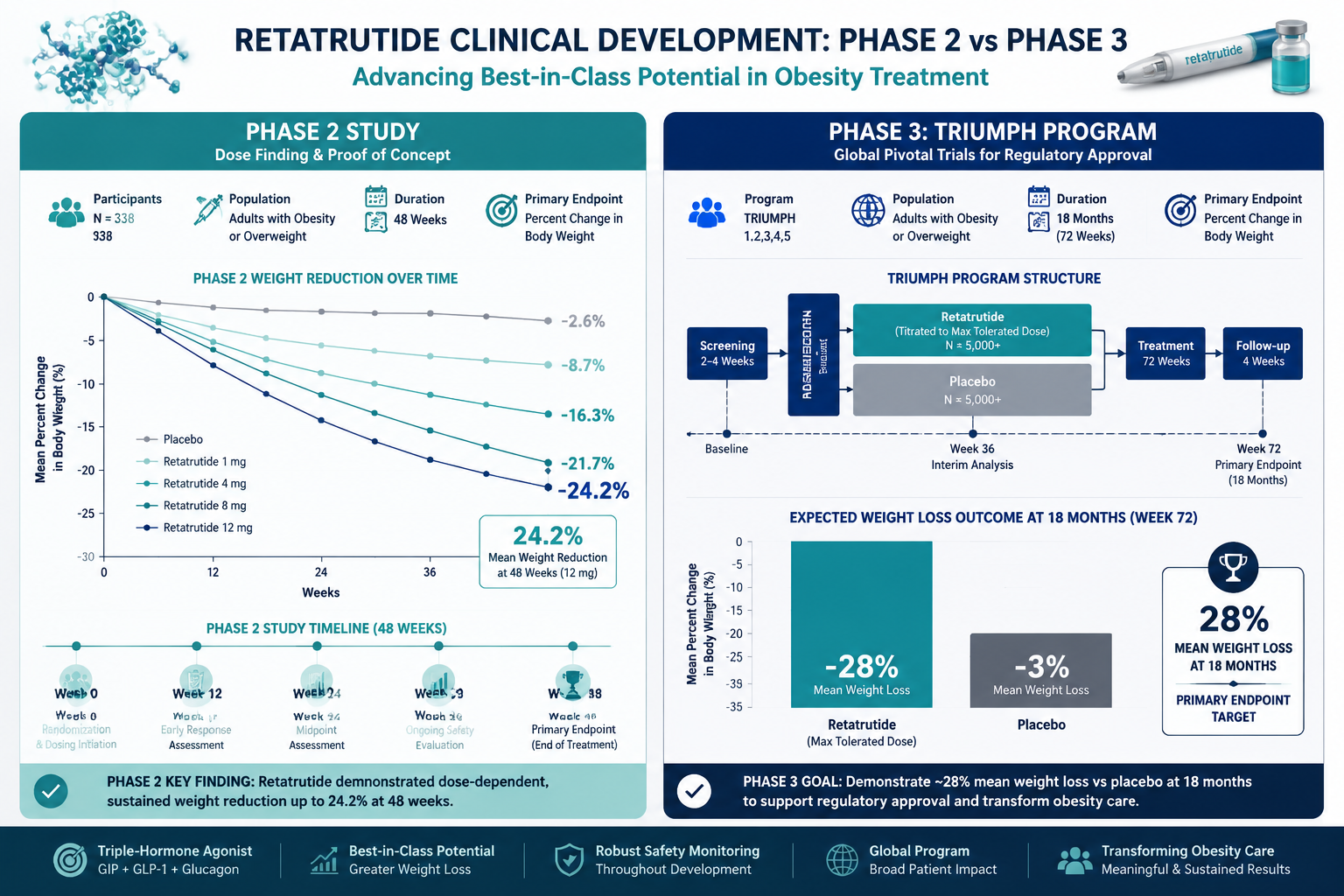
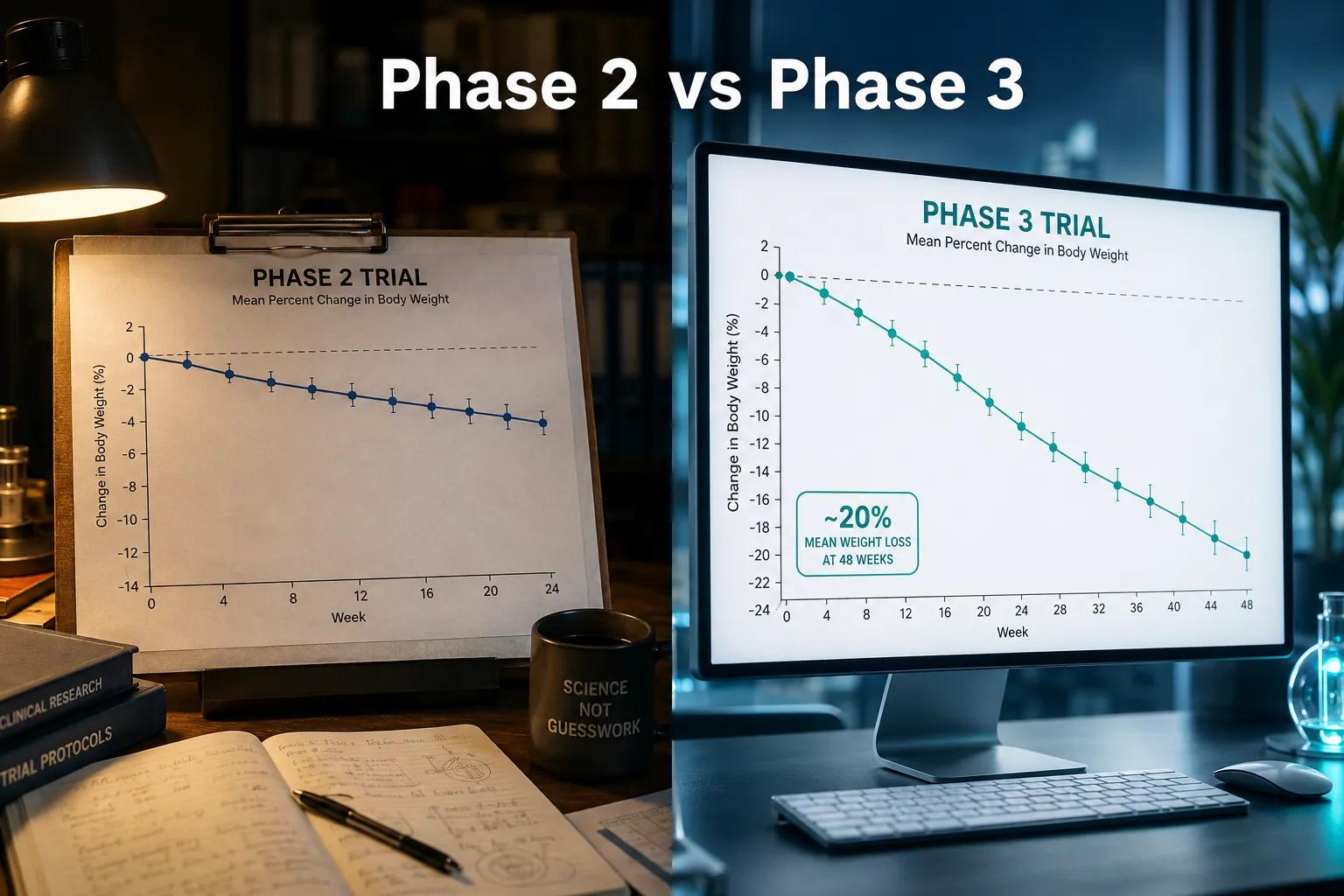
Participants in the retatrutide Phase 2 trial lost up to 24.2% of body weight over 48 weeks — a figure that outpaced every approved GLP-1 therapy on record at the time. That single data point accelerated Eli Lilly's decision to move retatrutide into Phase 3 development, and it fundamentally changed how researchers are designing metabolic endpoints for obesity and liver disease trials in 2026.

This article examines what GLP-3 retatrutide in Phase 3 trials means for obesity and MASLD research, how triple receptor agonism differs mechanistically from classic GLP-1 approaches, and what endpoint design shifts are emerging as a result.

Key Takeaways

  • Retatrutide simultaneously activates GLP-1, GIP, and glucagon receptors, producing greater weight loss than dual or single agonists in early trials.
  • Phase 3 programs are now incorporating liver-specific endpoints such as fibrosis resolution and MASLD Activity Score changes, not just body weight.
  • Triple agonism introduces unique metabolic signals — particularly through glucagon receptor activation — that require researchers to monitor hepatic and cardiovascular markers differently.
  • Comparing retatrutide to classic GLP-1 peptides reveals meaningful differences in energy expenditure, lipid clearance, and tolerability profiles.
  • Endpoint design for MASLD trials is evolving to capture histological, biomarker, and imaging outcomes simultaneously.
Key Takeaways

What Is Triple Agonism and Why Does It Matter for Metabolic Research

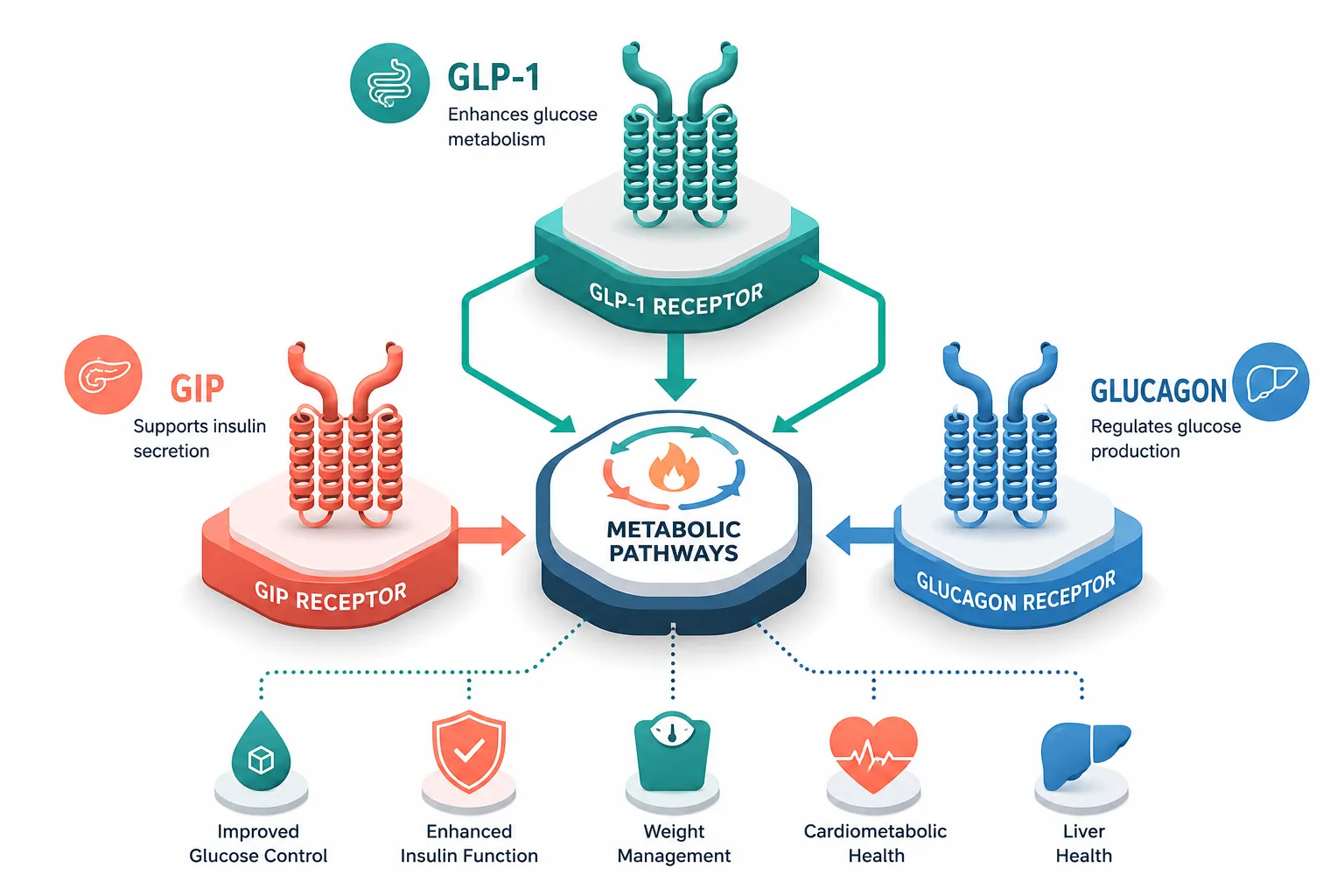
Classic GLP-1 receptor agonists like semaglutide act on a single receptor pathway to reduce appetite and slow gastric emptying. Dual agonists such as tirzepatide added GIP receptor co-activation, improving insulin sensitivity and amplifying weight loss. Retatrutide goes one step further by adding glucagon receptor (GCGR) agonism to the GLP-1 and GIP combination.

This triple mechanism matters for several reasons:

  • GLP-1 receptor activation reduces appetite and slows gastric emptying
  • GIP receptor activation enhances insulin secretion and improves adipose tissue metabolism
  • Glucagon receptor activation increases hepatic glucose output, raises energy expenditure, and promotes fat oxidation in the liver

The glucagon component is particularly relevant for MASLD research. Glucagon signaling directly reduces hepatic lipid accumulation, a core driver of metabolic dysfunction-associated steatotic liver disease. For researchers studying GLP-1 peptide mechanisms and sourcing, retatrutide represents a meaningful evolution beyond single-pathway tools.

"Triple agonism does not simply add effects — it creates synergistic metabolic signals that single or dual agonists cannot replicate."

This synergy is precisely why GLP-3 retatrutide in Phase 3 trials is reshaping obesity and MASLD research endpoints: the compound forces investigators to measure outcomes that single-receptor drugs rarely moved.

Phase 3 Trial Design: How Retatrutide Is Changing Research Endpoints
Phase 3 Trial Design: How Retatrutide Is Changing Research Endpoints

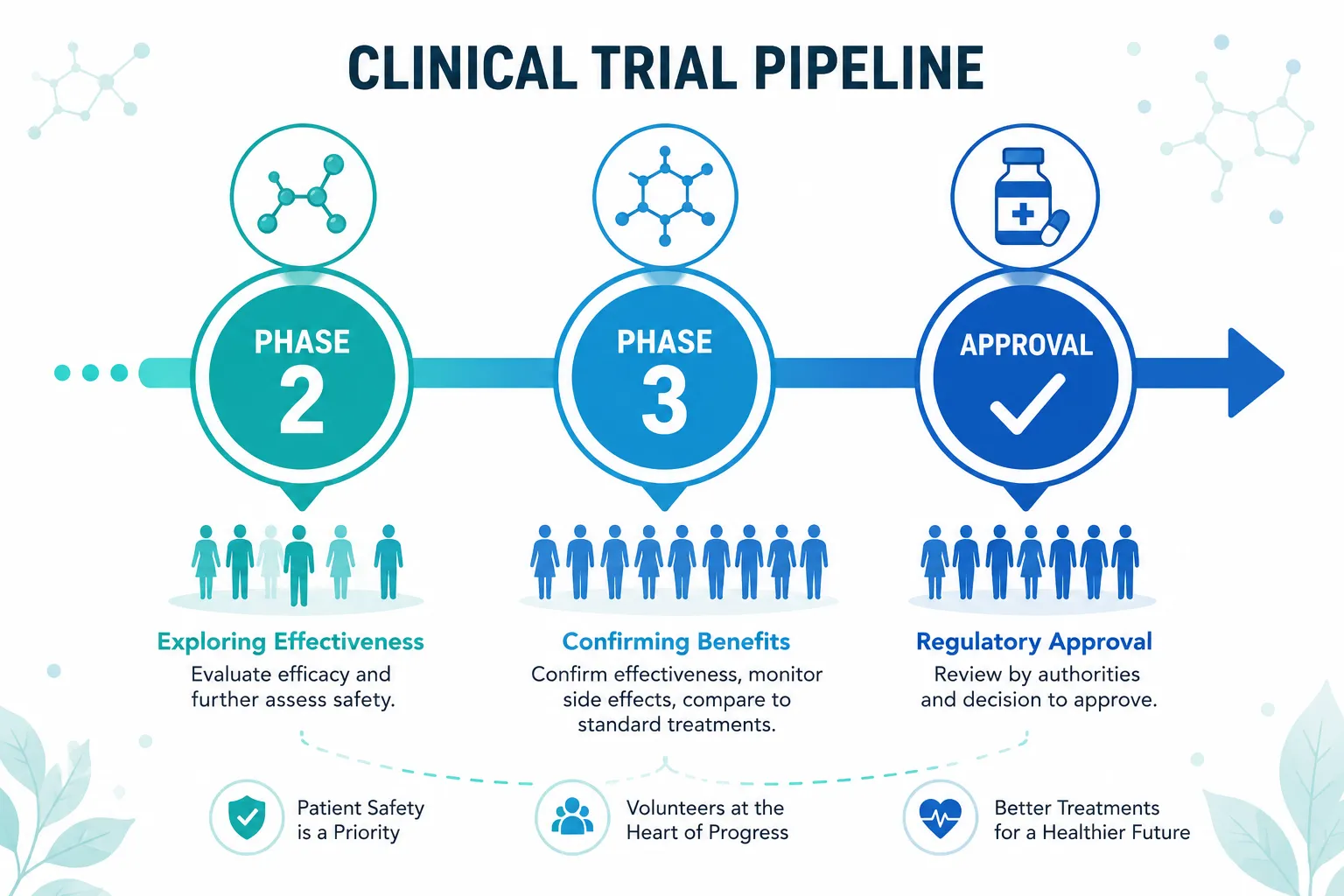
Eli Lilly's TRIUMPH Phase 3 program covers obesity, type 2 diabetes, and MASLD (metabolic dysfunction-associated steatotic liver disease, formerly NAFLD/NASH). Each arm introduces endpoint complexity that reflects the drug's multi-receptor biology.

Obesity Endpoints

Traditional obesity trials used percent body weight change as the primary endpoint. Phase 3 retatrutide trials now layer in:

Endpoint Category Specific Measures
Body composition MRI-based visceral adipose tissue volume
Cardiometabolic LDL-C, triglycerides, blood pressure
Functional 6-minute walk test, patient-reported outcomes
Safety Glucagon-related hepatic markers, bone density

The inclusion of visceral fat imaging reflects the glucagon receptor's targeted effect on hepatic and visceral lipid stores — a signal that waist circumference alone cannot capture.

MASLD-Specific Endpoints

This is where GLP-3 retatrutide in Phase 3 trials is most dramatically reshaping obesity and MASLD research endpoints. Liver trials now require:

  • Histological resolution of steatohepatitis without worsening fibrosis (FDA-aligned primary endpoint)
  • Fibrosis stage improvement by at least one stage on the METAVIR scale
  • MRI-PDFF (proton density fat fraction) as a non-invasive imaging biomarker
  • Liver stiffness measurement via FibroScan or MRE
  • Serum ALT normalization as a secondary biochemical marker

These layered endpoints are more demanding than what GLP-1-only trials required, but they are appropriate given retatrutide's direct hepatic signaling. Researchers interested in metabolic peptide tools for liver-focused protocols may also find value in reviewing research-only peptides used in complementary preclinical models.

Comparing Retatrutide to Classic GLP-1 Agents

The table below summarizes key mechanistic and endpoint differences:

Feature GLP-1 Agonist Dual Agonist (GIP+GLP-1) Retatrutide (Triple)
Weight loss (approx.) 10-15% 15-22% Up to 24%+
Hepatic fat reduction Moderate Moderate-High High
Energy expenditure Minimal increase Moderate Significant
MASLD endpoint utility Limited Moderate High

For researchers already tracking GLP-2 receptor biology or GLP-1 peptide product categories, the triple agonist framework offers a useful comparative reference point.

MASLD Research Design Implications in 2026

MASLD Research Design Implications in 2026

The shift toward composite histological endpoints in MASLD trials is not unique to retatrutide, but the drug's glucagon component has accelerated it. Researchers designing MASLD protocols in 2026 are now expected to pre-specify:

  1. Biopsy timing aligned with expected fibrosis response windows (typically 48-72 weeks)
  2. Non-invasive biomarker panels including Enhanced Liver Fibrosis (ELF) score and FIB-4
  3. Imaging sub-studies using MRI-PDFF at baseline, 24 weeks, and end of treatment
  4. Cardiovascular safety monitoring given glucagon's effects on heart rate and blood pressure

This multi-modal design philosophy is influencing adjacent research areas. Investigators studying metabolic peptides with hepatic or mitochondrial relevance — such as those reviewing SS-31 mitochondrial research themes or tesa dosage protocols for fat loss — are adopting similar composite endpoint frameworks.

The MASLD field has also begun distinguishing between steatosis resolution and fibrosis regression as separate but related outcomes. Retatrutide's Phase 3 design treats these as co-primary endpoints in the liver arm, a precedent that other investigational agents are now following.

Researchers working with research blog resources on peptide science will find the retatrutide endpoint framework a useful template for designing metabolic intervention studies across multiple tissue targets.

Conclusion

GLP-3 retatrutide in Phase 3 trials is doing more than testing a new weight-loss drug — it is redefining what rigorous metabolic research endpoints look like for both obesity and MASLD. The triple agonist mechanism forces investigators to measure visceral fat, hepatic histology, fibrosis staging, and cardiometabolic markers simultaneously, raising the bar for the entire field.

Actionable next steps for researchers and protocol designers:

  • Adopt composite endpoints that include both imaging (MRI-PDFF) and histological measures for any MASLD-adjacent study
  • Monitor glucagon receptor-related safety signals (heart rate, hepatic glucose output) when designing triple agonist or multi-receptor protocols
  • Use retatrutide Phase 3 endpoint frameworks as a reference template when designing studies with GLP-1-class or metabolic peptide tools
  • Stay current with TRIUMPH trial interim data releases, which are expected to report through 2026-2027
  • Review GLP-1 peptide research concepts to understand how single-receptor baselines compare to triple agonist benchmarks

The triple agonism era is not a refinement of existing metabolic research — it is a structural shift in how endpoints are conceived, measured, and interpreted.

https://www.puretestedpeptides.com/wp-content/uploads/2026/07/glp-3-retatrutide-in-phase-3-trials-how-triple-agonism-is-reshaping-obesity-and.webp 1024 1536 https://www.puretestedpeptides.com/wp-content/uploads/2026/01/buy-peptides-online.jpg 2026-07-31 13:04:112026-07-31 13:04:11GLP‑3 Retatrutide in Phase 3 Trials: How Triple Agonism Is Reshaping Obesity and MASLD Research Endpoints
Retatrutide Phase 3 and Beyond: What Ongoing Obesity Trials Mean for Research Readers

Retatrutide Phase 3 and Beyond: What Ongoing Obesity Trials Mean for Research Readers

July 28, 2026/0 Comments/in Uncategorized/by

Obesity now affects more than one billion people worldwide, and the pharmaceutical pipeline has never moved faster to address it. At the center of that momentum is retatrutide, a triple-receptor agonist that produced weight-loss results in Phase 2 trials that surprised even seasoned researchers. For anyone tracking the obesity drug pipeline, understanding Retatrutide Phase 3 and Beyond: What Ongoing Obesity Trials Mean for Research Readers is no longer optional, it is essential context for interpreting what comes next without overreading early signals.

Key Takeaways

  • Retatrutide simultaneously activates GLP-1, GIP, and glucagon receptors, setting it apart from dual-agonist competitors.
  • Phase 2 data showed up to 24% mean body weight reduction at 48 weeks, among the highest figures recorded in an obesity drug trial.
  • Phase 3 trials (the TRIUMPH program) are actively enrolling and will provide the larger, longer-term safety and efficacy data that Phase 2 cannot.
  • Research readers should distinguish between statistically significant results and clinically meaningful outcomes before drawing conclusions.
  • The broader GLP-1 and multi-agonist peptide research space is expanding rapidly, with retatrutide representing one of several active pipelines.

Understanding the Triple-Agonist Mechanism Behind the Headlines

Retatrutide (LY3437943) is developed by Eli Lilly. Unlike semaglutide or tirzepatide, it targets three receptors simultaneously: GLP-1 (glucagon-like peptide-1), GIP (glucose-dependent insulinotropic polypeptide), and glucagon receptors. This triple action is the core reason researchers are watching it so closely.

  • GLP-1 receptor activation suppresses appetite and slows gastric emptying.
  • GIP receptor activation enhances insulin secretion and may improve the tolerability of GLP-1 effects.
  • Glucagon receptor activation increases energy expenditure and promotes fat breakdown in the liver.

The combination theoretically creates a stronger metabolic effect than any single pathway alone. For readers exploring the broader landscape of metabolic peptides, it is worth noting that GLP-1 class peptides represent a rapidly growing category of research compounds, and retatrutide sits at the frontier of that category.

"Triple agonism is not just additive, it may be synergistic, which is why the Phase 2 weight-loss numbers were so striking."

What Phase 2 Results Actually Showed, and What They Did Not

What Phase 2 Results Actually Showed, and What They Did Not

The Phase 2 SURMOUNT-adjacent trial published in 2023 enrolled 338 adults with obesity or overweight. At the highest dose (12 mg weekly), participants lost a mean of 24.2% of body weight at 48 weeks. That figure circulated widely and generated significant excitement.

However, research readers should apply careful filters before extrapolating:

What Phase 2 Established What Phase 2 Did Not Establish
Dose-response relationship Long-term cardiovascular outcomes
Short-term tolerability profile Safety in diverse real-world populations
Preliminary efficacy signals Durability of weight loss after discontinuation
Biomarker improvements (lipids, glucose) Regulatory-grade safety data

Phase 2 trials are designed to find the right dose and detect obvious safety signals, not to confirm that a drug is safe and effective for broad clinical use. The sample size is intentionally small. Adverse events that occur in fewer than 1 in 100 patients may not appear at all.

For context on how peptide research benchmarks are established before large trials, the Bachem reference standards and peptide benchmarking guide provides useful background on how analytical rigor shapes compound evaluation.

Retatrutide Phase 3 and Beyond: What Ongoing Obesity Trials Mean for Research Readers

Retatrutide Phase 3 and Beyond: What Ongoing Obesity Trials Mean for Research Readers

The TRIUMPH Phase 3 program is the critical next step. As of 2026, multiple arms of this program are actively running, covering:

  • Adults with obesity (BMI 30 or above)
  • Adults with obesity and type 2 diabetes
  • Cardiovascular outcomes in high-risk populations
  • Adolescents with obesity (a newer, closely watched cohort)

Phase 3 trials typically enroll thousands of participants across multiple countries and run for one to five years. This scale is what allows researchers to detect rarer adverse events, assess durability, and compare outcomes across demographic subgroups.

What research readers should watch for in Phase 3 reporting:

  1. Primary endpoint clarity, Is the trial powered for weight loss, cardiovascular events, or both?
  2. Dropout and completion rates, High dropout can bias results in either direction.
  3. Comparator arms, Is retatrutide being tested against placebo, tirzepatide, or standard of care?
  4. Safety signal monitoring, Thyroid C-cell findings (a concern with GLP-1 agents in rodents) will be tracked closely.

Understanding how multi-receptor peptides interact with metabolic pathways is also relevant to adjacent research areas. Readers interested in related receptor research may find the MC4R research tag useful for exploring how central appetite-regulation pathways connect to broader obesity biology.

How to Interpret Ongoing Trial Data Without Overreading It

How to Interpret Ongoing Trial Data Without Overreading It

One of the most common mistakes in following active drug trials is treating interim data as definitive. Here is a practical framework for staying grounded:

Apply the "so what" test to every headline. A statistically significant result means the finding is unlikely to be due to chance, it does not automatically mean the effect is large enough to matter clinically.

Track the full publication, not the press release. Pharmaceutical companies release top-line results before peer-reviewed data is available. The full dataset often reveals nuances, particularly around adverse event rates and subgroup performance, that headlines omit.

Compare effect sizes in context. Retatrutide's Phase 2 weight-loss figures exceeded those of tirzepatide at comparable time points. But tirzepatide itself exceeded semaglutide. Each comparison requires matching dose, duration, and population characteristics.

Monitor regulatory milestones, not just trial milestones. A successful Phase 3 trial is necessary but not sufficient for approval. The FDA and EMA review manufacturing consistency, labeling, and risk-management plans alongside efficacy data.

For research readers building a broader understanding of the peptide research landscape, including how compounds like GLP-3 class agents are being characterized, staying current with the research blog provides ongoing context across multiple peptide categories.

Those specifically tracking retatrutide's compound profile for research purposes can also review available Reta 10mg research material listings for sourcing context.

Conclusion

Retatrutide Phase 3 and Beyond: What Ongoing Obesity Trials Mean for Research Readers comes down to one discipline: calibrated patience. The Phase 2 data is genuinely remarkable, but it is a starting point, not a conclusion. Phase 3 will answer the questions that matter most: long-term safety, cardiovascular impact, durability after treatment ends, and performance across diverse populations.

Actionable next steps for research readers in 2026:

  • Bookmark ClinicalTrials.gov entries for the TRIUMPH program and set alerts for status updates.
  • Read full peer-reviewed publications rather than relying on company press releases.
  • Cross-reference retatrutide findings with the broader multi-agonist literature, including tirzepatide and emerging GLP-1/glucagon dual agents.
  • Apply the Phase 2 vs. Phase 3 interpretive framework above every time new data surfaces.
  • Explore how adjacent peptide mechanisms, including peptide supplier quality standards, affect the reliability of research-grade compounds used in parallel studies.

The obesity treatment pipeline is moving at an unprecedented pace. Staying analytically rigorous, rather than reactive, is what separates informed research readers from those chasing headlines.

https://www.puretestedpeptides.com/wp-content/uploads/2026/07/retatrutide-phase-3-and-beyond-what-ongoing-obesity-trials-mean-for-research-rea-1.webp 1024 1536 https://www.puretestedpeptides.com/wp-content/uploads/2026/01/buy-peptides-online.jpg 2026-07-28 13:04:352026-07-28 13:04:35Retatrutide Phase 3 and Beyond: What Ongoing Obesity Trials Mean for Research Readers

Tag Archive for: obesity drug trials

Retatrutide Clinical Trials Explained: Phase 2 to Phase 3 Outcomes, Endpoints, and What Researchers Should Track

Retatrutide Clinical Trials Explained: Phase 2 to Phase 3 Outcomes, Endpoints, and What Researchers Should Track

June 14, 2026/0 Comments/by Pure Tested

A drug that produces roughly 28% average body weight loss in 18 months — approaching outcomes typically associated with bariatric surgery — demands a clear-eyed reading of the trial record behind it. That is exactly what this guide delivers. Understanding the Retatrutide Clinical Trials Explained: Phase 2 to Phase 3 Outcomes, Endpoints, and What Researchers Should Track framework helps researchers, clinicians, and informed readers interpret efficacy data, dose-escalation patterns, and cardiometabolic endpoints without getting lost in trial jargon.

Key Takeaways

  • Retatrutide is a once-weekly triple agonist targeting GLP-1, GIP, and glucagon receptors simultaneously.
  • Phase 2 trials showed up to 24.2% weight reduction at 48 weeks; Phase 3 data now shows approximately 28% over 18 months.
  • The TRIUMPH Phase 3 program spans obesity, type 2 diabetes, knee osteoarthritis, and obstructive sleep apnea.
  • Gastrointestinal adverse events are the most common safety signal, with discontinuation rates of 12-18% at higher doses.
  • Researchers should track both primary efficacy endpoints and secondary cardiometabolic biomarkers across dose cohorts.

Key Takeaways

From Phase 2 to Phase 3: How the Trial Record Builds

The Retatrutide Clinical Trials Explained: Phase 2 to Phase 3 Outcomes, Endpoints, and What Researchers Should Track story begins with mechanism. Retatrutide activates three receptors — GLP-1, GIP, and glucagon — in a single once-weekly subcutaneous injection. This triple-agonist profile distinguishes it from earlier GLP-1 mono-agonists and dual agonists. For context on how GLP-1 receptor pharmacology has evolved across generations, the GLP-1 generations overview provides useful background, and a deeper look at dual receptor agonism in research shows why adding a third receptor target changes the efficacy ceiling.

Phase 2 results published in a landmark study demonstrated a mean weight reduction of up to 24.2% at 48 weeks in adults with obesity or overweight without diabetes. Crucially, this was dose-dependent: participants on higher dose arms consistently outperformed those on lower doses, establishing the dose-escalation rationale that Phase 3 protocols would formalize.

Phase 3 results from the TRIUMPH program have now confirmed and extended those findings. In an obesity-focused trial, retatrutide produced approximately 28% average weight loss over 18 months — a figure that rivals surgical intervention. The TRANSCEND-T2D-1 Phase 3 trial in type 2 diabetes reported a mean HbA1c reduction of 1.94% alongside a 15.3% decrease in body weight over 40 weeks in adults inadequately controlled by diet and exercise alone.

Trial Phase Population Duration Key Outcome
Phase 2 Obesity/Overweight (no T2D) 48 weeks Up to 24.2% weight loss
Phase 3 (TRIUMPH) Obesity 18 months ~28% weight loss
Phase 3 (TRANSCEND-T2D-1) Type 2 Diabetes 40 weeks 1.94% HbA1c reduction, 15.3% weight loss

From Phase 2 to Phase 3: How the Trial Record Builds

Endpoints and Cardiometabolic Outcomes Researchers Must Prioritize

When reading any retatrutide trial report, distinguishing primary endpoints from secondary and exploratory endpoints is essential.

Primary efficacy endpoints in obesity trials are typically:

  • Percentage change in body weight from baseline
  • Proportion of participants achieving 5%, 10%, or 15% weight loss thresholds

Secondary endpoints that carry significant clinical weight include:

  • Waist circumference reduction
  • Fasting glucose and insulin sensitivity markers
  • HbA1c trajectory (especially in metabolic subgroups)
  • Lipid panel changes (LDL, triglycerides, HDL)
  • Blood pressure and resting heart rate

Cardiometabolic outcomes deserve special attention because glucagon receptor activation — the component that separates retatrutide from tirzepatide — appears to amplify energy expenditure and lipid mobilization beyond what GLP-1/GIP alone achieves. Researchers tracking these outcomes should note that the TRIUMPH program also evaluates retatrutide across knee osteoarthritis pain and obstructive sleep apnea, with over 5,800 participants enrolled across indications. This breadth is unusual and signals confidence in the mechanism's systemic reach.

For researchers interested in how metabolic peptides interact with body composition endpoints more broadly, the tesa body composition research themes page offers a useful parallel in lipid mobilization science, and lipid mobilization research themes provides additional mechanistic context.


Endpoints and Cardiometabolic Outcomes Researchers Must Prioritize

Safety Signals, Dose Escalation, and What the Data Shows

The safety profile of retatrutide follows a pattern familiar to GLP-1 class agents but with important nuances researchers should document carefully.

Most common adverse events:

  • Nausea
  • Diarrhea
  • Vomiting
  • Constipation

Discontinuation rates due to adverse events ranged from approximately 12-18% at higher doses, compared to roughly 4% with placebo. This gap is clinically meaningful and underscores why dose-escalation schedules matter. Trials used gradual titration — starting at lower milligram doses and stepping up over weeks — to improve tolerability. Researchers reviewing trial data should always note which dose arm a participant was in when an adverse event occurred, as pooling across arms obscures this signal.

"The dose-escalation pattern in retatrutide trials is not incidental — it is the primary tool for balancing efficacy against gastrointestinal tolerability."

Regulatory momentum is building. Eli Lilly plans to seek FDA approval for retatrutide, potentially before the end of 2026, pending completion of remaining TRIUMPH trial arms. For researchers following the broader GLP-1 triple agonist landscape, retatrutide represents the most advanced compound in this class currently in late-stage development. Those sourcing research-grade reference compounds can also explore the retatrutide product tag and GLP-1 research peptide category for laboratory use context.


Conclusion

The Retatrutide Clinical Trials Explained: Phase 2 to Phase 3 Outcomes, Endpoints, and What Researchers Should Track framework comes down to three practical actions. First, always read trial results stratified by dose arm — aggregate numbers hide the dose-response relationship that defines this compound. Second, track secondary cardiometabolic endpoints alongside primary weight outcomes; the glucagon receptor component makes these particularly informative. Third, monitor the TRIUMPH program's remaining readouts on sleep apnea and osteoarthritis, which will determine how broadly retatrutide's label is eventually written. As 2026 progresses toward a likely FDA submission, the trial record already makes one thing clear: triple-receptor agonism has moved from hypothesis to high-confidence clinical outcome.

https://www.puretestedpeptides.com/wp-content/uploads/2026/06/Retatrutide-Clinical-Trials-Explained-Phase-2-to-Phase-3-Outcomes-Endpoints-and-What-Researchers-Should-Track.png 1024 1536 Pure Tested https://www.puretestedpeptides.com/wp-content/uploads/2026/01/buy-peptides-online.jpg Pure Tested2026-06-14 16:48:362026-07-20 15:03:14Retatrutide Clinical Trials Explained: Phase 2 to Phase 3 Outcomes, Endpoints, and What Researchers Should Track
×

Helpful Links

  • My account
  • Cart
  • Checkout
  • Refund and Returns Policy
  • Privacy Policy
  • SMS Privacy Policy
  • Login
  • My Account
  • Logout

USA Made Lab Tested Peptides

All products are sold for research, laboratory, or analytical purposes only, and are not for human consumption


Pure Tested Peptides is a chemical supplier. Pure Tested Peptides is not a compounding / chemical compounding facility as defined under 503A of the Federal Food, Drug, and Cosmetic act. Pure Tested Peptides is not an outsourcing facility as defined under 503B of the Federal Food, Drug, and Cosmetic act.

The statements made within this website have not been evaluated by the US Food and Drug Administration. The products we offer are not intended to diagnose, treat, cure or prevent any disease.

Human/Animal Consumption Prohibited. Laboratory/In-Vitro Experimental Use Only

Scroll to top Scroll to top Scroll to top