

A single drug producing nearly 30% average body-weight loss in a randomized Phase 3 trial would have seemed implausible a decade ago. In 2026, that is exactly what the latest retatrutide Phase 3 results are showing — and the implications for obesity and glycemic research extend well beyond the scale.
Key Takeaways
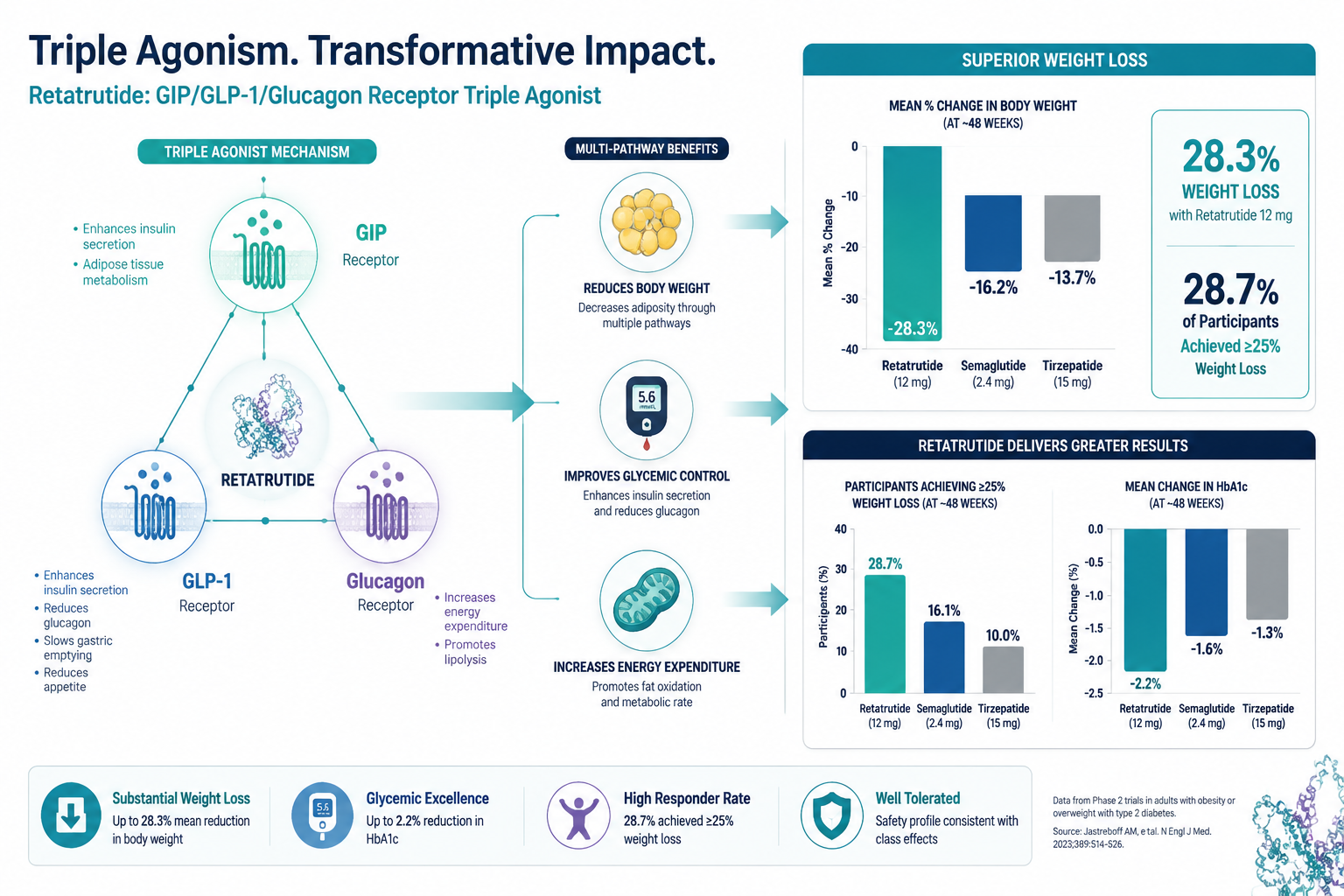
- Retatrutide is a first-in-class GIP/GLP-1/glucagon triple agonist being developed by Eli Lilly for obesity and related metabolic conditions.
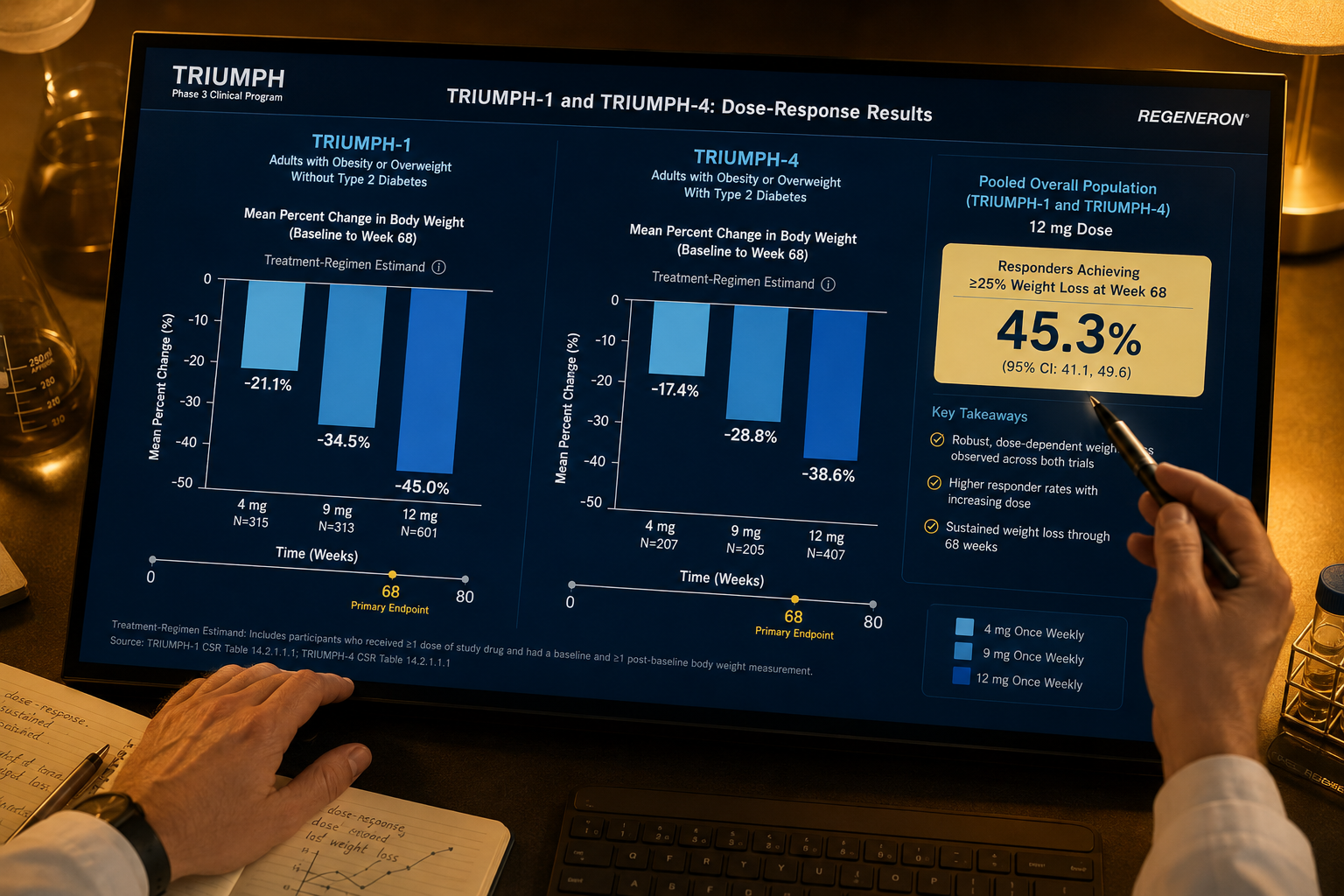
- The TRIUMPH-1 Phase 3 trial showed mean weight loss of 28.3% at 80 weeks on the 12 mg dose, with 45.3% of participants losing 30% or more of body weight.
- TRIUMPH-4 reported 28.7% mean weight loss at 68 weeks — the largest Phase 3 weight-loss signal ever recorded for a GLP-1-class compound.
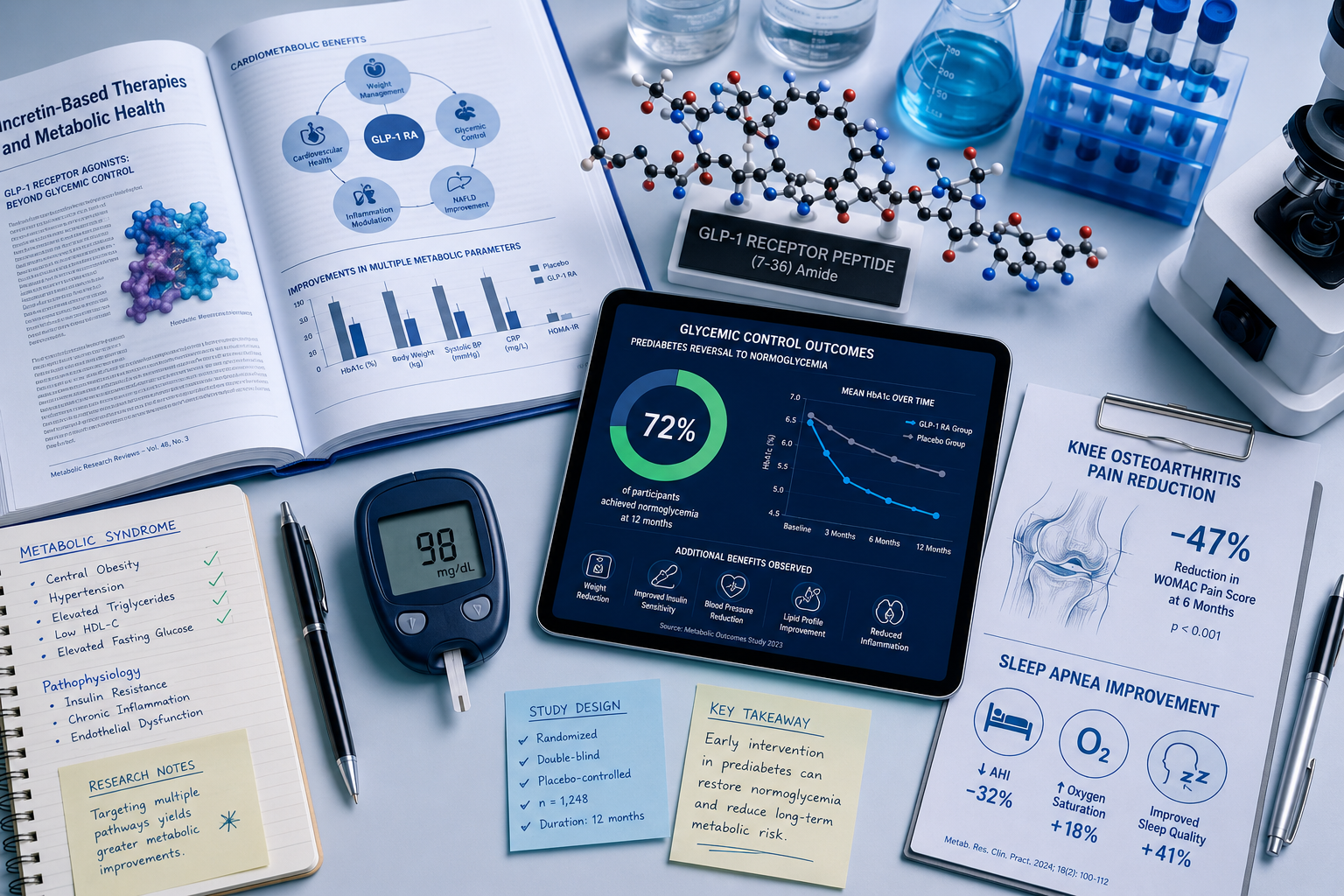
- Secondary endpoints include a 72% reversion of prediabetes to normoglycemia and a 75.8% reduction in knee osteoarthritis pain.
- June 2026 Lilly data confirm consistent benefits across multiple obesity-related conditions, including sleep apnea and type 2 diabetes.
What Makes Retatrutide Different From Earlier GLP-1 Agents
Most researchers familiar with GLP-1 peptide research and generational differences know that each successive agent in this class has pushed weight-loss benchmarks higher. Semaglutide averaged roughly 15% weight loss in Phase 3. Tirzepatide, a dual GIP/GLP-1 agonist, reached approximately 22%. Retatrutide adds a third target — the glucagon receptor — creating a triple-agonist profile that amplifies energy expenditure alongside appetite suppression and insulin sensitization.
This triple mechanism is central to understanding the retatrutide Phase 3 results. By activating glucagon receptors, retatrutide increases hepatic glucose output and thermogenesis, effects that single and dual agonists do not fully capture. Researchers studying GLP-3 and retatrutide compound data have noted that this added axis may explain why the efficacy ceiling appears higher than with prior agents.
TRIUMPH-1 and TRIUMPH-4: Breaking Down the Phase 3 Data
The TRIUMPH-1 trial enrolled 2,339 adults with obesity or overweight with at least one weight-related complication. At 80 weeks, mean weight loss was dose-dependent:
| Dose | Mean Weight Loss |
|---|---|
| 4 mg | 19.0% |
| 9 mg | 25.9% |
| 12 mg | 28.3% (~70 lb) |
| Placebo | 2.2% |
Notably, 45.3% of participants on 12 mg achieved 30% or greater weight loss — a threshold that previously required bariatric surgery. In a prespecified extension of participants with a baseline BMI of 35 or higher, continued 12 mg treatment to 104 weeks produced approximately 30.3% mean weight loss, equivalent to roughly 85 lb over two years.
"A 30% reduction in body weight through a once-weekly injectable represents a fundamental shift in what pharmacotherapy can achieve."
TRIUMPH-4, reported in December 2025 and now widely cited in 2026 analyses, reinforced these findings. Mean body-weight reduction reached 28.7% at 68 weeks on 12 mg once weekly, versus 2.1% on placebo. This figure is described as the largest weight-loss signal ever reported in a randomized Phase 3 trial of any GLP-1-class compound, exceeding the Phase 3 performance of both semaglutide and tirzepatide.
Secondary outcomes from TRIUMPH-4 are equally striking:
- 75.8% reduction in knee osteoarthritis pain scores
- ~20% reduction in LDL cholesterol
- ~72% reversion of prediabetes to normoglycemia
For researchers already exploring metabolic peptides such as MOTS-c and its mitochondrial metabolic signaling, these multi-system effects align with a broader understanding that adiposity drives dysfunction across multiple organ systems simultaneously.
Glycemic Research Implications and the June 2026 Lilly Update
On June 6, 2026, Eli Lilly released additional Phase 3 data confirming that retatrutide produced substantial weight loss alongside meaningful improvements in knee osteoarthritis pain, moderate-to-severe obstructive sleep apnea, and type 2 diabetes. The TRANSCEND-T2D-1 trial arm demonstrated strong glycemic control paired with double-digit weight loss in patients with established type 2 diabetes — a combination that positions retatrutide as a potential platform therapy rather than a single-indication drug.
This breadth of effect is relevant to researchers studying body composition and metabolic research themes or SLU-PP-332 metabolic modulation, because it highlights how upstream energy-balance interventions can cascade into downstream glycemic, inflammatory, and structural improvements.
The 72% prediabetes reversion rate is particularly significant. It suggests that weight loss of sufficient magnitude may normalize glucose regulation in a large proportion of at-risk individuals, reducing the pipeline burden on diabetes-specific interventions.
Researchers also tracking NAD+ energetics and longevity research may find the mitochondrial and thermogenic components of glucagon receptor activation worth examining in parallel, as both pathways converge on cellular energy efficiency.
Conclusion
The retatrutide Phase 3 results represent a meaningful advance in obesity and glycemic research. TRIUMPH-1 and TRIUMPH-4 together establish a new efficacy benchmark — approximately 28 to 30% body-weight reduction — that no prior pharmacological agent has achieved in randomized controlled trials. The secondary endpoints, particularly the 72% prediabetes reversion rate and the reductions in osteoarthritis pain and LDL cholesterol, indicate that the benefits extend well beyond the scale.
Actionable next steps for researchers and clinicians:
- Review the full TRIUMPH-1 and TRIUMPH-4 datasets as they become available in peer-reviewed journals in 2026.
- Monitor the TRANSCEND-T2D-1 readouts for glycemic-specific endpoints relevant to type 2 diabetes management protocols.
- Consider how triple-agonist mechanisms intersect with other metabolic research areas, including GLP-1 peptide sourcing and research concepts and growth hormone axis compounds like tesa.
- Track Eli Lilly's regulatory submission timeline, as approval decisions will shape clinical access and research availability throughout 2026 and beyond.
The retatrutide Phase 3 results confirm that the next generation of metabolic pharmacotherapy has arrived — and the data demand serious attention from anyone working at the intersection of obesity and glycemic research.
Leave a Reply
Want to join the discussion?Feel free to contribute!