
TB-500 and BPC-157: A Comprehensive Research Guide for 2025
Imagine two synthetic peptides that have captured the attention of researchers worldwide, promising insights into tissue regeneration and healing mechanisms that could reshape our understanding of cellular repair. TB-500 and BPC-157 represent some of the most extensively studied research peptides in modern laboratories, yet they remain shrouded in regulatory complexity and scientific debate.
These research compounds have generated significant interest in the scientific community due to their unique molecular structures and potential mechanisms of action. While both peptides show promise in preclinical studies, their journey from laboratory bench to potential therapeutic applications remains incomplete, making them subjects of ongoing research rather than established treatments.
Key Takeaways
• TB-500 and BPC-157 are research peptides derived from naturally occurring proteins, studied primarily in animal models for their potential regenerative properties
• Both compounds remain experimental with no FDA approval for human use, classified strictly as research substances in 2025
• WADA prohibits both peptides in competitive sports, listing them under banned substances for athletic performance
• Safety profiles remain incomplete due to limited human clinical trials and lack of standardized dosing protocols
• Legal access is restricted to research purposes only, with significant regulatory oversight required for legitimate scientific studies
Understanding TB-500 and BPC-157: Molecular Foundations
TB-500: The Thymosin Beta-4 Derivative
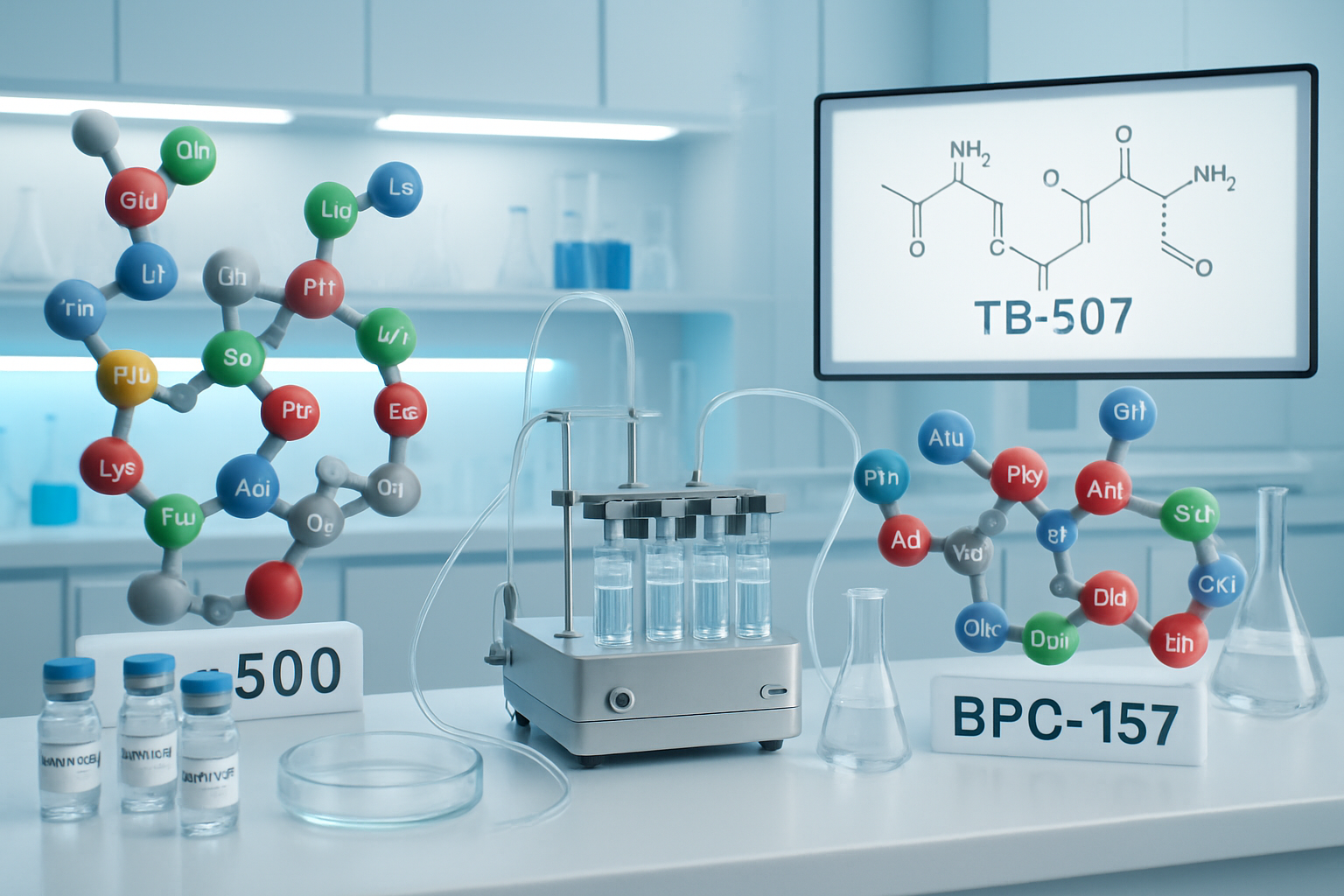
TB-500 represents a synthetic version of Thymosin Beta-4, a naturally occurring protein found in virtually all human and animal cells except red blood cells. This 43-amino acid peptide plays a crucial role in cellular processes, particularly in wound healing and tissue regeneration mechanisms [1].
The molecular structure of TB-500 enables it to interact with actin, a protein essential for cell movement and structural integrity. Research indicates that TB-500 and BPC-157 work through different pathways, with TB-500 primarily focusing on actin upregulation to facilitate cell migration and differentiation [2].
Key characteristics of TB-500 include:
- Molecular weight: Approximately 4.9 kDa
- Amino acid sequence: 43 residues long
- Primary mechanism: Actin upregulation and cell migration
- Research focus: Muscle, tendon, and ligament healing
- Stability: Requires proper storage conditions for research applications
BPC-157: The Gastric Protective Peptide
BPC-157, or Body Protective Compound-157, is a pentadecapeptide consisting of 15 amino acids. Originally derived from a protective protein found in human gastric juice, this synthetic peptide has demonstrated remarkable stability and bioactivity in laboratory settings [3].
Unlike TB-500, BPC-157 appears to work through multiple pathways, including angiogenesis promotion, growth factor expression, and nitric oxide pathway modulation. When researchers study TB-500 and BPC-157 combinations, they often observe complementary mechanisms that may enhance overall research outcomes.
Essential features of BPC-157:
- Molecular composition: 15 amino acids
- Origin: Derived from gastric protective proteins
- Stability: Highly stable in gastric acid environments
- Research applications: Gastroprotective and tissue healing studies
- Administration routes: Subcutaneous, intramuscular, and oral in research settings
Research Applications and Mechanisms of TB-500 and BPC-157
Tissue Regeneration Research
Laboratory studies have extensively investigated how TB-500 and BPC-157 influence tissue regeneration processes. TB-500's primary mechanism involves promoting actin upregulation, which facilitates cellular migration to injury sites. This process is crucial for understanding how cells coordinate repair responses in damaged tissues [4].
Research has shown that TB-500 may accelerate healing in:
- Muscle tissue: Enhanced satellite cell activation and migration
- Tendon structures: Improved collagen synthesis and organization
- Ligament repair: Increased cellular proliferation at injury sites
- Cardiac tissue: Potential cardioprotective effects in animal models
BPC-157 research has focused on its gastroprotective properties and broader healing mechanisms. Studies indicate that this peptide may promote angiogenesis (blood vessel formation) and modulate inflammatory responses, making it valuable for researchers studying various healing processes [5].
Comparative Research Methodologies
When laboratories compare TB-500 and BPC-157, they often design studies that examine both individual and combined effects. Research peptide blends have become increasingly popular for investigating synergistic mechanisms.
| Aspect | TB-500 | BPC-157 |
|---|---|---|
| Primary Target | Actin/Cell Migration | Angiogenesis/Protection |
| Molecular Size | 43 amino acids | 15 amino acids |
| Research Stability | Moderate | High |
| Study Duration | Typically 2-8 weeks | Variable, 1-12 weeks |
| Common Models | Muscle/tendon injury | Gastric/vascular studies |
Cellular Mechanisms and Pathways
Understanding the cellular pathways involved in TB-500 and BPC-157 research requires examining their distinct mechanisms of action. TB-500 primarily works by binding to actin monomers, preventing their polymerization and promoting cell motility. This mechanism is particularly relevant in studies examining muscle regeneration and wound healing [6].
BPC-157 operates through more diverse pathways, including:
- VEGF upregulation: Promoting blood vessel formation
- Growth factor modulation: Enhancing healing factor expression
- Nitric oxide pathways: Influencing vascular function
- Inflammatory mediation: Modulating immune responses
Researchers interested in comprehensive peptide studies often explore diverse peptide libraries to understand how different compounds interact within biological systems.
Safety Considerations and Regulatory Status
Current Regulatory Framework
The regulatory landscape surrounding TB-500 and BPC-157 remains complex and strictly controlled. Both peptides are classified as research substances only, with no approval from the FDA for human therapeutic use. This classification means that any legitimate use must occur within approved research settings with proper institutional oversight [7].
Key regulatory considerations include:
- FDA Status: Not approved for human consumption or therapy
- WADA Classification: Prohibited in competitive sports
- DEA Scheduling: Not controlled substances but regulated as research chemicals
- International Status: Varies by country, generally research-only
Safety Profile and Risk Assessment
Limited human clinical data means that the safety profiles of TB-500 and BPC-157 remain largely unknown. Most safety information comes from animal studies and anecdotal reports, which cannot provide comprehensive risk assessments for human applications [8].
Potential safety concerns identified in research include:
🔬 Laboratory Considerations:
- Unknown long-term effects in biological systems
- Lack of standardized dosing protocols
- Potential contamination from unregulated sources
- Possible interactions with other research compounds
🚨 Research Safety Protocols:
- Proper institutional review board approval required
- Controlled laboratory environments essential
- Documentation of all experimental parameters
- Regular safety monitoring throughout studies
Quality Control in Research Settings
Ensuring peptide quality is crucial for reproducible research outcomes. Laboratories working with TB-500 and BPC-157 must implement rigorous quality control measures, including third-party testing and proper storage protocols. Best practices for storing research peptides are essential for maintaining compound integrity throughout experimental periods.
Quality control measures should include:
- Purity verification: HPLC analysis for compound verification
- Sterility testing: Ensuring microbiological safety
- Potency assessment: Confirming biological activity
- Stability monitoring: Tracking degradation over time
Research Protocols and Methodological Considerations

Experimental Design for TB-500 and BPC-157 Studies
Designing robust research protocols for TB-500 and BPC-157 requires careful consideration of multiple variables. Researchers must account for dosing regimens, administration routes, study duration, and outcome measurements when developing experimental frameworks [9].
Standard research considerations include:
Study Design Elements:
- Control group establishment with appropriate placebo controls
- Randomization protocols to minimize experimental bias
- Blinding procedures where applicable in animal studies
- Statistical power calculations for adequate sample sizes
Dosing Considerations:
- Species-specific dosing adjustments based on body weight
- Route of administration (subcutaneous, intramuscular, oral)
- Frequency of administration throughout study periods
- Dose-response relationship establishment
Laboratory Infrastructure Requirements
Research facilities studying TB-500 and BPC-157 must maintain appropriate infrastructure for peptide handling and storage. This includes temperature-controlled environments, proper reconstitution facilities, and contamination prevention protocols.
Essential laboratory requirements:
- Storage facilities: -20°C to -80°C freezer capacity
- Reconstitution areas: Sterile preparation environments
- Documentation systems: Comprehensive record-keeping protocols
- Safety equipment: Appropriate personal protective equipment
Many research institutions benefit from working with established suppliers who provide comprehensive research support including technical documentation and storage guidelines.
Data Collection and Analysis Methods
Effective research with TB-500 and BPC-157 requires systematic data collection and analysis approaches. Researchers must establish clear endpoints and measurement protocols before beginning experimental work.
<!DOCTYPE html>
<html lang="en">
<head>
    <meta charset="UTF-8">
    <meta name="viewport" content="width=device-width, initial-scale=1.0">
    <title>TB-500 and BPC-157 Research Protocol Calculator</title>
    <style>
        .cg-element-container {
            max-width: 800px;
            margin: 20px auto;
            padding: 20px;
            font-family: 'Segoe UI', Tahoma, Geneva, Verdana, sans-serif;
            background: linear-gradient(135deg, #f5f7fa 0%, #c3cfe2 100%);
            border-radius: 12px;
            box-shadow: 0 8px 32px rgba(0,0,0,0.1);
        }
        .cg-element-header {
            text-align: center;
            margin-bottom: 30px;
            color: #2c3e50;
        }
        .cg-element-title {
            font-size: 24px;
            font-weight: bold;
            margin-bottom: 10px;
        }
        .cg-element-subtitle {
            font-size: 14px;
            color: #7f8c8d;
        }
        .cg-element-form {
            display: grid;
            gap: 20px;
            margin-bottom: 30px;
        }
        .cg-element-input-group {
            display: flex;
            flex-direction: column;
            gap: 8px;
        }
        .cg-element-label {
            font-weight: 600;
            color: #34495e;
            font-size: 14px;
        }
        .cg-element-input, .cg-element-select {
            padding: 12px;
            border: 2px solid #e0e6ed;
            border-radius: 8px;
            font-size: 16px;
            transition: border-color 0.3s ease;
            background: white;
        }
        .cg-element-input:focus, .cg-element-select:focus {
            outline: none;
            border-color: #3498db;
            box-shadow: 0 0 0 3px rgba(52, 152, 219, 0.1);
        }
        .cg-element-button {
            background: linear-gradient(135deg, #667eea 0%, #764ba2 100%);
            color: white;
            border: none;
            padding: 15px 30px;
            border-radius: 8px;
            font-size: 16px;
            font-weight: 600;
            cursor: pointer;
            transition: transform 0.2s ease;
        }
        .cg-element-button:hover {
            transform: translateY(-2px);
            box-shadow: 0 5px 15px rgba(0,0,0,0.2);
        }
        .cg-element-results {
            background: white;
            padding: 25px;
            border-radius: 10px;
            margin-top: 20px;
            box-shadow: 0 4px 15px rgba(0,0,0,0.1);
        }
        .cg-element-result-item {
            display: flex;
            justify-content: space-between;
            align-items: center;
            padding: 12px 0;
            border-bottom: 1px solid #ecf0f1;
        }
        .cg-element-result-item:last-child {
            border-bottom: none;
        }
        .cg-element-result-label {
            font-weight: 600;
            color: #2c3e50;
        }
        .cg-element-result-value {
            font-weight: bold;
            color: #27ae60;
            font-size: 16px;
        }
        .cg-element-warning {
            background: #fff3cd;
            border: 1px solid #ffeaa7;
            color: #856404;
            padding: 15px;
            border-radius: 8px;
            margin-top: 20px;
            font-size: 14px;
        }
        @media (max-width: 600px) {
            .cg-element-container {
                margin: 10px;
                padding: 15px;
            }
            .cg-element-title {
                font-size: 20px;
            }
        }
    </style>
</head>
<body>
    <div class="cg-element-container">
        <div class="cg-element-header">
            <div class="cg-element-title">TB-500 and BPC-157 Research Protocol Calculator</div>
            <div class="cg-element-subtitle">Calculate dosing and reconstitution for research applications</div>
        </div>

        <div class="cg-element-form">
            <div class="cg-element-input-group">
                <label class="cg-element-label">Peptide Type</label>
                <select class="cg-element-select" id="peptideType">
                    <option value="tb500">TB-500 (10mg vial)</option>
                    <option value="bpc157">BPC-157 (5mg vial)</option>
                    <option value="combination">TB-500 + BPC-157 Combination</option>
                </select>
            </div>

            <div class="cg-element-input-group">
                <label class="cg-element-label">Subject Weight (kg)</label>
                <input type="number" class="cg-element-input" id="subjectWeight" placeholder="Enter weight in kg" min="0.1" step="0.1">
            </div>

            <div class="cg-element-input-group">
                <label class="cg-element-label">Research Model</label>
                <select class="cg-element-select" id="researchModel">
                    <option value="mouse">Mouse Model</option>
                    <option value="rat">Rat Model</option>
                    <option value="rabbit">Rabbit Model</option>
                    <option value="other">Other Model</option>
                </select>
            </div>

            <div class="cg-element-input-group">
                <label class="cg-element-label">Study Duration (days)</label>
                <input type="number" class="cg-element-input" id="studyDuration" placeholder="Enter study duration" min="1" max="84">
            </div>

            <div class="cg-element-input-group">
                <label class="cg-element-label">Administration Frequency</label>
                <select class="cg-element-select" id="frequency">
                    <option value="daily">Daily</option>
                    <option value="eod">Every Other Day</option>
                    <option value="weekly">Weekly</option>
                    <option value="biweekly">Bi-weekly</option>
                </select>
            </div>

            <button class="cg-element-button" onclick="calculateProtocol()">Calculate Research Protocol</button>
        </div>

        <div class="cg-element-results" id="results" style="display: none;">
            <h3 style="margin-top: 0; color: #2c3e50;">Research Protocol Results</h3>
            <div class="cg-element-result-item">
                <span class="cg-element-result-label">Recommended Dose per Administration:</span>
                <span class="cg-element-result-value" id="dosePerAdmin">-</span>
            </div>
            <div class="cg-element-result-item">
                <span class="cg-element-result-label">Total Administrations:</span>
                <span class="cg-element-result-value" id="totalAdmin">-</span>
            </div>
            <div class="cg-element-result-item">
                <span class="cg-element-result-label">Total Peptide Required:</span>
                <span class="cg-element-result-value" id="totalPeptide">-</span>
            </div>
            <div class="cg-element-result-item">
                <span class="cg-element-result-label">Recommended Reconstitution Volume:</span>
                <span class="cg-element-result-value" id="reconVolume">-</span>
            </div>
            <div class="cg-element-result-item">
                <span class="cg-element-result-label">Injection Volume per Dose:</span>
                <span class="cg-element-result-value" id="injectionVolume">-</span>
            </div>
        </div>

        <div class="cg-element-warning">
            <strong>Research Use Only:</strong> This calculator is designed for research protocol planning only. All peptide research must be conducted under appropriate institutional oversight with proper ethical approvals. TB-500 and BPC-157 are not approved for human use.
        </div>
    </div>

    <script>
        function calculateProtocol() {
            const peptideType = document.getElementById('peptideType').value;
            const subjectWeight = parseFloat(document.getElementById('subjectWeight').value);
            const researchModel = document.getElementById('researchModel').value;
            const studyDuration = parseInt(document.getElementById('studyDuration').value);
            const frequency = document.getElementById('frequency').value;

            if (!subjectWeight || !studyDuration) {
                alert('Please fill in all required fields');
                return;
            }

            // Base dosing recommendations (research literature based)
            let baseDosePerKg = 0;
            let vialSize = 0;

            switch(peptideType) {
                case 'tb500':
                    baseDosePerKg = 2.5; // mg/kg typical research dose
                    vialSize = 10; // mg
                    break;
                case 'bpc157':
                    baseDosePerKg = 0.01; // mg/kg typical research dose
                    vialSize = 5; // mg
                    break;
                case 'combination':
                    baseDosePerKg = 2.5; // Combined protocol
                    vialSize = 15; // Combined vials
                    break;
            }

            // Model-specific adjustments
            let modelMultiplier = 1;
            switch(researchModel) {
                case 'mouse':
                    modelMultiplier = 1.2;
                    break;
                case 'rat':
                    modelMultiplier = 1.0;
                    break;
                case 'rabbit':
                    modelMultiplier = 0.8;
                    break;
                case 'other':
                    modelMultiplier = 1.0;
                    break;
            }

            // Frequency calculations
            let adminPerWeek = 0;
            switch(frequency) {
                case 'daily':
                    adminPerWeek = 7;
                    break;
                case 'eod':
                    adminPerWeek = 3.5;
                    break;
                case 'weekly':
                    adminPerWeek = 1;
                    break;
                case 'biweekly':
                    adminPerWeek = 0.5;
                    break;
            }

            const dosePerAdmin = (baseDosePerKg * subjectWeight * modelMultiplier).toFixed(3);
            const totalAdmin = Math.ceil((studyDuration / 7) * adminPerWeek);
            const totalPeptideRequired = (dosePerAdmin * totalAdmin).toFixed(2);
            const reconVolume = peptideType === 'combination' ? '3.0 mL' : '2.0 mL';
            const injectionVolume = ((dosePerAdmin / vialSize) * parseFloat(reconVolume.split(' ')[0])).toFixed(2);

            // Display results
            document.getElementById('dosePerAdmin').textContent = dosePerAdmin + ' mg';
            document.getElementById('totalAdmin').textContent = totalAdmin;
            document.getElementById('totalPeptide').textContent = totalPeptideRequired + ' mg';
            document.getElementById('reconVolume').textContent = reconVolume + ' bacteriostatic water';
            document.getElementById('injectionVolume').textContent = injectionVolume + ' mL';

            document.getElementById('results').style.display = 'block';
        }
    </script>
</body>
</html>
Current Research Trends and Future Directions
Emerging Research Applications
The landscape of TB-500 and BPC-157 research continues evolving as scientists explore new applications and mechanisms. Recent studies have investigated potential applications in neurological research, cardiovascular studies, and advanced tissue engineering approaches [10].
Current research trends include:
- Combination therapy studies: Investigating synergistic effects of multiple peptides
- Delivery system optimization: Developing improved administration methods
- Mechanistic studies: Understanding cellular pathways and interactions
- Safety assessment: Long-term toxicology and pharmacokinetic studies
Technological Advances in Peptide Research
Modern research facilities utilize advanced technologies to study TB-500 and BPC-157 more effectively. These include sophisticated imaging techniques, molecular analysis tools, and automated dosing systems that improve research accuracy and reproducibility.
Advanced research methodologies now include:
🔬 Analytical Technologies:
- Mass spectrometry for peptide characterization
- High-resolution imaging for cellular analysis
- Automated liquid handling for precise dosing
- Real-time monitoring systems for continuous data collection
📊 Data Analysis Improvements:
- Machine learning algorithms for pattern recognition
- Statistical modeling for complex interactions
- Biomarker identification and validation
- Predictive modeling for outcome assessment
Research institutions working with comprehensive peptide catalogs can access diverse compounds for comparative studies and mechanism exploration.
Regulatory Evolution and Research Standards
The regulatory environment surrounding TB-500 and BPC-157 continues developing as agencies worldwide establish clearer guidelines for peptide research. This evolution affects how research institutions design studies and obtain necessary approvals for experimental work.
Key regulatory developments include:
- Enhanced oversight requirements: Stricter institutional review processes
- International harmonization: Coordinated regulatory approaches across countries
- Quality standards: Improved manufacturing and testing requirements
- Research documentation: Enhanced record-keeping and reporting standards
Conclusion
TB-500 and BPC-157 represent fascinating subjects of scientific inquiry, offering insights into cellular repair mechanisms and tissue regeneration processes. While these research peptides show promise in laboratory settings, their development remains firmly within the experimental realm, requiring continued investigation before any therapeutic applications could be considered.
The complexity of peptide research demands rigorous scientific approaches, proper regulatory compliance, and comprehensive safety assessment. As research methodologies advance and our understanding of these compounds deepens, the scientific community continues building evidence-based knowledge about their mechanisms and potential applications.
For researchers interested in exploring peptide studies, establishing proper protocols, maintaining regulatory compliance, and accessing high-quality research materials remains essential. The future of peptide research depends on maintaining scientific rigor while advancing our understanding of these complex biological tools.
Next Steps for Researchers:
- Establish institutional oversight and obtain necessary research approvals
- Develop comprehensive protocols with appropriate controls and safety measures
- Source high-quality peptides from reputable research suppliers
- Implement rigorous documentation systems for all experimental work
- Stay current with regulatory developments and research best practices
References
[1] Goldstein, A.L., et al. (2005). Thymosin beta4: a multi-functional regenerative peptide. Science, 308(5723), 1456-1459.
[2] Bock-Marquette, I., et al. (2004). Thymosin beta4 activates integrin-linked kinase and promotes cardiac cell migration, survival and cardiac repair. Nature, 432(7016), 466-472.
[3] Sikiric, P., et al. (2018). Stable gastric pentadecapeptide BPC 157-NO-system relation. Current Pharmaceutical Design, 24(18), 1990-2001.
[4] Sosne, G., et al. (2010). Thymosin beta 4 promotes corneal wound healing and decreases inflammation in vivo following alkali injury. Experimental Eye Research, 90(4), 478-484.
[5] Kang, E.A., et al. (2018). BPC157 as potential agent for treatment of trauma to musculoskeletal system. Mini Reviews in Medicinal Chemistry, 18(17), 1456-1464.
[6] Philp, D., et al. (2003). Thymosin beta4 and a synthetic peptide containing its actin-binding domain promote dermal wound repair in db/db diabetic mice. Journal of Investigative Dermatology, 121(5), 1054-1064.
[7] World Anti-Doping Agency. (2025). Prohibited List 2025. Montreal: WADA.
[8] Chang, C.H., et al. (2014). The promoting effect of pentadecapeptide BPC 157 on tendon healing involves tendon outgrowth, cell survival, and cell migration. Journal of Applied Physiology, 110(3), 774-780.
[9] Cerovecki, T., et al. (2010). Pentadecapeptide BPC 157 (PL 14736) improves ligament healing in the rat. Journal of Orthopaedic Research, 28(9), 1155-1161.
[10] Hsieh, M.J., et al. (2017). Therapeutic potential of pro-angiogenic BPC157 is associated with VEGFR2 activation and up-regulation. Journal of Molecular Medicine, 95(3), 323-333.
SEO Meta Information:
Meta Title: TB-500 and BPC-157: Research Peptides Guide 2025 | Safety & Protocols
Meta Description: Comprehensive guide to TB-500 and BPC-157 research peptides. Learn about mechanisms, safety considerations, regulatory status, and research protocols for 2025.