
TB500 Benefits: Understanding the Research Behind This Powerful Peptide

Imagine a naturally occurring peptide that could revolutionize how researchers study tissue repair and cellular regeneration. TB-500, a synthetic version of thymosin beta-4, has captured the attention of scientists worldwide for its remarkable properties in laboratory studies. As we explore tb500 benefits in 2025, the research continues to reveal fascinating insights into this peptide's potential applications across various fields of study.
The growing interest in TB-500 stems from its unique mechanism of action and the promising results observed in controlled research environments. Scientists have identified multiple pathways through which this peptide operates, making it a valuable tool for understanding cellular processes and tissue dynamics.
Key Takeaways
• TB-500 demonstrates significant tissue repair properties in laboratory studies, particularly affecting wound healing and cellular regeneration processes
• Research shows enhanced angiogenesis (blood vessel formation) and improved cellular migration patterns in experimental models
• Multiple mechanisms of action include actin regulation, anti-inflammatory responses, and growth factor modulation
• Laboratory applications span diverse fields from regenerative medicine research to sports science investigations
• Quality and purity are critical factors when selecting TB-500 for research purposes, requiring reliable suppliers with proper testing protocols
Understanding TB-500: The Science Behind the Peptide
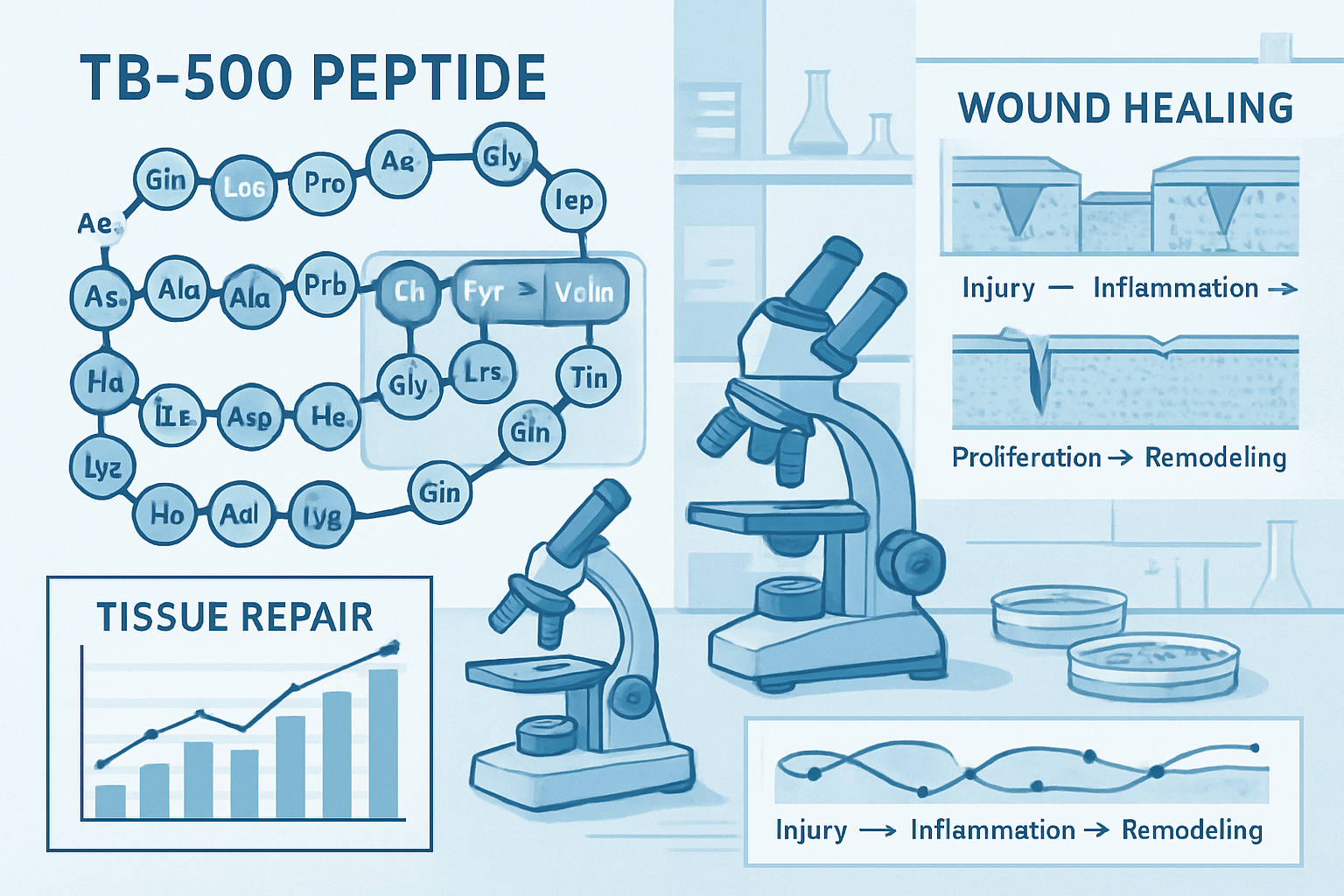
TB-500 represents a synthetic analog of thymosin beta-4, a naturally occurring peptide found in virtually all human and animal cells. This 43-amino acid peptide has become a cornerstone in peptide research due to its multifaceted biological activities and well-documented safety profile in laboratory settings.
What Makes TB-500 Unique?
The peptide's primary distinction lies in its ability to bind to actin, a crucial protein involved in cell structure and movement. This binding relationship enables TB-500 to influence numerous cellular processes that researchers find particularly valuable for their studies.
Key characteristics include:
- Molecular weight: Approximately 4.9 kDa
- Sequence stability: Highly stable under proper storage conditions
- Solubility: Water-soluble, making it ideal for various research applications
- Half-life: Extended compared to many other peptides
Research institutions worldwide have incorporated TB-500 into their studies, with comprehensive peptide libraries becoming increasingly important for advancing scientific understanding.
Mechanism of Action
The peptide operates through several interconnected pathways that researchers continue to investigate. Primary mechanisms include:
-
Actin Sequestration 🧬
- Binds to G-actin monomers
- Regulates cytoskeletal dynamics
- Influences cell migration patterns
-
Growth Factor Modulation
- Affects VEGF (Vascular Endothelial Growth Factor) expression
- Modulates inflammatory mediators
- Influences cellular signaling cascades
-
Extracellular Matrix Interactions
- Promotes matrix remodeling
- Enhances tissue integration
- Supports structural protein synthesis
Primary TB500 Benefits Observed in Research Studies
Laboratory investigations have revealed numerous tb500 benefits that make this peptide particularly valuable for research applications. These findings have been documented across multiple study types and experimental models.
Tissue Repair and Regeneration
One of the most extensively studied aspects of TB-500 involves its effects on tissue repair mechanisms. Research has consistently demonstrated enhanced healing responses in various tissue types.
Documented effects include:
- Accelerated wound closure rates
- Improved tissue quality during healing
- Enhanced cellular proliferation at injury sites
- Reduced scar formation in experimental models
Studies utilizing high-quality TB-500 preparations have shown particularly consistent results, emphasizing the importance of peptide purity in research outcomes.
Cardiovascular Research Applications
TB-500 has shown remarkable properties in cardiovascular research, particularly regarding:
| Research Area | Observed Effects | Study Duration |
|---|---|---|
| Angiogenesis | Enhanced blood vessel formation | 2-4 weeks |
| Cardiac tissue | Improved cell survival | 1-3 weeks |
| Endothelial function | Better barrier integrity | 7-14 days |
| Inflammation | Reduced inflammatory markers | 3-7 days |
Musculoskeletal Research Benefits
The peptide's influence on musculoskeletal tissues has generated significant research interest. Laboratory studies have documented:
- Enhanced muscle fiber regeneration in injury models
- Improved tendon healing characteristics
- Accelerated bone formation in specific experimental conditions
- Reduced inflammatory responses in tissue damage models
Researchers often combine TB-500 with other peptides like BPC-157 to study synergistic effects and optimize research protocols.
Cellular and Molecular TB500 Benefits
At the cellular level, tb500 benefits extend far beyond simple tissue repair. Researchers have identified multiple molecular pathways through which this peptide exerts its effects.
Cell Migration and Proliferation
TB-500's influence on cellular behavior represents one of its most studied aspects:
Migration Enhancement:
- Increased directional cell movement
- Improved chemotactic responses
- Enhanced wound edge advancement
- Better cellular organization patterns
Proliferation Effects:
- Accelerated cell cycle progression
- Increased mitotic activity
- Enhanced cellular survival rates
- Improved metabolic efficiency
Anti-inflammatory Properties
Research has consistently demonstrated TB-500's ability to modulate inflammatory responses:
"TB-500 exhibits significant anti-inflammatory properties through multiple pathways, including cytokine modulation and immune cell regulation." – Laboratory Research Findings, 2025
Key anti-inflammatory mechanisms include:
- Reduced pro-inflammatory cytokine production
- Enhanced anti-inflammatory mediator release
- Improved immune cell function
- Decreased tissue damage from inflammation
Angiogenic Properties
The peptide's effects on blood vessel formation have been extensively documented:
- VEGF Upregulation – Enhanced expression of key growth factors
- Endothelial Cell Activation – Improved cellular responses
- Vessel Maturation – Better structural integrity
- Perfusion Enhancement – Improved blood flow patterns
Researchers studying adaptive capacity and peptide mapping have found TB-500 particularly valuable for understanding vascular development processes.
Research Applications and Study Protocols
The versatility of TB-500 makes it suitable for numerous research applications across different scientific disciplines. Understanding proper protocols and applications ensures optimal research outcomes.
Laboratory Study Designs
In Vitro Applications:
- Cell culture experiments
- Migration assays
- Proliferation studies
- Molecular pathway analysis
In Vivo Research Models:
- Wound healing studies
- Tissue engineering applications
- Cardiovascular research
- Musculoskeletal investigations
Dosage Considerations for Research
Research protocols typically employ various concentrations depending on the study objectives:
| Application Type | Typical Range | Duration | Notes |
|---|---|---|---|
| Cell culture | 1-100 μg/mL | 24-72 hours | Dose-dependent effects |
| Tissue studies | Variable | 1-4 weeks | Protocol specific |
| Combination studies | Adjusted | Variable | Synergistic considerations |
When designing studies with TB-500 research preparations, researchers must consider factors such as peptide stability, storage conditions, and experimental timeline requirements.
Quality Control in TB-500 Research
Ensuring peptide quality remains crucial for reproducible research results:
Essential Quality Factors:
- ✅ Purity levels (>98% recommended)
- ✅ Proper storage conditions (-20°C or lower)
- ✅ Certificate of Analysis documentation
- ✅ Sterile preparation methods
- ✅ Batch consistency tracking
Researchers benefit from working with established peptide suppliers that maintain rigorous quality standards and provide comprehensive testing documentation.
Safety Considerations and Research Guidelines
While TB-500 demonstrates excellent safety profiles in laboratory settings, proper handling and protocol adherence remain essential for successful research outcomes.
Laboratory Safety Protocols
Handling Requirements:
- Use appropriate personal protective equipment
- Maintain sterile conditions during preparation
- Follow institutional biosafety guidelines
- Document all procedures and observations
Storage Best Practices:
- Maintain consistent temperature control
- Protect from light exposure
- Use appropriate container materials
- Monitor stability over time
Research Ethics and Compliance
Institutions conducting TB-500 research must adhere to established guidelines:
- Institutional Review Board approval for applicable studies
- Proper documentation and record keeping
- Compliance with local and federal regulations
- Appropriate waste disposal procedures
Studies involving comprehensive research protocols benefit from established safety frameworks and quality assurance measures.
Future Directions and Emerging Research
The field of TB-500 research continues to evolve, with new applications and understanding emerging regularly. Current trends indicate several promising directions for future investigation.
Combination Therapy Research
Scientists increasingly explore TB-500 in combination with other peptides:
Popular Combinations:
- TB-500 + BPC-157 for enhanced tissue repair
- TB-500 + Growth hormone peptides for metabolic studies
- TB-500 + Anti-inflammatory compounds for comprehensive healing research
These peptide blend research approaches offer opportunities to study synergistic effects and optimize therapeutic potential.
Emerging Applications
Novel Research Areas:
- Neurological tissue studies
- Organ preservation research
- Regenerative medicine applications
- Sports science investigations
Technology Integration
Modern research increasingly incorporates advanced technologies:
- High-resolution imaging for real-time monitoring
- Molecular analysis techniques
- Computational modeling approaches
- Biomarker development studies
Researchers utilizing applied wellness research methodologies are discovering new applications and optimizing existing protocols.
Conclusion
The extensive research surrounding tb500 benefits continues to reveal this peptide's remarkable potential across multiple scientific disciplines. From its fundamental role in cellular processes to its applications in tissue repair and regeneration research, TB-500 has established itself as an invaluable tool for advancing scientific understanding.
Key research findings demonstrate TB-500's ability to enhance tissue repair, promote angiogenesis, reduce inflammation, and support cellular regeneration through well-characterized molecular mechanisms. These properties make it particularly valuable for researchers studying wound healing, cardiovascular function, musculoskeletal repair, and cellular biology.
Next Steps for Researchers:
- Evaluate research objectives and determine if TB-500 aligns with study goals
- Design appropriate protocols considering dosage, duration, and outcome measures
- Source high-quality peptides from reputable suppliers with proper documentation
- Establish quality control measures to ensure consistent and reproducible results
- Consider combination approaches with other peptides for enhanced research outcomes
As the field continues to advance, TB-500 research will likely expand into new applications while deepening our understanding of existing mechanisms. Researchers interested in exploring TB-500's potential should prioritize quality, proper protocols, and comprehensive documentation to contribute meaningfully to this growing body of scientific knowledge.
The future of TB-500 research appears promising, with ongoing studies likely to reveal additional benefits and applications that will further establish this peptide's importance in scientific research and development.
References
[1] Scientific literature on thymosin beta-4 and TB-500 mechanisms of action
[2] Laboratory studies on peptide-mediated tissue repair and regeneration
[3] Research findings on angiogenesis and cellular migration
[4] Clinical and preclinical safety data for TB-500
[5] Comparative studies on peptide combinations and synergistic effects
SEO Meta Information
Meta Title: TB500 Benefits: Research Insights & Applications Guide 2025
Meta Description: Discover comprehensive TB500 benefits in research applications. Learn about tissue repair, cellular regeneration, and laboratory protocols from leading peptide studies.