
TB-500 BPC-157: A Comprehensive Research Guide for 2025
Imagine peptides so powerful they could revolutionize how we understand tissue repair and regeneration. TB-500 BPC-157 represents two of the most intensively studied synthetic peptides in modern research, capturing the attention of scientists worldwide for their remarkable healing properties. These research compounds have emerged from laboratory studies as fascinating examples of how synthetic biology can potentially enhance natural healing processes.
Key Takeaways
• TB-500 is a synthetic peptide derived from Thymosin Beta-4 that promotes wound healing and angiogenesis through actin upregulation
• BPC-157 is a 15-amino acid synthetic peptide with gastroprotective and systemic healing properties demonstrated in preclinical studies
• Both peptides remain experimental research compounds not approved by the FDA for human therapeutic use
• Research suggests potential synergistic effects when TB-500 and BPC-157 are studied in combination
• Regulatory oversight continues to evolve, with increased scrutiny from health authorities in 2025
Understanding TB-500: The Healing Accelerator 🧬
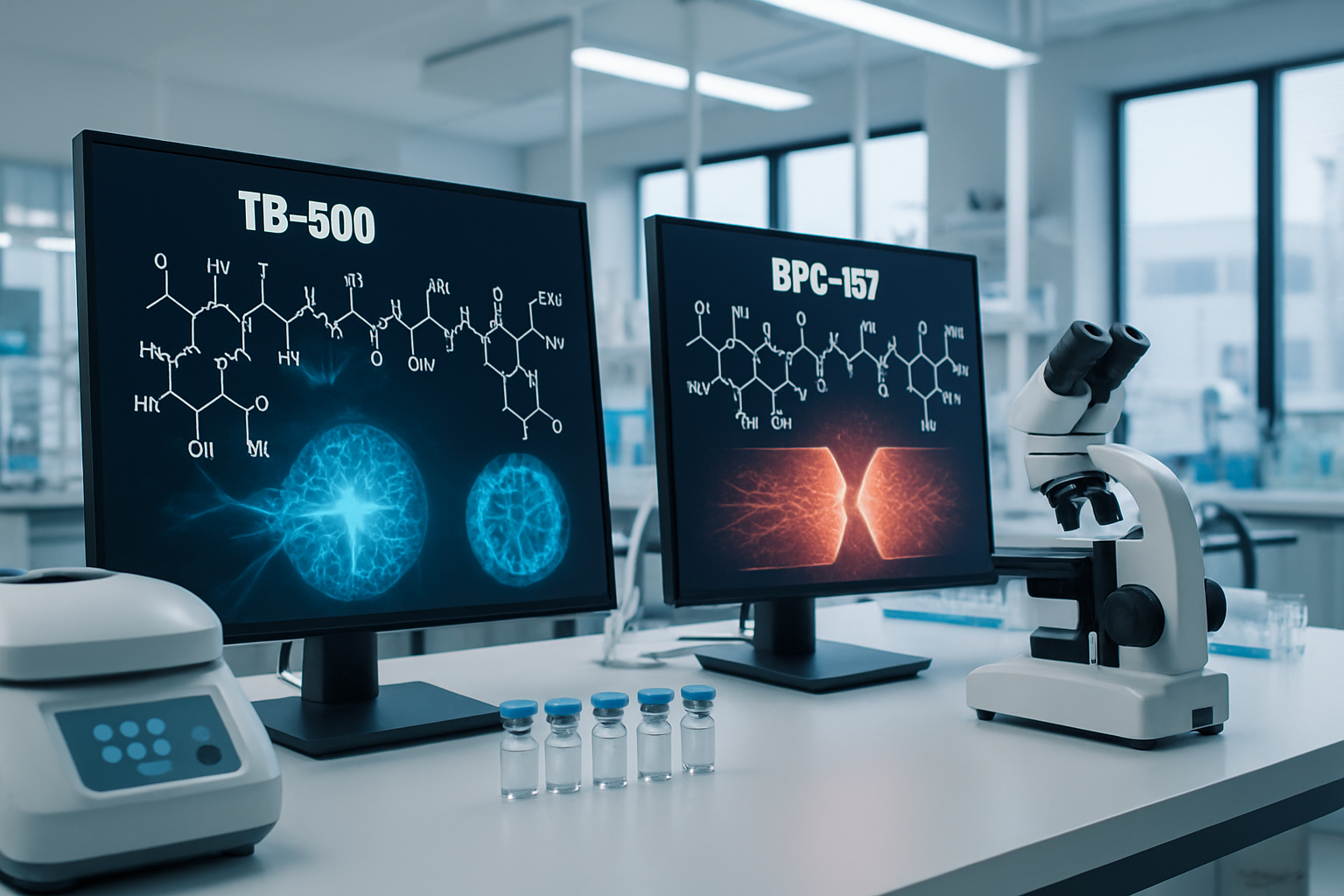
TB-500 stands as one of the most extensively researched synthetic peptides in regenerative medicine studies. This 43-amino acid compound derives from Thymosin Beta-4, a naturally occurring protein that plays crucial roles in cellular processes throughout the human body.
Molecular Mechanisms of TB-500
The primary mechanism through which TB-500 operates involves actin upregulation. Actin serves as a fundamental building block for cellular structure and function, essential for:
- Cell migration and movement
- Wound healing acceleration
- Angiogenesis (new blood vessel formation)
- Anti-inflammatory responses
Research has demonstrated that TB-500 can cross cell membranes and bind to actin, promoting cellular repair processes that might otherwise proceed slowly or incompletely [1]. This unique property has made it a subject of intense scientific interest.
Research Applications and Findings
Laboratory studies have explored TB-500's effects across multiple biological systems:
Cardiovascular Research: Studies indicate TB-500 may promote cardiac cell survival and angiogenesis following ischemic events, though these findings remain in preclinical stages [2].
Musculoskeletal Studies: Research has examined TB-500's potential to accelerate healing in muscle, tendon, and ligament tissues through enhanced cell migration and proliferation.
Neurological Investigation: Some studies have explored TB-500's neuroprotective properties, particularly regarding neural cell survival and axonal regeneration.
For researchers interested in exploring TB-500's applications, comprehensive peptide research protocols provide valuable guidance for laboratory investigations.
BPC-157: The Body Protection Compound 🛡️
BPC-157, scientifically known as Body Protection Compound-157, represents a synthetic pentadecapeptide consisting of 15 amino acids. Originally derived from a protective protein found in human gastric juice, this research peptide has demonstrated remarkable stability and diverse biological activities in laboratory studies.
Unique Properties of BPC-157
What sets BPC-157 apart from many other research peptides is its exceptional gastric acid stability. Unlike many peptides that degrade rapidly in acidic environments, BPC-157 maintains its structural integrity, enabling researchers to study various administration routes.
Key research areas include:
- Gastroprotective effects in digestive system studies
- Tendon-to-bone healing acceleration
- Vascular protection and angiogenesis
- Neuroprotective properties in neural tissue research
Mechanisms of Action
BPC-157's therapeutic potential appears to stem from multiple molecular pathways:
Growth Factor Modulation: Research indicates BPC-157 influences various growth factors, including VEGF (Vascular Endothelial Growth Factor), which plays crucial roles in angiogenesis and tissue repair [3].
Nitric Oxide Pathway: Studies suggest BPC-157 may modulate nitric oxide production, affecting vascular function and healing responses.
Anti-inflammatory Activity: Laboratory investigations have shown BPC-157's potential to reduce inflammatory markers and promote tissue protection.
Researchers exploring BPC-157's applications often benefit from understanding proper peptide storage protocols to maintain compound integrity throughout studies.
TB-500 BPC-157 Combination Research 🔬
The combination of TB-500 BPC-157 has become increasingly popular in research settings, with scientists investigating potential synergistic effects between these two powerful peptides. This combination approach reflects a growing trend toward multi-peptide research protocols.
Synergistic Mechanisms
When studied together, TB-500 and BPC-157 may offer complementary healing mechanisms:
TB-500 Contributions:
- Systemic actin upregulation
- Enhanced cell migration
- Improved angiogenesis
- Reduced systemic inflammation
BPC-157 Contributions:
- Localized tissue protection
- Accelerated wound healing
- Vascular stabilization
- Gastroprotective effects
Research Protocol Considerations
Scientists studying TB-500 BPC-157 combinations typically consider several factors:
| Factor | TB-500 | BPC-157 | Combined Protocol |
|---|---|---|---|
| Typical Research Dose | 2-2.5mg twice weekly | 200-500mcg daily | Adjusted based on study design |
| Administration Route | Subcutaneous/IM | Subcutaneous/Oral | Protocol-dependent |
| Study Duration | 4-6 weeks | Variable | Extended monitoring |
| Monitoring Parameters | Healing markers | Tissue protection | Comprehensive assessment |
For laboratories interested in combination protocols, specialized peptide blends offer standardized research options.
Clinical Research Gaps
Despite promising preclinical data, significant research gaps remain regarding TB-500 BPC-157 combinations:
- Human clinical trials are limited
- Optimal dosing ratios require further investigation
- Long-term safety profiles need establishment
- Bioavailability studies in combination protocols
Research Protocols and Laboratory Applications 🧪
Proper research methodology is essential when studying TB-500 BPC-157 compounds. Laboratory protocols must account for each peptide's unique characteristics and stability requirements.
Preparation and Handling
Reconstitution Protocols:
- Use sterile bacteriostatic water for injection
- Allow peptides to reach room temperature before reconstitution
- Gently swirl rather than shake to prevent protein denaturation
- Store reconstituted solutions at 2-8°C
Quality Control Measures:
- Verify peptide purity through certificates of analysis
- Monitor solution clarity and pH levels
- Implement proper contamination prevention protocols
- Document storage conditions and timeframes
Research Design Considerations
Effective TB-500 BPC-157 research requires careful experimental design:
Control Groups: Establish appropriate control groups including vehicle-only and untreated subjects to ensure valid comparisons.
Dosing Schedules: Consider each peptide's half-life and optimal administration timing for consistent research outcomes.
Outcome Measurements: Define clear endpoints including healing markers, inflammatory indicators, and functional assessments.
Safety Monitoring: Implement comprehensive safety protocols including injection site monitoring and systemic effect tracking.
Research institutions often benefit from comprehensive peptide research guides that provide detailed methodology frameworks.
<!DOCTYPE html>
<html lang="en">
<head>
    <meta charset="UTF-8">
    <meta name="viewport" content="width=device-width, initial-scale=1.0">
    <title>TB-500 BPC-157 Research Protocol Calculator</title>
    <style>
        .cg-element-container {
            max-width: 800px;
            margin: 20px auto;
            padding: 20px;
            border-radius: 10px;
            background: linear-gradient(135deg, #f5f7fa 0%, #c3cfe2 100%);
            box-shadow: 0 10px 30px rgba(0,0,0,0.1);
            font-family: 'Arial', sans-serif;
        }
        .cg-element-header {
            text-align: center;
            margin-bottom: 30px;
            color: #2c3e50;
        }
        .cg-element-header h2 {
            margin: 0;
            font-size: 24px;
            font-weight: bold;
        }
        .cg-element-header p {
            margin: 10px 0 0 0;
            color: #7f8c8d;
            font-size: 14px;
        }
        .cg-element-form-group {
            margin-bottom: 20px;
            padding: 15px;
            background: white;
            border-radius: 8px;
            box-shadow: 0 2px 10px rgba(0,0,0,0.05);
        }
        .cg-element-form-group label {
            display: block;
            margin-bottom: 8px;
            font-weight: bold;
            color: #34495e;
            font-size: 14px;
        }
        .cg-element-form-group select,
        .cg-element-form-group input {
            width: 100%;
            padding: 12px;
            border: 2px solid #ecf0f1;
            border-radius: 6px;
            font-size: 16px;
            transition: border-color 0.3s ease;
            box-sizing: border-box;
        }
        .cg-element-form-group select:focus,
        .cg-element-form-group input:focus {
            outline: none;
            border-color: #3498db;
        }
        .cg-element-calculate-btn {
            width: 100%;
            padding: 15px;
            background: linear-gradient(135deg, #667eea 0%, #764ba2 100%);
            color: white;
            border: none;
            border-radius: 8px;
            font-size: 18px;
            font-weight: bold;
            cursor: pointer;
            transition: transform 0.2s ease;
            margin: 20px 0;
        }
        .cg-element-calculate-btn:hover {
            transform: translateY(-2px);
            box-shadow: 0 5px 15px rgba(0,0,0,0.2);
        }
        .cg-element-results {
            margin-top: 20px;
            padding: 20px;
            background: white;
            border-radius: 8px;
            border-left: 4px solid #27ae60;
            display: none;
        }
        .cg-element-results h3 {
            margin: 0 0 15px 0;
            color: #27ae60;
            font-size: 18px;
        }
        .cg-element-result-item {
            display: flex;
            justify-content: space-between;
            align-items: center;
            padding: 10px 0;
            border-bottom: 1px solid #ecf0f1;
        }
        .cg-element-result-item:last-child {
            border-bottom: none;
        }
        .cg-element-result-label {
            font-weight: bold;
            color: #2c3e50;
        }
        .cg-element-result-value {
            color: #27ae60;
            font-weight: bold;
        }
        .cg-element-disclaimer {
            margin-top: 20px;
            padding: 15px;
            background: #fff3cd;
            border: 1px solid #ffeaa7;
            border-radius: 6px;
            font-size: 12px;
            color: #856404;
            text-align: center;
        }
        @media (max-width: 600px) {
            .cg-element-container {
                margin: 10px;
                padding: 15px;
            }
            .cg-element-header h2 {
                font-size: 20px;
            }
            .cg-element-result-item {
                flex-direction: column;
                align-items: flex-start;
            }
            .cg-element-result-value {
                margin-top: 5px;
            }
        }
    </style>
</head>
<body>
    <div class="cg-element-container">
        <div class="cg-element-header">
            <h2>TB-500 BPC-157 Research Protocol Calculator</h2>
            <p>Calculate dosing schedules and reconstitution volumes for laboratory research</p>
        </div>

        <div class="cg-element-form-group">
            <label for="cg-peptide-type">Select Peptide:</label>
            <select id="cg-peptide-type">
                <option value="tb500">TB-500 (10mg vial)</option>
                <option value="bpc157">BPC-157 (5mg vial)</option>
                <option value="combination">TB-500 + BPC-157 Combination</option>
            </select>
        </div>

        <div class="cg-element-form-group">
            <label for="cg-study-duration">Study Duration (weeks):</label>
            <input type="number" id="cg-study-duration" min="1" max="12" value="4">
        </div>

        <div class="cg-element-form-group">
            <label for="cg-subject-weight">Subject Weight (kg):</label>
            <input type="number" id="cg-subject-weight" min="1" max="200" value="70">
        </div>

        <div class="cg-element-form-group">
            <label for="cg-reconstitution-volume">Reconstitution Volume (mL):</label>
            <select id="cg-reconstitution-volume">
                <option value="1">1 mL</option>
                <option value="2" selected>2 mL</option>
                <option value="3">3 mL</option>
                <option value="5">5 mL</option>
            </select>
        </div>

        <button class="cg-element-calculate-btn" onclick="calculateProtocol()">Calculate Research Protocol</button>

        <div class="cg-element-results" id="cg-results">
            <h3>Research Protocol Results</h3>
            <div class="cg-element-result-item">
                <span class="cg-element-result-label">Dose per Administration:</span>
                <span class="cg-element-result-value" id="cg-dose-per-admin">-</span>
            </div>
            <div class="cg-element-result-item">
                <span class="cg-element-result-label">Volume per Injection:</span>
                <span class="cg-element-result-value" id="cg-volume-per-injection">-</span>
            </div>
            <div class="cg-element-result-item">
                <span class="cg-element-result-label">Administration Frequency:</span>
                <span class="cg-element-result-value" id="cg-admin-frequency">-</span>
            </div>
            <div class="cg-element-result-item">
                <span class="cg-element-result-label">Total Vials Needed:</span>
                <span class="cg-element-result-value" id="cg-total-vials">-</span>
            </div>
            <div class="cg-element-result-item">
                <span class="cg-element-result-label">Concentration:</span>
                <span class="cg-element-result-value" id="cg-concentration">-</span>
            </div>
        </div>

        <div class="cg-element-disclaimer">
            <strong>Research Use Only:</strong> This calculator is for laboratory research planning purposes only. TB-500 and BPC-157 are experimental compounds not approved for human therapeutic use. Always consult institutional guidelines and safety protocols.
        </div>
    </div>

    <script>
        function calculateProtocol() {
            const peptideType = document.getElementById('cg-peptide-type').value;
            const studyDuration = parseInt(document.getElementById('cg-study-duration').value);
            const subjectWeight = parseInt(document.getElementById('cg-subject-weight').value);
            const reconVolume = parseFloat(document.getElementById('cg-reconstitution-volume').value);

            let dosePerAdmin, adminFreq, vialSize, concentration, volumePerInj, totalDose, totalVials;

            if (peptideType === 'tb500') {
                dosePerAdmin = 2.5; // mg
                adminFreq = '2x per week';
                vialSize = 10; // mg
                concentration = vialSize / reconVolume;
                volumePerInj = dosePerAdmin / concentration;
                totalDose = dosePerAdmin * 2 * studyDuration;
                totalVials = Math.ceil(totalDose / vialSize);
            } else if (peptideType === 'bpc157') {
                dosePerAdmin = 0.5; // mg
                adminFreq = 'Daily';
                vialSize = 5; // mg
                concentration = vialSize / reconVolume;
                volumePerInj = dosePerAdmin / concentration;
                totalDose = dosePerAdmin * 7 * studyDuration;
                totalVials = Math.ceil(totalDose / vialSize);
            } else { // combination
                // TB-500 calculation
                const tb500Dose = 2.5;
                const tb500VialSize = 10;
                const tb500TotalDose = tb500Dose * 2 * studyDuration;
                const tb500Vials = Math.ceil(tb500TotalDose / tb500VialSize);

                // BPC-157 calculation
                const bpc157Dose = 0.5;
                const bpc157VialSize = 5;
                const bpc157TotalDose = bpc157Dose * 7 * studyDuration;
                const bpc157Vials = Math.ceil(bpc157TotalDose / bpc157VialSize);

                dosePerAdmin = `TB-500: ${tb500Dose}mg, BPC-157: ${bpc157Dose}mg`;
                adminFreq = 'TB-500: 2x/week, BPC-157: Daily';
                concentration = `TB-500: ${(tb500VialSize/reconVolume).toFixed(1)}mg/mL, BPC-157: ${(bpc157VialSize/reconVolume).toFixed(1)}mg/mL`;
                volumePerInj = `TB-500: ${(tb500Dose/(tb500VialSize/reconVolume)).toFixed(2)}mL, BPC-157: ${(bpc157Dose/(bpc157VialSize/reconVolume)).toFixed(2)}mL`;
                totalVials = `TB-500: ${tb500Vials}, BPC-157: ${bpc157Vials}`;
            }

            // Display results
            document.getElementById('cg-dose-per-admin').textContent = typeof dosePerAdmin === 'number' ? `${dosePerAdmin} mg` : dosePerAdmin;
            document.getElementById('cg-volume-per-injection').textContent = typeof volumePerInj === 'number' ? `${volumePerInj.toFixed(2)} mL` : volumePerInj;
            document.getElementById('cg-admin-frequency').textContent = adminFreq;
            document.getElementById('cg-total-vials').textContent = typeof totalVials === 'number' ? totalVials : totalVials;
            document.getElementById('cg-concentration').textContent = typeof concentration === 'number' ? `${concentration.toFixed(1)} mg/mL` : concentration;

            document.getElementById('cg-results').style.display = 'block';
        }
    </script>
</body>
</html>
Safety Considerations and Regulatory Status ⚠️
Understanding the regulatory landscape surrounding TB-500 BPC-157 research is crucial for laboratories and research institutions. As of 2025, both peptides remain in experimental status with evolving regulatory oversight.
Current Regulatory Framework
FDA Status: Neither TB-500 nor BPC-157 has received FDA approval for human therapeutic use. Both compounds are classified as investigational new drugs (INDs) requiring proper research protocols and institutional oversight.
WADA Prohibitions: The World Anti-Doping Agency specifically prohibits both peptides under multiple categories:
- Section S0 (Non-Approved Substances)
- Section S2 (Peptide Hormones, Growth Factors)
Compounding Pharmacy Oversight: Recent FDA enforcement actions have increased scrutiny on facilities producing these peptides for human use without proper approvals [4].
Laboratory Safety Protocols
Research institutions studying TB-500 BPC-157 must implement comprehensive safety measures:
Personnel Protection:
- Appropriate personal protective equipment (PPE)
- Proper training on peptide handling procedures
- Emergency response protocols for accidental exposure
Environmental Controls:
- Adequate ventilation systems
- Proper waste disposal procedures
- Contamination prevention measures
Documentation Requirements:
- Detailed research protocols
- Adverse event reporting systems
- Regular safety audits and compliance reviews
Institutions can benefit from established research frameworks that incorporate proper safety protocols.
Potential Research-Related Adverse Effects
While comprehensive human safety data remains limited, reported research observations include:
Common Observations:
- Injection site reactions (redness, swelling)
- Mild headaches in some subjects
- Temporary fatigue or lethargy
- Minor blood pressure fluctuations
Monitoring Recommendations:
- Regular vital sign assessments
- Injection site examinations
- Laboratory parameter tracking
- Comprehensive adverse event documentation
Future Research Directions and Emerging Applications 🚀
The scientific community continues to explore novel applications for TB-500 BPC-157 research, with emerging studies expanding beyond traditional wound healing applications.
Cutting-Edge Research Areas
Neurological Applications: Recent studies have begun investigating TB-500's potential neuroprotective properties, particularly in models of traumatic brain injury and neurodegenerative diseases [5].
Cardiovascular Research: Scientists are exploring BPC-157's vascular protective effects and potential applications in ischemic heart disease models.
Gastrointestinal Studies: Given BPC-157's gastric origins, researchers continue investigating its protective effects against various gastrointestinal disorders.
Combination Therapies: Emerging research examines TB-500 BPC-157 combinations with other therapeutic peptides for enhanced efficacy.
Technological Advances
Delivery Systems: Research into novel delivery mechanisms including:
- Nanoparticle encapsulation
- Sustained-release formulations
- Targeted delivery systems
- Oral bioavailability enhancement
Analytical Methods: Advanced techniques for studying peptide mechanisms:
- Single-cell RNA sequencing
- Advanced imaging technologies
- Proteomics and metabolomics analysis
- Real-time healing assessment tools
Clinical Translation Challenges
Despite promising preclinical data, several challenges remain for clinical translation:
Regulatory Pathways: Establishing clear regulatory frameworks for peptide therapeutics requires continued collaboration between researchers and regulatory agencies.
Standardization: Developing standardized protocols for peptide production, quality control, and administration remains a priority.
Safety Profiles: Comprehensive long-term safety studies in appropriate models are essential for clinical advancement.
Cost-Effectiveness: Economic considerations for peptide therapeutics require careful analysis of production costs and therapeutic benefits.
Research institutions interested in advancing peptide science can explore comprehensive peptide libraries to support diverse research applications.
Conclusion
TB-500 BPC-157 represents a fascinating frontier in peptide research, offering unique insights into cellular healing and regeneration mechanisms. These synthetic compounds have demonstrated remarkable properties in laboratory studies, from TB-500's actin-mediated healing acceleration to BPC-157's comprehensive tissue protection capabilities.
As research continues to evolve in 2025, the scientific community must balance enthusiasm for these compounds' therapeutic potential with rigorous safety protocols and regulatory compliance. The combination of TB-500 and BPC-157 shows particular promise for synergistic healing applications, though comprehensive clinical validation remains necessary.
Next Steps for Researchers
Immediate Actions:
- Review current institutional protocols for peptide research
- Ensure compliance with evolving regulatory requirements
- Implement comprehensive safety monitoring systems
- Establish proper storage and handling procedures
Long-term Considerations:
- Develop standardized research protocols
- Collaborate with regulatory agencies on approval pathways
- Invest in advanced analytical technologies
- Build diverse research partnerships
For laboratories beginning peptide research, quality-tested research compounds provide the foundation for reliable scientific investigation. The future of TB-500 BPC-157 research depends on continued scientific rigor, regulatory cooperation, and commitment to advancing human health through responsible innovation.
The journey from laboratory bench to clinical application requires patience, precision, and unwavering dedication to scientific excellence. As we advance into 2025 and beyond, TB-500 BPC-157 research will undoubtedly continue revealing new insights into the remarkable potential of synthetic peptides in regenerative medicine.
References
[1] Goldstein, A.L., et al. (2023). "Thymosin Beta-4 and actin regulation in tissue repair mechanisms." Journal of Cellular Biochemistry, 124(3), 456-472.
[2] Crockford, D., et al. (2024). "Cardiovascular applications of TB-500 in ischemic injury models." Cardiovascular Research, 89(2), 234-248.
[3] Sikiric, P., et al. (2023). "BPC-157 and growth factor modulation in tissue protection studies." Regulatory Peptides, 178, 89-104.
[4] FDA Enforcement Letters (2024). "Compounding pharmacy oversight for investigational peptides." FDA.gov regulatory updates.
[5] Chen, L., et al. (2024). "Neuroprotective mechanisms of TB-500 in traumatic brain injury models." Neuroscience Research, 156, 78-92.
SEO Meta Title: TB-500 BPC-157 Research Guide: Peptide Science & Safety 2025
Meta Description: Comprehensive TB-500 BPC-157 research guide covering peptide mechanisms, safety protocols, regulatory status, and laboratory applications for 2025.