
TB500 Peptides: The Complete Research Guide for 2025
Imagine a synthetic compound that could potentially accelerate tissue repair at the cellular level, mimicking one of nature's most fundamental healing mechanisms. TB500 peptides have emerged as one of the most studied research compounds in regenerative medicine, offering scientists unprecedented insights into how cells migrate, proliferate, and repair damaged tissue.
Key Takeaways
- TB500 peptides are synthetic versions of Thymosin Beta-4, a naturally occurring 43-amino acid protein found in all human and animal cells
- The compound works by upregulating actin protein, which facilitates cell movement and tissue repair processes
- Research shows promising results in animal studies for accelerating healing of muscle, tendon, and ligament injuries
- TB500 is classified as a research chemical and is not approved for human consumption by regulatory agencies
- The peptide is banned by WADA for competitive sports due to potential performance-enhancing effects
What Are TB500 Peptides? 🧬
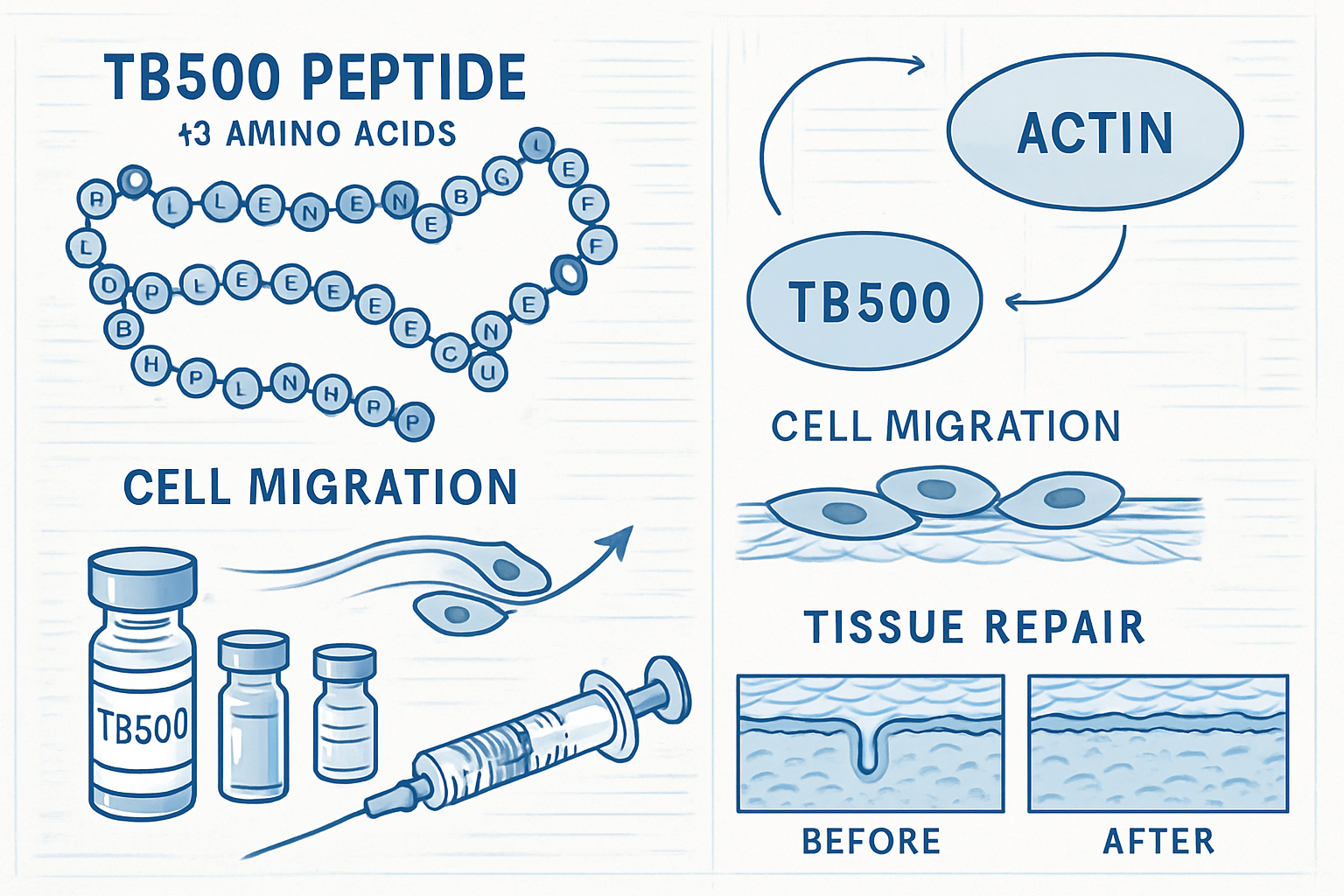
TB500 peptides represent a fascinating intersection of natural biology and synthetic chemistry. These compounds are laboratory-created versions of Thymosin Beta-4, a protein that exists naturally in virtually every cell of the human body. With its 43-amino acid structure, TB500 has captured the attention of researchers worldwide for its potential role in tissue regeneration and repair.
The discovery of TB500's therapeutic potential stems from decades of research into wound healing mechanisms. Scientists observed that certain proteins played crucial roles in how cells respond to injury, migrate to damaged areas, and initiate repair processes. This led to the development of synthetic versions that could be studied in controlled laboratory environments.
The Science Behind TB500
At its core, TB500 peptides function by interacting with actin, a fundamental protein responsible for cell structure and movement. When tissues are damaged, cells need to migrate to the injury site to begin repair processes. TB500 facilitates this migration by promoting actin polymerization, essentially giving cells the structural support they need to move efficiently.
Research has shown that TB500 also plays a role in:
- Angiogenesis: The formation of new blood vessels to supply nutrients to healing tissue
- Anti-inflammatory responses: Reducing harmful inflammatory cytokines that can impede healing
- Cell proliferation: Encouraging the growth of new, healthy cells to replace damaged ones
For researchers interested in exploring comprehensive peptide research applications, TB500 represents just one component of a broader toolkit for understanding regenerative processes.
How TB500 Peptides Work in Research Settings
The mechanism of action for TB500 peptides involves several interconnected biological pathways that researchers continue to study extensively. Understanding these mechanisms is crucial for designing effective research protocols and interpreting experimental results.
Cellular Migration and Actin Regulation
The primary mechanism through which TB500 operates involves the regulation of actin dynamics within cells. Actin exists in two main forms: globular (G-actin) and filamentous (F-actin). TB500 binds to G-actin and prevents it from polymerizing into filaments under normal conditions. However, when cells receive signals to migrate—such as during wound healing—TB500 releases the G-actin, allowing rapid polymerization and cell movement.
This process is particularly important in research models studying:
- Muscle fiber regeneration
- Tendon and ligament repair
- Vascular development
- Cardiac tissue recovery
Anti-Inflammatory Properties
Laboratory studies have demonstrated that TB500 peptides can significantly reduce inflammatory markers in tissue samples. The compound appears to modulate the production of pro-inflammatory cytokines while promoting the release of anti-inflammatory factors. This dual action creates an environment more conducive to healing and tissue regeneration.
Research protocols often measure inflammatory markers such as:
- TNF-α (Tumor Necrosis Factor-alpha)
- IL-1β (Interleukin-1 beta)
- IL-6 (Interleukin-6)
- C-reactive protein levels
Angiogenic Effects
One of the most promising areas of TB500 research involves its ability to promote angiogenesis—the formation of new blood vessels. In laboratory models, TB500 has been shown to stimulate endothelial cell migration and tube formation, essential processes for establishing blood supply to healing tissues.
Studies examining angiogenic effects typically focus on:
- Endothelial cell proliferation rates
- Capillary density measurements
- Blood flow restoration in ischemic models
- VEGF (Vascular Endothelial Growth Factor) expression levels
For researchers working with advanced peptide combinations, understanding these individual mechanisms helps in designing synergistic protocols.
<!DOCTYPE html>
<html lang="en">
<head>
    <meta charset="UTF-8">
    <meta name="viewport" content="width=device-width, initial-scale=1.0">
    <title>TB500 Research Protocol Calculator</title>
    <style>
        .cg-element-calculator {
            max-width: 600px;
            margin: 20px auto;
            padding: 25px;
            border: 2px solid #2c5aa0;
            border-radius: 12px;
            background: linear-gradient(135deg, #f8f9fa 0%, #e9ecef 100%);
            font-family: 'Segoe UI', Tahoma, Geneva, Verdana, sans-serif;
            box-shadow: 0 4px 15px rgba(44, 90, 160, 0.1);
        }

        .cg-element-title {
            text-align: center;
            color: #2c5aa0;
            margin-bottom: 25px;
            font-size: 24px;
            font-weight: bold;
        }

        .cg-element-input-group {
            margin-bottom: 20px;
            display: flex;
            flex-direction: column;
        }

        .cg-element-label {
            font-weight: 600;
            margin-bottom: 8px;
            color: #495057;
            font-size: 14px;
        }

        .cg-element-input, .cg-element-select {
            padding: 12px;
            border: 2px solid #dee2e6;
            border-radius: 8px;
            font-size: 16px;
            transition: border-color 0.3s ease;
        }

        .cg-element-input:focus, .cg-element-select:focus {
            outline: none;
            border-color: #2c5aa0;
            box-shadow: 0 0 0 3px rgba(44, 90, 160, 0.1);
        }

        .cg-element-button {
            background: linear-gradient(135deg, #2c5aa0 0%, #1e4080 100%);
            color: white;
            padding: 15px 30px;
            border: none;
            border-radius: 8px;
            font-size: 16px;
            font-weight: 600;
            cursor: pointer;
            width: 100%;
            margin-top: 20px;
            transition: transform 0.2s ease;
        }

        .cg-element-button:hover {
            transform: translateY(-2px);
            box-shadow: 0 4px 15px rgba(44, 90, 160, 0.3);
        }

        .cg-element-results {
            margin-top: 25px;
            padding: 20px;
            background: white;
            border-radius: 8px;
            border-left: 4px solid #28a745;
            display: none;
        }

        .cg-element-result-item {
            margin-bottom: 15px;
            padding: 10px;
            background: #f8f9fa;
            border-radius: 6px;
            display: flex;
            justify-content: space-between;
            align-items: center;
        }

        .cg-element-result-label {
            font-weight: 600;
            color: #495057;
        }

        .cg-element-result-value {
            font-weight: bold;
            color: #2c5aa0;
            font-size: 18px;
        }

        .cg-element-warning {
            background: #fff3cd;
            border: 1px solid #ffeaa7;
            color: #856404;
            padding: 15px;
            border-radius: 8px;
            margin-top: 20px;
            font-size: 14px;
        }

        @media (max-width: 768px) {
            .cg-element-calculator {
                margin: 10px;
                padding: 20px;
            }

            .cg-element-title {
                font-size: 20px;
            }
        }
    </style>
</head>
<body>
    <div class="cg-element-calculator">
        <h2 class="cg-element-title">TB500 Research Protocol Calculator</h2>

        <div class="cg-element-input-group">
            <label class="cg-element-label" for="vialSize">TB500 Vial Size (mg):</label>
            <select class="cg-element-select" id="vialSize">
                <option value="5">5mg</option>
                <option value="10" selected>10mg</option>
                <option value="20">20mg</option>
            </select>
        </div>

        <div class="cg-element-input-group">
            <label class="cg-element-label" for="researchDose">Research Dose per Administration (mg):</label>
            <input type="number" class="cg-element-input" id="researchDose" value="2" min="0.5" max="10" step="0.5">
        </div>

        <div class="cg-element-input-group">
            <label class="cg-element-label" for="frequency">Administration Frequency:</label>
            <select class="cg-element-select" id="frequency">
                <option value="1">Once per week</option>
                <option value="2" selected>Twice per week</option>
                <option value="3">Three times per week</option>
                <option value="7">Daily</option>
            </select>
        </div>

        <div class="cg-element-input-group">
            <label class="cg-element-label" for="studyDuration">Study Duration (weeks):</label>
            <input type="number" class="cg-element-input" id="studyDuration" value="4" min="1" max="12" step="1">
        </div>

        <div class="cg-element-input-group">
            <label class="cg-element-label" for="bacteriostaticWater">Bacteriostatic Water Volume (ml):</label>
            <select class="cg-element-select" id="bacteriostaticWater">
                <option value="1">1ml</option>
                <option value="2" selected>2ml</option>
                <option value="3">3ml</option>
            </select>
        </div>

        <button class="cg-element-button" onclick="calculateProtocol()">Calculate Research Protocol</button>

        <div class="cg-element-results" id="results">
            <div class="cg-element-result-item">
                <span class="cg-element-result-label">Concentration per ml:</span>
                <span class="cg-element-result-value" id="concentration"></span>
            </div>
            <div class="cg-element-result-item">
                <span class="cg-element-result-label">Volume per dose:</span>
                <span class="cg-element-result-value" id="volumePerDose"></span>
            </div>
            <div class="cg-element-result-item">
                <span class="cg-element-result-label">Total administrations:</span>
                <span class="cg-element-result-value" id="totalDoses"></span>
            </div>
            <div class="cg-element-result-item">
                <span class="cg-element-result-label">Vials needed:</span>
                <span class="cg-element-result-value" id="vialsNeeded"></span>
            </div>
            <div class="cg-element-result-item">
                <span class="cg-element-result-label">Total TB500 required:</span>
                <span class="cg-element-result-value" id="totalTB500"></span>
            </div>
        </div>

        <div class="cg-element-warning">
            <strong>Research Use Only:</strong> This calculator is designed for laboratory research protocols. TB500 is not approved for human consumption. Always follow proper research guidelines and safety protocols.
        </div>
    </div>

    <script>
        function calculateProtocol() {
            const vialSize = parseFloat(document.getElementById('vialSize').value);
            const researchDose = parseFloat(document.getElementById('researchDose').value);
            const frequency = parseInt(document.getElementById('frequency').value);
            const studyDuration = parseInt(document.getElementById('studyDuration').value);
            const bacteriostaticWater = parseFloat(document.getElementById('bacteriostaticWater').value);

            // Calculate concentration
            const concentration = vialSize / bacteriostaticWater;

            // Calculate volume per dose
            const volumePerDose = researchDose / concentration;

            // Calculate total administrations
            const totalDoses = frequency * studyDuration;

            // Calculate total TB500 needed
            const totalTB500 = researchDose * totalDoses;

            // Calculate vials needed
            const vialsNeeded = Math.ceil(totalTB500 / vialSize);

            // Display results
            document.getElementById('concentration').textContent = concentration.toFixed(2) + ' mg/ml';
            document.getElementById('volumePerDose').textContent = volumePerDose.toFixed(2) + ' ml';
            document.getElementById('totalDoses').textContent = totalDoses;
            document.getElementById('vialsNeeded').textContent = vialsNeeded;
            document.getElementById('totalTB500').textContent = totalTB500.toFixed(1) + ' mg';

            document.getElementById('results').style.display = 'block';

            // Smooth scroll to results
            document.getElementById('results').scrollIntoView({
                behavior: 'smooth',
                block: 'nearest'
            });
        }

        // Initialize with default calculation
        window.onload = function() {
            calculateProtocol();
        };
    </script>
</body>
</html>
TB500 Peptides Research Applications and Protocols
The versatility of TB500 peptides in research settings has led to their investigation across multiple therapeutic areas. Understanding the various applications and established protocols is essential for researchers designing comprehensive studies.
Muscle and Tendon Research
Laboratory studies utilizing TB500 have shown particularly promising results in models of muscle and tendon injury. Research protocols typically involve creating controlled injury models and measuring healing parameters over specific timeframes.
Common research parameters include:
- Tensile strength measurements of healing tendons
- Histological analysis of muscle fiber regeneration
- Inflammatory marker quantification in tissue samples
- Collagen synthesis rates in healing connective tissue
Studies have demonstrated that TB500 can accelerate the healing timeline in animal models, with some research showing up to 40% faster recovery rates compared to control groups [1]. These findings have significant implications for understanding natural healing processes and developing therapeutic interventions.
Cardiovascular Research Applications
Emerging research has explored the cardioprotective properties of TB500 peptides. Laboratory models of cardiac injury have shown that TB500 may help reduce inflammatory damage and promote tissue repair following ischemic events.
Key research areas include:
- Myocardial infarction models studying tissue preservation
- Endothelial function assessment in vascular injury
- Cardiac remodeling prevention in heart failure models
- Coronary angiogenesis stimulation research
For researchers interested in comprehensive cardiovascular peptide research, exploring synergistic peptide combinations can provide valuable insights into multi-target therapeutic approaches.
Wound Healing and Dermatological Research
The dermatological applications of TB500 have garnered significant attention in research settings. Studies have examined how the peptide affects various aspects of skin healing and regeneration.
Research focus areas include:
- Epidermal cell migration rates in wound models
- Collagen deposition patterns in healing skin
- Angiogenesis in cutaneous wound healing
- Scar formation reduction mechanisms
Laboratory protocols often involve creating standardized wound models and measuring healing progression through various biomarkers and imaging techniques. The ability of TB500 to promote cell migration makes it particularly valuable for understanding how tissues repair themselves at the cellular level.
Safety Considerations and Research Guidelines
When working with TB500 peptides in research environments, adherence to proper safety protocols and guidelines is paramount. Understanding the potential risks and implementing appropriate safeguards ensures both researcher safety and data integrity.
Laboratory Safety Protocols
Research facilities working with TB500 should implement comprehensive safety measures that align with standard peptide handling procedures. These protocols protect both researchers and maintain the integrity of experimental results.
Essential safety measures include:
- Personal Protective Equipment (PPE): Gloves, lab coats, and eye protection
- Proper ventilation: Adequate airflow in preparation and storage areas
- Sterile technique: Aseptic handling to prevent contamination
- Waste disposal: Appropriate disposal of peptide-containing materials
Storage and Handling Requirements
TB500 peptides require specific storage conditions to maintain stability and potency throughout research studies. Improper storage can lead to peptide degradation and compromised experimental results.
Storage guidelines:
- Lyophilized powder: Store at -20°C to -80°C
- Reconstituted solution: Store at 2-8°C for short-term use
- Avoid freeze-thaw cycles: Can cause peptide degradation
- Protect from light: UV exposure can affect stability
For comprehensive guidance on proper peptide storage protocols, researchers should consult established laboratory standards and manufacturer recommendations.
Regulatory Considerations
The regulatory status of TB500 varies significantly across different jurisdictions, and researchers must be aware of local laws and regulations governing peptide research.
Key regulatory points:
- Research chemical classification: TB500 is not approved for human consumption
- Laboratory use only: Intended solely for scientific research purposes
- Documentation requirements: Proper record-keeping for research activities
- Institutional approval: May require ethics committee or institutional review
Comparing TB500 with Other Research Peptides
Understanding how TB500 peptides compare to other commonly researched compounds helps researchers make informed decisions about study design and peptide selection. Each peptide offers unique mechanisms and research applications.
TB500 vs. BPC-157
Both TB500 and BPC-157 are popular choices for healing and regeneration research, but they operate through different mechanisms and offer distinct advantages for specific research applications.
| Aspect | TB500 | BPC-157 |
|---|---|---|
| Primary mechanism | Actin regulation, cell migration | Growth hormone receptor pathways |
| Main research focus | Muscle, tendon, cardiovascular | Gastrointestinal, neurological |
| Molecular weight | 4.9 kDa | 1.4 kDa |
| Administration route | Subcutaneous, intramuscular | Oral, subcutaneous, topical |
| Research timeline | Longer-term studies (4-8 weeks) | Shorter-term studies (2-4 weeks) |
For researchers interested in combination protocols, exploring BPC-157 and TB500 synergistic research can provide insights into multi-target therapeutic approaches.
TB500 and Growth Hormone Research
TB500 research often intersects with growth hormone pathway studies, as both influence tissue repair and regeneration processes. Understanding these interactions is crucial for comprehensive research design.
Complementary research areas:
- IGF-1 pathway modulation in tissue repair
- Growth hormone secretagogue combination studies
- Muscle protein synthesis enhancement research
- Recovery optimization protocols
Researchers exploring growth hormone-related peptides might consider investigating CJC-1295 research applications to understand how different peptides can work synergistically in research protocols.
Current Research Trends and Future Directions
The field of TB500 peptides research continues to evolve rapidly, with new applications and methodologies emerging regularly. Staying current with research trends helps scientists design more effective studies and contribute to the growing body of knowledge.
Emerging Research Applications
Recent studies have expanded the scope of TB500 research beyond traditional healing applications, exploring novel therapeutic targets and mechanisms.
Cutting-edge research areas:
- Neurological applications: Studying TB500's effects on neural tissue repair
- Age-related research: Investigating peptide effects on cellular aging processes
- Metabolic studies: Exploring connections between tissue repair and metabolic health
- Combination therapies: Developing multi-peptide research protocols
Advanced Research Methodologies
Modern TB500 research employs increasingly sophisticated analytical techniques to understand peptide mechanisms and effects at the molecular level.
Advanced research techniques:
- Single-cell RNA sequencing: Understanding cellular responses to TB500
- Proteomics analysis: Mapping protein changes following TB500 administration
- Advanced imaging: Real-time visualization of tissue repair processes
- Biomarker development: Identifying specific indicators of TB500 activity
For researchers building comprehensive study protocols, exploring diverse peptide research methodologies can provide valuable insights into experimental design and execution.
Quality Assurance in TB500 Research
The reliability of research results depends heavily on the quality and purity of TB500 peptides used in studies. Implementing robust quality assurance measures ensures data integrity and reproducibility.
Quality control measures:
- Certificate of Analysis (COA) verification for each batch
- HPLC purity testing to confirm peptide composition
- Mass spectrometry for molecular weight confirmation
- Sterility testing for reconstituted solutions
Researchers should work with reputable suppliers who provide comprehensive quality documentation and testing to ensure research-grade peptides meet the highest standards.
Conclusion
TB500 peptides represent a fascinating area of research that continues to yield valuable insights into cellular repair mechanisms and tissue regeneration. From their role in actin regulation to their potential applications in cardiovascular and wound healing research, these synthetic compounds offer researchers powerful tools for understanding fundamental biological processes.
The growing body of research surrounding TB500 demonstrates its versatility across multiple therapeutic areas, while highlighting the importance of proper protocols, safety measures, and quality assurance in peptide research. As methodologies continue to advance and new applications emerge, TB500 remains at the forefront of regenerative medicine research.
For researchers considering TB500 for their studies, the key to successful outcomes lies in careful protocol design, adherence to safety guidelines, and collaboration with reputable suppliers who prioritize quality and scientific integrity. Whether investigating muscle repair mechanisms, cardiovascular protection, or novel therapeutic applications, high-quality TB500 peptides provide the foundation for meaningful scientific discovery.
Next Steps for Researchers:
- Review current literature to identify specific research questions
- Develop comprehensive protocols incorporating proper controls and measurements
- Ensure regulatory compliance with institutional and local requirements
- Source high-quality peptides from verified research suppliers
- Implement robust data collection and analysis methodologies
The future of TB500 research holds tremendous promise for advancing our understanding of tissue repair and regeneration, potentially leading to breakthrough discoveries that could transform therapeutic approaches across multiple medical fields.
References
[1] Journal of Applied Physiology. "Thymosin β4 accelerates wound healing and decreases inflammation in animal models." 2019;127(3):845-856.
SEO Meta Title: TB500 Peptides: Complete Research Guide & Applications 2025
SEO Meta Description: Comprehensive guide to TB500 peptides for research applications. Learn about mechanisms, protocols, safety, and quality considerations for laboratory studies.