
tesa vs Sermorelin: A Comprehensive Research Peptide Comparison
Imagine having access to two powerful research peptides that could unlock new insights into growth hormone pathways and cellular regeneration studies. The tesa vs serm debate has captivated researchers worldwide, as both compounds offer unique mechanisms for investigating growth hormone-releasing hormone (GHRH) functions in laboratory settings. These synthetic peptides represent cutting-edge tools for understanding how the human body regulates growth hormone production and metabolic processes.
Key Takeaways
• tesa is a synthetic GHRH analog with 44 amino acids, primarily researched for its effects on growth hormone release and metabolic studies
• Sermorelin contains 29 amino acids and represents the active portion of GHRH, making it a popular choice for growth hormone research applications
• Both peptides stimulate growth hormone release but differ significantly in their molecular structure, half-life, and research applications
• Laboratory studies suggest tesa may have more sustained effects due to its longer half-life compared to serm
• The choice between these peptides depends on specific research objectives, study duration, and desired outcomes in laboratory settings
Understanding Growth Hormone-Releasing Peptides
Growth hormone-releasing peptides have revolutionized research into endocrine function and metabolic processes. These synthetic compounds mimic natural hormones that signal the pituitary gland to release growth hormone, providing researchers with powerful tools to study various physiological mechanisms.
The development of GHRH analogs like tesa and serm has opened new avenues for investigating how growth hormone affects cellular regeneration, metabolism, and aging processes. Research institutions worldwide utilize these peptides to better understand the complex relationships between hormonal signaling and physiological outcomes.
The Science Behind GHRH Analogs
Growth hormone-releasing hormone analogs work by binding to specific receptors in the anterior pituitary gland. This binding triggers a cascade of cellular events that ultimately leads to growth hormone release. The effectiveness of different analogs depends on their molecular structure, binding affinity, and resistance to enzymatic degradation [1].
Laboratory studies have shown that synthetic GHRH peptides can maintain their biological activity longer than natural GHRH, making them valuable research tools. The comprehensive catalog of research peptides available today allows researchers to select the most appropriate compounds for their specific study requirements.
tesa vs Sermorelin: Molecular Structure Analysis
The fundamental differences between tesa and serm begin at the molecular level. Understanding these structural variations is crucial for researchers selecting the appropriate peptide for their studies.
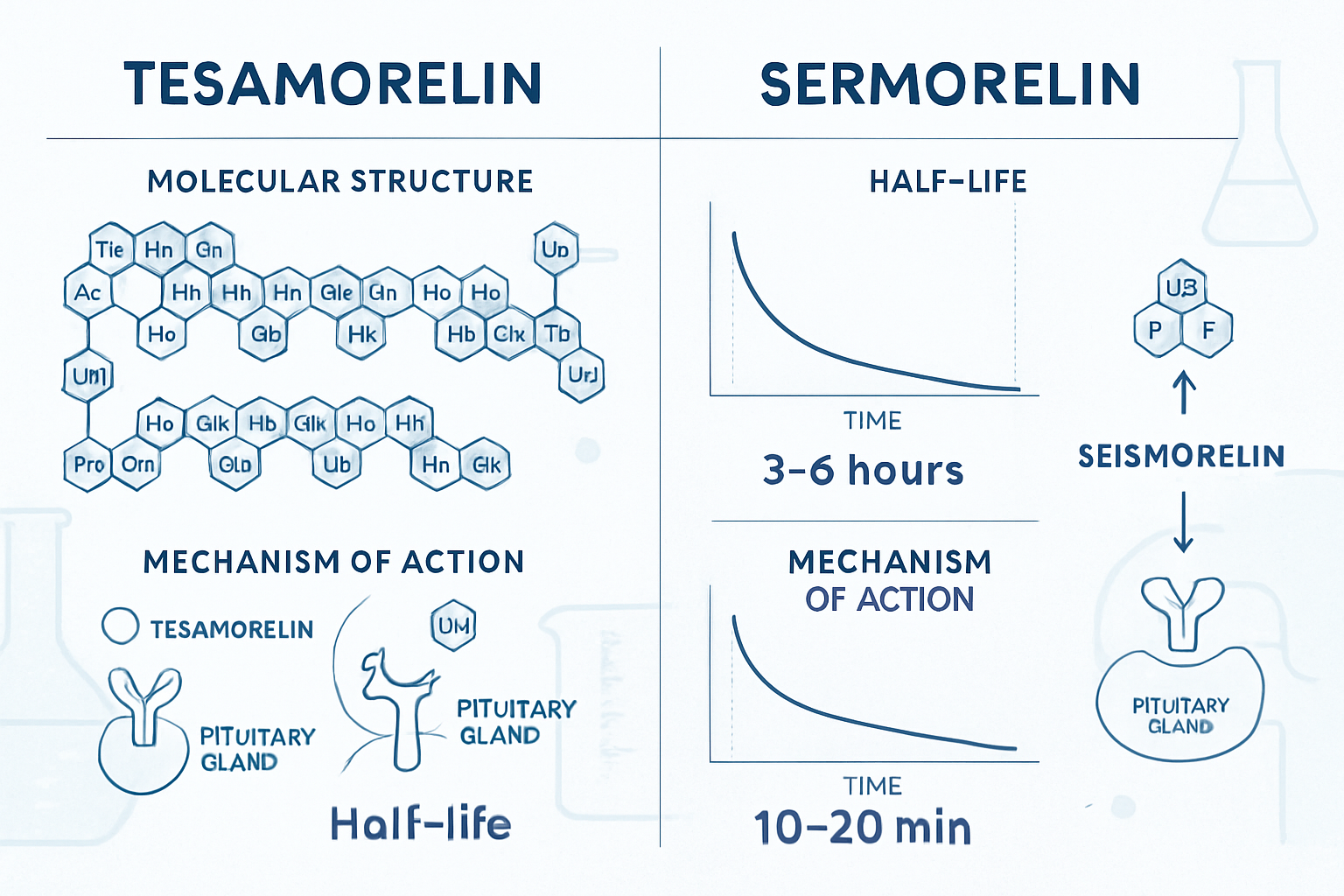
tesa (EGRIFAMTLKQFAIQTAYKQQFQANKQILQMRQQAQSGFQ) consists of 44 amino acids and includes modifications that enhance its stability and bioavailability. The peptide features a trans-3-hexenoic acid group attached to the N-terminus, which significantly increases its resistance to enzymatic degradation [2].
Sermorelin (YADAIFTNSYRKVLGQLSARKLLQDIMSRQQGESNQERGARA) contains 29 amino acids and represents the biologically active portion of human GHRH. This peptide maintains the essential binding domain while offering a more streamlined structure for research applications.
Structural Advantages in Research Settings
The extended amino acid sequence in tesa provides enhanced stability in laboratory conditions. Research has demonstrated that this structural modification allows for improved peptide storage and handling compared to shorter peptide sequences.
Sermorelin's more compact structure offers advantages in certain experimental designs where rapid onset and clearance are desired. The peptide's similarity to endogenous GHRH makes it particularly valuable for studies investigating natural hormone replacement mechanisms.
When comparing tesa vs serm in laboratory settings, researchers often consider the quality and purity of peptide preparations to ensure consistent experimental results.
Research Applications and Study Designs
Both tesa and serm have found extensive use in various research applications, each offering unique advantages depending on the study objectives.
Metabolic Research Studies
tesa has shown particular promise in metabolic research, with studies investigating its effects on lipid metabolism and body composition changes. Laboratory investigations have explored how this peptide influences various metabolic pathways and cellular energy production mechanisms [3].
Research teams studying metabolic disorders often incorporate tesa into their experimental protocols due to its sustained activity profile. The peptide's ability to maintain consistent growth hormone stimulation makes it valuable for long-term metabolic studies.
Growth Hormone Research Applications
Sermorelin's role in growth hormone research extends beyond basic endocrine studies. Researchers utilize this peptide to investigate age-related changes in hormone production, sleep-related growth hormone release, and the relationship between growth hormone and cognitive function.
The peptide's shorter half-life makes it particularly useful for studies requiring precise timing of growth hormone release. This characteristic allows researchers to create controlled experimental conditions that closely mimic natural physiological patterns.
Comparative Research Protocols
When designing tesa vs serm comparison studies, researchers must consider several factors including dosing schedules, measurement timepoints, and outcome variables. The development of standardized research protocols has improved the reproducibility of peptide research across different laboratories.
Many research institutions now employ multi-peptide approaches, combining different GHRH analogs to study synergistic effects and optimize experimental outcomes. This approach has led to new insights into how different peptide structures influence biological responses.
Pharmacokinetics and Laboratory Considerations
Understanding the pharmacokinetic properties of tesa and serm is essential for designing effective research protocols and interpreting experimental results.
Half-Life and Duration of Action
tesa exhibits a significantly longer half-life compared to serm, with studies indicating sustained activity for several hours following administration. This extended duration makes it suitable for research applications requiring prolonged growth hormone stimulation [4].
Sermorelin demonstrates a shorter half-life, typically requiring more frequent administration in research protocols. However, this characteristic can be advantageous in studies investigating acute responses to growth hormone stimulation or when rapid clearance is desired.
Bioavailability and Stability
The structural modifications in tesa contribute to enhanced bioavailability and resistance to peptidase degradation. These properties make it particularly valuable for research applications where consistent peptide levels are crucial for experimental validity.
Sermorelin's stability profile requires careful consideration in experimental design, particularly regarding storage conditions and preparation methods. Researchers working with serm often implement specialized storage protocols to maintain peptide integrity throughout study periods.
Research Dosing Considerations
Laboratory studies comparing tesa vs serm often reveal different optimal dosing ranges for each peptide. These differences stem from variations in potency, bioavailability, and duration of action between the two compounds.
Research teams typically establish dose-response relationships for each peptide within their specific experimental systems. This approach ensures that comparisons between tesa and serm are conducted under equivalent biological conditions.
Safety Profiles in Research Settings
Both tesa and serm have established safety profiles in research applications, though each peptide presents unique considerations for laboratory use.
Laboratory Safety Protocols
Research institutions working with GHRH analogs implement comprehensive safety protocols to ensure proper handling and administration of these compounds. These protocols typically include guidelines for peptide preparation, storage, and disposal in accordance with institutional research standards.
The quality assurance measures employed by peptide suppliers play a crucial role in maintaining research safety standards. High-purity peptides reduce the risk of experimental confounding factors and ensure reliable research outcomes.
Monitoring Parameters in Research
Studies involving tesa and serm typically include comprehensive monitoring protocols to assess both intended effects and potential adverse responses. These monitoring systems help researchers understand the full spectrum of biological activities associated with each peptide.
Research teams often implement multi-parameter assessment approaches to capture the complex interactions between GHRH analogs and various physiological systems.
Selecting the Right Peptide for Research
The choice between tesa and serm depends on multiple factors related to research objectives, experimental design, and desired outcomes.
Research Objective Alignment
For studies investigating sustained growth hormone effects or long-term metabolic changes, tesa's extended duration of action may provide advantages. Conversely, research focusing on acute responses or natural hormone patterns might benefit from serm's shorter half-life.
The tesa vs serm decision should align with specific research hypotheses and measurement endpoints. Researchers often consult with peptide research specialists to optimize their experimental approaches.
Experimental Design Considerations
Study duration, dosing frequency, and measurement timepoints all influence peptide selection. tesa's sustained activity profile may simplify dosing protocols in long-term studies, while serm's rapid clearance might be preferable for studies requiring precise temporal control.
Budget and Resource Factors
Research budget considerations often influence peptide selection, as different compounds may have varying costs associated with procurement, storage, and handling. The availability of high-quality research peptides has improved access to both tesa and serm for research applications.
Future Research Directions
The field of GHRH analog research continues to evolve, with new applications and combination therapies under investigation.
Emerging Research Areas
Current research trends include investigating the potential synergistic effects of combining different GHRH analogs, exploring tissue-specific responses to growth hormone stimulation, and developing novel delivery methods for improved research applications.
The development of peptide combination protocols represents an exciting frontier in growth hormone research, potentially offering enhanced experimental control and more nuanced biological insights.
Technological Advances
Advances in peptide synthesis and purification technologies continue to improve the quality and consistency of research-grade GHRH analogs. These improvements enhance the reliability of experimental results and expand the potential applications of these research tools.
Conclusion
The tesa vs serm comparison reveals two distinct research peptides, each offering unique advantages for investigating growth hormone pathways and related physiological processes. tesa's extended half-life and enhanced stability make it particularly valuable for sustained research applications, while serm's shorter duration and natural GHRH similarity provide advantages in acute response studies.
Researchers selecting between these peptides should carefully consider their experimental objectives, study design requirements, and desired outcomes. Both compounds have demonstrated value in advancing our understanding of growth hormone regulation and metabolic processes through rigorous laboratory investigation.
The continued development of high-quality research peptides and standardized protocols will further enhance the utility of both tesa and serm in scientific research. As the field evolves, these tools will likely play increasingly important roles in unlocking new insights into human physiology and potential therapeutic applications.
Next Steps for Researchers:
- Evaluate specific research objectives and experimental requirements
- Consult with peptide research specialists to optimize study design
- Implement appropriate safety and quality assurance protocols
- Consider combination approaches for enhanced research outcomes
- Stay informed about emerging research methodologies and applications
References
[1] Mayo, K. E., et al. (1995). Growth hormone-releasing hormone: synthesis and signaling. Recent Progress in Hormone Research, 50, 35-73.
[2] Jetté, L., et al. (2005). Human growth hormone-releasing factor (hGRF)1-29-albumin bioconjugates activate the GRF receptor on the anterior pituitary in rats. Journal of Medicinal Chemistry, 48(24), 7592-7603.
[3] Falutz, J., et al. (2010). Effects of tesa, a growth hormone-releasing factor, in HIV patients with abdominal fat accumulation. AIDS, 24(14), 2127-2136.
[4] Walker, R. F., et al. (1991). Effects of the somatotropin-releasing hexapeptide His-D-Trp-Ala-Trp-D-Phe-Lys-NH2 on sleep stages and other sleep parameters. Sleep, 14(1), 17-21.
SEO Meta Information
Meta Title: tesa vs Sermorelin: Research Peptide Comparison 2025
Meta Description: Compare tesa vs serm research peptides. Discover molecular differences, research applications, and laboratory considerations for GHRH analogs.