Navigating Vesilute Peptide Dosage: A Comprehensive 2026 Research Guide
Are you delving into the intricate world of peptides and seeking to understand the precise science behind their application? The concept of vesilute peptide dosage is paramount for any serious researcher or individual exploring the potential of these fascinating biomolecules. As an expert SEO content strategist and senior editor, I understand the critical need for accurate, in-depth information. In 2026, the landscape of peptide research continues to evolve rapidly, and understanding proper dosing protocols is not just beneficial, it's essential for achieving meaningful and reproducible results. This article aims to be your authoritative resource, dissecting the complexities of vesilute peptide dosage within the context of laboratory research and scientific exploration.
Key Takeaways
- Vesilute Peptide Function: Vesilute is a bioregulator peptide, primarily investigated for its role in connective tissue regeneration and promoting cellular repair, making understanding its optimal vesilute peptide dosage crucial for research.
- Dosage Complexity: Determining the ideal vesilute peptide dosage is multifaceted, influenced by research objectives, specific study models, purity, and administration methods. There's no single universal dose.
- Starting Low and Gradual Escalation: A common research approach involves starting with lower doses and gradually increasing, meticulously observing effects to identify optimal ranges for specific research outcomes.
- Importance of Purity and Sourcing: The efficacy and safety of any vesilute peptide research are heavily dependent on the purity and quality of the peptide sourced. Reputable suppliers like Pure Tested Peptides are vital for reliable results.
- Ongoing Research: The field is dynamic. Researchers should continuously consult the latest scientific literature for updates on vesilute peptide applications and refined dosage recommendations.
Understanding Vesilute Peptide and Its Research Applications
Vesilute is a synthetic peptide bioregulator derived from natural sources, specifically targeting the health and function of connective tissues. Its unique amino acid sequence is believed to help restore cellular function, stimulate regeneration, and improve the overall integrity of various tissues within the body. This makes vesilute peptide a subject of intense interest in fields ranging from gerontology to sports medicine and regenerative science. Researchers are exploring its potential in areas such as cartilage repair, joint health, and the maintenance of vascular tissue. The proper vesilute peptide dosage is a critical factor in these investigations, directly impacting the observed biological responses.
[[IMAGE_PROMPT_1]]
When we talk about vesilute peptide benefits, we're primarily referring to its hypothesized ability to normalize metabolic processes in cells, enhance tissue repair, and support adaptive capacity. This bioregulatory action is what distinguishes peptides like vesilute; they are not intended to act as strong stimulants or inhibitors, but rather to modulate and restore physiological balance. For instance, in studies involving cartilage degradation, researchers might investigate how specific doses of vesilute peptide influence cellular markers of repair and inflammation. Understanding the specific mechanisms requires careful experimental design, where the chosen vesilute peptide dosage is a key variable.
The term "bioregulator" in "vesilute peptide bioregulator" signifies its role in regulating gene expression and protein synthesis within cells, bringing them back to a more youthful or functional state. This nuanced action means that finding the correct dose isn't about simply overwhelming the system, but about providing the optimal signal for cellular self-correction. Researchers often explore a range of doses to identify this 'sweet spot,' where the most beneficial effects are observed without any adverse responses. This empirical approach is foundational to determining effective vesilute peptide dosage.
For those interested in the broader spectrum of peptides available for research, exploring the diverse offerings at Pure Tested Peptides can provide context and access to high-quality materials. We pride ourselves on offering meticulously tested products to ensure reliable research outcomes.
The Science Behind Vesilute: A Closer Look
Vesilute, like other bioregulator peptides, operates on the principle of restoring balance at the cellular level. Its proposed mechanism involves interacting with specific cellular receptors or pathways that influence gene expression related to tissue maintenance and repair. This targeted action is why the vesilute peptide dosage needs to be carefully considered; too little might not elicit a response, while too much might disrupt the delicate balance it aims to restore. The goal is to provide a physiological signal that prompts the body's own reparative processes.
Consider, for example, studies involving the regeneration of connective tissue. Researchers might administer varying doses of vesilute to cell cultures or animal models to observe changes in collagen synthesis, proteoglycan production, or the proliferation of fibroblasts. These are all critical indicators of connective tissue health. The dose that elicits the most favorable response in these assays would then be considered a potential candidate for further investigation. This iterative process is standard in peptide research. For a broader understanding of how different peptides are combined for synergistic effects in research, you might find our article on peptide blends research insightful.
The purity of the peptide is also paramount when discussing vesilute peptide dosage. Contaminants can significantly alter the biological activity of the peptide, leading to misleading results or unintended side effects. Therefore, always sourcing from a reputable supplier that provides third-party testing for purity and identity, such as Pure Tested Peptides, is non-negotiable for serious researchers. This ensures that the observed effects can be accurately attributed to the vesilute peptide itself.
In ongoing studies, researchers are continuously refining their understanding of how vesilute interacts with different biological systems. This includes exploring various routes of administration, frequency of dosing, and duration of treatment to optimize its effects. The cumulative data from these studies will eventually help establish more definitive guidelines for vesilute peptide dosage in specific research contexts.
Determining Optimal Vesilute Peptide Dosage for Research
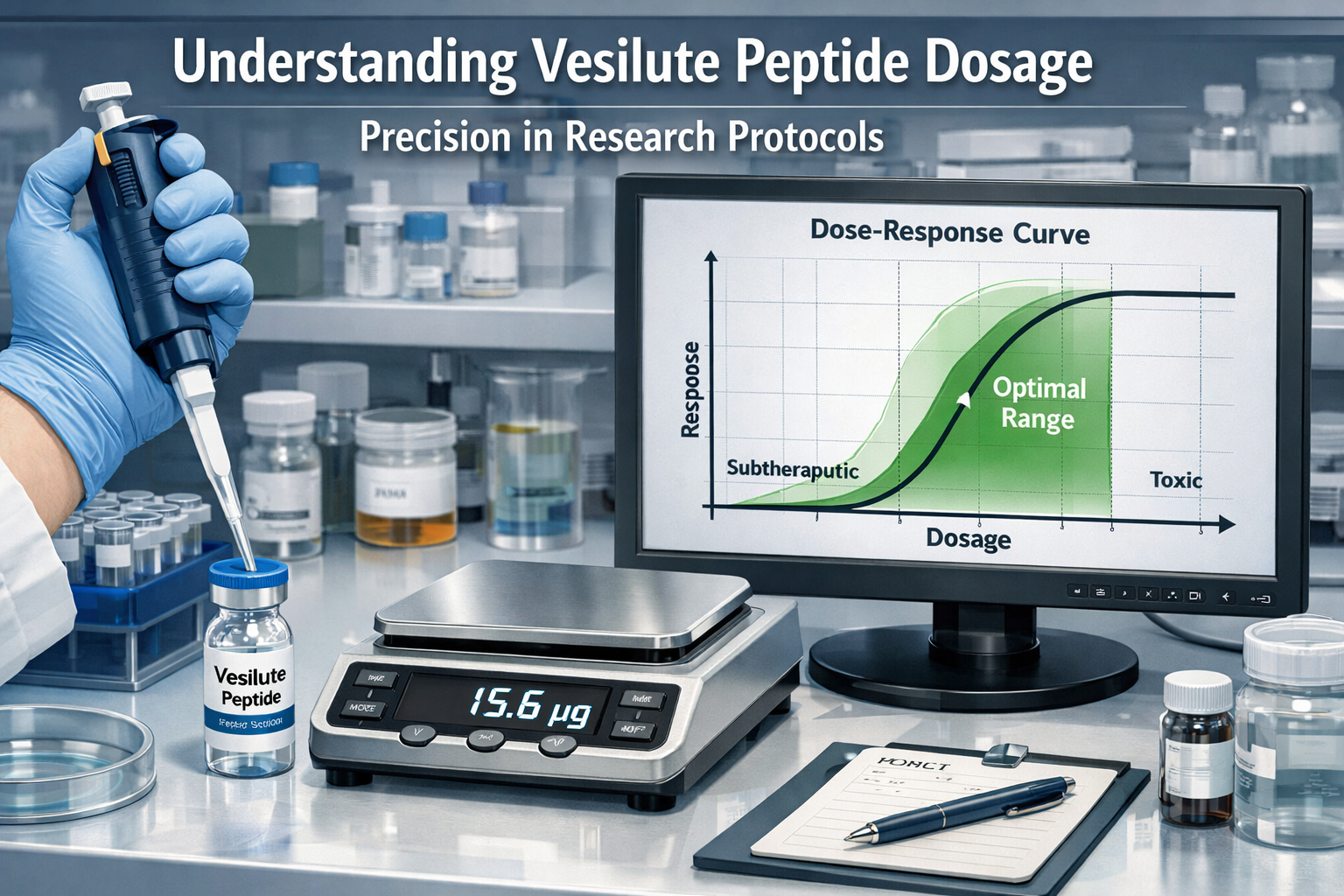
When discussing vesilute peptide dosage, it's crucial to understand that there isn't a universally "correct" dose that applies to all research scenarios. Peptide research is complex, and dosage is highly dependent on a multitude of factors, including the specific research objectives, the model being used (e.g., in vitro cell culture, in vivo animal models), the desired biological outcome, and even the individual characteristics of the research subjects. Therefore, the approach to determining vesilute peptide dosage is often empirical, guided by existing literature and careful experimental design.
One common methodology involves starting with a conservative, low dose and gradually escalating it while closely monitoring for desired effects and any potential responses. This allows researchers to identify a dose-response curve, pinpointing the minimum effective dose and the maximum tolerated dose before saturation or adverse effects occur. For example, if researching vesilute's effect on cartilage repair, initial studies might use a very small amount, say 0.1 mg/kg, and then increase to 0.5 mg/kg, 1 mg/kg, and so on, over a controlled period, observing cellular markers or functional improvements at each stage. This meticulous approach is vital when exploring something as subtle as a vesilute bioregulator.
Factors Influencing Vesilute Peptide Dosage
Several critical factors influence the appropriate vesilute peptide dosage in a research setting:
- Research Objective: Are you aiming for tissue regeneration, anti-inflammatory effects, or cellular rejuvenation? Each objective might require a different optimal dose.
- Model System: In vitro (cell culture) studies often use concentrations in micrograms per milliliter (µg/mL) or nanomoles (nM), which do not directly translate to in vivo (animal or human) milligram per kilogram (mg/kg) doses.
- Route of Administration: Whether the peptide is administered subcutaneously, intramuscularly, orally (if applicable), or topically will influence bioavailability and thus the effective dosage. For example, oral peptides often require higher doses due to degradation in the digestive tract. While vesilute is typically studied via injection, understanding different administration methods for other peptides can be found in resources like best oral peptides.
- Frequency of Administration: A single large dose versus smaller, more frequent doses can lead to different pharmacodynamic profiles and outcomes.
- Purity and Concentration: As mentioned, the quality of the vesilute peptide itself is paramount. Higher purity means more active substance per unit, requiring more precise measurement for dosage.
- Duration of Study: Acute vs. chronic studies may necessitate different dosing strategies.
For researchers working with a range of peptides, understanding these factors is crucial. For instance, the considerations for ovagen peptide dosage or prostamax peptide dosage would follow similar scientific principles, though the specific numerical values would differ based on the peptide's unique properties and target tissues. When considering vesilute for sale for your research, always ensure accompanying documentation on purity and concentration is available.
"The efficacy of peptide research hinges not just on the peptide itself, but on the meticulous science of its application – and nowhere is this more evident than in determining the optimal vesilute peptide dosage."
Typical Research Ranges and Protocols
While specific, universally accepted guidelines for vesilute peptide dosage for broad applications are still emerging from ongoing research, we can draw parallels from other bioregulator peptides. Many bioregulators are studied in animal models at doses ranging from 0.1 mg/kg to 1 mg/kg per day, often administered via subcutaneous injection for a period of 5-10 days, or even longer for chronic studies. It's important to stress that these are research ranges and not prescriptive clinical doses. The exact dose for vesilute would be determined by specific experimental protocols.
For example, a typical research protocol might involve:
- Reconstitution: Diluting the lyophilized vesilute peptide powder with sterile bacteriostatic water to a manageable concentration (e.g., 1 mg/mL).
- Pilot Study: Administering a very low dose to a small group of subjects to assess baseline response and any immediate observable reactions.
- Dose Escalation: Gradually increasing the dose in subsequent groups, meticulously recording all observations, data points, and biological markers.
- Data Analysis: Comparing results across different dose groups to identify the most effective vesilute peptide dosage for the specific research outcome being investigated.
Researchers are continually exploring synergistic approaches, combining peptides to enhance their effects. For example, some may investigate a blend including vesilute with other reparative agents. Our product Klow Blend (BPC-157, TB-500, KPV, GHK-Cu Blend) is an example of such a combination, designed for comprehensive research into skin and overall cellular vitality, showcasing the complexity of peptide blending and the importance of accurate dosage for each component.
The critical takeaway here is that determination of vesilute peptide dosage in research is a scientific endeavor requiring precision, careful observation, and a thorough understanding of the peptide's mechanism of action and the specific research model employed.
Exploring Related Peptides: Ovagen and Prostamax Dosage
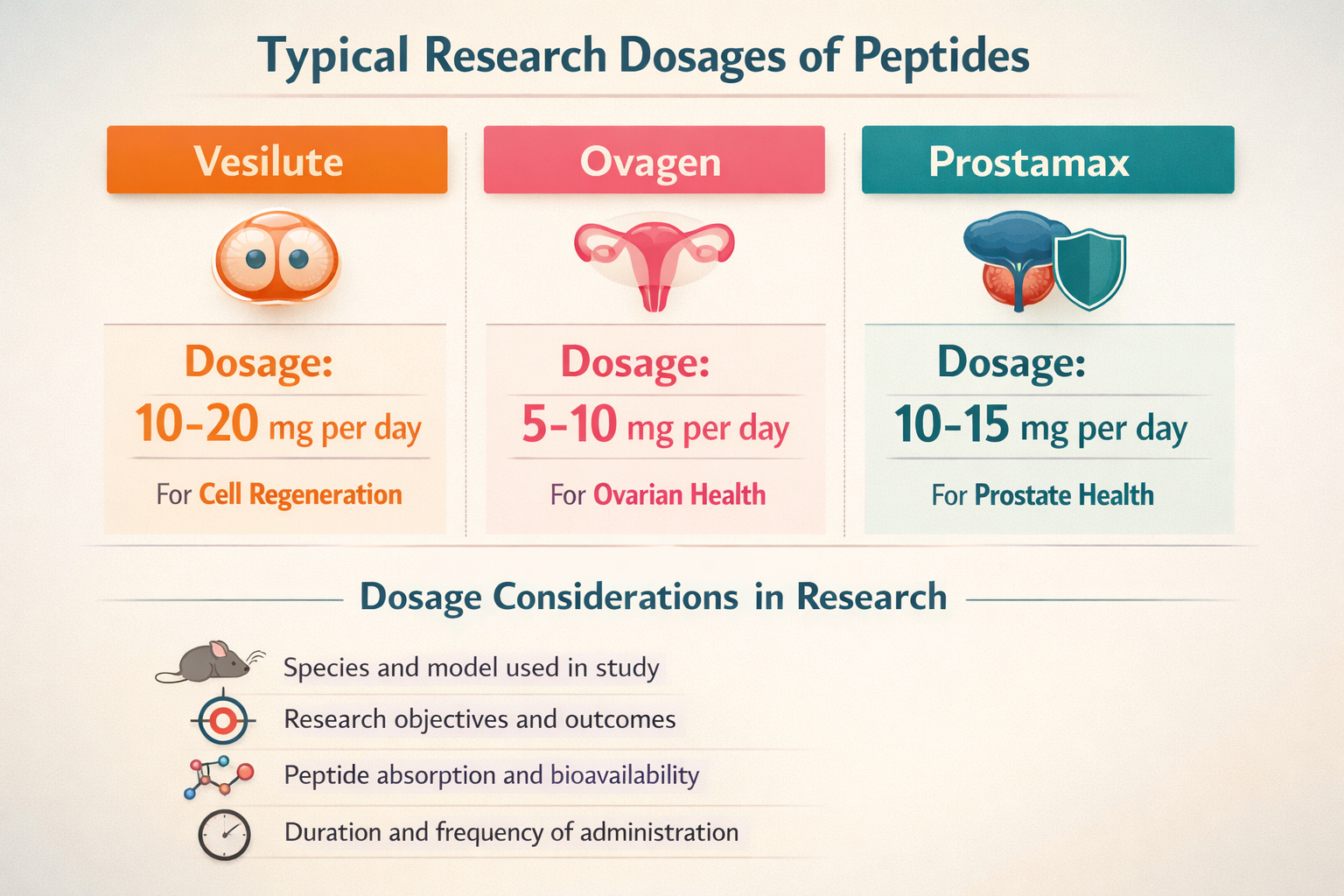
While our primary focus is on vesilute peptide dosage, it's incredibly useful for researchers to understand how dosing principles apply to other prominent bioregulator peptides. This comparison provides a broader context and highlights the unique considerations for each peptide based on its target tissue and intended biological effect. Two such peptides, Ovagen and Prostamax, are excellent examples, each with distinct research applications and, consequently, unique dosage considerations.
[[IMAGE_PROMPT_2]]
Ovagen Peptide Dosage: Focus on Ovarian Health
Ovagen peptide is another bioregulator peptide, specifically studied for its potential role in supporting ovarian function and female reproductive health. Its proposed mechanism involves regulating gene expression in ovarian cells, potentially aiding in the normalization of hormonal balance and improving follicular development. This makes ovagen peptide a subject of particular interest in fertility research and studies on age-related ovarian decline.
Determining ovagen peptide dosage follows similar scientific principles as vesilute. Researchers typically start with low doses in animal models, often in the range of 0.1 mg/kg to 0.5 mg/kg per day, administered subcutaneously. The duration of administration might vary based on the specific reproductive cycle being targeted or the chronic condition being studied. For instance, a study aiming to improve ovulation rates might involve a short, concentrated course, while research into long-term ovarian health might involve more prolonged, lower-dose protocols.
- Key Considerations for Ovagen Peptide Dosage:
- Hormonal Sensitivity: The female reproductive system is highly sensitive to hormonal fluctuations, meaning precise dosing is critical to avoid disrupting delicate balances.
- Cycle Synchronization: For in vivo studies, synchronizing ovagen peptide administration with specific phases of the estrous or menstrual cycle is often crucial for meaningful results.
- Age and Reproductive Status: Dosage might be adjusted based on the age and current reproductive status of the research subjects (e.g., pre-menopausal, post-menopausal models).
Understanding what is ovagen peptide and its nuanced action underscores the importance of a well-designed research protocol, where ovagen peptide dosage is a meticulously controlled variable. Just like with vesilute peptide, purity and accurate measurement are paramount for reliable ovagen peptide benefits research. For those exploring comprehensive peptide research kits, our Best Peptide Kits for Beginner Researchers can offer guidance on starting your studies with confidence.
Prostamax Peptide Dosage: Targeting Prostate Health
Prostamax peptide is a bioregulator peptide that has garnered research attention for its potential role in maintaining prostate health. Its proposed action involves regulating cellular processes within prostate tissue, aiming to normalize function and potentially mitigate issues associated with aging or cellular stress. Research into prostamax peptide benefits often focuses on its effects on prostate cell proliferation, inflammation markers, and overall tissue architecture.
When investigating prostamax peptide dosage, researchers apply the same rigorous approach:
- Starting Low: Initial studies often employ conservative doses, typically ranging from 0.1 mg/kg to 0.7 mg/kg per day in animal models, administered subcutaneously.
- Duration: Similar to other bioregulators, the duration of administration depends on the research question. Short courses might investigate acute cellular responses, while longer studies could explore chronic effects on prostate health markers.
- Monitoring Markers: Researchers closely monitor markers of prostate health, such as prostate-specific antigen (PSA) levels (in relevant models), inflammatory markers, and histological changes in prostate tissue, to assess the impact of different prostamax peptide doses.
The goal of buy prostamax peptide for research is to understand how this specific bioregulator interacts with prostate cells to promote healthy function. Just as with vesilute peptide dosage, the ultimate aim is to identify the most effective dose that elicits the desired biological response without introducing unwanted effects. The precision required in such studies highlights the necessity of using high-quality, pure peptides.
Comparative Table: Vesilute, Ovagen, and Prostamax Research Dosing Considerations
To illustrate the comparative aspects, here’s a simplified table summarizing typical research considerations for these three bioregulator peptides. Please remember, these are generalized research insights and not clinical recommendations.
| Peptide | Primary Research Focus | Typical Research Dose Range (Animal Models) | Administration Route (Common) | Key Dosage Considerations |
|---|---|---|---|---|
| Vesilute | Connective Tissue & Regeneration | 0.1 mg/kg – 1 mg/kg daily | Subcutaneous | Research objective (e.g., cartilage, vascular), duration of study, tissue specificity. |
| Ovagen | Ovarian Function & Female Reproductive Health | 0.1 mg/kg – 0.5 mg/kg daily | Subcutaneous | Hormonal sensitivity, cycle synchronization, age and reproductive status of model. |
| Prostamax | Prostate Health | 0.1 mg/kg – 0.7 mg/kg daily | Subcutaneous | Monitoring prostate-specific markers, inflammation, and cellular proliferation. |
This table clearly shows that while the underlying principles of determining peptide dosage are similar, the specific ranges and considerations vary based on the peptide's target and the unique biology of the system it influences. Therefore, researchers must conduct thorough literature reviews and pilot studies for each peptide, whether it's vesilute peptide, ovagen peptide, or prostamax peptide, to establish the most appropriate research protocol. The same meticulous approach should be applied when developing best research protocol for Klow Blend.
Practical Considerations for Vesilute Peptide Research
Beyond the scientific principles of determining vesilute peptide dosage, practical aspects play a crucial role in the success and reliability of any research project. From sourcing and storage to reconstitution and administration, each step requires careful attention to detail. As an expert, I cannot overstate the importance of adherence to best practices, especially when dealing with sensitive biomolecules like peptides.
Sourcing High-Quality Vesilute Peptide
The foundation of accurate vesilute peptide dosage research is undeniably the quality of the peptide itself. Impure or improperly synthesized peptides can lead to inconsistent results, difficulty in interpreting data, and even safety concerns in in vivo models. When you buy vesilute for your research, always prioritize suppliers who can provide comprehensive third-party testing documentation, including:
- Purity (HPLC): High-Performance Liquid Chromatography (HPLC) results confirm the percentage of the active peptide. Look for purity levels typically above 98%.
- Mass Spectrometry (MS): This verifies the correct molecular weight and amino acid sequence of the peptide, confirming its identity.
At Pure Tested Peptides, we emphasize rigorous quality control to ensure that every peptide, including vesilute, meets high purity and authenticity standards. This commitment to quality directly impacts the validity and reproducibility of your vesilute peptide dosage studies. For a deeper dive into peptide storage, which is equally critical for maintaining quality, check out our guide on best practices for storing research peptides.
Reconstitution and Storage for Vesilute Peptide
Once you receive your lyophilized (freeze-dried) vesilute peptide, proper reconstitution and storage are critical for maintaining its stability and efficacy.
-
Reconstitution:
- Solvent: Use sterile bacteriostatic water (BAC water) for reconstitution. The benzyl alcohol in BAC water inhibits bacterial growth, extending the peptide's shelf life.
- Technique: Gently add the BAC water to the vial, allowing it to run down the side. Do not inject directly onto the peptide powder. Swirl gently; avoid vigorous shaking, which can denature the peptide.
- Concentration: Calculate your desired concentration carefully. For example, a 5mg vial of vesilute peptide reconstituted with 5mL of BAC water yields a concentration of 1mg/mL. This makes accurate vesilute peptide dosage easier to measure.
-
Storage:
- Lyophilized: Unreconstituted vesilute should be stored in a cool, dark place, ideally in a freezer at -20°C (-4°F) or colder, to maintain its stability for extended periods (typically years).
- Reconstituted: Once reconstituted, vesilute peptide is more fragile. Store it in the refrigerator at 2-8°C (36-46°F) and use it within a few weeks, depending on the specific peptide and solvent. Always refer to the supplier's recommendations.
Improper storage can lead to degradation, reducing the active peptide content and making accurate vesilute peptide dosage impossible, thereby compromising your research results.
Measurement and Administration
Precise measurement is non-negotiable for accurate vesilute peptide dosage.
- Syringes: Use high-quality insulin syringes for subcutaneous injections. These typically have fine needles and are marked in small units (e.g., IUs or 0.01mL increments), allowing for precise dosing.
- Calculation: Always double-check your calculations. If you have a 1mg/mL solution and need to administer a 0.5mg dose, you would draw up 0.5mL (or 50 units on an insulin syringe calibrated for 100 units per mL).
- Administration Technique: For subcutaneous administration, choose areas with subcutaneous fat (e.g., abdomen, thigh). Clean the injection site thoroughly with an alcohol swab, pinch a fold of skin, and insert the needle at a 45-degree angle.
This meticulous approach ensures that the intended vesilute peptide dosage is actually delivered to the research subject, minimizing variability and enhancing the reliability of your study. For researchers delving into the intricate world of peptides and their diverse applications, understanding the full spectrum of available research tools and protocols is key to advancing scientific knowledge responsibly. Our article on building a diverse peptide library with Pure Tested Peptides can provide further guidance.
Conclusion: The Precision of Vesilute Peptide Dosage in 2026 Research
The exploration of vesilute peptide dosage represents a critical frontier in regenerative science and tissue repair research in 2026. As we've thoroughly discussed, the determination of an optimal dose for vesilute peptide is far from a simple task; it’s a nuanced scientific endeavor demanding precision, careful methodology, and a profound understanding of the peptide's unique biochemical properties and its interaction within specific biological systems. Whether you are investigating the profound vesilute peptide benefits in connective tissue regeneration or exploring its broader role as a vesilute bioregulator, the accuracy of your dosage directly correlates with the validity and reproducibility of your findings.
We've emphasized that there is no one-size-fits-all answer for vesilute peptide dosage. Instead, researchers must employ empirical methods, starting with conservative doses, meticulously observing responses, and gradually escalating as necessary. Factors such as the research objective, the specific model system, the route and frequency of administration, and crucially, the purity of the vesilute peptide itself, all play significant roles in shaping the dosing protocol. The importance of sourcing high-quality, third-party tested vesilute for sale cannot be overstated, as it forms the bedrock of reliable and impactful research.
Comparing vesilute peptide dosage with that of other bioregulators like ovagen peptide and prostamax peptide further illustrates the tissue-specific considerations that guide dosing strategies. While the overarching scientific principles remain consistent across peptides, the fine-tuning of dosages is tailored to the unique biological targets and desired outcomes of each peptide. This comparative analysis helps underscore the specialized knowledge required for effective peptide research.
As the scientific community continues to uncover the vast potential of peptides, the rigor applied to studies on vesilute peptide dosage will be instrumental in translating promising laboratory findings into meaningful advancements.
Actionable Next Steps for Researchers:
- Conduct Thorough Literature Reviews: Before initiating any study, immerse yourself in existing research on vesilute peptide to inform your initial dosing hypotheses.
- Prioritize Quality Sourcing: Always acquire your vesilute peptide from reputable suppliers like Pure Tested Peptides who provide verifiable third-party purity and identity testing.
- Master Reconstitution and Storage: Adhere strictly to best practices for reconstituting and storing your peptides to maintain their integrity and ensure accurate vesilute peptide dosage.
- Design Meticulous Protocols: Develop detailed research protocols that outline your chosen dose ranges, administration methods, and comprehensive monitoring plans. Consider starting with pilot studies to establish baseline responses.
- Document Everything: Meticulously record all aspects of your research, from peptide batch numbers and reconstitution details to administration times and observed results. This ensures reproducibility and helps in refining future vesilute peptide dosage studies.
By adhering to these principles, researchers can confidently navigate the complexities of vesilute peptide dosage, contributing to a deeper understanding of this remarkable bioregulator and advancing the field of peptide science responsibly.