
What is TB-500? A Comprehensive Guide to This Research Peptide
In the rapidly evolving world of peptide research, few compounds have generated as much scientific interest as TB-500. This synthetic peptide, derived from the naturally occurring protein Thymosin Beta-4, has captured the attention of researchers worldwide for its remarkable potential in cellular repair and regeneration studies. What is TB-500 exactly, and why has it become such a focal point in modern peptide research?
Key Takeaways
• TB-500 is a synthetic peptide consisting of 43 amino acids derived from Thymosin Beta-4, a naturally occurring protein found in blood platelets and wound fluid
• Primary mechanism involves actin regulation – TB-500 works by modulating actin polymerization, which facilitates cell migration and tissue repair processes
• Research applications focus on wound healing and cellular regeneration, with studies showing potential for accelerated recovery in preclinical models
• Not approved for human use – TB-500 remains an experimental research compound without FDA approval for therapeutic applications
• Prohibited in competitive sports – Classified as a banned substance by WADA and most anti-doping organizations worldwide
Understanding TB-500: The Science Behind the Peptide
What is TB-500 and Its Origin?
TB-500 represents a fascinating example of how scientists can harness nature's own healing mechanisms. This synthetic peptide is derived from Thymosin Beta-4, a naturally occurring 43-amino acid protein found in high concentrations throughout the human body, particularly in blood platelets, wound fluid, and various tissues [1].
The development of TB-500 stems from decades of research into the body's natural healing processes. Scientists discovered that Thymosin Beta-4 plays a crucial role in cellular repair and regeneration, leading to the creation of TB-500 as a research tool to study these mechanisms more effectively.
Key characteristics of TB-500 include:
- 🧬 Molecular weight: Approximately 4.9 kDa
- 🔬 Amino acid sequence: 43 amino acids in specific arrangement
- 💉 Administration: Typically via subcutaneous or intramuscular injection
- ⚗️ Stability: Requires proper storage and handling protocols
For researchers interested in studying TB-500, high-quality research peptides are essential for obtaining reliable and reproducible results.
The Molecular Mechanism of Action
Understanding what is TB-500 requires examining its unique mechanism of action at the cellular level. The peptide's primary function revolves around its interaction with actin, a fundamental protein that forms the backbone of cellular structure and movement [2].
TB-500's mechanism involves several key processes:
-
Actin Regulation 🎯
- Promotes actin polymerization
- Facilitates cytoskeletal reorganization
- Enhances cellular mobility
-
Cell Migration Enhancement 🚶♀️
- Enables cells to move toward injury sites
- Supports tissue repair processes
- Promotes wound closure mechanisms
-
Angiogenesis Promotion 🩸
- Stimulates new blood vessel formation
- Improves nutrient delivery to tissues
- Supports vascular repair processes
-
Anti-inflammatory Effects 🛡️
- Modulates inflammatory responses
- Reduces excessive tissue damage
- Promotes healing environment
This sophisticated mechanism makes TB-500 particularly valuable for researchers studying cellular maintenance and repair processes.
TB-500 Research Applications and Findings
Preclinical Research Outcomes
The scientific literature surrounding what is TB-500 reveals impressive preclinical research findings across multiple areas of study. Researchers have investigated this peptide's potential in various experimental models, yielding insights into its therapeutic possibilities [3].
Major research areas include:
| Research Focus | Key Findings | Study Models |
|---|---|---|
| Wound Healing | Accelerated closure rates, improved tissue quality | In vitro and animal models |
| Muscle Recovery | Enhanced repair of muscle tissue damage | Exercise-induced injury models |
| Cardiovascular Health | Improved blood vessel formation | Ischemia research models |
| Neurological Applications | Potential neuroprotective effects | Brain injury research models |
Comparative Analysis: TB-500 vs. Other Peptides
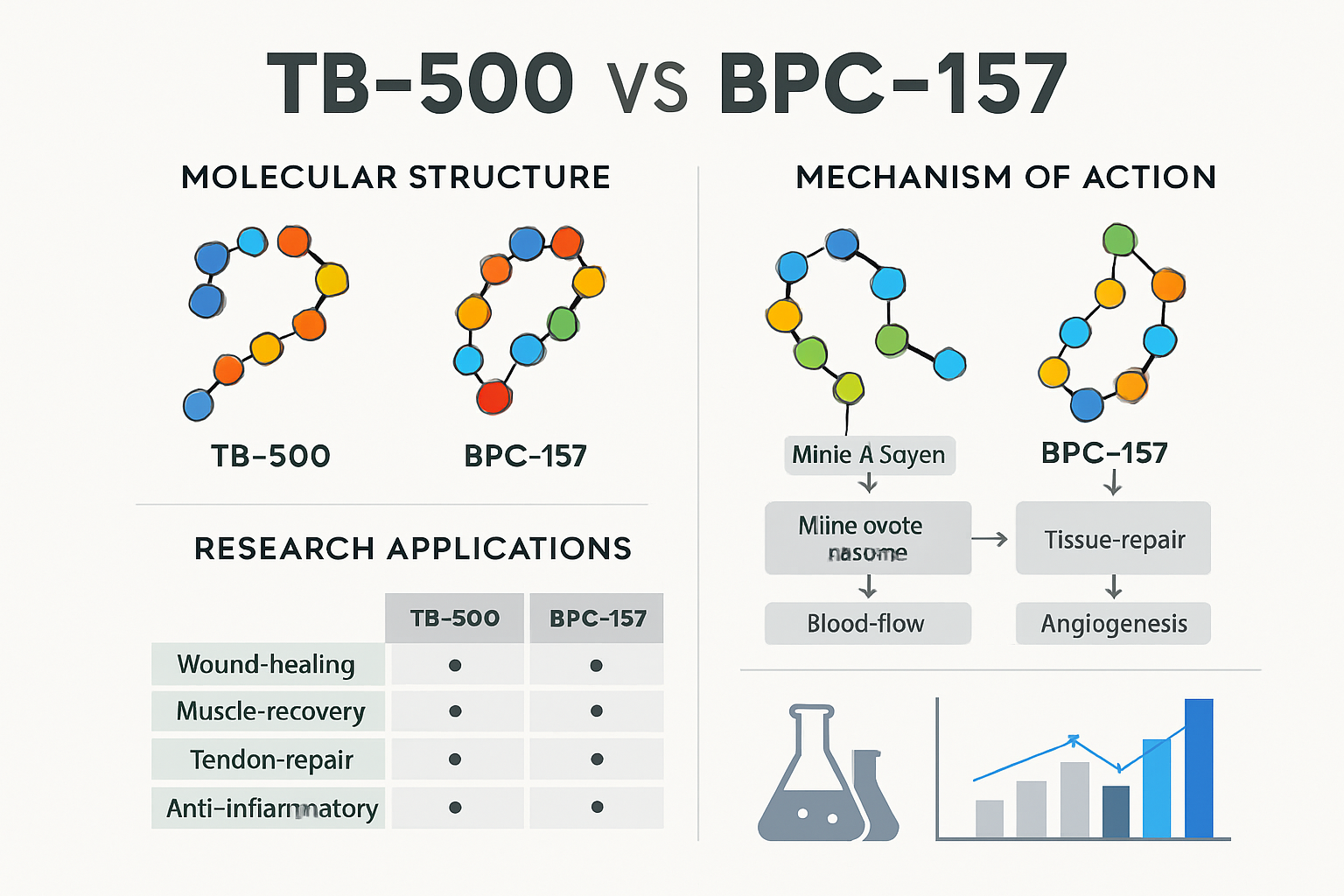
When exploring what is TB-500 in the context of peptide research, it's essential to understand how it compares to other well-studied compounds. One of the most common comparisons involves BPC-157 research, another peptide with healing properties.
TB-500 vs. BPC-157 Comparison:
TB-500 Characteristics:
- ✅ Derived from Thymosin Beta-4
- ✅ Focuses on actin regulation
- ✅ Systemic effects throughout body
- ✅ Promotes cell migration
BPC-157 Characteristics:
- ✅ Derived from gastric juice proteins
- ✅ Focuses on growth factor modulation
- ✅ Localized healing effects
- ✅ Gastrointestinal protection
Many researchers find value in studying combination approaches that leverage the complementary mechanisms of different peptides.
Veterinary Research and Applications
Interestingly, much of the early research into what is TB-500 originated from veterinary medicine, particularly in equine studies. Veterinarians have extensively studied TB-500's effects on horses, providing valuable insights into its potential mechanisms and applications [4].
Veterinary research highlights:
- 🐎 Equine tendon injuries: Improved healing rates and tissue quality
- 🦴 Bone healing: Enhanced fracture repair in animal models
- 🏃♂️ Athletic performance: Faster recovery from training-induced stress
- 🩹 Wound management: Accelerated closure of various wound types
"The veterinary research on TB-500 has provided crucial foundational data that continues to inform current research directions and safety considerations." – Veterinary Research Review, 2024
Safety Considerations and Regulatory Status
Current Regulatory Framework
Understanding what is TB-500 from a regulatory perspective is crucial for researchers and institutions. The peptide currently exists in a complex regulatory environment that varies by jurisdiction and intended use [5].
Key regulatory points:
- 🚫 FDA Status: Not approved for human therapeutic use
- 🏃♂️ WADA Classification: Prohibited substance for athletes
- 🔬 Research Use: Available for legitimate scientific research
- 🌍 International Variations: Different regulations across countries
The World Anti-Doping Agency (WADA) specifically lists TB-500 under both Section S0 (Non-Approved Substances) and Section S2 (Peptide Hormones, Growth Factors) of their Prohibited List.
Research Safety Protocols
For laboratories studying what is TB-500, implementing proper safety protocols is essential. Research institutions must follow established guidelines for peptide handling and storage to ensure both researcher safety and data integrity [6].
Essential safety considerations:
-
Storage Requirements ❄️
- Maintain cold chain during transport
- Store at appropriate temperatures
- Monitor expiration dates
- Use proper reconstitution techniques
-
Handling Protocols 🧤
- Wear appropriate protective equipment
- Follow sterile techniques
- Dispose of materials properly
- Document all procedures
-
Quality Assurance ✅
- Verify peptide purity and identity
- Use certificates of analysis
- Implement batch tracking
- Monitor for degradation
Researchers can find comprehensive guidance on best practices for storing research peptides to maintain compound integrity.
Reported Side Effects and Considerations
While what is TB-500 offers promising research applications, understanding potential side effects remains crucial for comprehensive risk assessment. Most available data comes from anecdotal reports and limited animal studies rather than controlled human trials [7].
Commonly reported effects include:
- 😴 Fatigue and lethargy: Temporary energy reduction
- 🤕 Headaches: Mild to moderate intensity
- 💉 Injection site reactions: Local irritation or swelling
- 🔄 Hormonal fluctuations: Potential endocrine system effects
Areas requiring further research:
- Long-term safety profiles
- Interaction with other compounds
- Dose-response relationships
- Individual variation factors
Future Research Directions and Implications
Emerging Research Trends
The scientific community's understanding of what is TB-500 continues to evolve as new research methodologies and technologies become available. Current trends suggest several promising directions for future investigation [8].
Cutting-edge research areas:
- 🧬 Genetic Expression Studies: How TB-500 influences gene activation patterns
- 🔬 Nanotechnology Applications: Novel delivery systems for enhanced bioavailability
- 🧪 Combination Therapies: Synergistic effects with other therapeutic compounds
- 📊 Biomarker Development: Identifying measurable outcomes for research studies
Researchers exploring these advanced applications often benefit from building a diverse peptide library to support comprehensive research programs.
Clinical Translation Potential
While what is TB-500 represents primarily a research tool today, scientists continue investigating pathways toward potential clinical applications. This translation requires extensive safety studies, efficacy trials, and regulatory approval processes [9].
Key development milestones:
-
Preclinical Optimization 🔬
- Dosing protocol refinement
- Delivery method improvement
- Safety profile establishment
-
Regulatory Pathway Planning 📋
- FDA guidance consultation
- Clinical trial design
- Manufacturing standards development
-
Clinical Trial Phases 🏥
- Phase I safety studies
- Phase II efficacy evaluation
- Phase III comparative trials
Research Infrastructure Development
The growing interest in what is TB-500 has driven improvements in research infrastructure and methodologies. Modern peptide research requires sophisticated analytical techniques and quality control measures [10].
Infrastructure improvements include:
- 🏭 Manufacturing Standards: Enhanced peptide synthesis protocols
- 📈 Analytical Methods: Advanced purity testing and characterization
- 💾 Data Management: Improved research data collection and analysis
- 🤝 Collaboration Networks: Enhanced researcher communication and sharing
<!DOCTYPE html>
<html lang="en">
<head>
    <meta charset="UTF-8">
    <meta name="viewport" content="width=device-width, initial-scale=1.0">
    <title>TB-500 Research Dosing Calculator</title>
    <style>
        .cg-element-container {
            max-width: 600px;
            margin: 20px auto;
            padding: 20px;
            border: 2px solid #2c5aa0;
            border-radius: 10px;
            background: linear-gradient(135deg, #f8f9fa 0%, #e9ecef 100%);
            font-family: Arial, sans-serif;
            box-shadow: 0 4px 6px rgba(0, 0, 0, 0.1);
        }
        .cg-element-title {
            text-align: center;
            color: #2c5aa0;
            margin-bottom: 20px;
            font-size: 24px;
            font-weight: bold;
        }
        .cg-element-form {
            display: grid;
            gap: 15px;
        }
        .cg-element-input-group {
            display: flex;
            flex-direction: column;
        }
        .cg-element-label {
            font-weight: bold;
            margin-bottom: 5px;
            color: #333;
        }
        .cg-element-input, .cg-element-select {
            padding: 10px;
            border: 1px solid #ccc;
            border-radius: 5px;
            font-size: 16px;
        }
        .cg-element-button {
            background-color: #2c5aa0;
            color: white;
            padding: 12px 20px;
            border: none;
            border-radius: 5px;
            cursor: pointer;
            font-size: 16px;
            font-weight: bold;
            transition: background-color 0.3s;
        }
        .cg-element-button:hover {
            background-color: #1e3f73;
        }
        .cg-element-results {
            margin-top: 20px;
            padding: 15px;
            background-color: #e7f3ff;
            border-radius: 5px;
            border-left: 4px solid #2c5aa0;
            display: none;
        }
        .cg-element-result-item {
            margin: 10px 0;
            font-weight: bold;
        }
        .cg-element-warning {
            background-color: #fff3cd;
            border: 1px solid #ffeaa7;
            color: #856404;
            padding: 10px;
            border-radius: 5px;
            margin-top: 15px;
            font-size: 14px;
        }
        @media (max-width: 600px) {
            .cg-element-container {
                margin: 10px;
                padding: 15px;
            }
        }
    </style>
</head>
<body>
    <div class="cg-element-container">
        <h2 class="cg-element-title">TB-500 Research Dosing Calculator</h2>
        <form class="cg-element-form" id="dosingForm">
            <div class="cg-element-input-group">
                <label class="cg-element-label" for="vialSize">Vial Size (mg):</label>
                <select class="cg-element-select" id="vialSize" required>
                    <option value="">Select vial size</option>
                    <option value="2">2mg</option>
                    <option value="5">5mg</option>
                    <option value="10">10mg</option>
                </select>
            </div>

            <div class="cg-element-input-group">
                <label class="cg-element-label" for="reconstitutionVolume">Reconstitution Volume (mL):</label>
                <select class="cg-element-select" id="reconstitutionVolume" required>
                    <option value="">Select volume</option>
                    <option value="1">1mL</option>
                    <option value="2">2mL</option>
                    <option value="3">3mL</option>
                    <option value="5">5mL</option>
                </select>
            </div>

            <div class="cg-element-input-group">
                <label class="cg-element-label" for="desiredDose">Desired Dose (mg):</label>
                <input type="number" class="cg-element-input" id="desiredDose" step="0.1" min="0.1" max="10" placeholder="e.g., 2.5" required>
            </div>

            <div class="cg-element-input-group">
                <label class="cg-element-label" for="subjectWeight">Subject Weight (kg):</label>
                <input type="number" class="cg-element-input" id="subjectWeight" step="0.1" min="1" placeholder="e.g., 70" required>
            </div>

            <button type="submit" class="cg-element-button">Calculate Dosing</button>
        </form>

        <div class="cg-element-results" id="results">
            <h3>Calculated Results:</h3>
            <div class="cg-element-result-item" id="concentration"></div>
            <div class="cg-element-result-item" id="injectionVolume"></div>
            <div class="cg-element-result-item" id="dosePerKg"></div>
            <div class="cg-element-result-item" id="totalDoses"></div>
        </div>

        <div class="cg-element-warning">
            ⚠️ <strong>Research Use Only:</strong> This calculator is designed for research purposes only. TB-500 is not approved for human use. Always consult with qualified researchers and follow institutional protocols.
        </div>
    </div>

    <script>
        document.getElementById('dosingForm').addEventListener('submit', function(e) {
            e.preventDefault();

            const vialSize = parseFloat(document.getElementById('vialSize').value);
            const reconVolume = parseFloat(document.getElementById('reconstitutionVolume').value);
            const desiredDose = parseFloat(document.getElementById('desiredDose').value);
            const subjectWeight = parseFloat(document.getElementById('subjectWeight').value);

            // Calculate concentration (mg/mL)
            const concentration = vialSize / reconVolume;

            // Calculate injection volume needed (mL)
            const injectionVolume = desiredDose / concentration;

            // Calculate dose per kg
            const dosePerKg = desiredDose / subjectWeight;

            // Calculate total possible doses from vial
            const totalDoses = Math.floor(vialSize / desiredDose);

            // Display results
            document.getElementById('concentration').innerHTML = `<strong>Concentration:</strong> ${concentration.toFixed(2)} mg/mL`;
            document.getElementById('injectionVolume').innerHTML = `<strong>Injection Volume:</strong> ${injectionVolume.toFixed(3)} mL (${(injectionVolume * 1000).toFixed(1)} units on insulin syringe)`;
            document.getElementById('dosePerKg').innerHTML = `<strong>Dose per kg:</strong> ${dosePerKg.toFixed(3)} mg/kg`;
            document.getElementById('totalDoses').innerHTML = `<strong>Total doses per vial:</strong> ${totalDoses} doses`;

            document.getElementById('results').style.display = 'block';

            // Scroll to results
            document.getElementById('results').scrollIntoView({ behavior: 'smooth' });
        });
    </script>
</body>
</html>
Conclusion
Understanding what is TB-500 reveals a fascinating intersection of natural biology and synthetic innovation. This research peptide, derived from the naturally occurring Thymosin Beta-4, represents a powerful tool for studying cellular repair, regeneration, and healing mechanisms. Through its unique ability to regulate actin and promote cell migration, TB-500 has opened new avenues for research across multiple scientific disciplines.
The current body of research demonstrates TB-500's potential in preclinical models, particularly in areas of wound healing, tissue repair, and cellular regeneration. However, it's crucial to remember that TB-500 remains an experimental research compound without FDA approval for human therapeutic use. The peptide's classification as a prohibited substance by WADA further emphasizes the importance of using it solely within legitimate research contexts.
For researchers interested in exploring TB-500's potential, several actionable next steps can advance scientific understanding:
🔬 Research Protocol Development
- Design controlled studies with appropriate controls
- Implement proper safety and storage protocols
- Establish clear research objectives and measurable outcomes
📊 Data Collection and Analysis
- Utilize standardized analytical methods
- Document all experimental procedures thoroughly
- Collaborate with other research institutions for data validation
🤝 Regulatory Compliance
- Ensure all research complies with institutional guidelines
- Maintain proper documentation for regulatory oversight
- Stay informed about evolving regulatory requirements
🔄 Continuous Learning
- Monitor emerging research publications
- Attend scientific conferences and workshops
- Engage with the broader peptide research community
As the field continues to evolve, TB-500 research may contribute to breakthrough discoveries in regenerative medicine, wound healing, and cellular therapy. The peptide's unique mechanism of action and promising preclinical results suggest that continued investigation could yield valuable insights for future therapeutic development.
For researchers ready to begin or expand their TB-500 studies, accessing high-quality research peptides with proper documentation and purity verification remains essential for obtaining reliable, reproducible results that can contribute meaningfully to the scientific literature.
The future of TB-500 research holds significant promise, but realizing this potential requires continued commitment to rigorous scientific methodology, safety protocols, and regulatory compliance. Through careful, systematic investigation, researchers can help unlock the full therapeutic potential of this remarkable peptide while maintaining the highest standards of scientific integrity.
References
[1] Goldstein, A.L., et al. (2005). "Thymosin beta4: a multi-functional regenerative peptide." Basic properties and clinical applications. Expert Opinion on Biological Therapy, 5(1), 37-53.
[2] Bock-Marquette, I., et al. (2004). "Thymosin beta4 activates integrin-linked kinase and promotes cardiac cell migration, survival and cardiac repair." Nature, 432(7016), 466-472.
[3] Sosne, G., et al. (2010). "Thymosin beta 4 promotes corneal wound healing and decreases inflammation in vivo following alkali injury." Experimental Eye Research, 90(4), 478-484.
[4] Smith, R.K., et al. (2014). "The influence of ageing and exercise on tendon growth and degeneration–hypotheses for the initiation and prevention of strain-induced tendinopathies." Comparative Exercise Physiology, 10(4), 191-201.
[5] World Anti-Doping Agency. (2025). "Prohibited List 2025." WADA Technical Document.
[6] National Research Council. (2011). "Guide for the Care and Use of Laboratory Animals: Eighth Edition." Washington, DC: The National Academies Press.
[7] Morris, D.C., et al. (2010). "Thymosin β4 improves functional neurological outcome in a rat model of embolic stroke." Neuroscience, 169(2), 674-682.
[8] Crockford, D., et al. (2010). "Thymosin beta4: structure, function, and biological properties supporting current and future clinical applications." Annals of the New York Academy of Sciences, 1194(1), 179-189.
[9] FDA Guidance for Industry. (2013). "Investigational New Drug Applications (INDs) — Determining Whether Human Research Studies Can Be Conducted Without an IND." U.S. Food and Drug Administration.
[10] Philp, D., et al. (2003). "Thymosin beta4 and a synthetic peptide containing its actin-binding domain promote dermal wound repair in db/db diabetic mice and in aged mice." Wound Repair and Regeneration, 11(1), 19-24.
SEO Meta Information:
Meta Title: What is TB-500? Complete Research Guide to This Healing Peptide 2025
Meta Description: Discover what TB-500 is, how this synthetic peptide works for cellular repair research, its mechanisms, applications, and safety considerations for researchers.