
What is the Name of GLP3? Understanding the Latest in Peptide Therapy
If you've been searching for "what is the name of GLP3," you're not alone. The world of peptide therapy moves fast, and keeping up with the latest compounds can feel overwhelming. Here's the truth: there is no peptide called GLP3. What people are actually asking about is likely Tirzepatide, a dual GIP/GLP-1 receptor agonist that represents the next evolution beyond GLP-1 medications. I've seen this confusion countless times among fitness enthusiasts, weight loss shoppers, and medispa clients in 2026, so let's clear it up once and for all.
Key Takeaways
- 🔬 GLP3 doesn't exist – the term is a common misconception in the peptide community
- 💊 Tirzepatide is the actual compound people refer to when asking about "GLP3"
- ⚡ Tirzepatide works as a dual GIP/GLP-1 receptor agonist, making it more advanced than single-mechanism peptides
- 📊 This peptide has shown significant promise in metabolic research and weight management studies
- 🎯 Understanding proper peptide terminology helps you make informed decisions when exploring peptide research options
What is the Name of GLP3? The Answer Explained
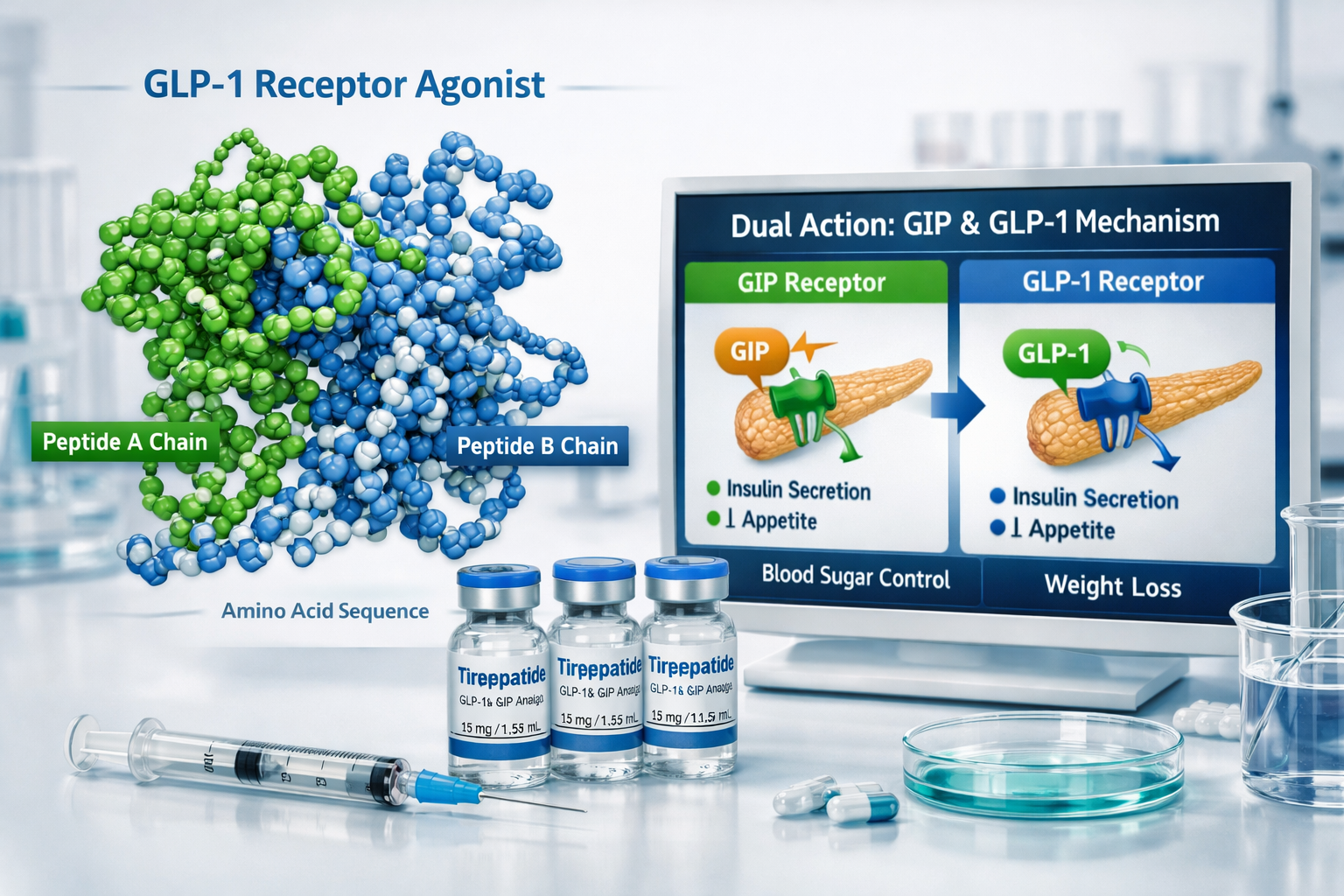
Let me be direct: what is the name of GLP3? The answer is that GLP3 is a misnomer. The confusion stems from the progression of GLP-1 receptor agonists in the pharmaceutical landscape.
Here's what actually exists:
- GLP-1: Glucagon-like peptide-1 (the original)
- GLP-2: A separate peptide with different functions
- No GLP3: This designation doesn't exist in scientific literature
When people ask about GLP3, they're typically referring to Tirzepatide (brand names include Mounjaro and Zepbound), which represents the next generation of metabolic peptides. Unlike traditional GLP-1 agonists, Tirzepatide activates both GIP (glucose-dependent insulinotropic polypeptide) and GLP-1 receptors.
Understanding the GLP Peptide Family
The GLP peptide family is fascinating, and understanding it helps clarify why there's no GLP3. Here's a breakdown:
| Peptide | Primary Function | Mechanism |
|---|---|---|
| GLP-1 | Blood sugar regulation, appetite control | Single receptor agonist |
| GLP-2 | Intestinal health, nutrient absorption | Gut epithelial growth |
| Tirzepatide | Metabolic regulation, weight management | Dual GIP/GLP-1 agonist |
The numbering system (GLP-1, GLP-2) refers to naturally occurring peptides in the body, not a progression of pharmaceutical development. This is why we jumped to dual-agonist compounds like Tirzepatide rather than creating a "GLP3."
For those interested in exploring legitimate peptide research, Pure Tested Peptides offers comprehensive information on various peptide compounds and their applications.
Why Tirzepatide is Often Confused with GLP3
The confusion around "what is the name of GLP3" makes sense when you consider:
✅ Marketing hype – People expect the "next big thing" to have a sequential name
✅ Simplified terminology – "GLP3" sounds easier than "dual GIP/GLP-1 receptor agonist"
✅ Social media misinformation – Fitness forums and wellness groups often use incorrect terminology
✅ Rapid advancement – The peptide field evolves quickly, creating terminology gaps
In reality, Tirzepatide represents a paradigm shift rather than a simple upgrade. By activating two receptor pathways instead of one, it offers a more comprehensive approach to metabolic regulation. This dual mechanism is why many researchers and clinicians consider it superior to single-pathway options.
The Science Behind Tirzepatide (The Real "GLP3")
Tirzepatide's mechanism of action is what sets it apart:
Primary Actions:
- Enhances insulin secretion when blood glucose is elevated
- Reduces glucagon secretion (which raises blood sugar)
- Slows gastric emptying for prolonged satiety
- Acts on brain receptors to reduce appetite
- Improves insulin sensitivity in peripheral tissues
This multi-targeted approach explains why research subjects often experience more pronounced results compared to traditional GLP-1 agonists alone. The compound essentially addresses metabolic dysfunction from multiple angles simultaneously.
For those researching metabolic peptides, understanding compounds like AOD-9604 and their distinct mechanisms can provide valuable context for how different peptides target various pathways.
What This Means for Peptide Shoppers in 2026
If you're shopping for peptides for research purposes, here's what you need to know:
🎯 Be specific with terminology – Ask for Tirzepatide, not "GLP3"
🎯 Verify sources – Only purchase from reputable suppliers with third-party testing
🎯 Understand the mechanism – Know whether you need single or dual-agonist compounds
🎯 Research proper protocols – Different peptides require different handling and storage
🎯 Consult professionals – Work with qualified healthcare providers for any therapeutic applications
The peptide marketplace has expanded dramatically, with options ranging from metabolic compounds to recovery-focused peptides. Understanding proper nomenclature ensures you get exactly what you're looking for.
Common Questions About GLP Peptides
Is Tirzepatide the same as Semaglutide?
No. Semaglutide is a GLP-1 receptor agonist only, while Tirzepatide activates both GIP and GLP-1 receptors. This dual action is why Tirzepatide often shows enhanced effects in research settings.
Why don't we have GLP-4, GLP-5, etc.?
The GLP numbering refers to naturally occurring peptides discovered in the body, not a product line. Scientists discovered GLP-1 and GLP-2 as distinct biological molecules. There is no naturally occurring GLP-3 in human physiology.
What other peptides work similarly?
Other metabolic research peptides include compounds like Adipotide and MOTS-C, though each has unique mechanisms and applications.
Making Informed Decisions About Peptide Research
When exploring peptide options in 2026, I recommend:
- Educate yourself on proper peptide terminology and mechanisms
- Source responsibly from verified suppliers with transparent testing
- Document everything if conducting research protocols
- Stay current with the latest scientific literature
- Network with other researchers and professionals in the field
The peptide research community continues to grow, with new compounds and applications emerging regularly. Staying informed about peptide blends and combination therapies can open new research avenues.
Conclusion: Clarity on GLP3 and Next Steps
So, what is the name of GLP3? The definitive answer is that GLP3 doesn't exist as a designated compound. When people use this term, they're typically referring to Tirzepatide, the dual GIP/GLP-1 receptor agonist that represents the cutting edge of metabolic peptide research.
Your Action Plan:
✔️ Update your terminology – Use "Tirzepatide" or "dual GIP/GLP-1 agonist" instead of "GLP3"
✔️ Research thoroughly – Understand the mechanisms behind different peptide classes
✔️ Source carefully – Only work with reputable suppliers who provide comprehensive product information
✔️ Consult experts – Engage with qualified professionals for guidance on research protocols
✔️ Stay informed – The peptide field evolves rapidly; continuous education is essential
Whether you're a fitness enthusiast exploring performance optimization, a medispa professional seeking the latest therapeutic options, or a researcher investigating metabolic compounds, accurate information is your most valuable tool. Understanding that "GLP3" is actually Tirzepatide empowers you to have more productive conversations with suppliers, healthcare providers, and fellow researchers.
Ready to explore legitimate peptide research options? Visit Pure Tested Peptides for comprehensive information, quality products, and educational resources to support your research journey in 2026 and beyond.
SEO Meta Title and Description
Meta Title: What is the Name of GLP3? The Truth About Tirzepatide
Meta Description: Wondering what is the name of GLP3? Discover why GLP3 doesn't exist and learn about Tirzepatide, the dual GIP/GLP-1 peptide everyone's talking about in 2026.