What to Stack with Klow Blend: Unlocking Synergistic Peptide Research in 2025

The realm of peptide research is constantly evolving, presenting new opportunities for understanding complex biological processes and optimizing experimental outcomes. For researchers keen on maximizing their studies, the concept of "stacking" peptides – combining multiple compounds to achieve enhanced or complementary effects – has become a focal point. Among the innovative formulations available, the Klow blend stands out as a unique foundation. But the critical question remains: what to stack with Klow blend to unlock its full potential in laboratory settings? This comprehensive article, written in 2025, delves into the scientific rationale behind combining the Klow blend with other peptides, exploring synergistic interactions and research applications.
The Klow blend, often utilized for its purported benefits related to cellular regeneration, adaptive capacity, and overall systemic balance, provides a robust starting point for diverse research protocols. Understanding its core components and how they interact with other well-researched peptides is paramount for designing effective and impactful studies. This article will guide you through the intricacies of peptide synergy, offering evidence-based insights into potential stacking partners and their respective research focuses.
Key Takeaways
- The Klow blend is a foundational peptide blend known for supporting cellular regeneration and adaptive capacity.
- Stacking involves combining peptides to achieve enhanced, complementary, or synergistic research outcomes.
- Careful consideration of individual peptide mechanisms is crucial for designing effective and safe stacks.
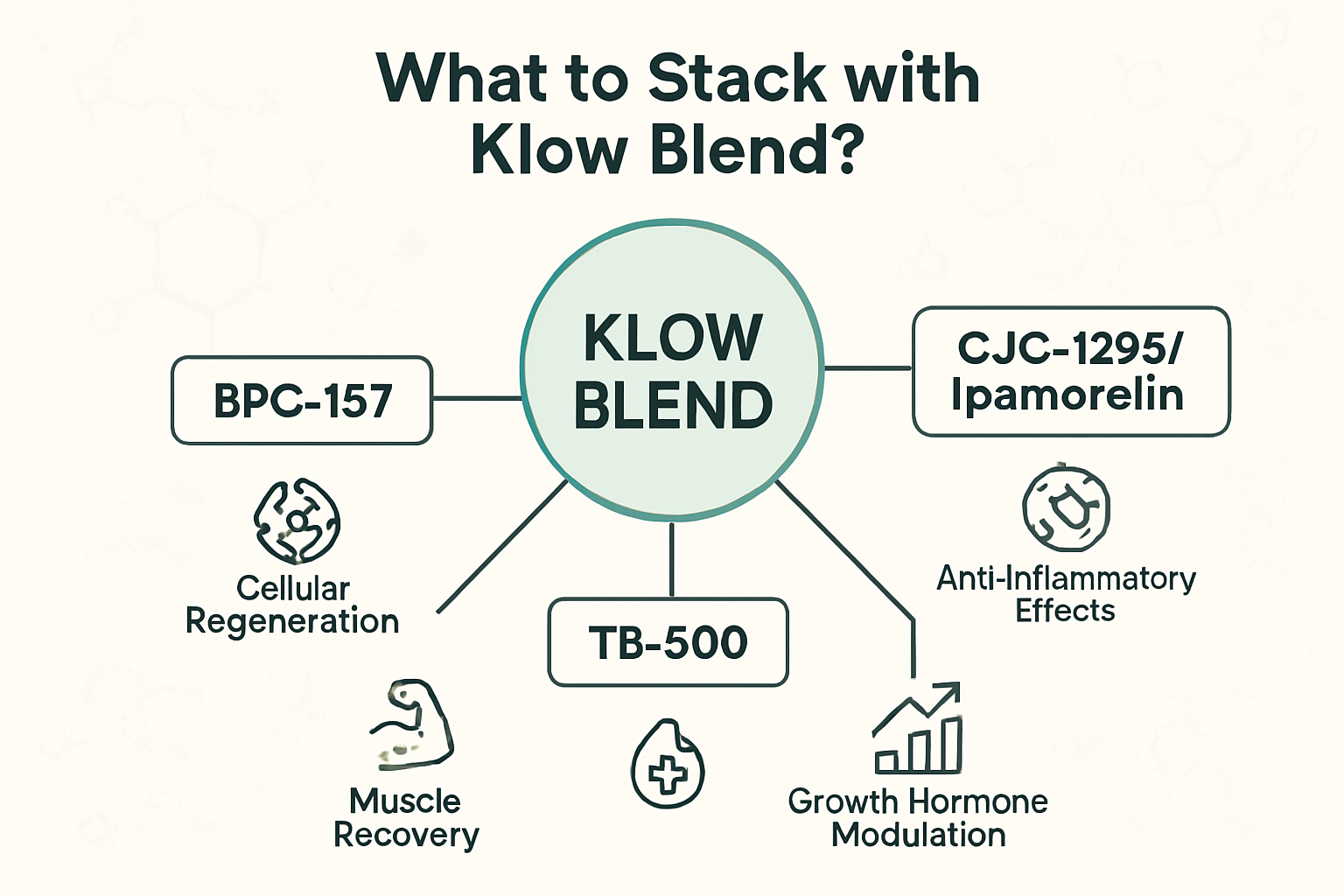
- Popular stacking partners for the Klow blend often include peptides focused on tissue repair (BPC-157, TB-500), growth hormone modulation (CJC-1295, Ipamorelin), and metabolic regulation.
- Always prioritize purity, quality, and ethical research practices when conducting peptide studies.
Understanding the Klow Blend: A Foundational Perspective
The Klow blend is a carefully formulated combination of peptides designed to target specific biological pathways, primarily focusing on cellular health and adaptive responses. While the exact proprietary blend may vary, its core components typically aim to support functions such as tissue regeneration, anti-inflammatory processes, and overall systemic resilience [1]. Researchers often turn to the Klow blend as a broad-spectrum tool for investigating fundamental aspects of cellular maintenance and organismal adaptability.
To effectively answer what to stack with Klow blend, it is essential to appreciate its inherent characteristics. The blend is often discussed in the context of its benefits in various wellness studies, indicating its potential as a versatile research tool https://www.puretestedpeptides.com/benefits-of-the-klow-and-glow-blends/. Its formulation is intended to provide a synergistic effect even on its own, meaning its constituent peptides work together to produce a greater impact than they would individually. This internal synergy lays the groundwork for further external synergy when combined with other targeted peptides.
Core Mechanisms of the Klow Blend
The Klow blend's efficacy in research stems from its ability to influence several key physiological processes. These may include:
- Cellular Repair and Regeneration: Encouraging the repair of damaged cells and promoting the growth of new, healthy cells [2]. This can be particularly relevant in studies on wound healing or tissue recovery.
- Anti-inflammatory Actions: Modulating inflammatory responses, which can be beneficial in research related to chronic inflammation or injury recovery.
- Adaptive Capacity Enhancement: Supporting the body's ability to adapt to various stressors, promoting resilience at a cellular level. This aligns with broader research into adaptive capacity and peptide mapping.
- Immune System Modulation: Some components may interact with immune pathways, offering avenues for immune-related research.
Understanding these foundational mechanisms is critical when considering what to stack with Klow blend, as the goal of stacking is often to amplify, complement, or introduce new research objectives that align with these intrinsic properties.
"The Klow blend acts as a powerful orchestrator of cellular harmony, preparing the biological system for optimized responses when paired with targeted research peptides."
Synergistic Stacking: What to Stack with Klow Blend for Enhanced Research Outcomes
When considering what to stack with Klow blend, the primary objective is to create a synergistic environment where the combined effects of multiple peptides surpass the sum of their individual contributions. This involves selecting peptides that either amplify the Klow blend's existing properties or introduce new, complementary research avenues. Below, we explore several well-regarded peptides and their potential synergy with the Klow blend.
1. BPC-157: The Regenerative Powerhouse 🧬
BPC-157 (Body Protection Compound-157) is a widely researched peptide known for its remarkable regenerative and protective properties across various tissue types. It has shown promise in studies related to:
- Accelerated Wound Healing: Promotes angiogenesis (formation of new blood vessels) and epithelization, leading to faster healing of injuries [3].
- Tendon and Ligament Repair: Supports the repair of connective tissues, making it a focus in orthopedic research https://www.puretestedpeptides.com/bpc157-angiogenesis-tendon-2/.
- Gastrointestinal Health: Offers protective effects on the gut lining, making it relevant for studies on gut integrity https://www.puretestedpeptides.com/bpc-157-capsules-research-themes/.
- Anti-inflammatory Effects: Reduces inflammation in various experimental models.
Why stack BPC-157 with Klow blend?
The Klow blend's focus on cellular regeneration and adaptive capacity aligns perfectly with BPC-157's potent regenerative effects. Stacking these two could potentially amplify tissue repair mechanisms, creating a more robust healing environment in research models. For instance, in studies involving tissue damage or inflammation, the Klow blend could prime cells for repair, while BPC-157 directly accelerates the structural and functional restoration. Researchers interested in comprehensive recovery or robust cellular repair often consider this combination. You can explore more about BPC-157 here: https://www.puretestedpeptides.com/bpc-157/.
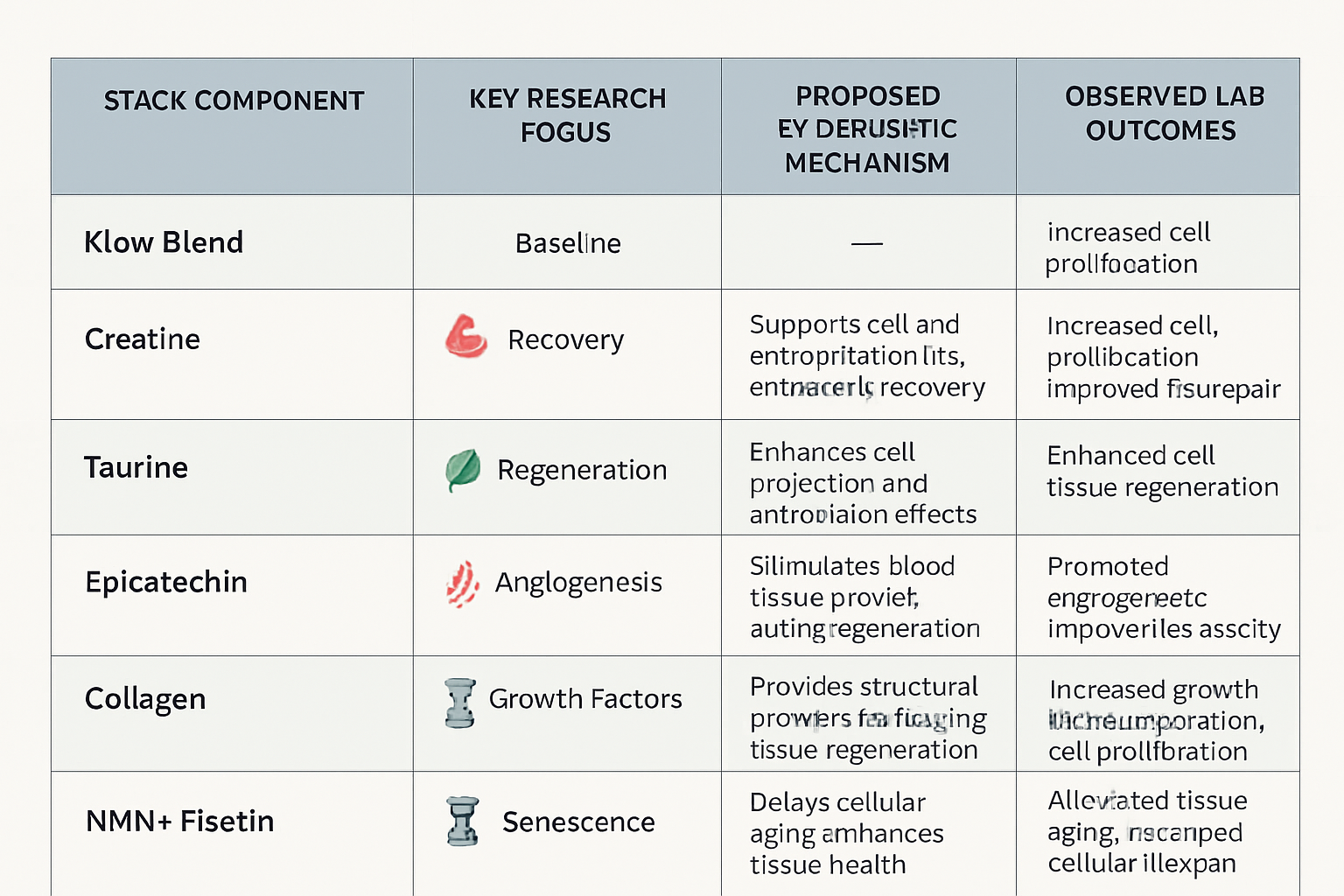
| Stack Component | Key Research Focus | Proposed Synergistic Mechanism | Observed Lab Outcomes (Example) |
|---|---|---|---|
| Klow + BPC-157 | Enhanced Tissue Repair, Anti-inflammatory | Klow primes cellular environment; BPC-157 directly accelerates angiogenesis & epithelization. | Significantly faster wound closure, reduced inflammatory markers. |
2. TB-500: The Versatile Repairer 🏃♂️
TB-500, a synthetic version of Thymosin Beta-4, is another prominent peptide in regenerative research. Its mechanisms involve:
- Cell Migration and Differentiation: Promotes the migration of cells to sites of injury and supports their differentiation into various tissue types.
- Angiogenesis: Similar to BPC-157, it stimulates the formation of new blood vessels.
- Actin Regulation: Plays a crucial role in cell structure and movement, which is vital for tissue repair and regeneration.
- Anti-inflammatory Action: Reduces inflammation and promotes tissue protection.
Why stack TB-500 with Klow blend?
TB-500's broad regenerative capabilities, particularly its role in cell migration and angiogenesis, complement the Klow blend's regenerative and adaptive properties. When considering what to stack with Klow blend for comprehensive tissue healing, TB-500 is a strong contender. This stack could be particularly valuable in studies targeting widespread tissue damage, muscle repair, or even hair growth research due to TB-500's broad influence on cell activity. A popular combination also involves BPC-157 and TB-500 for enhanced reparative effects.
3. Growth Hormone Secretagogues (GHSs): CJC-1295 & Ipamorelin ✨
Growth Hormone Secretagogues (GHSs) are peptides that stimulate the body's natural production and release of growth hormone (GH). Two commonly researched GHSs are CJC-1295 (with or without DAC) and Ipamorelin.
- CJC-1295: A GHRH (Growth Hormone-Releasing Hormone) analog that increases the amplitude of GH pulses. CJC-1295 with DAC has a longer half-life, providing sustained GH release, while CJC-1295 without DAC (often called Mod GRF 1-29) provides shorter, more potent bursts https://www.puretestedpeptides.com/comparing-cjc-1295-with-and-without-dac-in-research-settings/.
- Ipamorelin: A GHRP (Growth Hormone-Releasing Peptide) that selectively stimulates GH release without significantly increasing prolactin or cortisol, unlike some other GHRPs.
Why stack CJC-1295/Ipamorelin with Klow blend?
Growth hormone plays a pivotal role in cellular regeneration, protein synthesis, fat metabolism, and overall cellular maintenance. Stacking GHSs with the Klow blend can create a powerful combination for research aiming to:
- Enhance Regenerative Processes: Increased GH levels can amplify the regenerative and repair capabilities initiated by the Klow blend.
- Support Lean Tissue Development: In models studying muscle growth or recovery, the anabolic effects of GH can synergize with the Klow blend's cellular support.
- Improve Body Composition: Research into metabolic health and fat loss might benefit from this combination, as GH influences lipid metabolism.
The synergistic effects of CJC-1295 and Ipamorelin are also well-documented https://www.puretestedpeptides.com/cjc-1295-ipa-5-5mg-peptide-blend-research-guide/, making a "triple stack" (Klow + CJC-1295 + Ipamorelin) an interesting avenue for comprehensive research. When considering what to stack with Klow blend for broad-spectrum growth and repair, GHSs are a prime choice.
4. 5-Amino-1MQ: The Metabolic Regulator 🔥
5-Amino-1MQ is a relatively newer peptide in research, gaining attention for its role in inhibiting the enzyme nicotinamide N-methyltransferase (NNMT). This inhibition can lead to:
- Enhanced Cellular Metabolism: By inhibiting NNMT, 5-Amino-1MQ can increase levels of NAD+, a coenzyme crucial for energy metabolism and cellular function [4].
- Fat Loss Potential: Studies suggest a role in reducing fat accumulation and improving metabolic markers https://www.puretestedpeptides.com/5-amino-1-mq-buy-5amino1mq-online-research-and-data/.
- Improved Insulin Sensitivity: Research indicates potential benefits for metabolic health.
Why stack 5-Amino-1MQ with Klow blend?
If your research focuses on cellular metabolic health alongside regeneration and adaptive capacity, then stacking 5-Amino-1MQ with the Klow blend could be highly synergistic. The Klow blend supports overall cellular environment and resilience, while 5-Amino-1MQ directly targets metabolic pathways, potentially leading to enhanced energy utilization, improved metabolic markers, and optimized cellular function. This combination is particularly interesting for studies on age-related metabolic decline or conditions involving impaired energy metabolism. More information on 5-Amino-1MQ can be found here: https://www.puretestedpeptides.com/5-amino-1mq/.
5. AOD-9604: Targeting Fat Metabolism 🎯
AOD-9604 is a modified fragment of the human growth hormone molecule that has been studied for its fat-reducing properties. It works by:
- Stimulating Lipolysis: Encourages the breakdown of stored fat without affecting glucose levels or insulin sensitivity.
- Inhibiting Lipogenesis: Prevents the formation of new fat.
Why stack AOD-9604 with Klow blend?
For research protocols focused on body composition changes, particularly fat reduction, AOD-9604 offers a targeted approach. When combined with the Klow blend, which supports general cellular health and adaptive processes, this stack could provide a comprehensive research model for exploring the interplay between overall systemic health and targeted fat metabolism. This synergy could be valuable in studies investigating obesity, metabolic syndrome, or athletic performance where lean body mass is a factor. Further details on AOD-9604 are available at: https://www.puretestedpeptides.com/aod-9604/.
Designing Your Klow Blend Stack: Research Considerations
When determining what to stack with Klow blend, careful planning and adherence to scientific principles are paramount. Peptide research, especially involving blends and stacks, requires a methodical approach to ensure reliable and reproducible results.
Purity and Sourcing
The efficacy and safety of any peptide research hinge on the purity and quality of the compounds used. Always source peptides from reputable suppliers like Pure Tested Peptides that provide detailed Certificates of Analysis (COAs) for their products https://www.puretestedpeptides.com/coa/. High-purity peptides minimize confounding variables and ensure that observed effects are truly attributable to the peptides under investigation.
Understanding Mechanisms of Action
Before stacking, thoroughly research the individual mechanisms of action for each peptide. This understanding will inform your choices regarding potential synergy and help predict anticipated research outcomes. For instance, combining peptides with overlapping mechanisms (e.g., two peptides that promote angiogenesis) might lead to an amplified effect, while combining peptides with distinct but complementary roles (e.g., one for cellular regeneration and another for metabolic regulation) can broaden the scope of your research. A good resource for understanding various peptides is the all peptides for sale section.
Dosage and Administration
While research protocols can vary significantly, understanding typical dosages and administration routes is crucial. For detailed information on commonly researched dosages, consult resources like https://www.puretestedpeptides.com/commonly-researched-typical-dosages-for-peptides/. When stacking, researchers often start with lower doses of each individual component to observe initial responses before incrementally adjusting. The goal is to find an optimal balance that maximizes synergistic effects while minimizing potential complexities in the research model.
Research Goals and Metrics
Clearly define your research goals before implementing a stack. Are you aiming for enhanced tissue repair, improved metabolic markers, increased cellular resilience, or a combination? Your objectives will dictate what to stack with Klow blend and how you measure the outcomes. Establish specific metrics and endpoints to quantify the effects of your peptide stack. This could include:
- Histological analysis: Examining tissue samples for cellular changes, collagen production, or inflammation markers.
- Biochemical assays: Measuring levels of relevant enzymes, hormones, or metabolic byproducts.
- Functional assessments: Observing improvements in mobility, strength, or recovery times in appropriate models.
- Gene expression analysis: Investigating changes in gene activity related to regeneration, inflammation, or metabolism.
The Importance of Controls
In any scientific study, robust controls are indispensable. When researching peptide stacks, this means:
- Vehicle control: Administering the solvent or placebo without any peptides.
- Individual peptide controls: Testing each peptide in the stack individually to distinguish its effects from the combined stack.
- Klow blend control: Administering the Klow blend alone to establish a baseline for its effects.
These controls allow researchers to accurately attribute observed effects to the combined stack and differentiate true synergy from additive effects or individual peptide contributions. This rigorous approach supports building reproducible wellness studies.
Ethical Considerations and Regulatory Compliance
All peptide research must be conducted with strict adherence to ethical guidelines and relevant regulatory frameworks. Peptides are research chemicals and are not approved for human consumption. This article is intended for informational purposes for researchers and scientists. Ensure your research institution and protocols comply with all local and national regulations concerning research chemicals. Always prioritize safety and ethical practices in your laboratory.
Future Directions in Klow Blend Stacking Research (2025 and Beyond)
As we move through 2025, the scientific community continues to explore novel applications and combinations for peptide blends like Klow. Emerging research interests include:
- Neuroprotection and Cognitive Function: Investigating how Klow blend, when stacked with peptides known for neurotrophic or cognitive-enhancing properties (e.g., Selank, Semax derivatives), might impact neuronal health and cognitive performance in research models.
- Anti-aging and Longevity Studies: Exploring combinations that target cellular senescence, telomere maintenance, or mitochondrial function, building on the Klow blend's regenerative base. This could involve peptides like Epitalon or MOTS-c.
- Immunomodulation: Delving deeper into how the Klow blend, when combined with specific immunomodulatory peptides (e.g., Thymosin Alpha-1), can fine-tune immune responses in disease models.
- Personalized Peptide Research: The future may involve tailoring peptide stacks based on specific cellular profiles or genetic markers, allowing for highly targeted and individualized research protocols. This would require advanced diagnostic tools and a deeper understanding of individual peptide responses.
- Oral Peptide Formulations: As research into best oral peptides progresses, the development of orally bioavailable forms of Klow blend and its stacking partners could open new avenues for ease of administration in certain research models.
The ongoing advancements in peptide synthesis, delivery systems, and analytical techniques promise an exciting future for understanding and harnessing the power of peptide blends and stacks. Researchers are encouraged to stay updated with the latest scientific literature and to continuously explore innovative approaches in their studies.
Conclusion: Mastering the Art of Klow Blend Stacking
The question of what to stack with Klow blend is not a simple one, but rather an exciting invitation to explore the complex and synergistic world of peptide research. The Klow blend, with its inherent focus on cellular regeneration and adaptive capacity, provides a robust foundation upon which researchers can build highly targeted and effective experimental protocols. Whether the goal is to amplify tissue repair, modulate metabolic pathways, or explore broader systemic health benefits, strategic stacking with peptides like BPC-157, TB-500, CJC-1295, Ipamorelin, 5-Amino-1MQ, or AOD-9604 offers significant potential.
Successful peptide stacking hinges on a deep understanding of each component's mechanism of action, meticulous attention to purity and sourcing, and rigorous experimental design. As the field of peptide science continues to evolve rapidly in 2025, the ability to thoughtfully combine these powerful research tools will undoubtedly lead to groundbreaking discoveries and a more profound comprehension of biological systems. For those embarking on this journey, the key is informed decision-making, ethical research practices, and a commitment to scientific inquiry.
Actionable Next Steps for Researchers:
- Define Your Research Objective: Clearly identify the specific biological outcome or pathway you wish to investigate.
- Evaluate Individual Peptides: Thoroughly research the mechanisms of action for the Klow blend and potential stacking partners.
- Source High-Quality Peptides: Purchase from reputable suppliers that provide COAs to ensure purity and authenticity.
- Design Robust Protocols: Include appropriate controls and clearly defined metrics to measure outcomes.
- Stay Informed: Continuously review the latest scientific literature and advancements in peptide research.
SEO Meta Title: Klow Blend Stacks 2025: Synergies for Research
SEO Meta Description: Discover what to stack with Klow blend in 2025. Explore synergistic peptide combinations for enhanced research outcomes in regeneration & metabolism.