

{"cover":"Professional landscape format (1536×1024) hero image with bold text overlay: '5-Amino-1MQ: NNMT Inhibition & Metabolic Research' in extra large 72pt white bold sans-serif font with dark semi-transparent background panel, centered upper third. Background shows a high-resolution 3D molecular structure of the NNMT enzyme with glowing blue and teal energy pathways representing NAD+ biosynthesis, surrounded by abstract mitochondrial networks. Color palette: deep navy, electric teal, white. Editorial magazine cover quality, high contrast, scientific aesthetic.","content":["Detailed landscape format (1536×1024) scientific illustration showing a cross-section molecular diagram of the NNMT enzyme active site with 5-Amino-1MQ small molecule docking into the binding pocket, highlighted in glowing amber. Surrounding elements show the SAM cycle with methyl group transfer arrows blocked by a red inhibition symbol, and NAD+ salvage pathway molecules flowing upward in teal. Clean white background with subtle grid lines, labeled molecular structures, professional biochemistry textbook aesthetic.","Landscape format (1536×1024) split-panel infographic comparing white adipose tissue cell morphology before and after NNMT inhibition. Left panel shows enlarged lipid-filled adipocytes in pale yellow with low mitochondrial density markers. Right panel shows reduced adipocyte size with dense mitochondrial networks glowing orange-red, representing increased energy expenditure. Central dividing line labeled 'NNMT Inhibition by 5-Amino-1MQ'. Clean clinical infographic style, teal and orange color scheme, professional research poster aesthetic.","Landscape format (1536×1024) overhead laboratory research scene showing a researcher in a white lab coat reviewing preclinical data charts on a tablet, with glass vials of compound samples in a rack labeled '5-Amino-1MQ', a metabolic assay plate, and printed graphs showing fat mass reduction curves over time. Soft clinical lighting, shallow depth of field on the compound vials in foreground, blurred researcher in background. Muted blue-gray and white tones with warm amber lab lighting accents, photorealistic editorial quality."]
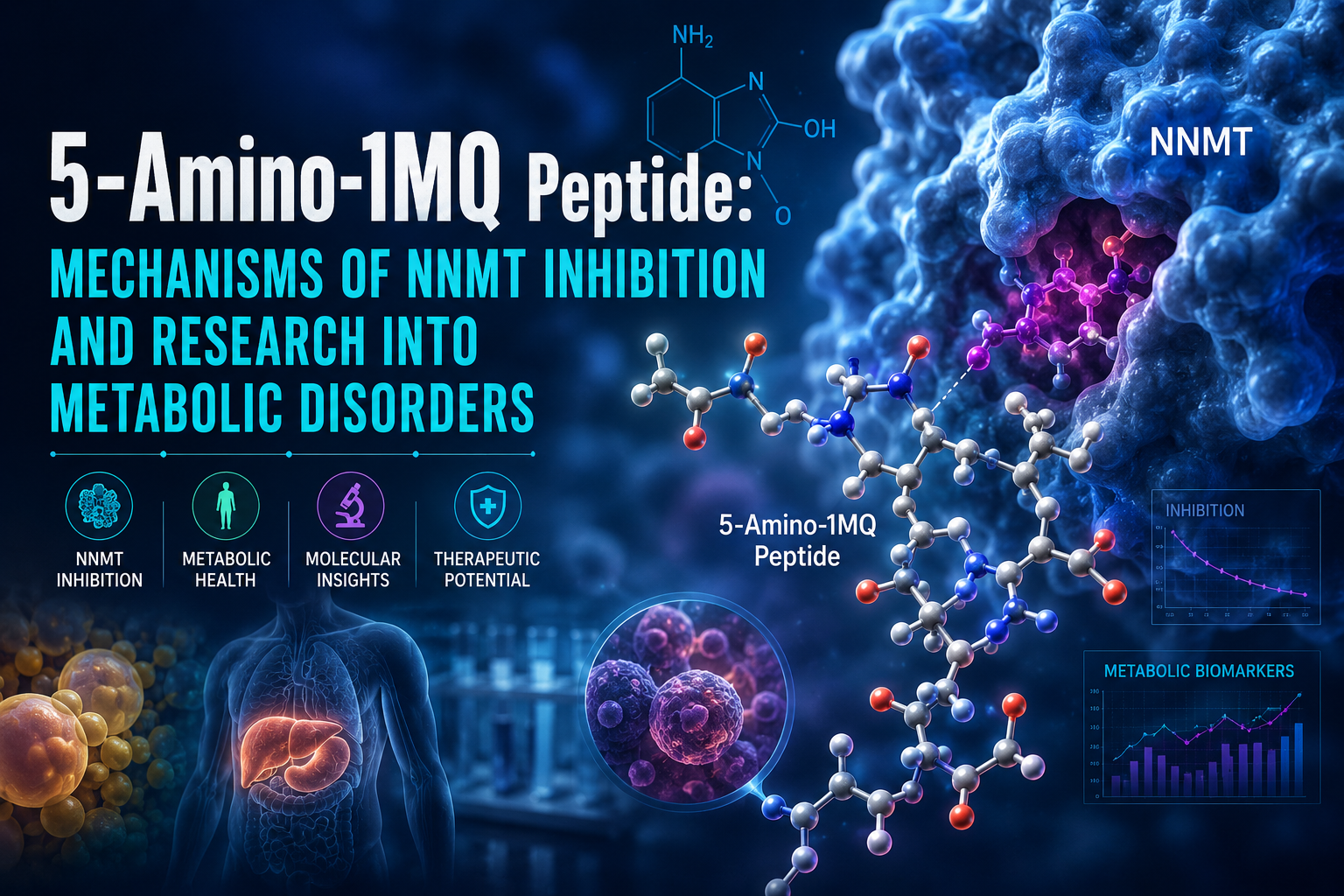
Nicotinamide N-methyltransferase (NNMT) is overexpressed in the fat tissue of obese individuals at rates significantly higher than in lean controls — a detail that has pushed this enzyme to the center of metabolic research. The compound drawing the most attention as a precise NNMT inhibitor is 5-Amino-1MQ, a small molecule with a targeted mechanism that may reshape how researchers approach obesity, insulin resistance, and metabolic syndrome. Understanding the 5-Amino-1MQ Peptide: Mechanisms of NNMT Inhibition and Research into Metabolic Disorders requires a close look at the biochemistry involved and what preclinical data currently shows.
Key Takeaways
- 5-Amino-1MQ directly inhibits NNMT, redirecting nicotinamide toward NAD+ biosynthesis and improving mitochondrial energy output
- Preclinical models show reductions in white adipose tissue mass without changes in food intake, suggesting a direct metabolic effect
- The compound also preserves S-adenosylmethionine (SAM) for essential methylation reactions, influencing gene expression
- Research is currently limited to animal models; no human clinical trials have been published as of 2026
- Oral dosing in research settings typically ranges from 50 to 100 mg per day with a half-life of 4 to 7 hours
How 5-Amino-1MQ Inhibits NNMT at the Molecular Level
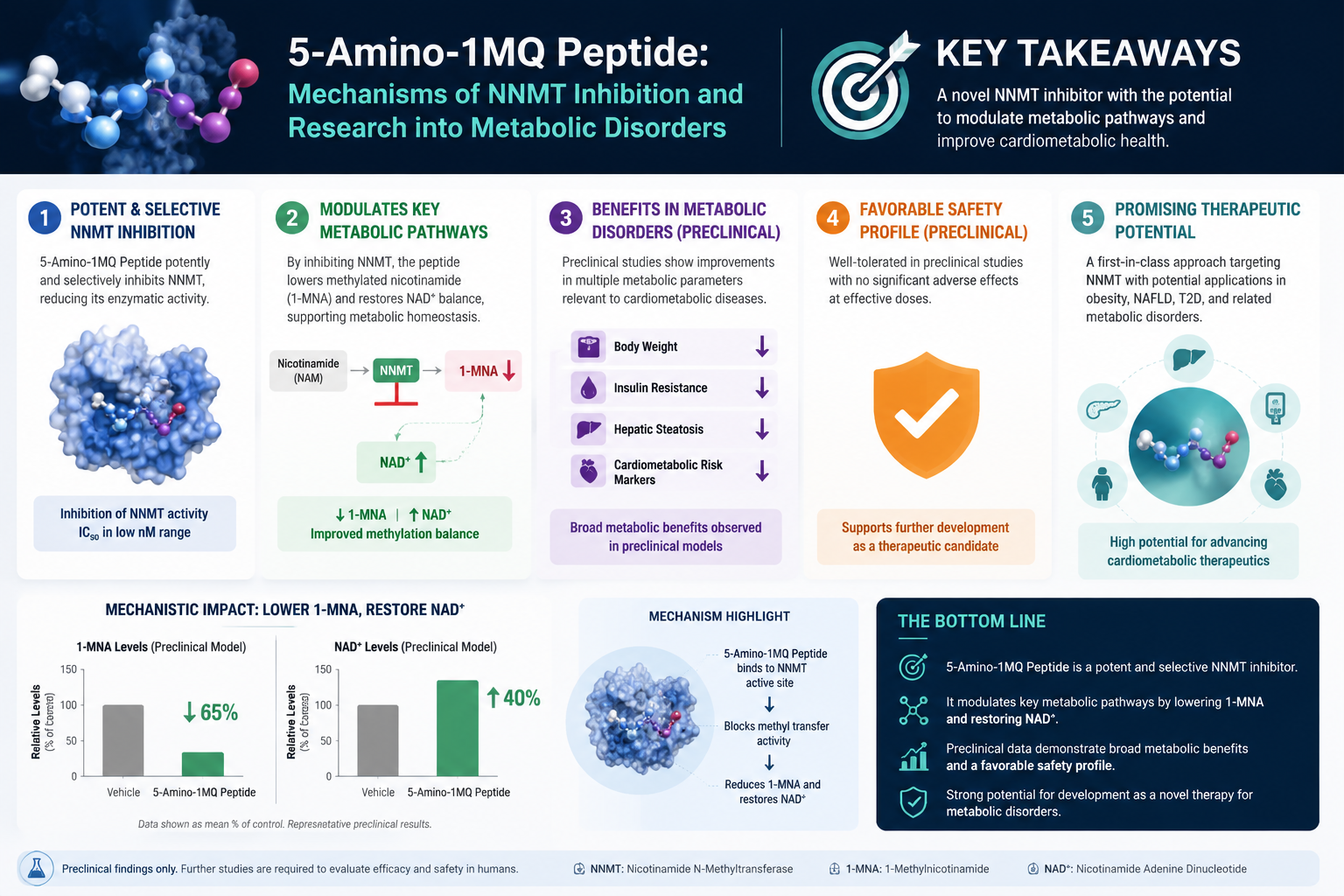
NNMT is an enzyme responsible for methylating nicotinamide, converting it into 1-methylnicotinamide (1-MNA). This reaction consumes both nicotinamide and S-adenosylmethionine (SAM), the body's primary methyl donor. When NNMT activity is high — as it often is in obese or metabolically compromised tissue — this process depletes two critical resources simultaneously.
5-Amino-1MQ blocks the NNMT active site, preventing this methylation reaction from occurring. The downstream effects are significant:
- Nicotinamide is preserved, making it available for the NAD+ salvage pathway
- NAD+ levels rise, supporting mitochondrial biogenesis and oxidative phosphorylation
- SAM is conserved, keeping methyl groups available for DNA methylation, histone modification, and other regulatory processes
This dual preservation of nicotinamide and SAM creates a cascade that improves cellular energy metabolism at a foundational level. Researchers studying metabolic flexibility and mitochondrial function have noted similar upstream effects with other metabolic compounds, but the NNMT-specific targeting of 5-Amino-1MQ makes its mechanism particularly precise.
For a broader look at how peptides interact with metabolic pathways, the ultimate guide to peptide therapy provides useful foundational context.
Preclinical Research: Adipose Tissue and Insulin Sensitivity
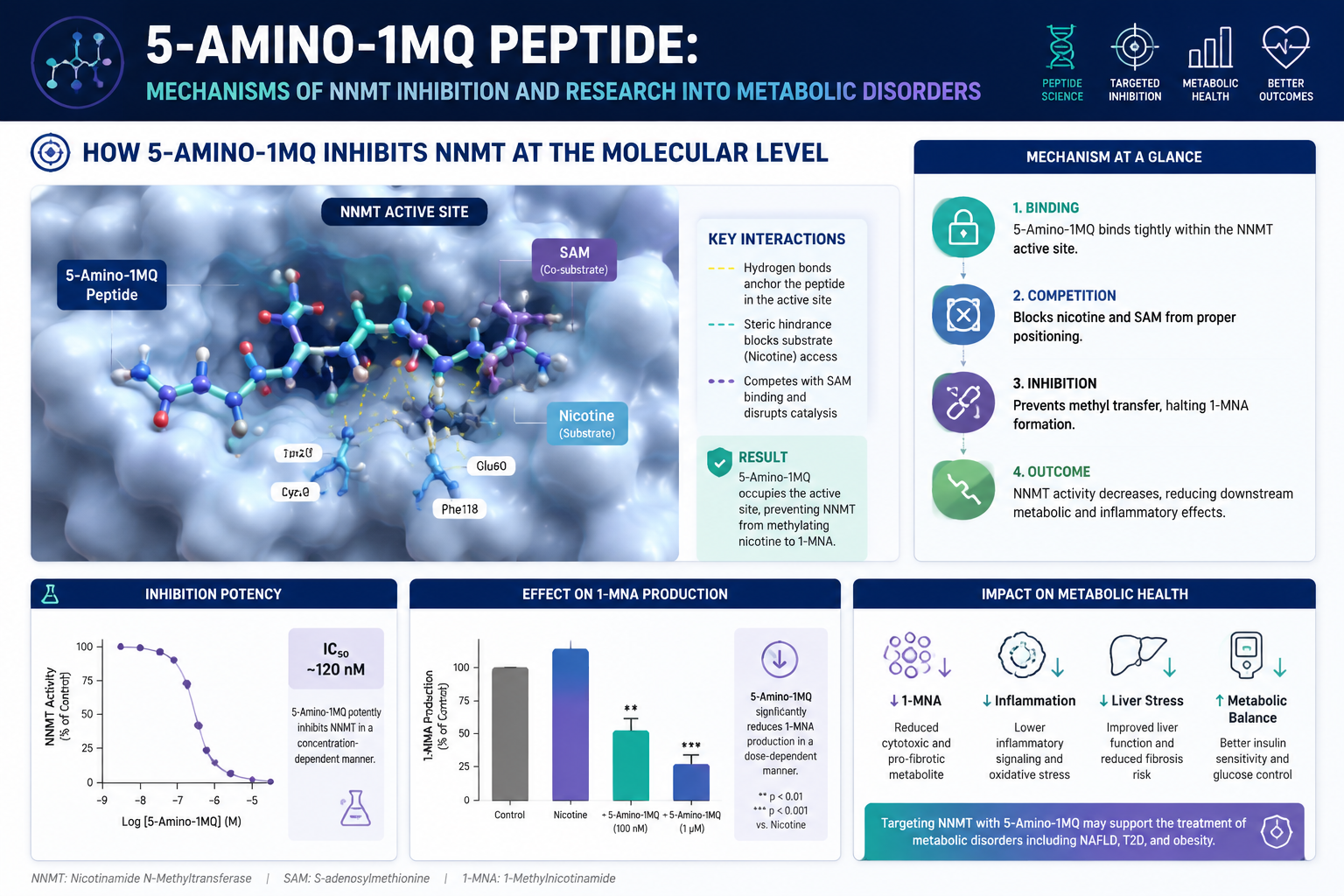
The most compelling data on 5-Amino-1MQ Peptide: Mechanisms of NNMT Inhibition and Research into Metabolic Disorders comes from animal studies examining body composition and metabolic markers.
Key findings from preclinical models include:
| Outcome Measured | Observed Result |
|---|---|
| White adipose tissue mass | Significant reduction |
| Food intake | No meaningful change |
| Insulin sensitivity | Measurable improvement |
| Energy expenditure | Increased |
| Mitochondrial function | Enhanced |
The fact that fat mass decreased without changes in food consumption is a critical detail. It points to a direct metabolic effect rather than an appetite-suppressing one. The compound appears to shift how cells process and expend energy rather than simply reducing caloric input.
This profile makes 5-Amino-1MQ a subject of interest alongside other metabolic research compounds. For comparison, researchers have also examined SLU-PP-332 for metabolic modulation and Tesamorelin for body composition outcomes, both of which target metabolic dysfunction through different mechanisms.
Those interested in exploring the compound itself can review the 5-Amino-1MQ research profile for detailed compound information.
Research Limitations and Current Status in 2026
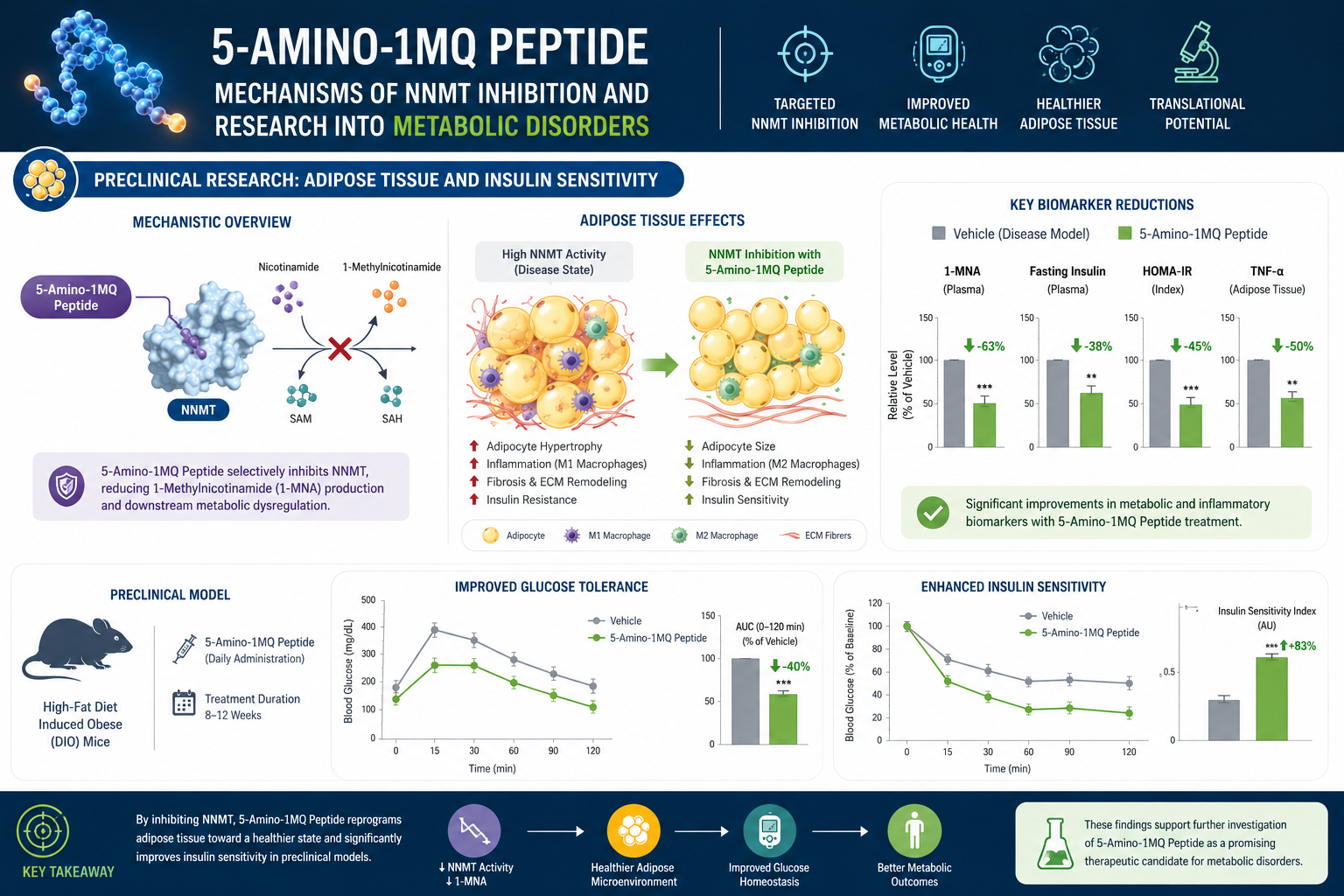
Despite promising preclinical results, the research landscape for 5-Amino-1MQ Peptide: Mechanisms of NNMT Inhibition and Research into Metabolic Disorders carries important caveats that any serious reader should weigh.
Current limitations include:
- All published efficacy data comes from animal models, not human trials
- Long-term safety data is limited even in preclinical settings
- Independent replication of findings remains sparse
- No official clinical trial announcements have been made as of 2026
In research settings, oral dosing protocols typically use 50 to 100 mg per day, with the compound's half-life of approximately 4 to 7 hours supporting once-daily administration. However, these parameters are derived from preclinical work and cannot be extrapolated directly to human use.
Researchers exploring metabolic peptides more broadly may also find value in reviewing mitochondrial longevity research and MOTS-c metabolic research themes, which share mechanistic overlap with NAD+ pathway modulation.
Conclusion
The science behind 5-Amino-1MQ Peptide: Mechanisms of NNMT Inhibition and Research into Metabolic Disorders is precise, biologically grounded, and genuinely compelling. By blocking NNMT, this compound preserves nicotinamide for NAD+ synthesis, protects SAM for essential methylation reactions, and drives measurable improvements in fat mass and insulin sensitivity in animal models — all without altering food intake.
Actionable next steps for researchers and informed readers:
- Review the current 5-Amino-1MQ compound data to understand purity standards and research-grade sourcing
- Examine how NNMT inhibition compares mechanistically to other metabolic compounds like Tesamorelin and SLU-PP-332
- Monitor peer-reviewed literature for human trial announcements, which will be the critical next step in validating preclinical findings
- Approach any application outside controlled research settings with caution until human safety and efficacy data are established
The NNMT pathway is a legitimate and underexplored frontier in metabolic science. 5-Amino-1MQ sits at its center — and the research, while early, warrants close attention.
Leave a Reply
Want to join the discussion?Feel free to contribute!