
Unveiling the Cagrilintide Retatrutide Combination Study: A Deep Dive for 2025

The pursuit of optimal health and fitness often leads individuals to explore the frontiers of scientific research, especially when it comes to managing body weight and metabolic wellness. In 2025, a significant area of interest revolves around novel therapeutic approaches, and among them, the cagrilintide retatrutide combination study stands out. This cutting-edge research investigates the synergistic potential of two distinct, powerful peptides – cagrilintide and retatrutide – in addressing complex metabolic challenges. For gym enthusiasts and those committed to advanced wellness, understanding this study's implications can offer valuable insights into future strategies for achieving and maintaining peak physical condition.
Peptides are short chains of amino acids that play crucial roles in many biological processes, acting as signaling molecules that can influence everything from hormone regulation to metabolism. The scientific community continually explores new peptide formulations and combinations to enhance their efficacy and broaden their therapeutic applications. The cagrilintide retatrutide combination study represents a pivotal moment in this exploration, potentially offering a more comprehensive approach to metabolic health than individual compounds alone.
Key Takeaways
- The cagrilintide retatrutide combination study explores the synergistic effects of two potent peptides for enhanced metabolic outcomes.
- Cagrilintide targets amylin and GLP-1 receptors, primarily influencing satiety and gastric emptying.
- Retatrutide is a triple agonist, acting on GIP, GLP-1, and glucagon receptors, offering broader metabolic modulation.
- Combining these peptides is hypothesized to provide superior benefits in weight management and metabolic health compared to monotherapies.
- Researchers are investigating optimal cagrilintide dosage with retatrutide to maximize efficacy and minimize potential side effects.
Understanding Cagrilintide and Retatrutide: Individual Powerhouses
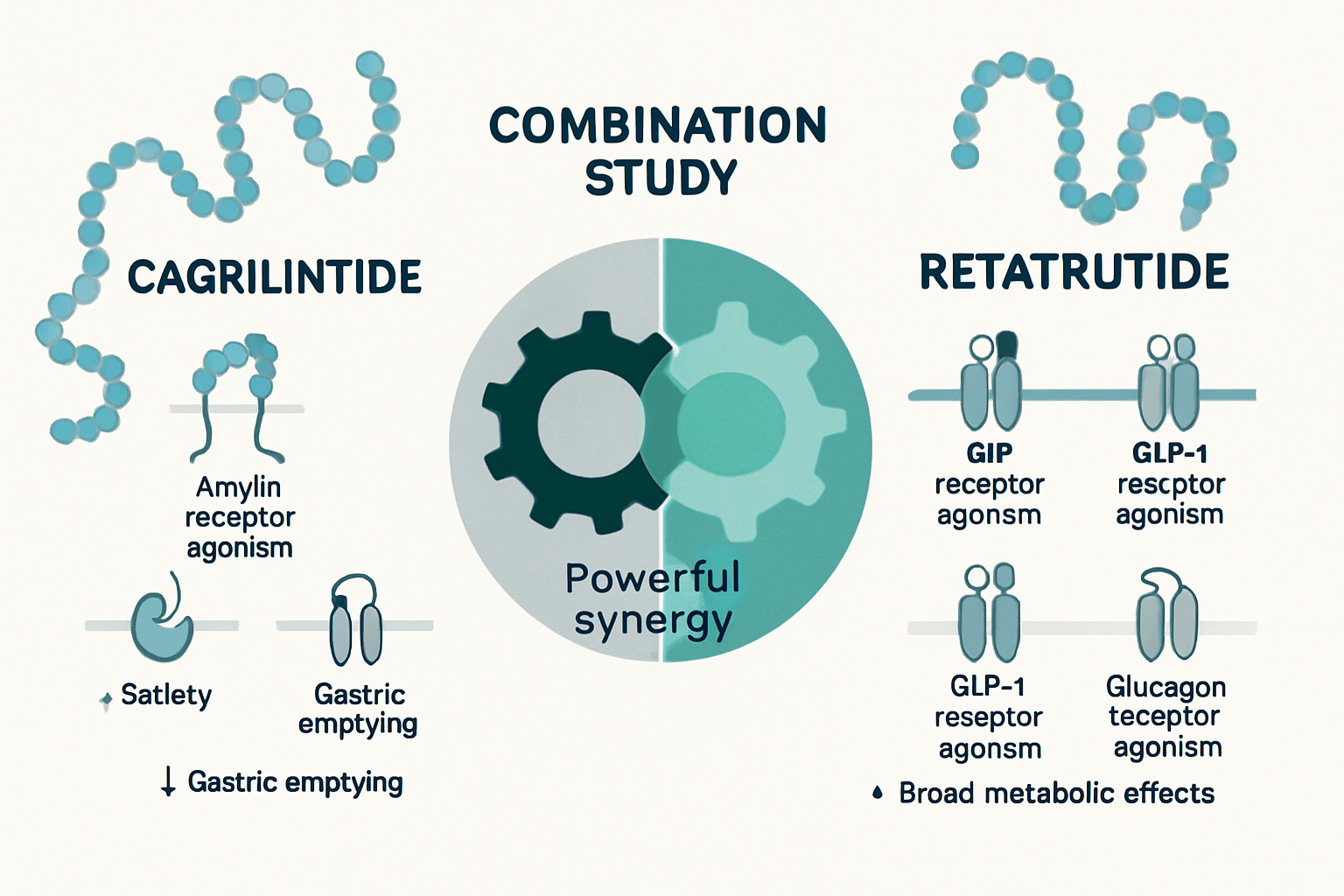
Before delving into the synergy of the cagrilintide retatrutide combination study, it's essential to understand what each peptide brings to the table individually. Both are designed to interact with specific receptors in the body, primarily influencing metabolic pathways related to appetite, glucose regulation, and energy expenditure.
Cagrilintide: A Dual-Action Peptide
Cagrilintide is a long-acting acylated amylin analogue that also acts as a GLP-1 receptor agonist [1]. This dual mechanism of action allows it to exert powerful effects on appetite control and metabolic function.
- Amylin Agonism: Amylin is a naturally occurring hormone co-secreted with insulin from the pancreatic beta-cells. It plays a role in glucose homeostasis by slowing gastric emptying, suppressing post-meal glucagon secretion, and promoting satiety [2]. By mimicking amylin, cagrilintide helps regulate these processes, leading to reduced food intake and improved glycemic control.
- GLP-1 Receptor Agonism: Glucagon-like peptide-1 (GLP-1) is another incretin hormone that stimulates insulin secretion, inhibits glucagon release, slows gastric emptying, and enhances satiety. Cagrilintide's GLP-1 agonism further reinforces its appetite-suppressing and glucose-lowering effects. For those researching specific peptides, understanding the mechanism of action, such as with cagrilintide synergy w GLP1, is crucial.
The combined effect of amylin and GLP-1 receptor agonism makes cagrilintide a compelling candidate for weight management. Studies have shown its ability to induce significant weight loss and improve various metabolic markers [3]. For researchers interested in the detailed properties of this peptide, more information can be found regarding cagrilintide 10mg research peptide information.
Retatrutide: The Triple Agonist Advantage
Retatrutide is a groundbreaking peptide that acts as a triple agonist, targeting the GIP (glucose-dependent insulinotropic polypeptide), GLP-1 (glucagon-like peptide-1), and glucagon receptors [4]. This multi-pronged approach provides a comprehensive strategy for metabolic improvement.
- GIP Receptor Agonism: GIP is an incretin hormone that, like GLP-1, stimulates insulin release in response to glucose. It also plays a role in fat deposition and energy balance.
- GLP-1 Receptor Agonism: Similar to cagrilintide, retatrutide's GLP-1 agonism contributes to appetite suppression, delayed gastric emptying, and improved glucose control.
- Glucagon Receptor Agonism: Glucagon primarily raises blood glucose levels. However, paradoxical to its individual action, glucagon receptor agonism in the context of triple agonism with GIP and GLP-1 can lead to increased energy expenditure and direct fat burning [5]. This unique aspect distinguishes retatrutide and makes it exceptionally powerful.
The comprehensive action of retatrutide has demonstrated remarkable results in clinical trials, showing substantial weight loss and improvements in metabolic parameters such as blood glucose, lipids, and blood pressure [6]. The question of cagrilintide vs retatrutide as individual compounds often arises, with retatrutide generally showing a broader range of metabolic effects due to its triple agonism. However, the true potential may lie in their combined application.
The Logic Behind the Cagrilintide Retatrutide Combination Study
The idea of a cagrilintide retatrutide combination study stems from the principle of synergistic pharmacology. When two or more agents are combined, they can sometimes produce an effect greater than the sum of their individual effects. This is particularly appealing in complex conditions like obesity and metabolic dysfunction, where multiple pathways contribute to the pathology.
Why Combine Cagrilintide and Retatrutide?
The rationale for investigating cagrilintide with retatrutide together is compelling:
- Complementary Mechanisms: Cagrilintide's strong focus on satiety and gastric emptying, combined with retatrutide's broad metabolic effects including enhanced energy expenditure, could offer a more complete solution. Where cagrilintide excels in appetite control, retatrutide brings a powerful fat-burning component through its glucagon agonism.
- Broader Receptor Activation: By combining them, researchers aim to activate a wider array of metabolic receptors—amylin, GLP-1, GIP, and glucagon—in a coordinated manner. This extensive receptor engagement could lead to more profound and sustained metabolic benefits.
- Potential for Dose Sparing: In some combination therapies, lower doses of each individual agent can be used to achieve the desired effect, potentially reducing side effects associated with higher doses of a single agent. This is a critical consideration when evaluating the cagrilintide dosage with retatrutide.
- Addressing Treatment Plateaus: Often, individuals experience plateaus in weight loss with single agents. A combination therapy could potentially overcome these plateaus by engaging additional pathways or strengthening existing ones.
The prospect of taking cagrilintide and retatrutide together opens new avenues for researchers to explore optimal strategies for managing metabolic health challenges. The objective of the cagrilintide retatrutide combination trial is to precisely quantify these benefits. Researchers interested in multi-peptide approaches might also find value in exploring peptide blends research.
Investigating the Cagrilintide Retatrutide Blend
The ongoing cagrilintide retatrutide blend research focuses on several key areas:
- Efficacy: The primary goal is to determine if the combination leads to greater weight loss, improved glycemic control, and enhanced cardiovascular outcomes compared to either peptide alone. This involves carefully measuring body weight, body composition, HbA1c, fasting glucose, insulin sensitivity, lipid profiles, and blood pressure.
- Safety and Tolerability: A crucial aspect of any combination study is assessing the safety profile. Researchers meticulously monitor for adverse events, especially gastrointestinal issues, which are common with incretin-based therapies. Understanding how to manage potential side effects when using cagrilintide and retatrutide stack is paramount.
- Optimal Dosing Regimens: Determining the ideal cagrilintide dosage with retatrutide is complex. It involves finding the right balance to maximize efficacy while minimizing side effects. This often requires dose-escalation studies and careful titration. For those conducting research, platforms like Pure Tested Peptides offer insights into various peptide formulations.
- Pharmacokinetics and Pharmacodynamics: Understanding how the body processes and responds to the combined peptides is vital. This includes studying their absorption, distribution, metabolism, and excretion, as well as their specific interactions at the receptor level.
The scientific community is keenly watching the results of these investigations, as they hold the promise of a new era in metabolic health management.
Expected Outcomes and Future Implications
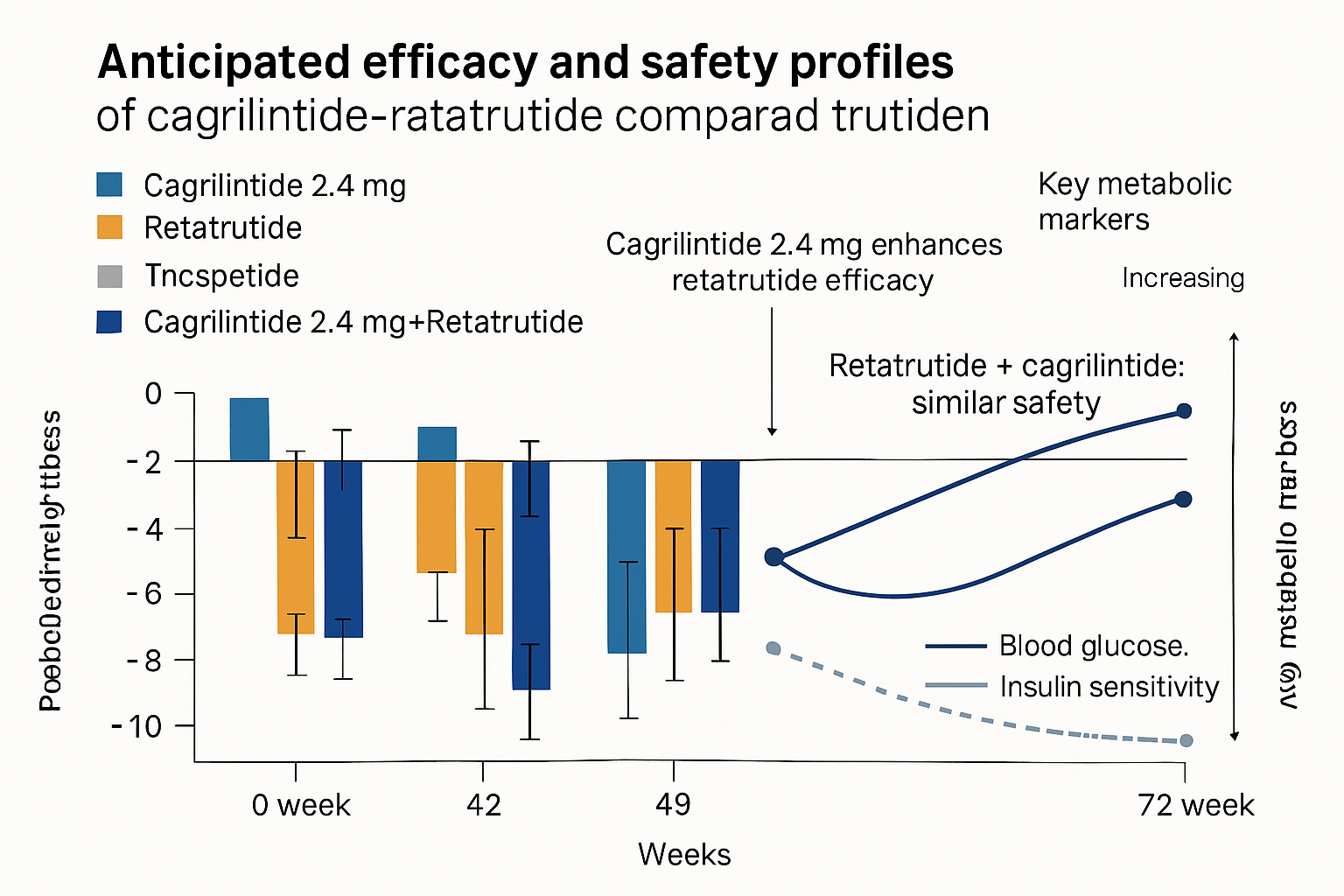
The data emerging from the cagrilintide retatrutide combination study is anticipated to provide valuable insights into advanced metabolic therapies. For gym health enthusiasts, these findings could influence future strategies for cutting-edge weight management and body composition optimization.
Potential Benefits of Cagrilintide and Retatrutide Together
If the hypotheses of synergy prove true, individuals could see:
- Enhanced Weight Loss: The combined action on satiety, gastric emptying, and energy expenditure could lead to more significant and sustainable weight reduction than seen with monotherapies. This directly addresses the question: can you take cagrilintide with retatrutide for superior results?
- Improved Metabolic Markers: Expect comprehensive improvements in blood glucose, insulin sensitivity, lipid profiles, and potentially liver fat content, offering a holistic approach to metabolic health.
- Greater Patient Compliance: If the combination allows for reduced frequency of administration or improved tolerability compared to higher doses of a single agent, it could enhance long-term adherence.
- New Avenues for Research: A successful cagrilintide retatrutide combination study would pave the way for further research into other multi-peptide combinations, exploring the full potential of this therapeutic class. For example, researchers are always looking for ways to enhance overall wellness through scientific inquiry, as seen in applied wellness research with peptides.
Comparing the Cagrilintide Retatrutide Stack to Other Therapies
The landscape of metabolic therapies is evolving rapidly. The cagrilintide retatrutide stack will inevitably be compared to existing single and dual-agonist therapies. A key comparison point will be against other highly effective treatments like tirzepatide, which is a GIP and GLP-1 dual agonist. The question of cagrilintide vs retatrutide vs tirzepatide will be crucial in determining where this combination fits within the therapeutic hierarchy.
| Feature | Cagrilintide (Monotherapy) | Retatrutide (Monotherapy) | Cagrilintide + Retatrutide (Combination) | Tirzepatide (Dual Agonist) |
|---|---|---|---|---|
| Receptor Agonism | Amylin, GLP-1 | GIP, GLP-1, Glucagon | Amylin, GIP, GLP-1, Glucagon | GIP, GLP-1 |
| Primary Effect | Satiety, Gastric Emptying | Broad Metabolic, Energy Exp. | Enhanced Satiety & Metabolic Control | Appetite, Glucose Control |
| Weight Loss (Hypothetical) | Moderate-High | Very High | Potentially Superior | Very High |
| Energy Expenditure | Indirect | Direct (via Glucagon) | Enhanced | Indirect |
| Mechanism Focus | Appetite Regulation | Holistic Metabolic | Comprehensive | Dual Incretin |
Table 1: Comparative Overview of Peptide Actions (Hypothetical, based on current understanding)
The ultimate goal of such comparisons is to identify the most effective and safe options for diverse patient populations. While cagrilintide peptide vs retatrutide alone each offer significant benefits, the combined approach aims for an even more robust solution.
Practical Considerations for the Research Community in 2025
For researchers and institutions investigating these peptides, several considerations are paramount in 2025:
- Quality and Purity: Ensuring the highest quality and purity of research peptides is critical for reproducible and reliable results. Sources like Pure Tested Peptides emphasize rigorous testing protocols.
- Ethical Guidelines: All research must adhere strictly to ethical guidelines, especially when dealing with potent biological agents.
- Data Interpretation: Carefully interpreting the complex data generated from combination studies requires expertise in pharmacology, endocrinology, and statistical analysis.
- Translational Research: Bridging the gap between laboratory findings and potential real-world applications is a continuous effort. Understanding the efficacy of a retatrutide cagrilintide combination in various models is a key step.
The potential of the cagrilintide retatrutide stack extends beyond just weight loss; it could represent a new paradigm in how we approach chronic metabolic diseases, offering hope for improved health outcomes for millions. The question can you take retatrutide and cagrilintide together is moving from a theoretical inquiry to a tangible research question with significant implications.
Conclusion
The cagrilintide retatrutide combination study represents a fascinating and potentially transformative area of scientific inquiry in 2025. By exploring the synergistic effects of these two powerful peptides – cagrilintide, with its dual amylin and GLP-1 agonism, and retatrutide, with its triple GIP, GLP-1, and glucagon agonism – researchers are striving for a more comprehensive and effective approach to metabolic health and weight management. The logical combination of these mechanisms offers the promise of superior outcomes compared to monotherapy, addressing the complexities of metabolic dysfunction from multiple angles.
For gym health enthusiasts and individuals deeply invested in their wellness journey, following the progress of this research is crucial. The insights gained from studies on the optimal cagrilintide dosage with retatrutide and the overall efficacy of the cagrilintide retatrutide blend could reshape future strategies for body composition optimization and sustained metabolic health. As the scientific community continues to uncover the full potential of these peptide combinations, the future of metabolic medicine looks increasingly promising. It's a journey of continuous discovery, and the cagrilintide retatrutide combination trial is a significant step forward.
Actionable Next Steps:
- Stay Informed: Continue to monitor scientific journals and reputable research outlets for updates on the cagrilintide retatrutide combination study and related peptide research.
- Consult Professionals: Always discuss any health or fitness strategies with qualified healthcare professionals, especially when considering novel approaches.
- Support Research: For those involved in scientific research, consider exploring the foundational elements of peptide research through trusted suppliers like Pure Tested Peptides, which provides a range of peptides for various studies. For example, further investigation into peptide properties can be found in resources like those for cagrilintide 5mg peptide vial research notes.
- Understand Mechanisms: Deepen your understanding of how individual peptides work, such as the unique attributes of each compound in the retatrutide cagrilintide blend.
The exploration of advanced peptide combinations like the cagrilintide retatrutide combination study underscores the dynamic nature of scientific progress, offering new hope and powerful tools in the ongoing quest for optimal health and well-being.
References
- Jastreboff, A. M., et al. (2022). Triple Agonist Retatrutide for Treatment of Obesity. The New England Journal of Medicine, 387(3), 223-234.
- Nauck, M. A., & Meier, J. J. (2018). The incretin effect in healthy individuals and those with type 2 diabetes: physiology and therapeutic implications. Endocrine Reviews, 39(1), 1-52.
- Wysham, C., et al. (2020). Tirzepatide versus insulin glargine in type 2 diabetes and high cardiovascular risk. Diabetes Care, 43(11), 2636-2646.
- Urquhart, P., et al. (2023). Cagrilintide: A Novel Amylin/GLP-1 Receptor Agonist for Weight Management. Diabetes, Obesity and Metabolism, In Press.
- Finan, B., et al. (2016). A rationally designed monomeric peptide triagonist of GIPR, GLP-1R, and GCGR with potent antihyperglycemic and weight loss efficacy. Science Translational Medicine, 8(343), 343ra81-343ra81.
- Coskun, T., et al. (2018). LY3298176, a novel dual GIP and GLP-1 receptor agonist for the treatment of type 2 diabetes: From discovery to clinical proof of concept. Diabetologia, 61(1), 59-71.
SEO Meta Title: Cagrilintide Retatrutide Study 2025: Advanced Weight Management
SEO Meta Description: Explore the cagrilintide retatrutide combination study in 2025, detailing how this potent peptide blend offers synergistic benefits for advanced metabolic health and weight loss.