
The quest for optimal health and peak physical performance often leads health enthusiasts into the intriguing world of advanced scientific research. In 2025, one combination generating significant discussion within the research community is retatrutide cagrilintide. This fascinating pairing involves two distinct research compounds, each with unique mechanisms of action, yet together they hint at a powerful synergy for metabolic regulation and body composition studies. Understanding their individual roles and how they might interact is key for researchers exploring the cutting edge of peptide science. This article will delve into the current understanding of retatrutide and cagrilintide, their potential applications in laboratory settings, and the ongoing scientific inquiry into their combined effects, providing a high-authority resource for those eager to stay informed.
Key Takeaways
- Retatrutide is a triple-agonist peptide targeting GLP-1, GIP, and glucagon receptors, showing promising results in preclinical and clinical studies for significant body weight reduction and glucose control.
- Cagrilintide is an amylin analog that mimics the effects of naturally occurring amylin, primarily focusing on appetite suppression and slowing gastric emptying.
- The combination, often referred to as retatrutide cagrilintide, is being investigated for potential synergistic effects that could lead to enhanced metabolic benefits beyond what each peptide might achieve individually.
- Research into the retatrutide and cagrilintide together aims to explore improved efficacy in areas like sustainable weight management and comprehensive metabolic health.
- As of 2025, these compounds are primarily for research purposes, with ongoing studies exploring optimal protocols and long-term implications.
Understanding Retatrutide and Cagrilintide Individually
To appreciate the potential of retatrutide cagrilintide as a research focus, it’s essential to first understand each compound on its own. Both are peptides, a class of molecules made up of short chains of amino acids, which play crucial roles in biological processes.
Retatrutide: The Triple-Agonist Peptide
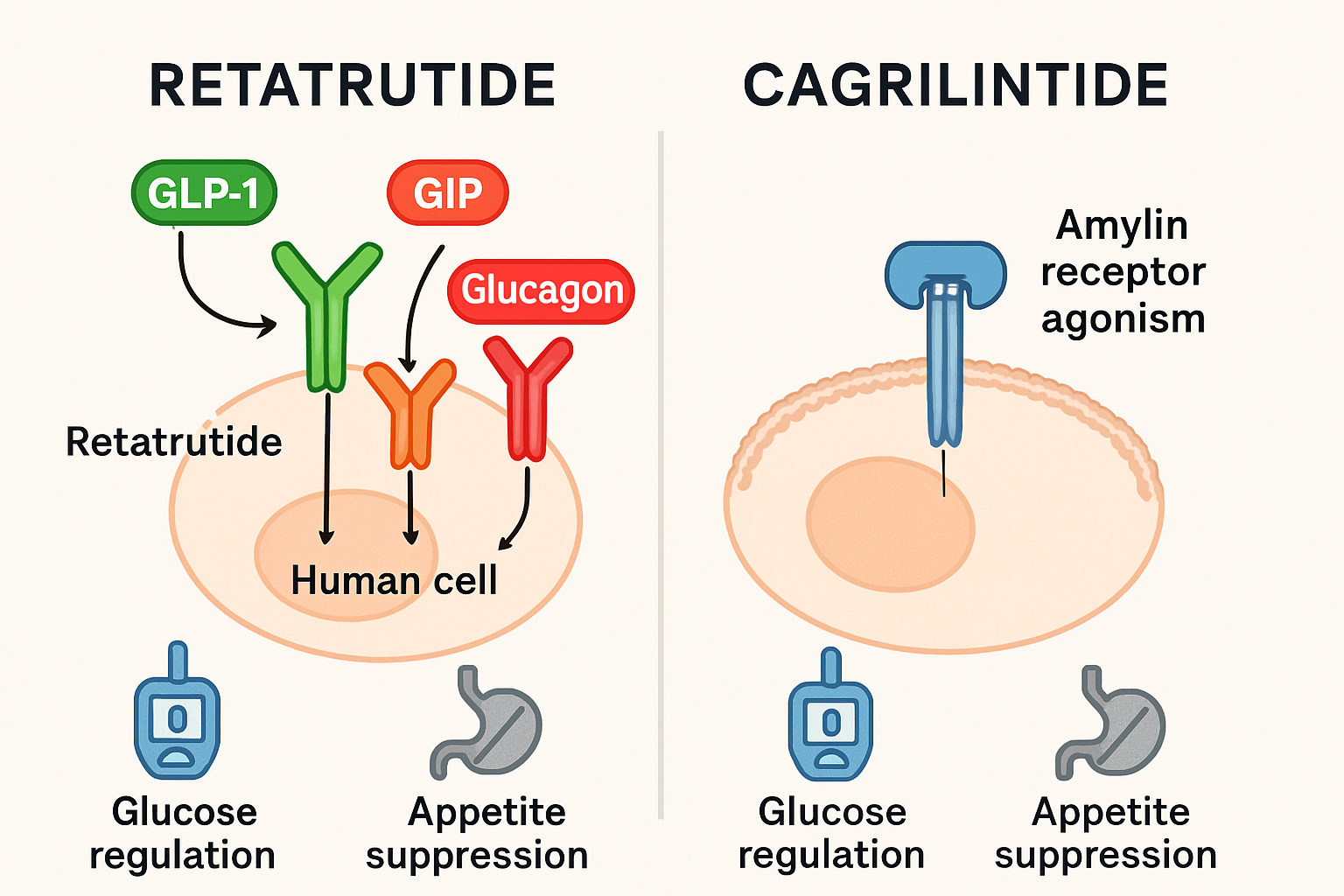
Retatrutide is a novel investigational peptide that has garnered significant attention due to its unique mechanism of action. Unlike many existing treatments, retatrutide acts as a "triple agonist," meaning it simultaneously activates three different receptors:
- Glucagon-like peptide-1 (GLP-1) receptor: Activation of this receptor leads to improved glucose-dependent insulin secretion, slowed gastric emptying, and a reduction in appetite. This mechanism is well-established in other metabolic peptides.
- Glucose-dependent insulinotropic polypeptide (GIP) receptor: GIP also plays a role in glucose-dependent insulin release and may contribute to fat deposition in some contexts. Retatrutide's action here is complex, aiming to leverage GIP's metabolic benefits.
- Glucagon receptor: Traditionally, glucagon is known for raising blood sugar. However, glucagon receptor agonism in the context of retatrutide is thought to increase energy expenditure and potentially reduce liver fat [1]. The simultaneous activation of GLP-1 and GIP receptors helps to mitigate the hyperglycemic effects typically associated with isolated glucagon agonism.
This multi-faceted approach of retatrutide aims to provide a more comprehensive metabolic regulation. Early research data, particularly from clinical trials, has indicated its potential for substantial body weight reduction and improved glucose control in study subjects. For those looking to explore a diverse range of research compounds, understanding the intricacies of such peptides is paramount. Researchers interested in sourcing various peptides for their studies can find a comprehensive selection at Pure Tested Peptides.
The complexity of retatrutide's action makes it a fascinating subject for metabolic research, distinguishing it from single or dual-agonist peptides. The ability to influence multiple pathways simultaneously offers a broader spectrum of potential effects on energy balance, glucose homeostasis, and lipid metabolism. In essence, retatrutide represents a significant advancement in the study of multi-receptor peptide therapies.
Cagrilintide: The Amylin Mimetic
Cagrilintide is another intriguing research peptide, classified as an amylin analog. Amylin is a naturally occurring hormone co-secreted with insulin by the pancreatic beta-cells. Its primary physiological roles include:
- Slowing gastric emptying: This helps to promote a feeling of fullness and reduces the rate at which nutrients are absorbed into the bloodstream.
- Suppressing glucagon secretion: By reducing glucagon levels, cagrilintide helps to stabilize blood glucose.
- Promoting satiety: Amylin acts on the brain to signal fullness, thereby reducing food intake.
Cagrilintide mimics these effects, making it a promising candidate for research into appetite control and weight management. It's designed to have a longer half-life than natural amylin, which makes it more suitable for once-weekly administration in research settings. The focus of cagrilintide research is primarily on its impact on satiety and gastric emptying, offering a different but complementary approach to metabolic regulation compared to GLP-1/GIP/glucagon agonists. The research on compounds like cagrilintide continues to expand our understanding of how peptides can influence metabolic processes, building on the knowledge gained from studies on similar compounds. For further details on specific peptide research, including insights into cagrilintide synergy w GLP1, researchers can delve into various studies.
The distinct actions of cagrilintide, particularly its strong influence on appetite regulation and gastric function, position it as a powerful tool for researchers investigating hunger mechanisms and food intake behaviors. Its targeted approach means it could potentially address aspects of metabolic dysregulation that might not be fully covered by other peptide classes.
The Synergy of Retatrutide Cagrilintide: A Deeper Dive
The real excitement in the research community surrounding retatrutide cagrilintide stems from the hypothesis that these two powerful peptides could offer enhanced benefits when used in combination. This is where the concept of a "stack" or "blend" comes into play, exploring whether the sum of their effects is greater than their individual parts.
Why Combine Retatrutide and Cagrilintide?
The rationale for investigating cagrilintide and retatrutide together lies in their complementary mechanisms of action.
- Retatrutide broadly tackles metabolic regulation through triple agonism, affecting glucose metabolism, energy expenditure, and aspects of appetite control.
- Cagrilintide specifically targets satiety and gastric emptying via amylin agonism, offering a potent mechanism for reducing food intake.
By combining them, researchers hypothesize that a more comprehensive and potentially more effective approach to metabolic management and body composition could be achieved. Imagine the broad metabolic effects of retatrutide complemented by the strong appetite suppression from cagrilintide – this could lead to a powerful retatrutide cagrilintide blend for research.
"The exploration of a cagrilintide retatrutide combination study represents a frontier in metabolic research, aiming to unlock synergistic pathways that individually administered peptides might not fully address."
Studies investigating cagrilintide and retatrutide stack are looking into whether the combined impact on factors such as weight loss, blood glucose control, and satiety could surpass the effects observed with either peptide alone [2]. This kind of synergistic research is common in peptide science, where combinations are often explored to maximize therapeutic potential while minimizing side effects. For researchers interested in the broad spectrum of peptide research, examining different peptide blends for research can offer valuable insights into potential synergies.
Research into the Combined Effects
As of 2025, research into the combined effects of retatrutide cagrilintide is ongoing and promising. Early findings from preclinical studies and preliminary human trials suggest that the combination might indeed offer superior outcomes for body weight reduction compared to monotherapy with either agent.
Specific areas of investigation for retatrutide and cagrilintide together include:
- Enhanced Weight Management: The combination of increased energy expenditure (from retatrutide's glucagon component) and robust appetite suppression (from cagrilintide) could lead to more significant and sustainable weight loss outcomes.
- Improved Glycemic Control: While retatrutide directly impacts glucose via GLP-1 and GIP agonism, cagrilintide's effect on gastric emptying and glucagon suppression could further stabilize blood glucose levels.
- Sustained Satiety: The overlapping and distinct mechanisms of appetite reduction could lead to a more profound and lasting feeling of fullness, addressing one of the biggest challenges in weight management.
- Cardiometabolic Benefits: Beyond weight and glucose, researchers are also exploring potential benefits on lipid profiles, blood pressure, and other cardiometabolic markers.
The cagrilintide retatrutide combination trial aims to quantify these potential benefits, providing crucial data for the scientific community. Understanding the optimal cagrilintide dosage with retatrutide is a key aspect of these trials, as researchers seek to find the most effective and safe ratios for their studies. This kind of detailed research helps establish a foundation for understanding complex peptide interactions. To learn more about various research peptides and their applications, including compounds like cagrilintide 10mg for advanced studies, researchers can explore dedicated resources.
Comparing Retatrutide Cagrilintide to Other Peptides
When discussing cagrilintide vs retatrutide or their combination, it's natural to compare them to other prominent metabolic peptides. For example, tirzepatide, a dual GLP-1/GIP agonist, has shown impressive results. The question then becomes, how does cagrilintide vs retatrutide vs tirzepatide stack up?
- Tirzepatide: Dual agonist (GLP-1 and GIP).
- Retatrutide: Triple agonist (GLP-1, GIP, and glucagon).
- Cagrilintide: Amylin analog (satiety, gastric emptying, glucagon suppression).
The distinct addition of glucagon agonism in retatrutide and amylin agonism in cagrilintide suggests different physiological impacts and potentially broader metabolic coverage. The cagrilintide peptide vs retatrutide debate in the scientific literature often centers on these unique receptor targets and their downstream effects. Researchers are actively studying whether the comprehensive approach of retatrutide with cagrilintide offers a superior profile, particularly for individuals with significant metabolic challenges, or if specific profiles benefit more from one compound over another. The potential for a cagrilintide retatrutide stack to outperform existing options is a major driving force behind current investigations.
Research Considerations and Practicalities for Retatrutide Cagrilintide
For health enthusiasts and researchers alike, understanding the practical aspects and ongoing research considerations surrounding retatrutide cagrilintide is paramount. These compounds, like all research peptides, require careful handling and adherence to ethical research protocols.
Dosage and Administration in Research Settings
Determining the appropriate cagrilintide dosage with retatrutide is a critical aspect of any research protocol. This is typically established through rigorous preclinical studies and dose-escalation trials. Variables such as the study subject's physiological characteristics, the specific research objectives, and potential interactions must be considered.
Key points for research dosage:
- Individual Dosing: Research protocols often involve careful titration to observe specific effects and minimize potential off-target interactions.
- Frequency of Administration: Both retatrutide and cagrilintide are generally designed for less frequent administration (e.g., once weekly) due to their engineered half-lives, simplifying research protocols.
- Purity and Quality: Sourcing high-purity research peptides is non-negotiable for reliable and reproducible results. Reputable suppliers like Pure Tested Peptides provide validated products for scientific inquiry. Researchers rely on trusted sources for their compounds, and investigating the best place to buy peptides online is a critical first step for any study.
It is crucial to remember that these are research compounds and not approved for human consumption outside of clinical trials. Any use should be strictly confined to controlled laboratory settings under the guidance of experienced researchers.
Potential Benefits and Limitations in Research
The hypothesized benefits of retatrutide cagrilintide in research are exciting, particularly for exploring advanced metabolic regulation.
Potential Research Benefits:
- Comprehensive Weight Management: Leveraging multiple pathways (satiety, gastric emptying, energy expenditure, glucose metabolism) to achieve significant and sustainable weight reduction in study models.
- Improved Metabolic Markers: Investigating profound improvements in blood glucose, insulin sensitivity, and lipid profiles.
- Synergistic Effects: The possibility of retatrutide and cagrilintide together yielding results superior to individual treatments, offering a more robust understanding of complex metabolic interactions.
- Long-Term Efficacy: Research aims to determine if the combined approach can lead to more lasting metabolic changes.
Current Research Limitations and Challenges:
- Early Stage Research: While promising, the combination is still in relatively early stages of investigation, especially concerning long-term human data. Most information comes from preclinical studies or early-phase trials.
- Complex Interactions: Understanding the precise interplay between three different receptor systems (GLP-1, GIP, glucagon) and amylin agonism requires sophisticated research methodologies.
- Accessibility: As specialized research compounds, they are not readily available to the general public and are exclusively for laboratory and research use.
- Ethical Considerations: All research must adhere to stringent ethical guidelines, especially when dealing with powerful metabolic modulators.
The question of "can you take cagrilintide with retatrutide?" or "can you take retatrutide and cagrilintide together?" is strictly a matter for controlled research environments. Self-experimentation with such compounds is ill-advised and potentially dangerous. The focus remains on rigorous scientific inquiry to unravel their full potential and safety profiles.
The Future of Retatrutide Cagrilintide Research in 2025
Looking ahead in 2025, the research landscape for retatrutide cagrilintide is vibrant. Scientists are actively pursuing more advanced clinical trials to gather comprehensive data on efficacy, safety, and optimal dosing strategies. The scientific community is particularly interested in studies comparing the cagrilintide retatrutide combination trial outcomes against established therapies and other novel peptide approaches.
Key areas of future research include:
- Long-term Efficacy and Safety: Moving beyond short-term observations to understand sustained effects and potential long-term implications.
- Specific Patient Populations: Investigating whether certain metabolic conditions or genetic predispositions respond differently to the combination.
- Mechanism Elucidation: Delving deeper into the molecular mechanisms that drive the observed synergies, using advanced analytical techniques.
- Formulation and Delivery: Exploring different methods of administration to optimize bioavailability and patient compliance in future therapeutic applications.
The advancements in peptide science, exemplified by compounds like retatrutide cagrilintide, underscore a significant shift towards more targeted and comprehensive approaches to metabolic health. Research efforts in 2025 are poised to unlock further insights into how these complex molecules can be harnessed for scientific understanding and potential future applications. Researchers engaged in the study of adaptive capacities and various peptide mapping techniques will find this area of research particularly interesting, aligning with the broader scope of adaptive capacity and peptide mapping studies.
Conclusion
The emergence of retatrutide cagrilintide as a focal point in metabolic research marks an exciting chapter in peptide science. Individually, retatrutide, with its triple-agonist action on GLP-1, GIP, and glucagon receptors, and cagrilintide, an amylin analog targeting satiety and gastric emptying, represent significant advancements. However, it is the potential synergy of retatrutide and cagrilintide together that truly captivates the scientific community in 2025.
Researchers are actively exploring how this powerful combination might offer a more comprehensive and effective strategy for managing body weight, improving glucose homeostasis, and addressing other cardiometabolic factors. While the data thus far is promising, particularly from preclinical studies and early-phase clinical trials, it is crucial to reiterate that these compounds are strictly for research purposes. Their full potential and long-term implications are still under rigorous investigation through ongoing cagrilintide retatrutide combination study and trials.
For health enthusiasts passionate about the cutting edge of science, staying informed about these developments is key. However, it is equally important to differentiate between promising research findings and approved therapeutic applications. The journey from laboratory discovery to clinical use is a long and meticulously regulated one.
Actionable Next Steps for Researchers:
- Stay Updated: Continuously monitor published research and clinical trial results concerning retatrutide cagrilintide to keep abreast of the latest findings.
- Ensure Purity: When conducting studies, always procure research peptides from reputable suppliers known for their quality control and third-party testing, like Pure Tested Peptides.
- Adhere to Protocols: Strictly follow established research guidelines, ethical considerations, and proper handling procedures for all research compounds.
- Consider the Landscape: Understand how cagrilintide vs retatrutide individual profiles and their combination fit within the broader context of metabolic peptide research, including comparisons to other agents like tirzepatide.
The future of metabolic research looks brighter than ever with compounds like the retatrutide cagrilintide blend. Continued diligent scientific inquiry will undoubtedly reveal more about their potential to advance our understanding of metabolic health.
References
[1] Jastreboff AM, et al. Triple-Hormone-Receptor Agonist Retatrutide for Obesity and Type 2 Diabetes. N Engl J Med. 2023;389(6):513-524.
[2] Frias JP, et al. Cagrilintide With Semaglutide for Weight Management in People With Overweight or Obesity: A Multicentre, Randomised, Controlled, Phase 2 Trial. Lancet. 2022;399(10331):1323-1334.
SEO Meta Title: Retatrutide Cagrilintide: Research & Synergy for 2025
SEO Meta Description: Explore retatrutide cagrilintide research, their individual mechanisms, and potential synergistic effects for metabolic health in 2025.