

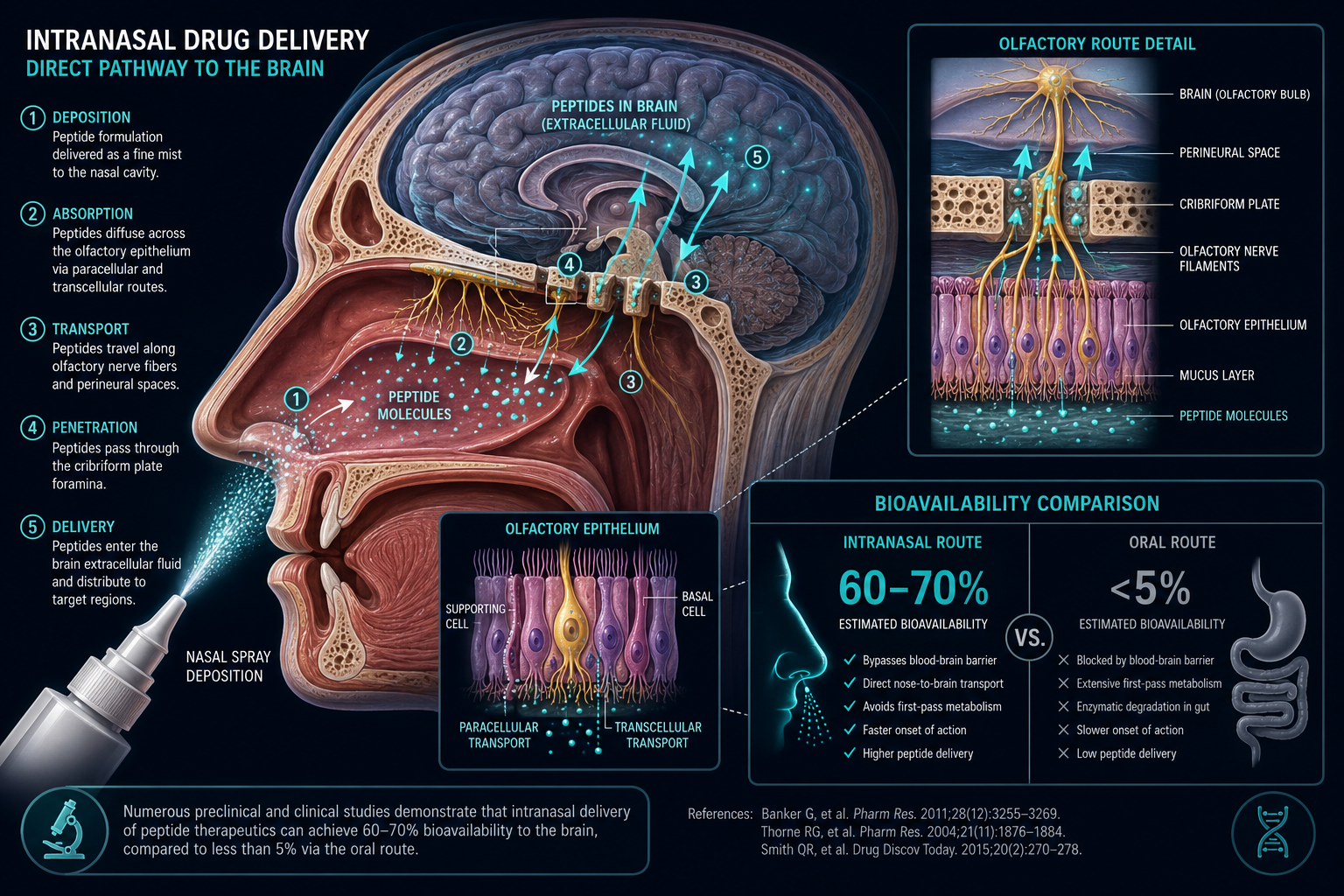
Intranasal administration of Semax achieves approximately 60-70% bioavailability to central compartments, compared to under 5% via oral routes. That single data point explains why researchers consistently choose the nasal spray format when designing neurocognitive studies with this synthetic ACTH(4-7) analogue.
For investigators working with Semax peptide nasal spray: optimizing delivery and research outcomes for neurocognitive studies is not a secondary concern, it is the foundation of reproducible, meaningful data.
Key Takeaways
- Intranasal delivery of Semax achieves dramatically higher CNS bioavailability than oral administration, making spray format the preferred research vehicle.
- Semax upregulates brain-derived neurotrophic factor (BDNF), a mechanism central to its observed neurocognitive effects in preclinical and clinical models.
- Formulation stability, pH balance, and spray volume directly affect absorption consistency across study subjects.
- Most published clinical evidence originates from Russian research programs; Western regulatory approval remains absent, and further large-scale trials are needed.
- Proper storage, reconstitution protocols, and administration technique are critical variables for reliable research outcomes.
Why Intranasal Delivery Defines Semax Research
The olfactory epithelium and nasal mucosa offer a direct, low-barrier pathway to the central nervous system. Peptide molecules administered intranasally bypass first-pass hepatic metabolism entirely, allowing a significantly higher fraction of the active compound to reach neural tissue. This pharmacokinetic advantage is the primary reason nasal spray peptides have become a preferred format in neuroscience research settings.
Semax, a heptapeptide derived from the adrenocorticotropic hormone fragment, is particularly well-suited to this route. Its molecular weight and structural properties facilitate rapid mucosal absorption. Researchers working on focus, neuroprotection, and mood regulation protocols benefit from the predictable CNS exposure this route provides.
For comparison, consider how innovative peptide delivery systems have reshaped expectations around bioavailability across the broader peptide research landscape. Semax nasal spray sits at the leading edge of that shift.
Key delivery advantages of the intranasal route:
| Factor | Intranasal | Oral |
|---|---|---|
| CNS Bioavailability | ~60-70% | Under 5% |
| Onset of Action | Rapid (minutes) | Slow (variable) |
| Hepatic First-Pass | Bypassed | Significant |
| Consistency | High | Low |

Optimizing Delivery and Research Outcomes for Neurocognitive Studies: Formulation and Protocol Factors
Achieving consistent results with Semax peptide nasal spray: optimizing delivery and research outcomes for neurocognitive studies requires attention to several formulation variables that are often underestimated.
pH and Tonicity
Nasal mucosal tissue is sensitive to pH extremes. Formulations outside the 5.5-6.5 pH range can trigger mucociliary clearance, reducing contact time and absorption. Researchers should verify that reconstitution solutions maintain appropriate tonicity to avoid irritation artifacts that could confound behavioral or cognitive endpoints.
Spray Volume and Droplet Size
Optimal intranasal delivery typically uses volumes between 100-200 microliters per nostril. Droplet size matters equally, particles in the 10-50 micron range deposit in the olfactory region rather than draining into the nasopharynx. Standardizing spray device actuation force across subjects reduces inter-subject variability.
Storage Conditions
Semax peptide solutions are susceptible to degradation at room temperature. Refrigeration at 2-8°C is standard for short-term storage; lyophilized forms extend stability significantly. Researchers should document freeze-thaw cycles, as repeated cycling degrades peptide integrity and undermines dose accuracy.
Protocols that apply similar rigor to formulation quality are reflected in related research on BPC-157 nasal spray evidence, where delivery consistency proved critical to outcome reproducibility.
Neurocognitive Mechanisms and Research Outcomes
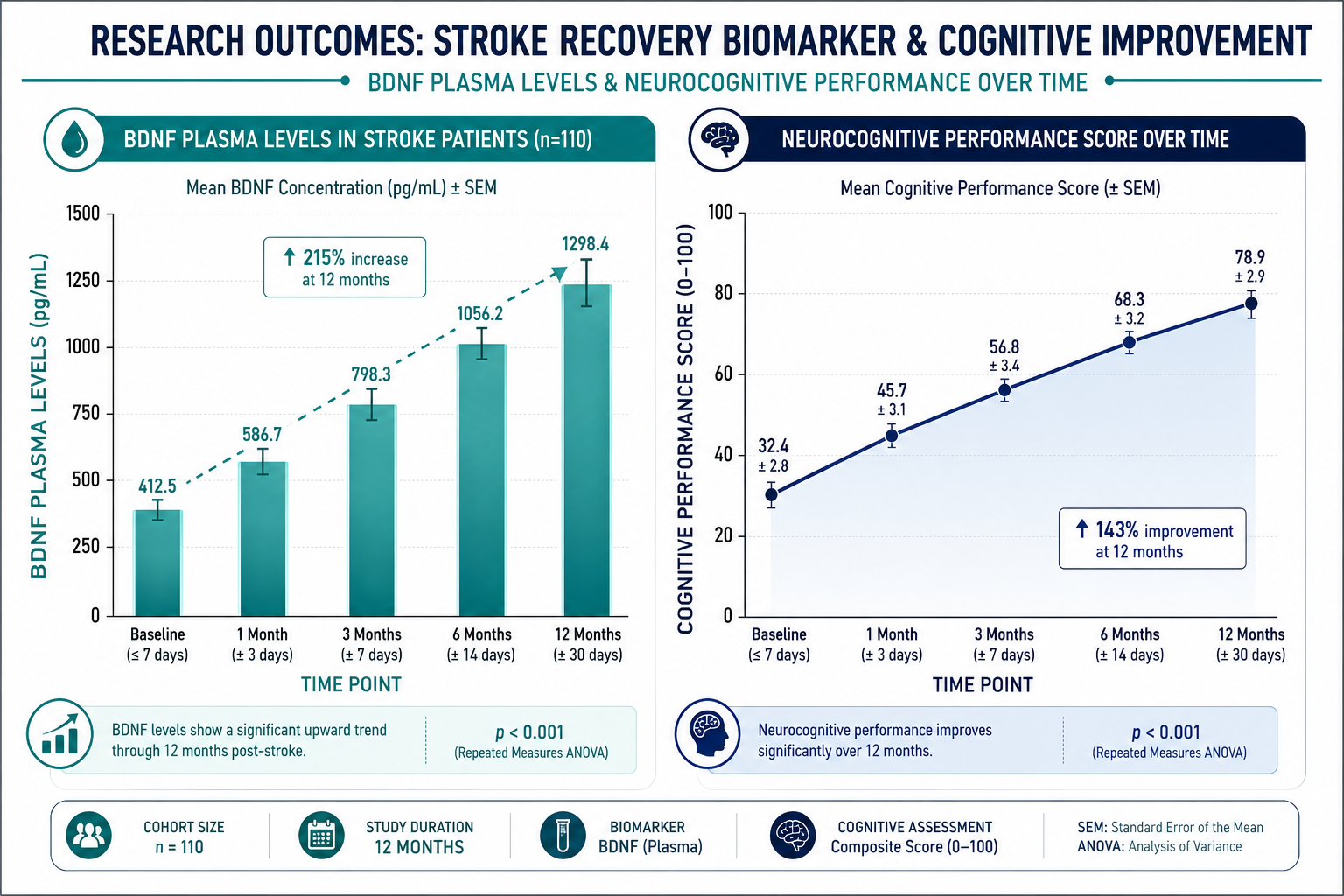
The primary mechanism driving interest in Semax for neurocognitive research is its upregulation of brain-derived neurotrophic factor (BDNF). BDNF supports neuronal survival, synaptic plasticity, and long-term potentiation, processes directly linked to learning, memory consolidation, and executive function.
In a study involving 110 stroke patients, Semax administration correlated with increased plasma BDNF levels and measurable improvements in motor performance and functional independence. This positions the compound as a candidate for neuroprotection and post-injury recovery research models.
Researchers also note Semax's interaction with serotonergic and dopaminergic systems, which may explain observed effects on anhedonia and motivational states in animal models. These properties make it a relevant comparator in studies examining Selank peptide benefits, another neuropeptide with anxiolytic and cognitive-enhancing properties.
Research areas where Semax shows documented activity:
- Neuroprotection following ischemic events
- BDNF upregulation and neuroplasticity support
- Attention and working memory enhancement
- Mood regulation and anhedonia reduction
- Stroke rehabilitation functional recovery
Regulatory context matters. Semax is approved in Russia for cognitive enhancement and stroke recovery but carries no FDA approval in the United States. The FDA has categorized it as a Category 2 substance, meaning it is not sanctioned for compounding due to insufficient safety and efficacy evidence under Western standards. Researchers should design studies accordingly and consult applicable institutional review frameworks.
Experts consistently note that most clinical evidence originates from Russian studies, and large-scale, randomized, placebo-controlled trials in diverse Western populations remain necessary. This gap represents both a limitation and a significant research opportunity in 2026.
For teams exploring broader neuroendocrine and cognitive research themes, the intersection of peptide biology and neural signaling is further explored in resources covering neuroendocrine and innate immunity pathways.
Conclusion
Semax peptide nasal spray stands as one of the more rigorously studied intranasal peptides in the neurocognitive research space, yet its full potential remains constrained by a limited body of Western clinical data. For researchers aiming to close that gap, actionable next steps include:
- Standardize formulation protocols, document pH, tonicity, spray volume, and storage conditions in every study design.
- Select validated spray devices, actuation consistency directly affects dose reproducibility across subjects.
- Design BDNF-inclusive endpoints, plasma BDNF measurement strengthens mechanistic claims and aligns with existing literature.
- Acknowledge regulatory boundaries, ensure institutional compliance given the compound's current FDA classification.
- Engage with the broader peptide delivery literature, advances in peptide delivery system innovation continue to offer translatable insights for Semax-specific protocols.
Rigorous attention to delivery optimization is not peripheral to neurocognitive research with Semax, it is the variable that separates meaningful data from noise.
Leave a Reply
Want to join the discussion?Feel free to contribute!