

{"cover":"Professional landscape format (1536×1024) hero image with bold text overlay: 'Mesenchymal Stem Cells & Peptide Modulators: BPC-157, TB-500, and GHK-Cu for Tissue Repair' in extra large 72pt white bold sans-serif font with deep shadow effect, centered upper-third placement. Background features a high-resolution microscopy visualization of mesenchymal stem cells with glowing blue-green fluorescent markers against a dark navy background, with molecular peptide chain diagrams overlaid in translucent gold. Color palette: deep navy, electric teal, gold accents. Magazine cover aesthetic, editorial quality, cinematic lighting.","content":["Landscape format (1536×1024) scientific illustration showing three distinct peptide molecular structures labeled BPC-157, TB-500, and GHK-Cu arranged in a triangular comparison diagram, each connected by glowing arrows to a central mesenchymal stem cell cluster rendered in photorealistic 3D. Background is a clean white laboratory setting with subtle grid lines. Color coding: BPC-157 in blue, TB-500 in green, GHK-Cu in copper-gold. Annotation callouts highlight angiogenesis, actin remodeling, and collagen synthesis pathways. Scientific infographic style, editorial quality.","Landscape format (1536×1024) top-down laboratory bench scene showing organized experimental design layout: multi-well culture plates with color-coded peptide solutions, a digital microscope displaying MSC migration assay results on its screen, lab notebooks with experimental protocol charts, and vials labeled BPC-157 and TB-500. Warm laboratory lighting, teal and white color scheme, clean modern research aesthetic. Inset diagram in lower right corner shows a simplified experimental timeline flowchart with treatment and control groups. Editorial quality, research photography style.","Landscape format (1536×1024) split-panel tissue repair visualization: left panel shows damaged tendon tissue at cellular level with fragmented collagen fibers rendered in detailed 3D, right panel shows the same tissue post-peptide modulation with dense organized collagen matrix, active stem cells migrating into repair zone, and new capillary formation highlighted in red. GHK-Cu copper-toned molecular icons float between panels. Background gradient from dark red-orange to healthy tissue pink. Scientific visualization style, high contrast, editorial quality with annotation labels."]
Fewer than three published human studies exist for BPC-157 as of 2026 — yet researcher interest in pairing this peptide with mesenchymal stem cell models has grown sharply across preclinical literature. The same pattern holds for TB-500 and GHK-Cu. Together, these compounds represent a converging frontier in regenerative biology, where mesenchymal stem cells and peptide modulators: designing BPC-157, TB-500, and GHK-Cu experiments for tissue repair has become one of the most actively discussed frameworks in preclinical research circles.
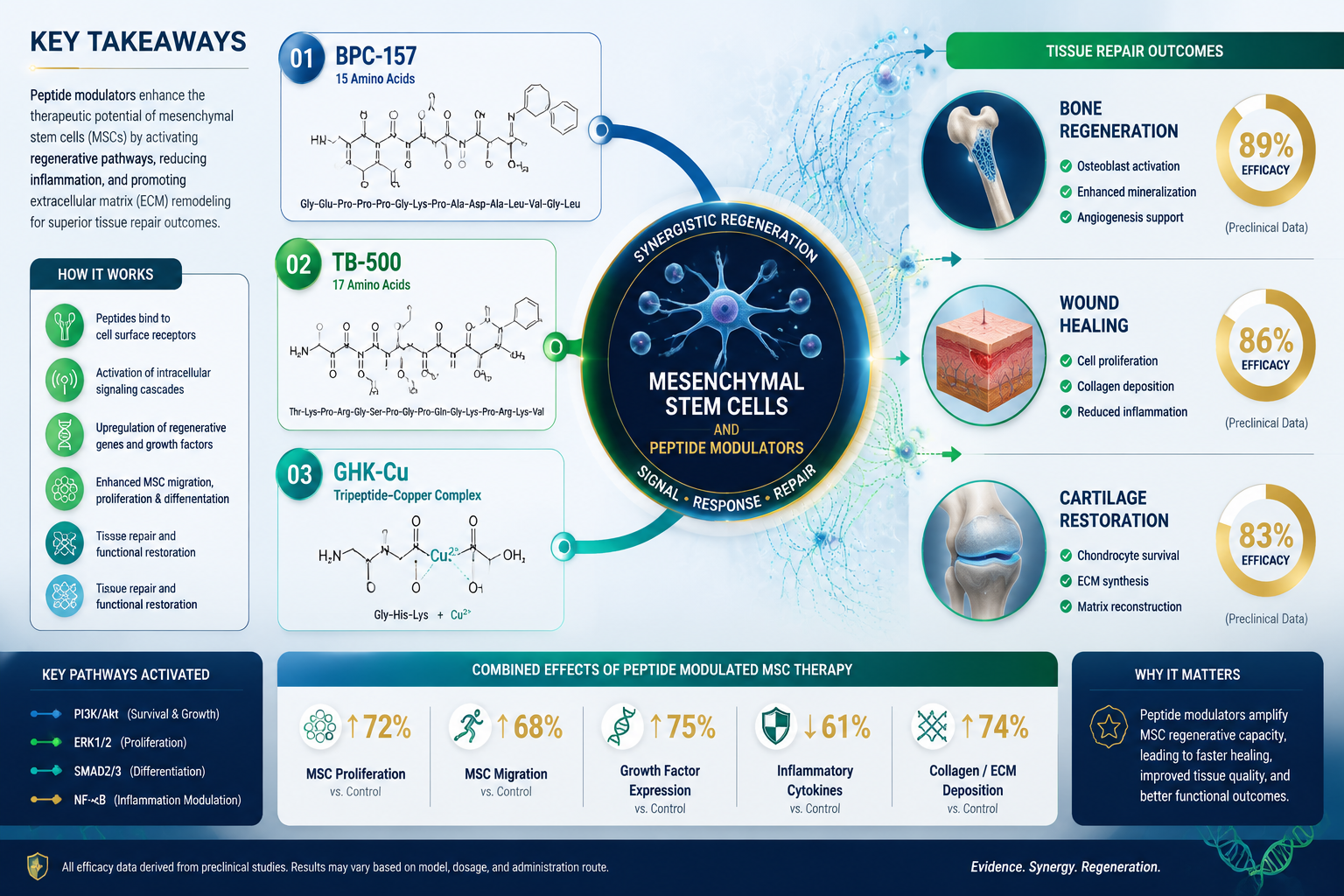
Key Takeaways
- BPC-157, TB-500, and GHK-Cu each act through distinct biological mechanisms — angiogenesis, cell migration, and matrix remodeling, respectively — making them complementary candidates in MSC-paired experimental designs.
- All three peptides remain strictly preclinical for tissue repair purposes, with no FDA-approved indications and significant regulatory constraints on human use.
- Mesenchymal stem cells serve as a powerful experimental platform because they respond to the microenvironmental signals these peptides generate.
- Rigorous experimental design requires clear controls, validated assay endpoints, and awareness of sourcing quality for research-grade compounds.
- Blend formulations combining two or more peptides are an emerging area of study, but mechanistic clarity demands single-agent baseline data first.
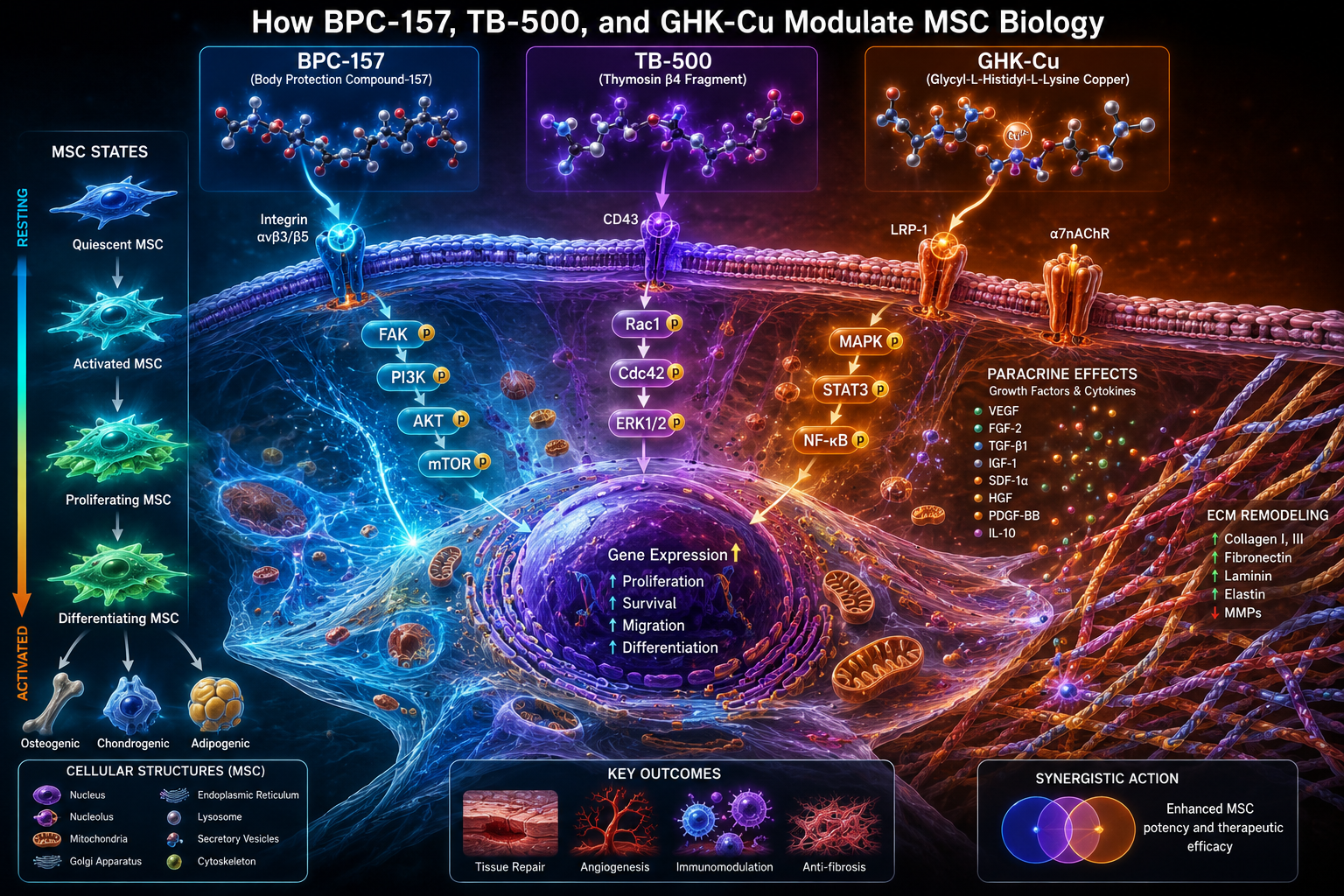
How BPC-157, TB-500, and GHK-Cu Modulate MSC Biology
Each peptide operates through a different cellular lever, which is precisely why researchers find them compelling when studying tissue repair alongside mesenchymal stem cell populations.
BPC-157 (Body Protection Compound-157) is a synthetic 15-amino-acid peptide derived from a gastric protein sequence. Preclinical data from small-animal models show it improving the repair microenvironment — specifically through enhanced angiogenesis and growth factor signaling. In the context of MSC research, this matters because stem cells depend on vascular support to engraft and survive in damaged tissue. For a deeper look at BPC-157's role in angiogenesis and tendon biology, see this BPC-157 angiogenesis and tendon research overview.
TB-500 (a synthetic fragment of Thymosin Beta-4) works primarily through actin cytoskeleton modulation, which directly enables cell migration. Research suggests it reactivates progenitor cells and supports their movement into injury zones — a function that maps well onto MSC homing studies. Researchers exploring this mechanism can reference TB-500 muscle recovery research themes for additional context.
GHK-Cu (Copper peptide GHK) takes a third path: matrix remodeling and collagen synthesis. Evidence points to its ability to restore stemness in skin stem cells by increasing the proliferative capacity of epidermal basal cells through integrin and p63 signaling pathways. This makes it particularly relevant in dermal and connective tissue MSC models. Researchers can explore GHK-Cu longevity research themes for mechanistic background.
| Peptide | Primary Mechanism | MSC-Relevant Action |
|---|---|---|
| BPC-157 | Angiogenesis, growth factor signaling | Improves engraftment environment |
| TB-500 | Actin remodeling, cell migration | Supports progenitor homing |
| GHK-Cu | Collagen synthesis, matrix remodeling | Restores stemness, basal cell proliferation |
Designing Rigorous Experiments: Protocols and Regulatory Context
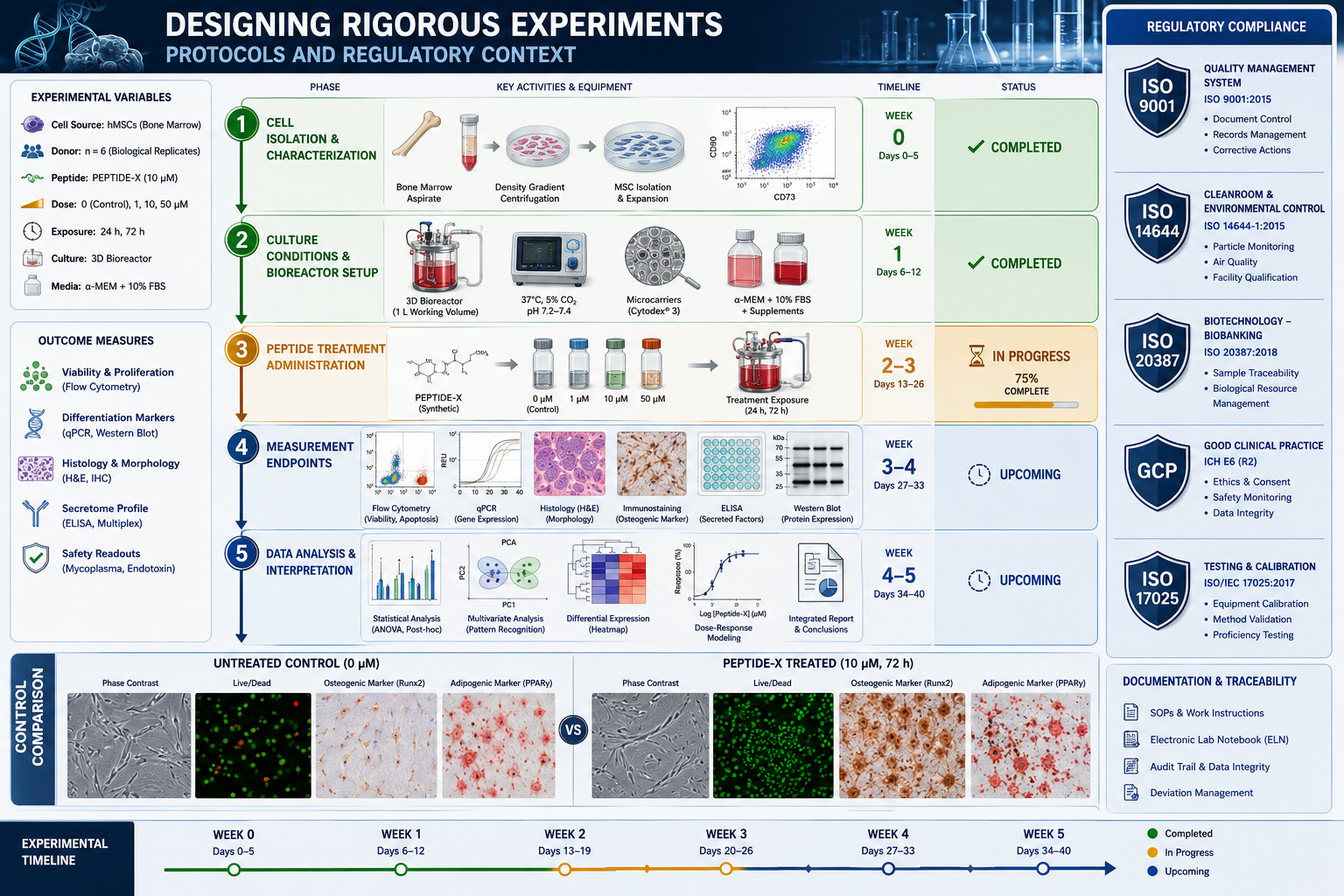
Sound experimental design for mesenchymal stem cells and peptide modulators: designing BPC-157, TB-500, and GHK-Cu experiments for tissue repair requires both scientific and regulatory clarity.
Regulatory constraints shape the experimental scope. The FDA classified BPC-157 as a Category 2 bulk drug substance in 2023, prohibiting its compounding for human use by commercial pharmacies in the United States. TB-500 and GHK-Cu similarly carry no FDA-approved indications for tissue repair or stem-cell modulation. All three are available for research use only, which confines rigorous study to in-vitro MSC models, animal studies, or tightly regulated investigator-initiated trials.
Researchers designing in-vitro protocols should consider:
- Cell source standardization — bone marrow-derived vs. adipose-derived MSCs respond differently to peptide stimuli
- Concentration gradients — dose-response curves are essential before any combination studies
- Validated endpoints — migration assays (scratch/wound healing), collagen quantification (Sircol assay), and angiogenesis co-culture models
- Vehicle controls — sterile carrier solutions must be matched to peptide formulation conditions
- Compound purity verification — sourcing from vendors with documented quality testing protocols is non-negotiable for reproducible data
For researchers interested in blend formulations, the BPC-157 and TB-500 combination resource provides useful background on how these peptides have been studied together.
Translational Gaps and What Current Evidence Actually Supports
A 2024 review in the Yale Journal of Biology and Medicine described BPC-157 as showing "great promise" in small-animal models for tendon, ligament, skeletal muscle, and bone healing — while explicitly confirming the data remain preclinical. That framing captures the state of the field accurately.
For mesenchymal stem cells and peptide modulators: designing BPC-157, TB-500, and GHK-Cu experiments for tissue repair, the translational gap is real but not discouraging. It simply means experimental designs must prioritize mechanistic clarity over clinical extrapolation.
Researchers should also consider adjacent peptide systems that interact with MSC biology. Vilon and tissue homeostasis research offers a comparative lens on short-chain peptide regulators, while what is new in peptide research tracks emerging findings relevant to regenerative models.
"The most reproducible preclinical findings emerge when researchers isolate one mechanistic variable at a time before layering peptide combinations onto MSC platforms."
Key gaps the field still needs to address:
- Long-term MSC viability data under sustained peptide exposure
- Species-specific differences in MSC peptide receptor expression
- Standardized outcome metrics across research groups
Conclusion
Pairing mesenchymal stem cells with BPC-157, TB-500, and GHK-Cu in tissue repair experiments offers a scientifically grounded — if still early-stage — research strategy. Each peptide addresses a distinct phase of the repair cascade, making them logical candidates for sequential or combination study designs. Researchers should prioritize single-agent baseline experiments before advancing to blends, verify compound purity through documented testing, and design assays with validated, quantifiable endpoints. Regulatory constraints make in-vitro and animal MSC models the appropriate arena for this work in 2026. The path forward is methodical: build mechanistic evidence layer by layer, and the translational potential of these peptide-MSC pairings will become clearer with each well-designed study.
Leave a Reply
Want to join the discussion?Feel free to contribute!