Call or Text 727-513-9780
  • Shopping Cart Shopping Cart
    0Shopping Cart
Pure Tested Peptides | America's most trusted Peptides for sale online
  • Peptides for sale
    • Oral Peptides for sale
      • Peptide Capsules for sale
      • BPC 157 Capsules 1000mcg
      • SLU-PP-332 Capsules | 1000 mcg
      • 5-Amino-1MQ 50mg Capsules
      • Tesofensine 500mcg
    • All Peptides for sale
    • Peptide Sprays
      • BPC 157 Nasal Spray Kit
      • BPC-157 TB500 Nasal Spray Kit
      • Semax Nasal Spray 10mg
      • Selank – Nasal Spray Kit – 10mg
      • Epithalon 50MG Nasal Spray Kit
      • Ipamorelin 10mg Nasal Spray
      • Klow Nasal Spray (BPC-157 + TB-500 + GHK-Cu + KPV) | 80mg
      • Hulk Nasal Spray Tesa / Ipa Blend 6/3 MG
      • Klow Nasal Spray
      • NAD + 500 mg Nasal Spray
      • PT-141 Nasal Spray Kit
    • GHRH Peptides
      • Ipa Peptides
      • CJC-1295 Peptides
        • CJC-1295 with DAC 5 mg
        • CJC-1295 without DAC 5 mg
        • CJC-1295 Ipa 10mg
      • Tesa Peptides
        • Tesa Peptide
        • Tesa 20 mg
    • GHK-Cu Peptides
      • All GHK-Cu Peptides
      • GHK-Cu 100mg
      • KLOW Peptide Blend – Buy KLOW blend online
    • BPC Peptides
      • All BPC Peptides
      • BPC-157
      • BPC-157 TB-500
      • BPC 157 capsules 1000mcg
    • SLU-PP-332 Peptides
      • All SLU-PP-332 Peptides
      • SLU-PP-332 5mg
    • GLP3 Peptides
      • GLP3-R
      • GLP3-R CAG 10mg
      • GLP3-R 20mg
    • PT-141 Peptides
      • PT-141 Peptides for sale
      • PT-141 10mg
      • PT-141 Nasal Spray
    • CAG Peptides
      • Lipo-C Peptide Blend
      • CAG 5mg
      • CAG 10mg
    • MOTS-C Peptides
      • MOTS-C Peptides for sale
      • MOTS-c peptide
      • MOTS-c 10mg *6 pack*
    • 5 Amino 1MQ Peptides
      • 5 Amino 1MQ Peptides for sale
      • 5-Amino-1MQ 50mg Capsules
      • 5-Amino-1MQ 5mg
    • Epithalon Peptides
      • Epithalon Peptides for sale
      • Epithalon 10mg
      • Epithalon 50mg
  • Shop
    • GLPs
      • 5-Amino-1MQ 50mg Capsules
      • 5-Amino-1MQ 5mg
      • GLP3-Reta
      • L-Carnitine 500mg/ml
      • Tesofensine 500mcg
      • SLU-PP-332 5mg
      • MOTS-c 10mg *6 pack*
    • Epithalon & BPC Peptides
      • Epithalon 10mg
      • Epithalon 50mg
      • BPC-157
      • BPC 157 capsules 1000mcg
      • BPC-157 TB-500
      • BPC-157 TB500 Nasal Spray Kit
      • BPC 157 Nasal Spray Kit
    • BPC TB-500 & NAD+ Peptides
      • NAD+ 500 mg
      • KLOW Peptide Blend – Buy KLOW blend online
      • GLOW Peptide Blend
      • TB 500 5mg
      • BPC 157 capsules 1000mcg – Supplement
      • BPC 157 Nasal Spray Kit
      • BPC-157
      • BPC-157 TB500 Nasal Spray Kit
      • BPC-157 TB-500
      • BPC 157 capsules 1000mcg
    • LL-37 Peptide
      • LL-37 10 mg
    • MOTS-C & Selank
      • MOTS-c peptide
      • Selank 10mg
    • GHK Peptides
      • GHK-Cu 100mg
      • GLOW Peptide Blend
      • KLOW Peptide Blend – Buy KLOW blend online
  • COAs
  • Wholesale
    • Wholesale Peptides for sale
  • PTP FAQ
  • Affiliates
    • Affiliate Program
    • Affiliate Signup
  • Contact
    • Contact Customer Service
    • Text Customer Support
  • About US
  • Shop all peptides
  • Login / Register Login / Register Page Link Login / Register Page Link
  • Click to open the search input field Click to open the search input field Search
  • Menu Menu

Tag Archive for: preclinical peptide research

Mesenchymal Stem Cells and Peptide Modulators: Designing BPC-157, TB-500, and GHK-Cu Experiments for Tissue Repair

Mesenchymal Stem Cells and Peptide Modulators: Designing BPC-157, TB-500, and GHK-Cu Experiments for Tissue Repair

June 25, 2026/0 Comments/in Uncategorized/by

{"cover":"Professional landscape format (1536×1024) hero image with bold text overlay: 'Mesenchymal Stem Cells & Peptide Modulators: BPC-157, TB-500, and GHK-Cu for Tissue Repair' in extra large 72pt white bold sans-serif font with deep shadow effect, centered upper-third placement. Background features a high-resolution microscopy visualization of mesenchymal stem cells with glowing blue-green fluorescent markers against a dark navy background, with molecular peptide chain diagrams overlaid in translucent gold. Color palette: deep navy, electric teal, gold accents. Magazine cover aesthetic, editorial quality, cinematic lighting.","content":["Landscape format (1536×1024) scientific illustration showing three distinct peptide molecular structures labeled BPC-157, TB-500, and GHK-Cu arranged in a triangular comparison diagram, each connected by glowing arrows to a central mesenchymal stem cell cluster rendered in photorealistic 3D. Background is a clean white laboratory setting with subtle grid lines. Color coding: BPC-157 in blue, TB-500 in green, GHK-Cu in copper-gold. Annotation callouts highlight angiogenesis, actin remodeling, and collagen synthesis pathways. Scientific infographic style, editorial quality.","Landscape format (1536×1024) top-down laboratory bench scene showing organized experimental design layout: multi-well culture plates with color-coded peptide solutions, a digital microscope displaying MSC migration assay results on its screen, lab notebooks with experimental protocol charts, and vials labeled BPC-157 and TB-500. Warm laboratory lighting, teal and white color scheme, clean modern research aesthetic. Inset diagram in lower right corner shows a simplified experimental timeline flowchart with treatment and control groups. Editorial quality, research photography style.","Landscape format (1536×1024) split-panel tissue repair visualization: left panel shows damaged tendon tissue at cellular level with fragmented collagen fibers rendered in detailed 3D, right panel shows the same tissue post-peptide modulation with dense organized collagen matrix, active stem cells migrating into repair zone, and new capillary formation highlighted in red. GHK-Cu copper-toned molecular icons float between panels. Background gradient from dark red-orange to healthy tissue pink. Scientific visualization style, high contrast, editorial quality with annotation labels."]

Fewer than three published human studies exist for BPC-157 as of 2026 — yet researcher interest in pairing this peptide with mesenchymal stem cell models has grown sharply across preclinical literature. The same pattern holds for TB-500 and GHK-Cu. Together, these compounds represent a converging frontier in regenerative biology, where mesenchymal stem cells and peptide modulators: designing BPC-157, TB-500, and GHK-Cu experiments for tissue repair has become one of the most actively discussed frameworks in preclinical research circles.

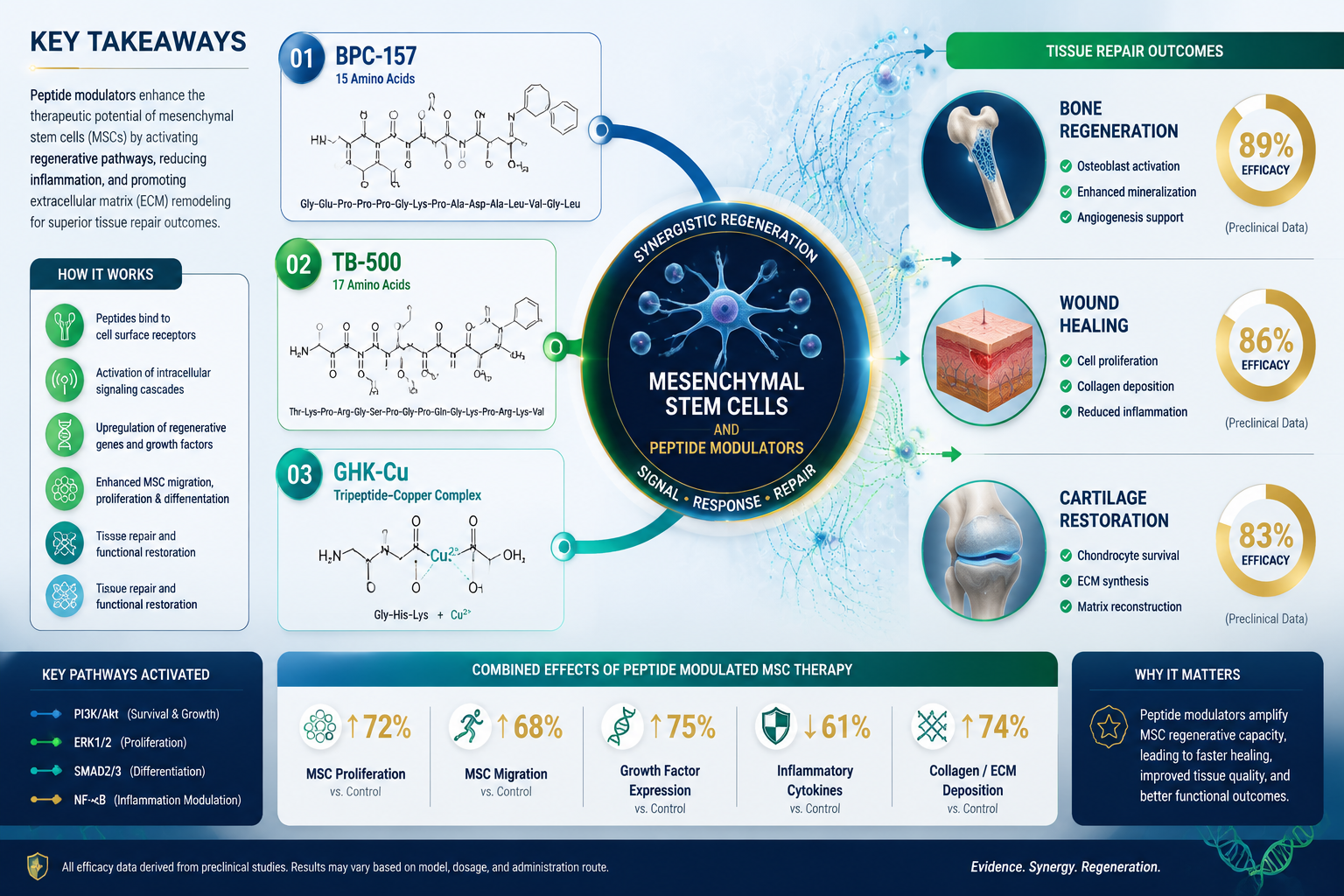
Editorial infographic for 'Key Takeaways' section featuring a central circular hub labeled 'Mesenchymal Stem Cells and

Key Takeaways

  • BPC-157, TB-500, and GHK-Cu each act through distinct biological mechanisms — angiogenesis, cell migration, and matrix remodeling, respectively — making them complementary candidates in MSC-paired experimental designs.
  • All three peptides remain strictly preclinical for tissue repair purposes, with no FDA-approved indications and significant regulatory constraints on human use.
  • Mesenchymal stem cells serve as a powerful experimental platform because they respond to the microenvironmental signals these peptides generate.
  • Rigorous experimental design requires clear controls, validated assay endpoints, and awareness of sourcing quality for research-grade compounds.
  • Blend formulations combining two or more peptides are an emerging area of study, but mechanistic clarity demands single-agent baseline data first.

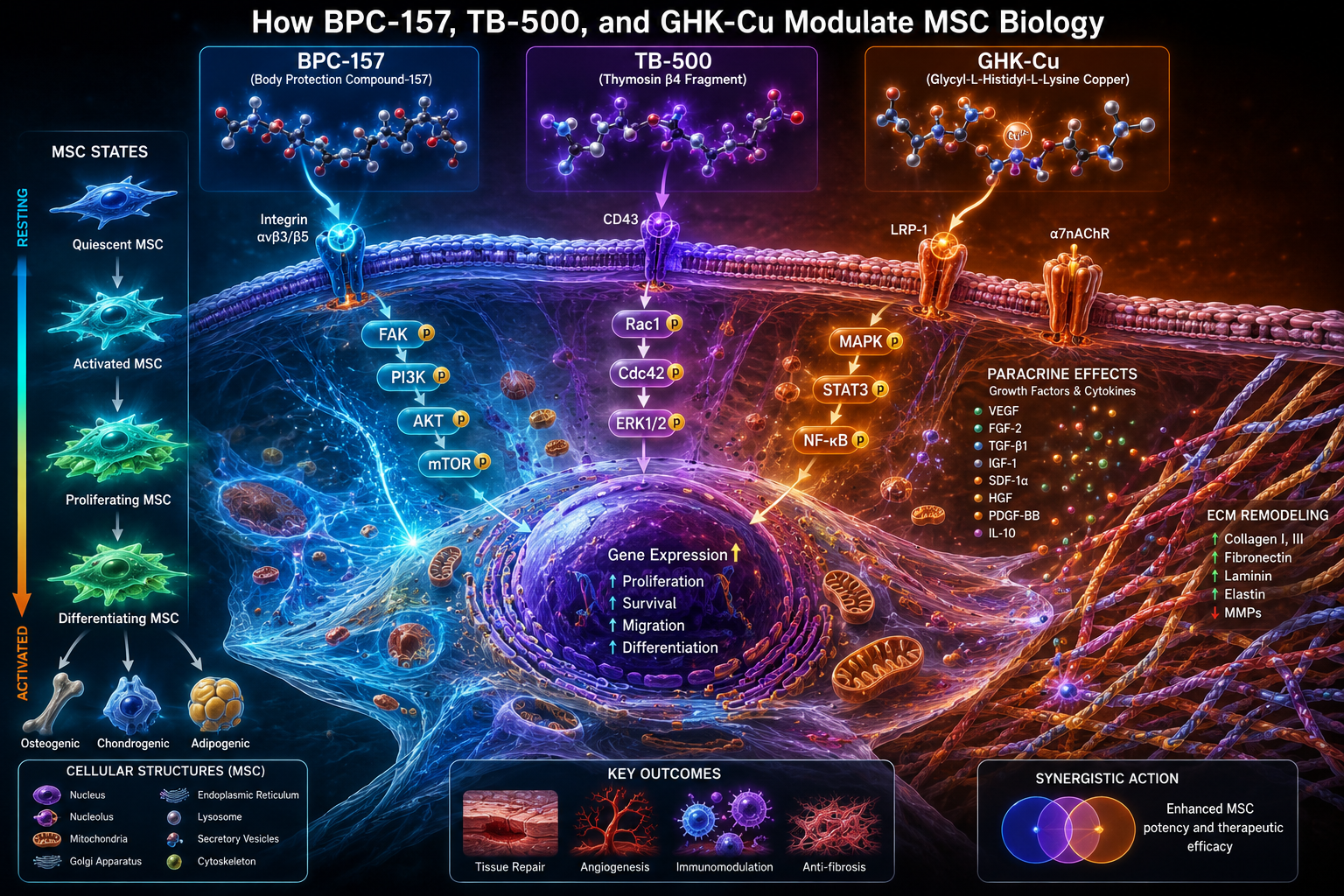
How BPC-157, TB-500, and GHK-Cu Modulate MSC Biology

Each peptide operates through a different cellular lever, which is precisely why researchers find them compelling when studying tissue repair alongside mesenchymal stem cell populations.

BPC-157 (Body Protection Compound-157) is a synthetic 15-amino-acid peptide derived from a gastric protein sequence. Preclinical data from small-animal models show it improving the repair microenvironment — specifically through enhanced angiogenesis and growth factor signaling. In the context of MSC research, this matters because stem cells depend on vascular support to engraft and survive in damaged tissue. For a deeper look at BPC-157's role in angiogenesis and tendon biology, see this BPC-157 angiogenesis and tendon research overview.

TB-500 (a synthetic fragment of Thymosin Beta-4) works primarily through actin cytoskeleton modulation, which directly enables cell migration. Research suggests it reactivates progenitor cells and supports their movement into injury zones — a function that maps well onto MSC homing studies. Researchers exploring this mechanism can reference TB-500 muscle recovery research themes for additional context.

GHK-Cu (Copper peptide GHK) takes a third path: matrix remodeling and collagen synthesis. Evidence points to its ability to restore stemness in skin stem cells by increasing the proliferative capacity of epidermal basal cells through integrin and p63 signaling pathways. This makes it particularly relevant in dermal and connective tissue MSC models. Researchers can explore GHK-Cu longevity research themes for mechanistic background.
Peptide Primary Mechanism MSC-Relevant Action
BPC-157 Angiogenesis, growth factor signaling Improves engraftment environment
TB-500 Actin remodeling, cell migration Supports progenitor homing
GHK-Cu Collagen synthesis, matrix remodeling Restores stemness, basal cell proliferation

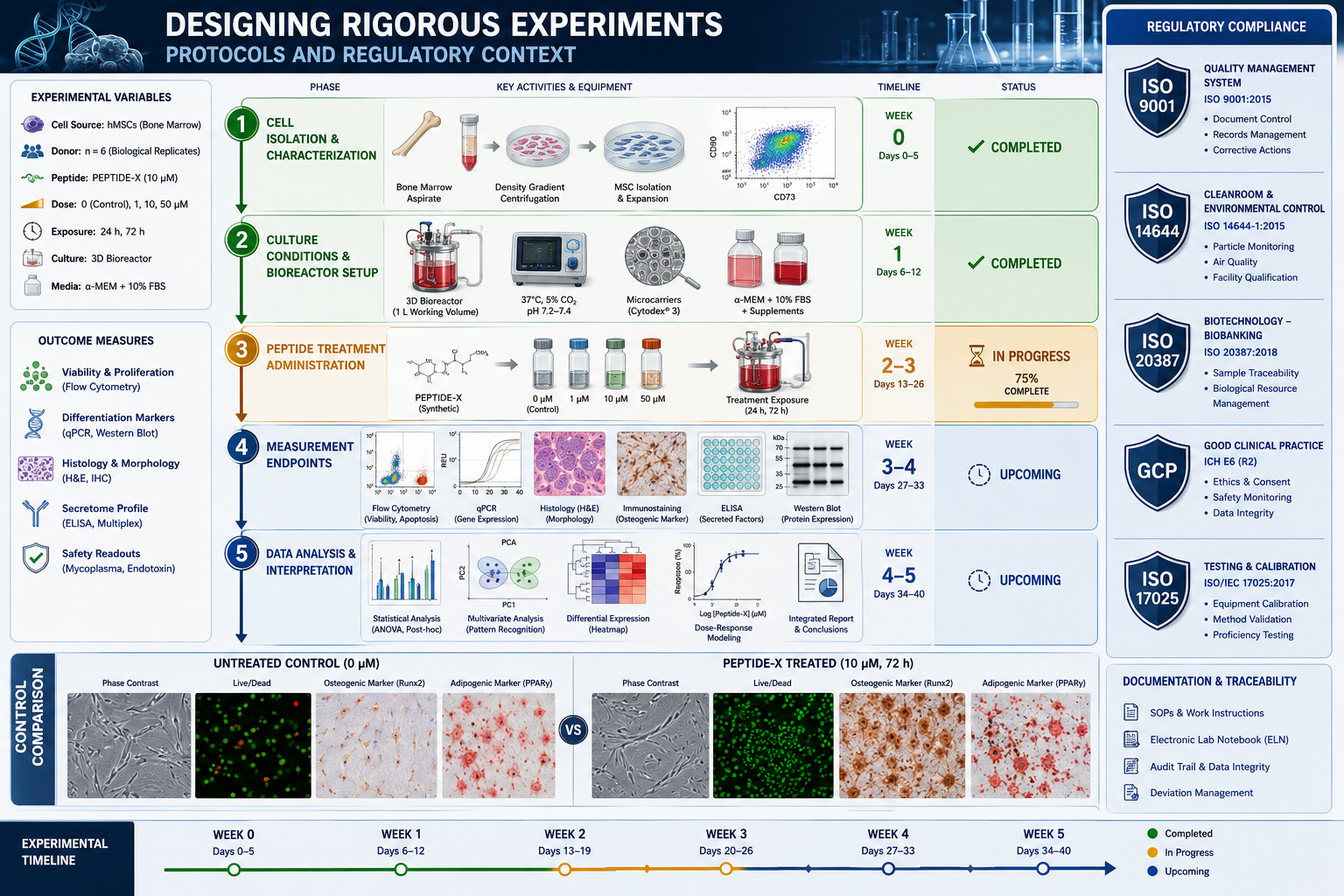
Designing Rigorous Experiments: Protocols and Regulatory Context

Sound experimental design for mesenchymal stem cells and peptide modulators: designing BPC-157, TB-500, and GHK-Cu experiments for tissue repair requires both scientific and regulatory clarity.

Designing Rigorous Experiments: Protocols and Regulatory Context

Regulatory constraints shape the experimental scope. The FDA classified BPC-157 as a Category 2 bulk drug substance in 2023, prohibiting its compounding for human use by commercial pharmacies in the United States. TB-500 and GHK-Cu similarly carry no FDA-approved indications for tissue repair or stem-cell modulation. All three are available for research use only, which confines rigorous study to in-vitro MSC models, animal studies, or tightly regulated investigator-initiated trials.

Researchers designing in-vitro protocols should consider:

  • Cell source standardization — bone marrow-derived vs. adipose-derived MSCs respond differently to peptide stimuli
  • Concentration gradients — dose-response curves are essential before any combination studies
  • Validated endpoints — migration assays (scratch/wound healing), collagen quantification (Sircol assay), and angiogenesis co-culture models
  • Vehicle controls — sterile carrier solutions must be matched to peptide formulation conditions
  • Compound purity verification — sourcing from vendors with documented quality testing protocols is non-negotiable for reproducible data

For researchers interested in blend formulations, the BPC-157 and TB-500 combination resource provides useful background on how these peptides have been studied together.


Translational Gaps and What Current Evidence Actually Supports

A 2024 review in the Yale Journal of Biology and Medicine described BPC-157 as showing "great promise" in small-animal models for tendon, ligament, skeletal muscle, and bone healing — while explicitly confirming the data remain preclinical. That framing captures the state of the field accurately.

Translational Gaps and What Current Evidence Actually Supports

For mesenchymal stem cells and peptide modulators: designing BPC-157, TB-500, and GHK-Cu experiments for tissue repair, the translational gap is real but not discouraging. It simply means experimental designs must prioritize mechanistic clarity over clinical extrapolation.

Researchers should also consider adjacent peptide systems that interact with MSC biology. Vilon and tissue homeostasis research offers a comparative lens on short-chain peptide regulators, while what is new in peptide research tracks emerging findings relevant to regenerative models.

"The most reproducible preclinical findings emerge when researchers isolate one mechanistic variable at a time before layering peptide combinations onto MSC platforms."

Key gaps the field still needs to address:

  • Long-term MSC viability data under sustained peptide exposure
  • Species-specific differences in MSC peptide receptor expression
  • Standardized outcome metrics across research groups

Conclusion

Pairing mesenchymal stem cells with BPC-157, TB-500, and GHK-Cu in tissue repair experiments offers a scientifically grounded — if still early-stage — research strategy. Each peptide addresses a distinct phase of the repair cascade, making them logical candidates for sequential or combination study designs. Researchers should prioritize single-agent baseline experiments before advancing to blends, verify compound purity through documented testing, and design assays with validated, quantifiable endpoints. Regulatory constraints make in-vitro and animal MSC models the appropriate arena for this work in 2026. The path forward is methodical: build mechanistic evidence layer by layer, and the translational potential of these peptide-MSC pairings will become clearer with each well-designed study.

https://www.puretestedpeptides.com/wp-content/uploads/2026/06/Mesenchymal-Stem-Cells-and-Peptide-Modulators-Designing-BPC-157-TB-500-and-GHK-Cu-Experiments-for-Tissue-Repair.png 1254 1254 https://www.puretestedpeptides.com/wp-content/uploads/2026/01/buy-peptides-online.jpg 2026-06-25 13:19:122026-06-25 13:19:12Mesenchymal Stem Cells and Peptide Modulators: Designing BPC-157, TB-500, and GHK-Cu Experiments for Tissue Repair
BPC-157 and TB-500 Stack: Synergistic Mechanisms for Enhanced Tissue Repair Research

BPC-157 and TB-500 Stack: Synergistic Mechanisms for Enhanced Tissue Repair Research

June 20, 2026/0 Comments/in Uncategorized/by

}

Professional () hero image with : 'BPC-157 & TB-500 Stack: Synergistic Tissue Repair Research' in extra large white with

Two peptides operating through entirely different biological pathways — yet when combined, preclinical data suggests their effects on tissue repair may be greater than the sum of their parts. The BPC-157 and TB-500 stack: synergistic mechanisms for enhanced tissue repair research has become one of the most studied peptide combinations in regenerative biology, drawing attention from researchers examining musculoskeletal recovery, angiogenesis, and cellular remodeling.

Key Takeaways

  • BPC-157 drives localized tissue repair through angiogenesis and nitric oxide signaling, while TB-500 promotes systemic cell migration via actin regulation.
  • Preclinical models show the combined stack improves tensile strength, collagen composition, and recovery speed in tendon and ligament injuries.
  • No peer-reviewed human clinical trials currently validate the combination's safety or efficacy.
  • Both peptides are classified as FDA Interim Category 2 substances and are prohibited by WADA under the S0 category.
  • Researchers should source only verified, lab-tested compounds and operate within applicable regulatory frameworks.

Key Takeaways

How BPC-157 and TB-500 Work Together

Understanding the BPC-157 and TB-500 stack: synergistic mechanisms for enhanced tissue repair research begins with each peptide's distinct mechanism.

BPC-157 (Body Protection Compound-157) is a 15-amino-acid peptide derived from a gastric protein. Its primary actions include:

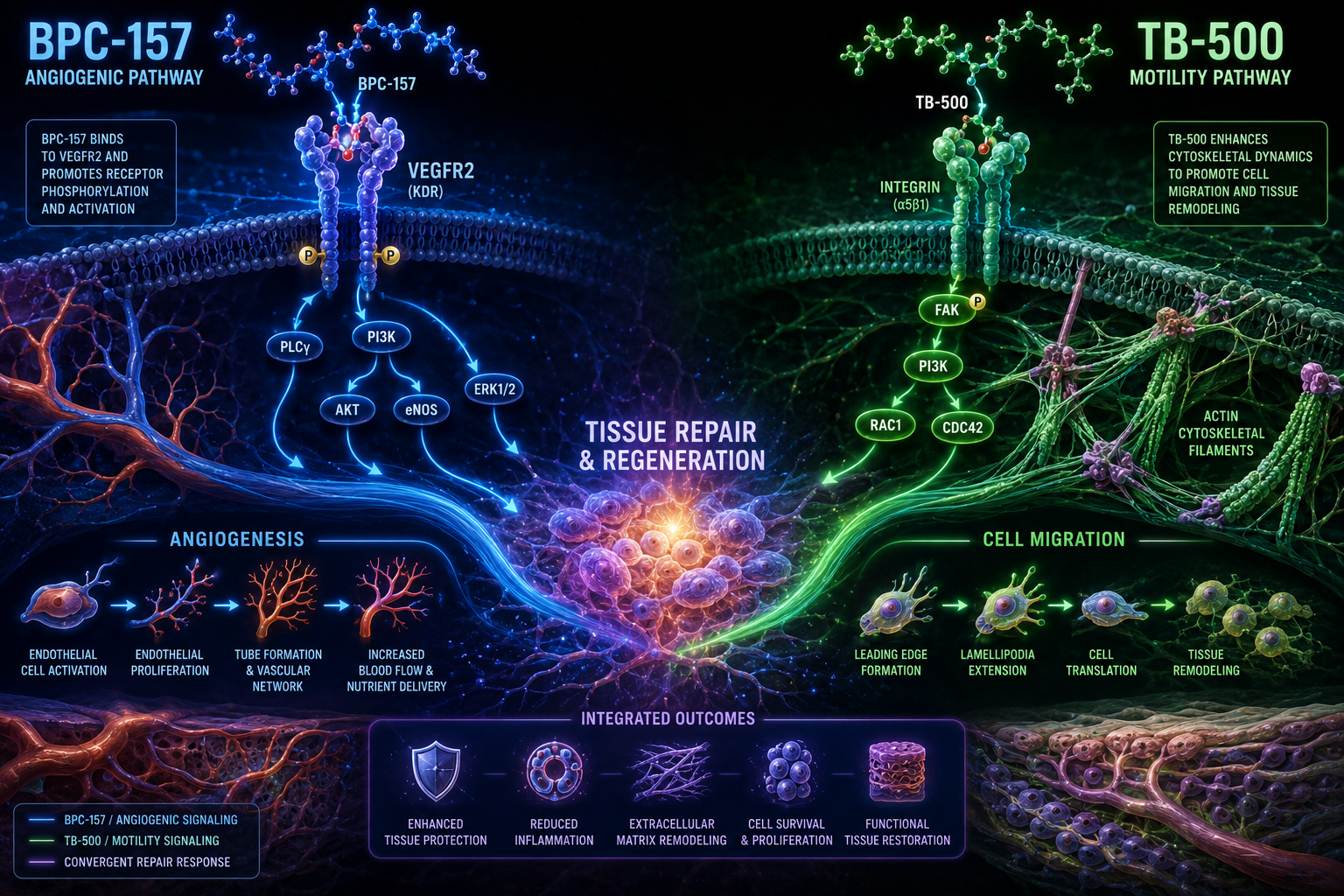
  • Activating VEGFR2 to stimulate new blood vessel formation (angiogenesis)
  • Upregulating the nitric oxide system to improve blood flow to damaged tissue
  • Modulating growth factor signaling to accelerate fibroblast activity

TB-500 (Thymosin Beta-4 fragment) works through a completely separate route. It binds to actin, a key protein in the cytoskeleton, promoting cell migration, differentiation, and tissue remodeling. Its systemic reach makes it particularly effective for whole-body recovery processes.

"BPC-157 builds the vascular infrastructure; TB-500 mobilizes the cellular workforce."

Together, these mechanisms are complementary rather than redundant. BPC-157 creates the blood supply needed to deliver nutrients and immune cells, while TB-500 drives the migration and organization of repair cells into the damaged area. Researchers studying recovery and tissue biology have noted that this dual-pathway approach addresses two critical bottlenecks in natural healing simultaneously.

For a deeper foundation on BPC-157 alone, the BPC-157 core peptides documentation and first research guide provides essential background before exploring stacked protocols.

Preclinical Evidence Supporting the Combined Stack

Preclinical Evidence Supporting the Combined Stack

Animal studies provide the most detailed evidence for the BPC-157 and TB-500 stack: synergistic mechanisms for enhanced tissue repair research. Preclinical models involving Achilles tendon injuries, ligament damage, and cardiac ischemia-reperfusion have demonstrated measurable improvements across several markers:

Outcome Marker Observed Effect in Preclinical Models
Tensile strength Increased in repaired tendons
Collagen composition Improved fiber organization
Recovery timeline Reduced compared to single-peptide groups
Cardiac tissue repair Reduced ischemia-reperfusion damage

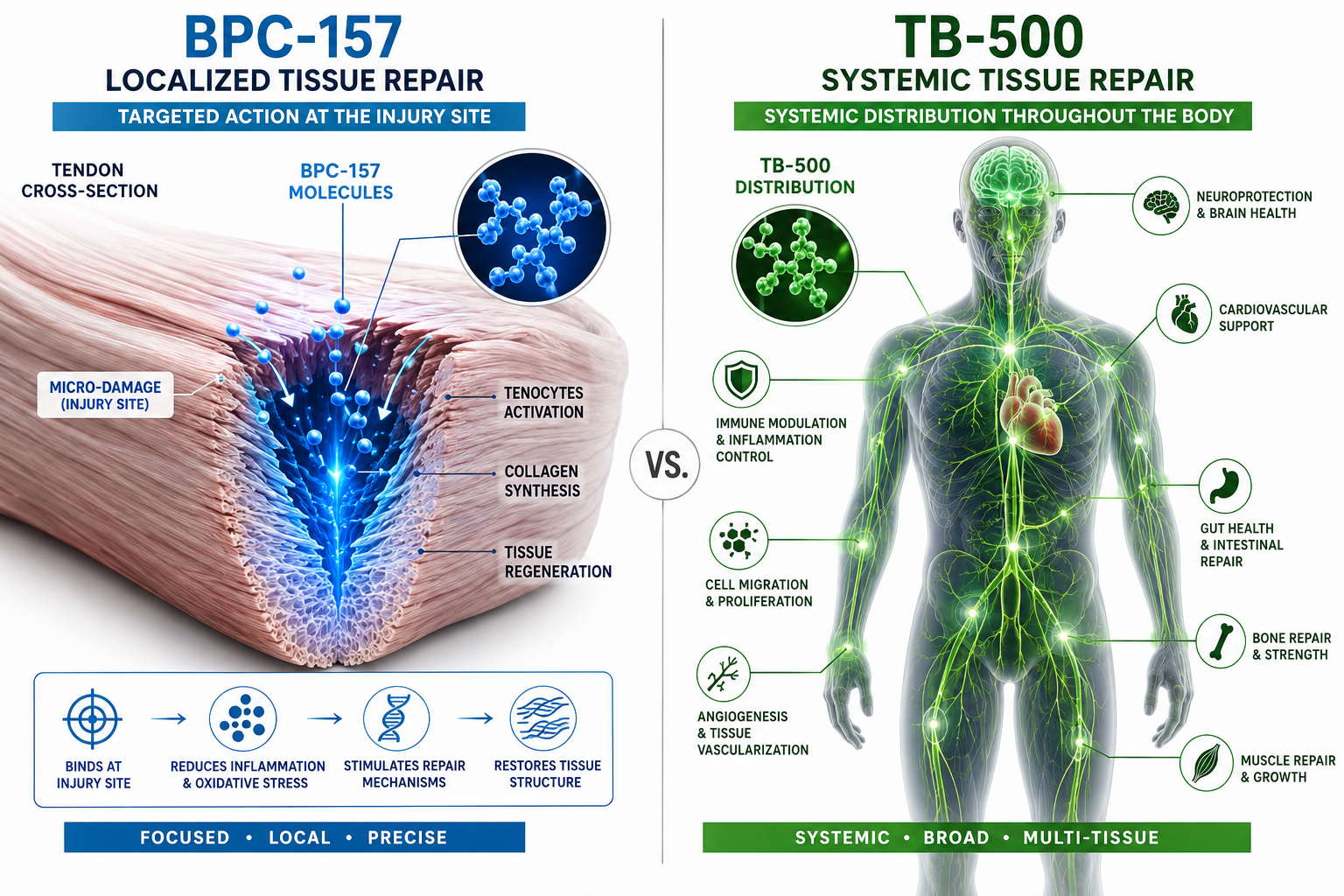
BPC-157 showed particular strength in localized tissue applications — tendons, joints, and gut lining — while TB-500 demonstrated advantages in systemic flexibility and broader tissue remodeling. Their combination appears to address both the local and systemic dimensions of complex injuries.

Researchers interested in cytoskeletal remodeling should also review TB-500 cytoskeletal remodeling research themes for mechanistic detail, and those sourcing TB-500 for controlled experiments can reference TB-500 buy: controlled experimental models and QC workflow.

It is worth noting that all current evidence is preclinical. No peer-reviewed human clinical trials have tested this combination, and existing claims rely on extrapolations from individual peptide studies.

Research Protocols, Regulatory Status, and Risk Considerations

Research Protocols, Regulatory Status, and Risk Considerations

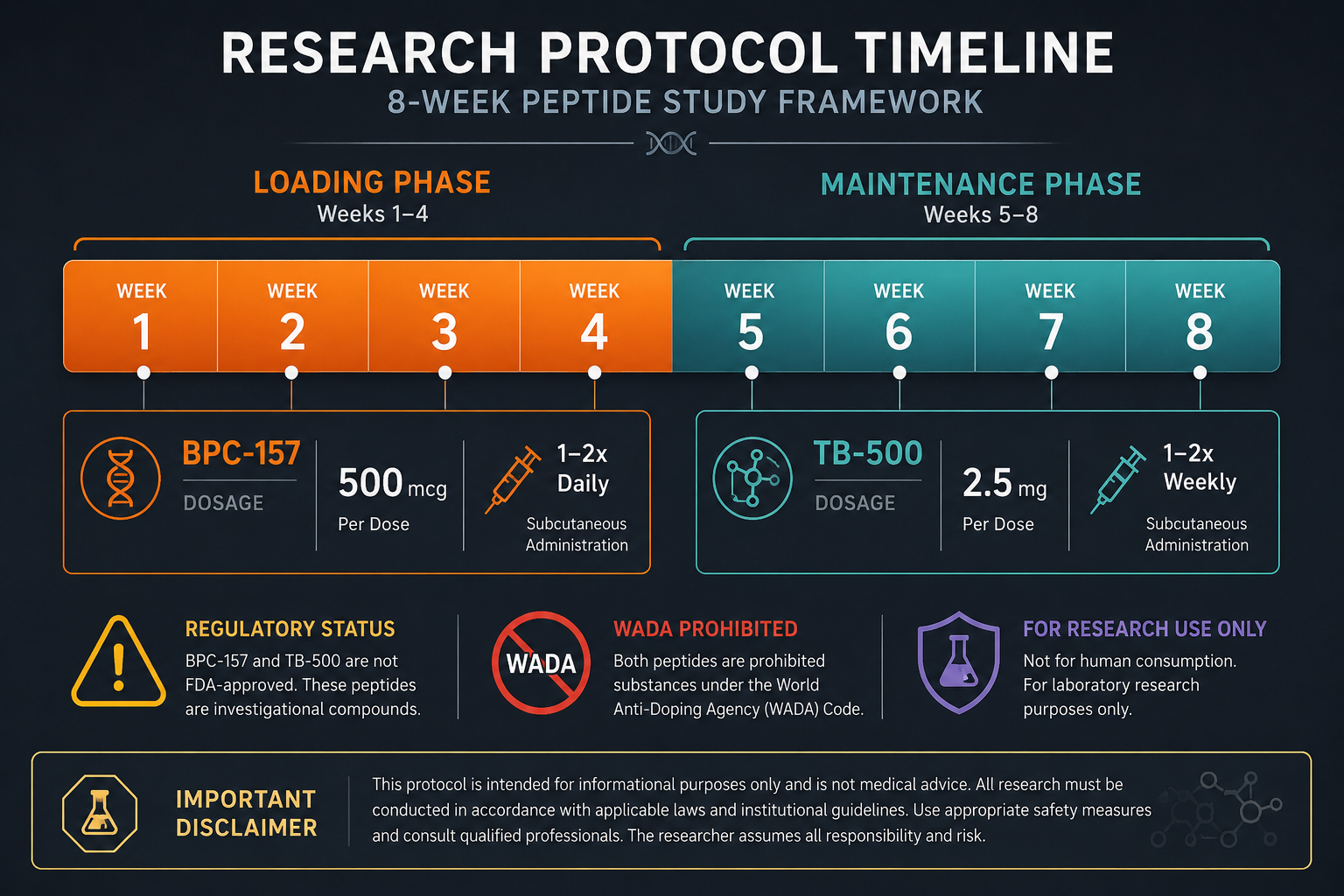
A commonly referenced preclinical research protocol involves an 8-week cycle:

  • BPC-157: 500 mcg administered twice daily, near the target tissue site
  • TB-500 Loading Phase (Weeks 1-4): 2.5 mg twice weekly
  • TB-500 Maintenance Phase (Weeks 5-8): 1.5 mg once weekly

Regulatory context is critical. As of 2026, both BPC-157 and TB-500 are classified as FDA Interim Category 2 substances — meaning they are not approved for human therapeutic use. The World Anti-Doping Agency (WADA) also prohibits both compounds under its S0 category for non-approved substances, making them ineligible for use in competitive sport.

Medical professionals caution that while preclinical data is promising, the absence of robust human trials means safety and efficacy remain unverified. Theoretical concerns include the potential for angiogenesis-promoting peptides to interact with undetected tumor microenvironments, though direct evidence for this risk remains limited.
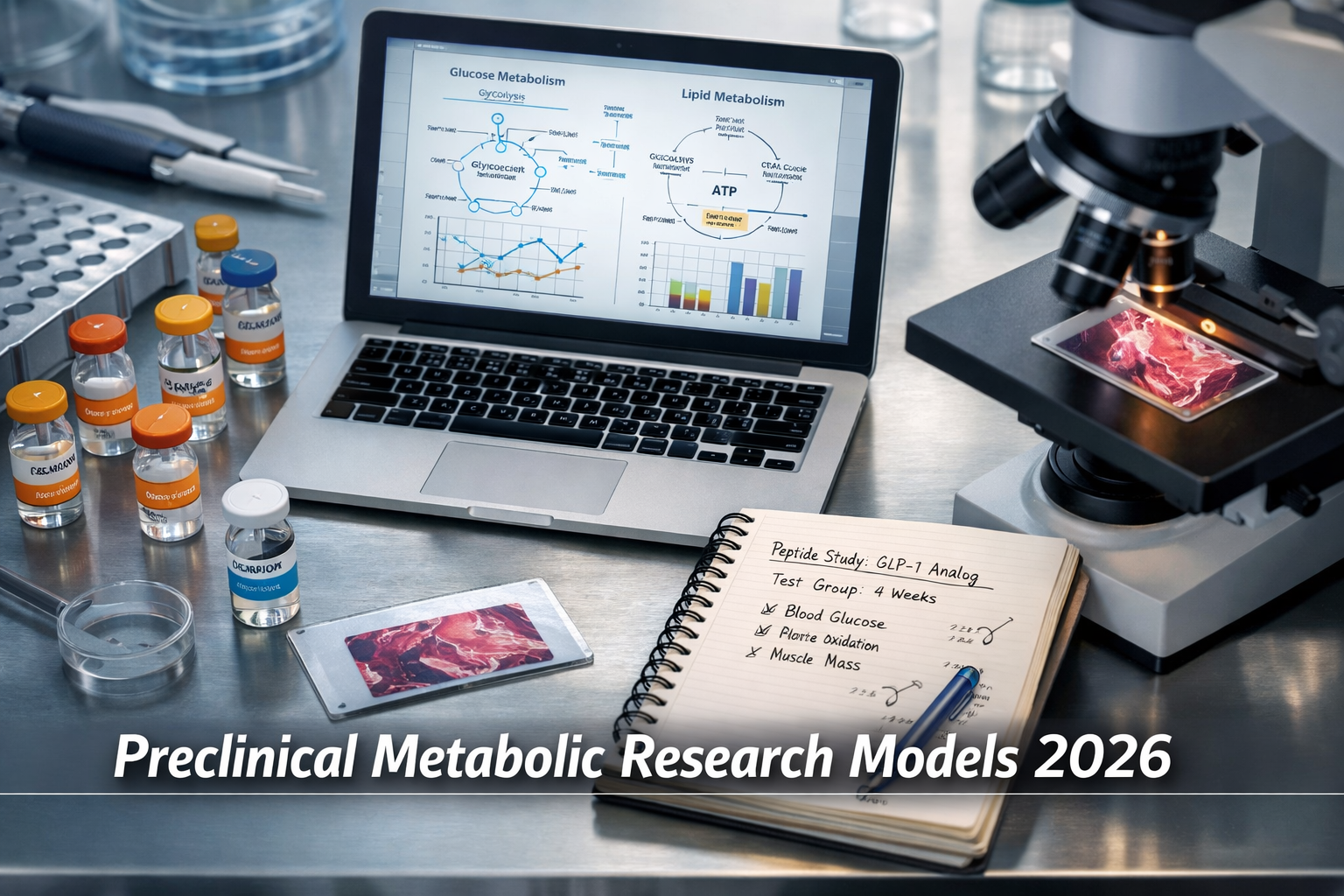
Researchers exploring complementary peptide mechanisms may also find value in reviewing GHK-Cu longevity research themes and SS-31 mitochondrial research themes, both of which intersect with tissue repair and cellular protection pathways.

For sourcing integrity, only compounds with verified purity documentation should be used. The lab-tested peptides catalog offers a reference point for quality-controlled research compounds.

Conclusion

The BPC-157 and TB-500 stack: synergistic mechanisms for enhanced tissue repair research represents a compelling area of peptide science, with complementary mechanisms that address both vascular and cellular dimensions of tissue repair. Preclinical evidence supports the hypothesis that their combined action outperforms either peptide alone in specific injury models.

Actionable next steps for researchers:

  1. Review the existing preclinical literature on each peptide individually before designing combination protocols.
  2. Consult regulatory guidelines in your jurisdiction — both peptides carry significant legal and compliance considerations.
  3. Source only from suppliers providing third-party purity certificates and documented QC workflows.
  4. Design controlled experimental models with appropriate endpoints to generate reproducible data.
  5. Monitor ongoing clinical research, as human trials may emerge within the next several years.

The science is promising. Rigorous methodology and regulatory awareness are what will move this research forward responsibly.

https://www.puretestedpeptides.com/wp-content/uploads/2026/06/BPC-157-and-TB-500-Stack-Synergistic-Mechanisms-for-Enhanced-Tissue-Repair-Research.png 1024 1536 https://www.puretestedpeptides.com/wp-content/uploads/2026/01/buy-peptides-online.jpg 2026-06-20 13:03:542026-06-20 13:03:54BPC-157 and TB-500 Stack: Synergistic Mechanisms for Enhanced Tissue Repair Research
5-Amino-1MQ and SLUPP332 in Metabolic Research: How NNMT Targeting Is Framed in Experimental Design

5-Amino-1MQ and SLUPP332 in Metabolic Research: How NNMT Targeting Is Framed in Experimental Design

June 17, 2026/0 Comments/in Uncategorized/by

Nicotinamide N-methyltransferase (NNMT) overexpression in adipose tissue correlates with increased fat accumulation, insulin resistance, and suppressed energy expenditure — yet the enzyme received relatively little research attention until small-molecule inhibitors made precise targeting feasible. The study of 5-Amino-1MQ and SLUPP332 in metabolic research: how NNMT targeting is framed in experimental design has since become a focused area for researchers building body-composition models around enzymatic control of the NAD+ pool and mitochondrial activity.

Key Takeaways

  • NNMT acts as a "methylation sink," consuming S-adenosyl methionine and depleting the NAD+ precursor pool in adipose tissue.
  • 5-Amino-1MQ inhibits NNMT directly, raising intracellular NAD+ and shifting adipocyte metabolism toward energy expenditure.
  • SLUPP332 targets ERR-alpha, a downstream node of mitochondrial biogenesis, making it a mechanistically distinct but complementary research tool.
  • Most 5-Amino-1MQ evidence comes from animal models; human clinical data remain limited as of 2026.
  • Experimental designs pairing these compounds typically use multi-arm layouts to isolate pathway-specific effects.

Key Takeaways

Understanding NNMT's Role in Metabolic Dysfunction

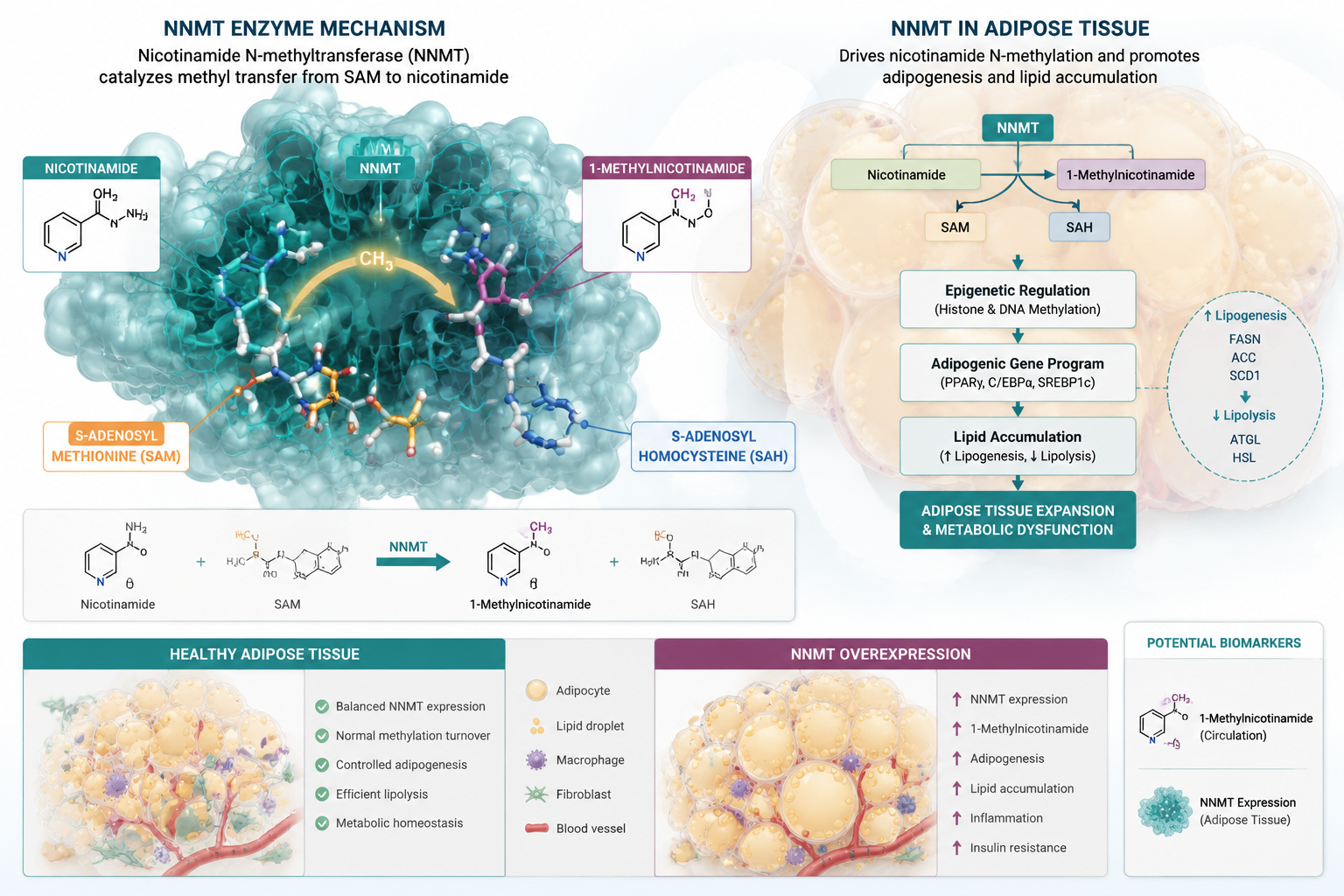
NNMT catalyzes the transfer of a methyl group from S-adenosyl methionine (SAM) to nicotinamide, producing 1-methylnicotinamide. This reaction has two major downstream consequences. First, it consumes SAM, reducing the cell's overall methylation potential — a process that, when chronic, leads to histone hypomethylation and altered gene expression. Second, it diverts nicotinamide away from NAD+ synthesis, shrinking the intracellular NAD+ pool that mitochondria depend on for oxidative phosphorylation.

In adipose tissue, NNMT overexpression is strongly associated with:

Effect Mechanism
Increased fat storage Reduced NAD+ limits fatty acid oxidation
Insulin resistance Impaired mitochondrial signaling
Epigenetic remodeling SAM depletion causes histone hypomethylation
Suppressed thermogenesis Lower energy expenditure in adipocytes

"NNMT functions less like a simple metabolic enzyme and more like a regulatory switch that integrates energy status, epigenetic state, and immune signaling simultaneously."

This multifaceted role is why NNMT has attracted attention in both metabolic disorder research and oncology. In cancer biology, the same methylation-sink mechanism supports tumor cell survival by remodeling chromatin. For researchers focused on metabolic modulation research lines, the adipose-tissue angle is the primary focus.

How 5-Amino-1MQ and SLUPP332 in Metabolic Research Frame NNMT Targeting in Experimental Design

How 5-Amino-1MQ and SLUPP332 in Metabolic Research Frame NNMT Targeting in Experimental Design

5-Amino-1MQ: The Direct NNMT Inhibitor

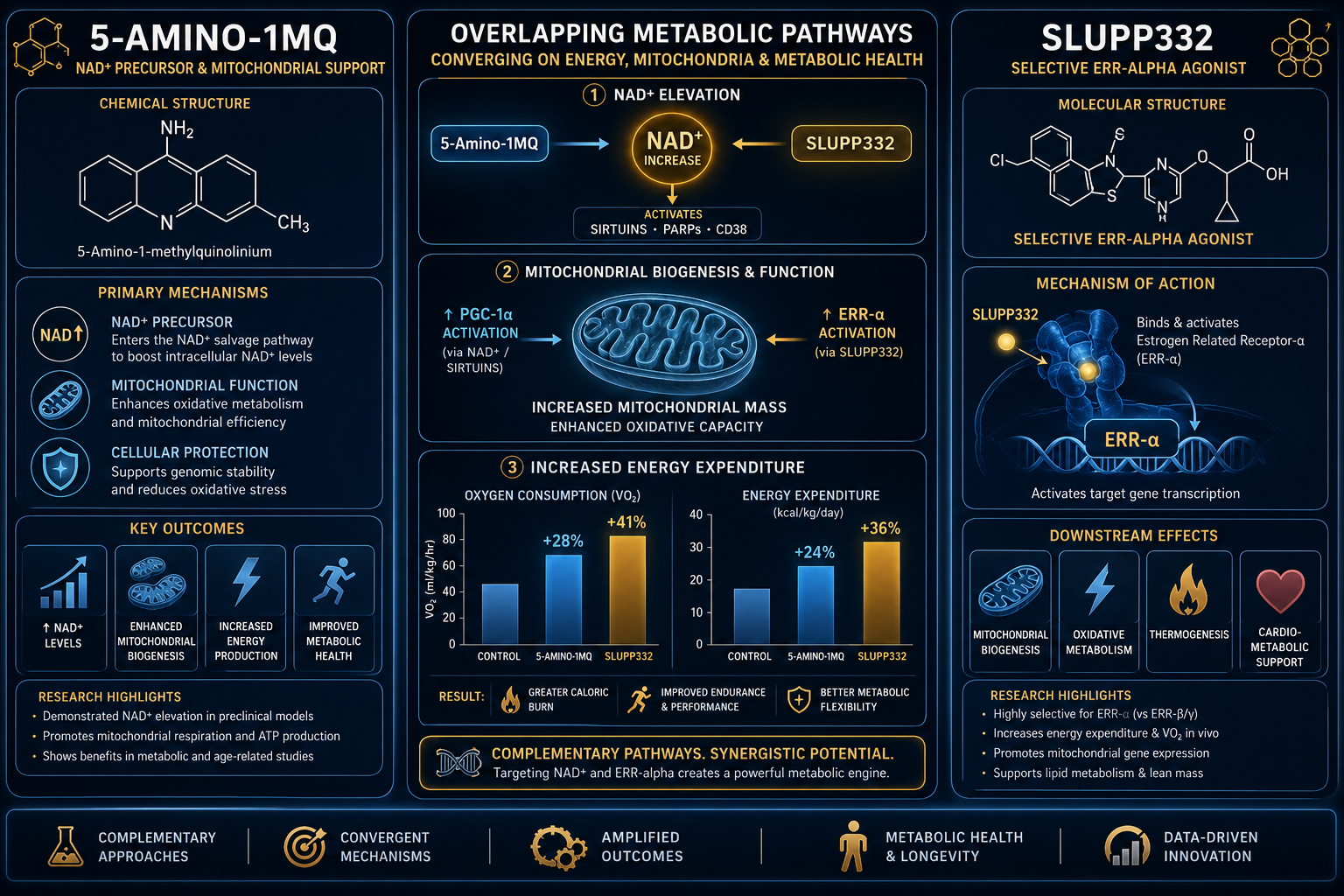
5-Amino-1MQ is a small-molecule competitive inhibitor of NNMT. By blocking the enzyme's active site, it prevents nicotinamide from being methylated, which preserves the substrate pool available for NAD+ synthesis. The result, observed consistently in rodent models, is a measurable rise in adipose NAD+ levels, increased mitochondrial activity, and a shift in energy balance away from lipid storage.

Researchers sourcing 5-Amino-1MQ for preclinical studies typically frame their endpoints around:

  • NAD+ quantification in adipose and liver tissue
  • Oxygen consumption rate (OCR) in isolated mitochondria
  • Body composition metrics via DEXA or MRI in diet-induced obesity models
  • Insulin sensitivity markers including HOMA-IR and glucose tolerance curves

Newer NNMT inhibitors such as II559 (Ki = 1.2 nM) and II802 (Ki = 1.6 nM) have demonstrated over 5,000-fold selectivity for NNMT over related methyltransferases, with cellular IC50 values near 150 nM. These figures provide a useful selectivity benchmark when designing controls for 5-Amino-1MQ studies.

Critical caveat: Despite strong animal-model data, human clinical trials for 5-Amino-1MQ remain in early stages. Researchers should treat all mechanistic claims as preclinical until robust human data emerge.

SLUPP332: A Complementary Mitochondrial Target

SLUPP332 (also written SLU-PP-332) works through a different mechanism. It is an agonist of estrogen-related receptor alpha (ERR-alpha), a nuclear receptor that drives mitochondrial biogenesis and oxidative metabolism gene expression. Rather than targeting NNMT directly, SLUPP332 in oral and subcutaneous evidence models activates downstream transcriptional programs that overlap with the metabolic benefits sought through NNMT inhibition.

This mechanistic distinction is precisely why researchers pair the two compounds in multi-arm designs — to determine whether upstream enzyme inhibition (5-Amino-1MQ) and downstream receptor activation (SLUPP332) produce additive, synergistic, or redundant effects on mitochondrial output and fat oxidation.

Experimental Design Considerations

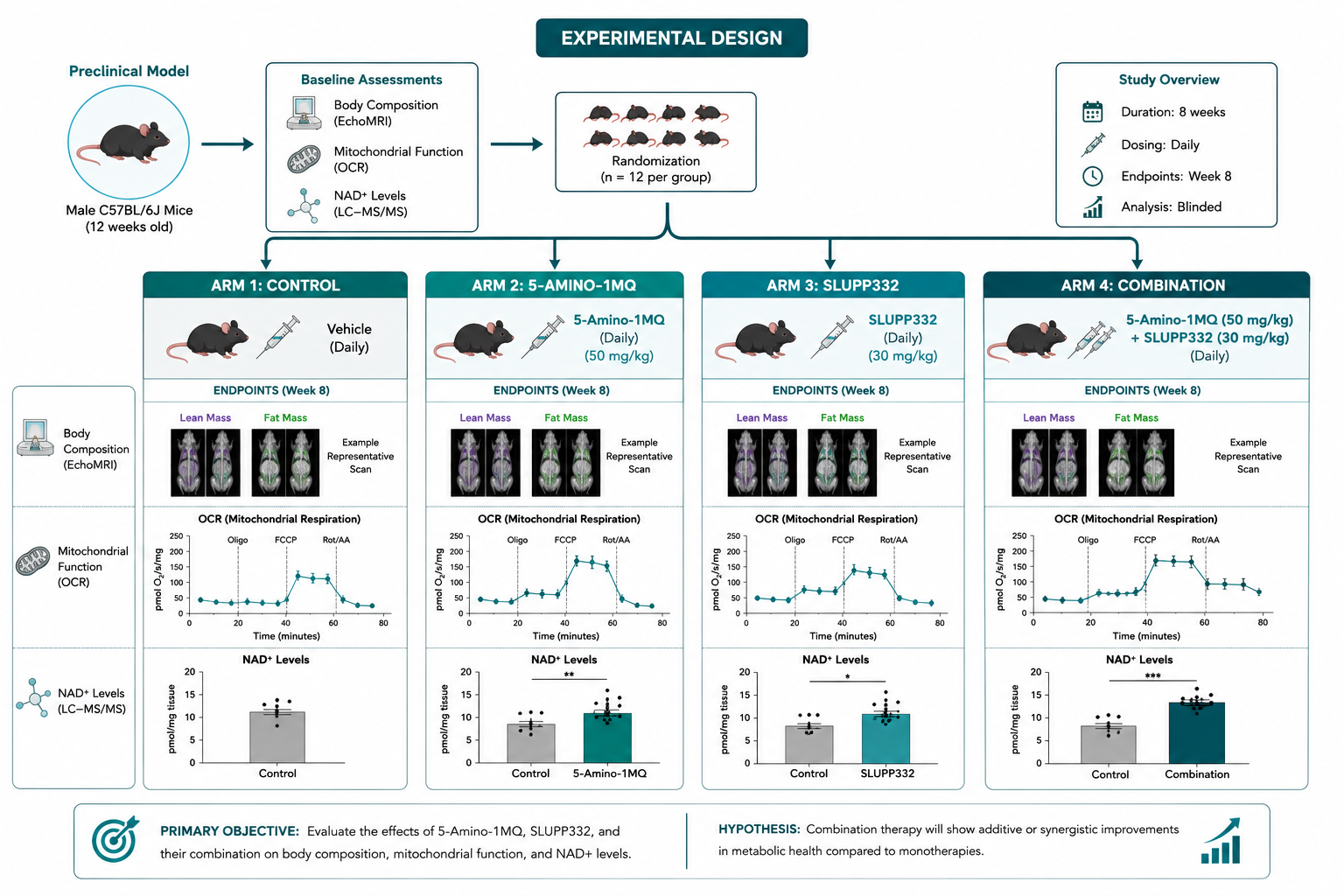
Rigorous study layouts for 5-Amino-1MQ and SLUPP332 in metabolic research typically include:

  1. Control arm — vehicle only
  2. 5-Amino-1MQ arm — NNMT inhibition, NAD+ restoration
  3. SLUPP332 arm — ERR-alpha activation, biogenesis upregulation
  4. Combination arm — both compounds to test interaction effects

Researchers also integrate MOTS-c metabolic flexibility models as parallel comparators, given MOTS-c's role in AMPK activation and mitochondrial stress response. Similarly, IPA muscle and fat research themes offer adjacent endpoints for lean mass preservation alongside fat-loss outcomes.

For broader longevity-oriented panels, some investigators incorporate NAD+ precursor co-treatments, referencing NAD+ scientific evidence frameworks to contextualize NNMT inhibition within the wider NAD+ biology literature.

Experimental Design Considerations

Framing Limitations and Research Integrity

Honest experimental framing requires acknowledging several constraints:

  • Species translation gaps: Rodent adipose biology does not always map cleanly to human adipose, particularly regarding NNMT expression levels and tissue distribution.
  • In vivo bioavailability: Many NNMT inhibitors show strong in vitro potency but limited in vivo activity, a challenge that applies to 5-Amino-1MQ as well.
  • SLUPP332 data scarcity: Publicly available mechanistic data on SLUPP332 remain limited, making independent replication difficult.
  • Confounding variables: Diet-induced obesity models introduce metabolic heterogeneity that can obscure compound-specific signals.

Researchers building longevity peptide research protocols that include NNMT-targeting agents should pre-register endpoints and use blinded outcome assessment to minimize bias.

Conclusion

The study of 5-Amino-1MQ and SLUPP332 in metabolic research: how NNMT targeting is framed in experimental design rewards researchers who prioritize mechanistic clarity over outcome assumptions. The core logic is straightforward: NNMT overexpression depletes NAD+ and impairs mitochondrial function; inhibiting it restores metabolic flexibility. SLUPP332 adds a complementary activation signal at the transcriptional level, making multi-arm designs the most informative approach.

Actionable next steps for researchers:

  • Define NAD+ quantification and OCR as primary endpoints before dosing begins.
  • Include a selectivity control arm using a structurally related but inactive analog.
  • Cross-reference findings against mitochondrial longevity research frameworks to situate results within the broader field.
  • Treat human translation with caution until Phase I/II data are available.
  • Source compounds with verified purity documentation to ensure assay reproducibility.

Rigorous design, not compound enthusiasm, is what advances NNMT research from promising mechanism to actionable biology.

https://www.puretestedpeptides.com/wp-content/uploads/2026/06/5-Amino-1MQ-and-SLUPP332-in-Metabolic-Research-How-NNMT-Targeting-Is-Framed-in-Experimental-Design.png 1024 1536 https://www.puretestedpeptides.com/wp-content/uploads/2026/01/buy-peptides-online.jpg 2026-06-17 13:04:092026-06-17 13:04:095-Amino-1MQ and SLUPP332 in Metabolic Research: How NNMT Targeting Is Framed in Experimental Design
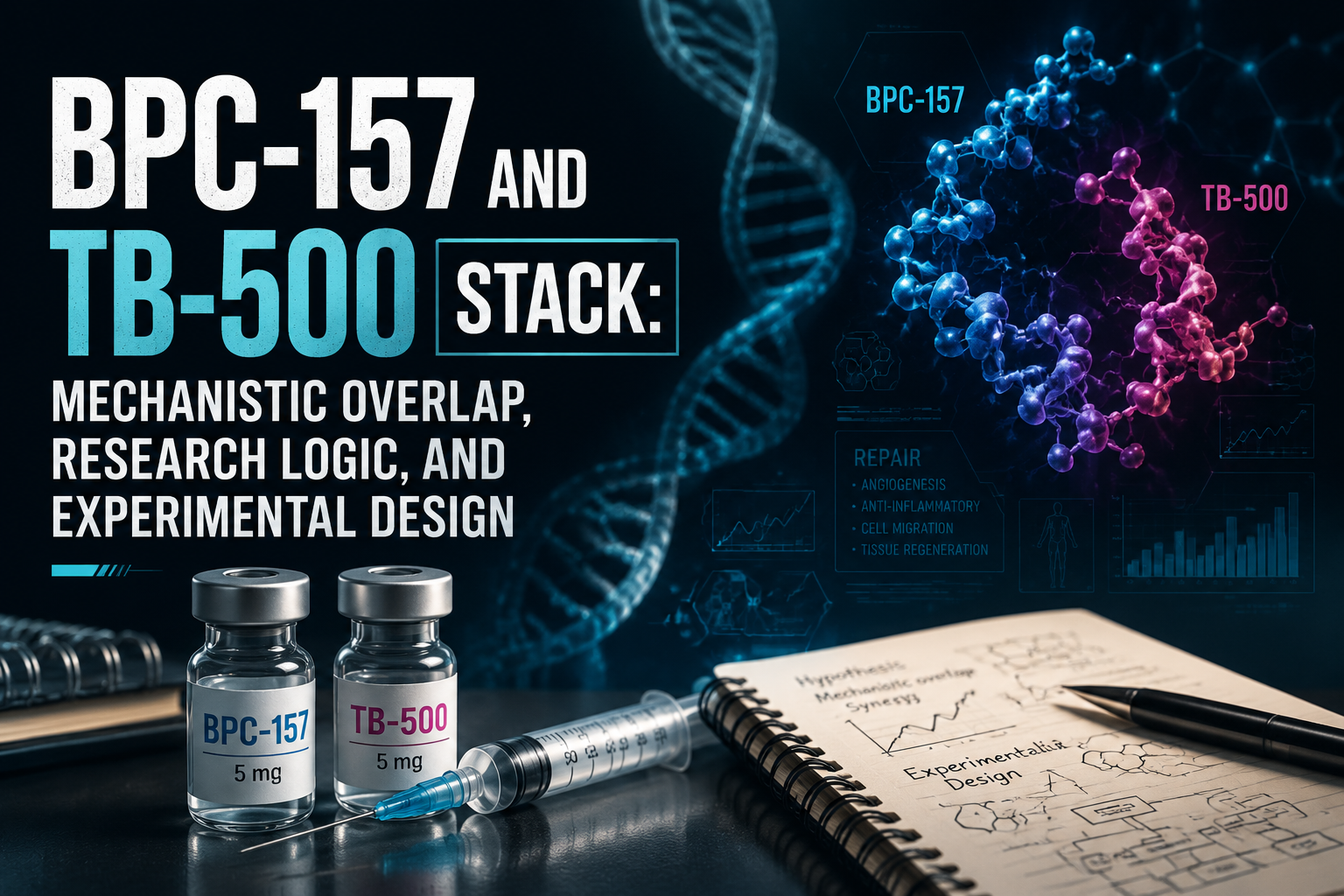
BPC-157 and TB-500 Stack: Mechanistic Overlap, Research Logic, and Experimental Design

BPC-157 and TB-500 Stack: Mechanistic Overlap, Research Logic, and Experimental Design

June 14, 2026/0 Comments/in Uncategorized/by

{"cover":"Professional landscape format (1536×1024) hero image with bold text overlay: 'BPC-157 & TB-500 Stack: Mechanistic Overlap, Research Logic & Experimental Design' in extra large 72pt white bold sans-serif font with dark semi-transparent background panel, centered upper-third composition. Background shows a high-resolution macro photograph of peptide vials and syringes on a clean laboratory bench with soft blue and white lighting, molecular structure diagrams subtly overlaid. Color scheme: deep navy blue, crisp white, and steel teal accents. Magazine cover aesthetic, editorial quality, high contrast.","content":["Detailed landscape format (1536×1024) scientific illustration showing two distinct molecular pathways side by side: left panel depicts BPC-157 angiogenesis pathway with VEGFR2 receptor activation and nitric oxide signaling arrows in warm amber tones; right panel shows TB-500 actin sequestration and cell migration pathway with cytoskeletal filaments in cool teal tones. Central overlap zone highlighted in purple gradient showing mechanistic convergence. Clean white background, labeled pathway nodes, editorial infographic style, research-focused aesthetic.","Landscape format (1536×1024) overhead flat-lay photograph of a research laboratory notebook open to a page showing a structured experimental protocol table with columns for peptide name, dose, route, frequency, and phase. Beside the notebook: two labeled peptide vials, a precision scale, sterile syringes, and a timer. Soft clinical lighting, muted gray and white tones with blue accent highlights. Text overlay reads 'Experimental Design Framework' in 36pt bold sans-serif. Editorial research aesthetic, high detail.","Landscape format (1536×1024) split-scene image: left half shows a preclinical rodent tendon repair model diagram with annotated tissue cross-section showing collagen fiber alignment and tensile strength improvement arrows; right half shows a cautionary regulatory panel with WADA prohibited substance symbol and FDA non-approval badge rendered in clean iconographic style. Central dividing line with text overlay 'Evidence vs. Regulation' in bold 40pt sans-serif. Color palette: clinical white, warning amber, regulatory red, research blue. Professional editorial quality."]

Professional landscape hero image () with : "BPC-157 and TB-500 Stack: Mechanistic Overlap, Research Logic, and Experimental

Over 100 preclinical studies support BPC-157 as a tissue-repair peptide, yet researchers increasingly pair it with TB-500 rather than study it alone. That choice is not arbitrary. The BPC-157 and TB-500 stack: mechanistic overlap, research logic, and experimental design represent a deliberate strategy to target two distinct but complementary repair pathways simultaneously, producing outcomes that neither peptide achieves as efficiently on its own.

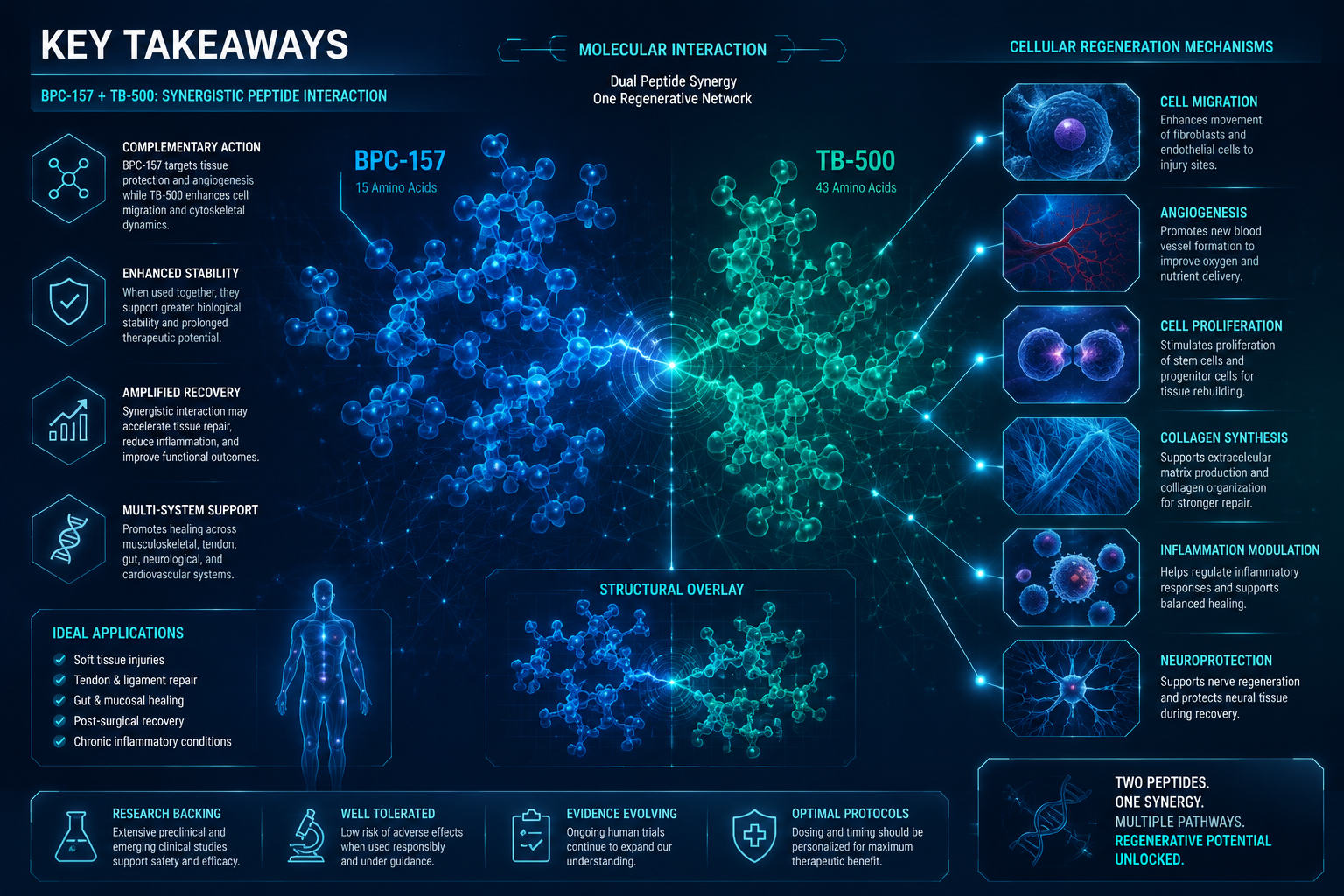
Key Takeaways

  • BPC-157 drives angiogenesis via VEGFR2 activation; TB-500 promotes cell migration through actin sequestration — the pathways are distinct yet additive.
  • Preclinical rodent models show improved tensile strength, collagen-I:III ratio, and recovery time when both peptides are combined.
  • Neither peptide is FDA-approved; both are banned by WADA under the S0 Non-Approved Substances category.
  • Human clinical data on the combination is sparse, making rigorous experimental design essential for any research protocol.
  • Purity, sourcing, and dosing consistency are critical variables in any credible stack study.

Key Takeaways

Distinct Mechanisms That Create Research Logic for the Stack

Understanding why this combination is studied begins with understanding what each peptide does at the molecular level.

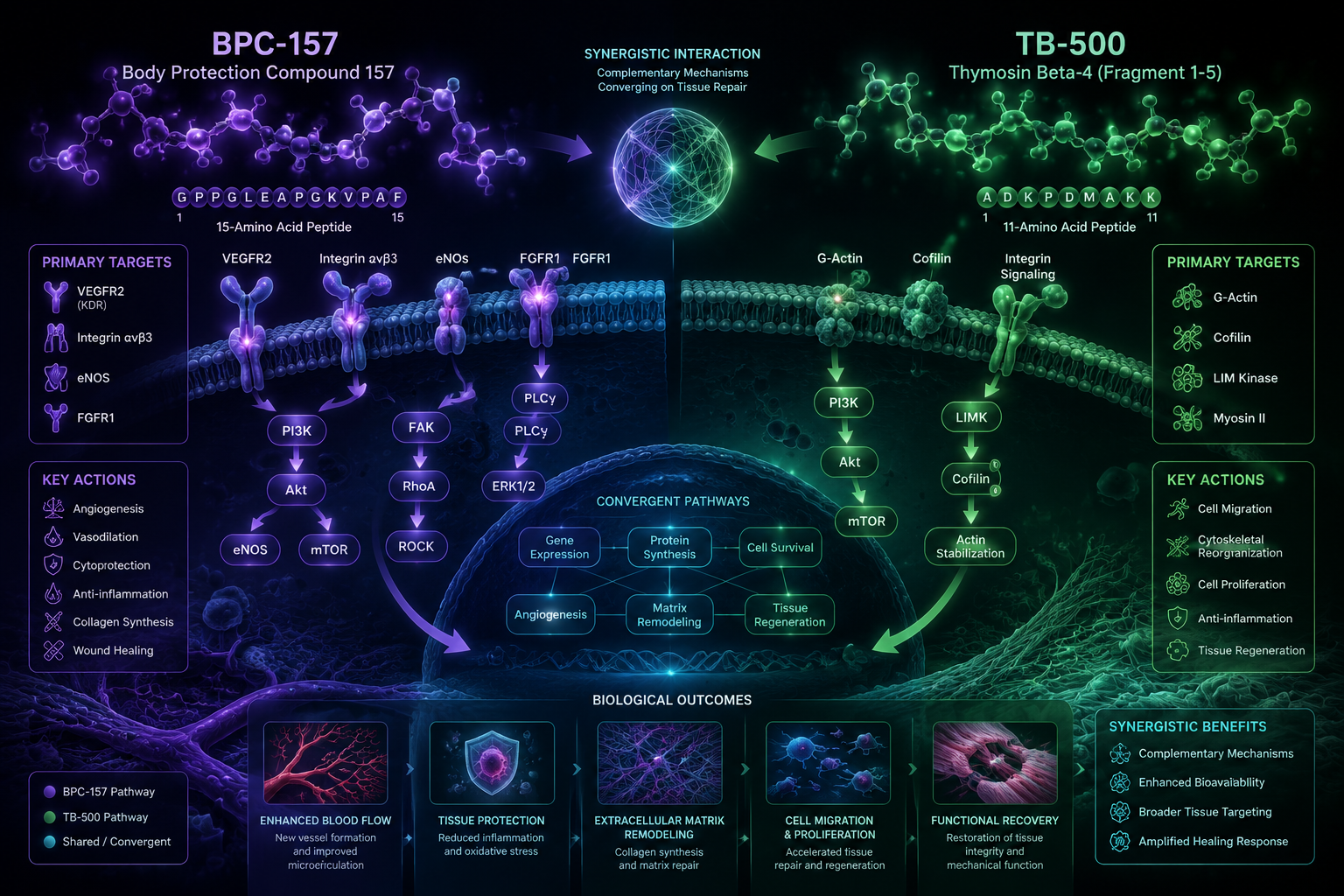
BPC-157 is a 15-amino-acid peptide derived from human gastric juice. Its primary repair mechanism involves activating VEGFR2 receptors to stimulate angiogenesis — the formation of new blood vessels. It also modulates the nitric oxide system, which regulates vascular tone and inflammatory signaling. This makes BPC-157 particularly relevant in the acute phase of tissue injury, when restoring blood supply is the first priority.

TB-500, a synthetic fragment of thymosin beta-4, operates through a different mechanism entirely. It works by sequestering G-actin, which frees up actin monomers to drive cytoskeletal reorganization. This enhances cell migration and activates integrin-linked kinase signaling, supporting progenitor cell recruitment and longer-term tissue remodeling.

The mechanistic overlap between these two peptides is minimal — and that is precisely the point. BPC-157 handles the vascular phase; TB-500 handles the cellular migration and remodeling phase. Together, they cover a broader repair timeline than either covers alone. Researchers studying multi-pathway repair strategies often explore similar logic in blends like the KLow multi-pathway research blend, where targeting multiple systems simultaneously is the core hypothesis.


Distinct Mechanisms That Create Research Logic for the Stack

Preclinical Evidence and Experimental Design Considerations

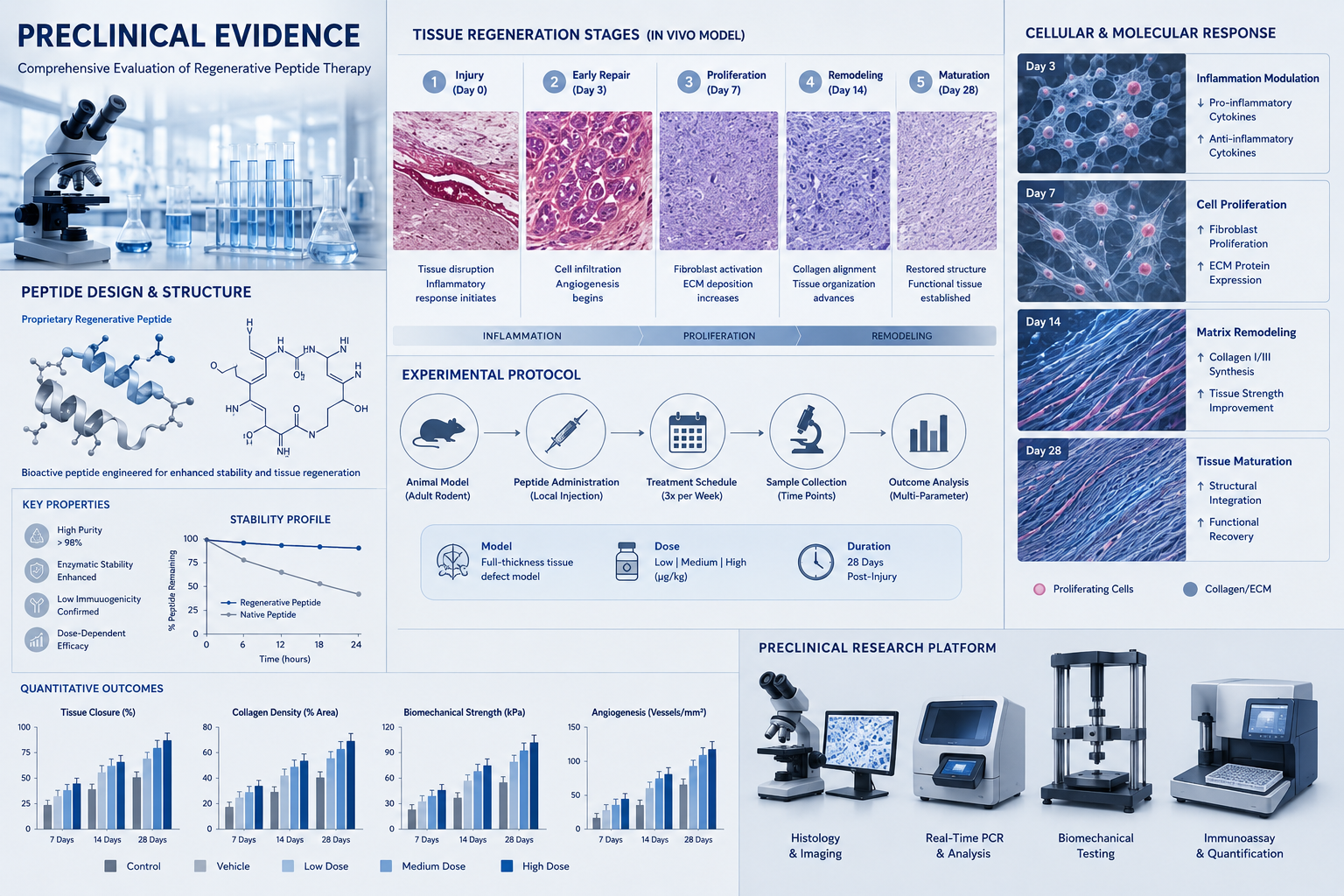
Rodent models of Achilles tendon injury, ligament damage, and cardiac ischemia/reperfusion have all been used to evaluate the BPC-157 and TB-500 stack. The combination has shown measurable improvements in tensile strength, collagen-I:III ratio, and recovery time compared to single-peptide controls. These outcomes align with the mechanistic logic: angiogenesis precedes and enables the cellular remodeling that TB-500 supports.

Typical Research Protocol Parameters

Variable BPC-157 TB-500
Dose range 250-500 mcg/day 2-2.5 mg twice weekly (loading)
Maintenance phase Same daily dose 2 mg weekly
Route Subcutaneous Subcutaneous
Protocol duration 6-8 weeks 6-8 weeks

Well-designed experiments using this stack should include single-peptide control arms, a vehicle-only control, and matched injury models. Outcome measures should include histological collagen analysis, biomechanical tensile testing, and inflammatory marker panels. Researchers interested in delivery format variables can review BPC-157 nasal spray and capsule evidence for context on how route of administration affects bioavailability assumptions.

For broader context on stacking logic in peptide research, the approach mirrors reasoning found in GLP-1 dual receptor agonism research and MOTS-c and SLU-PP-332 combination studies, where mechanistic separation between agents justifies co-administration.


Typical Research Protocol Parameters

Regulatory Status, Safety Signals, and Research Limitations

The BPC-157 and TB-500 stack: mechanistic overlap, research logic, and experimental design cannot be discussed without addressing the regulatory and safety landscape.

As of 2026, neither peptide holds FDA approval. Both are classified as Category 2 bulk drug substances and are prohibited by WADA under the S0 Non-Approved Substances category. This means they are banned in competitive sports and are not approved for human therapeutic use.

Key safety concerns include:

  • Pro-angiogenic activity raises theoretical concerns about tumor-growth promotion in oncology-risk populations
  • Quality control variability in commercially sourced peptides poses a real contamination risk
  • No large-scale human safety data exists for the combination

TB-500's evidence base draws heavily from thymosin beta-4 Phase 2/3 clinical trials, which provide some safety signal data, but these trials did not study the combination with BPC-157. BPC-157 has three small human pilot studies, none of which examined the stack.

Researchers studying peptide safety profiles in adjacent areas — such as SS-31 kidney health research or LL-37 innate immunity themes — follow similar frameworks: preclinical dose-response data first, safety biomarker panels second, and controlled human protocols only after both are established.

Sourcing purity is non-negotiable. Any credible experimental design for the BPC-157 and TB-500 stack: mechanistic overlap, research logic, and experimental design must include certificate-of-analysis verification and third-party testing. Researchers can review the full peptide catalog for sourcing reference points.


Conclusion

The case for studying BPC-157 and TB-500 together is mechanistically sound: one peptide initiates vascular repair, the other drives cellular remodeling, and the two phases are sequential rather than redundant. Preclinical data supports additive outcomes, and the experimental design logic is clear.

Actionable next steps for researchers:

  1. Design protocols with single-peptide control arms to isolate each peptide's contribution.
  2. Prioritize purity verification through third-party CoA documentation before any experiment begins.
  3. Include both histological and biomechanical outcome measures to capture the full repair timeline.
  4. Monitor inflammatory and angiogenic biomarkers to detect any adverse signaling.
  5. Treat all findings as preclinical until human trial data is available — and consult regulatory guidance before advancing to any human research phase.

The combination holds genuine scientific interest. Responsible experimental design is what separates productive research from speculation.

https://www.puretestedpeptides.com/wp-content/uploads/2026/06/BPC-157-and-TB-500-Stack-Mechanistic-Overlap-Research-Logic-and-Experimental-Design.png 1024 1536 https://www.puretestedpeptides.com/wp-content/uploads/2026/01/buy-peptides-online.jpg 2026-06-14 16:49:512026-06-14 16:49:51BPC-157 and TB-500 Stack: Mechanistic Overlap, Research Logic, and Experimental Design
Slupp332 With 5-Amino-1MQ: How Exercise-Mimetic and NNMT-Targeted Research Are Being Connected

Slupp332 With 5-Amino-1MQ: How Exercise-Mimetic and NNMT-Targeted Research Are Being Connected

June 13, 2026/0 Comments/in Uncategorized/by

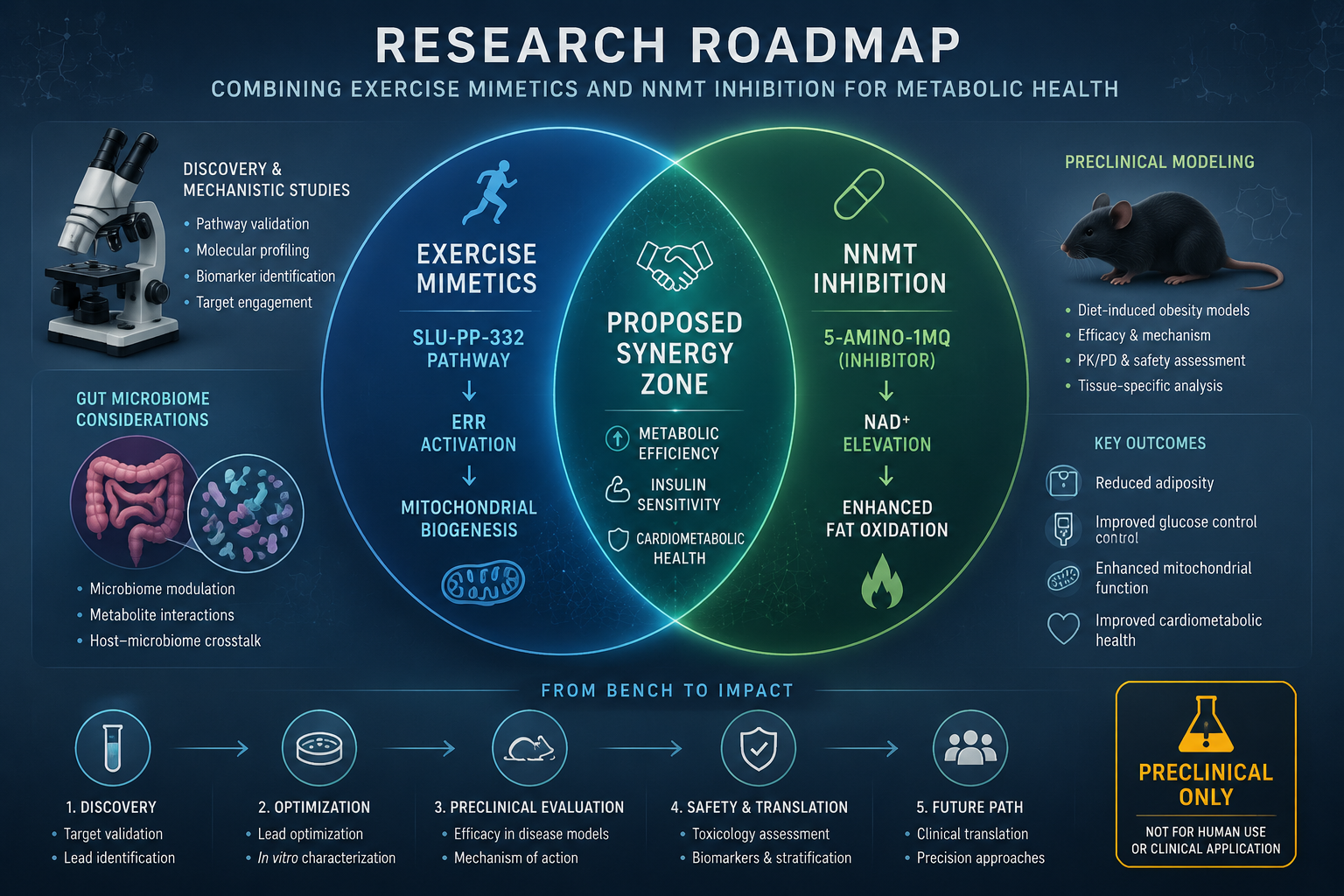
Two compounds with entirely different mechanisms are increasingly appearing in the same metabolic research conversations — and the reason why is worth understanding carefully. The discussion around Slupp332 with 5-Amino-1MQ centers on a hypothesis: that combining an exercise-mimetic compound with an NNMT-targeted molecule could produce complementary effects on energy metabolism, fat oxidation, and mitochondrial function. This article breaks down what each compound does, why researchers are connecting them, and what the current evidence actually supports.

Key Takeaways

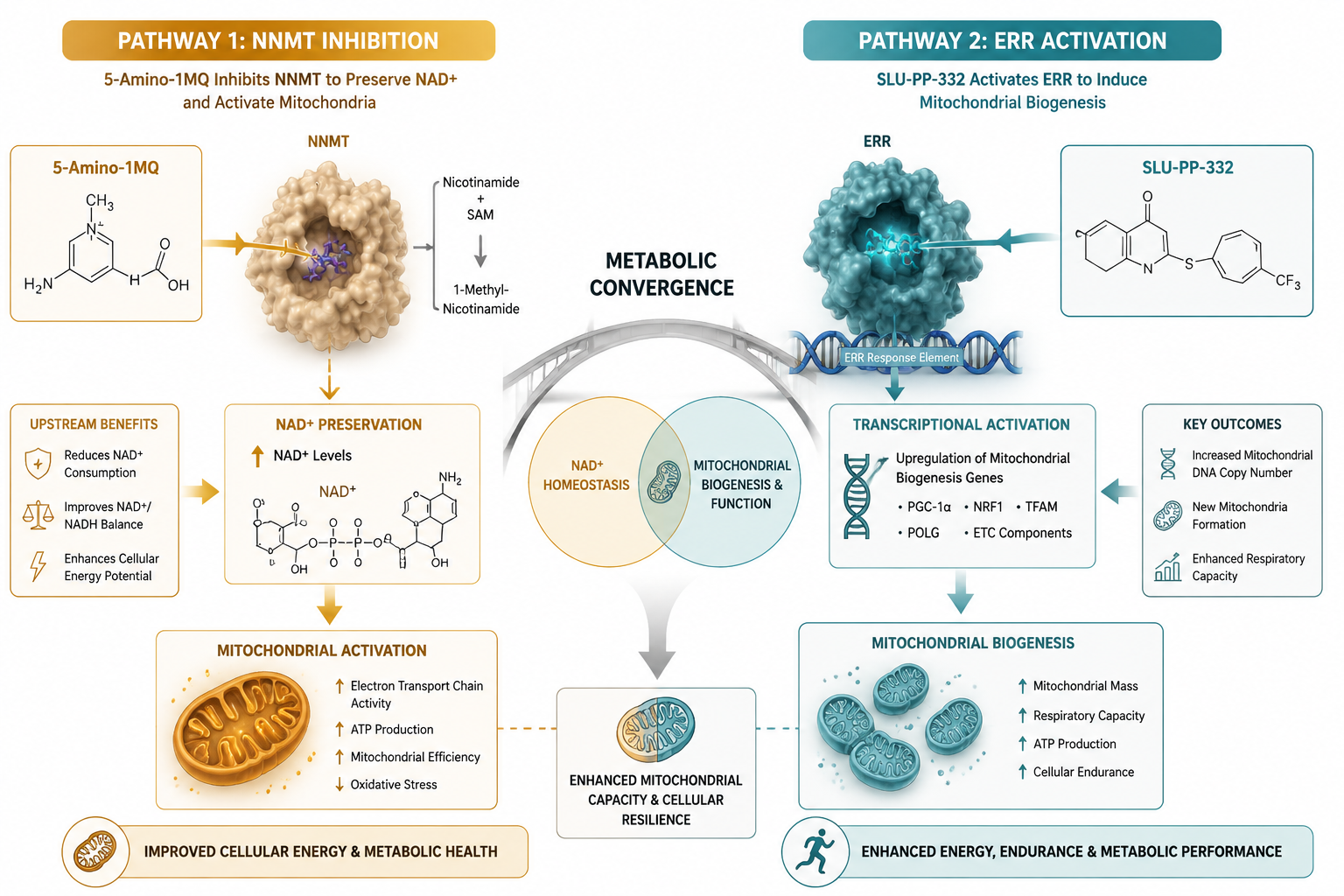
  • SLU-PP-332 activates estrogen-related receptors (ERRs) to mimic exercise-induced mitochondrial biogenesis
  • 5-Amino-1MQ inhibits the NNMT enzyme to preserve NAD+ levels and promote fat oxidation
  • The two compounds operate through distinct but potentially complementary pathways
  • All supporting evidence remains preclinical — no human clinical trials have been completed for either compound in combination
  • Both are classified as research chemicals and are not approved for human use

Key Takeaways

What Each Compound Does on Its Own

Understanding the proposed synergy in Slupp332 with 5-Amino-1MQ research starts with understanding each compound independently.

SLU-PP-332 is a synthetic agonist for estrogen-related receptors — specifically ERR-alpha, ERR-beta, and ERR-gamma. These nuclear receptors regulate mitochondrial biogenesis and oxidative metabolism. When activated, they trigger many of the same cellular adaptations seen after sustained aerobic exercise: increased energy expenditure, greater fatty acid oxidation, and improved mitochondrial density. For a deeper look at SLU-PP-332's metabolic profile, see this SLU-PP-332 metabolic research overview.

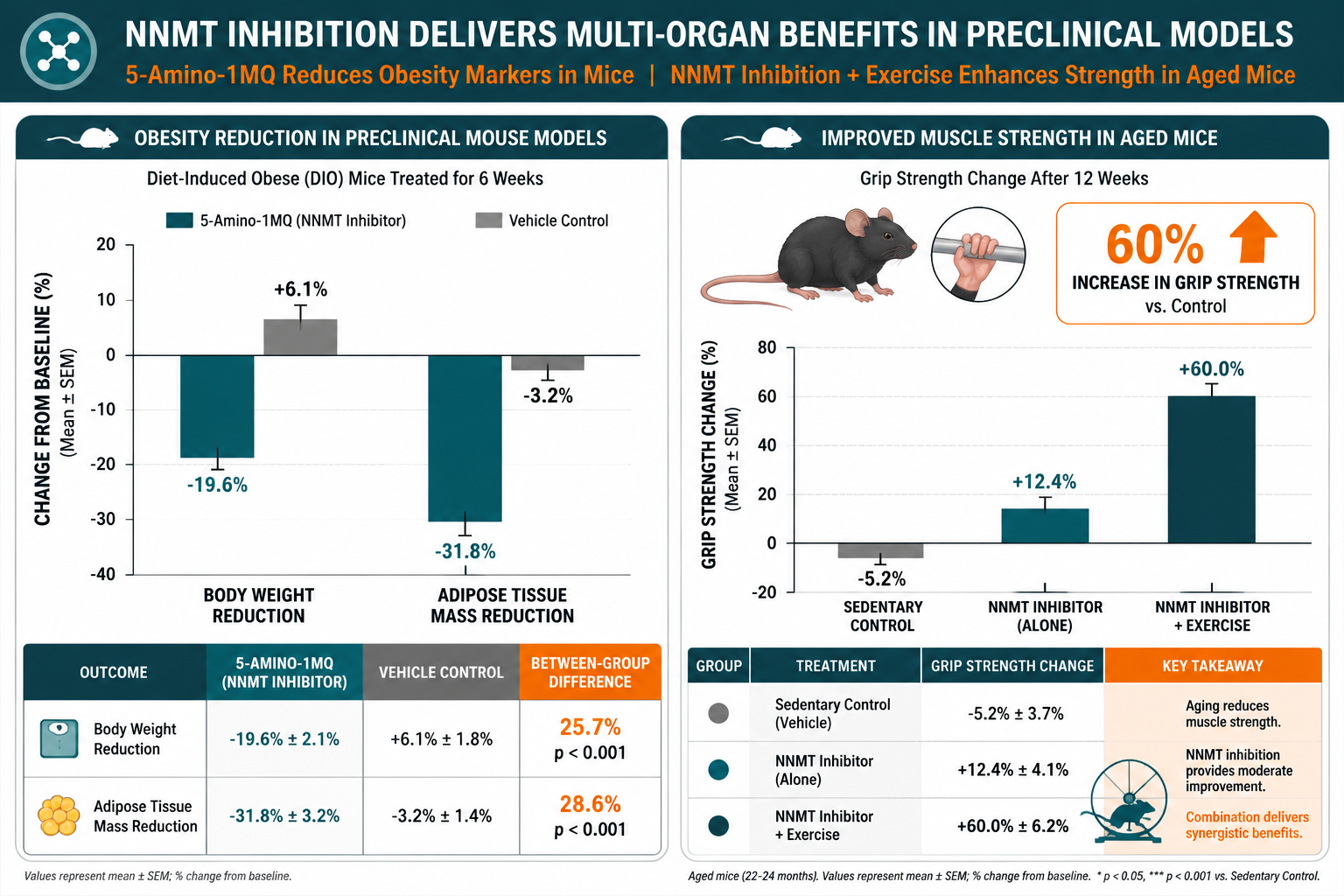
5-Amino-1MQ works through a completely different entry point. It selectively inhibits nicotinamide N-methyltransferase (NNMT), an enzyme that is overexpressed in the adipose tissue of obese individuals. NNMT consumes S-adenosylmethionine (SAM) and reduces NAD+ availability. By blocking NNMT, 5-Amino-1MQ preserves intracellular NAD+ levels, which in turn supports mitochondrial efficiency and fat oxidation. In a well-cited preclinical study, diet-induced obese mice treated with 5-Amino-1MQ for 11 days showed significant reductions in body weight, white adipose tissue mass, and adipocyte size — without changes in food intake.

Feature SLU-PP-332 5-Amino-1MQ
Primary Target ERR-alpha/beta/gamma NNMT enzyme
Core Effect Mitochondrial biogenesis NAD+ preservation
Research Model Preclinical (animal/cell) Preclinical (animal/cell)
Human Trials None completed None completed

The Proposed Synergy in Slupp332 With 5-Amino-1MQ Research

The central hypothesis connecting Slupp332 with 5-Amino-1MQ is that their mechanisms do not overlap — they stack. SLU-PP-332 pushes the cell to build more mitochondria and run oxidative pathways harder. 5-Amino-1MQ ensures the metabolic currency (NAD+) needed to fuel those pathways is not depleted by NNMT activity.

"Two compounds targeting separate bottlenecks in the same metabolic pipeline — one building the engine, the other supplying the fuel."

This logic is not without preclinical support. A 2024 study examining NNMT inhibition combined with exercise in aged mice reported a 60% improvement in grip strength compared to either intervention alone. While this study did not use SLU-PP-332 specifically, it illustrates the principle that NNMT inhibition can amplify exercise-type stimuli on muscle function. Researchers interested in related NAD+ and mitochondrial longevity themes can explore NAD+ energetics and longevity research and the mitochondrial longevity focus resource pages.

A 2022 study added another dimension: combining 5-Amino-1MQ with a reduced-calorie diet in obese mice produced a gut microbiome profile distinct from both obese and lean controls, including increased Lactobacillus species associated with weight loss. This suggests systemic effects beyond direct mitochondrial action.

The Proposed Synergy in Slupp332 With 5-Amino-1MQ Research


What the Evidence Does and Does Not Support

Evaluating Slupp332 with 5-Amino-1MQ: how exercise-mimetic and NNMT-targeted research are being connected requires honesty about the evidence gap. As of 2026, there are no completed human clinical trials for either compound individually, let alone in combination. All efficacy data come from cell cultures and animal models.

Key limitations to keep in mind:

  • Translational uncertainty: Animal model results frequently do not replicate in humans at equivalent doses
  • Regulatory status: 5-Amino-1MQ is classified as a research chemical, is not FDA-approved, and is banned by WADA under the S0 category
  • Safety data: Long-term safety profiles for both compounds in humans remain unknown
  • Combination pharmacokinetics: How these two compounds interact in vivo has not been formally studied

For researchers exploring adjacent metabolic compounds, MOTS-c peptide research and longevity peptide research themes offer related context on mitochondrial and metabolic signaling. Those interested in the broader landscape of metabolic peptides can also review SLU-PP-332 peptide research.

What the Evidence Does and Does Not Support


Conclusion

The connection being drawn between SLU-PP-332 and 5-Amino-1MQ in metabolic research circles is mechanistically coherent. One compound activates the cellular machinery for oxidative metabolism; the other removes a key enzymatic brake on the NAD+ supply that machinery depends on. The hypothesis is logical, and early preclinical data — particularly around NNMT inhibition combined with exercise stimuli — provides a reasonable basis for continued investigation.

However, the evidence base remains firmly preclinical. Researchers and readers evaluating this space should:

  1. Distinguish hypothesis from proof — mechanistic plausibility is not clinical validation
  2. Monitor peer-reviewed literature for any emerging human trial data on either compound
  3. Review regulatory and safety classifications before any research protocol design
  4. Explore related metabolic research themes to build a fuller picture of the pathways involved

The most productive next step for anyone following this area is to track primary literature on ERR agonism and NNMT inhibition separately, then assess combination data as it emerges from controlled preclinical studies.

https://www.puretestedpeptides.com/wp-content/uploads/2026/06/Slupp332-With-5-Amino-1MQ-How-Exercise-Mimetic-and-NNMT-Targeted-Research-Are-Being-Connected.png 1024 1536 https://www.puretestedpeptides.com/wp-content/uploads/2026/01/buy-peptides-online.jpg 2026-06-13 13:03:092026-06-13 13:03:09Slupp332 With 5-Amino-1MQ: How Exercise-Mimetic and NNMT-Targeted Research Are Being Connected
GLP-2-T and GLP-2 Tirz Peptides: Gut Mucosal Integrity, Nutrient Absorption, and Experimental IBD Models

GLP-2-T and GLP-2 Tirz Peptides: Gut Mucosal Integrity, Nutrient Absorption, and Experimental IBD Models

June 10, 2026/0 Comments/in Uncategorized/by

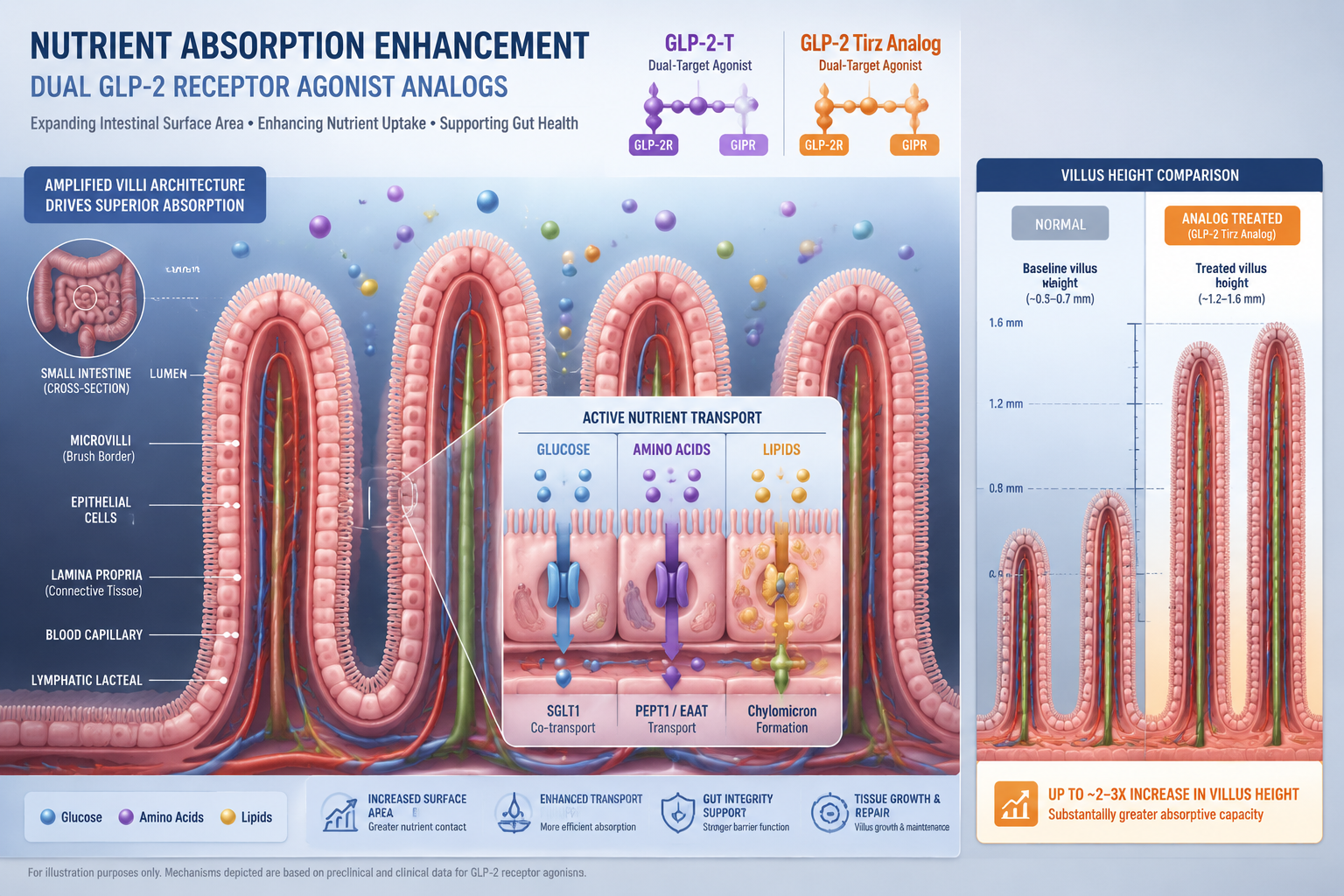
Roughly 1.6 million Americans live with inflammatory bowel disease, yet the intestinal epithelium — the single-cell-thick barrier separating the gut lumen from the bloodstream — remains one of the most underexplored therapeutic targets in modern peptide research. GLP-2-T and GLP-2 Tirz Peptides: Gut Mucosal Integrity, Nutrient Absorption, and Experimental IBD Models represent a rapidly advancing frontier in preclinical science, offering researchers new tools to probe how next-generation glucagon-like peptide-2 analogs regulate villus growth, barrier function, and inflammatory signaling in the gut.

Key Takeaways

  • GLP-2 is a 33-amino acid peptide secreted by intestinal L-cells that drives mucosal growth and reduces gut permeability.
  • GLP-2-T and GLP-2 Tirz are next-generation analogs engineered for enhanced receptor potency and extended half-life compared to native GLP-2.
  • Both analogs stimulate crypt cell proliferation, expand villus surface area, and tighten epithelial junctions in preclinical models.
  • Experimental IBD models show measurable reductions in inflammatory cytokines and mucosal damage scores following analog treatment.
  • These peptides are research-stage compounds used to understand gut biology, not approved clinical therapies.

Key Takeaways

GLP-2 Receptor Biology: The Foundation for GLP-2-T and GLP-2 Tirz Research

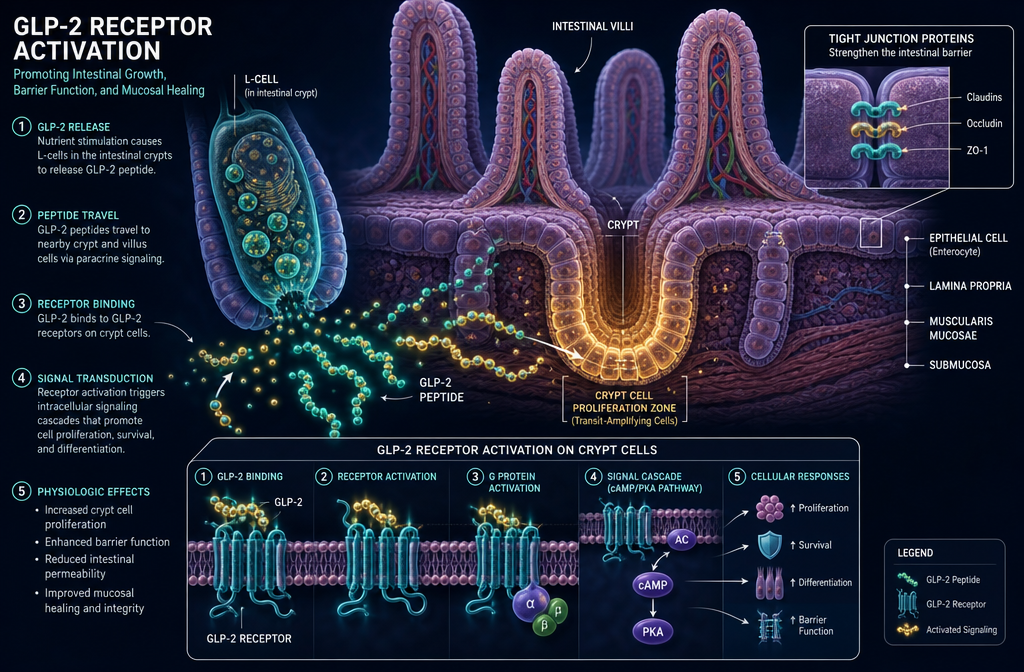
GLP-2 is produced through proglucagon processing in enteroendocrine L-cells lining the small and large intestine. When nutrients — particularly fats and fermentable carbohydrates — reach the distal gut, L-cells release GLP-2 into the portal circulation. The peptide then binds to the GLP-2 receptor (GLP-2R), a G-protein-coupled receptor expressed on enteric neurons, subepithelial myofibroblasts, and select immune cells within the lamina propria.

Critically, GLP-2R activation does not act directly on enterocytes. Instead, it triggers a paracrine signaling cascade involving insulin-like growth factor-1 (IGF-1), keratinocyte growth factor (KGF), and epidermal growth factor (EGF). These secondary messengers drive crypt cell proliferation, suppress enterocyte apoptosis, and ultimately expand the mucosal surface area available for nutrient absorption.

Native GLP-2 has a short half-life — roughly 7 minutes — due to rapid degradation by the enzyme dipeptidyl peptidase-4 (DPP-4). This limitation spurred the development of DPP-4-resistant analogs. Teduglutide (Gattex) was the first approved analog, used clinically for short bowel syndrome. GLP-2-T and GLP-2 Tirz represent a newer generation engineered for even greater receptor affinity and metabolic stability, making them valuable tools in preclinical gut biology research.

For researchers exploring multi-target peptide interactions, understanding how GLP-3 and related incretin analogs compare in receptor selectivity provides useful context for designing experimental protocols.


GLP-2 Receptor Biology: The Foundation for GLP-2-T and GLP-2 Tirz Research

Gut Mucosal Integrity and Nutrient Absorption: How GLP-2-T and GLP-2 Tirz Peptides Differ

Both GLP-2-T and GLP-2 Tirz share the core mechanism of native GLP-2 but diverge in structural modifications that affect their pharmacokinetic profiles.

Feature Native GLP-2 GLP-2-T GLP-2 Tirz
Half-life ~7 minutes Extended Extended + dual action
DPP-4 resistance Low High High
Receptor target GLP-2R only GLP-2R GLP-2R + secondary target
Villus growth effect Moderate Strong Strong
Barrier tightening Moderate Strong Strong

GLP-2 Tirz is particularly notable because its structural design borrows from the tirzepatide framework — a dual or multi-receptor approach — which may allow simultaneous modulation of gut motility and mucosal repair pathways. In preclinical rodent models, GLP-2 Tirz treatment has been associated with:

  • Measurable increases in villus height-to-crypt depth ratios
  • Upregulation of tight junction proteins (claudin-3, occludin, ZO-1)
  • Reduced intestinal permeability as measured by FITC-dextran assays
  • Enhanced absorption of glucose, amino acids, and long-chain fatty acids

These findings align with broader research on tissue repair peptides. Researchers interested in how structural peptides support epithelial integrity may also find value in reviewing BPC-157 and TB-500 regeneration research, which addresses overlapping pathways in mucosal healing.

Additionally, the role of GHK-Cu peptides in tissue homeostasis offers a complementary perspective on how copper-binding peptides influence extracellular matrix remodeling in gut tissue.


Gut Mucosal Integrity and Nutrient Absorption: How GLP-2-T and GLP-2 Tirz Peptides Differ

Experimental IBD Models: Applying GLP-2-T and GLP-2 Tirz Peptides to Inflammatory Disease Research

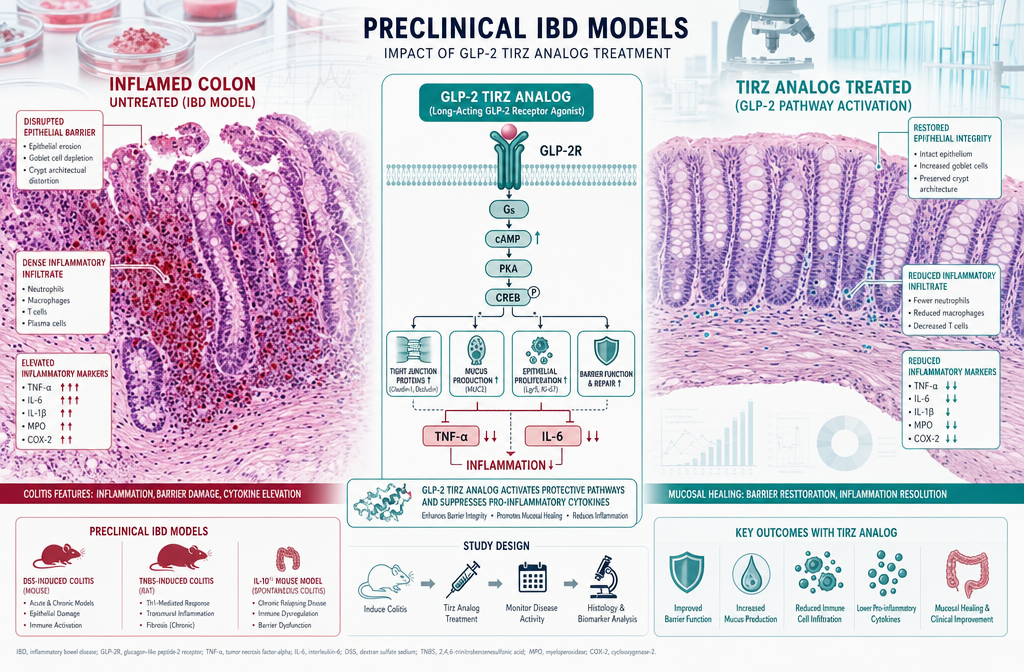
The application of GLP-2-T and GLP-2 Tirz Peptides: Gut Mucosal Integrity, Nutrient Absorption, and Experimental IBD Models research has accelerated in preclinical settings using established colitis induction protocols, including dextran sodium sulfate (DSS) and 2,4,6-trinitrobenzenesulfonic acid (TNBS) models.

In DSS-induced colitis models, animals treated with GLP-2 analogs consistently show:

  • Lower disease activity index (DAI) scores, reflecting reduced weight loss, stool consistency changes, and rectal bleeding
  • Decreased colonic shortening, a hallmark of chronic inflammation
  • Reduced myeloperoxidase (MPO) activity, indicating lower neutrophil infiltration
  • Suppressed pro-inflammatory cytokines including TNF-alpha, IL-6, and IL-1beta

GLP-2 Tirz's potential dual-receptor engagement may offer additional anti-inflammatory benefits beyond mucosal repair alone. Researchers hypothesize that modulating enteric nervous system signaling through GLP-2R could dampen the neurogenic component of intestinal inflammation.

For broader context on how peptides interact with innate immune pathways relevant to gut inflammation, the LL-37 innate immunity research overview and neuroendocrine innate immunity research provide useful comparative frameworks.

Researchers sourcing compounds for gut biology studies can also explore the full peptide catalog organized by research theme to identify complementary tools for multi-pathway experimental designs.


Conclusion

The preclinical science surrounding GLP-2-T and GLP-2 Tirz Peptides: Gut Mucosal Integrity, Nutrient Absorption, and Experimental IBD Models points toward a compelling set of research opportunities. These analogs offer improved pharmacokinetic stability over native GLP-2, demonstrable effects on villus architecture and tight junction integrity, and measurable anti-inflammatory activity in established colitis models.

Actionable next steps for researchers:

  • Design dose-response studies using GLP-2-T and GLP-2 Tirz in DSS or TNBS colitis models to establish effective preclinical ranges.
  • Pair mucosal permeability assays (FITC-dextran) with cytokine panels to capture both structural and immunological endpoints.
  • Consider multi-peptide experimental designs that incorporate complementary gut-repair compounds to map synergistic pathways.
  • Review the generations of GLP-1 analog development to contextualize GLP-2 Tirz within the broader incretin analog landscape.

As preclinical data continues to accumulate in 2026, GLP-2-T and GLP-2 Tirz remain among the most mechanistically rich peptide tools available for studying intestinal barrier biology and inflammatory gut disease.

https://www.puretestedpeptides.com/wp-content/uploads/2026/06/GLP-2-T-and-GLP-2-Tirz-Peptides-Gut-Mucosal-Integrity-Nutrient-Absorption-and-Experimental-IBD-Models.png 672 1024 https://www.puretestedpeptides.com/wp-content/uploads/2026/01/buy-peptides-online.jpg 2026-06-10 13:06:362026-06-10 13:06:36GLP-2-T and GLP-2 Tirz Peptides: Gut Mucosal Integrity, Nutrient Absorption, and Experimental IBD Models
Mitochondria and Experimental Peptides: How MOTS‑c, 5‑Amino‑1MQ, and SLUPP332 Are Used in Metabolic Research Models

Mitochondria and Experimental Peptides: How MOTS‑c, 5‑Amino‑1MQ, and SLUPP332 Are Used in Metabolic Research Models

June 5, 2026/0 Comments/in Uncategorized/by

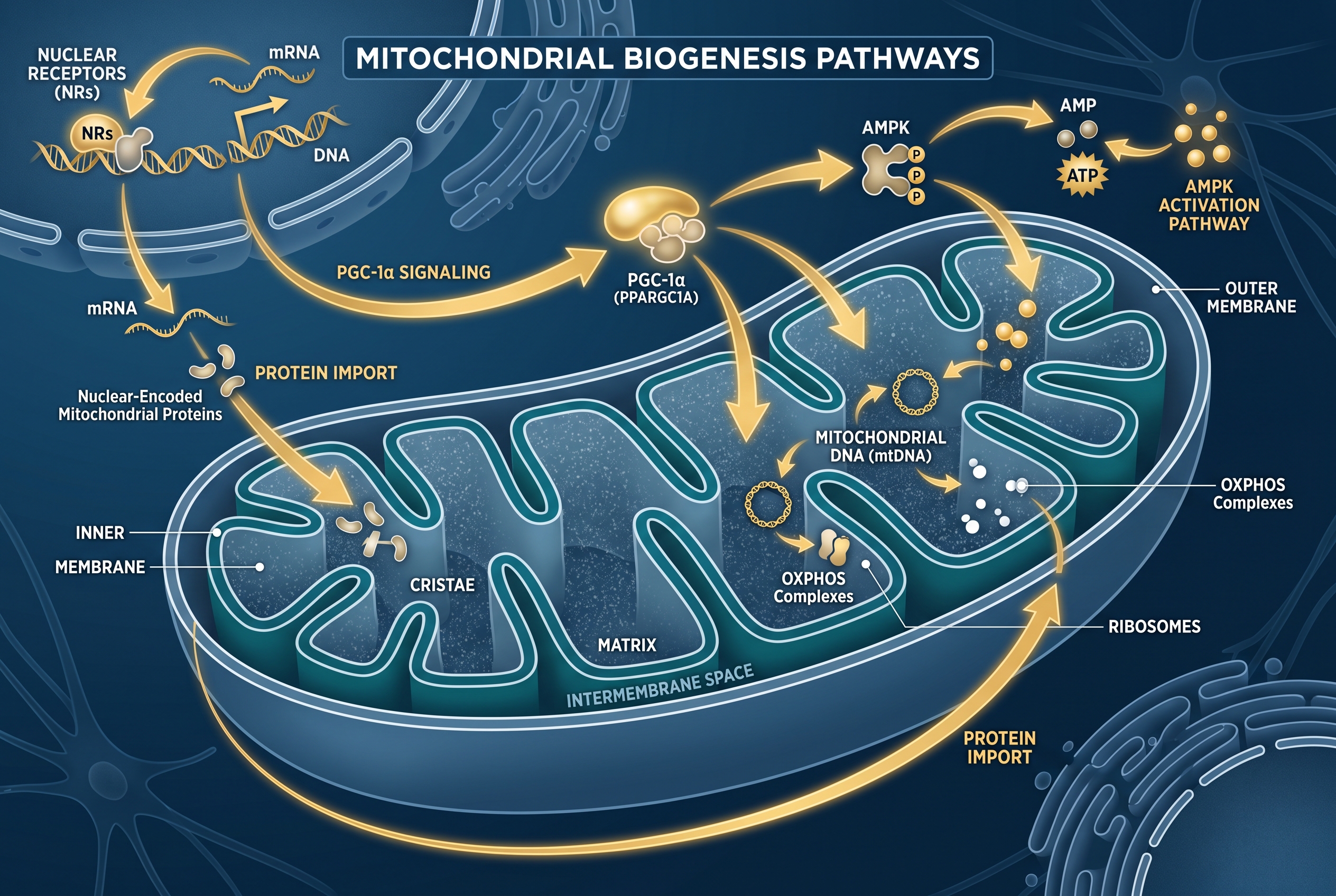
Roughly 90% of cellular ATP is produced inside mitochondria — yet these organelles are also command centers for hormone signaling, fat oxidation, and stress response. That dual role makes them a prime target in modern metabolic research, and it explains why scientists are mapping how experimental compounds like MOTS‑c, 5‑Amino‑1MQ, and SLU‑PP‑332 interact with mitochondrial biology. Understanding Mitochondria and Experimental Peptides: How MOTS‑c, 5‑Amino‑1MQ, and SLUPP332 Are Used in Metabolic Research Models is now a central theme for researchers studying energy balance, obesity, and age-related metabolic decline.

Detailed () scientific illustration showing a cross-section of a mitochondrion with labeled inner membrane, cristae, and

Key Takeaways

  • Mitochondria are not just energy factories — they encode peptides like MOTS‑c that act as hormones in skeletal muscle and fat tissue.
  • MOTS‑c activates AMPK through the folate-methionine cycle, improving glucose homeostasis in preclinical models.
  • 5‑Amino‑1MQ inhibits NNMT, an enzyme linked to fat accumulation and impaired NAD+ metabolism.
  • SLU‑PP‑332 targets ERR‑alpha receptors to mimic exercise-like signals in muscle and cardiac tissue.
  • All three compounds remain strictly research-stage tools with no established clinical dosing protocols as of 2026.

Mitochondria as Metabolic Regulators — Not Just Power Plants

For decades, biology textbooks described mitochondria as passive energy converters. More recent research has overturned that view. Mitochondria actively secrete signaling molecules called mitokines, communicate with the nucleus, and respond dynamically to nutrient status and physical stress.

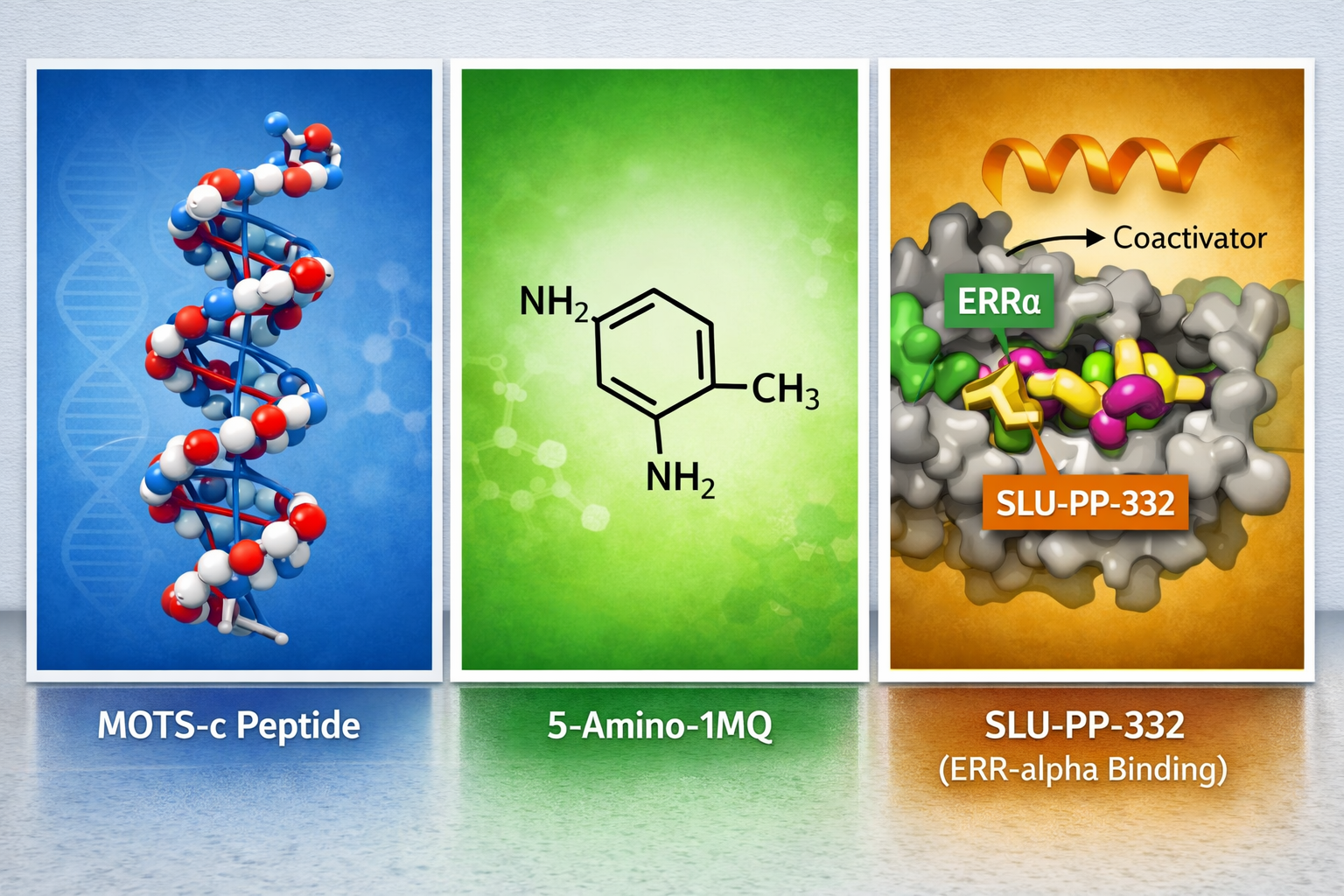
This reframing is central to understanding Mitochondria and Experimental Peptides: How MOTS‑c, 5‑Amino‑1MQ, and SLUPP332 Are Used in Metabolic Research Models. Each compound in this research cluster targets a different node in mitochondrial or mitochondria-adjacent signaling:

Compound Primary Target Research Focus
MOTS‑c AMPK / folate cycle Glucose metabolism, muscle homeostasis
5‑Amino‑1MQ NNMT enzyme Fat loss, NAD+ regulation
SLU‑PP‑332 ERR‑alpha receptor Exercise mimicry, energy expenditure

Researchers exploring mitochondrial longevity pathways often use these compounds in combination to probe how different arms of mitochondrial biology interact.


MOTS‑c: A Peptide Encoded Inside the Mitochondrial Genome

MOTS‑c is a 16‑amino‑acid peptide encoded not by nuclear DNA, but by mitochondrial DNA — a distinction that makes it biologically unusual. It circulates in the bloodstream and primarily targets skeletal muscle and adipose tissue, qualifying it as a true mitochondrial hormone.

How MOTS‑c Works in Research Models

MOTS‑c disrupts the folate-methionine cycle, which leads to accumulation of AICAR — a naturally occurring AMPK activator. AMPK activation then drives downstream effects including improved insulin sensitivity, enhanced fatty acid oxidation, and upregulation of PGC‑1alpha, a master regulator of mitochondrial biogenesis.

A March 2026 study confirmed that MOTS‑c administration in animal models improved muscle mitochondrial bioenergetic performance while reducing reactive oxygen species emission and stress-related protein damage. Separate research showed that exercise itself stimulates MOTS‑c expression in humans, suggesting the peptide may partially mediate the metabolic benefits of physical activity.

Researchers can explore MOTS‑c metabolic flexibility research themes for a deeper look at how these pathways are being studied. For those comparing compound profiles, the MOTS‑c and Elamipretide research overview provides useful context on stacking strategies in preclinical settings.

"MOTS‑c may represent the first mitochondria-derived peptide hormone with systemic metabolic effects — a finding that reshapes how researchers think about organelle-to-organ communication."

Important caveat: As of 2026, no peer-reviewed human clinical trials on MOTS‑c have been published. Optimal dosing and long-term safety remain uncharacterized outside animal models.


5‑Amino‑1MQ and SLU‑PP‑332: Complementary Tools in Metabolic Research Models

5‑Amino‑1MQ and SLU‑PP‑332: Complementary Tools in Metabolic Research Models

While MOTS‑c works from inside the mitochondrial genome outward, 5‑Amino‑1MQ and SLU‑PP‑332 approach mitochondrial metabolism from different angles.

5‑Amino‑1MQ: NNMT Inhibition and NAD+ Metabolism

5‑Amino‑1MQ is a small-molecule inhibitor of nicotinamide N-methyltransferase (NNMT), an enzyme highly expressed in fat tissue. NNMT consumes methyl groups and depletes SAM (S-adenosylmethionine), indirectly reducing NAD+ availability. By blocking NNMT, 5‑Amino‑1MQ preserves NAD+ pools and appears to shift fat cells toward a leaner metabolic phenotype.

In obese rodent models, 5‑Amino‑1MQ has shown associations with reduced fat mass and improved muscle stem-cell function without significant changes to food intake — a profile that distinguishes it from appetite-suppressing compounds. Researchers interested in NAD+ and metabolic pathway research will find this mechanism particularly relevant.

SLU‑PP‑332: ERR‑Alpha Agonism as Exercise Mimicry

SLU‑PP‑332 is an agonist of estrogen-related receptor alpha (ERR‑alpha), a nuclear receptor that regulates mitochondrial biogenesis and oxidative metabolism in muscle and cardiac tissue. By activating ERR‑alpha, SLU‑PP‑332 appears to trigger gene expression patterns that overlap with those induced by aerobic exercise — without the physical activity itself.

Preclinical data on SLU‑PP‑332 metabolic modulation shows improved endurance markers and increased mitochondrial density in muscle tissue of sedentary animal models. Detailed SLU‑PP‑332 oral and subcutaneous evidence further outlines route-of-administration differences being studied.

Like MOTS‑c, both compounds remain strictly research tools with no established human dosing protocols.


Applying These Compounds Together in Metabolic Research

Applying These Compounds Together in Metabolic Research

The growing interest in combining these compounds reflects a systems-biology approach to mitochondrial research. Rather than targeting a single pathway, researchers are using MOTS‑c, 5‑Amino‑1MQ, and SLU‑PP‑332 together to simultaneously probe AMPK signaling, NAD+ metabolism, and ERR‑alpha-driven biogenesis.

Blends incorporating NAD+ alongside MOTS‑c and 5‑Amino‑1MQ are being explored specifically for their potential in mitochondrial longevity research, targeting multiple metabolic checkpoints at once. This multi-pathway approach is also reflected in broader metabolic modulation research lines that map how different peptide classes interact.

Researchers comparing compound profiles should also review SS‑31 (Elamipretide) research, another mitochondria-targeted peptide that works through cardiolipin stabilization on the inner mitochondrial membrane — a distinct but complementary mechanism.

Key research considerations when using these compounds:

  • All three are preclinical tools only — not approved for human use
  • Animal model results may not translate directly to human physiology
  • Purity and quality verification are essential for reproducible results
  • Multi-compound protocols require careful controls to isolate individual effects

Conclusion

Mitochondria and Experimental Peptides: How MOTS‑c, 5‑Amino‑1MQ, and SLUPP332 Are Used in Metabolic Research Models represents one of the most active frontiers in preclinical metabolic science in 2026. Each compound offers a distinct lens into mitochondrial function: MOTS‑c as a mitochondria-encoded hormone activating AMPK, 5‑Amino‑1MQ as an NNMT inhibitor preserving NAD+ pools, and SLU‑PP‑332 as an ERR‑alpha agonist mimicking exercise-induced biogenesis.

Actionable next steps for researchers:

  1. Review the primary literature on MOTS‑c AMPK activation before designing animal model protocols.
  2. Establish baseline NAD+ and NNMT activity measurements when incorporating 5‑Amino‑1MQ.
  3. Use SLU‑PP‑332 alongside sedentary control groups to isolate ERR‑alpha-specific effects.
  4. Source compounds only from suppliers with verified purity testing to ensure data integrity.
  5. Treat all findings as hypothesis-generating until human trial data becomes available.

The mitochondrion is no longer just a power plant. It is a signaling hub — and these experimental peptides are the tools researchers are using to map exactly how that hub works.

https://www.puretestedpeptides.com/wp-content/uploads/2026/06/Mitochondria-and-Experimental-Peptides-How-MOTS‑c-5‑Amino‑1MQ-and-SLUPP332-Are-Used-in-Metabolic-Research-Models.png 1024 1536 https://www.puretestedpeptides.com/wp-content/uploads/2026/01/buy-peptides-online.jpg 2026-06-05 13:36:412026-06-05 13:36:41Mitochondria and Experimental Peptides: How MOTS‑c, 5‑Amino‑1MQ, and SLUPP332 Are Used in Metabolic Research Models
×

Helpful Links

  • My account
  • Cart
  • Checkout
  • Refund and Returns Policy
  • Privacy Policy
  • SMS Privacy Policy
  • Login
  • My Account
  • Logout

USA Made Lab Tested Peptides

All products are sold for research, laboratory, or analytical purposes only, and are not for human consumption


Pure Tested Peptides is a chemical supplier. Pure Tested Peptides is not a compounding / chemical compounding facility as defined under 503A of the Federal Food, Drug, and Cosmetic act. Pure Tested Peptides is not an outsourcing facility as defined under 503B of the Federal Food, Drug, and Cosmetic act.

The statements made within this website have not been evaluated by the US Food and Drug Administration. The products we offer are not intended to diagnose, treat, cure or prevent any disease.

Human/Animal Consumption Prohibited. Laboratory/In-Vitro Experimental Use Only

Scroll to top Scroll to top Scroll to top