
The Complete Guide to Online Peptides: What Athletes and Researchers Need to Know in 2026
The online peptides market has exploded in 2026, with athletes, researchers, and longevity enthusiasts turning to digital platforms to source these powerful biological compounds. However, navigating this complex landscape requires understanding the science, regulations, and quality standards that separate legitimate research suppliers from questionable vendors.
Peptides—short chains of amino acids that serve as the building blocks of proteins—have captured attention across fitness communities, from MMA fighters seeking faster recovery to longevity coaches exploring anti-aging protocols. The global peptide therapeutics market reached $50.4 billion in 2023 and is projected to hit $81.9 billion by 2030, with online peptides becoming increasingly accessible through digital channels [1].
Yet this accessibility comes with significant challenges. Quality control issues, regulatory gray areas, and safety concerns plague the online peptides industry, making informed decision-making crucial for anyone considering these compounds for research purposes.
Key Takeaways
• Quality verification is paramount – Third-party testing and certificates of analysis are essential when purchasing peptides online
• Regulatory compliance matters – Most online peptides are sold as research chemicals, not approved for human consumption by the FDA
• Sports organizations prohibit many peptides – WADA bans numerous compounds commonly sold online, creating risks for competitive athletes
• Legal considerations exist – Importing certain peptides without proper licensing may violate federal and state laws
• Research institutions use verified suppliers – Academic and clinical researchers source peptides through certified scientific distributors rather than general online vendors
Understanding Online Peptides: Science and Applications

What Are Peptides and Why Buy Them Online?
Peptides are short chains of amino acids, typically containing 2-50 amino acids linked by peptide bonds. These molecules serve as signaling compounds in the body, influencing everything from hormone production to cellular repair mechanisms. The appeal of online peptides stems from their targeted biological effects and the convenience of digital purchasing.
Common categories of peptides sold online include:
- Growth hormone secretagogues (GHRPs, GHRH analogs)
- Healing and recovery peptides (BPC-157, TB-500)
- Metabolic peptides (AOD 9604, 5-Amino-1MQ)
- Cosmetic peptides (GHK-Cu, Matrixyl)
- Nootropic peptides (Noopept, Selank)
The fitness and MMA communities have shown particular interest in recovery-focused compounds. TB-500 benefits include potential acceleration of wound healing and tissue repair, while BPC-157 has gained attention for its purported gut-healing properties [2].
The Rise of Digital Peptide Commerce
The shift toward online peptides purchasing reflects broader e-commerce trends, but also specific factors unique to this market:
🔬 Research accessibility – Scientists and institutions can source specialized compounds more efficiently
💪 Fitness community demand – Athletes seek performance and recovery advantages
🧬 Longevity interest – Anti-aging enthusiasts explore peptide protocols
📱 Information sharing – Online communities share experiences and protocols
However, this digital marketplace operates largely in regulatory gray areas. Most vendors market their products as "research chemicals" with "not for human consumption" disclaimers to avoid FDA oversight.
Navigating Quality and Safety in Online Peptide Purchases
Critical Quality Indicators
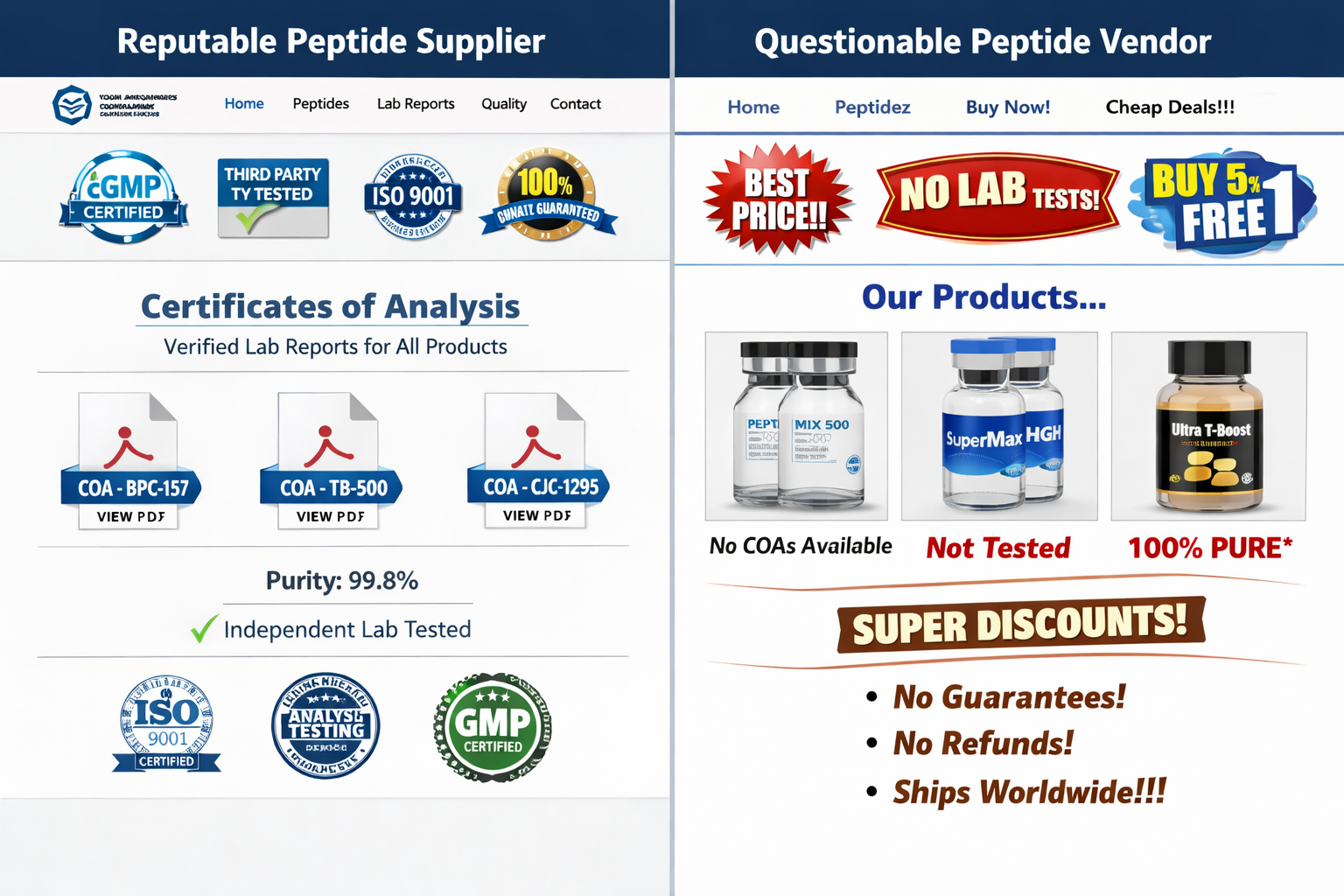
When evaluating online peptides suppliers, several quality markers distinguish reputable vendors from questionable sources:
Essential Quality Standards:
| Quality Factor | What to Look For | Red Flags |
|---|---|---|
| Third-party testing | COAs from independent labs | No testing documentation |
| Storage conditions | Temperature-controlled shipping | Room temperature storage |
| Manufacturing standards | GMP certification | Unclear production methods |
| Purity levels | >98% purity typical | No purity specifications |
| Batch tracking | Lot numbers and dates | Generic labeling |
Understanding Certificates of Analysis (COAs)
Legitimate suppliers provide detailed COAs for each batch. These documents should include:
- HPLC analysis showing purity percentages
- Mass spectrometry confirming molecular identity
- Endotoxin testing for injectable preparations
- Heavy metals screening for contamination
- Microbiological testing for sterility
Quality peptides require rigorous testing protocols that many online vendors simply cannot or will not provide.
Storage and Handling Considerations
Peptides are delicate molecules requiring specific storage conditions:
❄️ Temperature control – Most require refrigeration or freezing
🌡️ Stability monitoring – Degradation occurs with temperature fluctuations
💧 Moisture protection – Lyophilized peptides need dry storage
☀️ Light sensitivity – Many compounds degrade under UV exposure
Poor handling during shipping can render peptides ineffective or potentially harmful. Reputable suppliers use insulated packaging with temperature monitoring.
Regulatory Landscape and Legal Considerations for Online Peptides
FDA Oversight and Enforcement
The regulatory environment for online peptides has intensified significantly in 2024-2025. The FDA has issued multiple warning letters to peptide vendors for:
- Making unsubstantiated health claims
- Selling unapproved drugs
- Inadequate manufacturing controls
- Mislabeling products
Key regulatory points:
✅ Prescription peptides (semaglutide, tirzepatide) require medical supervision
⚠️ Research peptides exist in regulatory gray areas
❌ Unapproved therapeutic claims violate FDA regulations
🚫 Human consumption marketing triggers enforcement action
WADA Prohibitions and Athletic Implications
The World Anti-Doping Agency prohibits numerous peptides commonly sold online, creating significant risks for competitive athletes. Banned categories include:
- Growth hormone releasing peptides (GHRP-2, GHRP-6, Ipamorelin)
- Growth hormone secretagogues (MK-677, CJC-1295)
- Myostatin inhibitors (Follistatin, ACE-031)
- Metabolic modulators (5-Amino-1MQ research)
Athletes in tested sports face career-ending consequences for positive peptide tests, even from inadvertent use.
Legal Risks and Import Considerations
Purchasing online peptides carries potential legal risks that vary by jurisdiction:
Federal considerations:
- Importing without proper licensing may violate customs regulations
- Intent for human use can trigger drug trafficking charges
- State laws may impose additional restrictions
Mitigation strategies:
- Document research purposes clearly
- Understand local and federal regulations
- Consult legal counsel for institutional purchases
- Maintain detailed records of intended use
Choosing Reputable Sources for Online Peptides Research

Institutional vs. Consumer Markets
The online peptides market serves two distinct segments with different quality expectations and regulatory requirements:
Research institutions typically source through:
- Verified scientific suppliers with extensive documentation
- Companies meeting institutional compliance standards
- Vendors providing detailed chain-of-custody records
- Suppliers supporting IRB and ethics committee requirements
Individual researchers often navigate:
- Consumer-focused online vendors
- Variable quality control standards
- Limited regulatory oversight
- Unclear legal protections
Evaluating Vendor Credibility
When assessing online peptides suppliers, consider these credibility indicators:
Positive signals:
🏆 Industry certifications (ISO, GMP compliance)
📋 Comprehensive testing (full COA availability)
🔬 Scientific focus (research-oriented marketing)
📞 Professional support (knowledgeable customer service)
🏢 Physical presence (verifiable business address)
Warning signs:
❌ Health claims (therapeutic benefit promises)
❌ Unrealistic pricing (significantly below market rates)
❌ Poor communication (unprofessional interactions)
❌ No testing data (missing or incomplete COAs)
❌ Pressure tactics (limited-time offers, urgency)
Building Supplier Relationships
Successful online peptides procurement often involves developing relationships with reputable suppliers. Consider:
- Starting with small orders to evaluate quality
- Requesting references from other researchers
- Verifying testing methodologies and equipment
- Establishing clear communication protocols
- Understanding return and refund policies
Best peptide retail options typically prioritize long-term customer relationships over quick sales.
Research Documentation and Protocols
Proper documentation becomes crucial when purchasing online peptides for research purposes:
Essential records:
- Purchase orders with research justification
- COAs and testing documentation
- Storage and handling protocols
- Usage logs and experimental data
- Safety and disposal procedures
This documentation serves multiple purposes: regulatory compliance, research integrity, and legal protection.
Emerging Trends in Online Peptide Commerce
The online peptides landscape continues evolving rapidly in 2026:
Technology integration:
- Blockchain supply chain tracking
- AI-powered quality prediction
- Automated testing verification
- Digital certificate management
Market consolidation:
- Larger suppliers acquiring smaller vendors
- Increased focus on compliance and quality
- Professional service differentiation
- Specialized niche markets
Regulatory evolution:
- Enhanced FDA oversight mechanisms
- International harmonization efforts
- Industry self-regulation initiatives
- Consumer protection measures
Understanding these trends helps researchers anticipate future changes in online peptides availability and regulation.
Conclusion
The online peptides market in 2026 presents both unprecedented opportunities and significant challenges for researchers, athletes, and wellness enthusiasts. While digital platforms have democratized access to these powerful biological compounds, success requires navigating complex regulatory landscapes, quality control issues, and safety considerations.
Key action steps for anyone considering online peptides:
- Prioritize quality verification – Only work with suppliers providing comprehensive third-party testing and certificates of analysis
- Understand regulatory requirements – Research applicable laws and regulations in your jurisdiction before purchasing
- Document research purposes – Maintain detailed records of intended use and experimental protocols
- Start conservatively – Begin with small orders from established suppliers to evaluate quality and service
- Stay informed – Monitor regulatory changes and industry developments that may affect availability or legality
- Consult professionals – Work with qualified healthcare providers or research supervisors when appropriate
The future of online peptides will likely involve increased regulation, improved quality standards, and greater transparency. Researchers who establish relationships with reputable suppliers and maintain rigorous documentation practices will be best positioned to navigate this evolving landscape successfully.
For those committed to peptide research, the digital marketplace offers remarkable access to cutting-edge compounds. However, this access comes with the responsibility to prioritize safety, legality, and scientific rigor above convenience or cost considerations.
References

[1] Grand View Research. (2024). Peptide Therapeutics Market Size, Share & Trends Analysis Report.
[2] Sikiric, P., et al. (2023). BPC 157 and standard angiogenic growth factors. Current Pharmaceutical Design, 29(18), 1405-1423.