Call or Text 727-513-9780
  • Shopping Cart Shopping Cart
    0Shopping Cart
Pure Tested Peptides | America's most trusted Peptides for sale online
  • Peptides for sale
    • Oral Peptides for sale
      • Peptide Capsules for sale
      • BPC 157 Capsules 1000mcg
      • SLU-PP-332 Capsules | 1000 mcg
      • 5-Amino-1MQ 50mg Capsules
      • Tesofensine 500mcg
    • All Peptides for sale
    • Peptide Sprays
      • BPC 157 Nasal Spray Kit
      • BPC-157 TB500 Nasal Spray Kit
      • Semax Nasal Spray 10mg
      • Selank – Nasal Spray Kit – 10mg
      • Epithalon 50MG Nasal Spray Kit
      • Ipamorelin 10mg Nasal Spray
      • Klow Nasal Spray (BPC-157 + TB-500 + GHK-Cu + KPV) | 80mg
      • Hulk Nasal Spray Tesa / Ipa Blend 6/3 MG
      • Klow Nasal Spray
      • NAD + 500 mg Nasal Spray
      • PT-141 Nasal Spray Kit
    • GHRH Peptides
      • Ipa Peptides
      • CJC-1295 Peptides
        • CJC-1295 with DAC 5 mg
        • CJC-1295 without DAC 5 mg
        • CJC-1295 Ipa 10mg
      • Tesa Peptides
        • Tesa Peptide
        • Tesa 20 mg
    • GHK-Cu Peptides
      • All GHK-Cu Peptides
      • GHK-Cu 100mg
      • KLOW Peptide Blend – Buy KLOW blend online
    • BPC Peptides
      • All BPC Peptides
      • BPC-157
      • BPC-157 TB-500
      • BPC 157 capsules 1000mcg
    • SLU-PP-332 Peptides
      • All SLU-PP-332 Peptides
      • SLU-PP-332 5mg
    • GLP3 Peptides
      • GLP3-R
      • GLP3-R CAG 10mg
      • GLP3-R 20mg
    • PT-141 Peptides
      • PT-141 Peptides for sale
      • PT-141 10mg
      • PT-141 Nasal Spray
    • CAG Peptides
      • Lipo-C Peptide Blend
      • CAG 5mg
      • CAG 10mg
    • MOTS-C Peptides
      • MOTS-C Peptides for sale
      • MOTS-c peptide
      • MOTS-c 10mg *6 pack*
    • 5 Amino 1MQ Peptides
      • 5 Amino 1MQ Peptides for sale
      • 5-Amino-1MQ 50mg Capsules
      • 5-Amino-1MQ 5mg
    • Epithalon Peptides
      • Epithalon Peptides for sale
      • Epithalon 10mg
      • Epithalon 50mg
  • Shop
    • GLPs
      • 5-Amino-1MQ 50mg Capsules
      • 5-Amino-1MQ 5mg
      • GLP3-Reta
      • L-Carnitine 500mg/ml
      • Tesofensine 500mcg
      • SLU-PP-332 5mg
      • MOTS-c 10mg *6 pack*
    • Epithalon & BPC Peptides
      • Epithalon 10mg
      • Epithalon 50mg
      • BPC-157
      • BPC 157 capsules 1000mcg
      • BPC-157 TB-500
      • BPC-157 TB500 Nasal Spray Kit
      • BPC 157 Nasal Spray Kit
    • BPC TB-500 & NAD+ Peptides
      • NAD+ 500 mg
      • KLOW Peptide Blend – Buy KLOW blend online
      • GLOW Peptide Blend
      • TB 500 5mg
      • BPC 157 capsules 1000mcg – Supplement
      • BPC 157 Nasal Spray Kit
      • BPC-157
      • BPC-157 TB500 Nasal Spray Kit
      • BPC-157 TB-500
      • BPC 157 capsules 1000mcg
    • LL-37 Peptide
      • LL-37 10 mg
    • MOTS-C & Selank
      • MOTS-c peptide
      • Selank 10mg
    • GHK Peptides
      • GHK-Cu 100mg
      • GLOW Peptide Blend
      • KLOW Peptide Blend – Buy KLOW blend online
  • COAs
  • Wholesale
    • Wholesale Peptides for sale
  • PTP FAQ
  • Affiliates
    • Selank Peptide: Advanced Pharmacological Mechanisms Underlying Its Anxiolytic and Nootropic Effects in Research
      • 5-Amino-1MQ Peptide: Detailed Mechanisms of NNMT Inhibition and Its Impact on Cellular Metabolism Research
        • MOTS-C Peptide: Unraveling Its Role in Mitochondrial Dynamics and Energy Metabolism Research
          • Epithalon Peptide and Telomerase Regulation: Investigating Its Impact on Cellular Senescence and Lifespan Research Models
            • GLP2-T vs GLP2 Tirz Peptide: Understanding the Naming, Mechanistic Nuances, and Research Implications for Gut Health
      • Peptides and Polypeptides in Modern Pharmacology: What Research on Metoprolol, Prednisone, and Amlodipine Reveals
        • Polypeptide Peptides vs NSAIDs: What Naproxen and Diclofenac Teach Tissue-Repair Researchers About BPC‑157 and TB‑500
          • Peptides and Polypeptides in Endocrine Pharmacology: How GLP-1, GLP-2, and GLP-3 Retatrutide Differ From Classic Drugs Like Prednisone and Amlodipine
          • 5‑Amino‑1MQ Peptide and NNMT Inhibition: How It Compares With Statins Like Atorvastatin in Adipose and Lipid Metabolism Research
      • Enclomiphene, Estrogen Receptor Signaling, and Luteinizing Phase Biology: What Hormone Researchers Should Measure
        • Mesenchymal Stem Cells, BPC‑157, and GHK‑Cu: How Tissue Repair Peptides Compare With Classic NSAIDs Like Naproxen in Injury Models
          • Peptide Calculator Use Cases Beyond Growth Hormone: Working Through GLP‑3 Retatrutide, MOTS‑c, and BPC‑157 Research Dosing
        • Polypeptide Peptides in Endocrine and Metabolic Pharmacology: Lessons From Amlodipine, Prednisone, and Metoprolol
        • Peptides Calculator for Advanced Blends: Worked Examples for Tesamorelin, CJC‑1295, and Ipamorelin Stacks
          • Peptides and Polypeptides in Human Physiology: How Molecular Size Shapes Research Applications
            • Selank Peptide: Advanced Pharmacological Mechanisms Underlying Its Anxiolytic and Nootropic Effects in Research
          • 5-Amino-1MQ Peptide: Detailed Mechanisms of NNMT Inhibition and Its Impact on Cellular Metabolism Research
            • MOTS-C Peptide: Unraveling Its Role in Mitochondrial Dynamics and Energy Metabolism Research
              • Epithalon Peptide and Telomerase Regulation: Investigating Its Impact on Cellular Senescence and Lifespan Research Models
                • GLP2-T vs GLP2 Tirz Peptide: Understanding the Naming, Mechanistic Nuances, and Research Implications for Gut Health
                  • Peptides and Polypeptides in Endocrine Pharmacology: How GLP-1, GLP-2, and GLP-3 Retatrutide Differ From Classic Drugs Like Prednisone and Amlodipine
                    • Polypeptide Peptides vs NSAIDs: What Naproxen and Diclofenac Teach Tissue-Repair Researchers About BPC‑157 and TB‑500
                      • Peptides and Polypeptides in Modern Pharmacology: What Research on Metoprolol, Prednisone, and Amlodipine Reveals
                        • 5‑Amino‑1MQ Peptide and NNMT Inhibition: How It Compares With Statins Like Atorvastatin in Adipose and Lipid Metabolism Research
                        • Enclomiphene, Estrogen Receptor Signaling, and Luteinizing Phase Biology: What Hormone Researchers Should Measure
                        • Mesenchymal Stem Cells, BPC‑157, and GHK‑Cu: How Tissue Repair Peptides Compare With Classic NSAIDs Like Naproxen in Injury Models
                        • Peptide Calculator Use Cases Beyond Growth Hormone: Working Through GLP‑3 Retatrutide, MOTS‑c, and BPC‑157 Research Dosing
                        • Polypeptide Peptides in Endocrine and Metabolic Pharmacology: Lessons From Amlodipine, Prednisone, and Metoprolol
                        • Peptides Calculator for Advanced Blends: Worked Examples for Tesamorelin, CJC‑1295, and Ipamorelin Stacks
                        • Peptides and Polypeptides in Human Physiology: How Molecular Size Shapes Research Applications
                        • Selank Peptide: Advanced Pharmacological Mechanisms Underlying Its Anxiolytic and Nootropic Effects in Research
                        • MOTS-C Peptide: Unraveling Its Role in Mitochondrial Dynamics and Energy Metabolism Research
                        • Peptides and Polypeptides in Modern Pharmacology: What Research on Metoprolol, Prednisone, and Amlodipine Reveals
                        • Peptides and Polypeptides in Endocrine Pharmacology: How GLP-1, GLP-2, and GLP-3 Retatrutide Differ From Classic Drugs Like Prednisone and Amlodipine
                        • 5-Amino-1MQ Peptide: Detailed Mechanisms of NNMT Inhibition and Its Impact on Cellular Metabolism Research
                        • Mesenchymal Stem Cells, BPC‑157, and GHK‑Cu: How Tissue Repair Peptides Compare With Classic NSAIDs Like Naproxen in Injury Models
                        • Peptide Calculator Use Cases Beyond Growth Hormone: Working Through GLP‑3 Retatrutide, MOTS‑c, and BPC‑157 Research Dosing
                        • GLP2-T vs GLP2 Tirz Peptide: Understanding the Naming, Mechanistic Nuances, and Research Implications for Gut Health
                        • Polypeptide Peptides in Endocrine and Metabolic Pharmacology: Lessons From Amlodipine, Prednisone, and Metoprolol
                        • Polypeptide Peptides vs NSAIDs: What Naproxen and Diclofenac Teach Tissue-Repair Researchers About BPC‑157 and TB‑500
                        • Peptides and Polypeptides in Human Physiology: How Molecular Size Shapes Research Applications
                        • Peptides Calculator for Advanced Blends: Worked Examples for Tesamorelin, CJC‑1295, and Ipamorelin Stacks
                        • 5‑Amino‑1MQ Peptide and NNMT Inhibition: How It Compares With Statins Like Atorvastatin in Adipose and Lipid Metabolism Research
                        • Enclomiphene, Estrogen Receptor Signaling, and Luteinizing Phase Biology: What Hormone Researchers Should Measure
                        • Epithalon Peptide and Telomerase Regulation: Investigating Its Impact on Cellular Senescence and Lifespan Research Models
                        • Best research protocol Klow blend
                        • best time to take BPC-157
                        • best time to take DSIP (Delta Sleep Inducing Peptide)
                        • best time to take CJC-1295
                        • best time to take AOD-9604
                        • best time to take Follistatin 344
                        • best time to take Ipamorelin
                        • best time to take MK-677 (Ibutamoren)
                        • best time to take Ligandrol (LGD-4033) — research compound
                        • best time to take Ostarine (MK-2866) — research compound
                        • best time to take GHK-CU
                        • best time to take TB-500
                        • best time to take MOTS-c
                        • best time to take Semax
                        • best time to take RAD-140 (Testolone) — research compound
                        • best time to take Thymosin Alpha-1
                        • best time to take PEG-MGF
                        • Biolife Plasma, Octapharma Plasma, and Research Peptides: How Plasma Donation Labs Differ From Peptide Suppliers
                        • best time to take YK-11 — research compound
                        • best time to take PT-141 (Bremelanotide)
                        • Best research protocol Klow blend
  • Contact
    • Contact Customer Service
    • Text Customer Support
  • About US
  • Shop all peptides
  • Affiliate Program
    • Affiliate Signup
  • Login / Register Login / Register Page Link Login / Register Page Link
  • Click to open the search input field Click to open the search input field Search
  • Menu Menu

Tag Archive for: bioavailability

Enclomiphene vs Enclomiphene Citrate: Formulation, Bioavailability, and Research Distinctions

Enclomiphene vs Enclomiphene Citrate: Formulation, Bioavailability, and Research Distinctions

July 23, 2026/0 Comments/in Uncategorized/by

Fewer than 30% of published studies on selective estrogen receptor modulators clearly distinguish between a compound's free base form and its salt form, a gap that can silently invalidate experimental comparisons. For researchers working with clomiphene isomers, understanding Enclomiphene vs Enclomiphene Citrate: Formulation, Bioavailability, and Research Distinctions is not a minor technical footnote. It is a foundational requirement for designing reproducible, dose-accurate experiments.

Key Takeaways

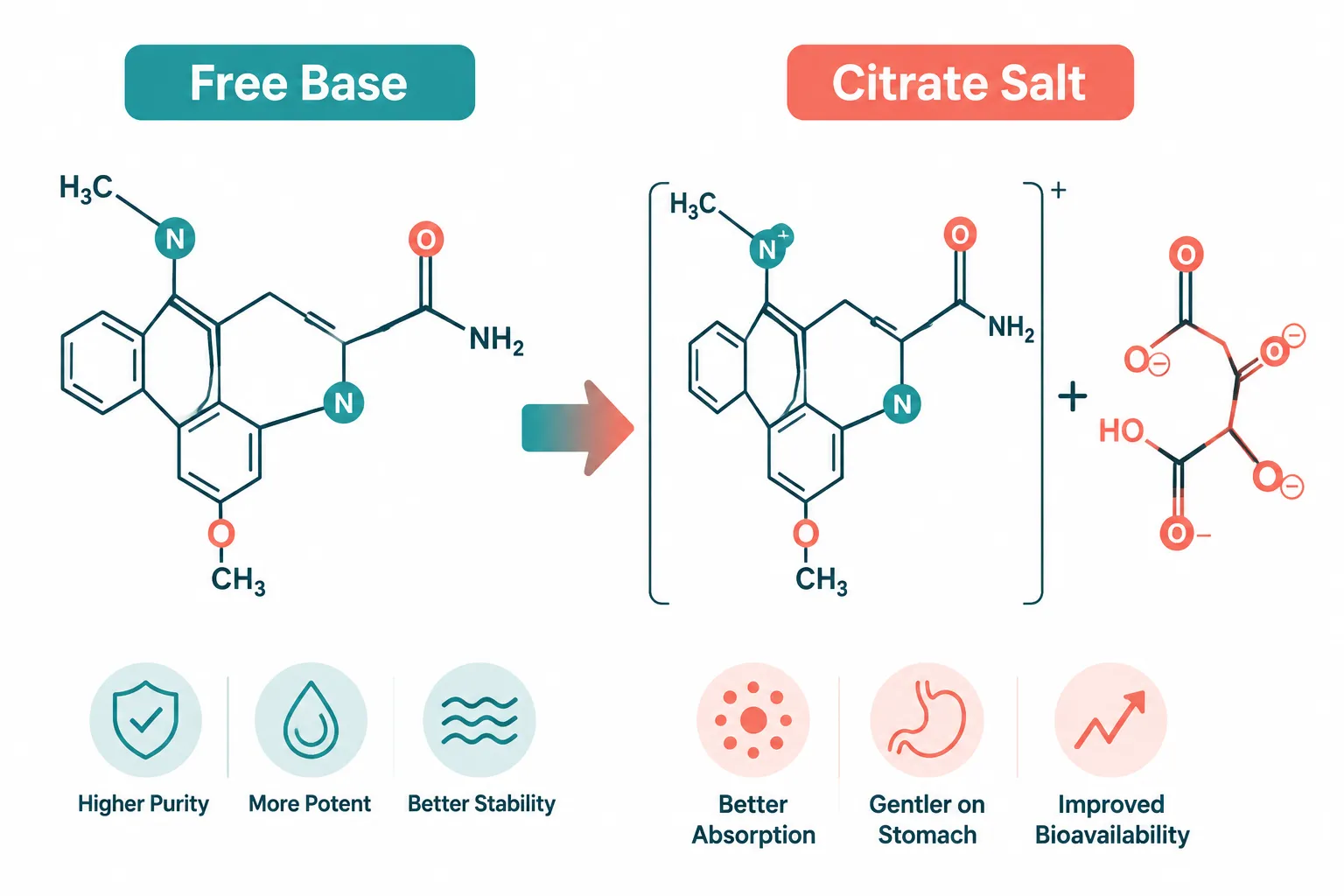
  • Enclomiphene is the trans-isomer free base; Enclomiphene Citrate is its salt form combined with citric acid.
  • The two forms differ in molecular weight, meaning equal mass doses deliver different amounts of active compound.
  • Bioavailability and solubility profiles vary between the free base and salt formulation.
  • Research literature does not always specify which form was used, creating cross-study comparison challenges.
  • Accurate experimental design requires knowing the exact form, purity, and molecular weight of the compound used.
Key Takeaways

Understanding the Chemical Identity: Free Base vs Salt Form

At the core of Enclomiphene vs Enclomiphene Citrate: Formulation, Bioavailability, and Research Distinctions is a straightforward but consequential chemical distinction.

Enclomiphene is the trans-isomer of clomiphene. It is the pharmacologically active stereoisomer that functions as a selective estrogen receptor modulator (serm), binding to estrogen receptors in the hypothalamus and pituitary. In its free base form, the compound exists as a neutral molecule without any counterion.

Enclomiphene Citrate is the salt form of the same compound. It is produced by reacting enclomiphene with citric acid, forming an ionic bond between the two molecules. The citrate anion acts as a counterion that improves the compound's physical handling properties and stability.

Why the Salt Form Exists

Pharmaceutical and research-grade compounds are frequently converted to salt forms for practical reasons:

  • Improved stability during storage and shipping
  • Better aqueous solubility, which aids in certain formulation processes
  • Easier handling as a crystalline powder compared to some free base forms

The citrate salt is the form most commonly encountered in both clinical research and commercial supply chains. However, this creates an important calculation problem for researchers.

The Molecular Weight Difference

This is the most critical practical distinction:

Property Enclomiphene (Free Base) Enclomiphene Citrate
Molecular Formula C26H28ClNO C26H28ClNO + C6H8O7
Approximate MW ~405.96 g/mol ~598.08 g/mol
Active Fraction 100% ~67.9%

A 10 mg dose of Enclomiphene Citrate does not deliver 10 mg of active enclomiphene. It delivers approximately 6.8 mg of the active free base. Researchers who do not account for this difference will administer inconsistent effective doses, making cross-study comparisons unreliable.
The Molecular Weight Difference

Bioavailability and Formulation Implications for Research

The bioavailability dimension of Enclomiphene vs Enclomiphene Citrate: Formulation, Bioavailability, and Research Distinctions extends beyond simple dose correction.

Solubility and Absorption Profiles

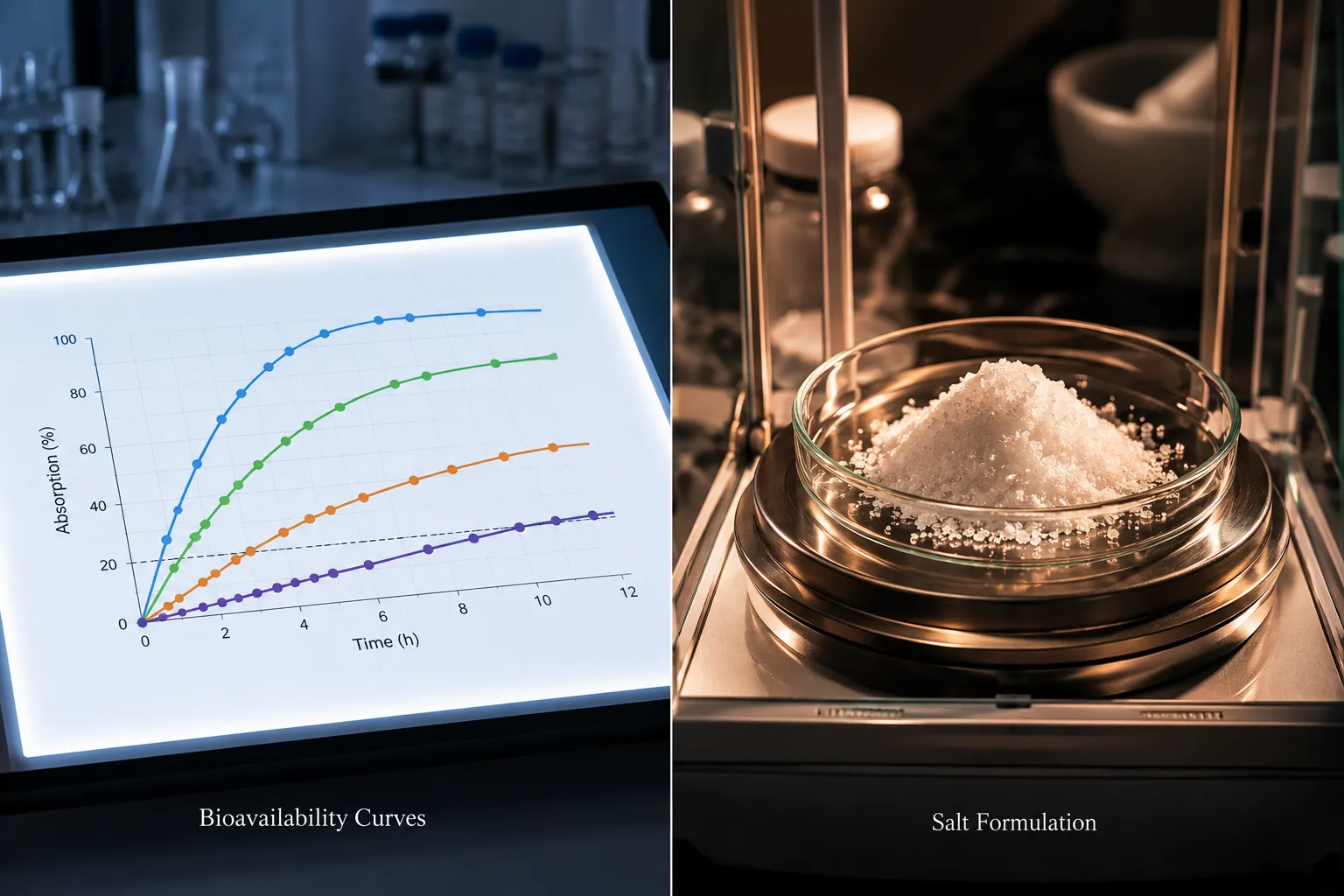
Salt forms generally exhibit higher aqueous solubility than their free base counterparts. For enclomiphene, the citrate salt dissolves more readily in aqueous media, which has implications for:

  • In vitro assay preparation, stock solutions prepared in aqueous buffers will behave differently depending on the form used
  • Oral bioavailability modeling, dissolution rate in gastrointestinal fluid can influence absorption kinetics
  • Reconstitution protocols, researchers using peptide and serm compounds alongside agents like those explored in growth hormone secretagogue research stacks must account for each compound's solubility characteristics independently

pH Sensitivity

The citrate salt form introduces a weak acid (citric acid) into the formulation environment. In highly buffered biological systems this effect is negligible, but in unbuffered in vitro systems or specific cell culture media, the local pH shift from citrate can influence receptor binding assays. Free base enclomiphene does not carry this variable.

Stability Under Storage Conditions

"The counterion in a pharmaceutical salt is not inert, it actively participates in the compound's stability profile under heat, light, and humidity."

Enclomiphene Citrate tends to be more hygroscopic than the free base form. Improper storage can cause weight gain from moisture absorption, further distorting effective dose calculations. Research facilities storing compounds alongside metabolic modulators such as those studied in GLP-1 incretin research programs should apply the same rigorous storage standards to serm compounds.

Stability Under Storage Conditions

Research Distinctions: Experimental Design and Literature Interpretation

The third pillar of Enclomiphene vs Enclomiphene Citrate: Formulation, Bioavailability, and Research Distinctions concerns how these differences affect the integrity of published research and future experimental design.

The Specification Problem in Published Literature

A recurring issue in the serm research landscape is incomplete compound characterization in methods sections. Studies may report dosing in milligrams without specifying whether the free base or citrate salt was used. When two independent research groups use different forms without disclosure, their dose-response curves become incomparable even when the reported milligram amounts are identical.

Researchers working with compounds that require precise receptor-level dosing, analogous to the precision required in mitochondrial peptide research, understand that small formulation differences produce measurable outcome divergence.

Practical Steps for Accurate Experimental Design

Researchers should apply the following standards when working with either form:

  1. Confirm the exact chemical form from the certificate of analysis (COA) before designing the dose protocol.
  2. Apply the molecular weight correction factor when converting between free base and salt form doses.
  3. Document the form explicitly in all methods sections and data reports.
  4. Verify purity independently, a compound listed as 98% pure Enclomiphene Citrate still contains approximately 32% citrate by mass.
  5. Standardize solvent systems based on the specific solubility profile of the form being used.

Connecting to Broader Hormonal Research Contexts

Enclomiphene research intersects with broader investigations into hypothalamic-pituitary-gonadal axis modulation. Researchers exploring hormonal signaling pathways may also find value in reviewing metabolic modulation research themes and longevity-focused peptide research, as overlapping receptor systems are frequently studied in parallel experimental frameworks.

For researchers sourcing verified serm compounds, reviewing available research-grade serm options with documented purity specifications is a necessary step before initiating any experimental protocol.

Conclusion

The distinction between enclomiphene and enclomiphene citrate is not semantic, it is quantitative, biochemical, and methodologically significant. Every milligram matters when studying receptor-level pharmacology. Researchers must confirm the exact form of their compound, apply the appropriate molecular weight correction, and document their specifications clearly in published work.

Actionable next steps for researchers in 2026:

  • Request a full COA specifying free base or salt form before procurement
  • Calculate effective active compound content using the molecular weight ratio
  • Standardize internal protocols to specify form in all experimental records
  • Cross-reference older literature with awareness that form specification may be absent
  • Consult updated compound databases and peer-reviewed pharmacokinetic data when designing new dose-response studies

Precision at the formulation level is what separates reproducible science from ambiguous data.

https://www.puretestedpeptides.com/wp-content/uploads/2026/07/enclomiphene-vs-enclomiphene-citrate-formulation-bioavailability-and-research-di.webp 1024 1536 https://www.puretestedpeptides.com/wp-content/uploads/2026/01/buy-peptides-online.jpg 2026-07-23 13:07:072026-07-23 13:07:07Enclomiphene vs Enclomiphene Citrate: Formulation, Bioavailability, and Research Distinctions
×

Helpful Links

  • My account
  • Cart
  • Checkout
  • Refund and Returns Policy
  • Privacy Policy
  • SMS Privacy Policy
  • Login
  • My Account
  • Logout

USA Made Lab Tested Peptides

All products are sold for research, laboratory, or analytical purposes only, and are not for human consumption


Pure Tested Peptides is a chemical supplier. Pure Tested Peptides is not a compounding / chemical compounding facility as defined under 503A of the Federal Food, Drug, and Cosmetic act. Pure Tested Peptides is not an outsourcing facility as defined under 503B of the Federal Food, Drug, and Cosmetic act.

The statements made within this website have not been evaluated by the US Food and Drug Administration. The products we offer are not intended to diagnose, treat, cure or prevent any disease.

Human/Animal Consumption Prohibited. Laboratory/In-Vitro Experimental Use Only

Scroll to top Scroll to top Scroll to top