

Testosterone levels in men have declined by roughly 1% per year since the 1980s, yet testosterone replacement therapy (TRT) — the most common intervention — suppresses the very hormonal axis it aims to support. That paradox has pushed researchers toward a different class of compounds. Enclomiphene: A Selective Estrogen Receptor Modulator (serm) for Male Reproductive Health Research represents one of the most studied alternatives, offering a mechanism that stimulates endogenous testosterone production rather than replacing it externally.
Key Takeaways
- Enclomiphene is the trans-isomer of clomiphene citrate and works by blocking estrogen receptors at the hypothalamus, stimulating the HPT axis.
- Research shows enclomiphene produces significantly lower estradiol increases compared to clomiphene, reducing common side effects.
- Unlike TRT, enclomiphene preserves and may enhance spermatogenesis, making it relevant for fertility-focused research.
- Enclomiphene significantly increased FSH, LH, and total motile sperm count in clinical studies where clomiphene did not.
- As of 2026, enclomiphene is not FDA-approved as a standalone agent but is accessible through compounding pharmacies for research contexts.
Mechanism of Action: How Enclomiphene Differs From Other serms
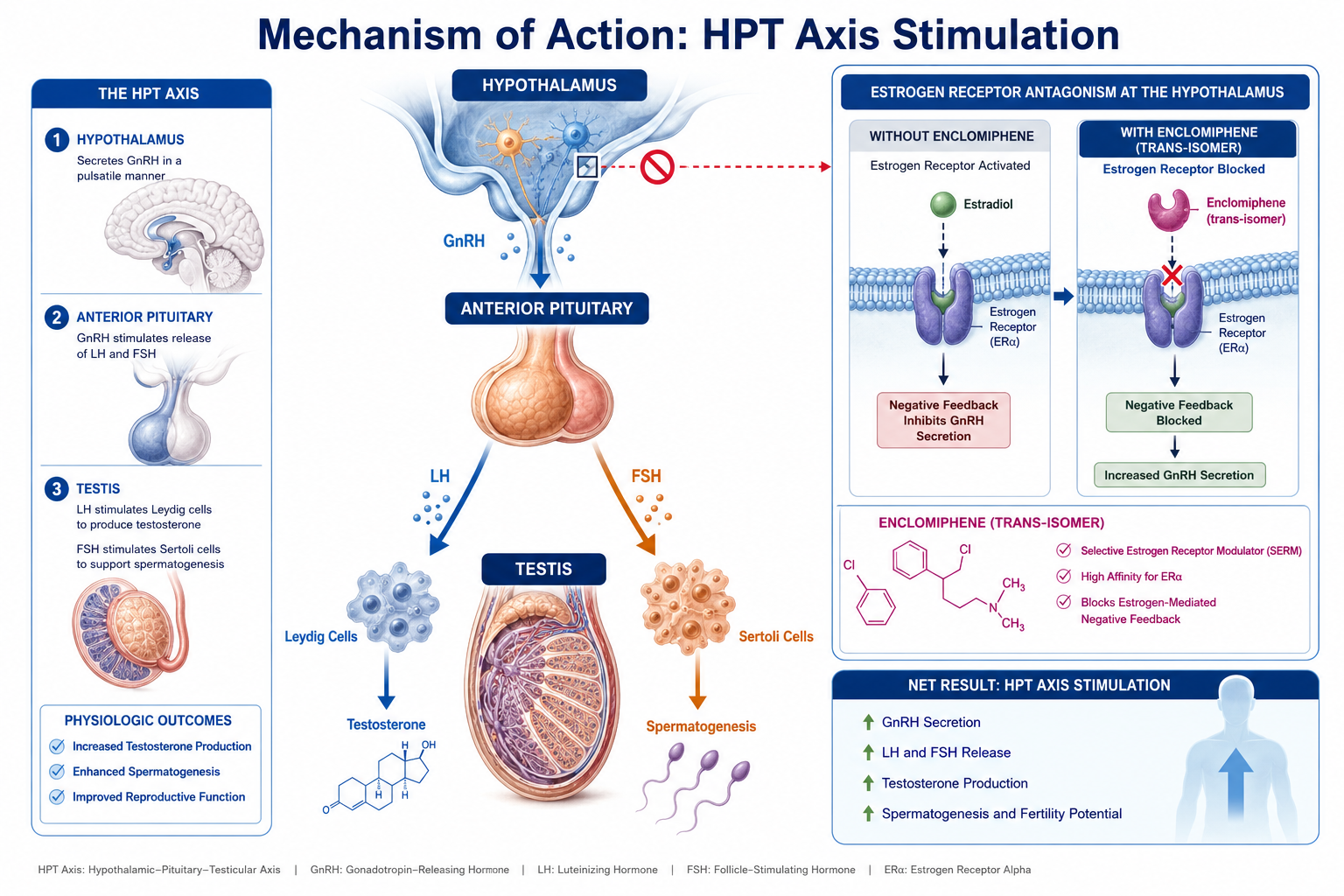
Clomiphene citrate is a mixture of two geometric isomers: zuclomiphene (the cis-isomer) and enclomiphene (the trans-isomer). These two isomers behave very differently in the body. Zuclomiphene has weak estrogenic activity and a long half-life, while enclomiphene acts as a pure estrogen receptor antagonist with a shorter half-life and cleaner pharmacokinetic profile.
Enclomiphene works by binding to estrogen receptors in the hypothalamus, blocking the normal negative feedback signal that estrogen sends to the brain. When estrogen can no longer signal "enough hormone is present," the hypothalamus releases more gonadotropin-releasing hormone (GnRH). This triggers the pituitary gland to secrete luteinizing hormone (LH) and follicle-stimulating hormone (FSH), which in turn stimulate the testes to produce testosterone and support sperm production.
This is the key distinction from TRT. Testosterone replacement shuts down the hypothalamic-pituitary-testicular (HPT) axis through negative feedback, suppressing LH and FSH and leading to testicular atrophy and infertility. Enclomiphene does the opposite — it amplifies the axis rather than bypassing it.
"Enclomiphene stimulates the body's own testosterone production pathway, preserving the hormonal architecture that TRT dismantles."
For researchers exploring compounds that interact with the endocrine system, understanding this axis is foundational. Related research on neuroendocrine and innate immunity interactions provides useful context for how hormonal signaling intersects with broader physiological systems.
Clinical Research Findings: Enclomiphene as a serm in Male Reproductive Studies
Research comparing enclomiphene directly to clomiphene has produced several meaningful findings.
Testosterone and Estradiol Outcomes
A study involving 66 hypogonadal men found that enclomiphene produced a median testosterone increase of 166 ng/dL compared to 98 ng/dL with clomiphene. While this difference was not statistically significant (P=0.20), the estradiol data was striking. Enclomiphene resulted in a statistically significant lower increase in estradiol levels compared to clomiphene (−5.92 vs. +17.50 pg/mL, P=0.001).
This estradiol difference matters clinically. Elevated estradiol in men is associated with gynecomastia, mood changes, and reduced libido — all common complaints with clomiphene use.
Adverse Effect Profile
The same study found that patients on enclomiphene reported significantly fewer adverse effects:
| Adverse Effect | Enclomiphene | Clomiphene | P-value |
|---|---|---|---|
| Decreased libido | Lower incidence | Higher incidence | 0.001 |
| Reduced energy | Lower incidence | Higher incidence | 0.044 |
| Mood changes | Lower incidence | Higher incidence | 0.030 |
Sperm Parameters and Gonadotropins
A 2023 retrospective study of 78 men found that enclomiphene produced a statistically significant increase in total motile sperm count (TMSC), while clomiphene did not. Enclomiphene also significantly raised both FSH and LH levels — critical markers of HPT axis activation — whereas clomiphene again showed no significant effect on these gonadotropins.
These findings position enclomiphene as a particularly relevant compound for secondary hypogonadism research in younger men who wish to maintain fertility.
Researchers studying related peptide compounds that influence body composition and hormonal balance may find value in reviewing ipamorelin research on muscle and fat metabolism as a complementary area of inquiry.
Research Context, Safety Profile, and Future Directions

As of 2026, enclomiphene is not FDA-approved as a single-agent therapy in the United States. It is available through compounding pharmacies and is used in research contexts examining secondary hypogonadism, male infertility, and alternatives to TRT.
Its safety profile in current research appears favorable compared to clomiphene, largely due to the absence of the estrogenic zuclomiphene isomer. This cleaner receptor selectivity makes it a useful research model for understanding how pure estrogen receptor antagonism affects the male HPT axis.
Researchers working with serms and related compounds should also consider how other research-grade compounds interact with hormonal and metabolic pathways. For example, PT-141 research in central arousal pathways explores a separate but related dimension of male reproductive health at the neuroendocrine level. Similarly, GLP-1 and incretin research themes highlight how metabolic signaling intersects with hormonal health in male subjects.
For those sourcing research-grade serms, verified compound quality is essential. Reviewing available certificates of analysis and sourcing from suppliers with documented purity testing ensures research integrity. Those specifically looking for serm compounds for research purposes can explore the serm 10mg research compound as a starting reference point.
Conclusion
Enclomiphene: A Selective Estrogen Receptor Modulator (serm) for Male Reproductive Health Research occupies a unique position in endocrinology research. Its targeted mechanism — blocking hypothalamic estrogen receptors to amplify the HPT axis — produces measurable increases in LH, FSH, testosterone, and total motile sperm count, while generating significantly less estrogenic activity than its parent compound, clomiphene.
Actionable next steps for researchers:
- Review published clinical comparisons between enclomiphene and clomiphene for HPT axis endpoint data.
- Evaluate estradiol and gonadotropin panels as primary outcome markers in any serm-related male reproductive study design.
- Source compounds exclusively from suppliers providing third-party purity verification and documented certificates of analysis.
- Consider enclomiphene alongside complementary research areas such as peptide-based hormonal modulation for a broader picture of male endocrine health.
The research landscape in 2026 continues to support enclomiphene as a compound of significant scientific interest for male reproductive and hormonal health studies.
Leave a Reply
Want to join the discussion?Feel free to contribute!