Call or Text 727-513-9780
  • Shopping Cart Shopping Cart
    0Shopping Cart
Pure Tested Peptides | America's most trusted Peptides for sale online
  • Peptides for sale
    • Oral Peptides for sale
      • Peptide Capsules for sale
      • BPC 157 Capsules 1000mcg
      • SLU-PP-332 Capsules | 1000 mcg
      • 5-Amino-1MQ 50mg Capsules
      • Tesofensine 500mcg
    • All Peptides for sale
    • Peptide Sprays
      • BPC 157 Nasal Spray Kit
      • BPC-157 TB500 Nasal Spray Kit
      • Semax Nasal Spray 10mg
      • Selank – Nasal Spray Kit – 10mg
      • Epithalon 50MG Nasal Spray Kit
      • Ipamorelin 10mg Nasal Spray
      • Klow Nasal Spray (BPC-157 + TB-500 + GHK-Cu + KPV) | 80mg
      • Hulk Nasal Spray Tesa / Ipa Blend 6/3 MG
      • Klow Nasal Spray
      • NAD + 500 mg Nasal Spray
      • PT-141 Nasal Spray Kit
    • GHRH Peptides
      • Ipa Peptides
      • CJC-1295 Peptides
        • CJC-1295 with DAC 5 mg
        • CJC-1295 without DAC 5 mg
        • CJC-1295 Ipa 10mg
      • Tesa Peptides
        • Tesa Peptide
        • Tesa 20 mg
    • GHK-Cu Peptides
      • All GHK-Cu Peptides
      • GHK-Cu 100mg
      • KLOW Peptide Blend – Buy KLOW blend online
    • BPC Peptides
      • All BPC Peptides
      • BPC-157
      • BPC-157 TB-500
      • BPC 157 capsules 1000mcg
    • SLU-PP-332 Peptides
      • All SLU-PP-332 Peptides
      • SLU-PP-332 5mg
    • GLP3 Peptides
      • GLP3-R
      • GLP3-R CAG 10mg
      • GLP3-R 20mg
    • PT-141 Peptides
      • PT-141 Peptides for sale
      • PT-141 10mg
      • PT-141 Nasal Spray
    • CAG Peptides
      • Lipo-C Peptide Blend
      • CAG 5mg
      • CAG 10mg
    • MOTS-C Peptides
      • MOTS-C Peptides for sale
      • MOTS-c peptide
      • MOTS-c 10mg *6 pack*
    • 5 Amino 1MQ Peptides
      • 5 Amino 1MQ Peptides for sale
      • 5-Amino-1MQ 50mg Capsules
      • 5-Amino-1MQ 5mg
    • Epithalon Peptides
      • Epithalon Peptides for sale
      • Epithalon 10mg
      • Epithalon 50mg
  • Shop
    • GLPs
      • 5-Amino-1MQ 50mg Capsules
      • 5-Amino-1MQ 5mg
      • GLP3-Reta
      • L-Carnitine 500mg/ml
      • Tesofensine 500mcg
      • SLU-PP-332 5mg
      • MOTS-c 10mg *6 pack*
    • Epithalon & BPC Peptides
      • Epithalon 10mg
      • Epithalon 50mg
      • BPC-157
      • BPC 157 capsules 1000mcg
      • BPC-157 TB-500
      • BPC-157 TB500 Nasal Spray Kit
      • BPC 157 Nasal Spray Kit
    • BPC TB-500 & NAD+ Peptides
      • NAD+ 500 mg
      • KLOW Peptide Blend – Buy KLOW blend online
      • GLOW Peptide Blend
      • TB 500 5mg
      • BPC 157 capsules 1000mcg – Supplement
      • BPC 157 Nasal Spray Kit
      • BPC-157
      • BPC-157 TB500 Nasal Spray Kit
      • BPC-157 TB-500
      • BPC 157 capsules 1000mcg
    • LL-37 Peptide
      • LL-37 10 mg
    • MOTS-C & Selank
      • MOTS-c peptide
      • Selank 10mg
    • GHK Peptides
      • GHK-Cu 100mg
      • GLOW Peptide Blend
      • KLOW Peptide Blend – Buy KLOW blend online
  • COAs
  • Wholesale
    • Wholesale Peptides for sale
  • PTP FAQ
  • Affiliates
    • Affiliate Program
    • Affiliate Signup
  • Contact
    • Contact Customer Service
    • Text Customer Support
  • About US
  • Shop all peptides
  • Login / Register Login / Register Page Link Login / Register Page Link
  • Click to open the search input field Click to open the search input field Search
  • Menu Menu

Tag Archive for: enclomiphene

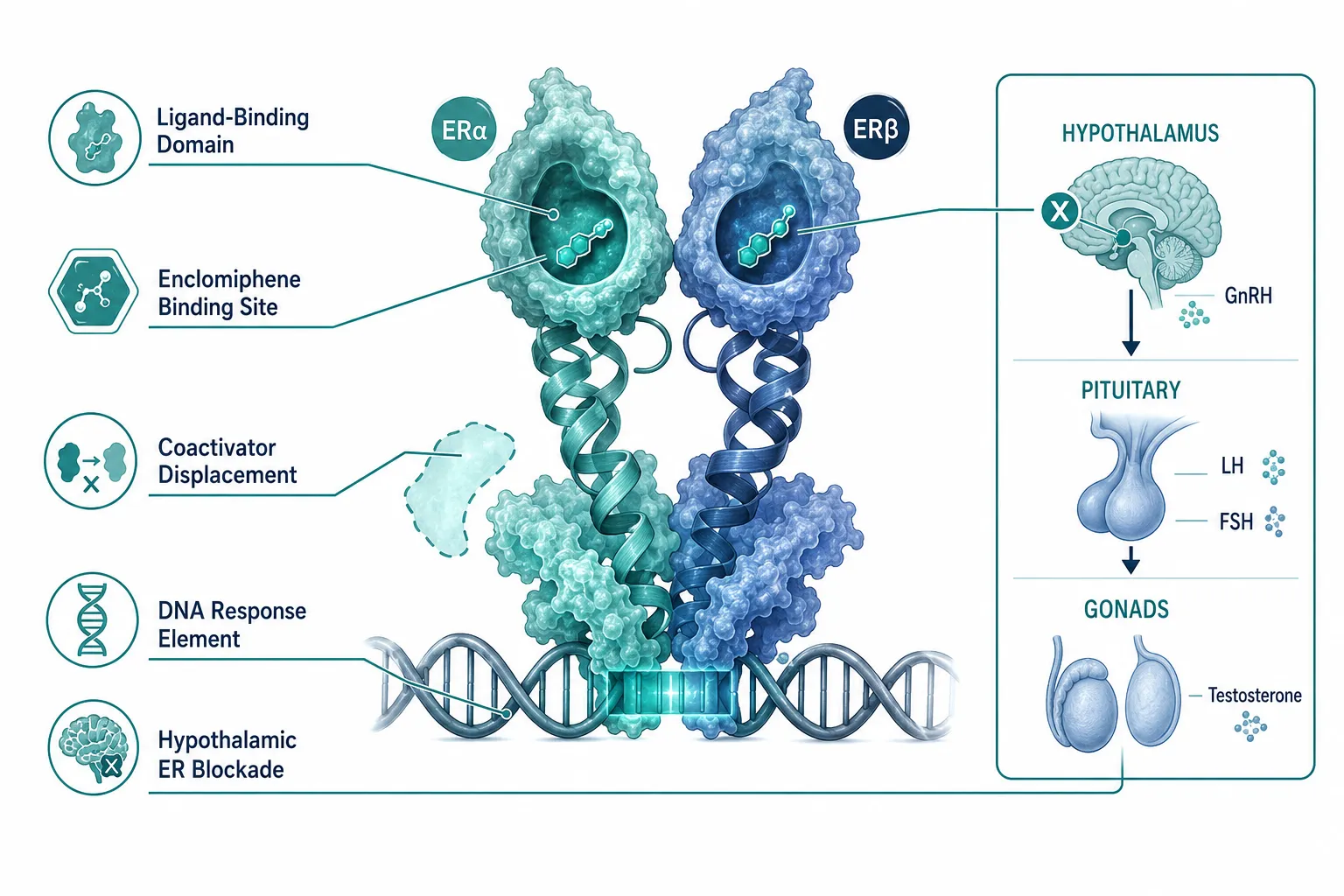
Estrogen Receptor Signaling and Enclomiphene: Linking Classic Endocrine Pharmacology to Modern serm Research Models

Estrogen Receptor Signaling and Enclomiphene: Linking Classic Endocrine Pharmacology to Modern serm Research Models

July 15, 2026/0 Comments/in Uncategorized/by

Fewer than 5% of men diagnosed with secondary hypogonadism are offered alternatives to exogenous testosterone replacement, yet enclomiphene, a single stereoisomer of clomiphene, has drawn sustained attention in research circles precisely because it targets the same estrogen receptor signaling axis that endocrinologists have studied for decades. Understanding estrogen receptor signaling and enclomiphene: linking classic endocrine pharmacology to modern serm research models requires tracing a path from foundational receptor biology to today's selective estrogen receptor modulator (serm) science.

Key Takeaways

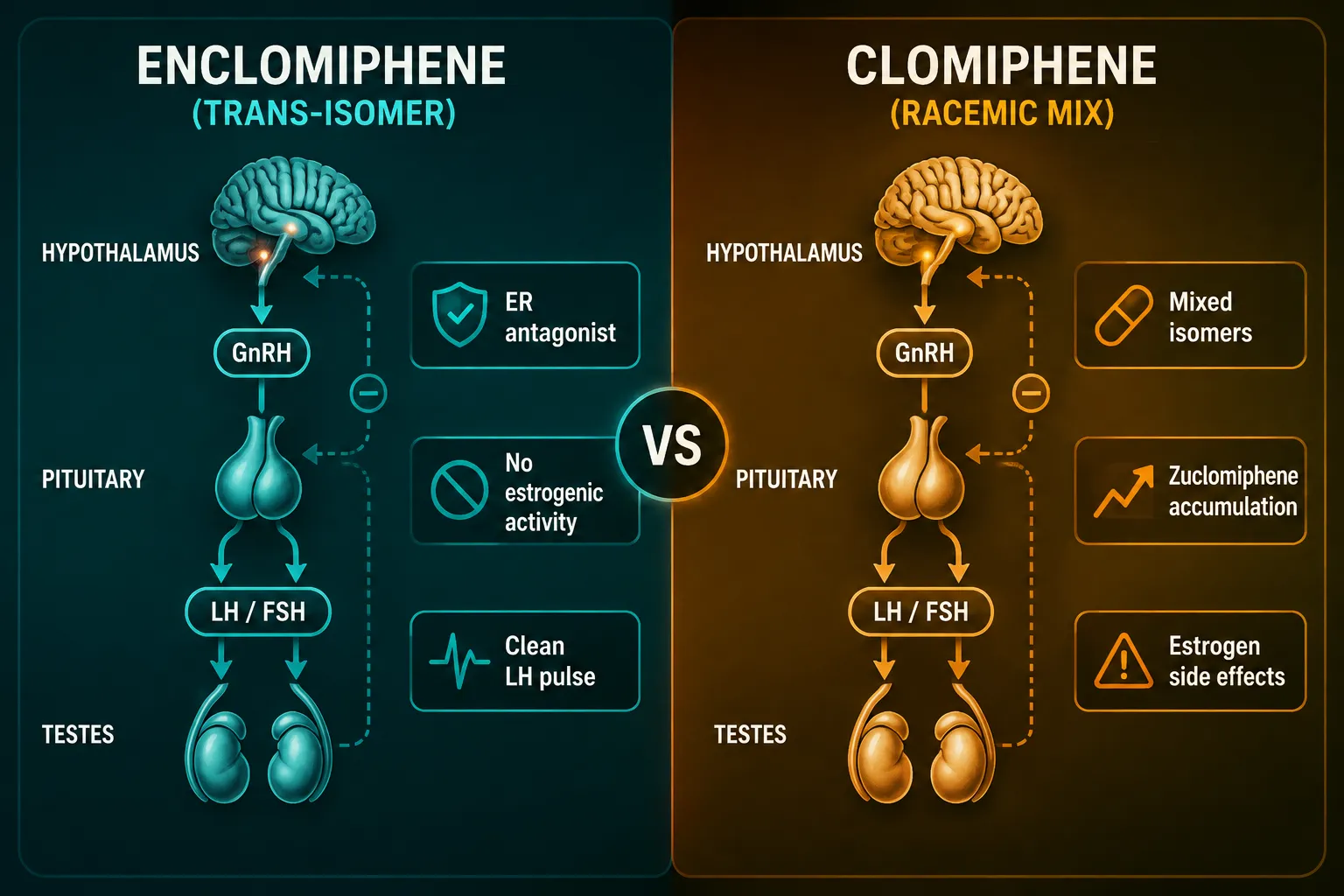
  • Enclomiphene is the trans-isomer of clomiphene and acts as an estrogen receptor antagonist at the hypothalamic-pituitary level.
  • By blocking estrogen negative feedback, enclomiphene stimulates LH and FSH release, which in turn supports endogenous testosterone production.
  • Legacy serms such as tamoxifen and raloxifene established the receptor-binding framework that modern enclomiphene research builds upon.
  • Tissue-selective receptor modulation distinguishes serms from both full agonists and pure antagonists.
  • Enclomiphene research fits within a broader landscape of endocrine-modulating compounds studied alongside peptide-based secretagogues and metabolic agents.

Key Takeaways

How Estrogen Receptor Signaling Governs the HPG Axis

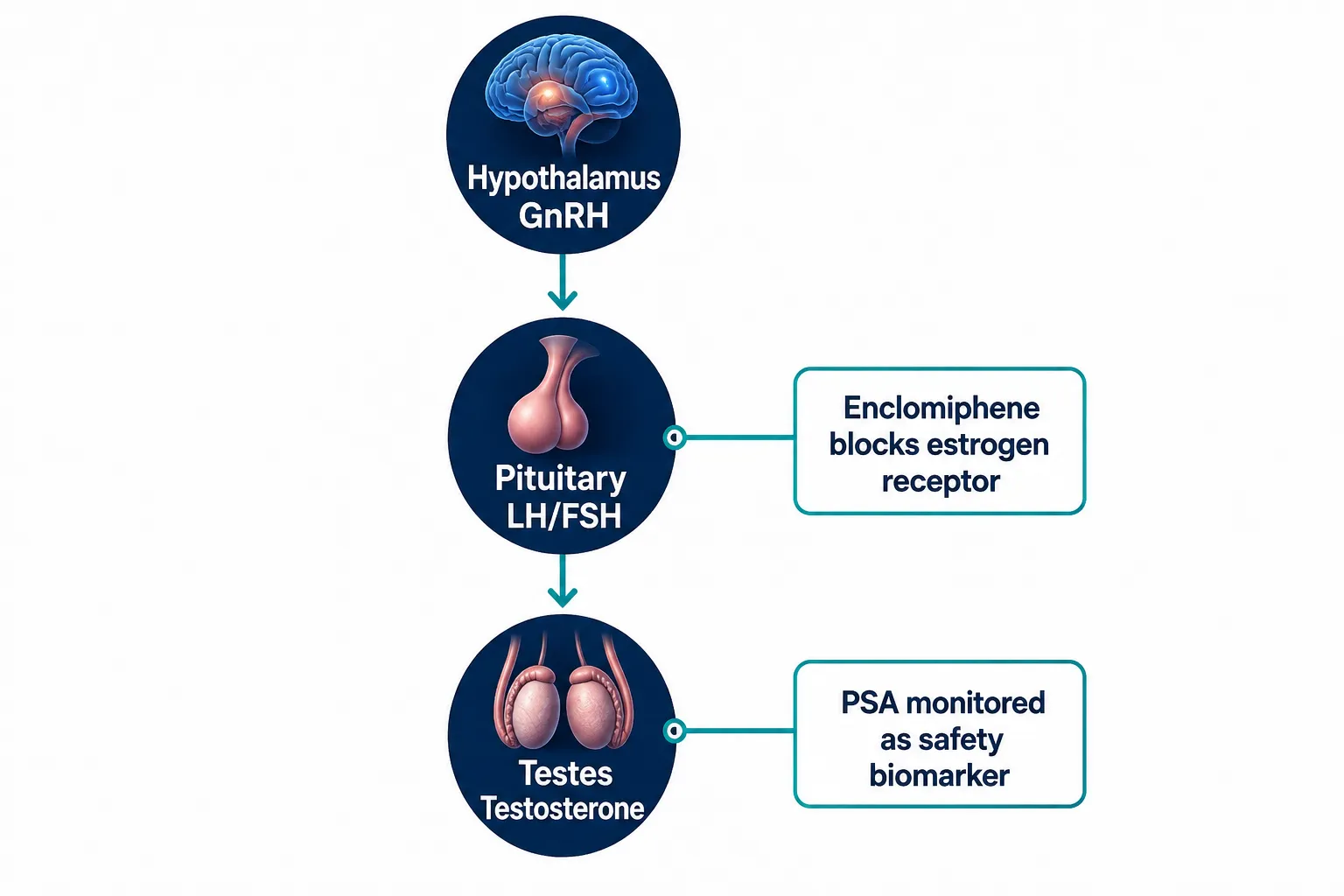
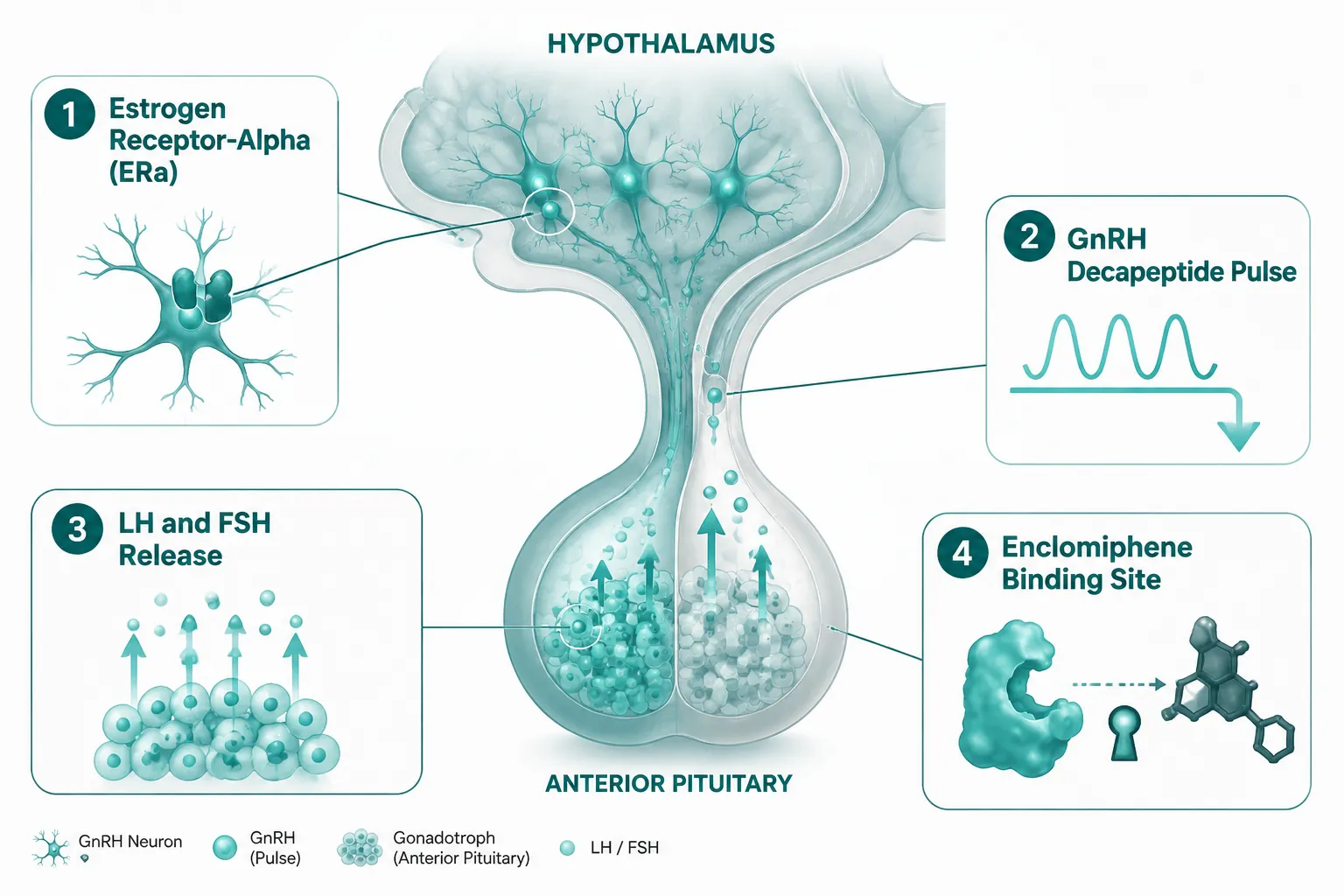
The hypothalamic-pituitary-gonadal (HPG) axis operates through a tightly regulated feedback loop. The hypothalamus releases gonadotropin-releasing hormone (GnRH), which prompts the anterior pituitary to secrete luteinizing hormone (LH) and follicle-stimulating hormone (FSH). These gonadotropins then stimulate gonadal steroidogenesis, testosterone production in males, estradiol and progesterone in females.

Estrogen receptor alpha (ERα) plays a central role in this loop. When circulating estradiol binds ERα at hypothalamic neurons, it suppresses GnRH pulse frequency, reducing downstream LH and FSH. This negative feedback is the primary target of serm pharmacology.

Key receptor-level concepts researchers track:

  • Ligand-binding domain (LBD) conformation, determines whether a compound acts as agonist or antagonist
  • Coactivator vs. corepressor recruitment, drives tissue-specific gene transcription
  • ERα vs. ERβ selectivity, explains differential effects across bone, breast, uterine, and neural tissue

This framework, established through decades of tamoxifen and raloxifene research, is the same scaffold used when evaluating enclomiphene in preclinical and clinical models. Researchers exploring related neuroendocrine and innate immunity pathways will recognize how tightly hormonal and immune signaling are intertwined at the receptor level.


Legacy serms vs. Enclomiphene: A Pharmacological Contrast

Legacy serms vs. Enclomiphene: A Pharmacological Contrast

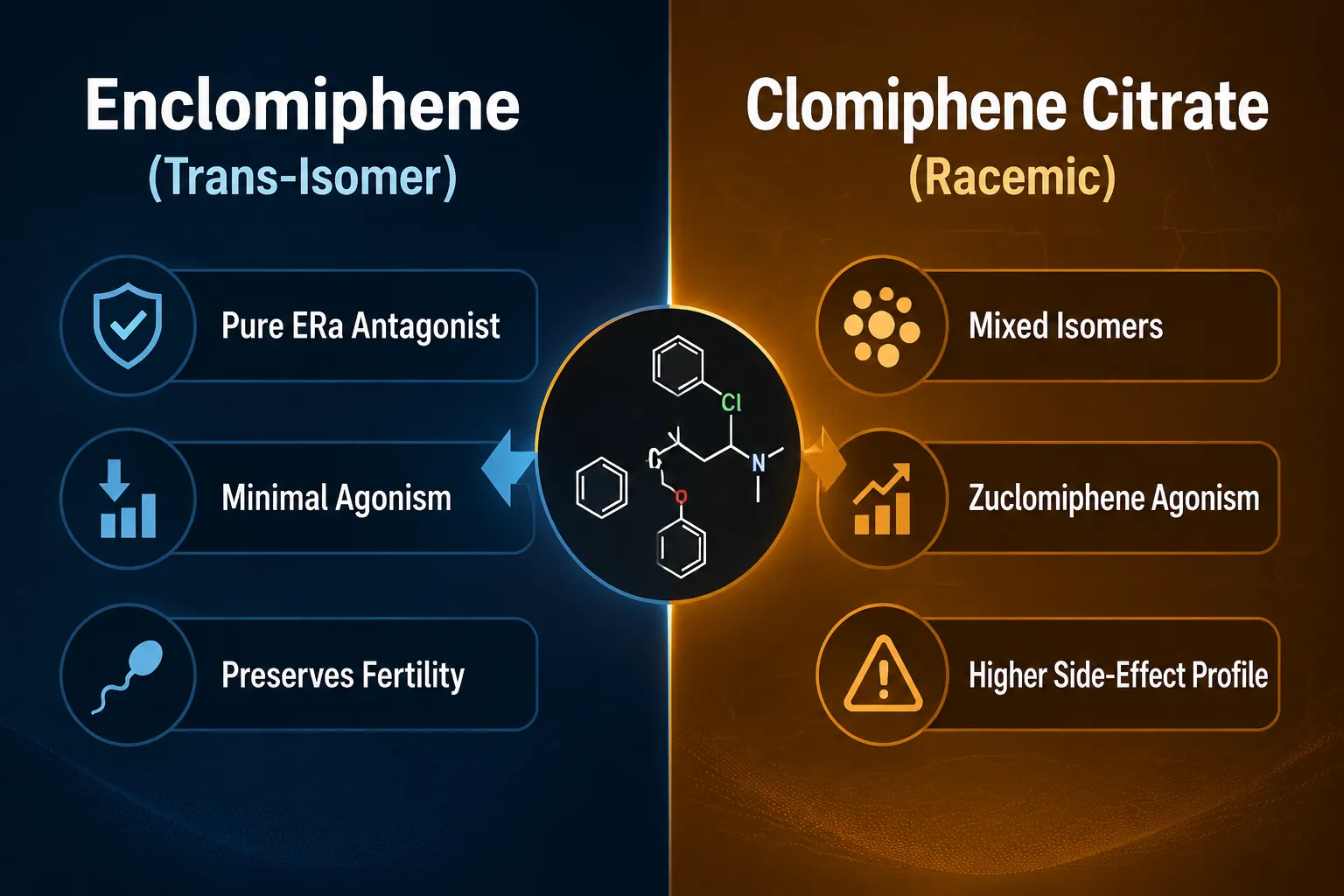
Tamoxifen, introduced in the 1970s, was the first clinically significant serm. Raloxifene followed, offering improved bone and cardiovascular profiles. Clomiphene citrate, a racemic mixture of zuclomiphene (cis) and enclomiphene (trans), became standard for ovulation induction.

"Enclomiphene's pharmacological advantage lies in its shorter half-life and cleaner receptor profile compared to the racemic parent compound."

The table below summarizes key distinctions:

Compound Primary Target Half-Life Key Research Use
Tamoxifen ERα (breast) ~5-7 days Oncology models
Raloxifene ERα/ERβ (bone) ~28 hours Osteoporosis research
Clomiphene (racemic) Hypothalamic ERα ~5-7 days Ovulation induction
Enclomiphene Hypothalamic ERα ~10 hours Male HPG axis research

Enclomiphene's shorter half-life reduces receptor occupancy duration, which researchers hypothesize may lower the risk of prolonged estrogenic side effects seen with zuclomiphene accumulation. Those studying IPA serm stack research will find this receptor-selectivity distinction directly relevant to how serms are combined with growth hormone secretagogues in research protocols.


Enclomiphene in Modern serm Research Models

Enclomiphene in Modern serm Research Models

Modern research into estrogen receptor signaling and enclomiphene: linking classic endocrine pharmacology to modern serm research models has moved beyond simple agonist/antagonist labeling. Current models examine:

  1. Pulse dynamics, how enclomiphene alters GnRH pulse frequency in ex-vivo hypothalamic preparations
  2. Receptor occupancy kinetics, binding affinity data compared to endogenous estradiol
  3. Downstream steroidogenesis, LH-driven Leydig cell testosterone output in preclinical models
  4. Metabolic co-effects, interactions with insulin sensitivity and lipid metabolism markers

This last point connects enclomiphene research to a wider metabolic research landscape. Investigators studying metabolic modulation research lines or AOD-9604 metabolic research often encounter overlapping endpoints, since testosterone and growth hormone axes share downstream metabolic effectors.

Enclomiphene is also being contrasted with small-molecule approaches, including statins, which modestly influence testosterone biosynthesis through cholesterol substrate effects, to isolate receptor-mediated from substrate-mediated hormonal changes. This distinction matters when designing clean research models.

For researchers sourcing reference-grade compounds, the serm 10mg research compound page provides purity and specification data relevant to in-vitro and preclinical study design.

Broader endocrine research often pairs serm compounds with secretagogue stacks. The IPA sermorelin stack research context illustrates how HPG-axis and GH-axis modulation are studied in parallel, since both systems converge on body composition and metabolic outcomes. Similarly, longevity peptide research increasingly incorporates hormonal axis optimization as a foundational variable.


Conclusion

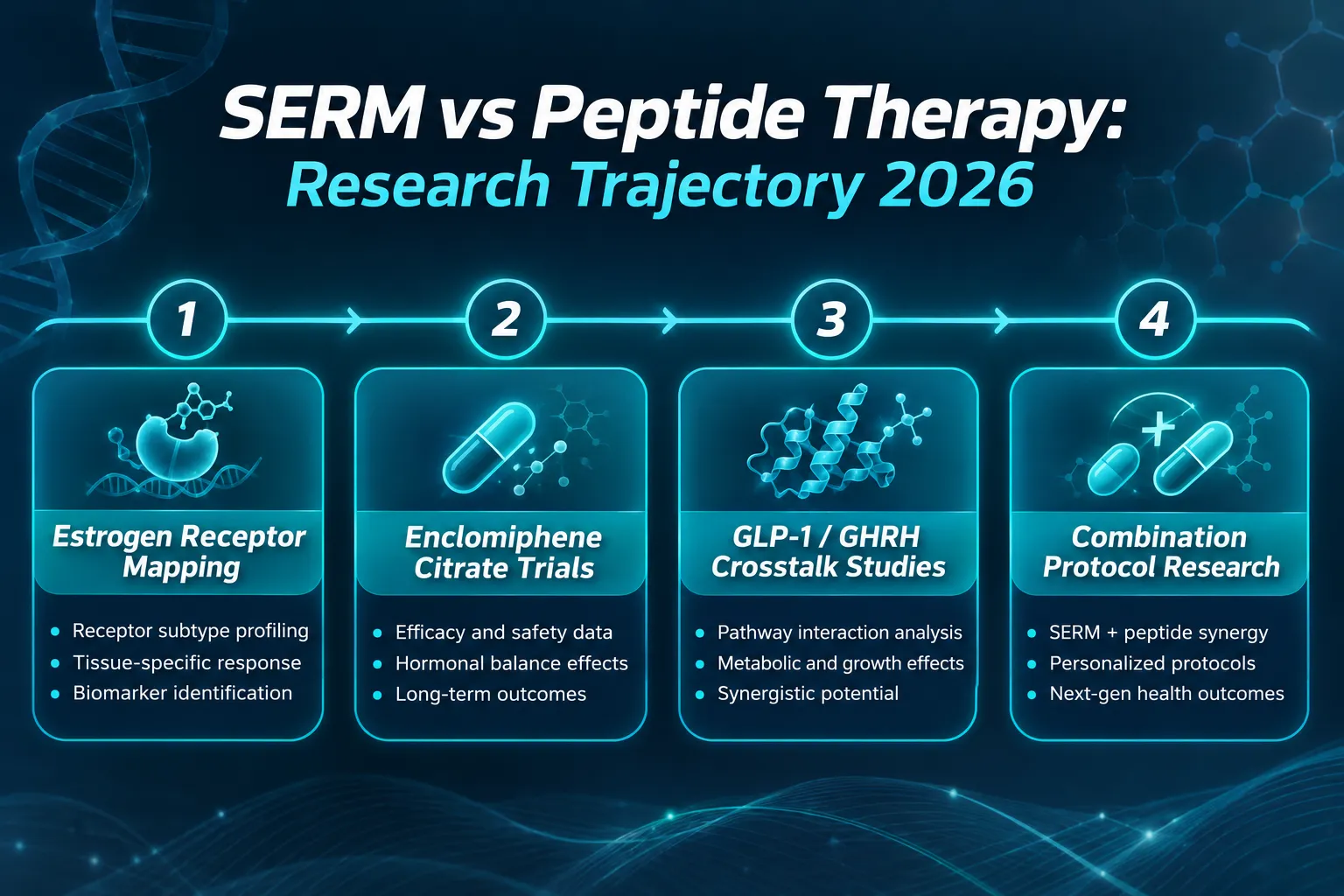
Estrogen receptor signaling and enclomiphene: linking classic endocrine pharmacology to modern serm research models is not a niche academic exercise, it is a convergence point for reproductive endocrinology, metabolic biology, and precision pharmacology. Researchers in 2026 have access to a far richer mechanistic toolkit than the tamoxifen era provided.

Actionable next steps for researchers:

  • Map ERα and ERβ expression profiles in target tissues before designing serm intervention studies
  • Use enclomiphene's short half-life as a variable to study pulse-dependent vs. tonic receptor occupancy effects
  • Compare HPG-axis outcomes alongside metabolic markers to capture full-system responses
  • Review compound purity documentation carefully, as stereoisomer contamination confounds receptor-binding data
  • Consider pairing serm research with secretagogue or metabolic peptide protocols to capture cross-axis interactions

The field is moving rapidly. Grounding new enclomiphene research in the deep literature of estrogen receptor pharmacology ensures that modern findings build on, rather than repeat, the foundational work that made serm science possible.

https://www.puretestedpeptides.com/wp-content/uploads/2026/07/estrogen-receptor-signaling-and-enclomiphene-linking-classic-endocrine-pharmacol.webp 1024 1536 https://www.puretestedpeptides.com/wp-content/uploads/2026/01/buy-peptides-online.jpg 2026-07-15 13:06:082026-07-15 13:06:08Estrogen Receptor Signaling and Enclomiphene: Linking Classic Endocrine Pharmacology to Modern serm Research Models
Enclomiphene and Estrogen Receptor Signaling in Research: How It Compares With serm-Based Hormone Studies

Enclomiphene and Estrogen Receptor Signaling in Research: How It Compares With serm-Based Hormone Studies

July 14, 2026/0 Comments/in Uncategorized/by

Fewer than 5% of selective estrogen receptor modulators studied in preclinical settings reach meaningful clinical endpoints, yet enclomiphene has consistently stood apart from that trend. Research into enclomiphene and estrogen receptor signaling in research: how it compares with serm-based hormone studies reveals a compound with a precise mechanistic profile that challenges older, less selective approaches to hormone axis modulation.

Key Takeaways

  • Enclomiphene is the trans-isomer of clomiphene citrate and functions as a pure estrogen receptor antagonist at the hypothalamic level
  • By blocking estrogen receptors in the hypothalamus, it drives LH and FSH secretion, which in turn stimulates endogenous testosterone production
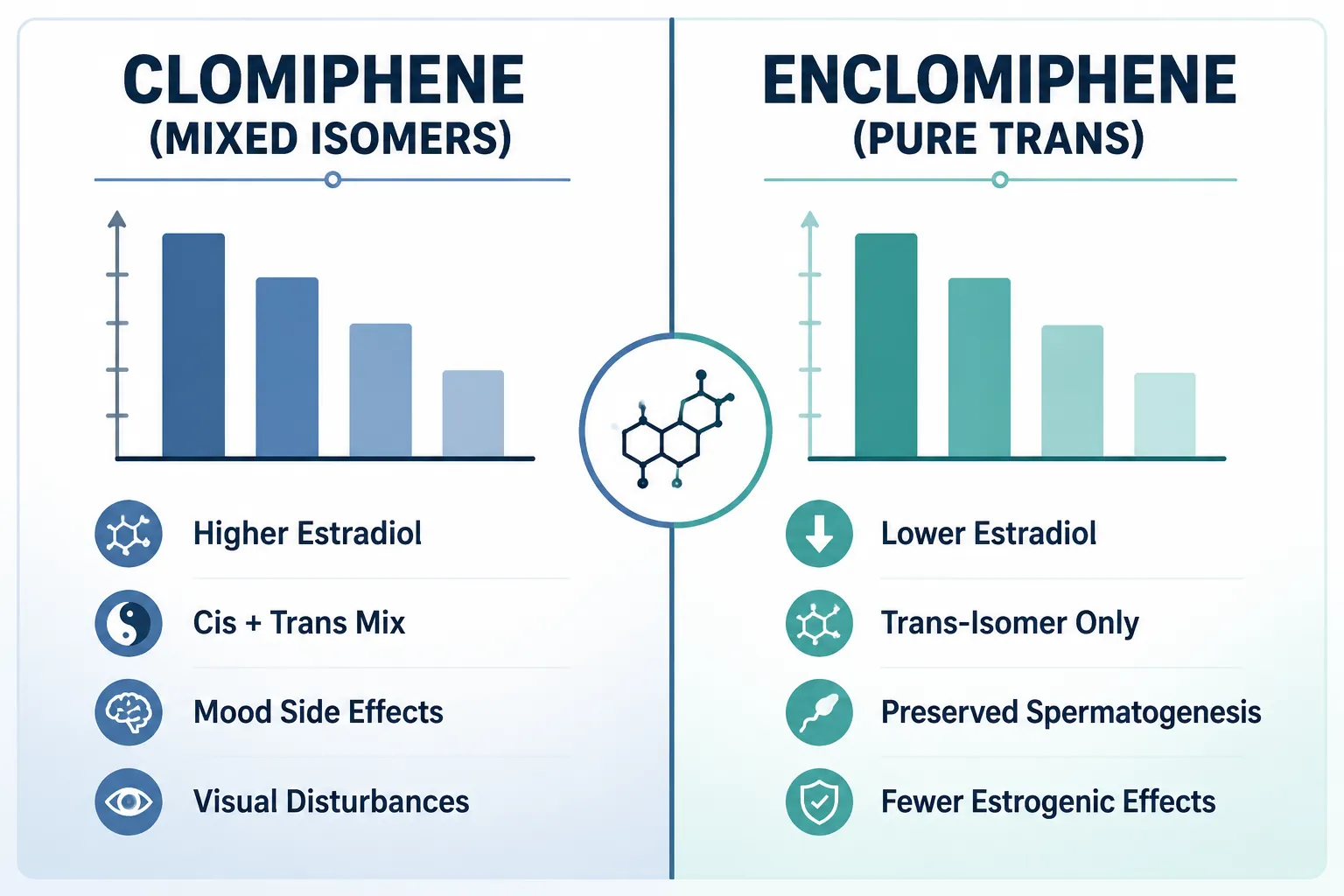
  • Unlike mixed clomiphene, enclomiphene eliminates the weak estrogenic activity of the zuclomiphene isomer, producing a cleaner receptor signal
  • Compared to classical serms, enclomiphene preserves spermatogenesis, making it distinct in fertility-relevant research contexts
  • Its short half-life of approximately 10 to 15 hours supports daily oral dosing protocols in research models

Mechanistic Foundations: How Enclomiphene Engages Estrogen Receptors

Mechanistic Foundations: How Enclomiphene Engages Estrogen Receptors

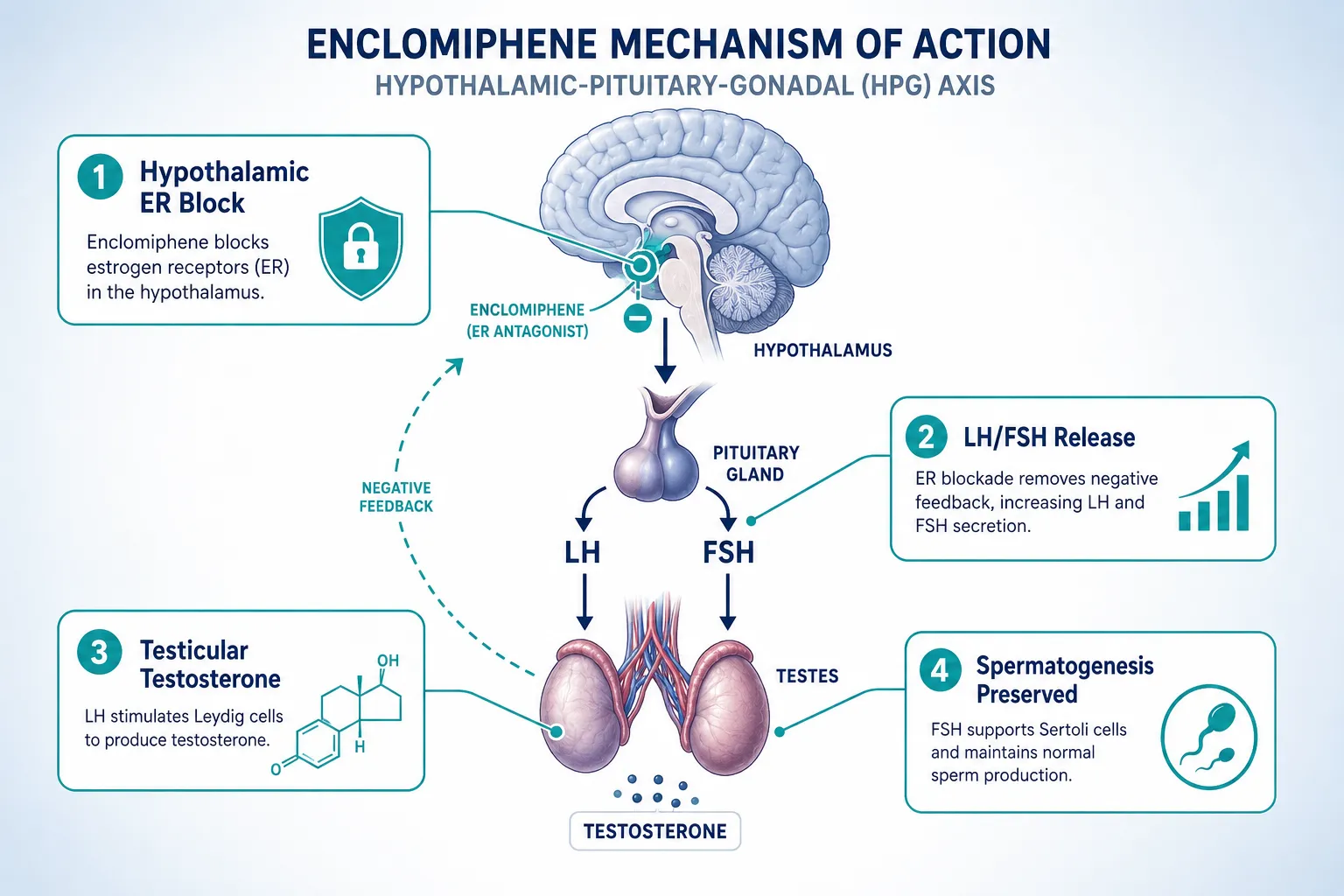
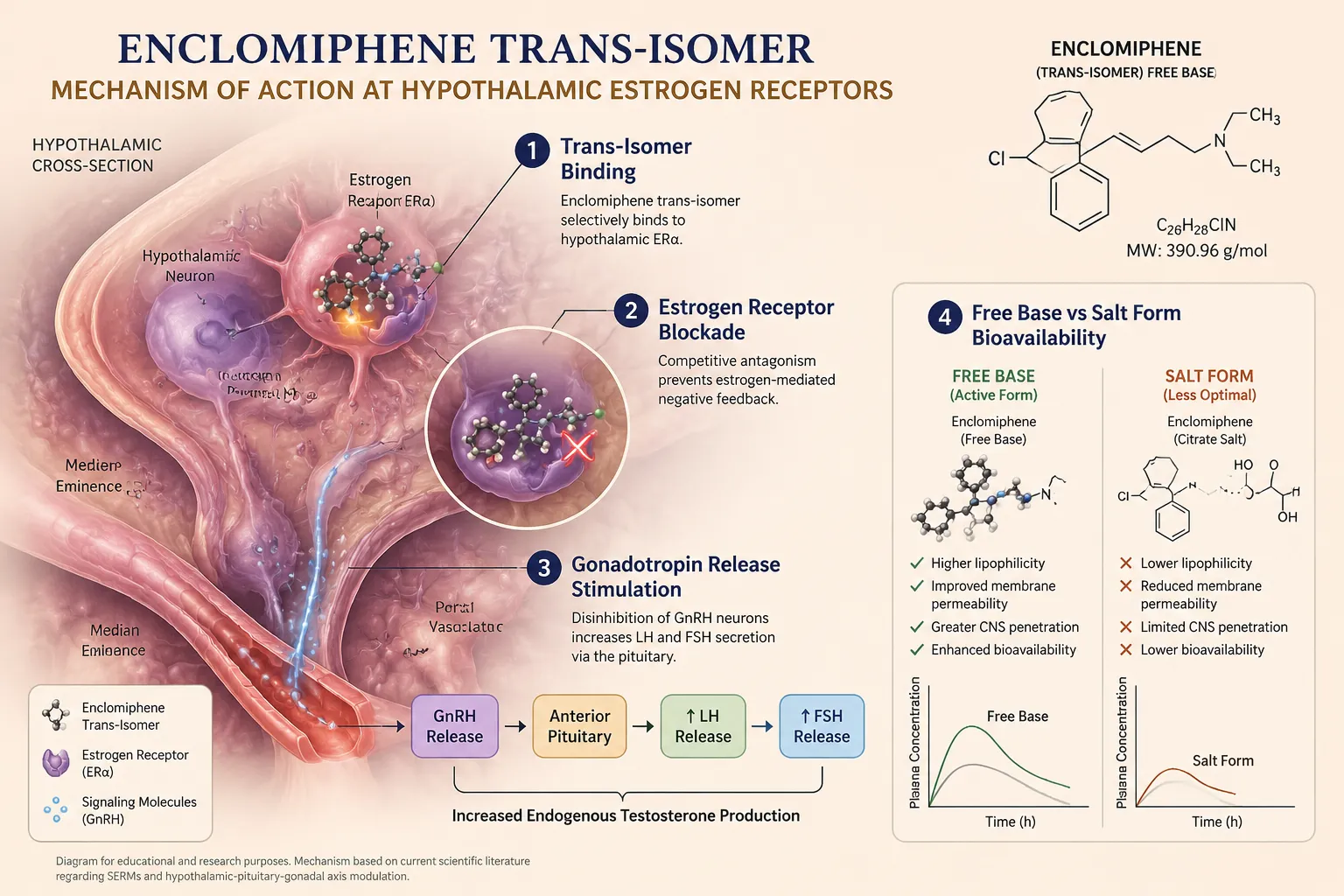
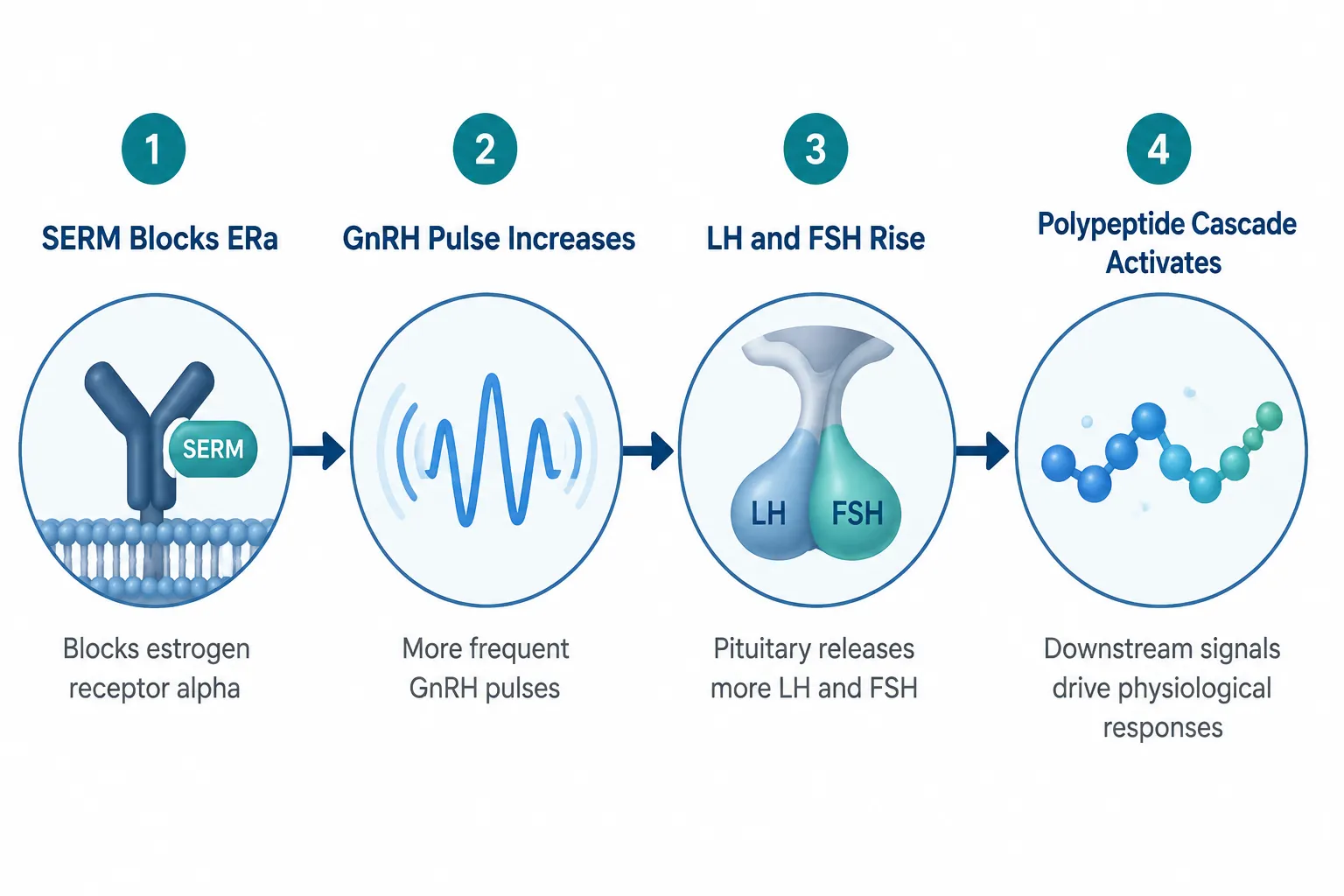
Enclomiphene acts as a competitive antagonist at estrogen receptors in the hypothalamus. When estrogen receptors in this region are blocked, the hypothalamus interprets the signal as low circulating estrogen. It responds by releasing more gonadotropin-releasing hormone (GnRH), which then stimulates the pituitary gland to secrete luteinizing hormone (LH) and follicle-stimulating hormone (FSH).

This upstream effect is what separates enclomiphene from direct androgen therapies. Rather than supplying testosterone externally, it restores the signaling chain that produces testosterone endogenously. For researchers studying the hypothalamic-pituitary-gonadal (HPG) axis, this makes enclomiphene a valuable tool for observing how estrogen receptor blockade translates into downstream hormonal change.

Key receptor-level distinctions:

  • Enclomiphene binds estrogen receptor alpha (ERa) with high affinity in hypothalamic tissue
  • It does not carry the residual estrogenic agonist activity seen in its sister isomer, zuclomiphene
  • A 2022 computational study using fragment molecular orbital calculations confirmed that ligand-receptor complementarity at ERa is highly sensitive to isomeric configuration, a finding directly relevant to enclomiphene's clean antagonist profile

For researchers exploring related receptor modulation pathways, serm-based research compounds offer a useful comparative reference point.

Enclomiphene and Estrogen Receptor Signaling in Research: How It Compares With serm-Based Hormone Studies

Enclomiphene and Estrogen Receptor Signaling in Research: How It Compares With serm-Based Hormone Studies

The broader serm category includes compounds like tamoxifen, raloxifene, and toremifene, each with different tissue selectivity profiles. What makes enclomiphene stand out in this landscape is its isomeric purity and its specific action on the HPG axis rather than peripheral estrogen-sensitive tissues.

Comparison Across Key Research Parameters

Parameter Enclomiphene Mixed Clomiphene Tamoxifen
Receptor action Pure antagonist (hypothalamus) Mixed agonist/antagonist Tissue-selective mixed
HPG axis activation Strong LH/FSH increase Moderate Minimal
Estrogenic side effects Low Moderate Variable
Spermatogenesis impact Preserved Partially preserved Not studied for this
Half-life 10-15 hours 5-7 days (zuclomiphene) 5-7 days

In a 2016 clinical study, enclomiphene citrate raised serum testosterone in men with secondary hypogonadism while keeping sperm concentrations within normal ranges. This contrasts sharply with topical testosterone replacement, which suppresses spermatogenesis by shutting down the HPG axis feedback loop entirely.

From a pure research standpoint, this distinction matters. Enclomiphene allows investigators to model testosterone elevation without disrupting the gonadotropin signal, something no exogenous androgen can replicate.

"Enclomiphene's value in receptor research lies not in what it adds to the system, but in what it allows the system to do on its own."

Researchers interested in multi-pathway hormonal signaling may also find value in reviewing longevity peptide research themes and IPA as a GHRH secretagogue, which explore adjacent endocrine signaling mechanisms.


Regulatory Context and the Ongoing Research Landscape in 2026

Regulatory Context and the Ongoing Research Landscape in 2026

Enclomiphene completed Phase III clinical trials and demonstrated strong efficacy data, yet it has not received FDA approval as a standalone therapeutic. As of 2026, it remains an active subject in research settings focused on male hypogonadism, fertility preservation, and serm receptor pharmacology.

Early antitumor research from the 1980s first identified enclomiphene's estrogen receptor affinity, noting its potential in vitro against certain estrogen-dependent cell lines. That foundational work laid the groundwork for the more targeted HPG axis studies that followed decades later.

What current research continues to examine:

  • Dose-response relationships between enclomiphene and LH/FSH output
  • Long-term receptor desensitization at hypothalamic ERa sites
  • Comparative receptor occupancy versus newer generation serms
  • Interaction effects when combined with metabolic or peptide-based research compounds

For researchers working across broader hormonal and metabolic frameworks, related reading on GIP receptor importance, GLP-1 peptide generational research, and NAD+ energetics and longevity provides useful context on how endocrine signaling intersects with metabolic research themes.

Additionally, researchers studying tissue repair and systemic signaling may find BPC-157 research themes and PT-141 neural metabolic research relevant when designing multi-system research protocols.


Conclusion

The study of enclomiphene and estrogen receptor signaling in research: how it compares with serm-based hormone studies highlights a compound that earns its place in receptor pharmacology through precision rather than broad activity. Its isomeric purity, short half-life, and clean hypothalamic antagonism make it a more tractable research tool than mixed clomiphene or classical serms when the goal is to isolate HPG axis dynamics.

Actionable next steps for researchers:

  1. Review published LH/FSH dose-response data before designing enclomiphene-based protocols
  2. Compare receptor binding affinity data across ERa ligands using computational models as a pre-screening step
  3. Consider enclomiphene as a positive control in serm comparison studies focused on hypothalamic signaling
  4. Evaluate its spermatogenesis-preserving profile against exogenous androgen models when fertility endpoints are relevant
  5. Cross-reference findings with adjacent endocrine and metabolic research to build a more complete picture of HPG axis behavior
https://www.puretestedpeptides.com/wp-content/uploads/2026/07/enclomiphene-and-estrogen-receptor-signaling-in-research-how-it-compares-with-se-1.png 1024 1536 https://www.puretestedpeptides.com/wp-content/uploads/2026/01/buy-peptides-online.jpg 2026-07-14 13:07:012026-07-14 13:07:01Enclomiphene and Estrogen Receptor Signaling in Research: How It Compares With serm-Based Hormone Studies
Enclomiphene and LH/FSH Modulation: Exploring Non-Steroidal Approaches in Male Hormone Research

Enclomiphene and LH/FSH Modulation: Exploring Non-Steroidal Approaches in Male Hormone Research

July 12, 2026/0 Comments/in Uncategorized/by

Nearly 40% of men over age 45 show some degree of testosterone deficiency, yet conventional testosterone replacement therapy carries a well-documented trade-off: it suppresses the very hormonal signals needed for sperm production. Research into enclomiphene and LH/FSH modulation: exploring non-steroidal approaches in male hormone research has opened a compelling alternative pathway, one that works with the body's own feedback systems rather than overriding them.

Key Takeaways

  • Enclomiphene is the active trans-isomer of clomiphene citrate and functions as a selective estrogen receptor modulator (serm) at the hypothalamus and pituitary.
  • By blocking estrogen receptors upstream, enclomiphene increases GnRH pulse frequency, which drives measurable rises in both LH and FSH.
  • Unlike exogenous testosterone, enclomiphene preserves and may enhance spermatogenesis during treatment.
  • Clinical data show comparable testosterone and gonadotropin increases between enclomiphene and clomiphene over 12 months, with enclomiphene offering a cleaner pharmacological profile.
  • As of 2026, enclomiphene is not FDA-approved as a standalone agent but is accessible through compounding pharmacies for research and clinical use.

Key Takeaways

How Enclomiphene Modulates LH and FSH at the Receptor Level

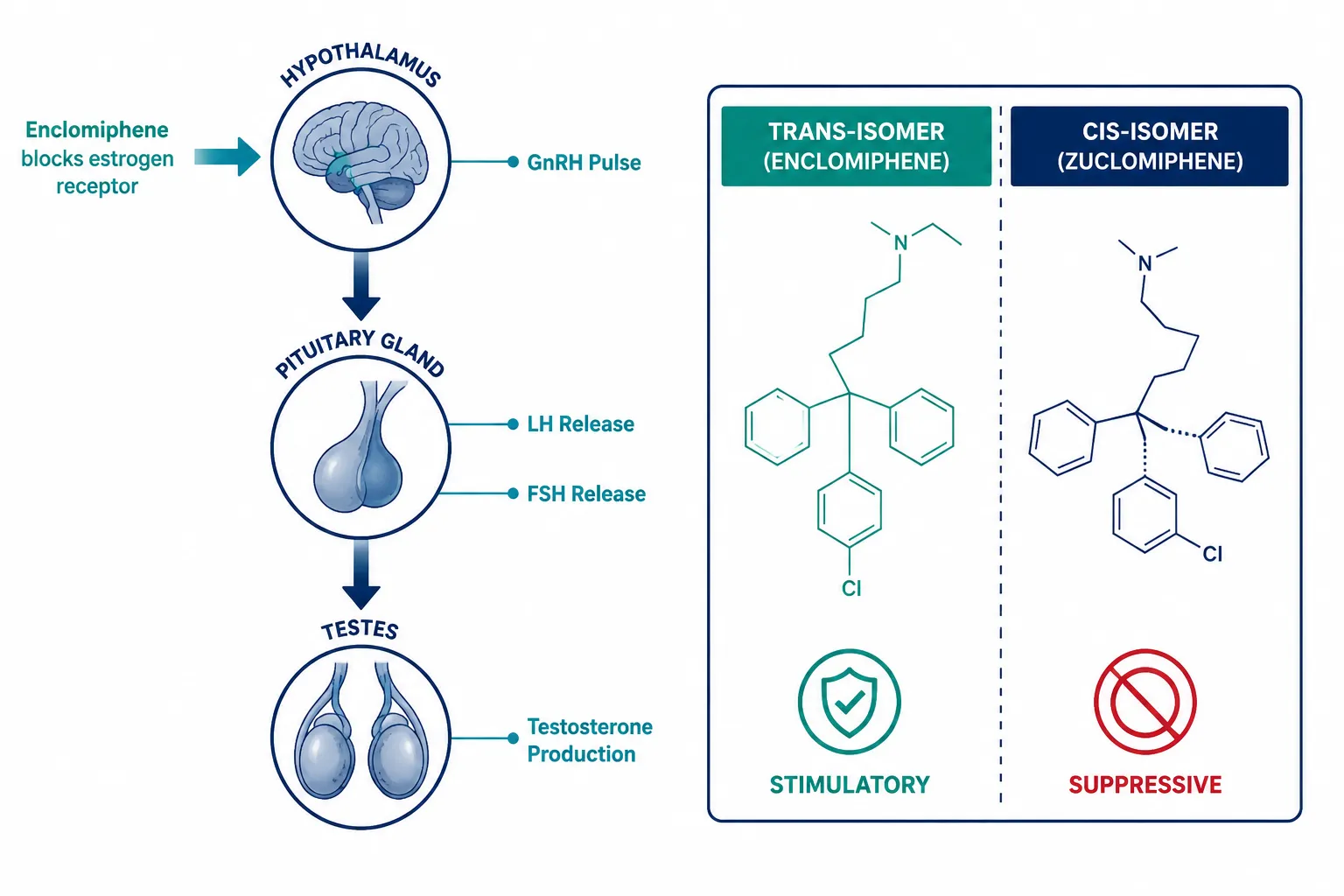
Clomiphene citrate is a mixture of two geometric isomers: enclomiphene (trans) and zuclomiphene (cis). Research has clarified that the trans-isomer carries the bulk of the therapeutic activity. Zuclomiphene contributes little to the intended hormonal outcomes and may linger in circulation due to a much longer half-life.

Enclomiphene works by occupying estrogen receptors in the hypothalamus and pituitary gland. Under normal physiology, circulating estradiol binds those receptors and signals the brain to reduce gonadotropin-releasing hormone (GnRH) output. When enclomiphene occupies those same receptors without activating them, the brain interprets the signal as low estrogen and responds by increasing GnRH pulse frequency.

That upstream change produces a cascade:

  • GnRH rises – pulsatile release from the hypothalamus intensifies
  • LH surges – the pituitary releases more luteinizing hormone
  • FSH increases – follicle-stimulating hormone output also climbs
  • Testosterone rises – Leydig cells in the testes respond to elevated LH by producing more endogenous testosterone
  • Spermatogenesis continues – Sertoli cells, driven by FSH, maintain sperm production

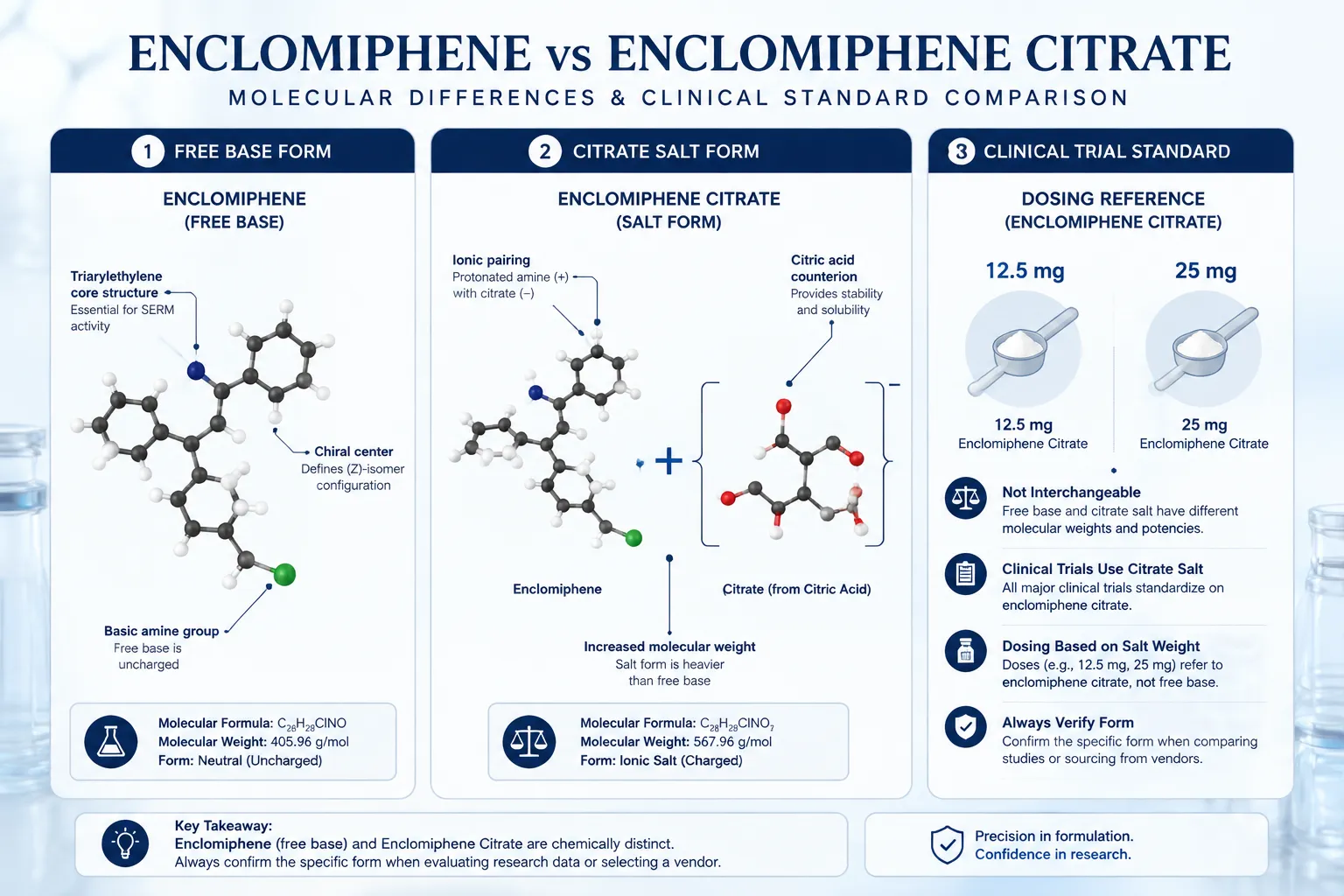
This mechanism is fundamentally different from exogenous testosterone, which suppresses the HPT axis through negative feedback. Enclomiphene's half-life of roughly 10 hours supports once-daily oral dosing, typically in the 12.5 to 25 mg range, making it a practical research candidate.

Researchers exploring related peptide-based hormonal pathways may also find value in reviewing IPA serm stack research and the broader context of metabolic modulation research lines when designing multi-axis studies.


How Enclomiphene Modulates LH and FSH at the Receptor Level

Clinical Evidence Supporting Enclomiphene and LH/FSH Modulation

A randomized phase II clinical trial demonstrated that enclomiphene citrate produced meaningful increases in morning serum testosterone, estradiol, and LH in men with secondary hypogonadism. Critically, sperm counts remained within the normal range throughout the study period, while men using topical testosterone experienced a marked reduction in spermatogenesis.

A longer comparative study published in 2024 found that enclomiphene and clomiphene produced similar increases in testosterone, estradiol, FSH, and LH over 12 months. That finding is significant because it validates enclomiphene's efficacy while highlighting its advantage: the absence of the zuclomiphene isomer means a cleaner pharmacokinetic profile and potentially fewer off-target effects.

Parameter Enclomiphene Topical Testosterone
LH levels Increased Suppressed
FSH levels Increased Suppressed
Sperm count Maintained Reduced
Endogenous T production Stimulated Replaced

Who is an ideal research candidate? Men with secondary hypogonadism whose testes retain the capacity to respond to LH stimulation represent the most relevant study population. Their HPT axis is intact but under-stimulated, making serm-based intervention a logical research target.

Those investigating broader hormonal and recovery research may find useful context in BPC-157 research themes and TB-500 muscle recovery research, as tissue-level recovery often intersects with hormonal optimization in research models.


Clinical Evidence Supporting Enclomiphene and LH/FSH Modulation

Regulatory Context and Future Research Directions

As of 2026, enclomiphene is not FDA-approved as a standalone therapeutic agent. It remains available through compounding pharmacies, which has shaped how researchers and clinicians access it. Experts in the field have noted that the compound warrants further prospective evaluation given its favorable gonadotropin profile and fertility-preserving properties.

The broader landscape of non-steroidal approaches in male hormone research continues to expand. Researchers are increasingly interested in how serms like enclomiphene interact with other signaling pathways, including those modulated by peptides targeting the growth hormone axis. Resources such as what is new in peptide research and the serm product research page offer additional context for those mapping intersecting research domains.

Parallel interest in mitochondrial and cellular longevity pathways, such as those explored in MOTS-c mitochondrial research and GHK-Cu longevity research themes, reflects a growing recognition that male hormonal health does not exist in isolation.


Conclusion

Research into enclomiphene and LH/FSH modulation: exploring non-steroidal approaches in male hormone research has produced a compelling body of evidence. By selectively blocking estrogen receptors at the hypothalamus and pituitary, enclomiphene amplifies the body's own GnRH-LH-FSH cascade, raises endogenous testosterone, and preserves fertility in a way that exogenous testosterone cannot.

Actionable next steps for researchers and clinicians in 2026:

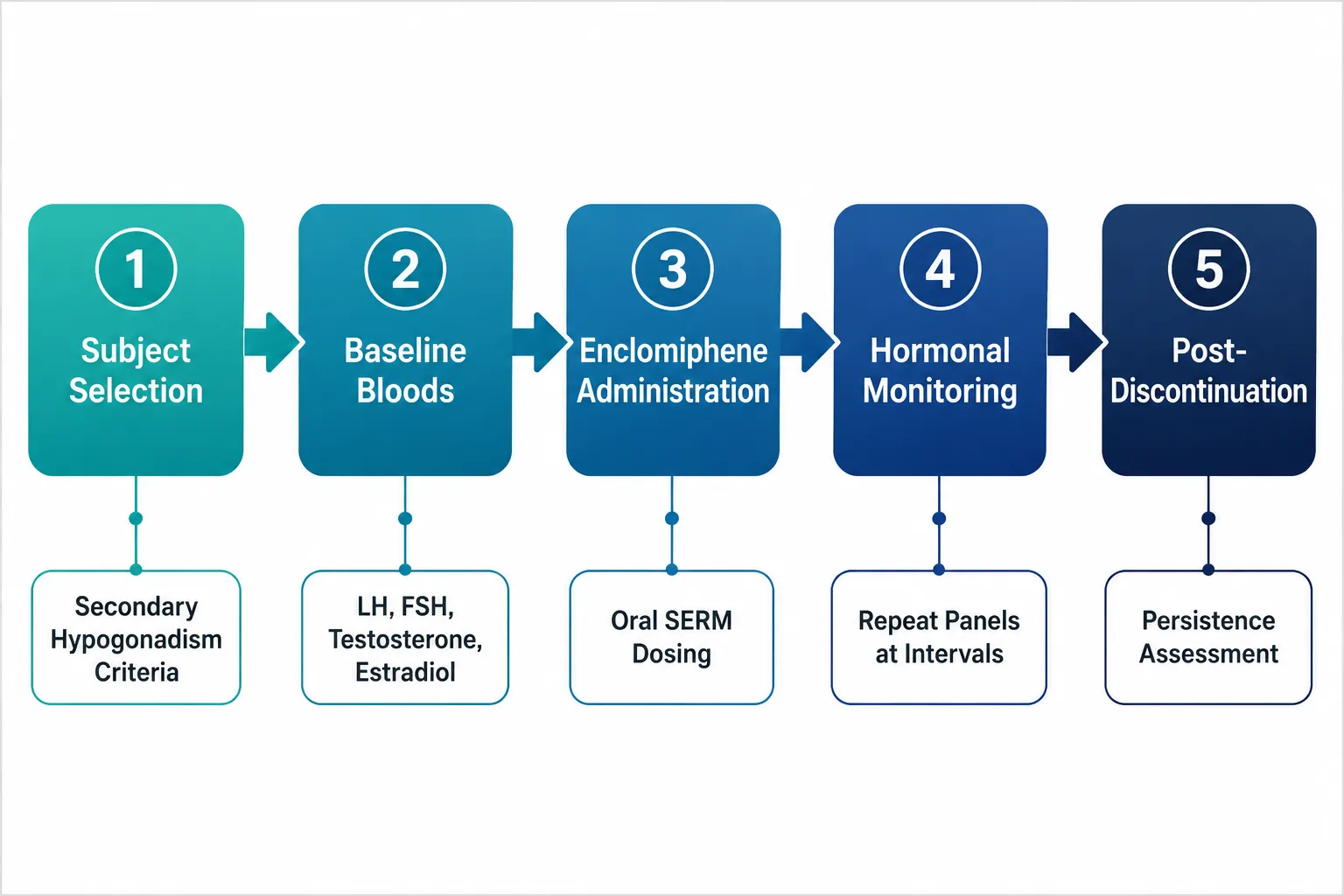
  1. Review available phase II and comparative trial data to understand the gonadotropin response profile across different dosing windows.
  2. Consider enclomiphene's pharmacokinetics (half-life approximately 10 hours, oral dosing 12.5-25 mg daily) when designing study protocols.
  3. Evaluate patient or subject suitability based on intact HPT axis function and fertility preservation goals.
  4. Monitor LH, FSH, testosterone, estradiol, and sperm concentration as primary outcome markers.
  5. Stay current with regulatory developments, as the compounding pharmacy pathway may evolve.

The non-steroidal serm approach represents one of the most mechanistically precise tools available in male hormone research today.

https://www.puretestedpeptides.com/wp-content/uploads/2026/07/enclomiphene-and-lh-fsh-modulation-exploring-non-steroidal-approaches-in-male-ho.png 1024 1536 https://www.puretestedpeptides.com/wp-content/uploads/2026/01/buy-peptides-online.jpg 2026-07-12 13:17:402026-07-12 13:17:40Enclomiphene and LH/FSH Modulation: Exploring Non-Steroidal Approaches in Male Hormone Research
Where to Buy High-Purity Enclomiphene for Hormone Research: A Supplier Evaluation Guide

Where to Buy High-Purity Enclomiphene for Hormone Research: A Supplier Evaluation Guide

July 11, 2026/0 Comments/in Uncategorized/by

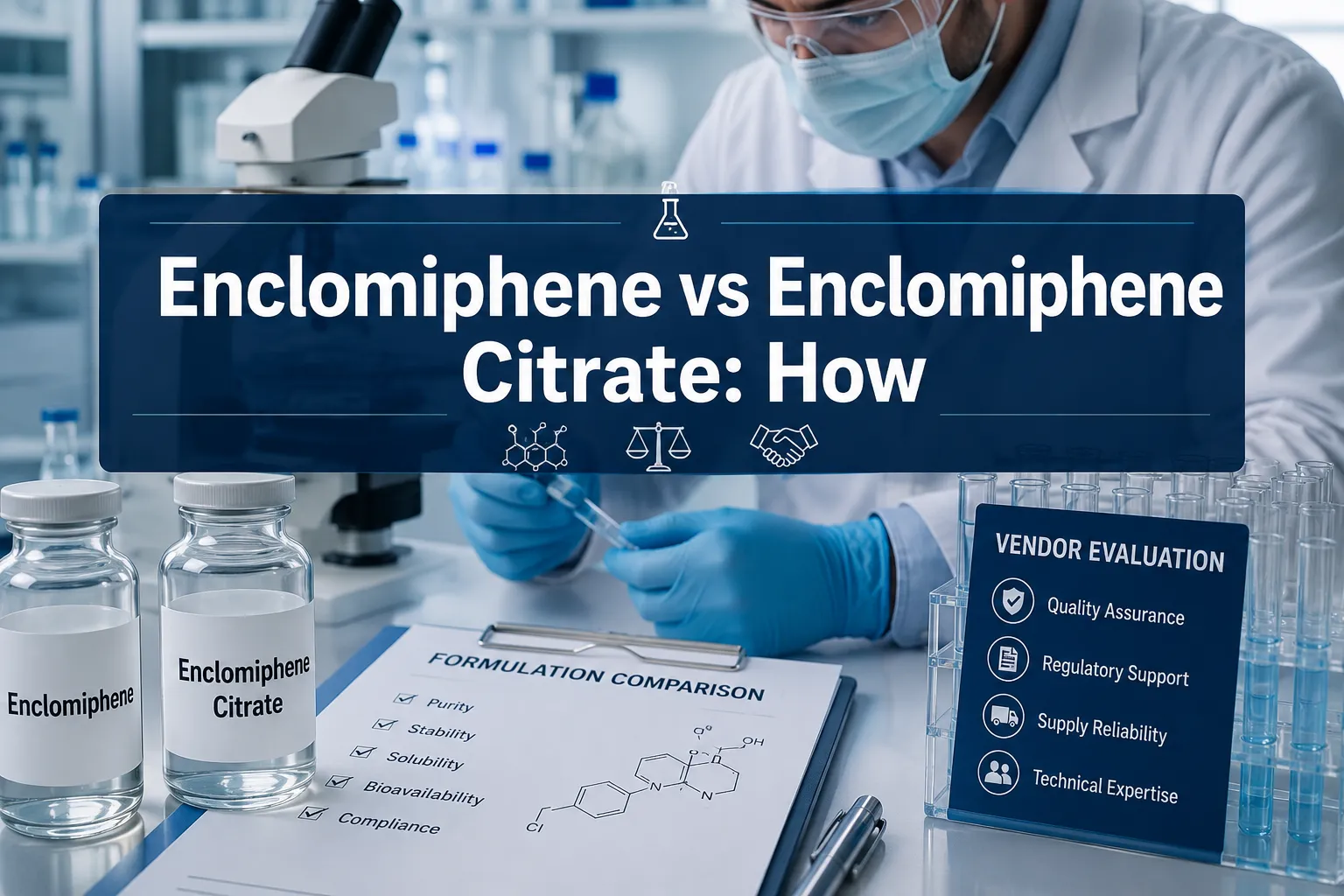
Fewer than 5% of researchers sourcing selective estrogen receptor modulators (serms) ever verify a supplier's third-party purity data before placing an order, a gap that can compromise an entire study. This guide to Where to Buy High-Purity Enclomiphene for Hormone Research: A Supplier Evaluation Guide addresses that gap directly, helping researchers navigate licensing requirements, purity benchmarks, and red flags that separate credible suppliers from risky ones.

Editorial landscape image () for the article section "Key Takeaways" about Where to Buy High-Purity Enclomiphene for Hormone

Key Takeaways

  • Enclomiphene is not FDA-approved and is legally available in the U.S. only through licensed compounding pharmacies with a valid prescription.
  • Any supplier offering enclomiphene without requiring a prescription is operating outside regulatory boundaries.
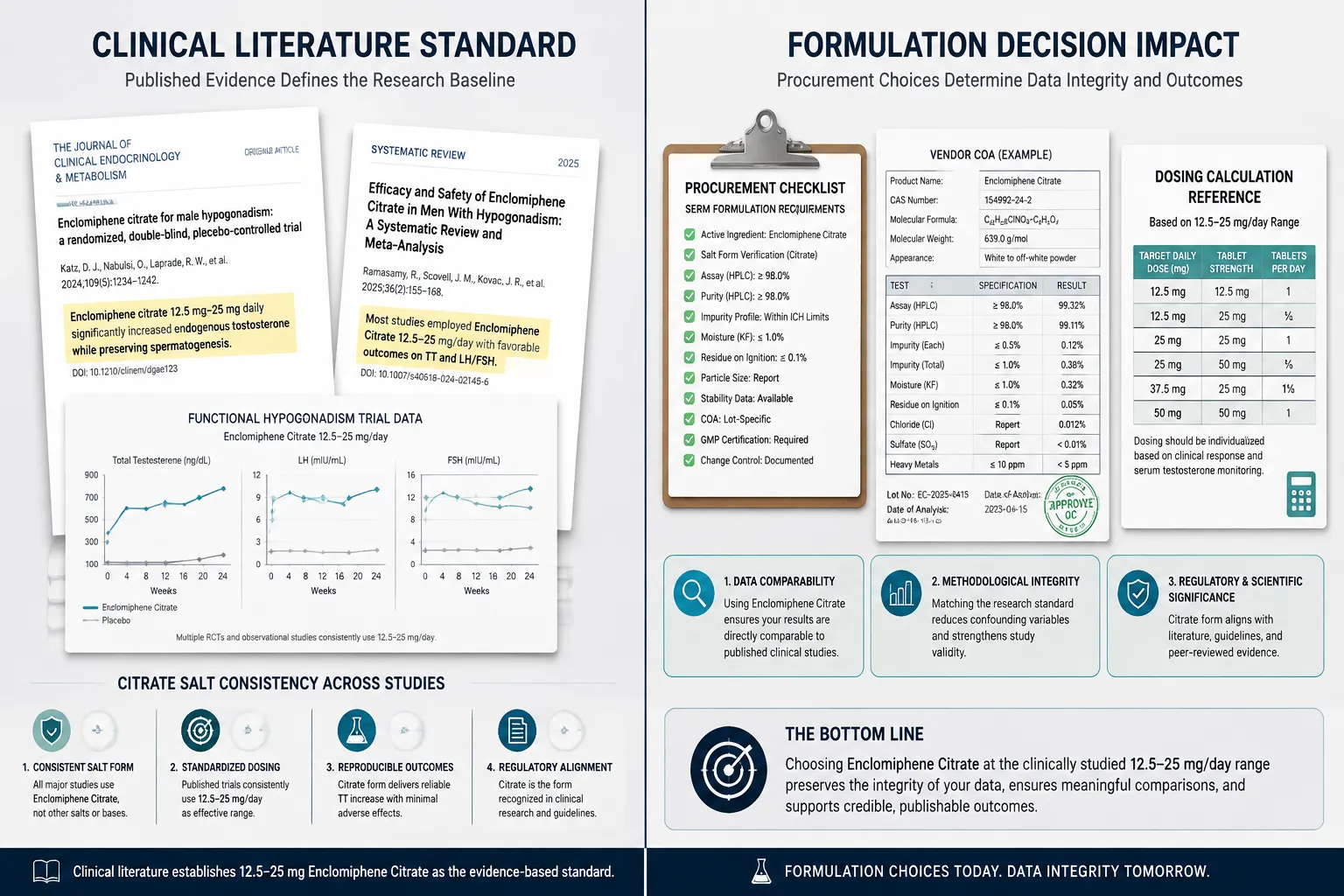
  • A Certificate of Analysis (COA) from an independent laboratory confirming purity above 98% is the minimum acceptable quality standard.
  • Pricing significantly below $100 per month is a reliable warning sign of substandard or mislabeled product.
  • Researchers sourcing other investigational compounds should apply the same rigorous supplier evaluation criteria used here.

Understanding Enclomiphene's Regulatory Status Before You Source

Enclomiphene is the trans-isomer of clomiphene citrate and acts as a selective estrogen receptor modulator with particular relevance to hypothalamic-pituitary-gonadal axis research. As of 2026, it remains unapproved by the FDA, meaning no commercially manufactured product exists on the U.S. market.

The only legal pathway for obtaining enclomiphene in the United States runs through licensed compounding pharmacies, and only when a licensed healthcare provider has issued a valid prescription. Compounding pharmacies prepare the compound to individual prescription specifications, operating under state pharmacy board oversight and, in many cases, federal USP standards.

Purchasing enclomiphene without a prescription, or from unregulated online vendors, may violate federal and state law. Researchers operating within institutional frameworks should confirm compliance with their IRB or legal counsel before procurement.

This regulatory context is the foundation of any honest supplier evaluation guide for high-purity enclomiphene hormone research.


Critical Supplier Evaluation Criteria for High-Purity Enclomiphene

Licensing and Accreditation

The first filter is simple: does the supplier hold verifiable credentials? For compounding pharmacies, look for:

  • State pharmacy board licensure (verifiable through the NABP database)
  • PCAB (Pharmacy Compounding Accreditation Board) accreditation
  • Compliance with USP 795 and 797 guidelines for non-sterile and sterile preparations

Suppliers lacking these credentials should be disqualified immediately, regardless of pricing or marketing claims.

Certificate of Analysis Requirements

A COA is non-negotiable. When evaluating any supplier, request documentation that confirms:

Parameter Minimum Standard
Compound identity Confirmed via HPLC or NMR
Purity Greater than 98%
Residual solvents Below ICH Q3C limits
Microbial contamination Absent or within USP limits
Issuing laboratory Independent, third-party accredited lab

Suppliers who cannot produce a COA from an independent laboratory, not an in-house document, should be avoided. Reviewing quality testing protocols used by reputable peptide suppliers provides a useful benchmark for what rigorous third-party documentation looks like.

Similarly, reviewing COA documentation standards from established research compound suppliers illustrates the level of transparency that serious researchers should demand.

Pricing as a Quality Signal

Legitimate pharmaceutical-grade compounding involves costly raw material sourcing, quality control testing, and regulatory compliance. Typical monthly pricing for compounded enclomiphene falls between $100 and $300. Products priced significantly below this range are a strong indicator of compromised raw materials, inadequate testing, or both.

"If the price seems too good to be true in pharmaceutical compounding, the quality almost certainly reflects it."


Evaluating Research Chemical Suppliers: Risks and Red Flags

Some online vendors sell enclomiphene labeled "for research use only," positioning themselves outside prescription requirements. This category warrants serious caution.

Key risks include:

  • No regulatory oversight of raw material sourcing
  • Purity claims unsupported by independent testing
  • Potential for contamination with related isomers (zuclomiphene) or process impurities
  • Legal exposure for the purchasing researcher or institution

Medical professionals and research compliance officers consistently advise against using research chemical-grade enclomiphene for any study intended to generate publishable or clinically relevant data.

Researchers familiar with the rigorous standards applied to compounds like gonadorelin and GnRH pulsatility research will recognize that hormonal axis research demands equivalent sourcing discipline for enclomiphene.

Evaluating Research Chemical Suppliers: Risks and Red Flags

Red Flags Checklist

  • No prescription verification required
  • COA unavailable or issued by the same company selling the product
  • No physical address or verifiable business registration
  • Vague or absent information about raw material sourcing
  • Prices below $80 per month for a 25-50mg daily dose formulation

Applying the Same Standards Across Hormone Research Compounds

The supplier evaluation framework developed here extends naturally to related investigational compounds. Researchers studying the broader endocrine system often work with growth hormone secretagogues, metabolic peptides, and longevity-related compounds alongside serms like enclomiphene.

For context, the same purity and documentation standards apply when sourcing compounds covered in resources like this overview of the GH axis product line or when reviewing MOTS-c metabolic flexibility research. The principles of independent COA verification, licensed sourcing, and transparent quality control are universal.

Researchers exploring Bachem reference standards and peptide benchmarks will find additional guidance on how pharmaceutical-grade benchmarking works in practice, directly applicable to evaluating any enclomiphene supplier's documentation.

Applying the Same Standards Across Hormone Research Compounds


Conclusion

The question of where to buy high-purity enclomiphene for hormone research has a clear, defensible answer in 2026: through licensed compounding pharmacies operating under verified accreditation, with a valid prescription, and with independent COA documentation confirming purity above 98%. Any sourcing pathway that bypasses these requirements introduces unacceptable scientific and legal risk.

Actionable next steps for researchers:

  1. Confirm institutional compliance requirements with your IRB or legal team before procurement.
  2. Identify PCAB-accredited compounding pharmacies through the NABP verification database.
  3. Request a full COA from an independent third-party laboratory before accepting any shipment.
  4. Apply the same evaluation criteria to all investigational compounds in your research protocol.
  5. Treat pricing significantly below market norms as an automatic disqualification criterion.

Rigorous sourcing is not a bureaucratic formality, it is the foundation of reproducible, credible hormone research.

https://www.puretestedpeptides.com/wp-content/uploads/2026/07/where-to-buy-high-purity-enclomiphene-for-hormone-research-a-supplier-evaluation.png 1024 1536 https://www.puretestedpeptides.com/wp-content/uploads/2026/01/buy-peptides-online.jpg 2026-07-11 13:05:292026-07-11 13:05:29Where to Buy High-Purity Enclomiphene for Hormone Research: A Supplier Evaluation Guide
Enclomiphene Alternatives in Hormone Research: How It Compares With serms and Estrogen-Signaling Models

Enclomiphene Alternatives in Hormone Research: How It Compares With serms and Estrogen-Signaling Models

July 10, 2026/0 Comments/in Uncategorized/by

Fewer than 15% of men with secondary hypogonadism who seek hormone optimization are offered a fertility-preserving option before starting exogenous testosterone. That gap is exactly why researchers and clinicians are scrutinizing enclomiphene alternatives in hormone research: how it compares with serms and estrogen-signaling models has become one of the most practically important questions in modern endocrine science.

Key Takeaways

  • Enclomiphene is the pure estrogen-receptor antagonist isomer of clomiphene, stimulating endogenous testosterone without suppressing fertility.
  • Compared to full clomiphene and other serms like tamoxifen, enclomiphene produces fewer mixed estrogenic side effects.
  • Gonadorelin operates downstream of enclomiphene in the HPG axis and requires more frequent dosing with less predictable outcomes.
  • As of 2026, enclomiphene lacks FDA approval for male hypogonadism despite completing Phase III trials.
  • Researchers evaluating estrogen-signaling models benefit from understanding where each serm sits within the hypothalamic-pituitary-gonadal (HPG) axis.

Key Takeaways

Understanding Enclomiphene Within the serm Landscape

Enclomiphene is the trans-isomer of clomiphene citrate. Its defining feature is pure estrogen receptor antagonism at the hypothalamus and pituitary. By blocking estrogen's negative feedback signal at those sites, it disinhibits GnRH pulse generation, which in turn raises LH and FSH. Elevated gonadotropins then drive testicular Leydig cells to produce more testosterone and Sertoli cells to support spermatogenesis.

This mechanism places enclomiphene firmly within the serm class, yet it behaves differently from its closest relatives:

Compound Receptor Action Fertility Impact Oral Dosing
Enclomiphene Pure antagonist (hypothalamus/pituitary) Preserved or enhanced Once daily
Clomiphene (mixed) Antagonist + agonist (zuclomiphene component) Generally preserved Once daily
Tamoxifen Tissue-selective antagonist/agonist Variable Once daily
Gonadorelin GnRH agonist (pituitary direct) Preserved Multiple daily injections

Clomiphene citrate contains both enclomiphene and zuclomiphene. The zuclomiphene isomer carries mixed agonist/antagonist activity and a longer half-life, which can produce residual estrogenic effects. Enclomiphene isolates the beneficial antagonism while eliminating that estrogenic noise — a meaningful distinction in research models focused on clean receptor-pathway analysis.

Tamoxifen is another well-studied serm. While it shares the ability to raise gonadotropins, its tissue-selective profile differs substantially. A 2023 systematic review found that serm-based estrogen-receptor modulation significantly raised total testosterone in men with androgen deficiency while preserving gonadotropin output — validating the broader class but not distinguishing individual agents.

For researchers studying growth hormone and metabolic signaling alongside HPG-axis dynamics, AOD9604 metabolic research themes offer a complementary perspective on peptide-level hormonal modulation.


Understanding Enclomiphene Within the serm Landscape

Comparing Enclomiphene Alternatives in Hormone Research: How It Compares With serms and Estrogen-Signaling Models

When researchers map enclomiphene against other endocrine tools, three dimensions matter most: axis entry point, receptor selectivity, and downstream fertility effects.

Gonadorelin: Downstream but Demanding

Gonadorelin acts directly on the pituitary rather than at the hypothalamic level. It stimulates LH and FSH release without requiring the hypothalamic GnRH step that enclomiphene unlocks indirectly. However, gonadorelin demands multiple daily injections and shows variable efficacy depending on pituitary reserve — a significant limitation in longitudinal research protocols.

"Enclomiphene's oral once-daily dosing and single-point HPG intervention make it a more tractable tool for controlled research designs than pulsatile GnRH analogues."

Dosage and Measurable Outcomes

Clinical trials have studied enclomiphene at 6.25 mg to 25 mg daily. A 25 mg dose raised total testosterone to approximately 604 ng/dL at six weeks — comparable to testosterone gel — while maintaining sperm parameters. That dual endpoint (testosterone plus fertility preservation) is rarely achievable with exogenous hormone replacement.

Researchers working with peptide-based hormonal tools can find adjacent data in CJC-1295 with DAC research and ipamorelin versus tesa comparisons, which illustrate how axis-entry point shapes downstream hormone profiles.

Regulatory Context in 2026

Despite completing Phase III trials with positive results, enclomiphene remains unapproved by the FDA for male hypogonadism. It is available through compounding pharmacies, which introduces variability in purity and dosing — a critical consideration for research reproducibility. This regulatory gap distinguishes it from clomiphene, which holds FDA approval for female infertility.

For broader context on peptide purity and sourcing standards, the complete guide to peptide therapy addresses quality benchmarks relevant to any research compound.


Regulatory Context in 2026

Practical Decision Framework for Researchers

When selecting between enclomiphene and its alternatives, the following criteria help structure the comparison:

  • Axis entry point: Hypothalamic (enclomiphene, tamoxifen) vs. pituitary-direct (gonadorelin)
  • Receptor purity: Pure antagonism (enclomiphene) vs. mixed activity (clomiphene)
  • Dosing complexity: Once-daily oral (enclomiphene, tamoxifen) vs. multiple injections (gonadorelin)
  • Fertility preservation: Critical for male reproductive research models
  • Side effect profile: Enclomiphene is generally well-tolerated; reported effects include visual disturbances, headaches, and mood changes

Researchers also exploring cellular protection and longevity signaling alongside hormonal axes may find value in GHK-Cu longevity research themes and MOTS-c mechanism and research, which intersect with mitochondrial and metabolic hormone pathways.

For those comparing epigenetic and telomere-related signaling tools, Epithalon vs NAD evidence provides a useful parallel framework for evaluating competing research compounds.


Conclusion

Enclomiphene alternatives in hormone research — how it compares with serms and estrogen-signaling models — is not a theoretical exercise. It is a practical decision that shapes research design, data quality, and translational relevance. Enclomiphene's pure antagonism, oral convenience, and fertility-preserving profile give it a distinct position within the serm class, even as its lack of FDA approval in 2026 creates sourcing challenges.

Actionable next steps for researchers:

  1. Map your research question to the specific HPG-axis node you need to modulate before selecting a compound.
  2. Evaluate receptor selectivity data for each serm candidate, not just testosterone-elevation endpoints.
  3. Prioritize sourcing from suppliers with documented purity testing to ensure reproducible outcomes.
  4. Cross-reference findings with adjacent peptide signaling research to build a fuller hormonal picture.
https://www.puretestedpeptides.com/wp-content/uploads/2026/07/Enclomiphene-Alternatives-in-Hormone-Research-How-It-Compares-With-serms-and-Estrogen-Signaling-Models.png 1024 1536 https://www.puretestedpeptides.com/wp-content/uploads/2026/01/buy-peptides-online.jpg 2026-07-10 13:37:472026-07-10 13:37:47Enclomiphene Alternatives in Hormone Research: How It Compares With serms and Estrogen-Signaling Models
Regulatory Scrutiny in the GLP‑1/GLP‑3 Era: How BPC‑157, PT‑141, and Enclomiphene Are Being Re‑Evaluated

Regulatory Scrutiny in the GLP‑1/GLP‑3 Era: How BPC‑157, PT‑141, and Enclomiphene Are Being Re‑Evaluated

July 8, 2026/0 Comments/in Uncategorized/by

The FDA issued 30 warning letters to telehealth companies in a single month in early 2026, a signal that the era of loosely regulated peptide compounding is ending fast. Regulatory scrutiny in the GLP-1/GLP-3 era is reshaping how compounds like BPC-157, PT-141, and enclomiphene are evaluated, sourced, and labeled across the research and clinical landscape.

Key Takeaways

  • The FDA is aggressively tightening oversight of compounded GLP-1 drugs and related peptides in 2026.
  • BPC-157 faces a pivotal PCAC review scheduled for July 23, 2026, that will determine its compounding status.
  • PT-141 and enclomiphene remain under existing regulatory frameworks with no new official policy changes as of mid-2026.
  • Sourcing compounds from suppliers who provide verified Certificates of Analysis is a critical compliance step.
  • Researchers and clinicians must treat BPC-157, PT-141, and enclomiphene strictly as research-only compounds until regulatory clarity is established.

Key Takeaways


The GLP-1 Crackdown That Changed Everything

The regulatory environment for peptides did not shift in isolation. It accelerated because of GLP-1 drugs.

On April 30, 2026, the FDA proposed removing semaglutide, tirzepatide, and liraglutide from the 503B Bulk Drug Substances List, a move that would effectively end large-scale compounding of these blockbuster weight-loss medications. Public comments closed on June 29, 2026. The proposal followed the FDA's March 2026 enforcement wave, in which 30 warning letters targeted telehealth companies for misleading branding and unsubstantiated claims about compounded GLP-1 products.

These actions set a precedent. When regulators draw a hard line around GLP-1 receptor agonists, the scrutiny does not stop there. It flows downstream to adjacent peptides, including those popular in longevity and performance research circles.

For context on how the broader GLP-3 landscape is evolving, the GLP-3 Retatrutide research overview provides useful background on where next-generation metabolic peptides stand scientifically.

"Regulatory clarity around GLP-1 compounds is now the lens through which all compounded peptides are being measured."


Regulatory Scrutiny in the GLP-1/GLP-3 Era: BPC-157 Under the Microscope

BPC-157 is the compound facing the most direct regulatory action in 2026.

Timeline of key events:

Date Event
April 15, 2026 FDA removes BPC-157 from Category 2 list under Section 503A
July 23, 2026 PCAC scheduled to review BPC-157 for 503A Bulks List inclusion

The removal from Category 2 occurred after the original nominators withdrew their nominations, not because the FDA cleared BPC-157 for compounding. The upcoming Pharmacy Compounding Advisory Committee (PCAC) review will assess clinical utility and safety to determine whether BPC-157 can be legally compounded by pharmacies under Section 503A.

Until that review concludes, BPC-157 must be treated strictly as a research compound. Suppliers and researchers should ensure all materials are clearly labeled for research use only and accompanied by third-party purity documentation. For those tracking the regenerative research angle, the BPC-157 and TB-500 combination research page outlines the scientific basis for studying these compounds together.

Purity verification is non-negotiable in this environment. Understanding how peptide purity testing works is an essential step for any researcher handling these compounds responsibly.

Regulatory Scrutiny in the GLP-1/GLP-3 Era: BPC-157 Under the Microscope


Regulatory Scrutiny in the GLP-1/GLP-3 Era: PT-141 and Enclomiphene's Current Status

PT-141 (bremelanotide) and enclomiphene occupy a different regulatory position than BPC-157 as of mid-2026. No new official policy announcements have been issued for either compound. Both continue to be evaluated under existing frameworks.

PT-141 is a melanocortin receptor agonist studied for its role in central arousal pathways. The PT-141 central arousal research overview details the mechanistic research behind this compound. Because it operates through a distinct receptor pathway from GLP-1 drugs, it has not been swept into the same immediate enforcement wave, but increased FDA vigilance means labeling and sourcing standards must remain strict.

Enclomiphene, a selective estrogen receptor modulator studied in the context of hormonal optimization, similarly faces no new rulings. However, the broader enforcement climate means any compounded or research-grade enclomiphene must be sourced with full documentation. Researchers interested in related hormonal axis compounds may also find the Gonadorelin GnRH pulsatility research relevant to understanding endocrine feedback loops.

Best practices for all three compounds:

  • Label all materials clearly as "For Research Use Only, Not for Human Use"
  • Obtain Certificates of Analysis from independent, accredited laboratories
  • Avoid any promotional language that implies clinical or therapeutic use
  • Monitor FDA PCAC announcements, especially post-July 23, 2026

For researchers exploring the broader peptide landscape, the comprehensive peptide catalog offers a structured overview of compounds with available research documentation.

Regulatory Scrutiny in the GLP-1/GLP-3 Era: PT-141 and Enclomiphene's Current Status


Conclusion

Regulatory scrutiny in the GLP-1/GLP-3 era is not a temporary disruption, it is a structural shift in how peptide compounds are governed, sourced, and communicated. BPC-157 faces its most consequential review yet on July 23, 2026. PT-141 and enclomiphene remain under existing frameworks but are not immune to the enforcement momentum building around all compounded bioactive compounds.

Actionable next steps for researchers and suppliers:

  1. Monitor the FDA PCAC BPC-157 decision closely and adjust sourcing protocols immediately after the ruling.
  2. Audit all current labeling to confirm "Research Use Only" language is prominent and unambiguous.
  3. Require third-party Certificates of Analysis for every batch of BPC-157, PT-141, and enclomiphene.
  4. Avoid any marketing or communication that implies therapeutic or clinical application.
  5. Stay current with FDA 503A and 503B list updates, which are changing rapidly in 2026.

Researchers who build compliance into their sourcing and documentation practices now will be far better positioned regardless of how the regulatory landscape continues to evolve.

https://www.puretestedpeptides.com/wp-content/uploads/2026/07/Regulatory-Scrutiny-in-the-GLP‑1GLP‑3-Era-How-BPC‑157-PT‑141-and-Enclomiphene-Are-Being-Re‑Evaluated.png 1254 1254 https://www.puretestedpeptides.com/wp-content/uploads/2026/01/buy-peptides-online.jpg 2026-07-08 13:06:092026-07-08 13:06:09Regulatory Scrutiny in the GLP‑1/GLP‑3 Era: How BPC‑157, PT‑141, and Enclomiphene Are Being Re‑Evaluated
Enclomiphene: A Selective Estrogen Receptor Modulator (serm) for Male Reproductive Health Research

Enclomiphene: A Selective Estrogen Receptor Modulator (serm) for Male Reproductive Health Research

June 30, 2026/0 Comments/in Uncategorized/by

Testosterone levels in men have declined by roughly 1% per year since the 1980s, yet testosterone replacement therapy (TRT) — the most common intervention — suppresses the very hormonal axis it aims to support. That paradox has pushed researchers toward a different class of compounds. Enclomiphene: A Selective Estrogen Receptor Modulator (serm) for Male Reproductive Health Research represents one of the most studied alternatives, offering a mechanism that stimulates endogenous testosterone production rather than replacing it externally.

Key Takeaways

  • Enclomiphene is the trans-isomer of clomiphene citrate and works by blocking estrogen receptors at the hypothalamus, stimulating the HPT axis.
  • Research shows enclomiphene produces significantly lower estradiol increases compared to clomiphene, reducing common side effects.
  • Unlike TRT, enclomiphene preserves and may enhance spermatogenesis, making it relevant for fertility-focused research.
  • Enclomiphene significantly increased FSH, LH, and total motile sperm count in clinical studies where clomiphene did not.
  • As of 2026, enclomiphene is not FDA-approved as a standalone agent but is accessible through compounding pharmacies for research contexts.

Mechanism of Action: How Enclomiphene Differs From Other serms

Mechanism of Action: How Enclomiphene Differs From Other serms

Clomiphene citrate is a mixture of two geometric isomers: zuclomiphene (the cis-isomer) and enclomiphene (the trans-isomer). These two isomers behave very differently in the body. Zuclomiphene has weak estrogenic activity and a long half-life, while enclomiphene acts as a pure estrogen receptor antagonist with a shorter half-life and cleaner pharmacokinetic profile.

Enclomiphene works by binding to estrogen receptors in the hypothalamus, blocking the normal negative feedback signal that estrogen sends to the brain. When estrogen can no longer signal "enough hormone is present," the hypothalamus releases more gonadotropin-releasing hormone (GnRH). This triggers the pituitary gland to secrete luteinizing hormone (LH) and follicle-stimulating hormone (FSH), which in turn stimulate the testes to produce testosterone and support sperm production.

This is the key distinction from TRT. Testosterone replacement shuts down the hypothalamic-pituitary-testicular (HPT) axis through negative feedback, suppressing LH and FSH and leading to testicular atrophy and infertility. Enclomiphene does the opposite — it amplifies the axis rather than bypassing it.

"Enclomiphene stimulates the body's own testosterone production pathway, preserving the hormonal architecture that TRT dismantles."

For researchers exploring compounds that interact with the endocrine system, understanding this axis is foundational. Related research on neuroendocrine and innate immunity interactions provides useful context for how hormonal signaling intersects with broader physiological systems.


Clinical Research Findings: Enclomiphene as a serm in Male Reproductive Studies

Research comparing enclomiphene directly to clomiphene has produced several meaningful findings.

Testosterone and Estradiol Outcomes

A study involving 66 hypogonadal men found that enclomiphene produced a median testosterone increase of 166 ng/dL compared to 98 ng/dL with clomiphene. While this difference was not statistically significant (P=0.20), the estradiol data was striking. Enclomiphene resulted in a statistically significant lower increase in estradiol levels compared to clomiphene (−5.92 vs. +17.50 pg/mL, P=0.001).

This estradiol difference matters clinically. Elevated estradiol in men is associated with gynecomastia, mood changes, and reduced libido — all common complaints with clomiphene use.

Adverse Effect Profile

The same study found that patients on enclomiphene reported significantly fewer adverse effects:

Adverse Effect Enclomiphene Clomiphene P-value
Decreased libido Lower incidence Higher incidence 0.001
Reduced energy Lower incidence Higher incidence 0.044
Mood changes Lower incidence Higher incidence 0.030

Sperm Parameters and Gonadotropins

A 2023 retrospective study of 78 men found that enclomiphene produced a statistically significant increase in total motile sperm count (TMSC), while clomiphene did not. Enclomiphene also significantly raised both FSH and LH levels — critical markers of HPT axis activation — whereas clomiphene again showed no significant effect on these gonadotropins.

These findings position enclomiphene as a particularly relevant compound for secondary hypogonadism research in younger men who wish to maintain fertility.

Researchers studying related peptide compounds that influence body composition and hormonal balance may find value in reviewing ipamorelin research on muscle and fat metabolism as a complementary area of inquiry.


Research Context, Safety Profile, and Future Directions

Research Context, Safety Profile, and Future Directions

As of 2026, enclomiphene is not FDA-approved as a single-agent therapy in the United States. It is available through compounding pharmacies and is used in research contexts examining secondary hypogonadism, male infertility, and alternatives to TRT.

Its safety profile in current research appears favorable compared to clomiphene, largely due to the absence of the estrogenic zuclomiphene isomer. This cleaner receptor selectivity makes it a useful research model for understanding how pure estrogen receptor antagonism affects the male HPT axis.

Researchers working with serms and related compounds should also consider how other research-grade compounds interact with hormonal and metabolic pathways. For example, PT-141 research in central arousal pathways explores a separate but related dimension of male reproductive health at the neuroendocrine level. Similarly, GLP-1 and incretin research themes highlight how metabolic signaling intersects with hormonal health in male subjects.

For those sourcing research-grade serms, verified compound quality is essential. Reviewing available certificates of analysis and sourcing from suppliers with documented purity testing ensures research integrity. Those specifically looking for serm compounds for research purposes can explore the serm 10mg research compound as a starting reference point.


Conclusion

Enclomiphene: A Selective Estrogen Receptor Modulator (serm) for Male Reproductive Health Research occupies a unique position in endocrinology research. Its targeted mechanism — blocking hypothalamic estrogen receptors to amplify the HPT axis — produces measurable increases in LH, FSH, testosterone, and total motile sperm count, while generating significantly less estrogenic activity than its parent compound, clomiphene.

Actionable next steps for researchers:

  • Review published clinical comparisons between enclomiphene and clomiphene for HPT axis endpoint data.
  • Evaluate estradiol and gonadotropin panels as primary outcome markers in any serm-related male reproductive study design.
  • Source compounds exclusively from suppliers providing third-party purity verification and documented certificates of analysis.
  • Consider enclomiphene alongside complementary research areas such as peptide-based hormonal modulation for a broader picture of male endocrine health.

The research landscape in 2026 continues to support enclomiphene as a compound of significant scientific interest for male reproductive and hormonal health studies.

https://www.puretestedpeptides.com/wp-content/uploads/2026/06/Enclomiphene-A-Selective-Estrogen-Receptor-Modulator-serm-for-Male-Reproductive-Health-Research.png 1024 1536 https://www.puretestedpeptides.com/wp-content/uploads/2026/01/buy-peptides-online.jpg 2026-06-30 13:18:122026-06-30 13:18:12Enclomiphene: A Selective Estrogen Receptor Modulator (serm) for Male Reproductive Health Research

Enclomiphene in Hormone Research: LH, FSH, and Estrogen Receptor Signaling Explained

June 24, 2026/0 Comments/in Uncategorized/by

Cover Image

Fewer than 5% of men with secondary hypogonadism are offered a treatment that simultaneously restores testosterone and preserves fertility — yet that is precisely the receptor-level mechanism that makes enclomiphene a compelling tool in endocrine research. Understanding enclomiphene in hormone research: LH, FSH, and estrogen receptor signaling explained at the pathway level is essential for any researcher working with the hypothalamic-pituitary-gonadal (HPG) axis.

Key Takeaways

  • Enclomiphene blocks estrogen receptors in the hypothalamus, disrupting negative feedback and driving upstream gonadotropin release.
  • The resulting surge in LH and FSH stimulates endogenous testosterone production without suppressing spermatogenesis.
  • Unlike traditional testosterone replacement therapy (TRT), enclomiphene preserves the integrity of the HPG axis.
  • Research comparisons with clomiphene show similar hormonal responses, but enclomiphene avoids the estrogenic effects of its isomer zuclomiphene.
  • Standard research dosing ranges from 12.5 to 25 mg per day, with observable hormonal changes typically appearing within 2 to 4 weeks.

The Receptor-Level Pathway: How Enclomiphene Signals the HPG Axis

HPG axis diagram showing GnRH, LH, FSH hormone signaling

Enclomiphene is the trans-isomer of clomiphene citrate, a selective estrogen receptor modulator (serm). Its primary research value lies in its targeted antagonism at hypothalamic estrogen receptors.

Here is how the pathway works, step by step:

Step Location Event
1 Hypothalamus Enclomiphene binds estrogen receptors, blocking negative feedback
2 Hypothalamus GnRH secretion increases in response
3 Anterior pituitary Elevated GnRH stimulates LH and FSH release
4 Testes LH drives Leydig cells to produce testosterone; FSH supports Sertoli cells and spermatogenesis

Under normal physiology, circulating estradiol signals the hypothalamus to reduce GnRH output — a classic negative feedback loop. Enclomiphene occupies those estrogen receptors without activating them, effectively silencing the "slow down" signal. The hypothalamus interprets this as an estrogen-deficient state and increases GnRH pulse frequency.

"The compound does not add testosterone from an external source — it instructs the body's own axis to produce more."

This distinction is critical for researchers studying fertility preservation. Unlike exogenous TRT, which suppresses LH and FSH and can halt spermatogenesis, enclomiphene amplifies the upstream signals that drive both testosterone synthesis and sperm production simultaneously.

Researchers exploring related peptide-based endocrine tools may also find value in reviewing GLP-1 peptide research concepts and sourcing notes for comparative hormonal pathway context.


Enclomiphene vs. Clomiphene: What the Signaling Data Shows

Enclomiphene and clomiphene vials with hormone comparison bar graph

A key question in enclomiphene in hormone research: LH, FSH, and estrogen receptor signaling studies is how the compound compares to its racemic parent, clomiphene citrate.

Clomiphene contains two isomers: enclomiphene (trans) and zuclomiphene (cis). Zuclomiphene carries estrogenic activity, meaning it can partially activate the same receptors it occupies. This creates a mixed signal that complicates hormonal interpretation in research settings.

Enclomiphene's advantages in research protocols:

  • Purely antiestrogenic at the hypothalamus — no partial agonist activity
  • Cleaner LH and FSH response curves
  • Reduced risk of estrogen-related confounders in study data

Research published in endocrinology literature confirms that enclomiphene and clomiphene produce statistically similar increases in testosterone, estradiol, FSH, and LH from baseline in men with hypogonadism. However, enclomiphene's cleaner receptor profile makes it a more precise tool for isolating HPG axis responses.

Metabolism occurs primarily in the liver. Biological half-life is approximately 5 to 7 days, though the active compound has a shorter plasma half-life of roughly 10 to 15 hours. Approximately 42% is excreted via feces and 8% through urine — relevant data for researchers designing washout periods.

For researchers also studying growth hormone secretagogues alongside serm-based protocols, the tesa peptide benefits overview provides useful comparative endocrine context.


Research Applications, Dosing Parameters, and Safety Profile

Molecular fertility research illustration with testosterone structure

Understanding enclomiphene in hormone research: LH, FSH, and estrogen receptor signaling explained requires attention to both dosing parameters and the compound's tolerability profile.

Standard research dosing parameters:

  • Dose range: 12.5 to 25 mg per day (oral)
  • Onset of hormonal response: 2 to 4 weeks
  • Half-life (plasma): approximately 10 to 15 hours
  • Primary route of elimination: hepatic metabolism, fecal excretion

Enclomiphene is generally well-tolerated in research subjects. Reported adverse observations include headaches, nausea, and occasional visual disturbances — consistent with the broader serm class profile.

Ongoing clinical investigations are examining enclomiphene's utility in obesity-related hypogonadism, where adipose tissue aromatization creates elevated estrogen levels that suppress the HPG axis. Early data from studies dating back to foundational 1983 research on gonadotropin secretion have shaped the current understanding of how enclomiphene and zuclomiphene diverge in their receptor-level behavior.

As of 2026, enclomiphene is not FDA-approved as a standalone agent in the United States but remains accessible through compounding pharmacies for research and clinical use.

Researchers sourcing verified compounds for parallel studies may also find relevant quality benchmarks in this reference standards and peptide benchmarking resource, as well as the PT-141 peptide research context and controls guide for receptor-targeted compound comparisons. For mitochondrial pathway research running alongside HPG axis studies, SS-31 peptide research considerations offer complementary cellular-level data.


Conclusion

Enclomiphene occupies a precise and well-defined position in endocrine research: it blocks hypothalamic estrogen receptors, removes negative feedback, and triggers a coordinated upstream release of GnRH, LH, and FSH. The result is endogenous testosterone production and preserved spermatogenesis — without the HPG axis suppression associated with exogenous TRT.

Actionable next steps for researchers:

  1. Map the full HPG axis response curve using standardized LH, FSH, and testosterone assays at 2-week intervals.
  2. Design washout periods based on the 5 to 7-day biological half-life to avoid carryover effects.
  3. Use enclomiphene's pure antiestrogenic profile to isolate receptor-level signaling data without zuclomiphene confounders.
  4. Cross-reference findings with growth hormone and metabolic peptide data for a complete endocrine picture.

For researchers building rigorous, reproducible protocols, sourcing verified compounds with documented purity is non-negotiable. Explore the full peptides for sale catalog and review available certificates of analysis to ensure traceability at every stage of the research process.

https://www.puretestedpeptides.com/wp-content/uploads/2026/01/buy-peptides-online.jpg 0 0 https://www.puretestedpeptides.com/wp-content/uploads/2026/01/buy-peptides-online.jpg 2026-06-24 13:20:132026-06-24 13:20:13Enclomiphene in Hormone Research: LH, FSH, and Estrogen Receptor Signaling Explained
Peptides and Polypeptides in Endocrine Research: Linking Estrogen Receptor Signaling to Enclomiphene and GLP-3 Retatrutide Models

Peptides and Polypeptides in Endocrine Research: Linking Estrogen Receptor Signaling to Enclomiphene and GLP-3 Retatrutide Models

June 23, 2026/0 Comments/in Uncategorized/by

Fewer than three decades ago, the estrogen receptor was considered a single, well-understood target. Today, researchers recognize at least three distinct receptor subtypes — ERalpha, ERbeta, and the G protein-coupled estrogen receptor (GPER) — each capable of driving separate downstream cascades. That complexity is precisely why the field of peptides and polypeptides in endocrine research: linking estrogen receptor signaling to enclomiphene and GLP-3 retatrutide models has become one of the most active areas of translational biology in 2026.

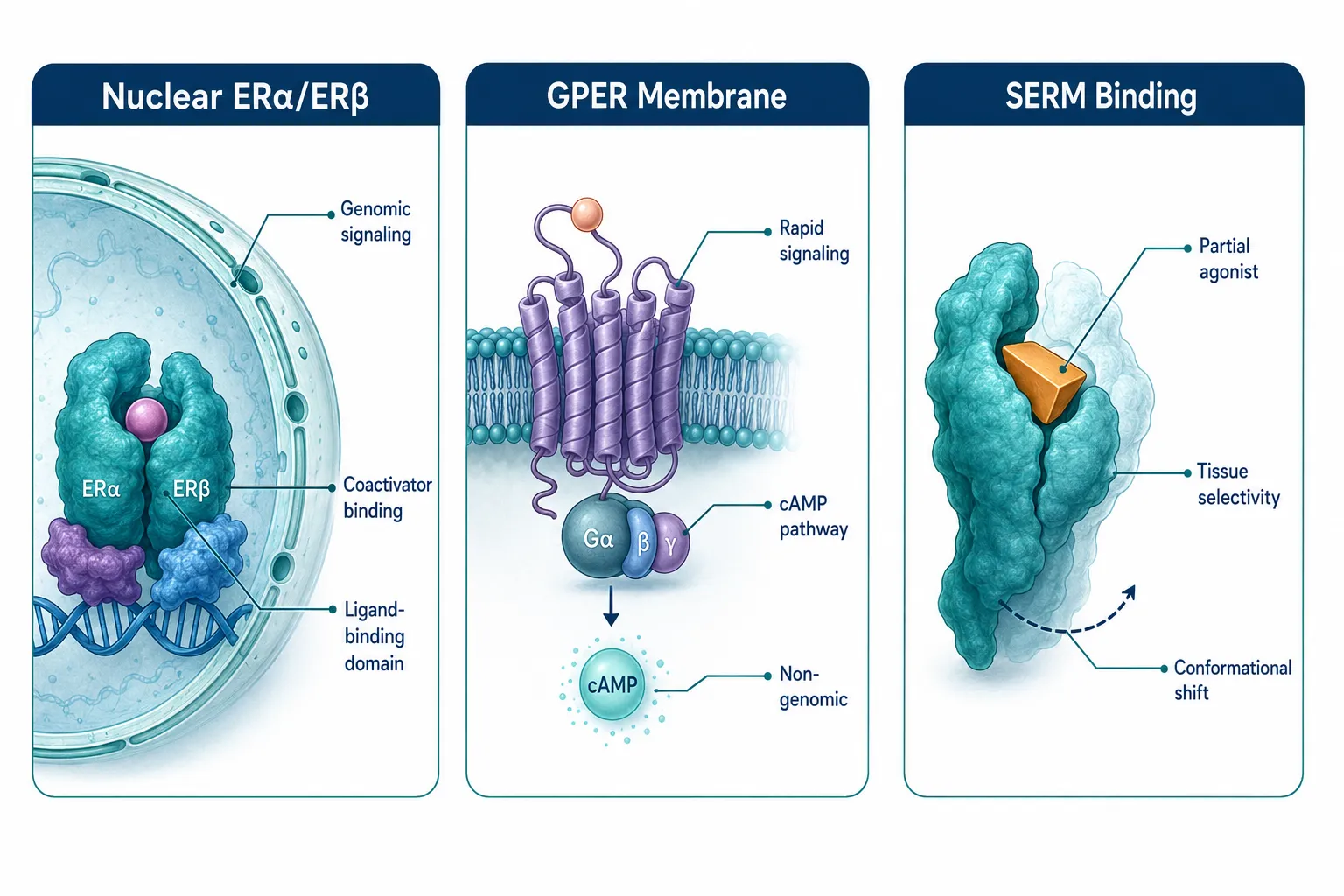
Detailed () scientific illustration showing a split-panel composition: left side features a 3D molecular model of an

Key Takeaways

  • Estrogen receptors are not monolithic; GPER mediates rapid non-genomic signaling distinct from classical nuclear ER pathways.
  • Enclomiphene acts as a selective estrogen receptor modulator (serm) at the hypothalamus, restoring endogenous testosterone without suppressing the HPG axis.
  • Retatrutide is a synthetic 39-amino-acid polypeptide that simultaneously activates GLP-1R, GIPR, and GCGR — a triple-agonist profile unmatched by earlier metabolic peptides.
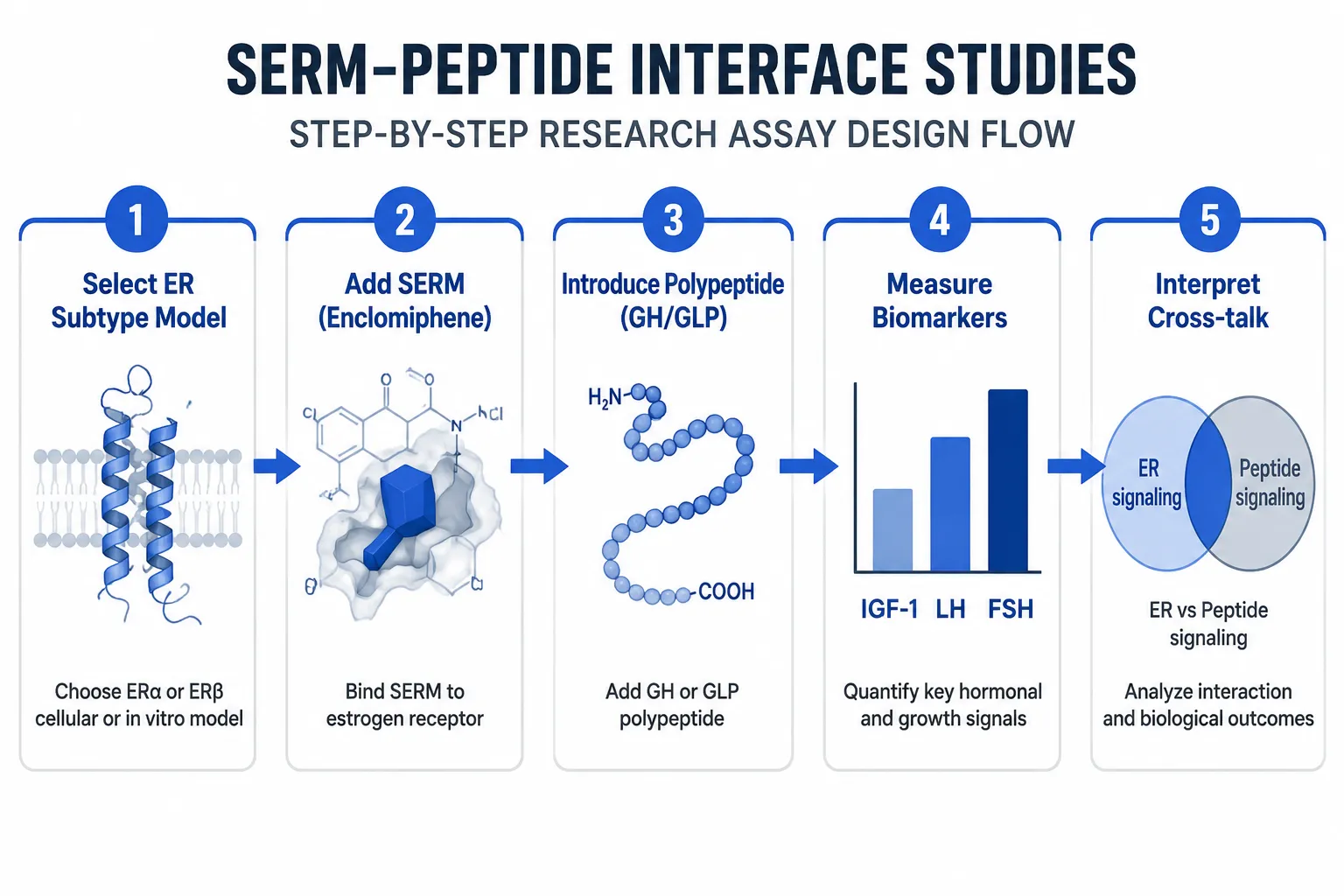
  • Cross-talk between peptide growth factors and estrogen receptor systems creates layered regulatory complexity relevant to drug design.
  • Both enclomiphene and retatrutide illustrate how modern endocrine research moves beyond single-target pharmacology toward systems-level modulation.

Estrogen Receptor Biology: The Foundation for Peptide Cross-Talk

Classical endocrinology framed estrogen signaling as a nuclear event: ligand binds receptor, receptor binds DNA, gene transcription changes. GPER challenged that model by demonstrating that estrogens also trigger acute, non-genomic responses through G protein-coupled pathways — activating cAMP, mobilizing intracellular calcium, and phosphorylating kinase cascades within minutes rather than hours.

This dual-mode signaling matters for peptide researchers because peptide growth factors and estrogen receptors actively cross-talk. Insulin-like growth factors, epidermal growth factor, and related polypeptides can transactivate ERalpha without a classical estrogen ligand. Conversely, estrogen receptor activity can sensitize cells to peptide growth factor signals. Understanding this bidirectional regulation is foundational to interpreting how newer research compounds interact with hormonal physiology.

"Estrogen receptor cross-talk with peptide signaling systems is not a side effect — it is a core feature of endocrine architecture."

For researchers exploring metabolic and longevity-related peptides, resources such as the MOTS-C metabolic flexibility research overview and the GIP receptor importance guide provide useful context on how peptide signals intersect with broader hormonal networks.


Enclomiphene as a Case Study in Receptor-Selective Endocrine Modulation

Enclomiphene is the trans-isomer of clomiphene and functions as a selective estrogen receptor modulator (serm). Its primary site of action is the hypothalamus and pituitary, where it blocks estrogen receptors and removes the negative-feedback brake on gonadotropin-releasing hormone (GnRH) pulsatility. The result is a cascade: GnRH rises, LH and FSH secretion increases, and the testes respond with elevated testosterone production.

What makes enclomiphene scientifically notable is what it preserves. Unlike exogenous testosterone, enclomiphene leaves the entire hypothalamic-pituitary-gonadal (HPG) axis intact, including its own feedback loops. This distinguishes it sharply from peptide-class HPG stimulators such as gonadorelin or kisspeptin-10, which act at different nodes in the same axis.

Pharmacokinetic profile comparison:

Compound Clearance Axis Preservation
Enclomiphene Days Full HPG axis intact
Zuclomiphene (isomer) Weeks Partial, prolonged suppression risk
Gonadorelin (peptide) Minutes Pulsatile, receptor-dependent

Enclomiphene's rapid clearance — measured in days rather than the weeks seen with its isomer zuclomiphene — makes it a cleaner pharmacological tool for research into upstream estrogen receptor blockade. For comparison, researchers studying GH-axis peptides may find the CJC-1295 and ipamorelin GH axis research a useful parallel for understanding how upstream modulation shapes downstream hormonal output.


GLP-3 Retatrutide Models and the Polypeptide Approach to Metabolic Signaling

GLP-3 Retatrutide Models and the Polypeptide Approach to Metabolic Signaling

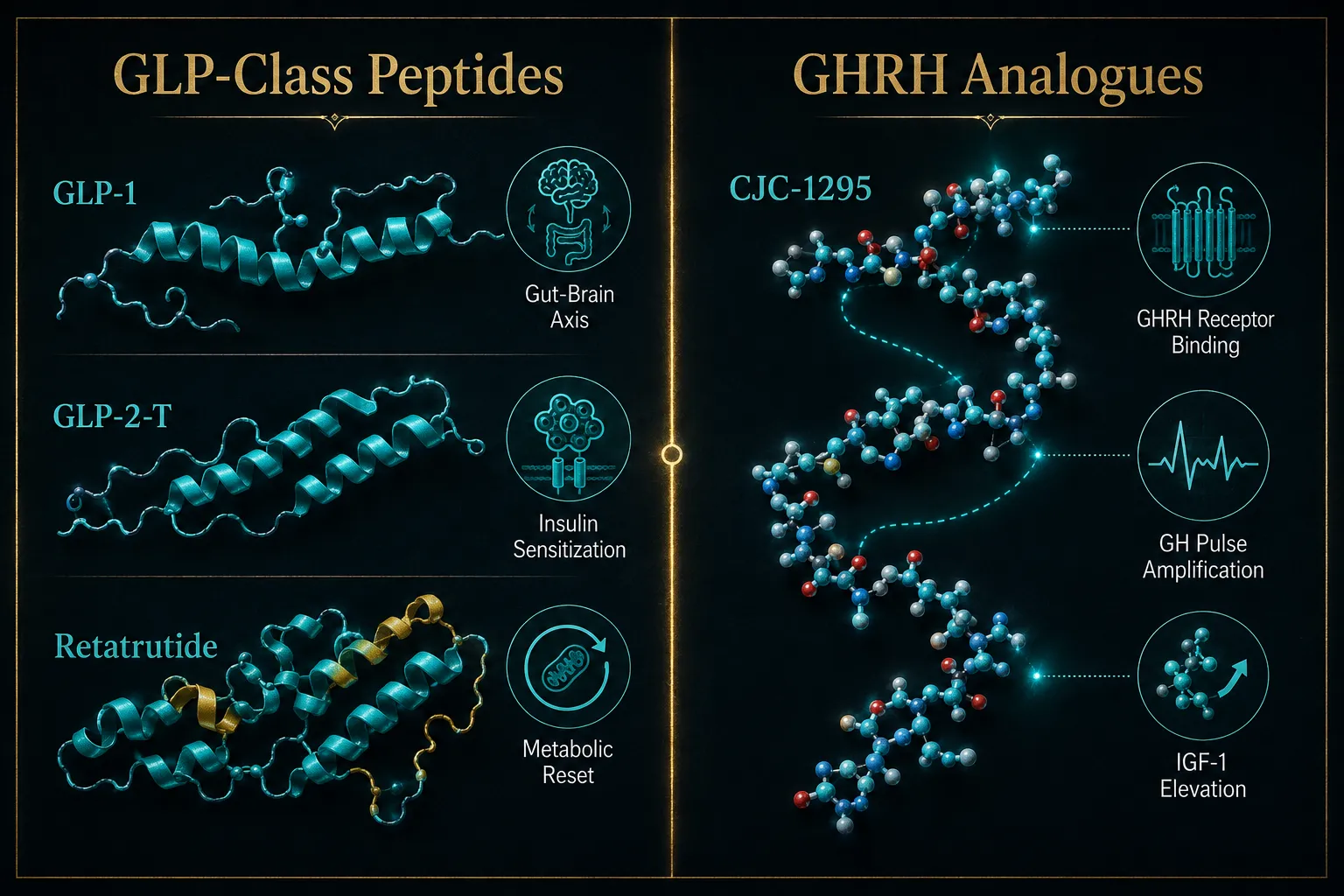
Retatrutide (LY3437943) represents a different philosophy entirely. Rather than blocking a receptor to release a suppressed axis, this synthetic 39-amino-acid polypeptide simultaneously activates three receptors: GLP-1R, GIPR, and GCGR. Cryo-EM structural studies show that retatrutide adopts a single continuous alpha-helix conformation when binding, with receptor-specific amino acid differences accounting for its differential potency at each target.

The coordinated activation of all three receptors produces layered metabolic effects:

  • GLP-1R activation: Reduces food intake, slows gastric emptying, enhances insulin secretion
  • GIPR activation: Amplifies insulin response, modulates adipose tissue signaling
  • GCGR activation: Increases energy expenditure, improves hepatic lipid metabolism

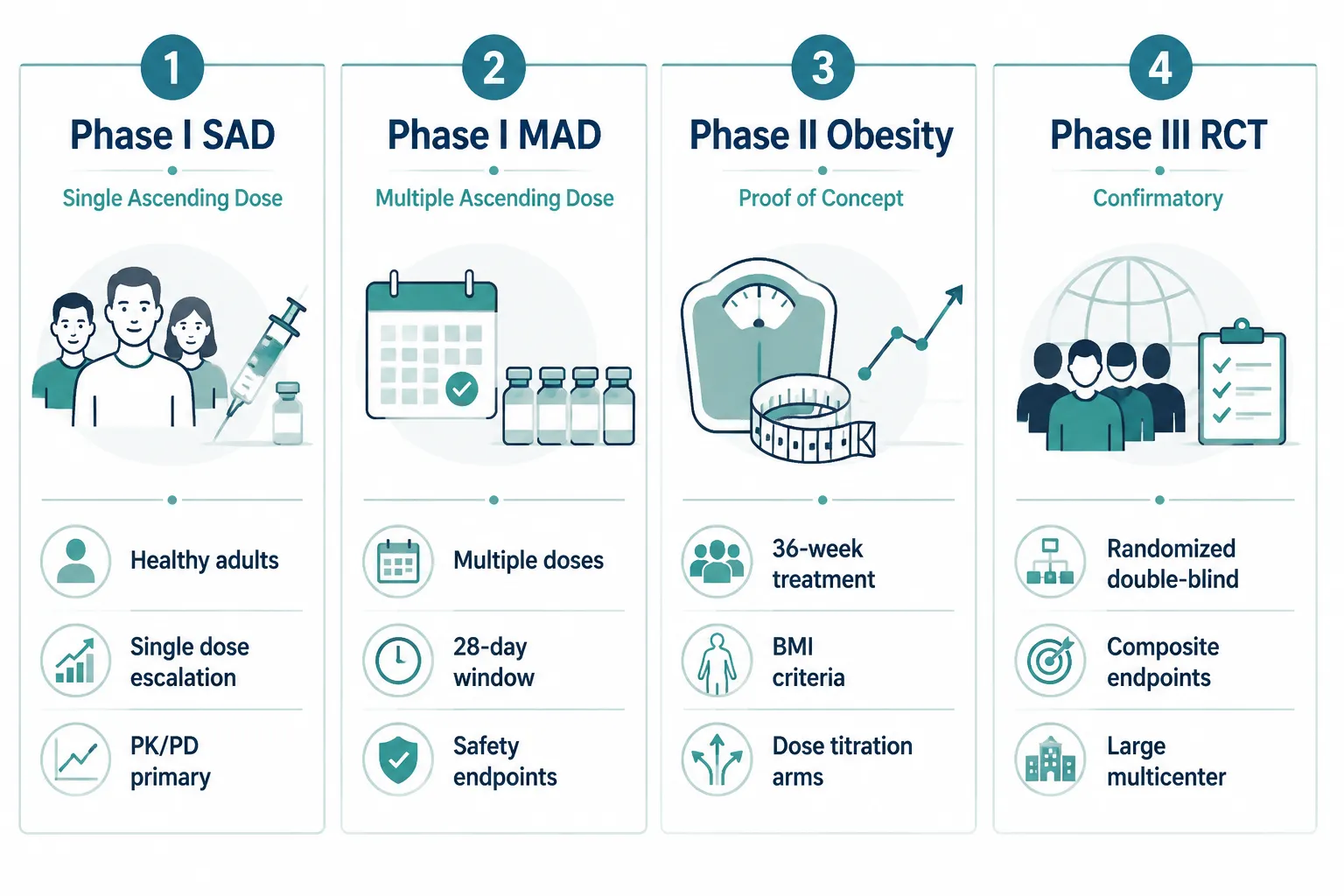
Phase 2 clinical trial data published in 2023 demonstrated significant weight loss and glycemic improvement in participants with obesity and type 2 diabetes. As of 2026, retatrutide has not received regulatory approval for human use and remains within the scope of clinical investigation and preclinical research.

For researchers building context around incretin-based peptide models, the GLP-3 Retatrutide incretin research themes page and the companion GLP-1 incretin research overview offer structured background. The cagrilintide synergy with GLP-1 research further illustrates how dual and triple agonist combinations are reshaping metabolic peptide research.


Bridging the Two Models: What Peptides and Polypeptides in Endocrine Research Reveal

Bridging the Two Models: What Peptides and Polypeptides in Endocrine Research Reveal

The deeper insight from studying peptides and polypeptides in endocrine research: linking estrogen receptor signaling to enclomiphene and GLP-3 retatrutide models together is architectural. Enclomiphene works by subtracting a signal — removing estrogenic feedback — to let a natural axis reassert itself. Retatrutide works by adding multiple signals simultaneously, forcing coordinated receptor activation across organ systems.

Both strategies reflect a move away from single-target pharmacology. Both also interact, directly or indirectly, with estrogen receptor biology. GPER, for instance, has been implicated in metabolic regulation, and GLP-1 receptor signaling has documented interactions with sex hormone pathways in adipose and hepatic tissue.

Key distinctions between serm-based and polypeptide-based endocrine modulation:

  • Mechanism: Receptor blockade (serm) vs. receptor co-activation (polypeptide agonist)
  • Axis impact: Preserves negative feedback (enclomiphene) vs. bypasses feedback (retatrutide)
  • Structural class: Small molecule (enclomiphene) vs. synthetic peptide chain (retatrutide)
  • Research maturity: Enclomiphene has longer clinical history; retatrutide is in active Phase 2/3 investigation

Researchers interested in how peptide structural biology shapes receptor selectivity may also find value in reviewing tesa research themes and the IPA muscle and fat research overview, both of which demonstrate how peptide sequence modifications alter tissue-level outcomes.


Conclusion

The convergence of estrogen receptor biology, serm pharmacology, and synthetic polypeptide design represents one of the most productive frontiers in endocrine research today. Enclomiphene demonstrates that precise receptor-site selectivity can restore entire hormonal axes with minimal disruption. Retatrutide demonstrates that a single engineered polypeptide can coordinate metabolic signaling across three receptor families simultaneously.

Actionable next steps for researchers:

  1. Review GPER-specific literature to understand non-genomic estrogen signaling before designing peptide interaction studies.
  2. Use enclomiphene's HPG axis preservation model as a benchmark when evaluating upstream versus downstream peptide interventions.
  3. Consult Phase 2 retatrutide data for structural insights into multi-receptor polypeptide engineering.
  4. Explore the comprehensive peptide catalog to identify research compounds relevant to metabolic and hormonal pathway studies.
  5. Prioritize compounds with published quality testing data — see quality testing protocols — when designing rigorous endocrine research protocols.

The field is moving fast. Researchers who understand both the receptor-level architecture and the structural biology of the peptides involved will be best positioned to interpret emerging data as it arrives.

https://www.puretestedpeptides.com/wp-content/uploads/2026/06/Peptides-and-Polypeptides-in-Endocrine-Research-Linking-Estrogen-Receptor-Signaling-to-Enclomiphene-and-GLP-3-Retatrutide-Models.png 1024 1536 https://www.puretestedpeptides.com/wp-content/uploads/2026/01/buy-peptides-online.jpg 2026-06-23 13:05:442026-06-23 13:05:44Peptides and Polypeptides in Endocrine Research: Linking Estrogen Receptor Signaling to Enclomiphene and GLP-3 Retatrutide Models
Enclomiphene vs. Tamoxifen: Comparative Research on serm Peptide Receptor Modulation

Enclomiphene vs. Tamoxifen: Comparative Research on serm Peptide Receptor Modulation

June 22, 2026/0 Comments/in Uncategorized/by

Only one of these two compounds preserves male fertility while raising testosterone — and the distinction comes down to how each molecule interacts with estrogen receptors at the cellular level. The field of Enclomiphene vs. Tamoxifen: Comparative Research on serm Peptide Receptor Modulation has grown substantially as researchers seek more targeted hormonal interventions that avoid the reproductive suppression caused by conventional testosterone replacement therapy.

Both enclomiphene and tamoxifen belong to the Selective Estrogen Receptor Modulator (serm) class, yet their pharmacological profiles, half-lives, and clinical applications differ in ways that matter deeply for research design and therapeutic strategy.


Key Takeaways

  • Enclomiphene is the trans-isomer of clomiphene citrate and acts as a pure estrogen receptor antagonist in the hypothalamus and pituitary, stimulating endogenous testosterone production.
  • Tamoxifen has a significantly longer half-life (5-7 days) compared to enclomiphene (approximately 10 hours), affecting how quickly dosing adjustments take effect.
  • Enclomiphene shows a cleaner side-effect profile than clomiphene citrate because it lacks the zuclomiphene (cis-isomer) component associated with visual disturbances and mood changes.
  • Tamoxifen remains the preferred serm for gynecomastia management due to its potent antagonism at breast tissue estrogen receptors.
  • Neither compound has received FDA approval as a standalone male hypogonadism treatment as of 2026, though both are used off-label in clinical and research contexts.

Key Takeaways

Mechanisms of Action: How Each serm Engages Estrogen Receptors

Understanding Enclomiphene vs. Tamoxifen: Comparative Research on serm Peptide Receptor Modulation begins at the receptor level. Both compounds bind estrogen receptors but do so in different tissues with different downstream effects.

Enclomiphene is the trans-isomer of clomiphene citrate. It acts as an estrogen receptor antagonist specifically in the hypothalamus and pituitary gland. By blocking estrogen's negative feedback signal at these sites, enclomiphene triggers increased secretion of:

  • Gonadotropin-releasing hormone (GnRH)
  • Luteinizing hormone (LH)
  • Follicle-stimulating hormone (FSH)

This cascade stimulates the testes to produce testosterone endogenously, preserving the hypothalamic-pituitary-testicular (HPT) axis rather than bypassing it.

Tamoxifen operates through a similar upstream mechanism but was originally developed for breast cancer treatment. It competitively blocks estrogen receptors in breast tissue and, when used in male health contexts, also reduces pituitary estrogen feedback — raising LH and FSH levels and, consequently, testosterone output.

"The key distinction is tissue selectivity: enclomiphene's activity is concentrated at the hypothalamic-pituitary axis, while tamoxifen's receptor modulation extends to peripheral tissues including breast, bone, and liver."

For researchers exploring broader receptor modulation frameworks, metabolic modulation research lines provide useful context on how peptide-receptor interactions extend beyond hormonal axes.


Mechanisms of Action: How Each serm Engages Estrogen Receptors

Pharmacokinetics and Clinical Profiles Compared

The pharmacokinetic differences between these two serms are significant for research protocol design.

Parameter Enclomiphene Tamoxifen
Half-life ~10 hours 5-7 days
Active metabolites Minimal Yes (endoxifen)
Dosing frequency Daily (12.5-25 mg) Daily or less frequent
FDA approval (male use) Not approved (2026) Not approved (male use)
Primary research use Secondary hypogonadism Gynecomastia, hypogonadism

Enclomiphene's shorter half-life allows researchers and clinicians to make faster dosing adjustments. Tamoxifen's longer half-life and active metabolite (endoxifen) mean that steady-state concentrations take longer to establish and dissipate.

Side-effect profiles also diverge meaningfully:

  • Enclomiphene: transient headaches, hot flashes; notably absent are the visual disturbances linked to zuclomiphene in standard clomiphene citrate
  • Tamoxifen: risk of thromboembolic events, mood changes, and potential hepatotoxicity with long-term use

Both compounds maintain or enhance spermatogenesis, which gives them a clear advantage over exogenous testosterone therapy for fertility-conscious research subjects. For comparison with other peptide compounds studied in neuroendocrine contexts, neuroendocrine and innate immunity research offers relevant background.

Those researching serm compounds for laboratory use can review the serm 10mg research product for sourcing reference.


Pharmacokinetics and Clinical Profiles Compared

Research Applications and Comparative Utility in 2026

The comparative analysis of Enclomiphene vs. Tamoxifen: Comparative Research on serm Peptide Receptor Modulation reveals distinct niches for each compound in active research programs.

Enclomiphene has completed Phase III clinical trials demonstrating statistically significant increases in testosterone levels alongside preserved spermatogenesis. Researchers studying secondary hypogonadism in younger males favor enclomiphene because it stimulates the natural HPT axis without suppressing it. Its cleaner isomer profile reduces confounding variables in study design.

Tamoxifen remains the more established compound for gynecomastia management research, given its potent and well-documented antagonism at breast tissue estrogen receptors. Its longer half-life also makes it useful in protocols where less frequent dosing is preferred.

Both serms are being examined alongside peptide-based interventions. Researchers comparing hormonal optimization strategies often cross-reference findings with growth hormone secretagogue research, such as ipamorelin vs. tesa comparisons and tesa mechanism and application data, since both categories affect body composition and metabolic signaling.

For researchers interested in longevity and cellular signaling intersections, the Glow Blend longevity research themes and Epithalon vs. NAD evidence pages provide complementary reading on receptor-level interventions.


Conclusion

The comparative research on Enclomiphene vs. Tamoxifen: Comparative Research on serm Peptide Receptor Modulation makes clear that these are not interchangeable compounds. Enclomiphene offers a more targeted hypothalamic-pituitary mechanism, a shorter half-life for flexible dosing, and a favorable side-effect profile — making it the stronger candidate for secondary hypogonadism and fertility-preservation research. Tamoxifen retains its edge in gynecomastia management and longer-duration protocols.

Actionable next steps for researchers:

  1. Define the target tissue and hormonal axis before selecting a serm for a given protocol.
  2. Account for half-life differences when designing washout periods and dosing schedules.
  3. Cross-reference serm data with peptide-based hormonal research to build a more complete picture of receptor modulation strategies.
  4. Monitor regulatory updates, as neither compound holds FDA approval for male hypogonadism treatment as of 2026.
https://www.puretestedpeptides.com/wp-content/uploads/2026/06/Enclomiphene-vs.-Tamoxifen-Comparative-Research-on-serm-Peptide-Receptor-Modulation.png 1024 1536 https://www.puretestedpeptides.com/wp-content/uploads/2026/01/buy-peptides-online.jpg 2026-06-22 13:03:462026-06-22 13:03:46Enclomiphene vs. Tamoxifen: Comparative Research on serm Peptide Receptor Modulation
Page 1 of 212
×

Helpful Links

  • My account
  • Cart
  • Checkout
  • Refund and Returns Policy
  • Privacy Policy
  • SMS Privacy Policy
  • Login
  • My Account
  • Logout

USA Made Lab Tested Peptides

All products are sold for research, laboratory, or analytical purposes only, and are not for human consumption


Pure Tested Peptides is a chemical supplier. Pure Tested Peptides is not a compounding / chemical compounding facility as defined under 503A of the Federal Food, Drug, and Cosmetic act. Pure Tested Peptides is not an outsourcing facility as defined under 503B of the Federal Food, Drug, and Cosmetic act.

The statements made within this website have not been evaluated by the US Food and Drug Administration. The products we offer are not intended to diagnose, treat, cure or prevent any disease.

Human/Animal Consumption Prohibited. Laboratory/In-Vitro Experimental Use Only

Scroll to top Scroll to top Scroll to top