Complete Guide to Peptide Mechanisms: How GLP-1, GLP-3, and Growth Hormone Peptides Work at the Molecular Level
Fewer than 50 amino acids separate a metabolically inert string of molecules from a compound that can reshape insulin secretion, fat oxidation, and tissue repair. That structural precision is exactly what makes peptide pharmacology one of the most rapidly advancing fields in 2026 biomedical research.
This complete guide to peptide mechanisms covers how GLP-1, GLP-3, and growth hormone peptides bind to their targets, activate downstream signaling cascades, and produce distinct metabolic outcomes, giving researchers and informed readers the mechanistic foundation they need.
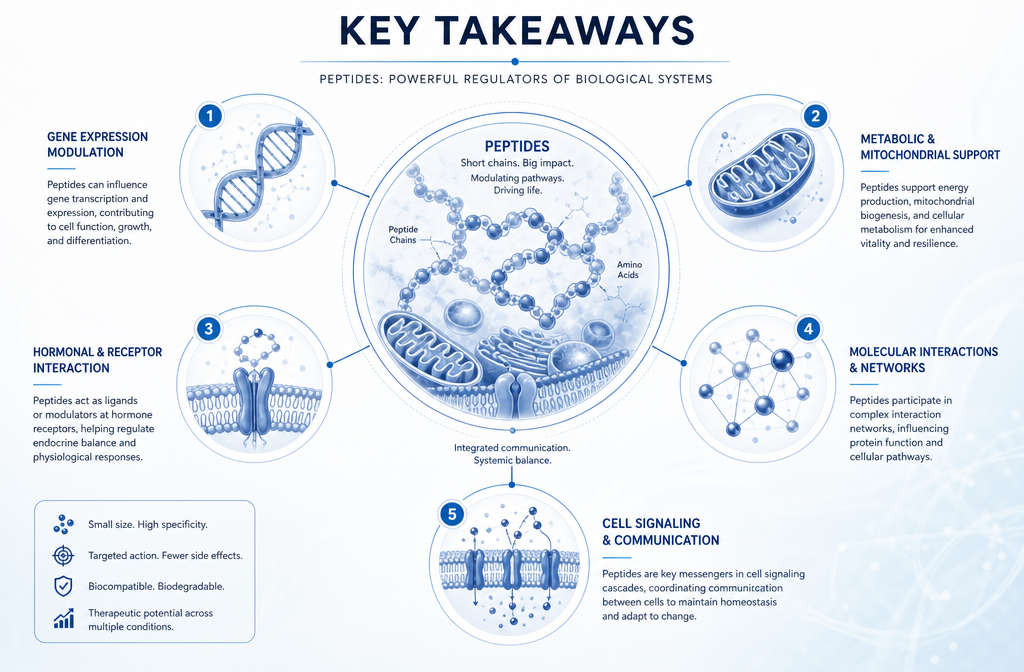
Key Takeaways
- GLP-1 receptor agonists work through G-protein coupled receptor (GPCR) activation, triggering cAMP-mediated insulin secretion in a glucose-dependent manner.
- GLP-3, represented by retatrutide, is a triple-receptor agonist targeting GLP-1R, GIPR, and glucagon receptors simultaneously, producing additive metabolic effects.
- Growth hormone secretagogues stimulate the pituitary via GHRH receptors or ghrelin receptors, increasing endogenous GH pulse amplitude.
- Different peptide families produce different outcomes because they bind to structurally distinct receptor classes and activate non-overlapping second-messenger pathways.
- Purity and structural integrity of any peptide compound are non-negotiable for reliable downstream signaling.
How GLP-1 Receptor Agonists Activate Downstream Signaling
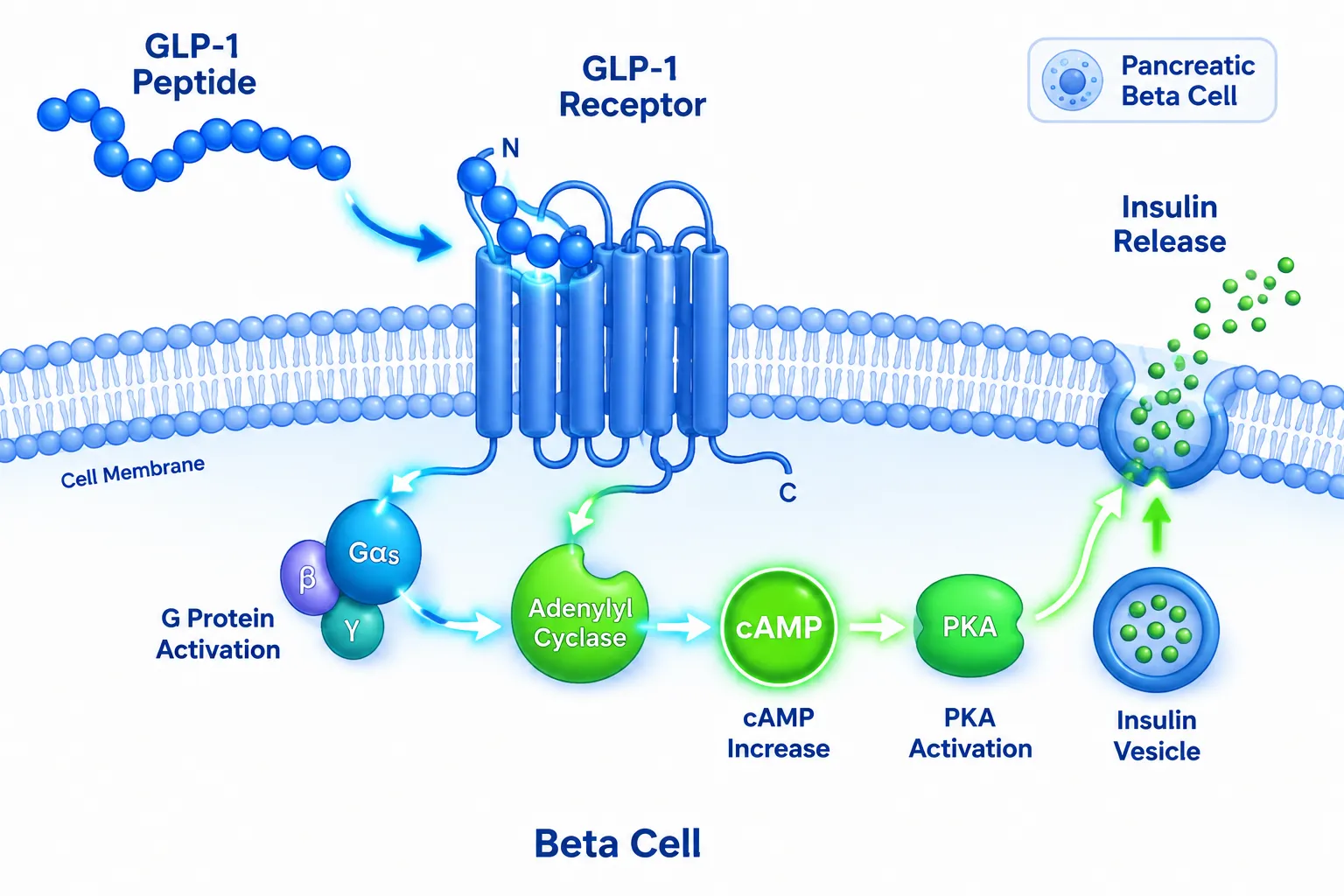
The molecular story of GLP-1 peptides begins at the cell surface. GLP-1 (glucagon-like peptide-1) is a 30-amino acid incretin hormone cleaved from proglucagon in intestinal L-cells. Its receptor, GLP-1R, belongs to the class B family of G-protein coupled receptors, a structurally distinct group that uses a large extracellular domain to capture peptide ligands.
Receptor Binding and Conformational Change
When GLP-1 approaches GLP-1R, the C-terminal helix of the peptide docks into the receptor's extracellular domain first. This initial contact triggers a conformational shift that draws the peptide's N-terminus into the transmembrane bundle, locking the receptor into an active state. The canonical molecular mechanism of GLP-1 receptor agonists has been refined through cryo-EM studies but the core two-step binding model remains the accepted framework.
The cAMP Cascade
Active GLP-1R couples to the stimulatory G-protein (Gs), which activates adenylyl cyclase and elevates intracellular cyclic AMP (cAMP). Rising cAMP activates protein kinase A (PKA) and the exchange protein EPAC2. Together, these effectors:
- Close ATP-sensitive potassium channels, depolarizing the beta cell membrane
- Trigger calcium influx through voltage-gated channels
- Stimulate insulin vesicle exocytosis in a glucose-dependent manner
This glucose dependency is the central safety feature of the GLP-1 pathway, insulin release only amplifies when blood glucose is already elevated, reducing hypoglycemia risk.
"The glucose-dependence of GLP-1 receptor signaling is not a limitation, it is an elegant molecular safeguard built into the receptor's coupling architecture."
Beyond the pancreas, GLP-1R is expressed in the hypothalamus, brainstem, and vagal afferents, where the same cAMP cascade suppresses appetite and slows gastric emptying. Researchers looking to purchase GLP-1 peptide for study purposes should prioritize verified purity, since even minor sequence truncations at the N-terminus abolish receptor activation.
GLP-3 and Multi-Receptor Agonism: A Mechanistic Overview
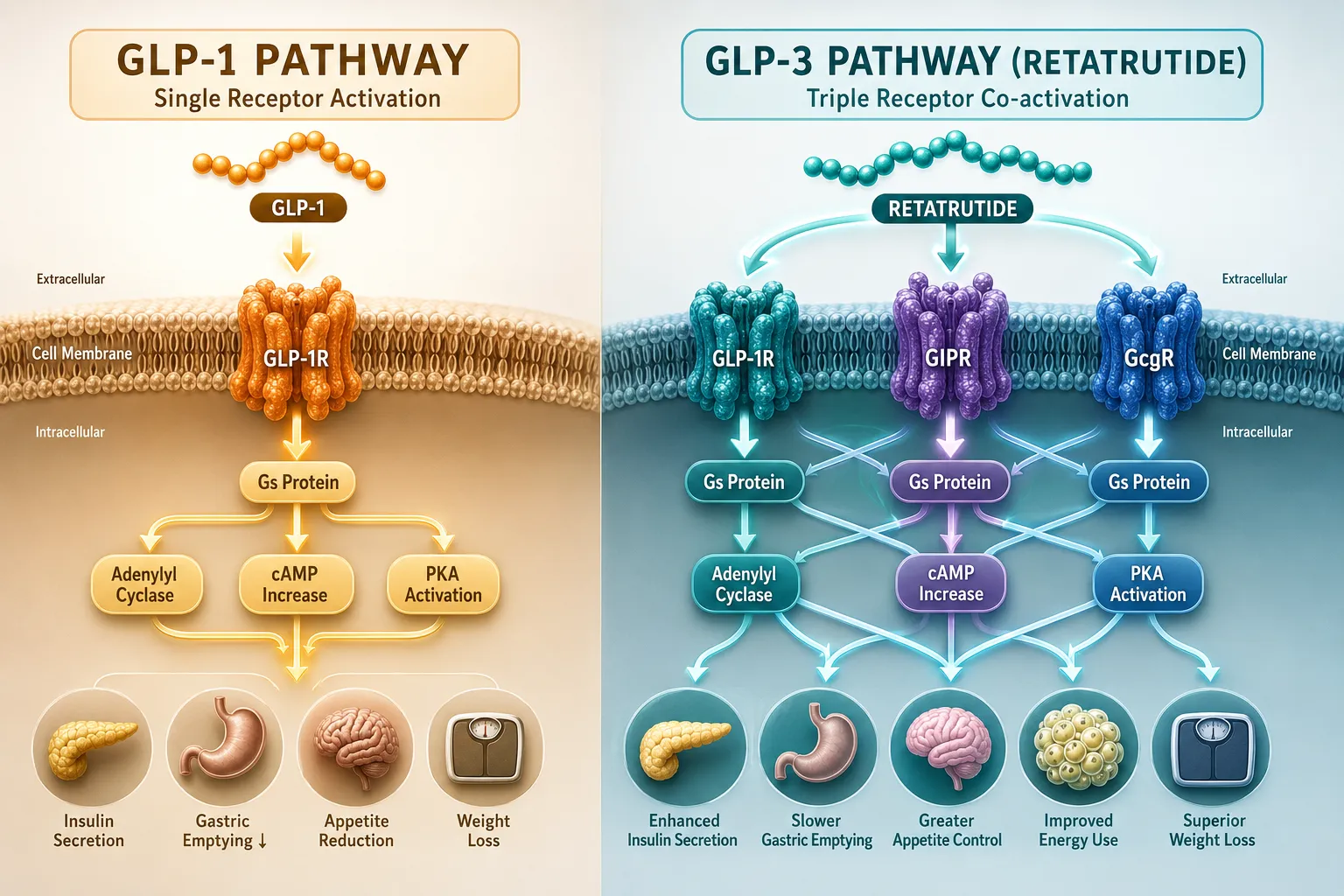
Understanding the complete guide to peptide mechanisms requires distinguishing single-receptor from multi-receptor strategies. The compound commonly referred to as GLP-3 (retatrutide) is a triagonist that simultaneously engages three receptor types:
| Receptor | Primary Tissue | Key Metabolic Effect |
|---|---|---|
| GLP-1R | Pancreas, CNS | Insulin secretion, appetite suppression |
| GIPR | Adipose, pancreas | Enhanced insulin response, fat mobilization |
| Glucagon receptor | Liver, adipose | Hepatic glucose output, thermogenesis |
Why Triple Agonism Produces Additive Outcomes
Each receptor activates Gs-cAMP signaling, but the downstream effectors diverge by tissue. Glucagon receptor activation in adipose tissue upregulates hormone-sensitive lipase, accelerating lipolysis. GIPR co-activation in the pancreas potentiates glucose-stimulated insulin secretion beyond what GLP-1R alone achieves. The net result is a broader metabolic remodeling effect compared to mono-agonism.
Those researching buy GLP-3 peptide options should note that the triagonist structure is significantly more complex than GLP-1 analogs, making synthesis quality especially critical.

Growth Hormone Peptides: Pituitary Signaling and Secretagogue Mechanisms
Growth hormone secretagogues (GHS) represent a third mechanistic class. Rather than acting peripherally on metabolic tissues, they target the anterior pituitary and hypothalamus to amplify endogenous GH release. A well-studied example is tesa, a stabilized analog of growth hormone-releasing hormone (GHRH).
GHRH Receptor Pathway
Tesamorelin binds the GHRH receptor (GHRHR), a class B GPCR expressed on somatotroph cells. Receptor activation elevates cAMP, which opens voltage-gated calcium channels and triggers GH vesicle release. Critically, tesa preserves the pulsatile pattern of GH secretion, a feature that distinguishes it mechanistically from exogenous GH administration.
Ghrelin-Receptor Secretagogues
A parallel class of GHS compounds, including peptides like ipamorelin, binds the ghrelin receptor (GHSR-1a). GHSR-1a couples to Gq proteins, activating phospholipase C and generating IP3-mediated calcium release. This Gq pathway is mechanistically distinct from the GHRH-Gs route, which explains why combining both classes can produce synergistic GH pulse amplification.
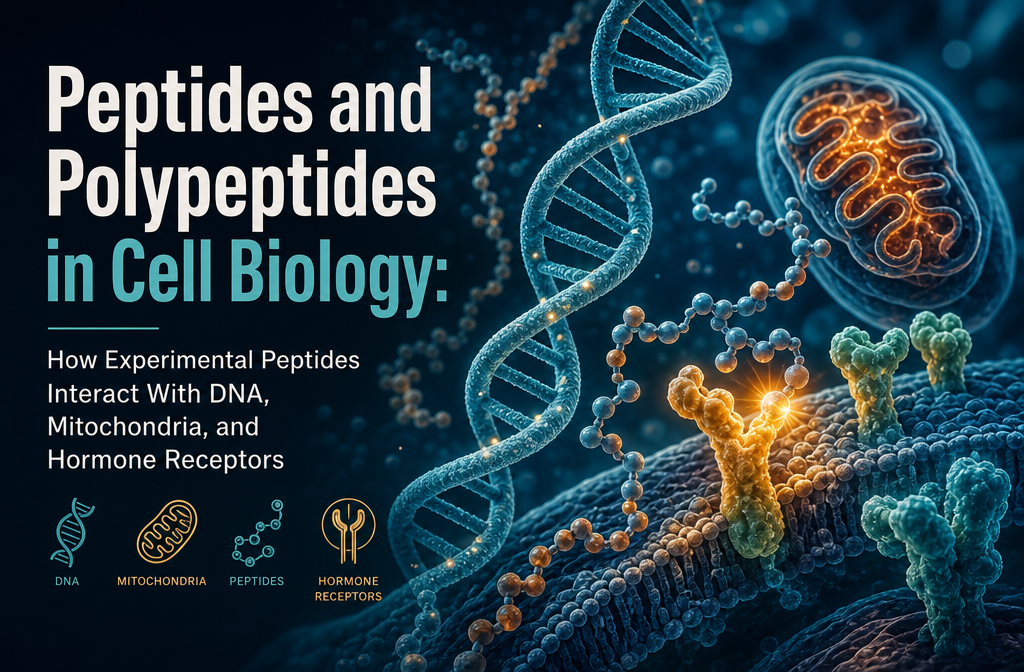
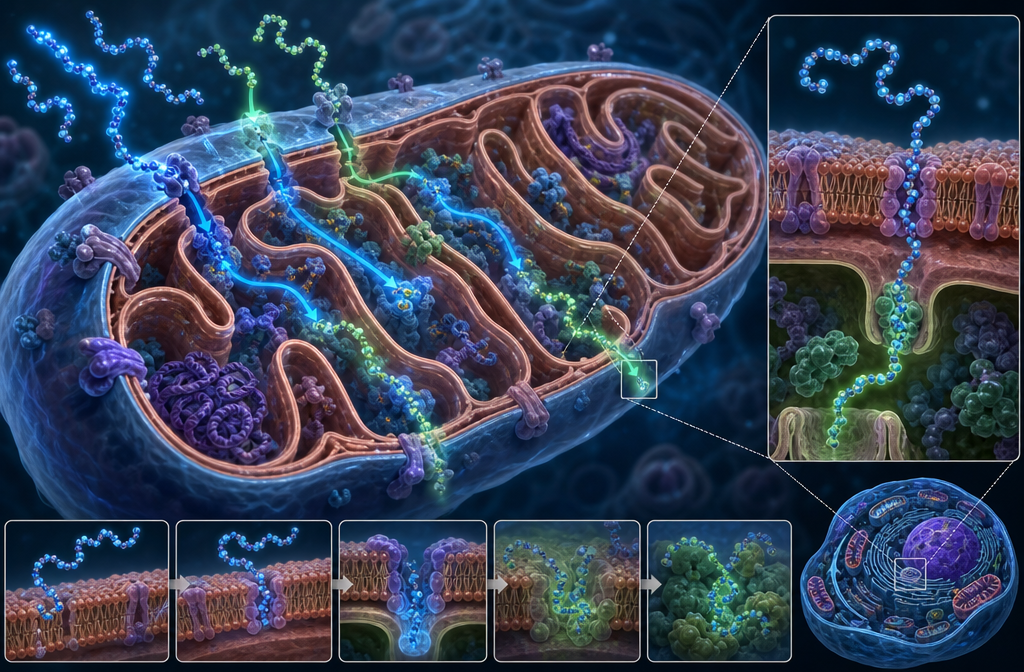
Researchers interested in the broader peptide landscape, including mitochondria-targeted compounds like those found at Peptide SS-31, will find that each peptide class operates through a unique receptor-effector architecture. Similarly, tissue-repair peptides such as those covered in the BPC-157 and TB-500 peptides overview rely on growth factor receptor pathways rather than GPCR cascades entirely.
Why Receptor Selectivity Determines Metabolic Outcomes
The central lesson of this complete guide to peptide mechanisms is that receptor identity dictates biological outcome. Three structural variables drive selectivity:
- Peptide sequence, even single amino acid substitutions shift receptor affinity by orders of magnitude
- N-terminal modifications, fatty acid conjugations extend half-life but can alter receptor residence time
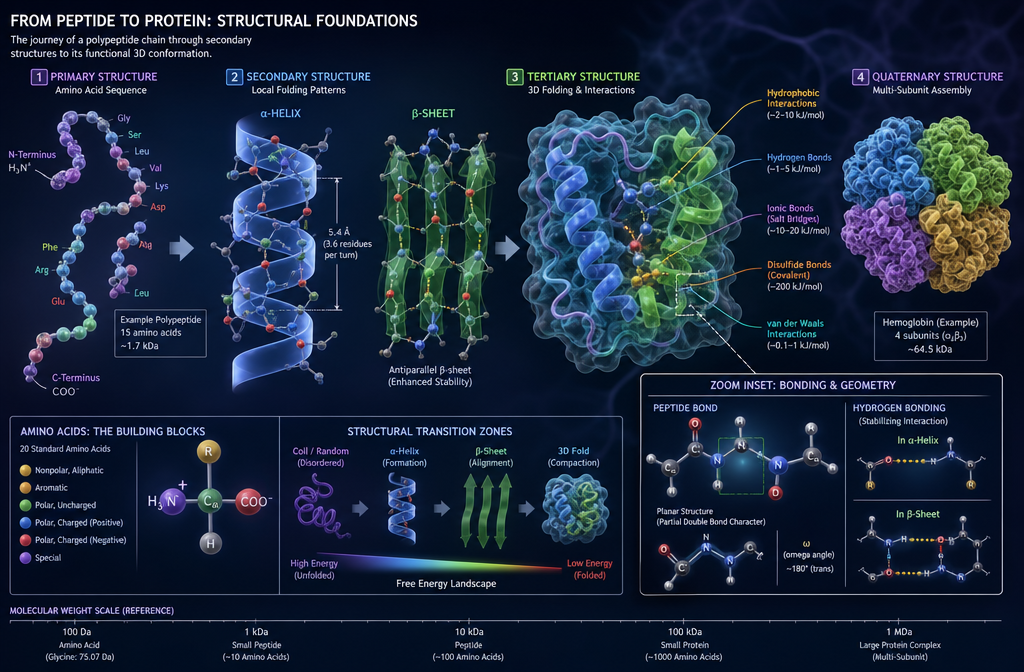
- Conformational stability, alpha-helical stabilization in GHRH analogs prevents enzymatic degradation that would otherwise truncate signaling
This is why sourcing from a best peptide manufacturer with verified analytical testing is not a commercial preference but a scientific necessity. A peptide with incorrect disulfide bonding or racemized residues will bind its receptor with altered kinetics, producing unpredictable downstream effects.
Conclusion
The mechanistic differences between GLP-1, GLP-3, and growth hormone peptides are not subtle, they operate through distinct receptor families, second-messenger systems, and tissue distributions. Researchers building a working knowledge of peptide pharmacology should start with receptor class identification, trace the primary second messenger (cAMP vs. IP3 vs. direct ion channel modulation), and then map the downstream effectors to the observed physiological outcome.
Actionable next steps:
- Study cryo-EM structures of GLP-1R and GHRHR to visualize the binding interfaces described here
- Cross-reference peptide purity certificates against known receptor activation thresholds before designing experiments
- Explore the mechanistic profiles of adjacent peptide families, including BDNF peptides for neurotrophin signaling, to build a complete receptor-level map of the peptide landscape
- Source compounds only from suppliers offering full analytical documentation to ensure structural fidelity
Mechanism-first understanding is the most durable foundation for any serious peptide research program.